Category: USA

  • D.C. Memo: A censured Democrat, transgender mice and dead centenarians — just another week in Trump’s Washington

    D.C. Memo: A censured Democrat, transgender mice and dead centenarians — just another week in Trump’s Washington

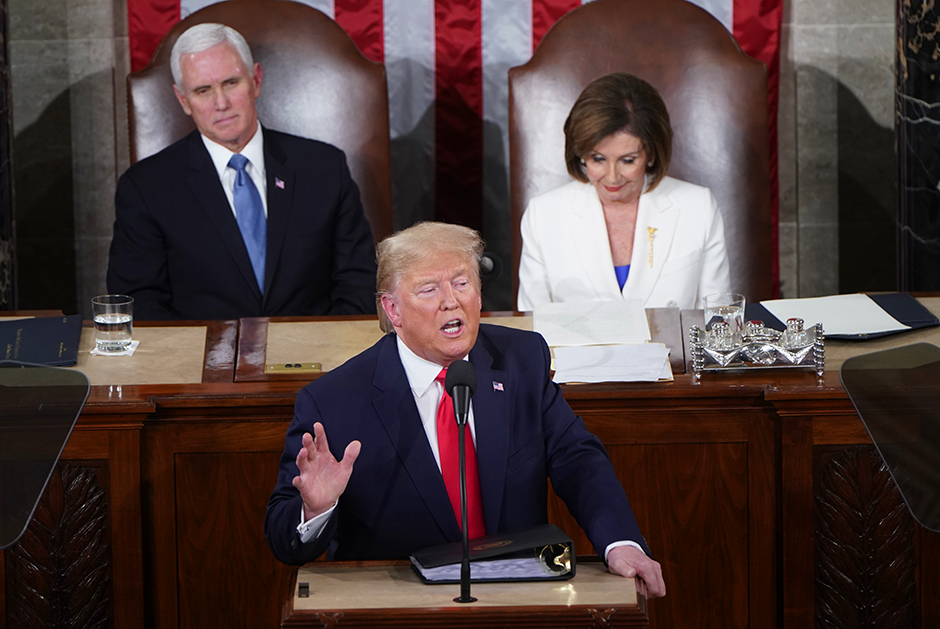
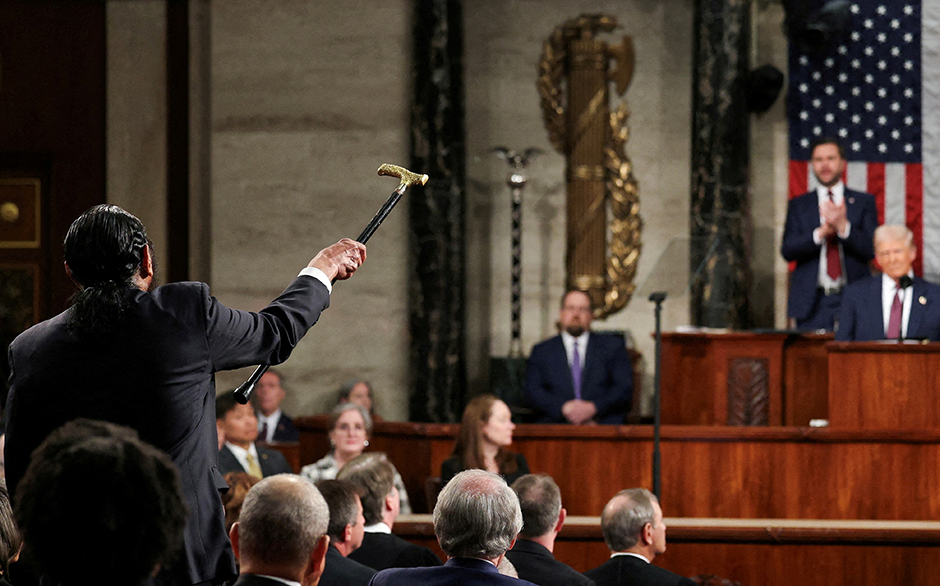
    WASHINGTON — Fallout from Donald Trump’s speech to a joint session of Congress continued though the week as the U.S. House censured a lawmaker who disrupted the address.

    Fallout from the speech also included scrutiny of the president’s remarks, which uncovered notable falsehoods, and a MAGA revolt against U.S. Supreme Court Justice Amy Coney Barrett.

    Rep. Al Green, a Democrat who represents a Houston-based district, was accused of “a breach of proper conduct” on Thursday in a censure resolution that was approved by the U.S. House Thursday on a vote of 224 to 198. Ten Democrats, mostly centrist lawmakers, voted with all Republicans to censure Green, who said in a social media post that he was being punished for “standing up to President Trump.”

    A censured lawmaker typically is sent to the well in the front of the House to receive formal punishment. But more than a dozen House Democrats joined Green in the well singing “We Shall Overcome,” forcing Speaker Mike Johnson to put the House in recess.

    In one of his many insults to Joe Biden in his address to the nation Tuesday night, Trump accused the former president of funding programs that make mice transgender.

    “Eight million dollars for making mice transgender. This is real,” Trump said.

    Well, factcheckers found that not to be quite true and that Trump may have been referring to health studies that involve “transgenic” mice — lab research mice that have been genetically altered to better model human disease response and perhaps find a cure for Alzheimer’s and other diseases.

    Or maybe Trump was referring to a much, much smaller project involving mice that seeks to determine how long-term gender-affirming hormone therapy affects skeletal maturation and bone density.

    But the misstatement that raised concerns among advocates to the nation’s seniors — and many Democrats — was Trump’s repeated insistence that millions of dead 100-year-olds were collecting Social Security payments.

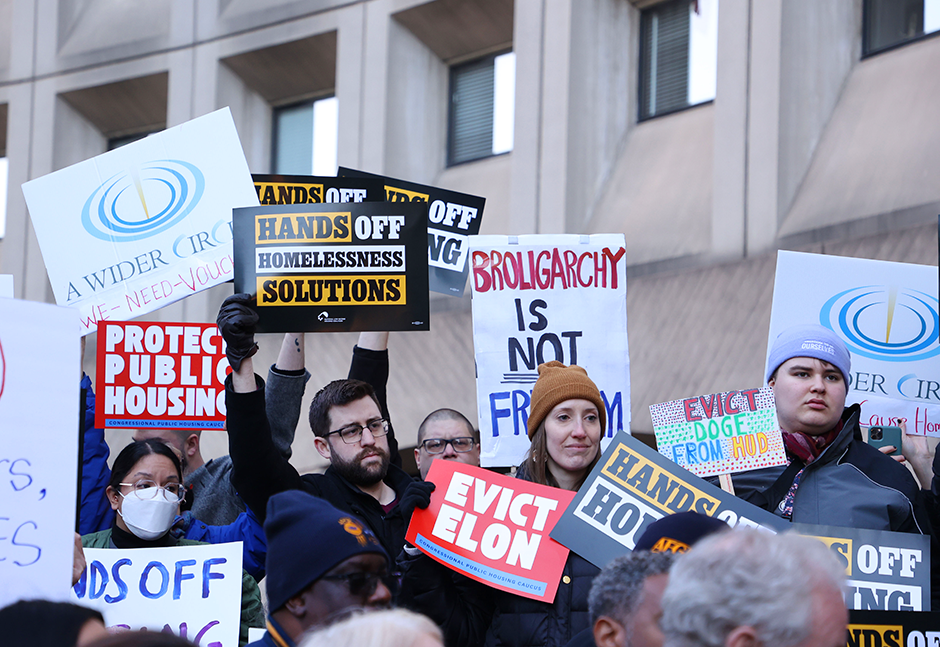
    In his speech, Trump praised the efforts of the Department of Government Efficiency, or DOGE, the Elon Musk-led group that aims to root out fraud and waste in the federal government.

    Trump then repeated claims that have been debunked — that DOGE unearthed millions of dead centenarians who were still somehow collecting benefits.

    But the director of the Social Security Administration says that fewer than 90,000 people 99-years-old or older are receiving payments, and they are likely to all be alive.

    The millions of centenarians Trump cited in his speech represent people who do not have a date of death associated with their record, the director said, but they do not receive benefits.

    Some Democrats fear that Trump’s false claims of widespread fraud at the Social Security Administration may lead to changes at the agency that do not benefit recipients.

    Also this week, Supreme Court Justice Amy Coney Barrett, who was nominated by Trump to the U.S. Supreme Court, was under attack on social media by the president’s supporters. 

    They decried  her joining the majority in a 5-4 decision that left in place a ruling by a U.S. District Court judge last month that ordered the release of nearly $2 billion in U.S. Agency for International Development contracts that had been frozen. Chief Justice John Roberts also upheld the lower court’s ruling.  

    The president’s MAGA supporters said Coney Barrett was a traitor and criticized her conduct in a video of her greeting the president before his address to Congress this week. They said Coney Barrett seemed unhappy to see Trump.

    Now you see it, now you don’t

    The General Services Administration, which acts as the federal government’s landlord, put up a listing this week of 440 “non-core” federal properties across the country for potential disposal.

    The list of properties the GSA wants to sell includes Social Security offices in Austin and Minneapolis, the Paul D. Wellstone Federal Building in Minneapolis, the Indian Health Service office in Bemidji and the federal courthouse in Fergus Falls.

    But after the list of properties appeared on the GSA website on Tuesday, it was edited to remove all properties in Washington, D.C. Then it disappeared completely the next day, replaced with a message that said the non-core property list was “coming soon.”

    In an emailed statement, the GSA said it was “taking swift, common-sense action to solve the nation’s toughest problems of reducing the federal deficit and increasing government efficiency” and “exploring innovative approaches — including public-private partnerships, ground leases and sales leasebacks” to support President Donald Trump’s DOGE initiatives.

    “To be clear, just because an asset is on the list doesn’t mean it’s immediately for sale,” the GSA said. “However, we will consider compelling offers (in accordance with applicable laws and regulations) and do what’s best for the needs of the federal government and taxpayer.”

    The GSA did not say why it had pulled the list from its website. But it said that its brief appearance there created “an overwhelming amount of interest.”

    The GSA also said it anticipated “the list will be republished in the near future after we evaluate this initial input” and it will “continuously review and update the list of non-core assets.”

    The list created a furor among lawmakers and officials at the agencies whose buildings were targeted.

    Separately, the National Parks Conservation Association has put out a list of 34 national park facilities it says are targeted by the Trump administration for closures.

    Those include the St. Paul headquarters of the Mississippi National River and Recreation Area and a visitor’s center at the Science Museum of Minnesota.

    In case you missed it:

    • We reported on GOP plans to scale back a key federal subsidy for low-income people enrolled in health plans through MNsure, the state’s health exchange. A MNsure official says that could significantly boost premiums for people with subsidized insurance.
    • Peter Callaghan wrote about the state budget forecast, reporting that Minnesota’s economists are expecting lower projected tax collections in the next two-year budget – projections that don’t factor in presumed federal cuts from the Trump administration.
    • We also ran a piece by ProPublica on how Elon Musk’s unofficial agency, DOGE, has gained access to confidential Housing and Urban Development information on housing discrimination, medical details and domestic violence.
    • Our Community Voices section included two commentaries on the now-infamous Oval Office kerfuffle between President Trump, Vice President Vance and Ukrainian President Volodymyr Zelensky. You can read them here and here.

    Your questions and comments

    A reader took issue with President Donald Trump’s efforts to extend a series of tax cuts — at a cost to the U.S. Treasury of more than $4.5 trillion — while planning to sharply cut federal spending and raise the debt limit by trillions of dollars.

    “A lot of people are being hurt — having their lives ruined and killed by indifference,” the reader wrote. “Reasonable spending caution is fine, as long as those with the most are doing the most sacrificing. For me, borrowing money to provide tax cuts with borrowed money when successful corporations and billionaires are under taxed and cheat to steal more by tax fraud. We do not need to stimulate the economy … I don’t want my grandkids in hock for cash Musk is extracting from the government. I wish Democrats would oppose all tax cuts until total tax reform is done.”

    Please keep your comments, and any questions, coming. I’ll try my best to respond.

    Ana Radelat

    Ana Radelat

    Ana Radelat is MinnPost’s Washington, D.C. correspondent. You can reach her at aradelat@minnpost.com or follow her on Twitter at @radelat.

    The post D.C. Memo: A censured Democrat, transgender mice and dead centenarians — just another week in Trump’s Washington appeared first on MinnPost.


  • Key ACA subsidy could end, increasing MNsure premiums and ranks of uninsured

    Key ACA subsidy could end, increasing MNsure premiums and ranks of uninsured


    The end of increased ACA subsidies could also impact the 100,000 Minnesotans who receive access to medical care through MinnesotaCare.

    WASHINGTON — Many Minnesotans have been able to afford health care coverage under MNsure after the Biden administration increased Affordable Care Act subsidies. But that financial help is now in danger.

    Enhanced subsidies lowered insurance premiums for policies purchased through MNsure for about 90,000 enrollees.

    The money to renew those premium credits must be approved by Congress by the end of the year. But that is threatened by the Trump administration’s push to make substantial cuts in federal programs and long-held Republican hostilities to the Affordable Care Act, which set up MNsure and all state health insurance exchanges.

    Elimination of the enhanced subsidies would increase the average premium of an individual whose premiums are subsidized by about $2,122 a year, said MNsure CEO Libby Caulum.

    Libby Caulum
    Libby Caulum

    “Right now, those credits are making a difference in the lives of many Minnesotans,” she said.  

    In December, the Congressional Budget Office determined that 2.2 million ACA exchange customers will lose their coverage in 2026 and premiums for others will increase on average by 7.9%.

    Yet Caulum said there’s “great concern” that Congress will not extend the enhanced subsidies, which were first implemented in the American Rescue Act in 2021.

    The enhanced subsidies were extended the following year by the Inflation Reduction Act, a major accomplishment of former President Joe Biden that President Donald Trump has vowed to undo.

    To Caulum, the federal move to lower health insurance premiums helped boost enrollment in the policies offered by MNsure and helped cut the state’s uninsured rate to less than 4%.

    MNsure says it serves “individuals and families from all walks of life, including entrepreneurs, farmers, people who are self-employed, gig workers, Minnesotans who don’t have access to health insurance through their employer and early retirees who aren’t yet eligible for Medicare.”

    But some MNsure enrollees will feel a greater impact if subsidies are rolled back.

    The enhanced subsidies cut the premiums for lower-income enrollees from 2% of their annual income to zero. Meanwhile, higher-income individuals currently pay no more than 8.5% of their income on their insurance premiums. The end of the enhanced subsidies means they will revert to being ineligible for any assistance.

    A Kaiser Family Foundation analysis released this week said that, nationally, about 51% of the higher-income enrollees (measured as income that’s four times the federal poverty level, or about $62,600) who would lose assistance are between the ages of 50 and 64, an age group that is faced with the highest health insurance rates.

    The Kaiser Family Foundation said, based on 2025 premiums, that a 60-year-old couple earning $85,000 annually (416% of the federal poverty level in the contiguous 48 states) would see their monthly premium payments increase by $1,507 a month, or more than $18,000 a year.

    Self-employed individuals would also be hard hit, with about 38% of them losing their ACA subsidy eligibility, the Kaiser study determined

    As would about 15% of rural residents who purchase their insurance through an ACA marketplace like MNsure.

    Sen. Tina Smith
    Sen. Tina Smith

    “For years, the expanded Affordable Care Act tax credits have significantly lowered premiums and health care costs for Minnesotans,” Sen. Tina Smith said. “If we don’t extend these credits before they expire, millions of people will see their premiums skyrocket, and many will lose their insurance altogether.”

    Smith said the nation’s health insurers are already meeting to calculate their insurance rates for next year.

    “If Republicans don’t come to the table and work with us on this, insurers will see these credits are expiring and reflect that uncertainty onto consumers,” she said. “People will skip or avoid going to their doctor because they can’t afford it, and their health and wellbeing will suffer. Many  Americans don’t even realize we’re on the edge of this health care cliff that will harm them directly.”

    MinnesotaCare and Medical Assistance also endangered

    The end of increased ACA subsidies could also impact the 100,000 Minnesotans who receive access to medical care through MinnesotaCare, which offers basic health insurance coverage to individuals who earn 110% to 200% of the federal poverty level. The program is largely funded through ACA subsidies.

    MinnesotaCare and Medical Assistance, Minnesota’s version of the Medicaid program, are administered by the state’s Department of Human Services.

    DHS Deputy Commissioner John Connolly said his agency is “tracking” the fate of the enhanced subsidies, but he “doesn’t assume that the subsidies would be extended.”

    There’s another threat to health insurance coverage for low-income Minnesotans. The $880 billion in cuts the U.S. House GOP is seeking from the U.S. Department of Health and Human Services poses a threat to the ACA’s expansion of Medicaid to higher-income families and childless individuals.

    Of the more than 1.2 million Minnesotans who are covered through Medical Assistance, an average of 284,000 individuals a month last year were enrolled through the Medicaid expansion program.

    The cost of Medicaid is shared between the federal government and states. But the federal government pays for most of the cost of those who are enrolled through the Medicaid expansion program.

    Last year, the federal government paid about $3 billion to cover Medicaid expansion patients, while the state paid $325 million. The state would be hard pressed to make up the loss of those federal dollars to keep those low-income individuals insured.

    Still, Connolly said that at this point “nothing has changed.”

    But he concedes there is a lot of uncertainty and concern over how the Trump administration and the GOP-controlled Congress will impact access to health care for those who are not covered by an employee-based health insurance policy, Medicare, veteran’s benefits or private insurance plans, which are too costly for many Americans.

    Ana Radelat

    Ana Radelat

    Ana Radelat is MinnPost’s Washington, D.C. correspondent. You can reach her at aradelat@minnpost.com or follow her on Twitter at @radelat.

    The post Key ACA subsidy could end, increasing MNsure premiums and ranks of uninsured appeared first on MinnPost.

  • DOGE gains access to confidential records on housing discrimination, medical details — even domestic violence

    DOGE gains access to confidential records on housing discrimination, medical details — even domestic violence

    ProPublica is a Pulitzer Prize-winning investigative newsroom. Sign up for The Big Story newsletter to receive stories like this one in your inbox.

    Elon Musk’s Department of Government Efficiency has gained access to a U.S. Department of Housing and Urban Development system containing confidential personal information about hundreds of thousands of alleged victims of housing discrimination, including victims of domestic violence.

    Access to the system, called the HUD Enforcement Management System, or HEMS, is typically strictly limited because it contains medical records, financial files, documents that may list Social Security numbers and other private information. DOGE sought access, and HUD granted it last week, according to information reviewed by ProPublica and two officials familiar with the matter.

    This is just the latest collection of sensitive personal information that DOGE has tried to access in recent weeks. It has also sought personal taxpayer data kept by the IRS and information on Social Security benefit recipients, and it attempted to enter the Treasury Department’s payment systems. DOGE’s stated mission is to modernize government technology and cut excessive or improper spending. The administration of President Donald Trump has argued that DOGE needs “direct access” to such systems to eliminate “waste, fraud and abuse.”

    DOGE’s data-gathering moves at some agencies have sparked forceful pushback, including lawsuits over alleged privacy violations and opposition from career officials who have resigned or retired following access requests. Judges have temporarily blocked DOGE from gaining access to records at the Department of Education, the Office of Personnel Management and the Treasury Department. And, faced with resistance, DOGE agreed to view only anonymized taxpayer data at the IRS.

    Few records in the HUD system are redacted or anonymized, and many contain deeply personal material about those who have alleged or been accused of housing discrimination. Domestic violence case files can list addresses to which survivors have relocated for their safety. Harassment cases can include detailed descriptions of sexual assaults. Disability cases can include detailed medical records. Lending discrimination files could feature credit reports and bank statements. The names of witnesses who offered information — in some cases anonymously — about landlords accused of discrimination are among the files as well.

    HUD enforces numerous civil rights laws, including the Fair Housing Act and aspects of the Violence Against Women Act and the Americans With Disabilities Act. Such statutes collectively prohibit housing discrimination on the basis of race, sex, national origin, disability and other characteristics.

    HUD officials, who spoke on the condition of anonymity for fear of retaliation, voiced concern that DOGE’s access to HEMS could violate the privacy rights of discrimination victims and potentially put them at risk if their information is mishandled or leaked.

    The episode is one of many roiling HUD, where the Trump administration is reportedly considering a 50% cut to the nearly 10,000-person workforce. The Office of Fair Housing and Equal Opportunity, which combats housing discrimination, may see its roughly 500-person staff cut by as much as 76%, according to an unconfirmed projection circulating widely among HUD employees and viewed by ProPublica.

    Civil liberties advocates expressed alarm about DOGE’s access to the HUD data, saying it may violate the Privacy Act. “It’s difficult to see why a system dedicated to civil rights complaints would have any impact whatsoever on a department looking for inefficiencies in governmental spending,” said Cody Venzke, senior policy counsel at the American Civil Liberties Union.

    Venzke suggested DOGE may use HEMS data as a basis for scaling back housing discrimination enforcement. “There is deep concern that DOGE is not there to identify government inefficiencies, but rather to shutter programs that the administration disagrees with,” he said.

    John Davisson, director of litigation at the Electronic Privacy Information Center, which is suing DOGE and other federal agencies and officials over DOGE’s access, contended that the department had gained access to HEMS and systems like it “under the false pretenses of identifying fraud and abuse, when what’s really going on is DOGE is trying to gain control over these databases to direct the activities of federal agencies.”

    Spokespeople for HUD, the White House and DOGE did not respond to requests for comment (including a question to DOGE about what it plans to do with HEMS). After this article was published, Kasey Lovett, HUD’s head of public affairs, emailed ProPublica and stated, “to be clear, DOGE does not have access to HEMS.” Lovett declined to provide on-the-record evidence for her assertion.

    HUD’s Fair Housing office receives tens of thousands of housing discrimination allegations or inquiries annually and investigates — or assigns to state or local agencies — around 8,000 of them each year. Those investigations can last months or years and lead to financial settlements, compliance monitoring and policy reforms by landlords, mortgage lenders, local zoning officials and homeowners associations.

    Access to HEMS is usually limited to Fair Housing staffers, HUD attorneys and auditors, and state and local investigators. However, DOGE requested entry, and HUD granted read-only access last week to Michael Mirski, who has a HUD email address and whom officials at the housing agency have identified in internal discussions as being affiliated with DOGE. Mirski did not respond to a request for comment.

    Update, Feb. 26, 2025: This article has been updated to include comment from HUD’s head of public affairs, which was provided only after the article was published.

    Doris Burke contributed research.

    The post DOGE gains access to confidential records on housing discrimination, medical details — even domestic violence appeared first on MinnPost.

  • Trump to tout accomplishments to a polarized Congress and nation

    Trump to tout accomplishments to a polarized Congress and nation

    WASHINGTON — When it comes to President Donald Trump, one can expect the unexpected.

    That’s why his address to a joint session of Congress on Tuesday, his first major speech since his inauguration, is likely to include some surprising new initiatives, as well as a rundown (likely to be inflated) of what he’s accomplished so far in his second term.  

    “TOMORROW NIGHT WILL BE BIG,” Trump posted all in caps on Truth Social on Monday. “I WILL TELL IT LIKE IT IS!”

    Trump’s speech, which will begin at 8 p.m. Central time, is not a State of the Union Address, which allows sitting presidents to recap their accomplishments over the past year in office.

    For a newly sworn-in president, the address to Congress is an opportunity to lay out an initial agenda and ask Congress to help pass it.

    But Trump has been moving on his own, effecting change since Day 1 through a rush of executive orders. Those orders, and the fast and furious activities of Elon Musk and the Department of Government Efficiency (DOGE) are aimed at dramatically reshaping the federal government, cracking down on immigration and redefining the U.S. role abroad.

    Trump has also taken the lead on U.S. trade policy, imposing hefty tariffs on Canada, Mexico and China on the eve of his speech that prompted retaliatory measures from those nations. 

    Although Republicans hold a majority in both the Senate and the House of Representatives, approval of legislation that would deliver on Trump campaign promises has been difficult — largely because of the GOP’s slim majority in the U.S. House and the filibuster in the U.S. Senate.

    Still, Trump will ask Congress for deep spending cuts, more money for border security and the renewal of tax cuts he implemented in his first term that will expire this year. He’s also likely to praise Musk’s efforts to downsize the federal government. 

    Trump’s demands are likely to make it more difficult for Congress to come to agreement on a budget or short-term spending bill that would avoid a shutdown of the federal government on March 14, when the current bill funding the federal agencies expires.

    But Trump has had victories on Capitol Hill.

    Since the Senate filibuster can’t be used to block nominees, Trump has scored major wins with the quick confirmation of Cabinet members and other top administration officials, something likely to be highlighted in what is expected to be a free-wheeling speech that will often stray from what’s on the teleprompter.

    The most closely watched part of Trump’s address will focus on  international affairs. The president may say U.S. military and intelligence support for Ukraine could end in the wake of last week’s acrimonious Oval Office meeting with Ukrainian President Volodymyr Zelensky.

    “Trump will use what happened with Zelensky as an example of the brilliance of his diplomacy,” predicted Ross Baker, a political science professor at Rutgers University.

    Trump could also reiterate his ambition to retake the Panama Canal and acquire Greenland.

    David Schultz, a political science professor at Hamline University, said he expected Trump’s speech to Congress would be a variation of his stump speech, focused on blaming “everything that’s wrong with the country on Biden or Obama or somebody else.”

    “He’s also going to say he’s made significant inroads on making America great again,” Schultz said.

    He also said Trump’s “grievance-filled” speech will be targeted towards his supporters, who support the president’s actions.

    Baker, meanwhile, said it’s likely Trump is going to give “the brightest and most optimistic view of the economy,” even as the stock market is faltering, inflation continues to bedevil consumers and recessionary warnings are flashing.

    Baker also said Trump will use his platform to attack his perceived enemies, which could include the judges who have blocked many of his attempts to freeze federal funding, end birthright citizenship and other actions.

    Hockey players in the gallery

    Members of Congress will follow tradition and invite notable guests to the address.

    Many Democrats, including Rep. Ilhan Omar, D-5th District, and Sen. Tina Smith, have invited laid off federal workers.

    Omar’s guest will be Christopher Wicker, who served as deputy district director of the Small Business Administration in Minneapolis until he was fired last month. Like many federal workers Wicker is a veteran, having served with the Air Force in Afghanistan.

    Smith has invited Kate Severson, a former Park Ranger at Voyageurs National Park in northern Minnesota who was also a victim of DOGE’s attempts to shrink the federal government, which included the firing of about 1,000 national park employees. 

    “I do not for one second believe these cuts were made to save the taxpayers money,” Severson said in a statement. “Parks have well-documented benefits to the economy. Instead, these cuts were designed to make government agencies vulnerable, strip away the protections and services in place for the public good, and open the way for those looking to exploit our resources.”

    Meanwhile, Reps. Pete Stauber, R-8th District, and Tom Emmer, R-6th District, who have played plenty of hockey themselves, have invited some stars of that sport to witness Trump’s speech.

    Emmer’s guests will be Minnesotans Buzz Schneider and Rob McClanahan, both gold medalists from the 1980 U.S. Olympic Hockey Team who have been inducted to the Hockey Hall of Fame.

    Stauber has invited their “Miracle on Ice” teammate Phil Verchota, a Duluth native.

    Stauber also invited Jennifer Hegseth, the wife of Defense Secretary Pete Hegseth.

    “As a son of Forest Lake, Secretary Hegseth has made Minnesota’s Eighth Congressional District incredibly proud through his work to make America’s fighting force stronger than ever before,” Stauber said in a statement. “I am honored to be joined by his wonderful wife tomorrow night during this historic address.”

    Emmer also invited a guest with a political association — Minnesota Speaker of the House Lisa Demuth, R-Cold Spring. And Rep. Michele Fischbach’s guest will be Minnesota Senate Minority Leader Mark Johnson.

    Rep. Betty McCollum, D-4th District, invited Ramsey County Commissioner Mary Jo McGuire, who recently finished a two-year term as the president of the National Association of Counties.

    And Sen. Amy Klobuchar’s guest will be Gary Wertish, a third-generation farmer from Renville County and President of the Minnesota Farmers Union. Klobuchar is the top Democrat on the Senate Agriculture Committee. 

    In a statement, Wertish expressed the discomfiture some American farmers are feeling about Trump’s tariff’s policies and the downsizing of the U.S. Department of Agriculture and potential cuts to nutrition programs.

    “Family farmers are used to watching the skies and hoping for favorable weather,” Wertish said. “Now they are watching Washington and wondering what a potential trade war, layoffs at local USDA offices, and proposed cuts to farm bill programs are going to mean for their farms and communities.”

    Freshman Rep. Kelly Morrison, D-3rd District, will bring her husband John, an Army combat veteran.

    Ana Radelat

    Ana Radelat

    Ana Radelat is MinnPost’s Washington, D.C. correspondent. You can reach her at aradelat@minnpost.com or follow her on Twitter at @radelat.

    The post Trump to tout accomplishments to a polarized Congress and nation appeared first on MinnPost.

  • As Trump’s second act begins, a Minnesota symbol of inclusivity takes a break

    As Trump’s second act begins, a Minnesota symbol of inclusivity takes a break


    Former Minneapolis Mayor R.T. Ryback buying signs during the Minneapolis Craft Fair at Sunnyside Gardens in 2016.

    Shortly after the 2016 presidential election, rainbow lawn signs inscribed with a heart and the message “All Are Welcome Here” began blanketing neighborhoods in Minnesota.

    “It is snowing, the lawns are frozen,” recalled Jaime Chismar, 48, the St. Louis Park-based freelance graphic designer behind the signs. “There is nowhere to put a lawn sign. [But] we sold a ton.”

    The inclusive message seemed like a rallying cry of the moment. In response to the divisive rhetoric of then first-term President Donald Trump, a swell of local Democratic activism across the country pushed back. 

    But almost a decade later, with Trump once again back in office, it’s a different kind of moment. 

    Democrats are divided and voters are exhausted. Several weeks into Trump’s second term, there doesn’t seem to be a new rallying cry. Meanwhile, All Are Welcome Here, Chismar’s graphic design project that grew out of those initial lawn signs, is going on hiatus.

    “There’s [another unifying message] out there, and I don’t think we know what it is yet,” Chismar said. “People are really tired…we have to wait and see, and rest and educate ourselves.”

    Since 2016, the project created around 15,000 lawn signs, and donated part of its proceeds. Roughly $120,000 has gone to over 100 organizations. 

    Most of that support went to the legal group ACLU of Minnesota and Transforming Families Minnesota, an organization helping transgender and gender nonconforming kids.

    The hiatus is for part of 2025, but Chismar doesn’t have a concrete timeline for bringing All Are Welcome Here back. 

    All physical merchandise is sold out. Soon, the only offering will be paid digital downloads with the “All Are Welcome Here” graphic translated into over 60 languages. One recent example showcases how the digital download can be used: Someone put up a sign that says “All Are Welcome Here (Except Fascists).”

    The sunsetting may not be a sign of the times — the project had been weighing on Chismar for years. At its heart was a kind of clash of business and progressive values that made the project unsustainable. 

    But in a way, the story of All Are Welcome Here traces how the progressive messaging of 2016 rose up and sputtered down. Perhaps it also offers a lesson to whatever comes next, in Minnesota or elsewhere.

    Then again, in an age of widespread cynicism about activism, it can be hard to believe in the power of a lawn sign.

    “With a lawn sign, I think at its worst, it’s performative allyship, but at its best, it can show people you’re not alone, and it can motivate people” to fight for change, Chismar said. 

    At the same time, “I think about my kiddo, who’s 13, and I wonder if they’re going to have less rights than I do,” she said. “I don’t think a lawn sign can fix [that]. I think the values behind the lawn sign can do it. But I don’t think a lawn sign in itself is an answer.”

    The origin

    When Chismar initially designed the All Are Welcome Here signs, she was inspired by the response to racist graffiti at Maple Grove High School, found just days after the 2016 election. 

    Students welcomed each other to the high school with positivity and posted messages about love and belonging.

    “I sat down at my desk and I started designing a sign in Photoshop,” Chismar said. “I knew it needed to have a heart, kind of an emoji part of it, and I knew it needed to have a typeface that was very welcoming, and I threw a rainbow on it.”

    Jaime Chismar at Hopkins Pride festival in 2024.
    Jaime Chismar at Hopkins Pride festival in 2024. Credit: Photo by Brian Seebacher

    After crowdsourcing the design with friends, Chismar had the final graphic. She anticipated a run of about 50 yard signs for St. Louis Park — but then came a deluge of broader interest. 

    In a few days, All Are Welcome Here had a website for pre-orders, and Chismar was getting set up to sell lawn signs at the Minneapolis Craft Market. 

    Eventually, the lawn sign graphic found its way onto a variety of merchandise, including T-shirts, buttons, stickers and window cling. Chismar continued to sell products online and at local events, while also making custom designs for organizations across the country.

    “We had a pediatric cardiologist who asked us for a bunch of Spanish pins because she was seeing a lot of kids…and she wanted a little pin to show them that they were safe in her office — they weren’t going to call ICE,” Chismar said. “It seems like every custom order has its own really interesting backstory.”

    Not built for “Shark Tank”

    From the beginning, Chismar ran into the tension that can come with trying to sustainably run a business with progressive values.

    The first weak point was inescapable: Printing a rainbow graphic is more expensive because of the multiple colors used.

    But other decisions also raised the cost of producing merch and cut into profit margins. To give back to the community, Chismar decided to work with Twin Cities print companies, and to donate part of the proceeds from the merchandise to local organizations.

    “If it costs $15 to produce a T-shirt and you’re selling it at a Pride festival for $30, you’re paying people in your booth…you’re paying for your [participation] fee, and then you’re giving a [donation],” Chismar said. “It’s just not sustainable.”

    Then came the basic economics of selling lawn signs online. The cost of signs, stakes, printing, packaging and shipping all add up. Because of that, at first, Chismar only sold lawn signs online in packs of five. 

    Later, she managed to sell the signs in a pack of two for roughly $45-$50. But even then the value proposition seemed strange, and charging more for sustainability felt out of the question.

    “There is a limit to how much someone can and should pay for a lawn sign,” Chismar said. “It’s not a consumable good like chocolate. You eat all your chocolate and then you want more chocolate. But for a lawn sign, depending upon where you store it, you might want one, and it could last for 10 years.”

    Custom graphic design work, despite sounding lucrative, also didn’t help sustainability. Not many clients had a large budget to spend.

    For a small nonprofit with few resources, “you can’t charge your official fancy pants designer hourly rate,” Chismar said. 

    Deceptively, the same was true of many corporate clients. Often, it was a company’s diversity, equity, and inclusion initiative reaching out for custom work, and they had limited budgets.

    In the effort to stay on top of the business, there was little time to figure out sustainability.

    “I always thought about what would happen to me if I went on ‘Shark Tank,’” Chismar said.

    “Barbara and Lori would want to give me a hug, but they wouldn’t give me a deal. And I think Mr. Wonderful would just laugh me right out of there,” she said. 

    “Mark Cuban would be like, ‘You’re a hot mess. These numbers don’t make any sense. I could go make my own lawn sign and get it…for $2 [per piece in bulk] from China.’ I’m like, ‘Yeah, but then you would have a basement full of 10,000 lawn signs.’”

    The arc of relevance

    By 2019, Chismar already felt like it was time to sunset All Are Welcome Here. People who wanted them already had bought a lawn sign (or two or five), and there was not much else to do.

    But then came the COVID-19 pandemic and the murder of George Floyd, and interest surged again. Still, as time went on, it felt like All Are Welcome Here’s relevance was slipping.

    A message that once seemed fresh had been co-opted by just about everyone. Sometimes other artists would use the rainbow graphic without paying for it, or just reuse the words. But most egregious is the flurry of cheap copycat designs that are now easily found on sites like Amazon.

    Chismar tested out other messages, like a shimmery metallic print of the phrase “The world is better with you in it” for a 5k run to support suicide prevention.

    “I put it in the booth one day…and that print outsold all of our other prints,” Chismar said. “I was like, I think the community might be ready for another message.”

    But maybe the next message doesn’t need to come from Chismar — something social media’s shift to vertical video drove home for her. Video means making a face and a name much more central to the project.

    AAWH lawn signs in Arabic and Spanish.
    AAWH lawn signs in Arabic and Spanish. Credit: Photo by Shireen McConnell

    “As someone who presents as a white, cis woman from an inner ring suburb, I can’t make All Are Welcome Here about me,” she said. “There’s a lot of people doing beautiful work out there. Maybe it’s time for me to step back so other work can be honored.”

    So in the fall, after years of burnout, Chismar announced that All Are Welcome Here would be sunsetting after the 2024 election. The announcement prompted an outpouring of support online.

    “Whenever I’ve seen one of your signs or stickers at the entrance of a business, I can relax inside,” said one Instagram commenter.

    “I just feel like the world needs your signs,” said another. “They make me smile every time I see them. They let the underdogs know they are seen and welcomed.”

    Chismar hasn’t ruled out doing a limited run of physical merch at some point, or even restarting All Are Welcome Here in another form — perhaps with some help. In the meantime, she’s continuing freelance graphic design work and teaching about graphic design in schools.

    But Chismar needs the rest, and the time to reflect on how the project can come back in a way that doesn’t leave her exhausted.

    “Never say never,” she said. “Or maybe the reality of the situation is, I took it as far as it can go, and there’s some awesome organization out there that wants to pick up the ball and run with it.”

    The post As Trump’s second act begins, a Minnesota symbol of inclusivity takes a break appeared first on MinnPost.

  • D.C. Memo: Nation on brink of trade war with allies as Trump doubles down on tariffs

    D.C. Memo: Nation on brink of trade war with allies as Trump doubles down on tariffs

    WASHINGTON — The nation appeared headed for a trade war as President Donald Trump on Thursday said tariffs on imports from Canada and Mexico will go into effect March 4 “as scheduled” and China will face an additional 10% tariff.

    Tariffs of 25% on Canada and Mexico were put off earlier this month after the United States’ closest neighbors promised to beef up their policing of their borders to combat the drug trade.

    But the president said he was moving ahead with the threats against the nation’s largest trading partners because those countries were still not doing enough to stop the flow of drugs – especially fentanyl – into the United States.

    Canadian Prime Minister Justin Trudeau has said smuggling out of Canada contributes less than 1% of the fentanyl that hits American streets and data from the U.S. Drug Enforcement Agency bears this out.

    Even so, when Trump first threatened to impose tariffs last year, Canada moved to implement a $1.3 billion border plan and announced a joint strike force to combat drug trafficking and other crimes.

    Mexico has also stepped up its border policing operations. But on Truth Social, Trump said illegal drugs “are still pouring into our Country from Mexico and Canada at very high and unacceptable levels.”

    “We cannot allow this scourge to continue to harm the USA, and therefore, until it stops, or is seriously limited, the proposed TARIFFS scheduled to go into effect on MARCH FOURTH will, indeed, go into effect, as scheduled,” Trump wrote.

    The tariffs are expected to cool trade between Minnesota and Canada and Mexico, the state’s main trading partners, especially if those nations keep their promises to strike back with tariffs on a wide array of U.S. exports.

    According to the Minnesota Chamber of Commerce, about half of Minnesota’s exports went to Canada, Mexico and China in 2021, up from about one-third in 2002. And the chamber said trade between Minnesota and Canada grew about 39% from 2019 to 2021.

    The tariffs, which are taxes on imports, will boost revenue to the U.S. Treasury and help pay for Trump priorities. But exporters will likely pass along most of the cost of that tax to consumers, most economists say.

    A majority of Americans also believe Trump’s tariffs will raise the cost of their everyday living expenses.

    A Bloomberg-Harris poll determined that by a 59%-26% margin, Americans believe the tariffs will add to the nation’s inflation woes.

    Federal downsizing to ramp up

    The Office of Personnel Management says about 75,000 federal employees have accepted a buyout offer and there are independent estimates that another 30,000 have been laid off or put on administrative leave.

    But the downsizing of the federal government has just begun. The pace of the layoff of civil servants is expected to accelerate over the next two months.

    Trump officials sent a memo to government leaders late Wednesday calling for agencies to prepare plans for “large scale reductions” in the federal workforce in March and April.

    So far, the layoffs at federal agencies have centered largely, but not exclusively, on probationary employees that have not yet earned civil service protections.

    But the next rounds of firings will target career officials. This is likely to result in a fresh series of lawsuits about the layoffs, filed by federal workers unions and by individual federal employees.

    “We’re cutting down the size of government. We have to,” Trump said this week at the first meeting of his new cabinet. “We’re bloated. We’re sloppy. We have a lot of people that aren’t doing their job.”

    Wednesday’s memo from Russell Vought, director of the Office of Management and Budget, and Charles Ezell, acting OPM director, said the federal government is “costly, inefficient, and deeply in debt” and that “tax dollars are being siphoned off to fund unproductive and unnecessary programs that benefit radical interest groups while hurting hard-working American citizens.”

    The memo gave federal agencies a March 13 deadline to submit restructuring plans and work with the Department of Government Efficiency – known as DOGE – on reductions in force.

    There are about 18,000 federal workers in Minnesota.

    In case you missed it:

    • Reporter Winter Keefer told the story of a U.S. Forest Service worker who became a victim of the fast, furious and clumsy attempts to downsize the federal government.
    • Congress also took the first steps toward slashing funding for the federal government with a House budget blueprint that would make deep cuts into Medicaid, the government health program for lower-income Americans. The cuts, which still could be derailed, would greatly affect Minnesota’s Medical Assistance patients and its hospitals, health clinics and state budget.
    • We also reported on how jurisdictions in Minnesota are bracing for U.S. Justice Department lawsuits over so-called “sanctuary laws.” The agency also says it will cut off federal grants to “sanctuary” states and local jurisdictions.
    • Speaking of the “sanctuary” kerfuffle, St. Paul Mayor Melvin Carter fired back after the White House cited his city in a statement lauding President Trump for “removing illegal immigrant killers, rapists, and drug dealers from our streets.” Said Carter on X: “If the President wants real solutions to avoid a repeat of the record homicide surge America suffered during his first term, we’re happy to help.”

    Your questions and comments

    A reader took issue with a MinnPost story that said President Donald Trump is likely to reinstate a travel ban on Muslim immigrants and visitors that would also research the activities and speech of Muslims who live in the nation for possible deportations.

    “Deported for free speech Trump doesn’t like? Claiming falsely that people have not been properly vetted? Every day the autocrat does more to undermine our democracy and respect in the world. And our four Republican House members support it all,” the reader said.

    Another reader commented on a story about local and state policies in Minnesota that bar cooperation with federal immigration authorities when it comes to rounding up people for deportation. Those policies will pit the concept of federalism against state rights when in the growing number of lawsuits about “sanctuary” jurisdictions.

    “Very well done. Great article,” the reader wrote. “Was wondering who has jurisdiction, state vs federal. Hopefully this wacked SCOTUS interprets the Constitution appropriately. My guess and hope is the state prevails.”

    Please keep your comments, and any questions, coming. I’ll try my best to respond. Please contact me at aradelat@minnpost.com.

    Ana Radelat

    Ana Radelat

    Ana Radelat is MinnPost’s Washington, D.C. correspondent. You can reach her at aradelat@minnpost.com or follow her on Twitter at @radelat.

    The post D.C. Memo: Nation on brink of trade war with allies as Trump doubles down on tariffs appeared first on MinnPost.

  • Budget bill’s potential cuts to Medicaid threaten Minnesota’s budget and hospitals, health care for thousands

    Budget bill’s potential cuts to Medicaid threaten Minnesota’s budget and hospitals, health care for thousands


    House Majority Leader Steve Scalise holding the House Republican budget during a Tuesday news conference with Speaker of the House Mike Johnson, left, and House Majority Whip Tom Emmer, right.

    WASHINGTON — As Republicans in the U.S. House moved to extract huge cuts from Medicaid, Minnesota’s hospitals and community health centers have mobilized to turn back a threat to their financial health and the care of low-income Minnesotans.

    Medicaid, called Medical Assistance in Minnesota, covered — on average — more than 1.4 million low-income Minnesotans a month in 2023. That’s about 25% of the state’s residents.

    But the GOP budget plan that was approved on a largely party line vote Tuesday evening seeks about $2 trillion in cuts focused on a handful of federal agencies and was drafted to advance President Donald Trump’s agenda and his wish for a “big beautiful bill” that would do so.

    The Department of Health and Human Services was singled out for the largest reduction, about $880 billion. Although the budget resolution did not specify which programs to cut, that amount of savings could only be found in the agency through deep reductions to Medicaid.

    Cuts of that size would hurt the state’s budget, which is already projected to have a deficit.

    Medicaid costs are shared between the state and the federal government. The state’s share, which is more than 50% for some Medicaid recipients and only 10% for those added through an expansion of the program in 2014, accounts for a big slice of the state’s budget.

    Medical Assistance spending is projected to be $19.8 billion this  year, of which $11.2 billion would come from the federal budget — unless there are cuts to the program. The Minnesota Office of Management and Budget estimates the proposed cuts to Medicaid would cost the state more than $1 billion a year.

    The House budget resolution would also likely cut funding for other social safety net programs, including Pell Grants and food stamps, while extending most of the tax cuts — mainly for higher income individuals and corporations — that were approved in Trump’s first term in office. Those tax cuts will cost the U.S. Treasury at least $4.5 trillion.

    The House budget bill would also raise the debt ceiling by $4 trillion over two years and add almost $3 trillion to the federal deficit over 10 years.

    The looming threat to Medicaid and other social programs gave Democrats this week a political cudgel that can be deployed in next year’s midterm election.

    “House Republicans are using their majority to serve their wealthy donors at the expense of working families,” Rep. Betty McCollum, D-4th District, said after approval of the budget blueprint. “The budget they passed tonight cuts Medicaid by $880 billion, cuts SNAP by $230 billion and balloons the deficit by $4 trillion to extend tax breaks for giant corporations and billionaires like Elon Musk.”

    ‘You gotta be careful’

    The House budget bill was approved after Trump convinced a handful of Republican holdouts, some of them representing “purple” districts, who were concerned over a backlash over steep Medicaid cuts.

    There were others in the Trump camp who also cautioned against targeting Medicaid. Steve Bannon, a former Trump adviser, had warned Republicans against taking a “meat ax” to the program to pay for Trump’s priorities.

    “Medicaid, you gotta be careful,” Bannon said on a recent podcast.  “Because a lot of MAGAs are on Medicaid, I’m telling you. If you don’t think so, you are dead wrong.”

    Reps. Tom Emmer, R-6th District; Brad Finstad, R-1st District; Michelle Fischbach, R-7th District; and Pete Stauber, R-8th District — all of whom voted for the budget blueprint — were also warned by GOP lawmakers in the state Legislature against making deep cuts to Medicaid.

    “Just to emphasize what you already know, Medicaid includes services and care for the seniors and those with disabilities, not just health care for the poor,” said a letter to the Republican members of Congress signed by six GOP state senators and eight GOP state House members. “Additionally, nearly 50% of all Medicaid enrollees are children.”

    According to a dashboard of congressional districts created by New York University and the Robert Woods Johnson Foundation, the highest percentage of Medicaid recipients (a little more than 25% ) in Minnesota live in Minneapolis and St. Paul and the fewest in the Twin Cities suburbs (about 15-17%.)

    But there are many residents enrolled in Medical Assistance in Greater Minnesota, too.

    For example, according to the dashboard, 23.4% of the residents in Fischbach’s western 7th congressional district are enrolled in Medical Assistance as are 24.6% of the residents in Stauber’s northwestern 8th congressional district.

    In Minnesota’s 7th Congressional District, 23.4% of individuals are enrolled in Medicaid. In the 8th Congressional District, 24.6% of individuals are enrolled in Medicaid.
    In Minnesota’s 7th Congressional District, 23.4% of individuals are enrolled in Medicaid. In the 8th Congressional District, 24.6% of individuals are enrolled in Medicaid. Credit: Congressional District Health Dashboard

    Those lawmakers are being lobbied by community health centers who are dependent on Medicaid revenue and are hoping Congress changes course.

    Jonathan Watson, the CEO of the Minnesota Association of Community Health Centers, said nearly half of the centers’ patients are on Medical Assistance. He said the combined budget for the center is about $244 million, with about $95 million coming from Medicaid.

    Dependence on Medicaid is especially critical in health centers located in rural areas, where they serve about one out of every five residents, Watson said.

    He also said his association has determined that cuts of the size approved by the U.S. House could only be accomplished by rolling back the expansion of the Medicaid program that allowed, for the first time, for childless adults to enroll in Medical Assistance coverage and the imposition of work requirements on program recipients.

    “In any case, we estimated that 20,000 of our patients would lose coverage,” Watson said.

    Dr. Rahul Koranne
    Dr. Rahul Koranne

    Rahul Koranne, a primary care doctor and president and CEO of the Minnesota Hospital Association, said the state’s hospitals are already in “precarious” financial health and cuts to Medicaid would make them even less stable.

    “Forty percent of our hospitals are operating in the red,” Koranne said.

    He said hospitals are already eliminating mental health, labor and delivery, adult day care and dialysis services and would have to continue to limit care to all patients if Medicaid funding is reduced and hospitals are required to treat more uninsured patients.

    “The patients who will be affected will not be only the Medicaid patients, but all the patients, including those with good health insurance plans,” Koranne said.

    U.S. Senate does not agree

    The U.S. Senate, which like the U.S. House is under GOP control, has rejected Trump’s call for one “big, beautiful bill” that would cut the budget, reinstate massive tax cuts and raise the debt ceiling.

    The Senate has drafted its own bill, which boosted the budget for the Pentagon and for border security but did not contain deep cuts to any programs or the extension of Trump’s tax cuts.

    On Wednesday, Senate Majority Leader John Thune, R-South Dakota,  indicated he would consider adding the tax cuts to the Senate’s budget bill, but would not accept deep cuts to Medicaid or any other social safety net program.

    Some GOP senators, however, said they were open to imposing Medicaid work requirements but would not support any cuts to the program that affected working Americans.  

    House and Senate leaders are expected to meet in informal talks next week in an effort to reconcile their dueling budget bills.

    Ana Radelat

    Ana Radelat

    Ana Radelat is MinnPost’s Washington, D.C. correspondent. You can reach her at aradelat@minnpost.com or follow her on Twitter at @radelat.

    The post Budget bill’s potential cuts to Medicaid threaten Minnesota’s budget and hospitals, health care for thousands appeared first on MinnPost.

  • St. Paul officials respond to White House callout over lack of ICE cooperation

    St. Paul officials respond to White House callout over lack of ICE cooperation

    St. Paul was at the top of a Trump administration statement on Tuesday accusing sanctuary cities of letting “killers and rapists roam the streets.” 

    It’s a claim that St. Paul Mayor Melvin Carter was quick to debunk. 

    The memo from the White House outlined three cases where it says ICE detained people allegedly convicted of criminal sexual conduct. The letter linked back to stories about Mayor Melvin Carter, Attorney General Keith Ellison and St. Paul City Council Vice President Hwa Jeong Kim remaining steadfast in their support of city policies that prevent the city from taking part in ICE enforcement. 

    Mayor Melvin Carter’s office in a statement responding to the White House statement said St. Paul has continued to fight crime, citing high case closure rates and recent reductions in violent crime. 

    “President Trump’s rhetoric makes law-abiding neighbors afraid to go to school, attend church, or even call 911. By contrast, our Saint Paul officers solve murder investigations at twice the national rate and have cut violent crime by double digits,” Carter said in the statement.  “If the President wants real solutions to avoid a repeat of the record homicide surge America suffered during his first term, we’re happy to help.”

    It was to be only a matter of time before St. Paul and Minneapolis would become potential targets after Trump’s Department of Justice targeted policies in Illinois, Chicago and Cook County, Illinois. 

    St. Paul adopted a separation ordinance in 2004 that said no city employee will ever take on the role of enforcing federal immigration policy or asking the immigration status of any resident in exchange for city services.

    Minnesota Attorney General Keith Ellison has told MinnPost he’s ready to defend Minnesota if it is sued as a “sanctuary” jurisdiction.

    “I have no fear of Trump, and his threats have no effect on my determination to protect Minnesota from his authoritarian bullying,” Ellison said. “As attorney general, I swore an oath to uphold the law and Constitution, not an aspiring dictator who admires other dictators.”

    The post St. Paul officials respond to White House callout over lack of ICE cooperation appeared first on MinnPost.

  • DOGE’s chaotic sweep through federal workforce leaves Minnesotans reeling

    DOGE’s chaotic sweep through federal workforce leaves Minnesotans reeling


    Emma Schultz: “It was a very fulfilling position. I just loved every day that I got to go to work. I was happy.”

    WASHINGTON — About a year ago, Emma Schultz decided it was time to take the leap and pursue her dream job as a forestry technician with the U.S. Forest Service – a dream that turned into a nightmare as she got caught in the Trump administration’s campaign to slash the federal bureaucracy. 

    The move meant uprooting her family of four from their home in north Minneapolis and moving to Durango, Colorado, a small, wealthy mountain town. 

    “It was a very fulfilling position. I just loved every day that I got to go to work. I was happy,” said Schultz, who last week became one of many federal workers caught up in the flurry of terminations. 

    Elon Musk and his crew at the Department of Government Efficiency, which is not an official government agency, have methodically fired workers at a number of government agencies, including the U.S. Department of Agriculture, the Interior Department, the Department of State and many others that employ Minnesotans who provide key services to the public. 

    “The impacts in state and local economies is what we’re seeing now,” said Jennie Mattingley, vice president of governmental affairs for the Partnership for Public Service. Those impacts, she said, will escalate as agencies lose their staff and some are dismantled, like the U.S. Agency for International Development, whose demise has left American farmers with canceled contracts. 

    Schultz and most of the federal workers laid off in Musk’s sweep, but not all, were “provisional employees” — federal workers who have not completed their trial periods, which typically last one or two years but could be longer at some agencies.

    Elon Musk holding a chainsaw onstage as he attends the Conservative Political Action Conference on Feb. 20.
    Elon Musk holding a chainsaw onstage as he attends the Conservative Political Action Conference on Feb. 20. Credit: REUTERS/Nathan Howard

    Schultz went through a gambit of emotions as she was caught up in this saga — fear for her job as the new administration made drastic cuts in federal employment and sadness when she indeed received notice of her termination a week ago.

    But Schultz, whose job was to interact with loggers to ensure compliance with timber sale contracts and prevent environmental degradation, was lucky.

    She is one of the federal workers laid off in haste who were quickly rehired, like the USDA officials who were called back to work on bird flu and the Nuclear Regulatory Commission rehired to keep the nation safe. Like these other workers, Schulz was determined “mission critical.”

    Although Musk said layoffs were based on job performances, Schultz and many others who had been fired said they had received positive job performances.

    Workers receiving termination notices under the guise of poor performance was an issue Jacob Malcom, now former deputy assistant secretary for Policy and Environmental Management and director of the Office of Policy Analysis for the Department of the Interior, outlined in a LinkedIn post last week. 

    Malcom said he quit after he “had to contribute to terminations of federal employees who happened to be in their probationary periods.”

    “This was directed under the guise of ‘poor performance’ or ‘skills not aligned with the Department’s needs’ for these individuals,” the post reads. “That’s a lie. It wasn’t supported by facts or evidence, and in some cases I know darn well that the opposite was true: these were people whose skills are exactly what is needed and had been performing excellently! All I could do was to note in the record the lack of evidence to support this decision, which I hope is enough for these actions to be overturned.”

    Despite having had her job reinstated, Schultz is concerned about the future of the agency she works for. 

    “It seems like such a large percentage of Forest Service employees are already gone. It makes me super concerned for the future of our public lands,” Schultz said.

    Mattingley said some federal workers were reinstated after someone at an agency “raised their hand” and said “this person is really critical.”

    A pushback in the courts 

    The U.S. Office of Personnel Management says there are about 2 million civilian federal employees, with about 15% living in Washington, D.C., and the city’s Maryland and Virginia suburbs. The rest, about 85%, live across the nation.

    According to a December report by the Congressional Research Service, 18,031 of these employees live in Minnesota.

    But that number has most likely dropped in the last couple of weeks.

    Layoffs are expected to continue. After firing top military brass, including Air Force Gen. CQ Brown Jr. as chairman of the Joint Chiefs of Staff, DOGE announced on Monday it would cut 5,400 probationary employees in the Pentagon.

    Michael, 46, who lives in the Twin Cities and requested anonymity because he feared he would be “blacklisted,” said he was hired by the National Highway Safety Administration last May and recently was advised that he had been laid off.

    Michael said he was advised he was terminated from NHTSA, a U.S. Department of Transportation agency, in an email that was sent at 8 p.m. on a Friday night. 

    Since he’d seen news reports of the layoff of probationary employees, Michael said he had prepared himself for the possibility that he would lose his job, even as his manager had told him in a series of emails he knew nothing of those plans.

    At NHTSA, Michael was employed in ferreting out safety defects in emergency vehicles and motorcycles by monitoring complaints, news articles and other sources of information that might indicate problems.

    “It’s important work,” he said. Michael also said he applied for a civil service job with the federal government “because at the time I thought it would be a more stable place to work.”

    He said he liked his division chief and his co-workers and received a mid-year review in January that “was 100% positive.” He also said he’s even willing to go back to a job that he enjoyed. 

    “I’m wishing this could be rectified, but I don’t have high hopes it will be,” he said.

    Michael is an Army veteran who was deployed to Iraq and Afghanistan. The federal government is the largest employer of military veterans; about 30% of the federal workforce has served in the military.

    “I certainly served my country, and it turned its back on me,” he said.

    There may be hope for Michael. On Monday,  Government Executive reported that the Office of Special Counsel, the agency responsible for investigating illegal actions taken against federal employees, deemed some of the mass firing of probationary employees unlawful.

    The unions that represent federal workers are also suing over the dismissals, as have some individuals who have been fired. 

    Mattingley said many probational workers assumed they had no rights because they are in their trial period, “but it’s much more complicated than that.” 

    Like the top brass fired at the Pentagon, it’s not just probationary employees who have been dismissed from their civil servant jobs.

    Musk orders ignored?

    On Monday, Musk ordered all federal employees to detail five things they have accomplished last week, or face termination. That order received a pushback from some agency and department heads who told their workers to ignore it.

    Musk said he’s firing federal workers to save money and fight fraud and the dissemination of diversity, equity and inclusion policies.

    But Musk’s characterization of a bloated federal bureaucracy is off the mark. Federal employment has actually shrunk as a percentage of the nation’s population  over the past 50 years.

    According to the Partnership for Public Service, federal workers accounted for 1.1% of the American population in 1967. They now account for about .06%.

    “There’s clearly a need to streamline and modernize the government and make it work better, but this is not the way to get there,” Mattingley said.

    Winter Keefer

    Winter Keefer

    Winter Keefer is MinnPost’s Metro reporter. Follow her on Twitter or email her at wkeefer@minnpost.com.

    Ana Radelat

    Ana Radelat

    Ana Radelat is MinnPost’s Washington, D.C. correspondent. You can reach her at aradelat@minnpost.com or follow her on Twitter at @radelat.

    The post DOGE’s chaotic sweep through federal workforce leaves Minnesotans reeling appeared first on MinnPost.

  • Minnesota under threat after Trump Justice Department sues ‘sanctuary’ states Illinois and New York

    Minnesota under threat after Trump Justice Department sues ‘sanctuary’ states Illinois and New York

    WASHINGTON — With the U.S. Department of Justice suing Illinois and New York over their “sanctuary laws,” Minnesota and the Twin Cities are preparing to defend themselves from a similar legal assault.

    In its lawsuits, the Justice Department said state laws and local ordinances and policies in Illinois, Chicago and Cook County, Illinois, are “making it more difficult for, and deliberately impeding, federal immigration officers’ ability to carry out their responsibilities,” which is the roundup and deportations of undocumented immigrants.

    The federal lawsuit against New York also said the state impeded the efforts of federal immigration officials.

    “This is a new DOJ,” Attorney General Pam Bondi said when she announced the lawsuit against New York earlier this month. “We sued Illinois. New York did not listen, now you’re next.”

    Bondi also used the occasion to warn other states the Justice Department accuses of harboring dangerous criminals. “If you are a state not complying with federal law, you’re next, get ready,” she said.

    Besides threatening lawsuits that aim to force states to aid the federal government in its efforts to deport undocumented immigrants, the Justice Department has also said it will cut off federal grants to “sanctuary” states and local jurisdictions. Most of those grants helped bolster local and state police departments.

    Minnesota Attorney General Keith Ellison said he’s ready to defend Minnesota if it is sued as a “sanctuary” jurisdiction.

    “I have no fear of Trump, and his threats have no effect on my determination to protect Minnesota from his authoritarian bullying,” Ellison said. “As attorney general, I swore an oath to uphold the law and Constitution, not an aspiring dictator who admires other dictators.”

    Ellison also said he urged other state and local officials in Minnesota to remember they also swore an oath to uphold the U.S. Constitution and Minnesota’s constitution.

    Responding to any lawsuit against the Twin Cities, however, would not be Ellison’s job. It would be the responsibility of city attorneys, who, like Ellison, appear to be prepared.

    Minneapolis has adopted a “separation ordinance” that limits city employees from inquiring about the immigration status or participating in enforcement of civil immigration issues. The city said its ordinance, approved in 2003, fully complies with federal law.

    Yet the state’s GOP members of Congress, led by Rep. Peter Stauber, R-8th District, have accused Minneapolis Mayor Jacob Frey of refusing to cooperate with Immigration and Customs Enforcement on deportations of undocumented immigrants and wrote the mayor a letter with their complaints.

    The Republican lawmakers were provoked by comments Frey made during a Jan. 28 press conference with Rep. Ilhan Omar, D-5th District, who said Minneapolis is likely to be one of many cities “targeted for retribution” by the Trump administration.

    At that Jan. 28 press conference, Frey said “our police officers will not be cooperating with federal law enforcement around federal immigration.”

    The GOP lawmakers said Frey’s stance “threatens the ability of ICE to remove dangerous criminals” from the city’s streets.

    Frey’s office said the mayor has not responded to the letter. But the city is prepared for any blowback. The City Council recently approved a resolution giving the city attorney’s office broader authority to challenge any federal actions.

    St. Paul also adopted a separation ordinance in 2004 that said no city employee will ever take on the role of enforcing federal immigration policy or asking the immigration status of any resident in exchange for city services.

    The city has also created an Immigration and Refugee Program in its city attorney’s office to help integrate immigrants into the community.

    “Our city workers fight fires, investigate crimes, fill potholes, and provide safe spaces for youth with no regard to citizenship status,” St. Paul Mayor Melvin Carter said in an emailed statement. “We’ve never had a role in enforcing federal immigration laws, nor asked for papers as a condition to receive city services, and we never will.” 

    Requests, not commands   

    In its lawsuit, the DOJ targeted New York for its “Green Light Law.” Signed by former Mayor Andrew Cuomo in 2019, this state law allows immigrants, regardless of their status, to receive driver’s licenses.

    Applicants in New York can use foreign documents like birth certificates or passports to prove identity and the law limits data sharing with immigration enforcement agencies.

    Bondi wants ICE to have access to New York’s driver’s license database. ICE has used state driver’s license databases to try to identify people in photos.

    Minnesota’s Legislature approved a similar law in 2023 and it took effect last year. Like New York’s law, Minnesota’s driver’s license law prohibits the sharing of the license database with ICE, barring a court order. 

    Besides New York and Minnesota, 17 other states allow undocumented immigrants to apply for driver’s licenses.

    There’s another issue that has raised Trump’s ire.

    A huge red flag in his first term in office was a state or local jurisdiction’s “detainer” policy. Detainers are requests from federal immigration officials for local authorities to detain immigrants in custody so ICE can pick them up for deportation.

    Ellison was asked by Ramsey County whether it – or any other Minnesota county — can lawfully hold people in custody based on immigration detainers issued by federal authorities.

    ICE considers Anoka, Dakota, Hennepin and Ramsey counties as “sanctuary counties” because they decline to hold immigrants on ICE detainers. 

    In his response to Ramsey County, Ellison said Minnesota law prohibits law enforcement from holding someone on an immigration detainer if the person would otherwise be released from custody.

    “Federal regulations themselves specify that detainers issued by ICE are requests, not commands, which federal courts around the country have also recognized,” Ellison wrote. “In addition, the Tenth Amendment to the U.S. Constitution, which reserves all powers not given to the federal government to the states, prohibits the federal government from commandeering state and local officials to enforce federal regulatory programs.”

    In the lawsuits against Illinois, Chicago, Cook County and New York, the Justice Department claimed the jurisdictions were violating the Supremacy Clause of the U.S. Constitution, which says federal law takes supremacy over state law.

    Federal courts must now decide whether the 10th Amendment’s protections of state power or the Supremacy Clause will prevail when it comes to the enforcement of federal immigration laws. And that decision may ultimately be made by the conservative-leaning U.S. Supreme Court.

    Ana Radelat

    Ana Radelat

    Ana Radelat is MinnPost’s Washington, D.C. correspondent. You can reach her at aradelat@minnpost.com or follow her on Twitter at @radelat.

    Winter Keefer

    Winter Keefer

    Winter Keefer is MinnPost’s Metro reporter. Follow her on Twitter or email her at wkeefer@minnpost.com.

    The post Minnesota under threat after Trump Justice Department sues ‘sanctuary’ states Illinois and New York appeared first on MinnPost.