WASHINGTON — Chaos continued this week as more federal workers received layoff notices, but attention was also focused overseas as President Donald Trump falsely accused Ukraine of starting its war with Russia and called President Volodymyr Zelensky a dictator, echoing Moscow’s efforts to discredit the Ukrainian leader.
Tensions between Kyiv and Washington escalated as Trump accused Ukraine of ripping off U.S. government aid to the country and massively inflated the amount of that aid, which has totaled about $119 billion since Russia invaded Ukraine about three years ago.
The Trump administration also broke with a longstanding policy of non-engagement with Russia, meeting in talks with the Kremlin in Saudi Arabia – without Ukraine or the United States’ NATO allies.
That meeting prompted Zelensky to say Trump was “living in a disinformation space” governed by Moscow.
“The Ukraine community is truly baffled by those statements,” said Maria Doan, the advocacy director for the Minneapolis-based Ukrainian American Community Center. “Ukraine was invaded by Russia and (Vladimir) Putin is both the invader and the dictator.”
Doan said Ukraine should be at the negotiating table during any peace talks and that her native country, though not a member of NATO, responded as an ally when the United States sought help in its war with Iraq.
She also said Trump’s Ukraine policy is “damaging to the image of the United States abroad.”
According to the U.S. Census Bureau, about 23,000 Ukrainians or people of Ukrainian descent live in Minnesota.
Trump’s depiction of Zelensky as a “dictator” was based on the fact that his current term expired last year. But Zelensky remained in power because Ukraine prohibits elections under martial law.
No matter. Trump adopted Russian President Vladimir Putin’s assertion that Zelensky is an imposter who could not sign a peace deal unless presidential elections were held in Ukraine.
Trump also said Zelensky had a 4% approval rating. Zelensky’s approval rating was actually in the high 50s and climbed after Trump’s attacks.
Doan said Minnesota Ukrainians are lobbying Trump administration officials and members of Congress, especially Republicans, to try to influence the president. “But nobody really knows what to do,” she said.
Congressional Republicans, including Rep. Tom Emmer, R-6th District, who strongly supported U.S. funding to Ukraine, were largely silent about Trump’s attacks on Zelensky and the U.S. talks with the Kremlin.
But Democrats decried the sharp shift in U.S. policy.
“We cannot confuse our allies for our adversaries,” Sen. Amy Klobuchar, D-Minn., posted on X. “We must be clear-eyed about this. We must stand with the people of Ukraine against the barbarism of Vladimir Putin.”
Rep. Betty McCollum, D-4th District, posted on X: “Trump is lying. Ukraine did not start this war.”
Senate primary taking shape
Lt. Gov. Peggy Flanagan made it official on Thursday – she’s running for retiring Sen. Tina Smith’s seat.
“I’m running to take Minnesota values to D.C. — but I need your help,” Flanagan said in a Facebook post announcing her decision. A Native American woman has never won a seat in the U.S. Senate before. I believe we can change that.”
Flanagan’s decision is expected to set up a spirited Democratic primary for that seat next year, since Rep. Angie Craig, D-2nd District, Secretary of State Steve Simon and other notable Democrats are also eying a run. Gov. Tim Walz was also interested but a source said he would not enter the race if Flanagan made an official decision to run.
There could also be a competitive GOP Senate primary, too, with Rep. Pete Stauber, R-8th District, a possible candidate and failed 2024 Senate candidate Royce White and Navy Seal Adam Schwarze expected to run.
Smith mocked Stauber for having ambitions for higher office in a social media feud over the fate of a federal penitentiary in Duluth.
Stauber said on X that a post from Smith saying the Trump administration needed to reconsider the decision to close the Federal Prison Camp in Duluth was a “desperate lie” by the senator because the Biden administration had made the decision to close the facility.
Smith shot back that she had “called this out under Biden … and I’m calling it out again for Trump.”
“It’s called follow up,” Smith posted on X. “How about you put aside the politics, and don’t hesitate to pick up the phone if you have something to say to me. Calling me a liar isn’t very … Senatorial or Gubernatorial.”
Smith also posted receipts – a letter signed by her and Sen. Amy Klobuchar to the director of the Federal Bureau of Prisons expressing the senators’ “frustrations and concerns” about the shuttering of the Duluth facility.
ICYMI:
Race & Health Equity reporter Deanna Pistono took a close look at Department of Health and Human Services chief Robert F. Kennedy, Jr.’s stance on ultra-processed food.
We also had a story on the impact of a Department of Education effort to impose funding cuts on schools that fail to abandon what the Trump administration calls DEI initiatives.
And in Minnesota, state Capitol reporter Peter Callaghan wrote about a sports betting bill that failed on a tie vote in its first Senate committee stop. One reason: lawmakers’ mistrust of Big Tech.
Your questions and comments
A reader wrote about a piece on the U.S. Department of Education’s effort to restrict colleges from considering diversity when they screen applicants.
“We need to apply affirmative action for those who grew up in difficult circumstances, little money and nobody clearing their path,” the reader wrote. “Substitute poverty and deprivation for race and deserving people of all races and backgrounds have more equal opportunity.”
Another reader weighed in on Sen. Tina Smith’s possible future after she retires from the Senate next year.
“She has significant experience in state and local government and would have the best chance of winning (the governor’s office,) the reader said. “It is her ‘dream’ office. She could easily serve two terms.”
The same reader opined on whether Gov. Tim Walz should run for a third term.
“I just don’t think Gov. Walz should risk seeking a third term. However, that is given the political situation TODAY,” the reader said. “By 2026, the revulsion against Trump may create a populist revolution that Gov. Walz is actually the best to lead. The cuts are going to be SO DEVASTATING that this is a real possibility. So we can’t really come to snap decisions NOW about 2026!”
Please keep your comments, and any questions, coming. I’ll try my best to respond.
Ana Radelat
Ana Radelat is MinnPost’s Washington, D.C. correspondent. You can reach her at aradelat@minnpost.com or follow her on Twitter at @radelat.
The post D.C. Memo: Trump turnabout on Ukraine policy roils Minnesota’s Ukrainians appeared first on MinnPost.
WASHINGTON — The University of St. Thomas has lost a $6.8 million grant deemed DEI-related and other Minnesota colleges and K-12 schools are also feeling the tremors from Trump administration efforts to reshape the nation’s education system.
Using his executive authority, President Donald Trump has vowed to stamp out what he determines are diversity, equity and inclusion (DEI) programs in American schools, imposing his will by cutting federal funding from those his administration has deemed non-compliance.
Late last week, the Trump administration gave schools and universities two weeks to eliminate diversity initiatives or risk losing federal money.
The directive, in a memo from the U.S. Department of Education, gives schools 14 days to evaluate the risks. It builds on a Supreme Court decision in 2023 that barred the consideration of race as a factor in college admissions but goes much, much further.
For instance, college application essays and even extracurricular clubs are targeted by the memo.
“Race-based decision-making, no matter the form, remains impermissible,” the memo said. “For example, a school may not use students’ personal essays, writing samples, participation in extracurriculars, or other cues as a means of determining or predicting a student’s race and favoring or disfavoring such students.”
Many colleges, including several in Minnesota, use the personal experience of students shared in these essays to help diversify their student bodies.
But the Trump administration says these attempts at diversity have hurt Asian and white applicants who may have had better high school grades and scored higher on standardized admissions tests.
Financial aid programs, including the free tuition offered by the University of Minnesota to Native American students, are also under scrutiny.
“If an educational institution treats a person of one race differently than it treats another person because of that person’s race, the educational institution violates the law,” the memo said.
On Monday, the Education Department announced it cut $600 million in grants for organizations that train teachers.
The University of St. Thomas was just one of many schools affected by those cuts. The $6.8 million federal grant the school lost was for a program that aims to address teacher shortages through scholarships and recruiting for special education and elementary school teachers in Minnesota.
Although it is not a “DEI” program, the college asked applicants how they would address DEI issues as teachers. The grant would have provided 120 scholarships over the next three years and the college is appealing the U.S. Department of Education’s decision.
Like some of his GOP predecessors, Trump wants to eliminate the U.S. Department of Education. But that can only be done by Congress and the GOP’s narrow majority in the U.S. House would make that difficult.
So, the Trump administration, Elon Musk and his DOGE team are starving it of some of its funds and planning to send other functions of the department to other agencies.
The $1.6 trillion student loan program, for instance, would likely be transferred to the Treasury Department under Trump’s plan, which could cause major disruption, especially during a transition.
Scrubbing curriculums
The state’s K-12 schools are also reeling from Trump administration education policies.
Although Minnesota receives only about 10% of its annual education budget – or a little more than $1.4 billion this year — for its public elementary and secondary schools from the U.S. Department of Education, that money goes to programs that help the state’s most vulnerable young students.
For instance, the U.S. Department of Education gave Minnesota nearly $194 million last year to bolster the education needs of low-income students. More than $233 million was allocated to the state from the department under the Individuals with Disabilities Education Act (IDEA) to help pay for programs for children with learning disabilities.
David Perry, a writer and historian at the University of Minnesota, has a 15-year-old son with attention deficit hyperactive disorder (ADHD) and an 18-year-old son with Downs syndrome who attends a Twin Cities suburban public high school. Perry said IDEA’s goal is to make education accessible to all students and that may now be threatened.
“There are hundreds of thousands of parents like me in Minnesota that should be concerned but don’t know the role the U.S. Department of Education plays in supporting special education in public schools, especially when things go badly, like during Covid,” Perry said.
Like the state’s colleges, Minnesota’s public schools were advised by the U.S. Department of Education’s memo to scrub their curriculum of DEI, gender issues and “wokeness.”
That could put some federal education grants Minnesota’s schools receive in peril, including a nearly $2 million IDEA grant that the state’s education department says “focuses on improving graduation rates for American Indian and Black students with disabilities through school mentoring programs, family engagement, and improving the representation of American Indian teachers and administrators in the special education workforce.”
Minnesota public schools are also slated to receive nearly $330 million for school meals this year from the U.S. Department of Agriculture. That would account for about 55% of the cost of providing free breakfasts and lunches to all the state’s students.
That money could shrink as Republicans in Congress are looking to cut USDA nutrition programs as part of their effort to trim the federal budget, putting more pressure on the state budget to make up for shortfalls.
The uncertainty the Trump administration’s actions have unleashed has prompted the Minnesota Department of Education to urge its hundreds of school districts to seek reimbursements for grant-approved expenditures as quickly as possible.
Earlier this month, Minnesota Department of Education Commissioner Willie Jett sent a letter to Minnesota families and teachers, with a copy to U.S. Department of Education acting secretary Denise Carter, that said “like many of you, I am concerned about recent executive actions and reports indicating plans to dissolve the U.S. Department of Education and eliminate investments in our schools.”
Jett vowed his department would try to shield Minnesota’s public-school students from adverse impacts.
But he also wrote that “this lack of clarity, along with other broad executive actions taken in recent days, puts key programs at risk by uprooting longstanding protections and supports students and schools depend on every day.”
Denise Specht, president of Education Minnesota, the statewide teachers union, said there’s “frustration and distress to see the president throwing everything at the wall to see if anything sticks.”
“The uncertainty around school funding is something that is making people very nervous in Minnesota,” Specht said.
Trump’s former head of the Small Business Administration, Linda McMahon, who with her husband Vince established the multi-billion dollar World Wrestling Entertainment empire, will soon likely be confirmed by the U.S. Senate to head the Education Department.
But Trump told reporters earlier this month he hopes McMahon will “put herself out of a job.”
Ana Radelat
Ana Radelat is MinnPost’s Washington, D.C. correspondent. You can reach her at aradelat@minnpost.com or follow her on Twitter at @radelat.
The post Minnesota colleges and public schools shaken as Trump takes aim at education appeared first on MinnPost.
While Robert F. Kennedy Jr.’s recorded positions on vaccines – including falsehoods concerning autism and a statement that Black people should not receive the same vaccination schedule as white people – are controversial at best, his positions on food may seem less so, on first glance.
His recent appointment as the Secretary of Health and Human Services will almost certainly bring about changes. What exactly these changes will be has yet to be seen.
Kennedy sees nutrition as a key part of health, with the removal of “food additives and chemicals” and the reduction of “the dominance of ultra-processed foods” cited as priorities for the incoming secretary. What exactly constitutes processed foods, though?
According to Jamie Stang, a professor in the division of epidemiology and community health at the University of Minnesota, there’s no specific definition, which means that different studies – which may use different definitions – can be difficult to compare. That’s not to say there aren’t useful ways of classifying food, however. The NOVA Food Classification System, for example, organizes food around the amount of processing done – from the most “natural” or raw forms to the most manufactured.
Jamie Stang, PhD, MPH
The first of the food types in the NOVA system is unprocessed or minimally processed food, where, food scientist Ashenafi G. Hayi explained, the most that is done to food is removing inedible parts. Next in the system are processed culinary ingredients, which are processed by pressing, refining, and grinding, including various oils and vinegar. The third group is processed foods, which involve adding “sugar, oil or salt” to increase a food’s shelf life or palatability.
The last group of foods in the NOVA system is made up of ultra-processed foods. These foods, Hayi explained, contain additives, flavor enhancers and preservatives beyond those added to processed foods. It’s these foods that Kennedy referred to in his Senate Finance Committee hearing on Jan. 29, where he cited “highly chemical-intensive processed foods” as “poisoning the American people.”
“(But) just because something’s organic doesn’t make it automatically healthy,” said Stang.
Seed oils
Kennedy has been critical of the use of seed-based oils in cooking, like canola, corn and soybean oil. Most notably, he posted on X that seed oils are “one of the driving causes of the obesity epidemic” and that the switch from beef tallow to seed oils in fast food fryers may have led to a rise in obesity.
The reality, however, isn’t as simple as tallow – a solid animal fat — being inherently superior to seed oil.
“There is a really solid body of science that says plant-based oils are the better choices for the most part,” said Stang, though she added that there are some exceptions. “Obviously you can have things like coconut oil and palm oil, which are plant-based, but they’re very saturated, so they’re not necessarily going to be plant-based alternatives that we recommend. The more monounsaturated a fat is, generally the better the profile is for health. That’s why olive oil, peanut oil (and) canola oil tend to be the ones that get promoted a lot because they tend to have the higher monounsaturated fatty acids.”
Beef tallow, according to the Mayo Clinic, has some of these monounsaturated fats, along with fat-soluble vitamins, which provide health benefits. However, tallow is also high in saturated fats, which are linked to poor heart health.
Raw milk
Kennedy has also listed raw milk – milk that has not undergone pasteurization – as a casualty in what he called the Food and Drug Administration’s “war on public health.”
Raw milk, said Stang, is interesting in that “it’s a case where a minimal amount of food processing can actually have a big health impact.” By pasteurizing the milk, “you’re not actually changing the milk much, but you are making it a much safer product to consume,” said Stang.
Ashenafi G. Hayi, PhD, MPH
“It’s one thing if you’re milking a cow and then drinking it right at home. It’s another (when) somebody else is milking the cow, putting (raw milk) into bottles, shipping it out, and you’re not consuming (it) at the point of production,” said Stang. “Every step in that process makes it a little less safe.”
Hayi sees pasteurization as part of a “cost-benefit analysis,” where gains and losses have to be weighed. Though pasteurization does decrease some of the nutrients in raw milk, said Hayi, the nutrients lost can be gained through alternate food sources. Additionally, pasteurization rids milk of various bacteria, such as E. coli and salmonella. Consequently, Hayi prefers pasteurized milk to raw milk.
The cost of change
Though Kennedy’s opinions on seed oils and raw milk may be controversial, the idea of changing the food system to reduce the amount of additives in food has popular support. Data from the Associated Press-NORC Center for Public Affairs Research shows that nearly two thirds of American adults, regardless of political affiliation, would agree either “somewhat” or “strongly” with reformulating or restricting processed food ingredients.
That is not to say, however, that change would be without cost. While changing formulations of food to contain fewer additives would not be costly to food companies, said Stang, who says these additives are generally pretty cheap, a systems change could result in a temporary added cost to consumers.
“There’s gonna be this big upfront cost when, let’s say you’re taking red dye out of food, you may have to repackage or redo some of the equipment, but it’s a one-time cost,” said Stang.
Removing added preservatives from foods may also decrease its shelf life, which may be an issue for people who are unable to make frequent shopping trips and/or need more shelf-stable food options. This would disproportionately impact non-white communities in Minnesota, who, according to data from the Minnesota Department of Health, are more likely to be in poverty than their white counterparts. Additionally, as previously reported by MinnPost, 40% of Minnesota households of color were food insecure compared to 20% of Minnesota households overall.
Stang knows firsthand that regularly buying fresh foods may not be an option for some families. Growing up in southwestern North Dakota, the closest grocery store was 45 minutes away.
“We did not go shopping more than once every two or three weeks,” said Stang of her family. “Having more shelf stable foods is really important in those kinds of communities.”
Hayi, who regularly shares health information concerning nutrition to his fellow congregants at Re’ese Adbarat Tserha Aryam Kidist Selassie Cathedral, an Ethiopian Orthodox church, said the government needs to work on health education and awareness of food ingredients, not just for producers, but for consumers as well.
“When (people) buy food from a grocery, they don’t have the experience to look at the label on the food,” said Hayi. “They are only looking at the shelf life.”
Researchers also, according to Stang, tend to focus on individual nutrients, rather than the actual foods people eat that include additives.
“We tend to take a very nutrient approach to a lot of our health research, as opposed to looking at food and food components. And it’s unfortunate because people eat food; they don’t eat nutrients,” said Stang. “Our approach to nutrition, especially in health research, tends to be (to) eat this antioxidant or eat this vitamin or eat this mineral as opposed to (looking at) the diet as a whole or a dietary pattern. That makes it a little bit harder to actually look at things like food dyes, which don’t fall into those nutrient categories.”
Deanna Pistono
Deanna Pistono is MinnPost’s Race & Health Equity fellow. Follow her on Twitter @deannapistono or email her at dpistono@minnpost.com.
The post A closer look at RFK, Jr.’s stance on ultra-processed foods appeared first on MinnPost.
WASHINGTON — U.S. House Republicans released their budget blueprint this week, which advances President Donald Trump’s domestic priorities while threatening key social programs, a move that gave Democrats political fodder.
The GOP plan would renew most of the tax cuts that were passed during Trump’s first term in the White House but set to expire this year, at a cost of $4.5 trillion to the U.S. Treasury.
The blueprint also calls for a $4 trillion increase in the debt limit so that the United States can continue paying its bills.
Without identifying any individual programs, the proposal also directs a number of House committees to cut spending by at least $1.5 trillion.
For example, the House Agriculture Committee, which will try again to pass a farm bill this year, was told to cut $230 billion from its budget. That raised the specter of deep cuts to the Supplemental Nutrition Assistance Program, or food stamps.
“Instead of cutting SNAP to pay for handouts to wealthy donors, Republicans should prioritize helping working people and rural economies,” Rep. Angie Craig, D-2nd District, said in a statement. “Farmers and families are tightening their belts to make ends meet and cutting critical aid to our neighbors during a time of increased prices is not the answer.”
Craig, the senior Democrat on the House Agriculture Committee, also said “if my Republican colleagues move forward with this plan, it will certainly make getting a bipartisan farm bill across the finish line more difficult.”
Meanwhile, the GOP blueprint called for the Energy and Commerce Committee, which handles health care spending, to cut $880 billion over the decade while the Education and Workforce Committee was asked to reduce spending by $330 billion.
The proposed cut to health programs, which would focus largely on Medicaid, prompted American Hospital Association President Rick Pollack to say in a statement that “while some have suggested dramatic reductions in the Medicaid program as part of a (budget) reconciliation vehicle, we would urge Congress to reject that approach.”
“Medicaid provides health care to many of our most vulnerable populations, including pregnant women, children, the elderly, disabled and many of our working class,” Pollack said.
The U.S. Senate has taken a different approach to crafting a budget. Its blueprint does not include cuts to domestic programs and increases spending for the military and border security issues. As far as extending the Trump tax cuts, Senate Republicans say they will take those up in a separate bill.
If Congress does not agree on a budget by March 14, when a stopgap bill that is now funding the federal government expires, the federal government will shut down.
House Democrats have won concessions from the House GOP the last few times the nation has been at the brink of a federal government shutdown and helped pass the stopgap spending bills that kept it from shuttering.
But with the loss of the U.S. Senate and the White House, there is no reason for Democrats to come to the aid of the GOP anymore and a shutdown is a real possibility.
Senate rubber stamps Trump appointees
The Senate confirmed two controversial Trump nominees this week, Tulsi Gabbard as director of National Intelligence and Robert F. Kennedy. Jr. as secretary of Health and Human Services.
Both were confirmed by largely party line votes, 52-48. In each case, Sen. Mitch McConnell of Kentucky was the only Republican to vote “no.”
In a statement, McConnell said a childhood bout with polio heavily influenced his decision to vote against Kennedy, who has been accused of being a vaccine-denier.
“In my lifetime, I’ve watched vaccines save millions of lives from devastating diseases across America and around the world,” McConnell said in a statement. “I will not condone the relitigation of proven cures, and neither will millions of Americans who credit their survival and quality of life to scientific miracles.”
Rep. Kelly Morrison, D-3rd District, an OB-GYN, joined other Democratic members of Congress in a press conference warning about RFK Jr.’s approach to medicine, which she said included his threat to medication that induces abortion in early pregnancy.
“We have to be clear-eyed about the threat before us: in his role as HHS Secretary, RFK Jr. — at the direction of President Trump — could increase restrictions on the abortion pill, he could pull it from the U.S. market altogether, and he could end access to this safe and effective option even in states where abortion is legal,” Morrison said.
She also said RFK Jr. “doesn’t stop there in his attacks on women” because he has called a vaccine that prevents cervical cancer “dangerous and defective.”
Since his inauguration less than a month ago, the U.S. Senate has confirmed 16 high-profile members of Trump’s second administration.
ICYMI:
The other big news Thursday was Sen. Tina Smith’s announcement that she won’t run for re-election in 2026 – and the notable Democrats who say they are eyeing the seat.
DFL Party chairman Ken Martin is now the head of the Democratic National Committee and MinnPost explains why it will be a tough job to lead a party in disarray.
Also, Deanna Pistono talked to several Minnesota nonprofits about the potential for lost federal funding under the Trump administration.
And we also interviewed a Canadian trade minister who visited Minnesota as part of a diplomatic effort by his country to head off Trump’s planned tariffs on Canadian goods.
Your questions and comments
A reader commented on our story about the Trump administration’s targeting of what it determines are “sanctuary cities” accused of protecting undocumented immigrants from deportation.
“Ask why the Justice Department is not investigating large “sanctuary companies” that knowingly hire undocumented workers as well as visa workers when American workers need not apply. The Trump family business is known to have done this,” the reader wrote. “They should focus on companies that commit additional crimes such as wage theft to increase their profits, also committing fraud by altering financial documents.”
We also received a note about our story on Ken Martin and the discord and disunity in the Democratic Party.
“If Democrats don’t unite and resist Trump (rather than each other), they will not achieve the landslide victory it needs to achieve in 2026. Martin is our party leader and his first job is to get Democrats to play nice. If necessary, fake it until you make it,” the reader said.
Please keep your comments, and any questions, coming. I’ll try my best to respond.
Ana Radelat
Ana Radelat is MinnPost’s Washington, D.C. correspondent. You can reach her at aradelat@minnpost.com or follow her on Twitter at @radelat.
The post D.C. Memo: Dems push back on House GOP budget plan that threatens social programs appeared first on MinnPost.
WASHINGTON — Lt. Gov. Peggy Flanagan was the first Democrat to express interest in running for Sen. Tina Smith’s seat after the senator announced Thursday she would not run for re-election, but Gov. Tim Walz, Rep. Angie Craig and other Democrats are also eyeing the job.
“I love Minnesota and my intention is to run for U.S. Senate and continue to serve the people of this state,” Flanagan said in a post on X. “I’ll make a formal announcement later this month. In the meantime, I’m talking with community and family and friends. I will have more to say soon.”
Smith, who has served in the Senate since 2018, said the decision was personal, not political. In a video announcing her decision, she said “after 20 years of hard and rewarding work in the public sector, I’m ready to spend more time with my family.”
Speculation that Smith would not run for re-election had ramped up since Democrats took a drubbing in November’s election. Now the speculation has shifted to who would make a bid for that seat.
A source close to the governor said Walz “has not ruled out” a run for the Senate but is also considering a run for a third term as governor. The source said Walz would not run if Flanagan follows through with a formal bid for Smith’s seat.
Meanwhile, a source familiar with the situation said Rep. Angie Craig, D-2nd District, “has gotten encouragement from state and national Democrats to run.”
And a source close to Secretary of Secretary of State Steve Simon said he “is definitely interested” in throwing his hat in the ring.
The sources spoke on the condition of anonymity because they were not authorized to speak publicly about the issue.
Minnesota Attorney General Keith Ellison, Rep. Ilhan Omar, D-5th District, and even former Rep. Dean Phillips, who retired from Congress this year after a failed presidential run, are also considered possible candidates.
“Congresswoman Omar will be talking with Minnesotans about the future of the Senate seat and the DFL party in Minnesota,” said her chief of staff, Connor McNutt.
Meanwhile, Al Franken’s name trended on X as fans of the former Senator urged him to throw his hat into the ring.
And the lure of a rare open Senate seat is likely to attract a number of Republican candidates.
Nathan Gonzales of Inside Elections rated the Minnesota Senate seat “Solid Democratic” before Smith’s decision. But not anymore.
“Even though Republicans will likely need a great candidate and good political environment to break a 20-year losing streak, the open seat will be more competitive and take some Democratic resources to hold,” Gonzales said. “We’re changing our rating from Solid Democratic to Battleground.”
That could entice some high-profile Republicans, including Reps. Peter Stauber, R-8th District, and Tom Emmer, R-6th District, and some GOP members of the state Legislature into taking a look at the race.
“Minnesota is in play, and we play to win,” said National Republican Senatorial Committee Chairman Tim Scott.
Smith was tapped to replace Franken when he resigned following allegations of sexual misconduct. She won reelection in 2020 by 5 percentage points.
A former Planned Parenthood executive, Smith is a strong advocate for abortion rights.
“A leading voice in the fight for reproductive freedom, she is one of our nation’s champions for women’s rights and gender equality,” Rep. Betty McCollum, D-4th District, said in a statement. “Tina Smith has also been a tireless advocate for Indian country throughout her career in public service, and it’s been a pleasure to collaborate to address Tribal issues here in Minnesota.”
In Minnesota political circles, Smith was nicknamed the “velvet hammer” during her time as chief of staff to former Minneapolis Mayor R.T. Rybak because she was able to prod warring factions toward agreement without creating rancor.
She is a reliably progressive legislator, which distinguished her from fellow Democratic Sen. Amy Klobuchar, who has a more moderate voting record.
Ana Radelat
Ana Radelat is MinnPost’s Washington, D.C. correspondent. You can reach her at aradelat@minnpost.com or follow her on Twitter at @radelat.
The post Tina Smith’s decision to retire provokes interest from Walz, Flanagan and other Dems in Senate run appeared first on MinnPost.
WASHINGTON — Last week at the Capitol, Democratic lawmakers addressing protesters angered by President Donald Trump’s attempt to dismantle the U.S. Agency for International Development were booed and interrupted by calls to “do something” and demands to know “what’s the plan?”
The frustration expressed by those mostly Democratic protesters is broadly felt in the Democratic Party as Trump has swiftly consolidated and broadened his power.
Minnesota DFL Party chair Ken Martin, 51, who has taken the reins of the Democratic National Committee, has said Democrats got “punched in the mouth” in November’s election and must have a clear alternative when the “chaos” of the Trump administration turns off voters.
“We’re going to have to fight the extremes of Donald Trump while we make a case in both red and blue states about why they should trust us with their votes,” he said.
Voters overwhelmingly told pollsters before November’s election that the country was going in the wrong direction and Trump won by focusing more on bread-and-butter issues. Meanwhile, Democrats focused the Democratic presidential campaign and many down ballot races on warnings about Trump, which had less resonance.
More recent polls indicate the president’s approval ratings are relatively high. A recent CBS/YouGov poll found that 53% of U.S. adults approved of Trump’s overall job in office so far.
So, Martin and other Democratic leaders have their work cut out for them.
With GOP control of the House and Senate, the federal courts have become the only check on Trump’s authority and on Elon Musk’s attempts to dismantle as much of the federal bureaucracy as he can. But Trump has vowed to appeal all adverse rulings, and many will likely end up at the conservative Supreme Court.
Democratic voters are discouraged, with many saying they are angry that their party is playing by traditional political rules while Trump is not.
Democratic voters are also rudderless, with no clear leader to bring them out of the wilderness and many — especially those in the progressive wing of the party — have increasing scorn for Senate Minority Leader Charles Schumer and Rep. Nancy Pelosi, who retired as speaker but still wields power. Meanwhile, Rep. Hakeem Jeffries, who leads House Democrats, is considered by many in his party to be too timid and conciliatory for what some consider a crisis in the Democratic Party.
Sen. Cory Booker, D-N.J., warned the protesters at the Capitol that they “cannot allow the GOP to weaken us by turning us against each other.” But the debate over what the party should do is expected to continue to rage until Democrats score a big win against Trump.
With few weapons in their political arsenal, Democratic leaders are focusing on messaging to bring back party unity and attract working-class voters who have hemorrhaged to Trump’s Republican Party.
Schumer and Jeffriesare focusing on an economic message to explain exactly how Trump’s spending and tax cuts will affect the lives of voters. And, unable to stop the confirmation of controversial Trump cabinet candidates, they have taken aim at Musk, whom polls show has little popularity with the American public.
Finding the right message is partly the task of Booker as the chair of the Democratic Strategic Communications Committee and Sen. Tina Smith, D-Minn., who has been named vice chair.
“Now that Democrats are the minority in Congress, we lost a lot of our legislative tools to fight back and accomplish our policy priorities, but the one thing we still have is our communications power,” Smith said.
Losing the brand
DFL Party treasurer Leah Midgarden is one of the Democratic officials whose vote helped elect Martin as DNC chairman at an event held last month at a resort on the banks of the Potomac River.
Martin’s win was a surprise to many Democratic officials who voted in that election because Wisconsin Democratic Party chair Ben Wikler was endorsed by the old guard — Schumer, Pelosi and Jeffries — and key Democratic donors.
“Clearly, the Democratic Party has lost its brand connection as the working people’s party,” said Midgarden, who worked for years as a party activist before becoming a DFL official.
To Midgarden, Martin should “stop being so goddamned Midwestern and brag about putting policies in place to help people.”
Martin has replaced former Rep. Jaime Harrison as the head of the DNC. Midgarden said the change in leadership has already shifted the direction of the Democratic Party and that posts on the DNC’s Facebook page are attacking Trump more aggressively and are including daily posts that list “What Democrats Did Today.”
She said Martin (who declined to be interviewed for this story) also created a “rapid response war room” with the goal of effectively attacking Trump and his policies.
Midgarden said Martin won the DNC election in part because he was the head of the Association of State Democratic Chairs and “was able to foster relationships” with state Democratic Party leaders across the country.
“He personally made it a point of traveling to other states to fundraise and door knock,” she said.
To Midgarden, who lives in Red Wing, winning back rural voters who’ve marched so steadily to the GOP is a priority.
But she said there is no agreement by Democrats on how to move forward. “If you ask 1,000 Democrats, ‘What should we do?’ you get 1,000 different ideas,” Midgarden said.
Minnesota DNC member Latonya Reeves, who is also vice chair of the American Federation of State, County and Municipal Employees, would not disclose whom she voted for as DNC chairman, citing the secret ballot nature of the election. Her union, and others, supported Wikler.
Nonetheless, Reeves said Martin “is a great man for the job.”
“He’s a grassroots guy with a great disposition,” she said.
To Reeves, the Democratic Party, which has seen its support grow in urban areas and among college-educated voters, must widen its tent door. “I would like to see people step back and say, ‘How can we make sure that everyone is protected?’” Reeves said.
Tim Lindberg, a political science professor at the University of Minnesota-Morris, said Democrats have spent too much time advocating for Diversity, Equity and Inclusion policies that protect LGBTQ Americans. The GOP focused on those protections — rather than the broader goal of DEI — which appeared to affect a relatively small group of people. Democratic support for DEI, although well meaning, left the larger electorate feeling ignored, he said.
“That is why rural voters felt left out of the Democratic Party,” Lindberg said. “The Democrats lose when they focus on (DEI) instead on the broader economic policies that would help a larger group of people.”
During the presidential campaign, Trump proposed simple ideas, including exempting tips and overtime pay from federal taxes, that impacted a much larger group of voters, Lindberg said.
Another danger about focusing on DEI is that it puts those policies “in the spotlight,” making it easier for Trump and his MAGA supporters to attack them, Lindberg said.
Ana Radelat
Ana Radelat is MinnPost’s Washington, D.C. correspondent. You can reach her at aradelat@minnpost.com or follow her on Twitter at @radelat.
The post Ken Martin takes the helm of a divided Democratic Party suffused with frustration appeared first on MinnPost.
Beavers’ conflicts with humans include chewing trees, plugging culverts and flooding roads and farm fields.
Traditional responses involve trapping and dam breaching, but generally, these interventions require regular enforcement because new beavers move in.
Advocates and ecological consultants are popularizing flow control devices as a solution — limiting beavers’ damming behavior and reducing impacts on human infrastructure.
Katie McCullough loved Arizona winters, but hot summers could be a drag. After purchasing a recreational vehicle, she spent time trekking cross-country to deliver shelter dogs to a no-kill rescue.
McCullough, 56, visited friends and family, too, with her own canine pack — then, Rosy, Eddie Spaghetti, Ky, Pally, Duke, Nudge and Nutter Butter — a tossed salad of breeds.
During the pandemic summer of 2020, she once again loaded her RV and found respite in Dane County public parks. Why not make Wisconsin a half-year thing, she thought, with space for her and the pups?
McCullough, who works in cybersecurity, heard about 36 acres near the village of Rio. She purchased the property, sight unseen, and its spring-fed pond the following year.
“I don’t regret it at all,” McCullough said with a laugh.
She soon met the neighbors — about 10 furry lodge dwellers.
McCullough realized she had a beaver problem.
They live atop a small muddy island and constructed a dam roughly a decade ago. Fuzzy cattails grow across its 20-foot breadth. The dam left a once-lovely creek bone dry.
Backed-up water enlarged the surrounding marsh and pond, where sandhill cranes, geese and ducks meander through a boggy stew of algae, lily pads and submerged logs.
Rooted in sodden ground, tall oaks — some more than 100 years old — withered and toppled. McCullough couldn’t access several acres of her property.
Friends, family and locals recommended trapping the rodents and blowing the dam sky-high with Tannerite.
The solution seemed dramatic and destructive.
“We’re all here for a purpose, right? To think that beavers are just born a nuisance,” McCullough said. “It’s tough because some populations do have to be controlled if there aren’t natural predators. But I’m not good at being a natural predator.”
Surely, other options besides trapping or bystanding existed.
Damming behavior
Beavers once numbered between 60 million and 400 million across the North American landscape, but development and unregulated hunting nearly decimated them. Twentieth-century conservation efforts helped beavers recover somewhat — to an estimated 1.5% to 20% of their historical population.
Conflicts with humans ensued as beavers returned to their former ranges: chewing trees, plugging culverts, flooding roads and farm fields.
Few studies quantify the costs of beaver damage, and the limited data are decades old. One pinned annual timber losses in Mississippi at $621 million, adjusted for inflation, while another determined that every dollar spent on beaver control saved that state $40 to $90.
Traditional responses involve trapping and dam breaching, but generally, these interventions require regular enforcement because new beavers move in.
Surveys show trapping support increases when people experience beaver-related damage, but an expanding body of research showcasing beavers’ ecosystem and economic benefits is drawing attention to the drawbacks of removal.
When beavers remain on the landscape, they create wetlands, which mitigate climate change impacts like drought, wildfires and flooding — problems increasingly seen in the Midwest. Other wildlife also depends on the habitat.
A growing chorus of advocates and ecological consultants are popularizing flow control devices, a solution to beaver flooding problems. They limit beavers’ damming behavior and reduce impacts on human infrastructure.
Hand-constructed with flexible plastic pipes and wire fencing, several types exist: pond levelers, culvert fences and decoy dams. Some bear trademarks like Beaver Deceiver and Castor Master.
They aim to reduce the desirability of potential dam sites, redirect beavers’ attention or “sneak” pond water away without attracting their notice. And they aren’t terribly common in Wisconsin.
Katie McCullough is shown alongside the pond on her property on Oct. 18, 2024, near Rio, Wis. (Joe Timmerman / Wisconsin Watch)
McCullough opted for coexistence.
State wildlife agencies generally regulate a trapping season to manage beaver populations and minimize property damage. Wisconsin’s forestry and fisheries divisions, dozens of municipalities, railroad companies and some tribal governments also contract with the U.S. Department of Agriculture to remove beavers and dams from designated lands and waters.
The state imposes few restrictions for handling nuisance beavers on private property.
The Wisconsin Department of Natural Resources doesn’t remove them at landowner request or offer damage compensation, but people may hunt or trap beavers and remove their dams on their property without obtaining a license.
If a beaver dam causes damage to a neighboring property, the injured party may enter the property where the dam lies and remove it without being charged with trespassing.
There also are risks to ignoring one’s beavers.
People who own or lease beaver-occupied land and don’t allow their neighbors to remove them are liable for damages.
Ditching dynamite
But Wisconsin wildlife managers recommend people consider alternatives before killing the animals, including flow devices like pond levelers.
They date to at least the 1920s when USDA Chief Field Naturalist Vernon Bailey proposed using an “entirely successful” drainage pipe constructed with logs and threaded through the dam.
An excerpt from an Oct. 18, 1922, publication of “Beaver Habits, Beaver Control, and Possibilities in Beaver Farming” is shown. The author was USDA Chief Field Naturalist Vernon Bailey, who proposed using a drainage pipe constructed with logs and threaded through the dam.
“It is useless to tear out or dynamite beaver dams, as the beavers, if active, will replace them almost as fast as destroyed,” he remarked.
Subsequent testing indicated that early levelers sometimes failed, but the concept has evolved.
Modern devices control water height using a flexible plastic tube resting on a pond’s bottom. A cage surrounds the intake and prevents beavers from swimming close enough to detect flowing water, which researchers believe triggers their building itch. The other end of the tube passes through the dam, forming a permanent leak.
Installers say levelers, which cost $2,000 to $4,000, function for about 10 years, and annual maintenance takes less than an hour. They can modify setups to accommodate fish passage, narrow and shallow streams, large ponds and downstream beaver dams.
“No two beaver situations are the same,” said Massachusetts-based Beaver Solutions owner Mike Callahan, who has installed more than 2,000 flow devices and trains consultants. “The best solutions obviously are going to be ones that work for the beavers and that work for us.”
States throughout the Mississippi River basin, including Illinois, Kentucky, Minnesota and Missouri, recommend flow devices, but with varying awareness of best practices. The Arkansas Game and Fish Commission and University Extension even advertised Bailey’s design from 1922.
Pond levelers relatively uncommon in Wisconsin
Wisconsin residents have constructed beaver pond levelers, as have the Department of Natural Resources and USDA. But state natural resources staff say they rarely receive inquiries.
Despite their simple design, obtaining state authorization to install a flow device often takes longer than other activities like small-scale dredging and riprap installation because Wisconsin lacks a standard pond leveler permit.
Dan Fuhs, co-owner of Native Range Ecological, installs a pond leveler in October 2023, near the village of Rio, Wis. (Courtesy of Clay Frazer)
Projects can vary across designs, siting and placement, with potentially significant impacts to where and how pond water flows, said Crystal vonHoldt, department waterways policy coordinator.
That makes it hard to develop a catch-all permit, but time-pressed agency staff certainly welcome any opportunity to streamline their review process, she said.
The law requires employees to evaluate impacts to water quality, navigation, wildlife, scenic beauty and public access to boating and fishing.
A department staff member told McCullough’s contractor and restoration ecologist Clay Frazer — who has overseen multiple beaver-related projects in Wisconsin like mock beaver dams — that many landowners opt not to install them after learning of the challenges.
Hiring a consultant to navigate the process can be cost-prohibitive. McCullough’s bill exceeded $10,000, but a grant offset it.
Proponents say the meaty requirements usher landowners toward a lethal resolution, which Wisconsin’s beaver trapping rules seemingly favor.
Community levels with beavers
Billerica, Massachusetts, had a flooding problem.
The town’s troubles followed a 1996 statewide voter referendum that banned foothold traps. Conflicts increased as the beavers expanded into the community, home to more than 42,000 residents along with wetlands, streams and two rivers. Prime habitat.
Things came to a head in 2000, and the town contracted with Callahan to address the problem non-lethally. At 43 locations where the town traditionally utilized trapping, he installed flow devices.
“They’re kind of instrumental in preventing certain culverts and major roads here in town from getting flooded,” said Isabel Tourkantonis, the town’s director of environmental affairs.
Trapping continued at another 12 sites because the devices either failed or the landscape made their use untenable.
Beaver footprints indent the mud atop a dam on Katie McCullough’s property, Oct. 18, 2024, near Rio, Wis. (Joe Timmerman / Wisconsin Watch)
The afternoon sun shines on the surface of Katie McCullough’s pond on her property on Oct. 18, 2024, near Rio, Wis. (Joe Timmerman / Wisconsin Watch)
Non-lethal management saved Billerica taxpayers $7,740 annually in avoided trapping and dam removal costs, according to a town analysis. The number of beavers killed dropped more than fivefold.
Maintaining 380 acres of beaver-created wetlands provided an estimated $2 million of free services each year, including water filtration, flood reduction and plant and wildlife habitat.
“It’s not just a matter of, ‘Let’s trap them and get rid of them,’” Tourkantonis said. “They also create important habitat that needs to be protected.”
Since the study concluded five years ago, the number of conflict sites has increased to 60, and Billerica annually budgets $15,000 for trapping and device maintenance.
Compared to fixing beaver-damaged roads and culverts, it’s a bargain, Tourkantonis said.
“If there’s a way to co-exist with an important animal population, that’s, I would think, the goal.”
Massachusetts landowners navigate a different permitting process.
To install a flow device, trap beavers out of season or remove a dam, they only need to obtain approval from a local health board or conservation commission — generally at little cost. It takes a few days.
Staff at the federal, Vermont and Massachusetts fish and wildlife agencies characterized the events that led to Massachusetts’ current system — beginning with the 1996 referendum — as a “calamity by design.”
The changes effectively ended state-regulated wildlife management, they reported, leading to increased confrontations with and negative views of beavers along with illegal trapping.
However, Tourkantonis said the new procedures cut “through the red tape and make it a little bit easier for folks to address an immediate public safety hazard.”
Flow devices have limits
Scientists have conducted virtually no peer-reviewed research evaluating the effectiveness of flow devices.
But studies supporting their use documented financial savings, high customer satisfaction and trapping reduction.
Callahan analyzed 482 sites where he added flow devices or trapped and found only 13% of pond levelers failed within two years compared to 72% of trapping sites to which beavers returned.
Katie McCullough’s pond leveler is placed alongside a beaver dam on her property. (Joe Timmerman / Wisconsin Watch)
Katie McCullough’s pond leveler is placed alongside a beaver dam on her property on Oct. 18, 2024, near Rio, Wis. (Joe Timmerman / Wisconsin Watch)
A beaver swims across a pond on Katie McCullough’s property on Oct. 23, 2024, near Rio, Wis. (Joe Timmerman / Wisconsin Watch)
Yet flow devices aren’t silver bullets.
A study conducted by the USDA’s wildlife control agency in Mississippi indicated that half of levelers failed to meet landowners’ goals — although the participants didn’t always maintain them.
Callahan, like many coexistence proponents, attributes device ineffectiveness to the faulty installation of outdated models. They say this can confirm preexisting beliefs that flow devices are ineffective, or at best, temporary solutions.
“If they’re designed properly with the right sturdy materials and installed properly, these things work great,” he said. “If you have a crappy design, yeah, it’s not going to work.”
But Callahan estimates one in four beaver showdowns in Massachusetts require trapping.
Levelers aren’t effective in high-flow streams or developed floodplains, he said, where even a foot of water could swamp a home or neighborhood.
Drainage and irrigation ditches also aren’t ideal sites nor locations where water must be lowered to a depth in which beavers can’t live. Otherwise, they’re liable to build a new dam.
Jimmy Taylor, assistant director of the USDA’s National Wildlife Research Center, said flow devices have their uses but aren’t a beaver control substitute.
“If you’re looking at a large scale, simply putting in flow devices may not solve all of your problems, and it might not even be an applicable tool,” he said.
Damage control can alternatively involve removing dams, lodges and the plants beavers eat; installing fences or scary props and noisemakers; applying spicy or bitter repellants to food sources; and shooting.
“To try to just focus on one tool only, whether it’s lethal or non-lethal, is just not pragmatic,” Taylor said.
People tolerate beavers until conflict reaches a threshold.
One study found attitudes toward them soured in urban and rural areas, and people grew more accepting of lethal control as damage severity increased. Meanwhile, acceptance of flow devices decreased.
But another survey found that most landowners were open to beavers remaining on their property when they were offered incentives like technical assistance or compensation — a finding that could bolster support for investing in non-lethal techniques.
Previous efforts in Congress to appropriate several million dollars toward those efforts have proven unsuccessful.
Seeking to change ‘hearts and minds’
Frazer and McCullough hope to streamline Wisconsin permitting, making their case “one good flow device at a time.”
“It’s statutes. It’s permitting,” Frazer said. “But it’s also just hearts and minds. It’s people changing the culture of how they think about beaver.”
Their ponds look messy — dead trees and all — but to beaver backers, their value rivals rainforests or coral reefs.
“Let nature participate in what we need to accomplish,” McCullough said.
A painted concrete beaver sits outside Katie McCullough’s home on Oct. 18, 2024, near Rio, Wis. During the process of installing a pond leveler, family members and friends gifted McCullough a variety of beaver-themed gifts. (Joe Timmerman / Wisconsin Watch)
A smiling, buck-toothed beaver statue inconspicuously sits on the gravel driveway outside her home. Its concrete paws grasp a skinny tree stump, chewed to a sharp point.
McCullough’s sister, who lives in North Carolina, located the cartoonish creature on Facebook and gave it a fresh paint job — a family rib over McCullough’s beaver troubles.
Too heavy to mail, the 50-pound figurine hitched rides to weddings and socials, crawling its way north to Wisconsin like a baton handoff in a relay.
After a year, it finally arrived.
Editor’s Note: This story was updated to clarify how many beavers were on Katie McCullough’s property. This story was produced in partnership with the Mississippi River Basin Ag & Water Desk, an editorially independent reporting network, of which Wisconsin Watch is a member. It was also reported with support from the Solutions Journalism Network, a nonprofit organization dedicated to rigorous and compelling reporting about responses to social problems. Sign up for Wisconsin Watch’s newsletters to get our news straight to your inbox.
This article first appeared on Wisconsin Watch and is republished here under a Creative Commons license. PARSELY = { autotrack: false, onload: function() { PARSELY.beacon.trackPageView({ url: “https://wisconsinwatch.org/2025/02/wisconsin-beaver-dam-environment-flow-device-conflict-coexistence/”, urlref: window.location.href }); } }
The post Opting for coexistence: Some Wisconsin landowners learn to live with beavers appeared first on MinnPost.
WASHINGTON — Canada has unleashed a massive diplomatic initiative to try to head off more Trump-imposed tariffs on its exports and Minnesota is a key part of that strategy.
Warren Kaeding, Saskatchewan’s Minister of Trade and Export Development, made a two-day trip to the state this week as premiers from Canadian provinces descended on Washington, D.C., to make the case to U.S. lawmakers and business leaders that new tariffs would harm both countries.
President Donald Trump imposed 25% tariffs on steel and aluminum imports from all nations Monday.
These will hit Canada very hard. According to the American Iron and Steel Institute, the largest supplier of steel to the United States in 2024 was Canada, followed by Brazil, Mexico, South Korea and Vietnam.
And the clock is ticking on talks to avoid sweeping tariffs on all Canadian and Mexican exports to the U.S., which were delayed for 30 days early this month.
“We were able to escape two weeks ago, but we need to prepare,” Kaeding said of the looming trade war with Canada.
Kaeding told MinnPost he traveled to Minnesota to “tell the Saskatchewan story” and remind the state’s farm and business interests of how integrated the Minnesotan and Canadian economies are and the impact President Donald Trump’s broader tariffs would have on U.S. consumers.
Kaeding said he met with the Minnesota Chamber of Commerce, the Minnesota Farm Bureau Federation and other agricultural and business concerns, including Eden Prairie-based Grain Millers, which imports oats from Saskatchewan, as does General Mills.
Warren Kaeding
Minnesota Farm Bureau President Dan Glessing said he had a “great discussion” with Kaeding “around the importance of agricultural products and trade that are vital to both of our economies.”
“A single crop can cross over the border multiple times from seed to final product, and it’s important to keep these relationships strong and support each other,” Glessing said.
There’s also the import of crude oil from Saskatchewan that is refined in two facilities in Minnesota and turned into gasoline and diesel and jet fuel. “I’m probably going to fly home on oil produced in Saskatchewan,” Kaeding said.
The oil imports from Kaeding’s province to Minnesota were valued at about $2.3 billion in 2023. They would get more expensive if Canada imposed retaliatory tariffs. So would potash-based fertilizer imported from Saskatchewan that’s used by Minnesota corn, soybean and wheat farmers.
Kaeding called Minnesota “a huge trading partner” and the fourth largest state when it comes to importing goods from Canada.
A Canadian “fact sheet” on bilateral agricultural trades said Minnesota exported $1.6 billion in agricultural products to its northern neighbor in 2022, including more than $750 million worth of corn, $185 million in grain alcohol and $38 million in baked goods.
The 51st state?
Kaeding said he also travelled to Minnesota to determine which government officials he should lobby.
Some GOP lawmakers are concerned about the effect Trump’s tariffs on steel and aluminum would have on their home-state industries.
Sen. Rand Paul, R-Kentucky, for instance, argued on a post on X that tariffs are “simply taxes” and said traditionally conservatives have been “united” against any new taxes.
Kaeding said he’s “bewildered” by Trump’s tariff threats.
But Trump seems determined to treat an ally and important trading partner with a certain degree of hostility — and has repeatedly said he’d like to make Canada the 51st state.
“The other thing is, we subsidize them to the tune of about $200 billion a year,” Trump said of Canada in a Super Bowl press conference. “If we stop doing that, we stop allowing them to make cars … and other things, cars, trucks, etc., they make, they’re not viable as a country.”
The United States does not subsidize Canada. But it had a trade deficit of about $72 billion in 2023, largely because of U.S. imports of Canadian energy. Canadian Prime Minister Justin Trudeau said Trump genuinely wants to annex Canada for its natural resources.
Trudeau’s government has readied a list of retaliatory tariffs on a wide range of products made in Canada and exported to the United States that are worth more than $155 billion.
But there are some U.S. companies who will benefit from the imposition of 25% tariffs on steel, including U.S. Steel, whose stock climbed nearly 5% on Monday in expectation of those tariffs.
U.S. Steel owns and operates two taconite plants in Minnesota: Minntac in Mountain Iron and Keetac in Keewatin. U.S. Steel also has a minority stake in Hibbing Taconite Company.
The stock of Cleveland-Cliffs, which manages and operates four mines in Minnesota, soared even higher, about 18%.
There will be plenty of losers, too, especially Minnesota manufactures that rely on steel and aluminum imports.
Consumers would also see the prices on many goods increase, from cars and appliances to canned food as the cost of steel and aluminum rise.
For now, Kaeding said he’s taking a “wait and see” approach. “We need to remind everyone … how tariffs hit both sides of the equation,” he said.
Ana Radelat
Ana Radelat is MinnPost’s Washington, D.C. correspondent. You can reach her at aradelat@minnpost.com or follow her on Twitter at @radelat.
The post Minnesota part of Canadian diplomatic push to avoid new Trump tariffs appeared first on MinnPost.
ProPublica is a Pulitzer Prize-winning investigative newsroom. Sign up for The Big Story newsletter to receive stories like this one in your inbox.
Series: The New Immigration:How Recent Arrivals at the Border Have Changed the Country and Its Attitudes
More in this series
A blender, still in its box, won at a grocery store raffle. Framed photos from a child’s birthday party. A rabbit-hair felt sombrero and a pair of brown leather boots that cost more than half a week’s pay.
Box by box, the Nicaraguans who milk the cows and clean the pens on Wisconsin’s dairy farms, who wash dishes at its restaurants and fill lines on its factory floors, are sending home their most prized possessions, bracing for the impact of President Donald Trump’s mass deportations.
In the contents of the boxes is a portrait of a community under pressure. The Nicaraguans are as consumed as everyone else by the unfolding of Trump 2.0, wondering whether the bluster about deporting millions of people, most of whom live quiet lives far from the southern border, is going to mean anything in the Wisconsin towns where they’ve settled. For now, many are staying in their homes, behind drawn curtains, trying to be as inconspicuous as possible as they travel to and from work or pick up their kids from school. Few have given up on their lives in America, but they’re realistic about what may be coming. Methodically, they have begun packing their most cherished belongings into boxes and barrels and shipping them to relatives back in Nicaragua, ahead of their own anticipated deportations.
“We don’t have much, but what we do have is important,” said Joaquín, the man with the love of western boots and sombreros. He’s 35 years old and has worked over the last three years as a cook at the restaurant below his apartment. “We have worked so hard and sacrificed so much in order to acquire these things,” he added.
The packing is happening all across Wisconsin, a state that in recent years has become a top destination for Nicaraguans who say they are fleeing poverty and government repression. And it is happening among immigrants of varying legal statuses. There are the undocumented dairy workers who came more than a decade ago and were the first from their rural communities to settle in Wisconsin. And there are the more recent arrivals, including asylum-seekers who have permission to live and work in the U.S. as they await their day in immigration court.
Nobody feels safe from Trump and his promises; in just his first week back in office, the president moved to end birthright citizenship, sent hundreds of military troops to the southern border and launched a flashy, multi-agency operation to find and detain immigrants in Chicago, only a few hundred miles away.
Yesenia Meza, a community health worker in central Wisconsin, began hearing from families soon after Trump’s election; they wanted help obtaining the documents they might need if they have to suddenly leave the country with their U.S.-born children, or have those children sent to them if they are deported. When she visited their apartments, Meza said, she was stunned to discover they had spent hundreds of dollars on refrigerator-sized boxes and blue plastic barrels that they’d stuffed with nearly “everything that they own, their most precious belongings” and were shipping to their home country.
At one home, she watched an immigrant mother climb into a half-packed box and announce, “I’m going to mail myself.” Meza knew she was joking. But some of the immigrants she knew had already left. And if more people go, she wonders what impact their departures — whether voluntary or forced — will have on the local economy. Immigrants in the area work on farms, in cheese-processing factories and in a chicken plant — the kind of jobs, she said, that nobody else wants. She’s talked to some of the employers before and knows “they’re always short-staffed,” Meza said. “They’re going to be more short-staffed now when people start going back home.”
Last week, on the eve of Trump’s inauguration, I traveled to Wisconsin along with photographer Benjamin Rasmussen to capture what sounded like the beginning of a community coming undone. We talked to Nicaraguans in their kitchens and bedrooms, and in restaurants and grocery stores that have sprung up to cater to them. Many of the people we met either were packing themselves or knew someone else who was, or both.
Some were almost embarrassed to show us what they were packing — items that might have been considered frivolous or extravagant back home. Nicaragua was already one of the poorest countries in the hemisphere before its government took a turn toward authoritarianism and repression, further sinking the economy. But thanks to their working-class jobs at American factories and restaurants, they could afford these things, and they were determined to hold on to them. Some of their belongings carried memories of loved ones or of special occasions. Other items were more practical, tools that might help them get started again in Nicaragua.
From the stories these immigrants told about their belongings emerged others, stories about what had brought them to this country and what they have been able to achieve here. They spoke about the panic that now traps them in their homes and keeps them up at night. And they shared their hopes and fears about what it might mean to start over in a country they fled.
What’s in the Boxes
Yaceth’s guilty pleasure is shoes. The 38-year-old left Nicaragua nearly three years ago and works in the same restaurant kitchen as Joaquín. Her wages allowed her to buy a pair or so a month on Amazon, mostly Keds lace-up sneakers, though she also owns glittery stilettos and knee-high red boots. The boxes fill the top half of her closet. Some pairs have never been worn.
We stood along the edge of her bed, admiring her collection. “I’m a bit of an aficionado,” she said sheepishly. Like the other immigrants we spoke with, Yaceth asked not to be identified by her full name to lessen the risk of deportation.
Yaceth said she stopped buying shoes after Trump’s election, uncertain how her life, not to mention her finances, might change once he took office. By the time we met, she had already packed one box of belongings and sent it to her mother in Estelí, a city in northwestern Nicaragua. In the corner of her already crowded bedroom, she kept a blue plastic barrel, which is where she’d planned to put the shoes, hoping it would keep them dry and undamaged during the shipping. If she goes, they’re going, too.
She rents a room in the apartment of another family. They, too, are thinking about what it might look like to return to Nicaragua. Hugo, 33, is setting aside items that might help him make a living back in his hometown of Somoto, about an hour and a half north of Estelí. This includes a Cuisinart digital air fryer he bought with his wages from a sheet-metal factory. Hugo used to sell hot dogs and hamburgers at a fast food stand in Somoto. If he has to return, he envisions starting another food business. The air fryer would help.
We visited a new Nicaraguan restaurant in Waunakee, a village in Dane County that’s seen significant numbers of Nicaraguan arrivals in recent years. One diner, a 49-year-old undocumented dairy worker, told me he plans to send barber trimmers and other supplies for the barbershop he’d like to open up if he’s deported. As we spoke, his dinner companion called a friend who lives a few towns away and handed me the phone; that man, also a dairy worker, told me he is sending back power tools he bought on Facebook Marketplace that are expensive and difficult to find in Nicaragua.
Other immigrants expressed deep uncertainty about whether they might face jail time or worse if they are deported, due to their previous involvement in political activities against the Nicaraguan government. If you don’t toe the party line, said Uriel, a former high school teacher, “they turn you into an enemy of the state.”
Uriel, 36, said he never participated in any anti-government marches. But he worried that local party leaders had been watching him, that they knew how he spoke about democracy and free speech in the classroom.
He said he left Nicaragua almost four years ago both because of the political situation and because he knew he could make more money in the U.S. He has an ongoing asylum case, a work permit and a job at a bread factory. His wages have allowed him to buy a plot of land for his wife and two children, still in Nicaragua, and begin construction on a house there.
He’d hoped to stay in Wisconsin long enough to pay to finish it. But bracing for the inevitable, he’s got a barrel too. Soon, he plans to pack and send a used Yamaha guitar he was given as a gift a few years earlier. Uriel learned to play the instrument by watching YouTube videos and now plays Christian hymns that he said make him feel good inside.
This summer, he plans to return as well. His children have been growing up without him. He has been told his 6-year-old daughter points to planes in the sky and wonders whether her father is inside. He worries that his son, 11, will grow up believing he has been abandoned.
It has been hard to be separated from his children, he said. But he left in order to provide them a life he didn’t believe he could have if he had stayed — a reality he thought was missing from so much of the new president’s rhetoric on immigration. “We are not anybody’s enemy,” Uriel said. “We simply are looking for a way to make a living, to help our families.”
A Life in Hiding
It used to be that on Sundays, his day off, Joaquín would pull on his favorite boots and sombrero to drive somewhere — to a restaurant or to visit family and friends who had settled in south-central Wisconsin. But ever since Trump’s election, he doesn’t leave his apartment unless he has to. Some days, he says, he feels like a mouse, scurrying downstairs to work and upstairs to sleep and back downstairs again to work, always alert and full of dread.
The gray 2016 Toyota 4Runner that he bought last year, his pride and joy, sits mostly unused behind his apartment building. He’s too afraid of driving and getting pulled over by police officers who, by randomly checking his vehicle’s plates, could discover he doesn’t have a driver’s license. Joaquín doesn’t have the documents he needs to qualify for one. He worries that drawing the attention of police, even for the smallest of infractions, could get him swept into the immigration detention system and deported. “What’s happening now is a persecution,” he said.
On a recent Sunday, his apartment was filled with the sweet, warm smell of home-baked goods. Joaquín said he spent two hours making traditional Nicaraguan cookies called rosquillas and hojaldras, one savory and the other sweet. We talked over coffee and the cornmeal cookies. Half of his living room floor was covered with piles of clothes and shoes, and one tall, empty box. There were shirts, pants and sneakers for each of his three children, who remain in Nicaragua. Most of the clothes belonged to Joaquín: a crisp pair of tan Lee jeans, rarely worn; several pairs of boots; a box of sombreros.
Joaquín said he plans to send all of it to relatives in Nicaragua in February. It pains him to imagine being trotted onto a deportation flight and leaving everything he owns here to get tossed in a landfill somewhere.
Another day, I spoke by phone with an immigrant named Luz, 26. Like Joaquín, she said she rarely leaves her apartment anymore. The week Trump was inaugurated, she stopped going to her job at a nearby cheese factory, afraid of workplace raids. She now stays home with their 1-year-old son. A woman she knows picks up the family’s groceries so they don’t have to risk being out on the street.
Like many of her friends and relatives, Luz came to the U.S. as an asylum-seeker almost three years ago. She missed an immigration court hearing while pregnant with her son and now worries she has “no legal status here.”
“Those of us who work milking cows, we can’t afford to hire a lawyer,” she said. “We don’t even know what’s happening with our cases.”
After Trump’s election, she began packing some of the things she’d accumulated in her time in Wisconsin, including some used children’s clothes she’d received from Meza, the community health worker. She packed most everything in her kitchen: most of her pots and pans, some plates and cups, knives, an iron and “even chocolates,” she said, almost laughing. “It is a big box.”
Luz said she wants all of her household items to be in Nicaragua when she returns with her family. They hope to leave in March. “I don’t want to live in hiding like this,” she said.
Family Separation Redux
Isabel’s son cried as she filled her box. In went the shiny red car, big enough for the 14-month-old to sit in and drive. It had been a gift from his godfather on his first birthday. She added other, smaller cars and planes and stuffed animals. A stroller. A framed photo from the birthday party, the chubby-cheeked boy surrounded by balloons.
The 26-year-old mother knew her son was too young to understand. But she hoped he would if the dreaded time came when they had to return to Nicaragua.
And to make sure she wouldn’t be separated from him, she applied for his passport early last fall, when she became convinced that Trump would win the election. She could see his lawn signs all around her in the rural community in the middle of the state where she lives. Her husband, who works on a dairy farm, told her he’d begun feeling uncomfortable with the way people glared at him at Walmart. Sometimes, they shouted things he didn’t understand, but in a tone that was unmistakably hostile.
Their son was born in the U.S. to noncitizen parents — exactly the kind of child Trump says does not deserve citizenship here. Isabel got his passport both to secure his rights as an American citizen and to secure her rights to him. She wants to make sure there is no mistaking who the boy belongs to if she gets sent away.
We met Isabel about a week after she’d shipped off the box with her son’s red toy car to her mother’s home in southern Nicaragua. It was the morning of Trump’s inauguration, and Isabel welcomed us into her apartment, her eyes still red and bleary from an overnight shift at a nearby cheese-processing factory.
She said they were ready to go “if things get ugly” and the people around her start getting picked up and sent back. But there was another box, still flat and unpacked, propped up against a wall in the living room. That one, she explained, belonged to a neighbor with the same game plan.
I ask her what happens if they don’t get deported, but their most precious belongings are gone. Won’t they miss those things? “Yes,” she said. But it would be even worse to go back to Nicaragua and have nothing.
Additional design and development by Zisiga Mukulu
The post Boxed up: A portrait of an immigrant community living under threat of deportation appeared first on MinnPost.
Richard Anderson, former CEO of Northwest and Delta airlines, often sat in the cockpit jump seat when his airlines’ pilots flew along the Potomac River and then made a sharp turn to land at the congested Reagan Washington National Airport.
When an Army helicopter collided with a regional jet descending for landing on Jan. 29, Anderson was aware of the distinct risk factors present at Reagan National. Sixty passengers and four crew aboard the regional jet flown for American Airlines perished in the river, as did three Army crew doing a training flight on a Black Hawk helicopter.
In light of the midair accident and tragic loss of lives, people inside and outside the aviation industry are looking at some of the chronic challenges that exist at Reagan National. It was built to serve about 15 million passengers a year, but the Metropolitan Washington Airports Authority (MWAA) reports that the small airport now serves about 25 million passengers annually.
In a Twin Cities Business interview this week, Anderson characterized the problems at the space-constrained airport, offered his solutions, and spoke candidly about how politicians in Washington, D.C., have exacerbated the congestion problems by adding flights to their home states.
Richard Anderson
Anderson and his wife live in the Twin Cities, and he serves on the Cargill board of directors. He was CEO of Eagan-based Northwest Airlines from 2001 to 2004. He came off the Delta Air Lines board in 2007 to become Delta’s CEO, a job he held until 2016. Northwest merged with Atlanta-based Delta in 2008.
Referring to Reagan National, Anderson said, “I’ve flown the jump seat in and out of there dozens and dozens of times.” He was onboard when pilots needed to land DC-9s, MD-80s, MD- 88s, Boeing 737s and Airbus A320s.
He also flew in and out of Reagan National when he was based in Washington, D.C., as the CEO of Amtrak from 2017 to 2020.
Military traffic risks
As PSA Airlines regional pilots were preparing to land the American Airlines flight at Reagan National on Jan. 29, an air traffic controller was communicating with the pilot of a nearby military helicopter.
“The U.S. military runs a helicopter shuttle system for VIPs all across and around the approaches in the airport at Washington National, which is unusual,” Anderson said, and created “more risks” than one would find at New York’s LaGuardia, Chicago’s O’Hare, or airports in San Francisco or Denver. At Minneapolis-St. Paul International Airport, he said, commercial airline pilots don’t have to deal with “conflicting traffic” caused by military flying.
A military base is located across the river from Reagan National. “That joint base operates a very significant helicopter shuttle service for VIP politicians and Army officials, so they don’t have to fight the traffic in D.C.,” Anderson said. The helicopters are supposed to fly within a narrow zone and at low altitude.
A key aspect of the National Transportation Safety Board’s (NTSB) crash examination is why the air traffic controller and the pilots of the regional jet and the military helicopter did not create greater separation between the two aircraft in the dark sky.
On Tuesday, the NTSB announced that data it’s gathered show the military helicopter was flying at around 300 feet when the crash occurred, even though helicopters were prohibited from flying above 200 feet.
When news of the tragedy first broke, Anderson said it was clear to him that “the planned flight path of the helicopter makes no sense.” He said the three intersecting runways at Reagan National and the incorporation of commercial and military flying left little margin for error. Military flights, he said, go straight down the Potomac River and cross virtually all the airport approaches, even on the shorter runways.
He argued that the routine shuttle flights and training flights flown by the military needlessly increased safety risks. “[Reagan] Washington National needs to be off limits to the military,” Anderson said.
“Fortunately, the Secretary of Transportation and Secretary of Defense acted promptly after this accident and put in a new no fly zone for helicopters around Washington National and its approaches,” he said. “That was a wise thing to do, and a policy that had it been in place [Jan. 29], the accident would have been avoided.”
Transportation Secretary Sean Duffy, who formerly represented a U.S. House district in western Wisconsin, outlined his decision Jan. 31 on the social media site X.
NEW: With the support of @POTUS and in consultation with the @SecDef, effective today, the @FAANews will restrict helicopter traffic around Ronald Reagan Washington National Airport airport.
Today’s decision will immediately help secure the airspace near Reagan Airport, ensuring… pic.twitter.com/Oo6B9H8z8S
Duffy announced that the Federal Aviation Administration (FAA) would restrict helicopter traffic around the airport. “Today’s decision [that took effect Jan. 31] will immediately help secure the airspace near Reagan Airport, ensuring the safety of airplane and helicopter traffic,” Duffy wrote. He released a map of the airport area, with a no-fly zone marked in red that affects helicopters.
Anderson stressed the importance of allowing the NTSB to do its work. “The NTSB is an incredibly skilled and capable organization with the best investigators in the world,” he said. “The one rule in aviation safety is follow the process, participate in the process, and let the process work to get to the cause analysis on the accident.”
Small airport, congested operations
“You have a huge demand market [at Reagan National] because it’s a 10-minute cab ride from the Washington Monument and Congress,” Anderson said. The Pentagon is in the same vicinity as well as many private defense contractors. Many people linked to the federal government prefer the convenience of flying in and out of Reagan National than traveling a longer distance to use Washington Dulles International Airport.
But Anderson emphasized that the Reagan National airport is small. It’s in the state of Virginia and located on only 860 acres.
Many airports, including Minneapolis-St. Paul International Airport, have what Anderson called “long, stable approaches,” so a pilot is essentially flying in a straight line for several miles before landing.
Anderson recalled what it was like being in the cockpit as a pilot was using the “river visual” approach to Reagan National.
“The instruction is to fly the center of the river, and the Potomac River has a lot of curves,” he said. “You’re curving your way around the river, and the reason for that is [airplane] noise. There are a lot of tall buildings on the Virginia side, and on the D.C. side you can’t get close to the monuments, the Capitol, or the White House. So you fly down this canyon of buildings.”
When the plane is about 500 feet in altitude and close to landing, the pilot needs to make a turn. “That’s just not normal in aviation,” but Anderson quipped that Reagan National functions the way it does because “congressmen want to get to work easily.”
He noted that Reagan National relies heavily on a north-south runway that spans about 7,500 feet, which is the runway that’s used by large commercial jets as well as smaller aircraft.
“It’s America’s busiest runway,” Anderson said. The Metropolitan Washington Airports Authority stresses that fact on its website. “Because of the short length of its runways, over 90% of DCA’s [Reagan National] flights use its main runway, making it the busiest runway in America with over 800 daily takeoffs and landings, which is a takeoff or landing every minute during most of the day,” the airports authority said.
At five high density airports—Reagan National, Kennedy and LaGuardia in New York, O’Hare, and Newark in New Jersey—the federal government awards “slots” or permits to airlines, so they can take off and land at the busy airports.
“The slot rule manages congestion by controlling the frequency of takeoffs and landing,” the airports authority said.
There is a second major regulation, called the perimeter rule, in force at Reagan National. “The perimeter rule limits nonstop flights at DCA to 1,250 miles from Washington, unless the government has granted an exception,” the Airports Authority wrote. “Of the airport’s 800-plus daily flights, there are already 40 flights that meet this exception. With a record number of flights and passengers, the existing rules are needed now more than ever.”
Political jockeying to obtain flights
“The airport is slot-constrained because it only has one runway for big commercial airplanes,” Anderson said. “The government ought to really understand what the [operational] capacity of the airport is and shouldn’t just add more slots.”
Because Reagan National is operating with such a high volume of flights on one runway, it quickly runs into delay issues when bad weather or another factor disrupts the schedule. With a small physical footprint, it’s easy for the airport to get clogged when planes are trapped because of a ground stop that prohibits them from taking off.
In a May 2023 memo, the Federal Aviation Administration addressed flight delays at Reagan National. Since January 2022, the FAA reported, Reagan National was 10th among the most delayed airports in the National Airspace System, while ranking only 19th on flight operations. It said that Reagan National is “more delay prone” than other U.S. airports. “About 20% of departures and 22% of arrivals experience average delays of 67 minutes coming in and out of DCA,” the FAA said. The agency noted that adding more flights at Reagan National would increase the frequency of delays.
The leaders of the Metropolitan Washington Airports Authority want to manage Reagan National for short-haul flights that don’t extend beyond a radius that exceeds 1,250 miles. Washington Dulles International Airport, which is about 26 miles from the U.S. Capitol, is designated to handle longer flights.
Despite strong opposition from the airports authority, Congress has repeatedly approved exemptions to the slot rule that’s meant to address congestion. In addition, many of the slots approved have been for flights that exceed the 1,250 mile limit contained in the “perimeter rule.”
Anderson said he watched this drama play out when Congress would be considering FAA reauthorization legislation. “There’s a big negotiation over perimeter exemption slots, and that negotiation behind the scenes is about senators and congressmen being able to fly nonstop from DCA to their home, if they live outside the perimeter of 1,250 miles,” he said.
When the FAA Reauthorization Act of 2024 was signed into law in May 2024, it included 10 slot exemptions that permitted flying beyond the 1,250 mile distance limit.
After multiple rounds of these “beyond-perimeter” exceptions over several years, there’s currently nonstop service from Reagan National to Austin, Denver, Las Vegas, Los Angeles, Phoenix, Salt Lake City, San Francisco, San Juan, Seattle, and Portland, Ore.
If they could use their political clout to win an exemption, Anderson said many lawmakers chose to nail down those nonstop flights for their home states. They didn’t want to “stop in Denver or Minneapolis [to catch a connecting flight] to get home,” he said.
Informally, Anderson said, some people in the airline industry named the exemptions after the people who secured them, including the late Sen. John McCain, who wanted to fly nonstop from Reagan National to Phoenix.
Lifting the ‘perimeter rule’ at Reagan
While the airports authority hasn’t persuaded Congress to adhere to the perimeter rule, it’s steadfast about keeping current regulations in place.
“The long-standing slot and perimeter regulatory structure is essential for maintaining the operational and economic balance between the small, space-constrained and over-crowded Reagan National (DCA) and the much-larger Dulles International (IAD), which is equipped to handle bigger planes and longer flights as the region’s growth airport,” the airports authority said on its website.
Airline veteran Anderson holds a much different opinion.
“There shouldn’t be a perimeter rule,” he said. “That is an arcane rule that was in place when we flew DC-9s and 727 airplanes that didn’t have that much range.”
Despite the airport’s congestion and delay problems, Anderson said politicians keep adding flights to get around the perimeter rule.
“When you listen to Sen. [Mark] Warner and Sen. [Tim} Kaine, the people who represent Virginia, Maryland, and the area around there, they’re appealing for no more flights,” he said.
Anderson supports placing a cap or limit on the number of flights that can operate from Reagan National. Simultaneously, he favors getting rid of the perimeter rule, so a constrained number of flights wouldn’t have any limits on the distances they fly.
“The only reason we keep adding flights is senators and congressmen want to fly nonstop home from Washington National when Congress is over,” Anderson said. “Eliminate the perimeter rule. It is government intervention at its worst.”
Anderson makes a free market argument in advocating a shift in policies at Reagan National.
“Consumer demand would dictate what the schedule destinations are out of Washington National rather than the government,” Anderson said. “Today the government’s doing it, and it’s not doing a very good job of it because it can’t accommodate all the demands.”
One option would be freezing the number of flights allowed at current levels. “I think there are a lot of carriers that have slots that would like to fly them outside the perimeter, but instead they fly the smaller markets,” he said.
In recent years, he said, members of Congress would be “arguing with each other about whose turn it is to get a pair of slots to their favorite city in their state. That’s not a good process. That’s a poor process for allocating a scarce resource. A scarce resource ought to be allocated by the marketplace.”
Boeing 737s and 757s and Airbus A320s could readily fly from Reagan National to Los Angeles and other western cities and states, a region where Anderson said there has been considerable population growth in recent decades.
“But we’re living with this antiquated, artificial regulation” at Reagan National, Anderson said, partly to “protect Dulles Airport” from competition.
“By now, Dulles should be standing on its own,” Anderson said.
Liz Fedor covered the airlines beat for seven years for the Minnesota Star Tribune.
The post Former Delta CEO assesses risks at Reagan Airport where crash occurred appeared first on MinnPost.



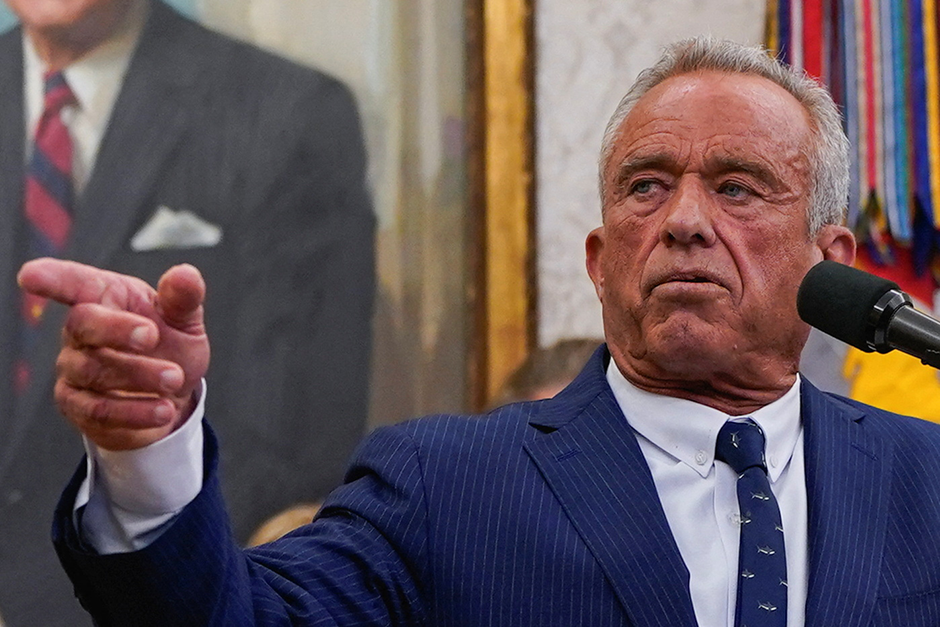



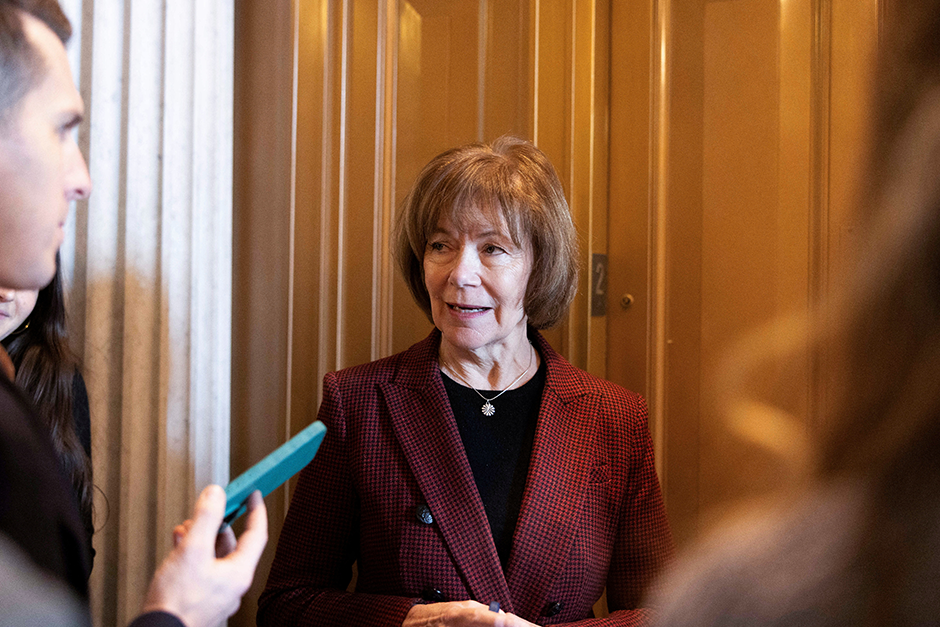














 PARSELY = { autotrack: false, onload: function() { PARSELY.beacon.trackPageView({ url: “https://wisconsinwatch.org/2025/02/wisconsin-beaver-dam-environment-flow-device-conflict-coexistence/”, urlref: window.location.href }); } }