Category: USA

  • D.C. Memo: Twin Cities threatened with loss of federal policing fund

    D.C. Memo: Twin Cities threatened with loss of federal policing fund

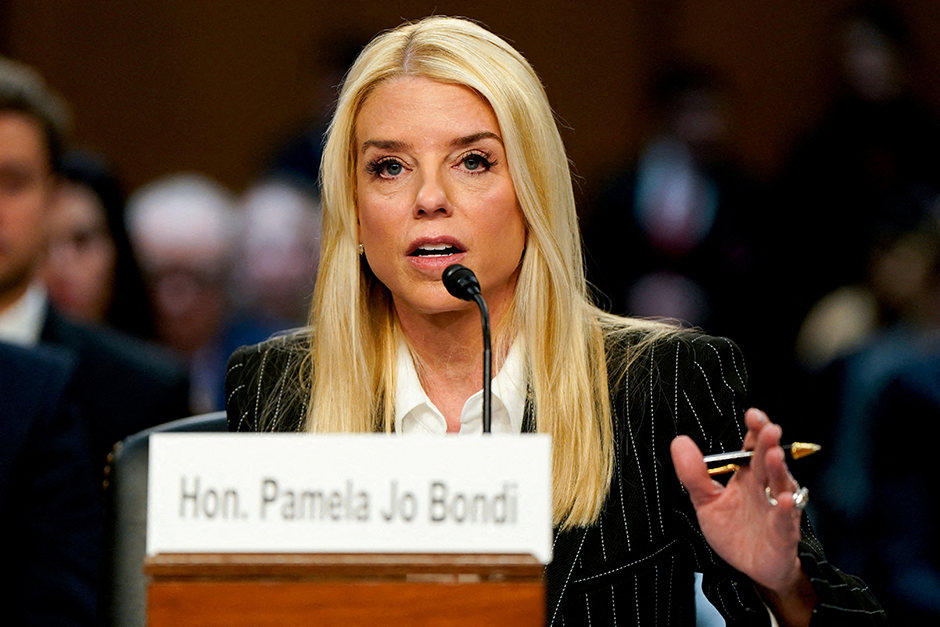
    WASHINGTON — One of the first things new Attorney General Pam Bondi did after being sworn in this week was direct the U.S. Justice Department to withhold all grants to “sanctuary cities” — those identified by the Trump administration as violating federal immigration laws.

    That could have broad implications in Minnesota as Minneapolis and St. Paul have immigrant-friendly policies that the Trump administration says hinder the efforts of federal immigration authorities while about a dozen counties have been identified as uncooperative with Immigration and Customs Enforcement.

    Minneapolis, for instance, has a Sanctuary City Task Force that it describes as “a multi-departmental team tasked with making recommendations to strengthen city-level policies, programs, and resources of the City of Minneapolis to better protect and defend undocumented immigrant families from unfair deportation … .”

    Minneapolis said it received about $2.9 million in Justice Department grants in 2025 and $2.8 million so far this year for things like police programs, opioid response and officer training.

    “Minneapolis fosters inclusivity, respect and safety for all, regardless of immigration status,” city spokesman Jess Olstad said in an email. “That work will continue. We continue to monitor decisions made at the federal level, but the city … fully complies with federal law.”

    The Center for Immigration Studies, a right-leaning think tank, says several offices within the Justice Department have provided $1.56 billion in grants to what it has identified as sanctuary cities in 2023.

    Bondi also tasked the Justice Department to end all grant funding to non-governmental organizations that “help illegals.”

    And Bondi directed the department to investigate instances of sanctuary jurisdictions obstructing law enforcement and “directing they be prosecuted, when necessary.”

    Omar takes on Musk

    Rep. Ilhan Omar, D-5th District, who was born in Somalia and came to the United States as a refugee, was subject to an onslaught of attack from Musk supporters. Those ranged from Elon Musk to a new freshman congressman from Texas called Brandon Gill who called for the deportation of his colleague.

    Omar drew fire for sharply criticizing Trump and Musk for freezing U.S. Agency for Economic Development funds that pay for the type of programs that kept her family “fed and safe” when they were in a refugee camp in Kenya.  

    Musk reposted on X a photo of a group of people at an event who were identified as a group of Somalis listening to Omar telling them how to evade deportation.

    “She’s breaking the law. Literally. Outright,” Musk wrote on X.

    But Omar was quick to bite back.

    “Hey Elon. Every single person in this country deserves to know their rights. That’s legal,” Omar said in her own post on X. “Maybe you should brush up on our laws given the fact you’re breaking them to steal American’s sensitive data. P.S. This video is manipulated, and I wasn’t even at the event shown.”

    Stauber introduces mining bill, again

    The second time might be the charm for Rep. Peter Stauber, R-8th District, as he introduced his bill to remove a moratorium on copper and nickel mining in Superior National Forest, restore two federal leases that had been pulled from mining company Twin Metals by the Biden administration and streamline federal review of mining projects, among other things.

    “The Biden administration’s mineral withdrawal in the Superior National Forest two years ago was a direct attack on our way of life in northern Minnesota and threatened our nation’s strategic national security,” Stauber said in a statement. “Thankfully, with Donald Trump back in the White House and Republicans in control of both Chambers of Congress, we are well positioned to reverse the damage done by President Biden and turn Minnesota into a critical mineral powerhouse.”

    Stauber’s bill was approved by the U.S. House in the last Congress but was never considered in the Democratic-led U.S. Senate. But the Senate flipped to the GOP in November’s election and now there’s a chance the legislation may pass that chamber, especially since there’s some thought to attaching it to a must-pass budget bill that cannot be subject to a Senate filibuster.

    “We are concerned about the Senate taking it up,” said Ingrid Lyons, executive director of Save the Boundary Waters, a non-profit group that has long fought the establishment of metallic sulfide mining in the watershed for the Boundary Waters Canoe Area Wilderness.

    Even if Stauber’s legislation isn’t included in the budget reconciliation package, which is expected to provoke strong Democratic opposition since it would include Trump cuts to a raft of federal programs, Lyons said Stauber’s bill has a chance of passing the Senate as stand-alone legislation subject to a filibuster.

    “I don’t think it’s impossible for him to get 60 votes,” Lyons said. “But we will put everything we have into making sure it doesn’t happen.”

    Smith, Klobuchar poke GOP at congressional dinner

    Despite all the discord in Washington, D.C., this week, journalists and members of Congress made nice and broke bread with each other at Wednesday’s Washington Press Club Foundation’s annual Congressional Dinner. 

    The dinner featured barbs and witticisms from speakers who included Sen. Tina Smith, D-Minn., who returned as headliner of the dinner after having had the flu and giving her remarks in a video last year.

    Sen. Amy Klobuchar, D-Minn., was also on stage making brief remarks and introducing other speakers. 

    “What is the difference between Greenland and Donald Trump?”  Klobuchar asked.

    “Greenland is not for sale,” she said.

    Klobuchar also said that she could not see Trump’s inaugural speech because “I was seated behind Melania’s hat.”

    Smith aimed some of her barbs at her Republican colleagues. She said when she first arrived in the Senate, Sen. Lindsey Graham, R-S.C., mistook her for another lawmaker’s wife and then apologized for his mistake.

    “Lindsey said, ‘I’m sorry. I must have my head up my ass,’ — which was really nice of him to say. And it was an honest mistake. And besides, everyone knows that Lindsey’s head is way up Donald Trump’s ass,” Smith said. 

    Smith also took digs at fellow Democrats.

    “Let’s be honest, the Democratic Party had a worse year than Drake,” she said. 

    She also turned serious at the end of her remarks, telling the room of journalists that they should redouble their efforts because “you are uniquely positioned to speak uncomfortable truth to extraordinary power.”

    “I’m not asking you to take sides in the fight between Democrats and Republicans, but I am asking you to take sides in the fight between democracy and authoritarianism,” Smith urged the members of the press.

    This journalist had as her guest Minnesota’s newest member of Congress, Rep. Kelly Morrison, D-3rd District, who was a great dinner companion. But I can’t tell you about our talk because, except for the speeches, the event has an off-the-record-tradition that means “what happens at the congressional dinner, stays at the congressional dinner.”

    ICYMI:

    • Reporter Deanna Pistono found that Target isn’t the only Minnesota company rolling back DEI initiatives in the wake of President Donald Trump’s threats. As she writes, 3M and CenterPoint Energy have also taken down DEI pages from their web sites and are reviewing their policies.
    • The state’s congressional Republicans gave Trump recommendations for U.S. attorney and U.S. marshal in Minnesota. Whomever Trump picks for U.S. attorney will be heavily involved in immigrant deportation efforts and may even prosecute local officials who don’t cooperate with those efforts.
    • We also took a look at how Trump’s threatened tariffs on Canada and Mexico would likely end up hurting Minnesota exports, especially agricultural products.

    Your questions and comments

    A reader took issue with President Donald Trump and Elon Musk’s efforts to cut the size of the federal workforce.

    “In a constant series of illegal and fundamentally unsound policy decisions, El Presidente continues to pull one government lever after another with no foresight or concern  as to the consequences,” the reader said. “The federal workers is potentially a fatal miscalculation. The federal civil service people have a deep sense of purpose and responsibility to the constitution and the American people … .”

    Please keep your comments, and any questions, coming. I’ll try my best to respond.

    Ana Radelat

    Ana Radelat

    Ana Radelat is MinnPost’s Washington, D.C. correspondent. You can reach her at aradelat@minnpost.com or follow her on Twitter at @radelat.

    The post D.C. Memo: Twin Cities threatened with loss of federal policing fund appeared first on MinnPost.
  • Next U.S. attorney in Minnesota expected to play role in immigration crackdown

    Next U.S. attorney in Minnesota expected to play role in immigration crackdown


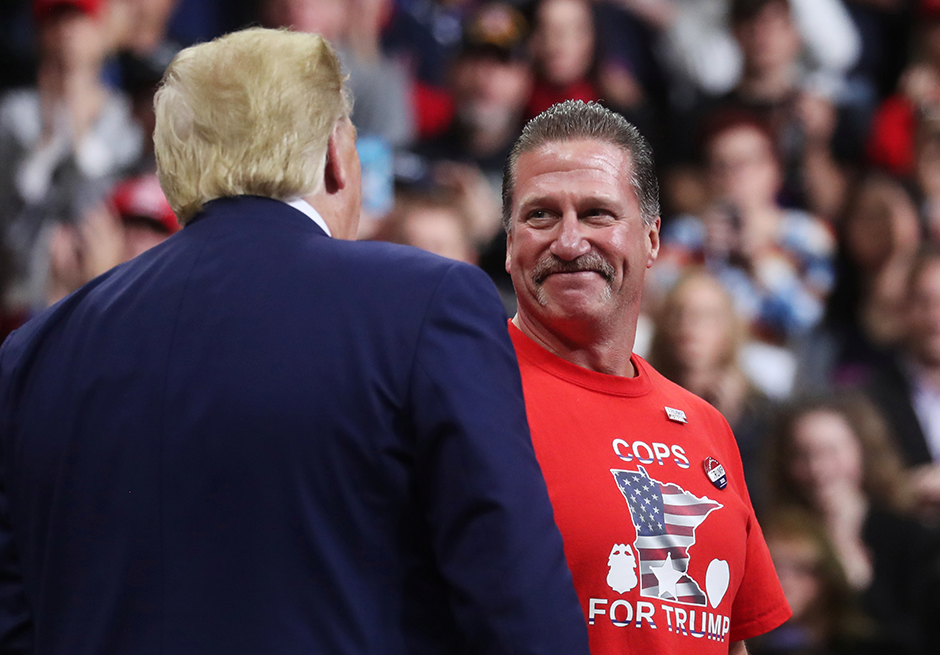
    President Donald Trump shared the stage with then-Police Officers Federation of Minneapolis President Lt. Bob Kroll at an Oct. 10, 2019 rally in Minneapolis. Kroll has been recommended for the job of U.S. Marshal.

    WASHINGTON — A candidate for the job hasn’t been picked, but the Justice Department has laid the groundwork for the next U.S. attorney in Minnesota, who will be tasked with taking part in President Donald Trump’s immigration crackdown.

    Minnesota’s Republican members of Congress sent Trump a letter last week recommending three candidates for U.S. attorney, a post recently vacated by Biden appointee Andrew Luger.

    The potential nominees are veteran lawyers Ronald Schutz, Daniel Rosen and Erica MacDonald, who served as U.S. attorney during Trump’s first term. Appointed by Trump and confirmed by the U.S. Senate, the U.S. attorney would oversee a staff of 70 lawyers and other administrative personnel.

    And that U.S. attorney, the top federal prosecutor in the state, would be expected to advance Trump’s agenda in the state and help immigration officials in their pursuit of undocumented migrants.

    According to a memo from acting Deputy Attorney General Emil Bove,  Minnesota’s U.S. attorney would join those in other states in participating in a “newly established Sanctuary Cities Enforcement Working Group.” That group would investigate and prosecute state and local officials who do not help federal authorities in their attempts to deport migrants.

    “The U.S. Attorney’s Offices and litigating components of the Department of Justice shall investigate incidents involving such misconduct for potential prosecution…” the memo said.

    Immigration and Customs Enforcement (ICE) lacks the resources and manpower to carry out the scale of arrests and deportations Trump has promised, making cooperation from local officials critical for the success of their mission.

    Prosecution of local officials who don’t cooperate has already begun. The U.S. Justice Department is investigating an upstate New York sheriff’s office for releasing an undocumented immigrant from custody in defiance of a federal arrest warrant because the immigrant had completed his sentence for third-degree assault.

    Bove’s memo said state and local officials are required to aid federal authorities in immigration enforcement efforts under the Supremacy Clause of the U.S. Constitution, which maintains that federal law takes precedence over state law.

    However, the 10th Amendment of the U.S. Constitution limits the federal government’s power to compel states to enforce immigration law.

    Jason Marisam, a constitutional law professor at Mitchell Hamline School of Law, said different administration’s focus on different crimes. “That happens all the time,” Marisam said.

    For instance, Marisam said Luger focused on illegal guns and gun-related violations of federal law for a good part of his tenure.

    But Marisam also said “there are constitutional limits on how much the federal government can pressure state and local authorities.”

    Mark Osler, a law professor at the University of St. Thomas and a former federal prosecutor, said investigating and prosecuting local officials could hamper the federal government’s crimefighting efforts.

    “The danger there is is that criminal justice works best when there is cooperation between state, federal and local officials and this could cause some tension,” Osler said.

    Trump has to replace most of the 93 U.S. attorneys from the Biden administration, a changeover that could take months.

    But the Trump administration seems to want to replace some in key posts quickly. Still, a decision on nominations for the next U.S. attorney in Minnesota could take several weeks — or longer.

    Trump could select anyone he chooses for the job, but here are the candidates recommended to the president by Reps. Tom Emmer, R-6th District; Pete Stauber, R-8th District; Michelle Fischbach, R-7th District and Brad Finstad, R-1st District:

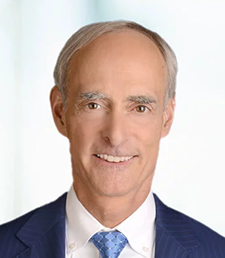
    —Ronald Schutz, a partner at Robins Kaplan law firm and graduate of the University of Minnesota Law School

    Schutz was the former chair and current board member of the Center of the American Experiment, a Minnetonka-based conservative think tank.

    Ronald Shutz
    Ronald Schutz

    He also served as chairman of the board of former Gov. Tim Pawlenty’s presidential campaign and is on several “top lawyer” lists, including the National Law Journal’s “Top 10 Winning Litigators in the United States.”

    Schutz told MinnPost he contacted Emmer’s office the day after Trump was elected to express interest in the U.S. attorney’s job.

    While he’s known for winning verdicts in intellectual property cases, Schutz has worked as a prosecutor before as a JAG (Judge Advocate General) in the Army. In one case, he secured a 50-year prison sentence for a soldier convicted of rape.

    While Schutz is hopeful he’ll be the nominee, he said Trump could very well ignore the Minnesota lawmakers’ recommendations. “The White House is not constrained to nominate any of the three of us,” he said.

    —Dan Rosen is another University of Minnesota Law School graduate who has 30 years of experience as a commercial litigator and is now in solo practice in Minneapolis.

    Confirmed twice by a supermajority of the state Legislature to the Minnesota Campaign Finance Board, Rosen is also a Navy veteran and, according to the letter the GOP lawmakers sent Trump, a strong advocate for “charitable and community issues, especially matters of particular interest to the American Jewish community.”

    “I’m grateful for the congressional delegation’s confidence in me and I’m highly motivated to act on the president’s agenda as U.S. attorney,” Rosen told the MinnPost.

    Erica MacDonald
    Erica MacDonald Credit: United State Dept. of Justice

    —Erica MacDonald, a partner at the Faegre Drinker Biddle & Reath law firm in Minneapolis,  held the position of Minnesota’s U.S. attorney from 2018 to 2021.

    Earlier in her career, when she served as an assistant U.S. attorney in Minnesota, she worked to prosecute crimes against women and children on the Red Lake Indian Reservation and prosecuted some of Minnesota’s first human trafficking cases. She has also served as a judge in the First Judicial District of Minnesota.

    Having been in the  job before, and having worked with much of the U.S. attorney office staff, MacDonald “is the one who will know the office the best,” Osler said.

    It’s sheriff v policeman for U.S. marshal  

    In their letter to Trump, Minnesota’s Republican lawmakers also recommended two candidates for U.S. marshal in the state, a position also expected to be involved in carrying out Trump’s immigration policy.

    James Stuart
    James Stuart

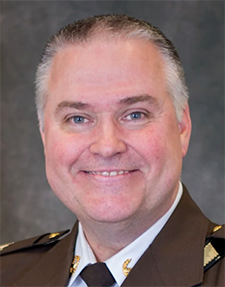
    One candidate is James Stuart, executive director of the Minnesota Sheriff’s Association. A former Marine, Stuart served three terms at the Anoka County Sheriff’s office.

    Robert Kroll, a veteran police officer and former president of the Police Officer’s Federation of Minneapolis, was also recommended for the job.

    Kroll became embroiled in controversy for defending the four officers who were accused and eventually convicted of killing George Floyd.

    He also criticized the city’s response to the unrest that followed, demanding the deployment of more Minnesota National Guard troops to quash the violence.

    As part of a settlement of two lawsuits filed because of his conduct, Kroll agreed to a ban from serving as a law enforcement officer in three of the state’s most populous counties (Hennepin, Ramsey and Anoka) for 10 years.

    Ana Radelat

    Ana Radelat

    Ana Radelat is MinnPost’s Washington, D.C. correspondent. You can reach her at aradelat@minnpost.com or follow her on Twitter at @radelat.

    The post Next U.S. attorney in Minnesota expected to play role in immigration crackdown appeared first on MinnPost.
  • Almost half of U.S. states haven’t done the bare minimum to cut utility bills

    Almost half of U.S. states haven’t done the bare minimum to cut utility bills

    During his first week in office, President Donald Trump withdrew from the Paris climate agreement, declared an energy emergency, renewed his vow to “drill, baby, drill,” and began dismantling American climate policy. That has left environmental advocates looking to states to lead the nation’s efforts to burn fewer fossil fuels — and a report released Wednesday shows there is much more they can do.

    One of the most powerful tools at each state’s disposal is the ability to work with utilities to encourage energy efficiency. But, the report from the American Council for an Energy-Efficient Economy, or ACEEE, details how only 26 states, along with the District of Columbia, have established a so-called “energy-efficiency resource standard,” or EERS. These targets, set by legislators or utility regulators, require utilities to implement programs — such as weatherization or rebates on appliances — that cut energy consumption by a certain amount each year.

    “There is more work that needs to be done,” said Jasmine Mah, a senior research analyst at the Council and an author of the report. Since 2012, just three states have added such a standard, while New Hampshire, Ohio, and Iowa repealed theirs in favor of less ambitious or scaled-back programming. Arizona is also pursuing a rollback. Mah says the report is aimed at state policymakers and regulators, who could shift that tide. 

    “We hope that highlighting the positive impacts of having an EERS in place would encourage states to pass a policy,” she said. An earlier ACEEE report found that, as of 2017, states with an energy-efficiency resource standard saw four times the electricity savings as states without one. In 2023, states with such a plan accounted for about 59 percent of the U.S. population but 82 percent of the savings.

    “States aren’t doing this just because of climate change,” said Barry Rabe, a political scientist at the University of Michigan who studies energy and climate politics. “There is an economic advantage.”

    Fossil-fuel friendly Texas, Rabe noted, was the first to adopt an EERS in 1999. But efficiency can become less of a priority when energy supplies are abundant and costs are stable. “The decline in interest,” Rabe said, “has in some degree coincided with the massive increase in natural gas use in the U.S.” 

    Still, the Council also found that many states have gone beyond baseline policies and implemented what the report dubs “next-generation” initiatives that aim to lower greenhouse gas emissions, spur electrification, serve lower-income populations, and reduce consumers’ financial energy burdens. All but four of the 27 states (including D.C.) with an energy-efficiency resource standard have implemented at least one such effort, but only nine have adopted all of them, leaving plenty of room for growth. 

    “We found that low-income targets are the most common complementary goal related to efficiency standards,” said Mah. “[But] not many states had provisions for energy affordability.”

    The report spotlights five states that have been particularly effective at employing these programs. Illinois has targeted using only clean energy by 2050. Massachusetts aims to install half a million heat pumps by 2030. Michigan mandates that utilities dedicate at least 25 to 35% of their energy-efficiency funding to programs serving low-income customers. Utilities in New York and Minnesota have capped the portion of a customer’s income that can go toward utility costs at 6 and 4%, respectively.

    President Trump’s push to repeal the 2022 Inflation Reduction Act, or IRA, likely won’t impact state EERSs because they are generally funded through fees added to utility bills. “We see that as probably the best way to bring significant funds,” said Justin Brant, the utility program director at the Southwest Energy Efficiency Project. 

    Critics of Arizona’s EERS, which was adopted in 2010, point to the $3 billion cost to customers. “Utilities should select the most cost-effective energy mix to provide reliable and affordable service, without being constrained by government-imposed mandates that make it more expensive for their customers,” said Arizona Corporation Commissioner Nick Myers in a statement last year. But the state’s largest electric utility found that, in 2023, EERS investments reaped about twice as much in returns as was spent. 

    “We’re saving money for all customers, even those who aren’t participating,” said Brant. 

    The IRA does provide nearly $9 billion for energy-efficiency and electrification programs, almost all of which is distributed via states and could be used on next-generation programs, like those serving low-income households. That money has already been awarded. But the Republican-controlled Congress could roll back federal tax credits for energy efficiency and electrification, which indirectly make it easier for states to achieve their energy-efficiency resource standard and next-generation goals. 

    Brant says he would add another policy to the Council’s “next-generation” wishlist for states: programs that encourage customers to spread out the timing of their daily energy use. Lower peak demand means power plants don’t need to be as large and that, he said, will be especially critical as renewable energy becomes an increasing part of the country’s electricity mix. 

    “​​Time shift is not something that this report looked at,” he said. “I think that’s another piece that needs to be prioritized.”

    This article originally appeared in Grist at https://grist.org/energy/almost-half-of-us-states-havent-done-the-bare-minimum-to-cut-utility-bills/. Sign up for Grist’s weekly newsletter here.

    Grist is a nonprofit, independent media organization dedicated to telling stories of climate solutions and a just future. Learn more at Grist.org

    The post Almost half of U.S. states haven’t done the bare minimum to cut utility bills appeared first on MinnPost.
  • Minnesota would be hard hit by Trump trade war with Canada and Mexico

    Minnesota would be hard hit by Trump trade war with Canada and Mexico

    WASHINGTON — Although they’ve been paused for 30 days, President Donald Trump’s tariff threats showed how dependent Minnesota is on trade with Canada and Mexico.

    According to the Minnesota Chamber of Commerce, about half of Minnesota’s exports went to those two countries and China in 2021, up from about one-third in 2002. And the chamber said trade between Minnesota and Canada grew about 39% from 2019 to 2021.

    Those Minnesota exports would suffer if the nations Trump has threatened with tariffs follow through with their own threats to impose retaliatory tariffs on U.S. goods.

    And the huge list of U.S. imports from the countries subject to the new tariffs — which range from cars and wine to pharmaceuticals — would be subject to substantial price hikes, fueling inflation, as U.S. importers pass the cost of the new tax along to consumers.

    A trade war with the United States’ closest neighbors and allies was forestalled when Trump reached deals with Mexico and Canada, which would have been subject to 25% tariffs on Tuesday.

    But on Tuesday, 10% tariffs will be placed on Chinese goods, which already bear tariffs.

    Under the terms of Trump’s agreement with Mexican President Claudia Sheinbaum, Mexico would send an additional 10,000 troops to the U.S.-Mexico border and the United States would aim to stop U.S. trafficking of high-powered weapons to Mexican drug cartels.

    An agreement with Canada took two phone calls between Trump and Canadian Prime Minister Justin Trudeau, who had said he would lodge a protest at the World Trade Organization against the new U.S. tariffs, seek redress under the USMCA and impose more than $155 billion worth of retaliatory tariffs on U.S. exports.

    In a posting on X, Trudeau said he “had a good call with President Trump” on Monday afternoon and suggested the pause on tariffs on Canadian goods was in response to Canada’s agreement to target the flow of fentanyl across the border into the United States.

    But while a trade war has been postponed, the threat of an economic upheaval still remains.  

    Canada’s retaliatory tariffs would be applied to more than 1,000 American products — from agriculture commodities to clothing and shoes to high-tech products. The list also includes paper products and other goods exported to Canada by Maplewood-based 3M.

    “3M is reviewing the recently announced tariffs,” the company said. “We are continuing to monitor the situation.”

    A USMCA fact sheet says that in 2019 Canada was Minnesota’s largest export destination and Mexico was the state’s second destination of the state-produced goods, accounting for a combined $7.2 billion in export sales that year.

    Trump said he plans to extend tariffs to other nations — including European Union countries — and that they are needed to raise money for the U.S. Treasury. But most economists say U.S. consumers will pay for the cost of the tariffs, not foreign exporters.

    “Families are already struggling with high prices and across-the-board tariffs will make it worse,” said Sen. Amy Klobuchar, D-Minn., who supported tariffs on foreign steel she said was dumped at lower prices to hurt domestic producers.

    “Tariffs should be applied with scalpel-like precision with specific goals,” Klobuchar said. “Instead, the president is using a sledgehammer and it’s going to clobber our economy.”

    Well-traveled pigs

    Minnesota’s farmers would be hard hit if there’s a trade war with Canada.

    When Trump instituted smaller tariffs on certain imported goods and imported steel and aluminum, Minnesota farmers were hurt by plunging commodity prices and a drop in exports.

    Trump was forced to tap a Great Depression-era program, the Commodity Credit Corporation, to pay farmers $28 billion as recompense for their losses.

    The USDA estimated that those payments constituted more than one-third of total farm income in 2019 and 2020.

    Minnesota Farm Bureau Federation President Dan Glessing said he hoped Trump’s more recent tariffs threats are merely a “bargaining chip” the president is using to seek concessions from allies.

    Glessing said the state’s farm economy could survive a new trade war “as long as it does not drag on too long.” But he said the disruptions in the market come at a bad time — on the heels of a two-year slump in U.S. farm exports.

    Klobuchar called Canada “a key economic partner for the northern states” and that tariffs on potash from that nation would sharply increase fertilizer costs for Minnesota farmers.

    Trump’s tariff policy also raises other questions because of the close relationship of Minnesota’s farmers with their counterparts to the north.

    Canada has an agreement with Minnesota pork producers that send piglets to grow into hogs in Canada. These hogs are shipped back to Minnesota and processed into meat products. Some of those pork products are exported back to Canada.

    “When you think of how much back-and-forth there is (in the operation), those tariffs could be considerable,” Glessing said.

    Ana Radelat

    Ana Radelat

    Ana Radelat is MinnPost’s Washington, D.C. correspondent. You can reach her at aradelat@minnpost.com or follow her on Twitter at @radelat.

    The post Minnesota would be hard hit by Trump trade war with Canada and Mexico appeared first on MinnPost.
  • D.C. Memo: Tragic crash in D.C. and funding freeze falls apart

    D.C. Memo: Tragic crash in D.C. and funding freeze falls apart

    WASHINGTON — This week in Washington was marked by the horrific and tragic midair collision between an Army Blackhawk and an American Airlines plane over the Potomac and the rollout and retraction by the Trump administration of a temporary freeze on government funding to states, local governments and non-profit organizations.

    The freeze on $3 trillion worth of government programs provoked chaos and panic and was reversed after a group of non-profits procured a court-mandated stay. But the effort to cut off federal funds continues.

    Trump’s Office of Management and Budget said it is conducting a review of 2,600 federal programs with an eye to singling out those that promote diversity, equity and inclusion (DEI) policies, facilitate abortions or run afoul of any policy or activity Trump doesn’t like.

    So, it’s highly likely the Trump administration will try to freeze government funding again, this time in a more surgical but still impactful manner.  And that attempt is likely to have to be defended in a federal court as it will be challenged as an illegal and unconstitutional impoundment by the executive branch of monies appropriated by Congress.

    Minnesota Attorney General Keith Ellison joined 22 other Democratic attorneys general this week to sue to stop Trump’s initial attempt to freeze funding and is likely to continue to battle the issue in court.

    Democratic members of Congress who are waging a public relations campaign against Trump’s attempt to eliminate programs, are also weighing a court challenge.

    As far as the plane crash, President Trump blamed his Democratic predecessors – former Presidents Obama and Biden – and DEI policies for the disaster. But he provided no evidence to back up his allegations.

    Meanwhile, fireworks broke out at several confirmation hearings this week, including one for Secretary of Health and Human Services nominee Robert F. Kennedy Jr.

    In a heated exchange, Sen. Tina Smith, D-MN, brought up Kennedy’s comments against the use of antidepressants, particularly among younger Americans, and his stated link of these anti-depressants to school shooters.

    “In fact, most school shooters were not treated for anti-depressants,” she said.

    Kennedy said he was talking about many factors that contributed to the shootings and that anti-depressant medications such as selective serotonin reuptake inhibitors (SSRIs), have serious side effects and need more research.

    “I just want to have good science,” he said.

    Smith told Kennedy that when she was younger, she was treated with an SSRI medication, therapy and other options to live a happier life. She said RFK Jr.’s comments stigmatized those suffering from depression.

    “And I’m very concerned that this is another example of your record of sharing false and misleading information that actually really hurts people,” Smith said.

    From DFL to DNC?

    Minnesota DFL Chairman Ken Martin has helped many candidates during his career in politics, but now he’s on the ballot on Saturday as the Democratic National Committee elects a new chairman.

    While there are a number of Democrats vying for the job, including failed presidential candidate Marianne Williamson and former Maryland Gov. Martin O’Malley, the race is considered a two-person battle between Martin and Ben Wikler, the chairman of the Wisconsin Democratic Party.

    Candidates have differed a little on nuts-and-bolts issues.

    There’s been unanimity among the candidates that, after November’s devastating defeat at the ballot box, there is  an urgent need to improve the Democratic party’s brand, especially among working-class voters and the nation’s labor unions.

    However,  Wikler, 43,  is known for his fundraising prowess, which likely played a part in his ability to win endorsements from big names in the Democratic Party, including Senate Minority Leader Charles Schumer and former House Speaker Nancy Pelosi.

    Martin, meanwhile, has been promoting his winning strategy in Minnesota, where the DFL has won every statewide election since he was elected chairman of the state party in 2011.

    Martin, 51, has spent his whole life in Democratic politics, and was a senior at Eden Prairie High School when he joined Paul Wellstone’s campaign for U.S. Senate.

    He says he has secured commitments from about 200 of the 448 party officials who will cast a vote Saturday at the Gaylord National Resort in Oxon Hill, Md., a suburb of Washington, D.C.

    Whoever wins that election will replace outgoing DNC chairman Jaime Harrison and take over a party that’s in crisis and has no obvious leader. The party has also failed to coalesce around a strategy to address the problems that cost them electoral losses in November and has no unified strategy to stop President Trump’s agenda.

    In case you missed it:

    Reporter Peter Callaghan explained why gridlock continues in the state House – and now in the state Senate and when a resolution to the problems brought by GOP electoral wins in November and other unexpected occurrences could be resolved.

    After U.S. Immigration and Customs Enforcement (ICE) has dropped its policy against entering schools and churches to detain immigrants, reporter Winter Keefer looked at policies the St. Paul and Minnesota school districts are adopting to protect their students.

    A new, expanded travel ban is in the works thanks to one of the many executive orders President Trump signed this past week. Similar to the “Muslim ban” that he established in his first term in office, this new travel ban will impact Minnesota’s Somali population and many foreign students who want to attend college in the state – and even some who are already attending classes.

    Your questions and comments

    A reader reacted to a story about migrants, both undocumented and with permission to work and live temporarily in the United States, who work on Minnesota farms and ranches, and their fates under the new Trump administration.

    One reader wrote: “I’ve been wondering about the ag (agricultural) industry, and how you’d think it would have been OBVIOUS to it/them that Trump’s deportation plans would kneecap their businesses, yet there was no huge swell of (Kamala) Harris support from them. Nary a peep, as far as I could tell!”

    Please keep your comments, and any questions, coming. I’ll try my best to respond. Please contact me at aradelat@minnpost.com.

    Ana Radelat

    Ana Radelat

    Ana Radelat is MinnPost’s Washington, D.C. correspondent. You can reach her at aradelat@minnpost.com or follow her on Twitter at @radelat.

    The post D.C. Memo: Tragic crash in D.C. and funding freeze falls apart appeared first on MinnPost.
  • Trump administration readying new ‘Muslim ban’ that would affect Minnesota’s Somalis and foreign students

    Trump administration readying new ‘Muslim ban’ that would affect Minnesota’s Somalis and foreign students

    WASHINGTON — Of all the executive orders President Trump has signed concerning immigration, there’s one that is causing the most confusion – and could severely limit the ability of people from many countries to enter the United States, even for a short visit.

    That executive order has roiled immigrant communities and their advocates and refugee resettlement agencies in the state and is believed to put in peril the visas of foreign students who are attending or want to attend Minnesota colleges.

    Trump has ordered the Department of Homeland Security, State Department and Director of National Intelligence to submit, in 60 days, a list of all nations that the agencies determine do not properly vet people who want to visit, live or study in the United States.

    The executive order, called “Protecting the United States from Foreign Terrorists and Other National Security and Public Safety Threats” has been compared to the “Muslim ban” Trump implemented in his first term in office.

    That ban blocked nationals from six Muslim-majority nations – including Somalia and Iran – and North Korea from entry into the United States. More than 700 travelers were detained, and up to 60,000 visas were “provisionally revoked.”

    The new initiative is expected to go much farther, affecting at least 20 nations and including Gaza, Somalia, Syria and other Muslim-majority nations.

    Trump’s executive order also directs the State Department and other agencies to investigate nationals from those countries who have migrated to the United States since 2021, when Trump’s last term of office ended.

    “The United States must ensure that admitted aliens and aliens otherwise already present in the United States do not bear hostile attitudes toward its citizens, culture, government, institutions, or founding principles …,” the executive order says.

    Foreign students could lose their visas if they are arrested or expelled. But they could soon also be vulnerable to losing their right to study in the United States if they were found to participate – or have participated in – pro-Palestinian protests or support other policies or ideologies that run afoul of the new administration.

    Adam Abu, vice president of Students for Justice in Palestine, a pro-Palestinian group at the University of Minnesota, said new protests have been planned at the campus since October.

    “But now it’s hard for us to recommend foreign students to come to protests when they might be deported just for protesting,” he said. “(The executive order) has set a dangerous precedent for future protests.”

    Among those whom Abu does not want to invite to demonstrations on campus are three students from Gaza that have recently been invited to attend the university.

    ‘A unified American identity’

    Ana Pottratz-Acosta, a professor at Mitchell Hamline School of Law who specializes in immigration law, said she “would not be shocked” if there weren’t at least 20 nations on Trump’s new ban.

    But she, and others interviewed for this story, said there is no clarity on what the Trump administration will do to implement a new travel ban.

    “At this point in time, it’s kind of speculative,” Pottratz-Acosta said.

    Lindsey Greising, an attorney for Advocates for Human Rights, a Minneapolis-based non-profit, said the specter of a new Muslim ban has created “a rumor mill” that may discourage efforts to apply for visas to the United States.

    “People still have the ability to apply for visas they are eligible for and continue to live their lives without fear,” she said.

    She also said the new investigation into how foreign nations screen applicants for visas is unnecessary, since U.S. consulates in those nations “have had a strong vetting process in place for years.”

    Still, the executive order is concerning, Greising said, especially since it orders federal agencies to evaluate programs “designed to ensure the proper assimilation of lawful immigrants into the United States, and recommend any additional measures to be taken that promote a unified American identity and attachment to the Constitution, laws, and founding principles of the United States.”

    Greising said the terms “assimilation,” and “unified American identity” are counter to the pluralistic nature of today’s American society.

    “We’re very concerned about any effort to use national security pretexts to push racists or nationalistic agendas,” she said.

    Door already shut on refugees

    On his first day in office, Trump also signed an executive order halting refugee admissions into the United States for at least 90 days to give the State Department time to investigate how well they are vetted.

    That order also ended all federal grants to refugee resettlement organizations, which are dominated by religious organizations, like Lutheran Social Services, which has offices in St. Cloud and Minneapolis.

    Since October, Lutheran Social Services has helped resettle 387 refugees from several nations, including Somalia, Afghanistan and Ukraine.

    Alexis Oberdorfer of Lutheran Social Services said these refugees “have arrived with little more than the clothes they are wearing and will need financial help to pay for rent, food, medical expenses and other basic needs.”

    While the organization receives private donations, most of its funding came from the federal government before Trump ended those payments. The federal government, for instance, paid for three months of each refugee’s basic living expenses.

    “With federal funds frozen for these vital expenses, we are cobbling together private funds to help newly arrived refugees with their immediate needs.” Oberdorfer said.

    And the door has now been shut on many refugees who have lived in camps for years and had been recently given permission to be reunited with family members in Minnesota, Oberdorfer said.

    According to the State Department, there were 1,018 refugee arrivals in Minnesota from Oct. 1 through Dec. 31 of last year. More than half, or 525 came from Somalia. The next largest group came from Afghanistan (97), and Ethiopia (90).

    Trump’s new version of his Muslim ban is likely to make immigration from Somalia and many troubled countries very difficult, if not impossible.

    According to the State Department, in 2016, 9,000 Somalis settled in the United States. That number dropped to 980 in 2017, when Trump first entered the White House and to 149 in 2020, the last year of Trump’s first term.

    Ana Radelat

    Ana Radelat

    Ana Radelat is MinnPost’s Washington, D.C. correspondent. You can reach her at aradelat@minnpost.com or follow her on Twitter at @radelat.

    The post Trump administration readying new ‘Muslim ban’ that would affect Minnesota’s Somalis and foreign students appeared first on MinnPost.
  • Madison and Nashville school shooters appear to have crossed paths in online extremist communities

    Madison and Nashville school shooters appear to have crossed paths in online extremist communities


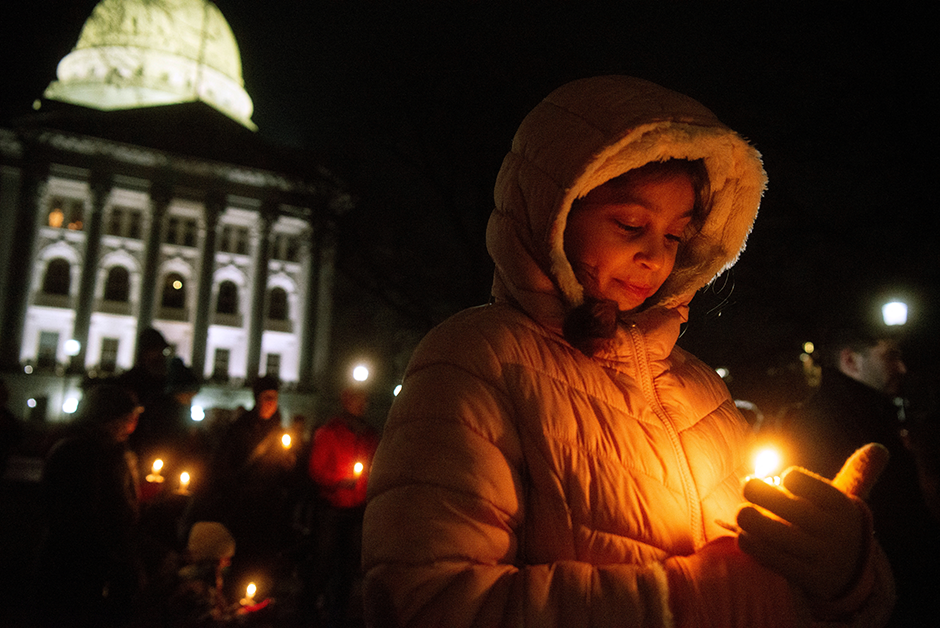
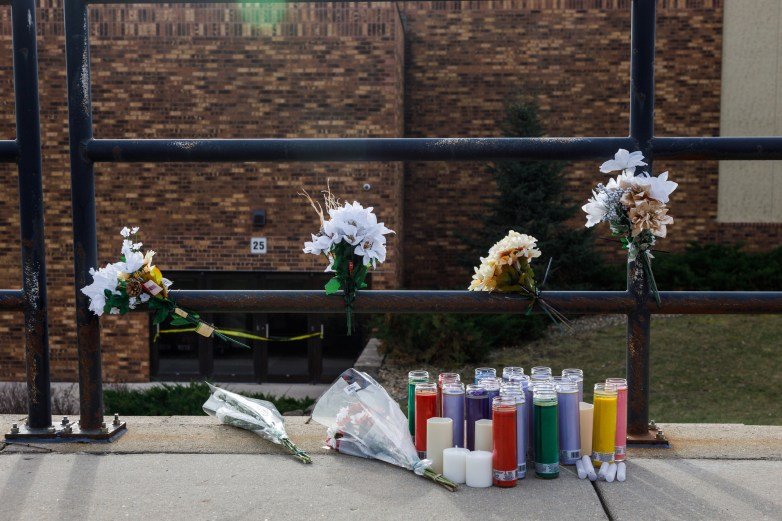
    Mourners gathered for a candlelight vigil at the Wisconsin State Capitol building a day after a shooting at Abundant Life Christian School, in Madison, Wisconsin, on December 17, 2024.
    Click here to read highlights from the story
    • Extremism researchers who tracked the social media activity of the Madison and Nashville school shooters found that the two teenagers may have crossed paths in online networks that glorify mass shooters.
    • According to researchers, both were active in the same online networks that glorify mass shooters.
    • In the weeks before a 17-year-old opened fire at a Nashville school, he appeared to become fixated on the teenager who killed two people and herself at a Madison, Wisconsin, school last month.

    Moments before 15-year-old Natalie Rupnow opened fire inside her Madison, Wisc., school, killing two people and herself last month, a social media account believed to be hers posted a photograph on X showing someone sitting in a bathroom stall and flashing a hand gesture that has become a symbol for white supremacy. 

    As news about the shooting broke, another X user responded: “Livestream it.” 

    Extremism researchers now believe that second account belonged to 17-year-old Solomon Henderson, who police say walked into his high school cafeteria in Nashville, on Wednesday and fired 10 shots, killing one classmate and then himself. Archives of another X account linked to him show that he posted a similar photo to Rupnow’s in his final moments. 

    While there isn’t any evidence that Rupnow and Henderson plotted their attacks together, extremism researchers who have tracked their social media activity told Wisconsin Watch and ProPublica that the two teenagers were active in the same online networks that glorify mass shooters, even crossing paths. Across various social media platforms, the networks trade hateful memes alongside terrorist literature, exchange tips on how to effectively commit attacks and encourage one another to carry out their own.

    The researchers had been tracking these networks for months as part of work looking into growing online extremist networks that have proliferated across gaming, chatting and social media platforms and that they believe are radicalizing young people to commit mass shootings and other violence.

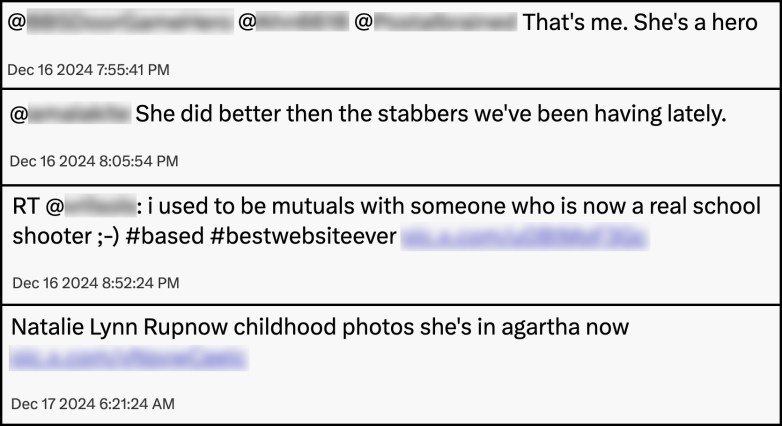
    The researchers’ analysis found only a few instances in which Rupnow and Henderson appeared to interact directly. But in the hours, days and weeks that followed the Madison shooting, Henderson appears to have become fixated on Rupnow. He boasted on X that Rupnow and him were “mutuals,” a common internet term for following each other, and shared another post that said, “i used to be mutuals with someone who is now a real school shooter ;-).”  

    In the hours after Natalie Rupnow opened fire in her school in Madison, Wisconsin, Solomon Henderson posted numerous times on X, supporting her and boasting that they were “mutuals.” (Obtained by Wisconsin Watch and ProPublica. Screenshots by ProPublica. Blurred by ProPublica)

    The researchers, who have collaborated with counterterrorism organizations, academics and law enforcement to prevent violence by tracking how extremist networks radicalize youth online, agreed to share information as long as they weren’t named out of concerns for their physical safety. The news outlets vetted their credentials with several experts in the field.

    It’s impossible to know with complete certainty that online accounts belong to particular people without specialized access to devices and accounts from law enforcement. The Metropolitan Nashville Police Department has acknowledged the existence of two documents they believe Henderson created, both of which contain details about his social media accounts. Other researchers and groups — including The Anti-Defamation League, Canadian extremism expert Marc-André Argentino and SITE Intelligence Group — have also determined these likely belong to Henderson. 

    The extremism researchers linked accounts to Rupnow, who went by Samantha, by tracing her activity across multiple social media profiles that revealed common biographical details, including personal acquaintances and that she lived in Wisconsin. On the bathroom post, one person the account regularly interacted with referred to Rupnow by her nickname, “Sam.” Wisconsin Watch and ProPublica were able to verify the social media posts and the connections between the accounts by retracing the researchers’ steps through archived social media accounts and screenshots.

    On Thursday, ABC News cited law enforcement sources in reporting that a social media account connected to Henderson may have been in contact with Rupnow’s social media account. The information reviewed by Wisconsin Watch and ProPublica details their suspected connections and interactions. Nearly all of the accounts that researchers have linked to Rupnow and Henderson have now been suspended.

    A Madison Police Department spokesperson said the agency knows Rupnow “was very active on social media” and it is “just starting” to receive and review documents from tech companies.  The Nashville police said they had nothing further to add beyond their previous statements. Rubi Patricia Vergara, 14, and Erin West, 42, were killed at Abundant Life Christian School in Madison. Josselin Corea Escalante, 16, died at Antioch High School in Nashville. Both attackers also killed themselves. 

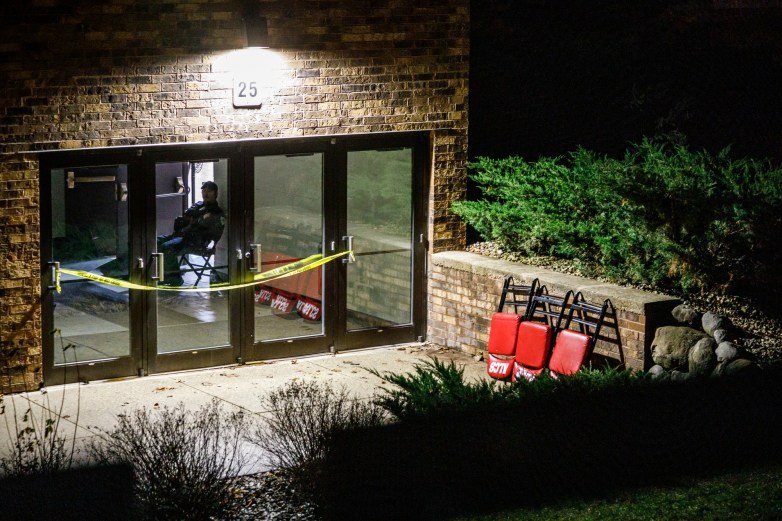
    Police are seen at Abundant Life Christian School on the evening of Dec. 16, 2024, in Madison, Wis., just hours after the school shooting. (Julius Shieh for Wisconsin Watch)

    Rupnow and Henderson both had multiple X accounts, the extremism researchers told Wisconsin Watch and ProPublica. At the time of her attack, Rupnow followed just 13 other users. Two of those accounts have been linked to Henderson.

    In November, Rupnow shared a post from Henderson, which appeared to wish a happy Veterans Day to the man who killed more than a dozen people at University of Texas at Austin in 1966. 

    After the Madison attack, someone wrote to Henderson and others on X, saying that one of their “buddies” may have “shot up a school.” Henderson told another user, “I barely know her,”  and said he had never exchanged private messages with her. Later, in a 51-page screed that Nashville police are examining, he emulated and praised several past attackers including Rupnow and said, “I have connections with some of them only loosely via online messaging platforms.”

    After Rupnow’s shooting, Henderson called her a “Saintress,” using a term common in the networks, and posted or reshared posts about her dozens of times, celebrating her racist, genocidal online persona and the fact that she had taken action. On one platform, he used a photograph of her as his profile picture. In his writings, he said he scrawled Rupnow’s name and those of other perpetrators on his weapon and gear.

    The online networks the two teenagers inhabited have an array of influences, ideologies and aesthetics. To varying degrees of commitment and sincerity, they ascribe to white supremacist, anti-Semitic, racist, neo-Nazi, occult or satanic beliefs.

    In this online world, the currency that buys clout is violence. This violence often involves children and teenagers harming other children and teenagers, some through doxing or encouraging self-harm, others, like Rupnow and Henderson, by committing mass attacks in the nonvirtual world. 

    “This network is best described as an online subculture that celebrates violent attacks and radicalizes young people into committing violence,” said one of the violence prevention researchers. “Many of the individuals involved in this network are minors, and we’d like to see intervention to give them the help and support they need, for their own safety as well as those around them.”

    Members of some of these communities, including Terrorgram, 764 and Com, have engaged in activities online and offline that have led to convictions for possessing child sexual abuse materials and sexually exploiting a child and indictments for soliciting hate crimes and soliciting the murder of federal officials. The cases are pending, and the defendants have not filed responses in court. This month, the U.S. State Department designated the Terrorgram Collective as a terrorist organization, saying “the group promotes violent white supremacism, solicits attacks on perceived adversaries, and provides guidance and instructional materials on tactics, methods, and targets for attacks, including on critical infrastructure and government officials.”

    When details of the Nashville shooting began to emerge, researchers realized they had seen some of Henderson’s accounts and posts within the network of about 100 users they are tracking. They had previously reported one username of an account belonging to Henderson, as well as others within the network to law enforcement and filed several reports with the National Center for Missing & Exploited Children. 

    They had not been aware of Rupnow’s accounts before her attack, but were able to locate her within the network after the fact, discovering she had regularly interacted with other accounts they had been following.

    A memorial is seen outside Abundant Life Christian School in Madison, Wis., on the morning of Dec. 17, 2024, one day after a school shooting killed two people, plus the shooter. (Julius Shieh for Wisconsin Watch)

    Alex Newhouse, an extremism researcher at the University of Colorado, Boulder, said these subcultures have a long history of lionizing and mimicking past attackers while goading each other to enact as much violence as possible — even by assigning “scores” to past attacks, something Henderson engaged with online. “The Antioch one is very obviously copycat,” Newhouse said.

    Although Henderson’s diary indicates he had been contemplating an attack for months prior to Rupnow’s, her shooting drew his attention. Hours after, he retweeted another post that said: “There should be a betting market for which rw twitter figure will radicalize the next shooter.” (RW stands for right wing.)

    However the two teens entered this online subculture, their writings reveal despair about their personal lives and the world around them and expressed violent, hateful views.

    After the Madison shooting, a separate social media user noted their association and tweeted at the FBI, accusing Henderson and others of having prior warning. They “need to be locked up,” the poster said, “no questions asked.”

    The FBI declined to comment. But after Henderson’s attack, social media users returned to the tweet: “hey so this guy literally just ended up calling a future school shooter a month ahead of time and the FBI did nothing about it.”


    If you or someone you know needs help:

    • Call the National Suicide Prevention Lifeline: 988
    • Text the Crisis Text Line from anywhere in the U.S. to reach a crisis counselor: 741741

    If you or someone you know has been harmed online, you can contact the National Center for Missing & Exploited Children at 1-800-THE-LOST or https://report.cybertip.org/.


    This article was produced for ProPublica’s Local Reporting Network in partnership with Wisconsin Watch. Sign up for Dispatches to get stories like this one as soon as they are published.

    This article first appeared on Wisconsin Watch and is republished here under a Creative Commons license. PARSELY = { autotrack: false, onload: function() { PARSELY.beacon.trackPageView({ url: “https://wisconsinwatch.org/2025/01/madison-nashville-school-shooters-online-internet-wisconsin-tennessee/”, urlref: window.location.href }); } }

    The post Madison and Nashville school shooters appear to have crossed paths in online extremist communities appeared first on MinnPost.

  • Trump funding freeze: What voters asked for, or ‘amateur-hour cruelty’?

    Trump funding freeze: What voters asked for, or ‘amateur-hour cruelty’?

    WASHINGTON – The Trump administration’s freeze on federal grants and aid to states, local governments and nonprofits will likely touch the lives of many Minnesotans as money for hundreds of programs – from road construction to  Meals on Wheels – has stopped or been rescinded.

    It also threatens to upend attempts by state and local governments to implement planned budgets, as money they had counted on receiving from Washington, D.C., has suddenly disappeared.

    “Minnesota will do what we can to keep the lights on, but we cannot fill the nearly $2 billion hole this will put in the state’s budget each month,” Gov. Tim Walz said. “This isn’t conservatism. This is amateur-hour cruelty.”

    Minnesota on Tuesday joined 22 other Democratic states in immediately filing a lawsuit to stop the federal freeze, saying it was an unconstitutional violation of the Administrative Procedures Act, a federal law that governs how federal agencies create and enforce rules. And later Tuesday, a federal judge temporarily blocked the funding pause.

    The freeze started in a two-page memo from the Office of Management and Budget saying a review of $3 trillion in federal spending was needed to bring a vast number of programs in line with President Trump’s priorities, citing a number of executive orders on immigration, diversity, equity and inclusion policies (DEI) and foreign aid.

    The memo did not say how long this review would take or how long the freeze would last. It stops work on many state and local transportation projects and puts a halt to a slew of government programs, including food stamps, heating assistance, Head Start, policing grants and funding to the state’s tribal governments.

    Medicaid funding, which represents the largest pot of money the state receives from the federal government, is also considered vulnerable. 

    At a Tuesday afternoon press conference at the St. Paul Eastside YMCA’s child care center, Minnesota Commissioner of Management and Budget Erin Campbell said her office tried to draw down more than $400 million from the state’s federal Medicaid account and was unable to do so Tuesday morning. But Campbell said her agency was able to access the funds later in the day. Other states also reported trouble drawing down Medicaid funding on Tuesday. The larges portion of Walz’s $2 billion monthly figure is Medicaid, but also included is about $850 million for other federal programs.

    The lawsuit Minnesota joined against the Trump administration also alleges the OMB has violated the separation of powers doctrine and Congress’ authority over the federal budget. Filed in federal court in California, the lawsuit seeks an immediate temporary court injunction on the funding freeze.

    “And it’s putting vulnerable people at risk,” Minnesota Attorney General Keith Ellison said at the press conference at the YMCA. “Messing around with federal funding is a very big deal.”

    “I do not sit around looking for ways to sue Donald Trump,” Ellison added. “But in the eight days he’s been in office he’s forced me to figure out ways to sue him almost every day.”

    Walz said he had not received any kind of guidance from OMB on how the freeze would impact the state and called it an “illegal power grab.” He also said it would be difficult to “backfill” with state funding all of the programs that will lose federal funds. 

    The governor said if Medicaid was included in the freeze, the state would lose $1.9 billion a month, and more than $800 million a month if Medicaid funding was continued.

    Democratic Sen. Tina Smith said reports of the freeze had an immediate effect.

    “I’ve heard from community health centers in Minnesota who are already looking at layoffs by the end of the day.  May not be able to make payroll at the end of the week,” Smith posted on Bluesky. “Republicans need to grow a spine here. This isn’t a game, it’s people’s lives.”

    Smith added in an emailed statement that “the impact of this funding freeze is so massive it’s impossible to comprehend.”

    “We are talking about programs that really, really matter to people. Programs that are life or death for Minnesotans. Anyone who relies on LIHEAP to heat their homes in the winter, or anyone who gets dialysis through Medicaid — this puts their lives and well-being at risk. And that’s just the tip of the iceberg,” Smith said.

    In a post on X, Rep. Angie Craig said she had heard from two cities in  her district that  they had been notified their Justice Department grants to local law enforcement agencies had been put on hold.

    “Withholding critical funding approved by Congress to hire police officers makes #MN2 communities less safe,” Craig said. 

    Republicans on Tuesday defended Trump’s actions and said “worthy” projects would be spared cuts or elimination.

    “We are 36 trillion dollars in debt, largely because of wasteful spending in Washington on things we don’t want and can’t afford,” said Rep. Pete Stauber, R- 8th District, in a post on X. “Rest assured, this pause on federal funding will be lifted on worthy projects, many of which I fought for in the Northland. This is good governance and what the American people voted for!”

    Rep. Tom Emmer, R-6th District, who like most House Republicans is attending a retreat at Trump’s south Florida Doral Golf Club, told reporters the president was “doing exactly what he was elected to do,” and that was to  “shake up the status quo.”

    But Democrats angrily denounced Trump’s move to impound federal funds.

    “This unprecedented and unconstitutional move is causing chaos and jeopardizing critical support for everything from pediatric cancer research to equipment for our first responders,” Sen. Amy Klobuchar said in a statement.

    Rep. Betty McCollum, D-4th District, a senior member of the House Appropriations Committee, said the phones in her Capitol Hill and St. Paul offices were “ringing off the hook” with calls from hospital administrators, community health centers, nonprofits, and “Minnesotans who are scared that they will not have the federal assistance they rely on.”

    The uncertainty prompted by the unexpected federal action led Senate Majority Leader Erin Murphy, DFL-St. Paul, to say “this extreme executive order throws our existing and future budgets into jeopardy.”

    “The short-term effect throws states, communities, schools, hospitals and households into uncertainty and fear,” Murphy added in her statement. “Long term, if cuts of even a fraction of this magnitude were implemented, the costs to individuals and families would be devastating.”

    Meanwhile, state Senate Finance Committee co-chair Eric Pratt, R-Prior Lake, downplayed the impact of the OMB’s action.

    I expect we will get more clarity and guidance to help the state fulfill the request on today’s memo. We also need to be sure that vital programs are uninterrupted, and this should be a fairly easy task to meet within the timeline given,” Pratt said in a statement. It’s unclear what timeline he was referring to.

    The post Trump funding freeze: What voters asked for, or ‘amateur-hour cruelty’? appeared first on MinnPost.

  • Frey pushes back on Trump administration threats to police reform consent decree

    Frey pushes back on Trump administration threats to police reform consent decree

    WASHINGTON – Minneapolis Mayor Jacob Frey pushed back Thursday on Trump administration plans to review a newly negotiated police-reform agreement with the city.

    “Regardless of the Trump administration’s announcement, we will be moving forward with the terms outlined in the consent decree,” the mayor said in a statement. “Our city worked hard on this agreement, we are prepared to implement the reforms and we are going to get this done.”

    The consent decree between the city and the Justice Department aims to curb excessive force and racial discrimination in the Minneapolis Police Department and is a reaction to the police killing of George Floyd more than four years ago.

    But Kathleen Wolfe, President Trump’s new supervisor of the Justice Department’s civil rights division, which negotiated the agreement when President Biden was still in office, issued a memo that puts the implementation of that consent decree in question.

    The memo – first reported by the Washington Post— says that the civil rights division must notify the Justice Department’s chief of staff of any consent decrees the division has finalized within the last 90 days.

    That would include the one regarding the Minneapolis Police Department, which was finalized and approved by the City Council earlier this month, as well as similar agreements the Justice Department has negotiated with Louisville and Memphis, which also could be in jeopardy.

    Minneapolis’ consent decree is now before U.S. District Judge Paul Magnuson in Minnesota for final approval. Magnuson was appointed by former President Ronald Reagan.

    It’s unclear if Magnuson can or would reject the agreement, which took years in the making. The Minneapolis police department on Thursday joined Frey in their defiance of the Justice Department’s plans to review the deal.

    “We’re moving forward,” said Sgt. Garrett Parten, a spokesman for the department. 

    The city added in a statement that the reforms would happen “with or without the federal government.”

    The consent decree would usher in new policies regarding the use of force and how Minneapolis police officers interact with members of the community. It would also expand a behavioral crisis response team that would handle emergencies in which a police officer is not necessary.

    And millions of dollars would be spent on the reform efforts and on new staff and technology to carry out the agreement’s requirements.

    In a separate action, the Justice Department has issued a freeze on new civil rights investigations and litigation. It’s unclear how long this freeze will last.

    MinnPost reporter Winter Keefer contributed to this story. 

    The post Frey pushes back on Trump administration threats to police reform consent decree appeared first on MinnPost.
  • What a new immigration directive could mean for domestic violence victims

    What a new immigration directive could mean for domestic violence victims


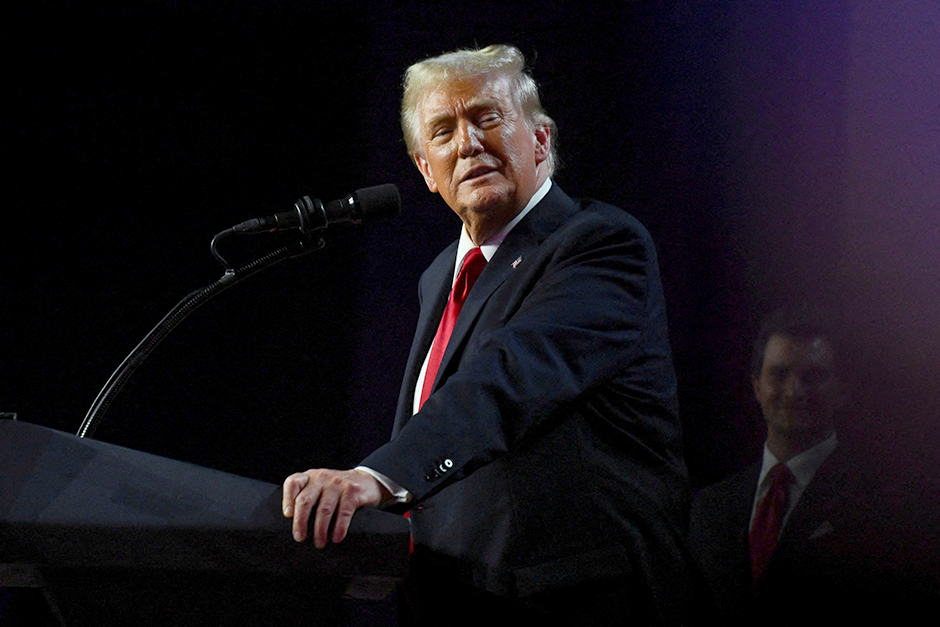
    President Donald Trump signing executive orders in the Oval Office on Jan. 20.

    Originally published by The 19th

    Just a day after Trump issued a slate of executive orders aimed at restricting immigration, the Department of Homeland Security (DHS) announced it was rescinding protections for “sensitive zones” where undocumented immigrants were protected from deportation. Some immigrant rights advocates are particularly worried that this could deter women experiencing domestic abuse from going to women’s shelters, which will no longer be protected from U.S. Immigration and Customs  Enforcement (ICE). 

    “The Trump Administration will not tie the hands of our brave law enforcement, and instead trusts them to use common sense,” a DHS spokesperson said in a statement. 

    The sensitive zones policy, which was created in 2011, initially applied to places like churches, schools and hospitals. In 2021, the list of places was expanded by the Biden administration to include locations offering disaster or emergency relief and social services. The policy was put in place to allow undocumented immigrants access to essential services like health care without the threat of being deported. ICE could enter these places only if there was a threat of terrorism or imminent risk of death, among other exceptions.  

    “What is really important about sensitive zones is that they allow migrant women and families to safely access these spaces without fear that ICE will arrest or deport them there,” said Zain Lakhani, director of the Migrant Rights and Justice Program at the Women’s Refugee Commission. “The impact might be, for instance, that a domestic violence survivor will stay in an abusive situation because they’re being forced to choose between their immediate safety and arrest and deportation if they go to a shelter or take their children to a shelter.” 

    The administration could further hamper services for those experiencing domestic violence by expanding the definition of a “public charge,” which Trump did in his first term, though it was struck down by a federal court a year later. The public charge rule, which had previously been defined by a 1999 field guidance, means people can be turned down for visas or green cards if they are determined to be dependent on the government financially. 

    This rule had typically been restricted to cash-assistance initiatives like the Temporary Assistance for Needy Family program, but Trump expanded it to include non-cash assistance programs like food stamps and Section 8 housing. Trump also changed the length of time someone could be in assistance programs before becoming ineligible, leading to a lot of uncertainty over who would be deemed a public charge. Many immigrants were less likely to enroll in programs during this time, even if they were eligible. 

    That had a particular impact on victims of domestic violence. The public charge rule did not apply to people with a U or T visa, which is available to victims of human trafficking and violent crimes like domestic violence. But the change in definition caused confusion both among people dispensing legal advice and the visa recipients themselves, who were entitled to some of these benefits but scared to access them. Housing or food assistance can be the difference between someone staying or leaving an abusive situation, Lakhani said. 

    “There was just a lot of confusion and a huge amount of chilling,” she said.

    And now, even the U and T visa program could be dismantled by the Trump administration as called for by Project 2025, which is largely seen as the policy blueprint for Trump’s second term.

    When someone applies for this visa, it creates an alert to immigration authorities that bars ICE from taking any enforcement action against a person if a tip comes in from the person committing the abuse. Ultimately, that stops abusers or human traffickers from being able to threaten people with deportation, Lakhani said. 

    While these visa programs need an act of Congress to be overturned, Lakhani said, there are levers the administration can pull to make the program ineffective. For example, they could decide to pause new applications for any visa category that is heavily backlogged. U visa applicants are currently waiting around 15 years for resolution of their cases, she said. 

    “The times are just astronomical, right? And so, of course, that is going to be considered a very heavily backlogged category, and so they could essentially cut off all access,” Lakhani said.

    “So much of these policies, what they do is instill fear, and I think that’s really critical,” Lakhani said. “It’s extremely dangerous because the state doesn’t even need to enforce them, in order people self-select out, and it forces them into these impossible, impossible choices.”

    The post What a new immigration directive could mean for domestic violence victims appeared first on MinnPost.