WASHINGTON — The new Congress that will convene Friday may get off to a rough start with the contentious vote for the leader of the U.S. House.
There’s no certainty Rep. Mike Johnson will win that election because several House Republicans say they are unsure if they want to reelect him as Speaker of the House, even after President-elect Donald Trump’s endorsement of the Louisiana Republican.
Due to the razor-thin majority the GOP will hold in the House, Johnson’s bid to remain speaker is doomed if just two House Republicans vote for someone other than him.
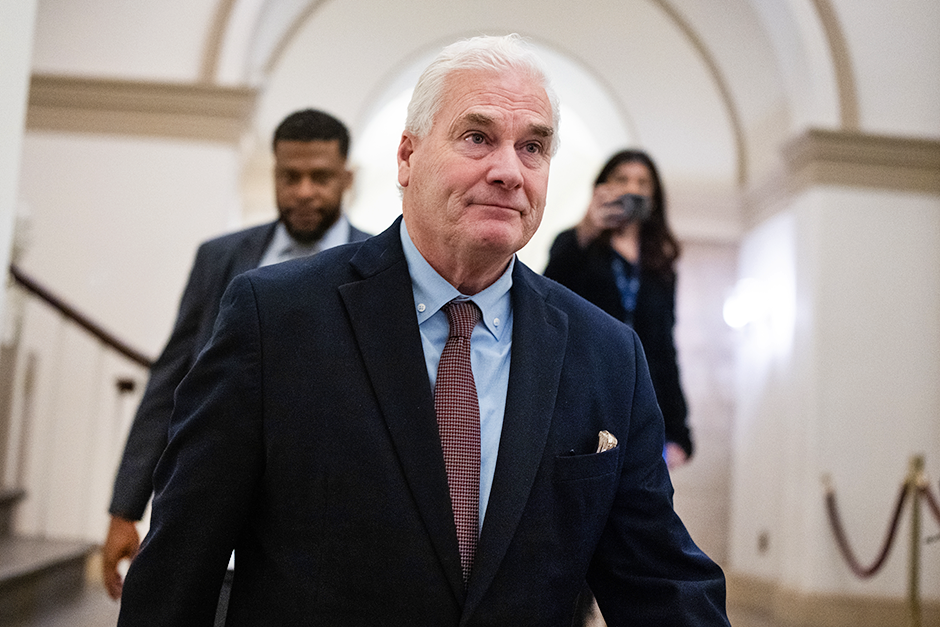
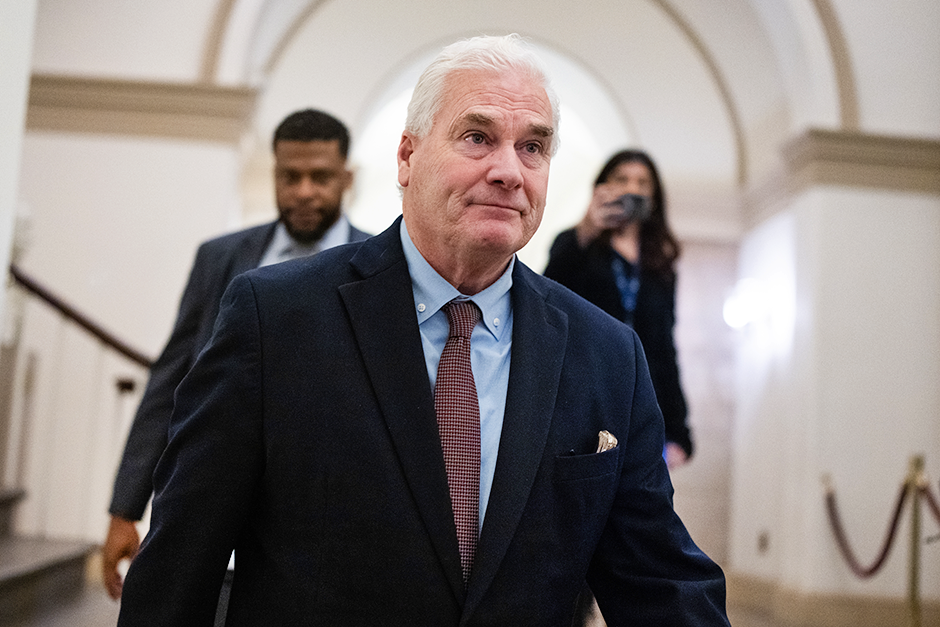
Johnson’s greatest strength is that there is no clear alternative. Punchbowl News reported that House Majority Leader Steve Scalise,Majority WhipTom Emmer of Minnesota and Judiciary Committee Chair Jim Jordan, R-Ohio, all want the job — just as they did in October of 2023 when a group of rebellious, hard-right GOP lawmakers ousted then-Speaker Kevin McCarthy, plunging the House into chaos.
But each of those candidates failed to win enough support then and are likely to face the same obstacle now.
Trump is expected to get more involved in the speaker’s election. If there is no speaker by Jan. 6, the House can’t certify Trump’s Electoral College victory. So it’s in Trump’s interest to get a speaker quickly and Johnson may be his best bet as the incumbent.
Election boosts Minnesota women in Congress
The number of women representing Minnesota in the U.S. House grew from four to five with the resignation of former Rep. Dean Phillips and the election of Kelly Morrison, who will be sworn in Friday to represent the 3rd Congressional District vacated by fellow Democrat Phillips.
In addition, Minnesota has two female U.S. senators, Amy Klobuchar and Tina Smith.
But Minnesota’s trend is not apparent nationwide. According to Rutgers University’s Center for American Women and Politics (CAWP), 150 women will serve in the 119th Congress, one fewer than the 151 women serving in the previous Congress.
Female representation in Congress will drop by one more when Rep. Elise Stefanik, R-New York, who has been nominated to serve as ambassador to the United Nations, resigns her seat.
“Election 2024 was essentially a stasis year for women’s representation, but after years of remarkable success, stasis can feel like a setback,” said CAWP Director Debbie Walsh in a statement.
Walsh also said “there’s more to this story” because women are nearing parity with male legislators in the Democratic Party in Congress and in most state legislatures, including Minnesota’s.
In the Minnesota Legislature, DFL women hold 52.5% of the seats while Republican women hold only 20.6%.
“To achieve gender parity in elected offices at every level, both parties must do the necessary, intentional work to recruit, support, and elect women,” Walsh said.
Schumer passes over Ken Martin
Senate Majority Leader Chuck Schumer said this week that he is endorsing Ben Wikler, the head of Wisconsin’s Democratic Party, to lead the Democratic National Committee, passing over Minnesota DFL Chair Ken Martin and a few other candidates.
Schumer is the highest-ranking Democrat to weigh in on the race so far. The election for a new DNC chairman will be held Feb. 1, with four candidate forums between now and then.
Besides Wikler and Martin, other hopefuls include former Maryland Gov. Martin O’Malley, New York state Sen. James Skoufis and former Department of Homeland Security official Nate Snyder.
Kroll seeks Trump appointment
The Minnesota Star Tribune reported that Bob Kroll, the controversial former police union leader, is seeking President-elect Donald Trump’s nomination to be Minnesota’s next U.S. marshal.
In the days after the 2020 murder of George Floyd, Kroll, a veteran police officer who was then the head of the police union, defended the four officers who were accused and eventually convicted of killing Floyd.
He also criticized the city’s response to the unrest that followed, demanding the deployment of more Minnesota National Guard troops to quash the violence.
As part of a settlement of two lawsuits filed because of his conduct, Kroll agreed to a ban from serving as a law enforcement officer in three of the state’s most populous counties (Hennepin, Ramsey and Anoka) for 10 years.
But Kroll’s attorney issued a statement to the Star Tribune that said the settlement shouldn’t keep Kroll from joining a federal agency that is primarily tasked with tracking down fugitives and providing security for Minnesota’s federal courthouses and judges. A U.S. marshal also assists in asset forfeiture, witness protection and transporting federal inmates between prisons.
Minnesota’s current U.S. marshal is Eddie Frizell, a Biden appointee who in 2022 became the state’s first Black marshal.
Your questions and comments
A reader wrote in response to a story about the elevation of Sen. Amy Klobuchar, D-Minn., and Rep. Angie Craig, D-2nd District, to the jobs of top Democrats on the Senate and House agriculture committee.
“When Republicans will focus on the Trump-Musk billionaire bro agenda, Craig, Klobuchar, Walz and even Omar will be pushing for a strong ag bill and rural Minnesota economy,” the reader wrote. “Trump is wrong on every rural issue. Privatizing the Postal Service, not protecting deposits in rural banks, targeting the weather service and deporting the workforce? Trump at his dimmest.”
Please keep your comments, and any questions, coming. I’ll try my best to respond.
Ana Radelat
Ana Radelat is MinnPost’s Washington, D.C. correspondent. You can reach her at aradelat@minnpost.com or follow her on Twitter at @radelat.
The post D.C. Memo: Emmer again in mix for speaker, but obstacles remain appeared first on MinnPost.
Political action committee spending on Minnesota congressional races fell from $24 million in the 2022 midterm election to $3.4 million in the 2024 election, an 85% drop.
The decline came even as Minnesota added a Senate race to the mix in 2024. According to filings from the Federal Election Commission through Nov. 25, independent expenditure spending on Minnesota congressional races — money spent by any PAC or other committee to support or oppose political campaigns — was the smallest seen in Minnesota since a $45 million spending peak in 2018, indicating that national attention on the state’s congressional races may be waning.
!function(){“use strict”;window.addEventListener(“message”,(function(a){if(void 0!==a.data[“datawrapper-height”]){var e=document.querySelectorAll(“iframe”);for(var t in a.data[“datawrapper-height”])for(var r=0;r<e.length;r++)if(e[r].contentWindow===a.source){var i=a.data["datawrapper-height"][t]+"px";e[r].style.height=i}}}))}();
The large decrease in PAC spending from 2022 to 2024 runs counter to an increase in campaign committee fundraising for Minnesota congressional races. Even when 2024’s Senate fundraising is taken out, congressional campaign fundraising was up 17% in 2024 as compared to 2022. Overall, campaign fundraising increased from $28.5 million in the 2016 general election to $66 million in 2024, with a peak of $75.5 million raised across all 2020 races.
!function(){“use strict”;window.addEventListener(“message”,(function(a){if(void 0!==a.data[“datawrapper-height”]){var e=document.querySelectorAll(“iframe”);for(var t in a.data[“datawrapper-height”])for(var r=0;r<e.length;r++)if(e[r].contentWindow===a.source){var i=a.data["datawrapper-height"][t]+"px";e[r].style.height=i}}}))}();
The drop in independent expenditures indicates a relative decrease in national financial attention toward the state’s congressional races and candidates, said Christopher Terry, a professor of journalism at the University of Minnesota researching political advertising. Terry chalks this up to the relative security of incumbent candidates running in 2024.
Concerning senior Sen. Amy Klobuchar’s campaign this year, Terry said a large investment in either campaign may have not been worth it: “She couldn’t lose here if she tried.”
Since 2016, the Minnesota seat attracting the most PAC financial attention has been the state’s 2nd Congressional District. Out of the $129 million in independent expenditures focused on Minnesota’s House and Senate races between 2016-2024, $35.8 million (28%) was spent on the state’s 2nd District elections. The district is currently held by Democratic Rep. Angie Craig, who first won the seat in the 2018 midterm election. That year, PACs spent $8.5 million to influence the race; $7.5 million of that total was spent on activities directly opposing either candidate’s campaign — $3 million against Craig and $4.5 million against Republican incumbent Jason Lewis, who won the 2nd District seat in 2016.
In 2024, independent expenditures toward campaigns for Minnesota’s 2nd District seat fell to $2.2 million. That election, in which Republican candidate Joe Teirab challenged Craig, also saw a relative drop in opposition spending from PACs. While 89% of PAC spending was in opposition to a given 2nd District candidate in the 2018 election, only 31% of 2024’s total independent expenditures were against either candidate.
PAC spending against Craig’s 2024 campaign fell to only $5,247.46 of text messaging campaigns by the conservative North Star Values PAC. The 2024 election’s biggest spender was the pro-cryptocurrency Fairshake PAC, who spent $974,000 to support Craig. Though Craig didn’t talk much about cryptocurrency and blockchain issues during the campaign, she is set to become the ranking Democrat on the House Committee on Agriculture and as such will have direct influence over commodities exchanges, potentially giving her sway over the country’s future regulation of cryptocurrencies.
Some of the biggest spenders from previous 2nd District elections — the National Republican Congressional Committee, the Democratic Congressional Campaign Committee, and the Democrat-supporting House Majority PAC, among others — were completely absent from this race in 2024.
Terry attributes the overall drop in PAC spending, in particular against Craig, to the district’s relatively expensive advertising market and Republican institutional fatigue built up over a series of midterm losses since 2018.
“Is it odd? Yes. I’m actually fairly surprised about it,” Terry said. “But on the whole, all that money was set on fire two years ago.”
While PAC spending fell off in Minnesota this past election, the state was no stranger to big campaign finance events. Here’s more MinnPost coverage of how political finances moved in 2024:
Campaign spending not even close between DFL, GOP in race to control Minnesota House
A debate-fueled spike in September fundraising as Harris outraised Trump in Minnesota
2024 campaign finance dashboard for Minnesota congressional races
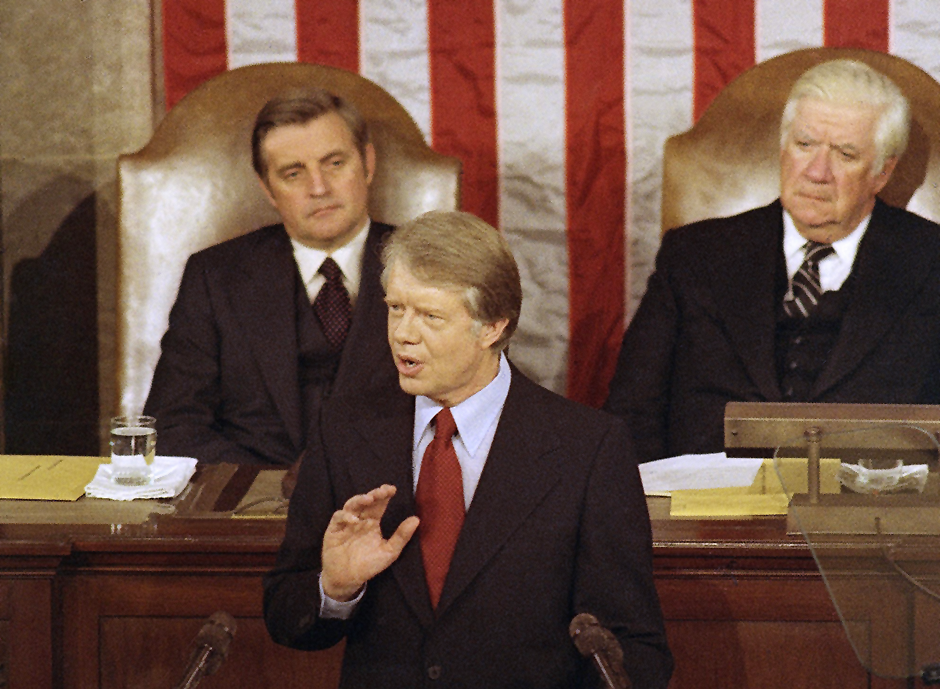
ATLANTA (AP) — Jimmy Carter, the peanut farmer who won the presidency in the wake of the Watergate scandal and Vietnam War, endured humbling defeat after one tumultuous term and then redefined life after the White House as a global humanitarian, has died. He was 100 years old.
The longest-lived American president died on Sunday, roughly 22 months after entering hospice care, at his home in the small town of Plains, Georgia, where he and his wife, Rosalynn, who died at 96 in November 2023, spent most of their lives, The Carter Center said.
“Our founder, former U.S. President Jimmy Carter, passed away this afternoon in Plains, Georgia,” the center said on the social media platform X. It added in a statement that he died peacefully, surrounded by his family.
As reaction poured in from around the world, President Joe Biden mourned Carter’s death, saying the world lost an “extraordinary leader, statesman and humanitarian” and he lost a dear friend. Biden cited Carter’s work to eradicate disease, forge peace, advance civil and human rights, promote free and fair elections and house the homeless as an example for others.
“To all of the young people in this nation and for anyone in search of what it means to live a life of purpose and meaning – the good life – study Jimmy Carter, a man of principle, faith, and humility,” Biden said in a statement.
Biden spoke later Sunday evening about Carter, calling it a “sad day” but one that “brings back an incredible amount of good memories.”
“I’ve been hanging out with Jimmy Carter for over 50 years,” Biden said in his remarks.
He recalled the former president being a comfort to him and his wife Jill when their son Beau died in 2015 of cancer. The president remarked how cancer was a common bond between their families, with Carter himself having cancer later in his life.
“Jimmy knew the ravages of the disease too well,” said Biden, who scheduled a state funeral in Washington, D.C., for Carter on Jan. 9.
Biden also declared Jan. 9 as a National Day of Mourning across the nation and ordered U.S. flags to fly at half-staff for 30 days from Sunday.
Businessman, Navy officer, evangelist, politician, negotiator, author, woodworker, citizen of the world — Carter forged a path that still challenges political assumptions and stands out among the 45 men who reached the nation’s highest office. The 39th president leveraged his ambition with a keen intellect, deep religious faith and prodigious work ethic, conducting diplomatic missions into his 80s and building houses for the poor well into his 90s.
“My faith demands — this is not optional — my faith demands that I do whatever I can, wherever I am, whenever I can, for as long as I can, with whatever I have to try to make a difference,” Carter once said.
A president from Plains
A moderate Democrat, Carter entered the 1976 presidential race as a little-known Georgia governor with a broad smile, outspoken Baptist mores and technocratic plans reflecting his education as an engineer. His no-frills campaign depended on public financing, and his promise not to deceive the American people resonated after Richard Nixon’s disgrace and U.S. defeat in southeast Asia.
“If I ever lie to you, if I ever make a misleading statement, don’t vote for me. I would not deserve to be your president,” Carter repeated before narrowly beating Republican incumbent Gerald Ford, who had lost popularity pardoning Nixon.
Carter governed amid Cold War pressures, turbulent oil markets and social upheaval over racism, women’s rights and America’s global role. His most acclaimed achievement in office was a Mideast peace deal that he brokered by keeping Egyptian President Anwar Sadat and Israeli Prime Minister Menachem Begin at the bargaining table for 13 days in 1978. That Camp David experience inspired the post-presidential center where Carter would establish so much of his legacy.
Yet Carter’s electoral coalition splintered under double-digit inflation, gasoline lines and the 444-day hostage crisis in Iran. His bleakest hour came when eight Americans died in a failed hostage rescue in April 1980, helping to ensure his landslide defeat to Republican Ronald Reagan.
Carter acknowledged in his 2020 “White House Diary” that he could be “micromanaging” and “excessively autocratic,” complicating dealings with Congress and the federal bureaucracy. He also turned a cold shoulder to Washington’s news media and lobbyists, not fully appreciating their influence on his political fortunes.
“It didn’t take us long to realize that the underestimation existed, but by that time we were not able to repair the mistake,” Carter told historians in 1982, suggesting that he had “an inherent incompatibility” with Washington insiders.
Carter insisted his overall approach was sound and that he achieved his primary objectives — to “protect our nation’s security and interests peacefully” and “enhance human rights here and abroad” — even if he fell spectacularly short of a second term.
And then, the world
Ignominious defeat, though, allowed for renewal. The Carters founded The Carter Center in 1982 as a first-of-its-kind base of operations, asserting themselves as international peacemakers and champions of democracy, public health and human rights.
“I was not interested in just building a museum or storing my White House records and memorabilia,” Carter wrote in a memoir published after his 90th birthday. “I wanted a place where we could work.”
That work included easing nuclear tensions in North and South Korea, helping to avert a U.S. invasion of Haiti and negotiating cease-fires in Bosnia and Sudan. By 2022, The Carter Center had declared at least 113 elections in Latin America, Asia and Africa to be free or fraudulent. Recently, the center began monitoring U.S. elections as well.
Carter’s stubborn self-assuredness and even self-righteousness proved effective once he was unencumbered by the Washington order, sometimes to the point of frustrating his successors.
He went “where others are not treading,” he said, to places like Ethiopia, Liberia and North Korea, where he secured the release of an American who had wandered across the border in 2010.
“I can say what I like. I can meet whom I want. I can take on projects that please me and reject the ones that don’t,” Carter said.
He announced an arms-reduction-for-aid deal with North Korea without clearing the details with Bill Clinton’s White House. He openly criticized President George W. Bush for the 2003 invasion of Iraq. He also criticized America’s approach to Israel with his 2006 book “Palestine: Peace Not Apartheid.” And he repeatedly countered U.S. administrations by insisting North Korea should be included in international affairs, a position that most aligned Carter with Republican President Donald Trump.
Among the center’s many public health initiatives, Carter vowed to eradicate the guinea worm parasite during his lifetime, and nearly achieved it: Cases dropped from millions in the 1980s to nearly a handful. With hardhats and hammers, the Carters also built homes with Habitat for Humanity.
The Nobel committee’s 2002 Peace Prize cites his “untiring effort to find peaceful solutions to international conflicts, to advance democracy and human rights, and to promote economic and social development.” Carter should have won it alongside Sadat and Begin in 1978, the chairman added.
Carter accepted the recognition saying there was more work to be done.
“The world is now, in many ways, a more dangerous place,” he said. “The greater ease of travel and communication has not been matched by equal understanding and mutual respect.”
‘An epic American life’
Carter’s globetrotting took him to remote villages where he met little “Jimmy Carters,” so named by admiring parents. But he spent most of his days in the same one-story Plains house — expanded and guarded by Secret Service agents — where they lived before he became governor. He regularly taught Sunday School lessons at Maranatha Baptist Church until his mobility declined and the coronavirus pandemic raged. Those sessions drew visitors from around the world to the small sanctuary where Carter will receive his final send-off after a state funeral at Washington’s National Cathedral.
The common assessment that he was a better ex-president than president rankled Carter and his allies. His prolific post-presidency gave him a brand above politics, particularly for Americans too young to witness him in office. But Carter also lived long enough to see biographers and historians reassess his White House years more generously.
His record includes the deregulation of key industries, reduction of U.S. dependence on foreign oil, cautious management of the national debt and notable legislation on the environment, education and mental health. He focused on human rights in foreign policy, pressuring dictators to release thousands of political prisoners. He acknowledged America’s historical imperialism, pardoned Vietnam War draft evaders and relinquished control of the Panama Canal. He normalized relations with China.
“I am not nominating Jimmy Carter for a place on Mount Rushmore,” Stuart Eizenstat, Carter’s domestic policy director, wrote in a 2018 book.
“He was not a great president” but also not the “hapless and weak” caricature voters rejected in 1980, Eizenstat said. Rather, Carter was “good and productive” and “delivered results, many of which were realized only after he left office.”
Madeleine Albright, a national security staffer for Carter and Clinton’s secretary of state, wrote in Eizenstat’s forward that Carter was “consequential and successful” and expressed hope that “perceptions will continue to evolve” about his presidency.
“Our country was lucky to have him as our leader,” said Albright, who died in 2022.
Jonathan Alter, who penned a comprehensive Carter biography published in 2020, said in an interview that Carter should be remembered for “an epic American life” spanning from a humble start in a home with no electricity or indoor plumbing through decades on the world stage across two centuries.
“He will likely go down as one of the most misunderstood and underestimated figures in American history,” Alter told The Associated Press.
A small-town start
James Earl Carter Jr. was born Oct. 1, 1924, in Plains and spent his early years in nearby Archery. His family was a minority in the mostly Black community, decades before the civil rights movement played out at the dawn of Carter’s political career.
Carter, who campaigned as a moderate on race relations but governed more progressively, talked often of the influence of his Black caregivers and playmates but also noted his advantages: His land-owning father sat atop Archery’s tenant-farming system and owned a main street grocery. His mother, Lillian, would become a staple of his political campaigns.
Seeking to broaden his world beyond Plains and its population of fewer than 1,000 — then and now — Carter won an appointment to the U.S. Naval Academy, graduating in 1946. That same year he married Rosalynn Smith, another Plains native, a decision he considered more important than any he made as head of state. She shared his desire to see the world, sacrificing college to support his Navy career.
Carter climbed in rank to lieutenant, but then his father was diagnosed with cancer, so the submarine officer set aside his ambitions of admiralty and moved the family back to Plains. His decision angered Rosalynn, even as she dived into the peanut business alongside her husband.
Carter again failed to talk with his wife before his first run for office — he later called it “inconceivable” not to have consulted her on such major life decisions — but this time, she was on board.
“My wife is much more political,” Carter told the AP in 2021.
He won a state Senate seat in 1962 but wasn’t long for the General Assembly and its back-slapping, deal-cutting ways. He ran for governor in 1966 — losing to arch-segregationist Lester Maddox — and then immediately focused on the next campaign.
Carter had spoken out against church segregation as a Baptist deacon and opposed racist “Dixiecrats” as a state senator. Yet as a local school board leader in the 1950s he had not pushed to end school segregation even after the Supreme Court’s Brown v. Board of Education decision, despite his private support for integration. And in 1970, Carter ran for governor again as the more conservative Democrat against Carl Sanders, a wealthy businessman Carter mocked as “Cufflinks Carl.” Sanders never forgave him for anonymous, race-baiting flyers, which Carter disavowed.
Ultimately, Carter won his races by attracting both Black voters and culturally conservative whites. Once in office, he was more direct.
“I say to you quite frankly that the time for racial discrimination is over,” he declared in his 1971 inaugural address, setting a new standard for Southern governors that landed him on the cover of Time magazine.
‘Jimmy Who?’
His statehouse initiatives included environmental protection, boosting rural education and overhauling antiquated executive branch structures. He proclaimed Martin Luther King Jr. Day in the slain civil rights leader’s home state. And he decided, as he received presidential candidates in 1972, that they were no more talented than he was.
In 1974, he ran Democrats’ national campaign arm. Then he declared his own candidacy for 1976. An Atlanta newspaper responded with the headline: “Jimmy Who?”
The Carters and a “Peanut Brigade” of family members and Georgia supporters camped out in Iowa and New Hampshire, establishing both states as presidential proving grounds. His first Senate endorsement: a young first-termer from Delaware named Joe Biden.
Yet it was Carter’s ability to navigate America’s complex racial and rural politics that cemented the nomination. He swept the Deep South that November, the last Democrat to do so, as many white Southerners shifted to Republicans in response to civil rights initiatives.
A self-declared “born-again Christian,” Carter drew snickers by referring to Scripture in a Playboy magazine interview, saying he “had looked on many women with lust. I’ve committed adultery in my heart many times.” The remarks gave Ford a new foothold and television comedians pounced — including NBC’s new “Saturday Night Live” show. But voters weary of cynicism in politics found it endearing.
Carter chose Minnesota Sen. Walter “Fritz” Mondale as his running mate on a “Grits and Fritz” ticket. In office, he elevated the vice presidency and the first lady’s office. Mondale’s governing partnership was a model for influential successors Al Gore, Dick Cheney and Biden. Rosalynn Carter was one of the most involved presidential spouses in history, welcomed into Cabinet meetings and huddles with lawmakers and top aides.
The Carters presided with uncommon informality: He used his nickname “Jimmy” even when taking the oath of office, carried his own luggage and tried to silence the Marine Band’s “Hail to the Chief.” They bought their clothes off the rack. Carter wore a cardigan for a White House address, urging Americans to conserve energy by turning down their thermostats. Amy, the youngest of four children, attended District of Columbia public school.
Washington’s social and media elite scorned their style. But the larger concern was that “he hated politics,” according to Eizenstat, leaving him nowhere to turn politically once economic turmoil and foreign policy challenges took their toll.
Accomplishments, and ‘malaise’
Carter partially deregulated the airline, railroad and trucking industries and established the departments of Education and Energy, and the Federal Emergency Management Agency. He designated millions of acres of Alaska as national parks or wildlife refuges. He appointed a then-record number of women and nonwhite people to federal posts. He never had a Supreme Court nomination, but he elevated civil rights attorney Ruth Bader Ginsburg to the nation’s second highest court, positioning her for a promotion in 1993. He appointed Paul Volker, the Federal Reserve chairman whose policies would help the economy boom in the 1980s — after Carter left office. He built on Nixon’s opening with China, and though he tolerated autocrats in Asia, pushed Latin America from dictatorships to democracy.
But he couldn’t immediately tame inflation or the related energy crisis.
And then came Iran.
After he admitted the exiled Shah of Iran to the U.S. for medical treatment, the American Embassy in Tehran was overrun in 1979 by followers of the Ayatollah Ruhollah Khomeini. Negotiations to free the hostages broke down repeatedly ahead of the failed rescue attempt.
The same year, Carter signed SALT II, the new strategic arms treaty with Leonid Brezhnev of the Soviet Union, only to pull it back, impose trade sanctions and order a U.S. boycott of the Moscow Olympics after the Soviets invaded Afghanistan.
Hoping to instill optimism, he delivered what the media dubbed his “malaise” speech, although he didn’t use that word. He declared the nation was suffering “a crisis of confidence.” By then, many Americans had lost confidence in the president, not themselves.
Carter campaigned sparingly for reelection because of the hostage crisis, instead sending Rosalynn as Sen. Edward M. Kennedy challenged him for the Democratic nomination. Carter famously said he’d “kick his ass,” but was hobbled by Kennedy as Reagan rallied a broad coalition with “make America great again” appeals and asking voters whether they were “better off than you were four years ago.”
Reagan further capitalized on Carter’s lecturing tone, eviscerating him in their lone fall debate with the quip: “There you go again.” Carter lost all but six states and Republicans rolled to a new Senate majority.
Carter successfully negotiated the hostages’ freedom after the election, but in one final, bitter turn of events, Tehran waited until hours after Carter left office to let them walk free.
‘A wonderful life’
At 56, Carter returned to Georgia with “no idea what I would do with the rest of my life.”
Four decades after launching The Carter Center, he still talked of unfinished business.
“I thought when we got into politics we would have resolved everything,” Carter told the AP in 2021. “But it’s turned out to be much more long-lasting and insidious than I had thought it was. I think in general, the world itself is much more divided than in previous years.”
Still, he affirmed what he said when he underwent treatment for a cancer diagnosis in his 10th decade of life.
“I’m perfectly at ease with whatever comes,” he said in 2015. “I’ve had a wonderful life. I’ve had thousands of friends, I’ve had an exciting, adventurous and gratifying existence.”
___
Sanz is a former Associated Press reporter.
The post Jimmy Carter, the 39th U.S. president, has died at 100 appeared first on MinnPost.
NASHVILLE, Tenn. (AP) — The right frame can freeze a moment in time, creating meaning for the masses from a fist pump over a bloodied ear, a bridge crumbled by a ship, towns shredded by nature, and a victory sealed with an on-field kiss.
In 2024, photographers across the U.S. captured glimpses of humanity, ranging from a deeply divisive presidential election, to hurricanes and fires that ravaged communities, to campus protests over the war between Israel and Hamas in Gaza.
The gallery from The Associated Press illustrates a new chapter of political history — the assassination attempt on former President Donald Trump, the moment President Joe Biden announced he would no longer run again, the campaign sprint by Vice President Kamala Harris in Biden’s place, and the raw emotion from voters during a grueling contest ultimately won by Trump.
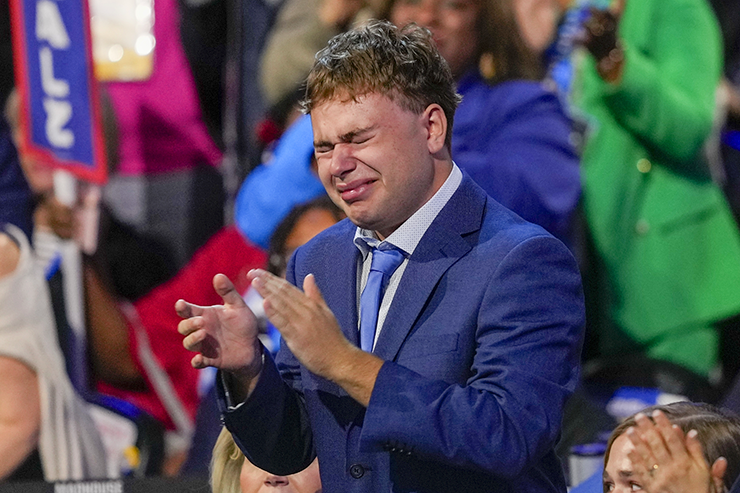
Gus Walz cries as his father, Democratic vice presidential nominee Minnesota Gov. Tim Walz, speaks during the Democratic National Convention Wednesday, Aug. 21, 2024, in Chicago. Credit: AP Photo/Matt Rourke
Hurricanes whipped through the country with devastating imagery, leaving a path of wreckage and death from Florida to Appalachia. After Hurricane Helene, Lake Lure in North Carolina was shown in a jarring photo covered in shards of debris thick enough to hide the surface of the water. Hurricane Milton ripped apart the roof of Tropicana Field in St. Petersburg, Florida, home to Major League Baseball’s Tampa Bay Rays.
The scale of destruction experienced in some corners of the country in 2024 was hard to capture and might have been harder to fathom. That was the case when a container ship slammed into the Francis Scott Key Bridge in Baltimore, causing it to collapse and crumple around the vessel, killing construction workers on the bridge.
The roof of Tropicana Field is damaged the morning after Hurricane Milton hit the region, Thursday, Oct. 10, 2024, in St. Petersburg, Florida. Credit: AP Photo/Julio Cortez
As flames torched the landscape in California, another image captured firefighters and sheriff’s deputies pushing a vintage car away from a burning home. Elsewhere in California, one photo is aglow with bright orange flames, broken up only by the subtle features of an animal running through them.
But hope also persevered in the face of devastation. In Helene’s aftermath, an image from Crystal River, Florida, shows Dustin Holmes holding hands with his girlfriend, Hailey Morgan, as they sloshed through floodwaters with her 4- and 7-year-old children to return to their flooded home. And in Manasota Key, Florida, a family was lit up by the glow of flashlights as they walked to check on their home damaged by Milton.
A telephone pole burns from the Smokehouse Creek Fire, Wednesday, Feb. 28, 2024, in Canadian, Texas. Credit: AP Photo/David Erickson
Other photos from 2024 also grabbed the darkness and shadows to emphasize light: among them, a rocket liftoff and a total solar eclipse. And, yes, eclipse glasses were back in style for a shared moment of skygazing.
But many other photos delivered a blast of color, from the spectrum of the northern lights across a Maine sky to a crew of workers wading into the deep-red of a Massachusetts cranberry bog.
Taylor Swift kisses Kansas City Chiefs tight end Travis Kelce after an AFC Championship NFL football game against the Baltimore Ravens, Sunday, Jan. 28, 2024, in Baltimore. Credit: AP Photo/Julio Cortez
And, once again, Taylor Swift captured the country’s attention, even as a part of the crowd. She rushed down from the stands to kiss her boyfriend, Kansas City Chiefs tight end Travis Kelce, after the Chiefs won the AFC Championship, en route to another Super Bowl win.
___
Get the best of The AP’s photography delivered to your inbox every Sunday. Sign up for The World in Pictures.
The post Associated Press top U.S. photos of 2024 appeared first on MinnPost.
WASHINGTON — When this year began, Gov. Tim Walz’s election as the new head of the Democratic Governors Association set him on a course to raise his profile – but who knew he would be at the center of the biggest political story of the year?
Walz began 2024 focused on duties typical of a Minnesota governor: naming judicial appointments, announcing a new state infrastructure plan and naming the eight winners of the 2023-24 Name a Snowplow contest.
The governor had problems, sure. He had to deal with the fallout of the $250 million “Feeding our Future” scandal, in which dodgy nonprofit groups claimed to distribute meals to schoolchildren during the pandemic. Instead, more than two dozen people involved were convicted or pleaded guilty to charges including fraud, bribery and money laundering.
Walz also had to defend state spending that could lead to a future budget deficit and was concerned the DFL might not be able to hang on to its majorities in the state Legislature.
But he faced a unique challenge in July when a group of Democratic governors wanted to meet with President Joe Biden to discuss concerns about the president’s rocky debate performance with Donald Trump.
As head of the DGA, Walz was in charge of trying to arrange a meeting between the governors and Biden, who had not reached out to those Democrats as concerns about the president’s health escalated.
Some of those governors, like Maryland’s Wes Moore and Rhode Island’s Dan McKee were Biden boosters. But others, including California Gov. Gavin Newsom and Michigan’s Gretchen Whitmer, had been floated as potential presidential candidates themselves.
Walz walked out of the meeting with Moore and New York Gov. Kathy Hochul, another Biden ally, and claimed all was well.
“Yes, fit for office,” the governor said in response to a question from a reporter, tamping down Democratic fears about Biden’s ability to lead the nation.
‘A knucklehead’
Walz’s calming of the political waters became a turning point in his political career. How he handled the sensitive visit to the White House was appreciated by the Biden-Harris campaign team – and it put him on the radar when Biden decided he would not seek a second term.
There were plenty of good VP candidates Vice President Kamala Harris, who replaced Biden at the top of the Democratic ticket, could have chosen as running mates, especially Pennsylvania Gov. Josh Shapiro, Kentucky Gov. Andy Beshear and Arizona Sen. Mark Kelly.
In fact, Las Vegas bettors gave Walz low odds at becoming the Democratic vice presidential pick.
But no one campaigned harder than Walz. He took to social media and cable news shows. Americans who had never heard of him warmed to his Midwesternisms and his interactions with his daughter Hope, who became an internet star in her own right.
Walz also came up with a popular insult to Donald Trump and his camp, calling them “weird” and boosting his candidacy as an effective communicator.
Walz’s Midwestern roots and his progressive record as governor also had an appeal to the new Harris for President campaign. Eventually, after what was characterized as a successful interview with Harris, Walz got the job.
That’s when his political and personal life zoomed in a totally different direction.
No longer would Walz spend his days on the more predictable job of governing Minnesota. Now he was on the national stage, giving stump speeches across the country and enlisting his wife, Gwen, and daughter Hope to help during a compressed campaign for the White House.
He also drew white-hot media attention, which resurrected his misstatements about his rank when he retired from the National Guard, the fertility treatments he and Gwen used to conceive their children and the timing of his visit to China’s Tiananmen Square (he was not there during a military crackdown on protesters, as he has said.)
Under pressure during his debate with Sen. JD Vance, Walz called himself a “knucklehead” for his misstatements.
Redlines for Trump
The governor was deployed to reach out to small-town and rural America, and try to connect with male voters who were cool to Harris.
Gwen Walz also proved to be adept at giving political speeches. Like her husband, she deployed to key swing states that would decide the election.
But the furious effort to win the White House failed, and Walz is now back home working out of the State Capitol in St. Paul.
He has joined a long list of losing vice-presidential candidates, a list that includes Teddy Roosevelt, Walter Mondale, John Edwards, Sarah Palin, Paul Ryan and Tim Kaine. Most never won a national election after their attempt to become vice president.
Walz was philosophical after his loss, saying the campaign gave him a good tour of the nation. But he also said he was “a little surprised” Americans rejected the Harris-Walz ticket.
“It felt like at the rallies, at the things I was going to, the shops I was going in, that the momentum was going our way,” Walz told Tom Hauser of KTSP-TV earlier this month. “And it obviously wasn’t at the end of time.”
In an interview with MPR News, he also rued why he, the least wealthy candidate for vice president, did not connect with voters who preferred Trump.
“I thought it was a real flex when the Wall Street Journal pointed out that I might have been the least wealthy person to ever run for vice president,” Walz said on MPR. “And I thought that would be something people say, ‘Well, this guy knows where we’re coming from. He’s had to pay his bills, he had to and still does.’”
Walz, who had to leave his job as the head of the DGA when he became a vice-presidential candidate, is now one of the 23 Democratic governors who will, in one way or another, be forced to contend with Trump’s agenda, which is likely to clash with their policies on health care, immigration, LGTBQ rights, education and other issues.
In that interview with MPR News, Walz said there are redlines where he would fight against the policies of a Trump presidency and a GOP Congress, including any that restrict abortion access or those aimed at ending vaccine requirements in Minnesota’s public schools
Will he run for reelection? Walz says he hasn’t decided yet.
Ana Radelat
Ana Radelat is MinnPost’s Washington, D.C. correspondent. You can reach her at aradelat@minnpost.com or follow her on Twitter at @radelat.
The post A 2024 lookback: Gov. Tim Walz’s very weird year appeared first on MinnPost.
One of President-elect Donald Trump‘s most popular talking points during his campaign centered on the future of transgender athletes.
Trump revisited the topic multiple times in the months and weeks before the election, suggesting at his rallies that one of the goals of his second term would be to “keep men out of women’s sports.” Millions were spent on advertising that turned something that affects a tiny minority of competitors into a wedge issue.
More than half of voters overall — and the vast majority of Trump supporters — said support for transgender rights in government and society has gone too far, according to AP VoteCast, a survey of more than 120,000 voters nationwide.
What, exactly, Trump will do when he takes office on Jan. 20 is unclear. His transition team has not divulged any specifics, though the president-elect said during his campaign that the process would be “easy.”
In some ways, it might be. In others, things could be far murkier.
What did Trump say during the campaign?
A lot. Trump seemed to identify the discussion around the rights of transgender people in general and trans athletes in particular as one that could garner both attention and support that went beyond his usual base.
Trump would often use language about gender identity that LGBTQ+ advocates say is wrong and harmful. He also falsely labeled two Olympic female boxers as men, and said their ability to participate in the Paris Games was “demeaning to women” even though both Imane Khelif of Algeria and Li Yu-ting of Taiwan were assigned female at birth and identify as women.
Trump ramped up the rhetoric as election day approached, telling the crowd at a Madison Square Garden rally in October: “We will get … transgender insanity the hell out of our schools, and we will keep men out of women’s sports.”
What are the presidential powers in this area?
Trump has said on Day 1 that he would cut federal funding to “any school pushing critical race theory, transgender insanity, and other inappropriate racial, sexual or political content on our children.”
There are several layers to this, but the most immediate would be how his administration interprets Title IX, the law best known for its role in pursuing gender equity in athletics and preventing sexual harassment on campuses.
Every administration has the authority to issue its own interpretations of the landmark legislation. The last two presidential administrations — including Trump’s first — offer a glimpse at the push-pull involved.
Betsy DeVos, the education secretary during Trump’s first term, issued a Title IX policy in 2020 that narrowed the definition of sexual harassment and required colleges to investigate claims only if they’re reported to certain officials.
The Biden administration rolled back that policy in April with one of its own that stipulated the rights of LGBTQ+ students would be protected by federal law and provided new safeguards for victims of campus sexual assault. The policy stopped short of explicitly addressing transgender athletes. Still, more than a half-dozen Republican-led states immediately challenged the new rule in court.
Trump could again shift the way the Title IX sports regulation is viewed and enforced.
“All Trump has to say is, ‘We are going to read the regulation traditionally,’” said Doriane Lambelet Coleman, a professor at Duke Law School.
What’s the difference between “sex” and “gender” and how would it affect Title IX?
Under the first Trump administration, the government interpreted “sex” as the gender someone was assigned at birth.
The Biden administration chose to interpret sex as “gender identity” under Title IX, which could be interpreted to protect trans athletes from being discriminated against if they wanted to participate in a sport that aligned with their gender identity, not their sex assigned at birth.
It is widely expected that Trump will roll back the definition of sex to align with the sex someone was assigned at birth.
How many transgender athletes are actively competing?
That number is up for debate.
The NCAA, for example, does not track data on transgender athletes among the 544,000 currently competing on 19,000 teams at various levels across the country, though NCAA president Charlie Baker testified in Congress on Tuesday that he was aware of less than 10 active NCAA athletes who identified as transgender.
A 2019 survey of high school students by the Gay, Lesbian and Straight Education Network (GLSEN) noted just 5% of respondents said they participated in a sport that aligned with their gender identity.
It might be easier to do the math from a macro level. A 2022 report by the Williams Institute estimated about 300,000 high school-age students (13-17) identified as transgender. How many of those young people participate in sports is unknown, but it is likely a tiny fraction.
Still, any case of a transgender athlete competing — or even believed to be competing — draws outsized attention, from Lia Thomas swimming for the University of Pennsylvania to the just-completed season of the San Jose State volleyball team.
What are the rules at the high school level?
It varies from state to state. About half the states have enacted legislation that effectively bars transgender athletes from competing in the category that aligns with their gender identity.
The AP reported in 2021 that in many cases, the states introducing a ban on transgender athletes could not cite instances where their participation was an issue. When Utah state legislators overrode a veto by Gov. Spencer Cox in 2022, the state had only one transgender girl playing in K-12 sports who would be affected by the ban. It did not regulate participation for transgender boys.
“This is a solution looking for a problem,” said Cheryl Cooky, a professor at Purdue University who studies the intersection of gender, sports, media and culture.
What about collegiately?
The NCAA established a policy in 2010 that requires trans athletes who were assigned male at birth to complete at least one year of testosterone suppression therapy before being eligible to compete on a women’s team. Trans athletes who were assigned female at birth and transitioned to male can compete on a men’s team but if they have received testosterone treatment are ineligible to compete on a women’s team.
The athletes are required to meet their chosen sport’s standard for documented testosterone levels at various points during a season.
In 2022, the NCAA revised the policy in what the organization called an attempt to be aligned with national sports governing bodies (NGBs). If the NGB does not have a trans athlete policy, then it scales up to the international federation that oversees the sport. If there is no international federation policy, previously established Olympic policy criteria would be followed.
The NCAA’s decision to kick it up to the NGBs proved more restrictive in some sports like swimming. A policy introduced by World Aquatics in 2023 only allows transgender athletes to compete in women’s races if the athlete can prove they have not experienced any part of male puberty.
Things are far more definitive for schools that compete in the National Association of Intercollegiate Athletics, the governing body for more than 200 small schools across the country. The NAIA voted unanimously earlier this year to effectively ban transgender athletes from competing in women’s sports.
And how about the Olympic level?
The International Olympic Committee has essentially passed the buck, deferring to the international federations for each sport.
That could change, however, when a new IOC president comes on to replace the retiring Thomas Bach.
Former track star Sebastian Coe, now the leader of World Athletics, is among the candidates up for election in March. Coe has been a strong proponent of limiting participation to cisgender women.
What might the future look like?
The near future figures to be volatile, with the state-by-state map on transgender athletes mirroring what abortion access looks like post-Dobbs. Democrats have been at odds about how to address the topic.
There is a chance that a Republican-led Congress could introduce another form of the “Protection of Women and Girls in Sports Act” that was proposed in 2021 and 2023. The 2023 version of the bill — which would prohibit school athletic programs from allowing individuals whose biological sex at birth was male to participate in programs that are for women or girls — passed the House but didn’t make it to the Senate floor for a vote.
Republicans hold a slim majority in the Senate and remain short of the 60-vote threshold needed for passage, but given the white-hot discussion around transgender athletes the issue could come to the fore quickly. It could come even as Sarah McBride, a Democrat from Maryland, becomes the first openly transgender person in Congress.
___
AP Sports Writer Graham Dunbar contributed to this report.
The post Donald Trump said he wants to ban trans athletes from competing. The reality is more nuanced appeared first on MinnPost.
WASHINGTON — A government shutdown was imminent Friday as Donald Trump, aided by billionaire Elon Musk, torpedoed a short-term budget bill negotiated by House Speaker Mike Johnson and Democrats and an alternative favored by the president-elect failed.
After Musk flooded his platform X with calls to kill the compromise, which would have funded the federal government for three months, Johnson withdrew it from consideration for a much slimmer bill that did not include Democratic priorities but included a Trump priority – an increase in the nation’s debt ceiling.
But a vote late Thursday on that alternative failed, with 38 Republicans and nearly all Democrats voting against it. The prospect of a government shutdown a minute after midnight on Friday seemed imminent.
All of Minnesota’s Republican House members voted for the bill and all Democrats voted against the failed effort.
On Friday morning, Johnson said he is working on another, last-minute attempt to stave off the shutdown. But he is not consulting Democrats whose votes he would need to push the legislation through Congress.
The chaos in these last few days of the 118th Congress revived threats among House GOP lawmakers to oust Johnson, R-Louisiana, when an election for that leadership role is held in January. Also revived: Whispers of replacing Johnson with Rep. Tom Emmer, R-6th District – who has several times said that he’s not interested in the job.
The impact of a government shutdown would grow over time. In Minnesota about 17,000 federal workers would be affected. Some would work without pay, if they are considered “essential employees.” That includes the TSA agents on the job during the busiest travel season, members of the military and employees of federal prisons.
Most federal workers would be furloughed without pay. While Social Security checks would still be disbursed, those who work for the agency would not be available to process new applications and resolve problems.
And Minnesota companies with federal contracts – which account for billions of dollars in revenue every year – would find that their applications for new contracts are on hold. Some with existing contracts may find their payments have stopped until the federal government reopens.
The failed agreement with Democrats that Musk and Trump derailed, called a continuing resolution (CR) would have extended the 2018 farm bill for another year, given farmers and ranchers $10 billion in disaster aid, and increased payments for several programs in the federal agriculture safety net, benefitting Minnesota’s wheat, corn and soybean growers.
The new money for farmers and ranchers was promoted by GOP lawmakers. But to attract enough votes to pass, the CR also included Democratic initiatives, including a bill sponsored by Sens. Amy Klobuchar and Ted Cruz called the “Take it Down Act,” that would require social media companies and websites to remove non-consensual, pornographic images created with artificial intelligence, a phenomenon that has recently exploded.
The more than 1,500-page CR also contained a provision that would allow the sales of E15 year round and give members of Congress, whose pay has been frozen since 2009, a cost-of -living raise in the amount of $6,600. Rank-and-file lawmakers currently earn $174,000 a year.
The proposed pay raise was torched on social media and condemned by GOP lawmakers. It was also opposed by some Democrats in “purple” districts, including Rep. Angie Craig, D-2nd District.
The dysfunction in Congress has resulted in an inability to pass the 12 spending bills needed to fund all government agencies. So the government has been funded since Oct. 1 – the beginning of the federal fiscal year – through a CR that expires at midnight on Friday.
Efforts to avoid a shutdown were made more difficult by Trump’s insistence that the CR raise the debt limit, a move that stunned lawmakers.
Trump hailed the GOP’s latest effort to avoid a shutdown, which would lift the debt limit for two years.
Raising the debt limit allows the federal government to borrow more money to meet its obligations. The national debt is now about $36 trillion and efforts to lift the cap provokes widespread criticism.
Trump said he wants the debt limit to be raised now, while Joe Biden is president and not when he is in the White House. Without a hike in the debt limit, the federal government would end the ability to meet its obligations in May or June, roiling financial markets and likely leading to an economic depression.
Congress last raised the limit 18 months ago, after Republicans and Democrats agreed to suspend a cap on how much the government can borrow until after the 2024 presidential election to avoid a politically difficult vote during the campaign season.
But, with plans to push tax cuts and drastically increased border spending, Trump is concerned a spending cap will limit his ability to pursue his agenda.
Rep. Betty McCollum, D-4th District, a senior member of the House Appropriations Committee, said “President-elect Trump is responsible for the impending shutdown.”
“We had a bipartisan agreement and a plan to keep the government open, but Elon Musk and President-elect Trump had their own idea – and it failed…” McCollum said.
She urged GOP leaders to “return to the original bipartisan agreement that Democrats and Republicans from both the House and Senate agreed upon to keep the government open for the American people.”
This and that
Sen. Amy Klobuchar was named the top Democrat on the Senate Agriculture Committee in the new Congress, which will shift to GOP control after November’s election.
The announcement of Klobuchar’s new job came Wednesday, the day after Rep. Angie Craig, D-2nd District, was named the highest-ranking Democrat on the House Agriculture Committee.
While the Minnesota lawmakers will both be in the minority in the 119th Congress, their position as top Democrats on the agricultural committees will give them some clout when Congress tries again to craft a new five-year farm bill.
Quinnipiac University released a poll this week that showed Minnesota native Pete Hegseth, President-elect Donald Trump’s pick for Secretary of Defense, has little public support for his confirmation.
Only 33% of the respondents of this national poll said Hegseth should be confirmed, while 39% said he should not be confirmed and 28% said they hadn’t heard enough about him.
Another controversial pick, Robert Kennedy Jr., the nominee to head the Department of Health and Human Services, had more support – 44% said he should be confirmed. But 45 % said Kennedy should not be confirmed and only 9% said they hadn’t heard enough about the controversial candidate.
Kristi Noem, Trump’s choice for Secretary of Homeland Security and Kash Patel, the nominee to head the FBI, also had the support of only 33% of the poll’s respondents. Meanwhile, Florida Sen. Marco Rubio, Trump’s choice for Secretary of State whose candidacy has created little controversy, won a majority of the respondents’ support, 53%.
Hegseth’s confirmation hearing before the Senate Armed Services Committee is scheduled for Jan. 14 and expected to be contentious. The former Fox News host has been accused of sexually assaulting a woman in his hotel room in 2017 and has been subject to allegations of out-of-control drinking and mismanagement during his time as the head of two veteran organizations. Hegseth denies all allegations.
In case you missed it:
Peter Callaghan wrote about a new caucus in the state Legislature called the Blue Dog Coalition created by moderate DFLers who seek better cooperation between Republicans and Democrats.
Freelancer Brian Martucci has a story about how clean energy investments – which bring the state billions of dollars — are at risk in the incoming Trump administration.
And, an increase in St. Paul property taxes has placed a focus on police overtime pay, reports Winter Keefer.
You can also read more about Rep. Angie Craig’s election to be the top Democrat on the House ag committee in my story from earlier this week.
Your questions and comments
A reader graciously said he liked our story about how Minnesota’s mining industry will get a boost in the second Trump administration, but he asked for more reporting on the state’s role in permitting the projects.
“Perhaps you can explore whether any of these projects will be operational in the next 4 years, in large part because more than the federal government is involved, i.e. Minnesota & the Native American tribes,” the reader wrote.
Yes, we have every intention of doing so!
Another reader reacted to the planned resignation of FBI Director Christopher Wray after it was clear he would be forced out so Trump could appoint Kash Patel to the position.
“Wray did his job and Trump thinks he is above the law,” the reader wrote. “(Trump’s) claims of weaponizing the FBI to get him are false, but he plans to do exactly that with his appointment,” the reader said.
Please keep your comments, and any questions, coming. I’ll try my best to respond. Please contact me at aradelat@minnpost.com.
The post D.C. Memo: GOP scrambles to avoid a government shutdown; poll shows Pete Hegseth not very popular appeared first on MinnPost.
With the holiday season in full swing, online gift shopping is the convenient and popular choice for many consumers in today’s digital age.
Those shoppers should beware: A 2023 study by the Federal Bureau of Investigation Internet Crime Complaint Center (IC3) showed scams were on the rise, and Minnesota ranked 18th among states last year with $193.9 million in losses.
This year about 70% of consumers in the U.S. said they were likely to shop for holiday gifts through online-only retailers, according to an October Statista study. Over half said they were likely to shop at mass merchants, and a third said they were thinking of shopping at off-price retailers or department stores.
“In 2023, IC3 received a record number of complaints from the American public: 880,428 complaints were registered, with potential losses exceeding $12.5 billion,” FBI Executive Assistant Director Timothy Langan said in the IC3 report.
A variety of scams
The FBI warned consumers that scammers can steal not only hard-earned money but also personal information.
Different types of scams include:
Non-delivery scams where a shopper pays for online goods or services but never receives them.
Non-payment scams where goods or services are shipped but payment is never received.
Auction fraud where a purchased item was misrepresented on an auction site.
And gift card fraud in which a seller might ask to be paid with a pre-paid card. This is where a seller may ask you to send them a gift card number and PIN. Instead of using that gift card for your payment, the scammer will steal the funds, and you’ll never receive your item.
According to the IC3 report, non-payment and non-delivery scams cost people $309 million in 2023.
The FBI said the IC3 receives a large volume of complaints of lost money or fraud in the early months of each year, which suggests a correlation with the previous holiday season’s shopping scams.
Common ways holiday scams are carried out include phishing emails or ads, social media scams including online surveys and offers of vouchers or gift cards, and charity scams.
According to the Better Business Bureau (BBB), the largest group of BBB Scam Tracker reports, 40% of the total, involve victims of online ads found on Facebook and Instagram.
Consumers told BBB that Facebook and Instagram are often not helpful in addressing violations of their own policies when consumers receive counterfeit goods, nothing at all, or items that were inferior to what was advertised and purchased.
Pop Crush reports that a Facebook scam is also back for the holiday season, aimed at tricking users to reveal login information. The phishing scam involves an email appearing to be from Facebook saying the user has violated its standards.
The message reads, “Recently, we discovered a breach of our Facebook Community Standards on your page. Your page has been disabled for violating Facebook Terms. If you believe the decision is incorrect, you can request a review and file an appeal at the link below.”
The link attached, once clicked, will give the scammer access to private information but will look real due to the fact it looks just like Facebook.com, according to Pop Crush.
The BBB recommends that consumers always log in directly to an account and proceed from there and never click on a sent link.
How to protect yourself
To avoid fraud, the BBB suggests a couple of things:
Check out websites before making a purchase.
Search for contact information and use caution if the site doesn’t have a U.S. or Canadian phone number or doesn’t use a Gmail or Yahoo business email address.
Keep a record of what you ordered.
Scrutinize online reviews.
Pay by credit card as they often provide more protection against fraud than other payment methods.
The FBI suggests not opening unsolicited emails or clicking on any links in those emails. The agency also suggests securing banking and credit accounts with strong and different passwords, securing all other accounts that contain anything of value, staying away from untrustworthy sites and using general caution and vigilance.
Complaints about being the target of a scam can be filed with the Minnesota Department of Commerce. Online shopping fraud can also be reported by visiting websites such as the BBB, the Federal Trade Commission (FTC) and the Internet Crime Complaint Center (IC3).
The post With holiday scams on the rise, learn to protect yourself online appeared first on MinnPost.
The cost of new energy-efficient home appliances, plug-in electric vehicles and maybe even electricity itself could increase for Minnesotans next year if President-elect Donald Trump and Republicans in Washington, D.C., make good on promises to scale back or end popular clean energy incentives passed during President Joe Biden’s term.
Thousands of jobs in the state’s booming clean energy sector could be at risk, too.
Since 2021, Minnesota has secured at least $12.2 billion in federal award money authorized by the Infrastructure Investment and Jobs Act, CHIPS & Science Act and Inflation Reduction Act, including nearly $3.5 billion in grants for projects intended to slow or adapt to the effects of climate change. And more than 100 clean energy generation and storage projects in Minnesota — representing nearly $11.1 billion in public and private investment and potentially creating more than 10,500 jobs — may be eligible for tax incentives authorized by the IRA, according to the Climate Jobs National Resource Center.
Federal funding authorized during the Biden administration has enabled significant investments in Minnesota manufacturing and infrastructure. But the Biden administration is winding down with tens of billions in awards yet to be finalized as a new president who has vowed to rescind unspent IRA funding prepares to take office.
“Everything is at risk, but particularly the equity-focused programs” like Solar for All, which aims to expand solar energy in lower-income communities, said Logan O’Grady, executive director of the Minnesota Solar Energy Industries Association. “I think we’ll see the Biden administration working really hard in the next month to make sure that money is encumbered.”
Trump’s executive-branch appointees could slow the flow of grants and loans authorized by the IRA while tightening eligibility for its generous clean-energy tax credits, but more significant changes are likely to come as part of a congressional deal to extend the expiring Tax Cuts and Jobs Act beyond 2025, according to energy policy experts on a November panel convened by tax credit marketplace Crux.
For example, the Republican-controlled Congress could repeal the new elective pay rule that allows tax-exempt organizations to claim IRA tax credits along with an IRA provision that has enabled billions in private clean-energy project financing by allowing project developers and owners to sell tax credits to others, federal tax policy expert Jennifer Acuña said on the webinar.
Elective pay “puts our members on a level playing field to get renewable energy tax credits [and would be] a key building block going forward to continue building out renewables” in Minnesota, said Darrick Moe, CEO of the Minnesota Rural Electric Association, which represents 50 member-owned, not-for-profit electric cooperatives operating in Minnesota.
Wind and solar energy
MREA members and end-users benefit from other IRA-enabled initiatives, like the U.S. Department of Agriculture’s New ERA program. Earlier this year, the USDA awarded $579 million to MREA member Dairyland Power Cooperative to procure 1,080 megawatts of wind and solar energy, enough to power more than 150,000 homes. Several other MREA members, including Great River Energy, are working to finalize Next ERA awards before Jan. 20, Moe said.
“Those programs are important to continue to carry out” to keep electricity reliable and affordable for MREA members, Moe said.
For Minnesota’s solar industry, the biggest concern aside from import tariffs on solar components — which have been in place for years and are expected to expand in Trump’s second term — is an early drawdown or outright repeal of the popular clean energy investment tax credit, which the IRA strengthened and extended, O’Grady said.
The ITC reduces by 30% the net cost of most eligible wind, solar and other clean energy investments that meet federal wage and apprenticeship requirements. For “energy community” projects benefiting areas historically dependent on the fossil-fuel industry, like the 710-megawatt Sherco Solar installation Xcel Energy is building to partially replace the output of the retiring Sherco coal-fired power plant, the potential credit is even larger.
Many ITC claims are made by private companies without public financial reporting obligations, making the credit’s cumulative impact on Minnesota’s economy more difficult to track than that of federal grants and loans, said Pete Wyckoff, deputy commissioner of energy resources for the Minnesota Department of Commerce.
But “the Department of Commerce and Minnesota Public Utilities Commission wouldn’t tolerate [state-regulated utilities like Xcel and Minnesota Power] not taking advantage of tax credits if eligible, just from a ratepayer perspective,” he added.
Private sector benefits
Beyond clean energy production, the IRA and other Biden-era legislation have catalyzed significant manufacturing investment in Minnesota.
Earlier this year, St. Cloud-based New Flyer was named “partner of choice” for more than $338 million in Federal Transportation Administration grants for low- or no-emissions buses enabled by the IIJA. New Flyer subsequently announced plans to ramp up hydrogen bus manufacturing at its central Minnesota plant.
Employment in Minnesota’s clean vehicle sector grew by 13% in 2023, led by a 14.4% jump in jobs related to electric vehicles, according to Clean Energy Economy Minnesota.
In September, Canadian solar module manufacturer Heliene announced the closing of a $50 million tax credit transfer as it works to open a second Minnesota plant in Rogers early next year. The company’s Mountain Iron facility has churned out solar modules since 2018.
Also this year, heavy equipment firm Cummins disclosed that it received $10.6 million from the U.S. Department of Energy’s IRA-expanded 48C tax credit program to support production of proton exchange membrane electrolyzers at its Fridley manufacturing plant. PEM electrolyzers use electricity to split water molecules and produce hydrogen, a critical feedstock for ammonia and other chemicals that can also be used as a carbon-free transportation fuel. When that electricity is produced by non-emitting resources like wind or solar, the resulting product is “green” hydrogen — in contrast to the methane-derived, carbon-intensive “gray” molecule that accounts for the vast majority of hydrogen used today.
“The IRA is why you’re seeing a huge buildout in all parts of the solar manufacturing and supply chain … and why you’re seeing the existence at all of a green hydrogen supply chain,” Wyckoff said.
The IRA and IIJA offer broader benefits for Minnesotans whose livelihoods don’t directly depend on the state’s rapidly growing green economy. That includes anyone who drives a plug-in electric vehicle — about 7% of all Minnesota car buyers in 2023 — and anyone considering energy-efficient home improvements, the enabling workforce for which accounts for 71.7% of all green jobs tracked by CEEM.
The IRA authorized up to $7,500 in federal income tax credits for qualifying buyers of new EVs and up to $4,000 in credits for qualifying used-EV buyers. Its $9 billion residential energy efficiency and electrification rebate program sets aside about $148.5 million for Minnesota properties, including up to $4,000 per household for qualifying retrofits and up to $14,000 for qualifying electric appliances or upgrades.
Meanwhile, the National Electric Vehicle Infrastructure program — authorized by the Infrastructure Investment and Jobs Act and administered by the Federal Highway Administration — has made four of its five anticipated annual disbursements to help build out public vehicle charging infrastructure, said Jon Solberg, assistant commissioner for sustainability, planning and program management at the Minnesota Department of Transportation. About $13.5 million remains to be disbursed in fiscal year 2026, Solberg said.
That funding wouldn’t come through until after Trump, a vocal EV skeptic, takes office. The new administration plans to eliminate the consumer EV tax credit through legislative action next year, Reuters reported last month, and Trump’s vow to rescind unspent IRA funding raises questions about the fate of the remaining NEVI funding.
But for now, it’s business as usual for MnDOT.
“[We] are proceeding with our plans to build chargers [and will] continue to do what we’ve been doing unless we are informed by [the Federal Highway Administration] not to do so,” Solberg said. “MnDOT feels strongly that a strong network of EV chargers across the state is important to provide consumers [with] options … and we will keep working with partners at the state and federal level to achieve those goals.”
The post Clean energy investments could be at risk in Trump’s second term appeared first on MinnPost.
ProPublica is a Pulitzer Prize-winning investigative newsroom. Sign up for The Big Story newsletter to receive stories like this one in your inbox.
In handwritten cursive, a Russian immigrant named Marina wrote out the story of the day U.S. Customs and Border Protection agents took away her 1-year-old baby while she was being held in a detention facility in southern California. “I cried and begged, kneeling, not to do this, that this was a mistake, not justice and not right,” she wrote. “She was so little that no one knew anything about her. I was very afraid for her and still am!”
This didn’t happen during the Trump administration, which separated more than 4,000 migrant children from their families under its controversial “zero tolerance” policy. Marina was separated from her baby in April of this year. The 40-year-old former restaurant manager came to the U.S.-Mexico border with her husband, mother-in-law and child to seek asylum. More than eight months later, she and her mother-in-law remain in federal immigration custody in Louisiana. Her husband is detained at a different Louisiana immigration facility. And Aleksandra is over a thousand miles away, being cared for by strangers in foster care in California.
Aleksandra is one of around 300 children the Biden administration has separated from their parents or legal guardians this year, according to two government sources who asked not to be identified because they hadn’t been authorized to speak about the separations. Most of the cases involved families crossing the southwestern border, the sources said. These numbers haven’t previously been reported.
Similarly, 298 children were separated from their parents in 2023, according to a government report to Congress published on Tuesday, even as overall migrant crossings have declined. According to the report, the average amount of time children separated between April 2018 and October 2024 have spent in federal custody before being released to a sponsor is 75 days.
The Department of Homeland Security, Customs and Border Protection, and Immigration and Customs Enforcement did not respond to multiple requests for comment on the numbers or on Marina’s case.
Those officials who did speak about the separations did so on the condition they not be identified. They said the current separations are not similar — in either character or scale — to what was happening during the Trump administration. Its zero tolerance policy directed authorities to detain and criminally prosecute all immigrants caught illegally crossing the border and to separate them from their children if they were travelling together. Biden administration officials say they have only separated families for reasons according to longstanding immigration practices, including when they have concerns about the parents or the safety of the children. Some of those concerns are related to suspicions about abuse, criminal histories or threats to national security.
The administration reports the numbers of separations to Congress and to lawyers at the American Civil Liberties Union who have been charged with providing oversight. However, those reports give few details about the reasons for the separations, especially in cases where parents have been flagged for national security reasons. Around 80 of the children separated between December 2023 and November 2024 were in that category, one of the government sources said, and some 50 of those were Russian, like Aleksandra. The second source said at least 10 of the Russian children who were separated this year are still in government custody.
In cases involving national security, the government can withhold its rationale even from the families themselves, making it hard for them and their lawyers to contest the separations or mount a defense. And some advocates have been reluctant to talk publicly about the current separations, much less call out President Joe Biden’s administration, as they press for the government to resolve their clients’ cases and fear the incoming Trump administration could apply the same standards more broadly to separate more families in the future.
Family separations at the border did not begin with the zero tolerance policy and didn’t end when it was lifted, said Talia Inlender, deputy director of the Center for Immigration Law and Policy at the University of California, Los Angeles School of Law, which wrote a report on family separations going back to the Obama years and before. She said that while Trump’s policy was unprecedented because of how expansive it was, the scant information that the government provides about separations at the border has been common practice across administrations.
“I think the lack of transparency creates a lack of accountability,” she said, “and that is by design.”
“Where there is room left for agency discretion,” Inlender said, “that’s really where we need to make sure that there are eyes on what is happening, so that these exceptions, or these grey areas, don’t become the rule.”
During telephone interviews with Marina and her husband, conducted through a translator, the couple said they hoped by breaking the silence on their case, they might get answers about why they were separated from their daughter and get her back. They asked to be identified only by their first names because of their pending deportation cases.
Marina said that she and her husband Maksim, who worked as a supplies manager at a construction company, had met at a restaurant where Marina worked in Moscow. They married in 2021 and tried for years to have a child before Alexsandra was born.
Maksim said he started going to antigovernment protests in support of opposition leader Alexei Navalny and later against Russia’s invasion of Ukraine. According to an affidavit Marina gave as part of her asylum case, she said Maksim had been detained, questioned and on one occasion beaten up by police after protests. ProPublica could not independently corroborate the accounts of his political activity. They both said Marina wasn’t involved in the protests and had asked him to stop attending them. Eventually the family decided to leave the country, fearing government reprisals.
After researching the best routes into the U.S. online, they said they bought tickets to Dubai, Mexico City and Tijuana, which sits on the border with California. Once in Tijuana, Marina said they waited for six months for an appointment after using a U.S. government app known as CBP One to apply for permission to approach the border and ask for asylum. They were finally granted a slot and allowed to cross in mid-April.
But instead of being released to pursue their asylum claim, Marina said she and Aleksandra were held in a cold cell at a Border Patrol detention facility. She said she was given only formula and vegetable purees for Aleksandra. She smashed up bread from her own sandwiches to give her daughter extra food. At the time Aleksandra was learning to walk and was always moving around; she had just started to talk.
Then, after several days, Marina said she and her baby were surrounded by border officials who told her the adults would be detained and Aleksandra would be taken away. She said one of the agents handed her a note that read: “CBP has made this decision for the following reason: You are being taken into custody for presenting a public safety or national security risk.”
Recalling the desperation she felt upon seeing the note, Marina wrote: “Why would that be? I didn’t even have an interview!!!”
She said she became catatonic after a Border Patrol agent took her daughter by the hand and led her away.
“I thought I died at that moment.”
Her experience might sound familiar to anyone who followed the news about the thousands of separations carried out by the Trump administration. Its zero tolerance policy first began as a pilot program in 2017, but the administration denied its existence until spring 2018. Even then, authorities refused to make public the details of how the policy was being implemented, including where the children were being held, how many of them were in custody, or even how the separations were conducted.
In June of 2018, ProPublica obtained audio that had been recorded in a Border Patrol facility of wailing children who had been separated from their parents. Among them was a 6-year-old girl, pleading to make a phone call to her aunt. That audio triggered a bipartisan outcry that led the administration to announce the end of the policy 48 hours later. And a federal lawsuit brought by the ACLU forced the administration to reunify the children in its custody with their families.
That reunification effort continued even after Trump left office. Biden, who called zero tolerance a “a moral and national shame,” formed a task force to finish the reunifications shortly after taking office. It found that some parents had been deported without their children and remained separated years later. Biden promised going forward that his administration would not separate children from their parents “except in the most extreme circumstances where a separation is clearly necessary for the safety and well-being of the child or is required by law.”
Biden’s Justice Department negotiated a settlement with the ACLU allowing it to disperse assistance to the families that had been harmed by zero tolerance. Under the terms of the deal, signed last December, future family separations were only allowed in “limited” circumstances, including when parents are deemed a threat to the child, have an outstanding arrest warrant or need to be hospitalized.
The settlement also said separations were allowed when government officials found parents or legal guardians could pose “a public safety or national security risk to the United States,” including people suspected of terrorism or espionage. But in those cases the agreement says that the government is not required to provide documentation of the reason for its decision if it would mean disclosing sensitive information.
Such cases could include instances when migrants’ names come up on an international watch list, said a third government official, who, like the others, spoke on the condition of anonymity. In June of this year, the U.S. Treasury Department sanctioned two Uzbeks and one Russian national for alleged links to an ISIS-linked human smuggling network that the State Department said facilitated travelers coming to the United States.
“If they are looking into cases more deeply and then people are let go after they found out the information they had was not correct,” the official said, “it’s still pretty difficult to say we shouldn’t go ahead and make those checks if we need to pay extra security attention in these cases.” Sometimes, the official said, authorities are able to quickly resolve any security concerns and reunite the families.
Advocates do not disagree that sometimes separations are warranted, said Lee Gelernt, an ACLU attorney and the lead lawyer in the family separation lawsuit. And they said they understand the sensitivity of sharing information that could put the country at risk.
However, when asked whether the Russian cases highlight the potential pitfalls of the agreement the ACLU made with the administration, Gelernt said that the government “cannot create a loophole and place everything in the black box of national security.”
He added that if the exceptions become “an excuse to circumvent the bar on separations, we will return to court.”
With Biden leaving office soon, it’s the incoming Trump administration that most worries the advocates. Trump made stopping border crossings and mass deportations a centerpiece of his campaign and says they are part of his Day 1 plans for when he takes office, but when asked several times in an interview over the weekend if he would revive the zero tolerance policy, he said: “We’ll send the whole family, very humanely, back to the country where they came. That way the family’s not separated.”
Inlender wasn’t convinced that Trump wouldn’t ramp up family separations. “With any loopholes that exist in policies, any loopholes that exist in the settlement agreements, I think there is always a danger when you have an incoming administration that has already both shown itself willing, and in some cases able, to inflict cruelty to separate families, that they will use any tools at their disposal,” Inlender said.
The children who were separated from their parents for national security reasons in the past year came from a range of countries, including Romania, Turkey, Ukraine, Lebanon, Iran, Kyrgyzstan, Armenia, Colombia and Venezuela, the two government sources said. The majority, however, came from Russia. In fact, only one Russian child separated from their parents this year was listed as being separated for a reason other than national security, they said.
None of the officials interviewed could say whether Russian families had been flagged for special scrutiny. The 50 Russian children separated last year represent a very small share of the overall Russian border crossings. According to CBP data for the 2024 fiscal year, which began last October and ended in September, 7,137 Russian families crossed the southwestern border, almost all of them through legal ports of entry like Marina’s family.
The secrecy surrounding Marina’s case has meant the government has not told her or her lawyer any more specific reason for her detention and prolonged separation from Aleksandra. Marina’s New York-based attorney, Elena Denevich, said in an email that while she has filed a series of parole requests for Marina since May, “the requests were denied based on unspecified ‘national security concerns.’” Denevich said DHS “has provided no evidence or explanation to substantiate this allegation.”
The Office of Refugee Resettlement, which is part of the Department of Health and Human Services and oversees migrant children, said it could not comment on individual cases and referred questions about enforcement to DHS. ORR, which earlier this month had only published data on family separations through January 2024 on its website, updated its site with nine new reports from February through October this week.
In addition to interviews, Marina shared her four-page handwritten account of the separation after translating it herself into English using a tablet provided to her in detention. ProPublica reviewed court documents and spoke to Maksim’s stepfather, who crossed the border months earlier but was released to pursue an asylum claim.
Marina’s family has joined a class-action lawsuit brought by more than 150 detained Russian-speaking asylum seekers against the government claiming they are systematically being denied parole by ICE because of their nationalities. Maksim’s stepfather says he has been working nonstop as a long-haul truck driver to pay for legal fees as he fights for the release of his family. ICE said it could not comment on pending litigation.
After their separation, Marina, stuck in detention, said she had to wait three months before she was finally allowed to speak with her daughter on the phone in July. Beginning in August, they were allowed weekly video calls. Because the family Aleksandra is staying with doesn’t speak Russian, Marina has asked them to put on Russian YouTube videos from time to time so her daughter can listen to people speaking her native language. She says Aleksandra looks healthy and like she is being well taken care of, surrounded by toys and wearing new clothes. She is grateful for the foster family, who points to the screen and says “mama” when they talk to remind her who her mother is, but she breaks down crying when talking about how the separation has affected her.
“I’m just trying to take care of myself because my little daughter needs a healthy mom. But because she is so little, I feel really bad. I am starting to fall apart, both mentally and physically,” Marina said from detention. She said she is having trouble sleeping and experiencing a series of worsening health problems.
Not knowing the reason behind their family’s separation is agonizing.
“I don’t have the slightest clue why they did this to us.”
Andrey Babitskiy contributed reporting.
The post The Biden Administration is separating families at the border. It doesn’t always say why appeared first on MinnPost.