Category: USA

  • D.C. Memo: Trump and allies step up attacks on judges

    D.C. Memo: Trump and allies step up attacks on judges

    WASHINGTON — President Donald Trump’s attacks on the nation’s federal judges was met with outrage — and ridicule — by Democrats and others in the nation’s capital this week.

    Trump and the MAGA world have not been happy with the growing number of judicial reversals of the efforts of his administration and Elon Musk’s Department of Government Efficiency. Those include a San Francisco judge’s ruling that the Trump administration must rehire thousands of federal employees and a Maryland judge’s order to restore email and computer access to all employees of the U.S. Agency for International Development, most of whom have been placed on administrative leave.

    But the judicial ruling that really got under Trump’s skin was made by Washington, D.C., federal Judge James Boasberg, who on Saturday ordered the administration to turn around planes carrying alleged Venezuelan gang members to El Salvador and return them to the United States.

    The administration, which cited authority under the Alien Enemies Act of 1798, did not comply with that order, prompting concerns about a constitutional showdown. In addition, Trump and his allies demanded that Congress impeach Boasberg.

    That elicited a rebuke from U.S. Supreme Court Chief Justice John Roberts.

    “For more than two centuries, it has been established that impeachment is not an appropriate response to disagreement concerning a judicial decision,” Roberts said in a prepared statement. “The normal appellate review process exists for that purpose.”

    But Robert’s admonition fell on deaf ears. Late Thursday, Trump called for a stop to nationwide injunctions and suggested the Supreme Court should intervene.

    “Stop nationwide injunctions now, before it is too late,” Trump wrote on Truth Social. “If Justice Roberts and the United States Supreme Court do not fix this toxic and unprecedented situation IMMEDIATELY, our Country is in very serious trouble!”

     Trump has also continued to call for the impeachment of Boasberg and other “crooked” judges. So did Musk, who was upbraided for posting on X, the social media platform he owns, that Boasberg’s ruling was “a judicial coup.”

    “We need 60 senators to impeach the judges and restore rule of the people,” Musk said in his post.

    Fact-checking commenters quickly ridiculed Musk because the U.S. Senate does not impeach; that’s up to the U.S. House of Representatives, which votes to send articles of impeachment to the Senate, which considers the evidence, hears witnesses and votes to acquit or convict the impeached official. And it takes two-thirds of the Senate, or 67 votes, not 60, to vote to convict.

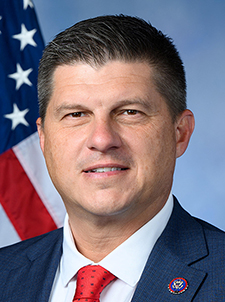
    Regardless, Musk seems intent on stoking the fires of impeaching judges. The New York Times reported  that Musk has contributed this week to the campaigns of Republican lawmakers who support the impeachment of federal judges, including Reps. Eli Crane of Arizona, Lauren Boebert of Colorado, Andy Ogles of Tennessee, Andrew Clyde of Georgia, Derrick Van Orden of Wisconsin and Brandon Gill of Texas.

    Gill, a freshman, has made a name for himself in the MAGA world for his calls to deport Democratic Rep. Ilhan Omar of Minnesota’s 5th District, a Somalia-born U.S. citizen, and for introducing a resolution to impeach Boasberg in the Senate this week.

    The New York Times also said Musk has donated to the campaign of Sen. Charles Grassley of Iowa.

    Will she or won’t she?

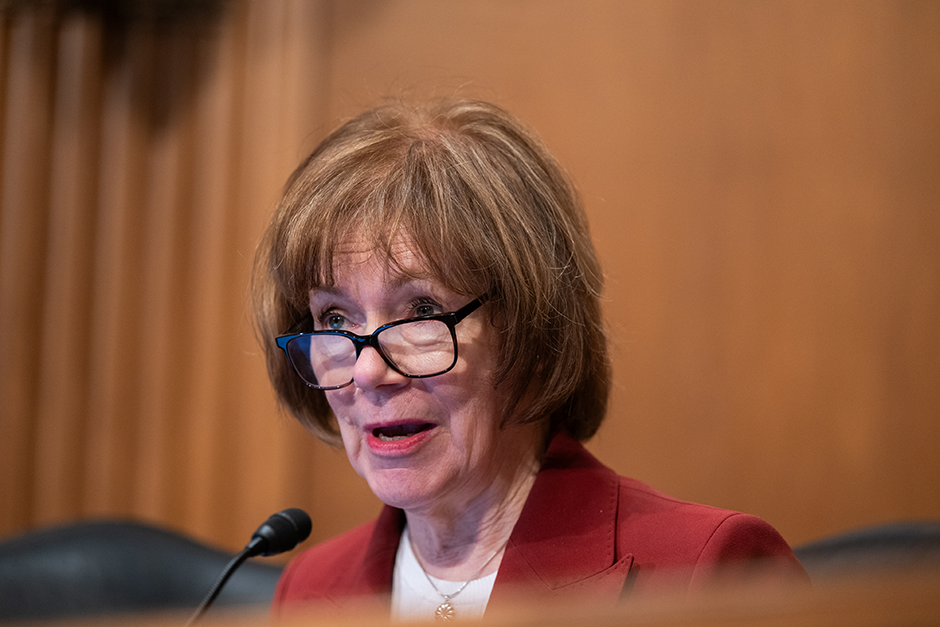
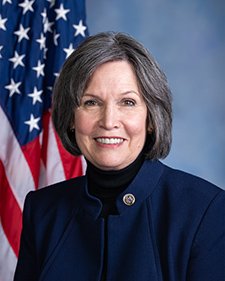
    The usually straight-talking Rep. Angie Craig, D-2nd District, has been Hamlet-like when it comes to whether she’ll enter the race to replace Sen. Tina Smith, D-Minn., who has announced her retirement.

    Craig has not said she’ll enter the race, but has said constituents are urging her to run.

    Craig told MinnPost she is “moving closer to a decision” but declined to say when she will make that choice. She also said she’s “talking to a lot of Minnesotans” about whether she should enter the race this week, which she is spending in her district since the U.S. House is on break.

    But there’s not a lot of time for her to make up her mind. Craig raised an enormous amount of money to win re-election to her House seat last year and spent most of it — about $7.8 million.

    A U.S. Senate race will cost even more. So the money chase is on, and she will have to compete with the two fellow Democrats vying for Smith’s seat  — Lt. Gov. Peggy Flanagan and former state Sen. Melisa López Franzen — to compete in next year’s Democratic primary.

    The first reports of fundraising for the Minnesota Senate race will be filed with the Federal Elections Commission next month.

    A missed deposit to the ‘green bank’ 

    Lawsuits filed by Democratic attorneys general against Trump policies are proliferating and one of the latest involves $25 million that was due Minnesota’s “green bank,” which funds clean energy and greenhouse gas emissions-reduction projects.

    Minnesota’s money — and money for similar projects in other states — has been frozen by the Trump administration, prompting the lawsuit, which accuses Trump of violating Congress’ authority to allocate funds. 

    “I’m leading this coalition of attorneys general in opposing yet one more illegal power grab by the Trump administration because it is our job to stand up for the Constitution and the rule of law when others try to run roughshod over it,” Minnesota Attorney General Keith Ellison said in a prepared statement.

    The money for the “green bank,” officially known as the Minnesota Climate Innovation Finance Authority, came from the Environmental Protection Agency and was already allocated to Minnesota and other states.

    Funding was appropriated through the Inflation Reduction Act, one of President Biden’s top accomplishments that Trump is seeking to dismantle.

    Ellison’s office said Minnesota’s green bank is a key player in state efforts to meet its goals of being 100% carbon-free by 2040 and net zero on greenhouse gas emissions by 2050. 

    The lawsuit filed this week by the Democratic attorneys general not only sues the EPA for withholding the money but also names Citibank as a co-defendant. The lawsuit alleges the bank that holds the funds for the EPA improperly “capitulated” to a letter from the FBI that demanded the freezing of those funds.

    In case you missed it:

    • We reported on postal workers who rallied in Minnesota and across the country against threatened cuts to the U.S. Postal Service – or even its possible sale.
    • Michael Nolan looked at the Trump administration’s plans to cut federal office leases across Minnesota.
    • Forrest Peterson, meanwhile, wrote about dissension in the 7th Congressional District, where constituents of Michelle Fischbach have organized their own meetings in lieu of Republicans shying away from town hall meetings.
    • And Winter Keefer explained why state and local law enforcement agencies can’t hold people under ICE detainers.

    Your questions and comments

    A reader commented on a story about concerns that the unions representing the 640,000 employees of the U.S. Postal Service have over Trump administration plans to cut its workforce and even privatize the service, which could have a big impact in rural Minnesota.

    “Well written article on impacts of closure and reduced services,” the reader said. “Of course, rural people mistakenly trust Trump and will not see it coming — and labor under the false impression that if they explain the problems, the decisions will be reversed. They don’t understand that this is about billionaires making big money and breaking public service unions, which help lift rural wages.”

    Please keep your comments, and any questions, coming. I’ll try my best to respond.

    Ana Radelat

    Ana Radelat

    Ana Radelat is MinnPost’s Washington, D.C. correspondent. You can reach her at aradelat@minnpost.com or follow her on Twitter at @radelat.

    The post D.C. Memo: Trump and allies step up attacks on judges appeared first on MinnPost.

  • Why Minnesota jails can’t legally hold people past their release time for an ICE detainer

    Why Minnesota jails can’t legally hold people past their release time for an ICE detainer

    Minnesota law prohibits state and local law enforcement agencies from holding people under Immigration and Customs Enforcement (ICE) detainers. 

    This point was highlighted recently after the American Civil Liberties Union (ACLU) filed a lawsuit March 5 on behalf of plaintiff Maikol Javier Suarez Varela, who is suing the Carver County Sheriff and a sheriff’s deputy for allegedly breaching his Fourth Amendment rights. 

    The complaint claims Suarez Varela was illegally detained by the Carver County Sheriff’s Office after his bail was paid by the Minnesota Freedom Fund. Instead of releasing Suarez Varela, the lawsuit says the sheriff’s office continued to hold Varela due to an ICE request but not an official warrant. Suarez Varela was then transferred to federal custody.  

    Minnesota statute states: “Minnesota law prohibits state and local law enforcement agencies from holding someone based on an immigration detainer if the person would otherwise be released from custody.”

    In the complaint, the ACLU noted that every Minnesota county has been warned “for over a decade” that it is illegal to honor requests from ICE to hold people (also known as detainers), without a court order. ACLU-MN in the last decade has sent multiple letters to counties about state law including in 2014, 2017 and 2025. In February, Attorney General Keith Ellison also issued an opinion that law enforcement could not detain individuals for ICE. 

    Carver County declined to comment directly as litigation is ongoing but said in an email that the county would have a response to the complaint posted by March 28. 

    MinnPost checked in with other sheriff’s offices across the Twin Cities seven-county metro to ask what they would do in a case like the one described in Suarez Varela’s lawsuit. Those that responded before this story was published had a uniform response: If the lawsuit is accurate about what happened to Suarez Varela, this would not be the policy of any county jail following the law.

    ICE detainers are civil administrative actions, not court orders, so a sheriff’s office cannot legally hold someone past their state charges, explained Dakota County Sheriff Joe Leko in an interview with MinnPost. The sheriff’s office processes individuals who post bail or are released by a judge the same as any other inmate, without holding them longer for ICE. This has been state policy since 2014 and has not changed (yet) under the current administration, he noted. 

    “It might appear that we’re not cooperating with the federal government. That’s not true,” Leko said. “We just don’t have the authority to in that case. Some counties are labeled as ‘sanctuary counties’ because of this, but this is the case for all counties across the state.”

    A county will comply and hold someone in a case where a federal judge issues a formal order for a criminal charge, Leko said. Barring that, Minnesota jails cannot hold people simply on request from ICE. 

    This is not the case for every state.

    The difference comes down to the state constitution, according to the opinion issued by Ellison’s office. Under the U.S. Constitution’s Fourth Amendment, law enforcement officers may initiate an arrest if there is probable cause to believe someone committed any crime. However, the Minnesota Constitution “affords greater protection against unreasonable searches and seizures” and more rigorously limits arrest authority as compared to the U.S. Constitution, according to the AG’s recent opinion.

    Cases like what is alleged in the ACLU lawsuit can send ripple effects through communities, Leko noted. Communities are already noticing people worried about ICE — they’re avoiding stores, schools and even court dates. This interrupts due process, Leko said. 

    “I know that it’s alarming and threatening when there are a lot of unknowns out there,” Leko said. “Just know that our sheriff’s offices and local police departments are here to ensure that everybody has their due process and we’re not violating any rights that they have.”

    Winter Keefer

    Winter Keefer

    Winter Keefer is MinnPost’s Metro reporter. Follow her on Twitter or email her at wkeefer@minnpost.com.

    The post Why Minnesota jails can’t legally hold people past their release time for an ICE detainer appeared first on MinnPost.

  • Postal workers rally to raise alarm about Trump plans to privatize postal service

    Postal workers rally to raise alarm about Trump plans to privatize postal service


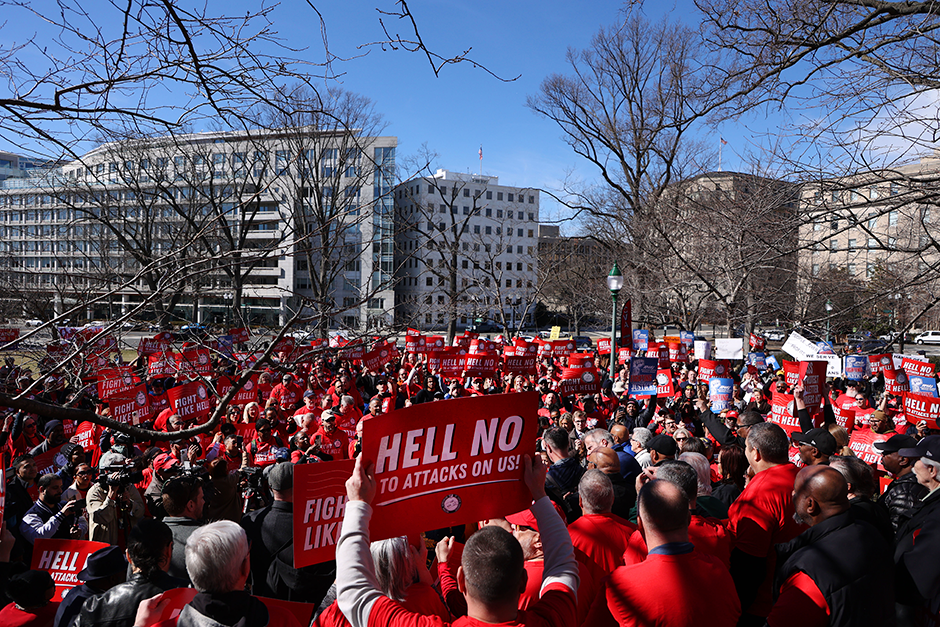
    United States Postal Service workers held placards and shouted slogans at a rally near the U.S. Capitol against Department of Government Efficiency actions against the institution in Washington, D.C., on February 24.

    WASHINGTON — The U.S. Postal Service, which has been in dire financial straits, could soon be sold to the highest bidder and unions representing postal workers are mobilizing to insist “the U.S. mail is not for sale.”

    Organized by the American Postal Workers Union, letter carriers and other postal employees plan to hold two rallies in Minnesota on Thursday — in Minneapolis and Duluth — as part of an effort in 150 cities to protest the specter that the Trump administration will sell the USPS, which they said would sharply raise rates and shutter post offices.

    Postmaster General Louis DeJoy offered postal workers a voluntary plan to take early retirement, a buyout negotiated with postal unions, in December.

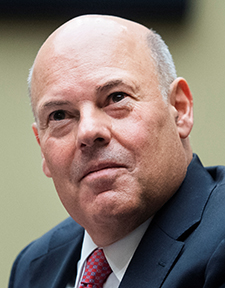
    Postmaster General Louis DeJoy
    Postmaster General Louis DeJoy Credit: Tom Williams/Pool via REUTERS

    In a recent letter to Congress, DeJoy said the buyout would result in a reduction of 10,000 workers over the next month and billions of dollars in savings.

    But that’s not what has prompted the protests slated for Thursday — or others that have been planned in the next weeks by other labor unions who represent USPS employees.

    It’s President Donald Trump’s plans for the postal service that have touched off the protests and rallies.

    Trump, who has said at times that the USPS should be privatized, said last month that he may put the now-independent service under the control of the Commerce Department in what would be an executive branch takeover.

    To the unions representing postal workers, this would be the first step in an effort to sell the USPS, a 250-year-old institution that since 1970 has been operating as an independent agency of the federal government.

    “Who knows what the ultimate goal is,” said Don Maston, president of the National Rural Letter Carriers Association (NRLCA,) which represents more than 2,500 postal workers in Minnesota.

    Trump has said that since the Commerce Department is in charge of the U.S. Census that is taken every 10 years, it makes sense for the agency to also oversee the post office that handles the delivery and return of U.S. Census Bureau forms.

    But Maston said “it makes no sense” to put the USPS, with its more than 640,000 employees, under the administration of the Commerce Department, which has about 40,000 employees, unless the plan is to sell the postal service.

    “It’s just not a very well-thought-out plan,” Maston said.  

    To American Postal Workers Union President Mark Dimondstein, the USPS is bound by its promise to provide service to all Americans at the same cost. And he says that promise is under threat.

    “If this administration succeeds in taking over the USPS, it will lead to higher prices and reduced service, especially in rural areas,” he said.

    Diamondstein said he believes a possible reason Trump is considering selling the USPS is to benefit Wall Street investors. He points to a Wells Fargo analysis that said the sale would boost the fortunes — and stock price — of the postal service’s private competitors, FedEx and United Parcel Service (UPS.)

    “So, the only explanation is that those who are pushing the privatization are the investors on Wall Street,” he said.

    The perceived threats to the USPS have united the four main unions that represent postal employees, which besides the APWU and the NRLCA include the National Association of Letter Carriers and the National Postal Mail Handlers Union. They are all supporting one another’s rallies and are all involved in lobbying campaigns to try to head off the sale of the USPS.

    “An attack on one is an attack on all,” Maston said.

    ‘These are not normal times’

    As an independent agency, the USPS has been largely self-funded by the sale of stamps and charges for packages and services, not taxes.

    But a shift from “snail mail” to communications, advertising and payment of bills online — coupled with the death of many print publications — plunged the USPS into financial troubles.

    Since only Congress is authorized to change the structure of the USPS, unions representing postal workers are  lobbying federal lawmakers. Maston said there’s support for the USPS on both sides of the aisle since many GOP lawmakers represent rural districts that are heavily dependent on the service.

    He said if rural residents are forced to depend on a private company for mail and package delivery “they will have to pay much, much more” for those services. And he said many rural residents may lose their delivery service, having to drive “30 or 40 miles” to the nearest post office to pick up mail and packages.

    Diamondstein said the fate of USPS “should fall to Congress, but who knows what Congress will do.”

    So he said he wants to inform USPS customers about threats to their mail service and that’s why the unions have planned a series of rallies.

    “These are not normal times so the people of the country have to be informed,” Diamondstein said.

    Postal unions are also concerned that DeJoy has signed an agreement to work with Elon Musk’s Department of Government Efficiency in downsizing the USPS.

    “DOGE has been looking into the postal service and we have issues with Elon Musk” because of the billionaire’s role in the mass firing of federal workers and dismantling federal agencies.

    Maston said he and other union officials, as well as members of Congress, have asked for a copy of the agreement DeJoy signed with Musk. It has not been forthcoming, he said.

    ‘DOGE may not be done’

    DeJoy was a wealthy Trump mega-donor who was appointed postmaster general during the president’s first term in office.

    He initially raised concern among Democrats with his proposed changes to the USPS, which included cutting mail delivery from six days a week to five.

    But he won the respect of the nation’s postal unions by, in the end, keeping six-day mail service and for his support for legislation signed into law by President Biden that eliminated a mandate that postal service retiree health plans be pre-funded, giving the financially shaky USPS a $57 billion boost.

    In his recent letter to Congress, DeJoy, who has notified the USPS Board of Governors that he plans to step down, said “approximately half of our current Post Offices fail to cover their cost of local operations” and promised a review of “our leases on almost 31,000 retail centers.”

    He also asked Congress to help in other ways, including an end to unfunded mandates, permission to invest the USPS pension fund in the stock market and money for new technology to detect counterfeit postage.

    “These are the only initiatives that I have requested and authorized the DOGE team to assist on thus far, and only the data and information required to pursue these initiatives will be provided to the DOGE team members,” DeJoy wrote.

    DOGE did not return requests for comment

    Rep. Angie Craig
    Rep. Angie Craig

    Rep. Angie Craig, D-2nd District, who has waged her own battle against DeJoy’s policies after receiving an avalanche of complaints of no mail or slow mail, is highly skeptical that the downsizing of the postal service will be limited to 10,000 buyouts.

    “DOGE may not be done with the postal service yet,” she said.

    She said even a small decrease in the number of postal employees will hurt service in Minnesota, which she said continues to be plagued by poor delivery service.  

    A USPS Office of Inspector General report released earlier this month showed that only 79% of the mail delivered in Minnesota met the USPS’s two-day standard, ranking the state 38th in the country for on-time delivery. The USPS goal is for 87% of the mail to be delivered within two days.  

    Like the postal unions, Craig is convinced the Trump administration wants to sell the USPS and signed a letter to Trump with 158 other lawmakers that protested the administration’s plan to fire the USPS Board of Governors and merge the Postal Service with the Department of Commerce.

    “Any attempts to privatize the Postal Service would be a betrayal to the more than 640,000 postal employees who work tirelessly every day to ensure mail is delivered to every corner of the country,” the lawmakers wrote. “It would also hurt American consumers and businesses who rely on the Postal Service daily for mail and package delivery.”

    Ana Radelat

    Ana Radelat

    Ana Radelat is MinnPost’s Washington, D.C. correspondent. You can reach her at aradelat@minnpost.com or follow her on Twitter at @radelat.

    The post Postal workers rally to raise alarm about Trump plans to privatize postal service appeared first on MinnPost.

  • Unpacking DOGE’s plan to cut 14 federal office leases across Minnesota

    Unpacking DOGE’s plan to cut 14 federal office leases across Minnesota


    Representatives from multiple offices of the National Park Service stated that they had not received any communications from DOGE or the GSA related to planned office lease terminations in Kellogg Square in St. Paul.

    Minnesotans working for federal agencies leasing space in the state may soon find themselves searching for new office space. Fourteen different offices including multiple National Park Service locations, local branches of the Internal Revenue Service in Bloomington and St. Cloud, and the Mine Safety and Health Administration offices in Hibbing may be in search of new leases due to cost-cutting measures from the Department of Government Efficiency, a Trump administration initiative tasked with reducing federal spending.

    But it isn’t clear how many of DOGE and General Service Administration’s planned lease terminations are actually underway. DOGE’s own accounting of their grant, contract and lease cuts has taken multiple error-filled forms since the department formed in late January following Trump’s inauguration. And none of the current lease termination notices in Minnesota or the rest of the country appears to be backed up with any secondary documentation. 

    MinnPost reached out to representatives from multiple city governments and private companies that lease space to various federal agencies. Among the representatives reached, most declined comment or had not received information about the proposed cuts other than DOGE’s website listing. 

    !function(){“use strict”;window.addEventListener(“message”,(function(a){if(void 0!==a.data[“datawrapper-height”]){var e=document.querySelectorAll(“iframe”);for(var t in a.data[“datawrapper-height”])for(var r,i=0;r=e[i];i++)if(r.contentWindow===a.source){var d=a.data[“datawrapper-height”][t]+”px”;r.style.height=d}}}))}();

    Led by billionaire investor Elon Musk, DOGE has listed 14 federal lease cuts for offices within Minnesota on the “Savings” page of its website in the past weeks. The information is displayed alongside tables of federal grants and contracts the department has either cut or plans to end. 

    !function(){“use strict”;window.addEventListener(“message”,(function(a){if(void 0!==a.data[“datawrapper-height”]){var e=document.querySelectorAll(“iframe”);for(var t in a.data[“datawrapper-height”])for(var r,i=0;r=e[i];i++)if(r.contentWindow===a.source){var d=a.data[“datawrapper-height”][t]+”px”;r.style.height=d}}}))}();

    Maintaining federal leases and real estate is a responsibility of the General Services Administration’s Public Buildings Service. In a statement the GSA published on March 4, the administration announced the lease terminations and property sales were in compliance with a recent Trump administration executive order requiring the GSA to identify and list all “non-essential” leases within 30 days of its issuance.

    !function(){“use strict”;window.addEventListener(“message”,(function(a){if(void 0!==a.data[“datawrapper-height”]){var e=document.querySelectorAll(“iframe”);for(var t in a.data[“datawrapper-height”])for(var r,i=0;r=e[i];i++)if(r.contentWindow===a.source){var d=a.data[“datawrapper-height”][t]+”px”;r.style.height=d}}}))}();

    In a separate statement released the next day, the GSA wrote that they were “exploring innovative approaches — including public-private partnerships, ground leases, sale leasebacks, and interagency co-working agreements — to optimize our real property portfolio in support of the administration’s EO. These actions will result in increased service quality to our customers and savings to the American taxpayer.”

    MinnPost’s attempts to find out more details about the lease cuts and their impact at the local level were met by government officials who declined to comment on the record and no evidence that the cuts were already in the works. For example, a Minneapolis city spokesperson told MinnPost the city “has not received any communications from DOGE” concerning federal office leases set to end for the Minneapolis branches of the Wage and Hours Division and the Office of Compliance of the Department of Labor’s Employment Standards Administration, though both offices are listed on the DOGE “savings” table of lease cuts. These Department of Labor offices currently lease space at the privately owned Tri-Tech building at 331 2nd Ave. S., whose property management company did not respond to a request for comment from MinnPost.

    Representatives from multiple offices of the National Park Service also stated that they had not received any communications from DOGE or the GSA related to planned office lease terminations at the Science Museum of Minnesota and Kellogg Square in Saint Paul and at Voyageur’s National Park in Crane Lake. Kellog-Bigos LLC, the company that owns the building at Kellogg Square and leasing space to the GSA, did not return MinnPost’s messages seeking comment on the planned lease terminations.

    Kellog-Bigos LLC, the company that owns the building at Kellogg Square and leasing space to the GSA, did not return MinnPost’s messages seeking comment on the planned lease terminations.
    Kellog-Bigos LLC, the company that owns the building at Kellogg Square and leasing space to the GSA, did not return MinnPost’s messages seeking comment on the planned lease terminations. Credit: MinnPost photo by Tony Nelson

    Two Internal Revenue Service Taxpayer Assistance Centers in the state are also listed among DOGE’s planned GSA lease terminations as the agency also faces substantial layoffs and budget cuts. IRS representatives also declined to comment on the leases. These two offices are situated within the Falcon National Bank building at 1010 West Germain St. in St. Cloud and the BLOC office and residential building at 1550 American Boulevard East in Bloomington. Representatives from Falcon National Bank and Hempel Real Estate, the firm that owns the BLOC building in Bloomington, also did not get back to MinnPost when approached for comment. Similarly, multiple representatives from the Mine Health and Safety Administration were unable to comment on the planned office lease termination at their Hibbing location.

    It is unclear what will happen to these office spaces or the federal employees and contractors currently working for the agencies that are renting them. While it’s possible that DOGE’s list of planned lease terminations and federal real estate sales will grow in the coming months, it’s also unclear what the department’s timelines or requirements are for finding new office space. The GSA stated in its March 5 press release that “just because an asset is on the list doesn’t mean it’s immediately for sale. However, we will consider compelling offers (in accordance with applicable laws and regulations) and do what’s best for the needs of the federal government and taxpayer. Since publishing the initial list on March 4, 2025, we have received an overwhelming amount of interest.”

    The post Unpacking DOGE’s plan to cut 14 federal office leases across Minnesota appeared first on MinnPost.

  • GOP budget could divert millions from gun violence prevention, Democrats say

    GOP budget could divert millions from gun violence prevention, Democrats say

    Congressional Democrats are warning that Republicans’ budget plan could threaten funding for gun violence research and prevention.

    Senators voted in favor on a stopgap budget — known as a continuing resolution — that would largely extend current federal spending levels through September and avert a looming government shutdown. But Democrats say the GOP’s proposal, which passed the House on March 11, could embolden the Trump administration to shortchange anti-violence efforts.

    During a March 12 press conference, three Democratic House members and leaders from a half dozen violence prevention programs warned against the resolution and vowed to fight any attempt to divert funding from reducing gun violence.

    “They think it’s a waste of money and time,” Rep. Robin Kelly, a Democrat from Illinois, said about her Republican colleagues. “I do not believe life-saving policies are a waste.”

    Most at risk is the $25 million Congress has steered toward gun violence research every year since 2019. Split equally between the National Institutes of Health and the Centers for Disease Control and Prevention, the funding has typically not been written into budget bills themselves. Instead, lawmakers include it in “explanatory text” meant to direct agencies on spending. While traditionally followed, the texts are not legally binding to the same degree as a budget bill. The Republicans’ continuing resolution could invalidate the texts, potentially allowing the Trump administration to spend that $25 million elsewhere.

    “It allows the administration to have discretion in not funding things or redirecting the money to other priorities than what Congress had originally intended the monies for,” said James Mercy, the former head of the CDC’s Division of Violence Prevention.

    Sen. Patty Murray of Washington and Rep. Rosa DeLauro of Connecticut, the top Democrats on the Senate and House appropriations committees, both released memos last week accusing Republicans of structuring the bill to hand the Trump administration more power. Murray listed gun violence research among the funding categories that would be vulnerable.

    An analysis by The Trace last year found that at least $137.1 million in federal money has flowed to studying gun violence since 2020, accounting for 127 projects. The dollars have been a significant boon for the field after Congress in 2019 lifted a more than two-decade-old de facto ban on federal spending for gun violence research.

    “If the Trump administration chooses not to use the money for this purpose, it would be an enormous mistake,” said Vanessa Gonzalez, vice president of government and political affairs for the gun reform group Giffords. “Only through sustained research can we effectively protect our communities and save countless innocent lives that would otherwise be tragically lost.”

    If federal funding disappears, Mercy said researchers will adapt, but progress will slow.

    “We got through 20 years of not having any funding,” Mercy said. “We’ll figure a way around it, how to do this work, but it will be at a much slower pace, and will have to be picked up by foundations and other entities if it’s cut.”

    The Republicans’ resolution could also undermine violence prevention programs receiving money through a process known as Congressionally Directed Spending. CDS allows lawmakers to request federal dollars for specific local projects in their districts. Without CDS included in the resolution, community, youth, and hospital-based violence prevention initiatives across several states won’t receive new funding through at least September.

    Some funding is likely safe for the time being, including the $1 billion earmarked for community-based violence intervention and crisis intervention programs through 2026. Those dollars, made available by the 2022 Bipartisan Safer Communities Act, should not be affected by the GOP’s resolution, but the Trump administration could still make administrative changes to block community groups from accessing the program, congressional aides said. 

    That possibility worries Democrats. “We don’t want to see that go away,” Rep. Maxwell Frost, a Democrat from Florida, said at the March 12 press conference. “There’s nothing more efficient than giving the money to the people that are actually doing the work at home and providing results. These are evidence-based solutions.”

    Funding for gun violence research was already in flux before the budget uncertainty. In January, the National Institutes of Justice sent emails to researchers canceling all of its funding opportunities. The agency provides most federal funding for criminology and criminal justice research, including on gun violence. The funding opportunities were still scrubbed from the site as of March 12.

    The NIH, meanwhile, paused review panels for research grant awards, including reviews of gun violence research proposals. Without the review panels, research grants can’t be processed.

    Andrew Morral, a scientist at the RAND Corporation and director of the National Collaborative on Gun Violence Research, said continued funding should be a bipartisan priority.

    “Community gun violence remains a problem in red states and blue states,” he said. “The federal government has been making real progress advancing research in ways that address that problem, and I hope that will continue.”

    The post GOP budget could divert millions from gun violence prevention, Democrats say appeared first on MinnPost.

  • Arrests of immigrants have sharply increased, but Trump faces hurdles in efforts to deport millions

    Arrests of immigrants have sharply increased, but Trump faces hurdles in efforts to deport millions

    WASHINGTON — Detentions and deportations of undocumented immigrants spiked right after President Donald Trump assumed office in January, but they have since slowed, belying the president’s promise that millions of immigrants would be quickly removed from the United States.

    That’s not to say that the administration’s chaotic approach to enforcement of the nation’s immigration laws has not resulted in widespread removals of immigrants.

    But the Trump administration is facing hurdles, including a lack of detention centers and the logistics of transporting people across the globe, and that has frustrated Trump, who has repeatedly said the pace of arrests and deportations should be higher.

    U.S. Immigration and Customs Enforcement (ICE) says that in the first 50 days of the Trump administration, it made 32,809 arrests. While many of those apprehended were promptly deported, a majority are in detention centers awaiting removal or, if they have legal recourse, a court date.

    According to ICE, arrests across the nation peaked at 872 people per day in late January before falling to just under 600 people per day in the first three weeks of February.

    That’s a significant increase in activity. Last year, during the Biden administration, ICE arrested and detained about 255 people each day.

    Arrests at the U.S.-Mexico border, whose security has been enhanced by U.S. military troops, are down. So much of the immigration enforcement activity has shifted inland to states like Minnesota.

    Unlike the numbers of arrests, the actual pace of deportations is difficult to determine, both across the nation and in Minnesota, frustrating immigration advocates.

    ICE did not respond to requests for information on how many people were deported from Minnesota last month, or how many were removed so far this month.

    According to the Transactional Records Access Clearinghouse (TRAC), a University of Syracuse project, only 20 migrants were deported from Minnesota in 2024.

    But there’s recent anecdotal evidence, including a workplace raid at an aluminum finishing plant in St. Louis Park that reportedly resulted in eight arrests and another five arrests of  a roofing crew in Duluth, which shows that federal immigration enforcement in the state has increased sharply.

    “We have also seen them picked up at other locations, including traffic stops, courthouses and on the streets,” said Robyn Mayer-Thompson, a staff attorney at the Immigrant Law Center of Minnesota.

    Alicia Granse, a staff attorney with the ACLU-Minnesota, said conversations with other immigration attorneys have led her to believe that detention centers in the state that are under contract with ICE are crowded with new detainees.

    Detained immigrants in Minnesota are processed at local ICE offices at St. Paul-based Fort Snelling, but they cannot be held at that facility and are taken to three county jails — one each in Kandiyohi, Freeborn and Sherburne counties — before they are deported.

    Granse said one reason there were fewer deportations in Minnesota before Trump came back into power was because many of those detained came from countries that would not accept them or were considered unsafe places for immigrants to be returned to.

    “That has changed,” Granse said.

    For instance, Trump secretly signed a proclamation last week invoking the Alien Enemies Act of 1798, saying he would quickly remove Venezuelans aged 14 and over who allegedly belong to the Tren de Aragua gang.

    Those Venezuelans, whose country of origin would not accept them, and  about 100 Salvadorans were flown to El Salvador this weekend, even after a federal judge told the administration to turn back the plane.

    Trump’s so-called border czar, Tom Homan, said the administration planned to continue such deportations despite the court’s order.

    “We’re not stopping,” he said Monday on Fox News. “I don’t care what the judges think, I don’t care what the left thinks. We’re coming.”

    Filled to capacity

    Another reason more immigrants in Minnesota are being detained by ICE is that Congress has approved, and Trump has signed into law, the Laken Riley Act, which shifted a long-established ICE priority of arresting violent criminals to arresting any immigrant convicted or even just accused of a crime, even if it’s minor theft.

    “Somebody who is suspected of shoplifting diapers could be arrested,” Granse said. “The narrative from the administration is that they are deporting violent criminals and that’s just not true.”

    Many of the people deported have not been convicted or accused of any crime, she said.

    And the administration is not just deporting the undocumented. Trump has stripped the temporary protected status designation that allowed immigrants to live and worked provisionally in the United States from Venezuelans and is expected to do so from immigrants from other countries, including Ukraine and Haiti.

    But the Trump administration is facing hurdles as it tries to carry out its promise to deport millions of immigrants.

    In a call to reporters last week, a senior ICE official said detention centers were filled to capacity with 47,600 detainees and that the Trump administration is seeking more bed space.

    But that will take money, much more than the $500 million increase in the budget that was approved for federal immigration operations in a short-term spending bill by Congress last week.

    Michele Waslin, assistant director of the Immigration History Research Center at the University of Minnesota, said Trump himself caused one problem for his effort to carry out the largest deportation operation in U.S. history: he fired some immigration judges.“If the courts are slow to issue final deportation orders, that impacts the number of people deported,” Waslin said.

    Ana Radelat

    Ana Radelat

    Ana Radelat is MinnPost’s Washington, D.C. correspondent. You can reach her at aradelat@minnpost.com or follow her on Twitter at @radelat.

    The post Arrests of immigrants have sharply increased, but Trump faces hurdles in efforts to deport millions appeared first on MinnPost.

  • D.C. Memo: Amy Klobuchar, Tina Smith under pressure over shutdown vote

    D.C. Memo: Amy Klobuchar, Tina Smith under pressure over shutdown vote


    Sen. Amy Klobuchar speaking during a March 11 news conference following the weekly Democratic caucus luncheon at the Capitol.

    WASHINGTON — The nation’s capital was nervously focused all week on whether the federal government would shut down over the weekend.

    After the U.S. House on Tuesday narrowly approved a short-term spending bill that would avert a shutdown and fund the federal government through Sept. 30, all attention was focused on Democrats in the U.S. Senate.

    That has put Minnesota’s senators, Amy Klobuchar and Tina Smith, in a tight spot. They can either support the House GOP bill — called a continuing resolution, or CR — which cuts a number of domestic programs championed by the two Democrats, or risk a government shutdown for which their party will be blamed.

    While Republicans narrowly control the Senate, 60 votes are needed to overcome an expected filibuster and the GOP only holds 53 seats in that chamber.

    That means at least seven Democratic senators would have to vote to end a filibuster that would block the CR. If not, the federal government would be shuttered.

    In a turnabout, Senate Minority Leader Charles Schumer, who had said the day before that no Democrat would vote for the bill, told Democratic senators Thursday evening to support it and vote to end the filibuster.

    Senate Minority Leader Chuck Schumer leaving a Senate Democratic caucus luncheon outside the Senate Chamber in the Capitol Building on Thursday.
    Senate Minority Leader Chuck Schumer leaving a Senate Democratic caucus luncheon outside the Senate Chamber in the Capitol Building on Thursday. Credit: Aaron Schwartz/Sipa USA via Reuters Connect

    “For sure the Republican bill is a terrible option,” Schumer said on the Senate floor after a contentious meeting with Senate Democrats. “But I believe that allowing Donald Trump to take … much more power via a government shutdown is a far worse option.”

    Schumer’s change of heart means the CR is almost certain to pass and a shutdown will be avoided. But many Senate Democrats had argued passionately against supporting the bill and rank-and-file Democrats protested the move. 

    Smith said  she would not vote to end the filibuster.

    “Donald Trump and Republicans are forcing two terrible choices on us, both of which are bad for the people of this country, and would hand unchecked power to President Trump and Elon Musk as they slash and burn government services on their own terms,” she said in a prepared statement.

    Smith said the Republican CR “is not a ‘clean Continuing Resolution’” and “would slash support for fetal alcohol syndrome, epilepsy, and Alzheimer’s at the National Institutes of Health.”

    “It fails to pay for disaster relief or fund hundreds of millions of dollars for important community projects for Minnesota, from childcare centers in Moorhead to public safety investments for Rochester and supporting rural health care on the Iron Range,” she added. “It would give President Trump vast discretion to allocate funds to reward his political friends and punish those he considers enemies. And this is only a sampling of the damage done by this bill. Therefore, I cannot support it.”

    Sen. Tina Smith said the Republican CR “is not a ‘clean Continuing Resolution’” and “would slash support for fetal alcohol syndrome, epilepsy, and Alzheimer’s at the National Institutes of Health.”
    Sen. Tina Smith said the Republican CR “is not a ‘clean Continuing Resolution’” and “would slash support for fetal alcohol syndrome, epilepsy, and Alzheimer’s at the National Institutes of Health.” Credit: Annabelle Gordon/Sipa USA via Reuters Connect

    Klobuchar’s office did not immediately respond to requests for information. So far, only one Democratic senator — John Fetterman of Pennsylvania — has indicated he’ll vote f

    Minnesota farmers lobbying blitz

    This was fly-in week for the nation’s farmers and ranchers who swamped Capitol Hill on their traditional spring lobbying blitz.

    There have been few times — if any — when the nation’s farmers have had so many issues on their agendas.

    Trump-imposed tariffs are threatening to eliminate or sharply shrink overseas markets that have been increasingly important to rural health. Meanwhile, the cost of imported potash and other agricultural inputs are expected to rise sharply as nations hit by new U.S. tariffs retaliate with some of their own.

    U.S. Aid for International Development (USAID) contracts with agribusinesses have been eliminated, hurting farmers — especially grain growers in the Midwest — who benefitted from those contracts.

    And federal Agriculture Department employees who aid farmers have been laid off.

    Meanwhile, GOP efforts to cut federal nutrition programs would add to farmers’ bottom-line woes — as would Department of Government Efficiency elimination of other farm-linked programs.   

    To add to farm country anxiety, there’s little hope Congress will be able to pass a farm bill this year, leading to another extension of the last farm bill, which was approved in 2018 and which farmers say needs updating.

    About 20 Minnesota farmers were here this week to try to find allies on Capitol Hill and capture the ear of the White House.

    “We’re concerned with the tariffs, and we need to find a solution,” said Minnesota Farm Bureau Federation President Dan Glessing, who owns a farm in Wright County and was among the farmers looking for answers from Washington.

    As for those tariffs, which Trump wants to extend to Europe and elsewhere, the ones imposed on Canada may have the most impact, Glessing said. “We have some things that they need and they have some things that we need,” he said.

    Glessing, who attended a meeting Tuesday at the White House, said one big question is, “How long are the tariffs going to be on?”

    As far as prospects for a new five-year farm bill go, Glessing said the bitter partisan battles over government funding, which have escalated over a GOP blueprint for the 2026 budget that would sharply cut social welfare programs, have dimmed considerably. 

    “I think it’s going to be challenging,” he said.

    Quinnipiac: Trump job approval numbers slipping

    A Quinnipiac University poll released Thursday showed President Donald Trump’s approval ratings are slipping.

    Seven weeks after Trump began his second term in the Oval Office, 42% of the registered voters who responded to the poll said they approve of the way he is handling his job while 53% disapprove and 6% did not offer an opinion.

    That’s down from Quinnipiac’s Feb. 19 poll, in which 45% of the respondents approved while 49% disapproved and 6% did not offer an opinion.

    While most Republicans approved of Trump’s performance in office (89%-9%) and Democrats disapproved (96%-2%) the president is losing the most support among independents, which disapproved of the job Trump is doing by 58%-36%.

    Fifty-eight percent of respondents told Quinnipiac pollsters they disapprove of the way Trump handled the recent meeting with Ukrainian President Volodymyr Zelensky at the White House while 35% approve. But there was a huge partisan divide on this, and all other issues.

    When it came to the economy, 41% approved of Trump’s actions, 54% disapproved, with 5% did not offer an opinion.

    And the poll determined the president has lost support on an issue that was once a stronghold for the president — immigration. Forty-nine percent said they disapproved of Trump’s immigration policy, 46% said they approved, and 5% did not offer an opinion.

    In other news:

    ▪️We reported on the anxiety among Minnesota educators in the wake of massive layoffs at the federal Education Department.

    ▪️Winter Keefer wrote about attorneys who are urging Hennepin County officials and judges to keep Immigration and Customs Enforcement (ICE) officials out of county buildings.

    ▪️We also wrote about the elimination of earmarks – essentially, money for local projects – in the spending bill that Congress hopes to pass to avoid a government shutdown.  

    ▪️ The Eden Prairie Local News covered a local meeting with state lawmakers that delved into questions about Trump administration policies. We republished their story, which can be read here.

    This and that

    We received many comments on our story about federal earmarks, or funding for local projects, which won’t be happening this year because of Congress’ inability to approve appropriations bills. One reader said neither Republican nor Democratic lawmakers should ask for money for these projects.

    “Why has the US federal government, until now, continued to spend money that doesn’t exist? Until now, neither political party has been serious about reigning in the federal budget deficit,” the reader said. “Perhaps important Minnesota projects should be funded by (who else?) the state of Minnesota.”

    Another reader took issue with Trump administration attempts to cut federal spending while also trying to extend tax cuts estimated to cost the U.S. Treasury at least $4.5 trillion and probably more.

    “If you look at his only priority, based on the dollars involved, it is tax cuts mostly for billionaires, who already pay less of their income in taxes than working people, due to tax benefits written for them,” the reader wrote. “Trump’s cuts of the IRS will make it even easier for them to cheat the federal government by tax fraud. It looks as though only about a third of these tax cuts will be funded by budget cuts, and the rest will be covered by borrowed money with interest paid — to the same people who are doing the big time cheating and are getting the permanent tax breaks.” 

    Please keep your comments, and any questions, coming. I’ll try my best to respond.

    Ana Radelat

    Ana Radelat

    Ana Radelat is MinnPost’s Washington, D.C. correspondent. You can reach her at aradelat@minnpost.com or follow her on Twitter at @radelat.

    The post D.C. Memo: Amy Klobuchar, Tina Smith under pressure over shutdown vote appeared first on MinnPost.

  • U.S. Education Department layoffs ramp up anxieties at Minnesota schools

    U.S. Education Department layoffs ramp up anxieties at Minnesota schools


    Secretary of Education Linda E. McMahon shown during a Feb. 26 cabinet meeting at the White House.

    WASHINGTON — Layoffs of more than half of the employees at the U.S. Department of Education this week ramped up uncertainty and anxiety at Minnesota schools that were already reeling from new Trump administration directives and funding cuts.

    The latest directive was a letter sent Monday by new Secretary of Education Linda McMahon to 60 colleges and universities across the nation, including the University of Minnesota, warning them they could be prosecuted under the Civil Rights Act for a failure to protect Jewish students on campus and warning them of massive cuts in federal funding.

    “The Department is deeply disappointed that Jewish students studying on elite U.S. campuses continue to fear for their safety amid the relentless antisemitic eruptions that have severely disrupted campus life for more than a year. University leaders must do better,” McMahon wrote.

    She also said “U.S. colleges and universities benefit from enormous public investments funded by U.S. taxpayers. That support is a privilege, and it is contingent on scrupulous adherence to federal antidiscrimination laws.” 

    The University of Minnesota is one of the five initial schools that were told in February they were under investigation by the Education Department under a Trump executive order called “Additional Measures to Combat Anti-Semitism.”

    The other schools were Northwestern University, Portland State University, the University of California-Berkeley and Columbia University, which in deference to Trump’s executive order had more than $400 million in grants slashed this week. Much of the money Columbia lost involved research grants funded by the National Institutes of Health.

    In a statement, the University of Minnesota said the letter it received this week “does not change anything” from the notice it and the four other schools received in February, advising them of an investigation into how they treated their Jewish students.

    “As we said at that time, we are confident in our approach to combating hate and bias on our campus and will fully cooperate with this investigation,” the university said.

    It also said the school “continues to stand firmly against antisemitism” and “will continue to respond promptly and fully to any reports of harassment, intimidation, or bias against Jewish students — or any other members of our university community — in accordance with our university values, our own policies, and our responsibility under the law.”

    There are other threats to federal funding of the state’s colleges.

    Trump and his allies have repeatedly ridiculed federally funded research that touches on race and gender and have vigorously sought to eliminate anything related to diversity, equity and inclusion (DEI) issues.

    That’s why the Education Department has cut grants to universities for a program that trains teachers, simply because some of that training is focused on how to meet the needs of a diverse student body.

    The University of Minnesota has lost one of those teacher training grants  and the University of St. Thomas has lost two.

    A loss in relationships 

    The firing of workers this week is part of Trump’s efforts to gut the Education Department, established in its present form by Congress in 1980 to — among other things — prohibit discrimination and ensure equal access to education.

    Trump wants to eliminate the department, but that could only be done by an act of Congress. So, the president is doing what he can do to shrink it as much as possible.  

    Besides the 1,300 Education Department employees who were fired, another 600 staffers agreed to resign or retire over the past seven weeks, nearly halving the employees of the federal government’s smallest cabinet-level agency.

    On Thursday, 21 Democratic attorneys general, including Minnesota Attorney General Keith Ellison, sued the Trump administration to try to block the layoffs.

    “I’ll say it as often as I have to: Donald Trump is not a king and I will not let him be a dictator. He does not have the authority to effectively shut down an entire federal department that is authorized by Congress, and his attempt to do so is illegal and unconstitutional,” Ellison said in a statement. 

    There are also concerns about continued funding cuts.

    While Minnesota receives only about 10% of its annual education budget — or a little more than $1.4 billion this year — for its public elementary and secondary schools from the Education Department, that money goes to programs that help the state’s most vulnerable young students.

    For instance, the federal agency gave Minnesota nearly $194 million last year to bolster the education needs of low-income students. More than $233 million was allocated to the state from the Education Department under the Individuals with Disabilities Education Act to help pay for programs for children with learning disabilities.

    The Trump administration said federal education money to states will continue to flow.

    Gov. Tim Walz
    Gov. Tim Walz

    But Gov. Tim Walz, a former teacher, said there’s uncertainty about future federal funding of state schools, especially when it comes to competitive grants issued by the department.

    At a press conference Wednesday at Hayes Elementary School in Fridley,  Walz said those grants would now be subject to ideological litmus tests. “If you agree with them, they’ll give you the money,” Walz said.

    He also said the loss of experienced Education Department employees and experts in the field of education will hurt state efforts to deliver quality education.

    “I guarantee you there weren’t a lot of parents that went into the voting booth and voted to have their schools undermined, to have the $1.4 billion be at risk, the nearly 860,000 students in Minnesota that are impacted by this (and) 2,500 schools,” Walz said.

    The Minnesota Department of Education has asked the Trump administration for clarity about how investments will be transitioned if the federal Education Department is dissolved, said Minnesota Education Commissioner Willie Jett during the news conference. Jett said the state has not yet received a response.

    Sam Snuggerud, spokeswoman for the Minnesota Department of Education, said the massive layoffs mean that staff at the state agency is likely to result in a loss of important allies in Washington, D.C., who had regular contact with them and helped them do their jobs.

    “There are relationships there,” she said.

    Snuggerud also said the state Department of Education was “panicked” on Wednesday because it could not access federal education money for much of the day through a website called G5.gov.

    Snuggerud said the website featured a notice that said, “Due to staffing constraints we are not able to provide IT support at this time.”

    The state was eventually able to receive its reimbursements. 

    ‘Impossible to plan’ 

    The turbulence in the U.S. Department of Education has also caused anxiety among many of the state’s teachers.

    “The uncertainty is the worst,” said Denise Specht, the president of Education Minnesota, a teacher’s union.

    Denise Specht
    Denise Specht

    Specht said local unions are beginning the process of negotiating their two-year employment contracts, which she hoped would include pay hikes, better working conditions and help with “exploding health care costs.”

    “However, it’s almost impossible to plan when the federal government is threatening to defund K-12 schools in Minnesota by more than $500 million from the U.S. Department of Education,” Specht said.

    She also said those funding cuts will likely be paired with a sharp reduction in funding from the U.S. Department of Agriculture for school meals that helps the state provide free breakfasts and lunches for all of Minnesota’s K-12 students.

    Specht also said “the survival of the state’s two-year colleges is near the top of my mind.”

    “Those schools depend on students with Pell Grants and U.S. Department of Education funding streams for students from historically disadvantaged groups that the administration may consider “DEI,” although the MAGA definition of the term has been a moving target for some time now,” she said. 

    Regarding K-12 schools, Specht predicted that schools that serve the most vulnerable students, such as those with special education needs or those living in poverty, “will feel the biggest hit from the plan to defund public education.”

    “I worry about the survival of every program outside the core curriculum — athletics, music, theater, speech, vocational-technical education, etc.” she said.

    Ana Radelat

    Ana Radelat

    Ana Radelat is MinnPost’s Washington, D.C. correspondent. You can reach her at aradelat@minnpost.com or follow her on Twitter at @radelat.

    Winter Keefer

    Winter Keefer

    Winter Keefer is MinnPost’s Metro reporter. Follow her on Twitter or email her at wkeefer@minnpost.com.

    The post U.S. Education Department layoffs ramp up anxieties at Minnesota schools appeared first on MinnPost.

  • Minnesota cities, towns and nonprofits denied millions of dollars in earmarks

    Minnesota cities, towns and nonprofits denied millions of dollars in earmarks


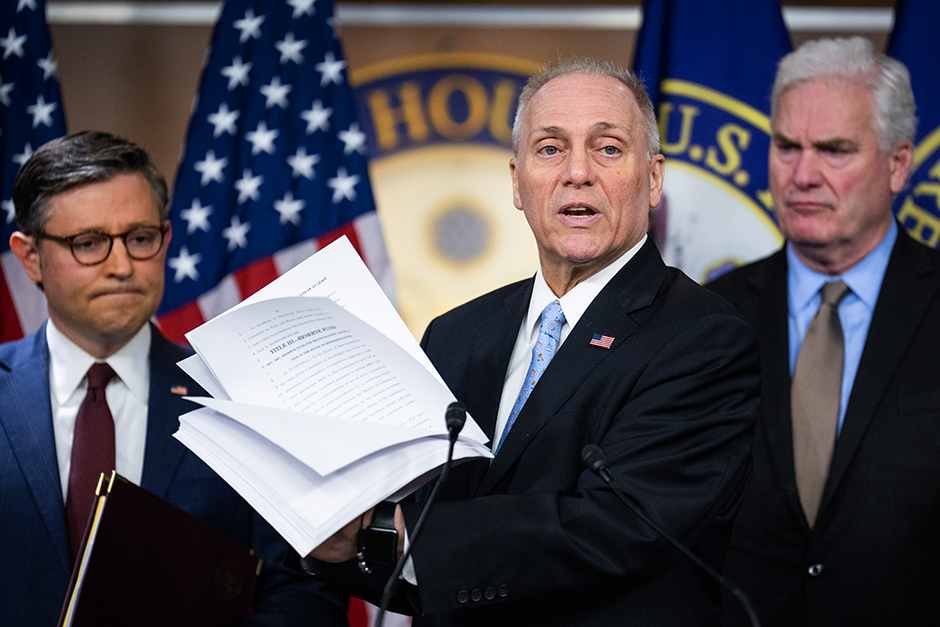
    House Majority Leader Steve Scalise holding the House Republican budget during a February news conference with Speaker of the House Mike Johnson, left, and House Majority Whip Tom Emmer, right.

    WASHINGTON — The city of Carver, once the last stop for steamboats traveling up the Minnesota River, wants to upgrade a levee that has kept the river from flooding the town.

    So the city sought the help of Rep. Tom Emmer, R-6th District, who has asked for more than $27 million for local transportation projects in the 2025 budget. Emmer put in an earmark request for $3.35 million to help the city of 7,000 people raise enough money to upgrade that 60-year-old levy to the standards set by the U.S. Army Corps of Engineers.

    But that request, as well as the rest of Emmer’s requests and hundreds of millions of dollars in earmark appeals from other Minnesota federal lawmakers, aren’t likely to be approved, having fallen victim to Congress’ inability to approve appropriations bills and the GOP’s determined efforts to cut federal spending.

    That has dashed the hopes for federal money for local transportation projects, new firehouses, police stations, airports, recreation centers, wastewater treatment plans and money to non-profits that provide medical care and housing help.

    Carver Mayor Courtney Johnson said she asked for the federal help because she was “trying to leave no stone unturned” in seeking the $13 million needed to fortify and modernize the city’s levee.

    She said she was disappointed that the help won’t come — at least not this year. “We don’t ask for that much in Carver,’” Johnson said.

    But the city has raised $9 million already and plans to start work on the levee next year anyway.

    The reason Carver, and dozens of other towns in Minnesota, won’t receive hoped-for funding for special projects is complicated.  

    Since the appropriations process in Congress collapsed this year, federal agencies have been funded through a series of short-term, stop-gap spending bills that, unlike the appropriations bills, don’t have earmarks. 

    The latest one expires a minute after midnight Friday, setting up a partisan showdown over the shutdown of the federal government.

    To avoid a shutdown, House Speaker Mike Johnson unveiled a new stop-gap spending bill — a so-called “continuing resolution,” or CR — last weekend that would keep the federal government running until Sept. 30, the end of the federal fiscal year.

    The bill would save $13 billion by eliminating all earmarks from the federal budget, make moderate cuts to some domestic and foreign aid programs and increase the Pentagon’s spending by $6 billion. Most other federal programs and agencies would be funded at 2024 levels.

    Rep. Betty McCollum
    Rep. Betty McCollum

    Democrats in the U.S. House and Senate have made it clear they are adamantly opposed to the stopgap bill. It may squeak through the narrowly divided House. Then it will be up to Senate Democrats whether to filibuster the bill or allow it to pass to avert a government shutdown.

    “Republicans in Congress had eighteen months to finish their work on the Fiscal Year 2025 Appropriations bills,” Rep. Betty McCollum, D-4th District, said in a statement. “By putting forward a full year Continuing Resolution, Congressional Republicans have failed miserably. They have abdicated their constitutional responsibilities to fund the government to Donald Trump.” 

    Political ‘pork’?

    Earmarks were banned in 2011, victims of a series of scandals and an anti-spending movement fueled by the Tea Party, which considered such projects wasteful “pork.”

    But proponents pushed for their return, arguing that they account for a tiny fraction of the federal budget, help to fund much-needed projects and foster consensus-building and bipartisanship in Congress as lawmakers across the political spectrum work toward common goals.

    So earmarks were resurrected in 2022, in a limited way. Renamed “community funding projects,” lawmakers were required to certify that neither they nor their immediate families have any financial interest in projects they requested and to make their requests public.

    The C.A.R.E. Clinic in Red Wing, which provides fee-free medical and mental health care and dental services at nominal or no cost, made its first request for federal funding in this year’s budget.

    The nonprofit health center asked Sen. Amy Klobuchar, D-Minn., to procure a $1.1 million grant so it could establish a permanent home and expand its dental clinic.

    Julie Malyon, executive director of the clinic, said she is disappointed that the help won’t come through. But she said she is not completely surprised since federal funding for other types of grants have been pulled since Trump was inaugurated.

    “We anticipated that this would be an unprecedented year,” Maylon said.

    The abolition of earmarks puts Mankato Regional Airport in a special bind. It received approval from the Federal Aviation Administration in 2022 for a new air control tower. But the FAA mandated that the tower, estimated to cost $18 million, be completed in five years, or by 2027, or begin the approval process all over again. 

    Rep. Brad Finstad
    Rep. Brad Finstad

    The airport put in a request through Rep. Brad Finstad, R-1st District, for $2.5 million so it could begin design and engineering work on the tower. Now that money won’t come through.

    “It’s a surprise,” said Shawn Schloesser, associate director for transportation planning services in Mankato. “Hopefully, the FAA prioritizes control towers and funds us through other money. Or we just wait.”

    Other earmark requests that have been derailed include $5 million to help build a new water treatment plant in Eagle Lake, $2.4 million to replace a 70-year-old water main in Manchester, $4 million to reconstruct a library in St. Paul, $2.5 million to build a new police station in New Prague, $8.4 million for a new tribal court building for the Fond du Lac Band of Lake Superior Chippewa and funding for dozens of other Minnesota-based projects.

    “Not only does the Republican’s CR cut funding for our veterans and seniors, but it fails to fund community projects that we had previously negotiated,” said Rep. Angie Craig, D-2nd District, who submitted the request for New Prague’s police station as well as funding for other projects.  

    Minnesota’s cities, towns and non-profits can submit their requests again in the 2026 federal budget.

    But the clampdown on earmarks occurred as the Elon Musk-led Department of Government Efficiency seeks to make deep cuts in all of the federal agencies and Trump seeks cuts to the federal budget so he can fund his priorities, s0 the pressure to cut government spending may persist.

    Ana Radelat

    Ana Radelat

    Ana Radelat is MinnPost’s Washington, D.C. correspondent. You can reach her at aradelat@minnpost.com or follow her on Twitter at @radelat.

    The post Minnesota cities, towns and nonprofits denied millions of dollars in earmarks appeared first on MinnPost.

  • CDC firings undermine public health work far beyond Washington

    CDC firings undermine public health work far beyond Washington

    The Trump administration’s sudden firing of Centers for Disease Control and Prevention employees gutted training programs across the nation whose participants bolstered the workforce of state and local public health departments that for decades have been starved of resources.

    The programs are designed to cultivate a new generation of public health leaders, many of whom have gone on to work at the CDC. That was far from its only purpose. Local and state officials said the departures threaten to undermine the nation’s constant effort to identify and control infectious disease outbreaks.

    The terminated CDC employees helped prevent and respond to outbreaks such as dengue fever and the flu. They worked with local officials to quickly test for viruses and ensure that testing in public health labs complies with federal regulations. Others monitored potential cases of tuberculosis or provided health education to adolescents to prevent sexually transmitted infections, according to interviews with fired workers and local public health officials.

    As a CDC public health adviser, Gaël Cruanes had been working at New York City’s Department of Health and Mental Hygiene to detect cases of tuberculosis, a serious illness that spreads through the air and usually attacks the lungs.

    The Public Health Associate Program deploys recent college graduates and other early-career workers for two years. After starting his job in October, Cruanes said, he contacted newly arrived immigrants and refugees potentially at risk of spreading TB in hopes of getting them into the city’s clinics for screening.

    “It’s purely for the safety of the public at the end of the day,” Cruanes said. He and other trainees were fired in mid-February.

    “It’s unconscionable,” he said.

    A spokesperson for the Department of Health and Human Services, Andrew Nixon, declined to comment. The White House and CDC didn’t respond to requests for comment.

    The Trump administration’s swift staff reductions in February targeted probationary employees, many hired in the past two years, who lack civil service protections against firings. The administration on Feb. 26 ordered federal agencies to submit plans by mid-March for large-scale layoffs, a move that could encompass a much broader swath of workers.

    After CNN published this article, at least some fired CDC workers in the training programs were notified on March 4 that their terminations had been rescinded.

    Affected employees were cleared to work on March 5, according to emails viewed by KFF Health News. “You should return to duty under your previous work schedule. We apologize for any disruption that this may have caused,” said the emails, which were unsigned and sent from an internal CDC email address.

    The reversal came less than a week after a federal judge ruled that the Trump administration’s widespread terminations of probationary employees were likely illegal.

    Seven CDC employees — including from the associate program — assigned to the New York City health department were originally terminated, Michelle Morse, the agency’s acting commissioner, testified during a City Council hearing Feb. 19.

    In an interview, Morse said the health department was exploring how to retain them.

    “We’re looking into what the CDC could do,” she said, “but we are really just trying to use our own levers that we have within the health department to see what’s possible for those staff.”

    Since its creation in 2007, the Public Health Associate Program has placed 1,800 people in nearly every state and territory, plus the District of Columbia, according to the CDC.

    The sudden firings meant “there was no lead time to try to figure out what we’re going to do,” said Anissa Davis, the city health officer at the Long Beach Department of Health and Human Services in California.

    Three participants of the associate program worked at the Long Beach department, Davis said. A CDC public health adviser was one of four employees working on sexually transmitted infections and HIV surveillance. Two others were with the 13-person communicable disease control team, which includes staff who respond to outbreaks in nursing homes, hospitals, restaurants, and schools, Davis said.

    “They are invaluable,” Davis said. “Public health is always under-resourced so having these people really helps us.”

    The U.S. public health system was already under severe strain at the onset of the COVID-19 pandemic — tens of thousands of jobs disappeared after the 2007-09 recession hit, and spending also dropped significantly for state and local health departments, according to a KFF Health News investigation. The backlash against pandemic-era restrictions drove many more officials to resign or retire. Others were fired. Still, officials said the pandemic also inspired some to pursue public health careers.

    Scientists in the CDC’s Laboratory Leadership Service program were also fired in February. The CDC in 2015 started the two-year training fellowship to improve lab safety and quality following a series of failures, including in 2014 when CDC staff in Atlanta were potentially exposed to anthrax. The program each year recruits a small number of doctorate-level scientists; several work in state or local health departments.

    At least 16 of 24 fellows in the program were fired in mid-February, according to two scientists who were terminated and spoke on the condition of anonymity for fear of professional retaliation. “Now we can’t be a resource for these labs anymore,” one of them said.

    Public health labs need the CDC scientists “because they’re underfunded, understaffed,” the other said. “They are at their capacity already.”

    Lab fellows’ responsibilities included helping with outbreak investigations and responses, including by training local staff on how to safely run tests or analyzing samples to identify the cause of an illness. Fellows were recently involved in setting up a new test in Florida to detect Oropouche, a relatively unknown insect-borne disease that has no vaccine or effective treatment. The World Health Organization in December said more than 11,600 cases had been reported in 2024 in South America, the Caribbean, the U.S., Europe, Canada, and Panama. The Florida Department of Health didn’t respond to a request for comment.

    Fellows also helped develop the capacity to test for dengue fever in American Samoa, one of them said.

    “When new stuff happens that’s urgent, it’s almost all the time we get pivoted to it,” the person said.

    Participants in different training programs received the same form letter notifying them of their terminations, according to documents viewed by KFF Health News.

    The letters said that terminated people had shown poor performance: “Unfortunately, the Agency finds that you are not fit for continued employment because your ability, knowledge and skills do not fit the Agency’s current needs, and your performance has not been adequate to justify further employment at the Agency.”

    However, the fellows’ supervisors had written memos and emails saying they were in good standing, according to documents viewed by KFF Health News. Cruanes said he had not had a performance evaluation when he was terminated — his first was supposed to be Feb. 18, three days after he received his notice. He was among the CDC staff reinstated on March 4.

    In Minneapolis, a CDC public health adviser had been providing sexual and reproductive health education in two high schools, as well as doing citywide work on STI testing, said Barbara Kyle, the city’s school-based clinic manager. The department was trying to shift those responsibilities to remaining personnel. “We’re right now just scrambling,” she said.

    The city has relied on trainees through the CDC program for more than a decade, Kyle said.

    “These two years of learning public health, on-the-ground experience, has really been such a positive move for our country,” she said. “So that concerns me if we lose that pipeline.”

    Healthbeat reporter Eliza Fawcett contributed to this report from New York City.

    We’d like to speak with current and former personnel from the Department of Health and Human Services or its component agencies who believe the public should understand the impact of what’s happening within the federal health bureaucracy. Please message KFF Health News on Signal at (415) 519-8778 or get in touch here.

    KFF Health News is a national newsroom that produces in-depth journalism about health issues and is one of the core operating programs at KFF—an independent source of health policy research, polling, and journalism. Learn more about KFF.

    This article first appeared on KFF Health News and is republished here under a Creative Commons license.

    The post CDC firings undermine public health work far beyond Washington appeared first on MinnPost.