Category: USA

  • D.C. Memo: Twin Cities mayors stand firm as ‘sanctuary cities’ following court ruling

    D.C. Memo: Twin Cities mayors stand firm as ‘sanctuary cities’ following court ruling

    WASHINGTON – The mayors of Minnesota’s two largest cities doubled down on their status as “sanctuary cities” in the wake of a judge’s ruling that will prevent the Trump administration from gutting their federal funds. 

    “What Donald Trump is trying to do is downright illegal,” Minneapolis Mayor Jacob Frey said in a statement. “Minneapolis is proud to stand with immigrant families — not just in words, but in court.”

    Frey also said “we will not be bullied into violating the Constitution or compromising the trust between our residents and local government” and that no one in the city “should fear that seeking help or calling 911 could lead to deportation.”

    Meanwhile, St. Paul Mayor Melvin Carter released a statement saying “this ruling affirms what we’ve always known: the President cannot force city employees to serve as ICE agents. … Our team will stay focused on our sacred responsibility — to provide exceptional public services for all of our residents.”

    A federal judge in San Francisco issued the injunction Thursday at the request of 16 cities and counties — including Minneapolis and St. Paul — that will prevent the Trump administration from stripping funds from what it determines are “sanctuary” jurisdictions.

    Attorney General Pam Bondi and Department of Homeland Security Secretary Kristi Noem have threatened the Twin Cities and all jurisdictions that limit the use of local resources to enforce federal immigration law with a cut-off of federal funds.

    The lawsuit, initiated by the city of San Francisco, was filed after the Justice Department sued Illinois and the city of Chicago, seeking a court order to block laws that the Trump administration says are interfering with Trump’s efforts to deport millions of immigrants.

    The Justice Department has also sued New York over a state law that bars the sharing of motor vehicle information — including addresses — with federal immigration authorities.

    District Judge William Orrick cited those lawsuits as a reason the 16 jurisdictions that have sued have a strong reason to fear punitive actions from the Trump administration. Orrick wrote that the 16 jurisdictions “have established that they are likely to prevail on the merits of at least their separation of powers, Spending Clause, and Fifth and Tenth Amendment claims.”

    In a statement, the Justice Department said that, despite the injunction, it “will continue to fight in court to defend President Trump’s agenda to crack down against policies that benefit criminal illegal aliens.”

    Fighting for transgender athletes and against tariffs 

    Speaking of lawsuits, Minnesota Attorney General Keith Ellison continued to file them against the Trump administration this week.

    Thanks to Ellison, Minnesota became the first state to sue the Justice Department over its threats to cut federal funding to states that allow transgender girls and women to participate on sports teams that correspond with their gender identity.

    Ellison’s lawsuit said two of Trump’s executive orders — as well as threats and enforcement letters from the Justice Department — violated state sovereignty rights under the 10th Amendment, usurped the power of Congress and violated the Administrative Procedure Act.

    It also said the administration has no legal right to rescind federal funding for allowing transgender women and girls to participate in sports teams that align with their gender identity.

    The lawsuit was filed days after U.S. Attorney General Pam Bondi sued Maine over policies that allow some transgender athletes to compete in women’s sports and Bondi threatened to target Minnesota and California, as well.

    Although most of Ellison’s other lawsuits against the Trump administration are multi-state efforts filed in federal district courts, Minnesota joined 13 other states in a lawsuit over Trump’s tariff policies that was filed in the U.S. Court of International Trade.

    “Trump’s tariffs are unlawful and will cause severe harm to families across Minnesota, so I’m filing a lawsuit to block them,” Ellison said in a statement.

    Trump said the levies would make the United States more self-reliant and regenerate the nation’s industrial base. But critics say the United States is too deeply immersed in a global economy and tariffs will hurt U.S. exporters and make the cost of thousands of imported goods Americans rely upon more expensive as other nations retaliate with their own tariffs.

    The lawsuit filed by the Democratic attorneys general said only Congress has the power to impose tariffs and that the president, who invoked the International Emergency Economic Powers Act to impose the levies, can only do so when an emergency presents an “unusual and extraordinary threat” from abroad.

    Trump has imposed 145% tariffs on exports from China and has put on hold smaller, but still sizable, tariffs on all U.S. trading partners, be they friend or foe.

    The threat of a trade war with China and the chaos created by Trump’s “on again, off again” policy has roiled the stock market and has also reportedly already caused some disruption in supply chains of foreign goods.

    Klobuchar moving up the ranks?

    Senate Minority Whip Dick Durbin’s announcement that he will retire at the end of his term has touched off speculation about his replacement in the Senate Democratic leadership ranks and there’s talk that Sen. Amy Klobuchar may make a bid for that job.

    Klobuchar currently holds the No. 3 position, that of chair of the influential Steering and Policy Committee, in the Democratic leadership. Durbin, who has long represented Illinois in the Senate, is No. 2. But Klobuchar would have competition if she wants to continue to climb the ladder. Sen. Brian Schatz, D-Hawaii, has signaled an interest in the post.

    And Sens. Chris Murphy, D-Conn., and Cory Booker, D-N.J., may also go for the job.

    Craig town halls rile up Republicans

    Rep. Angie Craig’s decision to hold town halls in areas of the state that Trump won in the past election has really ticked off the GOP lawmakers who represent those congressional districts: Reps. Tom Emmer, Brad Finstad, Michelle Fischbach and Pete Stauber. So much so, they jointly filed an ethics complaint against Craig, alleging she has wrongly used her office account money to publicize the events. Craig says she used her campaign funds for the expenses of holding the town halls and office funds are often used to let constituents know about a lawmaker’s travels.

    In any case, the House Ethics Committee will now begin a lengthy process of determining what to do about the complaint.

    When a lawmaker (or in this case lawmakers) files a complaint against another member of Congress, the House Ethics Committee’s chairman and ranking member determine if the complaint meets technical, rule-based requirements. If not, the complaint is returned. If it does meet the requirements, the committee has 45 days to review the complaint, a time period that can be extended for another 45 days.

    At the end of the 90-day period, the Ethics Committee either has to resolve the complaint or vote on whether to establish an investigative subcommittee that would continue to probe the issue. Most of those proceedings are confidential.

    So, if the complaint meets the technical requirements, Emmer, Stauber, Fischbach and Finstad may be able to claim that Craig is under an ethics investigation for months, even if there’s a determination of no wrongdoing at the end.

    Eying a run for retiring Sen. Tina Smith’s seat, Craig said she’s holding the in-person town halls because the GOP lawmakers won’t after their Republican colleagues faced angry constituents at those events.

    The town halls also allow Craig to weigh how much DFL support she has in the “reddest” parts of the state.

    In other news:

    -We took a close look at the first 100 days of the Trump administration and their impact on Minnesota.

    -Freelancer Forrest Peterson wrote about Craig’s townhall meeting in St. Cloud – the heart of Emmer’s district – and the ethics complaint filed by Republicans against her.

    -From the state Capitol, Matt Blake reviewed Gov. Tim Walz’s State of the State address, including his criticism of the Trump administration for policies he said hurt the “federal government’s ability to help people.”

    -In Community Voices, a college professor argues that Trump’s trade policies will lead to a “sudden stop” in the flow of capital into the country, which will make things more expensive for Minnesotans.

    Your questions and comments

    A reader was critical of a story about the impact of Trump policies on Minnesota in his first 100 days.

    “You have identified all the things he has attempted,” the reader wrote. “The key word is ‘attempted.’ He is playing dictator or king, taking actions that would justify hundreds of impeachment charges. He signs an executive order and claims success. None of the massive resistance to his actions in the courts or around the country is mentioned, nor none of his bad appointments, his lies and vendettas, the failure to address inflation, much less the many ways he is increasing it, his withdrawal of foreign aid that is killing children as food rots in ware houses, foolishness such Gulf of America, etc. Maybe a companion article talking in dreadful details about all the damage he has done is needed?”

    Whew. It’s true, many Trump initiatives have been blocked by lawsuits, but the impediments are temporary because most are injunctions and restraining orders. And other actions, including the increase in deportations, the chilling of dissent and the curtailment of government funds and the firing of government workers, have occurred already.

    But yes, MinnPost will focus on Trump’s failings, too, which may be more evident in the next 100 days.

    Please keep your comments, and any questions, coming. I’ll try my best to respond. Please contact me at aradelat@minnpost.com.

    The post D.C. Memo: Twin Cities mayors stand firm as ‘sanctuary cities’ following court ruling appeared first on MinnPost.
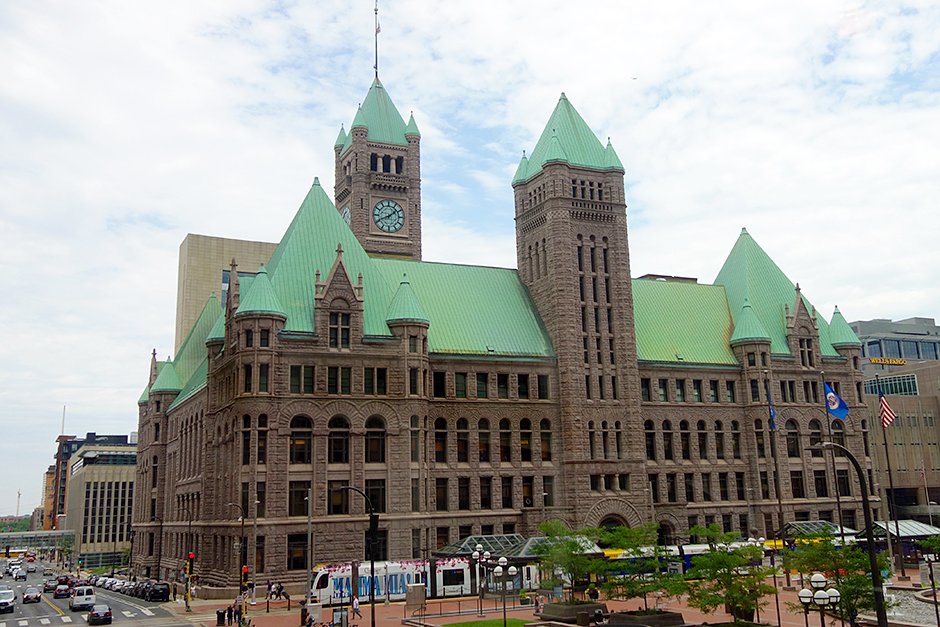

  • Judge rules in Minneapolis, St. Paul’s favor in barring Trump from denying federal funds to ‘sanctuary cities’

    Judge rules in Minneapolis, St. Paul’s favor in barring Trump from denying federal funds to ‘sanctuary cities’

    SAN FRANCISCO (AP) — A federal judge in California on Thursday barred the Trump administration from denying or conditioning the use of federal funds to “sanctuary” jurisdictions, saying that portions of President Donald Trump’s executive orders were unconstitutional.

    U.S. District Judge William Orrick issued the injunction sought by Minneapolis, St. Paul, San Francisco and other municipalities that limit cooperation with federal immigration efforts.

    Orrick wrote that defendants are prohibited “from directly or indirectly taking any action to withhold, freeze, or condition federal funds” and the administration must provide written notice of his order to all federal departments and agencies by Monday.

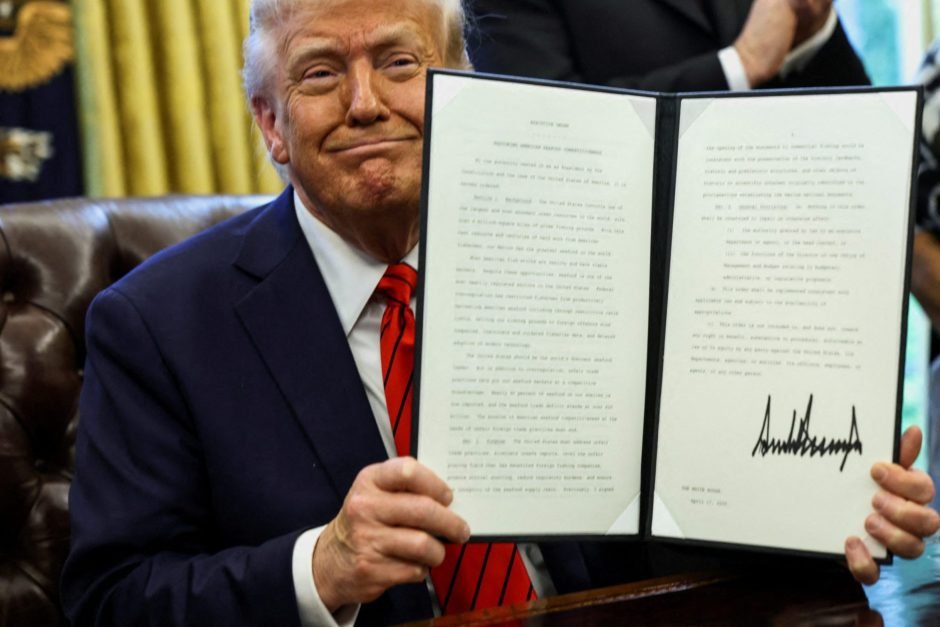
    One executive order issued by Trump directs Attorney General Pam Bondi and Homeland Security Secretary Kristi Noem to withhold federal money to sanctuary jurisdictions. The second order directs every federal agency to ensure that payments to state and local governments do not “abet so-called ‘sanctuary’ policies that seek to shield illegal aliens from deportation.”

    At a hearing Wednesday, Justice Department lawyers argued that it was much too early for the judge to grant an injunction when the government had not taken any action to withhold specific amounts or to lay out conditions on specific grants.

    But Orrick, who was nominated by President Barack Obama, said this was essentially what government lawyers argued during Trump’s first term when the Republican issued a similar order.

    “Their well-founded fear of enforcement is even stronger than it was in 2017,” Orrick wrote, citing the executive orders as well as directives from Bondi, other federal agencies and Justice Department lawsuits filed against Chicago and New York.

    San Francisco successfully challenged the 2017 Trump order and the 9th U.S. Circuit Court of Appeals agreed with the lower court that the president exceeded his authority when he signed an executive order threatening to cut funding for “sanctuary cities.”

    There is no strict definition for sanctuary policies or sanctuary cities, but the terms generally describe limited cooperation with Immigration and Customs Enforcement. ICE enforces immigration laws nationwide but seeks state and local help in alerting federal authorities of immigrants wanted for deportation and holding that person until federal officers take custody.

    Leaders of sanctuary jurisdictions say their communities are safer because immigrants feel they can communicate with local police without fear of deportation. It is also a way for municipalities to focus their dollars on crime locally, they say.

    Besides San Francisco and Santa Clara County, which includes a third plaintiff, the city of San José, there are 13 other plaintiffs in the lawsuit, which include Seattle and King County, Washington; Portland, Oregon; Minneapolis and St. Paul, Minnesota; New Haven, Connecticut; and Santa Fe, New Mexico.

    The post Judge rules in Minneapolis, St. Paul’s favor in barring Trump from denying federal funds to ‘sanctuary cities’ appeared first on MinnPost.

  • Rep. Angie Craig, appearing in the backyards of Republicans, hints at Senate race

    Rep. Angie Craig, appearing in the backyards of Republicans, hints at Senate race


    woman speaking at podium

    U.S. Rep. Angie Craig said she is hosting town hall meetings in Congressional districts held by Republicans this week “to give voice to Minnesotans who want to hear what’s happening in Washington.” 

    At an event in St. Cloud on Wednesday, she said, “This is what democracy looks like. Everyone in Minnesota deserves to have their congressmen tell them what’s happening in Washington. I’m here because (Rep.) Tom Emmer” – the district’s current representative – “won’t show up and listen to you.”

    But those gatherings might just be what many observers suspect – stump speeches in a bid for the U.S. Senate seat being vacated by Craig’s fellow Democrat, Sen. Tina Smith. Craig said afterward that she would make an announcement by the end of April about that race, which already includes two Democrats: Lt. Gov. Peggy Flanagan and former state Sen. Melisa Lopez Franzen.

    She’s not alone in these unusual gatherings. Gov. Tim Walz is among other Democrats who have held town-hall events in Republican districts to draw attention to the absence of GOP events after some became heated over Trump administration policies. 

    Republicans claim Craig’s town halls outside of her district are essentially Senate campaign stops. 

    Ahead of Wednesday’s gathering, Emmer and his fellow Republicans in Minnesota’s congressional delegation — Reps. Michelle Fischbach, Brad Finstad and Pete Stauber — sent letters to the House Committee on Ethics and the Committee on House Administration asking for a review of possible ethics violations by Craig, claiming misuse of taxpayer funds for campaign purposes. 

    In response, Craig said after the Wednesday event that all town hall expenses are being covered by campaign funds.

    A weeklong tour

    Craig will be hosting a town hall meeting in Willmar on Thursday, followed by one Friday evening in Mankato. The first meeting in her tour of districts outside her own took place on Monday in Grand Rapids.

    About 150 people filed into the auditorium on the St. Cloud State University campus after clearing security checks similar to those at an airport.

    The tight security seemed unnecessary judging from the enthusiastic responses and applause following many of Craig’s comments, often aimed at her Republican colleagues.

    Craig opened her remarks telling about her own background as a child of a single mom living in a mobile home. After college she worked as a newspaper reporter before becoming an executive with St. Jude Medical. Craig said she knows what it’s like to be part of a working-class family. “I’m fighting for working class people and I won’t back down.”

    She recited a litany of woes coming from Washington, D.C.: tariffs, trade war, job loss, pension fund losses, frozen grants. 

    “Elected leaders must stand up to what is happening now,” she said. “We have three co-equal branches of government for a reason.” Even though some complain about it in private, Republicans are letting Trump go unchecked, she said.

    During the hour-plus meeting, a moderator read questions from the audience submitted in advance. While being responsive and respectful to the questions, Craig’s responses sometimes morphed into campaign speech material. She rattled off a barrage of numbers and issues from tariffs to budget cuts, grant reductions, due process, gerrymandering, and Republican lawmakers’ fear of standing up to Trump.

    One question asked how to hold Trump accountable for Bill of Rights violations. 

    “We need only four Republican patriots,” Craig said. “I’m so sick and tired of hearing four representatives make excuses for Donald Trump.” Craig said she invited Emmer to the meeting, and if he held his own town hall meeting, she would “stay home” in her congressional district.

    During the meeting, one woman shouted, “Are you going to run (for Senate)?”

    One man asked, “How do Democrats move forward in the face of the Donald Trump agenda?” Craig said the statue of Abraham Lincoln in Washington, D.C., had one fist open and the other closed, seeming to imply the need to both fight back and be welcoming.

    Craig emphasized her reputation for bipartisanship, and in Congress she has not always followed the party line. “I show up everywhere. I talk to everyone,” she said. While the 2nd District is somewhat evenly divided between Republicans and Democrats, Craig won the seat in 2024 with a 14% margin. “I had a guy in 2020 who had an Angie Craig sign and Donald Trump sign on his farm,” she said, adding that he now works for her.

    Craig, 53, was elected in 2018, narrowly defeating Jason Lewis. In 2020 and 2022 she defeated Tyler Kistner and in 2024 defeated Joe Teirab. She is the top Democrat on the House Committee on Agriculture and also sits on the House Committee on Energy and Commerce.

    Counties in the 6th Congressional District northwest of the Twin Cities metro area include Anoka, Carver, Benton, Sherburne, eastern Stearns and Wright. In the 2024 Congressional race, Emmer defeated DFLer Jeanne Hendricks by a large margin, 62.4% to 37.4%.

    While the 6th Congressional District political hue trends reliably red, the 2024 Senate race between Amy Klobuchar and Royce White saw a slight split among the six counties, with Anoka and Carver going for Klobuchar.

    After fluctuating in previous general elections, DFL turnout in the 6th seems to have leveled off since 2016, to around 125,000 votes. It rose to more than 170,000 during the Obama presidency, until 2014 when it plunged to about 85,000.

    On Monday, 60 to 70 people attended Craig’s town hall at Grand Rapids High School, where she was introduced by State Sen. Grant Hauschild, DFL-Hermantown. Many questions from the audience were about Social Security, Medicare and education.

    Grand Rapids is in the 8th Congressional District represented by Stauber. WDIO News of Duluth reported that Stauber had met Monday with the Carlton County Republicans in a closed meeting at the Cloquet Public Library. Outside the library a crowd with United We Stand-Cloquet Indivisible marched in protest.

    “I made a comment that if my Republican colleagues weren’t going to do in person town halls themselves to come and listen to their constituents, that I would come and do it. And I also said if they’ll come do it in person, I’ll stay home in Minnesota’s second district,” Craig told WDIO.

    U.S. Senate candidate Melissa Lopez Franzen speaks to about 300 people at a “hands off” rally April 19 in Willmar. Credit: MinnPost photo by Forrest Peterson

    Franzen was in Willmar on Saturday speaking at the local “hands off” rally organized by Indivisible Kandiyohi County. Franzen served for 10 years but did not run again in 2022 after redistricting. White, a Republican who ran against Klobuchar in 2024, also has announced his candidacy.

    Forrest Peterson is a Greater Minnesota-based freelance writer.

    The post Rep. Angie Craig, appearing in the backyards of Republicans, hints at Senate race appeared first on MinnPost.
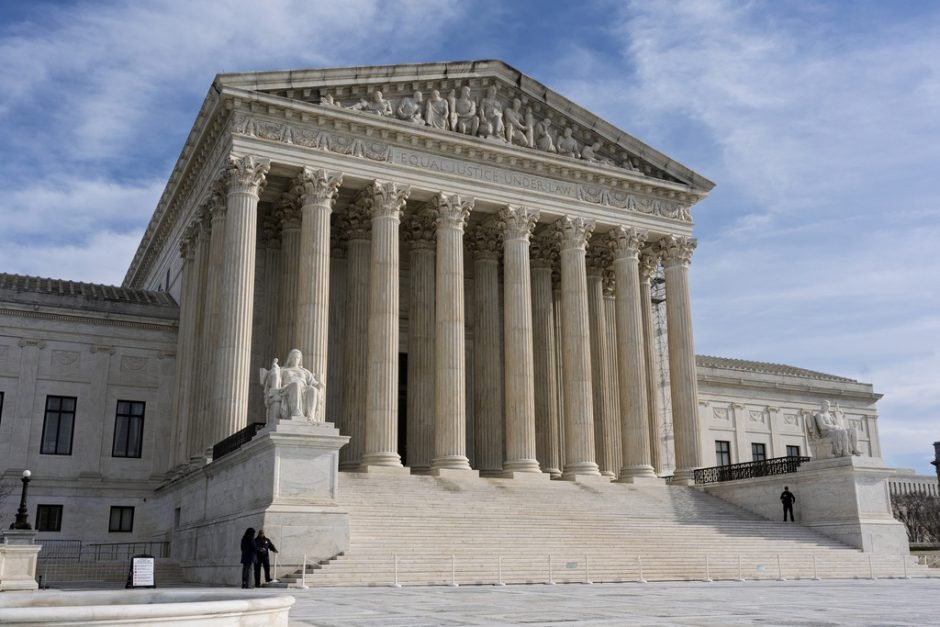
  • Trump 2.0: How the president’s first 100 days have impacted Minnesota

    Trump 2.0: How the president’s first 100 days have impacted Minnesota

    WASHINGTON — President Donald Trump’s first 100 days in office have been unprecedented, featuring an explosion of executive actions aimed at dramatically reshaping the government, the American economy, foreign policy and cultural norms — largely through the consolidation of power.

    Minnesota and other states that did not vote for Trump are most vulnerable to the agenda Trump quickly initiated in his first months of his second term. That agenda includes efforts to punish officials who do not cooperate with his massive deportation initiative or his campaign to erase diversity, equity and inclusion (DEI) efforts, which the president has determined are divisive.

    100 Days: Winter Keefer on immigration

    From cuts in medical research and the curtailing of refugee programs to tariffs on agricultural products and threats against “sanctuary cities,” Trump’s first 100 days (which will be reached Tuesday) have touched Minnesotans in myriad and uncomfortable ways.

    The whirlwind of change since Trump was sworn in on Jan. 20 was ushered in through Trump’s unleashing of more than 130 executive orders; little change came out of Congress, which has sent just a handful of bills to the president to sign.

    “This is one of the most difficult 100 days to grasp,” said Tim Lindberg, a political science professor at the University of Minnesota Morris. “Usually, this is a time to get Congress to push through a president’s agenda, but there have not been any significant bills.”

    100 Days: Matthew Blake on Minnesota’s state government

    Former President Joe Biden issued 77 executive orders in his first full year in office — and he was fighting a pandemic. And in 2017, the first year of Trump’s first term, he issued only 55 executive orders.

    Meanwhile, former President Barack Obama signed 40 executive orders in 2009, his first year in office.

    “The thing that’s so striking about this period is that these things are happening uninterrupted,” said Ross Baker, a political science professor at Rutgers University.

    Baker said Elon Musk and his Department of Government Efficiency (DOGE) is a “continuing story” as they raid federal agencies, laying off workers, canceling grants and contracts and seeking private information about Americans they say will help them find undocumented immigrants.

    100 Days: Deanna Pistono on health care and equity

    “Right now, out of the gate, every day, every hour, something happens,” Baker said. “It makes it very difficult for people to step back and sort out individual episodes of great importance.”

    Lindberg said “the most impactful aspect of the chaos is the continued polarization.”

    He said Trump’s continued attacks on issues that Democrats hold in high esteem — including civil rights and diversity and education and scientific research — are “unprecedented.” Lindberg said those attacks affect “blue” states like Minnesota more than states with Republican majorities who “don’t support or don’t know about or don’t care” about these issues.

    Trump has effected so much change in such a short time because he swiftly consolidated his power. He was able to do so because the GOP majorities in the U.S. House and U.S. Senate are loath to disagree with the president, he has a conservative majority on the Supreme Court and he has fired agency officials and watchdogs that could stop or slow his initiatives.  

    And his demonization of the “lamestream media,” which included the blocking of access to legacy media organizations, including the Associated Press, and the promotion of right-wing outlets and “influencers” has allowed him to successfully broadcast disinformation to the MAGA world, amplified by postings on Truth Social and the help of Musk, who owns X.

    Lindberg said thoughtful discourse of any kind is “mostly drowned out by partisanship” and the nation split is “driven by different sources of information.”

    ‘Faith that this will all go away’   

    Trump’s tariff policies are likely to impact Minnesota more than other states because Minnesota is heavily agricultural — ranking 5th in the nation as far as cash receipts from farm products.

    The state’s farmers are also dependent on export markets — especially China, which is in a full-blown trade war with the United States — for the sale of soybeans, corn and hogs. And Canada, a neighboring country that has been battered by tariff threats and Trump’s desire to make it the 51st state, has joint agreements with many Minnesota farmers and is a key export market.

    Lindberg said the pushback from the state’s farmers to Trump’s tariff policy has been muted because it’s not harvest season and Trump compensated, at least in part, the nation’s farmers for losses after he imposed tariffs on China during his first term.

    “You do see some concern in rural areas but there’s some faith that this is going to go away,” he said.

    Trump said he  implemented his tariff policy to bring manufacturing jobs back to the United States, and stop other nations, both friends and foes, from “ripping off” the United States.

    But Minnesota is also home to about 20 Fortune 500 companies that are dependent on both imports from overseas and exports to foreign countries. Target’s stock, for instance, has dropped about 11% in the last month and Best Buy’s has fallen more than 17% and Polaris stock more than 22%.

    Of course, individual Minnesotans are going to be affected by the stock market’s plunge as the value of retirement plans shrink — along with that of government and labor union pension plans — and the economy weakens.

    Trump’s classification of Minnesota as a “sanctuary state” and many of the state’s cities, towns and counties as “sanctuary jurisdictions” has drawn threats of prosecution of state and local officials and claw backs of federal funding.

    Meanwhile, the University of Minnesota is under investigation by Trump’s Justice Department for complaints of antisemitism and announced last week that 11 of its international students have had their visas revoked by the Department of Homeland Security.

    Foreign students at other state colleges are also having their visas revoked  as Trump tries to make good on a campaign promise to deport 1 million foreign-born people in his first year.

    The Trump administration is not reporting the number of deportations, but it is believed that, even with the drastic actions the president has taken, which include sending immigrants to a high-security prison in El Salvador,  will fall far short of his goal because of detention center capacity constraints and other difficulties.

    Yet deportations are up. In the last three months of 2024, there were 565 arrests by the St. Paul sector of the U.S. Immigration and Customs Enforcement (ICE.) Although ICE has stopped providing monthly numbers on arrests and deportations, anecdotal evidence and panicked calls to immigration attorneys in the state indicate there has been an increase in the number of immigrants in the state who have been detained.

    The mass, indiscriminate firings of federal workers and the wholesale elimination of federal agencies — including the U.S. Agency for International Development that purchased Midwestern agriculture products to feed the hungry overseas — has also taken its toll on the state.

    So has the pullback of grants that fund nonprofits, local government programs and university research. And the curtailment of federal funding will also affect Minnesota’s ability to craft a budget that will take care of all of the state’s needs.  

    Earlier this month, Gov. Tim Walz told state agencies that depend on federal funding to “assume it will be cut.”

    Trump has reversed himself on some policies — the on-again, off-again imposition of tariffs is one example — and the nation’s federal courts have put a halt, at least temporarily, to others.

    Meanwhile, Trump has totally failed in his promise to bring a quick end to the wars in Ukraine and Gaza. And on the domestic front the chaos is overwhelming and plans to cut federal safety net programs, if implemented, may eventually more forcefully hit “red” states, which tend to be poorer than “blue” ones.

    The 100-day marker is an informal benchmark stemming from the Franklin Delano Roosevelt administration, which was eager to showcase its efforts to fight the Great Depression in the 1930s.

    Baker said the full effect of Trump’s first hundred days in the Oval Office isn’t likely to be fully felt for a while. 

    “The first 100 days is the cause and the second 100 days will be the effect,” he said.

    Related MinnPost stories

    Trump’s sweeping tariffs policy puts Minnesota farmers in bull’s-eye

    With federal funds on the line, officials in Minneapolis and St. Paul are feeling the impact of Trump’s presidency

    Why Minnesota jails can’t legally hold people past their release time for an ICE detainer

    DOGE cuts trim funding for arts and humanities efforts in Minnesota

    Minnesota colleges and public schools shaken as Trump takes aim at education

    The post Trump 2.0: How the president’s first 100 days have impacted Minnesota appeared first on MinnPost.

  • Poll shows how Gen Z views democracy: 11% say political violence sometimes necessary

    Poll shows how Gen Z views democracy: 11% say political violence sometimes necessary


    Rusted map of the United States with stars and stripes

    A nationally representative poll designed to gauge Gen Z’s attitude toward democracy contradicts a popularly held belief that the generation born roughly between 1997 and 2012 doesn’t care about it at all. 

    While a majority agree on democracy’s importance, many feel unsure how to effectively participate in it or preserve it. For some, the frustration has taken a concerning turn: 11% said political violence is sometimes necessary to achieve progress. 

    And while the poll’s creators expected to find significant variance based on race, gender and location — rural versus urban, for example — other factors, including socioeconomic status and access to civics education, played a major role in shaping young peoples’ beliefs. 

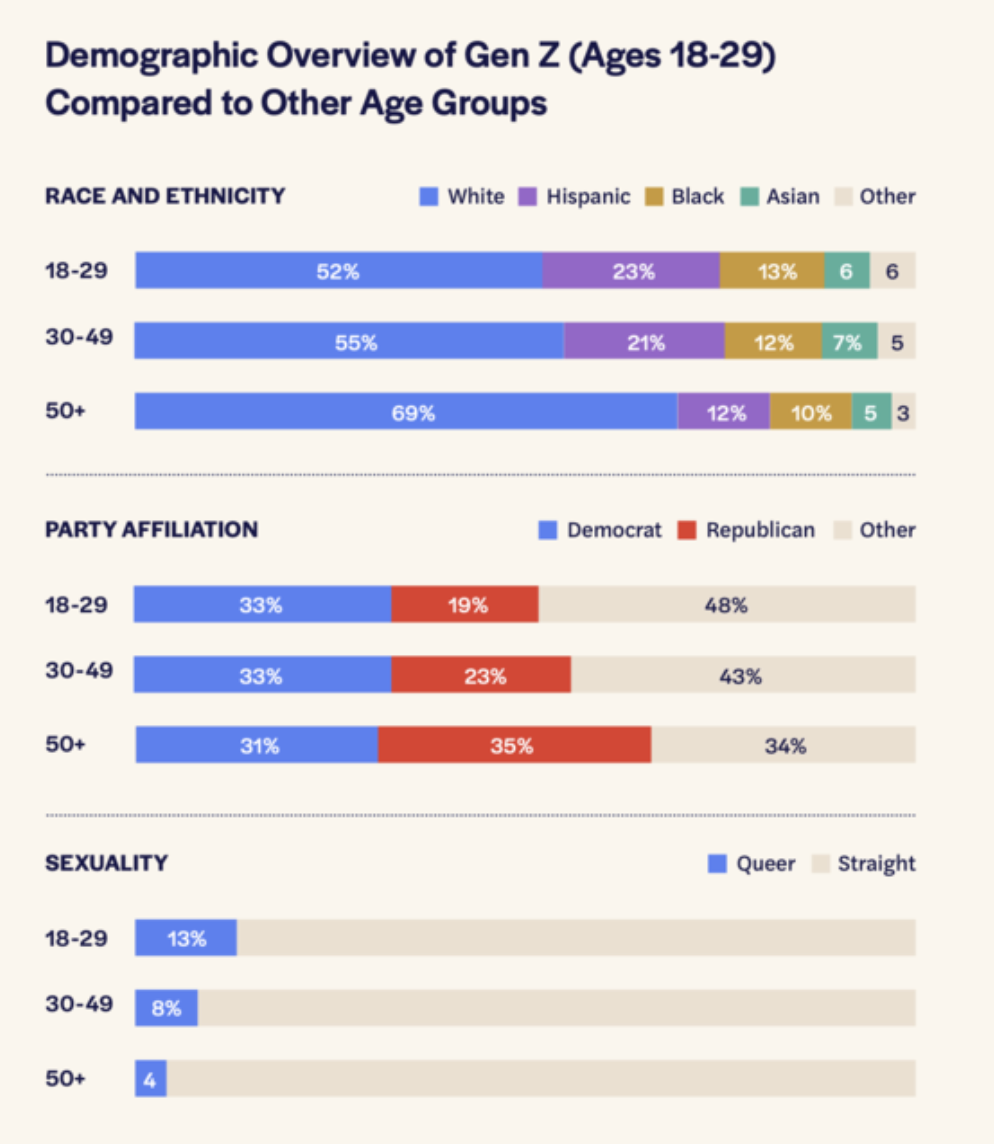
    Demographic Overview of Gen Z (American Community Survey 2023 Public Use Microdata Sample, Centers for Disease Control and Prevention 2023 Behavioral Risk Factor Surveillance System, 2022 Cooperative Election Study)

    For example, those who received less support for their civic development “are less committed to a democracy that they may not feel prepared to participate in or feel they are a part of,” the report notes. 

    “They’re not completely disaffected,” said research specialist Deborah Apau of Gen Z. “The problem is that while they do believe in democracy, they don’t feel that democracy as they experience it today is delivering for them. It’s that disconnection that’s really causing the issue.”

    The poll was conducted between Nov. 14-26, 2024, just after a historically contentious presidential election in which the youth vote was heavily scrutinized. The results were released earlier this month by the Center for Information & Research on Civic Learning and Engagement at Tufts University and Protect Democracy, a nonprofit “dedicated to defeating the authoritarian threat, building more resilient democratic institutions, and protecting our freedom.” The polling firm Ipsos collected the data.

    The findings might help explain Donald Trump’s popularity among young voters in his third run: nearly half under 30 supported the Republican nominee, according to AP VoteCast, a survey of more than 120,000 voters. While he had massive appeal for young white men, he also fared well with young Latino men, who split their vote between Trump and Democrat Kamala Harris. RelatedYoung Voters Favored Abortion Rights and President-Elect Trump, New Data Shows

    The CIRCLE and Protect Democracy poll, which measured Gen Z’s beliefs and perspectives on democracy, civil rights and political violence, along with their support for bipartisan cooperation and feelings toward opposing political groups, revealed that young people crave bipartisanship and compromise.

    Nearly 4 out of 5 say leaders of opposing parties should work together and 65% believe people with deeply opposing political views can find common ground. Likewise, only 17% agree that those who hold political opinions different from their own are “wrong.” 

    Nearly three quarters of its 1,286 respondents said elected leaders should not be able to go above the law. The poll’s findings are landing at a time when many see the country as on the verge of a constitutional crisis, with Trump pushing the bounds of executive power and at least one federal court judge finding grounds last week to hold his administration in contempt.

    In an effort to engage young people, the organizations recommend they be brought into the democratic process, that the nation invest in civic learning, and thatthose wishing for Gen Z to boost their participation acknowledge their diversity and create opportunities for collaboration and collective action that leverages their strengths.RelatedCivics Education Is About More Than Elections — It’s the Foundation of Democracy

    The poll notes that young people’s lives were shaped by economic instability, history-making political shifts, a proliferation of school shootings, the rise of social media and COVID. A full 81% of respondents acknowledged the value and meaning of free and fair elections.

    The survey found, too, that 63% had a “passive appreciation” of democracy, meaning they trust government institutions, have a high regard for democratic principles, and reject authoritarianism and political violence. But, the study’s authors note, their satisfaction and trust may be leading to complacency as this group generally does not take political action outside of voting.

    Thirty-one percent had a “dismissive detachment” from democracy: They didn’t express through the survey that they value core democratic principles and processes. They have low confidence in the system as it is working now and demonstrate higher support for authoritarian governance compared to their peers in other categories. 

    Pollsters note this group has “the lowest levels of media literacy, suggesting that they are often consuming political information without the ability or willingness to confirm its source, truthfulness, or intent.” They also reported little confidence in their ability to be effective political actors.

    Seven percent of Gen Z participants had a “hostile dissatisfaction” with democracy. While they value its core principles, they are “highly displeased” with it as they are experiencing it today, authors note. 

    Despite — or perhaps because of — their frustration, they are the most politically active within this age group and express the highest support for political violence. The report notes, too, they are highly polarized “and their frustrations with the current system run so deep that they are more willing to consider extreme measures to achieve political goals.”

    They are by far the most likely to participate in other forms of civic action like volunteering or taking on leadership roles and are willing to fight for the democracy they want. The report notes they score highest of all in media literacy, “which suggests they may be more informed about the state of democracy than some of their peers.” RelatedFrom Trauma to Turnout: Inside David Hogg’s $8M Bid to Elect Young Progressives

    They are also more ideologically liberal than those in the other two groups and are more likely to be queer compared to the passive appreciation cohort.

    “As knowledgeable actors with a respect for democratic values and a willingness to actively participate through both traditional and non-traditional forms of civic action, these youth who feel a hostile dissatisfaction with our democracy are also a powerful force for reshaping it,” the report observes. 

    Sara Suzuki, senior researcher at CIRCLE, was surprised by the size of the first group defined by its “passive appreciation.” While she’s concerned about their relative inaction, she sees opportunity for them “to do something about the problems they see instead of sort of letting it happen.”

    Apau, of Protect Democracy, said even the group that supports violence as a means of change still believes in democratic ideals — including its ability to function well.  

    “They feel they’ve exhausted their options in terms of participating in things like voting and protests and they’re not able to secure the responses that they want,” she said.

    Apau said it’s important to understand Gen Z and give them the tools they need, “so they’re resourced, they have the knowledge they need to move throughout the world later in life and in adulthood — and understand how systems work.”

    This story first appeared at The 74, a nonprofit news site covering education.

            <img id="republication-tracker-tool-source" src="https://www.the74million.org/?republication-pixel=true&post=1013930&ga3=UA-64416702-1&ga4=G-YQBR2DBZ9Z" style="width:1px;height:1px;">

    The post Poll shows how Gen Z views democracy: 11% say political violence sometimes necessary appeared first on MinnPost.

  • Ellison files preemptive lawsuit against Trump on transgender sports ban

    Ellison files preemptive lawsuit against Trump on transgender sports ban

    ST. PAUL, Minn. (AP) — Democratic Minnesota Attorney General Keith Ellison filed a preemptive lawsuit Tuesday against Republican President Donald Trump seeking to block his administration from acting against Minnesota in the way it’s taking on Maine under a federal push to ban transgender athletes from girls and women’s sports.

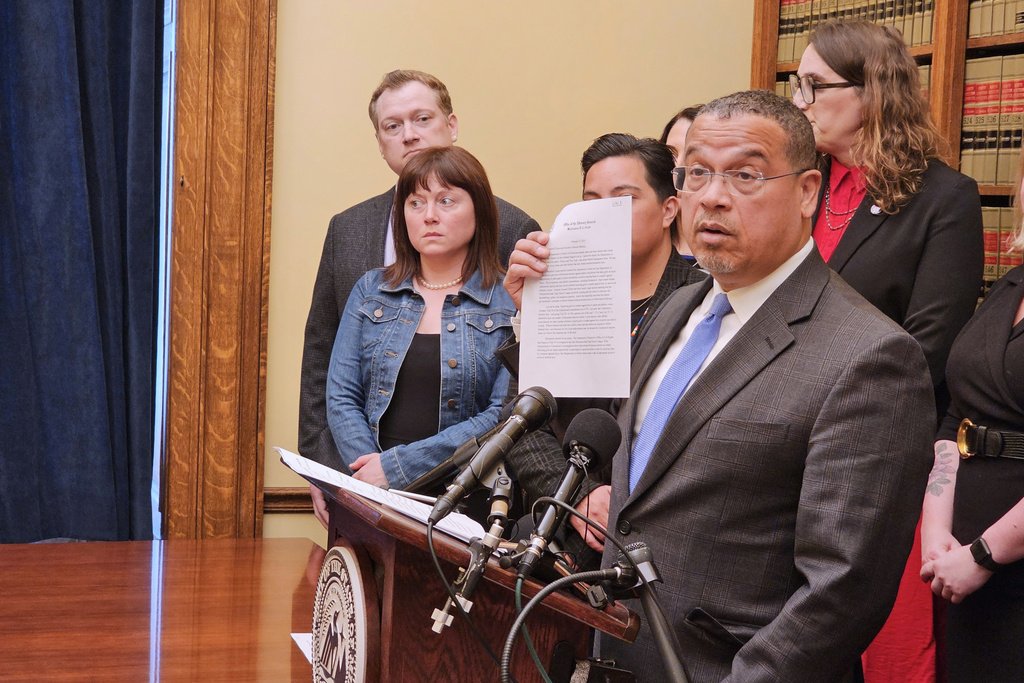
    “Minnesota brings this lawsuit to stop President Trump and his administration from bullying vulnerable children in this state,” Ellison said at a news conference, quoting the opening line from the lawsuit naming Trump and his attorney general, Pam Bondi.

    When Bondi announced the administration’s lawsuit against Maine last week, she warned that Minnesota and California could be next. The administration’s lawsuit followed weeks of feuding between Trump and Democratic Gov. Janet Mill of Maine that led to a clash at the White House when she told Trump, “We’ll see you in court.”

    With this case, Ellison is trying to beat Trump and Bondi to the courthouse.

    The federal lawsuit asks the court to declare Trump’s two executive orders on the matter — and letters that the Justice Department has sent to Minnesota threatening to cut off education funding if the state doesn’t comply — unconstitutional and bar their enforcement. Ellison told reporters that the orders violate the constitutional separation of powers by usurping Congress’ authority to legislate. He said the orders also violate the federal law known as Title IX, which prohibits sex-based discrimination in education programs and activities that receive federal funds.

    The Minnesota Human Rights Act has protected transgender rights since 1993, and Democratic Gov. Tim Walz signed legislation in 2023 making the state a refuge for transgender children coming from other states for gender-affirming care. Ellison issued a formal legal opinion in February that said the state’s human rights protections supersede Trump’s exective order on sports, and the attorney general said his guidance is legally binding in Minnesota unless a court rules otherwise.

    “Trump’s burning desire to destroy trans kids and punish us for helping them live and thrive isn’t just a violation of law, it’s a violation of Minnesota values,” Ellison said. “And we’re not going to sell out trans kids or any vulnerable community just to stay in the good graces of a lawless administration.”

    The White House and Department of Justice did not immediately respond to requests for comment on the lawsuit.

    But the top Republican in state government, House Speaker Lisa Demuth, of Cold Spring, backed Trump’s position.

    “It’s extremely disappointing that Attorney General Ellison would rather risk federal funding and file yet another taxpayer-funded lawsuit against the Trump administration than simply do the right thing and keep boys out of girls sports,” Demuth said in a statement. “It’s a waste of taxpayer money to further a political agenda that makes girls less safe and makes sports less fair.”

    Ellison was joined at his news conference by parents of transgender children and human rights activists, incuding state Rep. Leigh Finke of St. Paul, Minnesota’s first openly transgender legislator. Addressing Trump and his supporters, Finke said LGBTQ+ people have always existed in every culture throughout history.

    “No law, no policy, no hate-fueled campaign will ever change that. So I’m asking you to just please stop trying,” Finke said. “To those of you in that world who still are capable of hearing from those of us outside of it, understand this: All that we ask is to be left in peace, to live and love and without fear.”

    Dr. Kelsey Leonardsmith, who treats transgender children from several states at the Family Tree Clinic in Minneapolis, and is a professor at the University of Minnesota Medical School, said transgender girls and women are already underrepresented in sports and make up just a tiny percentage of student athletes. She disputed the contention of critics that allowing them to participate in girls sports gives them unfair advantages and puts other girls in physical danger.

    “Shutting out trans girls helps no one, and it is profoundly harmful to those it excludes,” Leonardsmith said. “On the surface, it removes opportunities for physical activity, for fitness, for belonging. But on a more fundamental level, it says to trans youth, ‘We do not believe you, you are not real,’ and it is hard to imagine a more damaging message to send to children.”

    The post Ellison files preemptive lawsuit against Trump on transgender sports ban appeared first on MinnPost.

  • Goodbye ‘fast fashion’? Secondhand stores could benefit from tariffs policy

    Goodbye ‘fast fashion’? Secondhand stores could benefit from tariffs policy

    NEW YORK (AP) — Stores selling secondhand clothes, shoes and accessories are poised to benefit from President Donald Trump’s trade war even as businesses the world over race to avert potential damage, according to industry experts.

    American styles carry international influence, but nearly all of the clothing sold domestically is made elsewhere. The Yale University Budget Lab last week estimated short-term consumer price increases of 65% for clothes and 87% for leather goods, noting U.S. tariffs “disproportionately affect” those goods.

    Such price hikes may drive cost-conscious shoppers to online resale sites, consignment boutiques and thrift stores in search of bargains or a way to turn their wardrobes into cash. Used items cost less than their new equivalents and only would be subject to tariffs if they come from outside the country.

    “I think resale is going to grow in a market that is declining,” said Kristen Classi-Zummo, an apparel industry analyst at market research firm Circana. “What I think is going to continue to win in this chaotic environment are channels that bring value.”

    The outlook for pre-owned fashion nevertheless comes with unknowns, including whether the president’s tariffs will stay long enough to pinch consumers and change their behavior. It’s also unclear whether secondhand purveyors will increase their own prices, either to mirror the overall market or in response to shopper demand.

    A new secondhand audience courtesy of sticker shock

    Jan Genovese, a retired fashion executive, sells her unwanted designer clothes through customer-to-customer marketplaces like Mercari. If tariffs cause retail prices to rise, she would consider high-end secondhand sites.

    “Until I see it and really have that sticker shock, I can’t say exclusively that I’ll be pushed into another direction,” Genovese, 75, said. “I think that the tariff part of it is that you definitely rethink things. And maybe I will start looking at alternative venues.”

    The secondhand clothing market already was flourishing before the specter of tariffs bedeviled the U.S. fashion industry. Management consulting firm McKinsey and Co. predicted after the COVID-19 pandemic that global revenue from pre-owned fashion would grow 11 times faster than retail apparel sales by this year as shoppers looked to save money or spend it in a more environmentally conscious way.

    While millennials and members of Generation Z were known as the primary buyers of used clothing, data from market research firm Sensor Tower shows the audience may be expanding.

    The number of mobile app downloads for nine resale marketplaces the firm tracks — eBay, OfferUp, Poshmark, Mercari, Craigslist, Depop, ThredUp, TheRealReal and Vinted — increased by 3% between January and the end of March, the first quarterly gain in three years, Sensor Tower said.

    The firm estimates downloads of the apps for eBay, Depop, ThredUp and The RealReal also surged compared to a year earlier for the week of March 31, which was when Trump unveiled since-paused punitive tariffs on dozens of countries.

    Circana’s Classi-Zummo said that while customers used to seek out collectible or unusual vintage pieces to supplement their wardrobes, she has noticed more shoppers turning to secondhand sites to replace regular fashion items.

    “It’s still a cheaper option” than buying new, even though retailers offer discounts, she said.

    A tariff-free gold mine lurking in closets and warehouses

    Poshmark, a digital platform where users buy and sell pre-owned clothing, has yet to see sales pick up under the tariff schedule Trump unveiled but is prepared to capitalize on the moment, CEO Manish Chandra said.

    Companies operating e-commerce marketplaces upgrade their technology to make it easier to find items. A visual search tool and other improvements to the Poshmark experience will “pay long dividends in terms of disruption that happens in the market” from the tariffs, Chandra said.

    Archive, a San Francisco-based technology company that builds and manages online and in-store resale programs for brands including Dr. Martens, The North Face and Lululemon, has noticed clothing labels expressing more urgency to team up, CEO Emily Gittins said.

    “Tapping into all of the inventory that is already sitting in the U.S., either in people’s closets or in warehouses not being used,” offers a revenue source while brands limit or suspend orders from foreign manufacturers, she said.

    “There’s a huge amount of uncertainty,” Gittins said. “Everyone believes that this is going to be hugely damaging to consumer goods brands that sell in the U.S. So resale is basically where everyone’s head is going.”

    Stock analysts have predicted off-price retailers like TJ Maxx and Burlington Stores will weather tariffs more easily than regular apparel chains and department stores because they carry leftover merchandise in the U.S.

    Priced out of the previously owned market

    Still, resale vendors aren’t immune from tariff-induced upheavals, said Rachel Kibbe, founder and CEO of Circular Services Group, a firm that advises brands and retailers on reducing the fashion industry’s environmental impact.

    U.S. sellers that import secondhand inventory from European Union countries would have to pay a 20% duty if Trump moves forward with instituting “reciprocal” tariffs on most trading partners and eliminates an import tax exception for parcels worth less than $800, Kibbe said.

    A circular fashion coalition she leads is seeking a tariff exemption for used and recycled goods that will be offered for resale, Kibbe said. Trump already ended the duty-free provision for low-value parcels from China, a move that may benefit sellers of secondhand clothing by making low-priced Chinese fashions pricier, she said.

    James Reinhart, co-founder and CEO of the online consignment marketplace ThredUp, said the removal of the “de minimis” provision and the 145% tariff Trump put on products made in China would benefit businesses like his. He doubts creating resale channels would make a big difference for individual brands.

    “Brands will explore this and they may do more, but I don’t see them massively changing their operations,” Reinhart said. “I think they’re going to be figuring out how to survive. And I don’t think resale helps you survive.”

    Rebag, an online marketplace and retail chain that sells used designer handbags priced from $500 to tens of thousands of dollars, expects tariffs to help drive new customers and plans to open more physical stores, CEO Charles Gorra said.

    Gorra said the company would analyze prices for new luxury goods and adjust what Rebag charges accordingly. The two historically rose in tandem, but Rebag could not match Chanel’s 10% price increase last year because of lower resale demand, Gorra said.

    “That has nothing to do with the tariffs,” he said. “Consumers are feeling priced out.”

    Norah Brotman, 22, a senior at the University of Minnesota, buys most of her own clothes on eBay. She also thrifts fashions from the 1990s and early 2000s at Goodwill stores and resells them on Depop.

    If tariffs upend the economics of fast fashion and discourage mindless consumption, Brotman would count that as a plus.

    “I would love if this would steer people in a different direction,” she said.

    The post Goodbye ‘fast fashion’? Secondhand stores could benefit from tariffs policy appeared first on MinnPost.

  • The Supreme Court won’t revive a Minnesota ban on gun-carry permits for young adults

    The Supreme Court won’t revive a Minnesota ban on gun-carry permits for young adults

    WASHINGTON (AP) — The Supreme Court on Monday rejected an appeal from Minnesota asking to revive the state’s ban on gun-carry permits for young adults.

    The justices also left in place a ban on guns at the University of Michigan, declining to hear an appeal from a man who argued he has a right to be armed on campus. No justice noted a dissent in either case.

    Taken together, the actions reflect the high court’s apparent lack of appetite for cases that further explore the constitutional right to “keep and bear arms.”

    The court has repeatedly turned away gun cases since its 2022 ruling that expanded gun rights and a clarifying 2024 decision that upheld a federal gun control law that is intended to protect victims of domestic violence.

    The decision not to hear the Minnesota case was somewhat surprising because both sides sought the Supreme Court’s review and courts around the country have come to different conclusions about whether states can limit the gun rights of people aged 18 to 20 without violating the Constitution.

    The federal appeals court in St. Louis ruled that the Minnesota ban conflicted with the Second Amendment, which the court noted sets no age limit and generally protects ordinary, law-abiding young adults.

    In January, the federal appeals court in New Orleans struck down a federal law requiring young adults to be 21 to buy handguns.

    In February, a federal judge declined to block Hawaii’s ban on gun possession for people under 21.

    The post The Supreme Court won’t revive a Minnesota ban on gun-carry permits for young adults appeared first on MinnPost.
  • D.C. Memo: Craig coy about Senate run — but amassing campaign cash

    D.C. Memo: Craig coy about Senate run — but amassing campaign cash


    two mean sit at table talking

    WASHINGTON – Rep. Angie Craig’s campaign raised about $1.2 million in the first three months of the year, vastly outpacing possible Democratic rivals for the seat of retiring Sen. Tina Smith.

    The Democrat has not declared herself a candidate for what’s shaping up to be competitive primary and general election races for Smith’s seat. She has said she’ll make that decision later this month.

    But Craig’s campaign, which raised nearly $8.3 million for her re-election to the 2nd Congressional District seat last year, is well positioned to take on Lt. Gov. Peggy Flanagan and Melisa López Franzen, another DFLer who has declared her candidacy for Smith’s seat.

    According to the latest filings with the Federal Election Commission, Flanagan raised $451,135 for her bid for Smith’s seat and López Franzen, a former state senator, raised about $260,000 with the help of a $100,000 personal loan to her campaign in the three weeks after she declared her candidacy.

    Many of Craig’s campaign contributions came from political action committees representing agricultural interests – including state farm organizations like the Texas Farm Bureau, the South Carolina Farm Bureau and the Ohio Farm Bureau. Craig is the highest-ranking Democrat on the House Agriculture Committee.

    She will be spending part of Congress’ spring break holding town halls in the districts of Republican Reps. Tom Emmer, Pete Stauber, Brad Finstad and Michelle Fischbach.

    A woman in a red jacket speaks to press.
    U.S. Rep. Angie Craig speaks to reporters, including MPR News reporter Dana Ferguson at left, after a town hall in Lakeville, Minnesota, on Monday, April 14, 2025. Credit: MinnPost photo by Bill Kelley

    Craig’s GOP colleagues have headed the admonition of House Speaker Mike Johnson against holding in-person town halls because of the danger they may be attended by constituents who are angered at their support of President Donald Trump’s policies.

    But Craig is not holding town halls in St. Cloud, Willmar, Mankato and Grand Rapids next week just to irritate her Republican colleagues. She will also have the opportunity to gauge support outside of her district from DFLers — some of whom have been angered by Craig’s support for several GOP initiatives — and reach out to independents and Republican-leaning rural voters who may appreciate Craig’s support for Minnesota agriculture.

    Flanagan also plans to participate in a town hall next week organized by Practicing Democracy, a new political action committee whose co-founder is Jen Schultz, a Democrat who twice ran unsuccessfully against Stauber. The town hall will be held on Monday in Hinckley, which is in Stauber’s district.

    Deported Salvadoran becomes cause célèbre

    The nation’s capital was consumed this week with the ongoing saga of Kilmar Abrego Garcia, a Salvadoran who lived in Maryland before he was deported to a maximum-security prison in El Salvador, a move the Trump administration has called an “administrative error.”

    Abrego Garcia, 29, had entered the United States illegally but was granted legal permission by a judge to stay.

    Last week, the U.S. Supreme Court, in a 9-0 decision, ruled against a Trump administration appeal of a lower court’s order to bring Abrego Garcia back, saying, “The United States acknowledges that Abrego Garcia was subject to a withholding order forbidding his removal to El Salvador, and that the removal to El Salvador was therefore illegal.”

    The Supreme Court ordered the Trump administration to facilitate Abrego Garcia’s return.

    Despite the admission that Abrego Garcia was deported without cause and the Supreme Court’s order to return him to the United States, Trump and visiting El Salvador President Nayib Bukele say they can do nothing to bring him back.

    Bukele is considered a right-wing authoritarian who has dismantled democratic institutions, curtailed political and civil liberties and attacked independent media and the political opposition.

    In February, Bukele made a deal with the Trump administration to incarcerate deported immigrants and U.S. citizens convicted of a crime in a mega prison called the Terrorism Confinement Center, located outside the nation’s capital of San Salvador.

    The Trump administration insists Abrego Garcia, who is married to an American citizen and is a father of three, is a member of the M-13 gang and a criminal, but has not provided any proof. Abrego Garcia’s wife and lawyers have denied he is part of a gang.

    Democrats have decried Abrego Garcia’s deportation — and the Trump administration’s defiance of a court order — as proof that Trump is willing to trample on the U.S. Constitution and as a dangerous precedent that could mean the removal of U.S. citizens to a prison in El Salvador that is known for its use of torture.

    “If they can ship Kilmar Abrego Garcia to a foreign prison — accused of no crime, with no trial — they can do it to anyone,” former Sen. Hillary Clinton posted on X. “Americans of good conscience must stand against this now.”

    The case of the deported Salvadoran caught fire outside D.C., as well.

    At a town hall in Fort Madison, Iowa, this week, Sen. Chuck Grassley was criticized for not taking stronger action to hold Trump accountable for ignoring a court order.

    “El Salvador is an independent country,” Grassley said. “The president of that country is not subject to our U.S. Supreme Court.”

    According to the New York Times, the crowd erupted in jeers.

    Maryland Sen. Chris Van Hollen traveled to El Salvador this week seeking Abrego Garcia’s return and was able to meet with him. But Bukele maintained his determination that Abrego Garcia would not be returned. 

    Meanwhile, Melisa López Franzen, a Democrat running for retiring Sen. Tina Smith’s seat, released a campaign video this week that criticized Trump’s immigration policy – and Abrego Garcia’s deportation.

    “When a father is wrongly deported to a Salvadorean prison that has no regard for human rights, and our government refuses to bring him home, that is not who we are,” López Franzen says in a voiceover of images from that prison.

    In case you missed it:

    • State government reporter Matthew Blake attended a town hall in Lakeville where Rep. Angie Craig and DFL state lawmakers fielded questions about Trump administration policies.
    • Deanna Pistono and I wrote about Trump administration cuts in health grants that will affect medical research and mental health and addiction services in Minnesota.
    • We also shared an AP story about an Oronoco baby products business that fears heavy tariffs on China could shut it down. 
    • In our Community Voices section, a teacher takes a look at what he sees as the parallels between George Orwell’s classic dystopian novel “1984” and the Trump presidency.

    Your questions and comments

    A reader wrote in response to a story about congressional plans to make deep cuts in the Medicaid program, which provides health care for low-income people.

    “If Republicans get their way, we may end up with care for the poor ending up being totally a state responsibility,” the reader wrote. “The reality is that compassionate and affluent states and metro areas could handle it, while red states would be very challenged. Red areas have more poverty and depend more on government programs … The smart thing would be to have universal care for children. Having parents arrange and pay for it doesn’t work. Even in Minnesota, that hasn’t happened. Great care for kids avoids very high costs later, but kids can’t vote on their interests.”

    Please keep your comments, and any questions, coming. I’ll try my best to respond. Please contact me at aradelat@minnpost.com.

    The post D.C. Memo: Craig coy about Senate run — but amassing campaign cash appeared first on MinnPost.

  • Health grant cuts upend medical research, mental health and addiction services in Minnesota

    Health grant cuts upend medical research, mental health and addiction services in Minnesota


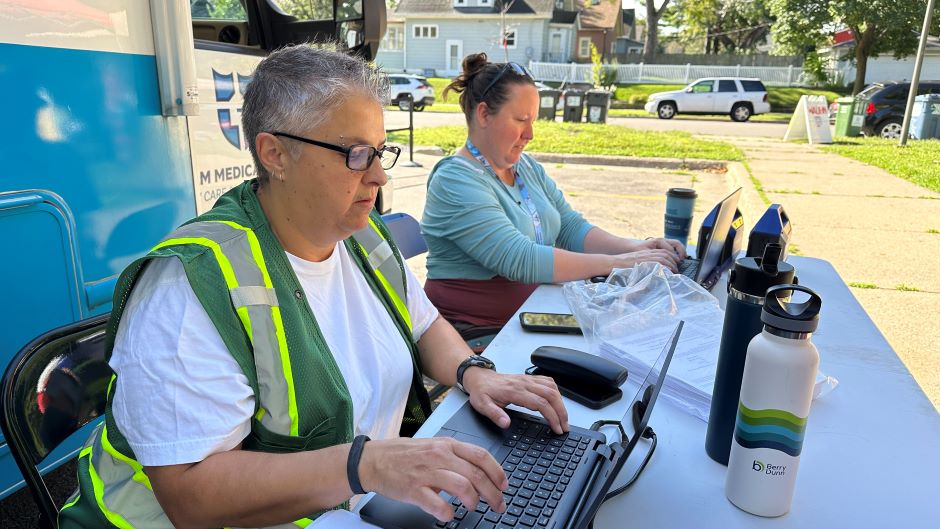
    Two people on laptops at an outdoor table.

    WASHINGTON — The University of Minnesota says it braces every day for an unwelcome notice — that a federal grant it has been awarded for scientific and medical research has been abruptly canceled.

    “It’s having a very devastating impact,” said Kimberly Kirkpatrick, the university’s associate vice president for research. “Imagine that you have a whole team … and you’re in the middle of a study and you get a notice that your award is immediately stopped.”

    The Trump administration’s termination of more than $12 billion in Health and Human Services grants has wiped out a significant amount of money to Minnesota’s scientific and medical community.

    Scientists and medical researchers have had to stop their work after receiving word that it “no longer effectuates agency priorities,” and some have had to fire personnel or even shut down laboratories.

    Not only has the pullback of awards disrupted efforts to develop new vaccines and extend vaccinations in the state, but key research into gender and racial health disparities has been terminated. And programs in Minnesota that treat mental health and alcohol abuse and opioid addiction have abruptly ended.

    The Trump administration said the claw-back of grants was aimed at reducing federal spending and advancing administration policies. Many grants that were canceled focused on the development of vaccines or research into health disparities in the LGBTQ and minority communities. 

    For instance, the University of Minnesota lost a grant, in the initial amount of $187,261, to study “the impact of misinformation, mistrust and other psychosocial factors on vaccine hesitancy.” Another grant that was canceled — in the amount of nearly $2.3 million — focused on training for dementia care of sexual and gender minority residents of long-term care facilities.

    The university also lost a $2 million HHS award for research into effective methods to recruit sexual and gender minority cancer patients for medical studies. And it lost a $3 million grant to study the health of adolescents who belong to racial and gender minorities and immigrant communities.

    An analysis by Nature, a multidisciplinary science journal, determined that 28.7% of the National Institute of Health grants that were canceled were HIV- and AIDS-related and another 24.3% were trans health related.

    In most cases, the grants to the University of Minnesota were canceled after the school was able to draw down some of the money, so the full amount of the grant was not lost.

    Still, Kirkpatrick said the cancellations have created hardship at the university, which is seeking ways to find other money to continue research that has been derailed. She called the revocation of awards that had been granted “a violation of trust.”

    “We think of our awards as contracts,” she said. “We promise the federal government we will do the work and the federal government promises to help pay for it.”

    The largest university grant that was terminated was a $67 million award to the schools “Midwest Antiviral Drug Discovery (AViDD) Center,” which is working to develop the next generation of antiviral drugs for pandemic-level viruses, including SARS-CoV-2, Ebola, Lassa and Zika viruses.

    But, arguing the COVID pandemic has ended, HHS abruptly cut funding for dozens of studies seeking new vaccines and treatment for COVID-19 and other pathogens that might cause future pandemics.

    Twenty-three Democratic attorneys general, including Minnesota Attorney General Keith Ellison, successfully sued to win the temporary release of the funds that were awarded as part of the nation’s effort to combat Covid-19. But the Trump administration is appealing that decision.

    The university has also been hurt by the clawback of awards to other universities, including Johns Hopkins in Maryland, with which they collaborate on research.

    “The things that are happening at other universities are affecting us a lot,” Kirkpatrick said.

    She said the University of Minnesota has modified and appealed the termination of some grants, is lobbying lawmakers for help in pressing HHS to reverse its decisions and joined other universities in efforts to retrieve their grant money.

    ‘Contrary to federal law’

    The state government and dozens of health-care related nonprofits have also been badly hurt by the cutoff of federal funding, as have the state’s tribes.

    The Minnesota Department of Human Services said it had lost up to $27.5 million in behavioral health funding meant to serve Minnesotans.

    The money from HHS was awarded to about 85 nonprofits, tribes and local governments that combat mental health and addiction problems. Like much of the grant money the University of Minnesota received, the DHS funds were linked to pandemic funds appropriated by Congress.

    “The proposed federal elimination of these grants without notice or good cause is contrary to federal law and inconsistent with the United States Department of Health and Human Service’s past statements,” said DHS Assistant Commissioner Teresa Steinmetz in an emailed statement. “Considering this unprecedented situation, DHS cannot predict the actions the administration may take, the legal posture it will adopt, or how the federal courts will ultimately rule.”

    Tom Belcher, the grant manager at the Willmar-based Greater Minnesota Family Services, said his organization had received two subgrants, each in the amount of $95,000.

    One grant trained therapists embedded in 80 schools across Minnesota on successful methods to help troubled children.

    Another allowed the organization to expand its operations. Luckily, Belcher said his nonprofit was able to send most of the HHS money it received through the Department of Human Services before the grants were pulled.

    Nevertheless, Belcher said the elimination of the grants “has had a very negative fiscal impact on a lot of programs that may, or may not, continue.”

    Meanwhile, the Minnesota Department of Health (MDH) has lost hundreds of millions of dollars in HHS grant money, which it used to run several programs within the department and award subgrants to about 180 subgrantees who work on health-related issues.

    DHS Commissioner Brooke Cunningham said one HHS grant, which paid for epidemiological studies and the construction of new labs to prevent and control infectious diseases, was greatly boosted because of the pandemic and then canceled by the Trump administration. It would have “(built) off the lessons that the COVID pandemic painfully taught us,” Cunningham said.

    Brooke Cunningham
    Brooke Cunningham

    The grant was used for a variety of new programs, including the installation of HVAC systems to protect residents from airborne pathogens and updating the immunization registry for the state. In addition, 95 vaccination clinics that were funded by HHS grant were shuttered.

    “Many of those community-based organizations did not just administer vaccines,” said Cunningham. “They were a way for us to address vaccine hesitancy.”

    The grant money that was pulled back by MDH was temporarily reinstated by the lawsuit brought by the Democratic attorneys general. That allowed the agency on Tuesday to inform 170 employees, including public health workers and epidemiologists, who received layoff notices because of the funding cuts that they could remain employed for another two weeks.

    But the agency is at the mercy of what a court decides and considers the injunction that released the funds a temporary respite.  

    And some of the nonprofits who partner with the department and whose subgrants were canceled will not be able to resume work.

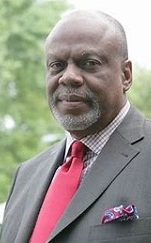
    The Rev. Alfred Babington-Johnson, president and chief executive officer of the Stairstep Foundation, a Minneapolis-based nonprofit focused on responding to issues affecting African Americans through a community-based approach, was forced to halt operations related to COVID-19. 

    Rev. Alfred Babington-Johnson

    He estimated that Stairstep’s network of African American churches provided tens of thousands of COVID vaccinations throughout the state. More recently, the organization had been working to address the after effects of the pandemic, including providing mental health first aid.   

    “We actually got a call on a Wednesday in the middle of the month, saying, ‘As of 11 o’clock today, please cease and desist all activities,’” Babington-Johnson said. Stairstep lost, he estimates, around $500,000 to $600,000 in funding as a result of grant cancellation. 

    Babington-Johnson was also involved in a small MDH panel reaching out to various communities regarding the effects of long COVID, including his own African American community. The work of this panel, which would have helped better understand long-term effects of contracting COVID -19, has also been halted.  

    While Babington-Johnson said that the effects of this loss in funding were “to be determined,” he said this cut in funding was disruptive, chaotic and demonstrated a “lack of compassion.”

    The post Health grant cuts upend medical research, mental health and addiction services in Minnesota appeared first on MinnPost.