WASHINGTON — Who are the winners and losers in President Donald Trump’s tax cut plan?
If Congress fails to pass Trump’s “big, beautiful bill,” most – but not all – taxpayers will face an increase in their federal taxes.
But several analyses indicate the state’s wealthier residents will be impacted the most and those with medium and modest incomes would see little or no change.
And the Congressional Budget Office (CBO) said the entire bill would boost the incomes of the wealthiest 10% of Americans while lowering the incomes of the lowest 10%.
“The benefits are much, much higher for higher-income people than for lower-income people,” said Joseph Rosenberg, senior fellow at the Urban-Brookings Tax Policy Center.
The U.S. House is expected to try to pass the tax cut package Wednesday in a megabill that would cut Medicaid, food stamps and other domestic programs and still balloon the deficit by at least $2.3 trillion, according to the CBO.
The tax cut package was perhaps Trump’s greatest legislative initiative in his first term in office. Its cuts to corporate taxes won’t expire; they are locked into law. But the cuts to individual taxpayers would expire at the end of the year unless Congress acts.
Yet the legislation faces obstacles from both conservatives who oppose the tax cut’s bloating of the federal deficit and moderate Republicans from blue states that insist there be a higher cap on the deductibility of state and local taxes.
Still, approval of the tax package would bring changes to individuals and couples when they fill out their 1040s for 2026 and so would the legislation’s defeat.
According to the latest Tax Policy Center analysis, the biggest winners in the bill would be Minnesota taxpayers whose adjusted gross income (AGI) is $220,000 or more and have had their taxes reduced by more than 3%.
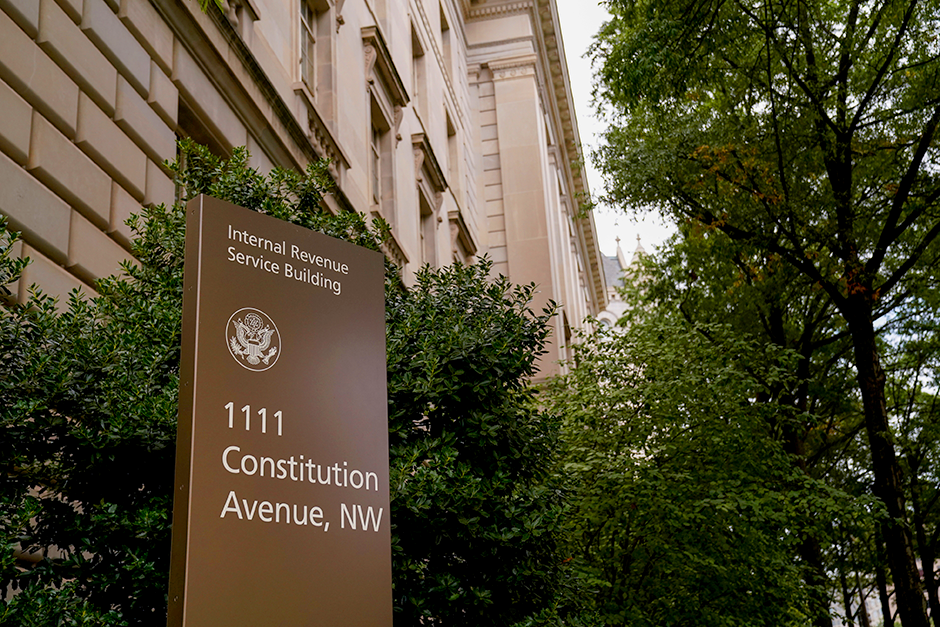
The Internal Revenue Service says at least 400,000 Minnesota households reported AGI’s of $220,000 or more in 2022.
But most Minnesota taxpayers, more than 2.4 million, reported lower adjusted gross incomes that year and benefitted less from Trump’s tax cuts.
Households with moderate incomes, from $70,000 to $100,000, have been saving an average of about $1,800 since Trump’s tax cuts were first implemented in 2018.
Americans with less income would save less than that, and some not at all.
The Tax Policy Center’s analysis included new provisions Trump promised voters during his campaign for the White House, including an increase of the child tax credit to $2,500.
The tax package would also:
-Increase the standard deduction by $1,000 for individuals, $1,500 for heads of households and $2,000 for married couples.
-Offer most Americans who are 65 and older an extra deduction of $4,000 per filer, whether they take the standard deduction or itemize their returns.
-Deposit $1,000 for children born over the next four years in a “MAGA account” that is invested in the stock market.
-Offer a temporary tax deduction for people in occupations that “traditionally and customarily received tips,” such as restaurant servers.
-Allow filers to deduct interest on car loans, though those vehicles have to be made in the United States.
Trump also kept another campaign promise as the legislation would provide a new tax exemption for overtime pay.
While many would gain from these changes to the tax code, many provisions would expire or deductions and credits be reduced in 2028 or in the few years afterwards.
The tax package would also create losers.
Chief among them are the children of undocumented immigrants. Because there would be a new requirement that both parents have a valid Social Security number, millions of immigrant families would not receive a child tax credit.
The Center for Migration Studies estimates that 4.5 million children across the nation and about 37,000 in Minnesota who are citizens or legal permanent residents would lose eligibility for the child tax credit.
And immigrants authorized to live in the United States — but who are not citizens or green card holders — would be barred from receiving tax credits covering the cost of Affordable Care Act health insurance premiums.
Americans who purchase certain electric cars would also lose their $7,500 tax credit as well as credits for solar electric panels and energy efficient windows, appliances and other efforts to make homes more energy efficient.
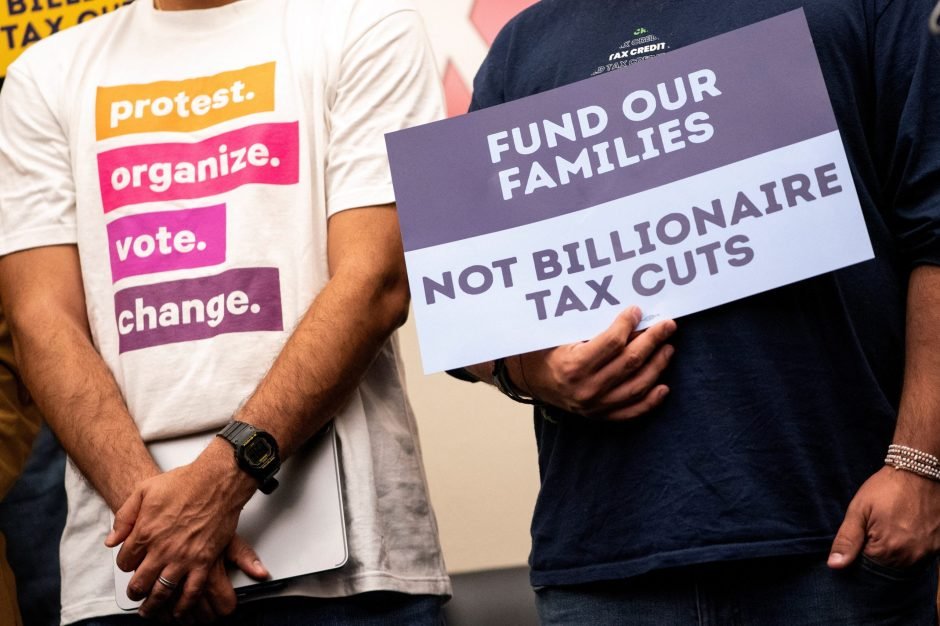
No Democrat is expected to vote for Trump’s bill if it comes to the House floor Wednesday. They have decried it as a massive giveaway to the rich at the expense of the poorest Americans who would suffer a loss of medical care and other social services.
“My Republican colleagues will say these tax cuts are for everyone,” said Rep. Ilhan Omar, D-Minn., at a recent House Budget Committee hearing on the bill. But she said they favored the wealthy “and they are tiny scraps for everyone else, and I mean tiny.”
Rosenberg rebutted Trump’s claim that the tax package would boost the U.S. economy. But he said the legislation “would have little effect on economic growth going forward.”
Still, the bill would keep federal taxes lower for the majority of Americans.
“If Congress does nothing, taxes will increase,” Rosenberg said.
A salty issue
Taxpayers in high-income, high tax “blue” states like Minnesota were major losers in Trump’s 2017 tax plan because it capped the deductibility of state and local taxes (SALT) at $10,000 for individuals and $20,000 for married couples. The cap helped pay for the bill’s tax cuts.
!function(){“use strict”;window.addEventListener(“message”,(function(a){if(void 0!==a.data[“datawrapper-height”]){var e=document.querySelectorAll(“iframe”);for(var t in a.data[“datawrapper-height”])for(var r,i=0;r=e[i];i++)if(r.contentWindow===a.source){var d=a.data[“datawrapper-height”][t]+”px”;r.style.height=d}}}))}();
Those taxpayers may still be losers, but not as much. To placate a number of GOP lawmakers in swing districts in Democratic states, House Speaker Mike Johnson, R-La., has offered to lift the SALT cap to $40,000 for individuals with $400,000 or less in income.
But that did not satisfy a group of New York lawmakers who say they won’t vote for the bill unless the cap is raised much higher or removed entirely.
“We need a little more SALT on the table to get to yes,” said Rep. Nick LaLota, R-N.Y. after GOP lawmakers met with Trump on Tuesday over the massive budget package.
Late Tuesday, Johnson agreed to lift the SALT cap to $40,000 for individuals with $500,000 or less in income, which seemed to bring some of the rebellious members of the GOP “SALT caucus” along.
According to the IRS, in 2017, the year before the SALT cap was implemented, 459,070 Minnesota taxpayers deducted the cost of state and local income taxes. In 2022, after the cap was imposed, that number fell to 252,070.
!function(){“use strict”;window.addEventListener(“message”,(function(a){if(void 0!==a.data[“datawrapper-height”]){var e=document.querySelectorAll(“iframe”);for(var t in a.data[“datawrapper-height”])for(var r,i=0;r=e[i];i++)if(r.contentWindow===a.source){var d=a.data[“datawrapper-height”][t]+”px”;r.style.height=d}}}))}();
So even with the cap, some Minnesota taxpayers take the deduction.
A MinnPost analysis of IRS data shows that the largest proportion of taxpayers in the state that took the SALT deduction — 14.35% — lived in the suburban Twin Cities 3rd congressional district, which is represented by Democratic Rep. Kelly Morrison, while the smallest proportion — 4.82% — lived in Republican Rep. Pete Stauber’s 7th congressional district.
If and when the massive budget bill is approved by the House, it will head to the Senate, which has been asked by the White House to finish work on the legislation by July 4.
The post Tax cuts in Trump’s budget bill would create winners and losers in Minnesota appeared first on MinnPost.
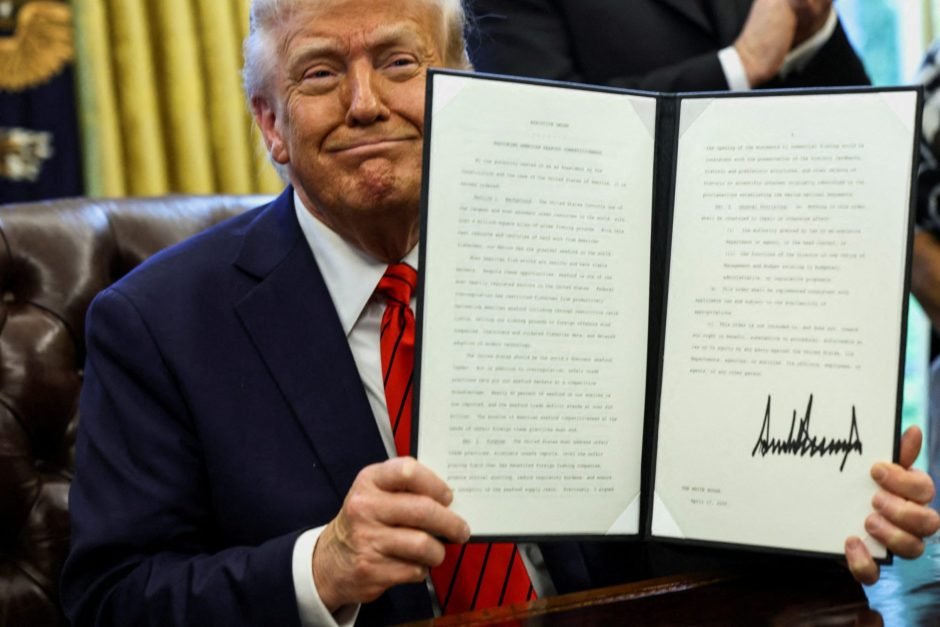
President Donald Trump on Monday signed the Take It Down Act, bipartisan legislation that enacts stricter penalties for the distribution of non-consensual intimate imagery, sometimes called “revenge porn,” as fell as deepfakes created by artificial intelligence.
The measure, which goes into effect immediately, was introduced by Sen. Ted Cruz, a Republican from Texas, and Sen. Amy Klobuchar, a Democrat from Minnesota, and later gained the support of First Lady Melania Trump. Critics of the measure, which addresses both real and artificial intelligence-generated imagery, say the language is too broad and could lead to censorship and First Amendment issues.
Related: D.C. Memo: Klobuchar scores legislative with bipartisan Take it Down Act
What is the Take It Down Act?
The law makes it illegal to “knowingly publish” or threaten to publish intimate images without a person’s consent, including AI-created “deepfakes.” It also requires websites and social media companies to remove such material within 48 hours of notice from a victim. The platforms must also take steps to delete duplicate content. Many states have already banned the dissemination of sexually explicit deepfakes or revenge porn, but the Take It Down Act is a rare example of federal regulators imposing on internet companies.
Who supports it?
The Take It Down Act has garnered strong bipartisan support and has been championed by Melania Trump, who lobbied on Capitol Hill in March saying it was “heartbreaking” to see what teenagers, especially girls, go through after they are victimized by people who spread such content.
Cruz said the measure was inspired by Elliston Berry and her mother, who visited his office after Snapchat refused for nearly a year to remove an AI-generated “deepfake” of the then 14-year-old.
Meta, which owns and operates Facebook and Instagram, supports the legislation.
“Having an intimate image – real or AI-generated – shared without consent can be devastating and Meta developed and backs many efforts to help prevent it,” Meta spokesman Andy Stone said in March.
Sen. Amy Klobuchar, D-Minn., speaks during a confirmation hearing before the Senate Judiciary Committee for Kash Patel, President Donald Trump’s choice to be director of the FBI, at the Capitol in Washington, Jan. 30, 2025. Credit: AP File Photo/Ben Curtis
The Information Technology and Innovation Foundation, a tech industry-supported think tank, said in a statement following the bill’s passage last month that it “is an important step forward that will help people pursue justice when they are victims of non-consensual intimate imagery, including deepfake images generated using AI.”
“We must provide victims of online abuse with the legal protections they need when intimate images are shared without their consent, especially now that deepfakes are creating horrifying new opportunities for abuse,” Klobuchar said in a statement. “These images can ruin lives and reputations, but now that our bipartisan legislation is becoming law, victims will be able to have this material removed from social media platforms and law enforcement can hold perpetrators accountable.”
What are the censorship concerns?
Free speech advocates and digital rights groups say the bill is too broad and could lead to the censorship of legitimate images including legal pornography and LGBTQ content, as well as government critics.
“While the bill is meant to address a serious problem, good intentions alone are not enough to make good policy,” said the nonprofit Electronic Frontier Foundation, a digital rights advocacy group. “Lawmakers should be strengthening and enforcing existing legal protections for victims, rather than inventing new takedown regimes that are ripe for abuse.”
The takedown provision in the bill “applies to a much broader category of content — potentially any images involving intimate or sexual content” than the narrower definitions of non-consensual intimate imagery found elsewhere in the text, EFF said.
“The takedown provision also lacks critical safeguards against frivolous or bad-faith takedown requests. Services will rely on automated filters, which are infamously blunt tools,” EFF said. “They frequently flag legal content, from fair-use commentary to news reporting. The law’s tight time frame requires that apps and websites remove speech within 48 hours, rarely enough time to verify whether the speech is actually illegal.”
As a result, the group said online companies, especially smaller ones that lack the resources to wade through a lot of content, “will likely choose to avoid the onerous legal risk by simply depublishing the speech rather than even attempting to verify it.”
The measure, EFF said, also pressures platforms to “actively monitor speech, including speech that is presently encrypted” to address liability threats.
The Cyber Civil Rights Initiative, a nonprofit that helps victims of online crimes and abuse, said it has “serious reservations” about the bill. It called its takedown provision unconstitutionally vague, unconstitutionally overbroad, and lacking adequate safeguards against misuse.”
For instance, the group said, platforms could be obligated to remove a journalist’s photographs of a topless protest on a public street, photos of a subway flasher distributed by law enforcement to locate the perpetrator, commercially produced sexually explicit content or sexually explicit material that is consensual but falsely reported as being nonconsensual.
The post Trump signs Klobuchar-Cruz Take It Down Act on nonconsensual deepfakes appeared first on MinnPost.
Gail Donkers remembers struggling to buy groceries for her young family on a tight budget.
Public assistance funds helped the southern Minnesota corn, soybean and livestock farmer. Donkers said she used federal help to buy peanut butter, baby formula and other essentials for her household.
She’s proud, not ashamed, of how much public assistance helped her family.
“We were starting a business, I worked full-time off the farm, and my husband was farming 100 hours per a week if not more,” she said. “We now have three college graduates and a grandson … It meant so much to our family at that time.”
Gail Donkers, of Faribault, talks about her past experience receiving public assistance benefits Monday in Mankato at a roundtable event that highlighted negative impacts of proposed food stamp (SNAP) cuts. Credit: Brian Arola, MinnPost
Donkers participated in a roundtable in Mankato this week, the third such event organized by the Minnesota Department of Children, Youth and Families and other state agencies to decry congressional efforts to cut the food stamp program, which serves about 440,000 families in Minnesota.
The U.S. House Agriculture Committee was tasked with slashing $230 billion from U.S. Department of Agriculture programs as the GOP-controlled Congress works towards a huge budget bill that would shrink government spending and renew tax cuts Trump established in his first term that are about to expire.
The largest USDA program, by far, is the Supplemental Nutrition Assistance Program (SNAP), the official name for food stamps, and that’s where the panel found most of its savings. In fact it found $300 billion in savings.
Much of that would come from the imposition of tougher work requirements for SNAP recipients, who currently receive an average of $6 a day in benefits.
The legislation, voted out of the committee late Wednesday, would increase the age for complying with SNAP’s work requirements from 55 to 65. Recipients would have to work or study for at least 80 hours a month.
While adults with dependent children are exempt from work requirements, the legislation would change the age limit of those dependents from 18 to 7 years old.
Democrats on the Agriculture Committee introduced dozens of amendments on Wednesday that would amend the legislation during a marathon session.
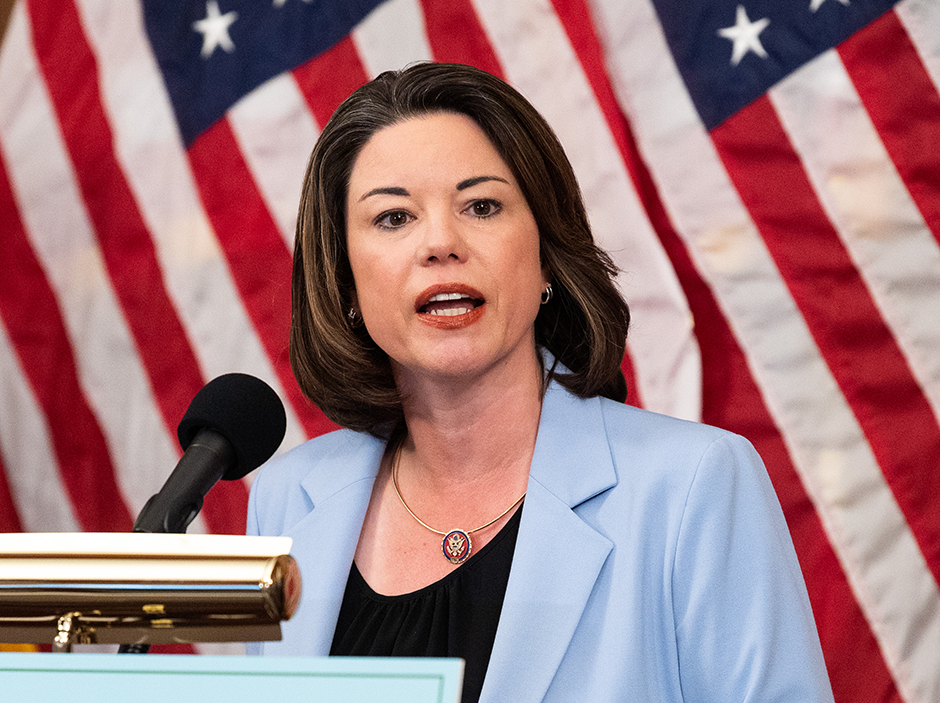
Rep. Angie Craig, D-2nd District, the top Democrat on the panel, said Democrats “worked tirelessly to try to put lipstick on this bill.”
Rep. David Scott, D-Georgia, introduced an amendment that would strip out all proposed food stamp cuts.
“People are going to die, they are going to starve, they are not going to make it,” Scott said during an often emotional debate.
Scott also asked Republicans on the panel, who were largely absent for most of the markup of the bill, “Where are your values?” and accused his GOP colleagues of stripping food aid from single mothers to give tax breaks to billionaires like Elon Musk.
Other Democrats introduced amendments that would lower the work requirement age and raise the age of the children that would allow a caretaker to receive benefits. Democrats also tried to reverse the legislation’s complete elimination of the SNAP Nutrition Education program, which funds programs at Minnesota food banks and the University of Minnesota aimed at helping low-income individuals and families make diet and lifestyle choices to improve their health and prevent obesity.
Related: USDA cuts hit food banks, risking hunger to low-income Minnesotans
But all of the attempts to change the bill were knocked down by the GOP lawmakers, who hold a majority on the panel.
At one point, Craig requested the committee vote to adjourn the hearing. That prompted the absent GOP lawmakers to run through the halls of Congress to return to the committee room to vote down the attempt to end consideration of the bill. The Republican lawmakers then again left the room.
The bill now goes to the Budget Committee where it will be included in Trump’s budget bill.
The Center on Budget and Policy Priorities estimates that the work requirements would result in an end of SNAP benefits for about 45,000 Minnesotans, and the legislation would put another 106,000 state residents at risk of losing some of their benefits.
“Proposals to change SNAP would send shockwaves throughout our state,” said Tikki Brown, commissioner of the Minnesota Department of Children, Youth and Families. “Cuts to SNAP mean fewer dollars for families already struggling, and it would disproportionately harm working parents, rural communities, tribal nations and seniors on fixed outcomes.”
Shifting food stamp costs to the states
House Republicans said in a statement that the legislation focused on “reinforcing work, rooting out waste, and instituting long-overdue accountability incentives to control costs and end executive and state overreach.”
Meanwhile, House Democrats said the legislation would increase hunger and social instability.
“With American families feeling anxious about the economy and so much uncertainty in farm country, this is not the time to make reckless cuts to basic needs programs,” said Craig.
The Agriculture Committee bill also shifts part of the cost of the food stamp program to the states. Currently, the states administer the program and the federal government pays for all of the cost of providing benefits.
But, beginning in 2028, states would have to pay for at least 5% of the program, and possibly more based on their payment error rates – that is, how much they overpay recipients.
According to the USDA, Minnesota had an error rate of 4.9% in 2023 – less than half the national error rate. But states that have error rates of 6 % to 8% would pay 15% of the cost of the SNAP; states with rates of 10% to 20% would pay 20% and those with error rates that exceed 10% would pay 25%.
The legislation would also reduce the money the federal government gives states to administrate the program and block the USDA from increasing the cost of the Thrifty Food Plan, a yardstick the agency uses to determine benefit amounts.
The bill would also limit the types of legal immigrants that can apply for help, barring those with refugee or humanitarian parole status.
Meanwhile, the nation’s farmers, who’ve decried Congress’ failure to pass a new five-year farm bill, would benefit from an additional $60 billion in spending to shore up their federal safety net.
Among other things, the House Agriculture Committee bill would increase crop reference prices and boost crop and livestock insurance payments and conservation funding. It would also add to the USDA trade promotion and research budgets and increase the amount of money the federal pays beet and cane sugar farmers if processors don’t purchase their crop.
A time of uncertainty
The proposed cuts to the food stamp program come as grocery prices are stubbornly high and food shelves, which have suffered from Trump administration cuts in funding, are struggling to keep up with need. The shelves already help food stamp recipients who can’t make it on the amount of benefits they receive.
“We’re bursting at our seams,” said Deisy De Leon Esqueda, manager of the ECHO Food Shelf in Mankato. “We’re seeing higher food prices just as our clients are and we really don’t know what’s going to happen.”
De Leon Esqueda also said “it’s just a time of a lot of uncertainty, not only for us but for our community.”
“We have three times as many visits to food shelves as we saw in 2019,” Sophia Lenarz-Coy, executive director of The Food Group, a nonprofit that fights hunger.
She said she recently asked a lawmaker what he thought about taking grocery money away from constituents. She said the lawmaker denied any cuts were happening, instead referring to the proposal to cut food stamps as “optimizing the program.”
“It didn’t even feel like we were actually having the same conversation,” Lenarz-Coy said. “It’s a very well optimized program.”
Farmers are unhappy about the proposed cuts to SNAP, and so are the nation’s grocers.
Steve Barthel, a lobbyist for the Minnesota Grocers Association, said SNAP funding supports about 400,000 jobs nationwide, from grocers, to retailers, to wholesalers to transportation workers and farmers. In Minnesota cuts to SNAP could result in loss of 1,500 jobs in the food industry, Barthel said.
“In some of the places where stores are already holding on by just a thread (the cuts to SNAP) could be the difference between staying open and being closed,” he added.
The post Hunger advocates: 150,000 Minnesotans could be affected by House GOP’s $300 billion in food stamp cuts appeared first on MinnPost.
On Wednesday, the Environmental Protection Agency announced plans to weaken limits on some harmful “forever chemicals” in drinking water roughly a year after the Biden administration finalized the first-ever national standards.
The Biden administration said last year the rules could reduce PFAS exposure for millions of people. It was part of a broader push by officials then to address drinking water quality by writing rules to require the removal of toxic lead pipes and, after years of activist concern, address the threat of forever chemicals.
President Donald Trump has sought fewer environmental rules and more oil and gas development. EPA Administrator Lee Zeldin has carried out that agenda by announcing massive regulatory rollbacks.
Now, we know the EPA plans to rescind limits for certain PFAS and lengthen deadlines for two of the most common types. Here are some of the essential things to know about PFAS chemicals and what the EPA decided to do:
Please explain what PFAS are to me
PFAS, or perfluoroalkyl and polyfluoroalkyl substances, are a group of chemicals that have been around for decades and have now spread into the nation’s air, water and soil.
They were manufactured by companies such as 3M, Chemours and others because they were incredibly useful. They helped eggs slide across nonstick frying pans, ensured that firefighting foam suffocates flames and helped clothes withstand the rain and keep people dry.
The chemicals resist breaking down, however, which means they stay around in the environment.
And why are PFAS bad for humans?
Environmental activists say that PFAS manufacturers knew about the health harms of PFAS long before they were made public. The same attributes that make the chemicals so valuable – resistance to breakdown – make them hazardous to people.
PFAS accumulates in the body, which is why the Biden administration set limits for two common types, often called PFOA and PFOS, at 4 parts per trillion that are phased out of manufacturing but still present in the environment.
There is a wide range of health harms now associated with exposure to certain PFAS. Cases of kidney disease, low-birth weight and high cholesterol in addition to certain cancers can be prevented by removing PFAS from water, according to the EPA.
The guidance on PFOA and PFOS has changed dramatically in recent years as scientific understanding has advanced. The EPA in 2016, for example, said the combined amount of the two substances should not exceed 70 parts per trillion. The Biden administration later said no amount is safe.
There is nuance in what the EPA did
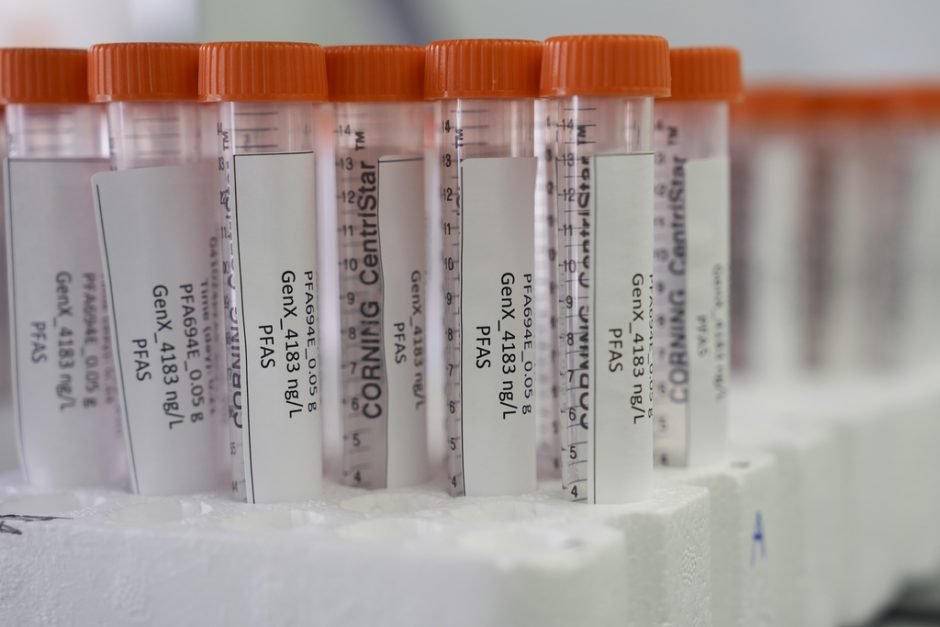
The EPA plans to scrap limits on three types of PFAS, some of which are less well known. They include GenX substances commonly found in North Carolina as well as substances called PFHxS and PFNA. There is also a limit on a mixture of PFAS, which the agency is also planning to rescind.
It appears few utilities will be impacted by the withdrawal of limits for these types of PFAS. So far, sampling has found nearly 12% of U.S. water utilities are above the Biden administration’s limits. But most utilities face problems with PFOA or PFOS.
For the two commonly found types, PFOA and PFOS, the EPA will keep the current limits in place but give utilities two more years — until 2031 — to meet them.
Announcement is met with mixed reaction
Some environmental groups argue that the EPA can’t legally weaken the regulations. The Safe Water Drinking Act gives the EPA authority to limit water contaminants, and it includes a provision meant to prevent new rules from being looser than previous ones.
“The law is very clear that the EPA can’t repeal or weaken the drinking water standard,” said Erik Olson, a senior strategist at the nonprofit Natural Resources Defense Council.
Environmental activists have generally slammed the EPA for not keeping the Biden-era rules in place, saying it will worsen public health.
Industry had mixed reactions. The American Chemistry Council questioned the Biden administration’s underlying science that supported the tight rules and said the Trump administration had considered the concerns about cost and the underlying science.
“However, EPA’s actions only partially address this issue, and more is needed to prevent significant impacts on local communities and other unintended consequences,” the industry group said.
Leaders of two major utility industry groups, the American Water Works Association and Association of Metropolitan Water Agencies, said they supported the EPA’s decision to rescind a novel approach to limit a mix of chemicals. But they also said the changes do not substantially reduce the cost of the PFAS rule.
Related: Wastewater treatment plays large role in spread of Minnesota PFAS, report finds
Some utilities wanted a higher limit on PFOA and PFOS, according to Mark White, drinking water leader at the engineering firm CDM Smith.
They did, however, get an extension.
“This gives water pros more time to deal with the ones we know are bad, and we are going to need more time. Some utilities are just finding out now where they stand,” said Mike McGill, president of WaterPIO, a water industry communications firm.
___
The Associated Press receives support from the Walton Family Foundation for coverage of water and environmental policy. The AP is solely responsible for all content. For all of AP’s environmental coverage, visit https://apnews.com/hub/climate-and-environment
The post What the EPA’s partial rollback of the ‘forever chemical’ drinking water rule means appeared first on MinnPost.
PROVIDENCE, R.I. (AP) — A coalition of 20 state Democratic attorneys general, including Minnesota’s, filed two federal lawsuits on Tuesday, claiming that the Trump administration is threatening to withhold billions of dollars in transportation and disaster-relief funds unless states agree to certain immigration enforcement actions.
According to the complaints, both Secretary of Homeland Security Kristi Noem and Transportation Secretary Sean Duffy have threatened to cut off funding to states that refuse to comply with President Donald Trump’s immigration agenda.
While no federal funding is currently being withheld, California Attorney General Rob Bonta said during a news conference on Tuesday that the threat was “imminent.”
“President Donald Trump can’t use these funds as a bargaining chip as his way of ensuring states abide by his preferred policies,” Bonta added.
Department of Assistant Secretary of Homeland Security spokesperson Tricia McLaughlin said in a statement that the lawsuit will not stop the Trump Administration from “restoring the rule of law.”
“Cities and states who break the law and prevent us from arresting criminal illegal aliens should not receive federal funding. The President has been clear on that,” she said.
Duffy said in a statement that the 20 states have filed the lawsuit because “their officials want to continue breaking federal law and putting the needs of illegal aliens above their own citizens.”
Minnesota Attorney General Keith Ellison said in a written statement that decisions about how police resources are allocated should be made at the local leve.
“It is both wrong and unlawful for the Trump Administration to demand Minnesota law enforcement step away from their patrols, investigations, and community-engagement work to instead enforce federal immigration law,” Ellison said. “Furthermore, it is deeply disturbing that the Trump Administration is threatening to withhold important disaster relief and public safety funds if we do not do their job for them.”
Both lawsuits say that the Trump administration is violating the U.S. Constitution by trying to dictate federal spending when Congress has that power — not the executive branch.
On April 24, states received letters from the Department of Transportation stating that they must cooperate on immigration efforts and eliminate diversity, equity and inclusion programs or risk losing funds.
New Jersey Attorney General Matthew Platkin criticized the timing of Duffy’s letter when Newark’s airport struggles with radar outages and other issues.
“I wish the administration would stop playing politics with people’s lives,” Platkin said. “I wish Secretary Duffy would do his damn job, which is to make sure planes land on time, not to direct immigration enforcement.”
Meanwhile, on Feb. 24, states received letters from the Department of Homeland Security declaring that states that “refuse to cooperate with, refuse to share information with, or even actively obstruct federal immigration enforcement reject these ideals and the history we share in common as Americans.”
“If any government entity chooses to thumb its nose at the Department of Homeland Security’s national security and public safety mission, it should not receive a single dollar of the Department’s money unless Congress has specifically required it,” Noem wrote in her letter.
Attorneys general behind the lawsuits include the following states: California, Colorado, Connecticut, Delaware, Hawaii, Illinois, Maine, Massachusetts, Michigan, Minnesota, Nevada, New Jersey, New Mexico, New York, Oregon, Rhode Island, Washington, Wisconsin and Vermont.
Related: Judge rules in Minneapolis, St. Paul’s favor in barring Trump from denying funds to sanctuary cities
The cases are being spearheaded by California but were filed in federal court in Rhode Island, a detail that the attorneys general defended by saying they filed in “any court that is going to be fair and objective and consider our factual presentation and legal analysis.”
The lawsuits are the latest legal actions that Democratic-led states have taken against Trump since he took office earlier this year. Bonta noted that California has filed more than 20 lawsuits against the administration, while Rhode Island Attorney General Peter Neronha said his state has launched more than a dozen.
While the lawsuits have challenged policies on tariffs, federal employee firings and health care research, Trump’s focus on immigration enforcement and the mass deportation of immigrants in the United States illegally have received the most attention.
This has included the president’s promise to mass deport people and the start of a registry required for all those who are in the country illegally.
“What we’re seeing is a creeping authoritarianism,” Neronha said.
The post Minnesota, 19 other states sue Trump over funding cut threats, ‘creeping authoritarianism’ appeared first on MinnPost.
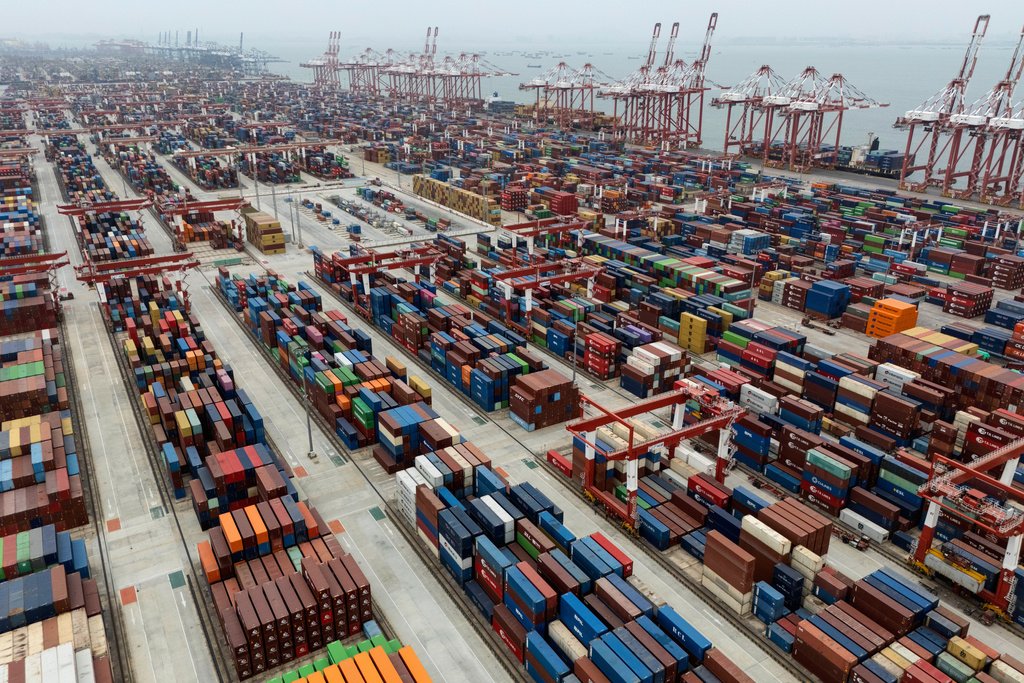
NEW YORK (AP) — Long-threatened tariffs from U.S. President Donald Trump have plunged the country into trade wars abroad — all while on-again, off-again new levies continue to escalate uncertainty.
Trump launched a trade war during his first term as well, taking particular aim at China by putting taxes on most of its goods. Beijing responded with its own retaliatory tariffs on a range of U.S. products. Trump used the threat of more tariffs to force Canada and Mexico to renegotiate a North American trade pact, called the U.S.-Mexico-Canada Agreement, in 2020.
When President Joe Biden took office, he preserved most of the tariffs Trump had enacted against China, in addition to imposing some new restrictions. But his administration claimed to take a more targeted approach.
Fast-forward to today, and economists stress there could be greater consequences on businesses and economies worldwide under Trump’s more sweeping tariffs this time around — and that higher prices will likely leave consumers footing the bill. There’s also been a sense of whiplash from Trump’s back-and-forth tariff threats and responding retaliation seen over the last few months.
Here’s a timeline of how we got here:
January 20
Trump is sworn into office. In his inaugural address, he again promises to “tariff and tax foreign countries to enrich our citizens.” And he reiterates plans to create an agency called the External Revenue Service, which has yet to be established.
On his first day in office, Trump also says he expects to put 25% tariffs on Canada and Mexico starting on Feb. 1, while declining to immediately flesh out plans for taxing Chinese imports.
January 26
Trump threatens 25% tariffs on all Colombia imports and other retaliatory measures after President Gustavo Petro’s rejects two U.S. military aircraft carrying migrants to the country, accusing Trump of not treating immigrants with dignity during deportation.
In response, Petro also announces a retaliatory 25% increase in Colombian tariffs on U.S. goods. But Colombia later reversed its decision and accepted the flights carrying migrants. The two countries soon signaled a halt in the trade dispute.
February 1
Trump signs an executive order to impose tariffs on imports from Mexico, Canada and China — 10% on all imports from China and 25% on imports from Mexico and Canada starting Feb. 4. Trump invoked this power by declaring a national emergency — ostensibly over undocumented immigration and drug trafficking.
The action prompts swift outrage from all three countries, with promises of retaliatory measures.
February 3
Trump agrees to a 30-day pause on his tariff threats against Mexico and Canada, as both trading partners take steps to appease Trump’s concerns about border security and drug trafficking.
February 4
Trump’s new 10% tariffs on all Chinese imports to the U.S. still go into effect. China retaliates the same day by announcing a flurry of countermeasures, including new duties on a variety of American goods and an anti-monopoly investigation into Google.
China’s 15% tariffs on coal and liquefied natural gas products, and a 10% levy on crude oil, agricultural machinery and large-engine cars imported from the U.S., take effect Feb. 10.
February 10
Trump announces plans to hike steel and aluminum tariffs starting March 12. He removes the exemptions from his 2018 tariffs on steel, meaning that all steel imports will be taxed at a minimum of 25%, and also raises his 2018 aluminum tariffs from 10% to 25%.
February 13
Trump announces a plan for “reciprocal” tariffs — promising to increase U.S. tariffs to match the tax rates that countries worldwide charge on imports “for purposes of fairness.” Economists warn that the reciprocal tariffs, set to overturn decades of trade policy, could create chaos for global businesses.
February 25
Trump signs an executive order instructing the Commerce Department to consider whether a tariff on imported copper is needed to protect national security. He cites the material’s use in U.S. defense, infrastructure and emerging technologies.
Related: D.C. Memo: Nation on brink of trade wars with allies as Trump doubles down on tariffs
March 1
Trump signs an additional executive order instructing the Commerce Department to consider whether tariffs on lumber and timber are also needed to protect national security, arguing that the construction industry and military depend on a strong supply of wooden products in the U.S.
March 4
Trump’s 25% tariffs on imports from Canada and Mexico go into effect, though he limits the levy to 10% on Canadian energy. He also doubles the tariff on all Chinese imports to 20%.
All three countries promise retaliatory measures. Canadian Prime Minister Justin Trudeau announces tariffs on more than $100 billion of American goods over the course of 21 days. And Mexican President Claudia Sheinbaum says her country would respond with its own retaliatory tariffs on U.S. goods without specifying the targeted products immediately, signaling hopes to de-escalate.
China, meanwhile, imposes tariffs of up to 15% on a wide array of key U.S. farm exports, set to take effect March 10. It also expands the number of U.S. companies subject to export controls and other restrictions by about two dozen.
March 5
Trump grants a one-month exemption on his new tariffs impacting goods from Mexico and Canada for U.S. automakers. The pause arrives after the president spoke with leaders of the “Big 3” automakers — Ford, General Motors and Stellantis.
March 6
In a wider extension, Trump postpones 25% tariffs on many imports from Mexico and some imports from Canada for a month.
Trump credited Sheinbaum with making progress on border security and drug smuggling as a reason for again pausing tariffs. His actions also thaw relations with Canada somewhat, although outrage and uncertainty remains. Still, after its initial retaliatory tariffs of $30 billion Canadian (US$21 billion) on U.S. goods, the government says it’s suspended a second wave of retaliatory tariffs worth $125 billion Canadian (US$87 billion).
March 10
China’s retaliatory 15% tariffs on key American farm products — including chicken, pork, soybeans and beef — take effect. Goods already in transit are set to be exempt through April 12, per China’s Commerce Ministry previous announcement.
March 12
Trump’s new tariffs on all steel and aluminum imports go into effect. Both metals are now taxed at 25% across the board — with Trump’s order to remove steel exemptions and raise aluminum’s levy from his previously-imposed 2018 import taxes.
The European Union takes retaliatory trade action promising new duties on U.S. industrial and farm products. The measures will cover goods from the United States worth some 26 billion euros ($28 billion), and not just steel and aluminum products, but also textiles, home appliances and agricultural goods. Motorcycles, bourbon, peanut butter and jeans will be hit, as they were during Trump’s first term. The 27-member bloc later says it will delay this retaliatory action until mid-April.
Canada, meanwhile, announces plans to impose more retaliatory tariffs worth Canadian $29.8 billion ($20.7 billion) on U.S. imports, set to go into effect March 13.
March 13
Trump threatens a 200% tariff on European wine, Champagne and spirits if the European Union goes forward with its previously-announced plans for a 50% tariff on American whiskey.
March 24
Trump says he will place a 25% tariff on all imports from any country that buys oil or gas from Venezuela, in addition to imposing new tariffs on the South American country itself, starting April 2.
The tariffs would most likely add to the taxes facing China, which in 2023 bought 68% of the oil exported by Venezuela, per the U.S. Energy Information Administration. But a number of countries also receive oil from Venezuela — including the United States itself.
March 26
Trump says he is placing 25% tariffs on auto imports. These auto imports will start being collected April 3 — beginning with taxes on fully-imported cars. The tariffs are set to then expand to applicable auto parts in the following weeks, through May 3.
April 2
Trump announces his long-promised “reciprocal” tariffs — declaring a 10% baseline tax on imports across the board starting April 5, as well as higher rates for dozens of nations that run trade surpluses with the U.S. to take effect April 9.
Among those steeper levies, Trump says the U.S. will now charge a 34% tax on imports from China, a 20% tax on imports from the European Union, 25% on South Korea, 24% on Japan and 32% on Taiwan. The new tariffs come on top of previously-imposed levies, including the 20% tax Trump announced on all Chinese imports earlier this year.
Meanwhile, for Canada and Mexico, the White House says USMCA-compliant imports can continue to enter the U.S. duty-free. Once the two countries have satisfied Trump’s demands on immigration and drug trafficking, the White House adds, the tariff on the rest of their imports may drop from 25% to 12%.
April 3
Trump’s previously-announced auto tariffs begin. Prime Minister Mark Carney says that Canada will match the 25% levies with a tariff on vehicles imported from the U.S.April 4
China announces plans to impose a 34% tariff on imports of all U.S. products beginning April 10, matching Trump’s new “reciprocal” tariff on Chinese goods, as part of a flurry of retaliatory measures.
The Commerce Ministry in Beijing says it will also impose more export controls on rare earths, which are materials used in high-tech products like computer chips and electric vehicle batteries. And the government adds 27 firms to lists of companies subject to trade sanctions or export controls.
April 5
Trump’s 10% minimum tariff on nearly all countries and territories takes effect.
April 9
Trump’s higher “reciprocal” rates go into effect, hiking taxes on imports from dozens of countries just after midnight. But hours later, his administration says it will suspend most of these higher rates for 90 days, while maintaining the recently-imposed 10% levy on nearly all global imports.
China is the exception. After following through on a threat to raise levies against China to a total of 104%, Trump says he will now raise those import taxes to 125% “effective immediately” — escalating tit-for-tat duties that have piled up between the two countries. The White House later clarifies that total tariffs against China are actually now 145%, once his previous 20% fentanyl tariffs are accounted for.
China upped its retaliation prior to this announcement — vowing to tax American goods at 84% starting April 10. Also earlier, EU member states vote to approve their own retaliatory levies on 20.9 billion euros ($23 billion) of U.S. goods in response to Trump’s previously-imposed steel and aluminum tariffs. The EU’s executive commission doesn’t immediately specify which imports it will tax, but notes its counter tariffs will come in stages — with some set to arrive on April 15, and others May 15 and Dec. 1.
Separately, Canada’s counter tariffs on auto imports take effect. The country implements a 25% levy on auto imports from the U.S. that do not comply with the 2020 USMCA pact.
April 10
The EU puts its steel and aluminum tariff retaliation on hold for 90 days, to match Trump’s pause on steeper “reciprocal” levies. European Commission President Ursula von der Leyen says the commission wants to give negotiations with the U.S. a chance — but warns countermeasures will kick in if talks “are not satisfactory.”
April 11
China says it will raise tariffs on U.S. goods from 84% to 125%, in response to Trump’s heightened levies. The new rate is set to begin April 12.
Later, the Trump administration unveils that electronics, including smartphones and laptops, will be exempt from so-called “reciprocal” tariffs. But in the days following, U.S. Commerce Secretary Howard Lutnick signals that this is only a temporary reprieve, saying that sector-specific levies on semiconductors will arrive in “probably a month or two.” And other, non-“reciprocal” tariffs that tax some electronics, notably from China, remain.
Related: D.C. Memo: The drama continues with Trump’s turnabout on trade
April 14
Trump says he might temporarily exempt the auto industry from tariffs he previously imposed on the sector, to give carmakers time to adjust their supply chains.
The Trump administration also launches investigations into imports of computer chips, chipmaking equipment and pharmaceuticals — signaling next steps toward imposing tariffs on these sectors. The U.S. Commerce Department posts notices about these probes, seeking public comment within the next three weeks.
Separately, the Commerce Department says it’s withdrawing from a 2019 agreement that had suspended an antidumping investigation into fresh tomato imports from Mexico. That termination, set to take effect July 14, means most tomatoes from Mexico will be subject to a 20.91% tariff.
April 29
Trump signs executive orders to relax some of his 25% tariffs on automobiles and auto parts — aimed at easing import taxes for vehicles that are made with foreign parts, but assembled in the U.S.
For one year, the administration says it will provide a rebate of 3.75% relative to the sales prices of a domestically-assembled car — a figure reached by putting the previously-imposed 25% import tax on parts that make up 15% of that price. And for the second year, the rebate would equal 2.5% of the sales price, applying to a smaller share of the vehicle’s parts.
May 3
The latest round of Trump’s auto tariffs takes effect. The previously-announced 25% levies now apply to a range of imported auto parts.
May 4
Trump threatens a 100% tariff on foreign-made films, while claiming that the movie industry in the U.S. is dying. It isn’t immediately clear how such a tariff on international productions could be implemented, but Trump says he’s authorized the Commerce Department and the U.S. Trade Representative to “immediately begin the process.”
May 6
The U.S. trade deficit soared to a record $140.5 billion in March as consumers and businesses tried to get ahead of Trump’stariffs. Federal data showed an enormous stockpiling of pharmaceutical products. The deficit — which measures the gap between the value of goods and services the U.S. sells abroad against what it buys — has roughly doubled during the past year.
Also, the U.S. government announced that top officials are set to meet with a high-level Chinese delegation over the weekend in Switzerland in the first major talks between the two nations since President Trump sparked a trade war. No country has been hit harder by Trump’s trade war than China, the world’s biggest exporter and second largest economy. U.S. tariffs against China are set at 145% and China tariffs on the U.S. at 125%.
May 7
The Federal Reserve left its key interest rate unchanged at 4.3%, saying that the risks of both higher unemployment and higher inflation have risen due to uncertainty about how and when Trump’s tariffs might impact the U.S. economy. Chair Jerome Powell underscored that the tariffs have dampened consumer and business sentiment and that there’s currently too many unknowns to be able to predict how the Fed might adjust its interest rate policy going forward.
May 8
The United States and Britain announced a trade deal, potentially lowering the financial burden from tariffs while creating greater access abroad for American goods. The president said the agreement would lead to more beef and ethanol exports to the U.K., which would also streamline the processing of U.S. goods though customs. Trump said final details were being written up. “In the coming weeks, we’ll have it all very conclusive,” Trump said.
Britain said the deal will cut tariffs on U.K. cars from 27.5% to 10%, with a quota of 100,000 U.K. vehicles that can be imported to the U.S. at a 10% tariff. It also eliminate tariffs on steel and aluminum.
Separately, the European Union published a list of U.S. imports that it would target with retaliatory duties if no solution is found to end U.S. President Donald Trump’s tariff war. The EU’s executive branch, the European Commission, also said it would begin legal action at the World Trade Organization over the “reciprocal tariffs” that Trump imposed on countries around the world a month ago.
May 12
The United States and China agreed to roll back most of the tariffs each nation had imposed on the other and declared a 90-day truce in their trade war.
The Trump administration said it would reduce the 145% duties it had imposed on imports from China to 30%, while China said it would cut its 125% tariffs on U.S. goods to 10%. Some of the U.S. tariffs — 24 percentage points — will be delayed for 90 days, while the rest of have been removed.
The deal was celebrated by financial markets, which soared in response. Yet economists noted that tariffs between the two countries remained noticeably higher than they were a few months ago.
The post Trump’s tariffs have launched global trade wars. Here’s a timeline of how we got here appeared first on MinnPost.
In this video from The Associated Press, Matt Griggs talks about his farm in Humboldt, Tennessee.
Farmers in the United States are paying close attention to the ongoing trade war between the United State and China, especially as planting season has begun.
Matt Griggs, owner of Griggs Farms, LLC, is a fifth-generation farmer in Tennessee whose farm dates back to 1882 and raises approximately 1,600 acres of cotton, corn, soybeans and wheat.
China is the biggest importer of American soybeans.
But Griggs has some experience with this situation. He weathered the last trade dispute in 2018 between the two countries during President Donald Trump’s first term and he said he feels more prepared this time around.
Related: Trump’s sweeping tariffs policy puts Minnesota farmers and their crops in bull’s eye
He said that tariffs were just one consideration for him as he planned out this year’s crops, including weather and prices on the other crops. He explained growing a variety of crops helps him minimize risk across the farm.
“We really didn’t adjust our acres much because if we were to go whole hog in other crops, say corn and cotton, and those crops have adverse weather conditions and have a failure, even though the price of soybeans might be down a little bit because of tariffs, they could still be the more profitable crops,” said Griggs.
Griggs said he’s going to be watching and ready to sell when he feels he can get reasonable prices for his soybeans. He said that tariffs like these can be beneficial when they inject market volatility that might raise prices on soybeans.
“Well when it comes to selling our soybeans this year, we’ve already forward contracted some of our planned production and our hope is that with this volatility in the market hopefully at some point, you know, before harvest and then after harvest we’ll have some more pricing opportunities where prices shoot up,” said Griggs.
“It might be briefly but if we can pull the trigger then and get some reasonable prices for our crops, I think we’ll be OK.”
But while he has to roll the dice with his crops, his costs might be going up in other ways due to the tariffs.
“Some of the things that could affect us in 2025 is a lot of our parts that we need to fix our machines and stuff,” said Griggs.
“I would expect the cost on them later on the year to probably rise, especially once we get into harvest. With our combines or cotton pickers, if they break down, they could definitely be more expensive to fix.”
The post Farmers weigh diversity of crops against trade wars, weather appeared first on MinnPost.
!function(){“use strict”;window.addEventListener(“message”,(function(e){if(void 0!==e.data[“datawrapper-height”]){var t=document.querySelectorAll(“iframe”);for(var a in e.data[“datawrapper-height”])for(var r=0;r<t.length;r++){if(t[r].contentWindow===e.source)t[r].style.height=e.data["datawrapper-height"][a]+"px"}}}))}();
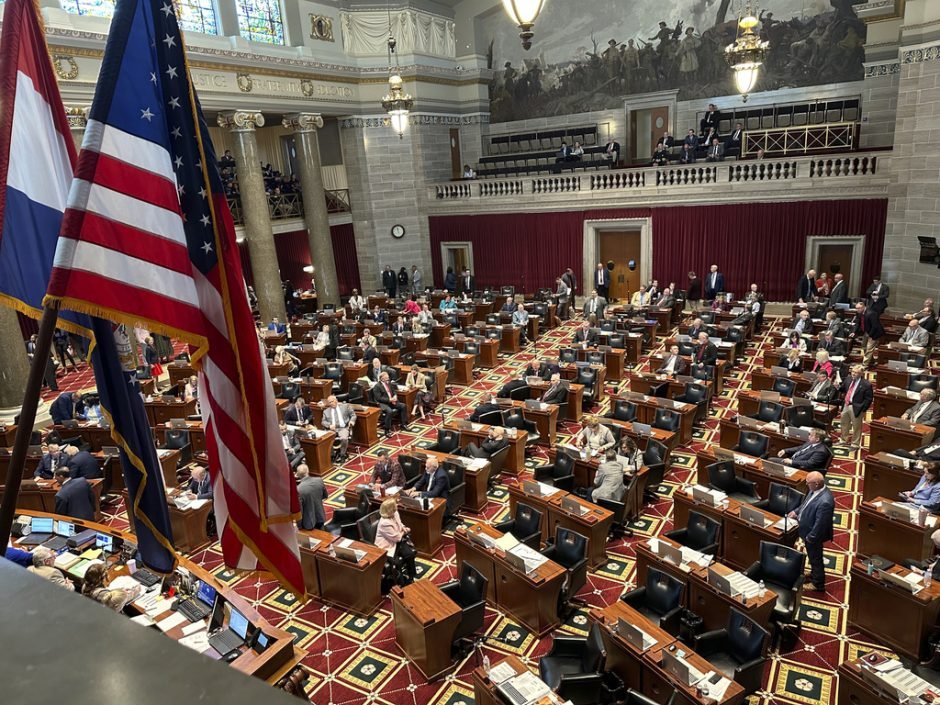
JEFFERSON CITY, Mo. (AP) — Investors who profit from selling stocks, real estate and other assets soon could reap an even larger benefit in Missouri, which is poised to become the first U.S. state to exempt capital gains from its income tax.
Legislation that won final approval last week would halt the capital gains tax this year for individuals and could eventually eliminate it for corporations, if state revenues keep growing. The tax repeal now heads to Republican Gov. Mike Kehoe, who has said he’s “very supportive” of it.
States have very different approaches to taxing capital gains, and Minnesota and Washington go as far as taxing them at higher rates than income.
Related: Minnesota’s ‘most progressive’ tax state designation explained
Though proponents of Missouri’s proposed exemptions hope it can spur the economy, detractors assert that the capital gains tax repeal will primarily benefit the rich and result in less tax revenue for public schools and services. The Republican-led Legislature overcame objections by Democrats only after expanding the bill with greater tax breaks for seniors and disabled residents and new sales tax exemptions for diapers and feminine hygiene products.
Missouri’s unique income tax carve-out comes as Republican-led legislatures in at least eight other states have passed more traditional income tax rate reductions this year. It also comes as Congress weighs whether to renew and expand income tax breaks enacted during President Donald Trump’s first term in office.What is a capital gains tax?
Capital gains are profits from the sale of assets such as stocks, cryptocurrency or property. The federal government taxes long-term capital gains, on assets held for more than a year, at a lower rate than ordinary income.
All states that tax income also tax capital gains. Missouri currently is among 32 states and the District of Columbia that tax capital gains at the same rate as wages and other income, according to the nonprofit Tax Foundation. Eight states tax capital gains at a lower rate than other income.
Some Democratic-led states have been moving in the opposite direction. Maryland lawmakers last month passed a bill that would impose a 2% capital gains tax on those with incomes over $350,000. And Washington lawmakers recently passed legislation to impose an extra 2.9% tax on capital gains over $1 million. Minnesota already imposes a surcharge on capital gains and other investment income over $1 million.What’s the case for eliminating the capital gains tax?
Proponents of axing the capital gains tax say the tax discourages investment and incentivizes people to hold onto assets instead of selling them and spending money elsewhere in the economy.
“When you tax something you get less of it,” said Jonathan Williams, president and chief economist at the American Legislative Exchange Council, an association of conservative lawmakers and businesses. “The idea is, of course, you want more investment in your state.”
Though ALEC has long backed the repeal of state capital gains taxes, Missouri House Speaker Pro Tem Chad Perkins said the idea came to him last year from friends at an employee-owned construction company that was getting hit with the tax. He said his legislation also could benefit family farmers who want to sell their land.
The capital gains tax results in “lost economic opportunity, financial sclerosis, lower wages — all of which serve to make Missouri less competitive both domestically and internationally,” said Republican state Sen. Curtis Trent, who handled the bill in the Senate.Who would benefit from the tax repeal?
Opponents say the wealthy will get the greatest reward.
Repealing Missouri’s tax on capital gains would set “a worrisome precedent” nationally and “worsen economic and racial inequities,” said Sam Waxman, deputy director of state policy research at the liberal-leaning Center on Budget and Policy Priorities.
One government study found that white families are more likely to report capital gains than some minorities. Among middle-income taxpayers, about 8% of white families benefited from the federal government’s tax rates on capital gains and dividends compared to just 3% of Black families and 1% of Hispanic families, according to a 2023 U.S. Treasury Department report.
In Missouri, about 542,000 individual income taxpayers reported capital gains in 2022, amounting to just one-fifth of all filers, according to the Missouri Budget Project, a nonprofit research group that opposes the capital gains tax repeal. The group estimates that 80% of the tax relief would go to the wealthiest 5% of taxpayers.What’s the cost of repealing the capital gains tax?
Legislative researchers estimate Missouri’s capital gains tax repeal could cost the state about $262 million annually when fully implemented. But that’s disputed by both supporters and opponents.
The Missouri Budget Project estimates the cost could be nearly $600 million annually.
Trent predicts the tax repeal will trigger “increased economic growth (that) will translate into increased tax revenue” over time.
Owen Zidar, an economics and public affairs professor at Princeton University, studied the impacts of 584 capital gains tax rate changes in states over four decades. Capital gains tax cuts tend to result in more people selling assets for gains, but not so much as to offset the lost tax revenue, he said.
Zidar said he is skeptical of claims that Missouri’s capital gains tax repeal will attract a lot of investment and economic activity.
“I think it’s going to be a substantial revenue decrease,” he said.
The post Minnesota, Washington tax capital gains at higher rate than income taxes appeared first on MinnPost.
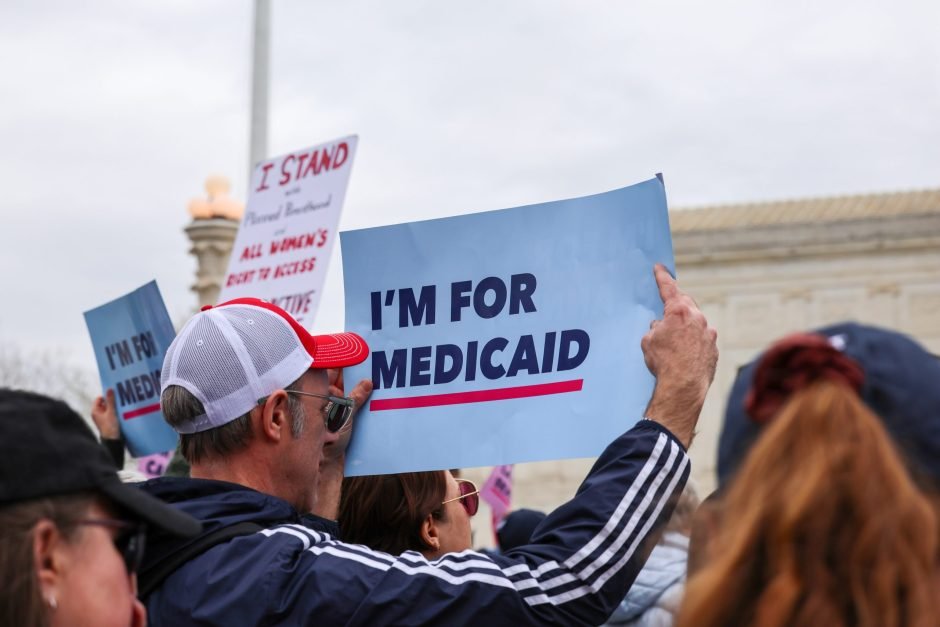
WASHINGTON — House Republicans have targeted “blue” states that provide health care to undocumented immigrants by cutting Medicaid payments to those states in an effort to shrink the government health plan for the poor and disabled.
Legislation released by the House Energy and Commerce Committee late Sunday would cut the share the federal government gives Minnesota and 13 other states, including California, Illinois and New York, from 90% to 80% because these states offer health care coverage to undocumented immigrants.
This cut in federal money, and other new restrictions proposed by the panel as part of a mega-budget bill, will likely force states like Minnesota to revamp how they fund the joint federal-state Medicaid program or cut benefits.
Gov. Tim Walz’s office and the Minnesota Department of Human Services did not have an immediate response to the proposed cut in the federal matching rate for those who have been able to enroll in Medical Assistance through the Affordable Care Act’s expansion of Medicaid.
The state’s options include paring back eligibility, reducing benefits, ending coverage for undocumented immigrants or making up the loss with state funds.
“I would hope Minnesota would implement (the changes) in a humane way,” said Jonathan Watson, CEO of Minnesota Community Health Centers.
He estimated the reduction in the federal matching rate would cost Minnesota more than $325 million a year.
Full health coverage of undocumented immigrants, initiated in Minnesota on Jan. 1, has been criticized by state GOP lawmakers because it is funded solely with state funds. Federal law prohibits the use of Medicaid dollars on coverage of undocumented immigrants.
The Energy and Commerce Committee was required to find $880 billion in savings over 10 years in the programs that come under its jurisdiction. In its preliminary estimate, the CBO determined that most of the savings would come from the panel’s proposed changes to Medicaid, which it said would lower the federal government’s spending on the program to $715 million.
The change in the reimbursement rates is just one change the committee has proposed to Medicaid.
House Republicans say the changes would root out fraud, waste and abuse from the program.
But the new restrictions on Medicaid, proposed as part of President Donald Trump’s “big, beautiful” budget bill, will result in the loss of Medicaid coverage for millions of Americans, even as a pushback from moderate GOP lawmakers pared back some initial proposals.
“This is the largest Medicaid cut, ever,” said Laura Mortenson, spokeswoman for the Minnesota Budget Project.
Mortenson said more details of the plan would be made public when the House Energy and Commerce Committee marks up its bill Tuesday afternoon. Democrats on the panel will try to reverse some of the changes, but they are in the minority.
If the panel votes out the bill, which is expected, the legislation would go to the full U.S. House for a vote as part of the budget bill.
Working for health care
About 1.3 million Minnesotans, or about 23% of the state’s population, rely on Medicaid, known in the state as Medical Assistance, for their health care.
Democrats on Sunday released preliminary estimates by the Congressional Budget Office (CBO) that determined more than 8.6 million people would go uninsured if the changes to Medicaid become law.
One big impact on beneficiaries is a new work requirement that supporters say would lift low-income individuals out of poverty by motivating them to get jobs.
The CBO has estimated that requiring beneficiaries to work or study for at least 80 hours a month could save over $100 billion over the next decade — by excluding more people from Medicaid so the government won’t have to pay for their medications and care.
Yet the Kaiser Family Foundation has determined that most Medicaid recipients, 92%, are already working full- or part-time and others are exempted from the work requirement because they have caregiving responsibilities, illnesses or disabilities or are attending school.
David Hilden, an internal medicine doctor at Hennepin Health, said the few states that imposed work requirements on Medicaid recipients did not result in an increase of employed beneficiaries.
“It just did not work,” Hilden said.
What did happen, he said, is that many recipients could not keep up with the paperwork that showed they had a job, were looking for work or were part of an exempted category. “All it did was make people lose their coverage,” Hilden said.
So work requirements, which Hilden called disastrous, are expected to reduce the number of recipients. So is another change, which would require Medicaid beneficiaries who earn more than the federal poverty limit — around $15,650 for a single person — to pay higher co-payments for doctor visits.
The bill would also increase paperwork requirements, allowing states to check the income and residency of certain beneficiaries more often and ending coverage for those who don’t respond promptly.
The legislation was panned by medical groups and organizations that represent patients, including the American Cancer Society, which called the proposal “catastrophic” and “alarming.”
“This is going to put community health centers in a more perilous situation,” Watson said.
He said the state’s community health centers receive about 40% of their revenue from Medicaid.
The legislation would also cut funding for groups that provide abortion services, like Planned Parenthood, and ban the use of Medicaid dollars for gender-affirming care for youth.
It would also reassess the way assets are determined to qualify patients for Medicaid-funded nursing home care and repeal Biden administration reforms for staffing at nursing homes.
The post GOP’s Medicaid overhaul would punish Minnesota for providing health care to undocumented immigrants appeared first on MinnPost.
WASHINGTON – The race for U.S. Rep. Angie Craig’s 2nd District seat is in its early stages and has so far attracted just two candidates, both DFLers named Matt. But the contest to represent Minnesota’s swingiest district in Congress is once again expected to be fiercely competitive and very expensive.
Craig’s decision to run for retiring U.S. Sen. Tina Smith’s seat prompted the Cook Political Report to change its rating of the 2nd District seat from “safe Democrat” to “likely Democrat,” which makes the race more competitive for the GOP.
Erin Covey of the Cook Political Report said the 2nd District race was downgraded a bit for Democrats because an open seat, by definition, is more competitive than one held by an incumbent. She said Democrats will continue to have a strong advantage.
But others think Craig’s decision to run for the Senate gives Republicans a chance to do what they haven’t been able to do for years – claim the 2nd District for the GOP.
“I think it’s going to be a very close general election,” said Hamline University political science professor David Schultz.
The district encompasses the Twin Cities suburbs and the southern portion of Washington County as well as the rural areas of Dakota and Scott Counties, Le Sueur County and much of Rice County.
Since the district was created in 1861, its voters have elected both Democrats and Republicans to represent them. Yet, historically, they have favored the GOP and that party held the seat for 18 years before Craig was elected in 2019.
But redistricting and the rapid growth of the Twin Cities suburbs and exurbs have shifted the race towards the Democratic Party. In 2016, Donald Trump won the district narrowly over Hillary Clinton but lost it to Kamala Harris — who won 51.6% of the vote — last year.
“This district has been trending to the left since 2016,” Covey said.
Fred Slocum, a political science professor at Minnesota State University, Mankato, said that while the district includes rural areas that likely will favor a Republican candidate, it also includes suburban areas.
“And, in general, in the Twin Cities suburbs, the DFL has gained ground over the past 10 to 20 years as a number of suburbs, previously heavily white, have become more diverse with greater shares of racial and ethnic minorities,” Slocum said.
He also said the 2022 overturning of Roe v. Wade has mobilized suburban women to vote for Democrats. That helped Craig keep her seat.
Craig was able to fend off challengers by walking a fine ideological line. While she strongly supports abortion rights and protecting social safety net programs, she also adopted some GOP stances, including a hard line on immigration, strong support for Israel and increased funding for police.
Craig was also able to raise millions of dollars in races that drew in the support of the national parties. Her campaign spent nearly $8.3 million to successfully fend off GOP challenger Joe Teirab last year. Teirab spent about $3.2 million.
Schultz said the best candidate for the race is a centrist who “can raise a lot of money. “
Teirab may run again for the 2nd District seat. So may Tayler Rahm, a Republican who won the endorsement of the GOP at its 2nd District convention but dropped out of the Republican primary last year after being offered a job on the Trump campaign in Minnesota.
And Tyler Kistner, who lost against Craig twice, is said to also be considering a run.
The two Matts
Two DFLers have already announced they are running for the 2nd District seat — state Sen. Matt Klein and former state Sen. Matt Little, who also served two terms as the mayor of Lakeville.
Another DFL state senator, Erin Maye Quade, may also jump into the race. Little said any one of the Democrats in the race will face a tough general election.
“It’s going to be extremely competitive,” Little said. “Republicans are going to target this seat with everything they have.”
State Sen. Matt Klein
Little said he’d run on pocketbook issues like affordable childcare and allowing people who are younger than 65 to buy in to Medicare.
He’s aware Democrats need to keep the 2nd District seat if they hope to take back control of the U.S. House in the midterms, something that would require the flipping of just five seats.
“The courts can’t do it alone,” Little said of the dozens of lawsuits challenging Trump’s use of his executive authority to remake the government. “We need to take back Congress.”
Little said his time as mayor of Lakeville gives him a boost in a major population area in the district and helps him campaign in rural south Dakota County.
Meanwhile, Klein, a doctor of internal medicine, said he hopes to be elected to provide a “counterbalance of scientific fact and trust” to Health and Human Resources Secretary Robert F. Kennedy Jr., a vaccine skeptic.
Representing the southeastern Twin Cities metropolitan area, Klein concedes that winning over the “red” areas of the district will be a challenge. And he’s willing to use Craig’s winning, centrist-driven formula.
“The path has already been forged by Angie,” Klein said.
He also said the Democratic primary is likely to be as competitive as the general election. “Both will have different sets of challenges,” he said.
Klein has said he won’t drop out of the race if he fails to win the DFL endorsement. And he said he won’t shift his message to appeal to the more progressive voters who show up at DFL primaries and the more moderate mix of voters who gave Craig victories over her GOP challengers.
“If voters decide they don’t like my message, I’ll accept that,” Klein said.
Former state Sen. Matt Little
Covey, of the Cook Political Report, said there’s another advantage Democrats may have in the 2nd District besides a favorable demographic trend.
Trump’s approval ratings have dropped and, traditionally, the party that holds the White House loses congressional seats in a midterm. “Given the historical trend one would think the party that is locked out of power will gain strength in the midterm,” she said.
But Covey cautioned it is too early in the campaign cycle to make hard and fast predictions.
“Much will depend on Trump’s overall job approval next year, and there is always the ‘wild card’ of new issues or events that can unexpectedly intrude into a campaign,” Slocum said. “For example the Sept. 11, 2001, terrorist attacks tilted the 2002 elections in Republicans’ favor; the 2022 overturning of Roe v. Wade mostly worked in Democrats’ favor.”
The post Race for Rep. Angie Craig’s seat is heating up and expected to sizzle appeared first on MinnPost.