WASHINGTON – Suspected assassin Vance Boelter listed names of abortion providers and activists in a series of notebooks found at his home and threats to doctors and clinics are on the upswing, but Republicans in Congress are trying to repeal the only federal law designed to protect abortion providers from violence.
On Jan. 21, the first full day of President Donald Trump’s new term, Rep. Chip Roy, R-Texas, introduced a repeal of the FACE Act, a federal law approved by Congress more than 30 years ago with strong bipartisan support after a Florida OB-GYN was fatally shot by an anti-abortion extremist.
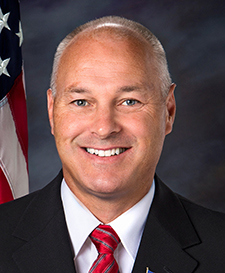
Roy’s effort is supported by many fellow hard-right Freedom Caucus members, but Rep. Pete Stauber, R-8th District, is also an original co-sponsor of the legislation.
And Sen. Mike Lee, R-Utah, has introduced a similar FACE Act repeal in the U.S. Senate. Lee says legal scholars have long questioned the constitutionality of the FACE Act and that the Biden administration used it as a “tool to harass and prosecute pro-life activists.”
Neither Roy’s nor Lee’s offices responded to requests for comments.
On Wednesday Lee deleted posts on his personal X account about the fatal attack on former Minnesota House Speaker Melissa Hortman and her husband and the wounding of state Sen. John Hoffman and his wife.
In one post, Lee said the assassination of Hortman “is what happens when Marxists don’t get their way,” and another that featured a photo of Boelter was captioned “Nightmare on Waltz Street,” apparently in reference to Gov. Tim Walz.
The posts were deleted after Sen. Tina Smith, D-Minn., confronted Lee about them. On Tuesday, Sen. Amy Klobuchar, D-Minn., also said she spoke with Lee.
Smith, a former Planned Parenthood official, said the FACE Act has acted as a deterrent to those who would do harm to doctors and clinics that provide abortions.
The FACE Act allows the Justice Department to pursue both criminal and civil actions against violators. The law makes it a federal crime to use violence, threats, or physical obstruction to prevent someone from accessing or providing abortion services.
Penalties for violations of the act include fines and imprisonment.
“I worked at Planned Parenthood, I know all too well that receiving credible death threats is a fact of life for people who work in reproductive health care,” Smith said in a text. “I knew physicians who regularly traveled around wearing bulletproof vests, and I know people who had to fortify their homes against attacks. It’s a reality that’s been around for a long time.”
Smith also said “it’s unspeakable to me that these leaders whose job is to kind of bring us together and stand up for people would use this moment to just kind of fuel the fear and the hatred that is causing this political violence.”
Related: What a new abortion law says about changing DFL politics in Minnesota
The National Abortion Federation, which tracks violence against abortion providers, claims that since the U.S. Supreme Court overturned Roe v. Wade three years ago, attacks against doctors and clinics have skyrocketed.
However, Trump has pardoned 23 individuals prosecuted under the act.
‘Actively fearful’
According to the federal complaint against Boelter, law enforcement recovered notebooks that contained the names of 45 Minnesota officials, “mostly or all Democrats,” as well as the names of abortion clinics and providers and abortion rights activists, in the Minneapolis home the suspect lived in part of the time.
Police have not revealed what the alleged killer’s motive might have been, but there’s bipartisan agreement in Minnesota that Boelter’s actions were politically motivated.
When Boelter conducted missionary work in the Democratic Republic of the Congo some years ago, he said American churches had “gone soft” on the issue of abortion.
Related: What we know about Vance Boelter so far
In any case, the suspect’s listing of abortion providers and well-known activists has put a chill in Minnesota’s abortion-rights community.
A Minnesota media site has published a partially redacted list of Boelter’s “hit list” that was provided to law enforcement. That has concerned Smith.
“I talked to one of my … longtime friends who’s been a leader in the reproductive rights movement for decades, who is actively fearful for her personal safety because her name was on the list, and she’s lived through this her entire working career,” Smith said.
Boelter, captured after a massive manhunt near his home in Green Isle Sunday evening, is in federal custody, charged with two counts of first-degree murder and two counts of attempted murder and other federal crimes. His preliminary hearing is scheduled on June 27.
“Vance Luther Boelter went on a violent rampage against our elected officials,” said Acting U.S. Attorney Joe Thompson for the District of Minnesota in a statement. “These were targeted political assassinations the likes of which have never been seen in Minnesota. It was an attack on our state and on our democracy. We will not rest until he is brought to justice.”
The post Inclusion on Boelter’s ‘hit list’ chills Minnesota abortion providers and abortion rights activists appeared first on MinnPost.
Continuing his crusade against diversity, equity and inclusion (DEI) initiatives, President Donald Trump announced he was shutting down the Digital Equity Act in May. He took to his Truth Social social media platform to accuse the bipartisan legislation passed in 2021, designed to steer grant funding to organizations working to bridge digital divides, of giving out “woke handouts based on race.”
It didn’t matter that the Digital Equity Act was set to pour investments into rural areas, where residents overwhelmingly voted for him; Trump declared it “racist and illegal,” in all caps.
He claimed to save $2.5 billion in taxpayer dollars by scrapping the act. Actually, it was funded for $2.75 billion. And while, yes, racial and ethnic minorities were listed as groups to be covered by program funds, they were listed right alongside veterans, rural residents and aging adults in the law’s text.
Digital Equity Act funding was a relatively small part of a $65 billion allocation stemming from the Infrastructure Investment and Jobs Act for development of broadband infrastructure and digital inclusion work. The largest chunk of money, $42.45 billion, went to the Broadband Equity, Access, and Deployment (BEAD) program. Equity in the name though it has, BEAD funding, which has been the source of frustrations for internet service providers, recently got a makeover instead of a kick to the curb.
What kinds of ‘digital equity’ projects lost out on funding?
Before Trump took office, the National Telecommunications and Information Administration (NTIA) selected a bevy of applicants for the Digital Equity Competitive Grant Program in early January. The page has since been pulled down but remains viewable using the Internet Archive’s Wayback Machine.
Two Minnesota-based organizations made the cut:
Minnesota State Colleges and Universities system — $7.3 million
Consisting of 26 colleges and seven universities, most of the campuses in Greater Minnesota, the system received notice of its grant award from NTIA on Dec. 31, 2024. NTIA’s description of the system’s project in January detailed plans for digital literacy expansion and instruction in college curriculum, training, digital navigation services, device distribution, and vouchers to connect people to internet service.
The higher education system received another notice on May 20 that its award had been terminated, stated Noelle Hawton, chief marketing and communications officer, in an email. No funds were received.
Hmong American Partnership — $7.3 million
The St. Paul-based Hmong American Partnership (HAP) partnered with California’s Fresno Center to apply for Digital Equity Act grant funding last fall. They proposed using the funds to build permanent digital hubs, spaces where members of the Hmong communities in Minnesota and California could access the internet and receive digital skills training. There would’ve been four hubs in total located at a HAP office in St. Paul, two charter schools in St. Paul and one at the Fresno Center.
May yer Thao, president and CEO at HAP, remembers the partners feeling jubilant about their project being selected. They put out a press release on Jan. 7 about the “prestigious award” they expected to receive. They were readying to hire people to staff the hubs.
Then the federal end of communications went silent. Weeks then months passed without word about their grant’s status. “We were all just kind of in limbo,” Thao said.
A brief email arrived from NTIA in May confirming that the $7.3 million in funding was no more. “Everyone was very disappointed to say the least,” Thao said. The program’s demise seems tied to the administration’s anti-DEI push, she added. Her organization specifically outlined plans for closing digital divides within Southeast Asian communities in its application.
A $500,000 grant from the state for the project offered some consolation. To see the work through, HAP will otherwise need to raise funds on its own. “We’re disappointed,” Thao said. “We’re discouraged, but the work will continue.”
For Thao’s organization, digital equity work is about preventing people from being left behind by technology. Not knowing how to use a computer, or not having broadband access, disconnects them from the modern world. Programs and resources available to them at the local, state and federal levels, Thao noted, also become harder to access.
Why the act’s termination is bad for rural areas
Thao, from Minnesota, joined HAP after working at the Wisconsin Housing and Economic Development Authority. In the role she said she saw how big of an issue broadband access is in rural areas, where residents are less likely to have it.
A report prepared by Minnesota’s Office of Broadband Development in 2023, a Digital Equity Act requirement at the time, stated about 67% households in Greater Minnesota have broadband subscriptions, compared to nearly 92% of households in the Twin Cities metro.
May yer Thao
Minnesota’s first grant recipients through the program weren’t rural-focused projects, but future rounds could’ve been. Rural projects featured prominently on NTIA’s award recommendation page in January:
Pennsylvania’s Department of Human Services was set to put portions of $10.8 million into distributing telehealth devices and reliable internet to the state’s most rural and underserved counties.
Louisiana’s Public Health institute had $5 million earmarked in part for portable internet devices for rural farmers and agricultural workers.
Alabama’s Dannon Project wanted to use its $10.8 million on telemedicine stations for rural and isolated communities and virtual reality workforce training simulations for veterans and rural residents.
The post Rural communities lose out with shelving of Digital Equity Act appeared first on MinnPost.
LOS ANGELES (AP) — Lawmakers in some states are moving to delete their home addresses from online directories and Wisconsin legislators are seeking added security for a session this week after one Minnesota legislator was killed and another wounded in their suburban Minneapolis homes last weekend in what Gov. Tim Walz described as a targeted political attack.
Vance Boelter is in federal custody facing murder and stalking charges in the shooting death of former Democratic House Speaker Melissa Hortman and her husband, Mark. Authorities say he also shot and wounded Sen. John Hoffman and his wife Yvette. Boelter, 57, also faces state murder charges.
Authorities said Boelter had a list of dozens of state and federal elected officials in Minnesota and meticulous notes on the homes and people he targeted early Saturday. He also stopped by the homes of two other legislators that night, according to police. Authorities say he found their addresses in a variety of internet searches. The Minnesota Legislature’s website lists the addresses of members’ offices in the state capital of St. Paul, not their home addresses.
On Saturday, the North Dakota Legislature’s staff agency removed lawmakers’ addresses from their biographical webpages as a result of the targeted attacks in Minnesota, Legislative Council Director John Bjornson said.
Most North Dakota lawmakers opt to give a home, business or postal box address on their webpage, where the public also can find their email addresses and phone numbers.
Removing addresses of elected officials is a difficult decision because they have to be approachable, open and transparent, said Burleigh County Sheriff Kelly Leben, whose county is home to North Dakota’s capital city.
“I think it’s a balancing act between being a public official and the safety of myself and my family,” the elected county sheriff said.
All home addresses for New Mexico legislators were also removed from the Statehouse website as an immediate precaution, said Shawna Casebier, director of the Legislature’s legal office.
Personal information on the website already had been limited at the discretion of individual lawmakers in the aftermath of drive-by shootings at the homes of four Democratic state and local lawmakers in Albuquerque in 2022 and 2023.
In Colorado, at least 31 elected officials have filed requests to remove their personal contact information from a public-facing state campaign finance database called TRACER, which was briefly taken down Saturday so those requests could be fulfilled.
“We did so out of an abundance of caution for the safety of elected officials in an unprecedented political climate,” Colorado Secretary of State Jena Griswold said in a statement. The Colorado development was first reported by Axios.
Lawmakers in Wisconsin requested additional security for when the state Assembly meets on Wednesday, said Luke Wolff, spokesperson for Republican Assembly Speaker Robin Vos. Wolff did not detail what was requested or what changes may be made.
The Wisconsin Capitol is one of the most open in the country, with public access seven days a week, no metal detectors, screening checkpoints or security badges required to gain entry. There are galleries in both the Senate and Assembly where the public can view legislative debate.
Even before the Minnesota shooting, states in recent years have stepped up efforts to shield the personal information of officials in response to high-profile attacks.Oregon
One day before the Minnesota killings, Oregon lawmakers passed a bill that would prohibit the Oregon Secretary of State from making the residential addresses of those associated with a candidates’ campaign committee viewable by the public on its electronic filing system. The campaign filings would still be viewable online, but home addresses would be redacted, unless the person asks the Secretary of State’s office to publish it. A public records request would need to be filed to obtain such addresses.Louisiana
Louisiana lawmakers passed a bill last week that adds statewide elected officials and legislators to the list of people who can ask that their personal information be removed from public records and the internet. Certain judges were already on the list.
Officials can seek to have home addresses, phone numbers, email addresses, date of birth, marital status, school or daycare of their child, their place of worship or employment location of their spouse removed.
Under current law, if person does not comply with the removal request, they can be sued and face up to 90 days in prison or $1,000 fine for the misdemeanor.
The measure still needs final approval from Gov. Jeff Landry, one of the Louisiana officials whose private information would be protected.Georgia
Georgia legislators passed a law earlier this year to require that home addresses of candidates who file campaign finance reports, including themselves, be redacted from by the state Ethics Commission from public view. The action came after a number of Georgia officials were targeted by swatting incidents in December 2023.
Lawmakers also passed a second law which removes the personal phone number, home address, and property or tax records of a judge or their spouse from public view. Records covered include voter registration and corporation records.Illinois
The Illinois State Board of Elections stopped publishing the street addresses of candidates for political office on its website last year, spokesperson Matt Dietrich said. Lawmakers had raised concerns after protestors picketed the home of Secretary of State Alexi Giannoulias, the state librarian, over legislation he pushed through the General Assembly that would cut state funding to libraries that ban books.
Candidates’ addresses remain on elections board documents that are no longer published on the web but accessible via public records request.New Jersey
In 2020, a gunman posing as a delivery driver shot and killed the 20-year-old son of U.S. District Judge Esther Salas in New Jersey and injured her husband at their family home. The state legislature passed a law later that year by that exempted the home addresses of current or retired judges, prosecutors and law enforcement officers from disclosure under public records laws. The measure, called Daniel’s Law in honor of the judge’s son, also allowed officials to ask websites to remove their home addresses.Maryland
Maryland enacted a law in 2024 preventing individuals from publishing judges’ personal information online after a circuit court judge was shot by a man hours after the judge ruled against him in a divorce case. Judges can submit requests to government entities and private websites to remove information like phone numbers, social security numbers, and personal emails.
—
Associated Press reporters Claire Rush in Portland, Ore., Jack Dura in Bismarck, N.D., John O’Connor in Springfield, Ill., Jeff Amy in Atlanta, Scott McFetridge in Des Moines, Iowa, Sara Cline in Baton Rouge, La., Scott Bauer in Madison, Wis., Brian Witte in Annapolis, Md. and Morgan Lee in Santa Fe, N.M. contributed to this report.
The post After Minnesota shooting, some states are more tightly guarding officials’ home addresses appeared first on MinnPost.
WASHINGTON — The shooting of two Minnesota lawmakers also led to the recovery of a “manifesto” that law enforcement officials say listed the names of other lawmakers and officials from across the country as the nation entered a dangerous phase of political violence.
State Rep. Melissa Hortman and her husband, Mark, were killed in the attack at their Champlin home early Saturday morning after opening their door to the shooter, who was dressed as a police officer. State Sen. John A. Hoffman and his wife, Yvette, were shot multiple times at their house in Champlin, but remained alive as of Saturday morning. Both victims were DFLers.
Gov. Tim Walz called the shootings “an act of targeted political violence,” as did other public officials.
“Let me be clear, this act of targeted political violence was an attack on everything we stand for as a democracy,” U.S. Sen. Amy Klobuchar, D-Minn., said in an emailed statement.
The Associated Press identified the shooter as Vance Boelter, 57, of Green Isle, a small town southwest of the Twin Cities. The AP’s reporting was from two people familiar with the matter who could not publicly discuss details of the ongoing investigation and spoke on condition of anonymity.
Related: In act of political violence, DFL leader Melissa Hortman shot and killed in targeted shooting
U.S. Rep. Tom Emmer, R-6th District, also said the shootings were politically motivated.
“No public official — or any American — should fear for their safety in their own home, and we condemn this despicable act of political violence,” Emmer posted on X.
The entire Minnesota congressional delegation, which is rarely in agreement, put out a joint statement condemning the shooting.
So did a bipartisan group of Minnesota state lawmakers.
House Speaker Lisa Demuth, R-Cold Spring, said, “I condemn in the strongest possible way the violence that took Melissa and Mark from us, and I call on every Minnesotan to reject it.”
“Political violence is abhorrent and unacceptable, and my prayers are with the men and women in law enforcement who are working to stop this evil and bring the perpetrator to justice,” Demuth said.
All of Minnesota’s state lawmakers were given police protection.
Sen. Mark Johnson, the Republican minority leader in the Minnesota Senate, said he has had “up to three” law enforcement cars parked outside his home.
Johnson told MinnPost that law enforcement in Minnesota is “very aware of the risksthat are out there.”
“As a legislator you are always subject to a certain degree of threats.There’s always the awareness of the possibility,” he said.
Johnson also said “most legislators working on legislation throughout their career have received threats.”
“For the most part, our Capitol security is very good in terms of assessing the risk,” he added.
The contents of the manifesto were not disclosed by police, who found the document in a police-like SUV abandoned at the Hortmans’ home after Brooklyn Park police decided to check on the lawmaker after they responded to Hoffman’s shooting. Officers found the shooter still on the scene and exchanged gunfire, but the suspect escaped on foot.
Police said those identified in the manifesto have been alerted and were “providing security where necessary.”
On Saturday morning, Walz activated the Emergency Operations Center as lawmakers across the state, including members of Congress, have been put on alert.
The U.S. Capitol Police also said it has moved to protect the nation’s federal lawmakers.
“The United States Capitol Police is aware of the violence targeting state lawmakers in Minnesota,” it said in a statement. “We have been working with our federal, state and local partners. For safety reasons, we cannot provide specific details about our security posture.”
The shooting took place ahead of nation-wide “No Kings” protests in response to President Donald Trump’s military parade in Washington and after California Sen. Alex Padilla, also a Democrat, was violently wrestled to the ground and handcuffed by security personnel at a Department of Homeland Security press conference in Los Angeles this week.
A spiraling of political violence
Walz said that “out of an abundance of caution” his Department of Public Safety is recommending that people should not attend any political rallies, including “No Kings” events, until the shooter is apprehended. Police said they found pamphlets about Minnesota’s rally in the suspect’s car.
Trump decried the shootings but didn’t say they were politically motivated.
“Our Attorney General, Pam Bondi, and the FBI, are investigating the situation, and they will be prosecuting anyone involved to the fullest extent of the law,” the president said in a statement. “Such horrific violence will not be tolerated in the United States of America. God Bless the great people of Minnesota, a truly great place!”
Robert A. Pape, a professor of political science at the University of Chicago and an expert on political violence, said the shootings in Minnesota are part of a larger, national trend.
“America has had low levels of political violence, but in the last five years there has been a historical moment in political violence,” Pape said. “We are a tinderbox of a country.”
The professor said that such escalations happened in the 1920s and 1960s, when there were rapid social changes and other factors – like a broadening of economic inequality.
He also said Trump — who has fanned the flames of divisiveness in the nation — “is a symptom, as much as a cause” of the increase in political violence.
“This is an era of violent populism,” Pape said. “And the behavior of Trump and other politicians are on top of other things.”
Pape said neither Democratic nor Republican officials are doing enough to condemn violence by their constituents — and he included the violence that has broken out at mainly peaceful protests against Immigration and Customs Enforcement (ICE) as actions Democrats should condemn.
“Both sides need to condemn their own constituents,” he said.
MinnPost state government reporter Matthew Blake contributed to this report.
The post Minnesota shootings are part of a spiraling of political violence appeared first on MinnPost.
President Donald Trump signed a proclamation banning travel from 12 countries, including Somalia, that went into effect June 9.
Other countries included in the ban are Afghanistan, Myanmar, Chad, Congo-Brazzaville, Equatorial Guinea, Eritrea, Haiti, Iran, Libya, Sudan and Yemen. Nationals from Burundi, Cuba, Laos, Sierra Leone, Togo, Turkmenistan and Venezuela will face partial travel restrictions.
Trump’s executive order stated: “Somalia lacks a competent or cooperative central authority for issuing passports or civil documents and it does not have appropriate screening and vetting measures.”
Somali leaders from the African Union responded to the order with a promise to work with the United States to address security issues. Somali ambassador to the U.S., Dahir Hassan Abdi, said: “Somalia values its longstanding relationship with the United States and stands ready to engage in dialogue to address the concerns raised.”
Minnesota has the largest Somali population in the country.
This fact brief is responsive to conversations such as this one.
MinnPost partners with Gigafact to produce fact briefs — bite-sized fact checks of trending claims.
Sources
The White House Restricting the entry of foreign nationals
BBC How countries responded to Trump's travel ban
MinnPost Fact Brief Is Minnesota home to the largest number of Somali Americans in the country?
MNCompass Somali population
The post Does Trump’s latest travel ban include Somali nationals? appeared first on MinnPost.
President Trump came into office promising to conduct “the largest deportation program of criminals” in the nation’s history, with a goal of deporting 1 million undocumented immigrants this year.
To reach that lofty target, administration officials have pushed Immigration and Customs Enforcement (ICE) to increase deportation numbers by casting a wider net that includes anyone without documentation, not just those with criminal records. A top Trump adviser told ICE officials in late May that the administration wants to see “at least” 3,000 immigration arrests a day, a marked increase from the roughly 650 daily arrests seen through the first four-and-a-half months of this year.
This intensified pressure has led to a more aggressive posture from ICE, the diversion of other federal law enforcement agency resources, and greater demand for cooperation from local authorities.
Related: GOP lawmakers attack Walz for ‘sanctuary’ policy at testy Capitol Hill hearing
ICE enforces immigration laws nationwide, but often seeks state and local help in alerting federal authorities of immigrants wanted for deportation and holding people until federal officers take custody.
This pressure has led to varying levels of pushback from immigration advocates, as well as states and localities that say working hand in glove with ICE will erode trust and decrease cooperation between local law enforcement and the communities they serve.
In response to what the administration perceived as stonewalling from local and state partners, a list of “sanctuary jurisdictions” was made public in late May, which included Minnesota.
Gov. Tim Walz pushed back, denying that Minnesota is a sanctuary state, citing specific laws other states have, and the lack of such laws in Minnesota
“It is ridiculous to suggest that Minnesota — a state that is over 1,500 miles away from the Southern border, and a thousand miles from lawmakers in Washington, D.C. who decide and implement border policy — is somehow responsible for a failure of immigration enforcement,” Walz said during the hearing.
He also tried to draw a line separating states that are de jure sanctuary jurisdictions, with sanctuary policies enshrined in state law, and states that might be seen as de facto sanctuary jurisdictions, where guidance from state and local officials simply recommends that law enforcement limit certain kinds of cooperation with federal immigration enforcement.
Some states have specific statutes that prevent ICE access to local and state jails, or ban law enforcement from detaining individuals solely based on immigration status or an immigration detainer.
For example, New York’s Protect Our Courts Act imposes criminal liability for anyone who detains an individual for immigration charges while the individual is in court or on their way to or from court. The Illinois TRUST Act “generally prohibits local law enforcement in Illinois from participating in immigration enforcement” and requires state, county, and local law enforcement to provide annual reports detailing their compliance with the law. California’s Values Act bars law enforcement from using their resources to detain undocumented immigrants, though it makes an exception for those suspected of serious crimes.
In addition to these laws, some Democrat-led states have scrambled to pass and enact new laws in the past weeks and months to try to protect immigrant communities from ramped up enforcement.
California saw more than a dozen pro-immigrant bills pass either the state Assembly or Senate last week, including one prohibiting schools from allowing federal immigration officials into nonpublic areas without a judicial warrant. In one of his first moves of his second term, Trump reversed longstanding policy that discouraged detentions at sensitive locations like schools, churches, and hospitals.
Colorado Gov. Jared Polis signed legislation in early May designed to protect immigrants from having their status inadvertently disclosed by imposing a penalty of up to $50,000 for public schools, colleges, libraries, child care centers and health care facilities that collect information about people’s immigration status, with some exceptions.
Despite this new law, Polis argued that Colorado was not a “sanctuary state,” but that “state and local law enforcement cannot be commandeered to enforce federal civil immigration laws.”
This is similar to the argument Walz is making – while Minnesota may have some pro-immigrant policies, that does not itself make Minnesota a “sanctuary state.”
“The Minnesota Legislature has passed no such law making Minnesota a sanctuary state and I have signed no such law,” Walz said.
See a roundup of recent state laws relating to immigration in this AP article.
Who’s telling the truth? Both, probably. Let’s break it down…
The fact that Minnesota does not have a “sanctuary” law enshrined in state statute does not necessarily mean state entities will work as closely with federal immigration authorities as the Trump administration and some Republicans would like. There is significant room for discretion on the part of the attorney general as well as other officials in how Minnesota’s laws will be implemented. So even without a law on the books, the state’s executive and judicial branches retain a certain amount of wiggle room.
That means Walz’s statement that Minnesota is not a “sanctuary state” may be true by some measures, especially when compared to laws enacted in California, Illinois, New York, and other states. But it is hard to argue with the idea that Minnesota would prefer to keep state and local law enforcement from getting entangled in the process of immigration enforcement, especially following a legal opinion issued by the attorney general earlier this year.
Another thing that has hurt Walz’s argument that Minnesota is not a “sanctuary state” is the fact that he called ICE a “modern day Gestapo” in a commencement address at the University of Minnesota. While this is not an admission that Minnesota is a “sanctuary state,” it set him up for some combative lines of questioning from Republicans on the Oversight Committee. Several Republican lawmakers demanded that he recant the statement, which he did not do.
At the same time, Walz could be considered correct that Minnesota is not a “sanctuary state,” since, as he pointed out, no law that actually penalizes law enforcement or local officials for cooperating with immigration officials has passed the Minnesota House and Senate and received the governor’s signature.
What makes a state a “sanctuary state”?
There is no agreed-upon legal definition of a “sanctuary jurisdiction,” making it more useful as a political statement than a true descriptor of how a state or city interacts with federal immigration officials. The phrase seems to have been initially embraced by liberal cities and states that wanted to send a more welcoming message to newcomers, prevent a rift between immigrant communities and government officials, and allow immigrants certain privileges that would also increase public safety, such as letting them get a driver’s license regardless of their status.
Now, with stepped up immigration enforcement and a shift in public sentiment toward immigrants, it appears that the idea of being a “sanctuary” jurisdiction is less of an asset, and more of an albatross around the neck of state and local politicians.
Today, the phrase is commonly used derisively or negatively by Republicans and those who want to deport people who are in the U.S. illegally. In some cases they use it to lump many jurisdictions with varying levels of protections for undocumented immigrants together and paint them all as “uncooperative” with immigration enforcement. The Trump administration’s recent release of the list of “sanctuary jurisdictions” included a statement from Homeland Security Secretary Kristi Noem that politicians who support such policies are “endangering Americans and our law enforcement in order to protect violent criminal illegal aliens.”
(It’s worth pointing out that while the Trump administration emphasizes undocumented immigrants who have committed crimes, studies have shown immigrants, regardless of legal status, commit crimes, violent and otherwise, at lower rates than American-born individuals.)
Because it is open to interpretation, the phrase “sanctuary jurisdiction” may mean different things to different states and cities, as well as to the federal government and outside observers.
Does Minnesota have a state law telling law enforcement not to cooperate with ICE?
No. Walz was correct in saying that the state Legislature has not passed an explicit “sanctuary jurisdiction” law. Despite their tough questions of the governor, Republican lawmakers could not point to a state law that specifically bars state and local law enforcement from cooperating with federal immigration authorities.
However, U.S. Rep. Tom Emmer had a laundry list of laws Walz had signed when Democrats previously controlled the governor’s mansion and both chambers of the Legislature that the congressman suggested were proof of the state’s “sanctuary” policies.
“You signed a health and human services omnibus bill into law in May of 2023. That bill expanded MinnesotaCare to provide free healthcare to illegal aliens. You signed the higher education omnibus bill into law in May of 2023. That bill allows illegals to have their college tuition paid for by the state. You signed the Driver’s License For All Act into law in March of 2023, and that bill allows illegals to receive driver’s licenses,” Emmer said.
“So you claim you’re not a sanctuary state, but you just provide free health care, free college, and driver’s licenses to illegal aliens,” Emmer added.
(MinnesotaCare, the state’s subsidized health insurance program for lower-income residents, does not provide free health care, as those on the program still have to pay premiums. In addition, the Minnesota Legislature earlier this week voted to end MinnesotaCare coverage for adults as part of a budget compromise with Republicans.)
None of the laws Emmer pointed to address the core issue when it comes to defining a “sanctuary state,” which is how the state cooperates (or refuses to cooperate) with ICE and federal authorities in identifying, detaining, and flagging for deportation any undocumented immigrants that state officials may interact with.
What has AG Ellison told law enforcement to do? Do they have to follow his guidance?
Attorney General Keith Ellison who, like Walz, served in Congress alongside some of those who questioned the governor this week, released a legal opinion in February to state and local officials. The directive was issued in response to Ramsey County Attorney John Choi, who requested clarification on if his county could lawfully hold individuals based solely on “immigration detainers” issued by ICE.
The directive clarifies that immigration detainers are requests, not legal orders, for state and local law enforcement to detain an individual suspected of immigration violations until ICE can take custody of the individual. This is based on the federal definition of an immigration detainer, and has been upheld by federal courts, the opinion says.
“Because continued detention due to an immigration detainer is an arrest, the question
becomes whether the detainer alone authorizes Minnesota officials to hold someone. The answer is no. Minnesota law does not authorize state and local officials to hold or arrest someone based on an immigration detainer. Nor does federal law grant such authority,” Ellison’s directive said.
Related: Minnesota under threat after Trump Justice Department sues “sanctuary state” Illinois
As for whether or not officials have to follow Ellison’s legal opinions, the short answer is no, they do not.
“These opinions do not generally have legally binding effect as a court decision, but they can be helpful to inform the actions of local public officials,” an explanation of the attorney general’s role says.
However, because there is no state statute authorizing such a detention, state, county, and local officials open themselves up to potential lawsuits arguing that they are unlawfully arresting and holding an individual if they are detaining them on an immigration detainer when that person would otherwise be released if there was no detainer.
Related: Why Minnesota jails can’t legally hold people past their release time for an ICE detainer
As the opinion’s summary points out, “Minnesota law enforcement agencies risk significant civil liability if they enforce immigration detainers.”Thanks for
So while they do not have to follow the attorney general’s lead on this, Ellison has made clear that those who do not do so are increasing their legal exposure. In all likelihood, most officials would prefer to err on the side of caution and will not do anything that puts them or their agencies in legal jeopardy.
The post Is Minnesota a ‘sanctuary state’? Clarifying law vs. language from immigration hearing in Congress appeared first on MinnPost.
In a unanimous opinion delivered by Chief Justice John Roberts, the U.S. Supreme Court on Thursday sided with the family of Ava Tharpe, a teen with a rare form of epilepsy whose suburban Minneapolis district denied her request for a modified school day. The decision, A.J.T. vs. Osseo Area Schools, means K-12 students do not have to meet a higher standard of proof than others suing under the Americans with Disabilities Act.
If the justices had agreed with the district’s longstanding argument, children with disabilities would have had to prove their school system intentionally acted in bad faith in denying them in-school accommodations. In “friend of the court” briefs, numerous advocacy groups had warned that holding special education students to a different — and extraordinarily strict — definition of discrimination would have made it virtually impossible for families to assert their rights.
The court agreed, saying everyone who files suit under the ADA should have to meet the same standard of “deliberate indifference,” or disregard for an individual’s need for accommodations.
“That our decision is narrow does not diminish its import for A.J.T. and ‘a great many children with disabilities and their parents,’ ” Roberts wrote, citing language from a lower court decision. “Together they face daunting challenges on a daily basis. We hold today that those challenges do not include having to satisfy a more stringent standard of proof than other plaintiffs to establish discrimination under Title II of the ADA and Section 504 of the Rehabilitation Act.”
In a concurring opinion, Justices Sonia Sotomayor and Ketanji Brown Jackson elaborated, citing examples of discrimination that, intent notwithstanding, must still be addressed.
“Stairs may prevent a wheelchair-bound person from accessing a public space,” Sotomayor wrote. “The lack of auxiliary aids may prevent a dead person from accessing medical treatment at a public hospital; and braille-free ballots may preclude a blind person from voting, all without animus on the part of the city planner, the hospital staff or the ballot designer.”
Related: Supreme Court to rule in case that could upend enforcement of disabled students’ rights
“Today’s decision is a great win for Ava, and for children with disabilities facing discrimination in schools across the country,” said Roman Martinez, a lead attorney on the case. “This outcome gets the law exactly right, and it will help protect the reasonable accommodations needed to ensure equal opportunity for all.”
In a statement to The 74, a district spokesperson said the high court “declined to decide what the particular intent standard is for such claims,” noting that “the case will now return to the trial court for next steps consistent with the court’s ruling.”
In 2015, when Ava was in fourth grade, her family moved from Kentucky to Minnesota. Because her severe form of epilepsy causes frequent seizures during the morning, she had been allowed to attend school in the afternoon and early evening. Initially, the Osseo district agreed to a modified schedule, but reneged after the family moved, saying it was unwilling to provide services outside the normal school day.
The state administrative law judge who heard the family’s initial complaint called the district’s arguments “pretextual,” saying it was more concerned with “the need to safeguard the ordinary end-of-the-workday departure times for its faculty and staff” than with outside evaluators’ assessments of Ava’s needs.
As the case made its way to the Supreme Court, the district had consistently argued Ava had to prove the school system acted out of ill intent — a standard that would have applied only to K-12 students. But in the brief it submitted before oral arguments, Osseo widened its argument, saying that a showing of bad faith is required in all ADA cases, not just those involving schools.
The April 28 hearing erupted in rare verbal fireworks when Justice Neil Gorsuch took exception to a statement by the district’s attorney that lawyers for the U.S. Department of Justice, who sided with the family, were “lying” when they said the district had changed its argument. Justice Amy Coney Barrett characterized the district’s shift as “a pretty big sea change,” while Jackson questioned whether the district was saying the ADA does not necessarily require accommodations for people with disabilities.
In their concurring opinion, Sotomayor and Jackson noted that when they wrote the act, lawmakers addressed the question at the heart of the case head-on: “Congress was not naïve to the insidious nature of disability discrimination when it enacted the ADA and Rehabilitation Act. It understood full well that discrimination against those with disabilities derives principally from ‘apathetic attitudes rather than affirmative animus.’ ”
The decision comes at a time when disability protections have come under fire from the second Trump administration and a number of Republican governors. In October, motivated by new rules that said gender dysphoria could be considered a disability, 17 states sued the federal government. Gender dysphoria is the clinical term for distress caused when a person’s gender does not match their sex assigned at birth.
That suit, Texas vs. Kennedy, originally sought to have Section 504, the portion of the ADA that outlaws in-school discrimination, declared unconstitutional. The states have since dropped that demand from the suit but are still asking courts to overturn rules prohibiting discrimination in a wide array of public settings.
Whether the states will continue to press the new, broader case in the face of Thursday’s decision remains to be seen.
For their part, disability advocates were quick to celebrate. The district’s position was “flatly inconsistent with the law and would have stripped millions of people with disabilities of the protections Congress put in place to prevent systemic discrimination,” said Shira Wakschlag, senior executive officer of legal advocacy and general counsel for The Arc of the United States, which submitted a brief on the issues. “The very foundation of disability civil rights was on the line.”
This story was originally published by The 74, a nonprofit news outlet covering U.S education from early childhood through college and career.
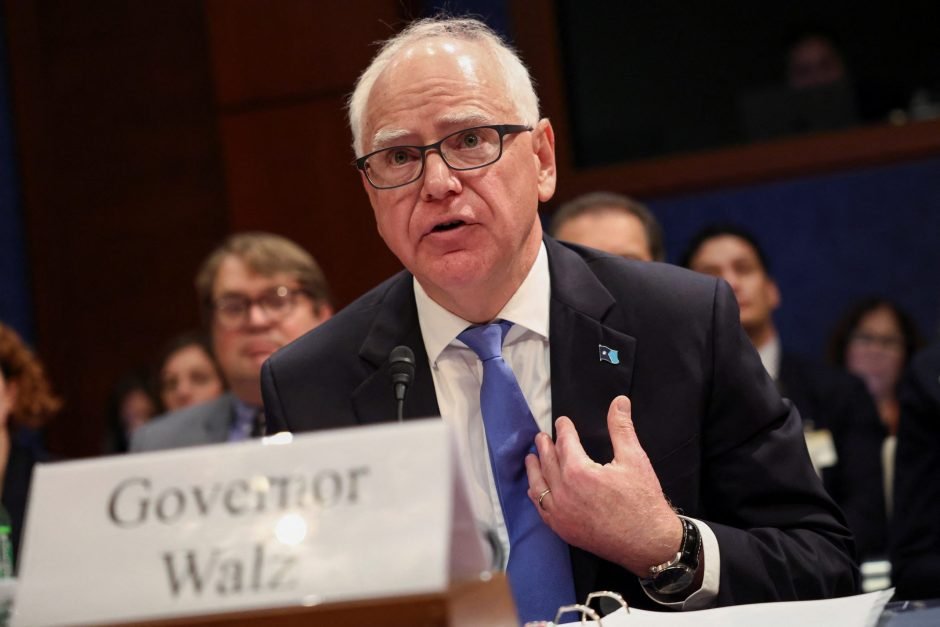
WASHINGTON – Gov. Tim Walz and two other governors were attacked by GOP lawmakers who said their state policies toward immigrants promote lawlessness during a contentious hearing Thursday that was short on serious questioning and long on self-serving political speeches.
Walz and Govs. Kathy Hochul of New York and JB Pritzker of Illinois were asked to appear before the panel a month ago to defend what GOP lawmakers say are “sanctuary” policies. But they were given little time to respond to a barrage of questions and accusations that the governors were responsible for violent crimes committed by immigrants in their states.
At one point during the hearing Walz said, “I did not realize how much anger there was here.”
In his opening remarks, House Oversight and Government Reform chairman Rep. James Comer, R-Ky., focused on attacking Walz for saying Immigration and Customs Enforcement (ICE) agents are behaving like the Gestapo and for Minnesota’s decision to provide undocumented immigrants with driver’s licenses and state-funded health care.
“Donald Trump’s modern-day Gestapo is scooping folks up off the streets,” Walz said at a University of Minnesota Law School graduation last month.
In his opening statement, the highest-ranking Democrat on the panel, Rep. Stephen Lynch of Massachusetts, echoed Walz’s comment when he spoke of the ICE’s detainment of Turkish foreign student Rümeysa Öztürk.
“When you compare the old films of the Gestapo grabbing people off the streets of Poland and you compare them to those nondescript thugs who grabbed that graduate student it does look like a Gestapo operation,” Lynch said.
Walz insisted Minnesota is not a sanctuary state.
“Minnesota’s Legislature has passed no such law making Minnesota a sanctuary state and I have not signed any such legislation into law,” the governor said in his opening statement.
Connecticut, Illinois, California and other states have approved “Trust Acts” that limit local law enforcement’s cooperation with ICE unless an individual has been convicted of a serious crime, preventing the needless detention of people for immigration purposes. Minnesota has not passed such a law.
Walz said Minnesota cooperates with federal authorities “in a number of ways,” including asking the immigration status of convicted felons and sharing that information with the Department of Homeland Security, a policy that is codified by Minnesota state law.
Walz also said Minnesota complies with federal requests to detain an immigrant when those requests are accompanied by a judicial warrant.
“Minnesotans are angry with what they see happening to their neighbors,” Walz said, because they are watching people being “snatched up” and sent to overseas prisons without due process.
Related: Walz readies for coordinated GOP attack in hearing over ‘sanctuary’ policies
Walz said he was “disappointed” that “at a crucial inflection point in U.S. history,” Congress was misspending its time and energy holding a hearing to attack the policies of Minnesota and other “blue” states.
Democrats on the panel, meanwhile, attacked the Trump administration for its aggressive deportation policy, which has snared law abiding immigrants and even U.S. citizens, and for its decision to send National Guard troops and Marines to Los Angeles, which has experienced a week of protests over ICE actions in the state.
Rep. Tom Emmer, R-6th District, who is not a member of the oversight panel, was invited as a special guest and joined the GOP effort to batter the witnesses, focusing on Walz.
“You claim you are not a sanctuary state, but you provide free health care, college education and driver’s licenses to illegal aliens,” Emmer said in an angry tirade.
Emmer also said Walz’s comments about the Gestapo was “inflammatory language that put a target on the backs of federal agents.”
Walz was given little time to respond, but managed to ask Emmer “which of the questions do you want me to answer first?”
The post GOP lawmakers attack Walz for ‘sanctuary’ policy at testy Capitol Hill hearing appeared first on MinnPost.
WASHINGTON — Environmentalists who were hoping a parliamentarian rule would upend efforts to open the Superior National Forest to sulfide mining were rewarded when the U.S. House had to abandon those efforts.
The “big beautiful” budget bill approved by the U.S. House last month would have removed a Biden administration moratorium on 225,000 acres of the Superior National Forest, a watershed for the Boundary Waters Canoe Area Wilderness.
That moratorium hurt mining company Twin Metals’ efforts to mine for copper, nickel and cobalt in Superior National Forest. But the provision to lift the moratorium that was in the mega-budget bill, championed by Rep. Pete Stauber, R-8th District, was scrapped in a technical corrections bill the House released late Tuesday.
The reason? The budget bill is being considered under the reconciliation process, which means the legislation cannot be filibustered in the U.S. Senate, but is subject to what is known as the “Byrd rule,” which mandates that reconciliation bills be limited to provisions that have a budgetary impact.
So, the House was forced to make some technical corrections to the bill the chamber approved last month and the lifting of the moratorium was one of them.
The budget reconciliation bill would have also reestablished mineral leases sought by mining company Twin Metals that had been canceled and approved new leases for mineral extraction and helium production in the national forest. Those provisions were also eliminated.
Taconite is mined in Superior National Forest, but environmentalists say mining for copper, cobalt, nickel and other metals in the forest would produce tailings that can be dangerous sources of toxic chemicals that would pollute the Rainy River Watershed — and the Boundary Waters.
So, environmentalists, who had hoped the Byrd rule would eliminate what they considered a serious threat to the Boundary Waters, were ecstatic that the provisions that concerned mining in Minnesota were tossed.
“The Boundary Waters is a natural treasure, ecological wonder, and vital economic driver,” said Ingrid Lyons, executive director of Save the Boundary Waters, in a statement. “America’s most visited Wilderness has narrowly escaped inclusion in the Big Beautiful Bill, which would have almost guaranteed irreversible pollution from toxic copper mining in this fragile ecosystem.”
But Lyons, and other environmental groups that are fighting mining interests on the Iron Range, said threats to the Boundary Waters still exist. President Donald Trump is expected to use his executive authority to reverse the Biden administration moratorium in Superior National Forest and could use emergency powers to expedite mineral leases.
“Make no mistake, the threats in Washington to our public lands are far from over,” Lyons said.
Related: Minnesota conservationists sound alarm on mounting threats to Boundary Waters
Sen. Tina Smith, D-Minn., and Rep. Betty McCollum, D-4th District, have introduced legislation that would make the moratorium in the national forest permanent and implement other measures that would hinder mining in the watershed of the Boundary Waters.
In a statement, Smith said the move to delete the mining provision “marks a victory in our fight to protect the Boundary Waters.”
“I vowed to do everything in my power to protect this precious place. Today, I am relieved to announce that we were successful in forcing Republicans to drop this language attacking the Boundary Waters from the bill.”
A spokesperson for Smith said the senator has argued that the mining provisions in the budget bill violated the Byrd rule for a number of reasons, “the primary one being that it was written to benefit one single global mining company and the rules don’t allow for that.”
But the spokesman said the mining provisions “were so poorly written that it was thrown out on a technical jurisdictional question.”
“In the end, Republicans realized there were so many problems with this provision it wasn’t worth the fight,” the spokesperson said.
Rep. Pete Stauber
Minnesota’s mining industry decried the stripping of the provisions, a move it said will hinder efforts to mine copper and other minerals on the Iron Range.
“While the decision to remove language that confirmed the importance of Minnesota’s mineral potential was due to a niche, procedural provision unique to the U.S. Senate, unfortunately it delays those first steps needed to ensure Americans can build and power tomorrow with responsibly mined minerals,” said Julie Lucas, executive director of MinningMinnesota.
Stauber’s office did not immediately respond to a request for comment.
The House technical corrections package also scrapped an effort to end increased food aid for households that also qualify for heating and cooling assistance and provisions that would allow $2 billion for Pentagon military intelligence programs and $500 million to develop missiles.
The House is expected to vote on the package of modifications to the budget bill late Wednesday.
The post Mining provisions environmentalists say threaten Boundary Waters scrubbed from ‘big, beautiful’ bill appeared first on MinnPost.
MADISON, Wis. (AP) — A government watchdog group in Wisconsin filed a lawsuit Wednesday seeking to prohibit billionaire Elon Musk from ever again offering cash payments to voters in the battleground state like he did in this spring’s hotly contested Supreme Court race.
Musk handed out $1 million checks to three Wisconsin voters, including two in person just days before the state’s April 1 Supreme Court election, in an effort to help elect conservative candidate Brad Schimel. Two weeks before the election, Musk’s political action committee, America PAC, offered $100 to voters who signed a petition in opposition to “activist judges,” or referred someone to sign it.
It was all part of more than $20 million that Musk and groups he support spent on the race in an effort to flip majority control of the Wisconsin Supreme Court. More than $100 million was spent by both sides, making it the most expensive court race in U.S. history.
Musk’s preferred candidate lost to Democratic-backed Susan Crawford by 10 percentage points. Her victory cemented the 4-3 liberal majority on the Wisconsin Supreme Court until at least 2028.
Since that election, Musk announced he will spend less on political campaigns and then feuded publicly with President Donald Trump after exiting his administration.
The lawsuit filed Wednesday in state court by the Wisconsin Democracy Campaign says that Musk’s actions create “the risk that Wisconsin elections will become an open auction, where votes go to the preferred candidates of the highest bidders and the election outcome is determined by which candidate has a patron willing and able to pay the highest sum to Wisconsin voters.”
The lawsuit says that Musk and two groups he funds violated prohibitions on vote bribery and unauthorized lotteries and says his actions were an unlawful conspiracy and public nuisance. The lawsuit asks the court to order that Musk never offer similar payments to voters again.
A spokesperson for Musk’s America PAC did not immediately return a text message Wednesday seeking comment.
There is another Wisconsin Supreme Court election in April. In November 2026, control of the Legislature and the governor’s office, as well as the state’s eight congressional districts, will be decided.
The latest lawsuit was filed on behalf of the Wisconsin Democracy Campaign and a pair of voters by the liberal Wisconsin-based Law Forward and the Washington-based Democracy Defenders Fund. It was filed against Musk, his group America PAC that announced the petition and the Musk-funded group United States of America Inc. that made the payments.
The court that Crawford joins in August could ultimately hear the new lawsuit. Crawford would almost certainly be asked to recuse from the case, and if she did, the court would be left with a 3-3 split between conservative and liberal justices.
The current court, also controlled 4-3 by liberals, declined to hear a similar hastily filed lawsuit brought by Wisconsin’s Democratic attorney general seeking to block Musk’s handing out of two $1 million checks to voters two days before the election.
Two lower courts rejected that lawsuit before the Supreme Court declined to hear it on procedural grounds.
Musk’s attorneys argued in that case that Musk was exercising his free speech rights with the giveaways and any attempt to restrict that would violate both the Wisconsin and U.S. constitutions.
Musk’s political action committee used a nearly identical tactic before the presidential election last year, offering to pay $1 million a day to voters in Wisconsin and six other battleground states who signed a petition supporting the First and Second amendments. A judge in Pennsylvania said prosecutors failed to show the effort was an illegal lottery and allowed it to continue through Election Day.
A federal lawsuit filed in Pennsylvania in April alleges that Musk and his political action committee failed to pay more than $20,000 for getting people to sign that petition in 2024. America PAC on Monday filed a motion to dismiss. That case is pending.
The post Wisconsin lawsuit seeks to ban Elon Musk from offering $1 million checks to voters appeared first on MinnPost.