Category: USA

  • GOP is underdog in Minn. senate race, but here’s who’s trying to flip seat

    GOP is underdog in Minn. senate race, but here’s who’s trying to flip seat

    WASHINGTON – Minnesota has a rare open Senate seat, which is tantalizing to state Republicans, even as some are hoping for a more robust field of candidates for retiring Sen. Tina Smith’s Senate seat.

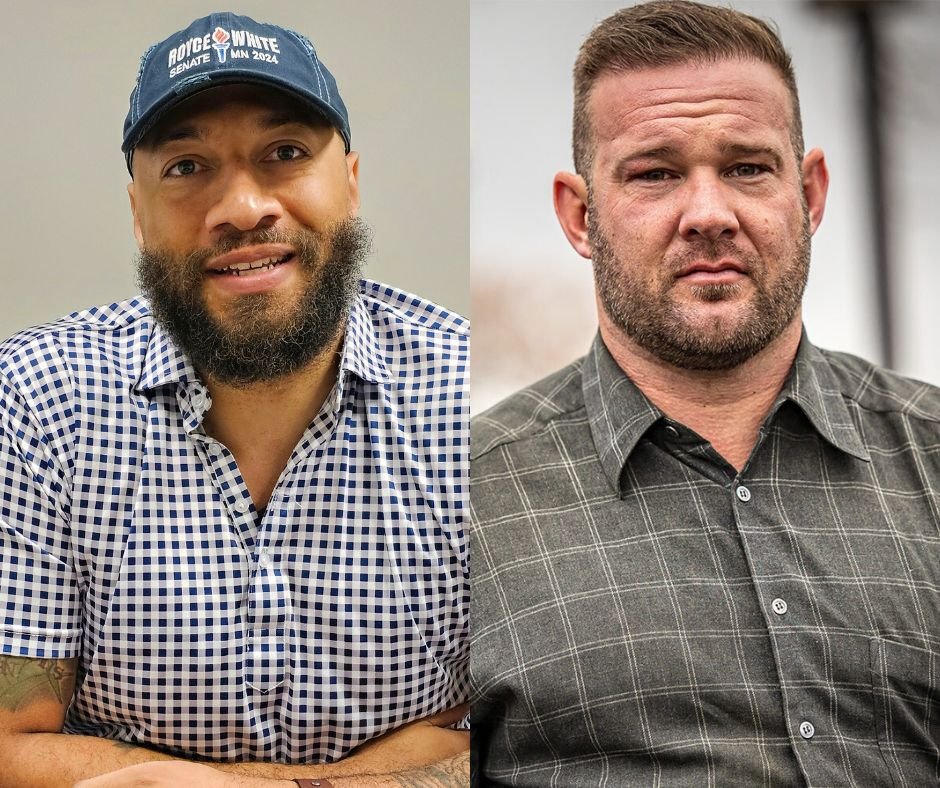
    There are two major declared GOP candidates in the race, former NBA player Royce White and Adam Schwarze, a former Navy SEAL.

    Although White has run for office before — most recently against Sen. Amy Klobuchar last year — he has not held political office. Neither has Schwarze.

    White, who has caused controversies for comments on his podcast and interviews that have been called antisemitic and misogynistic, is a passionate critic of “establishment Republicans.” He is running as a disrupter who would challenge a “corrupt” U.S. Senate.

    “I can’t count 10 (senators) whom I would actually trust,” White told MinnPost.

    Although Schwarze hasn’t run for political office before, he thought about challenging Klobuchar last year. But he said Klobuchar’s popularity and centrist stance deterred him from taking her on.

    “She’s very Minnesota,” Schwarze said of Klobuchar. So, he turned his attention to challenging Smith, who he says is too progressive for the state and, in his view, would have been more beatable.

    But Smith decided to retire — setting up a political scramble in the state.  

    The opportunity to run for a rare open Senate seat may attract additional candidates. The only question is who?

    “It’s very early in the process. Many candidates don’t want to announce until after the State Fair,” said Jill Vujovich-Laabs, acting political director of the Minnesota Republican Party.

    A Republican has not held statewide office in Minnesota since Tim Pawlenty won his second term as governor in 2006.

    The Cook Political Report rates the open Minnesota seat “lean Democratic,” which does not put it out of reach for the GOP but will make the party’s candidate an underdog to whomever wins the Democratic primary.

    The main Democratic candidates are Lt. Gov. Peggy Flanagan and Rep. Angie Craig, D-2nd District, both of whom are amassing sizable war chests and have strong name recognition.

    In some ways, the state’s Republican establishment is more interested in the governor’s race and in the chance to defeat Democratic Gov. Tim Walz if he decides to run for a third term than in helping Republicans keep control of the U.S. Senate.  

    But Vujovich-Laabs said GOP party activists are also watching and waiting to see who else will enter the race and compete for the party’s nomination when conventions are held in the spring.

    “I know the delegates are looking forward to surveying all the candidates,” Vujovich-Laabs said.

    A ‘wait-and-see’ attitude

    Last month, Rep. Tom Emmer, R-6th District, gave a shout out to former NBA star Willie Burton during a GOP forum last month in Carver County, referring to the professional athlete as a possible candidate for Smith’s seat.

    Burton, who was drafted out of the University of Minnesota by the Miami Heat, has said he’s thinking about running.

    And there’s buzz in GOP circles about others who are eyeing a run, including Ryan Wilson, who unsuccessfully ran for state auditor in 2022 and state Rep. Kristin Roberts.

    Tim Lindberg, University of Minnesota Morris political science professor, said “there’s probably a wait-and-see attitude” among other candidates who might be more competitive with whomever becomes the Democratic candidate in next year’s general election.

    That’s especially true for those who are now holding elected office, and don’t want to risk being out of a job if they lose the Senate race, he said.

    Lindberg also said those Republican candidates are weighing the lure of a rare open U.S. Senate seat against political currents that may not favor them.

    One is that the party in control of the White House generally loses seats in Congress in midterm elections, Lindberg said.

    Another reason to be cautious is the political climate in Minnesota, which hasn’t voted a Republican into statewide office in decades. And the last Republican to hold a statewide seat, former governor Pawlenty, was “relatively moderate” and “very different” than the current Donald Trump-led GOP, Lindberg said.

    “We haven’t seen a strong Republican candidate running statewide other than Trump,” he said.

    It would be tough, but not impossible, for Democrats to seize control of the U.S. Senate in next year’s general election.

    Currently, the GOP has a 53-47 advantage in the U.S. Senate. While there are more Republicans than Democrats running for re-election next year, most of those Republican senators are in safe seats, as are most of the Democrats.

    But Democrats are facing a real battle to keep their seats in Georgia and Michigan, while Republicans have a “toss up” race in North Carolina.

    Yet there are other states that are not considered solidly Republican or Democratic, like Minnesota and including New Hampshire, Maine, Ohio, Texas and Iowa, could decide control of the U.S. Senate in the next Congress.

    “Every Senate race is a national race because of the narrow majority,” White said.

    White, 34, is sanguine about his loss to Klobuchar, whom he said had the advantages of serving three terms in the U.S. Senate and  a “Minnesota nice” persona.

    He said he’s doing some things differently in his race for Smith’s seat. One is that he has gotten into the race much earlier than he did when running for Klobuchar’s seat.  Another is that he plans to campaign more broadly in the state — and buy television ads as well as digital ads.

    White also said he’s taking the long view.

    “The permanent political class is deeply entrenched and it’s going to take multiple elections to defeat those people,” he said.

    Meanwhile, Schwarze, 41, thinks his moderate stance will win him a U.S. Senate seat because voters are exhausted by extremism in both parties. 

    “I want to make politics boring again,” Schwarze said.

    He believes DFL party activists will favor Flanagan, who is more progressive than Craig, at April’s convention and even next August’s primaries. And he thinks his centrist positions will win the day.

    “There’s going to be an off ramp for someone like me,” Schwarze said.

    Although he has never run for office before, Schwarze was the spokesman for a political action committee called Conservatives for a Strong America after he retired from the Navy.

    White, a Trump loyalist, has attacked Schwarze because signed a document at a fundraiser that said he was a member of the “leadership team” that supported former U.N. Ambassador Nikki Haley when she ran against  Trump in the Republican presidential primary.

    Schwarze said signing the document, which was published by the Minnesota Star Tribune, did not make him an activist for Haley’s candidacy. 

    But he also said “I’m not MAGA.”

    “I’m my own person,” Schwarze said. “But I do support most of Trump’s policies.”

    As far as his biggest difference with White?

    “I’m not divisive,” Schwarze said.

    The post GOP is underdog in Minn. senate race, but here’s who’s trying to flip seat appeared first on MinnPost.

  • ‘We want transparency’: Minnesota’s Congressional delegation comments on Epstein files

    ‘We want transparency’: Minnesota’s Congressional delegation comments on Epstein files

    MORGAN, Minn. — Minnesota GOP congressmembers said Tuesday they support transparency but did not commit to specific action to force the release of more information from the federal Jeffrey Epstein investigation.

    “I’ve always said we want transparency,” said Rep. Pete Stauber, R-8th District, when asked about the Epstein files ahead of a forum at Farmfest, an annual agriculture showcase in southern Minnesota.

    The Epstein story has dogged GOP members of Congress since a Justice Department memo last month said a review “revealed no incriminating ‘client list’” for the wealthy financier’s alleged underage sex trafficking ring. The memo appeared to contradict previous claims promoted by Attorney General Pam Bondi, who reportedly told President Donald Trump in May that his name appeared multiple times in the Epstein documents. 

    Stauber said he’s confident the Trump administration will be transparent, and he questioned why the issue is being pushed by Democrats now.

    “Right now I think it’s people using it politically,” Stauber said. “The reason I say that is the last four years they weren’t pushing for it to be released. It’s unfortunate it’s becoming political. But anybody that was involved in any illegal activity, as a former law enforcement officer, I want them held to the highest count of the law.” 

    Rep. Brad Finstad, R-1st District, initially took umbrage at a question about Epstein.

    “First of all, what does that have to do with Farmfest?” he said, before answering with, “I’m all for releasing and getting anything and everything out there that is available to the public that makes our country safer and smarter.”

    Obviously, he said, protecting the victims needs to be a consideration. That’s a reason House Speaker Mike Johnson, R-La., and other congressional Republicans say they oppose lawmaker efforts to seek the “Epstein file.” 

    “But transparency is good for everybody,” Finstad said.

    The official agenda of the day was farming issues, from provisions in the “One Big Beautiful Bill Act” to tariff strategies to the likelihood of the approval of an overdue Farm Bill this year.

    MinnPost chose to also ask Minnesota congressmembers about the Epstein files, as public opportunities for constituents and the media to pose questions have been scarce in recent months.  

    The Justice Department has promised to seek information from Epstein grand juries in Florida and New York and release what “is credible.” But most Americans, including a majority of Republicans, do not approve of the Trump administration’s handling of the Epstein files and want a fuller release of information.

    That includes Rep. Angie Craig, the sole Democrat on the forum panel with Stauber, Finstad and Rep. Michelle Fischbach, R-7th District. The 2nd District Congresswoman, also a Senate candidate, said she would “absolutely” sign a discharge petition to force a vote on legislation to release information related to Epstein.

    “I’ll be signing it as soon as I get back,” she said. “We got sent home from Congress literally because they didn’t want that discharge petition to ‘ripen.’”

    A discharge petition usually ripens by being held in a committee for a number of days. A majority of the House would need to sign the petition to bypass the committee and bring a bill directly to the floor.  

    Regardless of whose names are in Epstein files, Craig said she wants the information to see the light of day.

    “America should know that 100%,” she said. “And I can’t believe any member of Congress would oppose making the Jeffrey Epstein files public.”

    On Epstein’s longtime girlfriend, Ghislane Maxwell, who was convicted of sex trafficking and sentenced to prison in 2022, Craig said the Trump administration hasn’t been transparent about its communications with her. The Justice Department interviewed Maxwell and her attorneys last month.

    The Justice Department also transferred Maxwell from her prison in Florida to a minimum-security facility in Texas. 

    Democrats say Trump will pardon Maxwell in exchange for favorable testimony. 

    “I would be adamantly opposed to Trump or any president pardoning a child sexual trafficker,” Craig said.

    Fischbach’s office didn’t respond to MinnPost’s request for comment on the Epstein files. As a member of the House Rules Committee, she voted against amendments that would’ve forced a broad release of information about Epstein.

    MinnPost reporter Ana Radelat contributed to this story.

    The post ‘We want transparency’: Minnesota’s Congressional delegation comments on Epstein files appeared first on MinnPost.
  • D.C. Memo: Klobuchar, Smith seek seek funding for hundreds of local projects via earmarks

    D.C. Memo: Klobuchar, Smith seek seek funding for hundreds of local projects via earmarks

    WASHINGTON — Minnesota’s congressional delegation is seeking millions of dollars in special funding for local projects despite growing doubt they will survive.  

    Those projects, known as earmarks, are supported by both Democrats and Republicans, even among the toughest GOP budget cutters. 

    Sen. Amy Klobuchar has submitted 290 requests for funding for a wide array of road and water and sewer projects, police and fire stations and other local projects. MinnPost data reporter Shadi Bushra determined the Democratic senator’s requested projects would cost a total of nearly $890 million.

    They include more than $3.9 million for the expansion and renovation of a YMCA in Alexandria: $3 million for a fire hall in Spring Grove; $6 million for a new police station in Le Sueur, and $7 million for a new building at St. Paul’s Como Park Zoo.

    Klobuchar also asked for $73 million for a new lock and dam system in Richmond Township that would be constructed by the U.S. Corps of Engineers; $8 million for the replacement of bridges in Lakeville; $8.6 million to rehabilitate the “iconic” Hennepin Avenue suspension bridge in Minneapolis, and much, much more.

    “From upgrading critical infrastructure and improving public safety to investing in childcare, I worked with local leaders across the state to secure this important funding ,” Klobuchar said in an emailed statement. “Once completed, these projects will improve the quality of life for Minnesotans.”

    Sen. Tina Smith’s 289 requests include $3 million to improve a sanitary system in Plummer, $6.6 million for a new emergency services center in Paynesville and $17 million for a flood prevention program to prevent flooding of “valuable agricultural land” in Marshall County.

    Smith also requested $25 million for a new well and expansion of a wastewater treatment pond in Dennison; $1.9 million to fund a commercial truck driving program at Minnesota State College in Winona and $9 million for a new recycling center in Columbia Heights.

    Bushra determined Smith’s earmark requests totaled nearly $958 million.

    U.S. House members are also requesting earmarks.

    Although the Senate this week worked to push forward appropriations bills which would allow for many of the nearly 14,000 requests submitted in that chamber alone — it’s likely Congress won’t be able to pass all,  and  maybe even any, of the spending bills that fund the federal government.

    So, the likelihood of a stopgap funding bill that would not have earmarks but would keep the government running past the end of the federal fiscal year, Sept. 30, is growing. So is the likelihood of a shutdown.

    Last year, hundreds of millions of dollars in earmark appeals Minnesota’s federal lawmakers fell victim to Congress’ inability to approve appropriations bills.

    Earmarks were banned in 2011, victims of a series of scandals and an anti-spending movement fueled by the Tea Party, which considered such projects wasteful “pork.”

    But proponents pushed for their return, arguing that they account for a tiny fraction of the federal budget, help to fund much-needed projects and foster consensus-building and bipartisanship in Congress as lawmakers across the political spectrum work toward common goals.

    So, earmarks were resurrected in 2022, in a limited way. Renamed “community funding projects,” lawmakers were required to certify that neither they nor their immediate families have any financial interest in projects they requested and to make their requests public.

    ‘Liberation Day’ is here (maybe)

    Rep. Kelly Morrison, D-3rd District, joined other Democrats this week in warning of the dangers of President Donald Trump’s tariffs, which continued to cause confusion as the Aug. 1 deadline for imposing the new levies came into focus.

    She traveled to small businesses across her district this week to discuss “the devastating consequences these reckless tariffs will have on their businesses and costs for consumers,” a release from the lawmaker’s office said. 

    “Over the past few months I’ve heard from countless small business owners who are terrified about what Trump’s tariffs will mean for their businesses,” Morrison said in a video she posted on X.

    Trump backed off his threat of 50% levies on imported copper, exempting refined metals, which are the mainstay of international trading. That resulted in a plunge in U.S. prices for copper. 

    Trump also gave Mexico another extension from the imposition of his “Liberation Day” tariffs and cut a deal with the European Commission to drop proposed tariffs on European Union countries from 30% threatened months ago to 15%.

    Other deals announced in recent days have been with Japan, the Philippines, Indonesia, and Vietnam.

    Brazil will be hit by 40% tariffs, but many Brazilian products, including orange juice, will be exempt.

    When Trump initially paused his plan to impose “reciprocal” tariffs on friends and foes in April, his top trade advisor, Peter Navarro, promised the president was going to achieve “90 (trade) deals in 90 days.”

    But that was more than 100 days ago and only two deals have been finalized, one of which is with China and that agreement expires in two weeks.

    All the other deals the Trump administration has announced have been essentially rough drafts — none have been finalized.

    Meanwhile, judges on the U.S. Court of Appeals for the Federal Circuit who heard a case this week on the legality of the proposed levies were skeptical that Trump can use emergency powers and bypass Congress to impose tariffs.

    Still, the threat of tariffs, as well as increased inflation in June, provoked the Federal Reserve to continue to freeze interest rates.

    In case you missed it:

    • Data reporter Shadi Bushra reported on why there is a nearly unprecedented number of special elections to seats in the state legislature this year. The state hasn’t seen that many special elections — six — since 1994.
    • President Trump’s pick to be the next U.S. Attorney in Minnesota, veteran attorney Daniel Rosen, had bipartisan support for his candidacy in a key committee. But his confirmation is hostage to a very partisan fight in the Senate over fast tracking some of Trump’s nominees.
    • Reporter Matthew Blake wrote about a little noticed immigration-related provision in the One Big Beautiful Bill Act that would strip Medicaid and other government health care services from refugees and others granted asylum status.
    • President Trump attacked the Minnesota Star Tribune’s coverage of his immigration policies just days after Rep. Tom Emmer did the same as the president continues to put Minnesota officials, agencies and institutions in the bull’s eye.

    This and that

    A reader asked “how is it possible that Ghislaine Maxwell is the only one serving time in prison for the entire Epstein saga?”

    “Congress should fully investigate the Epstein case since Trump’s Justice Department can’t be trusted to do so,” the reader added.

    Please keep your comments, and any questions, coming. I’ll try my best to respond. Please contact me at aradelat@minnpost.com.

    The post D.C. Memo: Klobuchar, Smith seek seek funding for hundreds of local projects via earmarks appeared first on MinnPost.

  • Trump attacks Star Tribune coverage of immigration policy

    Trump attacks Star Tribune coverage of immigration policy

    WASHINGTON – The Minnesota Star Tribune has become President Donald Trump’s latest foe, though White House criticism of the Pulitzer-winning newspaper is much more than the latest attack on press freedom, analysts say.

    A White House press release condemning several stories in the Star Tribune about the deportation of immigrants – as well as months-old column about the cost to Americans of deporting low-paid workers – is also part of a Trump campaign to target Minnesota institutions, said Steven Schier, a political scientist and Carleton College professor emeritus. 

    “(Gov. Tim) Walz’s prominence as a vice-presidential candidate running against Trump has raised the profile of the state as a potential target,” Schier said.

    The press release attacking the Star Tribune, released late Tuesday, said the newspaper’s coverage of Trump immigration policies was “taking their (sic) cues from serial illegal immigrant defender Tim Walz and the state’s other ‘pro-sanctuary politicians,’ who would rather see killers, rapists, and gangbangers left on the streets than sent back where they belong.”

    The Trump administration has launched investigations into the state’s voter rolls and the hiring practices of the Minnesota Department of Human Services and is suing the state over its policy of offering in-state tuition rates and scholarships to immigrant students.

    “I think Minnesota has made the short list of enemies,” Schier said.

    Institutions and government agencies in other “blue states,” including California, Massachusetts, New York and Illinois, have also come under attack by the Trump administration. Especially over the issue of immigration. 

    Walz was called before a GOP-led congressional panel in June, along with the governors of New York and Illinois, to be grilled about their “sanctuary status.” All  of the witnesses testified that they were following federal law with their policies towards immigrants.

    To David Schultz, a political science professor at Hamline University, the paper’s location in a city that is represented by progressive Democrat Rep. Ilhan Omar, and has a socialist candidate running for mayor, was also a lightning rod.

    “Trump is doing everything he can for people he perceives as enemies,” Schultz said.

    Like other “blue state” governors who have come under attack, Walz is also considered a possible candidate for the White House in 2028. “Walz is possibly the only one who didn’t realize there was a ‘kick me’ sign on his back for the Trump administration,” Schultz said.

    Walz’s office did not provide immediate comment on the White House’s latest attack.

    The Star Tribune provided a brief statement, which said: “We stand by our reporting and don’t have any additional comment.”

    ‘An unprecedented escalation’

    It’s one thing to attack political opponents and those who belong to an opposing party and another to slam a respected newspaper in the nation’s heartland, analysts say.

    Trump vilified independent media as “fake news” during his first term in office, but in the past six months, Trump has waged an all-out war on the media.

    He has sought to dismantle Voice of America, the federally funded news agency that broadcasts news to nations with limited press freedom. He has succeeded in having Congress cut funding for National Public Radio (NPR) and the Public Broadcasting Service (PBS).

    The Trump administration has also revived complaints about the 2024 election coverage by ABC, CBS and NBC and won a settlement from CBS for charges of “news distortion.”

    Trump is also suing the Wall Street Journal for a story related to the Jeffrey Epstein saga and has threatened other media outlets on Truth Social.

    “But what we have here is an unprecedented escalation,” said Aimee Edmondson, an associate dean in the Scripps College of Communications at Ohio University who teaches First Amendment law.

    That’s because the Star Tribune does not have the reach or profile of the other media outlets that have come under attack, Edmondson said. “Singling out a regional journalistic outlet for fearless and accurate journalism shows that they are playing to the base with this,” she said.

    The only other time Trump has attacked a regional newspaper was when he threatened the Des Moines Register for publishing a poll just before Election Day that showed his support was underwater in the key state of Iowa.

    She also said Trump’s attacks on the mainstream media have been very effective because they are counting on the fact that many MAGA supporters don’t read unbiased news.

    Edmondson also said the attack on stories about Trump immigration policies may be an indication of White House worries about a weakening of support for those policies, and objections to the way deportations are being carried out.

    “They are probably panicking behind the scenes because the White House is concerned about poll results regarding the handling of immigration,” she said.

    Last week, U.S. Rep. Tom Emmer, R-6th District, seemed to bash the Star Tribune for another story it ran about Trump’s immigration policy.

    “While the local, worthless media in my home state tries to spin that as a bad thing, the brave men of ICE are getting the worst of the worst illegal aliens in Minnesota off the streets,” Emmer said.

    It’s unclear, but it seems Emmer may have been angered by a story that said more than 40% of the immigrants arrested under Trump had no criminal history, and several studies have found that undocumented immigrants commit crimes at a lower rate than U.S. citizens.

    The post Trump attacks Star Tribune coverage of immigration policy appeared first on MinnPost.
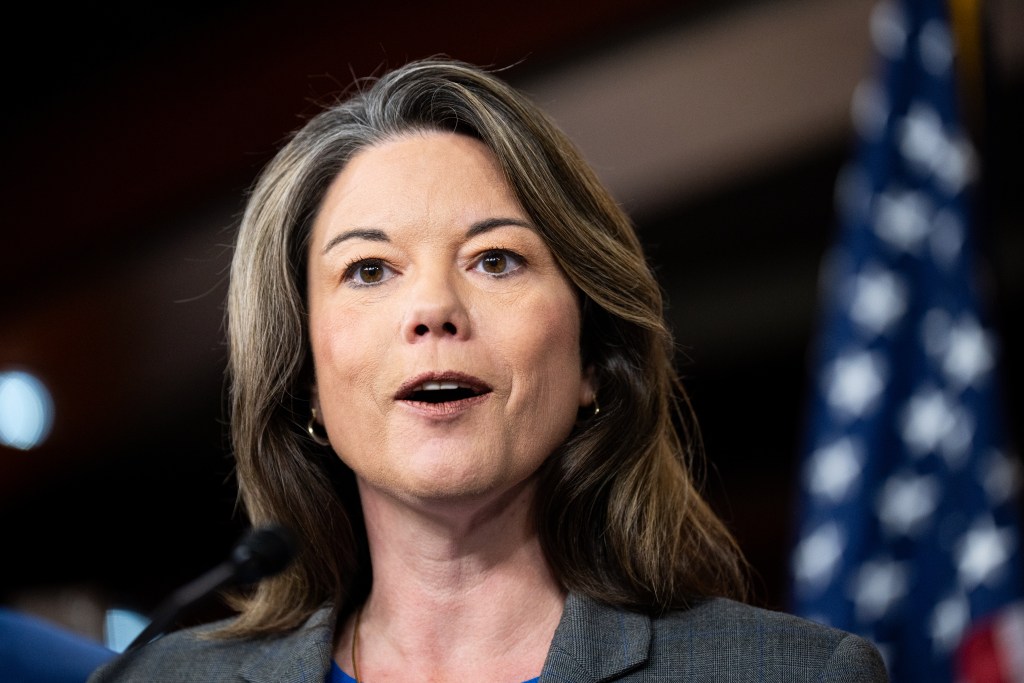
  • U.S. Attorney candidate Daniel Rosen caught in partisan fight over Trump nominees

    U.S. Attorney candidate Daniel Rosen caught in partisan fight over Trump nominees


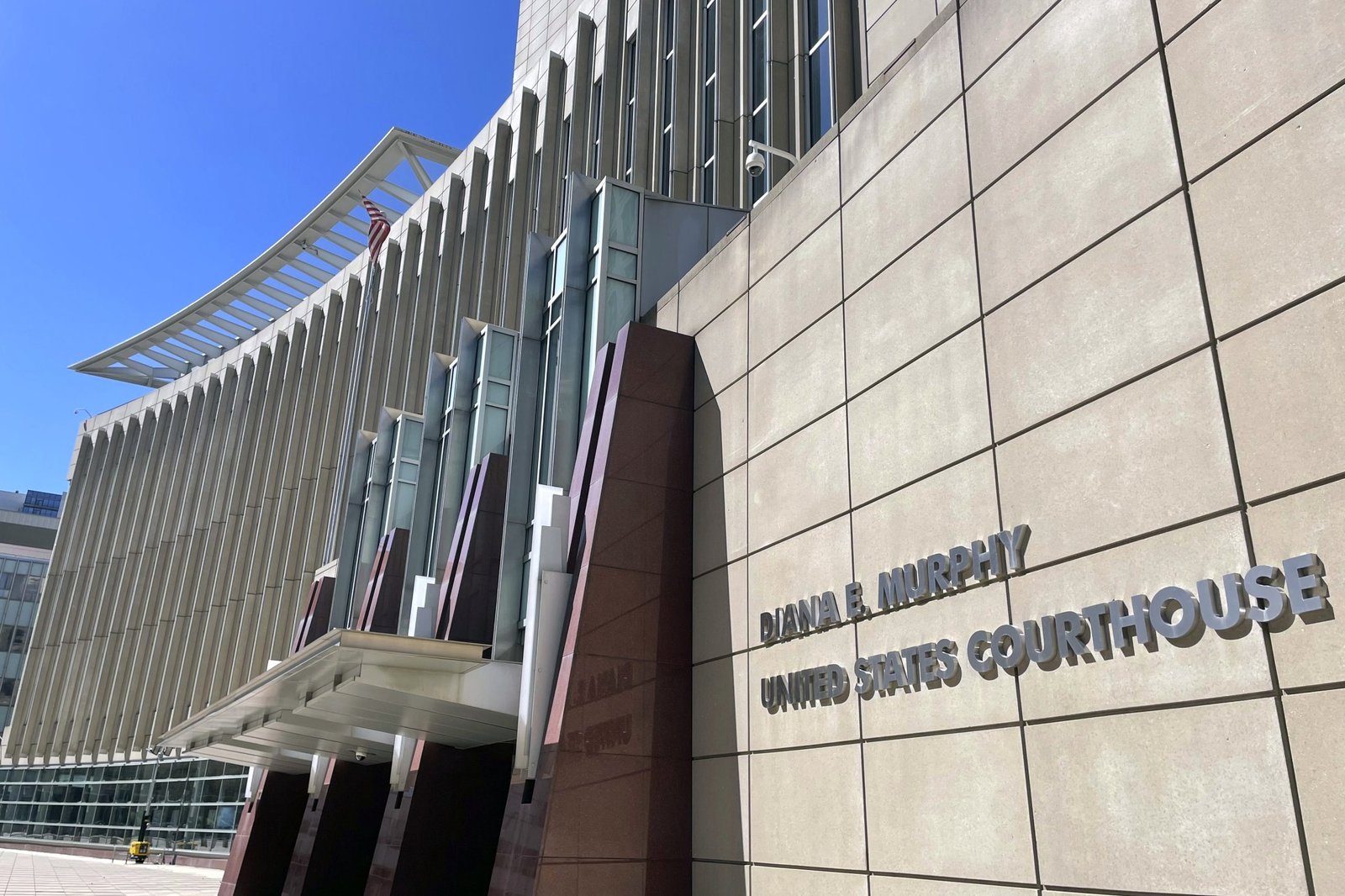
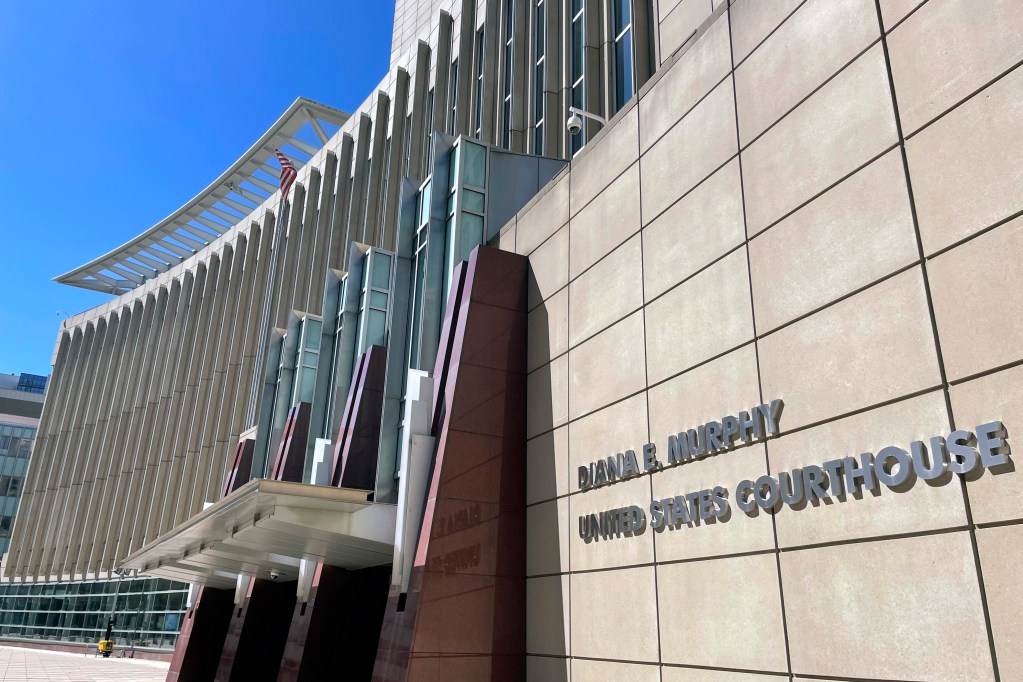
    a view of The Diana E. Murphy U.S. Courthouse is seen in Minneapolis, Thursday, June 13, 2024.

    WASHINGTON – It’s been a waiting game for Daniel Rosen, President Donald Trump’s choice to be the new U.S. attorney in Minnesota, one that began in May when he was nominated and could last a while more. 

    The White House hoped to install a slate of more than 30 U.S. attorneys Trump nominated early in the year, including Rosen, before the U.S. Senate disbands for its August break.

    But, while Rosen’s nomination was approved by the Senate Judiciary Committee last week, none of the slate of candidates have received a confirmation vote in the full U.S. Senate.

    Democrats are stalling confirmations of Trump nominees by insisting on procedural votes on each nominee, including non-controversial ones like Rosen, whose candidacy was supported by Sen. Amy Klobuchar, D-Minn., a member of the Judiciary Committee. 

    Klobuchar said Rosen “has committed to us that he will continue the office’s tradition of excellence.”

    The slowdown prompted frustrated Senate Majority Leader John Thune on Monday to issue a veiled threat to postpone the Senate’s August recess until the logjam is broken and the “historic level of obstruction” is ended.   

    “Democrats have not allowed a single civilian Trump nominee to pass by unanimous consent or voice vote — even when Democrats have ultimately ended up supporting the nomination in significant numbers,” Thune said.

    Dan Rosen

    Rosen, a seasoned attorney with experience before juries but none as a prosecutor, was nominated in early May. His lack of prosecutorial experience is rare for someone chosen to be the federal government’s top cop in Minnesota. But Rosen would inherit an office with dozens of attorneys, many of them with experience prosecuting criminals.

    Rosen was included on a short list of recommended candidates drafted by Minnesota’s GOP members of Congress, led by Rep. Tom Emmer, R-6th District. That list included veteran lawyer Ronald Schutz and Erica MacDonald, who served as U.S. attorney during Trump’s first term, but the president chose Rosen. 

    A week later, however, Rosen’s nomination hit a speed bump when Senate Majority Leader Charles Schumer, D-N.Y., announced a hold on all judicial nominees until the White House released more information about the offering by Qatar of the gift of a jet to Trump.

    On Tuesday, Josh Sorbe, a spokesman for Sen. Dick Durbin of Illinois, the top Democrat on the Judiciary Committee, said his boss “is exercising the same powers that then-Sen. (JD) Vance used to hold U.S. attorney nominees for more than a year during the Biden Administration.”

    But Sorbe also said Durbin “continues to discuss a path forward” to end the impasse.

    A bitter fight in the Senate over the nomination of Emil Bove, a candidate for a seat on the U.S. Court of Appeals for the 3rd Circuit who represented Trump in three of the four criminal cases against him, may hamper efforts to find common ground.

    Bove has been subject to whistleblower complaints that he violated laws and Justice Department regulations in his short tenure as a DOJ official. But the Republican-led Senate confirmed him Tuesday night. 

    If a deal can’t be reached, or if Rosen’s confirmation vote isn’t part of the deal to move nominees forward this week, the earliest he could be confirmed is in September – and it could be even later.

    Biden-appointee U.S. Attorney Andrew Luger resigned about a week before Trump returned to the White House this year. So, until a replacement for Luger is confirmed, the job has fallen on acting U.S. Attorney Joe Thompson, who has won recognition for his prosecution of Vance Boelter, the man accused of killing state Rep. Melissa Hortman and her husband, Mark.  

    Rosen as a bartender in a Chinese restaurant 

    Rosen, who preferred not to speak on the record for this story as his confirmation vote is pending, has used the time his nomination has been in limbo to move out of a condo he valued to be worth $2.4 million in Key Biscayne, Florida, to the Twin Cities.

    Rosen, 59, said in his answers to a questionnaire from the Senate Judiciary Committee that he has worked as an attorney in Minnesota since 1993, for various law firms and also on his own.

    He also listed as previous jobs a stint as a bartender at a Chinese restaurant in Minnetonka and service in the Navy and U.S. Naval Reserves.

    Several things are made clear in Rosen’s answers to the questionnaire. Among them is that he has a passion for eminent domain cases.

    He represented landowners in a case against Hennepin County over the site that would become the stadium for the Minnesota Twins, a case that was settled for $29 million and is believed to be the top eminent domain case in the state.

    Rosen is also passionate about the Jewish religion and Israel. He is a former board member of the Jewish Community Relations Council of Minnesota and the Dakotas and the former Minnesota Chair of the American Israel Public Affairs Committee (AIPAC) and a current member of the organization’s national council.

    As the primary lawyer for the Orthodox Jewish Community in Minneapolis, Rosen cited as one of the cases he took pro bono, or without charging a fee, one in which he represented the families of two men who were murdered and whose bodies were slated for autopsies.

    In observance of Jewish principles, the families of those victims objected to the autopsies and, by seeking a restraining order, came to an agreement with the coroner in which he received the information he needed without having to do the dissection that is typically involved in an autopsy.

    Rosen has also been involved in GOP politics. He was the campaign attorney for Kendall Qualls, a businessman who ran for governor in 2021 but dropped out of the race after he failed to win his party’s endorsement. Qualls is running for governor again.

    Asked by the Judiciary Committee to list all media interviews, Rosen cited a 2oo6 Jewish Telegraphic Agency story about Minnesota Attorney General Keith Ellison’s first run for Congress in which Rosen was quoted.

    At the time, Ellison was taking heat for his relationship with Nation of Islam leader Louis Farrakhan, who was notorious for his antisemitic remarks. Ellison told the Jewish Telegraphic Agency that “I should have examined the message of Mr. Farrakhan closer.”

    But Rosen told the Jewish Telegraphic Agency he dismissed Ellison’s explanation of his post-college association with Farrakhan as disingenuous.

    “You cannot as an adult and as a lawyer have a lengthy association with an organization with the rhetoric of the Nation of Islam and deny that during that time you understood that the organization was anti-Semitic without either insulting the intelligence of the Jews or owning up to a distinct lack of intelligence on your own part,” said Rosen, who also attacked Ellison’s writings at the University of Minnesota Law School as antisemitic.

    Rosen, who also told the Judiciary Committee he made similar remarks to Newsweek, would have to work with Ellison from time to time on certain prosecutions.

    There seems to be no doubt about Rosen’s skills as a lawyer. U.S. District Judge Eric Tostrud was once opposing counsel on a 10-year case brought by an association of nurse anesthetists against a group of doctors and hospitals. The case was settled just as it was about to go before a jury in 2023.

    Tostrud, who represented the doctors and hospitals, said he developed a “great relationship” with Rosen during that long legal battle and a great respect for his opponent’s lawyering skills.

    “He had the chops to understand complex legal questions,” Tostrud said. “I thought he did substantive work and was very professional.”

    The post U.S. Attorney candidate Daniel Rosen caught in partisan fight over Trump nominees appeared first on MinnPost.

  • Report: Minnesota tribes waiting on nearly $700 million in federal funding

    Report: Minnesota tribes waiting on nearly $700 million in federal funding

    WASHINGTON — Since President Donald Trump began his second term in office, the relationship between the nation’s tribes has frayed, largely because $24 billion earmarked for Indian Country, including nearly $700 million to Minnesota tribes, has been threatened.

    The federal government has a special relationship with the nation’s Indian tribes and has treaty obligations to provide certain funding.

    But problems with this relationship began with a sweeping announcement by the Office of Management and Budget soon after Trump was sworn in in January that halted federal grants nationwide, throwing tribal programs into turmoil.

    Although the grant freeze was temporarily halted, some of the money meant for the nation’s tribes has yet to be released, and the Trump administration continues to push to cut off the grants, especially those that implement what the administration has determined are DEI-related or focused on climate change.

    “The crux of this whole thing is that the Trump administration is insisting that the (grant cuts) are based on race or climate priorities, but this funding is not based on the priorities of the Trump administration. They are because of treaty obligations,” said Robert Maxim, a Brookings Institution fellow who co-authored a recent report on the funding crisis and is a member of the Massachusetts’ Mashpee Wampanoag nation.

    Maxim’s report said a recent analysis of grant cancellations from the Department of Government Efficiency (DOGE) determined that nearly a third of all cancelled grant programs contain the word “tribal,” making it the single most-commonly flagged keyword in the database.

    The nation’s tribes, and organizations that help tribal members, receive federal funds from nearly every agency. In Minnesota, the largest grants are awarded for Indian Health Care, tribal self-government, education and child care and broadband expansion. But there are also dozens of smaller grants that fund programs on and off the reservation.

    For example, the Minneapolis American Indian Center said $4 million of an Environmental Protection grant that would have helped with the center’s renovation was rescinded.

    In total, there is nearly $697 million in outstanding payments to Minnesota tribes.

    There are stories about other tribal-run programs that have been cut back or temporarily halted. But Minnesota’s tribes have said little about Trump’s efforts to cut off federal money.

    “Prairie Island will continue monitoring the president’s budget changes for any negative impacts to the Tribe, but we have nothing to report at this time,” said Eric Pehle, a spokesman for the Prairie Island Indian Community.

    !function(){“use strict”;window.addEventListener(“message”,function(a){if(void 0!==a.data[“datawrapper-height”]){var e=document.querySelectorAll(“iframe”);for(var t in a.data[“datawrapper-height”])for(var r,i=0;r=e[i];i++)if(r.contentWindow===a.source){var d=a.data[“datawrapper-height”][t]+”px”;r.style.height=d}}})}();

    In fact, none of the state’s 11 tribes that were contacted responded to requests for information on the impact of the disruption of federal money on tribal operations.

    “A lot of individual tribes are reluctant to talk about this,” Maxim said. “They are wary of getting on the bad side of the Trump administration.”

    Instead of being “confrontational,” Maxim said many tribes are in  a “wait and see” mode.

    An unexpected freeze

    Minnesota joined 22 other states, led by New York, in suing Trump to release the unexpected freezing of federal funding in January.

    The Trump administration rescinded the order and a court also temporarily blocked the unexpected and wide-ranging freeze to federal funding by OMB. But, in the coming months, a federal appeals court will hear arguments for the case that will decide whether the executive branch has legal authority to unilaterally suspend federal grants.

    Tribes, however, have a different standing from other American communities that may be impacted by the termination of federal grants.

    Tribes have a government-to-government relationship with the United States, “which maintains trust and treaty obligations that require it to meet the economic and social needs of Tribes and Native American people,” the Brookings report said.

    “As such, when the federal government withholds funding from Tribes and Native American people, it’s not just a policy change. It’s a violation of those commitments — putting essential services at risk and undermining Tribal governing capacity,” the report continued. 

    !function(){“use strict”;window.addEventListener(“message”,function(a){if(void 0!==a.data[“datawrapper-height”]){var e=document.querySelectorAll(“iframe”);for(var t in a.data[“datawrapper-height”])for(var r,i=0;r=e[i];i++)if(r.contentWindow===a.source){var d=a.data[“datawrapper-height”][t]+”px”;r.style.height=d}}})}();

    According to the Mille Lacs Indian Museum, from 1785 to 1867 the United States signed more than 40 treaties with the Ojibwe people.

    In exchange for land and mineral rights, the museum said that tribes retained hunting, fishing, and harvesting rights on the land that they had ceded. The treaties also included annuity payments, debt payments, and payments to individuals of the tribes from the federal government.

    “There are certain obligations that the federal government owes tribes in perpetuity,” said Shannon Geshick, executive director of the Minnesota Indian Affairs Council, a state agency that serves as a liaison between the state and Minnesota’s tribes.

    Maxim of Brookings said the tribe’s treaty rights is something that “is inconsistently understood by the Trump administration.” 

    The 1975 Indian Self-Determination and Education Assistance Act increased federal funding to tribes by allowing tribes to contract with the federal government to administer programs previously managed by the Bureau of Indian Affairs (BIA) and other agencies.

    Besides eliminating tribal grants, Trump’s One Big Beautiful Bill Act cuts to Medicaid, food stamps and other social welfare programs are likely to impact tribal members. And Trump also wants to make other reductions in federal spending, including cutting federal operational funds for tribal colleges by about 90%, from $182 million to just over $22 million.

    While some tribes are adopting a “wait and see” attitude when it comes to attempts to claw back federal funding, others are taking a more proactive stance.

    For instance, in June several tribes joined a group of nonprofits and local governments in suing the Trump administration over its termination of federal environmental justice and climate justice grants that were established under former President Biden’s Inflation Reduction Act.

    The post Report: Minnesota tribes waiting on nearly $700 million in federal funding appeared first on MinnPost.
  • D.C. Memo: Epstein saga continues to dominate Washington, unnerve Trump

    D.C. Memo: Epstein saga continues to dominate Washington, unnerve Trump

    WASHINGTON — President Donald Trump was supposed to take a victory lap this week after Congress made his agenda law through the One Big Beautiful Bill Act and he made some progress negotiating new trade treaties with several countries.

    Instead, Trump and his allies tried to tamp down an escalating rebellion over the release of information about those involved with Jeffrey Epstein, who was accused of trafficking underaged girls.

    Furor over the Trump administration’s claims that there was no new information to be had about Epstein — although Trump had campaigned on promises to release a “client list” — led to the shutdown of all business in the U.S. House and an early start to Congress’ August recess.

    When asked this week by Axios reporter Hans Nichols about the paralysis in the House, Rep. Tom Emmer, R-6th District, joined Trump and other members of the House GOP leadership in saying there was nothing to see behind the Epstein curtain.

    “This is totally an issue that is a non-issue,” Emmer responded. “You guys are making it an issue, and not you, Hans, but the media. It’s kind of funny. If it was so important, then why weren’t Democrats clamoring for this for the four years under Biden?”

    Facing a backlash over the Epstein files, Trump has tried to shift the blame to his predecessors, including Biden.

    “You know, these files were made up by Comey,” Trump told reporters, referring to former FBI Director James Comey. “They were made up by Obama. They were made up by Biden.”

    Yet the two federal investigations into Epstein occurred from 2006-2008 and 2019, during the George W. Bush and first Trump administrations — not during the tenures of presidents Barack Obama or Joe Biden and not while Comey was leading the FBI.

    House Speaker Mike Johnson curtailed work in the House after Republicans on the Rules Committee — which includes Rep. Michelle Fischbach, R-7th District — were increasingly uncomfortable with voting against Democratic amendments that would force the release of information about Epstein.

    Republicans on the Rules Committee, including Fischbach, did clear the way for House consideration of a non-binding resolution. But that resolution may never be subject to a House vote, especially since the House won’t reconvene until September.

    Epstein hosted parties with teenage girls for rich and powerful men on two islands he owned in the Virgin Islands. Awaiting trial on sex trafficking charges, he was found lifeless in his jail cell, a death officials determined was a suicide, although many in the MAGA camp are convinced Epstein was murdered.

    In an effort to quell the anger about Epstein, the Justice Department on Thursday planned to interview longtime Epstein girlfriend Ghislaine Maxwell, who was convicted of sex trafficking and other charges and sentenced to 20 years in prison in 2022. Just days ago, the Justice Department asked the U.S. Supreme Court to reject her appeal seeking to overturn her conviction for assisting in Epstein’s alleged crimes.

    Trump also tried to tamp down the furor over Epstein by instructing the Justice Department to release select, “credible” information from the Epstein grand juries. But a judge in Florida declined to release the information and judges in New York overseeing the government’s request to unseal the grand jury transcripts there are not likely to do so either.

    Trump has also sued the Wall Street Journal for a story it published about a birthday greeting from Trump to Epstein that featured a bawdy drawing. Trump called the drawing a “fake.” The WSJ responded this week by releasing the drawing to the public and running a separate story that says Trump’s name appeared several times in undisclosed official information about Epstein.

    Attorney General Pam Bondi touched off the crisis about two weeks ago when she said there was no Epstein “client list” and no evidence that the disgraced financier did not commit suicide.

    Trump also tried to change the conversation this week through a series of often bizarre postings on Truth Social, including a faked video of former President Obama being arrested.

    That was followed up by a bizarre press conference on Wednesday by National Intelligence Director Tulsi Gabbard in which she accused Obama and his deputies of manufacturing a “false” intelligence analysis to show Russia tried to help Trump win the 2016 election.

    Obama and former officials in his administration have dismissed the allegations as baseless and say Gabbard is trying to help Trump distract the public from the Epstein mess.

    In any case, questions about the identities of men who may have sexually abused underaged girls procured by Epstein are going to continue to roil Trump. 

    On the same day as Gabbard’s news conference, key Republicans joined Democrats on a House Oversight subcommittee vote Wednesday to subpoena Maxwell for a deposition and the Department of Justice for files related to Epstein.

    Emmer: Minnesota media is ‘worthless’ 

    Not only did Rep. Tom Emmer bash the national media for its continued coverage of the Epstein scandal this week, the GOP lawmaker also took aim at his home state journalists for its coverage of immigration.

    At a Tuesday GOP leadership press conference, Emmer, who is House majority whip, decried the shooting of a New York policeman by two undocumented immigrants and lauded a sharp uptick in Immigration and Customs Enforcement (ICE) arrests in Minnesota since Trump assumed office, which have reportedly doubled.

    “While the local, worthless media in my home state tries to spin that as a bad thing, the brave men of ICE are getting the worst of the worst illegal aliens in Minnesota off the streets,” Emmer said.

    It’s unclear, but it seems Emmer may have been angered by a recent Minnesota Star Tribune story that also said more than 40% of the immigrants arrested under Trump had no criminal history, and several studies have found that undocumented immigrants commit crimes at a lower rate than U.S. citizens.

    House Speaker Mike Johnson and other GOP participants at the press conference tried to sell what they say are the virtues of the “One Big Beautiful Bill Act.”

    But when Johnson invited questions from the journalists in the room, most asked about the release of information about Epstein.

    In other news:

    • President Trump’s clawback of funds to National Public Radio was aimed at punishing what he viewed as an elite, Democratic listenership. But Brian Arola shows that it will be small, rural radio stations in Minnesota that feature a lot of local content that will be hurt the most by the rescission.
    • Matthew Blake wrote that the long wait to be able to legally buy pot in Minnesota may be coming to an end because, by the end of the year, the state could see up to 150 non-tribal marijuana dispensaries open their doors to the public. 
    • The race for the 2nd Congressional District seat that will be vacated by Democratic Rep. Angie Craig is expected to be competitive, not only in the general election but also in the primaries. The gloves have come off already in the fight to be the GOP candidate in that election. 
    • Winter Keefer explains why a June raid by federal agents on a Mexican restaurant has become a sticking point for Minneapolis Mayor Jacob Frey in his bid for reelection.  

    This and that

    A reader commented on an excellent and recent Minnesota Star Tribune story about a 100-year-old bird-banding program that would be ended or severely curtailed by the “big beautiful” act that will advance President Trump’s agenda.

    “Talk about undercutting one of the advantages of rural living,” the reader said. “These cuts will also impact birds flying migratory routes in red states.”

    Please keep your comments, and any questions, coming. I’ll try my best to respond. Please contact me at aradelat@minnpost.com.

    The post D.C. Memo: Epstein saga continues to dominate Washington, unnerve Trump appeared first on MinnPost.
  • The race for Angie Craig’s US House seat is heating up

    The race for Angie Craig’s US House seat is heating up


    a closeup shot of a politician speaking

    WASHINGTON – Democrats have an early edge when it comes to fundraising for the most competitive congressional race in Minnesota – one that is likely to become one of hottest and costliest midterm contests in the nation, as well.

    Former state senator and former mayor of Lakeville Matt Little, a Democrat, raised the most money in the campaign for Rep. Angie Craig’s 2nd District seat in the first six months of this year, a little more than $306,000. Craig is not running for reelection because she is making a bid for retiring U.S. Sen. Tina Smith’s seat.

    Another Democrat running for Craig’s seat, state Sen. Matt Klein, reported raising a little more than $214,000 in campaign cash to the Federal Election Commission.

    And Republican Tyler Kistner, a former Marine who tried unsuccessfully to unseat Craig in both 2020 and 2022, has raised a little more than $100,000 for his third try for the 2nd District seat.

    A portrait of a smiling man
    Republican Tyler Kistner, who tried unsuccessfully to unseat U.S. Rep. Angie Craig in 2020 and 2022, has joined the race to fill her open 2nd District seat. Credit: Tyler Kistner/Handout via REUTERS

    Kistner has a new GOP rival. State Sen. Eric Pratt announced Monday that he is running for Craig’s seat, too.

    That brought an immediate attack from Kistner, who accused Pratt of not being supportive enough of President Donald Trump. Kistner had help from MAGA activist Laura Loomer, who posted a video of a 2016 debate in which Pratt said he was disappointed in the two candidates running for the White House that year.

    Pratt’s campaign said the new congressional candidate voted for Trump in 2016 and again in 2024.

    But the race is on for the support of GOP activists in the district, who tend to be ultraconservative and will determine who wins the nomination in the party’s convention in April.

    “Eric Pratt represents the same tired, weak-kneed Republicanism that voters across this country have already rejected,” Kistner said in a statement.  

    Meanwhile, Pratt indicated he’ll run on bread-and-butter issues and avoid “political theater.”

    “President Trump is making strides and bringing energy back to our economy, but families in CD2 still need someone who can win in November to keep that momentum going,” Pratt said in a release announcing his campaign. 

    a politician sits in a suit
    State Sen. Eric Pratt, R-Prior Lake, is the second Republican to join the field of candidates vying for the 2nd Congressional District’s open seat. Credit: Minnesota Star Tribune via ZUMA Press Wire

    The splintering of GOP support could lead to a replay of the 2024 election in which Joe Teirab and Tayler Rahm vied to be the GOP candidate to challenge Craig.

    With the help of party activists in the 2nd District, Rahm, the more conservative candidate, won his party’s endorsement, touching off a bitter GOP primary fight that benefitted Craig, who decisively won reelection in what is considered a “purple” district.

    Incumbents have an advantage

    There are other congressional contests shaping up in Minnesota.

    Rep. Brad Finstad, R-1st District, has drawn a Democratic challenger, Jacob Johnson, who is a longtime teacher in the Rochester public school system.

    Finstad, who has not had a serious challenge since he was first elected to Congress in 2022, raised a little over $518,000 in campaign cash for his reelection.

    Johnson has not raised as much, only about $264,000, but that’s a good start for a congressional challenger.

    Nearly half of Finstad’s campaign money, about $223,000, was raised from political action committees, or PACs, including AIPAC, the House Conservative Fund, and many PACs representing agricultural interests, including the Cargill PAC. Finstad has as seat on the House Agriculture Committee.

    a man holds a fish as he smiles at the camera
    Democratic candidate Eric Osberg is running against Republican Michelle Fischbach in the 7th District.

    Meanwhile, Rep. Michelle Fischbach, R-7th District, has handily outraised Democratic opponent Erik Osberg. Fischbach, who has a seat on the coveted Ways and Means Committee, raised about $310,000 for her re-election. Osberg has raised about $49,000.

    Minnesota’s other congressional incumbents have not drawn a challenger – at least not yet.

    But all of the lawmakers have continued to raise campaign cash – a good way to fend off rivals.

    Freshman Rep. Kelly Morrison, D-3rd District, has raised about $395,000.

    Rep. Betty McCollum, D-4th District, has raised more than $478,000. And Rep. Ilhan Omar, D-5th District, who always draws a well-funded challenger, has raised more than $1.3 million.

    On the GOP side, Rep. Pete Stauber, R-8th District, raised about $615,000 and had about $778,000 in cash on hand as of June 30.

    The fundraising king of the Minnesota congressional delegation, however, was Rep. Tom Emmer, R-6th District, who has the No. 3 slot in the House GOP leadership as majority whip.

    Emmer raised $3.9 million for his re-election. That war chest will help Emmer be a player in next year’s mid-term elections, allowing him to donate to GOP candidates across the nation and expand his influence.

    Kistner is among those likely to benefit from Emmer’s help. “They communicate and (Emmer) knows what our campaign is up to,” said Kistner political director Billy Grant.

    Dems lead in generic ballot

    Next year, all 435 U.S. House seats and 35 U.S. Senate seats – including the one vacated by Tina Smith – will be up for grabs. The results of the 2026 midterm elections will determine Trump’s ability to continue to push his legislative agenda through Congress.

    In an April study, The University of Virginia’s Center for Politics has determined that the GOP is in danger of losing its slim hold on the House – and could also lose control of the Senate.

    The midterm will be the “first opportunity for voters across the entire nation to express their views on the drastic changes in the role of the executive branch and in many government policies during the first two years of the second Trump administration,” according to the center.

    Historically, midterm elections generally result in losses for the party in the White House. But the Center for Politics also says the slight preference right now for Democrats over Republicans in a generic ballot – as of now – will translate into GOP losses in Congress, even as the Democratic Party has low favorability ratings in some national polls.

    The post The race for Angie Craig’s US House seat is heating up appeared first on MinnPost.
  • D.C. Memo: Dem candidates top GOP rivals in Senate race fundraising

    D.C. Memo: Dem candidates top GOP rivals in Senate race fundraising

    WASHINGTON – It’s still early in the campaign cycle, but Democratic candidates for retiring Sen. Tina Smith’s seat have a decided political cashraising advantage over their GOP rivals.

    Rep. Angie Craig, D-2nd District, has raised the most money to run for Smith’s seat, nearly $2.5 million, according to fundraising reports of the first six months of the year filed with the Federal Election Commission.

    Some of Craig’s political cash was transferred from her House campaign account. But Craig also raised nearly $1.3 million from individuals and about $157,000 from political action committees, including the Xcel Energy Employees Committee PAC, the General Mills PAC and the Fox Corporation PAC.

    Related: Campaign for Rep. Craig’s House seat heats up

    Democratic rival Lt. Gov. Peggy Flanagan raised more than $1.3 million for her Senate bid. Unlike Craig, Flanagan has pledged not to accept any corporate PAC money.

    But Flanagan, a member of the White Earth Nation, has raised some of her campaign cash in Indian country. Her campaign finance records show Flanagan received $3,500 donations from New York’s Oneida Indian Nation, Arizona’s Ak-Chin Indian Community, the Tulalip Tribes of Washington and the Tunica-Biloxi Tribe of Louisiana.

    Flanagan also hosted a June fundraiser at Foxwood Resorts and Casino in Connecticut, which is owned by the Mashantucket Pequots, one of the nation’s wealthiest tribes.

    “Lt. Governor Flanagan is proud of her grassroots support from over 20,000 donors, including tribal nations that are backing her because of her ability to deliver on economic issues that impact peoples’ daily lives and the historic nature of her campaign,” said campaign spokeswoman Alexandra Fetissoff.

    In contrast, the two Republicans who have declared their candidacy for Smith’s seat have — at least so far — raised far less money.

    Former NBA player Royce White, who made an unsuccessful bid for Sen. Amy Klobuchar’s seat last year, raised a little more than $500,000. And former Marine Adam Schwarze, who is also a Republican, reported raising about $218,000.

    Fundraising for Smith’s seat is in the very early stages. Last year, the winner of a Senate seat spent an average of $28 million. And the prospect of winning an open seat is likely to cost even more.

    ‘Damaging’ cuts to MPR

    The Senate and House this week passed a bill that cut money that had already been appropriated by Congress for the Corporation for Public Broadcasting – which helps fund National Public Radio and PBS – and a series of State Department programs, including international disaster assistance.

    The $1.1 billion elimination of funding for CPB would hurt NPR, but would have an even greater impact on smaller, local public broadcasting stations.

    For instance, the bill would cut about $5 million from Minnesota Public Radio (about 6% of the station’s budget), which has already suffered a $1 million reduction in funding from the state.

    “We are concerned that this is damaging to Minnesota Public Radio,” aid Anissa Rogness, MPR’s director of public affairs, about the cut to CPB funding.

    Rogness said the station “has hopes for new revenue streams” but may have to make changes in staffing and programming. “Minnesota Public Radio will still be here,” Rogness said. “But it will look different.”

    All Democrats and two Republicans voted against the recissions package in the Senate, but the measure was approved on a 51-48 vote. Sen. Tina Smith missed the vote because she was hospitalized after feeling ill on Wednesday evening, but her vote against the bill would not have stopped its approval.

    Smith’s office said the 67-year-old senator was hospitalized “out of an abundance of caution” after the senator experienced chest pains. But Smith said she was given a clean bill of health.

    Before the House voted on the bill largely along party lines early Friday, Smith and 45 House Democrats, including Rep. Betty McCollum, D-4th District; Rep. Ilhan Omar, D-5th District; and Rep. Kelly Morrison, D-3rd District, wrote to President Donald Trump, asking him to abandon the attempt to claw back funds.

    “The cuts to CPB in the recission package undermine the public media that Americans rely on for unfettered access to information, educational programming for kids, cultural programming, and nationwide emergency alerting,” the lawmakers’ letter said.

    Trump not sweet to corn growers 

    The nation’s corn growers are pushing back against President Trump’s attempt to change Coca-Cola’s formula, which for years has used high-fructose corn syrup to sweeten the popular drink.

    “I have been speaking to Coca-Cola about using REAL Cane Sugar in Coke in the United States, and they have agreed to do so. I’d like to thank all of those in authority at Coca-Cola. This will be a very good move by them — You’ll see. It’s just better!” Trump said in a post on Truth Social.

    Coca-Cola, however, has not said it will make the change from corn syrup, which the company began using in 1980, to cane sugar.

    Nevertheless, the president’s social media post has alarmed the nation’s corn growers.

    The Minnesota Corn Growers declined comment, preferring instead to point to a statement issued on Thursday by Corn Refiners Association President and CEO John Bode.

    “Replacing high fructose corn syrup with cane sugar doesn’t make sense,” Bode said. “President Trump stands for American manufacturing jobs, American farmers, and reducing the trade deficit. Replacing high fructose corn syrup with cane sugar would cost thousands of American food manufacturing jobs, depress farm income, and boost imports of foreign sugar, all with no nutritional benefit.”

    According to the U.S. Department of Agriculture, about 410 million bushels of U.S. corn was used to make high fructose corn syrup in 2024. 

    In case you missed it:

    – State government reporter Matthew Blake took a close look at the administrative burdens in Minnesota that will likely stem from Medicaid changes in the “big beautiful” bill passed by Congress.

    – We shared a piece from The New Lede on proposed Republican cuts to the U.S. Environmental Protection Agency in an appropriations bill working its way through the U.S. House.

    –We also ran a piece by The Grist on how consumers can make use of green energy tax credits, which were eliminated in the “big beautiful” bill, before they disappear.

    –And data reporter Shadi Bushra wrote about the potential impact of federal immigration policy on Minnesota’s population.

    This and that

    A reader was angered that a Minnesota Republican failed to vote to advance legislation that would force the U.S. Justice Department to make public information related to its investigation of Jeffrey Epstein, a financier and convicted sex offender who died while awaiting trial in 2019. 

    “Will you be asking Rep. (Michelle) Fischbach (MN CD7) why she voted to block release of the Epstein files?” the reader asked.

    As a member of the Rules Committee, Fischbach voted this week with most Republicans on the panel to block a vote on the legislation sponsored by Rep. Ro Khanna, D-Calif., that would force the release of information sought by a segment of the MAGA world.

    President Donald Trump had long accused the Biden administration of hiding a list of Epstein clients and promised during his campaign for the White House to release that list. But now Attorney General Pam Bondi says no such list exists.

    Fischbach, who is notoriously media shy, could not be reached for comment. But other GOP lawmakers said the legislation would force the release of sensitive material that could harm Epstein’s victims.

    The uproar over the release of the so-called “Epstein files” among Trump’s supporters, a rebellion that has been fanned by Democrats, shows no signs of abating, even after an increasingly frustrated Trump asked the MAGA crowd to drop the issue.

    For instance, Trump on Truth Social called those fixated on the case “PAST supporters” and declared “I don’t want their support anymore!”

    Trump seemed to soften his position on the release of information about athe investigation into accusations Epstein trafficked girls who were as young as 14, after the Wall Street Journal reported that a “bawdy” letter bearing Trump’s signature was included in an album of letters Epstein received for his 50th birthday. Trump called the letter a “fake.”

    On Thursday night, Trump instructed Bondi to release all “pertinent” grand jury testimony related to Epstein’s case “subject to court approval.”

    Please keep your comments, and any questions, coming. I’ll try my best to respond. Please contact me at aradelat@minnpost.com.

    The post D.C. Memo: Dem candidates top GOP rivals in Senate race fundraising appeared first on MinnPost.
  • D.C. Memo: It’s tariff time for Trump – again

    D.C. Memo: It’s tariff time for Trump – again

    WASHINGTON – With his “big, beautiful” budget now law, President Donald Trump turned his attention again to another priority – tariffs.

    Trump threatened a new 50% tariff on imported copper, a move decried by environmentalists who oppose efforts to establish new copper and nickel mines on the Iron Range.

    “Broad tariffs on copper, including those from key allies, artificially inflate demand and falsely justify expanding domestic copper mining that would irreparably damage America’s favorite wilderness – the Boundary Waters Canoe Area Wilderness,” said Ingrid Lyons, executive director of Save the Boundary Waters, in a statement.

    Trump also threatened Brazil with 50% tariffs if the government of leftist President Ignacio Lula da Silva does not end a “witch hunt” against former right-wing president Jair Bolsonaro, a political ally of Trump who is facing trial for allegedly attempting to stage a coup.

    Trump also sent letters threatening tariffs of up to 40% to 21 other nations, many in Asia and the Middle East, that would go into effect on Aug. 1 unless deals were cut with his administration.

    Unlike the chaos unleashed on the stock market after Trump announced tariffs on trading partners earlier this year, Wall Street’s reaction this time was much more muted. Perhaps that’s because Trump has threatened many nations with tariffs but imposed a lot fewer.

    The other news this week is that Defense Secretary Pete Hegseth apparently acted without White House authorization when he paused weapons systems to Ukraine last week.

    Trump suggested on Tuesday that Hegseth was not responsible for the decision. Asked during a Cabinet meeting whether he approved of the pause in shipments, Trump avoided a direct response, saying only that the United States would continue to send defensive weapons to Ukraine.

    Pressed again on who authorized the pause, Trump replied, “I don’t know, why don’t you tell me?”

    The incident prompted a whisper campaign in the nation’s capital about whether Hegseth, a former Fox News host with no experience managing a large company or government agency, will remain much longer in his job.

    Hegseth paused weapons to Ukraine without authorization in February and was a key figure in “Signalgate” — a security incident involving high-ranking officials, including Hegseth and National Security Adviser Mike Waltz — in which discussions of a planned military strike on Houthi targets in Yemen were held on an unsecured app. Journalist Jeffrey Goldberg was mistakenly added to the chat and published details about it in The Atlantic.

    GOP Sen. Thom Tillis of North Carolina indicated he had buyer’s remorse about voting for Hegseth’s confirmation to lead the Pentagon. In an interview with CNN on Wednesday, Tillis said the defense secretary appeared “out of his depth as a manager of a large, complex organization.”

    Crypto Week!

    Meanwhile, the fortunes of Rep. Tom Emmer, R-6th District, are rising. As House Majority Whip whose duties focus on rounding up votes for GOP legislation, Emmer was challenged last week to win support for President Trump’s “One Big, Beautiful Bill Act.”

    Once again, Trump stepped in to help persuade recalcitrant ultraconservative “Freedom Caucus” lawmakers to vote for a bill they did not like, this time because the legislation would greatly add to the deficit. Trump also praised Emmer, whom he once called a RINO (Republican In Name Only) who did not deserve to be Speaker of the House when the Minnesota Republican failed in his attempt to win the position in 2023.

    “Minnesota: You have a GREAT Congressman in Tom Emmer. As Majority Whip, he was instrumental in helping us get the “ONE BIG BEAUTIFUL BILL ACT,” the BIGGEST OF ITS KIND ever approved in Congress. He is a fantastic guy with a fabulous wife Jacqueline and family. Thank you to Tom Emmer and family!,” Trump gushed on Truth Social.

    Emmer is set to have another victory as the U.S. House considers his crypto legislation next week, which has been dubbed “Crypto Week” because votes are planned on three industry backed bills.

    The effort, backed by Trump, who launched his own crypto coin shortly before taking office and invited top investors to an exclusive dinner at one of his golf clubs, is aimed at boosting and legitimizing cryptocurrency by establishing regulations for the digital currencies that are weaker than those for traditional financial assets.

    Emmer’s Financial Innovation and Technology for the 21st Century Act (FIT21), was approved by the U.S. House in the last Congress, but never cleared the U.S. Senate. It would classify many digital assets as commodities that would be regulated by the Agriculture Department instead of the Securities and Exchange Commission, an agency that Emmer had bitterly feuded with during the Biden administration.

    But the U.S. House plans to consider a similar bill, co-sponsored by Emmer, next week. Rep. Angie Craig, D-2nd District, is also a sponsor of the Digital Asset Market Clarity Act of 2025. 

    Because of his efforts, Emmer, who established the Congressional Crypto Caucus with Rep. Ritchie Torres, D-N.Y., to mobilize support for crypto currency, has become an industry leader.

    “Tom Emmer’s significance to the crypto market is rooted in his consistent and aggressive push for regulatory clarity,” said a recent post in Blockchain News.

    Omar attacked, again 

    Rep. Ilhan Omar, D-5th District, no stranger to attacks on her Somali background and progressive ideology, was targeted again this week in an Islamophobic and – in this era of escalating political violence – potentially dangerous posting on X by Florida Republican Rep. Randy Fine.

    Omar’s criticism of the invitation to visit Washington, D.C., this week to  “war criminal” Benjamin Netanyahu prompted Fine to write, “I’m sure it’s difficult to see us welcome the killer of so many of your fellow Muslim terrorists.”

    “The only shame is that you serve in Congress,” Fine added.

    The International Criminal Court issued an arrest warrant in November against Netanyahu, Israel’s prime minister, over alleged war crimes in Gaza. The Israeli leader denies the charges.

    Fine’s post prompted condemnation from the House Democratic leadership.

    “The unhinged, racist and Islamophobic comments made by Randy Fine about Rep. Ilhan Omar are bigoted and disgusting,” the Democrats said in a statement. “We are just weeks removed from heinous acts of political violence targeting elected officials in Minnesota for assassination.”

    Fine dismissed their criticism in a subsequent online post, saying the Democratic leaders are sympathizers of extremism.

    In case you missed it:

    -Some Minnesotans stand to win and others stand to lose in President Trump’s “big, beautiful” budget bill, and we tallied up the sides.

    -We also explained how Medicaid cuts in that bill could affect rural hospitals in Minnesota that rely heavily on Medicaid payments.

    -And Matthew Blake wrote about the impact of the bill on Minnesota’s clean energy goals.

    -Meanwhile, Matthew Blake took a look at Minnesota’s mascot law after the Trump administration began a probe of New York state, which has a similar law against the use of American Indian mascots and logos.

    Your questions and comments

    A reader was very critical of the “big, beautiful” budget act’s tax cuts and cuts to social welfare programs.

    “As much as I hate this bill, it doesn’t impact me directly,” the reader wrote. “What it represents is a transfer of wealth away from young people to those who are older and more successful. For example, how many children will go hungry and homeless to finance one year of tax cut for those who are better off … ?”

    Please keep your comments, and any questions, coming. I’ll try my best to respond. Please contact me at aradelat@minnpost.com.

    The post D.C. Memo: It’s tariff time for Trump – again appeared first on MinnPost.