Category: USA

  • D.C. Memo: Kirk shooting ignites partisan rancor in Washington

    D.C. Memo: Kirk shooting ignites partisan rancor in Washington

    WASHINGTON — The nation’s capital reeled this week following the death of Charlie Kirk, which unleashed a partisan clash over the shooting of the conservative activist.

    Kirk, 31, headlined a well-attended event at an outdoor mall at Utah Valley University on Wednesday when he was felled by a single shot, apparently from the roof of a nearby building. Friday morning, Utah authorities and the FBI announced that a suspect was in custody — 22-year-old Tyler Robinson.

    According to videos and accountings of the scene, Kirk was answering a question from the audience that referenced mass shootings involving transgender people when the shot rang out.

    That exchange came two weeks after the shooting at Annunciation Catholic Church by Robin Westman, whose mother said in court documents identified as female.

    “Do you know how many transgender Americans have been mass shooters over the last 10 years?” an audience member asked.

    “Too many,” Kirk replied.

    The questioner then said there had been five in 10 years and asked Kirk how many mass shooters there had been in the last decade.

    “Counting or not counting gang violence?” Kirk replied as the shot that felled him rang out.

    Kirk’s death shocked the nation’s lawmakers, but it was seen through a partisan prism.

    When House Speaker Mike Johnson asked for a moment of silence on Wednesday, the entire U.S. House obliged.

    But afterward, the chamber erupted into a fracas.

    Rep. Lauren Boebert, R-Colorado, called out that there should be a public prayer for Kirk. “I believe silent prayers get silent results,” she said.

    Democrats jeered loudly. Some noted that congressional Republicans had all but ignored a school shooting in Colorado earlier that day. Others called out for Congress to pass stricter gun laws.

    As a huge wave of political violence has been unleashed across the nation, so has the partisan finger pointing.

    Rep. Nancy Mace, R-S.C., told reporters, “Democrats own what happened today.”

    And President Donald Trump blamed “the radical left” for Kirk’s assassination.

    “For years, those on the radical left have compared wonderful Americans like Charlie to Nazis and the world’s worst mass murderers and criminals,” Trump said in a video posted on Truth Social. “This kind of rhetoric is directly responsible for the terrorism that we’re seeing in our country today, and it must stop right now. My administration will find each and every one of those who contributed to this atrocity, and to other political violence — including the organizations that fund it and support it.”

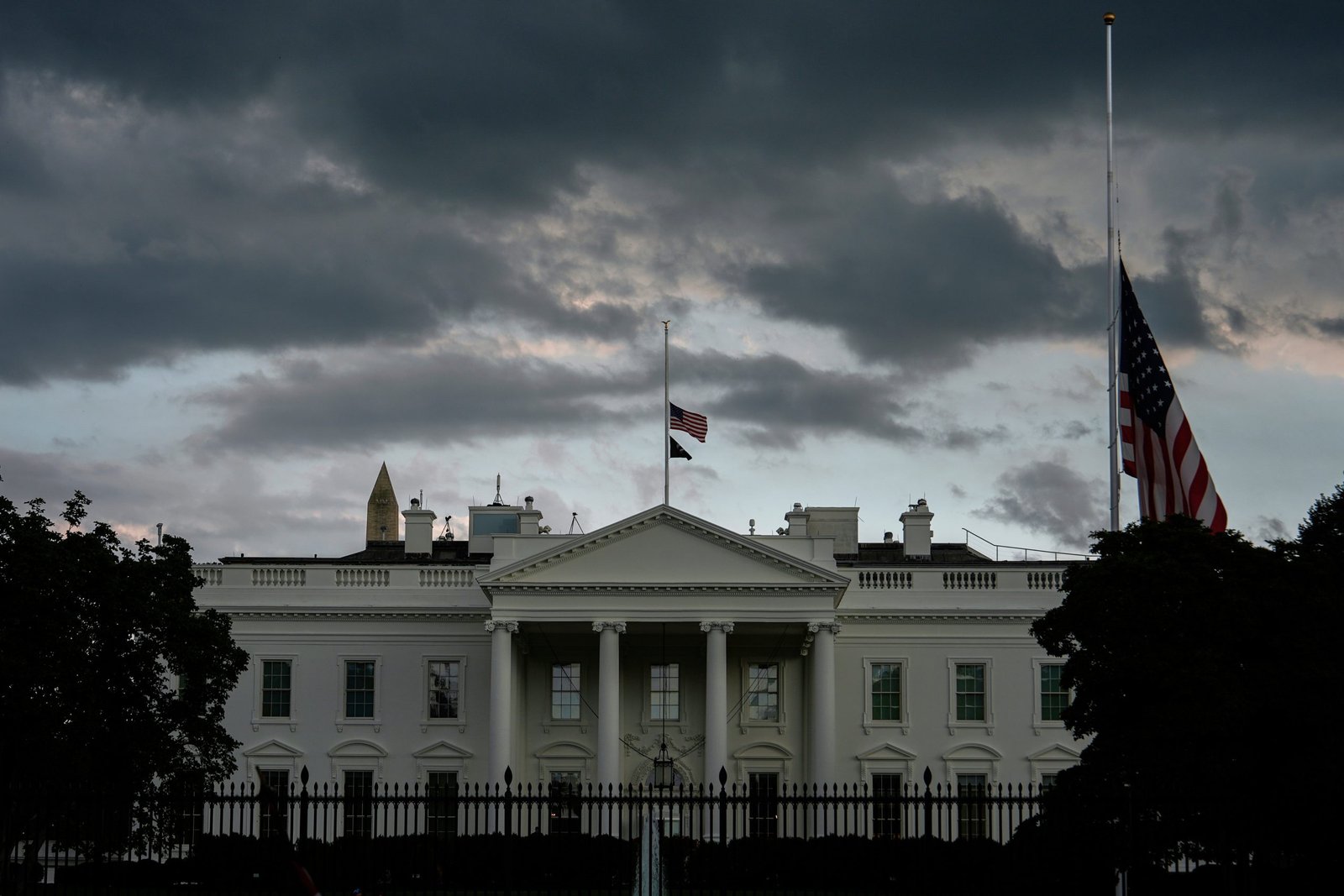
    Meanwhile, Democrats pointed to violence perpetrated by right-wing extremists, including the shooting in Minnesota of state Rep. Melissa Hortman and state Sen. John Hoffman, both Democrats. They decried Trump’s order to fly flags at half-staff for Kirk, but not Hortman, who unlike Hoffman did not survive the shooting.

    Minnesota’s House members steered clear of the vitriol. The state’s Republican lawmakers called for prayers.

    “Let’s not allow evil to win by letting his work die with him, but instead pray that those who have heard him will use their faith and reason to be beacons of hope, common sense, and courage … out of darkness will come light,” Rep. Brad Finstad of the 1st District posted on X.

    And Minnesota’s Democratic lawmakers condemned the escalating political violence and asked the nation to come together.

    “We must come together as a nation and condemn any and all political violence,” Rep. Angie Craig, D-2nd District, said in her post on X. “It is going to take all of us to begin to change the tone of our political discourse and bring civility back to our nation.”

    Another government shutdown threat

    It’s brinksmanship time again as Congress faces a Sept. 30 deadline to pass a spending package to avoid a federal government shutdown.

    Chances of a shutdown grew this week as House Minority Leader Hakeem Jeffries, D-N.Y., said Wednesday that House Democrats are likely to reject a short-term bill that would keep spending at current levels.

    Democrats are not opposed to a stopgap measure, known as a continuing resolution or CR. 

    But Senate Majority Leader Chuck Schumer, D-N.Y., echoed Jeffries in saying the legislation must contain some Democratic priorities — including perhaps an extension of a boost in Affordable Care Act subsidies that will end without congressional action at the end of the year.

    Schumer was vilified by liberals in the Democratic base for helping the GOP pass an earlier spending bill without any concessions.

    The shutdown blame game has already begun, with House Speaker Mike Johnson, R-La., accusing Democrats of “beginning to apply their government shutdown pressure” and “rejecting commonsense solutions to fund the government.”

    Not so fast, say Democrats, pointing out that the GOP has control of the White House and both chambers of Congress and shouldn’t need Democratic support to pass a budget.

    “I hope there isn’t a shutdown and there shouldn’t be a shutdown,” said Rep. Betty McCollum, D-4th District, a senior member of the House Appropriations Committee.

    But she said this about her Republican colleagues if there is a shutdown: “They own it.”

    A ‘nuclear’ strike in the U.S. Senate 

    Daniel Rosen, President Donald Trump’s choice to be the new U.S. attorney in Minnesota, was nominated in May and has waited a long time for the U.S. Senate to confirm him.

    But he may not have to wait much longer.

    House Majority Leader John Thune took the first steps this week to change U.S. Senate rules to expedite votes on nominees, excepting Cabinet officials and those with lifetime judicial appointments.

    Rosen’s candidacy was approved by the Senate Judiciary Committee on a bipartisan basis in July. But Senate Democrats have insisted on adhering to rules that draw out the confirmation process, creating a backlog of nominees and many unfilled positions in the Trump administration.

    So Thune planned a vote Thursday to allow slates of nominees to be confirmed in a single vote by a simple majority.

    A partisan rules change like that is considered a “nuclear option” since it threatens to disrupt the Senate.  

    Biden-appointee U.S. Attorney Andrew Luger resigned about a week before Trump returned to the White House this year. So until Rosen is confirmed, the job has fallen on acting U.S. Attorney Joe Thompson, who has had to handle the shootings of state Rep. Melissa Hortman and state Sen. John Hoffman and their spouses, and the shooting at Annunciation Catholic Church.

    Rep. Tom Emmer, R-6th District, who recommended Rosen’s candidacy to the White House, blamed the Senate Democrats’ slow-down policy for impeding the federal investigations in Minnesota. 

    “It hasn’t even been two weeks since the Annunciation shooting and Senate Dems are blocking the confirmation of Daniel Rosen, the nominee for U.S. Attorney for Minnesota,” Emmer posted on X. “Senate Dems must STOP playing political games with these nonpartisan positions! Law and order should never be a partisan issue.”

    In case you missed it

    – Even as Health and Human Services Secretary Robert F. Kennedy restricts the availability of COVID vaccines, they continue to be widely available in Minnesota, writes reporter Shadi Bushra.  

    – State government reporter Matthew Blake profiled Rep. Zack Stephenson, DFL-Coon Rapids, and his rise to lead the DFL in the state House.

    – Nicole Hockley, the mother of a six-year old victim of the Sandy Hook Elementary School shooting, spoke with MinnPost about long-term trauma and the advice Sandy Hook victims are offering Minnesota lawmakers to prevent another tragedy.

    Please keep your comments, and any questions, coming. I’ll try my best to respond. Please contact me at aradelat@minnpost.com.

    The post D.C. Memo: Kirk shooting ignites partisan rancor in Washington appeared first on MinnPost.

  • Sandy Hook parents offer community support, policy advice after Annunciation shooting

    Sandy Hook parents offer community support, policy advice after Annunciation shooting


    several portraits of a murdered six year old

    WASHINGTON — Nicole Hockley’s 6-year-old son Dylan was one of 20 first graders killed in the Sandy Hook Elementary School shooting that horrified the nation and ushered in the grim realization that America’s children might not be safe in their classrooms.  

    Hockley and other Sandy Hook parents turned their grief into activism to try to prevent the violence that claimed the lives of their loved ones. Hockley helped establish and is the CEO of Sandy Hook Promise, which breathed life into a movement spearheaded by victims of gun violence. The organization not only seeks to strengthen gun regulations, but it also lobbies for effective school safety policies and mental health and crisis intervention resources.

    There have been dozens of school shootings since that massacre in Newtown, Conn., which also claimed the lives of six adults. They have occurred most notably in Parkland, Florida; Uvalde and Santa Fe, Texas; and Oxford Township, Michigan. But Hockley said Sandy Hook Promise policies have prevented other shootings and saved the lives of many people contemplating suicide.

    Hockley, who provides support for the families of shooting victims, has already spoken with a parent of one of the victims of the Annunciation Catholic Church shooting in Minneapolis and her team at Sandy Hook Promise is in contact with state legislators who will consider new gun and school safety measures at a special session called by Gov. Tim Walz, who has said he wants an assault weapons ban.

    Hockley spoke to MinnPost about the steps Minnesota could take in the wake of the Annunciation shooting and the long-term impact of a school shooting on a community. The following conversation has been edited for length and clarity:

    MinnPost: Did you know what you were getting into when you became a gun safety advocate?

    Nicole Hockley: I am very honest when I speak to parents in other school shootings or mass shootings across the country, including Minnesota two weeks ago, that when I first helped launch this I did not know what I wanted Sandy Hook Promise to be or what exactly we were going to do. I just know that if you want to advocate for change, this is something that you can do.

    Then it became a lesson for me. We started off down in D.C., advocating for [expanded FBI] background checks because everyone was saying that that was the thing to do at that point. And then when that failed four or five months after the shooting, in April 2013, that could have been a moment when we said “this is too frustrating, change isn’t going to happen.” But instead we decided to think differently because there is always more than one way to solve a problem.

    MP: And what were those other ways?

    NH: We really focused on the causes of violence and prevention and the long pathway that someone could take, including giving off signs before they commit an act of violence. So we developed our program and our policy approach. We began in 2014, and since then Sandy Hook Promise has grown at a phenomenal rate in terms of programs in schools across the country. We teach young people and adults around them how to recognize the signs of someone who might be at risk of hurting themselves or someone else, and how to say something and how to create connection – because disconnection is how this pathway to violence starts.

    MP: But you try to change laws too, don’t you?

    NH: We advocate for policy on a state and federal level. We write model legislation. And we passed our model legislation under three presidents and in numerous states across the country that are mandating access to mental health, support for school safety, support for gun safety.

    Women with blonde hair wearing a pink suite.
    Nicole Hockley Credit: Courtesy of Sandy Hook Promise

    MP: And you have been in touch with the parent of a victim in the Annunciation shooting?

    NH: We rarely reach out, knowing what it’s like right after a shooting, and how you know people and groups will be crawling all over you. We often wait to be reached out to. So there have been instances such as Uvalde, where I think I waited about six months before I reached out to any of the parents there. [Sandy Hook parent] Mark [Barden] and I have both spoken to one of the parents who reached out to us a few days after the [Annunciation] shooting. We’re just there as a resource as families find their way forward. In these early days, it’s just about listening and being there for someone without any expectations.

    MP: Gov. Walz wants to convene a special session of the Legislature to deal with the shooting. Is Sandy Hook Promise suggesting anything?

    NH: I can’t share the details because we’re still formulating our plans and are in early discussions with different legislators, but everyone wants to do something, which is great. So we’re going to, as we always do, give our best advice and support on what would be meaningful and what could be implemented in a way that would help prevent these types of shootings.

    For example, Minnesota has an extreme risk protection order on the books already. Considering how many signs the Annunciation shooter gave off, there could have been an opportunity for that extreme risk protection order to be enacted so that the shooter was separated from firearms, or access to firearms. What we don’t know yet is how many Minnesotans know that the state has an extreme risk protection order (red flag) law and how it works, so that if they see the signs, they know how to report it in a lawful way. So it could be as simple as creating more education and awareness.

    MP: Some Minnesota lawmakers want to make sure there are school resource officers at every school.

    NH: School resource officers are perfect for creating relationships with students, but not for punitive measures. The Annunciation school shooter shot from outside the building, right? So, it’s hard to know how an SRO would have helped. Same with the Sandy Hook shooter. He shot his way into the school, you know, he shot his way through the locked doors. And some people say, if an SRO had been there, they would have been able to stop him. Others say [the SRO] would have been the first person shot. Or you’ve also seen, in places like Uvalde, the SROs were completely ineffective and ran away from the shooting rather than going towards it.

    It’s a mixed bag… So I don’t have an opinion either way on SROs. I think it all depends on the circumstance. They can be a deterrent, but they’re not going to prevent violence.

    MP: What else could be done?

    NH: Basic prevention training in schools so that youth and adults know how to recognize signs and then report them, either through something like a red flag law or through an anonymous reporting system. That’s important, because people need to be able to recognize signs and know what to do when you see them. That’s what we do every single day.

    There are also opportunities for secure storage laws because we know, unfortunately, most school shootings involve guns within the home. I know that this shooter had obtained guns legally. That’s not always the case. It’s quite often a younger shooter who takes the guns from their home where their parents have not securely stored them. So secure storage is also an option. But I think as we learn more about the case itself, and what legislators are thinking, we’ll be able to help them craft appropriate legislation.

    MP: It’s been a tough path for you and the others at Sandy Hook Promise, Mark Barden and Bill Sherlach, whose wife Mary died holding Dylan in her arms. (Mary Sherlach was the school’s psychologist.)

    NH: Advocacy is a very difficult life to choose. I’m very upfront about that. It’s around 13 years after Sandy Hook and it’s exhausting to constantly retraumatize yourself. It’s exhausting to continue to fight for something that is so sensible and normal – keeping kids safe – and still to have barriers.

    But there’s a lot of success. We have passed so many laws, we have accelerated a new movement. And we have saved a lot of lives. Over a thousand imminent suicides have been stopped because of our training so far. At last count there were 18 validated school shootings that did not happen because of our training and our reporting system. So we know what works and that’s what keeps me going. But that is a difficult choice to make, especially when you are grieving and still traumatized.

    MP: You also said a school shooting also leaves a community traumatized.

    NH: This is a long journey. Almost 13 years out, we are still dealing with the aftereffects, the mental health issues, support needed for young people, the support needed for first responders, the support needed for families. The ripple effects of trauma are huge and everlasting.

    So I think the community is going to need a lot of support, a lot of grace as they get through this, because this is incredibly difficult. And you just can’t understand how hard it is until you’ve experienced something like that, and how fracturing it can be within a community as well. Whatever works for you, give yourself compassion, model compassion to others, and also know that there’s no getting over this, but there is going to be a pathway through it and everyone is going to find their own way.

    The post Sandy Hook parents offer community support, policy advice after Annunciation shooting appeared first on MinnPost.

  • D.C. Memo: Congress is back — so is the Epstein saga

    D.C. Memo: Congress is back — so is the Epstein saga

    WASHINGTON – Congress returned from its summer recess this week and lawmakers immediately resumed their fight over how best to comply with public demands for more information about Jeffrey Epstein.

    Democrats lined up to sign a “discharge petition” sponsored by Reps. Thomas Massie, R-Ky., and Ro Khanna, D-Calif., that would force the consideration of a bill mandating the release of all files in the case of the disgraced financier and convicted sex offender.

    Minnesota’s Republican lawmakers have not signed the petition, which, thanks to the support of three House Republicans, is just two votes shy of the 218 needed to compel a vote on the House floor.

    Rep. Pete Stauber, R-8th District, said he backed the efforts of the Trump administration and GOP congressional leaders instead.

    Stauber said he wants “maximum transparency” in the Epstein case.

    He and all other Minnesota Republicans voted late Wednesday on a symbolic measure that would affirm the GOP-led House Oversight Committee’s investigation into the matter.

    House GOP leaders have touted that investigation as a better alternative to the discharge petition, which would compel the release of materials in the Epstein case within 30 days.

    Stauber said that investigation is “much more aggressive” than what the discharge petition would uncover, since the committee has a “timeline and subpoena powers.”

    On Tuesday, the Oversight Committee released the first files it had received from the Justice Department on the sex trafficking investigations into Epstein and Ghislaine Maxwell, a former girlfriend of Epstein’s who was convicted of sex trafficking and other crimes. But the files mostly contained information that was already publicly known.

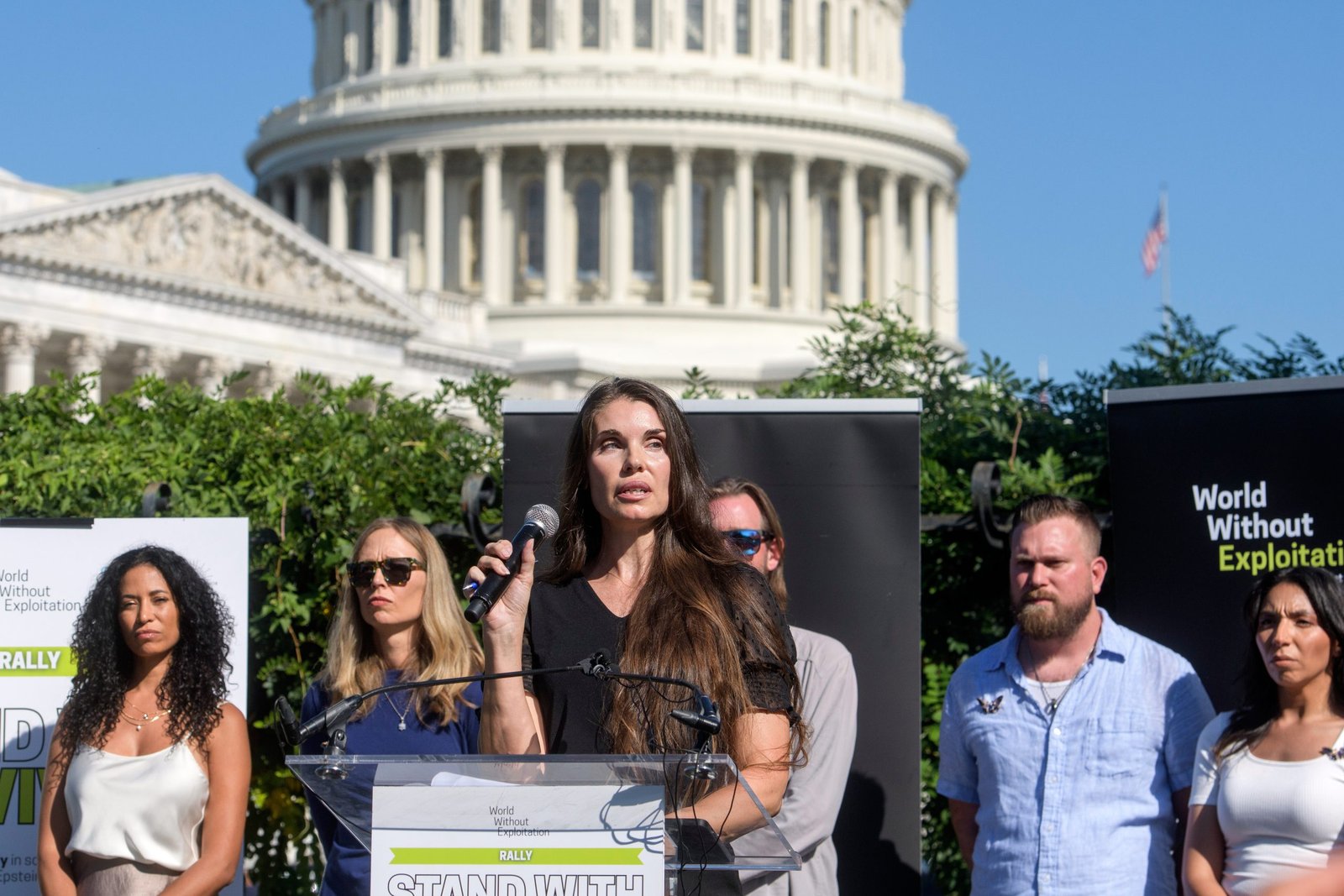
    A group of Epstein accusers who told harrowing tales of abuse at a news conference Wednesday at the U.S. Capitol disagreed with Stauber and the majority of House Republicans who prefer that the Oversight Committee handle the issues. 

    They pressed lawmakers to sign the discharge petition, saying it would result in the most complete release of information.

    “Let the public know the truth,” said accuser Chauntae Davies. “We cannot heal without justice. We cannot protect the future if we refuse to confront the past.”

    Jena-Lisa Jones said that after her encounter with Epstein, she cried “the entire way home, thinking about how I couldn’t ever tell anyone about what actually happened in that house.”

    “This guy was so rich and had so many pictures with so many famous people and no one would have ever believed me if I told them,” Jones said.

    Minnesota’s Democratic lawmakers have signed the discharge petition.

    “It feels like there’s a cover up,” said Rep. Betty McCollum, D-4th District, referring to what she said was insufficient material released by the Justice Department.

    In a post Tuesday on social media, Rep. Angie Craig, D-2nd District, said “President Trump called Jeffrey Epstein’s abuse of women a ‘hoax.’ My message to him: these survivors are real, and I will not let them be silenced. Today, I signed on to (the discharge petition).”

    Calling it a “hostile act,” the White House has pressured GOP lawmakers who said they might sign the discharge petition.

    And on Thursday, House Speaker Mike Johnson, R-La., said the effort to force a House vote compelling the release of Epstein-related documents won’t succeed because it will lack the support of enough Republican lawmakers.

    During Congress’ August recess, Trump asked the Justice Department to interview Maxwell, who is serving a 20-year prison sentence. Justice Department transcripts of that interview show that Maxwell, who was subsequently transferred to a low-security prison, said she knew nothing of Epstein’s sex trafficking yet was sure Trump was not involved in any untoward activity.

    Smith scorches RFK, Jr. 

    Sen. Tina Smith tussled with Department of Health and Human Services Secretary Robert F. Kennedy Jr., during a rough-and-tumble Senate hearing Thursday.

    “You have led the charge in the Trump administration to destroy what is best in the U.S. health care system,” Smith told Kennedy.

    The Democratic senator also told Kennedy that he is “trafficking in fringe ideas, discredited ideas” and “seems willing to say anything in the moment even if it’s untrue.”

    Kennedy was the sole witness at the hearing before the Senate Finance Committee, of which Smith is a member.

    The hearing was convened following upheaval at the Centers for Disease Control and Prevention and frustration with his policies toward vaccines.

    Smith said Kennedy claimed to not to be “anti-vax,” yet also said no vaccine was safe. Smith said “that sounds anti-vax to me.”

    “When were you lying?” Smith asked.

    “Both things are true,” Kennedy responded.

    During an interview with Fox News after the Annunciation Catholic Church shooting last week, Kennedy was asked if he would look into the pharmaceuticals shooter Robin Westman may have been using.

    He said he was interested in “the potential contribution of some of the (antidepressant) drugs and some of the other psychiatric drugs that might be contributing to violence.”

    Kennedy also said the “black box” warning on many psychiatric drugs, which include antidepressants, warn of “suicidal and homicidal ideation.”

    Smith, who has been candid about her experience with depression as a college student and a young mother, excoriated Kennedy for blaming  school shootings on antidepressants.

    Kennedy denied saying that. “You are just making stuff up,” he said.

    The White House last month fired Susan Monarez as director of the CDC after she refused to resign amid pressure to change vaccine policy. That sparked the resignation of other senior CDC officials.

    At Thursday’s hearing, Kennedy claimed that he asked Monarez to resign because she admitted she was not “trustworthy.”

    Sen. Elizabeth Warren, D-Mass., pointed out that Kennedy had praised Monarez as “unimpeachable” a month ago.

    “And in a month, she became a liar?” Warren asked.

    During the acrimonious hearing, Kennedy said he did not know how many Americans died of COVID-19.

    The HHS chief also asserted “there are no cuts to Medicaid” in a recently approved Republican budget plan. Yet the Congressional Budget Office has estimated that Medicaid provisions in the new law would increase the number of people without health insurance by 7.8 million.

    Related: Do Pediatricians Recommend Vaccines To Make a Profit? There’s Not Much Money in It

    Kennedy said lawmakers and doctors were beholden to pharmaceutical companies who enrich themselves from vaccines. He also kept up his criticism of the coronavirus vaccine during the hearing. 

    Kennedy was asked by both Democrats and Republicans how that gels with his belief that President Donald Trump deserves a Nobel Prize for Operation Warp Speed, the federal  government’s rush to create an effective vaccine for what was previously an unknown virus.

    Meanwhile, Sen. John Barrasso, R-Wyo., told Kennedy, “I am a doctor. Vaccines work.”

    After the hearing, Democratic Rep. Kelly Morrison of Minnesota’s 3rd District joined a group of House Democratic lawmakers — who, like her, are also doctors — at a news conference calling for Kennedy’s resignation.

    “We cannot be complicit in letting political ideologues take over our scientific and public health institution,” Morrison said.

    In other news:

    • Was the shooting that killed two children at Annunciation Catholic Church a religious hate crime? FBI director Kash Patel says so, but we took a closer look that suggests it might not be that clear.
    • Matthew Blake wrote about Gov. Tim Walz’s ideas for a special session to address gun violence — and what lawmakers in a divided Legislature actually want.
    • Meanwhile, Brian Arola went north to talk with U.S. and Canadian mayors at a time when border crossings are dropping amid U.S.-Canada trade tensions.

    Please keep your comments, and any questions, coming. I’ll try my best to respond. Please contact me at aradelat@minnpost.com.

    The post D.C. Memo: Congress is back — so is the Epstein saga appeared first on MinnPost.

  • Robin Westman attacked children in a Catholic church. Was it a religious hate crime?

    Robin Westman attacked children in a Catholic church. Was it a religious hate crime?

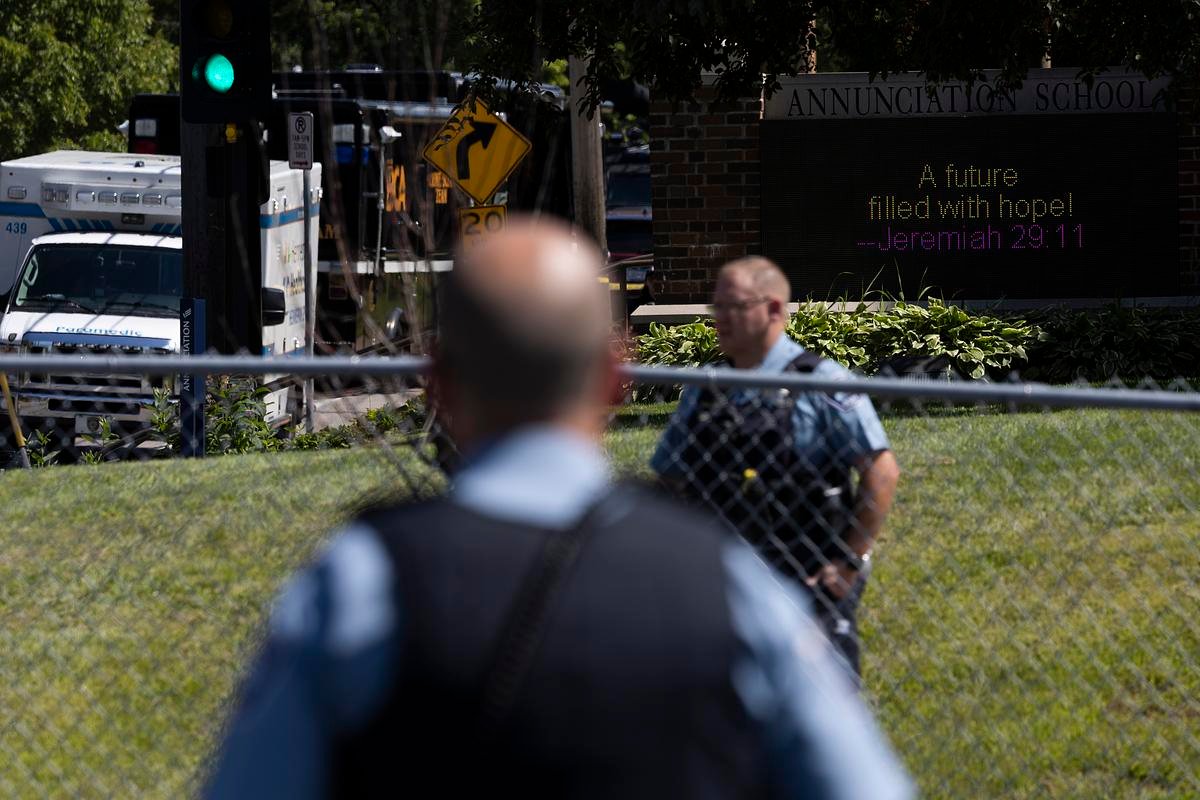
    WASHINGTON – Police were still on the scene of the shooting at Annunciation Catholic Church when FBI Director Kash Patel announced that the horrific violence would be investigated as a hate crime against Catholics and an act of domestic terrorism.

    That rush to judgment has perplexed some legal experts who say we may never know the motivation of Robin Westman, who killed two children and wounded 21 others by shooting through a window of the church, which was holding a mass for the students at its affiliated school.

    Rachel Carroll Rivas, interim director of the Intelligence Project at the Southern Poverty Law Center, a nonprofit that studies hate crimes and extremism, said a motive “may not fit neatly in a box.”

    “It’s too early to fully assess what may have brought about this horrific violence. But early indications show a young person expressing a mix of ideologies, politics and inspirations,” she said.

    In another horrifying school shooting — the slaughter of 20 first-graders at Sandy Hook Elementary School in Newtown, Connecticut — an intensive investigation by the FBI and other law enforcement agencies found no conclusive motive for shooter Adam Lanza.

    That shooting has eerie similarities to the Annunciation shooting. Both Lanza and Westman had attended the school they targeted, their mothers had worked at the facilities and both shooters were fascinated with mass murderers. And both died of self-inflicted gun shots so could never be asked why they committed their crimes. 

    So, Patel’s determination that the Annunciation shooting be investigated as a hate crime against Catholics may be premature.

    But it aligns with the Trump administration’s refocus of the Justice Department to redirect resources to ferret out antisemitism and what President Donald Trump has determined to be an “anti-Christian bias.”

    Trump signed an executive order in February that blamed the Biden administration for “an egregious pattern of targeting peaceful Christians, while ignoring violent, anti-Christian offenses.”  

    Specifically, the order cited arrests of “peaceful, pro-life Christians” at abortion clinics and allegations the FBI had used undercover agents to spy on Catholic parishioners.

    That charge came from a memo leaked in February 2023 by a former FBI agent that revealed plans to spy on a Catholic denomination in Richmond, Virginia, as part of an effort to protect people from the threat of white supremacy that may be appealing to ultraconservative Catholics.

    Terrorizing children

    “There’s a focus on anti-Christian bias, but that’s not reflected in the data,” said Emmanuel Mauleón, a law professor at the University of Minnesota and an expert on domestic terrorism and hate crimes.

    Mauleón said federal hate crime statutes were born of the Civil Rights Movement and aimed at protecting minorities, then expanded to include those “more marginalized within the general public.” 

    Westman attacked a Catholic church filled with students of the school he once attended. But videos posted on social media show ammunition magazines that say “Kill Donald Trump” and anti-Black, antisemitic, anti-Hispanic and anti-God slogans.

    Other postings also include a wide variety of hate messages, including some against children, and writings that praised mass murderers who targeted children.

    Joseph Thompson, the acting U.S. Attorney for the District of Minnesota, said at a news conference this week that the evidence includes hundreds of pages of writing in which the shooter detailed plans for the attack, praises other mass shooters and expresses “hate towards almost every group imaginable.”

    Thompson also hinted at a possible motive.

    “The shooter wanted to kill children — defenseless children,” Thompson said. “I won’t dignify the shooter’s words by repeating them. They are horrific and vile. But, in short, the shooter wanted to watch children suffer.”

    And Minneapolis Police Chief Brian O’Hara said at a news conference last week that “there is no question in this case that the shooter intended to terrorize children.”

    Aligning with Trump’s priorities  

    Still, FBI director Patel continued to focus on the assailant’s anti-Catholic and anti-religious references.

    And the Justice Department has cut off funding for department programs that U.S. Attorney General Pam Bondi said “do not align with the administration’s priorities.”

    To that end, the Justice Department ended all grants in its anti-hate crimes program. The money was being used by nonprofits for things like bystander intervention training, know your rights seminars, better incident tracking and therapy for victims of hate crimes and had been aimed at helping people of color, LGBTQ people and sex trafficking victims.

    There has also been a mass exodus of attorneys at the Justice Department’s Civil Rights Division as it shelved its traditional mission to combat discrimination and protect the constitutional rights of all Americans and replaced it with one focused on enforcing the president’s executive orders.

    Still, it’s quite possible that Westman had animus toward the Catholic Church.

    According to the FBI’s hate crime statistics, there were 11,914 hate crimes attributed to attacks on religion last year. But there were 32,946 based on race and/or ethnicity and 13,185 based on sexual orientation and gender identity.

    Although there was once rampant and extreme anti-Catholic sentiment in the United States, especially before the Civil War, hate crimes against Catholics and Catholic institutions are far fewer now.

    The FBI’s hate crime statistics have logged only 25 such incidents across the nation so far this year.

    The U.S. Conference of Catholic Bishops has tracked 22 attacks on Catholic churches this year — before the shooting at Annunciation. Most of those attacks involved vandalism — the spray painting of anti-Catholic messages and swastikas and the beheading of religious statues. But one incident involved the fatal shooting of a priest in Kansas by a parishioner who was incensed that his church was not conservative enough.

    Still, Carroll Rivas said if Westman “was motivated by or specifically targeted a group for their religious affiliation, in this case Catholicism, then we hope the FBI and local law enforcement will do a full investigation and work with the community to address the impact on the community at large and the families who had loved ones murdered.”

    “We must also not just focus on the aftereffects … but on preventing this violence from ever happening again,” Caroll Rivas said.

    That, she said, requires action by lawmakers and community leaders to focus on halting the radicalization of youth online.

    “This is a public health crisis, and it will take a whole-of-community public health approach to stop it, once and for all,” she said.

    The post Robin Westman attacked children in a Catholic church. Was it a religious hate crime? appeared first on MinnPost.

  • D.C. Memo: Sandy Hook and now Annunciation

    D.C. Memo: Sandy Hook and now Annunciation

    WASHINGTON — The first graders who were massacred at Sandy Hook Elementary School in the most horrific school shooting to date would be 19 and 20 years old today.

    At the time of that shooting, this reporter was the Washington correspondent for a Connecticut news website, and the brutal deaths of those innocents still weighs heavily on my mind. The violence and terror that visited placid Newtown, Conn., on Dec. 14, 2012, taught me a lot of things I never knew about America’s gun culture.

    I learned that there are far more civilian-owned guns (about 500 million now) in the United States than there are people. I also learned Congress is loath to pass even the mildest of reforms and that the deadly AK-47s used to slay the 20 6- and 7-year-olds in Newtown are prized by gun collectors like shooter Adam Lanza’s mother and a major profit maker for gun manufacturers.

    But meeting some very brave parents who turned grief into activism and dedicated themselves to trying to prevent school shootings was the most valuable lesson.

    Yet those shootings continue, with a regularity that has made this kind of once-unthinkable violence now part of American culture. The attack on the schoolchildren who were celebrating their first day of classes Wednesday at Annunciation Catholic Church will leave a long-lasting mark on Minnesotans. I guarantee it.

    DFL seeks to move up state primary

    Headed by former DFL Party chair Ken Martin, the Democratic National Committee held its summer meeting in Minneapolis this week, hoping to shore up a party that was left on the ropes after last November’s elections.

    Martin was hoping to bring unity to the fractious party, which has split over its position on Israel’s war in Gaza, flagging fundraising and the lack of support from some Democrats for Zohran Mamdani’s New York mayoral campaign and the DFL’s pulling of its endorsement from another Democratic Socialist, Omar Fateh, who is running for Minneapolis mayor.

    Gov. Tim Walz joined the effort at unity.

    “We do not have the luxury to fight amongst ourselves while that thing sits in the White House,” Walz told DNC members.

    Still, discord continued, including behind-the-scenes fighting among states that want to scramble the DNC’s presidential primary calendar.

    The DNC changed that calendar three years ago, with Martin and Minnesota officials and lawmakers seeking to move up its presidential primary to replace Iowa, which had become a solidly red state and holds troublesome caucuses.

    The first presidential primary states benefit from political clout and tons of campaign money.

    But then-President Joe Biden decided to give Michigan that early window instead.

    Minnesota DFL Chairman Richard Carlbom told MinnPost he’s not going to try to move up the state’s presidential primary, now scheduled for March 7.

    But Carlbom said he wants the nod from the DNC to move up its primary for state, local and congressional races, which is now held in August and results in long, costly and bitter primary fights that rarely benefit either party.

    “My focus is trying to move up the state primary,” he said.

    Carlbom said he’d like to move up Minnesota’s state primary to June.

    To do so, the state GOP would have to agree to move up its primary, too. And the state Legislature would also have to agree to the change.

    Trump nixes ‘cashless’ bail

    President Donald Trump signed an executive order this week banning “cashless bail” or allowing those detained before their trial to be released without posting a bond or paying money.

    Trump’s move was aimed at Washington, D.C., which along with Illinois are the only two jurisdictions that hold people in jail based on the seriousness of their crime rather than their ability to pay bail, though other states, including New York and New Jersey, have made reforms to their bail systems.

    Trump said that the system must be scrapped because it lets dangerous criminals back on the street. “They kill people and they get out,” Trump said. “We’re ending it.”

    But those charged with murder or other violent offenses and those deemed dangerous to the public are rarely allowed bail of any kind.

    Some in Minnesota have advocated that the state adopt a cashless bail system.

    Earlier this year, in response to a request from the state Legislature, the Minnesota Justice Research Center issued a report that said defendants who are detained pretrial suffer worst-case outcomes than those accused of similar crimes who are released during the pretrial period.

    The report said detention before trial can have “widespread financial consequences, including loss of income, jobs, housing and public benefits.”

    The report also said pretrial detention does not make a community safer and monetary bail does not increase the likelihood that someone will appear in court.

    In other news:

    ▪️ We shared the AP’s coverage of the shooting at Annunciation Catholic School and its report on the scene inside the church, as well as our own Ellen Schmidt’s photos from a vigil and other places during the day.

    ▪️ We also took a look at contracts that Immigration and Customs Enforcement (ICE) has with various Minnesota businesses and organizations, including a city-owned shooting range in Cottage Grove.

    ▪️ Deanna Pistono reported on a recent Trump administration threat to cut federal funding for sex ed programs for youth that include what the administration calls “gender ideology” in the curriculum.

    ▪️ And we wrote about the two Democrats vying to replace U.S. Sen. Tina Smith — U.S. Rep. Angie Craig and Lt. Gov. Peggy Flanagan. Both hope to earn the DFL Party’s endorsement ahead of next August’s primary.

    Please keep your comments, and any questions, coming. I’ll try my best to respond. Please contact me at aradelat@minnpost.com.

    The post D.C. Memo: Sandy Hook and now Annunciation appeared first on MinnPost.

  • Under ICE contracts, Minnesota entities have leased gun ranges, sold ammo and provided myriad goods and services

    Under ICE contracts, Minnesota entities have leased gun ranges, sold ammo and provided myriad goods and services


    three people aim at targets at a gun range

    WASHINGTON — Ruth Jones was incensed when she learned Cottage Grove had leased its city-owned shooting range to Immigration and Customs Enforcement (ICE).

    Jones and about a dozen other members of an immigrant advocacy group at All Saints Lutheran Church demanded — unsuccessfully — that their southeast Twin Cities suburb end its relationship with the federal agency.

    “We all support law enforcement, but we don’t see ICE as law enforcement,” Jones said. “Those guys wear masks, don’t identify themselves and just grab people.”

    The contract Cottage Grove signed with ICE for the rental of the HERO Training Center, jointly owned and operated with the neighboring city of Woodbury, is among dozens of Minnesota entities that have recently entered into contracts with ICE or Customs and Border Protection (CBP).

    Minnesota isn’t anywhere near the top of the list of states when it comes to ICE and CBP contracts, although those agencies purchase a variety of goods and services in the state that range from ammunition sales to translation services.

    According to USASpending.gov, Minnesota has $2.1 million worth of contracts in force since the beginning of the year, while Texas has more than $414 million, Arizona has more than $478 million and California has about $329 million.

    As the Trump administration and its allies in Congress seek budget cuts for most federal agencies, ICE and CBP are notable exceptions. In fact, the One Big Beautiful Bill Act, President Donald Trump’s major legislative win to date, has provided $175 billion for immigration and border enforcement, nearly six times the latest annual budget of CBP and ICE combined.

    Trump has boosted those budgets to meet his deportation goals. Mobile Pathways, a nonprofit based in Berkeley, California, that provides legal aid to immigrants, determined there were 4,573 deportations in Minnesota in 2024 and 2,846 just in the first six months of this year. That indicates the removals are increasing in the state.

    ICE and CBP spending will now increase exponentially, mainly on new recruits for the agency and new detention centers, but also for goods and services as these immigration enforcement agencies grow.

    ‘Not the Minnesota way’

    An analysis of federal contracts shows that in Minnesota, ICE and CBP have spent the most money on the purchase of ammunition, mainly from Anoka-based Vista Outdoor Sales. That company signed about $60 million in contracts with those agencies in the past decade.

    But there are other notable contracts. The Personnel Decisions Research Institute in Minneapolis signed one valued at more than $1 million with CBP to implement license exams.

    Prisma International has a three-year contract worth $698,600 to provide translation services to ICE. And ICE purchased $39,000 of “breaching tools” from J&N Tactical in South Haven last year.

    Like Cottage Grove, the University of Minnesota also signed an agreement with ICE to use a firing range that’s on school-owned property. But that $18,867 one-year agreement ended in May of last year and was a tiny part of the nearly $673 million in contracts with other federal agencies the university entered into last year.

    “The University of Minnesota Police Department manages an outdoor training range located on university property in Rosemount, which has been in operation for more than 40 years,” said university spokesperson Andria Waclawski.

    She also said the facility was made available for rent to other local and federal law enforcement agencies and that the school is no longer accepting reservations for the shooting range from outside groups.

    !function(){“use strict”;window.addEventListener(“message”,function(a){if(void 0!==a.data[“datawrapper-height”]){var e=document.querySelectorAll(“iframe”);for(var t in a.data[“datawrapper-height”])for(var r,i=0;r=e[i];i++)if(r.contentWindow===a.source){var d=a.data[“datawrapper-height”][t]+”px”;r.style.height=d}}})}();

    The HERO center has been leased to many law enforcement organizations besides ICE, including neighboring police and fire departments, the FBI and the U.S. Treasury Department. Even the Royal Canadian Mounted Police has used the facility, said Cottage Grove Mayor Myron Bailey.  

    Cottage Grove has entered into $749,000 worth of contracts with ICE since the HERO Center was inaugurated in 2020. Bailey said there was no blowback about the arrangement until a few months ago, when members of the All Saints Lutheran Church demanded an end to the relationship.

    He also said he’s unaware of how ICE uses the facility. “I don’t exactly know what they are doing,” Bailey said.

    Still, the HERO center has become a lightning rod for Jones and other members of her church who show up at immigration hearings to support migrants and make backpacks “so when they get deported they have some stuff.”

    Jones, a retired 4th-grader teacher, said her community did not know of ICE’s yearslong use of the HERO center until she attended a pro-immigration rally at the Minnesota Capitol in May. An advocate with a group from another town asked her, “Do you know ICE is training people there?” Jones said. 

    “We just don’t want ICE in our city,” she said. “We thought that if we talked to (city officials) before they renewed the contract, they’d understand.”

    But the contract was renewed for another year, with a renewal date of Aug. 1 and a value of $74,600.

    Member of the Taskforce in Support of Immigrant Families at All Saints Lutheran Church in Cottage Grove. The group objects to the city’s leasing of a gun range for use by ICE agents. Credit: Courtesy of Ruth Jones

    Peggy Nelson, another member of the church’s immigrant advocacy group, said she was also unaware of ICE’s use of the center until very recently. “I just didn’t know we were training ICE agents in our own backyard,” she said.

    Meanwhile, the Rev. Jules Erickson, pastor of All Saints Lutheran Church, said there is a “protocol” to try to protect  immigrants if ICE enters the church.

    “This has created a calm place for them,” he said.

    Members of his congregation in Cottage Grove, and some who live in Woodbury, are determined to continue their protests, saying their cities should be welcoming places for immigrants.

    “It’s not the Minnesota way,” Jones said of her city’s accommodation to ICE.

    The post Under ICE contracts, Minnesota entities have leased gun ranges, sold ammo and provided myriad goods and services appeared first on MinnPost.

  • Angie Craig and Peggy Flanagan flex their political muscles in race for U.S. Senate seat

    Angie Craig and Peggy Flanagan flex their political muscles in race for U.S. Senate seat


    The U.S. Capitol building seen from the front

    WASHINGTON – The State Fair is the unofficial start of campaign season, so Rep. Angie Craig and Lt. Gov. Peggy Flanagan are getting serious in their fight to be the one who runs under the DFL Party banner for retiring Sen. Tina Smith’s seat.

    Both candidates — veteran officeholders with impressive credentials — are well positioned to succeed Smith as Republicans are considered the underdogs in this contest. But first, they must battle each other for the support of Democratic voters in the state in what is expected to be a very costly and bruising primary fight.

    The contest has been fairly subdued as both candidates have been focusing on raising campaign cash and establishing networks of support. But things are going to be noisier.  

    Craig, D-2nd District, has during her six years in the U.S. House turned a “purple district” into a reliably Democratic stronghold. To help keep the district in Democratic hands, Craig highlighted her moderate stance and distanced herself from her party’s stance on policing, which sought reforms to curb abuses.

    Craig, 53, instead sponsored bills that would provide police forces more money and support. And in January, before Smith announced her retirement and the prospect of a Senate seat was in the offing, Craig voted for the first GOP bill put to a vote in the U.S. House this year.

    a politician gestures at the lectern
    Rep. Angie Craig, D-Minn., speaks during an event at Capitol in Washington, July 20, 2022. Credit: J. Scott Applewhite/AP

    That was the controversial Laken Riley Act, named after a 22-year-old nursing student who was murdered by an undocumented immigrant in Georgia. The bill, now law, directs federal authorities to detain and deport immigrants who are accused — not yet convicted — of specific crimes if they are in the country illegally.

    Those breaks with her party, although infrequent, could prove a liability with left-leaning activists who are likely to back true progressive Flanagan at next year’s DFL nominating convention.

    But Craig said she’s not worried, pointing out that Gov. Tim Walz and his running mate Flanagan failed to win the DFL endorsement, as did former Gov. Mark Dayton.

    Craig said she’s going to compete for the endorsement, but will continue her campaign for the U.S. Senate if she fails to win it. “I feel very optimistic that I will be at the finish line to take on the Republicans,” she said.

    She also said she is “committed to give all DFLers a chance to have a vote” on her candidacy in next August’s Democratic primary.

    Needing the support of left-leaning Democratic voters, Craig is fashioning herself as a maverick who “raised hell” in the U.S. House and will challenge the decorum of the U.S. Senate.

    “You can’t get anywhere in Washington unless you shake things up,” she said.

    She also said she’s a “battle-tested candidate” who has faced tough — and very well-funded — Republican challengers to keep the 2nd Congressional District in Democratic hands.

    There are two major declared GOP candidates in the race, former NBA player Royce White and Adam Schwarze, a former Navy SEAL. Unlike the Democrats vying for Smith’s seat, neither Republican candidate has held political office before.

    “We have it as ‘Leans Democratic,’ but the Democratic field seems pretty clearly stronger than the Republican field,” said Kyle Kondik of the Center for Politics at the University of Virginia. 

    Kondik also said Craig has more experience running competitive races in a competitive congressional district “and she’s more in the mold of the kind of candidate national Democrats tend to prefer in statewide races.”

    “That said, in the context of 2026, I think either would be favored in a general election,” he said.

    A fight for DFL endorsement

    Flanagan, meanwhile, is supported by well-known progressives like Sen. Elizabeth Warren, D-Mass. — who appeared with Flanagan at the State Fair over the weekend — and dependent on left-leaning grass roots. Yet, like Craig, the lieutenant governor is trying to avoid political labeling.

    “I consider myself more than anything to be pragmatic,” she said. “Most Minnesotans care about each other and getting things done.”

    Yet, like Warren, Flanagan is an economic populist, saying the average American stands no chance in a system that favors the wealthy. “People think the economy is rigged right now,” she said. “It’s all of us versus the billionaires.”

    Unlike Craig, who is well known in her congressional district but less known in the rest of Minnesota, Flanagan, 45, has campaigned state-wide and been endorsed by state officials, including Minnesota Attorney General Keith Ellison, state lawmakers and county commissioners.

    “I believe I’m going to get the DFL endorsement,” she said.

    Flanagan is also confident she can run a successful general election campaign, which would require support of moderate Democrats and independents in a state that is “blue,” but one in which Kamala Harris defeated Donald Trump by only about 4 percentage points.

    She said she expects the support of “a lot of DFLers, but also a lot of people who are really freaked out about what’s happening in this country.”

    another politician speaks at a lectern
    Lt. Gov. Peggy Flanagan speaks during American Indian Day on the Hill Monday, May 19, 2025, in St. Paul, Minn. Credit: Ellen Schmidt/AP

    In a dig at Craig, Flanagan said, “I am not of Washington; I am of Minnesota.”

    And she also pointed out that Smith served as lieutenant governor before she served in the U.S. Senate. But Smith was appointed to that seat after former Sen. Al Franken resigned — she did not win it through an election.

    David Schultz, political science professor at Hamline University, said that although Flanagan ran statewide, it was Walz who carried the load as far as campaigning. “There is very little evidence that a lieutenant governor makes a difference on a ticket,” Schultz said. “Voters were voting for Walz.”

    Schultz also said it’s common for the candidate who does not receive the party’s nomination to win political office. “More often than not, in the last 20 years the convention-endorsed candidate does not win the primary,” he said.

    He also said Craig could claim success if she manages to keep Flanagan from winning the necessary support — 60% — of the delegates to snare the DFL endorsement. 

    Hardscrabble childhoods

    There may not be a lot of light between the messaging of the Democratic rivals as they start their campaigns in earnest soon.

    Both will attack Trump and GOP policies, especially the “big beautiful” bill that cuts social safety net programs like Medicaid and food stamps and ends clean energy tax breaks.

    And both candidates will make the economy, which appears to be weakening, a focus of their campaigns.

    Craig said she has traveled across Minnesota to introduce herself to the suburbs, cities and rural areas and has hit the “picnic circuit” all summer. “What (voters) are telling me is that they have a sense of economic anxiety,” she said.

    Besides similar messaging on the campaign trail, Craig and Flanagan share something else — a hardscrabble childhood and ambitions and skills that led them to successful political careers.  

    They’ve also broken barriers, Craig as the first LGTBQ member of Congress from Minnesota and Flanagan as the first Native American Senate candidate from Minnesota.

    Both women were raised by single mothers who depended on the social safety net.

    Flanagan, a member of the White Earth Nation, still lives in the Twin Cities suburb she grew up in, St. Louis Park, with her mother. She said that she suffered from severe asthma as a child and depended on Medicaid for medical help.

    Flanagan also said food stamps helped put food on the table at her home and that she is running for the Senate “because growing up I felt that the bottom could fall out at any minute.”

    Craig grew up in a trailer park in Arkansas and worked her way through college.

    She found success — and affluence — in the business world as an executive at a medical device company.

    Meanwhile, Flanagan has made her mark in the political world and as an advocate, serving in the state House and as executive director of the Children’s Defense Fund-Minnesota.

    With the U.S. Senate in play in next year’s midterm elections, whether Flanagan or Craig are on the general election ballot may not matter to national Democrats. They are likely to  step in to help either candidate in a race that is estimated to cost at least $40 million.

    The post Angie Craig and Peggy Flanagan flex their political muscles in race for U.S. Senate seat appeared first on MinnPost.
  • ICE eyes shuttered Appleton prison as it plans massive expansion of immigrant detention centers

    ICE eyes shuttered Appleton prison as it plans massive expansion of immigrant detention centers

    WASHINGTON – With detention beds at full capacity, U.S. Immigration and Customs Enforcement (ICE) is eyeing a long-shuttered prison in Appleton, Minnesota, as part of a massive expansion plan.

    Since President Donald Trump took office in January, Appleton city officials have known that the Prairie Correctional Facility, a 1,600 private prison that has been shuttered since 2010, could be repurposed to hold detained immigrants.

    Appleton City Administrator John Olinger said he’d been in talks about the future of the prison with Kelly Durham, managing director at CoreCivic, the company that owns the facility and 38 others across the United States.

    Olinger said Durham told him last week that CoreCivic had not yet signed a contract with ICE that involves the Prairie Correctional Facility. But he said she also told him CoreCivic has “aggressively been pursuing something.”

    Olinger also said CoreCivic had procured building permits and is in the process of refurbishing the facility.

    An ICE takeover of the Prairie Correctional Center could greatly increase the number of immigrants in detention in Minnesota.

    Currently, ICE does not run a detention facility in the state but has entered into arrangements with at least four local jails to hold detained migrants, including the ones in Freeborn, Kandiyohi and Sherburne counties.

    ICE’s coffers full

    ICE has plenty of money to expand operations, in Minnesota and across the nation.

    The budget reconciliation bill signed into law last month provides $80 billion for internal immigration enforcement, including $45 billion for ICE detention centers and $14.4 billion for ICE transportation and removal operations. 

    The United States has reached capacity with about 50,000 immigrants under detention. But the Trump administration wants to more than double that number to 107,00, according to a recent story in The Washington Post. 

    The Post obtained an ICE “road map” that was last updated on July 30. It shows that ICE intends to expand immigrant detention to new parts of the country – including Minnesota and the Appleton facility — nearly doubling its number of large-scale, mega-detention centers and relying increasingly on makeshift “soft-sided” structures that can be built in a few weeks and taken down just as easily. 

    Neither ICE nor the Department of Homeland Security responded to requests from MinnPost for information about the plan.  

    CoreCivic declined to answer questions about its plans for the Prairie Correctional Facility, which at full capacity would have a higher population of inmates than town residents. According to the U.S. Census, Appleton had 1,352 residents last year.

    But CoreCivic spokesman Ryan Gustin said his company “stays in regular contact with ICE and all of our government partners to understand their changing needs.”

    “Concerning our facility in Appleton, we continue to explore opportunities with our government partners for which this site could be a viable solution,” Gustin said.

    ‘Exciting period’ for private prisons 

    In a February earnings call, CoreCivic’s then-President and CEO Damon Hininger said his company is proposing to provide ICE with 28,000 detention beds.  

    He called Trump’s second term “truly one of the most exciting periods” of his career, saying the first bill Congress approved and Trump signed into law, the Laken Riley Act, would greatly boost the fortunes of operators of private prisons.

    Named for a University of Georgia nursing student killed by an undocumented immigrant, the law requires ICE to detain immigrants if they’ve been accused of or arrested for burglary, theft, larceny, shoplifting or assaulting a police officer. That shifted their custody from local jails to the federal system.

    Since that earnings call, CoreCivic has entered into new agreements or expanded current agreements with ICE in Tennessee, Texas, Ohio, Oklahoma and Mississippi.

    Another large private prison company, the GEO Group, has also benefited from Trump’s immigration crackdown.

    Before it closed due to declining prison population, the Prairie Correctional Center was the only privately run prison in Minnesota. It did not seem to have much of a future for many years as states like Minnesota became increasingly wary of placing inmates in those facilities.

    A state law implemented in 2023 bars sheriffs from placing inmates in private prisons. 

    And former President Joe Biden issued an executive order in his first days in the White House that directed the attorney general not to renew U.S. Justice Department contracts with privately operated criminal detention facilities.

    But Trump moved quickly after his inauguration to rescind Biden’s executive order. That dramatically changed the fortunes of companies like CoreCivic and the GEO Group and their stocks soared.

    Julia Decker, policy director of the Immigrant Law Center of Minnesota, said there have been discussions over the years about the possible reopening of the Prairie Correctional Center.

    “I don’t think it’s a surprise to see it discussed as a possible location to be used by this administration, which has made it clear they want to use as many locations as possible to detain as many people as possible,” Decker said.

    A criticism of the Appleton correctional center when it housed inmates for the state is that its location near the South Dakota border was challenging to families and attorneys of the incarcerated to visit. That will continue to be a challenge for attorneys representing immigrants if the former prison becomes an ICE detention center, Decker said.

    But immigration lawyers are already facing major obstacles in trying to meet with their detained clients.

    As an immigrant detention center, the facility would likely hold those seized by ICE in Minnesota, as well as ICE detainees from other states that lack capacity to hold them.

    The post ICE eyes shuttered Appleton prison as it plans massive expansion of immigrant detention centers appeared first on MinnPost.

  • D.C. Memo: Ukraine talks take center stage

    D.C. Memo: Ukraine talks take center stage

    Washington, D.C. correspondent Ana Radelat is taking a few well-earned days off to enjoy some time on the Chesapeake Bay (though it looks a little rainy there today!), so I’ll do my best to fill in.

    Foreign policy was in the news this week — especially the prospects for peace in Ukraine.

    President Donald Trump and Russian President Vladimir Putin planned to meet in Anchorage, Alaska, on Friday for talks that were expected to focus on ending the war — though European leaders and Ukrainian President Volodymyr Zelensky were left out of the summit.

    Trump warned 0f “very severe consequences” if Putin didn’t agree to stop the war and also said he hoped for a trilateral meeting with Putin and Zelensky.

    The president also commented on another hot spot — the war in Gaza — telling Axios that the Hamas ruling authority couldn’t stay in the Palestinian region. Israeli Prime Minister Benjamin Netanyahu has announced plans for Israel to attack and occupy Gaza City.

    Meanwhile, a federal court on Wednesday ruled that the Trump administration could suspend or terminate billions of dollars of funding for foreign aid that Congress has approved.

    Shortly after he took office in January, Trump directed the State Department and the U.S. Agency for International Development to freeze spending on foreign aid.

    The court that heard the case — U.S. Court of Appeals for the District of Columbia Circuit — concluded that grant recipients challenging the freeze did not meet the requirements for a preliminary injunction restoring the flow of money.

    Trump also raised hackles this week by deploying the National Guard and federal law enforcement to police the District of Columbia — though, as the New York Times reports, the federal government already has a lot of control in the district.

    Democrat Hakeem Jeffries, the U.S. House Minority Leader, criticized the move and said it had “no basis in law.”

    Trump cited “total lawlessness” as the reason for the crackdown, though statistics show violent crime in the city is at a 30-year low.

    In case you missed it:

    ▪️Ana Radelat wrote about the “big, beautiful” budget act’s cuts to SNAP (the official name for food stamps) and how Minnesota counties might now need to foot more of the program’s bill.

    ▪️She also reported on the impact of Trump administration policies on farmers, getting mixed reviews from those who talked with MinnPost at last week’s Farmfest. Among the pros: likely higher prices for sugar beet producers; among the cons: uncertainty over tariffs.

    ▪️Locally, Matthew Blake looked at Minnesota’s new “red flag” law and how use of the law — intended to keep people who might hurt themselves or others from accessing guns — is on the rise.

    ▪️And Shadi Bushra considered the unlikely chance of congressional redistricting in Minnesota in the near future in light of the gerrymandering snafu in Texas. One takeaway: It likely won’t happen here until 2032.

    Thanks! Ana will be back next week.

    The post D.C. Memo: Ukraine talks take center stage appeared first on MinnPost.
  • Food stamp cuts in ‘big, beautiful’ budget act will hit recipients – and property owners

    Food stamp cuts in ‘big, beautiful’ budget act will hit recipients – and property owners

    WASHINGTON — Congress cut the food stamp program to save the federal government money, but those changes will cost every Minnesotan who owns a home, farm or any other property in the form of higher property taxes.

    The reason higher property tax bills are on the horizon is that the One Big Beautiful Bill Act — which locked many of President Donald Trump’s priorities into law — shifts more of the cost of running the program to Minnesota’s counties. It also forces the state and all 87 county governments to pay for some of the benefits to about 440,000 Minnesota food stamp recipients.

    “This will certainly strain our local budgets past capacity,” Blue Earth County Commissioner Kevin Papp said of the cost shifts.

    Julie Ring, executive director of the Association of Minnesota Counties, estimated that the average property tax hike will be 3.25%. But that will vary, depending on how many food stamp recipients are in a county.

    For example, Blue Earth and Scott counties could see property rate hikes of 2.93% while Ramsey County’s property taxes could increase by 8.42%, the association says.  

    In the budget act, Congress expanded SNAP’s current work requirements to “able-bodied” individuals ages 55-64, parents of minor children ages 14 and up, veterans and the homeless. 

    Those new work requirements may throw even working people off of benefits if they do not report their eligibility properly.

    !function(){“use strict”;window.addEventListener(“message”,function(a){if(void 0!==a.data[“datawrapper-height”]){var e=document.querySelectorAll(“iframe”);for(var t in a.data[“datawrapper-height”])for(var r,i=0;r=e[i];i++)if(r.contentWindow===a.source){var d=a.data[“datawrapper-height”][t]+”px”;r.style.height=d}}})}();

    The new regulations are expected to end benefits for 45,000 Minnesotans, according to a study by the Center on Budget and Policy Priorities.

    Yet county officials will have the same amount of work to do because they must still try to enroll all who apply — even those who no longer qualify for food stamps — Ring said. “We don’t anticipate our workload going down,” she said. “Even when reimbursements and caseloads go down.”

    A costly ‘error rate’ 

    Seventeen Minnesota counties are currently exempt from the work requirements because they documented a lack of jobs. But those counties would no longer be exempt under the new SNAP regulations. They are Aitkin, Carlton, Cass, Clearwater, Hubbard, Isanti, Itasca, Kanabec, Koochiching, Lake of the Woods, Mahnomen, Mille Lacs, Morrison, Norman, Pine, Todd and Wadena counties.

    Congress also cut the federal share of the cost of administering the food stamp program from 50% to 25%.

    Since Minnesota is one of 12 states in which counties run the Supplemental Nutrition Assistance Program (SNAP), the official name for food stamps, those counties will now have to spend more money administering the program, even as the paperwork for signing up recipients has increased.

    “As we look at stricter requirements, that will take more work,” Papp said.

    The bill also punishes states with high “error rates” for the first time, shifting part of the cost of the benefit to those states. 

    The SNAP payment error rate reflects the combined rate of overpayments and underpayments in SNAP benefits and is not considered fraud but rather a measure of administrative accuracy. The national error rate in 2024 was nearly 11%.

    But under the budget act, any state with an error rate that’s higher than 6% would be penalized. Minnesota had an 8.9% error rate in 2024. If that stays the same, the state would have to pay 10% of the cost of benefits, or about $86 million.

    Unfortunately for the state’s counties, half of that cost would be shifted to them.

    “What Republicans in Congress did is they actually just shifted the cost of the SNAP program to the states depending on the error rates, and in Minnesota by mandate those costs shift to the county,” said Rep. Angie Craig, D-2nd District.

    Polk County Commissioner Joan Lee agrees. “The counties are going to bear the brunt of it,” she said.

    Lee said the cost of administering the program in Polk County has been from $40,000 to $50,000 a year. “Doubling that is going to bring it to $100,000,” she said.

    And counties will suffer an even greater financial impact, too.

    The cost for the counties to begin paying a portion of SNAP benefits will be high and have a much higher impact than the cutting of federal money to administer the program.

    In Ramsey County, for instance, the Association of Minnesota Counties estimated that administrative costs would rise by about $4.7 million, and the new requirement to share in the cost of benefits would be an additional $14.4 million.

    U.S. Rep. Michelle Fischbach, R-7th District, who like most Republican lawmakers supported the One Big Beautiful Bill Act in a highly partisan vote, said cost shifting to the counties “is going to be the state government’s choice.”

    “They need to get their fraud under control and then pick up those dollars, because it does not have to be shifted to counties,” Fischbach said.

    U.S. Rep. Brad Finstad, R-1st District, who like Fischbach was interviewed at Farmfest last week, was also supportive of the changes to SNAP.  

    “It is high time in our state and country that we get a handle on the waste, fraud and abuse,” he said. “We have 9% error rates … We need to do something about it.”

    ‘This hits everybody’

    Lee, a retired dairy farmer, said her county will soon begin work on its 2026 budget amid uncertainty.

    She said half of Polk County’s property taxes come from agricultural land, and she’s concerned about the impact of property tax hikes on the county’s farmers. 

    “But this hits everybody that owns property,” Lee said.

    The SNAP program has historically been supported by the nation’s farmers, and it’s run by the U.S. Department of Agriculture. Usually, changes to SNAP are made in a massive five-year farm bill that reauthorizes all USDA programs. But the last farm bill expired in 2023 and Congress has struggled to approve a new one.

    Although the budget act contained $66 billion to shore up farm safety net programs — a move that was welcomed by Minnesota farmers — those same farmers decried the SNAP cuts.

    “SNAP is ultimately buying crops that we produce, that we grow,” said Kyle Jore, a soybean farmer in Thief River Falls. “It’s not like we have anything against it, and it’s actually a benefit.”

    There’s hope in farm country that Congress might move on a “skinny” farm bill this year that would complement the agriculture provisions in the budget act. That would provide Democrats on the House Agriculture Committee, like Craig, the opportunity to try to roll back some of the food stamp cuts.

    “Basically, they gutted a title of the farm bill to plus up others,” Craig said of the budget act.

    Data reporter Shadi Bushra contributed to this story.

    The post Food stamp cuts in ‘big, beautiful’ budget act will hit recipients – and property owners appeared first on MinnPost.