Category: USA

  • D.C. Memo: It’s tariff time for Trump – again

    D.C. Memo: It’s tariff time for Trump – again

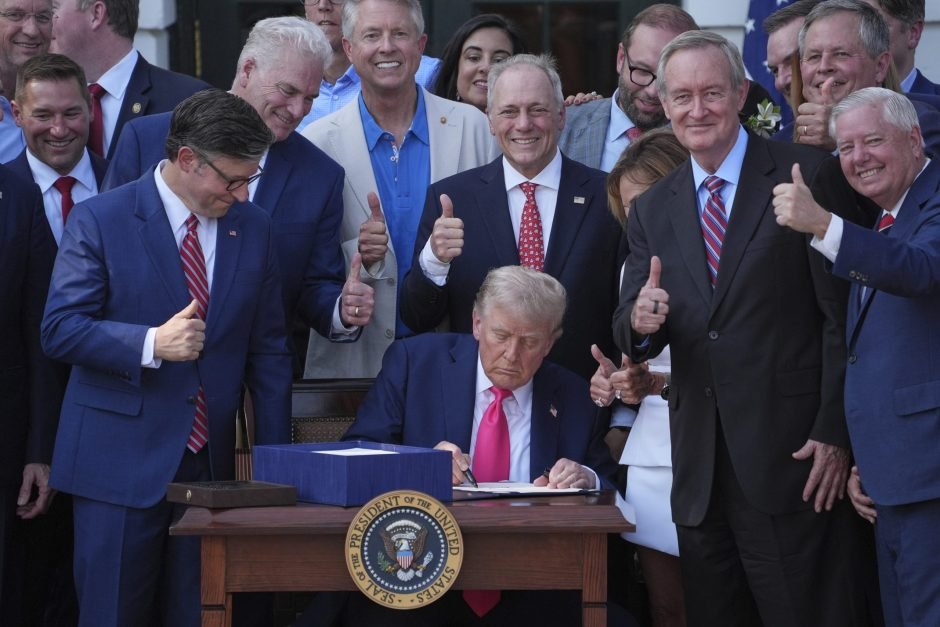
    WASHINGTON – With his “big, beautiful” budget now law, President Donald Trump turned his attention again to another priority – tariffs.

    Trump threatened a new 50% tariff on imported copper, a move decried by environmentalists who oppose efforts to establish new copper and nickel mines on the Iron Range.

    “Broad tariffs on copper, including those from key allies, artificially inflate demand and falsely justify expanding domestic copper mining that would irreparably damage America’s favorite wilderness – the Boundary Waters Canoe Area Wilderness,” said Ingrid Lyons, executive director of Save the Boundary Waters, in a statement.

    Trump also threatened Brazil with 50% tariffs if the government of leftist President Ignacio Lula da Silva does not end a “witch hunt” against former right-wing president Jair Bolsonaro, a political ally of Trump who is facing trial for allegedly attempting to stage a coup.

    Trump also sent letters threatening tariffs of up to 40% to 21 other nations, many in Asia and the Middle East, that would go into effect on Aug. 1 unless deals were cut with his administration.

    Unlike the chaos unleashed on the stock market after Trump announced tariffs on trading partners earlier this year, Wall Street’s reaction this time was much more muted. Perhaps that’s because Trump has threatened many nations with tariffs but imposed a lot fewer.

    The other news this week is that Defense Secretary Pete Hegseth apparently acted without White House authorization when he paused weapons systems to Ukraine last week.

    Trump suggested on Tuesday that Hegseth was not responsible for the decision. Asked during a Cabinet meeting whether he approved of the pause in shipments, Trump avoided a direct response, saying only that the United States would continue to send defensive weapons to Ukraine.

    Pressed again on who authorized the pause, Trump replied, “I don’t know, why don’t you tell me?”

    The incident prompted a whisper campaign in the nation’s capital about whether Hegseth, a former Fox News host with no experience managing a large company or government agency, will remain much longer in his job.

    Hegseth paused weapons to Ukraine without authorization in February and was a key figure in “Signalgate” — a security incident involving high-ranking officials, including Hegseth and National Security Adviser Mike Waltz — in which discussions of a planned military strike on Houthi targets in Yemen were held on an unsecured app. Journalist Jeffrey Goldberg was mistakenly added to the chat and published details about it in The Atlantic.

    GOP Sen. Thom Tillis of North Carolina indicated he had buyer’s remorse about voting for Hegseth’s confirmation to lead the Pentagon. In an interview with CNN on Wednesday, Tillis said the defense secretary appeared “out of his depth as a manager of a large, complex organization.”

    Crypto Week!

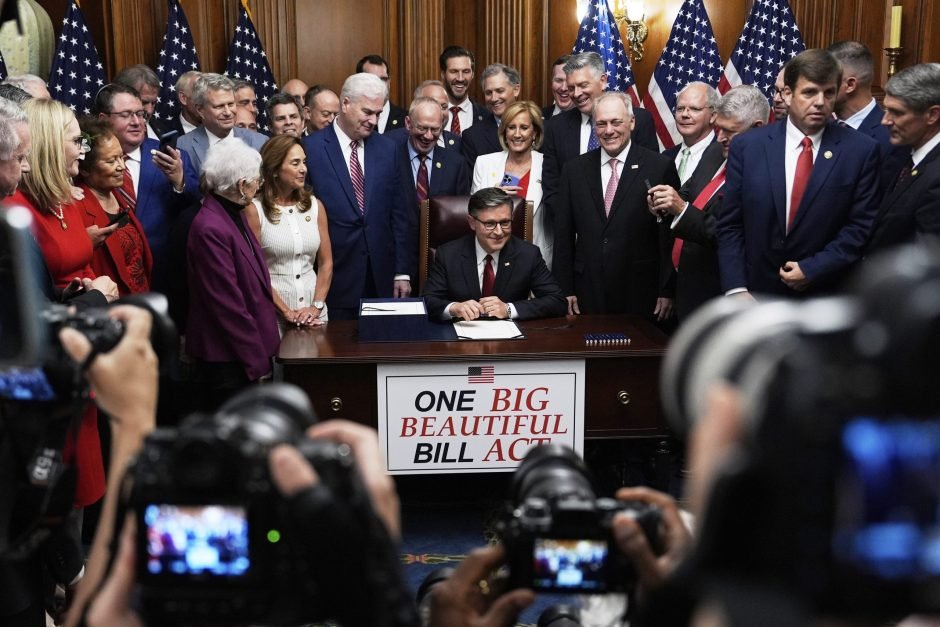
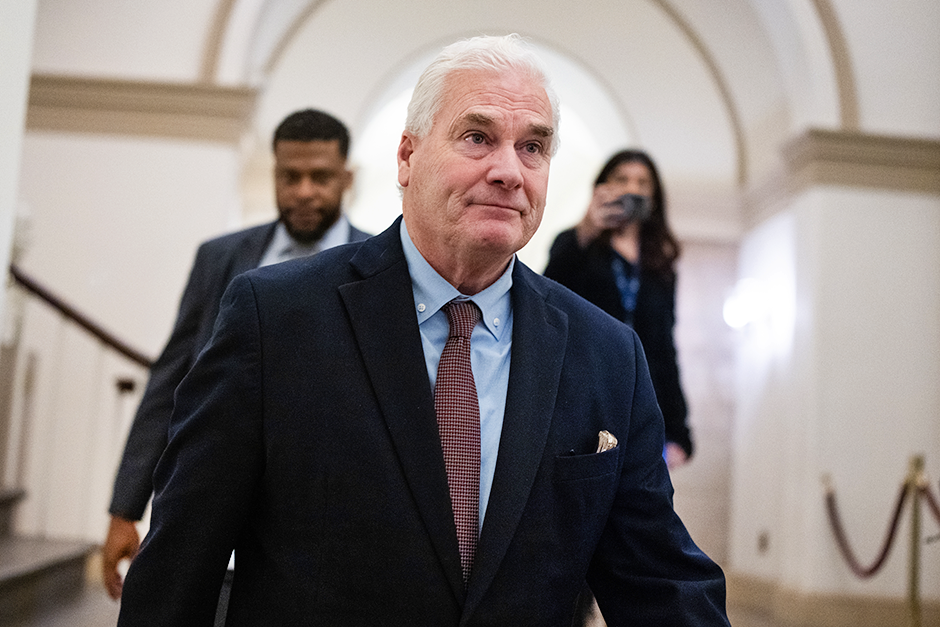
    Meanwhile, the fortunes of Rep. Tom Emmer, R-6th District, are rising. As House Majority Whip whose duties focus on rounding up votes for GOP legislation, Emmer was challenged last week to win support for President Trump’s “One Big, Beautiful Bill Act.”

    Once again, Trump stepped in to help persuade recalcitrant ultraconservative “Freedom Caucus” lawmakers to vote for a bill they did not like, this time because the legislation would greatly add to the deficit. Trump also praised Emmer, whom he once called a RINO (Republican In Name Only) who did not deserve to be Speaker of the House when the Minnesota Republican failed in his attempt to win the position in 2023.

    “Minnesota: You have a GREAT Congressman in Tom Emmer. As Majority Whip, he was instrumental in helping us get the “ONE BIG BEAUTIFUL BILL ACT,” the BIGGEST OF ITS KIND ever approved in Congress. He is a fantastic guy with a fabulous wife Jacqueline and family. Thank you to Tom Emmer and family!,” Trump gushed on Truth Social.

    Emmer is set to have another victory as the U.S. House considers his crypto legislation next week, which has been dubbed “Crypto Week” because votes are planned on three industry backed bills.

    The effort, backed by Trump, who launched his own crypto coin shortly before taking office and invited top investors to an exclusive dinner at one of his golf clubs, is aimed at boosting and legitimizing cryptocurrency by establishing regulations for the digital currencies that are weaker than those for traditional financial assets.

    Emmer’s Financial Innovation and Technology for the 21st Century Act (FIT21), was approved by the U.S. House in the last Congress, but never cleared the U.S. Senate. It would classify many digital assets as commodities that would be regulated by the Agriculture Department instead of the Securities and Exchange Commission, an agency that Emmer had bitterly feuded with during the Biden administration.

    But the U.S. House plans to consider a similar bill, co-sponsored by Emmer, next week. Rep. Angie Craig, D-2nd District, is also a sponsor of the Digital Asset Market Clarity Act of 2025. 

    Because of his efforts, Emmer, who established the Congressional Crypto Caucus with Rep. Ritchie Torres, D-N.Y., to mobilize support for crypto currency, has become an industry leader.

    “Tom Emmer’s significance to the crypto market is rooted in his consistent and aggressive push for regulatory clarity,” said a recent post in Blockchain News.

    Omar attacked, again 

    Rep. Ilhan Omar, D-5th District, no stranger to attacks on her Somali background and progressive ideology, was targeted again this week in an Islamophobic and – in this era of escalating political violence – potentially dangerous posting on X by Florida Republican Rep. Randy Fine.

    Omar’s criticism of the invitation to visit Washington, D.C., this week to  “war criminal” Benjamin Netanyahu prompted Fine to write, “I’m sure it’s difficult to see us welcome the killer of so many of your fellow Muslim terrorists.”

    “The only shame is that you serve in Congress,” Fine added.

    The International Criminal Court issued an arrest warrant in November against Netanyahu, Israel’s prime minister, over alleged war crimes in Gaza. The Israeli leader denies the charges.

    Fine’s post prompted condemnation from the House Democratic leadership.

    “The unhinged, racist and Islamophobic comments made by Randy Fine about Rep. Ilhan Omar are bigoted and disgusting,” the Democrats said in a statement. “We are just weeks removed from heinous acts of political violence targeting elected officials in Minnesota for assassination.”

    Fine dismissed their criticism in a subsequent online post, saying the Democratic leaders are sympathizers of extremism.

    In case you missed it:

    -Some Minnesotans stand to win and others stand to lose in President Trump’s “big, beautiful” budget bill, and we tallied up the sides.

    -We also explained how Medicaid cuts in that bill could affect rural hospitals in Minnesota that rely heavily on Medicaid payments.

    -And Matthew Blake wrote about the impact of the bill on Minnesota’s clean energy goals.

    -Meanwhile, Matthew Blake took a look at Minnesota’s mascot law after the Trump administration began a probe of New York state, which has a similar law against the use of American Indian mascots and logos.

    Your questions and comments

    A reader was very critical of the “big, beautiful” budget act’s tax cuts and cuts to social welfare programs.

    “As much as I hate this bill, it doesn’t impact me directly,” the reader wrote. “What it represents is a transfer of wealth away from young people to those who are older and more successful. For example, how many children will go hungry and homeless to finance one year of tax cut for those who are better off … ?”

    Please keep your comments, and any questions, coming. I’ll try my best to respond. Please contact me at aradelat@minnpost.com.

    The post D.C. Memo: It’s tariff time for Trump – again appeared first on MinnPost.

  • ‘Seismic’ Medicaid changes will be rough on rural hospitals

    ‘Seismic’ Medicaid changes will be rough on rural hospitals


    For months, rural medical providers nervously waited for Congress to finalize President Donald Trump’s “big beautiful” budget bill, which would cut at least $1 trillion from Medicaid, a government program that is a critical source of funding. 

    Now that the mega bill has been signed into law, rural medical administrators are scrambling to determine how hard they will be hit. 

    For rural hospitals already operating on tiny margins, looming Medicaid cuts will dial up the financial pressures they’re feeling even more, said Jean MacDonell, president and CEO of Fairview Range hospital in Hibbing, identified as one of the most vulnerable in the state.

    Like all rural hospitals, Medicaid, a joint federal-state health program for the poor, is a key source of funding at Fairview Range. When patients lose Medicaid — projected to occur to at least 150,000 Minnesotans as a result of Trump’s budget plan, which would also make permanent a package of tax cuts — the care provided to them at hospitals and clinics is more likely to go uncompensated.

    “I have heard some say, ‘I don’t have Medicaid so this isn’t going to impact me,’” MacDonell said. “We’re trying to educate the communities to the fact that just because you don’t have Medicaid, we’re all going to be impacted by this.”

    Fairview Range receives up to 25% of its revenue from Medicaid, placing it among the top medical facilities in the state when it comes to dependence on the program. 

    Health care leaders have long said Medicaid reimbursements aren’t keeping up with rising costs. Yet instead of getting higher reimbursements rates, facilities are now preparing to take a net hit on Medicaid payments. Many of these facilities, according to state hospital financial data, already aren’t bringing in enough revenue to offset expenses.

    The Center for Healthcare Quality and Payment Reform offered a bleak landscape for rural hospitals in an analysis of their financial situation released before the budget bill was approved by Congress and signed into law by Trump last week.

    It determined that at least nine rural hospitals in Minnesota were at immediate risk of closing.

    Even before the new cuts to Medicaid take effect, a community hospital in rural Nebraska announced it was closing because of “anticipated budget cuts” due to the budget bill.

    The budget bill would cut Medicaid in several ways. It would impose new reporting and work requirements on beneficiaries that are aimed at eliminating even those who qualify from the rolls. It also puts restrictions on a mechanism known as the provider tax that states use to leverage more Medicaid funding from the federal government.  

    The Hibbing facility was one of two in Minnesota to be labeled at risk by four U.S. Democratic senators who opposed the budget plan. The Mayo Clinic Health System in Fairmont was the second. It did not respond to requests or information.

    ‘Seismic changes’

    Mark Jones, executive director of the Minnesota Rural Health Care Association, said it’s more expensive to provide medical care in rural areas than in the state’s suburbs and large cities and towns.

    “It’s mainly an economy of scale,” Jones said. “We don’t have the volume.”

    Jones said rural hospitals and clinics “are not always busy,” so their profit margins are slim. He also said that at least 9% of rural facilities are operating on negative margins “and there’s little opportunity to turn that around.”

    With negative profit margins, and prospects of losing more money, hospitals will have to look at the services they are providing, and possibly cut some types of services and care, Jones said. 

    !function(){“use strict”;window.addEventListener(“message”,(function(a){if(void 0!==a.data[“datawrapper-height”]){var e=document.querySelectorAll(“iframe”);for(var t in a.data[“datawrapper-height”])for(var r,i=0;r=e[i];i++)if(r.contentWindow===a.source){var d=a.data[“datawrapper-height”][t]+”px”;r.style.height=d}}}))}();

    A unique challenge for Hibbing’s hospital is its inpatient behavioral health unit. These beds are precious commodities around the state, and MacDonell said they’re also the primary reason for Hibbing serving a higher percentage of Medicaid patients than Grand Itasca hospital in Grand Rapids, a sister facility about 35 miles to the west.

    Patients mostly come in from the surrounding 100-mile radius, although coming from further out isn’t uncommon due to mental health bed shortages. Losing this unit, along with any other services currently in place, would create more strain on a stressed system. Other facilities would need to pick up the slack. Patients would need to travel farther away from home for care. 

    Mental health providers outside hospital and clinic settings couldn’t fill in gaps if they’re also feeling the crunch of Medicaid cuts. Shannon Brown, CEO of Fernbrook Family Center in southern Minnesota, brought this up during a press call last week on the far reaching effects of Medicaid cuts. 

    About 75% of Fernbrook’s clients use Medicaid as primary or secondary insurance coverage, Brown said. Many of them don’t have a therapist within 30 miles of them.

    “If we did not go to them they would not receive care,” Brown said.

    MacDonell sees the Hibbing and Grand Rapids hospitals as safety nets, because without them patients don’t have many other nearby options. More traditional safety net providers, officially known as federally qualified health centers (FQHC), are in place to serve underinsured or uninsured patients. They’re also feeling anxious about Medicaid cuts.

    FQHCs provide care in exchange for sliding fees based on the patient’s ability to pay. Minnesota has 17 facilities like this in both urban and rural communities, with about half of their patients enrolled in Medicaid.

    By no stretch of the imagination will the new federal budget help, said Jonathan Watson, CEO of the Minnesota Association of Community Health Centers.

    “This will be one of the most seismic changes in the history of Medicaid, where things are taken away from folks,” he said. “This is somewhat uncharted territory.” 

    Closing certain sites or reducing services would be considered if the hit to revenue is as bad as it seems. Watson was initially hopeful about a last minute provision inserted in the act because of concerns from GOP senators about the impact Medicaid cuts would have on rural health facilities.

    This $50 billion provision, known as the Rural Health Transformation Program, was aimed at defraying the costs to rural hospitals of the increase in uncompensated care that the Medicaid cuts will usher in, especially after work requirements are imposed in December of 2026. 

    But Watson is less optimistic after seeing what Congress ultimately approved. So is Jones, who said “it is helpful, but we don’t know how the money will be distributed.”

    Others say the $50 billion is not enough to cover the impact of a loss of Medicaid patients and the growth of uninsured patients.

    Apart from the negative impact on patients, losing a hospital as a result of Medicaid cuts would have a devastating economic impact on a community. Fairview Range is Hibbing’s biggest employer. The same is true for Grand Itasca in Grand Rapids, MacDonell said. Health care is the state’s largest employment sector overall.

    Jean MacDonell

    “In rural areas, places that prosper have medical facilities and schools,” said Louis Johnson, an economics professor at the College of St. Benedict and St. John’s University.

    Johnson said states like Minnesota might have to bail out rural medical systems, and raise taxes to do so. 

    MacDonell expects the ramifications of the bill to start hitting hospitals in late 2026, when the work requirements kick in.

    Between now and then she’s in communication with other hospital leaders to prepare. She wants patients to know the hospitals are still there for them, while also making sure they and policymakers know how challenging the immediate future will be. 

    “We’re trying to balance raising concerns about the changes that are coming,” she said. “We don’t want patients to have to drive further to get care.”

    The post ‘Seismic’ Medicaid changes will be rough on rural hospitals appeared first on MinnPost.
  • Trump’s win on domestic agenda makes winners of some Minnesotans, losers of others

    Trump’s win on domestic agenda makes winners of some Minnesotans, losers of others

    WASHINGTON – President Donald Trump, who has tried with limited success to make huge changes in federal policy through executive power, scored a huge victory when Congress approved a massive budget bill that will speed his domestic agenda.

    The legislation would roll back policies implemented by former President Joe Biden aimed at fighting climate change and expanding health care coverage for low and middle-income Americans. But it would create winners, too, especially among the state’s corporations and wealthy taxpayers.

    Here’s a breakdown of some Minnesotans who would gain, or lose, under the One Big Beautiful Bill Act:

    The winners

    –The legislation would make permanent trillions of dollars in corporate tax cuts enacted in 2017 during Trump’s first term and expand other tax breaks for businesses. The corporate tax rate would be permanently lowered to 21% from the 35% big businesses had to pay on their profits before Trump implemented his tax cuts during his first term. Those and other business tax breaks, including deductions for new machinery, equipment, and research and development that were slated to expire at the end of the year are now permanent.

    Because Trump’s tax breaks are now permanent, wealthy Minnesotans, households earning $220,000 or more  a year, will continue to benefit from the biggest tax break. The Internal Revenue Service says at least 400,000 Minnesota households reported adjusted gross incomes of $220,000 or more in 2022.

    Minnesotans who pay a lot in state income taxes and property taxes will benefit because the bill raised the cap on state and local tax (SALT) deductions from $10,000 to $40,000. The smaller cap was placed on this deduction when Trump’s tax cuts went into effect in 2017. But House Republicans in swing districts in “blue” states with high income and property taxes sought the change — and won. At least temporarily. Unlike most of the other tax breaks, which are permanent, this one will expire in five years.

    Waitresses and waiters will also benefit — temporarily — from an end to some federal taxation on tips. But that deduction is capped at $25,000 per year and tip earners will still be required to pay Social Security taxes, as well as state and local income tax, on those earnings. Also, this tax break expires after three years.

    The state’s farmers will benefit from higher crop subsidies and more generous crop insurance, as well as better dairy margin prices, increased price protections for beet and cane sugar producers and expanded livestock loss insurance.

    Some seniors will benefit from a new $6,000 deduction for those who are 65 or older. However, the deduction will phase out for individuals earning more than $75,000 a year and completely disappear for single filers with earnings above $175,000. Like some of the other new tax breaks, this deduction will end in three years — after Trump’s current term in office.

    Some new car buyers will also benefit from the bill’s provision that allows a deduction of up to $10,000 a year in interest paid on qualifying auto loans. But this deduction, which will end after three years, is only applicable to new cars assembled in the United States — a limitation that  manufacturers say would exclude many popular imports.

    Minnesota’s defense contractors are also winners as the budget act boosts defense spending by $150 billion, with much of the funding going to new weapons systems made by major contractors.

    The losers

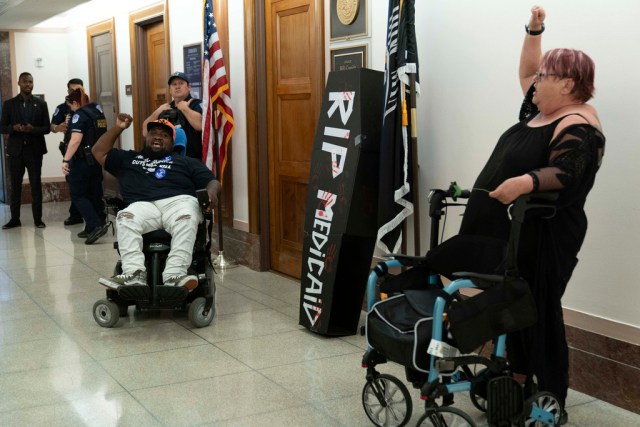
    The state’s Medicaid recipients would be required, beginning in December of 2026, to meet new requirements that they work, study or volunteer at least 80 hours a month. Most Medicaid recipients already work, but the red tape associated with this requirement, and other new reporting requirements, is expected to result in the end of coverage for millions of individuals who qualify for this joint federal-state program for low-income people, known as Medicaid Assistance in Minnesota.

    Hospitals and health clinics, especially those in rural areas, that heavily depend on Medicaid patients would also be losers.

    The approximately 90,000 Minnesotans who purchase their health care through MNsure and are helped by Biden’s expansion of Affordable Care Act subsidies would also lose that help as the Trump budget bill ends those subsidies, effective at the end of this year.

    Low-income families and individuals who are dependent on the Supplemental Nutrition Assistance Program (SNAP), the official name for food stamps, would also be adversely affected. Beneficiaries will now be subject to work requirements until they are 65 years old, and starting in 2028, states will be required to pay a portion of food benefit costs, which are now fully paid by the federal government. States will also have the money the federal government pays them to run the program slashed in half.

    According to a Yale Budget Lab analysis, cuts to Medicaid and food stamps, both of which benefit low-income Americans, will cost the bottom 20% of taxpayers $560 a year.

    The “big beautiful” act would also take away benefits and relief from current student loan borrowers and college-bound families. The new law will phase out most current income-driven student loan repayment plans by July 2026. New borrowers who take out any federal student loans starting in July 2026 would have only two repayment plan options: a Standard plan on a 10-to-25-year term, or the RAP plan, which requires a 30-year repayment period before borrowers qualify for student loan forgiveness

    Homeowners who want to convert their homes to solar energy and make use of energy-efficient technology will lose their Biden-era tax credits. So would owners of certain electric vehicles, who are now eligible for a $7,500 tax credit. Owners of electric cars will also suffer from the end of Biden’s incentives to establish new electric vehicle charging stations across the nation.

    Minnesota’s green energy industry would also take a hit with the end of Biden tax credits aimed at fighting climate change. Those green investments have brought Minnesota about $1 billion.

    The nation’s immigrants — both undocumented and legal residents — will perhaps feel the biggest impact from the Trump budget. Access to some health benefits will be limited for green card holders, who will also face new taxes on money they send to family overseas. The budget will greatly expand Trump administration deportation efforts by boosting spending on border security by $171 billion, with $45 billion earmarked for new detention centers and $47 billion for a border wall Trump once insisted would be paid for by Mexico. Another $3.5 billion is set aside to reimburse states for immigration enforcement and cooperation.

    Car buyers, home purchasers and other consumers will also be hurt by the likelihood of higher interest rates because the budget act has raised the nation’s debt ceiling by $5 trillion and the national debt by $3 trillion. Businesses seeking to raise capital will also be affected because the increase in the national debt will force the United States to pay higher interest on Treasury bonds, notes and bills, resulting in higher interest rates for consumer and business loans.

    The post Trump’s win on domestic agenda makes winners of some Minnesotans, losers of others appeared first on MinnPost.
  • D.C. Memo: In wake of Trump’s big win, Minnesota GOPers downplay Medicaid cuts while Dems decry them

    D.C. Memo: In wake of Trump’s big win, Minnesota GOPers downplay Medicaid cuts while Dems decry them

    WASHINGTON – The drama and stakes could not have been higher here this week as Republicans in Congress used their political muscle to approve President Donald Trump’s legislative agenda, which would raise the nation’s debt ceiling, cut deeply into poverty programs and make permanent a massive package of tax breaks.

    The U.S. House approved the massive budget bill Thursday on a 218-214 vote, with all Minnesota Democrats voting “no” and all Minnesota Republicans voting “yes.” Two Republicans – Reps. Thomas Massie of Kentucky and Brian Fitzpatrick of Pennsylvania – voted against the bill, but it would have taken four GOP defections to derail it.

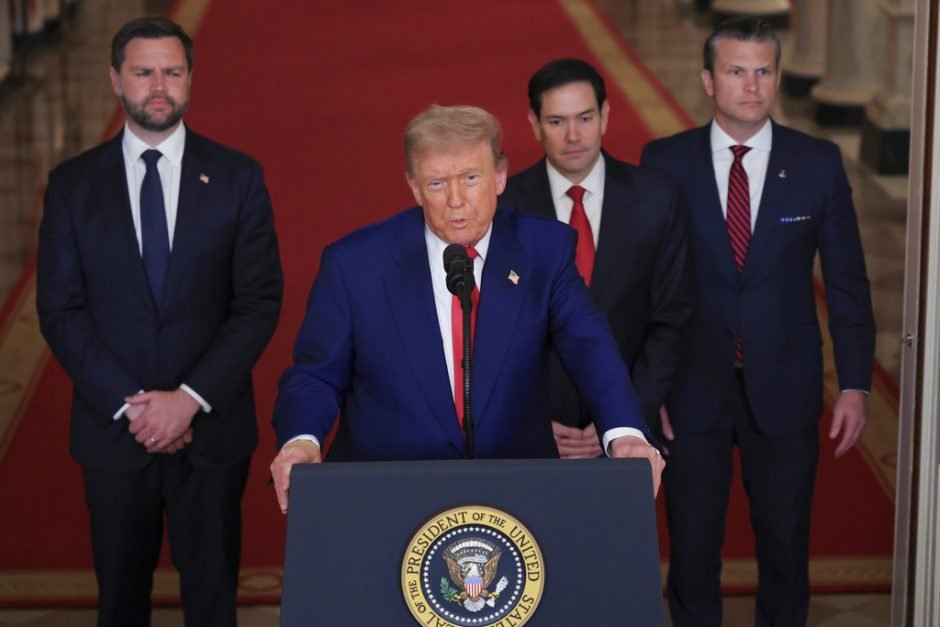
    This week’s drama began when Trump’s “One Big Beautiful Bill Act” was narrowly approved by the U.S. Senate Tuesday during a marathon voting session, with Vice President JD Vance breaking a 50-50 tie after three Republicans joined all Democrats in opposing the legislation.

    Democrats, including Sen. Amy Klobuchar, D-Minn., tried but failed to amend the legislation, which would cut more than $1 trillion from Medicaid, other federal health care programs and food stamps.

    Klobuchar tried to derail a provision that would shift some of the cost of the Supplemental Nutrition Assistance Program (SNAP), the official name for food stamps, to the states. Currently, the federal government pays 100% of the cost of the benefits.

    Klobuchar also tried to undermine an effort by Republican leaders to win the support of Alaska Republican Sen. Lisa Murkowski – who had had grave reservations about the bill – by exempting Alaska from the proposed cost shift in the SNAP program.

    Murkowski, who could have killed the massive budget bill, was blasted on social media for her vote and for her long explanation of why she flipped to support the bill. She admitted “while we have worked to improve the present bill for Alaska, it is not good enough for the rest of our nation – and we all know it.”

    Then the bill was rushed to the House for final approval in the hopes it could be signed by Trump at a celebratory event on July 4.

    House Democrats tried to slow a final vote on the bill, with House Minority Leader Hakeem Jeffries, D-N.Y., speaking for hours against it on the House floor.

    Majority Whip Tom Emmer, R-6th District, focused on the benefits of the tax breaks – saying little of the legislation’s cuts to Medicaid and other social programs – in trying to win public support for the budget bill, which polls showed was becoming increasingly unpopular.

    “Democrats like @RepJeffries who oppose the One Big Beautiful Bill are opposing the largest tax cut in history for workers and middle-income families,” Emmer posted on X.

    The GOP lawmaker also posted testimonials from Minnesotans who said they would benefit from the tax cuts, including a single mother from Lexington who works as a waitress and said that keeping all of her tips would help her family buy groceries and pay for her daughter’s hockey expenses.

    But, under the legislation, tips would still be subject to Social Security taxes and the exemption from federal income taxes would last only three years.

    Meanwhile, the tax breaks, which would benefit the wealthiest Americans the most, would be permanent, costing more than $5 trillion over the next 10 years.

    And the bill’s savings from the safety net cuts would not be enough to offset the cost of those tax breaks, which are projected to add more than $3 trillion to the federal debt by 2034.

    Emmer also said the legislation would “eliminate taxes on Social Security for 88% of America’s seniors.”

    “That’s the largest tax break for seniors in American history!” Emmer posted on X.

    Although Trump campaigned on a promise of ending federal Social Security taxes, the budget bill does no such thing. But it would provide a new $6,000 deduction for seniors reporting less than $75,000 in income, with the deduction phasing out gradually for those above that income threshold.

    While the tax package will benefit upper income and some middle-income earners, the Congressional Budget Office said the legislation will raise taxes on the poorest Americans by up to $1,600 per year.

    The politics of the ‘big, beautiful bill’

    Rep. Pete Stauber, R-8th District, said the “historic legislation” would “deliver a new Golden Age for the American people” in a statement released after Thursday’s vote.

    Stauber praised the legislation’s “largest tax cuts in our nation’s history” and its rollback of regulations on the oil and gas industry, as well as the millions the bill would provide to bolster federal immigration efforts – including the completion of a border wall – and the nation’s military.

    Yet the bill’s cuts to Medicaid could endanger the fiscal health of rural hospitals and clinics, including some in his Iron Range-based district.

    Democrats have made those cuts to Medicaid and other poverty programs a rallying cry in their opposition to the bill.

    “The impact of this bill on the United States is hard to quantify,” said Rep. Kelly Morrison, D-3rd District, a practicing OB-GYN before she was elected to Congress. “It will be a national security threat because it will make Americans sicker and poorer.”

    Morrison on Wednesday joined other white lab coat-wearing members of a newly formed Democratic Doctors Caucus to protest the Medicaid cuts outside House Speaker Mike Johnson’s office in the U.S. Capitol.

    Morrison said the Medicaid cuts, which would be obtained largely through the imposition of new work requirements and other reporting mandates, would result in the closure of hospitals, clinics and nursing homes that are heavily dependent on Medicaid revenue.

    The legislation also shifts more of the cost of the program, which is shared between the federal government and the states, onto states like Minnesota.

    In an emailed statement, Gov. Tim Walz accused Emmer and Stauber of “voting to tear away health care from a quarter million Minnesotans so Trump can give tax cuts to billionaires.”

    “We will do everything we can to help Minnesotans impacted by their Medicaid cuts, but we’ll never fully reverse the damage they’ve caused,” Walz said.

    Rep. Ilhan Omar, D-5th District, said the bill represented “the biggest transfer of wealth from the poor to the rich.”

    Democrats hope the unpopular measures in the bill will help them win back the U.S. House in next year’s midterm elections.

    But many of those unpopular provisions, including the Medicaid work requirements, won’t be effective until after Americans go to the polls in November 2026. The tax breaks, however, will be effective immediately.

    One cut to health care that will take effect before the election is the end of enhanced subsidies that benefit those who purchase insurance through an Affordable Care Act exchange.

    Enhanced subsidies lowered insurance premiums for policies purchased through MNsure for about 90,000 Minnesotans. 

    The Congressional Budget Office has estimated that about 6 million Americans will lose health insurance coverage because of the end of the enhanced subsidies.

    In case you missed it:

    -The assassination of state Rep. Melissa Hortman and the near-fatal shooting of state Sen. John Hoffman has rekindled a debate about political violence. Reporter Shadi Bushra has some facts and stats.

    -Minnesota has been derided as a ‘sanctuary’ state that fails to help federal agents in their quest to deport immigrants, but there is a growing number of Minnesota sheriffs who have signed agreements to work with ICE.  

    -Skateborders rejoice! Brian Arola has a story on new grants that will fund new skate parks.

    Your questions and comments

    Citing the story of a co-worker from Africa whose brother was arrested for dissent – and later executed – a reader decried the hardball tactics of federal immigration agents.

    “Fear and intimidation is the MO of an authoritarian regime,” the reader wrote. “This is exactly the playbook of Trump although he is probably oblivious to many of the horrendous actions of his supposed subordinates as his focus is and always will be on himself.”

    Please keep your comments, and any questions, coming. I’ll try my best to respond. Please contact me at aradelat@minnpost.com.

    The post D.C. Memo: In wake of Trump’s big win, Minnesota GOPers downplay Medicaid cuts while Dems decry them appeared first on MinnPost.
  • Minnesota sheriff’s departments seek to cooperate with ICE

    Minnesota sheriff’s departments seek to cooperate with ICE


    WASHINGTON – After President Donald Trump threatened “sanctuary” cities and towns with a cutoff of federal funding – among other things – seven rural Minnesota counties signed agreements with Immigration and Customs Enforcement to help implement federal immigration law.

    Cass, Crow Wing, Itasca, Freeborn, Jackson, Kandiyohi and Mille Lacs county sheriffs have signed memorandums of understanding (MOU) with ICE to cooperate one way or another with that agency in its efforts to round up and deport undocumented aliens. 

    Trump won all of those counties in a landslide in last November’s election, although the president failed to win the state.

    Most of the agreements were entered into in February and March, although the Kandiyohi County sheriff’s department signed its agreement with ICE in May and the Mille Lacs County sheriff’s department signed its MOU just last week.

    Although all the sheriff’s departments have agreed to cooperate with ICE, none of them are ready to implement their plans, which include 40 hours of training for the officers who would enforce federal immigration law. And the degree of cooperation that has been agreed to varies from county to county.

    The Crow Wing County sheriff’s department, for instance, has agreed to help ICE round up undocumented immigrants it comes in contact with in the course of its police work. “But we’re not going on raids or anything like that,” said Crow Wing County Sheriff Eric Klang.

    He also said the crimes that would prompt cooperation with ICE “would have to be serious.” 

    “We’re not talking about shoplifting,” Klang said.

    Klang also agreed to serve civil detainers for ICE, meaning it would serve warrants on undocumented aliens who would be picked up for deportation proceedings by ICE.

    Under federal law, local and state police are not required to enforce federal immigration law. 

    And there are plenty of legal opinions, including one issued this year by Minnesota Attorney General Keith Ellison, that have determined that local law enforcement does not have to comply with an ICE detainer request – unless it is accompanied by a court order.

    And the American Civil Liberties Union (ACLU), which has forcefully opposed the program, says it has led to civil rights violations and deportations of people who have been detained for lesser violations, like a broken tail light.

    State laws in California, Illinois, Washington state, Connecticut, Oregon and New Jersey prohibit such cooperation – but Minnesota has no such law. 

    Klang is also seeking to sign an agreement with the U.S. Marshals Service, offering up empty space in the county jail to hold immigrants detained by ICE.

    Eric Klang Credit: Submitted photo

    He said the 287-bed jail has only been holding 70 to 80 individuals, and there’s plenty of room for ICE to use.

    But Klang said he needed permission from the county board and said he has been going back and forth between the U.S. Marshals Service and the board about his proposal.

    “It would basically require very little of us,” Klang said. “And it would bring us more than $100 a day per inmate. It would be a money maker for the county and the state.”

    ‘Not a great idea’ 

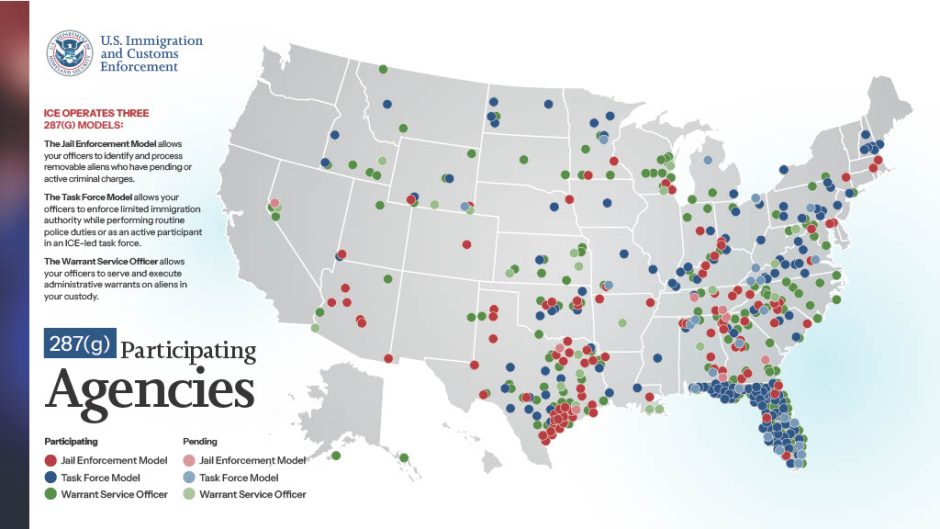
    The partnership between ICE and local law enforcement was established in 1996 by Congress when the program was included as section 287(g) of the  Immigration and Naturalization Act of 1996.

    In the past, few counties signed up for the 287(g) program, which allowed the Department of Homeland Security to delegate specified, expanded immigration enforcement powers to local deputized police officers.

    But hundreds of law enforcement agencies across the country, including the seven in Minnesota, agreed to join the 287(g) program after Trump won his second term in office and expanded the program’s reach.

    “The 287(g) program allows ICE — through the delegation of specified immigration officer duties — to enhance collaboration with state and local law enforcement partners to protect the homeland through the arrest and removal of aliens who undermine the safety of our nation’s communities and the integrity of U.S. immigration laws,” ICE says on a website that tracks the agreements.

    Last month, the Department of Homeland Security posted a list of jurisdictions it called “sanctuaries” because they were deemed to have “immigrant friendly” policies that hindered Trump’s massive deportation efforts.

    The list, which included the Twin Cities and 20 Minnesota counties (but not those that have applied to join the 287(g) program) was aimed at identifying jurisdictions that would be under threat of losing federal funding.

    But the list was replete with errors and taken down from the DHS website after being posted for less than 24 hours.

    Unlike his counterpart in Crow Wing County, Mille Lacs County Sheriff Kyle Burton said he has agreed to a very limited partnership with ICE.

    He said he will allow ICE to deputize a small percentage of his 80-member force, which included personnel at the county jail and dispatchers, as well as law enforcement officers.

    Burton said there are few immigrants — both legal residents and undocumented — in Mille Lacs County. But he’s concerned about the fentanyl and methamphetamine that has poured into the county from Mexico and wants to be able to use every tool at his disposal to combat that scourge.

    “We rarely see anybody cooking meth here,” he said. “It’s all coming across the border.”

    Trump’s hardline campaign against immigration also seems to have resonated in the very “red” rural county. “A lot of my constituents have expressed concern about this, even before the election,” he said.

    Freeborn County Sheriff Ryan Shea said he wants ICE to deputize nine or so of the 40 employees at the county jail – which is already an ICE detention center – to be able to serve detainers.

    And Itasca County Sheriff Joe Dasovich said he was motivated to join the 287(g) program after two undocumented immigrants, posing as plainclothes police, went door-to-door threatening elderly residents and strong-armed them into giving over a total of about $40,000.

    When implemented, a yet undetermined number of Itasca County law enforcement officers will be able to enforce limited federal immigration laws during their routine police duties.  

    Like other sheriffs, Dasovich said he considered partnering with DHS a boon to his department’s efforts to enforce the law and increase its crime-fighting “arsenal.”

    Meanwhile, Jackson County has signed two agreements. One would allow it to serve detainers and the other would allow its deputized officers to interrogate people in its custody about their immigration status and send those who are undocumented to ICE for deportation proceedings.

    Julio Zelaya, policy and advocacy director at the ACLU of Minnesota, said “it’s a cautionary situation to be working with ICE.”

    “They put themselves in the crosshairs of community mistrust,” said Zelaya of the counties that have signed 287(g) agreements. “It’s just not a great idea.”

    The post Minnesota sheriff’s departments seek to cooperate with ICE appeared first on MinnPost.
  • Parliamentarian’s wrench into ‘big, beautiful’ bill might spare Minnesota some Medicaid cuts

    Parliamentarian’s wrench into ‘big, beautiful’ bill might spare Minnesota some Medicaid cuts


    man in suit speaks at news conference

    WASHINGTON – The Senate Parliamentarian dealt a serious blow to the U.S. Senate’s “big beautiful” bill on Thursday, a move that threatens President Trump’s economic agenda and spares Minnesota from some of the steep Medicaid cuts that would have cost the state hundreds of millions of dollars.

    The bill is being considered under the reconciliation process, which bars the use of a filibuster but must be subject to the Byrd Rule, which prevents the inclusion of “extraneous” provisions, including those that don’t directly affect spending or revenue and those that make major increases to the deficit.

    John Connolly, deputy commissioner of the Minnesota Department of Human Services and state Medicaid director, was cautious about the rulings made by Senate Parliamentarian Elizabeth MacDonough, who some angry GOP lawmakers demand to be fired.

    “At this point, we aren’t sure about those provisions,” Connolly said of MacDonough’s rulings during a virtual press conference on Thursday.

    A major impact of the parliamentarian’s ruling on Minnesota is the tossing of a provision that would cap the Medicaid provider tax for states that have expanded Medicaid under the Affordable Care Act.

    Most states, including Minnesota, charge extra taxes to medical providers and in return give them higher Medicaid payments. Since the cost of the Medicaid program, known as Medical Assistance in Minnesota, is shared between the state and federal government, those enhanced payments bring more federal matching funds to Minnesota.

    Minnesota’s provider tax is low at 1.8%. But to shore up finances in rural hospitals and other Medicaid-dependent hospitals in the state, the newly adopted state budget would raise that tax to 5.75% on participating hospitals.

    The state hoped to extract an additional $1 billion a year from the federal government for their plan, which must be approved by the Centers for Medicare & Medicaid Services (CMS), but the Senate bill would cap provider taxes at 3.5%. The parliamentarian ruled that the cap violated the Byrd Rule.

    But the provision has already run into political trouble, as several Senate Republicans have voiced deep concern about the provider tax cap’s impact on their rural hospitals.

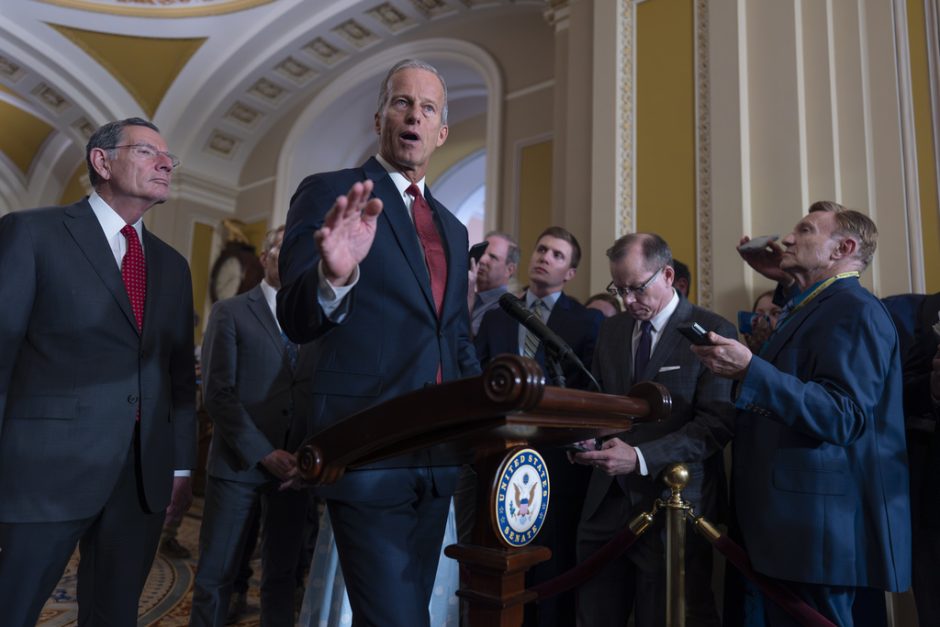
    House Majority Leader John Thune told reporters on Thursday that Republicans might not get “everything we want” on the provider tax, but will hopefully salvage most of the Medicaid “reforms” in the bill.

    Those reforms center on new work requirements, increased out-of-pocket payments for some Medicaid recipients, and other changes in the government health program for the poor that is expected to decrease enrollment.

    two protesters in wheelchairs
    In this file photo, demonstrators protest outside the office of Sen. Bill Cassidy, R-La., regarding the proposed cuts to Medicaid, on Capitol Hill in Washington, Wednesday, June 11, 2025. Credit: AP file Photo/Jose Luis Magana

    Connolly said his department will rush the proposed increase in the provider tax to CMS so it would be considered under current Medicaid rules.

    “It will be considered in alignment with federal rules at the time,” he said.

    Republican leaders in the House and Senate were relying on the provider tax change and other health care restrictions to save billions of dollars to offset the cost of trillions of dollars in tax cuts in the mega bill. Those tax cuts would make permanent a package of tax breaks Trump pushed through Congress in his first term that are expiring at the end of the year.

    Another boost in the state was the Senate bill’s proposal (which was also included in the House reconciliation bill) aimed at punishing states that offered undocumented immigrants health care services.

    That provision would cut the federal Medicaid reimbursement rate Minnesota receives from the federal government from 90% to 80% for those covered under the ACA’s Medicaid expansion.

    Since undocumented immigrants are barred from the Medicaid program — unless they have temporary protected status or another form of permission to live in the United States — states like Minnesota pay for their health care out of state funds. So, the provision was considered more of a punishment, not a reform.  

    Minnesota has recently eliminated the eligibility of undocumented adults from MinnesotaCare, but the state continues to provide state-funded health care to undocumented children.

    Connolly predicted that the change in the reimbursement rate would cost the state $330 million a year in lost Medicaid revenue. But MacDonough’s ruling means that may no longer happen.

    Democrats rejoiced at MacDonough’s decision, saying her ruling has blown a $250 billion hole in the budget reconciliation bill’s savings.

    “I think their best option at this point is to just scrap the whole thing,” said Sen. Tina Smith, D-Minn., in a post on X.

    MacDonough has not yet ruled on all parts of the bill. Still undecided is whether the bill’s defunding of Planned Parenthood will pass the Byrd Rule—and the tax breaks that are at the heart of Trump’s agenda are still under review.

    ‘Obliterated’ or not?

    A big debate in Washington, D.C. this week concerned how much damage last weekend’s air strikes on Iran’s nuclear facilities have incurred.

    At a Thursday press conference, Secretary of Defense Pete Hegseth continued to parrot President Donald Trump’s assertion that the massive air strikes have ended Iran’s nuclear ambitions.

    Hegseth, a Minnesota native and former Fox News show host, also derided media outlets that cited initial intelligence reports that the strikes failed to destroy key enrichment facilities and that those facilities could resume operation within months.

    Hegseth and Chairman of the Joint Chiefs of Staff Gen. Dan Caine based their assessment on AI modeling of test videos of the bunker bombs used in the strikes.

    Hegseth also said the intelligence reports were “leaked because someone had an agenda to try to muddy the waters and make it look like this historic strike wasn’t successful.”

    Hegseth declined to answer questions about reports that Iran had removed its store of uranium from one of those sites. (Trump at a news conference during a NATO meeting in the Hague on Wednesday said it would have been too difficult for Iran to do so.)

    In other news

    ▪️ Reporter Matthew Blake wrote about the state Legislature’s failure to approve new University of Minnesota regents, which caused a bit of a dustup because some regent decisions have created controversy.  Responsibility now falls to Gov. Tim Walz, who will select four interim regents.

    ▪️ Reporter Brian Arola has a story about an $87 million boon to the state’s rural drinking and wastewater projects.

    ▪️ And we wrote about how Minnesota’s inability to keep records of gun sales meant that state authorities were likely unaware of Vance Boelter’s arsenal. 

    This and that

    A reader questioned reports that the wife of alleged shooter Vance Boelter says she knew nothing of any plans to go on a murderous rampage targeting Democratic lawmakers.

    “It has been reported that his wife was stopped leaving the area in a vehicle with guns and $10,000 in cash,” the reader wrote. “Was his large cache of guns something she was unaware of? Did she purchase any of the family’s weapons and ammunition?  

    “She released a statement denying knowledge and responsibility and has said she will have no further statement. I hope the authorities are considering her involvement.” 

    Please keep your comments, and any questions, coming. I’ll try my best to respond. Please contact me at aradelat@minnpost.com.

    The post Parliamentarian’s wrench into ‘big, beautiful’ bill might spare Minnesota some Medicaid cuts appeared first on MinnPost.
  • Minnesota likely knew nothing of Boelter’s gun arsenal, and that’s the law

    Minnesota likely knew nothing of Boelter’s gun arsenal, and that’s the law

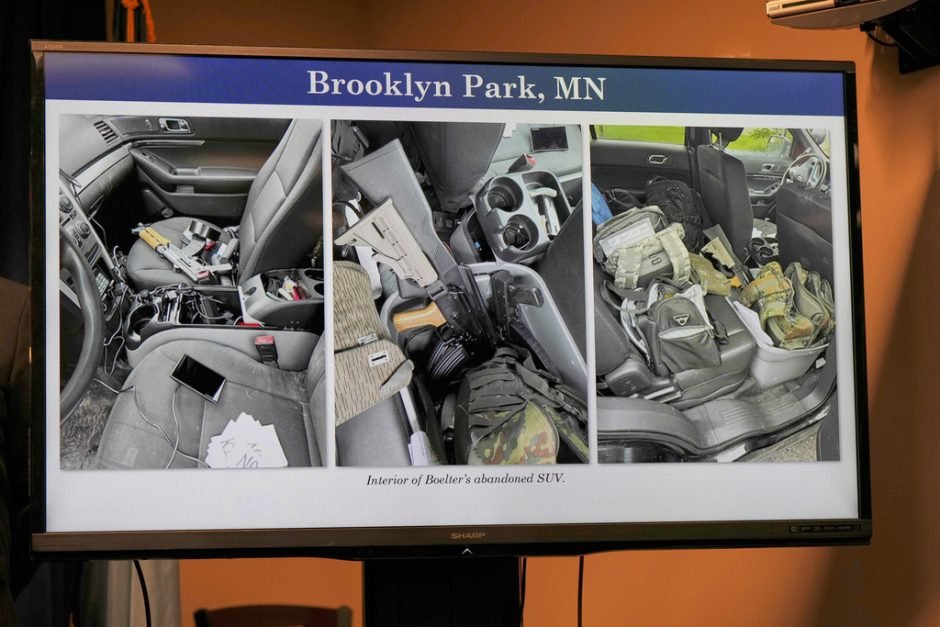
    WASHINGTON – After suspected shooter Vance Boelter escaped from police following a firefight outside Melissa Hortman’s home, officers found firearms in his SUV and a large quantity of ammunition in loaded magazines.

    The criminal complaint against Boelter also said that a dismantled Beretta semiautomatic handgun and several cartridges were found in the area near the murdered lawmaker’s home. Law enforcement also said in the complaint that they found a couple of other handguns in the vehicle Boelter’s wife was driving when she was stopped by authorities after they found her by tracking her cell phone.

    Federal prosecutors are now investigating how Boelter came into possession of the guns in his arsenal. But Minnesota law prohibits public disclosures about gun ownership and even state law enforcement doesn’t know how many guns there are in the state and who owns them, so it’s likely authorities in the state were unaware of Boelter’s stockpile.

    Those authorities now say they can’t speak about Boelter’s guns because they are part of an open investigation. The Minnesota Bureau of Criminal Apprehension (BCA) maintains a permit tracking system which provides information to law enforcement and prosecutors about people who have been granted or denied a permit to carry a firearm in public. But this information is not made public and does not divulge the identities of those who have received a permit to carry.

    According to the Minnesota Department of Public Safety, there were 67,216 applications for permits to carry that were approved in 2024 and 562 that were denied.

    The state does not track permits to purchase firearms. Nor does Minnesota law require firearm distributors to maintain a list of sales.

    Minnesota does not have a gun registry database, joining a majority of states that lack such records. Only seven states, including Michigan, California and Maryland, have a registry – of handguns or assault-type rifles or both — largely due to National Rifle Association (NRA) opposition. There is no federal gun registry.

    So, it’s hard to tell how many firearms there are in Minnesota. The FBI keeps records of how many Minnesotans have had background checks, a requirement for purchasing a gun from a licensed dealer, but this is not an accurate count of firearms that are sold and does not include guns obtained on the black market or through gun shows or, until recently, person-to-person sales.

    According to the FBI, there were 370,377 background checks on prospective Minnesotan gun purchasers from January through May of this year. Those background checks increased nearly five-fold since 1999, vastly outpacing the state’s population growth. 

    Part of the increase can be attributed to a new state gun law passed in 2023.  The state Legislature approved – and Gov. Tim Walz signed into law – measures that would subject private transfers of pistols and semiautomatic military-style assault weapons to background checks of prospective purchasers.

    No ‘red flag’

    The Legislature also approved a “red flag law,” which took effect in January of last year, that allowed family or household members, police or a guardian to petition the court for an “extreme risk protection order” (ERPO) which would prohibit those deemed a danger to themselves or others from possessing firearms for up to one year.

    The Minnesota Gun Owner’s Caucus, which opposed the red flag law and said it “would continue to explore court challenges” to the law and “take appropriate legal action if possible” did not respond to several requests for comment. 

    The gun violence prevention group founded by former Arizona Rep. Gabby Giffords, who was the target of an assassination attempt in 2011, “worked especially closely with then-Speaker Melissa Hortman who was critical to getting gun safety bills that Minnesota passed in 2023,” said GIFFORDS spokeswoman Mary Yatrousis.

    Yatrousis said the slain Minnesota lawmaker was instrumental in “moving and growing their support within the Legislature,” for the bills.

    Sen. Ron Latz, a member of the DFL and sponsor of the red flag law, said the new law that allowed courts to temporarily disarm someone failed to stop Boelter because “no one knew he had an arsenal.”

    “And he had not exhibited any behavior that indicated he was a risk to himself or others,” Latz added.

    According to a study about gun violence prepared by the Violence Prevention Center at Hamline University for the state Legislature, 77 ERPO cases were filed in the first eight months after Minnesota’s new gun law took effect.

    The study said 90% of the ERPO cases were filed by law enforcement.

    The report also said that the Mankato and Rochester Police Departments each filed the most cases, four, and that NO cases were filed in St. Paul or Minneapolis (which make up nearly 15% of the state’s population).

    “Out of all cases, three-quarters were approved, 16% were denied, and the remainder were still pending,” the study said.

    The report also said that those subjected to a request for a court to approve the removal or their weapons were predominately male, 88%. Most were white (80%), followed by Black (8%) , Asian (3%), and Native American (3%).

    The study said 75% of the subjects had a history of mental illness, while 15% had been previously arrested for a violent crime. Fifty-nine percent had more than one gun and one owned 20.The Bureau of Alcohol, Tobacco, Firearms and Explosives (ATF), which joined the massive manhunt for Boelter, also has taken away guns from people involved in crimes. In 2023, the latest year for which the agency has issued a report, 5,206 guns were taken away from Minnesotans.  The ATF’s 2025 report on recoveries/removals will likely include the weapons in Boelter’s arsenal.

    The post Minnesota likely knew nothing of Boelter’s gun arsenal, and that’s the law appeared first on MinnPost.
  • Minnesota lawmakers seek to rein in Trump’s war-making powers in wake of Iran airstrikes

    Minnesota lawmakers seek to rein in Trump’s war-making powers in wake of Iran airstrikes

    WASHINGTON – After the United States bombed what it said were key nuclear sites in Iran, Minnesota Democrats in Congress are seeking to rein in President Donald Trump’s war-making powers. That effort, however, will be difficult.

    The president said the airstrikes destroyed Iran’s nuclear ambitions and were “one and done.”  

    Yet, like many Democrats, Sen. Amy Klobuchar warned of an escalation of conflict after Saturday’s airstrikes, which provoked Iran’s bombing of U.S. military bases in the Middle East on Monday

    Klobuchar said said the president “must not, and under our Constitution cannot, take these actions without congressional authorization and a full debate in Congress over the goals, risks, and implications.”

    Rep. Angie Craig, D-2nd District, also said Congress should limit the president’s war-making authority.

    “The president’s unilateral decision to launch direct strikes and threaten a wider, open-ended war in the Middle East without Congressional debate or authorization puts American and allied troops and civilians at risk,” Craig said in a post on X.

    And, in a statement, Rep. Betty McCollum, D-4th District, said, “I am shocked that President Trump made the decision to bomb three nuclear sites in Iran without authorization from Congress.”

    “I believe the President’s action to be unconstitutional because Iran did not pose an immediate or direct threat to the United States,” McCollum said.

    After Trump said the United States might act against Iran, Democratic lawmakers introduced Authorization for the Use of Military Force (AUMF) resolutions in the U.S. House and U.S. Senate that would have would require Trump to obtain congressional approval before U.S. service members could participate in any offensive operation against Iran.

    However, presidents of both parties have, many times, deployed U.S. forces and ordered the use of military force, without congressional authorization.

    The U.S. Constitution gives Congress the authority to “declare War.” But it also allows the president to deploy military force not only to defend the United States against actual or anticipated attacks, but also to advance other important national interests.

    So, the Constitution greenlights presidential military action for a number of reasons.

    In Trump’s first term, he ordered a strike at Baghdad International Airport that killed top Iranian Gen. Qassem Soleimani. That 2020 military action provoked Democrats in Congress to approve war powers resolutions in the U.S. House and U.S. Senate.

    But Trump simply vetoed the legislation, and Congress was unable to override that veto.

    Trump argued then, as he argues today, that the president has authority to strike Iran under an AUMF, that Congress approved in 2002 after the 9/11 attacks. 

    Still, Saturday’s airstrikes have rekindled a long-running debate in Congress over the president’s military powers.

    ‘Peace through strength’

    Minnesota’s GOP lawmakers joined the majority of Republicans who backed Trump’s actions.

    “A nuclear Iran posed a threat to the Middle East and to the world,” said Rep. Tom Emmer, R-6th District, in a posting on X. “@POTUS has been consistent that this dangerous regime should NEVER possess a nuclear weapon. He was right then and he is right today.”

    Rep. Pete Stauber, R-8th District, also lauded Trump’s actions, echoing Israeli Prime Minister Benjamin Netanyahu and the president that it was key to an effort to attain “peace through strength.”

    “Iran has been wanting to eliminate the United States and Israel for decades,” Stauber posted on X. “President Trump’s decision to surgically remove this threat was decisive leadership with the power of our extraordinary military force! This is peace through strength.”

    Meanwhile, Rep. Ilhan Omar, D-5th District, said “military strikes will not bring peace.”

    “They will only provoke more violence, destabilize the region, and endanger U.S. troops and civilians,” Omar said on X. “We’ve seen what happens when diplomacy is sidelined in favor of bombs. It only brings more death and destruction.’

    Omar also said Congress “must vote immediately” on the AUMF resolutions introduced by Republican Rep. Thomas Massie of Kentucky in the House and Democratic Sen. Tim Kaine of Virginia.

    Trump has dismissed the possibility that Congress will curb his power. But he also threatened to have Massie ousted from congressional seat and – since Saturday – has called the lawmaker a “simple-minded grandstander,” a “pathetic LOSER” and a “BUM.”

    Trump’s team has also launched Kentucky MAGA, a political action committee devoted to defeating Massie in next May’s Republican primary.

    The post Minnesota lawmakers seek to rein in Trump’s war-making powers in wake of Iran airstrikes appeared first on MinnPost.

  • Mike Lee’s posts about the Minnesota shootings incensed other senators. They refused to let it go

    Mike Lee’s posts about the Minnesota shootings incensed other senators. They refused to let it go

    WASHINGTON (AP) — Mike Lee has in recent years become one of the Senate’s most prolific social media posters, his presence seen in thousands of posts, often late at night, about politics. Fellow senators have grown accustomed to the Utah Republican’s pugnacious online persona, mostly brushing it off in the name of collegiality.

    That is, until this past week.

    His posts, after the June 14 fatal shooting of a Minnesota lawmaker and her husband, incensed Lee’s colleagues, particularly senators who were friends with the victims. It all added to the charged atmosphere in the Capitol as lawmakers once more confronted political violence in America.

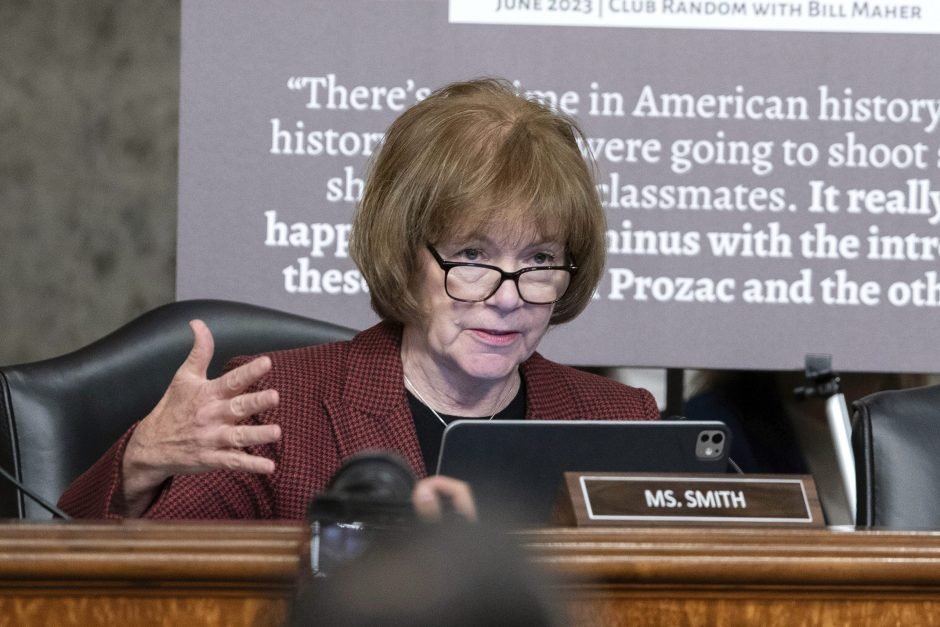
    As the Senate convened for the week, Sen. Tina Smith, D-Minn., marched past a crowd of reporters and headed toward the Senate floor: “I can’t talk right now, I have to go find Sen. Lee.”

    Smith, whose name was listed in the suspected shooter’s notebooks recovered by law enforcement officials, spoke to Lee for several minutes. The next day, Sen. Amy Klobuchar, D-Minn., did the same. By midday Tuesday, Lee had deleted his tweets.

    “I would say he seemed surprised to be confronted,” Smith later told reporters.

    The shooting unfolds

    On the morning of June 14, Gov. Tim Walz, D-Minn., announced that former state House Speaker Melissa Hortman and her husband, Mark, had been shot and killed in their home outside Minneapolis. Another Democratic lawmaker, state Sen. John Hoffman, and his wife, Yvette, were critically injured, in a shooting at their home nearby.

    The next day, as police searched for the shooter, Lee posted a photo of the alleged shooter with the caption “Nightmare on Waltz street” — an apparent misspelled attempt to shift blame toward Walz, who was his party’s vice presidential nominee in 2024.

    In a separate post on his personal account, @BasedMikeLee, the senator shared photos of the alleged suspect alongside the caption: “this is what happens When Marxists don’t get their way.”

    On his official Senate social media account, Lee was “condemning this senseless violence, and praying for the victims and their families.”

    A spokesperson for Lee did not respond to a request for comment.

    The man arrested, Vance Luther Boelter, 57, held deeply religious and politically conservative views. After moving to Minnesota about a decade ago, Boelter volunteered for a position on a state workforce development board, first appointed by then-Gov. Mark Dayton, a Democrat, in 2016, and later by Walz.

    Boelter has been charged with two counts of murder and two of attempted murder.

    Lee’s online posts draw bipartisan backlash

    Once a critic of Donald Trump, Lee has since become one of the president’s most loyal allies. Lee’s online persona is well established, but this year it has become especially prominent: a Salt Lake Tribune analysis found that in the first three months of 2025, Lee averaged nearly 100 posts per day on X.

    What was different this time was the backlash came not just from Democrats.

    To Sen. Kevin Cramer, R-N.D., Lee’s posts were “insensitive, to say the least, inappropriate, for sure” and “not even true.”

    “I just think whenever you rush to a judgment like this, when your political instincts kick in during a tragedy, you probably should realign some priorities,” Cramer said.

    Republican state Rep. Nolan West wrote on social media that his respect for Lee had been “rescinded.”

    A spokesperson for Senate Majority Leader John Thune, R-S.D., did not respond to a request for comment.

    Last Monday night, after Smith’s confrontation with Lee, a senior member of her staff sent a pointed message to Lee’s office.

    “It is important for your office to know how much additional pain you’ve caused on an unspeakably horrific weekend,” wrote Ed Shelleby, Smith’s deputy chief of staff. He added, “I pray that Senator Lee and your office begin to see the people you work with in this building as colleagues and human beings.”

    Lee avoided reporters for much of the week, though he did tell them he had deleted the posts after a “quick” discussion with Klobuchar. Lee has not apologized publicly.

    “We had a good discussion, and I’m very glad he took it down,” Klobuchar said at a news conference.

    Tragedy prompts reflection in Congress

    The uproar came at a tense time for the Senate, which fashions itself as a political institution that values decorum and respect.

    Senators are under intense pressure to react to the Trump administration’s fast-paced agenda and multiple global conflicts. Republicans are in high-stakes negotiations over the party’s tax and spending cuts plan. Democrats are anxious about how to confront the administration, especially after federal agents briefly detained Sen. Alex Padilla, D-Calif., at a recent Department of Homeland Security news conference in California.

    Lawmakers believe it’s time to lower the temperature.

    “I don’t know why Mike took the comments down, but it was the right thing to do,” said Sen. Ben Ray Luján, D-N.M. “I appreciate my Republican colleagues who were very clear with their observations. And those that spoke up, I want to commend them.”

    He added: “We just all have to talk to each other. And what I learned from this week is people need to lean on each other more, and just get to know each other more as well.”

    ___

    Associated Press reporter Mary Clare Jalonick contributed to this report.

    The post Mike Lee’s posts about the Minnesota shootings incensed other senators. They refused to let it go appeared first on MinnPost.

  • Minnesota’s rural hospitals may be hard hit by ‘big beautiful bill’

    Minnesota’s rural hospitals may be hard hit by ‘big beautiful bill’

    WASHINGTON — The U.S. Senate released its version of the ‘big beautiful bill’ that would help implement President Donald Trump’s agenda, and the state’s hospitals — especially those in rural areas — could be among the biggest losers in the legislation.

    Last month, U.S. House Republicans approved a massive package of tax and spending cuts projected to result in 7.8 million fewer Medicaid enrollees and is expected to cost Minnesota about $500 million a year in lost Medicaid revenue. The cuts in the House bill would come from the imposition of new work requirements that are expected to reduce enrollment.

    The Senate’s version of the budget bill would also impose work requirements but slice even deeper by capping the amount of provider taxes states charge hospitals and doctors to 3.5%. The House bill had set the cap for the provider tax at 6%.

    By charging providers a tax and reimbursing them for that money through higher payments for their services, Minnesota and about 40 other states  are able to boost the money they receive from the federal government from Medicaid, which is a shared state-federal program.

    The proposed cap provoked outcries from groups that represent the nation’s hospitals.

    “The Senate just made a bad bill worse,” Chip Kahn, CEO of the Federation of American Hospitals, said in a statement. “Rural communities would take the hardest hit, with struggling hospitals compelled to face difficult decisions about what services to cut.”

    Rural areas disproportionately rely on Medicaid, and their hospitals are often the only resort for patients without health coverage.

    In Minnesota, the provider tax is currently set at 1.8%, among the smallest of all states. But the state has recently approved a budget that would impose a new Medicaid Directed Payment Program on participating hospitals, effectively raising the provider tax to 5.75% on participating facilities to leverage $1 billion from the federal government to help struggling hospitals.

    Mark Jones, executive director of the Minnesota Rural Health Association, said the U.S. Senate budget bill could upend plans for a new directed payment program, which has to be approved by the Centers for Medicare & Medicaid Services (CMS.)

    “It’s not beneficial to our rural health care providers at all,” Jones said of the Senate legislation.

    The Senate’s cap on the provider tax would apply to states like Minnesota that had expanded Medicaid to higher-income individuals and families under the Affordable Care Act. The cap would require states to gradually reduce their taxes down to meet the 3.5 % threshold by 2031, so Jones said he hoped Minnesota’s plans to increase the tax could be “grandfathered” and implemented until the deadline.

    The Minnesota Hospital Association, in a statement, said: “We are closely monitoring developments in Washington.”

    The Minnesota Department of Revenue could not be reached for comment.

    A sweet deal 

    Among the winners in the Senate budget bill are Minnesota’s farmers, especially those who raise sugar beets who would benefit from larger federal payouts.

    Both the House and Senate versions of the legislation include a provision that has been at the top of beet sugar and sugar cane farmers’ wish list – the largest loan rate increase in decades.

    The American Sugar Alliance, which represents the nation’s beet sugar and cane sugar farmers, hailed the provision.

    “Since the expiration of the 2018 Farm Bill two years ago, sugar beet and sugarcane farmers have been pressing Congress to update and improve the farm safety net,” the alliance said in a statement. “We thank (Senate Agriculture Committee) Chairman John Boozman and his colleagues for including in the reconciliation package necessary updates to the Farm Bill sugar provisions which have received strong, bipartisan support in past Farm Bill deliberations.”

    The U.S. Department of Agriculture’s sugar program is a price support program.

    The USDA makes loans to sugar processors based on collateral – which is a certain amount of sugar. If those processors don’t get enough money from the sale of their sugar, they forfeit the sugar to the USDA.

    The USDA generally doesn’t want sugar forfeitures; it wants sugar processors to sell and profit enough to be able to pay back the loans.

    So, by increasing the loan rate — in this case from 19.75 cents to 24 cents per pound — the USDA is incentivized to try to boost sugar prices high enough to make sure there are no forfeitures. One way the USDA boosts prices is through import restrictions.

    But the USDA’s attempts to boost sugar prices are opposed by food processors that use sugar, including General Mills, a company that is now aiming to decrease the use of sugar in its cereals.

    A SALTy problem 

    Meanwhile, an unresolved issue in the Senate budget reconciliation bill is what to do about the state and local tax deduction (SALT) issue.

    The House bill had increased the cap of $10,000 that’s currently placed on taxpayers who want to deduct state and local tax payments from their federal income taxes to $40,000.

    But the Senate does not want to raise the cap.

    The Senate hopes to vote on the bill next week. But that bill is required to go back to the House for approval, and the SALT cap has emerged as a poison pill.

    A group of House Republicans from “blue” states with high costs of living and high state and local taxes say they won’t vote for the budget bill unless the SALT cap is set at $40,000.

    There’s some talk of keeping the $40,000 cap, but restricting how many  higher-income households can benefit. The House bill set that limit at households earning less than $500,000.

    However, there is no deal yet and the SALT deduction has become a main stumbling point in plans to send President Donald Trump a budget bill by July 4.

    In case you missed it:

    -Greater Minnesota reporter Brian Arola wrote about the Trump administration’s plans to shutter the Digital Equity Act, a program created to promote the expansion of broadband into underserved areas like rural Minnesota.

    -In the wake of the assassination of state Rep. Melissa Hortman and her husband, we wrote about an increase in political violence across the country.

    -Also in a follow-up to the slayings, we reported on a Congressional plan to shelve the FACE Act, a federal law designed specifically to protect abortion providers from violence. Alleged killer Lance Boelter had a “hit list” that included the names of abortion providers and abortion rights activists. 

    -We shared an AP story about federal charges in the Hortman deaths that could lead to the death penalty for Boelter. He faces state charges, too, but Minnesota doesn’t have the death penalty.

    -The AP also talked with U.S. Sens. Tina Smith and Amy Klobuchar about the prospects for heightened security for lawmakers in the wake of the Minnesota killings, which appear to have been politically motivated.

    Your questions and comments

    A reader took issue with President Donald Trump’s statement about the assassination of Rep. Melissa Hortman and her husband and the shooting of Sen. John Hoffman and his spouse. Unlike others, Trump failed to call the attacks “politically motivated” and heaped praise on Minnesota, a state that he had previously criticized.

    “First, Trump’s history of dishonesty makes one question whether he actually believes anything he says,” the reader wrote. “His statement claims to think Minnesota and Minnesotans being great is clearly false. What he did not say is more telling — very deliberate and self-serving. Angry men with guns — not a group he is willing to antagonize.

    Please keep your comments, and any questions, coming. I’ll try my best to respond. Please contact me at aradelat@minnpost.com.

    The post Minnesota’s rural hospitals may be hard hit by ‘big beautiful bill’ appeared first on MinnPost.