Category: USA

  • Walz readies for coordinated GOP attack in hearing over ‘sanctuary’ policies

    Walz readies for coordinated GOP attack in hearing over ‘sanctuary’ policies

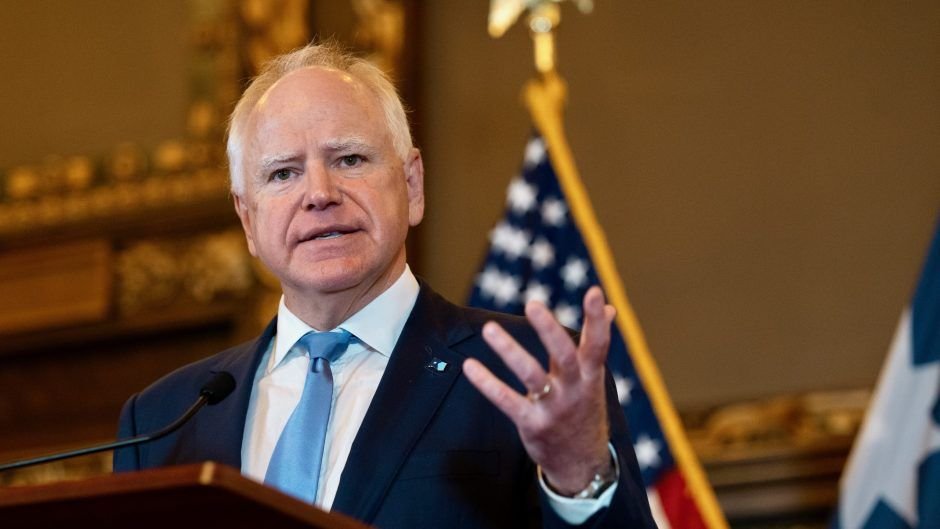
    WASHINGTON – Gov. Tim Walz and two Democratic fellow governors will face orchestrated attacks from some of the fieriest hard-right lawmakers in Congress who accuse their high-profile witnesses of harboring dangerous criminal aliens.

    Thursday’s hearing on “sanctuary states” will be held by the House Oversight and Government Reform Committee, which is headed by Rep. James Comer, R-Ky., a Trump loyalist and political attack dog who is weighing a run for governor.

    The high-profile hearing will be held against the backdrop of the unrest touched off by federal immigration actions in Los Angeles, which prompted President Donald Trump to send in National Guard troops and Marines to try to quell the disturbance, moves opposed by California Gov. Gavin Newsom. 

    Comer leads a panel that includes some of the most fractious Freedom Caucus members among its members, including Reps. Jim Jordan of Ohio, Marjorie Taylor Greene of Georgia and Lauren Boebert of Colorado.

    The panel has also attracted some feisty Democratic lawmakers, too, including Reps. Jasmine Crockett of Texas, Ayanna Pressley of Massachusetts and Ro Khanna of California. So, testy exchanges are expected to characterize the hearing.

    Walz has riled the GOP by touring the nation, holding town halls in districts of Republican House members who have stopped hosting these in-person events after colleagues were faced with angry constituents.

    And Walz has been more combative than he was when he stumped for vice president as Kamala Harris’ running mate.

    So, fireworks are expected at Thursday’s hearing on “sanctuary” states, during which Walz is expected to maintain that Minnesota is not a “sanctuary” state and is not in violation of any federal laws.

    “Governor Walz is happy to work with Congress, but since Minnesota is not a sanctuary state, one can’t help but wonder if this is, perhaps, politically motivated,” Teddy Tschann, a spokesperson for Walz, said in an emailed statement.

    The Trump administration has classified a wide range of state and local policies as “sanctuary” behavior.

    It has demanded that American cities allow federal immigration agents access to prisons and that they provide advance notice when prisoners wanted on an immigration detainer are being released.

    But in a legal opinion, Minnesota Attorney General Keith Ellison determined that, unless accompanied by a court order, a request to detain an immigrant are requests, not commands, which federal courts around the country have recognized.

    “Because no Minnesota civil law authorizes immigration detainer arrests, Minnesota law enforcement agencies risk significant civil liability if they enforce immigration detainers,” Ellison said.

    Ellison also determined that the 10th Amendment to the U.S. Constitution, which reserves all powers not given to the federal government to the states, prohibits the federal government from commandeering state and local officials to enforce federal regulatory programs.

    That could put the state at odds with the Trump administration, which has required cities and states to certify compliance with a federal law, known as Section 1373 of the Aliens and Nationality Act.

    That law says states and localities can’t bar local officials from communicating with immigration authorities about the citizenship status of an individual.

    Walz will be accompanied at the high-profile hearing by outside counsel, and the governor will also bring a prepared statement.

    Rep. Tom Emmer, R-6th District, who as majority whip is part of the GOP House leadership, slammed Walz, who supported the expansion of state-funded health care to the undocumented and sarcastically wished him “good luck” at the hearing. 

    “From hurling outrageous insults against ICE agents to offering a multitude of taxpayer-funded benefits to illegal aliens in Minnesota, Tim Walz’s immigration agenda can be summed up easily: pro-illegal alien, anti-Minnesotan,” Emmer told Fox News Digital on Monday.

    Emmer also said “if Tim Walz thinks he will be able to defend his abysmal record before Congress, then he’s even more of a buffoon than I thought. I only have one thing to say to Timmy as he heads to Washington this week: GOOD LUCK.”

    Hearings often more smoke than fire

    Comer spent much of the last Congress promoting sinister-sounding allegations against former President Joe Biden and his son Hunter, as well as other members of the Biden family.

    His many hearings on what he called the “Biden crime family” propelled him to stardom among MAGA voters who were bent on bringing the former president down. Earlier this month, Comer said he is broadening an investigation into the extent of Joe Biden’s physical and mental decline while in office.

    He’s also investigating Harvard for “unlawful discrimination” against Jewish students, the Democratic fundraising platform Act Blue for possible fraudulent foreign donation and liberal-leaning non-profit organization for what Greene has called “corruption.”

    Comer’s focus in this Congress has also shifted to immigration and he’s targeted Democratic elected officials, many of whom, like Walz, have been considered possible contenders for the White House in 2028. 

    And this is not the first time Comer has tried to investigate Walz.

    When Walz was running as Harris’ running mate, Comer requested information from the FBI about the governor’s many trips to China, most of them made when he was a high school teacher. Comer was looking for any links Walz might have to the Chinese Communist Party, but he was not awarded with any kind of smoking gun from the FBI.

    As fact-finding efforts, many of Comer’s investigations fizzled and his hearings were known more for their heated exchanges and platforms for conspiracy theories than attempts to collect new information.

    Comer has had a bumpy ride in this Congress, too. For instance, his first hearing on sanctuary jurisdictions, held March 5, backfired.

    Comer and his GOP colleagues on the oversight committee planned an attack on Democratic mayors from New York, Denver, Chicago and Boston, cities that tout municipal laws that protect undocumented migrants. The Republican lawmakers sought to portray the Democratic-led cities as havens for criminal activity and foreign gangs.

    But the Democratic mayors used the occasion to amplify their arguments about immigration and urban safety.

    Boston Mayor Michelle Wu, who brought her one-month-old infant to the hearing, said it was the Trump administration’s “over-the-top“ tactics that jeopardized safety for Americans.

    “This federal administration is making hard-working, tax-paying, God-fearing residents afraid to live their lives,” Wu said. “A city that’s scared is not a city that’s safe, a land ruled by fear is not the land of the free.”

    The post Walz readies for coordinated GOP attack in hearing over ‘sanctuary’ policies appeared first on MinnPost.

  • MyPillow founder Mike Lindell sticks by false 2020 election claims in defamation trial

    MyPillow founder Mike Lindell sticks by false 2020 election claims in defamation trial

    DENVER (AP) — One of the nation’s most prominent election conspiracy theorists, MyPillow founder Mike Lindell, stuck by his false claims that the 2020 presidential election was stolen while testifying Monday during a defamation trial over statements he made about a former official for a leading voting equipment company.

    Taking the stand for the first time during the trial, Lindell denied making any statements he knew to be false about Eric Coomer, the former product strategy and security director for Denver-based Dominion Voting Systems. Among other things, Lindell accused Coomer of being “a part of the biggest crime this world has ever seen.”

    Lindell also distanced himself from a story told by a conservative podcaster who accused Coomer of helping to rig the 2020 election. It was discussed during a 2021 symposium Lindell hosted to discuss election fraud. Lindell said he did not know about the story before it was discussed onstage at the event and only learned about it during the trial.

    Coomer said his career and life have been destroyed by statements Lindell made about him and allowed to be promoted through his online media platform, Frankspeech.

    During sometimes rambling testimony in federal court in Denver, Lindell painted himself as the victim of “lawfare” — when people are sued to scare them into silence.

    Several conservative news organizations, including Fox News,Newsmax and One America News, have settled defamation lawsuits from voting machine companies over allegations that they promoted falsehoods about the 2020 presidential election. In 2021, Newsmax also apologized to Coomer for airing false allegations against him.

    Nevertheless, Lindell said he hoped his trial would lead people to look at what happened in the election and get rid of electronic voting machines, which have been targeted in a web of conspiracy theories.

    Reviews, recounts and audits in the battleground states where Trump contested his 2020 loss all affirmed Democrat Joe Biden’s victory. Trump’s own attorney general at the time said there was no evidence of widespread fraud, and Trump and his allies lost dozens of court cases seeking to overturn the result.

    Lindell said he never accused Coomer of rigging the election, but he testified that Coomer’s claims led Newsmax to block him from being able to go on air to talk about voting machines.

    “You’re part of the biggest coverup of the biggest crime the world has ever seen,” he said to the Coomer lawyer questioning him, Charles Cain.

    Lindell said he used to be worth about $60 million before he started speaking out about the 2020 election, and now he has nothing and is $10 million in debt.

    “I believe what you did to me and MyPillow was criminal,” he said to Cain during questioning.

    Both Cain and U.S. District Judge Nina Wang had to remind Lindell several times to listen to the questions and only provide the answers to them, rather than head off on tangents.

    During the trial, Coomer’s attorneys have tried to show how their client’s life was devastated by the series of conspiracy theories about him. Lindell was comparatively late to seize on Coomer, not mentioning him until February 2021, well after his name had been circulated by other Trump partisans.

    Coomer said the conspiracy theories cost him his job, his mental health and the life he’d built and said Lindell’s statements were the most distressing of all. He specifically pointed to a statement on May 9, 2021, when Lindell described what he believed Coomer had done as “treason.”

    Asked by his attorney what he wants out of the trial, Coomer said he would like an apology, compensation and “a chance of rehabilitating my public image.”

    Lindell’s attorneys argued that Coomer’s reputation was already in tatters by the time Lindell mentioned him — partly because of Coomer’s own Facebook posts disparaging Trump, which the former Dominion employee acknowledged were “hyperbolic” and had been a mistake.

    “Your reputation was shattered long before Mr. Lindell said a word about you,” Chris Katchouroff said to Coomer.

    Katchouroff noted that Lindell also is known for making hyperbolic statements and that what he said about Coomer was simply the result of his sincere concern over vote-rigging in the 2020 presidential election — a claim for which there is no evidence.

    ___

    Associated Press writer Nicholas Riccardi contributed to this report.

    The post MyPillow founder Mike Lindell sticks by false 2020 election claims in defamation trial appeared first on MinnPost.

  • An ugly bro-breakup for Trump and Musk

    An ugly bro-breakup for Trump and Musk

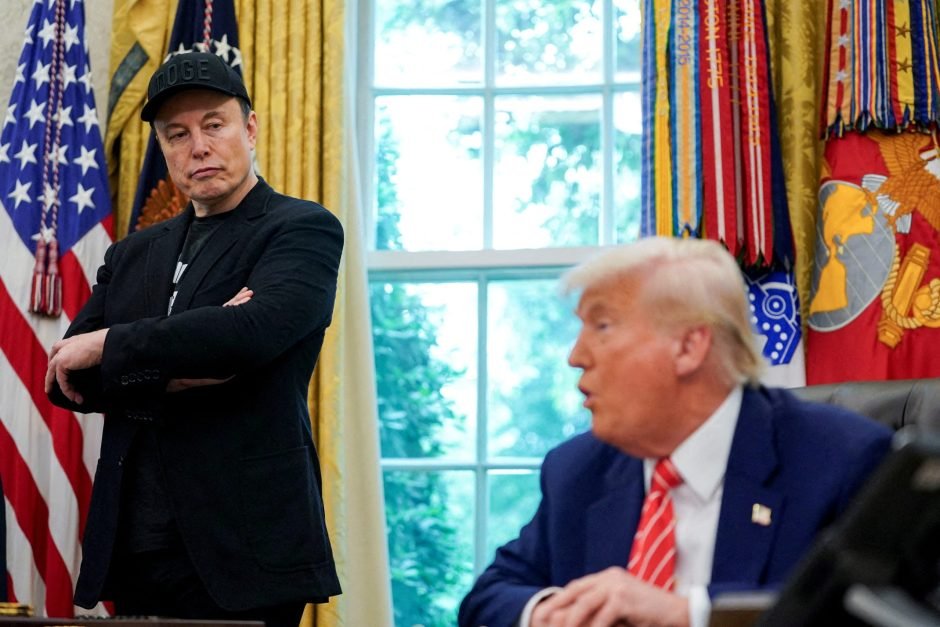
    WASHINGTON – As his “big beautiful” bill ran into trouble in the U.S. Senate this week and former best buddy Elon Musk launched a vigorous campaign on X to try to kill the legislation, President Donald Trump sought to change the topic by issuing several headline-grabbing executive orders.

    One presidential proclamation — a reinstatement and expansion of the Muslim ban he sought in his first term — was expected.

    But Trump also ordered a broad investigation into whether former President Joe Biden covered up a cognitive decline and was incapable of executing presidential decisions. That new probe threatens thousands of Biden’s executive actions and pardons.

    And in a third executive order, Trump launched a new attack on Harvard, barring foreign students and scholars from entering the country to attend, conduct research or teach at that top Ivy League school.

    The executive order was signed just days after a federal judge blocked the administration’s attempts to revoke the school’s ability to host international students.

    The new Muslim ban, slated to go into effect June 9, fully restricts the entry into the United States of individuals from Afghanistan, Myanmar, Chad, the Republic of Congo, Equatorial Guinea, Eritrea, Haiti, Iran, Libya, Somalia, Sudan and Yemen.

    It also partially restricts the entry of travelers from Burundi, Cuba, Laos, Sierra Leone, Togo, Turkmenistan and Venezuela.

    The Trump administration cited national security concerns for the ban and said the decision was made after a review of a State Department report that cited the nations as being lax in vetting applicants for passports and other travel documents and that their citizens have a history of overstaying their U.S. visas.

    Lawful permanent residents, existing visa holders, certain visa categories and individuals whose entry serves U.S. national interests are exempt from the ban.

    Rep. Ilhan Omar, D-5th District, who was born in Somalia, called the new policy “shameful.”

    “Just like the first Muslim Ban, this latest announcement flies in the face of basic morality and goes directly against our values,” Omar said in a post on X. “This racist policy will not make us safe, it will separate families and endanger lives. We cannot let it stand.”

    ‘KILL the BILL’

    Meanwhile, Musk also took to X to blast Trump for a mega-budget bill that has passed the U.S. House and is now before the U.S. Senate.

    The package would cut several government programs, including Medicaid and food stamps, ramp up Pentagon and border security spending and make permanent the tax cuts Trump was able to implement in his first term, which are now destined to expire at the end of the year.

    Musk, who quit his job as the head of the Department of Government Efficiency (DOGE) last week, has called the budget bill that would implement Trump’s policies a “disgusting abomination” because it would increase spending and raise the nation’s debt ceiling.

    “Call your Senator, Call your Congressman, Bankrupting America is NOT ok! KILL the BILL,” said one of Musk’s dozens of posts against the legislation on X.

    Musk also threatened to target or primary Republican incumbents in the midterm elections.

    Trump blamed the end of a $7,500 electric vehicle tax credit in the budget bill for Musk’s attacks. (The owner of Tesla says he doesn’t care). Trump also said the mega-billionaire has fallen prey to “Trump derangement syndrome” and that he expected personal attacks from his former buddy.

    Trump was right. Musk then accused Trump of withholding information about Jeffrey Epstein because it implicated the president.

    Meanwhile, the Senate is making its revisions to the House-approved bill, which are likely to include the elimination of an effort to increase the deductibility of state and local tax (SALT) deductions on federal income tax filings.

    The House bill has been dubbed a “big ugly bill” by Democrats because of its cuts to social programs.

    The liberal-leaning Center for Budget and Policy Priorities said the bill’s new work requirements could leave up to 202,000 Minnesotans who are now enrolled in the program without coverage.

    The bill would also require Minnesota to pay 20%, instead of 10%, for coverage of higher-income individuals that qualify for Medicaid under the Affordable Care Act’s expansion of the program.

    All Minnesota GOP members of Congress voted for the bill — Rep. Tom Emmer, R-6th District, called its approval “a historic America First policy win for the American people — and all of the state’s Democratic U.S. House members voted against it.

    In case you missed it:

    —Matthew Blake wrote that it’s not only Minnesota’s legislature that is struggling with pessimistic forecasts as lawmakers try to fashion budgets this year – nearly all states are feeling the pain. 

    —A longstanding program that has helped more than 950 small Minnesota businesses owned by women and minorities win transportation contracts is endangered by the Trump administration’s war against DEI.

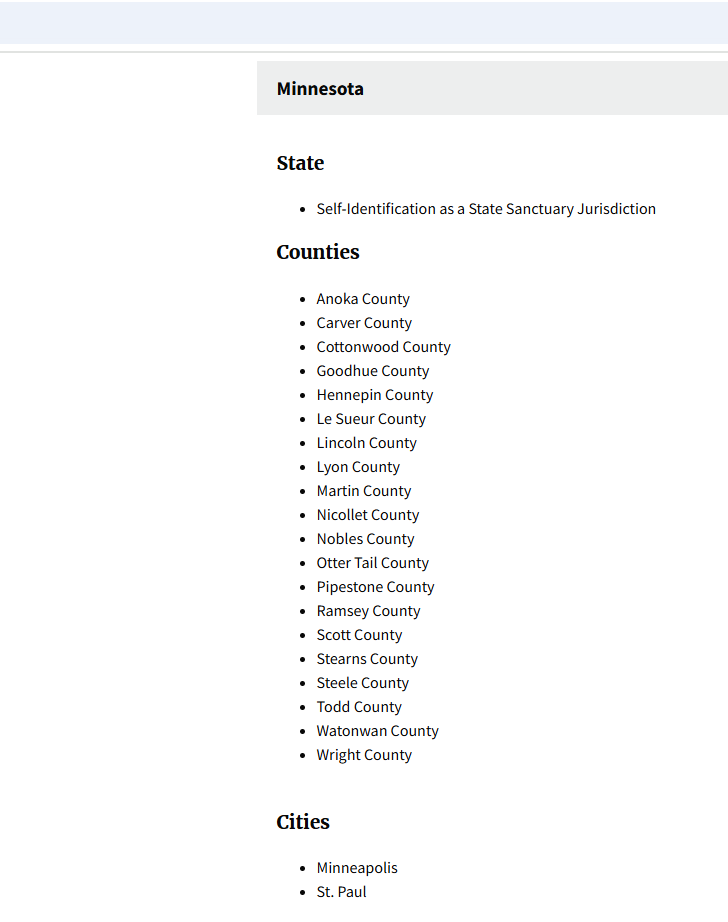
    —And Brian Arola wrote about the anxiety provoked by the U.S. Department of Homeland Security’s designation of many rural Minnesota counties as “sanctuaries” in a list that was quickly taken down by the department after protests from officials representing “red” jurisdictions.

    Your questions and comments

    A reader commented on a story about a program that helps women-and-minority owned businesses win state transportation contracts that has been challenged by the owners of white-owned businesses as unconstitutional.

    “Consulting the census, about 3 of 5 Americans are white and non-Hispanic. The gender split is roughly 50-50. That suggests that approximately 30% of Americans are white non-Hispanic men,” the reader said. “Whether it be CEOs of the top 500 companies or small business owners, men control our economy very much out of balance with their numbers. Roughly 90% of CEOs are white non-Hispanic. Of the 10% who are women, the large majority are white.  

    The Trump administration as is its norm provides no information on contracts or revenue to show that white small business owner men are being discriminated against — because they aren’t.”

    Please keep your comments, and any questions, coming. I’ll try my best to respond. Please contact me at aradelat@minnpost.com.

    The post An ugly bro-breakup for Trump and Musk appeared first on MinnPost.

  • ‘Arbitrary and stupid’: Immigrant advocates in southwestern Minnesota press on despite confusion over ‘sanctuary’ designations

    ‘Arbitrary and stupid’: Immigrant advocates in southwestern Minnesota press on despite confusion over ‘sanctuary’ designations


    In a county labeled a “sanctuary” by the U.S. Department of Homeland Security, Nidia Zelaya knows some neighbors need to watch their steps these days.

    “A lot of people are really scared of their basic routines,” said the woman from Watonwan County in southwestern Minnesota.

    Zelaya volunteers with Convivencia Hispana, a St. James-based advocacy group for Watonwan’s Latino and Hispanic residents. Smithfield Food plant workers formed the group, which partners with another, Uniting Cultures, or Uniendo Culturas, on an annual multicultural fiesta and other initiatives designed to promote a sense of togetherness in an increasingly diverse county.

    The work of these groups is not stopping, Zelaya said, despite some volunteers needing to scale back their involvement as a precaution against being targeted by the Trump administration. “I feel like we’ve always been the face of the Latino communities within the St. James, Madelia, Butterfield area, but with this new administration we’ve had to step back a bit from doing so much outreach just because we know the fear is in the community,” she said.

    Watonwan, with a population of about 11,000, was among 20 counties in the state placed on the federal agency’s “sanctuary jurisdictions” list last week. The list has since been taken down, but not before it caused widespread puzzlement among local officials and concern about what it meant. 

    The Department of Homeland Security has not said why it took down the list.

    Little clarity on ‘sanctuary’ label

    It remains unclear how the Trump administration is defining “sanctuary.” But it has demanded that American cities and counties allow federal immigration agents access to jails and that they provide advance notice when inmates wanted on an immigration detainer are being released.

    The Trump administration has also required cities to certify compliance with a federal law, known as Section1373 of the Aliens and Nationality Act. That law says states and localities can’t bar local officials from communicating with immigration authorities about the citizenship status of an individual.

    What Minnesota law enforcement agencies can’t do, said American Civil Liberties Union  attorney Ian Bratlie, is enforce federal immigration law. The ACLU won a court case against another southwestern Minnesota county on the list, Nobles, dating to the first Trump administration. The case involved the county sheriff’s office unlawfully detaining people on behalf of ICE, resulting in financial compensation paid to the parties and a permanent injunction against improper holds for ICE.

    As this case played out, Trump tried to punish “sanctuary” jurisdictions during his first term in office, but had limited success.

    He directed the Justice Department’s Office of Justice Programs to withhold law enforcement-related grants from cities, towns, states and counties that his administration considered non-cooperative.

    At that time, the targeted jurisdictions were mainly Democratic-leaning cities and towns that filed an avalanche of lawsuits. The grants that were withheld from these cities and towns helped local and state police fight drug and sex trafficking, establish programs to fight juvenile crime and drug addiction and other law enforcement programs.

    According to the Office of Justice Programs, in the last five years, the state of Minnesota and its cities have received more than $250 million in these types of grants.

    This time around, a political lens doesn’t provide much clarity on how the 20 Minnesota counties ended up on the list. The Greater Minnesota counties that voted against Trump in 2024 — St. Louis, Olmsted, Clay, Lake and Cook — are nowhere to be found on the list. Actually, every Greater Minnesota county listed as a “sanctuary” had a majority of voters that chose Trump.

    During the president’s first term, “sanctuary” cities and towns won most of their lawsuits against Trump’s actions in federal courts across the nation.

    But the U.S. Court of Appeals in the 2nd Circuit ruled against the New York challenge to the Justice Department that had been joined by several other states and the issue appeared ready to go to the U.S. Supreme Court.

    The legal fights ended, however, after former President Joe Biden won the 2020 election and reversed Trump’s policies towards “sanctuary” jurisdictions.

    A screen shot of the “sanctuary jurisdictions” list issued, and later revoked, by the U.S. Department of Homeland Security. Credit: Brian Arola

    The second Trump administration has sued Chicago, the state of Illinois, four cities in New Jersey and other “blue” cities over its policies. These mainly Democratic cities and states are fighting back with their own lawsuits. Minneapolis and St. Paul, for instance, which were on the “sanctuary” jurisdiction list before it was taken down, have joined a lawsuit filed by San Francisco that said Trump has overstepped his authority.

    A federal judge has issued a temporary injunction in the case that orders the federal government to halt any effort to freeze funds from the Twin Cities and 15 other jurisdictions involved in the case while the lawsuit proceeds.

    ‘A general sense of anxiety’

    The sheriffs of Watonwan and Nobles counties did not respond to emails seeking comment on their inclusion on the sanctuary list. The Department of Homeland Security removed the list after complaints from sheriffs and a national sheriffs’ organization.

    Meat packing plants are major employers in both counties, drawing workers from the area’s Latino or Hispanic communities. This makes them particularly vulnerable to raids, Zelaya said. Federal agents raided a Swift meat-processing plant in Worthington, Nobles County’s biggest city, in 2006, arresting 239 workers.

    Other than both being on the “sanctuary” list, Watonwan and Nobles counties are comparable demographically, having the two highest percentages of Hispanic or Latino residents in Minnesota. About 31% of Watonwan residents and 35% of Nobles residents have those backgrounds, according to Census data, compared with 7% for the state as a whole.

    Yet large percentages of Hispanic or Latino residents don’t explain all the inclusions on the list. Lincoln County in southwestern Minnesota was there and 97% of its residents are white or Latinos who identify as white.

    Don’t look for any geographical cohesion on the list, either. Pipestone and Nobles counties made the list, while the county they box in on the southwest corner of the state, Rock County, didn’t. The federal agency would furthermore have an observer believe that someone in Jackson County on the Iowa border, not deemed a “sanctuary,” could set off in any direction east, west or north and find themselves in a neighboring county supposedly offering more safety from federal immigration enforcement.

    In Bratlie’s estimation, the list is an “arbitrary and stupid” attempt to distract people from the administration’s problems. “They’re trying to make the term ‘sanctuary’ mean something and trying to change the narrative from their failed policies,” he said.

    From an atmospheric standpoint, he added, putting counties on a sanctuary watch list is a way to instill fear and terror in immigrant communities. The ACLU was already aware of reports of Minnesotans being racially profiled by ICE, and the federal government’s immigration actions around the country have not been limited to undocumented people.

    In Watonwan County, Zelaya knows of people who have permanent residency status but are afraid to visit their home countries for fear of not being let back into the U.S. Zelaya, 32, was born in the U.S., the product of a family that escaped civil war in El Salvador.

    Convivencia Hispana’s continued work during these tense political times includes organizing a legal clinic on delegation of parental authority (DOPA) forms. A DOPA would give permission for someone to make decisions about a child’s care if a legal guardian gets detained. One important role of community advocacy groups right now is to make sure people know their rights in the event of a raid, Zelaya said. 

    Uniting Cultures works with Convivencia Hispana to get information out about resources. Pat Branstad, a retired teacher in St. James who helped found Uniting Cultures in 2017, said the messages coming from the federal government can make it more difficult to get locals the right information. You overcome it as best as you can by working with partners to find out what your community members need, Branstad said. “We needed to talk to the people who could be impacted and find out from them what they need,” she said. 

    Nobles County, particularly its biggest city, Worthington, has groups doing similar advocacy work. Along with its high Hispanic or Latino population, Worthington’s percentage of Black, Asian and American Indian residents is higher than statewide averages. 

    Wording on the side of the community building in St. James states “we watch out for each other.” St. James is the county seat of Watonwan County, which was recently included on a list of “sanctuary jurisdictions” by the U.S. Department of Homeland Security.

    Leah Gossum, a college art instructor in Worthington, was born in Croatia to Middle Eastern parents. Her family later settled in Youngstown, Ohio. As a teacher in Worthington for the last 12 years, she’s worked with a student population that reflects the diversity of the city. Gossum feels like there’s a general sense of anxiety around the community that advocates are working through. “The sentiment is, people are definitely feeling nervous about many things, but don’t want to be quiet either.” 

    A Nicollet County group, the St. Peter Good Neighbor Diversity Council, has no plans to be quiet, either. Co-founder Bill Nelsen said his group is proud of its name. “We are still committed to our mission, which is to make St. Peter a very welcoming community for people from all different backgrounds,” he said.

    Nelsen, who said his name is of Danish origin, is a retired Lutheran pastor whose activism dates back to the Civil Rights Movement. If anything, the council’s board and advisory team — including Somali, Hispanic, Asian, Indigenous and African American residents — wants to expand on its multicultural initiatives, he said.

    “We have not slowed down, and I would say in reaction to what’s been happening nationally, we see our work as even more important,” he said.

    Washington, D.C., correspondent Ana Radelat contributed to this report.

    The post ‘Arbitrary and stupid’: Immigrant advocates in southwestern Minnesota press on despite confusion over ‘sanctuary’ designations appeared first on MinnPost.

  • Trump administration targets diversity program that has boosted minority owned businesses in Minnesota

    Trump administration targets diversity program that has boosted minority owned businesses in Minnesota


    WASHINGTON — Kenneth Bush, who considers himself a “civic-minded entrepreneur,” is proud that his construction company has grown to support 22 employees and their families.

    As one of 12 children of what he called a “dirt poor” Black family, Bush said he worked hard to become the owner of Bush Companies — a Rochester-based business that provides temporary traffic control services at a construction site. He says his flagging company is among the largest of its kind in the state.

    Bush has had help in growing his company from a Reagan-administration program that requires state and local transportation departments that receive federal funds to apportion 10% of infrastructure contracts to “disadvantaged” small businesses owned by women and minorities.

    But now, the $37 billion Disadvantaged Business Enterprise (DBE) program is threatened with extinction in Minnesota and across the nation.

    Two white-owned construction businesses won a temporary injunction that has stopped the program in Kentucky and Indiana — two states where those companies had business. In addition, the Justice Department has flipped from defending the DBE program when President Biden was in office to agreeing with its foes.

    If a federal judge in Kentucky accepts a settlement the Justice Department has agreed to with the white-owned businesses, the program that has helped 49,000 American small businesses — including more than 950 in Minnesota — would abruptly end.

    Bush said he is “saddened” that Trump, who campaigned on a promise to help Black entrepreneurs, would help pull the plug on the DBE program.

    “The program was formed by Ronald Reagan, who was a great president,” said Bush, who has twice run for a seat in the state Legislature as a Republican.

    He said his company had 78 contracts in the past year, all DBE-based.

    “Did the program help me? Yes, ma’am, it did,” Bush said.

    Laura Miller, the owner of Nowthen-based On-Call Pavement Sweeping, said she’s benefitted from the DBE program for more than 20 years. Most of that help comes through the requirement that big construction companies that want to compete for transportation projects hire women- and minority owned subcontractors to meet their DBE goals.

    “So if they are looking for four or five small businesses, (the prime contractor) would favor DBE small businesses,” Miller said.

    Without the DBE program, Miller said “it seems that a lot of the larger primes would maybe do a lot of the services in house.”

    “So, the DBE is just one benefit to encourage small businesses, and the more small businesses we have in society, the better it is for the middle class,” Miller said.

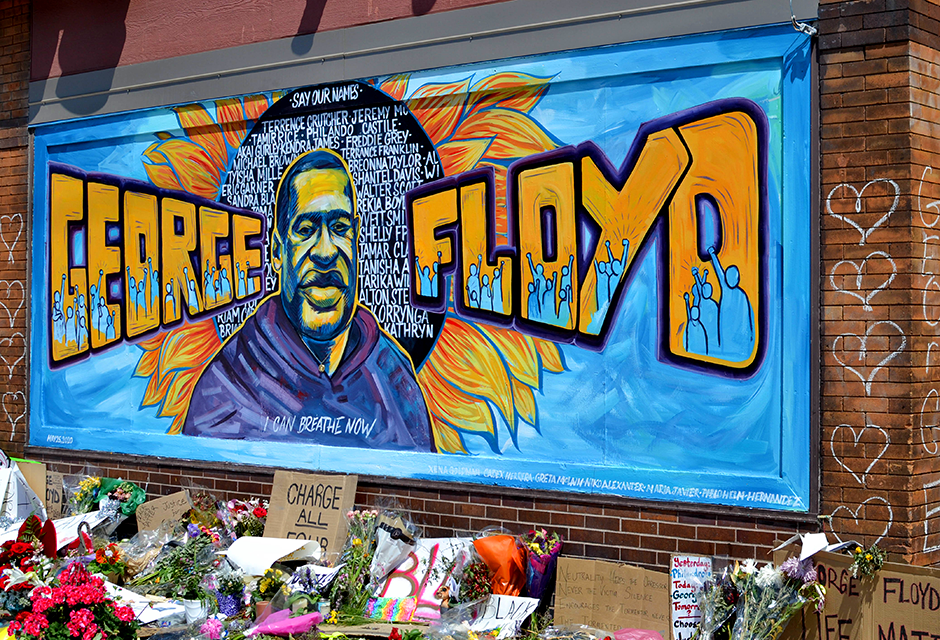
    Alfonzo Williams, who rushed to the site of George Floyd’s murder to shut down an intersection and initiate the creation of a memorial square, is a former felon who is now the owner of a Minneapolis-based construction company that specializes in demolition, concrete work and construction cleanup.  

    In the DBE program for eight years, Williams said the boost it gave his company helped him turn his life around. “I am able to feed my family and I am able to help others,” he said.

    But in Indiana, where a court injunction has already ended the program, Stephanie Duncan, has already felt the pain that may await similar firms all over the country. Duncan’s company, which supplies bridge expansion joints, has seven contracts right now. By her estimate, she would normally have 50 if the DBE program were in effect. 

    Stephanie Duncan

    Because of the steep and sudden drop in business, she hasn’t been able to pay her business’ rent in months. She went on to found DBEs of America, an advocacy group to raise awareness and inform DBE-dependent firms about the progress of the case that will decide their future. 

    Duncan has also become a certified DBE contractor in 32 other states in hopes of getting business across state lines, where DBE preferences are in effect, for now. But if the DBE program is deemed illegal and dismantled nationwide, that won’t help.

    “(The DBE program) was put in place for a reason,” Miller said. “Because  you know, these small businesses, they couldn’t get work because it was a good old boys club. And that’s what it’ll be again.”

    ‘The needle didn’t move’ 

    In October 2023, Mid-America Milling and Bagshaw Trucking claimed that, as white-owned businesses, they lost transportation infrastructure work to minority and women-owned businesses that benefitted from DBE support. 

    The companies are represented by a Milwaukee-based conservative nonprofit law firm called the Wisconsin Institute for Law & Liberty, which said the DBE program had done nothing to boost women and minority entrepreneurs.

    “Defendants have said — and will likely continue to say — that the DBE program is necessary because there are disparities in America and that they must give certain preferences to ‘fix’ this problem,” one of the institute’s court filings said. “Yet despite the untold billions of dollars spent over the past four decades, defendants have readily conceded that the ‘needle did not move’ in response to their preferences.”

    In supporting the plaintiffs’ suit, the Trump Justice Department echoed the argument that DBE is unconstitutional by not treating all transportation sector companies the same.

    In September, Kentucky U.S. District Judge Gregory Tatenhove issued an injunction that found that aspects of the program were likely unconstitutional and he halted the program in Kentucky and Indiana.

    Van Tatenhove cited the U.S. Supreme Court’s 2023 decision barring affirmative action admission policies in higher education multiple times in his ruling. 

    Democracy Forward, a nonprofit liberal legal group that has filed multiple suits against the Trump administration, and the Minority Business Enterprise Legal Defense and Education Fund joined the case after it became clear the Trump Justice Department would no longer defend the DBE program.

    “Minority and women-owned businesses have been burdened by discrimination for centuries. It is both legally right and morally necessary for the government and the private sector to take action to remedy that discrimination,” said Sarah von der Lippe, a lawyer with the Minority Business Enterprise Legal Defense and Education Fund.

    The Minnesota Department of Transportation said in an email that  it “strongly believes” programs that support small and diverse businesses “are critical to our success and the economic vitality of our state” and that there are state-based programs to help accomplish that goal, though it did not identify a specific program.

    As far as the DBE program, the department said it has adopted a wait-and-watch attitude.

    “Nothing has changed in terms of our implementation of (the DBE) program as of today and we will continue monitoring closely and communicating as quickly and clearly as we are able,” the Minnesota  Department of Transportation said.

    The post Trump administration targets diversity program that has boosted minority owned businesses in Minnesota appeared first on MinnPost.

  • Funding for Pride events falls as corporations like Target pull support

    Funding for Pride events falls as corporations like Target pull support


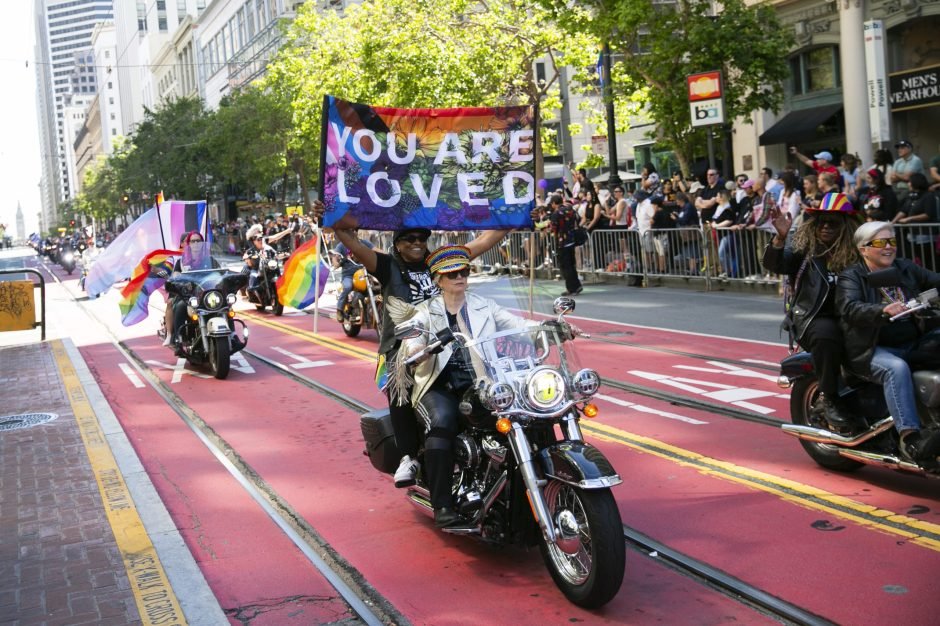
    Motorcyclists at a Pride parade

    SAN FRANCISCO (AP) — Many U.S. corporations this year stopped supporting Pride events that celebrate LGBTQ+ culture and rights, causing hundreds of thousands of dollars in budget shortfalls ahead of the summer festivities and raising questions about corporate America’s commitment to the cause.

    The moves come as President Donald Trump has shown antipathy for trans protections and has attempted to roll back some LGBTQ+ friendly federal policies. Experts also note that a growing slice of the public has grown tired of companies taking a stance on social and political issues.

    San Francisco Pride, the nonprofit that produces one of the country’s largest and best-known LGBTQ+ celebrations, is facing a $200,000 budget gap after corporate donors dropped out. In Kansas City, Missouri, KC Pride lost about $200,000 — roughly half its annual budget.

    Heritage of Pride, the umbrella organization behind NYC Pride and other LGBTQ+ events in New York City, is fundraising to narrow a $750,000 budget gap after companies withdrew.

    A group of people carries a banner at a Pride parade in NYC
    The Heritage of Pride group carry banners and balloons during the New York City Pride Parade on June 25, 2017 in New York. Credit: AP Photo/Michael Noble Jr.

    Meanwhile, Budweiser brewer Anheuser-Busch ended its sponsorship of PrideFest in St. Louis, Missouri, its home base, after 30 years, leaving organizers with a $150,000 budget shortfall.

    In response, many Pride organizations have canceled some dance parties, reduced the number of stages, hired less pricey headliners and no longer give volunteers free food or T-shirts.

    But the core celebrations will go on. In San Francisco, this year’s Pride theme is “Queer Joy is Resistance.” In New York, it’s “Rise Up: Pride in Protest,” and, in Boston, it’s “Here to Stay!”

    “If you come to Pride this year, that’s a revolutionary act,” said Suzanne Ford, executive director of San Francisco Pride. “You are sending a message to those in Washington that, here in San Francisco, we still have the same values that we’ve always had — you can love who you love here. We’re not going to retreat from that.”

    Following media coverage of their retreat, some companies changed course but asked that their names not be affiliated with the events, the event organizers said.

    Corporations rethink Pride sponsorships

    San Francisco Pride earlier this year lost the support of five major corporate donors, including Comcast, Anheuser-Busch and Diageo, the beverage giant that makes Guinness beer and Smirnoff vodka.

    “With everything we’re facing from the Trump administration, to lose five of your partners within a couple of weeks, it felt like we were being abandoned,” Ford said.

    After the withdrawals drew attention, some corporations said they would donate but only anonymously, Ford said, declining to identify those companies. As of this week, neither Comcast, Anheuser-Busch nor Diageo appeared on the organization’s website as sponsors of the June 29 festivities. It was unclear if they donated.

    Anheuser-Busch and Diageo didn’t reply to emails from The Associated Press seeking comment. A spokesperson for Comcast also declined to comment but said some of its companies are sponsoring Silicon Valley Pride and Oakland Pride.

    NYC Pride spokesperson Chris Piedmont said about 20% of its corporate sponsors either dropped their support or scaled back, including New York-based PepsiCo and Nissan.

    Kyle Bazemore, Nissan North America’s director of corporate communications, said the decision comes as the automaker reviews all of its marketing expenses to lower costs. PepsiCo did not return an email seeking comment.

    Piedmont said NYC Pride has also received anonymous corporate funding and that he appreciates the unpublicized support.

    “Writing a check to a nonprofit and supporting a nonprofit with no strings attached is stepping up to the plate,” Piedmont said.

    Companies retreat from ‘brand activism’

    The shift reflects how corporations are adjusting to a changing cultural landscape that began during the pandemic and accelerated with Trump’s second term, experts said.

    “Companies are resourceful, they are clever at identifying trends and studying their environment and their customers’ needs, but those needs change and corporations adjust,” said Amir Grinstein, a marketing professor at Northeastern University.

    Corporations’ presence in rainbow-filled Pride parades, concerts and dance parties became more ubiquitous after the landmark 2015 Supreme Court ruling that legalized same-sex marriage nationwide, as companies splashed their names on parade floats, rainbow flags and bright plastic bracelets.

    So-called brand activism reached its peak between 2016 to 2022, a period of social upheaval around the pandemic, police brutality and transgender rights, Grinstein said.

    But research has since found a growing number of American consumers don’t want companies taking positions on such topics, said Barbara Kahn, a marketing professor at the University of Pennsylvania’s Wharton School.

    “There have always been people who said, ‘I don’t want my toothpaste to have an opinion, I just want to use my toothpaste,’ but the tide has shifted, and research shows there are more people that feel that way now,” Kahn said.

    Pride organizers keep their distance from some corporations like Target

    Meanwhile, Republican-led states have been passing legislation to curtail diversity, equity and inclusion initiatives and LGBTQ+ rights, especially the ability of transgender young people to participate in sports or receive gender-affirming care.

    Trump signed executive orders on his first day in office that rolled back protections for transgender people and terminated federal DEI programs.

    Some companies followed suit by eliminating their DEI goals, prompting Pride organizations to sever ties.

    San Francisco’s organizers cut ties with Meta after the parent company of Facebook and Instagram terminated its DEI goals and content moderation policies.

    Twin Cities Pride ended its relationship with Target over the Minneapolis-based retailer’s curtailing of its DEI initiatives following a backlash from conservatives and the White House. The company’s retreat from DEI policies led to a counter-boycott by civil rights advocates.

    Target announced in May that sales fell more than expected in the first quarter due to customer boycotts, tariffs and other economic factors. The company now offers only some Pride products at a few stores and online.

    Still, Rick Gomez, Target’s chief commercial officer, told reporters in May that it’s important to celebrate Heritage Months, which highlight different groups from Latinos to Asian Americans to the LGBTQ+ community.

    “They drive sales growth for us,” he said.

    Asking the community for financial support

    First-time donations from individuals, foundations and local businesses have increased following corporate America’s retreat.

    In Minneapolis, a crowdfunding campaign by Twin Cities Pride to fill a $50,000 funding gap raised more than $89,000.

    In San Francisco, two local foundations donated $55,000 combined.

    “This isn’t the first year that there’s been an inflammatory climate around Pride,” said James Moran, a spokesperson for KC Pride, in Kansas City, Missouri. “We know that our community is looking for spaces that are meant for us, where we can celebrate but also process what’s going on and build our own support networks.”


    Associated Press retail reporter Anne D’Innocenzio in New York City contributed.

    The post Funding for Pride events falls as corporations like Target pull support appeared first on MinnPost.

  • Trump budget bill would gut ‘green’ investments that have brought Minnesota $1 billion

    Trump budget bill would gut ‘green’ investments that have brought Minnesota $1 billion

    WASHINGTON — Gov. Tim Walz vigorously leveraged federal “green” tax credits — for electric cars, solar panels and other clean energy technologies and projects — that are now on the chopping block as Congress moves forward on President Donald Trump’s game-changing budget.

    The One Big Beautiful Bill Act that would cut social programs, extend Trump’s first-term tax breaks and raise the nation’s debt ceiling, would phase out former President Joe Biden’s ambitious plans to combat greenhouse gases — and hopefully make energy more affordable — by providing tax incentives to individuals and industry.

    The proposal, approved by the U.S. House earlier this year, will likely be revised by the U.S. Senate. But when it comes to corporate efforts to invest in clean technologies, the bill has already had a chilling effect.

    Canadian company Heliene, a maker of panels and other components of solar energy systems, said it’s holding off on its decision to build a new plant in Minnesota until the fate of the tax credits is clear.

    Heliene CEO Martin Pochtaruk told MinnPost that a main concern is a power generation tax credit that benefits company clients that use the sun to generate electricity. 

    As it stands, the massive budget bill in the House is what Bloomberg called a “nightmare scenario for U.S. clean energy advocates.”

    Under the legislation, wind, solar, geothermal and other emission-neutral projects would need to begin construction within 60 days of the bill’s final passage — or start operations within two years — to receive the credits before they expire, mostly in 2028. 

    Currently, those credits could lower the cost of a project by 30% and were available for zero-emission projects until the early 2030s.

    However, Harry Godfrey, managing director at Advanced Energy United, a clean energy business association, said a “poison pill’ was inserted into the program in the form of the new 60-day deadline.

    “The bill was problematic to begin with,” Godfrey said. “But this was a meat cleaver.”

    In addition, under the bill, any clean energy company that uses Chinese imports to build a facility or generate energy would be barred from receiving federal money. And the $7,500 tax break available to buyers of certain electric vehicles would be eliminated by the end of next year.

    To add insult to injury, the legislation would also impose a $250 annual fee on owners of electric vehicles to compensate for lost revenue from gasoline taxes.

    The bill would also phase out tax credits for home energy efficiency improvements and residential clean energy installations like solar panels.

    “The clean energy transition is happening,” said Sen. Tina Smith, D-Minn., a champion of the clean energy provisions. “The only question is if America will lead or follow, and I think we should lead.”

    She called “recklessly” ending the incentives businesses are counting on to build “cheaper, cleaner energy” would force the United States to fall behind the rest of the world.

    “We’re already seeing that these proposed changes are bad for business here in Minnesota,” Smith said. “Heliene paused construction of their solar manufacturing facility because of the cuts Republicans are pushing, and countless other projects are in limbo.”

    ‘Green New Scam’

    Some of the clean energy tax breaks have existed for years and were implemented during the Carter, Bush and Obama administrations. But Biden’s Inflation Reduction Act expanded and extended them and added a few new ones to combat greenhouse gas emissions.

    That effort was championed by Walz, who signed a law requiring utilities to provide 100% percent clean electricity in the state by 2040.

    But Trump has waged war on the Inflation Reduction Act, calling it a “Green New Scam” and a waste of money and vowed to overturn most of its provision.

    Still, the IRA’s tax credits have helped ramp up corporate investment in clean energy in Minnesota.

    For instance, they helped Xcel Energy build a huge solar project near its Sherco coal plant site in Becker.

    “Energy production tax credits provide numerous benefits to our customers and communities,” said Xcel Energy spokesman Kevin Coss. “We pass 100% of the savings to customers in the form of lower electricity rates, helping keep bills low.”

    Coss also said  Xcel uses the federal tax credits on projects that create jobs, raise local tax revenue and drive economic development, an argument echoed by clean energy advocates.

    Another project attracted to the state by the promise of federal money is a “green” hydrogen production plant in Fridley. Green hydrogen is generated through the electrolysis of water using renewable energy sources like solar or wind power. 

    According to clean energy advocate Evergreen Action, Minnesota has gained more than $1 billion in new clean energy investments and nearly 1,800 new jobs since the IRA was approved in August of 2022.

    “The governor has made Minnesota a leader in clean technology and renewable energy by supporting electric vehicles and putting the state on a path toward 100% clean energy by 2040,” said Claire Lancaster, the governor’s spokeswoman. “But Minnesota stands to lose billions in federal funding that lowers energy costs by helping Minnesotans move toward more energy-efficient homes, cars, and electricity.

    Lancaster also said that besides eliminating thousands of jobs, the legislation would leave Minnesotans more vulnerable to pollution, extreme weather events and the health and safety risks that they bring. 

    ‘On track to raise energy bills’

    The Senate is expected to make changes in the House-passed bill and clean energy boosters and the clean technology and energy industries are turning their full attention on the chamber.

    Coss, of Xcel Energy, said “we are working closely with our industry partners, trade associations, and other stakeholders to ensure federal policymakers are made aware of the important benefits of these tax policies for their constituents.”

    Green tax credit supporters say the end to innovation in the green energy industry will result in increased energy costs for homeowners, small businesses and industry, a 10% increase over the next few years as demand for energy grows.

    “We’re on track to raise people’s energy bills,” said Evergreen Energy spokesman Seth Nelson.

    Lobbying to save the tax credits has focused on four GOP senators who have sizable clean energy investments in their states because getting the bill through the Senate won’t be easy.

    “I do think there are some persuadable senators,” Nelson said.

    Senate Majority Leader John Thune, R-S.D., cannot lose more than three GOP votes because no Democrat is expected to support it.

    And four Republican senators have expressed concerns over the elimination of the credits.

    Sens. Lisa Murkowski of Alaska, Thom Tillis of North Carolina, John Curtis of Utah and Jerry Moran of Kansas sent Thune a letter last month warning against the obliteration of the IRA — and especially the green tax credits.

    “Our country is blessed with abundant natural resources and an entrepreneurial spirit that uniquely positions us to power both our economy and the world — enabling U.S. leadership in innovation, energy production, and manufacturing alike,” the senators wrote. “Many of the investments that make this possible are enabled by current tax provisions, including some from the Inflation Reduction Act.”

    At a press conference at a clean energy company in Utah this week, Curtis said he would “make sure that we’re taking into account our energy future.”

    Other GOP senators are being targeted too. Several analyses show that much of the tax credits are going to states where majorities voted for Trump.

    “This will hit hardest in states that Trump won,” Nelson said.

    The post Trump budget bill would gut ‘green’ investments that have brought Minnesota $1 billion appeared first on MinnPost.

  • Trump administration erasing police reforms initiated in wake of George Floyd’s death

    Trump administration erasing police reforms initiated in wake of George Floyd’s death

    WASHINGTON — Five years after George Floyd’s murder, the Trump administration is quickly moving to erase all reforms — modest that many may be — that police departments implemented after his death on the streets of Minneapolis.

    Congress moved to try to implement new practices and procedures on the nation’s police departments — including the one in Minneapolis — after Floyd’s horrifying death, captured on videos by passersby that shocked the nation. It was the first time Congress tried to implement policy changes on the local police, which is usually under local control.

    Congress’ efforts eventually failed, largely due to the lobbying of police unions and GOP efforts to cast the protests and riots that followed Floyd’s death as proof of growing lawlessness and a reason to avoid anything that could weaken the law enforcement abilities of local police.

    “The threat of crime has long been used to expand police powers,” said Joanna Schwartz, a law professor at the UCLA School of Law who is an expert on police accountability.

    Former President Joe Biden was frustrated that Congress could not approve the George Floyd Justice in Policing Act, which cleared the U.S. House twice when it was under Democratic control but stumbled in the U.S. Senate. So, the former president issued some reforms under his executive authority.

    Biden’s executive order, signed in May of 2022, implemented parts of the George Floyd Justice in Policing Act, including restricting the use of choke holds like the one that ended Floyd’s life. It also put an end to “no-knock” warrants that allow police to storm into homes, including the one of Breonna Taylor, a 26-year-old Louisville, Ky., emergency room technician who was killed in a “no-knock” raid.

    But Biden’s authority was limited to federal authorities, not local police.

    It did, however, allow Biden to limit the transfer of surplus military equipment to local police, expanding the Obama-era restriction on this practice.

    As far as local police, Biden’s order encouraged practices to strengthen the recruitment, hiring and retention of law enforcement officers, promote community trust and address racial disparities in policing, but could not mandate changes.

    That executive order was revoked by Trump on Jan. 20, his first day in office.

    “The Trump administration has signaled in every way they are going to remove any restraints or reforms on the police,” Schwartz said.  

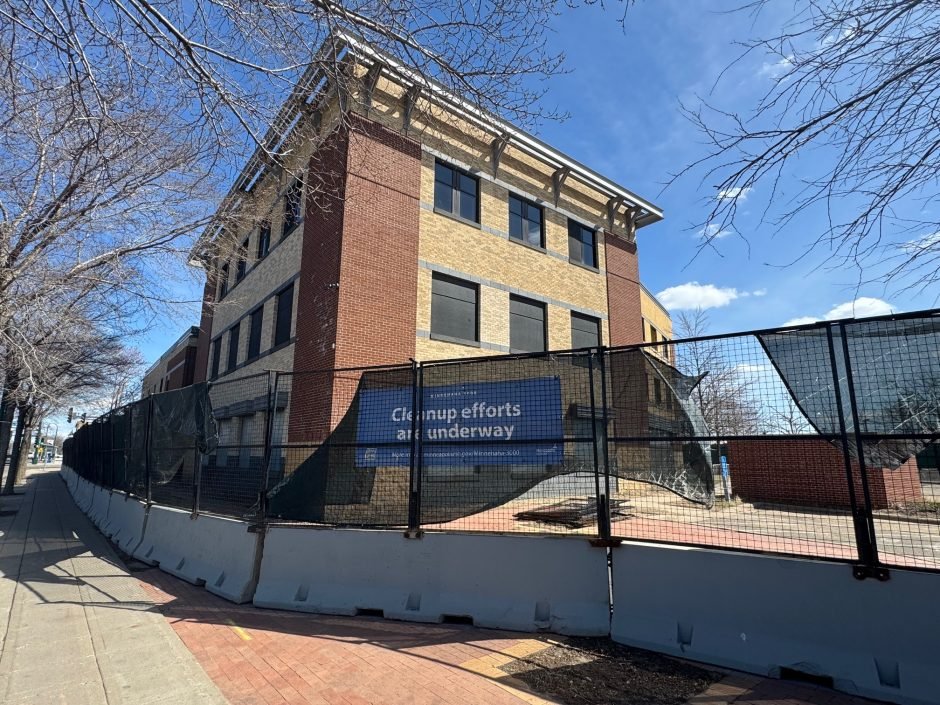
    Just days before the anniversary of Floyd’s death on Sunday, the U.S. Department of Justice filed a motion to dismiss its case against the city of Minneapolis that would have resulted in a federal consent decree and mandated reforms for the Minneapolis Police Department. On Tuesday, a district court judge granted the request, throwing out the case with prejudice, meaning it can’t be brought forward again.

    Efforts to implement the consent decree was the result of a two-year investigation into the Minneapolis Police Department that found its culture created “systemic problems” that resulted in the police killing of Floyd five years ago.

    The investigation also  found the Minneapolis Police Department routinely used excessive force, “unlawfully discriminates against Black and Native American people,” and violated the rights of those who criticize them.

    Despite the willingness of Minneapolis and its police force to adhere to the consent decree reforms, the Trump administration rejected the effort at accountability. 

    Schwartz said the turnabout on the Minneapolis consent decree and a similar one in Louisville, Ky. — as well as the end of federal investigations into other police departments — “are other reasons local police will be on their own.”

    The Justice Department’s moves were expected. Trump has opposed consent decrees, calling them a “war on police,” and shaken up the Justice Department, which has seen an exodus of attorneys in its Civil Rights Division as the agency has been told to abandon its original mission — to protect the constitutional rights of all Americans — to one focused on enforcing the president’s executive orders. Reportedly, about 70% of the Civil Rights Division lawyers have left or will leave the department by the end of May.

    Meanwhile, Trump’s MAGA supporters have launched an online petition asking the president to pardon Derek Chauvin, the officer who was convicted of murdering Floyd.

    As of now, Trump has not responded to the request.  

    ‘A false framing of the issue’  

    How did a national push for police reforms, which flourished after Floyd’s death, falter?

    One problem is the limitations of the federal government, outside the implementation of investigations and the imposition of consent decrees, to mandate the policies of local police.

    Another is the American concerns about crime, which have been politicized, with Republicans calling Democrats who pressed for reform “soft on crime.”

    “It’s a false framing of the issue to say if you want to keep people safe, you have to limit their constitutional rights,” Schwartz said.

    Schwartz noted that many state legislatures passed reforms — including Minnesota. Local police also voluntarily adopted them after Floyd’s death — and subsequent high-profile incidents of police brutality.

    “The response to the murder of George Floyd changed the conversation for the better in a number of ways. If you are looking for a bright line, or dramatic change, you will not see them,” Schwartz said. “But there have been more subtle actions and those are the results of protests and advocacy.”

    Yet the fear of crime, justified or not, derailed Congress’ attempts and hurt Democrats in the 2020 and 2022 midterms.

    The political harm was largely inflicted by the party’s progressive wing, which called for “defunding the police” even as some said the slogan merely meant spending more of the police budget on social workers and community outreach and other Democrats advocated a more nuanced approach to reform.  

    Police chiefs and police unions also pushed back on some proposed changes in police conduct, which they said were hampering the recruitment and retention of officers.

    According to Statista, the numbers of police officers dropped sharply in 2021, when Congress was debating reforms after Floyd’s murder, and reached a historic high in 2023 with more than 720,000 police officers on the job nationwide.

    But to Schwartz, it wasn’t talk of reforms that depressed police department hirings — it was the negative views of police that resulted from the deaths of Floyd and other Black men and women at the hands of police.

    The most controversial aspect of the failed George Floyd Justice in Policing Act would curb the legal doctrine of “qualified immunity,” which keeps police officers safe from civil lawsuits that would stem from conduct in the performance of their jobs.  

    Police unions argued that would chill police activity necessary to keep the public safe, depress recruitment and result in the bankruptcies of officers who were sued.

    But even when that provision was stripped from the bill, it failed to garner enough support in the U.S. Senate. Police opposition also killed state legislature efforts to roll back qualified immunity.

    So, what is George Floyd’s legacy? That’s hard to determine.

    There have been modest police reforms and more police accountability since his death. 

    But, according to a recent Pew Research Center report, five years after that death 72% of poll respondents say the increased focus on race and racial inequality did not lead to changes in the lives of Black people.

    And the Pew study says that the share of Americans who express support for the Floyd-fueled Black Lives Matter movement stands at 52% today, a drop of 15 percentage points compared with June 2020.

    The post Trump administration erasing police reforms initiated in wake of George Floyd’s death appeared first on MinnPost.

  • How Memorial Day evolved from mourning the fallen to summer kickoff, retail sales

    How Memorial Day evolved from mourning the fallen to summer kickoff, retail sales

    NORFOLK, Va. (AP) — Memorial Day is a U.S. holiday that’s supposed to be about mourning the nation’s fallen service members, but it’s come to anchor the unofficial start of summer and a long weekend of travel and discounts on anything from mattresses to lawn mowers.

    Iraq War veteran Edmundo Eugenio Martinez Jr. said the day has lost so much meaning that many Americans “conflate and mix up Veterans Day, Memorial Day, Armed Forces Day, July Fourth.” Social media posts pay tribute to “everyone” who has served, when Memorial Day is about those who died.

    For him, it’s about honoring 17 U.S. service members he knew who lost their lives.

    “I was either there when they died or they were soldiers of mine, buddies of mine,” said Martinez, 48, an Army veteran who lives in Katy, Texas, west of Houston. “Some of them lost the battle after the war.”

    Here is a look at the holiday and how it has evolved:

    When is Memorial Day?

    It falls on the last Monday of May. This year, it’s on May 26.Why is Memorial Day celebrated?

    It’s a day of reflection and remembrance of those who died while serving in the U.S. military, according to the Congressional Research Service. The holiday is observed in part by the National Moment of Remembrance, which encourages all Americans to pause at 3 p.m. for a moment of silence.

    What are its origins?

    The holiday’s origins can be traced to the American Civil War, which killed more than 600,000 service members — both Union and Confederate — between 1861 and 1865.

    The first national observance of what was then called Decoration Day occurred on May 30, 1868, after an organization of Union veterans called for decorating war graves with flowers, which were in bloom.

    The practice was already widespread. Waterloo, New York, began a formal observance on May 5, 1866, and was later proclaimed to be the holiday’s birthplace.

    Yet Boalsburg, Pennsylvania, traced its first observance to October 1864, according to the Library of Congress. And women in some Confederate states were decorating graves before the war’s end.

    David Blight, a Yale history professor, points to May 1, 1865, when as many as 10,000 people, many of them Black, held a parade, heard speeches and dedicated the graves of Union dead in Charleston, South Carolina.

    A total of 267 Union troops had died at a Confederate prison and were buried in a mass grave. After the war, members of Black churches buried them in individual graves.

    “What happened in Charleston does have the right to claim to be first, if that matters,” Blight told The Associated Press in 2011.

    When did Memorial Day become a source of contention?

    As early as 1869, The New York Times wrote that the holiday could become “sacrilegious” and no longer “sacred” if it focused more on pomp, dinners and oratory.

    In an 1871 Decoration Day speech at Arlington National Cemetery abolitionist Frederick Douglass said he feared Americans were forgetting the Civil War’s impetus: enslavement.

    “We must never forget that the loyal soldiers who rest beneath this sod flung themselves between the nation and the nation’s destroyers,” Douglass said.

    His concerns were well-founded, said Ben Railton, a professor of English and American studies at Fitchburg State University in Massachusetts. Although roughly 180,000 Black men served in the Union Army, the holiday in many communities would essentially become “white Memorial Day,” especially after the rise of the Jim Crow South, Railton told the AP in 2023.

    In the 1880s, then-President Grover Cleveland was said to have spent the holiday going fishing — and “people were appalled,” Matthew Dennis, an emeritus history professor at the University of Oregon, previously told the AP.

    But when the Indianapolis 500 held its inaugural race on May 30, 1911, a report from the AP made no mention of the holiday — or any controversy.

    How has the holiday changed?

    Dennis said Memorial Day’s potency diminished somewhat with the addition of Armistice Day, which marked World War I’s end on Nov. 11, 1918. Armistice Day became a national holiday by 1938 and was renamed Veterans Day in 1954.

    In 1971, Congress changed Memorial Day from every May 30 to the last Monday in May. Dennis said the creation of the three-day weekend recognized that Memorial Day had long been transformed into a more generic remembrance of the dead, as well as a day of leisure.

    Just a year later, Time Magazine wrote that the holiday had become “a three-day nationwide hootenanny that seems to have lost much of its original purpose.”

    Why is Memorial Day tied to sales and travel?

    Even in the 19th century, grave ceremonies were followed by leisure activities such as picnicking and foot races, Dennis said.

    The holiday also evolved alongside baseball and the automobile, the five-day work week and summer vacation, according to the 2002 book “A History of Memorial Day: Unity, Discord and the Pursuit of Happiness.”

    In the mid-20th century, a small number of businesses began to open defiantly on the holiday.

    Once the holiday moved to Monday, “the traditional barriers against doing business began to crumble,” authors Richard Harmond and Thomas Curran wrote.

    These days, Memorial Day sales and traveling are deeply woven into the nation’s muscle memory.

    But Martinez, the Iraq War veteran in Texas, is posting photos and stories on social media about the service members he knows who died.

    “I’m not trying to be a Debbie Downer and tell you not to have your hotdogs and your burgers. But give them at least a couple minutes,” he said. “Give them some silence. Say a little prayer. Give them a nod. There’s a bunch of families out there that don’t have loved ones.”

    The post How Memorial Day evolved from mourning the fallen to summer kickoff, retail sales appeared first on MinnPost.

  • How federal consent decrees have been used in police reform across the US

    How federal consent decrees have been used in police reform across the US

    The Justice Department announced Wednesday it was canceling proposed consent decrees reached with Minneapolis and Louisville to implement policing reforms in the wake of the killings of George Floyd and Breonna Taylor.

    The department also announced it would retract its findings in six other recent sweeping investigations into police departments as part of a move to phase out the use of the federal oversight mechanism on local police departments at Republican President Donald Trump’s behest.

    The decision to unwind the investigations is a major reversal from the Biden administration, which had aggressively used the investigations and decrees to push reforms at police departments it accused of civil rights violations.

    Here’s more information on how consent decrees work and why they’ve been put in place.

    What are consent decrees?

    The federal government has used consent decrees after what are commonly referred to as pattern or practice investigations to address findings of civil rights violations or unconstitutional practices. They’ve been used for things like monitoring mandated desegregation in schools or addressing unconstitutional conditions in jails or prisons.

    The 1994 crime bill gave the Justice Department the ability to conduct pattern or practice investigations specifically of police departments.

    The investigations are not criminal. They are often triggered by high-profile excessive or fatal use-of-force incidents like the police killings of George Floyd in Minneapolis and Breonna Taylor in Louisville. But they can also be triggered by citizen complaints, or be started at the request of local or state officials.

    Consent decrees are settlements of the investigation findings that do not require admissions of guilt, but put in place a court-enforced improvement plan that requires agencies to meet specific goals before federal oversight of the agency is removed.

    A federal judge usually administers the consent decree and appoints a monitor to oversee and report on progress.

    Who decides what’s in a consent decree?

    After the Justice Department investigation is complete, and if systemic civil rights violations are found, the department’s attorneys work with local governments or police agencies to negotiate the list of reforms included in the decree.

    Those reforms can cover an array of issues including policies, training requirements, data practices, oversight and other policing practices, said Alex del Carmen, a professor and associate dean of the School of Criminology at Tarleton State University in Fort Worth.

    Del Carmen, who has served as a federal monitor and a special master in large consent decrees, said the DOJ attorneys and the local government or police agency most often will agree on the terms of the decree before it is sent to a judge for approval.

    In the rare instance that a police department does not agree to the consent decree terms, the Justice Department has in the past filed a lawsuit to force the reforms, as it did in Colorado City, Arizona. A jury found the department had discriminated against people who weren’t members of the Fundamentalist LDS Church and put in place court-ordered reforms.

    Most recently, Memphis declined in December to agree to the findings of a Justice Department investigation. The department had not filed a lawsuit in the case, and the announcement Wednesday retracted those findings.

    Consent decrees had not yet been proposed in the other five retracted investigations. The now canceled consent decrees in Louisville and Minneapolis were awaiting a judge’s approval.

    How long do consent decrees last?

    Some decrees are designed to be completed in five years, which was the timeframe in which former President Joe Biden’s attorney general, Merrick Garland, proposed all decrees should have a hearing to decide if they should be ended.

    In reality, many of the decrees last a decade or longer. The Justice Department and local officials filed a joint motion earlier this month to conclude a decree at the Albuquerque Police Department that had been enacted in November 2014. Another ongoing consent decree with the New Orleans Police Department began in 2013.

    After the consent decree conditions are met, departments often also have to complete a maintenance period to make sure the changes continue.

    “Consent decrees remain in effect until a department demonstrates sustained compliance with all requirements,” del Carmen said. “Progress is evaluated through regular monitor reports and agency audits. If the department fails to meet benchmarks or violates the decree, the court can hold it in contempt, impose fines, extend oversight, or mandate additional corrective measures.”

    He said in cases of continued non-compliance, a court can consider the rare step of appointing a receiver- a neutral third party- to manage the department.

    How is success of a consent decree measured?

    Critics of police department consent decrees argue they can come with expensive tabs — sometimes in the millions — including paying the monitor. Police unions and local officials often say that money could be better used making improvements to the department and paying officers.

    In Albuquerque critics have said they believe the decree failed, citing increased crime numbers.

    But advocates of the federal decrees and former monitors said those numbers — crimes or raw use-of-force numbers — are not indicative of success or failure. They point to independent monitor audits that track policy compliance, to community-trust surveys and to declines in misconduct complaints.

    They also say the money expended in improving training and accountability often means less payouts later in civil-liability claims against the police departments.

    “Independent oversight ensures that agencies cannot ignore or backslide on required changes, even amid political shifts,” del Carmen said. “While resource-intensive, it is often argued that (consent decrees) have repeatedly produced lasting reductions in misconduct and strengthened public trust in reformed departments.”

    The post How federal consent decrees have been used in police reform across the US appeared first on MinnPost.