Category: USA

  • D.C. Memo: Bondi’s defiance with Klobuchar, other Dems further stirs the pot

    D.C. Memo: Bondi’s defiance with Klobuchar, other Dems further stirs the pot

    WASHINGTON – Attorney General Pam Bondi added to the rising acrimony on Capitol Hill this week, the second of the government shutdown.

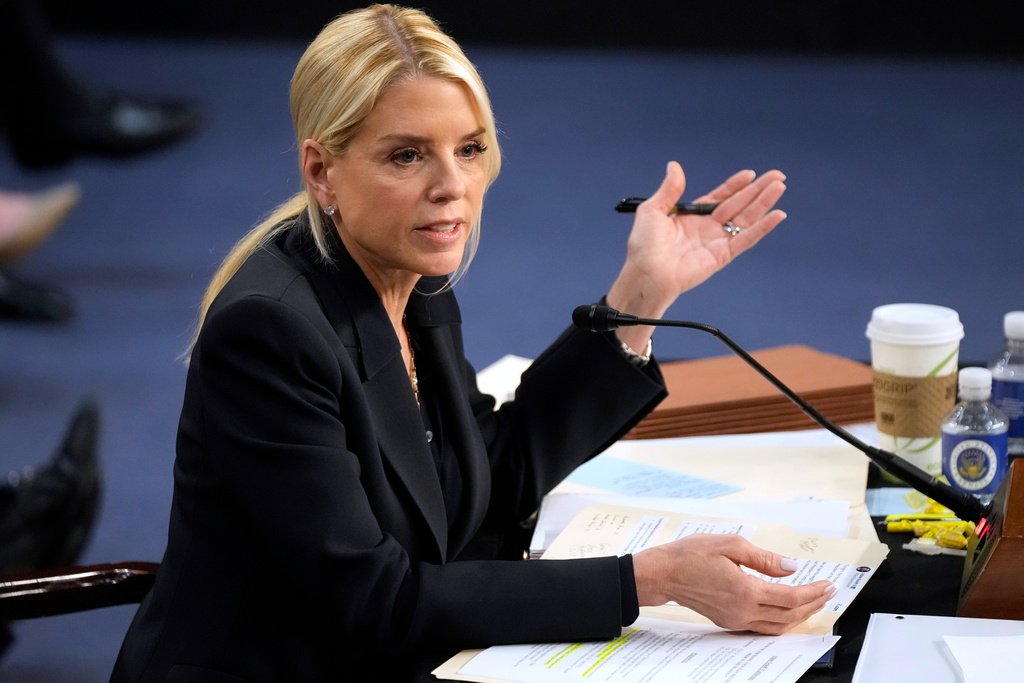
    Testifying at a Senate Judiciary Committee hearing, a combative Bondi repeatedly dodged questions from U.S. Sen. Amy Klobuchar and other Democrats on the panel and lobbed personal attacks on many of those Democrats.

    When U.S. Sen. Dick Durbin, D-Ill., asked Bondi whether Trump had consulted her before his deployment of National Guard troops to Chicago, Bondi shot back, “I wish you loved Chicago as much as you hate President Trump. If you’re not going to protect your citizens, President Trump will.”

    Bondi was dismissive when Klobuchar questioned the star witness.

    Klobuchar noted Bondi’s resistance to discussing U.S. Justice Department work. Yet she persisted, saying, “I was going to ask you if you received advice, instruction or request from anyone at the White House to direct the department to engage in any investigations, prosecutorial actions, including decisions not to investigate or prosecute anyone?

    “I’m not going to discuss any conversations,” Bondi responded.

    Klobuchar tried again.

    “But then how about the Truth Social post on Sept. 20, 2025, in which the president said, ‘We can’t delay any longer, Pam,’ using your name, ‘not bringing criminal charges are killing our reputation,’ his words and credibility, and then goes on to tell you to prosecute a member of this committee to prosecute the attorney general of New York and to prosecute James Comey?” Klobuchar said. “Do you consider that a directive to the Justice Department?”

    Bondi replied that “President Trump is the most transparent president in American history. And I don’t think he said anything that he hasn’t said for years.”

    Related: Pam Bondi withholds federal funding from “sanctuary cities”

    New York Attorney General Letitia James, who brought a civil case against Trump, was indicted by the Justice Department on Thursday. 

    During four-and-a-half hours on the witness seat, Bondi avoided questions about the Jeffrey Epstein files, the deployment of National Guard troops to American cities and U.S. lethal strikes on alleged Venezuelan drug trafficking boats.

    Several Democratic senators asked Bondi about the vows she made during her confirmation hearings in January, in which she said “politics would play no part” in her role as attorney general.

    “I absolutely have upheld that commitment,” Bondi said.

    From Bondi to Vought, the grim reaper

    U.S. Rep. Kelly Morrison, D-3rd District, tore up social media this week with a torrent of posts that ranged from decrying Speaker Mike Johnson’s refusal to seat a newly elected Democratic member of the House to a video President Donald Trump made to the soundtrack of Blue Oyster Cult’s “(Don’t Fear) The Reaper.”

    Morrison, a freshman and an OB-GYN, has made the Democrats’ push for health care funding in the fight over funding the government personal.

    She attacked Trump this week for posting an AI-generated video of Office of Management and Budget Director Russ Vought as the grim reaper, with the Blue Oyster Cult’s hit as the soundtrack.

    Wielding a scythe, Vought walks through an office of government workers and hoists a bag emblazed with a dollar sign. The video also features Trump playing a cowbell as part of a band of skeleton musicians and Vice President JD Vance on drums.

    “Joking about Americans dying is not funny,” Morrison said in posts on X and Bluesky. She said the video “stopped me cold in my tracks.”

    Why? Not because the video is another attempt by Trump to threaten mass firings during the shutdown, but because “at the very center of this funding fight is whether people will be able to get health care,” Morrison said.

    “The Republican health care policies will literally kill people,” Morrison said.

    Democrats have rejected a GOP stopgap bill that would have temporarily kept the government running after the end of the federal fiscal year Sept. 30. They want any short-term spending bill to repeal the GOP’s cuts to Medicaid and extend Affordable Care Act subsidies that lower the cost of premiums for 90,000 Minnesotans.

    Morrison said these cuts to health care spending will result in 51,000 American deaths each year.

    Rosen confirmed

    The focus on the shutdown overshadowed the confirmation this week of Daniel Rosen as Minnesota’s newest U.S. attorney.

    Rosen was confirmed late Tuesday as one of 107 of President Donald Trump’s nominees.

    The mass confirmations, which included ambassadors and agency officials, happened after Senate Republicans changed the rules last month to allow most executive branch nominees to be confirmed as a group. Before then, lawmakers had to hold a vote on each one.

    Rosen had been waiting since May for his confirmation vote. The rules change, however, does not extend to Cabinet picks or judges.

    “We are confident that Mr. Rosen will fight to protect Minnesotans, and their hard-earned tax dollars, from the scourge of crime and fraud we’ve seen in our state,” said U.S. Rep. Tom Emmer, R-6th District, in a statement. Emmer had included Rosen in a short list of candidates he sent to the White House.

    A veteran attorney, Rosen has been involved in GOP politics. He was the campaign attorney for Kendall Qualls, a businessman who ran for governor in 2021 but dropped out of the race after he failed to win his party’s endorsement. Qualls is running for governor again.

    In other news

    ▪️MinnPost inaugurated a shutdown blog that will keep track of government shutdown-related events in Minnesota and Washington D.C.
    ▪️Brian Martucci covered a forum featuring the candidates for St. Paul mayor “as the campaigns hit their pace.” Trying to break from the pack were incumbent Mayor Melvin Carter and his most-prominent challenger, DFL state Rep. Kaohly Her. Candidates Yan Chen, Adam Dullinger and Mike Hilborn, also made their cases at the forum.
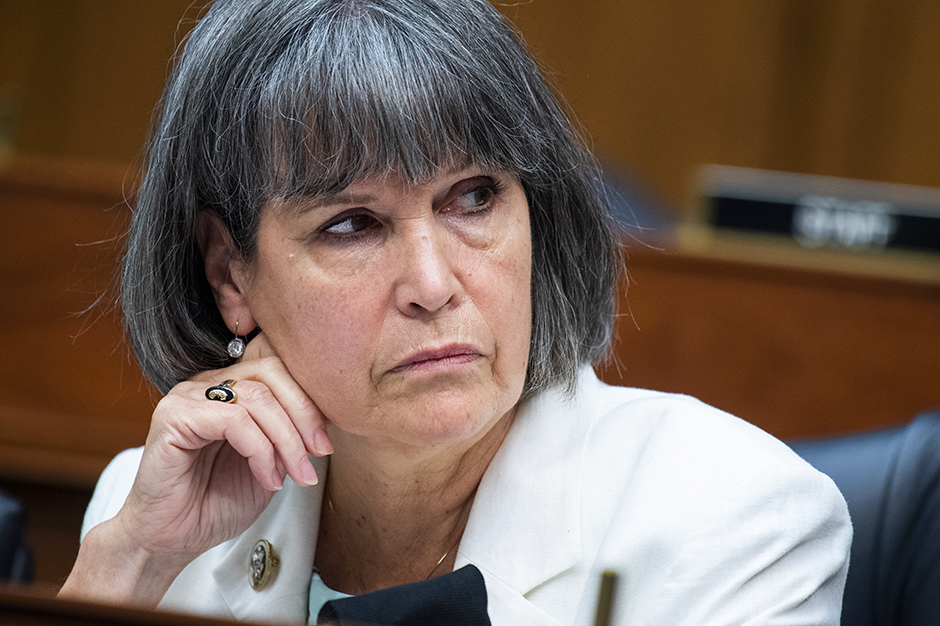
    ▪️ When she began criticizing Israel 25 years ago, U.S. Rep. Betty McCollum was among a minority of lawmakers from her party doing so. But no more as her fellow Democrats have recently moved toward the Minnesota lawmaker on the United States’ relationship with Israel. MinnPost interviewed McCollum just before news of what could be a breakthrough in the war in Gaza.

    This and that

    A reader wrote in with a comment about Israeli Prime Minister Benjamin Netanyahu that was sparked by our story about U.S. Rep. Betty McCollum and her long-held concerns about the Jewish state.

    “It is unfortunate that people speak about Israel and its people, when the problems result from having Netanyahu in power,” the reader said. “He has been as cruel, dishonest, incompetent, corrupt and arrogant as Trump. He has used the Hamas attack, which he failed to repel, to stay in power and delay prosecution on corruption charges. He is totally dependent on an ultra-conservative base that wants all Palestinians to go away. I find his lack of remorse about killing thousands of Palestinian children unforgivable.”

    Please keep your comments, and any questions, coming. I’ll try my best to respond.

    Ana Radelat

    Ana Radelat

    Ana Radelat is MinnPost’s Washington, D.C. correspondent. You can reach her at aradelat@minnpost.com or follow her on Twitter at @radelat.

    The post D.C. Memo: Bondi’s defiance with Klobuchar, other Dems further stirs the pot appeared first on MinnPost.

  • Emmer spins Dems’ Medicaid position in casting blame for shutdown

    Emmer spins Dems’ Medicaid position in casting blame for shutdown

    WASHINGTON – On the ninth day of the federal government shutdown, Rep. Tom Emmer, R-6th District, took aim at Minnesota’s Democratic senators, Amy Klobuchar and Tina Smith.

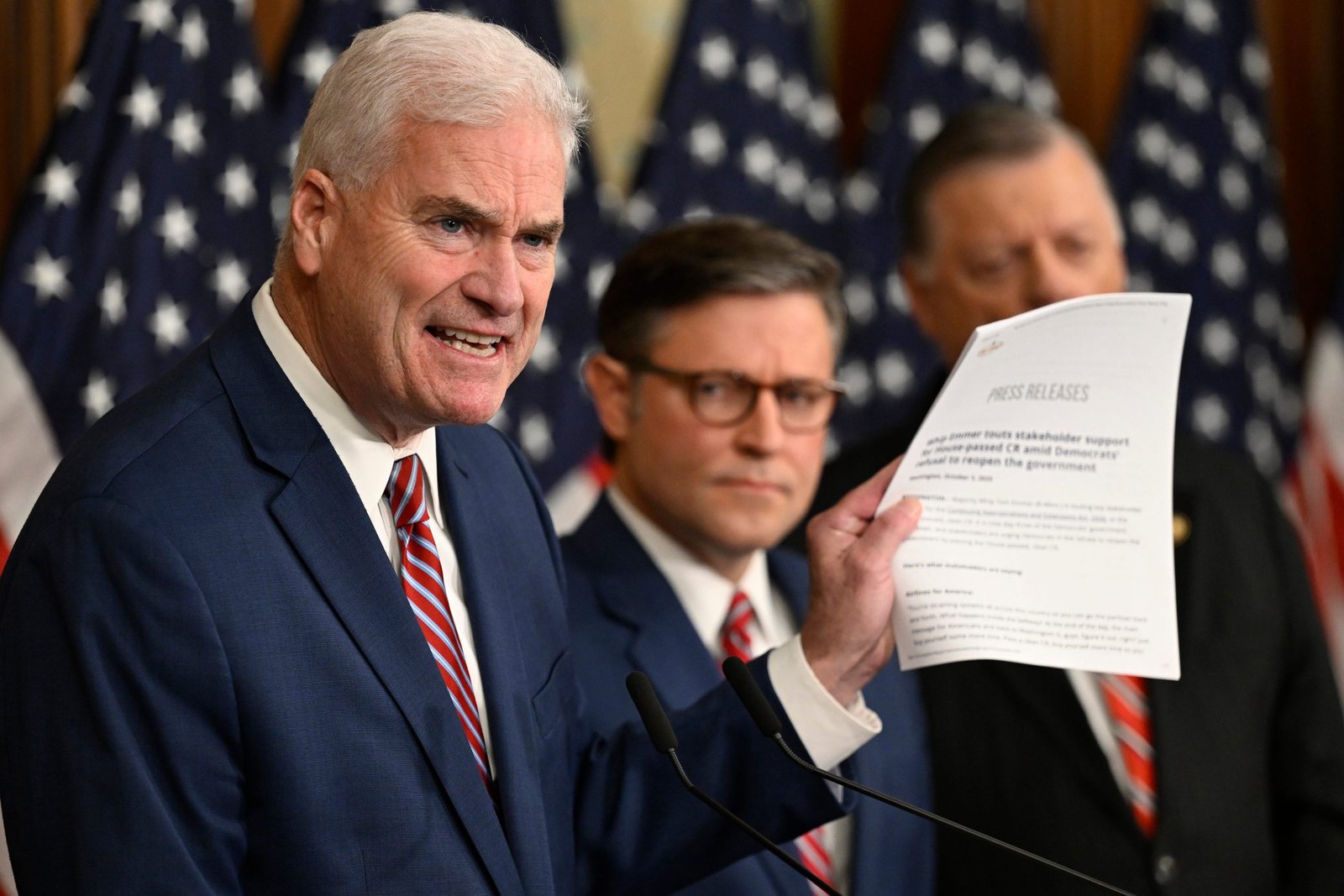
    At a GOP leadership press conference, which House Republicans decided this week to hold every morning, Emmer, the Majority Whip, said Klobuchar and Smith have voted six times “to shut the government down, or keep it shut down.”

    With House Speaker Mike Johnson nodding soberly at his side, Emmer said the Democratic senators “have voted six times against paying our troops, six times against paying the 13,000 National Guardsmen who are showing up to work without receiving a paycheck.”

    The U.S. Senate has rejected a House GOP short-term spending bill that would fund the federal government until Nov. 21. Although the GOP has a majority in the U.S. Senate, it lacks the 60 votes needed to overcome Democratic opposition to the bill, which does not contain the restoration of Medicaid cuts and extension of enhanced Affordable Care Act premium subsidies Democrats are seeking.

    “Tina Smith claims she shut the government down so she could — quote  — protect Minnesotans’ health care — unquote,” Emmer said. “But Tina, if that really was the case, why do you support a $1.35 trillion spending proposal while providing health care to illegal aliens while cutting $50 from rural health care. She’s just not being honest.”

    Emmer did not mention that Senate Republicans have repeatedly rejected a Democratic alternative that would reopen the shuttered federal government. And, when it comes to honesty, Emmer’s comments should be scrutinized more closely.

    Democrats want to repeal the entire section of the One Big Beautiful Bill Act (OBBBA) that implements cuts to Medicaid, the government health care program for the poor. The OBBBA cut Medicaid benefits for certain “non-citizens.” That does not mean that benefits had been available for those immigrants without permission to live in the United States, federal law has always prohibited that, and that Democrats want to provide free health care to “illegal aliens.”

    What the repeal of the entire Medicaid section would do is restore the OBBBA’s elimination of benefits for those who are not U.S. citizens but do have legal permission to live and work in the United States. Those include legal residents (green card holders), Deferred Action for Childhood Arrival (DACA) recipients and those with temporary protected status (TPS).

    As far as the $50 billion fund for rural hospitals, that is also in the Medicaid section of the OBBBA, put in at the last second in the U.S. Senate after an outcry from rural hospitals over the bill’s cuts to Medicaid. And many rural hospitals say the money won’t be enough to cover the losses they expect to incur because of the OBBBA.

    Nevertheless, Emmer insisted Democratic demands to restore Medicaid cuts “was never about health care, but rather “about picking a fight with Donald Trump so they could try to score points with the terrorist wing of their party.”

    Smith reacted on X to Emmer’s attacks, which include posts on social media.

    “You’re spending a lot of time tweeting at me and not a lot of time negotiating how to get out of a shutdown,” Smith said. “By the way, why isn’t the rest of your team in Washington?”

    The post Emmer spins Dems’ Medicaid position in casting blame for shutdown appeared first on MinnPost.

  • Democrats turning government shuttering into ‘Epstein shutdown’

    Democrats turning government shuttering into ‘Epstein shutdown’

    WASHINGTON – Democrats say the saga of Adelita Grijalva, a Democrat who won a special election for her dad’s congressional seat in Arizona, is evidence that House Speaker Mike Johnson is determined to keep the so-called “Epstein files” under lock and key.

    Grijalva has been waiting nearly two weeks to be sworn in as the newest member of the U.S. House. She has promised to be the 218th vote – or the majority vote – that would move a discharge petition to forward, requiring Johnson to allow a vote on legislation mandating the release of information about disgraced financier Jeffery Epstein.

    But Johnson adjourned the House after it passed a stop-gap spending bill and does not want to reconvene the chamber to place pressure on Senate Democrats to pass his bill.

    So, Johnson said Grijalva cannot be sworn in, even as two Republicans, Florida GOP Reps. Jimmy Patronis and Randy Fine were sworn in during a pro forma session earlier this year that did not require the entire House to be present.

    Johnson said he made that decision because the families of Patronis and Fine had traveled to Washington, D.C., for the event. He did not respond when asked if he would use a pro forma session to swear in Grijalva if her family traveled to D.C.

    Grijalva’s case caught fire among Democrats on Wednesday.

    “It’s shameful that @SpeakerJohnson and House Republicans refuse to release the Epstein files,” Democratic National Committee Chairman Ken Martin, formerly Minnesota’s DFL Party chief, posted on social media. “Swear in Adelita Grijalva and get this done for the survivors and American people.”

    It’s shameful that Speaker Johnson and House Republicans refuse to release the Epstein files. Swear in Adelita Grijalva and get this done for the survivors and American people.

    — Ken Martin (@kenmartin.bsky.social) 2025-10-07T19:14:13.76596972Z

    Meanwhile, U.S. Rep. Angie Craig, D-2nd District, said in a post that Johnson “is refusing to swear in Rep-elected Grijalva during a pro forma session – but he swore in two Republican members in April using that exact procedure.”

    “Conveniently she is the last signature needed to release the Epstein  files … This is not normal,” Craig said. “What do Republicans have to hide?”

    Speaker Johnson is refusing to swear in Rep-elect Grijalva during a pro forma session – but he swore in two Republican members in April using that exact procedure. Conveniently, she is the last signature needed to release the Epstein files… This isn'tt normal. What do they have to hide?

    — Rep. Angie Craig (@repangiecraig.bsky.social) 2025-10-08T17:50:14.961Z

    The post Democrats turning government shuttering into ‘Epstein shutdown’ appeared first on MinnPost.

  • Democrats turning government shuttering into ‘Epstein shutdown’

    Democrats turning government shuttering into ‘Epstein shutdown’

    WASHINGTON – Democrats say the saga of Adelita Grijalva, a Democrat who won a special election for her dad’s congressional seat in Arizona, is evidence that House Speaker Mike Johnson is determined to keep the so-called “Epstein files” under lock and key.

    Grijalva has been waiting nearly two weeks to be sworn in as the newest member of the U.S. House. She has promised to be the 218th vote – or the majority vote – that would move a discharge petition to forward, requiring Johnson to allow a vote on legislation mandating the release of information about disgraced financier Jeffery Epstein.

    But Johnson adjourned the House after it passed a stop-gap spending bill and does not want to reconvene the chamber to place pressure on Senate Democrats to pass his bill.

    So, Johnson said Grijalva cannot be sworn in, even as two Republicans, Florida GOP Reps. Jimmy Patronis and Randy Fine were sworn in during a pro forma session earlier this year that did not require the entire House to be present.

    Johnson said he made that decision because the families of Patronis and Fine had traveled to Washington, D.C., for the event. He did not respond when asked if he would use a pro forma session to swear in Grijalva if her family traveled to D.C.

    Grijalva’s case caught fire among Democrats on Wednesday.

    “It’s shameful that @SpeakerJohnson and House Republicans refuse to release the Epstein files,” Democratic National Committee Chairman Ken Martin, formerly Minnesota’s DFL Party chief, posted on X. “Swear in Adelita Grijalva and get this done for the survivors and American people.”

    Meanwhile, U.S. Rep. Angie Craig, D-2nd District, said on X that Johnson “is refusing to swear in Rep-elected Grijalva during a pro forma session – but he swore in two Republican members in April using that exact procedure.”

    “Conveniently she is the last signature needed to release the Epstein  files … This is not normal,” Craig said. “What do Republicans have to hide?”

    The post Democrats turning government shuttering into ‘Epstein shutdown’ appeared first on MinnPost.

  • Rep. Angie Craig pushes for military pay during government shutdown

    Rep. Angie Craig pushes for military pay during government shutdown

    The issue of paying the troops, who like all others on the federal payroll will miss their first paycheck, has put pressure on Democrats – some more than others.

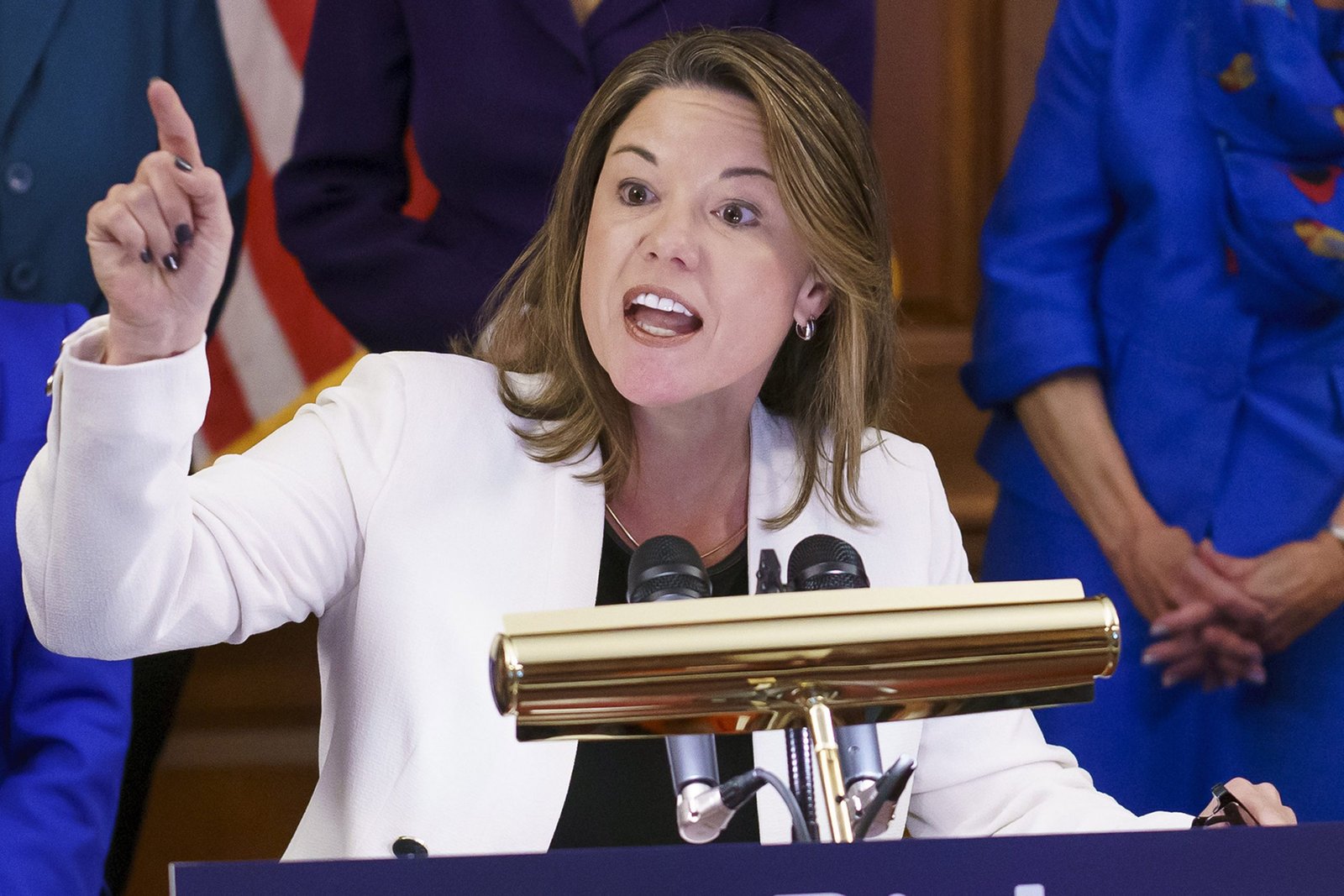
    Rep. Angie Craig, D-2nd District, who is running for retiring Sen. Tina Smith’s seat, was one of 10 House Democrats, many of them moderates, who wrote to House Speaker Mike Johnson on Wednesday asking him to reconvene the U.S. House to vote on legislation that would pay the military, even if there is no end to the shutdown.

    “The threats from our adversaries do not stop because the federal government shuts down. We have an obligation to take care of our service members and asking them to stand guard without pay is wrong,” the lawmakers wrote.

    But Johnson on Wednesday indicated there would not be any more House votes until the U.S. Senate agreed to his stopgap bill to reopen the government.

    “The House did its job,” Johnson said. “The House is done.”

    The post Rep. Angie Craig pushes for military pay during government shutdown appeared first on MinnPost.

  • The federal government is shut down – and so is the U.S. House

    The federal government is shut down – and so is the U.S. House

    WASHINGTON – What does a vote counter do when there are no votes to count?

    As U.S. House majority whip, it’s Rep. Tom Emmer’s job to count votes and persuade – or even strongarm – recalcitrant Republicans to support GOP initiatives in a closely divided chamber. 

    But now there are no votes to count.

    Emmer joined a GOP House leadership press conference Wednesday to continue to blame Democrats for a federal government shutdown that is in its eighth day.

    The 6th District Republican said the shutdown has occurred “all because Democrats would rather hold the American people hostage to appease their radical base.”

    But it’s totally the GOP’s decision to put all House business on ice.  

    Emmer is among a small group of House Republicans who are still in Washington, D.C., because House Speaker Mike Johnson, R-La., has canceled all House votes for a second week.

    Johnson indicated the House’s work is done until Senate Democrats end their filibuster of his bill to reopen government.

    Before leaving town, House Republicans passed a stopgap funding bill, called a continuing resolution, or CR, that would fund the federal government at current levels until Nov. 21. Democrats oppose the measure because it does not have concessions the party wants – a rollback of Medicaid cuts and an extension of enhanced premium subsidies for those who purchase insurance  

    Meanwhile, unlike the House, the U.S. Senate has been at work – mostly rejecting Johnson’s stopgap bill in a series of votes. But the chamber has also accomplished other things.

    For instance, late Tuesday the Senate voted along party lines, 51-47, to confirm Daniel Rosen as Minnesota’s newest U.S. attorney. Rosen’s confirmation was part of a batch of 107 Trump nominees whose confirmations had been stalled until Senate Majority Leader John Thune, R-S.D., changed Senate rules to expedite confirmations.

    The post The federal government is shut down – and so is the U.S. House appeared first on MinnPost.

  • Live Blog: The latest on the government shutdown and its impact on Minnesota

    Live Blog: The latest on the government shutdown and its impact on Minnesota

    Updates on the federal government shutdown and its impact on Minnesota by D.C. correspondent Ana Radelat, data journalist Shadi Bushra and other MinnPost contributors.

    The post Live Blog: The latest on the government shutdown and its impact on Minnesota appeared first on MinnPost.

  • Betty McCollum was once a voice in the wilderness on Israel. Now there’s a crowd

    Betty McCollum was once a voice in the wilderness on Israel. Now there’s a crowd

    WASHINGTON – When U.S. Rep. Betty McCollum was growing up, the violent “troubles” in Northern Ireland divided families with Irish heritage like hers. 

    The conflict, born out of the desire of Catholics in Northern Ireland to join the Irish Republic instead of remaining part of the United Kingdom, played out differently in her home, where her mother was a Lutheran and her father Catholic.

    If her parents could accept each other’s beliefs and backgrounds, why couldn’t other nations in conflict over religion also be able to settle their differences, McCollum wondered.

    That concern over conflict resolution and human rights led her to become an early and vocal critic of Israel on Capitol Hill, including its treatment of juvenile detainees and blockade of humanitarian aid in its conflict with Palestinians in the region.

    “I’ve always been very interested in human rights,” McCollum, D-4th District, said. “Even as a kid.”

    Related: What it means to support Israel now

    When she began criticizing Israel 25 years ago, McCollum was among a minority of lawmakers from her party.

    But no more as McCollum’s fellow Democrats have recently moved toward the Minnesota lawmaker on the question of whether the United States should continue its largely unconditional support of Israel.

    Public sentiment on the war in Gaza has also shifted in the two years since the Oct. 7, 2023, terrorist attack by Hamas on Israel, and Democratic voters’ support for the Jewish state is dropping off steeply.

    A recent Pew Research Center poll indicated that 8 in 10 Americans say they are at least somewhat concerned about starvation among Palestinians in Gaza, Israeli military strikes killing Palestinian civilians and the remaining Israeli hostages not being returned to Israel.

    Even American Jews sharply disapprove of Israel’s conduct of the war in Gaza, according to a recent Washington Post poll, with 61% saying Israel has committed war crimes and about 4 in 10 saying the country is guilty of genocide against the Palestinians.

    Because of the shift in public attitude, the American Israel Political Action Committee (AIPAC) — which has spent hundreds of millions of dollars to support lawmakers who offered unconditional support for the Jewish state, and on attacks on McCollum — has suddenly lost much of its influence on Democrats on Capitol Hill.

    For example, House Minority Leader Rep. Hakeem Jeffries, D-N.Y., has recently accepted the endorsement of an AIPAC foe called J Street, a group that supports Palestinian statehood and is highly critical of Israel Prime Minister Benjamin Netanyahu’s government.

    Jeffries had been an ardent supporter of Israel who received $866,550 from AIPAC in the last campaign cycle, according to campaign finance website Open Secrets.

    ‘No fan of Hamas’ 

    McCollum began her activism concerning Israel in 2006 when she first sponsored a bill that would rope off U.S. funds to the Jewish state that were used to detain Palestinian children. She has since sponsored similar legislation in every Congress.

    Her concern for these children began when humanitarian supplies to Palestinians became limited in a bill approved by Congress aimed at punishing Hamas after it won Palestinian legislative elections that year.

    “It would not even allow cancer drugs for children in the occupied territories,” she said.

    McCollum said she is “no fan of Hamas” but that the bill was “a step too far.” Trips to the Middle East — one sponsored by J Street — followed. McCollum discovered that wheelchairs and even baby strollers were not allowed entry to the territories because Israel determined those mundane items “could be turned into weapons,” she said.

    And she said she witnessed other humanitarian aid blocked from the territories. “There were boxes of diapers, there were boxes of formula just rotting,” McCollum said. “I started speaking out.”

    Then there was the 2013 UNICEF report about an increasing number of allegations of ill-treatment of Palestinian children in Israeli military detention. “They were as young as 13 … signing confessions in Hebrew,” McCollum said. “They don’t even speak Hebrew.”

    McCollum’s activism put her on AIPAC’s radar as early as 2006 when she was one of two members of the House International Relations Committee to vote against the bill that took aim at Hamas. That was far before the organization took aim at another Minnesota lawmaker who was critical of Israel — U.S. Rep. Ilhan Omar, D-5th District.

    In the summer of 2023, prior to a speech by Israeli President Issac Herzog to a joint session of Congress, she declined to support a Republican-led resolution reaffirming U.S. support for Israel, voting present.

    More recently, AIPAC funded an attack ad on Facebook that featured the images of McCollum, Omar and U.S. Rep. Rashida Tlaib, D-Mich., the only Palestinian American in Congress.

    The ad warned that the “radicals in the Democratic Party are pushing their anti-Semitic and anti-Israel policies down the throats of the American people.” It included a link to a petition urging supporters to “protect our Israeli allies especially as they face threats from Iran, Hamas, Hezbollah, ISIS and — maybe more sinister — right here in the U.S. Congress.”

    “When you speak out, people will paint you as antisemitic,” McCollum said. “That didn’t work well in my district, but that can be very intimidating.”

    McCollum was also placed in the crosshairs of the Israel lobby for trying to get an accounting of how Israel spent its nonmilitary U.S. aid.

    ‘A humanitarian crisis beyond comprehension’ 

    Negotiations to finalize a deal based on President Donald Trump’s Gaza ceasefire plan are reportedly underway in Egypt on the second anniversary of the Hamas raid on a kibbutz in Israel that started the war.

    McCollum’s statement to mark the anniversary said “since the events of October 7, the world has changed. Prime Minister Netanyahu has used this horrific tragedy to further the goals of his extremist right-wing government and has triggered a humanitarian crisis beyond comprehension.”

    She implored the Trump administration “to broker a true, long-lasting peace agreement.”

    McCollum told MinnPost she’s hopeful for an end to hostilities. But she has some misgivings. “Some (in Hamas) will work towards peace and some will not work towards peace,” she said.

    She also said Trump’s 20-point plan has “no guarantees on boundaries” of Gaza and “no guarantees” on the Palestinians’ right to return to Gaza from where many have fled, including a refugee camp in Jordan.

    There are other sticking points. Hard-liners within Netanyahu’s governing coalition want to retain control of Gaza and reconstruct Jewish settlements there. Hamas is unlikely to agree to the condition it lays down its guns.

    Meanwhile, trust between the two sides at war is virtually nonexistent. Last month, Israel attempted to assassinate Hamas’ negotiating team with an airstrike on Doha.

    The post Betty McCollum was once a voice in the wilderness on Israel. Now there’s a crowd appeared first on MinnPost.

  • Hunger fears grow in Minnesota as food shelves are overwhelmed

    Hunger fears grow in Minnesota as food shelves are overwhelmed


    a man reaches into a cooler at a food shelf

    At the end of every month, Michelle Smith stares into her cupboard and finds little food to be found.

    With her monthly Social Security check spent, Smith turns to Community Emergency Service, the largest food shelf in Minneapolis’ Phillips neighborhood, one of the poorest areas in the Twin Cities. “They always have a good variety of food and it’s always fresh,” Smith said.

    Smith, a former nursing assistant who was forced to quit work following an accident, is among many Minnesotans who are food insecure.

    The ranks of the hungry are expected to grow as grocery prices remain high — and could go even higher — and the federal government has cut food stamps and other nutrition programs, including grants that help food shelves in the state. Moreover, the shutdown of the federal government has put the funding of food stamps, and other federal food programs, under threat.

    For example, the Minnesota Department of Health said the state has only “several weeks” of funds for WIC, the U.S. Department of Agriculture’s supplemental nutrition program for women, infants and children.

    Michelle Smith waits for the bus with her grocery haul from the Community Emergency Service food market on Tuesday, Sept. 30, 2025, in Minneapolis, Minn. The market allows people like Michelle, who is on a fixed income via Social Security, to get free groceries twice per month. Credit: Ellen Schmidt/MinnPost/CatchLight Local/Report for America

    According to the USDA’s Household Food Security report for 2023, the latest available, 9.1% of Minnesota households — more than 207,000 households — are food insecure. That report, which tracks hunger across the United States, has been scrapped by the USDA recently.

    “These redundant, costly, politicized, and extraneous studies do nothing more than fear monger,” the USDA said last month in announcing the end of the report, which many anti-hunger advocates say measured hunger too conservatively.

    According to the last USDA hunger report, the level of food insecurity in Minnesota is lower than the national average, which is 12.3%. But the report indicated that hunger in Minnesota and across the nation is on the rise.

    Minnesota’s 9.1% rate of food insecurity among households was based on a three-year average, from 2021-2023. The previous three-year average, from 2018-2020, indicated 7% of Minnesota households were food insecure.

    And food insecurity is more prevalent in rural areas, where it was 16% in the 2021-2023 three-year average, and more than 25% in Black and Hispanic households.

    The post-pandemic rise in hunger has been attributable to the end of expanded food stamp benefits, school lunches and other aid that was provided during the health crisis, and also to sharp spike in inflation afterward.

    ‘Your money goes fast’

    Smith first visited the food shelf in the Phillips neighborhood 20 years ago, when she used to volunteer at the facility. Now she depends on it.

    “When you’re paying your light bill, your gas bill, your rent, your car insurance, your bus card, all this stuff and your household goods, you know, your hygiene stuff, your money goes fast,” Smith said.

    So, by the end of the month, Smith needs the food provided by Community Emergency Service.

    Billy Ortiz moved from Texas to the Twin Cities eight years ago and first visited Community Emergency Service in March of this year.

    Ortiz has been unemployed for about a year. After his girlfriend died, Ortiz experienced homelessness and drug addiction. He said he is getting back on his feet, but still struggles with food insufficiency.

    “​​There are times when I’m at home and there’s nothing to eat, and I have no money to get something to eat,” Ortiz said. “Plus, with all the prices going up, you know, these days now it’s hard to get food from the grocery store, so I come here, and this place has really helped me stay afloat.”

    Ortiz also receives food stamps, which he says helps him make healthier food choices. He said the food shelf, which holds monthly cookouts to allow people to bond over shared experiences, makes him feel welcome and at home.

    “I feel that they treat the people with the utmost respect,” he said.

    Preserving dignity

    The Community Emergency Service is run by Jamie Dolynchuk, a former Cargill executive who wanted to volunteer for a nonprofit so he could give back to the community.

    He said he searched the internet for one that provides social services in the poorest section of the Twin Cities and came up with the food shelf.

    Dolynchuk said the numbers clearly show that hunger in Minnesota is on the rise. Community Emergency Service once served 120-130 people a day. But when MinnPost interviewed him recently, that number had hit a high point – 460.

    Jamie Dolynchuk, president of Community Emergency Services, stands in the stairwell at the nonprofit organization which offers neighborhood support in a former church on Tuesday, Sept. 30, 2025, in Minneapolis, Minn. Credit: Ellen Schmidt/MinnPost/CatchLight Local/Report for America

    People reserve appointments to visit the food shelf online, but Dolynchuk said they never turn anyone away.

    “A typical food shelf gives between 14 and 18 pounds of food for a visit, and most food shelves allow one visit per month,” Dolynchuk said. “CES gives about 40 pounds of food per visit, so like triple the amount, and we allow people to come twice a month.”

    An innovation, the food shelf’s refrigerated food lockers, allow working moms to pick up groceries when they cannot make it to the food shelf before it closes. They simply scan a code on their phones and the locker with their order opens.

    Community Emergency Service is also helping set up food lockers for students at the University of Minnesota, which Dolynchuk said are expected to be put into operation in February.

    A client reaches into the food lockers at Community Emergency Service on Tuesday, Sept. 30, 2025, in Minneapolis, Minn. The lockers have pre-packed bags of groceries that people in need can scan a QR code to pick up. Credit: Ellen Schmidt/MinnPost/CatchLight Local/Report for America

    While food shelves typically buy their food, Dolynchuk said his operation has adopted a rescue food model. Instead of spending money buying groceries, they invested money in trucks to make daily trips to grocery stores that donate rescue food, especially fresh produce, which makes up about 85% of their supply.

    “I think that there is a very big misconception that when you rescue food, it’s the throwaway garbage food from the grocery stores,” Dolynchuk said. “It is absolutely not. The food is fantastic.”

    “These people here are good people,” Dolynchuk said. “They’re dealing with so many stresses and challenges in their life.”

    Dolynchuk said Community Emergency Service is the most culturally diverse food shelf in Minnesota, with 161 languages and about 95% of the people identifying as people of color.

    “Wherever there’s a conflict in the world, in about two or three months they’re gonna show up at my door,” he said.

    The food shelf’s appointment system helps prevent frustration and long lines. The energy in the church is calm. People look through the refrigerators and shelves like they would at any grocery store, then weigh their food and go on their way.

    Dolynchuk said preserving dignity is an important part of this operation.

    Clients wait in line to shop at the free food market at Community Emergency Service on Tuesday, Sept. 30, 2025, in Minneapolis, Minn. No identification is necessary to shop, the nonprofit requires a name, city and number of people in the household. Credit: Ellen Schmidt/MinnPost/CatchLight Local/Report for America

    A ‘hunger collapse’ 

    Like many of the state’s food shelves, the Community Emergency Service receives some of its food from Second Harvest Heartland, a Brooklyn Park-based food bank that serves shelves in 41 Minnesota counties and 18 counties in western Wisconsin.

    “We are already at record levels of hunger and things are getting worse,” said Zach Rodvold, director of public affairs at Second Harvest. “We are not able to meet additional demands.”

    Second Harvest is funded by private donations and government help. But some of that help has been disrupted, or eliminated, by the Trump administration, which has also imposed tougher work requirements on food stamp recipients intended to result in lower enrollment.

    Earlier this year, the administration froze shipments of food to the nation’s food banks from the Emergency Food Assistance Program (TEFAP), a core nutrition program that buys food from farmers and sends it to food pantries. Some of those shipments have been unfrozen, but the disruptions have caused harm and there’s uncertainty about the future of the program.

    Related: Expert explains: How will SNAP cuts affect hunger in your community?

    Rodvold said the program has provided about 4 million pounds of food to food shelves in the state each year.

    Second Harvest has developed its own hunger census, which Rodvold said is more accurate — and alarming — than the national survey the USDA will no longer provide.

    The latest survey, covering 2024, determined that one in five Minnesota households are food insecure and 26% of households with children are food insecure.

    Rodvold had a dire warning.

    ‘The potential of turning from a hunger crisis to a hunger collapse exists with food shelves,” Rodvold said.

    The post Hunger fears grow in Minnesota as food shelves are overwhelmed appeared first on MinnPost.

  • Low-income Minnesotans likely to be the first to feel impact of government shutdown

    Low-income Minnesotans likely to be the first to feel impact of government shutdown

    WASHINGTON — The federal government shut down overnight, escalating a blame game and opening the door to a disruption of services that will also heighten depending on how long this government shutdown lasts.

    Many Minnesotans will not feel the impact right away. Social Security payments will continue and Medicare, Medicaid and Veterans Affairs patients will continue to receive care. Post offices will remain open and mail will still be delivered because the U.S. Postal Service is largely funded by fees for its services, including revenue from stamps and special deliveries.

    Federal courts will continue business as usual — at least for a while — and most congressional offices will pick up the phone when a constituent calls, though many of those offices will have furloughed staffers and those who are still at work will not receive pay. Members of Congress, however, will continue to receive their paychecks.

    But about 18,000 Minnesotans who work for the federal government will not receive paychecks, and — depending on whether they are deemed “essential” — are now furloughed or at their jobs without pay. 

    A new threat to the federal workforce during this government shutdown is President Donald Trump’s unprecedented threat of mass firings.

    If the impasse is not resolved soon, the poorest Minnesota residents will soon feel the full brunt of the government shutdown. New Medicaid applications — as well as new applications for Medicare — will likely be delayed, as will applications for other anti-poverty programs, including Temporary Assistance for Needy Families (TANF) and food stamps.

    And, depending on the length of the government shutdown, funding for several of those anti-poverty programs could be ended. 

    The Minnesota Department of Health said the state has only “several weeks” of funds for WIC, the U.S. Department of Agriculture’s supplemental nutrition program for women and children. The department is urging recipients to continue to attend appointments.

    “Minnesota WIC staff is monitoring the situation, communicating with vendors, and will send updates as needed,” the department said.

    The Supplemental Nutrition Assistance Program (SNAP) could also run out of money, especially if the shutdown lasts more than a month.

    And parents whose children attend Head Start may also be affected. Head Start facilities renew their contracts with the federal government every year, and those with contracts expiring in October may be forced to close.

    But it’s not only low-income Minnesotans who will feel the effects of the shutdown. Businesses seeking government contracts — and those with multiyear contracts that expect new funding — may also have to put their plans on hold — and possibly lay off workers.

    The shutdown’s dangerous politics 

    The federal government shut down because congressional Democrats insisted on concessions on health care funding to approve a short-term bill proposed by the GOP that would have allowed the government to operate until Nov. 21 at last year’s funding levels. (The federal fiscal year runs from Oct. 1-Sept. 30).

    But the disruptions and pain caused by the shutdown makes the White House and congressional lawmakers keenly focused on the political liability of the closing of government.

    On Wednesday, Minnesota lawmakers joined in a rapid escalation of the blame game.

    U.S. Rep. Betty McCollum, D-4th District, a senior member of the House Appropriations Committee, said GOP leaders in Congress should not have been surprised that Democrats wanted concessions for their support.

    “The Republicans have known for nine months that the Affordable Care Act tax credits are an issue for us … and they also knew that Medicaid cuts were a huge problem for us,” McCollum said.

    Democrats want to extend a Biden-era expansion of subsidies for those who purchase insurance through ACA exchanges — the one in Minnesota is called MNsure. But those enhanced subsidies, used by about 90,000 Minnesotans, will expire at the end of the year without congressional action. State officials say the expiration of those subsidies will result in 60,000 newly uninsured Minnesotans.

    Democrats also want a rollback of Medicaid cuts that have been implemented in the One Big Beautiful Bill Act (OBBBA).

    McCollum said a failure to push back would signal to the GOP, and its constituents, that “everything (Republicans) have done is OK.”

    “No, it’s not OK,” McCollum said.

    At the MinnPost Festival on Saturday, U.S. Sen. Tina Smith, D-Minn., also said it was time for her fellow Democrats to push back. “These people are bullies,” Smith said. “And they will continue to bully until we say, ‘No.’”

    Meanwhile on social media, Gov. Tim Walz on Wednesday trolled the GOP by comparing his governance of Minnesota to the handling of the federal budget by Republicans, who control both chambers of Congress and the White House.

    “Minnesota: Split bipartisan Legislature. Kept the government open. Invested in improving lives. Responsible budget cuts,” Walz posted. “Washington: Republicans control House, Senate, Oval Office. Government shutdown. Driving up health care costs by thousands. Skyrocketing national debt.”

    Minnesota: Split bipartisan legislature. Kept the government open. Invested in improving lives. Responsible budget cuts.Washington: Republicans control House, Senate, Oval Office. Government shutdown. Driving up health care costs by thousands. Skyrocketing national debt.

    — Governor Tim Walz (@governorwalz.mn.gov) 2025-10-01T15:32:05.485Z

    Meanwhile, Minnesota’s Republicans echoed Trump’s condemnation of Democrats for failing to vote on the GOP’s stopgap spending bill.

    The GOP is also accusing Democrats of demanding health care benefits for “illegal aliens,” a claim that bears some scrutiny.

    “Democrats are holding the American government hostage over crazy partisan demands, which includes health care benefits for illegal aliens,” U.S. Rep. Pete Stauber, R-8th District, said in a posting on X.

    Meanwhile, U.S. Rep. Tom Emmer, R-6th District, said, “Make no mistake: The Democrats’ top priority is not fighting for Americans’ health care.”

    “Their top priority is picking a fight with President Trump, giving illegals free health care, and scoring political points with their far-left base in the process,” Emmer said in his post on X.

    However, people living in the country without legal permission have never been eligible for Affordable Care Act subsidies, although the OBBBA narrowed the eligibility of certain immigrants with permission to live and work in the United States, including Deferred Action for Childhood Arrivals (DACA) recipients and others with temporary protected status.

    And the Medicaid cuts Democrats want restored also restricted legal immigrants’ access to the program.

    While both Democrats and Republicans hope the opposing party will suffer from the shutdown in next year’s midterms, University of Virginia political science professor Larry Sabato said the intense political fight over the shutdown may not have much of an effect because those elections are more than a year away.

    But Sabato also said that “Trump is so associated with conflict and governmental chaos, in general, that it may just be the public’s default position to be likelier to blame him and his party for a shutdown.”

    Another thing Sabato noted: “Democrats are feeling pressure simply to fight.”

    Government shutdowns have lasted just a few days — and some just a few hours — to more than a month. The last federal shutdown occurred during Trump’s first term and lasted 35 days in a standoff over congressional Democrats and the president over Trump’s demand for funding for a border wall. Republicans blinked.

    The post Low-income Minnesotans likely to be the first to feel impact of government shutdown appeared first on MinnPost.