Category: USA

  • D.C. Memo: The drama continues with Trump’s turnabout on tariffs

    D.C. Memo: The drama continues with Trump’s turnabout on tariffs

    WASHINGTON – President Donald Trump’s tariff policy and a couple of U.S. Supreme Court decisions were front and center here this week as there is no respite over the non-stop drama out of the White House.

    Trump paused what the White House calls “reciprocal tariffs” on more than 75 countries for 90 days, but kept across-the-board 10% levies in place and ratcheted up tariffs on China to 125%.

    The turnabout came after one of Trump’s billionaire backers, hedge fund owner Bill Ackman, forcefully called for a 90-day pause in the tariffs and Elon Musk called Trump’s top trade adviser, Peter Navarro, a “moron” and “dumber than a sack of bricks” in a spat over tariff policy.

    “If the president doesn’t pause the effect of the tariffs soon, many small businesses will go bankrupt,” Ackman wrote on X. “Medium-sized businesses will be next.”

    The turnaround also came as a growing number of GOP lawmakers, including Sen. Charles Grassley of Iowa and Rep. Don Bacon of Nebraska, pushed for legislation that would take back Congress’ authority to set tariff policy.

    And, in what could be the most important factor in Trump’s decision, an unexpected selloff in Treasury bonds indicated a loss of confidence in the world’s biggest economy.

    The stock market, which had plummeted because of  Trump’s tariffs, soared after the president announced his tariff pause. But a trade war with Beijing has been unleashed and the price of many Chinese-made products  Americans have become dependent upon, including Apple’s iPhone, are expected to soar.

    The stock market resumed its fall the next day.

    Meanwhile, the Supreme Court gave Trump a couple of victories this week, overturning a trial judge’s order that had imposed a sweeping block on all deportations under Trump’s invocation of the two-centuries-old Alien Enemies Act to deport Venezuelans to El Salvador. 

    But the 5-4 decision — in which Trump appointee Justice Amy Coney Barrett joined the court’s three liberal justices in dissenting — said immigrants prosecuted under the Alien Enemies Act must be given a chance to challenge their deportations before being expelled from the country.

    The Supreme Court also allowed the Trump administration’s firing of 16,000 probationary federal employees to go forward, at least for now. But the court’s narrow ruling applies only to the nonprofits who brought the case, saying they don’t have standing, and did not decide the case on its merits.

    And a similar challenge is playing out in the lower courts in Maryland.

    GOP lawmakers scorch Craig over town halls 

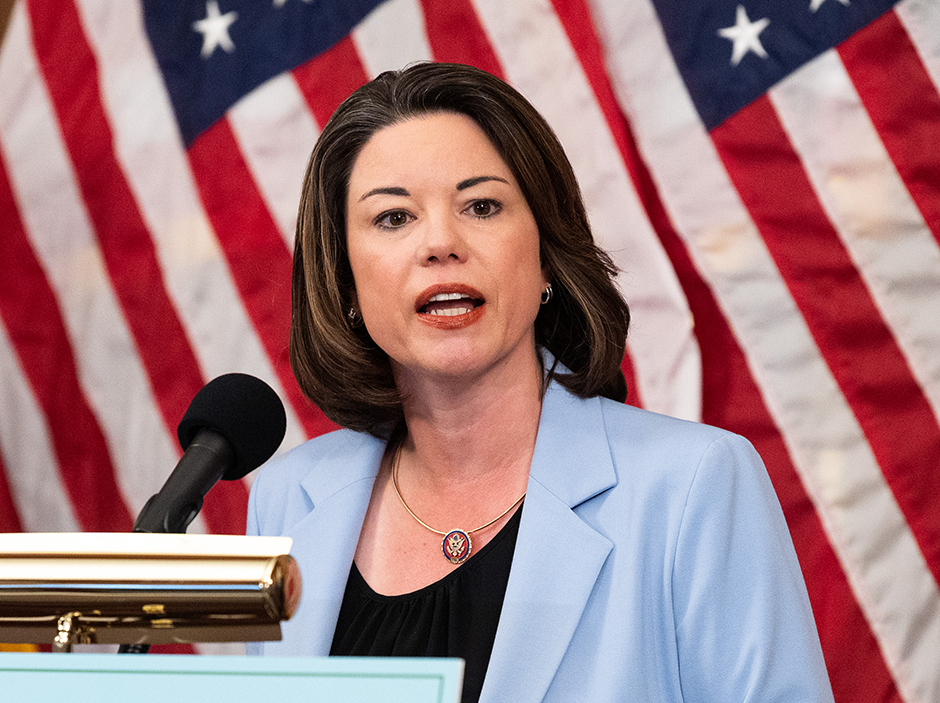
    Rep. Angie Craig, D-2nd District, plans to hold a flurry of town halls during Congress’s two-week spring break — but not all of them will be in her district.

    Craig plans to hold a town hall in each of the districts of Minnesota’s GOP members of Congress and those Republicans are calling “foul.”

    Reps. Tom Emmer, R-6th District; Michelle Fischbach, R-7th District; Pete Stauber, R-8th District; and Brad Finstad, R-1st District; have all heeded House Speaker Mike Johnson’s admonition to avoid in-person town halls after some of their GOP colleagues were blindsided by angry constituents at these events who protested their support of Trump policies.

    The Minnesota lawmakers held virtual town halls in which they answered mainly soft-ball questions instead. But they’ve come under criticism for not appearing at gatherings in their districts in person.

    For instance, the advocacy group Wright County Indivisible is funding a billboard campaign calling on Emmer to hold a town hall.

    Craig is following the lead of other Democrats, including Gov. Tim Walz, who are showing up in GOP districts to hold in-person townhalls.

    Minnesota’s Republican lawmakers are riled about Craig’s plan, saying the Democrat is visiting their districts to campaign for retiring Sen. Tina Smith’s seat — and using her taxpayer-funded office budget to do so. 

    They reacted in email statements to MinnPost.

    “If Angie Craig wants to be a Senator that badly, she should announce her intention to run,” Emmer said.

    Craig has not committed to running for Smith’s seat, saying she is sounding out constituents about a possible run for a seat that has become competitive.   

    Still, Stauber said “by holding town halls in Congressional districts that she does not represent, Congresswoman Craig has made her intentions to run for statewide office abundantly clear.”

    “It is concerning that she is using official resources to do something that is so clearly connected to her pending statewide campaign,” Stauber said. “To me, this is a blatant misuse of taxpayer funds. I host campaign events and fundraise in other districts, but I have the good sense to use only campaign resources.”

    Speaking for Craig, a source said no office funds will be used to hold the events.

    Finstad also accused Craig of misusing the funds she is allocated to run her official offices, saying “it is disappointing that Representative Craig is using her taxpayer-funded congressional office to seemingly fuel her own statewide political aspirations.”

    Fischbach’s criticisms were in the same vein.

    “It’s plain to see that this tour is nothing more than political theater from a member who is looking to run for a statewide office,” she said. “But using official taxpayer dollars to hold what amounts to a campaign stop in a district she does not represent is just plain wrong, as well as an unethical misuse of taxpayer dollars.”

    A spokesperson defended the lawmaker’s plans.

    “Minnesota’s Republican representatives have stood idly by while the administration has started a global trade war, cut thousands of jobs and run roughshod over our government agencies,” a spokesperson for Craig said.

    The spokesperson said that while Craig’s Republican colleagues have refused to show up and answer to their constituents in person, the lawmaker is “committed to ensuring every Minnesotan’s voice is heard.”  

    Uphill climb for proposed mining moratorium

    Sen. Tina Smith this week introduced a bill that would permanently protect the Boundary Waters Canoe Area Wilderness from sulfide mining by placing a permanent moratorium on the Superior National Forest.

    The Biden administration imposed a 20-year moratorium on 225,504 acres of the federal forest, which is a watershed for the Boundary Waters. But President Donald Trump has promised to eliminate that moratorium.

    In a statement, Smith said impartial science and data “show unequivocally that copper-nickel sulfide mining poses an unacceptable risk to the Boundary Waters.” 

    “Mining is an important driver of Minnesota’s economy and the pride of every Iron Ranger,” Smith said. “I support mining, but not (proposed mines) in this precious place. Majorities of Minnesotans oppose mining in the watershed of the Boundary Waters.”

    “I am prepared to fight with every tool I have to protect one of America’s greatest wilderness areas,” Smith said.

    Rep. Betty McCollum, D-4th District, introduced a similar bill in the U.S. House earlier this year, as she has in past Congresses.

    But this is the first time in 50 years that a bill to protect the Boundary Waters has been introduced in the U.S. Senate.

    Environmental groups that have fought the establishment of sulfide mining in the Superior National Forest hailed the introduction of the bill.

    “Amidst incredible division, the Boundary Waters has the power to unite us. Minnesotans, across ideologic, demographic, and geographic lines, want to see this irreplaceable Wilderness protected forever, and thousands of people from all around the country come to experience the Boundary Waters every year, making it the most visited Wilderness in America,” said Ingrid Lyons, executive director of Save the Boundary Waters, in a prepared statement.

    Despite the support from the environmental community for the legislation, both Smith’s and McCollum’s bills are expected to face an uphill climb in the GOP-controlled Congress.

    Morrison: No tariffs on babies 

    Rep. Kelly Morrison, D-3rd District, is pressing for Congress to adopt her legislation aimed at combating any inflationary effects of Trump’s tariffs by exempting baby products from the new levies.

    Morrison said Trump had excluded these products when he imposed tariffs during his first term.

    But those items are not exempt from tariffs now and families will be forced to pay more for the car seat, highchairs, strollers and cribs that are essential to care for babies and toddlers. Morrison estimated that families already spend about $20,000 on these essentials and that the tariffs will make it even harder for parents to afford the basics.

    “Families should NOT have to foot the bill for these reckless trade wars,” Morrison said in introducing her bill this week.”

    As a freshman lawmaker, Morrison hoped to join the bipartisan Problem Solvers caucus in Congress. But she said she has been unable to do so because she has not been able to convince a Republican to join with her — a requirement since the caucus is evenly split between Democrats and Republicans.

    Morrison said House GOP leaders are discouraging bipartisanship.

    “It’s really hard to find Republicans who are willing to work with Democrats,” she said.

    In case you missed it:

    -We took a look at the potential for cuts in Medicaid and included the thoughts of U.S. Rep. Kelly Morrison, D-Minn., the only physician in Minnesota’s congressional delegation and a staunch opponent of deep reductions.

    -We also reported on how the relentless cuts in federal funding now include grants for the Norwegian American Historical Association and other Minnesota institutions that work to preserve the state’s heritage and culture.

    -Andy Steiner, who writes about mental health and addiction, interviewed leaders in the field who are asking the state Legislature for higher Medicaid reimbursements to cover treatment.

    -And state government reporter Matthew Blake reported on challenges in crafting a state budget – including DOGE-inspired reductions in the grant-making power of federal agencies.

    This and that

    A reader took issue with the Trump administration’s cancelation of National Endowment for the Humanities grants, which has put in peril many historical and cultural projects in Minnesota, including one that funded the digitizing of documents about Norwegian American efforts to help the resistance in Norway during World War II.

    “And the Trump administration’s spending priorities? How about borrowing $3 trillion dollars to fund tax cuts/kickbacks for the top 1% and 100 richest American billionaires. A military parade expected to cost close to $100 million to celebrate Trump’s 79th birthday. A million bucks a weekend golf holiday to his resorts,” the reader said. “Trump certainly would not want to tell the story of how the brave Norwegians and their American kinsmen resisted the Nazis. He is more of a ‘resistance is futile’ guy.”

    Another reader criticized Trump ‘s tariffs, which were levied on more than 75 nations – and the unpopulated Heard and McDonald islands in Antarctica.

    “Bad day for the penguins as America’s El Presidente slaps tariffs on Antarctica whilst applying none to North Korea, Russia and Belarus!” the reader said. “It’s been said that ‘when a clown enters a palace, the clown doesn’t become a king, the palace becomes a circus’

    Please keep your comments, and any questions, coming. I’ll try my best to respond. Please contact me at aradelat@minnpost.com.

    The post D.C. Memo: The drama continues with Trump’s turnabout on tariffs appeared first on MinnPost.
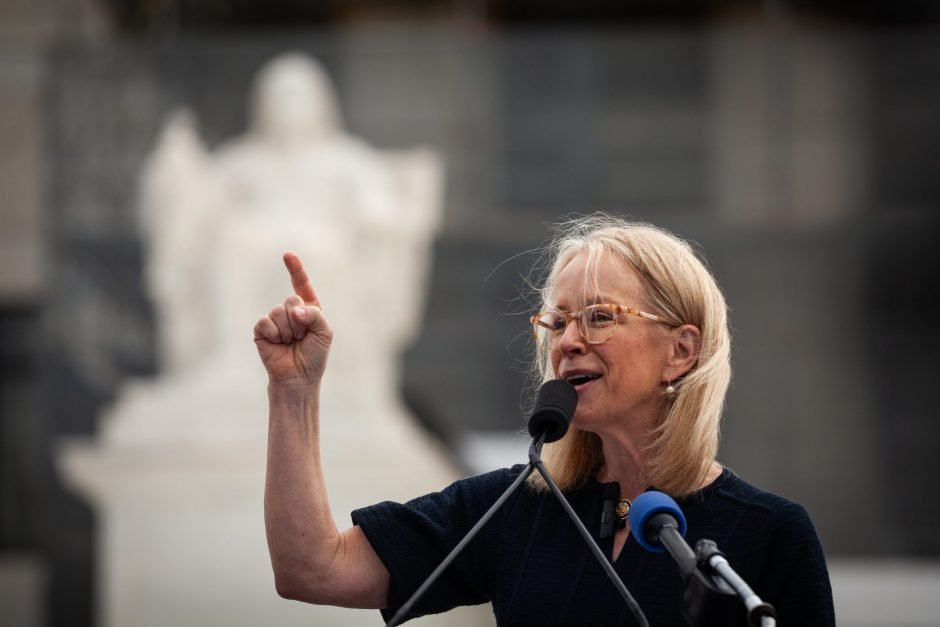

  • Medicaid cuts a step closer as Congress moves on budget reconciliation

    Medicaid cuts a step closer as Congress moves on budget reconciliation

    WASHINGTON — As the U.S. House prepares to vote on a sweeping budget blueprint that was approved by the U.S. Senate last week, sizable cuts to Medicaid are one step closer — and just who would bear the brunt of those cuts is coming into better focus.

    The budget reconciliation bill itself does not mandate any cuts to Medicaid, the government health program for low-income Americans that’s called Medical Assistance in Minnesota. But the budget resolution instructs the House Energy and Commerce Committee to cut the Department of Health and Human Services budget by $880 billion, a target experts say can’t be met without slashing Medicaid.

    So, if the budget resolution is approved by the House, Congress would have to come up with a way to find $880 billion in savings when it drafts the spending bills that fund the federal government.

    There are several ways to shrink federal spending on Medicaid, a joint federal-state program that requires Minnesota to pay about 43% of the cost to cover nearly 1.2 million state residents. One way to cut the cost of this program is to reduce the benefits to enrollees, something President Trump and GOP leaders in Congress have vowed not to do. Another is to reduce the number of people eligible for the program.

    Medicaid has been a historical target for Republicans, who have long sought to impose national work requirements on Medicaid recipients. That means that able-bodied adults without children must work or be actively looking for work to qualify for the program.

    The Center for Budget and Policy Priorities estimates that at least 33% percent of Minnesotans enrolled in Medicaid would lose coverage if work requirements were mandated — and challenged the idea that work requirements were needed.

    “Work requirements are burdensome and unnecessary because 92% of people who receive Medicaid are already working full or part time, or they are not working because they are a caregiver, have an illness or disability, or are attending school,” the center said.

    But work requirements may not be enough to reduce the Medicaid population, so the GOP-led House and Senate may seek to eliminate a key provision of the Affordable Care Act that expanded Medicaid coverage to people who earned a little more than those on traditional Medicaid.

    Unlike traditional Medicaid, in which the cost of the program is more evenly shared, the federal government pays 90% of covering the expansion population and the state only 10%.

    The Minnesota Department of Human Services said that in 2024, the average monthly enrollment in the Medicaid expansion group was 283,706.

    Morrison ‘sounding the alarm’ on cuts

    The budget reconciliation bill the House will consider this week calls for about $5 trillion in tax cuts, which would be partially offset by $2 trillion in spending cuts, including the projected cuts to Medicaid. The tax cuts would extend the ones implemented during Trump’s first term in office, which will expire at the end of the year.

    The reconciliation bill would also lift the debt limit by $5 trillion.  

    It was approved by the U.S. Senate on a party-line vote and expected to pass the U.S. House on a partisan basis, too, although several ultraconservative Freedom Caucus GOP House members are balking because the legislation’s tax cuts are not fully funded.

    For U.S. Rep. Kelly Morrison, D-3rd District, an OB-GYN and founding member of the Democratic Doctors Caucus, the looming cuts to Medicaid have provided the freshman lawmaker with a mission.

    “The consequence of cutting Medicaid deeply is horrifying to me,” Morrison said.  

    She said 650,000 children and about one-third of the childbirths in Minnesota are covered through Medicaid. “I’ve been sounding the alarm in every way I can,” Morrison said.  

    She said she’s visited hospitals and health clinics in her suburban Twin Cities district and “they are all so afraid.”

    “Many say they will have to shut their doors,” Morrison said.

    She said she’s also trying to persuade GOP colleagues to keep their hands off Medicaid, but they appear hard to convince. Many Republicans insist Medicaid savings will be limited to the ferreting out of fraud, waste and abuse.

    But experts say that would not be nearly enough to fulfill the savings mandated by the budget reconciliation bill. And it’s unlikely Minnesota, or any other state, will be able to pick up the additional cost of providing health care for low-income Americans who don’t have coverage on the job and can’t afford private health insurance.

    State Rep. Aisha Gomez, DFL-Minnepolis, has introduced a bill that would establish a new individual income tax tier for Minnesotans who earn more than $1 million to offset any losses for Medicaid funding, which could be as much as $1 billion a year. But that legislation is likely to face high hurdles.

    On Monday, Morrison read a letter sent to Trump and Minnesota’s Republican members of Congress from a group of GOP state lawmakers on the House floor.

    “Just to emphasize what you already know, Medicaid includes services and care for the seniors and those with disabilities, not just health care for the poor,” said the letter, which was signed by six GOP state senators and eight GOP state House members. “Additionally, nearly 50% of all Medicaid enrollees are children.”

    U.S. Rep. Betty McCollum, D-4th District, hopes to also take to the House floor to protest cuts to Medicaid. On Tuesday, she sent a letter to House Minority Leader Hakeem Jeffries asking for permission to hold a “one-on-one” debate, known as a colloquy, on the House floor.

    “Republican members of Congress repeatedly denied that painful cuts will be made,” McCollum wrote Jeffries. “However, the nonpartisan Congressional Budget Office has confirmed that based on the text of the budget proposal there is nowhere else for cuts of that magnitude to come from other than the critical healthcare programs relied upon by everyday Americans to survive.”

    The post Medicaid cuts a step closer as Congress moves on budget reconciliation appeared first on MinnPost.

  • DOGE cuts trim funding for arts and humanities efforts in Minnesota

    DOGE cuts trim funding for arts and humanities efforts in Minnesota

    WASHINGTON – A year ago, the Northfield-based Norwegian American Historical Society hailed the approval of a nearly $300,000 grant from the National Endowment for the Humanities (NEH), a federal agency that promotes history, culture and the arts.

    That grant would allow the society to digitize and preserve five collections that document the efforts of Norwegian Americans to help occupied Norway – and its resistance fighters – during World War II.

    One collection is a compilation of papers from the American Relief for Norway (ARFN), a group founded by Minnesotans to relieve distress among the people of Norway.

    Another collection is about the Camp Little Norway Association, an organization of Minnesotans of Norwegian descent who supported a training base for the Royal Norwegian Air Force in Toronto.

    But last Wednesday, Norwegian American Historical Society President Amy Boxrud received an email that said the multiyear grant had been canceled, leaving the efforts to preserve those historical documents and many others in doubt.

    “It actually went into my spam folder,” Boxrud said of the notice. “It’s lucky  I went into that folder.”

    More than a thousand NEH grants were terminated last week by the administration in an effort led by Elon Musk’s Department of Government Efficiency (DOGE).

    DOGE did not respond to requests for comment. However, the termination emails said the NEH is “repurposing its funding allocations in a new direction in furtherance of President Trump’s agenda.” 

    Not only were hundreds of nonprofits and universities across the nation cut off from money for projects that are hard to fund in other ways, but more than 180 NEH employees are in the process of being laid off.

    Boxrud said her organization had been able to draw down some of the NEH grant money before it was canceled, allowing for some preliminary work on the project.

    “But we had an archivist move from out of state and she’s in limbo right now,” Boxrud said. “There were all these efforts of Norwegian Americans who did everything they could to help occupied Norway. That’s what’s in those papers and if they are not digitalized, it’s hard to discover (that history).”

    Minnesota nonprofits and universities have received more than $4 million in the last year from NEH to preserve history and art and promote education.

    NEH has also provided grants to every state humanities council for decades. Those have all been canceled, including those for the Minnesota Humanities Center, which will lose $1.2 million in annual funding.

    Kevin Lindsey, the CEO of the Minnesota Humanities Center, said he found out his NEH grant was canceled like Boxrud did — through an email from DOGE.

    The money the center receives was used to give grants to other nonprofits working on projects involving culture, history and the arts, and to fund its own projects, such as a proposed film about slavery in the years just before the Civil War.

    “There’s a need for us,” Lindsey said.

    Humanities councils across the nation are considering banding together to seek a court injunction to prevent the loss of NEH funds.

    Minnesota colleges losing humanities money, too

    Since 2007, the Minnesota Historical Society has received eight grants from the NEH for its ambitious project to digitize more than 120 newspapers. But, like other NEH grant recipients, the society received notice last week that its eighth grant, in the amount of $300,000, had been canceled.

    “The loss of these funds will result in fewer newspaper pages being digitized and available for research,” said Minnesota History Society Director Kent Whitworth.

    He said the society is “fortunate to have alternative funding sources” and will continue to collect and digitize Minnesota’s newspapers.

    But Whitworth said he is concerned about the impact DOGE funding cuts will have on the Institute for Museum and Library Services — an independent agency dedicated to supporting and funding museums and libraries — on the Smithsonian Institution “and on a profession to which many of us have devoted our life’s work.”

    Most Minnesota colleges and universities are also NEH grant recipients, including the University of Minnesota, Carleton College, Macalester College, St. John’s University, the College of St. Benedict and schools in the Minnesota State system.

    The University of Minnesota said three of its NEH grants were canceled, but did not identify which ones.

    According to USASpending.gov, a website that tracks all government spending projects, the University of Minnesota received recent NEH grants in the amounts of $249,056, $199,985, $143,386 and $99,782. The school also received several, much smaller, NEH grants.

    The NEH money to the university was earmarked for a number of programs, including work at its Office of Digital Humanities, which — among other things — studies the relationship between technology and society.

    Other NEH-funded programs at the university include a program that teaches American history and culture “through intensive, place-based professional development for K-12 teachers at historical sites, colonial settlements, battlefields, artists’ and writers’ homes.”

    Other programs support the National Digital Newspaper Program, help small and mid-sized institutions improve their ability to preserve and care for their humanities collections and fund community-based efforts to mitigate climate change and safeguard cultural resources. 

    Meanwhile, Macalester spokesman Joe Linstroth confirmed that the school has lost a $149,660 NEH grant to update an archive of Soviet history. And Michael Hemmesch, the spokesman for the schools, said St. John’s University lost a $59,936 NEH grant while a $58,640 grant at the College of St. Benedict was also canceled.

    The post DOGE cuts trim funding for arts and humanities efforts in Minnesota appeared first on MinnPost.

  • USDA cuts hit food banks, risking hunger to low-income Minnesotans

    USDA cuts hit food banks, risking hunger to low-income Minnesotans

    WASHINGTON — Cindy Favre has already noticed the impact of last week’s suspension of a federal emergency food program that helps stock the St. Peter Area Food Shelf, where she is the manager.

    “The variety and number of products are going down,” Favre said. “We are starting to see a real reduction in certain types of food.”

    Favre said the St. Peter Area Food Shelf “is in a holding pattern” as it tries to sort out the impact of federal funding cuts and continues to feed about 200 households each month. But Favre said there’s concern, especially since visits to the food shelf are “ticking up” with more individuals and families coming for a second supply of food each month.

    Last week, the U.S. Department of Agriculture (USDA) suspended $500 million in Commodity Credit Corporation shipments destined for food banks across the country through the Emergency Food Assistance Program (TEFAP).

    It’s not clear why the USDA cancelled those food shipments. But all federal programs are undergoing scrutiny for alleged fraud and abuse and for their roles in Trump administration efforts to reshape the federal government.  

    Normally, the shipments are received by the Minnesota Department of Human Services and distributed to the six regional food banks in the state.

    The Minnesota Department of Children, Youth, and Families, said that, so far this year, it has placed 78 orders for a variety of food, including milk, eggs, green beans, dried fruit, chicken, turkey and pork.

    “On March 25, USDA cancelled 34 of these purchased orders, which will significantly reduce the amount of food coming into Minnesota between now and September,” the Department of Children, Youth and Families said in an emailed statement.

    Most of the food for TEFAP is purchased from local farmers.

    The Department of Children, Youth and Families said it had “not received any communication from USDA, beyond the individual cancelled orders, about potential future impacts to (Commodity Credit Corporation) purchases or plans.”

    Favre said she is also in the dark as to why the USDA is reducing its help for hunger programs and that the “chaos” in Washington, D.C., is worrisome.

    Her food shelf has benefited from the Minnesota FoodShare March Campaign, a yearly drive organized by religious organizations, corporations and individuals to help stock and support the capacity of the state’s nearly 300 food shelves.

    “But next month, the Catholic Church is not going to bring the 500 pounds of food to us like they did in March,” Favre said.

    Nearly one out of every five Minnesotans is food insecure. The Supplemental Nutrition Assistance Program (SNAP), the official name for food stamps, helps many stave off hunger. But, according to the Minnesota Department of Human Services, there were about 5.5 million visits to the state’s food shelves in 2022.

    Food shelves are available to anyone in Minnesota who self-reports that their household income is at or below 300% of the federal poverty guidelines or participates in one of several public assistance programs. 

    The cancellation of TEFAP shipments follow recent cancellations of the USDA’s Local Food for School Program and the Local Food Purchase Assistance Program funding, which also helps farmers deliver food to schools and food banks. The cancellations of food shipments from these three programs is estimated to total about $1.5 billion.

    Democrats take on USDA over TEFAP

    The St. Peter Area Food Shelf depends largely on free and low-cost  deliveries of food from Second Harvest Heartland, one of the six regional food banks that receive Commodity Credit Corporation food from the Minnesota Department of Human Services.

    Zach Nugent, spokesman for Second Harvest, said the funding cuts have “most urgently and directly impacted” the meat and dairy products that were available through TEFAP.

    “The cancellation leaves a gap in our milk sourcing, specifically for two weeks in April,” he said.

    He said Second Harvest is looking for another source for milk, but he said the TEFAP cuts hurt.

    “Community Credit Corporation funding and TEFAP are integral to not only our operations as a food bank, but provide hundreds of thousands of pounds of food to our network of food shelves,” Nugent said.

    Democrats are challenging the USDA decision, claiming it would have a significant and damaging impact on millions of people.

    “People are struggling with grocery costs, and the decision to prevent $500 million worth of food from reaching local communities is reckless,” said Rep. Angie Craig, D-2nd District, in a statement. “The USDA is supposed to fight hunger and support farmers in America. Its recent actions are doing the exact opposite.”

    Democrats like Craig, who is the top Democrat on the House Agriculture Committee, said federal cuts to nutrition programs are occurring as food banks experience a rising demand since inflation remains high.

    Meanwhile, Sen. Amy Klobuchar of Minnesota, the highest-ranking Democrat on the Senate Agriculture Committee, took the lead in a letter sent to Agriculture Secretary Brooke Rollins last week that was signed by 25 other Senate Democrats, including Tina Smith, asking about the cuts to TEFAC and whether the USDA plans to “un-pause” the funds.

    The post USDA cuts hit food banks, risking hunger to low-income Minnesotans appeared first on MinnPost.

  • D.C. Memo: Heating assistance program in limbo after layoffs

    D.C. Memo: Heating assistance program in limbo after layoffs

    WASHINGTON – Federal money for new applicants seeking help with their heating bills could end as early as mid-April, a victim of mass layoffs this week at the U.S. Department of Health and Human Services.

    Minnesota received $112 million for the state’s energy assistance program last fall, but hoped for another $12 million-$13 million from the federal Low Income Heating Assistance Program (LIHEAP) to help an additional 10,000 Minnesota households pay their utility bills and prevent power shutoffs.

    But the status of the program is in limbo as the Trump administration abruptly fired the entire LIHEAP staff.

    LIHEAP is a program run by the Health and Human Services Department, which fired 10,000 workers this week and lost an additional 10,000 employees earlier this year.

    The firings threaten to paralyze the $4.1 billion LIHEAP program, but the Trump administration is justifying the layoffs.

    “We aren’t just reducing bureaucratic sprawl. We are realigning the organization with its core mission and our new priorities in reversing the chronic disease epidemic,” HHS Secretary Robert F. Kennedy, Jr., said in a statement. “This Department will do more — a lot more — at a lower cost to the taxpayer.”

    Sen. Tina Smith, D-Minn., issued her own statement, blasting Elon Musk, the Department of Government Efficiency and the Trump administration for firing all LIHEAP employees.

    “Firing all the workers from the office that helps families keep their homes warm and safe through the winter is thoughtless and cruel,” Smith said. “Hundreds of thousands of Minnesotans are facing severe winter weather right now, and the need for heating assistance is greater than ever. “

    The Minnesota Department of Commerce, which runs the heating assistance program in the state, says it has helped about 107,000 households, both homeowners and renters, pay their utility bills this winter.

    The Commerce Department said about half of those who received LIHEAP help are over 60 and that one in six households who receive the subsidy have children under age 6.

    The average payment per household, which is paid directly to its utility company, is about $700.

    GOP Senators part ways with Trump on tariffs

    President Donald Trump’s sweeping imposition of new tariffs on all U.S. trading partners has resulted in some cracks in the president’s support among GOP Senate members.

    Sen. Chuck Grassley, R-Iowa, has introduced legislation with Sen. Maria Cantwell, D-Wash., to claw back Congress’ tariff power.

    “For too long, Congress has delegated its clear authority to regulate interstate and foreign commerce to the executive branch,” Grassley said in a statement. 

    Also this week, the U.S. Senate voted 51-48 to revoke Trump’s tariffs on Canadian products. GOP Sens. Susan Collins of Maine, Lisa Murkowski of Alaska, and Rand Paul and Mitch McConnell of Kentucky joined all 47 Democrats to pass the bill.

    “Today, the Senate sent a clear message to the President: You cannot abuse your powers to start an unjustified trade war with one of our strongest allies,” Sen. Amy Klobuchar, D-Minn., a co-sponsor of the bill, said in a prepared statement. “Canada is Minnesota’s top trading partner, but the president’s tariffs are jeopardizing that relationship — and the consequences may be irreversible.”

    Democrats are also feeling out GOP colleagues on other tariff-related legislation.

    But any legislation concerning tariffs would have to be approved by the U.S. House, where Speaker Mike Johnson, R-La., has been a major cheerleader of Trump’s controversial trade policy.

    Meanwhile, the stock market plunged, talk of a looming recession got louder and retaliatory tariffs from allies and foes alike are expected to ratchet up inflation.   

    The Washington Post has an analysis of what it identified as the many falsehoods about Trump’s Rose Garden speech announcing the new tariffs.

    The Post said Trump’s notion that the tariffs would reduce the national debt was “a fantasy,” especially if the economy sinks.

    And it corrected Trump’s exaggerated and false numbers when it came to the tariffs other countries impose on the United States and the “subsidies” Trump says the United States gives Canada and Mexico.

    In case you missed it:

    • MinnPost talked with Minnesota farmers who are worried about retaliatory tariffs that are expected in response to President Donald Trump’s sweeping tariffs. Soybean farmers, for instance, export about 60% of their beans and fear a trade war.
    • We also reported on cuts by the United States Department of Agriculture that are already leading to shortages at food shelves in Minnesota.
    • Meanwhile, data freelancer Michael Nolan added up the amount of federal money that flows into the state for health care, education and agriculture — money threatened by DOGE-driven cost-cutting.
    • Also, with President Trump making noise about serving a third term (which would violate the 22nd Amendment), we ran a scholar’s commentary on how that amendment limiting presidential terms to two came to be.

    Your questions and comments

    A reader, rightly, called me out for not quoting farmers in a story about federal cuts to nutrition programs that provide food to food shelves and schools. For the record, I have asked farmers how they feel about the cuts, and they are not hesitant to tell me they don’t like them.

    “It is great to talk to politicians and food shelf officials about this, but what about those who grow and consume the food?” the reader asked. “The farmers could explain how severely this impacts their revenue and conscience, as I imagine many feel great pride in preventing children and adults living in poverty from hunger.” 

    Please keep your comments, and any questions, coming. I’ll try my best to respond. Please contact me at aradelat@minnpost.com.

    The post D.C. Memo: Heating assistance program in limbo after layoffs appeared first on MinnPost.

  • How the Trump administration is targeting green transportation in blue states

    How the Trump administration is targeting green transportation in blue states

    Major crime is down 29 percent compared to last year on New York City’s subways and buses — a seemingly positive trend. But that’s not how the U.S. Department of Transportation sees it. 

    The Department of Transportation, or DOT, sent a letter to New York’s Metropolitan Transit Authority on March 18 warning that it must address safety on its system or risk losing federal funding. The department sent a similar letter to the Washington Metropolitan Area Transit Authority, which runs public transportation in the nation’s capital, earlier in March. 

    The moves represent an emerging pattern in the DOT’s approach to transportation under President Donald Trump: target the highest-profile climate-friendly programs in states with Democratic leadership. 

    Over a two-day period in February, the department rescinded the Federal Highway Administration’s approval for New York City’s congestion pricing program and announced a review of funding for a section of a project to build high-speed rail between Los Angeles and San Francisco. Transportation Secretary Sean Duffy proudly listed the accomplishments in an X post. 

    To support our nonprofit environmental journalism, please consider disabling your ad-blocker to allow ads on Grist. Here’s How

    “1. Terminated NYC elitist, anti-worker congestion pricing,” he wrote. “2. Launched an investigation into the $16 billion in taxpayer dollars wasted on a high-speed rail project that, after 17 years, has yet to lay a single mile of track.” 

    These attention-grabbing threats and cancellations have faced legal challenges — but if the department prevails in cutting funding, it could mean millions of tons of unnecessary annual carbon emissions over the coming decades. Meanwhile, Duffy has promised to review federal funding for all manner of climate projects across the country — a significant departure from agency norms. Ann Shikany, a former DOT deputy assistant secretary for policy, said the actions taken by the department in the past two months run counter to how recent transitions of power have gone. 

    Previously, “each administration has followed through with the previous administration’s grants, but now they’re saying they’re going to renegotiate those,” Shikany said. “Those are projects that are already in construction, already spending their money.” 


    On Trump’s first day in office, he signed a slew of executive orders instructing federal agencies to eliminate programs that focus on climate change, greenhouse gas reduction, and environmental justice, among other priorities. Duffy quickly directed DOT staff to begin reviewing all programs that meet those criteria. 

    To support our nonprofit environmental journalism, please consider disabling your ad-blocker to allow ads on Grist. Here’s How

    In March, agency leadership sent staffers an internal memo instructing them to freeze projects focused on climate and equity, specifically calling out projects focused on bike infrastructure or electric vehicles. Current and former staffers told Grist there is still confusion within the agency about which programs are at risk of being cut. 

    A coalition of nonprofits and cities has sued the administration over the leaked March memo, arguing that the DOT’s freezing of funding violates the Impoundment Control Act, which limits the president’s ability to rescind funding approved by Congress, and the Administrative Procedure Act, which requires that agency actions not be “arbitrary” or “capricious.”

    Emily Conner, who spoke to Grist after her position as a grant management specialist with the Federal Transit Administration was terminated in February, said there was a push within the agency to award as many discretionary grants as possible in the waning weeks of Biden’s presidency. Conner, who since speaking to Grist has been reinstated to her position, said she was worried that federal transit funding could come to a “screeching halt,” due to the administration’s chaotic transportation policy approach. 

    As grant recipients across the country await word on the fate of the programs they once thought would fund projects in their states and cities, the department has chosen to make examples of large-scale projects that aim to reduce transportation emissions in blue cities and states.  

    Public transit

    Taking a subway, bus, or other form of public transit is more climate-friendly than driving a car. The United Nations estimates that choosing public transportation over driving “can reduce up to 2.2 tons of carbon emissions annually per individual.” Similarly, a 2009 DOT report showed that transit emitted less than half as much carbon per passenger-mile traveled compared to private autos. 

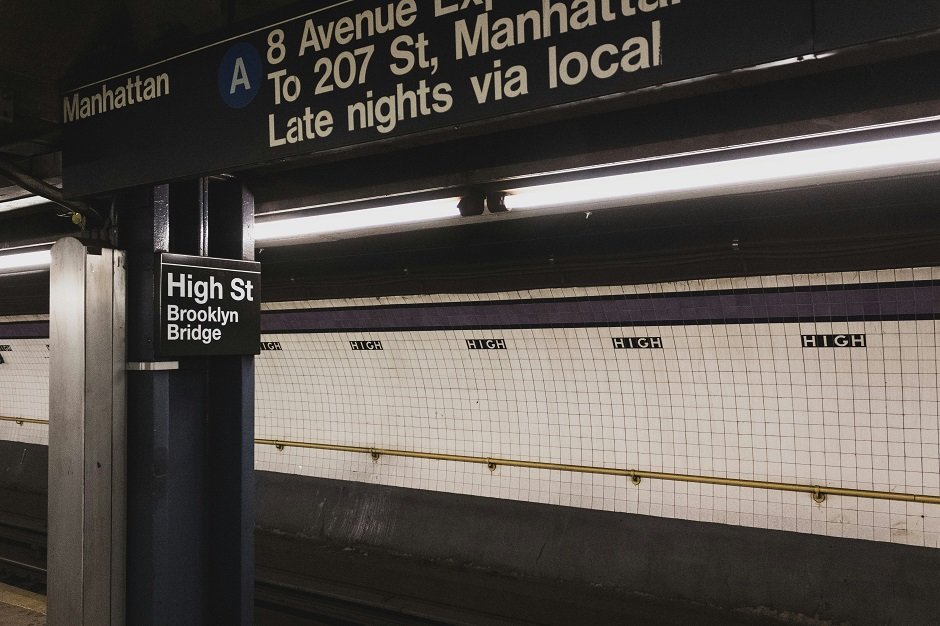
    In Duffy’s letters to the Metropolitan Transit Authority and Washington Metropolitan Area Transit Authority — or MTA and WMATA, respectively — he outlined safety, specifically reducing crime and fare evasion, as a priority. 

    But crime on the MTA and WMATA transit systems has trended down in recent years. WMATA’s general manager and chief executive officer, Randy Clarke, wrote in a letter to the DOT that the number of crimes per million riders has fallen from 8.03 in 2023 to 2.9 so far in 2025. The MTA has seen an expansion of police officers on the subway system under New York Governor Kathy Hochul’s safety plan, which began in March 2024, and recently reported that crime is down even compared to pre-pandemic levels.

    In the letter to the MTA, Duffy threatened to withhold funding — a significant threat, as about 20 percent of the agency’s budget for major infrastructure projects for the next five years, or $14 billion, comes from the federal government. That budget includes plans to purchase 500 electric buses — part of the MTA’s plan to shift entirely to zero-emissions buses by 2040. It estimates that the transition will save 500,000 metric tons of greenhouse gas emissions every year. 

    Justin Balik, a vice president at the climate advocacy organization Evergreen Action, said that prioritizing public safety on public transit is important but that the DOT letters are not productive.

    “I think what you’re seeing, to use the New York letter for example, is a hammer in search of a nail,” Balik said. DOT appears to be “walking backwards from a predetermined outcome, which is, ‘We want to really rake New York over the coals and other transit systems over the coals.’” 

    Duffy has already hinted at targeting other cities, adding the Chicago Transit Authority to the list of public transit agencies that could be in danger in an interview on Fox News. “If people can’t go to the subway and not be afraid of being stabbed or thrown in front of tracks or burnt … We’re going to pull your money,” he said. 

    Congestion pricing

    Another climate-friendly project with a target on its back is New York City’s congestion pricing system. The program, designed in part to reduce traffic and improve air quality, charges drivers a toll when they enter the busiest parts of Manhattan, south of 60th Street. Most of the revenue will go to the MTA, which is banking on getting $15 billion for infrastructure projects as a result of the tolls

    After years of debate and delay, the program went into effect in January. The impact has been dramatic: The MTA’s data shows that traffic in the tolled portion of Manhattan was down 11 percent this February compared to February 2024. A 2023 MTA report — based on a version of congestion pricing with higher tolls than were actually implemented — found that the tolled area would see decreases in fine particulate matter and carbon dioxide emissions by more than 10 percent by 2045.  

    During his 2024 election campaign, Trump called for the end of the program, and Duffy has sought to make good on that promise, writing that it is too expensive for working-class Americans. In February, the DOT’s Federal Highway Administration rescinded approval for the toll program, just three months after approving it under the Biden administration. It gave New York until March 21 to end the program, but the state sued Duffy for trying to block the program and ignored the DOT’s deadline. The DOT did not respond to multiple requests for comment.

    Balik said the Trump administration is out of touch with New York City residents. “Trump’s moves to undermine congestion pricing, if you look at recent surveys, are not exactly endearing the administration to voters in the area,” Balik said. 

    Indeed, a March Siena poll found that 42 percent of New York City residents support the program, compared to 35 percent who say it should be eliminated. The support figure is up from 32 percent in December, before tolling had begun. 

    Hochul, who unilaterally paused the program last summer shortly before it was initially supposed to go into effect, has transformed into a champion of congestion pricing. In a March press conference, she invited critics “to come here now and feel a very different New York City that is very alive, and it’s vital. It is not jammed and stuck in traffic.”

    High-speed rail

    Like congestion pricing, the California High-Speed Rail project has been a long journey. California voters approved $9.95 billion for a high-speed rail system in 2008. It was originally supposed to be completed by 2020 but has been delayed by legal challenges and because it started construction before certain pre-construction activities, like relocating utility infrastructure in the train’s path, had been completed in some instances. In its current form, the project aims to connect San Francisco to Los Angeles. 

    The rail line, which will be entirely solar-powered, has the potential to shift the state away from more carbon intensive forms of transportation, like driving and flying. It would reduce annual greenhouse gas emissions by between 0.6 million and 3 million metric tons of carbon dioxide — equivalent to removing between 142,000 and 700,000 cars from the road — according to the California High-Speed Rail Authority’s 2024 Sustainability Report.

    Trump canceled around $1 billion in federal funding for the project in his first term, and his administration is scrutinizing it once again with a review led by the Federal Railroad Administration, a DOT subagency, of the $4 billion in federal funding for the Central Valley portion of the project. 

    “President Trump is right that this project is in dire need of an investigation,” Duffy said in a press release. If the project has violated any of the terms of its grants, he added, “I will have to consider whether that money could be given to deserving infrastructure projects elsewhere in the United States.”

    The first Trump administration’s efforts to cancel $1 billion faced legal challenges, and the Biden administration wound up reinstating the funding. This time around, the legality of the DOT taking back funding hinges on whether the probe finds a violation of a grant agreement or regulation, or fraud. 

    About 80 percent of the $13 billion the program has spent so far has come from the state of California, according to California High-Speed Rail Authority spokesperson Carol Dahmen. The estimated total cost for the program is now $106 billion, and it expects to begin operating between 2030 and 2033. Of the 494 miles of planned track, 171 miles are under design or construction and 463 miles have been cleared through the state’s required environmental impact review process, with approval expected for the last stretch from Anaheim to Los Angeles later this year. 

    Even as the Trump DOT casts doubt on the viability of public high-speed rail, it appears to be promoting the role private companies can play in the industry. In the press release, the department called the Brightline West project, a private high-speed rail project from Los Angeles to Las Vegas expected to begin running in 2028, “impressive.” 

    Rick Harnish, executive director at the high-speed rail advocacy nonprofit High Speed Rail Alliance, said Brightline is a good example of how high-speed rail can work — and emphasized that even private infrastructure projects are rarely entirely privately financed. “It fits the Tesla model a lot better, where it looks like a private company, but it’s in large part federally funded,” he said. Brightline West received a $3 billion grant from the Federal Railroad Administration in September. 

    Despite the seemingly bleak outlook for climate-friendly projects under the Trump administration, some experts see this as a galvanizing moment for states like California and New York to reconsider their transportation policy. Corrigan Salerno, a policy manager at the advocacy group Transportation for America, said states have the tools to introduce more climate friendly transportation policies. For instance, Colorado and Minnesota have implemented policies designed to reduce highway building and boost investment in public transit, biking, and walking in recent years.  

    “I think the Trump administration represents a major setback for climate, but I don’t think it’s a death blow,” he said. “The federal government does not provide the majority of investments in transportation in the United States, and at the end of the day, the fight is in the states.”

    This story was originally published by Grist.

    The post How the Trump administration is targeting green transportation in blue states appeared first on MinnPost.

  • Trump backs Hegseth after Signal chat snafu amid calls for his resignation

    Trump backs Hegseth after Signal chat snafu amid calls for his resignation


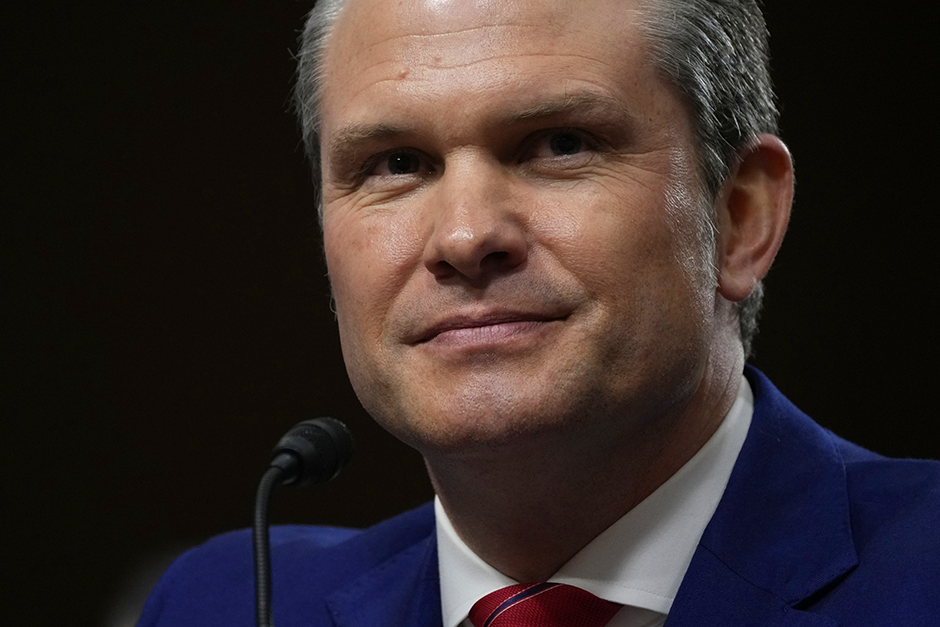
    Defense Secretary Pete Hegseth

    Ana Radelat took a much-deserved vacation this week, so I’ll do my best to fill in for our loyal D.C. Memo readers. That shouldn’t be too difficult, considering all of the coverage produced by the Signal chat bombshell that exploded a few days ago. So here goes:

    That bombshell, of course, was The Atlantic magazine’s revelation that its editor, Jeffrey Goldberg, somehow got added to a text chain in Signal — a commercial app — with high-ranking Trump officials about a pending attack on Houthi rebels in Yemen.  

    That created all sorts of havoc for the Trump administration, with some lawmakers calling for the resignation of our own Pete Hegseth (Forest Lake Area High School, class of 1999) to resign as Secretary of Defense.

    You can read about the snafu in this Associated Press story, along with some follow up reporting on what the text messages contained.

    The pushback from the White House, which denies that any classified information was shared in the chat, can be found here.

    For her part, Minnesota’s senior senator, Democrat Amy Klobuchar, appearing at an Axios event, said of the fiasco that Republicans need to “get their act together.”

    Speaking of the AP, its executive director, Julie Pace, penned a Wall Street Journal column about the news cooperative’s court fight with the Trump administration over access to the White House. The Trump administration cut that access off after the AP refused to call the Gulf of Mexico the Gulf of America, a term that Trump favors. (The AP published an abbreviated version of her column).

    Meanwhile, the Trump administration continues its culling of the federal workforce, announcing that it plans to trim federal health agencies by 20,000 workers. The Department of Health and Human Services had around 92,000 employees in September.

    Also, according to CBS News, a federal appeals court has upheld a court order blocking further deportations under the Alien Enemies Act. The Trump administration had invoked the 18th century law in sending alleged Tren de Aragua gang members to El Salvador, where they were imprisoned.

    Homeland Security Secretary Kristi Noem visited the notorious prison this week. 

    ICYMI:

    • We shared an Eden Prairie Local News report on freshman U.S. Rep Kelly Morrison, D-3rd District, who during a townhall meeting called for a “kindness revolution” in this tumultuous political era.
    • Late last week, Ana Radelat reported on a Trump administration order that could boost copper, nickel and cobalt mining on the Iron Range.
    • At the state level, KAXE/KBXE reported on the nine candidates who have emerged to replace former state Sen. Justin Eichorn, the Republican who resigned after his arrest in an underage prostitution sting. Primaries are slated for April 15 with a special election set for April 29.

    Thanks! Ana will be back next week.

    Gregg Aamot

    Gregg Aamot is the associate editor at MinnPost. He can be reached at gaamot@minnpost.com or followed on Twitter @greggaamot.

    The post Trump backs Hegseth after Signal chat snafu amid calls for his resignation appeared first on MinnPost.

  • Morrison calls for ‘kindness revolution’ at first town hall

    Morrison calls for ‘kindness revolution’ at first town hall

    This story first appeared in the Eden Prairie Local News.

    Editor’s note: After publication, this article was updated to include additional quotes and context from Rep. Kelly Morrison’s remarks on civic engagement and bipartisan efforts.

    Standing before nearly 2,000 people at Jefferson High School in Bloomington on Thursday, March 20, U.S. Rep. Kelly Morrison called for something unexpected amid what she described as political turmoil: a “kindness revolution.”

    “We’re in a moment of cruelty,” Morrison said about halfway through the event. “But most people aren’t cruel. I think something shifted — with COVID, with social media, with loneliness. We need each other as human beings. Even the smallest acts of kindness matter. Being decent to each other is important.”

    It was a defining theme of the freshman Democrat’s first in-person town hall since taking office in January. Morrison, a longtime OB-GYN and former state senator, was elected in November 2024 to represent Minnesota’s 3rd Congressional District, which includes Eden Prairie and other west metro suburbs. She succeeded Dean Phillips, who chose not to seek reelection while making a bid for president.

    While her tone was often hopeful, Morrison didn’t sugarcoat the gravity of the moment.

    For more than an hour, Morrison fielded questions on Social Security, veterans’ care, science funding, transgender rights, campaign finance and President Donald Trump’s second term. The crowd, largely supportive, responded with frequent cheers and applause, especially during her sharpest critiques of the administration.

    At one point, she accused President Trump of firing more veterans than any administration in history, “gutting science,” and “doing nothing to lower costs for everyday Americans.”

    “We are not powerless,” Morrison said more than once. “This is our democracy. We can’t let it be dismantled.”

    Morrison said civic engagement itself can be a form of kindness — a way to find purpose, be part of something bigger than yourself, and build relationships, even across disagreement. 

    “It doesn’t have to be dramatic,” she said. “Attend your local city council meeting. Ask respectful questions. Listen. You can be engaged and challenge ideas — and still be kind.”

    ‘Chaos, confusion, carelessness and cruelty’

    The evening opened with the Pledge of Allegiance, led by a local Scout troop. Bloomington Mayor Tim Busse, serving as moderator, welcomed the crowd and urged respectful engagement, civil discourse, and pledged to address as many audience questions as possible. Two men in plain clothes flanked the stage, presumably security.

    Busse later drew laughs, comparing the stack of audience questions between him and Morrison to his “pull-tab basket at the Lindbergh VFW on a Saturday night.”

    His first question referenced the loss of federal earmark funding for two major infrastructure projects in Bloomington. Morrison didn’t hesitate.

    “This administration – and we’re not even 100 days in – has been marked by chaos, confusion, carelessness, and cruelty,” she said. “It’s hard to plan for the future when priorities and funding shift overnight.”

    She cited specific local examples: a domestic violence shelter that could lose 15,000 “safe nights” for clients without federal grants; Eden Prairie’s fire department, which relies on SAFER grants to recruit new firefighters; and the TRIO program at Kennedy High School, which supports college access for low-income students and is now at risk.

    “These are real people being hurt by reckless decisions,” Morrison said. “It’s not how government is supposed to work.”

    Despite the political tension in Washington, Morrison said she entered Congress hopeful she could find bipartisan partners. During new-member orientation, she said, two Republican colleagues privately expressed interest in working with her — but only under one condition.

    “Two of them said, ‘Kelly, I’d love to do that with you – if I could be anonymous,’” Morrison said. “Their leadership told them not to work with Democrats, and in their deep-red districts, it would be toxic to be seen doing so.”

    Still, Morrison said she left orientation feeling more hopeful than expected, having made some cross-aisle connections. A lifelong Democrat, she noted she grew up in a Republican family that debated politics around the dinner table.

    “I can still hear my dad saying, ‘Kelly, cite your source!’” she told the crowd. “We argued, but we loved and respected each other. I’m used to doing battle with, teasing, and ultimately respecting – and even loving – Republicans. Love you, Dad.”

    ‘This isn’t what I signed up for’

    Throughout the night, Morrison painted a picture of what she called a “full-scale assault on American values” under Trump and his allies – with Elon Musk emerging as a central unelected force.

    “Elon Musk seems to be running the country right now,” she said. “He’s got the president’s ear, access to our private information, and zero accountability.”

    One of the most sobering moments came when Morrison recounted a conversation with the national VFW commander about proposed VA workforce cuts.

    “‘Ma’am,’ he told me, ‘it’s going to kill us.’”

    The crowd reacted with audible dismay.

    Morrison said she’s pushing back with letters, legislation, and advocacy. “We need to speak up. Protest. Tell our Republican colleagues: this is not acceptable,” she said. “I suspect even some voters are saying, ‘This isn’t what I signed up for.’”

    Science, justice, and social threats

    Applause surged when Morrison criticized the administration’s cuts to science and education funding.

    “This is right out of an autocrat’s playbook,” she said. “Countries like France and Canada are recruiting our best scientists now because we’re driving them away. That’s where we are.”

    The crowd also responded emotionally to Morrison’s defense of transgender rights after a question from a concerned parent.

    “She just wants to live her life,” Morrison said of the parent’s daughter. “And the Republican House’s first bill this year? Attacking trans kids. It was disgusting. I voted no.”

    On the courts, Morrison said the country is approaching – if not already in – a constitutional crisis. The crowd applauded her call for standing up against attacks on judges and the rule of law.

    “We are not powerless,” she said again. “Your voice is your power. Your story is your power.”

    A warning — and a challenge

    Applause reached a crescendo when Morrison denounced Trump and Vice President J.D. Vance for their treatment of Ukrainian President Volodymyr Zelensky during a recent White House visit.

    “One of the most shocking and disgraceful displays I’ve ever seen,” she said.

    The crowd erupted.

    Despite that, Morrison ended on a note of resolve.

    “I want to repeat: We are not powerless in this moment,” she said. “We are the people of the United States of America. Use your voice. Support organizations that support the values that you hold dear. Be in community, be kind to each other, and ultimately, it’s going to be on all of us to stand up in the streets and say, this will not stand.”

    The post Morrison calls for ‘kindness revolution’ at first town hall appeared first on MinnPost.
  • Trump’s critical minerals order may boost efforts to mine copper, nickel and cobalt in Minnesota

    Trump’s critical minerals order may boost efforts to mine copper, nickel and cobalt in Minnesota

    WASHINGTON – President Donald Trump has evoked a Cold-War era law in an effort to expand the production of critical minerals, which could boost  the prospects of new copper, nickel and cobalt mines in northern Minnesota.

    Citing his authority under the 1950 Defense Production Act, Trump said he wants to reduce U.S. reliance on critical minerals through imports from countries like China.

    An executive order Trump signed late Thursday gives his administration emergency powers to prioritize mining on public lands, which could include the Superior National Forest, a watershed for the Boundary Waters Canoe Area Wilderness.

    “Our national and economic security are now acutely threatened by our reliance upon hostile foreign powers’ mineral production,” Trump’s executive order said. “It is imperative for our national security that the United States take immediate action to facilitate domestic mineral production to the maximum possible extent.” 

    Trump’s executive order added copper and several other minerals to the nation’s list of critical minerals, which had already included nickel and cobalt.

    Taconite is mined in the Superior National Forest, but environmentalists say mining for copper, cobalt, nickel and other metals in the forest would produce tailings that can be dangerous sources of toxic chemicals that would pollute the Rainy River Watershed – and the Boundary Waters.

    So, the executive order sparked condemnation from environmentalists in Minnesota.

    “Under the guise of national security, the Trump Administration has taken its next step toward dismantling vital protections for the Boundary Waters Canoe Area Wilderness and its watershed,” said Ingrid Lyons, executive director of Save the Boundary Waters. 

    Lyons said that “by taking the extreme step of weaponizing Cold War-era powers to prioritize mining on all public lands,” which she said includes federally designated Wilderness Areas, national forests, national parks, and wildlife refuges, “the administration has thoroughly demonstrated its commitment to sacrificing America’s public lands for corporate gain.”

    Trump’s new executive order also directs relevant federal agencies, in coordination with the National Energy Dominance Council, to identify and expedite priority mineral production projects that can be “immediately approved” or immediately issued permits.

    And the executive order directs Interior Secretary Doug Burgum to, within 10 days, provide a list of all federal lands “known to hold mineral deposits and reserves” and “prioritize mineral production and mining related purposes as the primary land uses in these areas, consistent with applicable law.”

    For now, it’s unclear how the new efforts to speed U.S. production of critical minerals will impact several mining operations in Minnesota that have been stalled by Biden administration actions, lawsuits and other obstacles.

    Rep. Pete Stauber, R-8th District, who represents the northern Minnesota region in Congress and is an advocate of the efforts to mine copper, nickel and cobalt in Minnesota, hailed President Trump’s actions.

    “In addition to prioritizing permitting and regulatory reviews for important critical mineral mining projects across the country, President Trump’s Executive Order directs the Secretary of the Interior to identify federal lands with known mineral deposits and prioritize mineral production as the primary land use on those lands,” Stauber said in an emailed statement. “I’m confident that this directive will put the Duluth Complex and our tremendous mineral wealth in the Superior National Forest at the forefront of these important discussions.”

    Stauber also said the executive order “is a great first step to making Minnesota critical mineral dominant, and I think we can expect more exciting developments in the months to come.”

    The Biden administration — citing environmental concerns — placed a 20-year moratorium on underground mining in the Superior National Forest. But Trump has vowed to reverse the Superior National Forest moratorium, which he can do under his executive authority.

    Twin Metals, which also had critical leases canceled by the Biden administration, had no immediate comment on the executive order, saying it was still studying its possible impact.

    Trump’s order could also impact a project called NewRange Copper Nickel, which proposes building a $1 billion open pit mine near Babbitt and Hoyt Lakes, but has had its federal permit from the Army Corps of Engineers revoked because of concerns over the mine’s potential impact on a federally protected wetland.

    New Range Copper Nickel had no immediate response to the executive order.

    Some environmentalists are concerned the Boundary Waters itself, protected from exploitation for decades through federal law, might also be open to mining through the use of Trump’s emergency powers.

    But the Trump administration may not have the last word. Although it is taking steps towards facilitating mining of critical minerals, mining in Minnesota is also subject to state environmental rules and permitting. 

    Ana Radelat

    Ana Radelat

    Ana Radelat is MinnPost’s Washington, D.C. correspondent. You can reach her at aradelat@minnpost.com or follow her on Twitter at @radelat.

    The post Trump’s critical minerals order may boost efforts to mine copper, nickel and cobalt in Minnesota appeared first on MinnPost.

  • Keith Ellison, fellow Democratic attorneys general, hold a listening session in St. Paul in a campaign against Trump policies

    Keith Ellison, fellow Democratic attorneys general, hold a listening session in St. Paul in a campaign against Trump policies

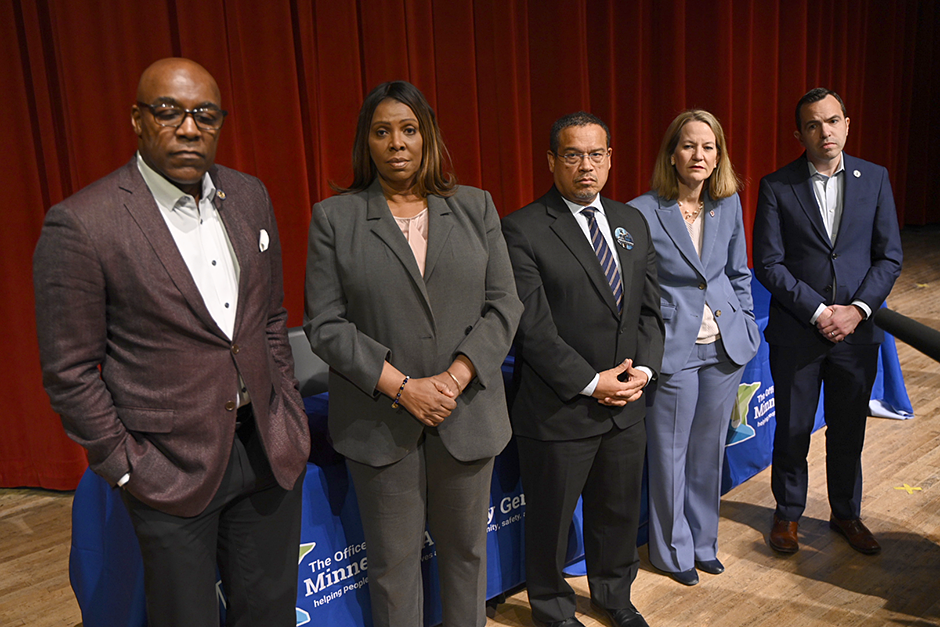
    Minnesota Attorney General Keith Ellison and four of his Democratic colleagues heard from Minnesotans who have been adversely impacted by President Donald Trump’s effort to reshape the federal government and U.S. policy.

    Before a two-hour session at North Senior High School in North St. Paul on Thursday evening, Ellison said Trump’s avalanche of executive orders “clearly violate the law.”

    Judges across the country have agreed, issuing temporary restraining orders and preliminary injunctions on more than 45 lawsuits brought against Trump’s effort to lay off thousands of federal workers, freeze billions of dollars in federal funds, and eradicate policies on comiate change and diversity, equity and inclusion (DEI).  

    Many of those lawsuits were filed by the 23 Democratic attorneys general who banded together.

    “We’re all working pretty hard here, we’re all putting in double duty,” Ellison said.

    Ellison was joined by Arizona Attorney General Kris Mayes, Illinois Attorney General Kwame Raoul, New York Attorney General Letitia James, and New Jersey Attorney General Matt Platkin.

    The Democratic attorneys general held their first listening session in Phoenix, Arizona, on March 5 and  plan to travel across the nation, holding similar sessions in other “blue states” to try to put a human face on the impact of  Trump’s actions.

    “We’re not the face of the resistance,” Mayes said. “We are doing what we can to uphold the rule of law.”

    Mayes also called Trump’s actions an unconstitutional “coup.”  

    But at the high school’s packed auditorium, the focus was on dozens of Minnesotans, which included fired federal workers, immigrants, parents of transgender children and people who worked for nonprofits who help provide health care, housing and the resettlement of refugees who have lost federal funding.

    Maricruz Lozano Rios, a leader with Unidos MN, said her mother’s partner was arrested by Immigration and Customs Enforcement (ICE) agents at a BP gas station when he was on his way to work early one morning and was subsequently deported. That forced her unemployed mother to sell their house and “everything she had.”

    “I’ll be damned if they keep hurting my family,” she said.

    Suzanne Kelly, the CEO of the Minnesota Council of Churches, said the nonprofit’s refugee resettlement program had lost $4 million in federal grants and could not make up the shortfall in funding.

    So, she had to tell the newly arrived refugees the council has been forced to  to stop paying for their rent and groceries in the next month or two.

    “Everything that we’ve done for them will come to an end,” Kelly said.

    Kelly also said she had to lay off 26 employees, many of them refugees themselves, and leave hundreds of others the Council of Churches had hoped to resettle in Minnesota in refugee camps overseas. 

    Hundreds attended the hearing. Many, if not most of those at the event, were Democratic activists and it often had the ebullient energy of a rally.

    But there was also frustration. More than 200 people tuned in on a YouTube livestream of the hearing, and several in the chat said they had hoped for more information about what they could do and “the next steps” for the party.

    “This feels like a microcosm of the Democratic Party,” one commenter posted. “Lots of sympathy. Lots of concern. No action.”

    Ellison said the attorneys general “would keep on litigating” and gave out the phone number to his office, urging attendees to keep organizing and marching.

    Meanwhile, Sen. Bernie Sanders, I-Vermont, and Rep. Alexandria Ocasio Cortez, D-New York, were also taking their own show on the road, with a more combative message.

    At an event in Las Vegas the progressive lawmakers held on Thursday, Ocasio Cortez told a crowd, “We need a Democratic Party that fights harder for us today.”

    She said that some of their local members of Congress stood up for them last week by opposing a GOP bill that kept the federal government from shuttering while cutting spending on some domestic programs. But she said other lawmakers “caved.”

    Nine Senate Democrats followed Minority Leader Chuck Schumer’s lead in voting for the legislation. But only one House Democrat, Rep. Jared Golden of Maine, voted for the bill.  

    “Support brawlers who can fight — because those are the ones who can actually win against Republicans,” Ocasio Cortez said.

    Ana Radelat

    Ana Radelat

    Ana Radelat is MinnPost’s Washington, D.C. correspondent. You can reach her at aradelat@minnpost.com or follow her on Twitter at @radelat.

    The post Keith Ellison, fellow Democratic attorneys general, hold a listening session in St. Paul in a campaign against Trump policies appeared first on MinnPost.