Category: USA

  • Trump’s $45 billion expansion of immigrant detention sites faces pushback from communities

    Trump’s $45 billion expansion of immigrant detention sites faces pushback from communities

    With tensions high over federal immigration enforcement, some state and local officials are pushing back against attempts by President Donald Trump’s administration to house thousands of detained immigrants in their communities in converted warehouses, privately run facilities and county jails.

    Federal officials have been scouting cities and counties across the U.S. for places to hold immigrants as they roll out a massive $45 billion expansion of detention facilities financed by Trump’s recent tax-cutting law.

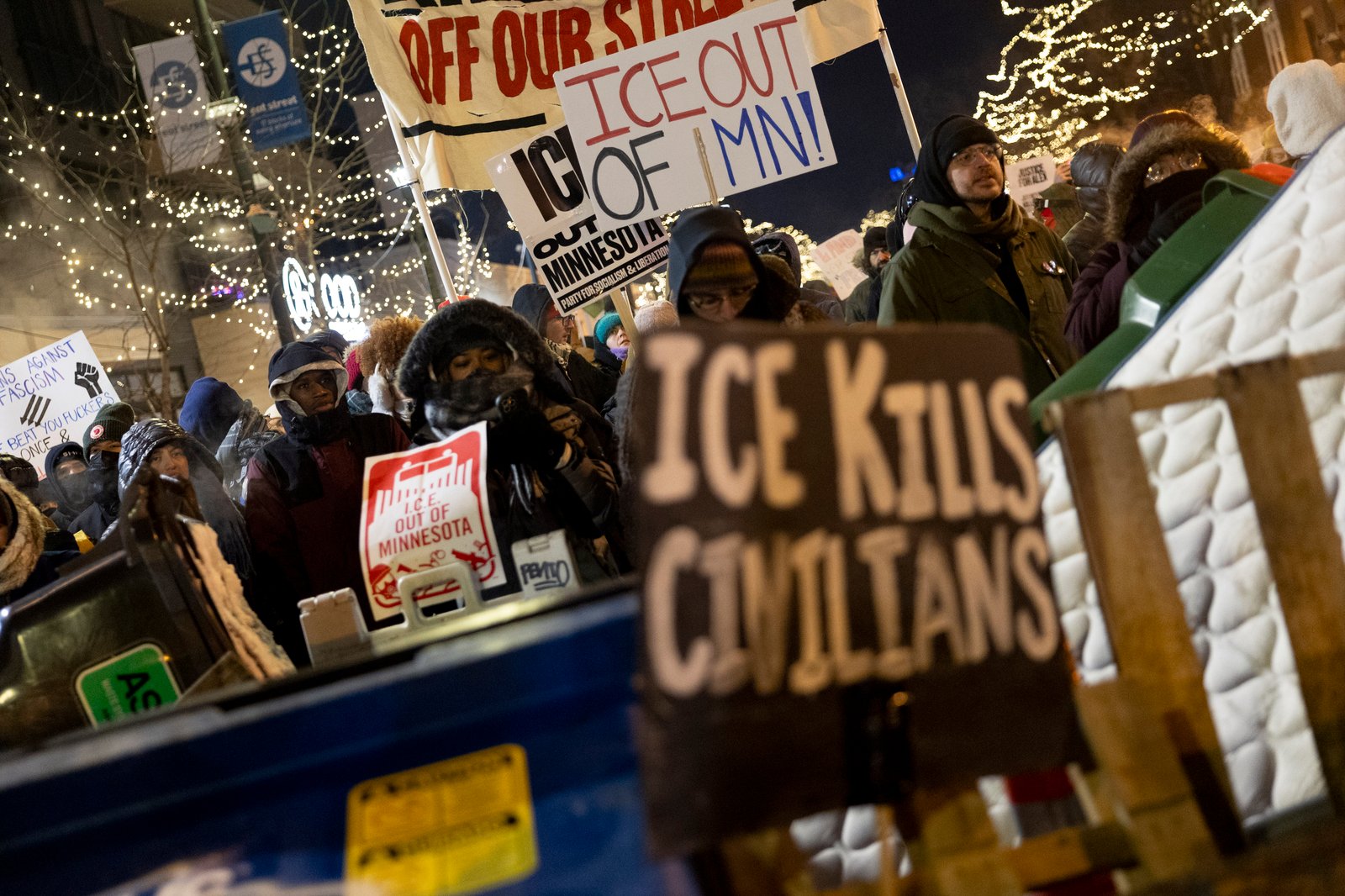
    The fatal shootings of Renee Good and Alex Pretti during immigration enforcement actions in Minnesota have amplified an already intense spotlight on U.S. Immigration and Customs Enforcement, increasing scrutiny of its plans for new detention sites.

    A proposed ICE facility just north of Richmond, Virginia, drew hundreds of people last week to a tense public hearing of the Hanover County Board of Supervisors.

    “You want what’s happening in Minnesota to go down in our own backyard? Build that detention center here, and that’s exactly what will happen,” resident Kimberly Matthews told county officials.

    As a prospective ICE detention site became public, elected officials in Kansas City, Missouri, scrambled to pass an ordinance aimed at blocking it. And mayors in Oklahoma City and Salt Lake City — after raising concerns about building permits — announced last week that property owners won’t be selling or leasing their facilities for immigration detention.

    Meanwhile, legislatures in several Democratic-led states pressed forward with bills aimed at blocking or discouraging ICE facilities. A New Mexico measure targets local government agreements to detain immigrants for ICE. A novel California proposal seeks to nudge companies running ICE facilities out of the state by imposing a 50% tax on their proceeds.

    The number of ICE detention sites has doubled

    More than 70,000 immigrants were being detained by ICE as of late December, up from 40,000 when Trump took office, according to federal data.

    In a little over a year, the number of detention facilities used by ICE nearly doubled to 212 sites spread across 47 states and territories. Most of that growth came through existing contracts with the U.S. Marshals Service or deals to use empty beds at county jails.

    Trump’s administration now is taking steps to open more large-scale facilities. In January, ICE paid $102 million for a warehouse in Washington County, Maryland, $84 million for one in Berks County, Pennsylvania, and more than $70 million for one in Surprise, Arizona. It also solicited public comment on a proposed warehouse purchase in a flood plain in Chester, New York.

    Federal immigration officials have toured large warehouses elsewhere, without releasing many details about the efforts.

    “They will be very well structured detention facilities meeting our regular detention standards,” ICE said in a statement, adding: “It should not come as news that ICE will be making arrests in states across the U.S. and is actively working to expand detention space.”

    Detention site foes face legal limitations

    State and local governments can decline to lease detention space to ICE, but they generally cannot prohibit businesses and private landowners from using their property for federal immigrant detention centers, said Danielle Jefferis, an associate law professor at the University of Nebraska who focuses on immigration and civil litigation.

    In 2023, a federal court invalidated a California law barring private immigrant detention facilities for infringing on federal powers. A federal appeals court panel cited similar grounds in July while striking down a New Jersey law that forbade agreements to operate immigrant detention facilities.

    After ICE officials recently toured a warehouse in Orlando, Florida, as a prospective site, local officials looked into ways to regulate or prevent it. But City Attorney Mayanne Downs advised them in a letter that “ICE is immune from any local regulation that interferes in any way with its federal mandate.”

    Officials in Hanover County also asked their attorney to evaluate legal options after the Department of Homeland Security sent a letter confirming its intent to purchase a private property for use as an ICE processing facility. The building sits near retail businesses, hotels, restaurants and several neighborhoods.

    Although some residents voiced concerns that an ICE facility could strain the county’s resources, there’s little the county can do to oppose it, said Board of Supervisors Chair Sean Davis.

    “The federal government is generally exempt from our zoning regulations,” Davis said.

    Kansas City tries to block new ICE detention site

    Despite court rulings elsewhere, the City Council in Kansas City voted in January to impose a five-year moratorium on non-city-run detention facilities. The vote came on the same day ICE officials toured a nearly 1-million-square-foot warehouse as a prospective site.

    Manny Abarca, a county lawmaker, said he initially was threatened with trespassing when he showed up but was eventually allowed inside the facility, where a deputy ICE field office director told him they were scouting for a 7,500-bed site.

    Abarca is trying to fortify Kansas City’s resistance by proposing a countywide moratorium on permits, zoning changes and development plans for detention facilities not run by the county or a city.

    “When federal power is putting communities on edge, local government has a responsibility to act where we have authority,” he said.

    Kansas City is looking to follow a similar path as Leavenworth, Kansas, which has argued that private prison firm CoreCivic must have an operating permit to reopen a shuttered prison as an ICE detention facility.

    As other ICE proposals have surfaced, officials in Social Circle, Georgia, El Paso, Texas, and Roxbury Township, New Jersey, all have raised concerns about a lack of water and sewer capacity to transform warehouses into detention sites.

    Nationally, it remains to be seen whether local governments can effectively deter ICE facilities through building permits and regulations.

    “We’re currently in a moment where it is being tested,” Jefferis said. “So there is no clear answer as to how the courts are going to come down.”

    New Mexico targets existing ICE facilities

    The Democratic-led New Mexico House on Friday passed legislation banning state and local government contracts for ICE detention facilities, sending it to the Senate. Similar bills are pending in Hawaii, Massachusetts, New York and Rhode Island.

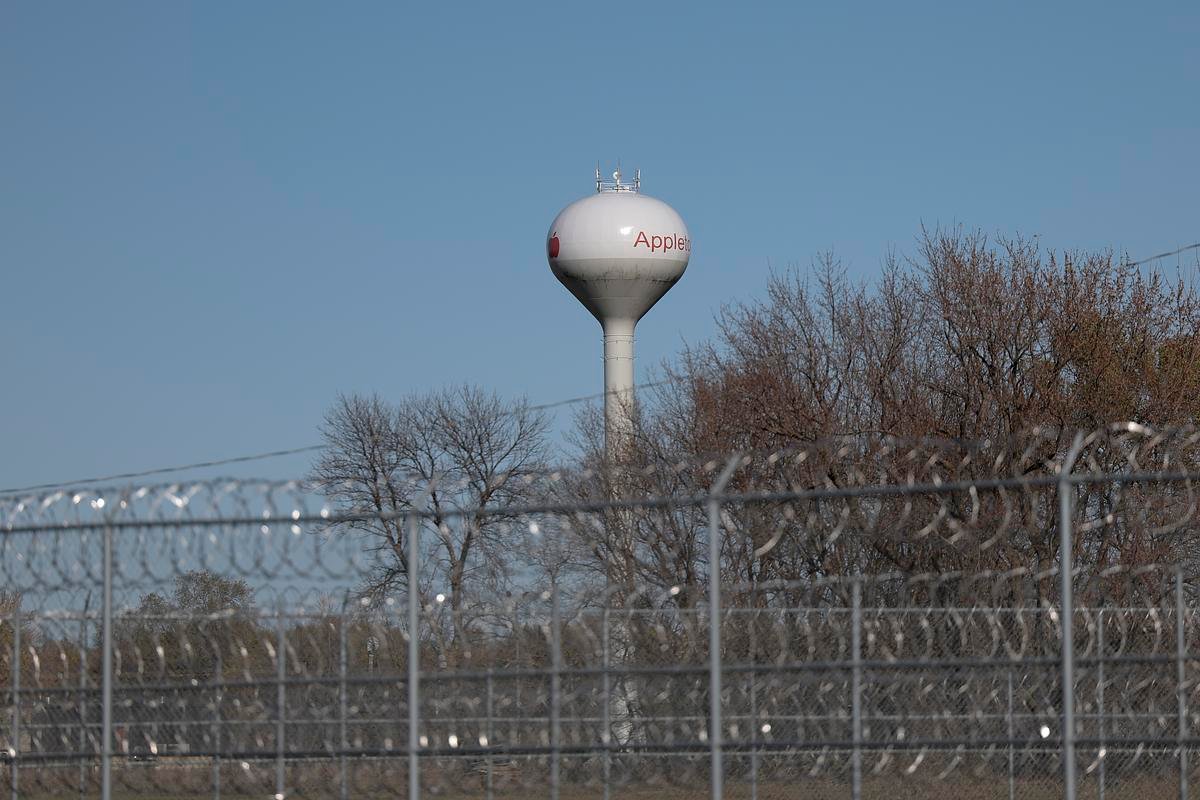
    The Otero County Processing Center, 25 miles from downtown El Paso, Texas, is one of three privately run ICE facilities that could be affected by the New Mexico legislation. The facility includes four immigration courtrooms and space for more than 1,000 detainees. The county financed its construction in 2007 with the intent to use it as a revenue source, and plans to pay off the remaining $16.5 million debt by 2028.

    Otero County Attorney Roy Nichols said the county is prepared to sue the Legislature under a state law that prevents impairment of outstanding revenue bonds.

    Republicans warned of job losses and economic fallout if the legislation forces immigrant detention centers to close.

    But Democratic state Rep. Sarah Silva, who voted for the ban, and said her constituents in a heavily Hispanic area view the ICE facility as a burden.

    “Our state can’t be complicit in the violations that ICE has been doing in places like Minneapolis,” Silva said. “To me that was beyond the tipping point.”

    The post Trump’s $45 billion expansion of immigrant detention sites faces pushback from communities appeared first on MinnPost.
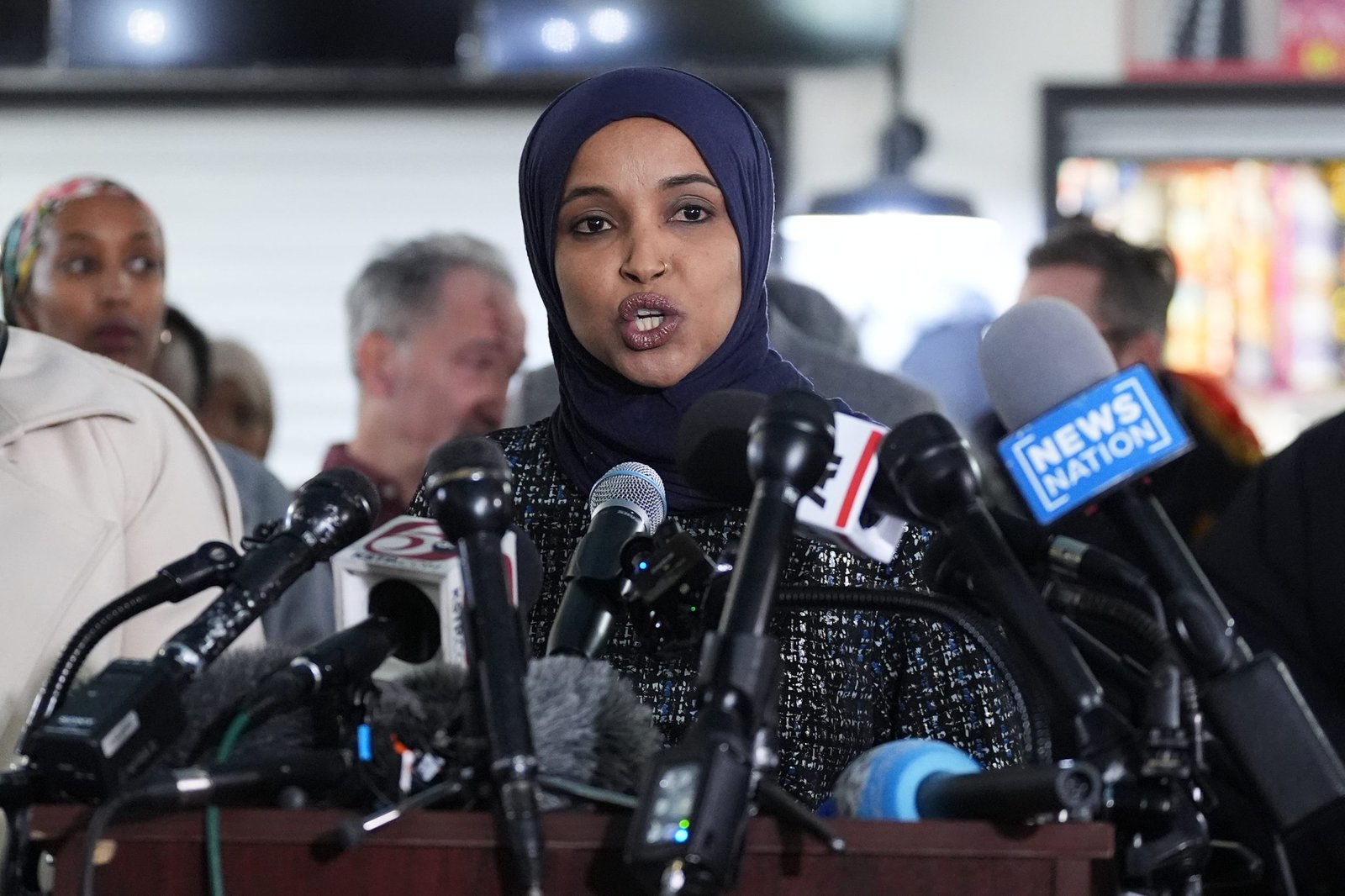
  • Flanagan, Craig take fight to precinct caucuses roiled by ICE operation while Tafoya makes her political debut

    Flanagan, Craig take fight to precinct caucuses roiled by ICE operation while Tafoya makes her political debut

    WASHINGTON – Candidates for retiring Sen. Tina Smith’s seat will face their first real test Tuesday as both Republican and Democrats vying to represent the state in the U.S. Senate fight for support in their party caucuses.

    The gathering of Minnesotan party faithful in school auditoriums and other locations continues a civic tradition that marks the official kickoff of campaign season. 

    Those who attend those precinct caucuses will choose delegates – and alternates – to DFL and GOP organizing conventions and is the first step in a process that will culminate in the endorsement of candidates, any rule changes and the creation of party platforms. 

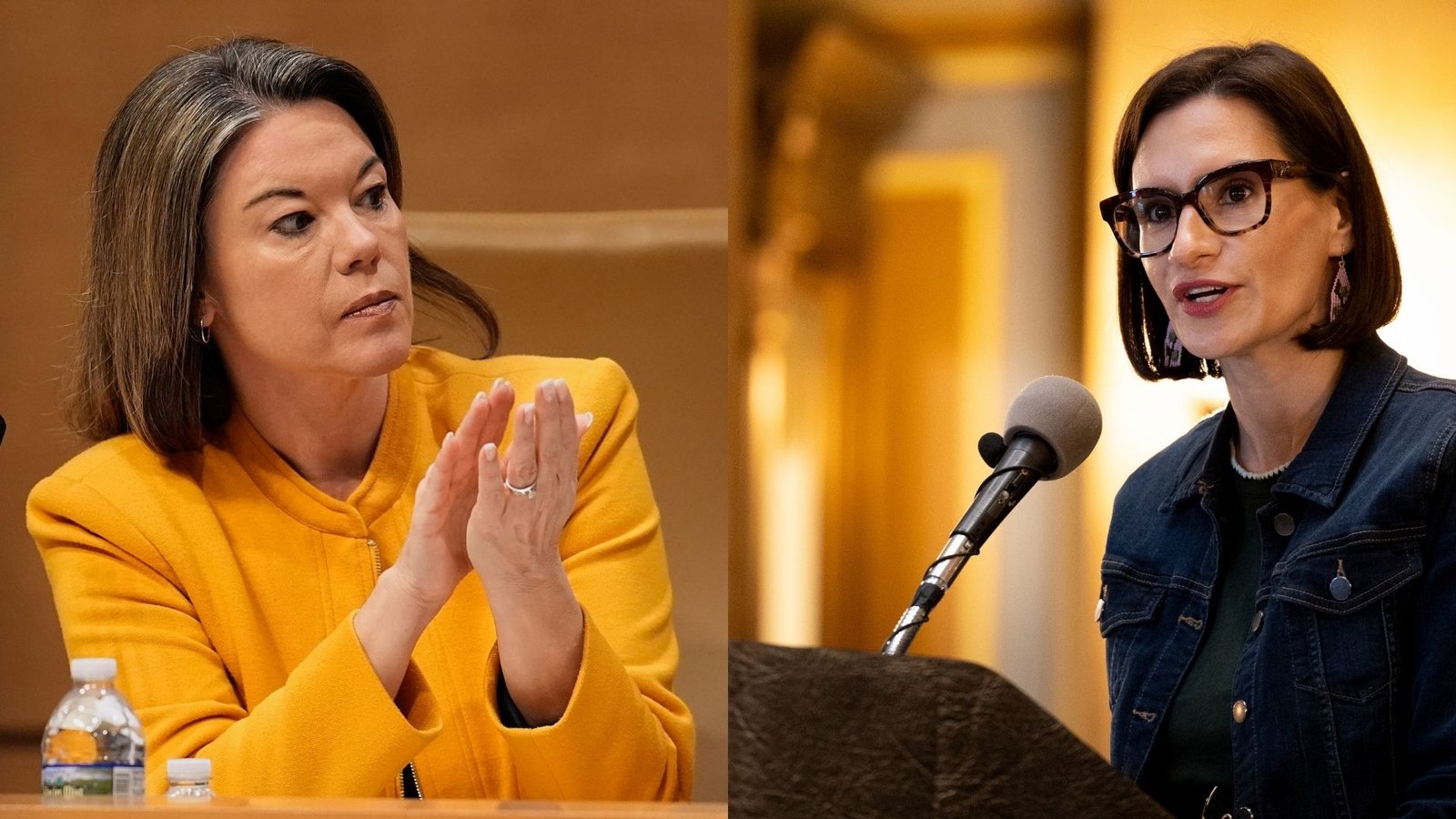
    On the Democratic side, Rep. Angie Craig, D-2nd District, and Lt. Gov. Peggy Flanagan are fiercely competing for support.

    Flanagan said her campaign began last year to woo the 1,200 or so party volunteers who attend the caucuses. She continued with 38-city “Loud and Clear Voice” tour, named in homage to her Ojibwe name, which is “speaks with a loud and clear voice woman.”

    “This is about Minnesotans raising their hands to be part of the process,” Flanagan said.

    Meanwhile, Craig said her campaign will be present at about 80% of the caucuses on Tuesday to do some last-minute politicking.

    Unlike a primary election, which is run by the state, caucuses are meetings organized and conducted by the political parties themselves.

    Most of the DFLers who will attend this year’s caucuses have done so before, though about 25% of them will be newcomers. But none of them have gathered in a time of turmoil like this, with the Trump administration targeting Minnesota in a series of ways, including an immigration crackdown that has cost the lives of two Minnesotans, Renee Good and Alex Pretti, at the hands of federal agents.

    In fact, the enforcement action called Operation Metro Surge has hijacked a Senate campaign that on the Democratic side was going to be all about “affordability” and the rising cost of health care, which both Flanagan and Craig blame on President Donald Trump’s policies.

    The campaign may revert to those issues. But at the Democratic caucuses, immigration and the actions of Immigration and Customs Enforcement (ICE) agents and the Border Patrol in the state will be top of mind. 

    There’s also concern Operation Metro Surge will disrupt caucus operations. 

    The DFL said it has a plan for that eventuality. It has secured access to “constitutional observers,” Minnesotans who track and document ICE and Border Patrol activities, to respond to any activity and set up a hotline for on-site legal support in “high-need precincts.”

    Also, those who want to be DFL delegates do not have to attend a caucus gathering. “Non-attendee” forms are available in English, Somali, Spanish and Hmong to be nominated as a delegate or alternate.

    Democratic delegates elected Tuesday will attend DFL organizing unit conventions in early spring, then each congressional district will hold another convention to endorse candidates for the U.S. House. The process culminates in a state convention at the end of May in Rochester where the favored candidate for the U.S. Senate will be chosen. 

    Republican delegates chosen Tuesday will also attend organizing conventions where delegates will be chosen to the GOP state convention, which will be held in Duluth at the end of May.

    The chosen delegates won’t just be part of a winnowing process of delegates and alternates leading to the state conventions. They will maintain contact lists, hold strategy meetings and help with campaigns. They can also seek to make changes to their party’s platform.

    More progressive and angry 

    DFL caucus goers always lean to the left of the party, but this year they will “be much more progressive and much more angry,” predicted Tim Lindberg, a political science professor at the University of Minnesota Morris.

    Craig has shifted to the left from the centrist stance that helped her win reelection in her “purple” congressional district.

    Yet Flanagan has been excoriating Craig for her vote on the first bill the GOP-controlled House held last year.

    Craig was one of 46 Democrats who crossed party lines to vote for the Laken Riley Act, legislation named after a nursing student in Georgia who was murdered by an undocumented immigrant.

    That legislation, which has become law, expanded the crimes that would make a non-citizen deportable to include theft, burglary, larceny and shoplifting. Those non-citizens could be deported simply for being charged with a crime, denying them the chance to argue their innocence in court.

    “It’s a whole lot easier now to lock people up without due process,” said Flanagan. She said Craig should apologize for her support of the legislation.

    Craig said Flanagan is “conflating” things.

    “Laken Riley has nothing to do with what is going on in Minnesota today,” Craig said.

    And Craig said that has become personal because her brother-in-law, who is Latino, was surrounded by federal agents with their guns drawn when he recently visited a gasoline station in the state.

    The lawmaker was also among the first to co-sign a bill that seeks the impeachment of Homeland Security Department Secretary Kristi Noem and is vocal about her opposition to additional funding for ICE and the Border Patrol and her support for reforms of those agencies.

    “I’m glad she wants to impeach Noem. I would too,” said Flanagan.

    She agreed that Operation Metro Surge has cast a shadow on the caucuses. But she said that shadow has darkened the whole state.  

    “I wish that I didn’t have to deliver food to people, that kids didn’t have to be walked to school, that two people were assassinated, and that people didn’t have to march in negative 15-degree temperatures,” Flanagan said.

    A first time for Tafoya 

    Craig, a master fundraiser, has outpaced Flanagan when it comes to campaign money. But both hold huge advantages right now over the Republicans running for Smith’s seat.

    According to the latest Federal Election Commission reports, Craig’s campaign has raised nearly $6.8 million while Flanagan’s campaign had raised nearly $3.3 million as of Dec. 31.

    Flanagan brushed off the fundraising difference.

    “I’m competitive,” she said. “And I’m the only candidate in the race who is not taking corporate political action committee (PAC) money,” she said. “The race should not go to the highest bidder.”

    Both the Craig and Flanagan campaigns have spent heavily, even as it’s still comparatively early in the race. According to the FEC filings, Craig’s campaign has spent about $2.9 million and Flanagan’s has spent about $2.5 million.

    On the Republican side, the person who is expected to be the top money raiser, former sports broadcaster Michele Tafoya, was not in the race until last month and did not raise any campaign money last year.

    So former NBA player Royce White is the top fundraising Republican in the race, having secured about $700,000 for his campaign as of Dec. 31.

    Adam Schwarze, a Marine Corps veteran, raised $60,000 and Navy veteran Tom Weiler has raised a little more than $82,000.

    Lindberg said those who attend the Republican caucuses may split their support among the candidates, who appeal to different wings of the GOP.

    “They have a big fight on their hands,” Lindberg said of the GOP and the Senate race. “But right now the party does not seem to be organized.”

    He also said the GOP precinct caucuses may result in no clear frontrunner.

    Two years ago, White, who was accused of making antisemitic remarks and misusing campaign funds, won the Republican nomination to run against Sen. Amy Klobuchar after ultraconservative delegates rejected Joe Fraser, a more moderate and mainstream Republican.

    But this will be the first time GOP activists weigh in on Tafoya, who has never run for political office.  

    While the precinct caucuses are one step toward party endorsements, those, while impactful, do not decide who the party’s nominee will be for a given office. That will be decided in August’s primary election.

    And, Lindberg said, the results of the caucuses may not mean much since many non-endorsed candidates, including Gov. Tim Walz and Rep. Michele Fischbach, R-7th District, ignored that slight and went on to win primary and general elections.

    Craig could be in the same position.

    Even if she fails to win more support than Flanagan on Tuesday and fails to win her party’s nomination at May’s state convention, Craig is determined to stay in the race and compete in the Democratic primary. 

    “At the end of the day, this process won’t be fully decided until August,” Craig said. “My view of the world is that every voter in the state of Minnesota should get to decide who should be the next governor.”

    The post Flanagan, Craig take fight to precinct caucuses roiled by ICE operation while Tafoya makes her political debut appeared first on MinnPost.
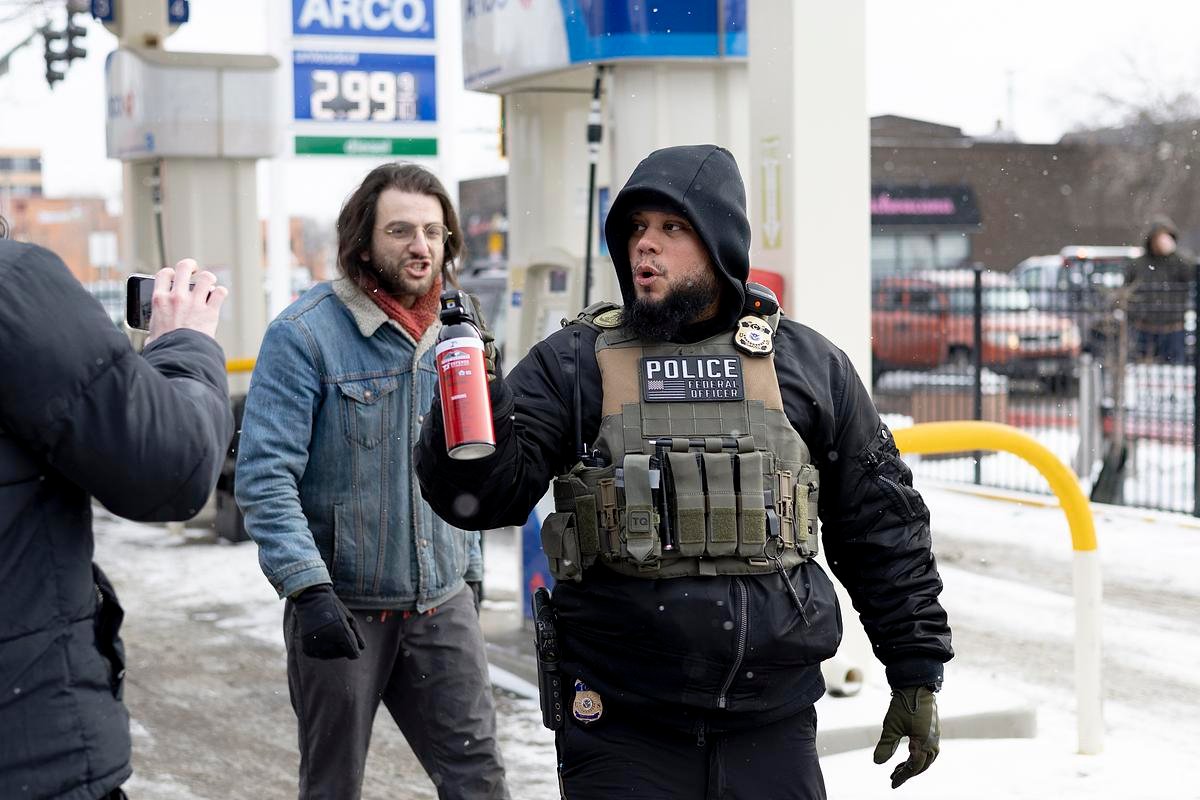
  • Trump says DOJ, Congress to investigate Ilhan Omar, though no proof of wrongdoing has been given

    Trump says DOJ, Congress to investigate Ilhan Omar, though no proof of wrongdoing has been given

    WASHINGTON – President Donald Trump regularly insults and derides Rep. Ilhan Omar, but now he’s escalating his threats. 

    The congresswoman’s financial disclosure reports have given Trump a new line of attack: he’s suggested the Somali-born Democrat, often a sharp critic of the president’s foreign and domestic policies, is guilty of fraud and said the Justice Department and Congress are investigating.

    “The DOJ and Congress are looking at ‘Congresswoman’ Illhan [sic] Omar, who left Somalia with nothing, and is now reportedly worth more than 44 million dollars. Time will tell all,” Trump wrote on Truth Social on Monday.

    Despite the threat, no one has yet to produce any evidence of wrongdoing by Omar, who has represented the 5th District since 2019.  

    Every member of the U.S. House and U.S. Senate are required to file financial disclosure forms every year.

    But these forms, which also require the disclosure of a spouse’s assets, report a lawmaker’s investment holdings and liabilities in wide ranges, so only a broad view of their assets and debts are made public.

    In 2023, Omar’s financial disclosure form (filed in 2024) showed modest outside income and assets, and credit card and student loan debt worth between $45,000 and $150,000.

    That disclosure form also listed Omar’s husband, Tim Mynett, as holding interest in a winery in Santa Rosa, California, worth between $200 and $1,000.

    Mynett also listed as an asset interest in Rose Lake Capital, which describes itself on its web site as a company with vast international experience whose expertise includes “structuring deals, mergers and acquisitions, debt structuring and capital raising.” The company was listed as being valued at between $15,000 to $50,000.

    A year later, on Omar’s 2024 financial disclosure form (filed in 2025,) Rose Lake Capital was listed as being worth $5 million and $25 million. And the winery in California was listed at being valued at between $1 million and $5 million.

    So, Trump seized on the skyrocketing valuations of Mynett’s companies, and so have conservative media outlets like Fox News.

    A spokesperson for Omar called the attacks a “right-wing smear campaign” and “inaccurate.”

    “She does not have millions in the bank,” the spokesperson said. “The financial disclosure clearly shows that the income her husband received (from Rose Lake Capital) did not exceed $15,000.”

    The financial disclosures show Mynett received between $15,000 and $50,000 from that business in 2023 and no revenue from Rose Lake Capital in 2024.

    The spokesperson also said the valuation of the companies in question “reflects the full cost assessment of the businesses, in which her husband is one of several partners, and does not reflect her husband’s individual share.”

    Omar’s office, however, did not respond to questions about the companies’ rapidly increased valuation or the actual value of Mynett’s companies.

    DOJ says ‘no comment’ 

    Although the Justice Department has been quick to announce prosecutions of other Trump political foes, it has been silent about the president’s comments into an investigation of Omar.

    When asked about Trump’s announcement of an investigation, a Justice Department spokesman said “the department declines to comment.”

    A spokesperson for Omar also said the congresswoman has received “no notice” of an investigation.

    Omar responded to Trump’s Truth Social post with a post on X.

    “Sorry, Trump, your support is collapsing and you’re panicking,” Omar wrote on X. “Right on cue, you’re deflecting from your failures with lies and conspiracy theories about me. Years of ‘investigations’ have found nothing. Get your goons out of Minnesota.”

    The New York Times reported this week that the Justice Department, during the Biden administration, opened a probe of Omar’s finances but dropped it because of a lack of evidence.  

    Omar, co-chair of the Congressional Progressive Caucus, has been a chief critic of “Operation Metro Surge,” the immigration crackdown in Minnesota that began on Dec. 1 that has resulted in the fatal shootings by federal agents of Minneapolis residents Renee Good and Alex Pretti.

    Omar was assaulted by a member of the audience at a town hall Tuesday evening, later identified as Anthony James Kazmiercza, after the lawmaker said Department of Homeland Security Secretary Kristi Noem “must resign or face impeachment.”

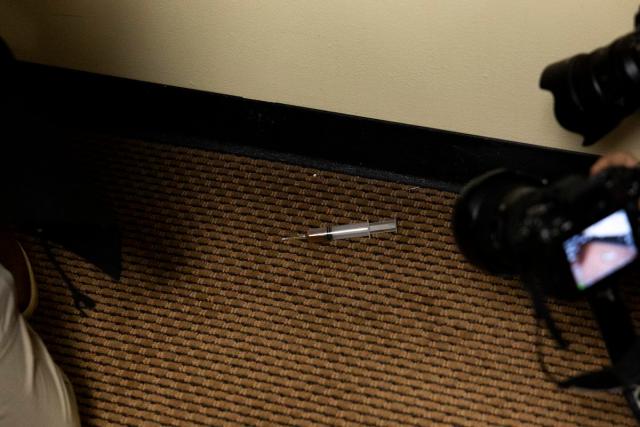
    Kazmiercza lunged at Omar and sprayed an unknown substance on her from a syringe. The attack is being investigated by the FBI.

    A spokeswoman for Omar said threats to the lawmaker increase after Trump issues a new volley of verbal attacks on her.

    Meanwhile, Rep. James Comer, R-Ky., the head of the House Oversight and Government Reform Committee, has said that either his panel or the House Ethics Committee will investigate Omar’s finances.

    But the committee, which is investigating fraud in Minnesota’s social service programs, has not made clear what it intends to do.

    “The House Oversight Committee is working on addressing ethics concerns regarding Rep. Omar and her spouse, and we hope to have an update soon,” said a committee spokeswoman in an emailed statement.

    The post Trump says DOJ, Congress to investigate Ilhan Omar, though no proof of wrongdoing has been given appeared first on MinnPost.
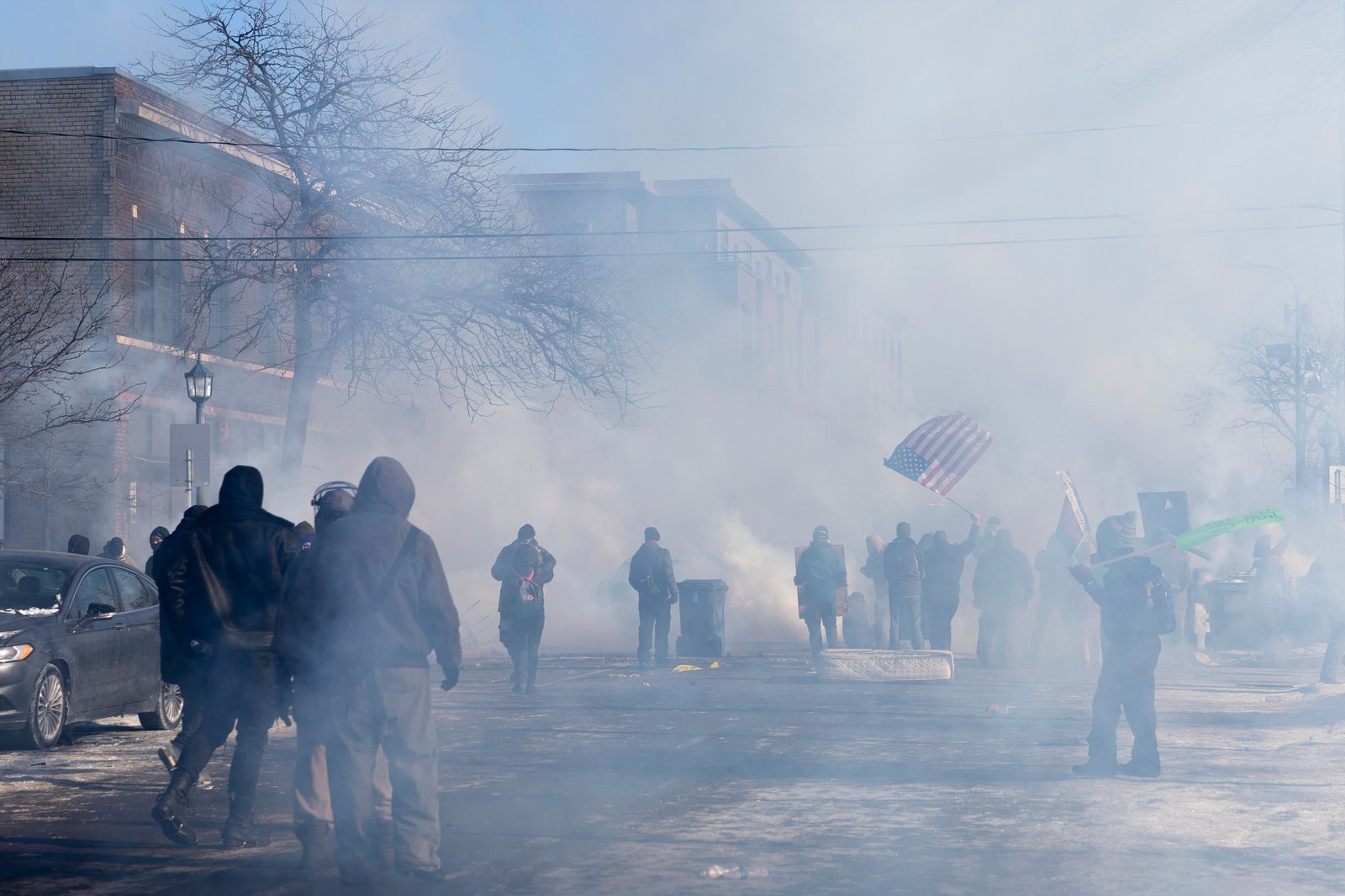
  • Amid a garden variety town hall, an attacker sprayed a substance at Ilhan Omar and then was subdued.

    Amid a garden variety town hall, an attacker sprayed a substance at Ilhan Omar and then was subdued.


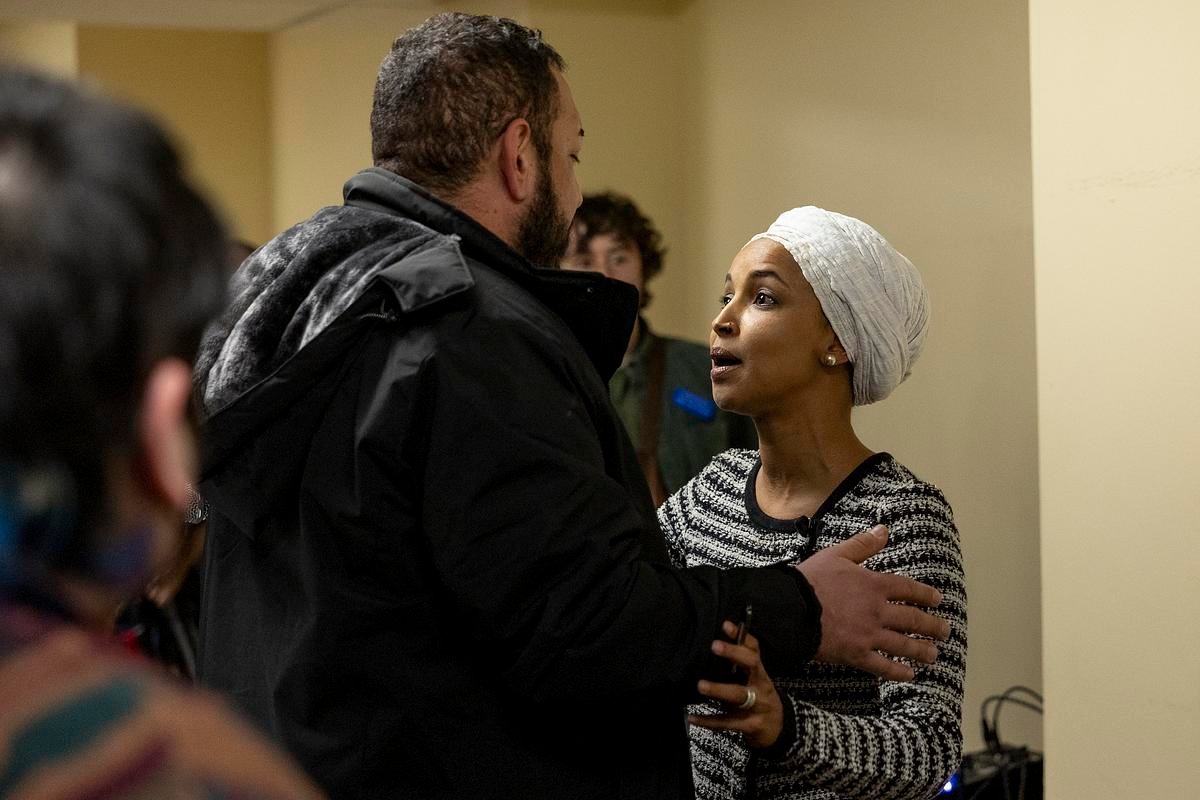
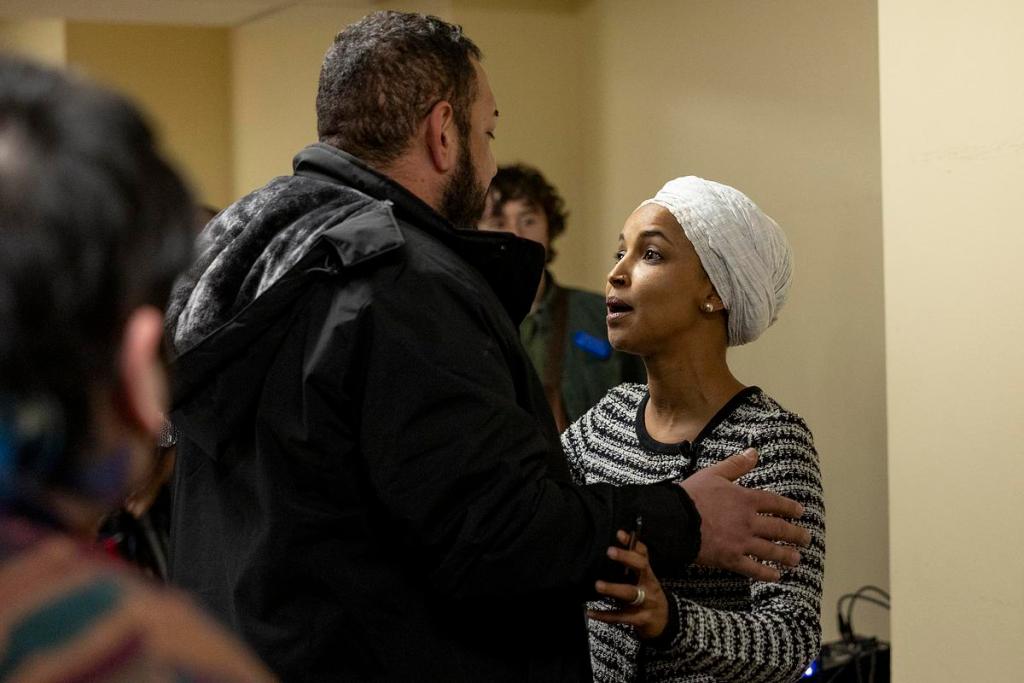
    What began as a low-key town hall turned frightening Tuesday night when an unidentified man approached U.S. Rep. Ilhan Omar and sprayed her with an unknown substance before a security officer subdued him. 

    I was at the event and can report that the attack elicited numerous gasps. I also felt a wave of fear that Minnesotans were set to witness more political violence. 

    Omar, a DFLer from Minneapolis and co-chair of the Congressional Progressive Caucus, for years has been the target of verbal attacks by President Trump. But last month that escalated when the president not only called Somali Americans trash but specifically referred to Omar as “garbage.” 

    Related: Trump’s attacks on Rep. Ilhan Omar and Minnesota Somalis represent a dark escalation

    The town hall was in an overheated basement in north Minneapolis that is home of the Urban League Twin Cities. 

    Omar was less than four minutes into remarks when a man lunged at her. She had just asked for a moment of silence for Alexi Pretti and Renee Good, who federal immigration agents each killed this month on Minneapolis streets. 

    In the seconds following the incident, Omar felt like the least phased member in the room of several dozen people. 

    “We will continue — these fucking assholes are not going to get away with this shit,” she blurted out, which drew loud applause but did not remove the feeling of unease.

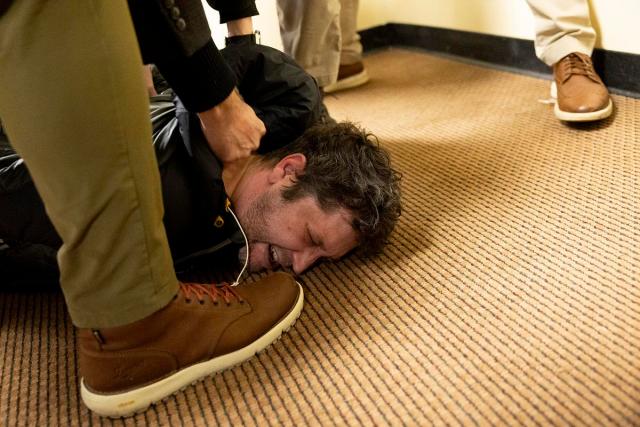
    A man is tackled by security of U.S. Rep. Ilhan Omar, D-Minn., after he sprayed her with an unknown substance during town hall on Tuesday, Jan. 27, 2026, in north Minneapolis, Minn. Credit: Ellen Schmidt/MinnPost/CatchLight Local/Report for America

    “Here is the reality that people like this ugly man don’t understand,” she said, stepping back to the podium. “We are Minnesota strong.”

    As Omar then returned to her prepared speech, security dragged the assailant out of the room. A handful of onlookers chanted “Nazis go! Nazis go!” which they later said was directed at the attacker. 

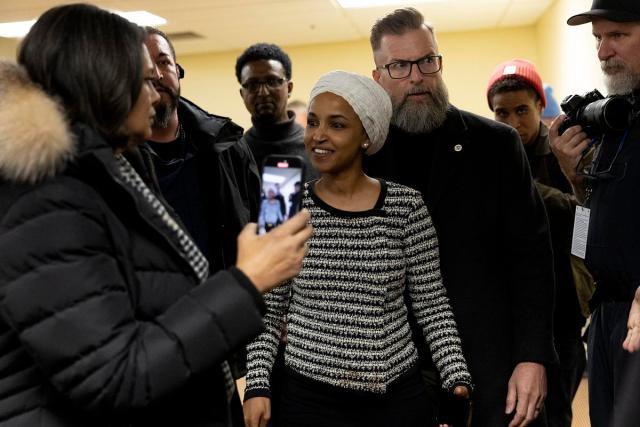
    Remarkably, Omar not only finished her speech but answered constituent questions. 

    There was an edge to her answers, or at least a sharp wit. When someone asked how residents could better support Minneapolis police, Omar replied, “The only thing ICE succeeded in doing is making Minneapolis love their police.”

    When the interrogator suggested bringing the police snacks, Omar added, “Make sure they’re not scared that you’re just trying to poison them.”

    By the end, not just Omar but the crowd appeared back into the groove of a typical political event. But that sense of normalcy evaporated when the event did, as security formed a perimeter around Omar and whisked her out. 

    Audience members called the attack “triggering” and “alarming.”

    A syringe is on the floor after an agitator in the audience sprayed U.S. Rep. Ilhan Omar, D-Minn., with an unknown substance during town hall on Tuesday, Jan. 27, 2026, in north Minneapolis, Minn. Credit: Ellen Schmidt/MinnPost/CatchLight Local/Report for America

    Omar’s office issued a statement after the event, stating, “During her town hall, an agitator tried to attack the Congresswoman by spraying an unknown substance with a syringe. Security and the Minneapolis Police Department quickly apprehended the individual. He is now in custody.”

    The statement also gave a PG-rated version of Omar’s in-the-moment remarks.

    “The Congresswoman is okay. She continued with her town hall because she doesn’t let bullies win.”

    Minneapolis Mayor Jacob Frey put out a statement Tuesday night that “violence and intimidation have no place in Minneapolis.”

    Related: D.C. Memo: Trump, at the Davos forum, takes more shots at Minnesota, Somalis

    Earlier in the day Frey met with President Trump’s Border Czar Tom Homan, reiterating the city’s demand that the administration wind down its Operation Metro Surge.

    Omar is a public face of opposition to Trump’s immigration policies. She reiterated Tuesday that ICE should be abolished and that Congress must impeach Department of Homeland Security Sec. Kristi Noem. 

    The Congress member has faced frequent death threats. While all Congress members get $10,000-a-month toward security, Omar pays for added security from her campaign account.

    MinnPost reporter Ana Radelat contributed to this report.

    U.S. Rep. Ilhan Omar, D-Minn., leaves after finishing her speech despite being sprayed with an unknown substance by an agitator in the audience during town hall on Tuesday, Jan. 27, 2026, in north Minneapolis, Minn. Credit: Ellen Schmidt/MinnPost/CatchLight Local/Report for America

    The post Amid a garden variety town hall, an attacker sprayed a substance at Ilhan Omar and then was subdued. appeared first on MinnPost.
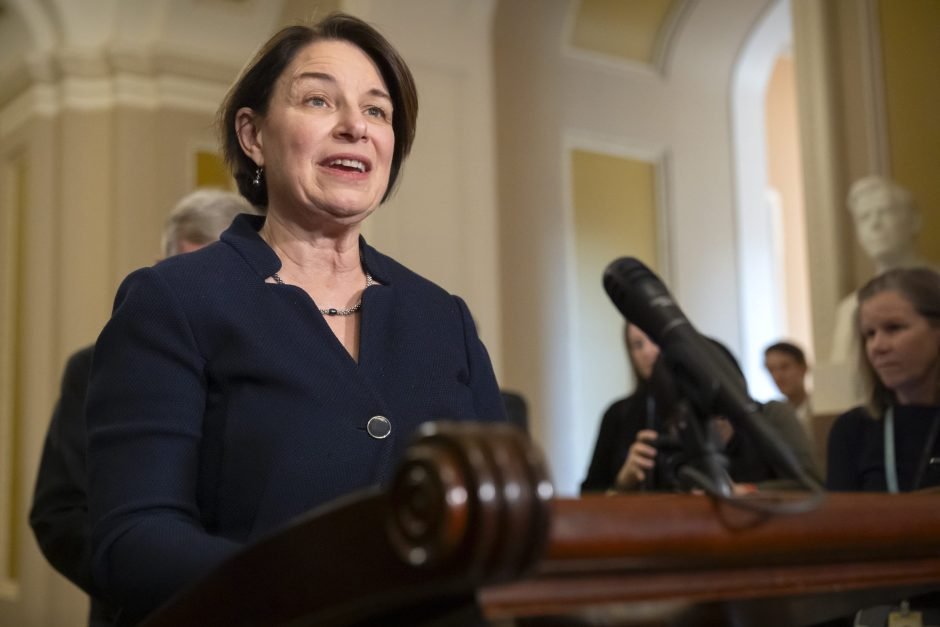
  • Man tackled to ground after spraying unknown substance on Rep. Ilhan Omar at Minneapolis town hall

    Man tackled to ground after spraying unknown substance on Rep. Ilhan Omar at Minneapolis town hall

    MINNEAPOLIS (AP) — A man wearing a black jacket was tackled to the ground after spraying an unknown substance on U.S. Rep. Ilhan Omar at a town hall she was hosting in Minneapolis on Tuesday.

    The audience cheered as he was pinned down and his arms were tied behind his back. In video of the incident, someone in the crowd can be heard saying, “Oh my god, he sprayed something on her.” Omar continued the town hall after the man was ushered out of the room.

    Just before that Omar called for the abolishment of U.S. Immigration and Customs Enforcement and for Homeland Security Secretary Kristi Noem to resign. “ICE cannot be reformed,” she said.

    Minneapolis police did not immediately respond to a phone call and email message seeking information on the incident and whether anyone was arrested.

    The White House did not immediately respond to a message seeking comment Tuesday night.

    President Donald Trump has frequently criticized the congresswoman and has stepped up verbal attacks on her in recent months as he turned his focus on Minneapolis.

    During a Cabinet meeting in December, he called her “garbage” and added that “her friends are garbage.”

    The post Man tackled to ground after spraying unknown substance on Rep. Ilhan Omar at Minneapolis town hall appeared first on MinnPost.

  • Minneapolis shooting scrambles Second Amendment politics for Trump

    Minneapolis shooting scrambles Second Amendment politics for Trump

    Prominent Republicans and gun rights advocates helped elicit a White House turnabout this week after bristling over the administration’s characterization of Alex Pretti, the second person killed this month by a federal officer in Minneapolis, as responsible for his own death because he lawfully possessed a weapon.

    The death produced no clear shifts in U.S. gun politics or policies, even as President Donald Trump shuffles the lieutenants in charge of his militarized immigration crackdown. But important voices in Trump’s coalition have called for a thorough investigation of Pretti’s death while also criticizing inconsistencies in some Republicans’ Second Amendment stances.

    If the dynamic persists, it could give Republicans problems as Trump heads into a midterm election year with voters already growing skeptical of his overall immigration approach. The concern is acute enough that Trump’s top spokeswoman sought Monday to reassert his brand as a staunch gun rights supporter.

    “The president supports the Second Amendment rights of law-abiding American citizens, absolutely,” White House press secretary Karoline Leavitt told reporters.

    Leavitt qualified that “when you are bearing arms and confronted by law enforcement, you are raising … the risk of force being used against you.”

    Videos contradict early statements from administration

    That still marked a retreat from the administration’s previous messages about the shooting of Pretti. It came the same day the president dispatched border czar Tom Homan to Minnesota, seemingly elevating him over Homeland Security Secretary Kristi Noem and Border Patrol chief Greg Bovino, who had been in charge in Minneapolis.

    Within hours of Pretti’s death on Saturday, Bovino suggested Pretti “wanted to … massacre law enforcement,” and Noem said Pretti was “brandishing” a weapon and acted “violently” toward officers.

    “I don’t know of any peaceful protester that shows up with a gun and ammunition rather than a sign,” Noem said.

    White House deputy chief of staff Stephen Miller, an architect of Trump’s mass deportation effort, went further on X, declaring Pretti “an assassin.”

    Bystander videos contradicted each claim, instead showing Pretti holding a cellphone and helping a woman who had been pepper sprayed by a federal officer. Within seconds, Pretti was sprayed, too, and taken to the ground by multiple officers. No video disclosed thus far has shown him unholstering his concealed weapon -– which he had a Minnesota permit to carry. It appeared that one officer took Pretti’s gun and walked away with it just before shots began.

    As multiple videos went viral online and on television, Vice President JD Vance reposted Miller’s assessment, while Trump shared an alleged photo of “the gunman’s gun, loaded (with two additional full magazines!).”

    On Tuesday, Trump was asked if he agreed with Miller’s comment describing Pretti as an “assassin” and answered “no.” But he added that protesters “can’t have guns” and said he wants the death investigated.

    “You can’t walk in with guns, you just can’t,” Trump told reporters on the White House lawn before departing for a trip to Iowa.

    Swift reactions from gun rights advocates

    The National Rifle Association, which has backed Trump three times, released a statement that began by casting blame on Minnesota Democrats it accused of stoking protests. But the group lashed out after a federal prosecutor in California said on X that, “If you approach law enforcement with a gun, there is a high likelihood they will be legally justified in shooting you.”

    That analysis, the NRA said, is “dangerous and wrong.”

    FBI Director Kash Patel magnified the blowback Sunday on Fox News’ “Sunday Morning Futures With Maria Bartiromo.” No one, Patel said, can “bring a firearm, loaded, with multiple magazines to any sort of protest that you want. It’s that simple.”

    Erich Pratt, vice president of Gun Owners of America, was incredulous.

    “I have attended protest rallies while armed, and no one got injured,” he said on CNN.

    Conservative officials around the country made the same connection between the First and Second amendments.

    “Showing up at a protest is very American. Showing up with a weapon is very American,” state Rep. Jeremy Faison, who leads the GOP caucus in Tennessee, said on X.

    Trump’s first-term vice president, Mike Pence, called for “full and transparent investigation of this officer involved shooting.”

    A different response from the past

    Liberals, conservatives and nonpartisan experts noted how the administration’s response differed from past conservative positions involving protests and weapons.

    Multiple Trump supporters were found to have weapons during the Jan. 6, 2021, attack on the U.S. Capitol. Trump issued blanket pardons to all of them.

    Republicans were critical in 2020 when Mark and Patricia McCloskey had to pay fines after pointing guns at protesters who marched through their St. Louis neighborhood after the police killing of George Floyd in Minneapolis. And then there’s Kyle Rittenhouse, a counter-protester acquitted after fatally shooting two men and injuring another in Kenosha, Wisconsin, during the post-Floyd protests.

    “You remember Kyle Rittenhouse and how he was made a hero on the right,” Trey Gowdy, a Republican former congressman and attorney for Trump during one of his first-term impeachments. “Alex Pretti’s firearm was being lawfully carried. … He never brandished it.”

    Adam Winkler, a UCLA law professor who has studied the history of the gun debate, said the fallout “shows how tribal we’ve become.” Republicans spent years talking about the Second Amendment as a means to fight government tyranny, he said.

    “The moment someone who’s thought to be from the left, they abandon that principled stance,” Winkler said.

    Meanwhile, Democrats who have criticized open and concealed carry laws for years, Winkler added, are not amplifying that position after Pretti’s death.

    Uncertain effects in an election year

    The blowback against the administration from core Trump supporters comes as Republicans are trying to protect their threadbare majority in the U.S. House and face several competitive Senate races.

    Perhaps reflecting the stakes, GOP staff and campaign aides were reticent Monday to talk about the issue at all.

    The House Republican campaign chairman, Rep. Richard Hudson of North Carolina, is sponsoring the GOP’s most significant gun legislation of this congressional term, a proposal to make state concealed-carry permits reciprocal across all states.

    The bill cleared the House Judiciary Committee last fall. Asked Monday whether Pretti’s death and the Minneapolis protests might affect debate, an aide to Speaker Mike Johnson did not offer any update on the bill’s prospects.

    Gun rights advocates have notched many legislative victories in Republican-controlled statehouses in recent decades, from rolling back gun-free zones around schools and churches to expanding gun possession rights in schools, on university campuses and in other public spaces.

    William Sack, legal director of the Second Amendment Foundation, said he was surprised and disappointed by the administration’s initial statements following the Pretti shooting. Trump’s vacillating, he said, is “very likely to cost them dearly with the core of a constituency they count on.”

    ___

    Associated Press writers Josh Boak in Washington and Kimberlee Kruesi in Providence, Rhode Island, contributed to this report.

    The post Minneapolis shooting scrambles Second Amendment politics for Trump appeared first on MinnPost.

  • Justice Department subpoenas offices of Walz, Ellison, Frey and other Democratic officials who criticized immigration crackdown

    Justice Department subpoenas offices of Walz, Ellison, Frey and other Democratic officials who criticized immigration crackdown

    WASHINGTON – The Justice Department issued a flood of subpoenas to the offices of Democratic officials in Minnesota on Tuesday — including Gov. Tim Walz, Attorney General Keith Ellison and the mayors of Minneapolis and St. Paul — as part of an investigation into whether they impeded federal immigration enforcement.

    All of those Democratic officials had been critical of the influx of about 3,000 federal agents who have been rounding up undocumented immigrants – and sometimes U.S. citizens – since “Operation Metro Surge” began on Dec. 1.

    The state and the Twin Cities have sued the Trump administration to try to stop the massive effort by federal immigration enforcement agents that led to the fatal shooting of Renee Good and widespread protests, especially in Minneapolis and St. Paul.

    Walz called the subpoenas, which were also sent to officials of Ramsey and Hennepin counties, an effort at “intimidation” and at sowing “division and fear.”

    “This Justice Department investigation, sparked by calls for accountability in the face of violence, chaos and the killing of Renee Good, does not seek justice,” Walz said in a statement. “It is a partisan distraction … Minnesota will not be intimidated into silence and neither will I.”

    Ellison said “everything about this is highly irregular, especially the fact that this comes shortly after my office sued the Trump administration to challenge their illegal actions within Minnesota.”

    “Less than two weeks ago, federal agents shot and killed a Minnesotan in broad daylight,” Ellison said in a statement. “Now, instead of seriously investigating the killing of Renee Good, Trump is weaponizing the justice system against any leader who dares stand up to him.” 

    Deputy U.S. Attorney General Todd Blanche, who once served as President Donald Trump’s attorney, said the Justice Department said it is not investigating the fatal shooting of Good by Jonathan Ross, an Immigration and Customs Enforcement (ICE) agent.

    Vice President JD Vance, who said Ross has “absolute immunity” from prosecution, is coming to Minneapolis on Thursday, according to a source familiar with the vice president’s travel plans. The vice president’s office has yet to make public the details of the visit.

    Ellison also said Trump is “coming after the people of Minnesota” in a campaign of “retaliation and revenge.”

    Michelle Goodwin, a constitutional law expert at Georgetown Law School, said the Justice Department said the subpoenas are likely part of a campaign to intimidate Minnesota officials who oppose the Trump administration’s immigration crackdown in the state.

    She also said the Justice Department may be on a “fishing expedition” to try to find evidence of wrongdoing that could lead to prosecutions.

    In any case, Goodwin said the attack on Minnesota’s officials is highly unusual and has not been seen since the civil rights era of the 1960s.

    “But then, states were acting in violation of the Constitution, and this is not happening here,” Goodwin said.

    David Schultz, a  law professor and Hamline University political science  professor, said the Justice Department could be on a legitimate fact-finding mission.

    “But on the other hand, this could be harassment,” Schultz said, citing a   recent Truth Social post by Trump that threatened Minnesota with a “DAY OF RECKONING & RETRIBUTION.” 

    Trump also threatened last week to invoke the Insurrection Act to send military troops to Minnesota. 

    Minnesota officials were defiant on Tuesday in the face of the Justice Department’s threat.

    “When the federal government weaponizes its power to try to intimidate local leaders for doing their jobs, every American should be concerned,” Minneapolis Mayor Jacob Frey said in a statement. “We shouldn’t have to live in a country where people fear that federal law enforcement will be used to play politics or crack down on local voices they disagree with.“

    Meanwhile, St. Paul Mayor Kaohly Her said she was “unfazed by these tactics, and I stand firm in my commitment to protect our residents, neighbors, and community.

    Daniel Borgetpoepping, a spokesman for the Hennepin County Attorney’s office, said its Civil Division will be advising Hennepin County on its subpoena. But neither Hennepin County Attorney Mary Moriarty nor her office has received a subpoena, Borgetpoepping said.

    Moriarty is spearheading an investigation into Good’s shooting.

    Hard to track arrests

    Greg Bovino of U.S. Border Patrol, who has commanded the Trump administration’s big-city immigration crackdown, said more than 10,000 people in the U.S. illegally have been arrested in Minnesota in the past year, including 3,000 “of some of the most dangerous offenders” in the last six weeks during Operation Metro Surge.

    He did not elaborate, though he highlighted the capture of three people with criminal records from Laos, Guatemala and Honduras.

    Julia Decker, policy director at the Immigrant Law Center of Minnesota, expressed frustration that advocates have no way of knowing whether the government’s arrest numbers and descriptions of the people in custody are accurate.

    MinnPost reporter Trevor Mitchell and the Associated Press contributed to this story.

    Story has been updated with information about JD Vance’s planned trip to Minneapolis.

    The post Justice Department subpoenas offices of Walz, Ellison, Frey and other Democratic officials who criticized immigration crackdown appeared first on MinnPost.

  • Republican calls grow nationally for deeper investigation of fatal Minneapolis shooting

    Republican calls grow nationally for deeper investigation of fatal Minneapolis shooting

    WASHINGTON (AP) — A growing number of Republicans are pressing for a deeper investigation into federal immigration tactics after the fatal Minneapolis shooting by a U.S. Border Patrol agent, a sign that the Trump administration’s accounting of events may face bipartisan scrutiny.

    House Homeland Security Committee Chairman Andrew Garbarino sought testimony from leaders at Immigration and Customs Enforcement, Customs and Border Protection and U.S. Citizenship and Immigration Services, saying “my top priority remains keeping Americans safe.”

    A host of other congressional Republicans, including Rep. Michael McCaul of Texas and Sens. Thom Tillis of North Carolina, Bill Cassidy of Louisiana, Susan Collins of Maine and Lisa Murkowski of Alaska, pressed for more information. Their statements, in addition to concern expressed from several Republican governors, reflected a party struggling with how to respond to Saturday’s fatal Minneapolis shooting of Alex Pretti, a 37-year-old intensive care nurse at a VA hospital.

    The killing has raised uncomfortable questions about the GOP’s core positions on issues ranging from gun ownership to states’ rights and trust in the federal government.

    Cassidy, who is facing a Trump-backed challenger in his reelection bid, said on social media that the shooting was “incredibly disturbing” and that the “credibility of ICE and DHS are at stake.” He pushed for “a full joint federal and state investigation.” Tillis, who is not seeking reelection, urged a “thorough and impartial investigation” and said “any administration official who rushes to judgment and tries to shut down an investigation before it begins are doing an incredible disservice to the nation and to President Trump’s legacy.”

    Murkowski called for an investigation and added that “ICE agents do not have carte blanche in carrying out their duties.” Collins, the only incumbent Republican senator facing reelection in a state Democrat Kamala Harris carried in 2024, said a probe is needed “to determine whether or not excessive force was used in a situation that may have been able to be diffused without violence.”

    While calling for protesters to “keep space” from law enforcement and not interfere, Collins said federal law enforcement must “recognize both the public’s right to protest and the highly charged situation they now face.”

    Even Sen. Pete Ricketts, a staunch ally of President Donald Trump, called for a “prioritized, transparent investigation.”

    “My support for funding ICE remains the same,” the Nebraska Republican, who is up for reelection, said online. “But we must also maintain our core values as a nation, including the right to protest and assemble.”

    Trump and other administration officials remained firm in their defense of the hard-line immigration enforcement tactics in Minneapolis, blaming Democrats in the state along with local law enforcement for not working with them. In a lengthy social media post on Sunday evening, Trump called on Minnesota’s Democratic leadership to “formally cooperate” with his administration and pressed Congress to ban so-called sanctuary cities.

    The White House will likely face at least some GOP pushback

    Trump has enjoyed nearly complete loyalty from fellow Republicans during his first year back in the White House. But the positions staked out in the wake of the shooting signal the administration will face at least some pushback within the party in its swift effort to define Pretti, who protested Trump’s immigration crackdown, as a violent demonstrator.

    Deputy White House chief of staff Stephen Miller issued social media posts referencing an “assassin” and “domestic terrorist.” Homeland Security Secretary Kristi Noem said Pretti showed up to “impede a law enforcement operation.”

    At a minimum, some Republicans are calling for a de-escalation in Minneapolis.

    Oklahoma Gov. Kevin Stitt told CNN’s “State of the Union” that the shooting was a “real tragedy” and Trump needs to tell Americans what the “end game” is.

    “Nobody likes the feds coming to their states,” Stitt said. “And so what is the goal right now? Is it to deport every single non-U.S. citizen? I don’t think that’s what Americans want.”

    He added: “Right now, tempers are just going crazy and we need to calm this down.”

    Vermont Gov. Phil Scott said the shooting was “not acceptable.”

    “At best, these federal immigration operations are a complete failure of coordination of acceptable public safety and law enforcement practices, training and leadership,” he said in a post. “At worst, it’s deliberate federal intimidation and incitement of American citizens.”

    Related: How the videos of fatal Minneapolis shooting contradict statements by Noem, other federal officials

    Echoing criticism that local law enforcement isn’t cooperating with federal officials, Rep. James Comer, R-Ky., suggested the administration focus its immigration efforts elsewhere.

    “If I were President Trump, I would almost think about if the mayor and the governor are going to put our ICE officials in harm’s way and there’s a chance of losing more innocent lives or whatever, then maybe go to another city and let the people of Minneapolis decide do we want to continue to have all these illegals?” he told “Sunday Morning Futures” on the Fox News Channel. “I think the people of Minnesota would rebel against their leadership.”

    Fatal Minneapolis shooting a sensitive moment for the GOP

    Pretti’s killing comes at a sensitive moment for the GOP as the party prepares for a challenging midterm election year. Trump has fomented a sense of chaos on the world stage, bringing the NATO alliance to the brink last week as he pushed Denmark to cede control of Greenland to the United States while also intensifying a dispute with Canada’s prime minister. Domestically, Trump has struggled to respond to widespread affordability concerns.

    Meanwhile, approval of his handling of immigration — long a political asset for the president and the GOP — has tumbled in recent months. Just 38% of U.S. adults approved of how Trump was handling immigration in January, down from 49% in March, according to an AP-NORC poll.

    The killing spurred notable tension with the GOP’s long-standing support for gun rights. Officials say Pretti was armed, but no bystander videos that have surfaced so far appear to show him holding a weapon. The Minneapolis police chief said Pretti had a permit to carry a gun.

    Yet administration officials, including Noem and Treasury Secretary Scott Bessent, have questioned why he was armed. Speaking on ABC’s “This Week” Bessent said that when he has attended protests, “I didn’t bring a gun. I brought a billboard.”

    Such comments were notable for a party where support for the Second Amendment’s protection of gun ownership is foundational. Indeed, many in the GOP, including Trump, lifted Kyle Rittenhouse into prominence when the then-17-year-old former police youth cadet shot three men, killing two of them, during a 2020 protest in Wisconsin against police brutality. He was acquitted of all charges after testifying that he acted in self defense.

    In the wake of Pretti’s killing, gun rights advocates quickly noted that it is legal to carry firearms during protests.

    “Every peaceable Minnesotan has the right to keep and bear arms — including while attending protests, acting as observers, or exercising their First Amendment rights,” the Minnesota Gun Owners Caucus said in a statement. “These rights do not disappear when someone is lawfully armed.”

    In a social media post, the National Rifle Association said “responsible public voices should be awaiting a full investigation, not making generalizations and demonizing law-abiding citizens.”

    Rep. Thomas Massie, R-Ky., who is often critical of the White House, said “carrying a firearm is not a death sentence.”

    “It’s a Constitutionally protected God-given right,” he said, “and if you don’t understand this you have no business in law enforcement or government.

    The second-ranking Justice Department official said he was aware of reports that Pretti was lawfully armed.

    “There’s nothing wrong with anybody lawfully carrying firearms,” Deputy Attorney General Todd Blanche said on “Meet the Press” on NBC. “But just make no mistake about it, this was an incredibly split-second decision that had to be made by ICE officers.”

    ___

    Associated Press writer Michelle L. Price contributed to this report

    The post Republican calls grow nationally for deeper investigation of fatal Minneapolis shooting appeared first on MinnPost.

  • Klobuchar files paperwork to run for governor of Minnesota

    Klobuchar files paperwork to run for governor of Minnesota

    WASHINGTON – Sen. Amy Klobuchar filed paperwork on Thursday to run for Minnesota governor.

    A source close to the senator said the filing with the Minnesota Campaign Finance Board “is a preliminary step necessary for any candidate considering a run.” The source also said Klobuchar “will make an announcement in the coming days.”

    But there’s little doubt of Klobuchar’s intent. She has already hired campaign staff.

    Gov. Tim Walz’s decision to drop his attempt for a third term opened the door for Klobuchar, who will be pitted against one of about a dozen Republicans who are running for the open seat.

    Those include “My Pillow” CEO Mike Lindell, whom President Trump has endorsed; state House Speaker Lisa Demuth; state Rep. Kristin Robbins; Kendall Qualls, the leader of a nonprofit who ran unsuccessfully for governor in 2022 and Congress in 2020; and attorney Chris Madel.

    Klobuchar, who has served in the U.S. Senate since 2007, was reelected last year, handily defeating GOP candidate Royce White, who is now running for retiring Sen. Tina Smith’s seat.

    Considered one of the most effective members of the Senate for her ability to win bipartisan support for legislation, Klobuchar is also known for her ambition. She announced a run for the White House on Feb. 10, 2019, but suspended her campaign about a year later and endorsed Joe Biden.

    Klobuchar’s entry into the race may give other Democrats interested in running for governor pause because of the senator’s popularity in the state. 

    Two other Democrats who hold statewide office and once indicated interest in running for governor if Walz did not seek a third term, Attorney General Keith Ellison and Secretary of State Steve Simon, have said they are not going to enter the race.

    Editor’s note: This is a developing story.

    The post Klobuchar files paperwork to run for governor of Minnesota appeared first on MinnPost.

  • House Republicans vote to lift 20-year ban on mining near pristine Boundary Waters Canoe Area

    House Republicans vote to lift 20-year ban on mining near pristine Boundary Waters Canoe Area

    Congressional Republicans moved closer Wednesday to lifting a 20-year ban on mining near Minnesota’s Boundary Waters Canoe Area Wilderness, pushing a resolution to end the moratorium through the House despite environmentalists’ warnings that it could devastate a premier destination for campers, kayakers and canoeists.

    The resolution now goes to the Senate, and approval there would send it to President Donald Trump for his signature.

    The push to end the ban comes as a Chilean mining company considers opening a copper mine in the Superior National Forest on the edge of the wilderness area that conservationists say could contaminate the watershed.

    “Minnesota’s Boundary Waters is one of our nation’s most iconic wilderness areas,” Jackie Feinberg, the Sierra Club’s national lands conservation campaign manager, said in a statement. “This push by the Trump administration and their Congressional allies to allow toxic mining in the Boundary Waters watershed puts this fragile ecosystem at risk, and is a clear giveaway to corporate polluters.”

    A beloved destination for outdoor enthusiasts

    Boundary Waters is a vast swath of remote woods, lakes and swamps in the Superior National Forest in far northeastern Minnesota, stretching for about 150 miles (about 240 kilometers) along the border with Canada.

    It remains largely untouched by humans; logging is prohibited, planes must stay above 4,000 feet (1,220 meters) as they fly over it, except in emergencies, and motorized boats are limited to certain areas.

    The promise of serenity has drawn campers, hikers, kayakers and canoeists for decades. The U.S. Forest Service issued about 776,000 visitor permits between 2020 and 2024, according to agency data.

    The Biden administration banned mining

    Part of the Superior National Forest is situated on the Duluth Complex, a rock formation that contains deposits of copper, nickel, lead, zinc, iron, silver and gold, according to the Forest Service.

    Twin Metals Minnesota LLC, a subsidiary of Chile-based Antofagasta Minerals, submitted a plan with the U.S. Department of the Interior in 2019 proposing to mine copper, nickel, cobalt and other precious metals in the forest.

    President Joe Biden’s administration blocked the project in 2023, imposing a 20-year moratorium on mining on about 400 square miles (103,600 hectares) in the forest, saying that was necessary to protect the watershed and canoe wilderness.

    Trump pushes to relaunch mining projects

    The president has sought to bolster domestic energy and mineral production, declaring an energy emergency just days after retaking office a year ago. Last fall his administration reinstated a 2017 legal opinion that allowed Twin Metals to renew its leases in the Superior National Forest, and Minnesota regulators approved its exploratory mining plans in December.

    This month U.S. Rep. Pete Stauber, a Duluth Republican, introduced the resolution to lift the Biden-era moratorium, saying it has cost jobs, put the nation’s mineral security at risk and is “an attack on our way of life.”

    The House approved it on a voice vote Wednesday afternoon. It’s unclear when or if the Senate will take it up.

    National security or toxic threat?

    Republicans said on the House floor that they must open the door to mining near the canoe area to compete with China and Russia in the race for key minerals such as cobalt, copper and nickel. Stauber, almost shouting at times, called the moratorium “a dangerous, purely political decision.”

    “It’s better in our backyard than in China or Russia or other adversarial nations,” he said.

    Democrats painted mining as an existential threat to the wilderness and said any minerals extracted would just be sold on the international market anyway.

    “Some places are just too precious to mine,” said Betty McCollum, a Minnesota Democrat.

    Stauber brought the resolution under the Congressional Review Act, which allows lawmakers to overturn certain actions by federal agencies.

    Democrats argued that the resolution was out of order because Republicans had to bring it within 60 days of the ban’s implementation, not three years later, and such resolutions cannot be used to erase public land protections. They said approving it would set a dangerous precedent.

    Republicans countered that the Biden administration failed to formerly notify Congress of the ban in 2023.

    The post House Republicans vote to lift 20-year ban on mining near pristine Boundary Waters Canoe Area appeared first on MinnPost.