WASHINGTON – A fight with the Trump administration over the future of the state’s food stamp program remains in court, but Department of Agriculture Secretary Brooke Rollins did not wait for a judge’s ruling to take punitive action.
On Friday, Rollins announced she would suspend payments of grants totaling about $129 million to the state and to the city of Minneapolis.
The state fought back on Monday with a series of court filings, asking U.S. District Court Judge Laura Provinzino for an injunction or temporary restraining order to stop Rollins from carrying out a threat she issued last month to cut off Supplemental Nutrition Assistance Payments (SNAP) payments to the states.
The USDA has asked Provinzino, a President Joe Biden appointee, to ignore that request. But Robbins did not wait for the court to rule before freezing money to the state.
Related: Did Minnesota’s total SNAP benefits increase from 2019 to 2021?
Robbins wrote Gov. Tim Walz and Minneapolis Mayor Jacob Frey that she was forced to take that step because of “failed leadership and abysmal financial management oversight.”
“In fact, rather than confirm your SNAP rolls are accurate to prevent continuing fraud, you asked the courts to block USDA’s directive to recertify the state’s SNAP recipients,” Rollins wrote.
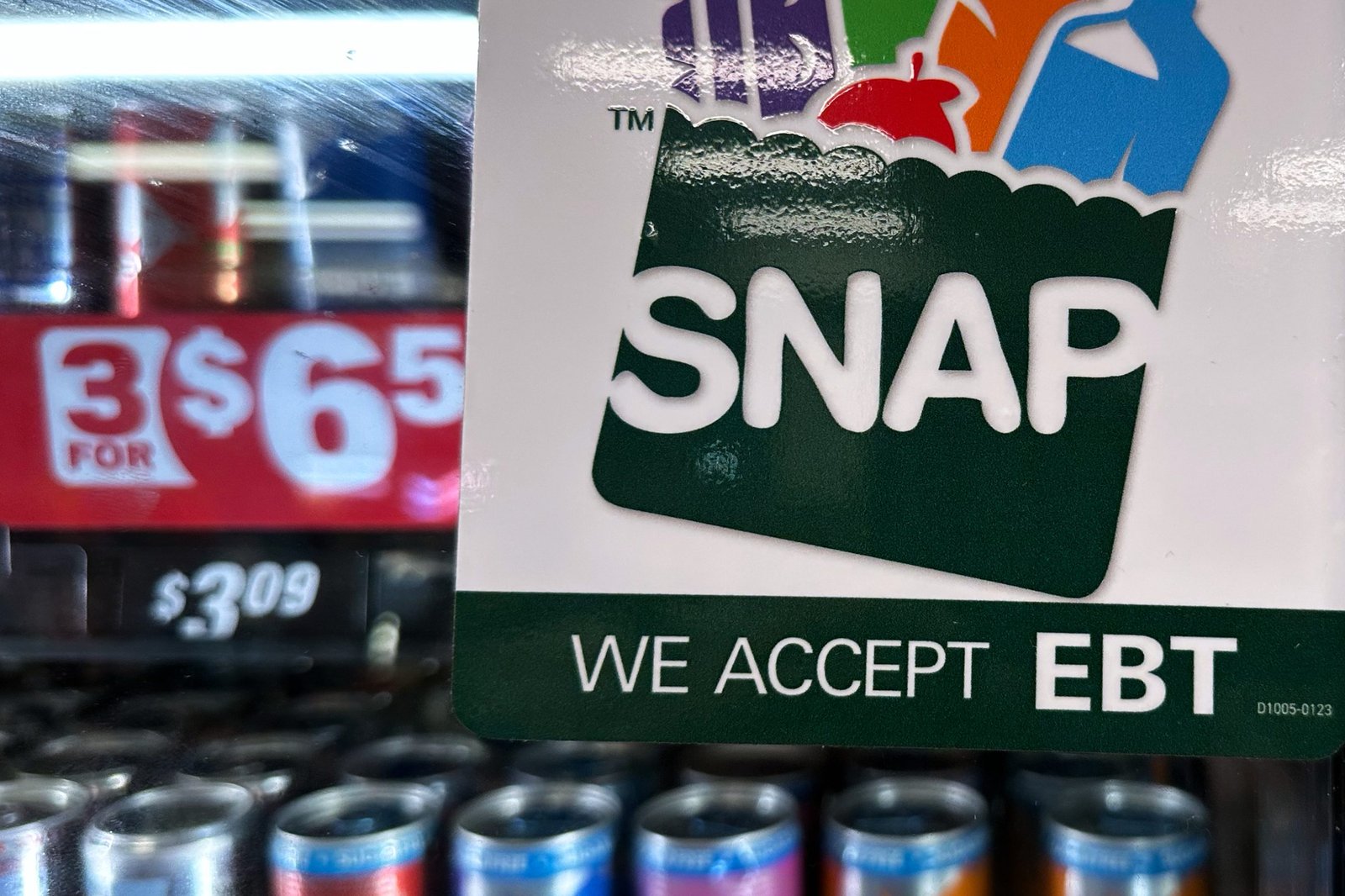
Because Rollins’ dispute with Minnesota centers on the state’s food stamp program, her freezing of $129 million in federal funds is likely to impact SNAP, which serves about 450,000 Minnesotans. But how wasn’t immediately clear,
“We’re communicating with state partners to understand the impacts of such a blanket cut to funding meant for residents most in need,” said Jess Olstad, a spokeswoman for the City of Minneapolis. “What’s abundantly clear is that Minneapolis is the latest target of the Trump administration – willing to harm Americans in service to its perceived political gain.”
A spokesman for the Minnesota Department of Children, Youth and Families (DCYF) also said the agency, which has authority over SNAP, has “no more clarification or detail” than what was in a USDA letter announcing the funding cutoff.
The USDA, meanwhile, has repeatedly failed to answer requests for information about the money that was frozen by Rollins.
Minnesota receives almost $900 million dollars from the USDA each year to provide food stamp benefits.
Other USDA grants provide funding for the National School Lunch Program and food assistance for pregnant women and infants. Still others support farmers and rural development projects.
Related: Trump administration says it’s withholding social safety net money from Minnesota, 4 others states over fraud concerns
Attorney General Keith Ellison last month sued Rollins and the USDA after she asked Minnesota to recertify the 100,000 households that receive SNAP benefits in Hennepin, Ramsey, Washington and Wright counties.
In a Dec. 16 letter to Walz, Rollins demanded that DCYF implement a new “pilot program” that entailed the recertification of all of those who receive food stamp benefits in the four counties under scrutiny – within 30 days.
In Minnesota, counties administer the SNAP program and, according to Rollins’ directive, each of the counties involved would have to review the eligibility of tens of thousands of recipients – as well as conduct in-person interviews – all within a month. If the counties did not comply, their residents would lose benefits.
Rollins also said that failure to comply with the pilot program “may also affect Minnesota’s continued participation in SNAP.”
Ellison told the court that compliance with Rollins’ demands are “impossible for Minnesota to meet and pose an imminent threat to SNAP benefits in Minnesota.”
He asked the court for “expedited handling and emergency injunctive relief” to halt the freezing of any USDA payments while the case winds its way through the court.
Dispute over a training video
The state’s lawsuit against the USDA says Minnesota routinely recertifies SNAP recipients, most commonly every 12 months.
The lawsuit also points out that Minnesota’s “error rate” – the percentage of overpayments or underpayments – in 2024 was 8.98%, lower than the national average of 10.93% and lower than the error rates of 33 other states.
The lawsuit also says the Trump administration has “unlawfully targeted” Minnesota because of “personal animosity toward Minnesota politicians, disagreements with policy choices made by the Minnesota legislature, and bias against Minnesota residents of Somali descent.”
But the USDA has made a completely different argument to the court.
It said Minnesota has been swamped by fraud and mentioned the “Feeding Our Future” scandal that involved a pandemic-era USDA program that made rules more flexible to get food to children efficiently. Fraudsters, most of them Somali, took advantage of the relaxed rules to bilk the program of about $250 million.
A key piece of evidence presented by the USDA to the court is a 2023 training video. In that video trainers discuss four families that were disqualified from SNAP and other programs.
A USDA court filing says that throughout the training video, “on multiple occasions, Minnesota’s SNAP Program Manager described clear instances of intentional Program violations … and encouraged training participants to find ways around doing so.”
Not true, said the state. It said the trainers were urging state employees to encourage truthful disclosures from applicants to avoid eligible families from losing benefits that could lead to hunger and homelessness.
“Nowhere in the video do the trainers advise people to ignore or tolerate fraud,” said Jovon Perry, the director of DCYF’s Economic Assistance and Employment Supports Division, in a filing to the court on Monday.
The USDA also told the court that Minnesota’s SNAP error rate was still too high and that states with a county-administered program, like Minnesota, are more likely to have higher rates of fraud, waste and abuse than states that do not delegate administration of SNAP to counties.
The agency also told the court it had sent Colorado a similar demand that it institute a pilot program like the one the USDA sought in Minnesota and the county attorney of Douglas County said it would comply, asking for a 90-day extension of a deadline to do so.
The fate of Minnesota’s food stamp program will now be decided by Provinzino.
The post USDA freeze of $129 million in grants to Minnesota renews focus on state’s lawsuit against Brooke Rollins appeared first on MinnPost.
Donald Trump’s administration said Tuesday it will end temporary protected status for immigrants from Somalia, the latest move in the president’s mass deportation agenda.
The move affects hundreds of people who are a small subset of immigrants with TPS protections in the United States. It comes during Trump’s immigration crackdown in Minneapolis, where many native Somalis live and where street protests have intensified since a U.S. Immigration and Customs Enforcement agent killed a U.S citizen who was demonstrating against federal presence in the city.
The Department of Homeland Security said in a statement that affected Somalis must leave the U.S. by March 17, when existing protections, last extended by former President Joe Biden, will expire.
“Temporary means temporary,” said Homeland Security Secretary Kristi Noem, adding that the decision puts “Americans first.”
The Congressional Research Service last spring said the Somali TPS population was 705 out of nearly 1.3 million TPS immigrants. But Trump has rolled back protections across multiple countries in his second presidency.
Congress established the Temporary Protected Status program in 1990 to help foreign nationals attempting to leave unstable, threatening conditions in their home countries. It allows the executive branch to designate a country so that its citizens are eligible to enter the U.S. and receive status.
Somalia first received the designation under President George H.W. Bush amid a civil war in 1991. The status has been extended for decades, most recently by Biden in July 2024.
Noem insisted circumstances in Somalia “have improved to the point that it no longer meets the law’s requirement for Temporary Protected Status.”
Located in the horn of Africa, Somalia is one of the world’s poorest nations and has for decades been beset by chronic strife exacerbated by multiple natural disasters, including severe droughts.
The 2025 congressional report stated that Somalis had received more than two dozen extensions because of perpetual “insecurity and ongoing armed conflict that present serious threats to the safety of returnees.”
Trump has targeted Somali immigrants with racist rhetoric and accused those in Minneapolis of massively defrauding federal programs.
In December, Trump said he did not want Somalis in the U.S., saying they “come from hell” and “contribute nothing.” He made no distinction between citizens and non-citizens or offered any opinion on immigration status. He has had especially harsh words for Rep. Ilhan Omar, a Minnesota Democrat who emigrated from Somalia as a child. Trump has repeatedly suggested she should be deported, despite her being a U.S. citizen, and in his rant last fall he called her “garbage.”
Omar, who has been an outspoken critic of the ICE deployment in Minneapolis, has called Trump’s “obsession” with her and Somali-Americans “creepy and unhealthy.”
The post Trump is ending protected immigration status for Somalis, long a target of his anti-immigrant barbs appeared first on MinnPost.
This story was originally published by ProPublica.
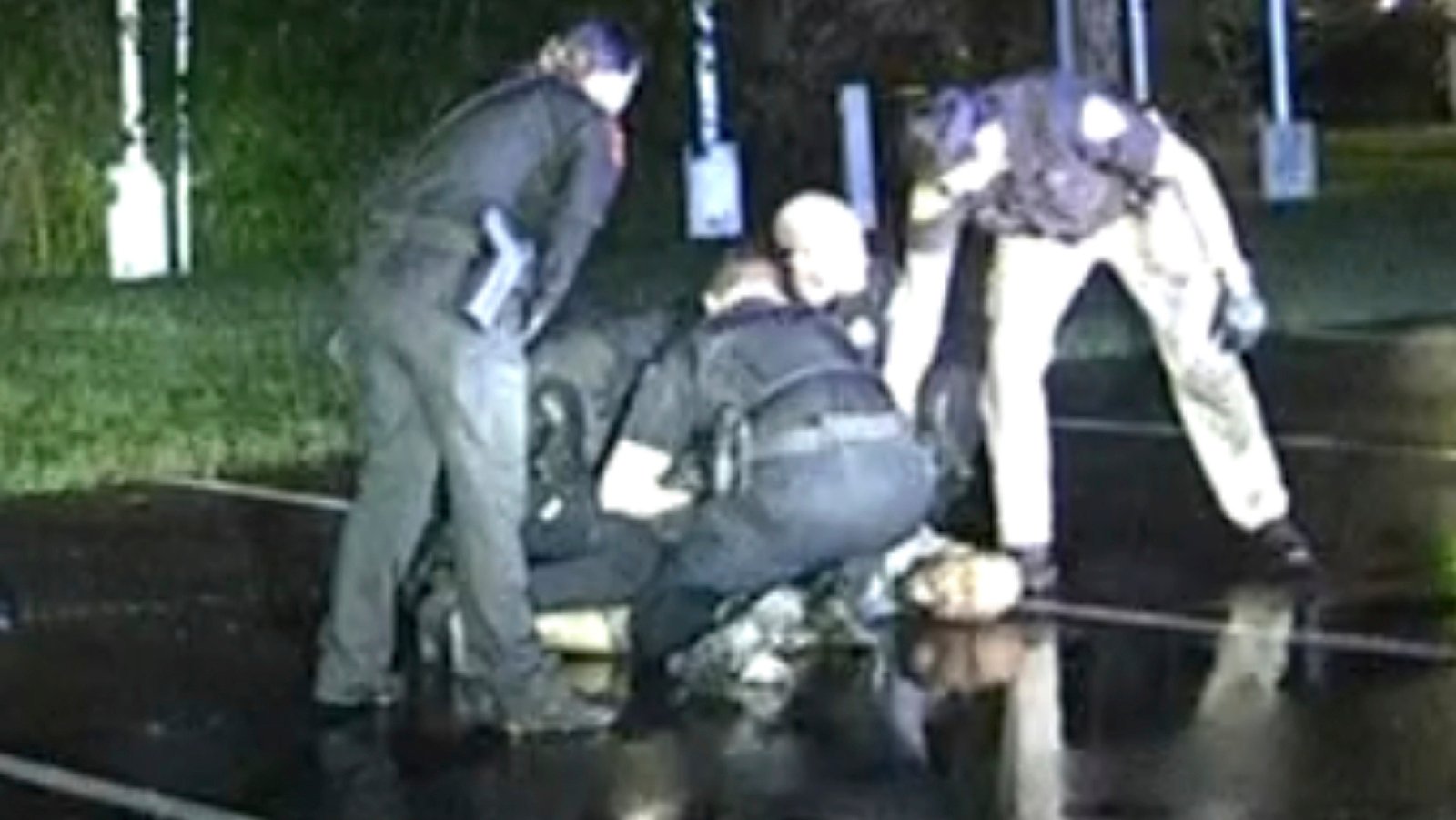
An agent in Houston put a teenage citizen into a chokehold, wrapping his arm around the boy’s neck, choking him so hard that his neck had red welts hours later. A black-masked agent in Los Angeles pressed his knee into a woman’s neck while she was handcuffed; she then appeared to pass out. An agent in Massachusetts jabbed his finger and thumb into the neck and arteries of a young father who refused to be separated from his wife and 1-year-old daughter. The man’s eyes rolled back in his head and he started convulsing.
After George Floyd’s murder by a police officer six years ago in Minneapolis — less than a mile from where an Immigration and Customs Enforcement agent shot and killed Renee Good last week — police departments and federal agencies banned chokeholds and other moves that can restrict breathing or blood flow.
But those tactics are back, now at the hands of agents conducting President Donald Trump’s mass deportation campaign.
Examples are scattered across social media. ProPublica found more than 40 cases over the past year of immigration agents using these life-threatening maneuvers on immigrants, citizens and protesters. The agents are usually masked, their identities secret. The government won’t say if any of them have been punished.
In nearly 20 cases, agents appeared to use chokeholds and other neck restraints that the Department of Homeland Security prohibits “unless deadly force is authorized.”
About two dozen videos show officers kneeling on people’s necks or backs or keeping them face down on the ground while already handcuffed. Such tactics are not prohibited outright but are often discouraged, including by federal trainers, in part because using them for a prolonged time risks asphyxiation.
We reviewed footage with a panel of eight former police officers and law enforcement experts. They were appalled.
Related: How common is it for Minnesota police departments to authorize chokeholds, ‘neck restraints’?
This is what bad policing looks like, they said. And it puts everyone at risk.
“I arrested dozens upon dozens of drug traffickers, human smugglers, child molesters — some of them will resist,” said Eric Balliet, who spent more than two decades working at Homeland Security Investigations and Border Patrol, including in the first Trump administration. “I don’t remember putting anybody in a chokehold. Period.”
“If this was one of my officers, he or she would be facing discipline,” said Gil Kerlikowske, a longtime police chief in Seattle who also served as Customs and Border Protection commissioner under President Barack Obama. “You have these guys running around in fatigues, with masks, with ‘Police’ on their uniform,” but they aren’t acting like professional police.
Over the past week, the conduct of agents has come under intense scrutiny after an ICE officer in Minneapolis killed Good, a mother of three. The next day, a Border Patrol agent in Portland, Oregon, shot a man and woman in a hospital parking lot.
Top administration officials rushed to defend the officers. Speaking about the agent who shot Good, DHS Secretary Kristi Noem said, “This is an experienced officer who followed his training.”
Officials said the same thing to us after we showed them footage of officers using prohibited chokeholds. Federal agents have “followed their training to use the least amount of force necessary,” department spokesperson Tricia McLaughlin said.
“Officers act heroically to enforce the law and protect American communities,” White House spokesperson Abigail Jackson said.
Both DHS and the White House lauded the “utmost professionalism” of their agents.
Our compilation of incidents is far from complete. Just as the government does not count how often it detains citizens or smashes through vehicle windows during immigration arrests, it does not publicly track how many times agents have choked civilians or otherwise inhibited their breathing or blood flow. We gathered cases by searching legal filings, social media posts and local press reports in English and Spanish.
Given the lack of any count over time, it’s impossible to know for certain how agents’ current use of the banned and dangerous tactics compares with earlier periods.
But former immigration officials told us they rarely heard of such incidents during their long tenures. They also recalled little pushback when DHS formally banned chokeholds and other tactics in 2023; it was merely codifying the norm.
That norm has now been broken.
One of the citizens whom agents put in a chokehold was 16 years old.
Tenth grader Arnoldo Bazan and his father were getting McDonald’s before school when their car was pulled over by unmarked vehicles. Masked immigration agents started banging on their windows. As Arnoldo’s undocumented father, Arnulfo Bazan Carrillo, drove off, the terrified teenager began filming on his phone. The video shows the agents repeatedly ramming the Bazans’ car during a slow chase through the city.
Bazan Carrillo eventually parked and ran into a restaurant supply store. When Arnoldo saw agents taking his father violently to the ground, Arnoldo went inside too, yelling at the agents to stop.
Related: Lessons unlearned: Four years after George Floyd’s killing and the subsequent uprisings, some promises remain unfulfilled
One agent put Arnoldo in a chokehold while another pressed a knee into his father’s neck. “I was going to school!” the boy pleaded. He said later that when he told the agent he was a citizen and a minor, the agent didn’t stop.
“I started screaming with everything I had, because I couldn’t even breathe,” Arnoldo told ProPublica, showing where the agent’s hands had closed around his throat. “I felt like I was going to pass out and die.”
DHS’ McLaughlin accused Arnoldo’s dad of ramming his car “into a federal law enforcement vehicle,” but he was never charged for that, and the videos we reviewed do not support this claim. Our examination of his criminal history — separate from any immigration violations — found only that Bazan Carrillo pleaded guilty a decade ago to misdemeanor driving while intoxicated.
McLaughlin also said the younger Bazan elbowed an officer in the face as he was detained, which the teen denies. She said that Arnoldo was taken into custody to confirm his identity and make sure he didn’t have any weapons. McLaughlin did not answer whether the agent’s conduct was justified.
Experts who reviewed video of the Bazans’ arrests could make no sense of the agents’ actions.
“Why are you in the middle of a store trying to grab somebody?” said Marc Brown, a former police officer turned instructor who taught ICE and Border Patrol officers at the Federal Law Enforcement Training Centers. “Your arm underneath the neck, like a choking motion? No! The knee on the neck? Absolutely not.”
DHS revamped its training curriculum after George Floyd’s murder to underscore those tactics were out of bounds, Brown said. “DHS specifically was very big on no choking,” he said. “We don’t teach that. They were, like, hardcore against it. They didn’t want to see anything with the word ‘choke.’”
After agents used another banned neck restraint — a carotid hold — a man started convulsing and passed out.
In early November, ICE agents in Fitchburg, Massachusetts, stopped a young father, Carlos Sebastian Zapata Rivera, as he drove with his family. They had come for his undocumented wife, whom they targeted after she was charged with assault for allegedly stabbing a co-worker in the hand with scissors.
Body camera footage from the local police, obtained by ProPublica, captured much of what happened. The couple’s 1-year-old daughter began crying. Agents surrounded the car, looking in through open doors.
According to the footage, an agent told Zapata Rivera that if his wife wouldn’t come out, they would have to arrest him, too — and their daughter would be sent into the foster system. The agent recounted the conversation to a local cop: “Technically, I can arrest both of you,” he said. “If you no longer have a child, because the child is now in state custody, you’re both gonna be arrested. Do you want to give your child to the state?”
Zapata Rivera, who has a pending asylum claim, clung to his family. His wife kept saying she wouldn’t go anywhere without her daughter, whom she said was still breastfeeding. Zapata Rivera wouldn’t let go of either of them.
Related: Trump’s immigration forces deploy ‘less lethal’ weapons in dangerous ways, skirting rules and maiming protesters
Federal agents seemed conflicted on how to proceed. “I refuse to have us videotaped throwing someone to the ground while they have a child in their hands,” one ICE agent told a police officer at the scene.
But after more than an hour, agents held down Zapata Rivera’s arms. One, who Zapata Rivera’s lawyer says wore a baseball cap reading “Ne Quis Effugiat” — Latin for “So That None Will Escape” — pressed his thumbs into the arteries on Zapata Rivera’s neck. The young man then appeared to pass out as bystanders screamed.
The technique is known as a carotid restraint. The two carotid arteries carry 70% of the brain’s blood flow; block them, and a person can quickly lose consciousness. The tactic can cause strokes, seizures, brain damage — and death.
“Even milliseconds or seconds of interrupted blood flow to the brain can have serious consequences,” Dr. Altaf Saadi, a neurologist and associate professor at Harvard Medical School, told us. Saadi said she couldn’t comment on specific cases, “but there is no amount of training or method of applying pressure on the neck that is foolproof in terms of avoiding neurologic damage.”
In a bystander video of Zapata Rivera’s arrest, his eyes roll back in his head and he suffers an apparent seizure, convulsing so violently that his daughter, seated in his lap, shakes with him.
“Carotid restraints are prohibited unless deadly force is authorized,” DHS’ use-of-force policy states. Deadly force is authorized only when an officer believes there’s an “imminent threat of death or serious bodily injury” and there is “no alternative.”
In a social media post after the incident and in its statement to ProPublica, DHS did not cite a deadly threat. Instead, it referenced the charges against Zapata Rivera’s wife and suggested he had only pretended to have a medical crisis while refusing help from paramedics. “Imagine FAKING a seizure to help a criminal escape justice,” the post said.
“These statements were lies,” Zapata Rivera alleges in an ongoing civil rights lawsuit he filed against the ICE agent who used the carotid restraint. His lawyer told ProPublica that Zapata Rivera was disoriented after regaining consciousness; the lawsuit says he was denied medical attention. (Representatives for Zapata Rivera declined our requests for an interview with him. His wife has been released on bond, and her assault case awaits trial.)
A police report and bodycam footage from Fitchburg officers at the scene, obtained via a public records request, back up Zapata Rivera’s account of being denied assistance. “He’s fine,” an agent told paramedics, according to footage. The police report says Zapata Rivera wanted medical attention but “agents continued without stopping.”
Saadi, the Harvard neurologist, said that as a general matter, determining whether someone had a seizure is “not something even neurologists can do accurately just by looking at it.”
DHS policy bars using chokeholds and carotid restraints just because someone is resisting arrest. Agents are doing it anyway.
When DHS issued restrictions on chokeholds and carotid restraints, it stated that the moves “must not be used as a means to control non-compliant subjects or persons resisting arrest.” Deadly force “shall not be used solely to prevent the escape of a fleeing subject.”
But videos reviewed by ProPublica show that agents have been using these restraints to do just that.
In Los Angeles in June, masked officers from ICE, Border Patrol and other federal agencies pepper-sprayed and then tackled another citizen, Luis Hipolito. As Hipolito struggled to get away, one of the agents put him in a chokehold. Another pointed a Taser at bystanders filming.
Then Hipolito’s body began to convulse — a possible seizure. An onlooker warned the agents, “You gonna let him die.”
When officers make a mistake in the heat of the moment, said Danny Murphy, a former deputy commissioner of the Baltimore Police Department, they need to “correct it as quickly as possible.”
That didn’t happen in Hipolito’s case. The footage shows the immigration agent not only wrapping his arm around Hipolito’s neck as he takes him down but also sticking with the chokehold after Hipolito is pinned on the ground.
The agent’s actions are “dangerous and unreasonable,” Murphy said.
Asked about the case, McLaughlin, the DHS spokesperson, said that Hipolito was arrested for assaulting an ICE officer. Hipolito’s lawyers did not respond to ProPublica’s requests for comment.
According to the Los Angeles Times, Hipolito limped into court days after the incident. Another citizen who was with him the day of the incident was also charged, but her case was dropped. Hipolito pleaded not guilty and goes to trial in February.
Some of the conduct in the footage isn’t banned — but it’s discouraged and dangerous.
A video from Los Angeles shows a Colombian-born TikTokker who often filmed ICE apparently passed out after officers pulled her from her Tesla and knelt on her neck. Another video shows a DoorDash driver in Portland, Oregon, screaming for air as four officers pin him face down in the street. “Aire, aire, aire,”he says. “No puedo respirar” — I can’t breathe. Then: “Estoy muriendo”— I’m dying. A third video, from Chicago, shows an agent straddling a citizen and repeatedly pressing his face into the asphalt. Onlookers yell that the man can’t breathe.
Placing a knee on a prone subject’s neck or weight on their back isn’t banned under DHS’ use-of-force policy, but it can be dangerous — and the longer it goes on, the higher the risk that the person won’t be able to breathe.
“You really don’t want to spend that amount of time just trying to get somebody handcuffed,” said Kerlikowske, the former CPB commissioner, of the video of the arrest in Portland.
Brown, the former federal instructor and now a lead police trainer at the University of South Carolina, echoed that. “Once you get them handcuffed, you get them up, get them out of there,” he said. “If they’re saying they can’t breathe, hurry up.”
Taking a person down to the ground and restraining them there can be an appropriate way to get them in handcuffs, said Seth Stoughton, a former police officer turned law professor who also works at the University of South Carolina. But officers have long known to make it quick. By the mid-1990s, the federal government was advising officers against keeping people prolongedly in a prone position.
When a federal agent kneeled on the neck of an intensive care nurse in August, she said she understood the danger she was in and tried to scream.
“I knew that the amount of pressure being placed on the back of my neck could definitely hurt me,” said Amanda Trebach, a citizen and activist who was arrested in Los Angeles while monitoring immigration agents. “I was having a hard time breathing because my chest was on the ground.”
McLaughlin, the DHS spokesperson, said Trebach impeded agents’ vehicles and struck them with her signs and fists.
Trebach denies this. She was released without any charges.
Protesters have also been choked and strangled.
In the fall, a protester in Chicago refused to stand back after a federal agent told him to do so. Suddenly, the agent grabbed the man by the throat and slammed him to the ground.
“No, no!” one bystander exclaims. “He’s not doing anything!”
DHS’ McLaughlin did not respond to questions about the incident.
Along with two similar choking incidents at protests outside of ICE facilities, this is one of the few videos in which the run-up to the violence is clear. And the experts were aghast.
“Without anything I could see as even remotely a deadly force threat, he immediately goes for the throat,” said Ashley Heiberger, a retired police captain from Pennsylvania who frequently testifies in use-of-force cases. Balliet, the former immigration official, said the agent turned the scene into a “pissing contest” that was “explicitly out of control.”
“It’s so clearly excessive and ridiculous,” Murphy said. “That’s the kind of action which should get you fired.”
“How big a threat did you think he was?” Brown said, noting that the officer slung his rifle around his back before grabbing and body-slamming the protester. “You can’t go grab someone just because they say, ‘F the police.’”
In November, Border Patrol agents rushed into the construction site of a future Panda Express in Charlotte, North Carolina, to check workers’ papers. When one man tried to run, an officer put him in a chokehold and later marched him out, bloodied, to a waiting SUV.
The Charlotte operation was one of Border Patrol’s many forays into American cities, as agents led by commander-at-large Gregory Bovino claimed to target “criminal illegal aliens” but frequently chased down landscapers, construction workers and U.S. citizens in roving patrols through predominantly immigrant or Latino communities.
Freelance photographer Ryan Murphy, who had been following Border Patrol’s convoys around Charlotte, documented the Panda Express arrest.
“Their tactics are less sophisticated than you would think,” he told ProPublica. “They sort of drive along the streets, and if they see somebody who looks to them like they could potentially be undocumented, they pull over.”
Experts told ProPublica that if officers are targeting a specific individual, they can minimize risks by deciding when, where and how to take them into custody. But when they don’t know their target in advance, chaos — and abuse — can follow.
“They are encountering people they don’t know anything about,” said Scott Shuchart, a former assistant director at ICE.
“The stuff that I’ve been seeing in the videos,” Kerlikowske said, “has been just ragtag, random.”
There may be other factors, too, our experts said, including quotas and a lack of consequences amid gutted oversight. With officers wearing masks, Shuchart said, “even if they punch grandma in the face, they won’t be identified.”
As they sweep into American cities, immigration officers are unconstrained — and, the experts said, unprepared. Even well-trained officers may not be trained for the environments where they now operate. Patrolling a little-populated border region takes one set of skills. Working in urban areas, where citizens — and protesters — abound, takes another.
DHS and Bovino did not respond to questions about their agents’ preparation or about the chokehold in Charlotte.
Experts may think there’s abuse. But holding officers to account? That’s another matter.
Back in Houston, immigration officers dropped 16-year-old Arnoldo off at the doorstep of his family home a few hours after the arrest. His neck was bruised, and his new shirt was shredded. Videos taken by his older sisters show the soccer star struggling to speak through sobs.
Uncertain what exactly had happened to him, his sister Maria Bazan took him to Texas Children’s Hospital, where staff identified signs of the chokehold and moved him to the trauma unit. Hospital records show he was given morphine for pain and that doctors ordered a dozen CT scans and X-rays, including of his neck, spine and head.
From the hospital, Maria called the Houston Police Department and tried to file a report, the family said. After several unsuccessful attempts, she took Arnoldo to the department in person, where she says officers were skeptical of the account and their own ability to investigate federal agents.
Arnoldo had filmed much of the incident, but agents had taken his phone. He used Find My to locate the phone — at a vending machine for used electronics miles away, close to an ICE detention center. The footage, which ProPublica has reviewed, backed the family’s account of the chase.
The family says Houston police still haven’t interviewed them. A department spokesperson told ProPublica it was not investigating the case, referring questions to DHS. But the police have also not released bodycam footage and case files aside from a top sheet, citing an open investigation.
“We can’t do anything,” Maria said one officer told her. “What can HPD do to federal agents?”
Elsewhere in the country, some officials are trying to hold federal immigration officers to account.
In California, the state Legislature passed bills prohibiting immigration officers from wearing masks and requiring them to display identification during operations.
In Illinois, Gov. JB Pritzker signed a law that allows residents to sue any officer who violates state or federal constitutional rights. (The Trump administration quickly filed legal challenges against California and Illinois, claiming their new laws are unconstitutional.)
In Colorado, Durango’s police chief saw a recent video of an immigration officer using a chokehold on a protester and reported it to the Colorado Bureau of Investigation, which announced it was looking into the incident.
In Minnesota, state and local leaders are collecting evidence in Renee Good’s killing even as the federal government cut the state out of its investigation.
Arnoldo is still waiting for Houston authorities to help him, still terrified that a masked agent will come first. Amid soccer practice and making up schoolwork he missed while recovering, he watches and rewatches the videos from that day. The car chase, the chokehold, his own screams at the officers to leave his dad alone. His father in the driver’s seat, calmly handing Arnoldo his wallet and phone while stopping mid-chase for red lights.
The Bazan family said agents threatened to charge Arnoldo if his dad didn’t agree to be deported. DHS spokesperson McLaughlin did not respond when asked about the alleged threat. Arnoldo’s dad is now in Mexico.
Asked why an officer choked Arnoldo, McLaughlin pointed to the boy’s alleged assault with his elbow, adding, “The federal law enforcement officer graciously chose not to press charges.”
How We Did It
ProPublica journalists Nicole Foy, McKenzie Funk, Joanna Shan, Haley Clark and Cengiz Yar gathered videos via Spanish and English social media posts, local press reports and court records. We then sent a selection of these videos to eight police experts and former immigration officials, along with as much information as we could gather about the lead-up to and context of each incident. The experts analyzed the videos with us, explaining when and how officers used dangerous tactics that appeared to go against their training or that have been banned under the Department of Homeland Security’s use-of-force policy.
We also tried to contact every person we could identify being choked or kneeled on. In some cases, we also reached out to bystanders.
Research reporter Mariam Elba conducted criminal record searches of every person we featured in this story. She also attempted to fact-check the allegations that DHS made about the civilians and their arrests. Our findings are not comprehensive because there is no universal criminal record database.
We also sent every video cited in this story to the White House, DHS, CBP, ICE, border czar Tom Homan and Border Patrol’s Gregory Bovino. DHS spokesperson Tricia McLaughlin provided a statement responding to some of the incidents we found but she did not explain why agents used banned tactics or whether any of the agents have been disciplined for doing so.
The post We Found More Than 40 Cases of Immigration Agents Using Banned Chokeholds and Other Moves That Can Cut Off Breathing appeared first on MinnPost.
This story was originally published by ProPublica and Frontline in November 2025.
As the Trump administration’s immigration dragnet intensified in June, a nurse in Portland, Oregon, left work one midafternoon and drove to a nearby detention facility to voice his opposition. Federal agents had set off smoke grenades, driving away many protesters at the front of the facility, but Vincent Hawkins lifted his megaphone anyway.
“You should stop and think about what you’re doing!”
The shot came seconds later, a silver projectile launched through the small facility’s closed gate, hitting him in the face. The tear gas canister shattered his glasses, ripped apart his brow, crushed against his eye and concussed him. In video footage, the projectile can be seen bouncing off his face and arcing back toward the unknown Immigration and Customs Enforcement agent who fired it.
Hawkins, a 25-year veteran of the emergency room, was rushed to one, bleeding and wondering if he’d ever see through his left eye again. A frequent demonstrator, he knew the risks. He’d seen friends struggling to breathe through toxic chemical clouds, others pelted with pepper balls. But Hawkins was undeterred.
“I have things to say,” he said. “And if it means being wounded to do it, then here I am.”
The 55-year-old said he’d be blind in one eye if not for the shielding effect of his glasses. He’s regained most of his vision but suffers from dizziness and vertigo, sometimes causing him to miss work.
Vincent took a less lethal to the eye. He’s says he’s an ER nurse. Protesters call him an ambulance.
— Suzette Smith (@suzettesmith.bsky.social) 2025-06-15T00:41:57.628Z
Since President Donald Trump’s administration launched high-intensity immigration sweeps this year, federal agents have routinely countered protestors using crowd control weapons — rubber bullets, flash-bang grenades, tear gas and pepper balls. They’ve fired on American citizens and noncitizens alike in ways that some experts say might be criminal.
The so-called less lethal weapons are designed to break up mobs engaged in dangerous behavior or deter would-be assailants who pose a threat. They aren’t intended to kill. But research has shown the weapons can cause devastating injuries or death. Federal guidelines generally prohibit agents from targeting the head, neck, throat or spine when firing projectiles like rubber bullets or pepper balls.
ProPublica and FRONTLINE conducted dozens of interviews at protest scenes, reviewed hundreds of pages of court documents and photographs, and analyzed some 50 video-recorded incidents in which immigration agents and officers used these weapons in the last five months. That review found more than two dozen cases in which officers deployed the weapons in ways that appear to flout the government’s own rules, including by aiming at someone’s head, spine or groin and deploying chemical agents at moving vehicles or near children.
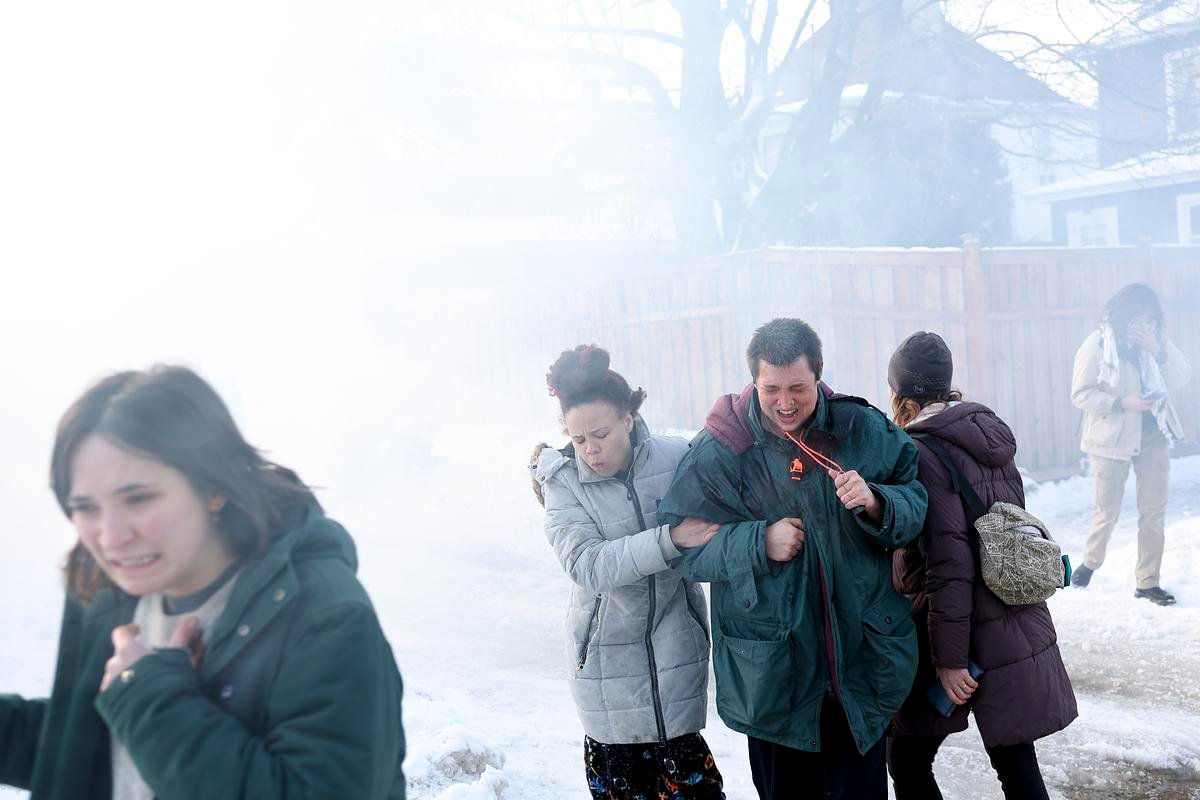
In Southern California, federal law enforcement fired pepper balls and rubber bullets at people’s heads and backs at least five times, and at least once at a man’s groin, records and interviews show. In Oakland, California, an unarmed pastor who posed no obvious threat was blasted in the face with pepper powder. In Chicago, where more than a dozen people reported being indiscriminately pelted with pepper balls, entire blocks were enshrouded in tear gas, forcing people from their homes. A religious leader was targeted in his head with pepper balls.
Christy Lopez, a former senior civil rights litigator at the Department of Justice, said many of the bystander and news videos she’s seen show “clearly excessive, unreasonable force” that her former office would have investigated as potential crimes.
“They are clearly violating people’s rights,” said Lopez, who now teaches at Georgetown Law. “It’s probably criminal, and it should be investigated as such.”
“I don’t say that lightly,” added Lopez, who led investigations into misconduct and excessive force at police departments including Los Angeles, Chicago and Ferguson, Missouri. “This is a very different situation than anything we’ve seen in the past in terms of just the routine and really brazen use of force in violation of people’s rights.”
Rohini Haar, an ER doctor and University of California, Berkeley professor who studies crowd control weapons, told ProPublica that Hawkins’ assault in Portland was “absolutely” a misuse of tear gas because it was fired at his head when he posed no obvious threat. For a 2023 policy paper published by Physicians for Human Rights, Haar and her team analyzed peer-reviewed medical literature to identify more than 100,000 instances of people wounded by tear gas since 2015; the researchers found more than 5,000 serious injuries, including 14 deaths of people struck by military-grade gas canisters.
Haar said Americans are witnessing a “far more dangerous use of these weapons” in recent months, despite calls for clearer use-of-force policies following the police killing of George Floyd in 2020 and the nationwide protests it spurred.
“You’re going to see a lot more injuries,” she said.
In a statement to ProPublica, a Department of Homeland Security spokesperson said its ICE and Customs and Border Protection officers show “incredible restraint” but sometimes must use force as they “put their lives on the line to arrest murderers, rapists, and gang members.”
ICE and CBP personnel “are trained to use the minimum amount of force necessary to resolve dangerous situations to prioritize the safety of the public and themselves,” the statement said. “Our officers are highly trained in de-escalation tactics and regularly receive ongoing use of force training.”
Even when used correctly, manufacturers acknowledge these weapons can be lethal. As Defense Technology, a Wyoming company that makes the type of canister that struck Hawkins, discloses on many of its wares: “THIS PRODUCT MAY CAUSE SERIOUS INJURY OR DEATH TO YOU OR OTHERS.”
The company did not respond to a request for comment.
Aggressive Campaign
Border Patrol commander Greg Bovino, a 30-year veteran of CBP, has orchestrated many of the most aggressive immigrant roundups across the country.
When forces under Bovino’s command began rounding up suspected undocumented immigrants in Los Angeles in June, vocal demonstrations followed. In response, his troops used tear gas and rubber bullets in ways that drew rebuke from a California federal judge.
On June 7, a Homeland Security agent shot a local reporter in the head with a rubber bullet as the journalist covered a fierce protest at a Home Depot in Los Angeles County, causing a concussion.
In ensuing days, federal personnel repeatedly fired crowd control munitions at media members, protesters and bystanders. The Los Angeles Press Club and a union representing journalists sued the Department of Homeland Security.
“DHS agents have consistently used these weapons to suppress First Amendment protected activity when they faced no meaningful threat of violence,” the suit said. “Despite common perceptions that alleged ‘crowd control’ weapons are harmless, each of these weapons — including, and especially, chemical weapons and projectiles — can cause significant and long-lasting health harms.”
In early September, U.S. District Judge Hernán D. Vera issued an order restricting the use of crowd control weapons and requiring “at least two separate warnings” before agents or officers deployed them. Enforceable only in the Central District of California, which covers much of coastal Southern California, the order also barred agents from firing tear gas canisters and flash-bang grenades at the public and shooting rubber bullets or other projectiles “at the head, neck, groin, back, or other sensitive areas, unless that person poses an immediate threat of death or serious bodily injury.” That order went further than existing policies at DHS, specifically prohibiting firing on journalists and requiring law enforcement to give clear dispersal orders and allowing crowds to leave before deploying weapons.
DHS appealed, saying the ruling “micromanages how DHS agents respond to violent riots.” The appeal is pending.
Bovino has defended his officers, calling their use of the weapons “exemplary.” Yet allegations of misuse have followed his forces to other cities.
Midway Blitz
After Los Angeles, Bovino took his troops to Chicago. There, he led Operation Midway Blitz — an aggressive campaign of roving immigration sweeps that included the siege of an entire apartment building.
Those apprehended during the blitz were taken to a detention facility in a nondescript industrial park in Broadview, a Chicago suburb. Small demonstrations had been held there for years, but they exploded in size as ICE and CBP officials rushed hundreds of detainees through the suburban streets to jail and possible deportation.
Federal agents and officers turned again to crowd control weapons. Raven Geary, co-founder of Unraveled, an independent news operation in Chicago, was covering a protest at the Broadview detention facility in late September when a federal agent shot her in the face with a pepper ball, causing her left cheek to bleed and bruise.
“It was this very sudden, horrible pain,” said Geary, who was carrying two large cameras and wearing a press badge. Then she realized she was covered in a powder containing the active ingredient in hot peppers. “You’re coughing, you are sneezing, you are wheezing, it can be hard to see.”
Leigh Kunkel, a demonstrator, also got pelted. “The crowd was not doing anything,” she said, yet the pepper balls came flying at them.
Agents shot her in the back of the head and the nose. “I’m incredibly lucky that he didn’t hit me 2 inches higher,” she said. “I could have lost an eye.”
Kunkel and Geary became plaintiffs in a lawsuit seeking to curb the use of force by federal forces in the Chicago area.
As part of that lawsuit, a nearby resident and mother named Autumn Hamer told a judge how she swung by the facility in the early morning to see peaceful protestors chanting, “Whose streets? Our streets!”
Federal officers on the roof intermittently fired rubber bullets and pepper balls into the crowd, she said. A flash-bang grenade landed next to her, causing disorientation and a ringing in her ear.
At a subsequent protest, she saw a projectile tear through an acoustic guitar a woman was playing. The agents fired tear gas, Hamer said, making her choke. As Hamer and others tried to move from the barricaded front of the facility toward fresh air on another street, she told ProPublica and FRONTLINE, they found themselves getting shot through a side barricade, as though agents had flanked them to box them in.
“It all felt cruel,” Hamer told reporters. She noted that the pepper ball launchers are similar in design to recreational paintball guns. “I have teenage boys, so when I look at [agents], I’m like, … are you pretending that you’re in a video game right now?”
Federal Judge Sara Ellis sided with the plaintiffs, issuing a temporary restraining order that barred immigration agents from targeting journalists and using crowd control weapons unless there is a serious threat to public safety.
Still, Bovino’s agents continued to use the weapons. One Chicago resident captured a video that looks like it could have come from a video game.
Enrique Bahena wore camera-equipped Meta glasses to a protest in Chicago’s Little Village, a largely Latino neighborhood. Bahena said he was with a group of activists who were loudly — but nonviolently — confronting Border Patrol agents. “Everyone was just telling them to get out,” he recalled.
Bahena’s camera glasses captured a first-person view of a Border Patrol agent pointing a pepper ball launcher at him, just feet away. In the video, the agent fires at his throat, sending up a cloud of noxious smoke.
On Nov. 6, Ellis, the federal judge for the Northern District of Illinois nominated by former President Barack Obama, said from the bench that “the use of force shocks the conscience,” before ordering dramatic changes in how federal forces use crowd control weapons.
DHS decried her ruling as “an extreme act by an activist judge that risks the lives and livelihoods of law enforcement officers.”
“Rioters, gangbangers, and terrorists have opened fire on our federal law enforcement officers, thrown rocks, bottles, and fireworks at them, slashed the tires of their vehicles, rammed them, ambushed them, and they have destroyed multiple law enforcement vehicles,” a department statement read. DHS appealed. Last week, a panel of three Republican appointees sided with the government, temporarily blocking her ruling and saying Ellis’ limitations on officers went too far — so much so, the judges wrote, that they “resembled federal regulation.”
Ellis criticized Bovino for an October incident in which he threw a tear gas canister at community members in the Little Village neighborhood. Bovino claimed he’d been attacked by a rock-throwing assailant, forcing him to deploy the gas for his own protection. Ellis said “video evidence disproves this. And he ultimately admitted he was not hit until after he threw the tear gas.”
Bovino did not respond to a request for comment made through DHS.
A DHS official said personnel working under Bovino enjoy a sense of “impunity” when it comes to uses of force. “These events keep happening because of the lack of accountability by CBP,” said the official, who spoke on condition of anonymity for fear of repercussions. “And there’s usually no repercussions for agents or officers because federal prosecutors rarely prosecute agents for excessive force.”
“We Come in Peace”
On the morning of Oct. 23, a green-and-white Border Patrol truck lurched through a crowd of protestors gathered on the Oakland, California, waterfront. The demonstrators had converged after learning that federal agents would be using a nearby Coast Guard base to launch a wave of immigration raids.
Masked Border Patrol agents popped out to disperse people who’d enveloped the vehicle with signs and chants. Hoping to calm the tension, a local pastor named Jorge Bautista joined the crowd to pray.
Videos show an agent exiting the truck, marching toward the pastor and pointing a large-caliber weapon at his face.
“I’m thinking, ‘There’s no way he’s going to shoot this thing at me,’” Bautista recalled. “I’m thinking, ‘He’s just using this to scare me. It’s not going to work.’ And the moment I realized he was close enough to hear me, I said, ‘We come in peace.’”
As he said those words, the agent pulled the trigger, striking Bautista with an object that dispersed what bystanders believed was pepper powder. Videos show Bautista struggling to breathe as his eyes and skin burned beneath toxic granules. The unidentified agent calmly returned to the truck.
Bystanders poured liquid on his face. He kept his eyes shut and wound up in the hospital for treatment of scrapes and bruises on his chin and neck.
“No one should be assaulted for being out there protesting,” said Bautista, who said he intends to sue DHS.
“You would figure they would be trained to de-escalate situations, right? Instead of going straight for using some kind of weapon to assault somebody,” the pastor said.
The post Trump’s immigration forces deploy “less lethal” weapons in dangerous ways, skirting rules and maiming protesters appeared first on MinnPost.
WASHINGTON – The first attempt by a congressional panel to investigate fraud allegations in Minnesota turned up few new revelations and was marked by partisanship and xenophobic remarks about the state’s Somali community.
While Republicans blasted the Walz administration for ignoring and even fostering fraud in Minnesota’s social service programs, Democrats said any talk of fraud should be focused on President Donald Trump and his administration.
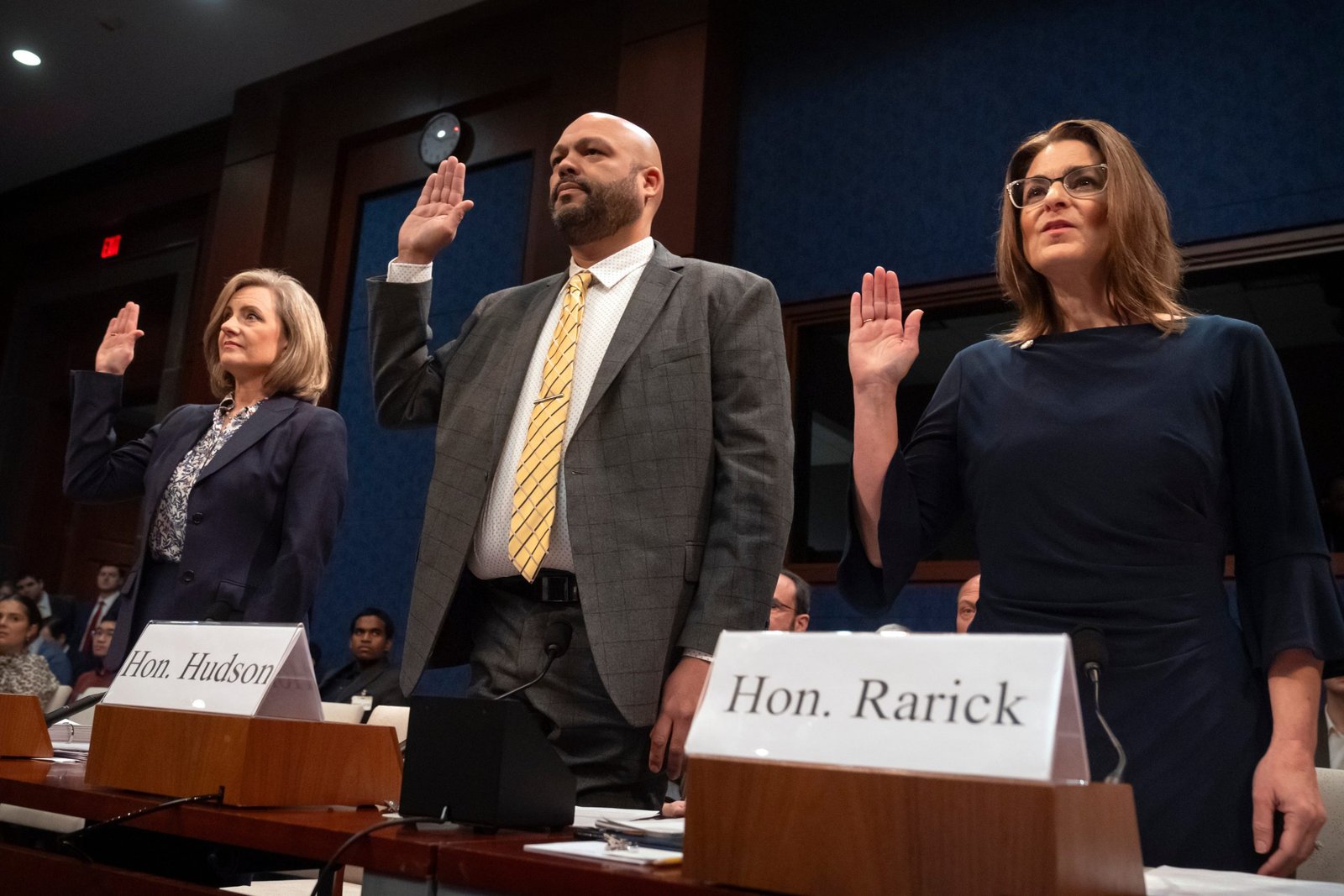
The hearing, which featured three state lawmakers that sit on a new fraud investigation in the state Legislature, was the House Oversight and Government Reform’s first effort to delve into what Republicans say is massive corruption in Minnesota.
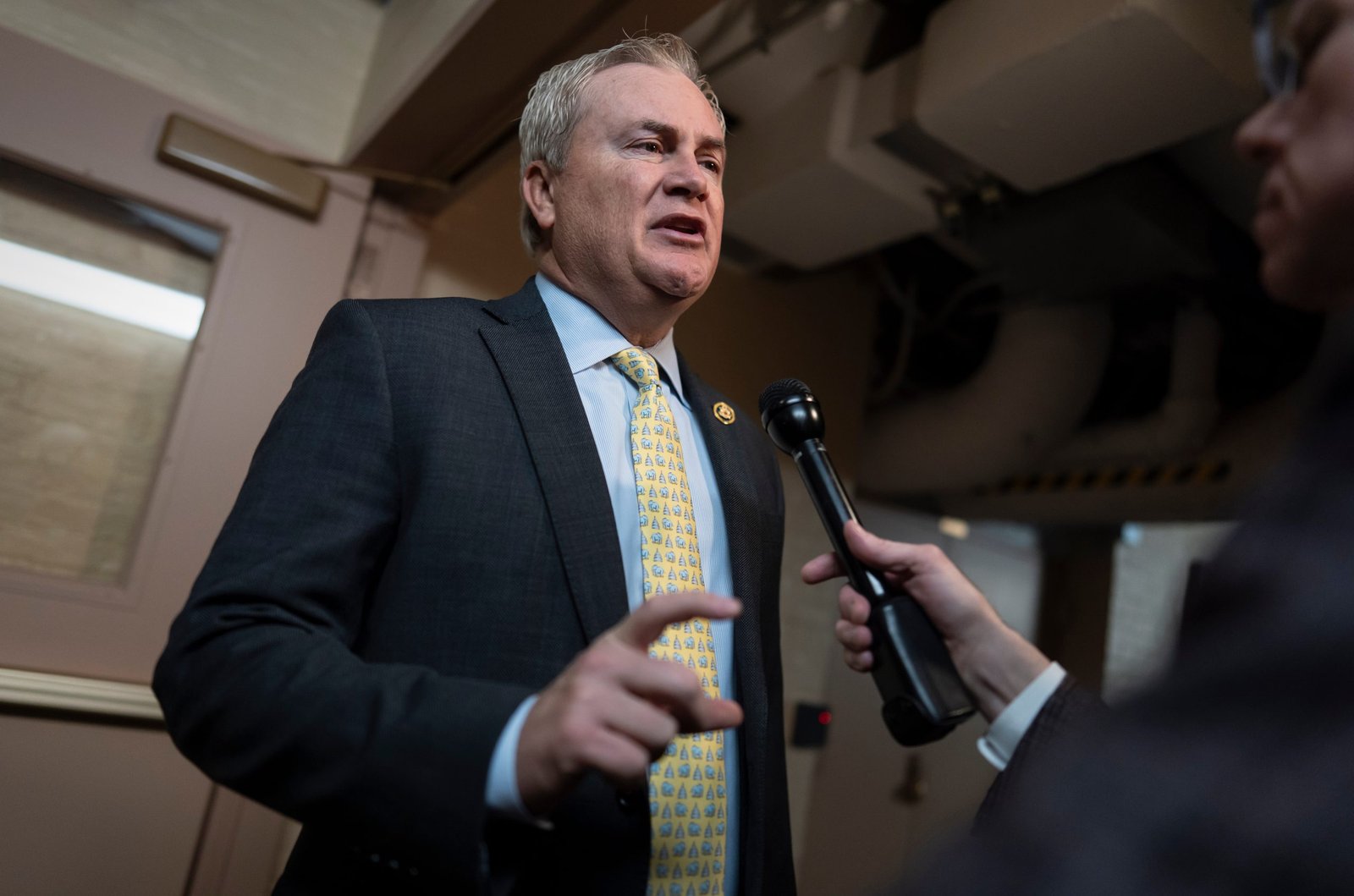
“The breadth and depth of this fraud is breathtaking,” said committee chairman Rep. James Comer, R-Ky., “and I fear that this is just the tip of the iceberg.”
State Reps. Kristin Robbins, Walter Hudson and Marion Rarick detailed their work to uncover fraud in the Minnesota’s federally funded, state-run social welfare programs, which included meetings with whistleblowers from the Minnesota Department of Human Services (DHS) who said they faced retaliation when they tried to report wrongdoing.
Robbins, who is running for governor, said those whistleblowers were “demoted or reassigned, or they are told that they could lose their job.”
Related: Minnesota’s food stamp program in peril as Trump administration says it’s subject to fraud
Rarick said whistleblowers were intimidated, with photos of their homes and cars placed in their files and asked to provide information about their kids’ schools and school bus stops.
The GOP witnesses also agree with GOP lawmakers on the panel who blamed Gov. Tim Walz and Minnesota Attorney General Keith Ellison for the fraud in the state. They also agreed with GOP lawmakers that Democrats failed to crack down on fraud perpetrated by members of the Somali community because they wanted to keep a key constituency in their corner.
“They did not want to take action that was against their political benefit,” Hudson said.
Robbins also agreed with claims propagated by Republicans, including Rep. Tom Emmer, R-6th District, and President Donald Trump that funds stolen from Minnesota’s Medicaid program have made it into the coffers of the al-Shabaab terrorist group.
“We have plenty of evidence of that from money directly going to al-Shabaab, but then also indirectly because they take a cut of whatever gets sent to Somalia,” Robbins said.
However, a state auditor did not find that any of the Medicaid funds made their way to any terrorist group.
The trio of state lawmakers were unaware that a woman had been shot and killed in Minneapolis by an Immigration and Customs Enforcement (ICE) agent until the end of the more than 5-hour-long hearing, when Rep. Ayanna Pressley, D-Mass., demanded that the committee issue a subpoena to the Department of Homeland Security for all information related to the shooting.
That’s not likely as a majority vote in the GOP-dominated panel would be required.
But the panel could issue subpoenas to Walz and Ellison, who have been asked to appear before the committee on Feb. 10 and have not responded, according to a committee source.
‘Selective interest in fraud’
Brendan Ballou, a former federal prosecutor and native Minnesotan was the only witness Democrats on the committee were allowed to call.
Ballou said he feared “the selective interest in fraud in Minnesota,” which has focused on Minnesota and its Somali community.
He said the Trump administration had “largely dismantled” the federal infrastructure for prosecuting fraud and white-collar crime. That dismantling, Ballou said, included an end of the enforcement of the Foreign Corrupt Practices Act, which prohibits bribery, and the forcing out of the lawyers in the Justice Department’s Public Integrity Section that prosecutes crimes by government officials.
Several Democrats on the panel also pointed to the administration’s elimination of federal agency inspector generals and other watchdogs.
Related: Ugly rhetoric, fears of ICE raids test an ‘All-America City’
And they said any investigation into fraud should begin with Trump.
“Let’s remember that the worst fraud and corruption is occurring at 1600 Pennsylvania Avenue,” said Rep. Robert Garcia of California, the top Democrat on the Oversight Committee.
Garcia cited Trump’s pardoning of several individuals convicted of big money fraud.
He asked the Minnesota GOP members if they agree with these pardons. Robbins said she hasn’t read about them. The others also demurred.
“These are pardons to criminals and fraudsters that our witnesses clearly have no interest in,” Garcia said. “Now, in Trump’s America, rich people can rip innocent people off whenever they want and get a pardon.”
Meanwhile, Rep. Jasmine Crockett, D-Texas, said “we are living during the most corrupt administration in history.”
“This hearing is not an effort by Republicans to improve social service programs. It’s an excuse to end them and to punish Democratic-led states,” Lee said.
In a shouting exchange with Lee, Comer said the inspectors general hired to identify fraud had failed.
“You all have failed. You all continue to fail,” Lee replied.
“No, you all have failed,” said Comer.
And when Pressley asked the Minnesota legislators whether they agreed with Trump’s pardoning of former Rep. George Santos, R-N.Y., who was accused of fraud, Hudson replied, “I’m not playing this game,” and Pressley accused him of “cowardice.”
“This is accountability and you are hypocrites,” Pressley told the Republicans.
A witch doctor
Comer invited Minnesota’s Republican members of Congress, who are not on the committee, to join the panel for the hearing.
Emmer accused Walz and Ellison of “protecting fraudsters instead of investigating them.”
“It was purposeful and it’s no coincidence that this is occurring largely in the Somali community,” Emmer said.
The participation of Somalis in some of the fraud scandals overshadowed the proceedings.
Rep. Brandon Gill repeatedly asked the witnesses if “large-scale Somali immigration makes Minnesota stronger or weaker” and cited statistics of high Somali participation in food stamps and other government services.
Maryland Democrat Kweisi Mfume took issue with Gill’s questioning the witnesses about their opinion of Somalis. “We might as well say what is your opinion of Jews?” Mfume said. “What is your opinion of Black people? What is your opinion of Latinos?”
Meanwhile, Rep. David Min, D-Calif., said “it’s hard for me to see this other than a partisan and racist hearing.”
Rep. Pete Stauber, R-8th District, asked the witnesses about Minnesota’s new family leave policy, which allows anyone who can demonstrate they are caring for another time off the job with pay.
“So I could take care of someone who is a friend of mine?” Stauber asked.
“Absolutely,” Rarick replied.
Stauber said he was concerned that “any doctor,” including foreign physicians, could certify the need for care, even a doctor in Somalia.
“You literally could have a witch doctor approve it,” Hudson responded.
Meanwhile, Robbins said the leave policy “is the next fraud front in Minnesota.”
The post Congress takes on Minnesota fraud scandals in partisan hearing appeared first on MinnPost.
WASHINGTON – About 190,000 people in four Twin Cities metro counties – and perhaps another 250,000 in the rest of Minnesota – will lose their food stamp (SNAP) benefits before the end of the month unless a federal judge intervenes.
The draconian threat to Minnesota’s 450,000 low-income food stamp recipients comes from the Trump administration, which has targeted the state in a growing list of federal investigations.
But the state is fighting back in court, asking for an expedited hearing on a lawsuit against the U.S. Department of Agriculture and an injunction against the threat of a cutoff of funds.
So now the future of the food stamp program in Minnesota is in the hands of a U.S. District judge.
Claiming fraud, the Trump administration has asked Minnesota to recertify the 100,000 households that receive benefits from the federal food stamp program, officially known as the Supplemental Nutrition Assistance Program (SNAP), in Hennepin, Ramsey, Washington and Wright counties.
In a Dec. 16 letter to Gov. Tim Walz, U.S. Agriculture Department Secretary Brooke Rollins demanded that Minnesota’s Department of Children, Youth and Families implement a new “pilot program” that entailed the recertification of all of those who receive food stamp benefits in the four counties under scrutiny – within 30 days.
Related: D.C. Memo: Trump adds SNAP fraud accusations to its attacks on Minnesota
In Minnesota, counties administer the SNAP program and, according to Rollins’ directive, each of the counties involved would have to review the eligibility of tens of thousands of recipients – as well as conduct in-person interviews – all within a month. If the counties do not comply, their residents would lose benefits.
Rollins also said that failure to comply with the pilot program “may also affect Minnesota’s continued participation in SNAP.”
In the state’s lawsuit against the USDA, Minnesota Attorney General Keith Ellison told the court that compliance with Rollins’ demands is impossible.
He asked the court for “expedited handling and emergency injunctive relief” because of the “immediate and irreparable harm faced by the state” from the cutoff of funds in Rollins’ letter. Minnesota receives nearly $900 million a year for its SNAP program.
“USDA’s demands are impossible for Minnesota to meet and pose an imminent threat to SNAP benefits in Minnesota,” Ellison’s appeal said.
He asked the court to hold a hearing on Friday, Jan. 9, and issue a decision no later than Jan. 15.
Related: Minnesota among five states Trump administration targeting over investigations of social safety net programs
Hennepin County Board Chair Irene Fernando said her county has over 110,000 residents who rely on SNAP to nourish and feed children and low-income families.
“SNAP is an essential and life-changing program,” Fernando said. “The consequences of this pilot could gut support for Minnesota families and make food availability an even more active issue in this state.”
Fernando said Rollins’ “impossible mandate sets Minnesotans against other Minnesotans.”
“Requiring almost 55,000 people to physically come in and recertify in-person is not possible in the timeline we were given,” Fernando said, adding that the consequences “of not meeting this impossible requirement threatens the health and well-being of the entire state.”
Animosity toward Minnesota
The state’s lawsuit against the USDA says Minnesota routinely recertifies SNAP recipients, most commonly every 12 months.
The lawsuit also points out that Minnesota’s “error rate” – the percentage of overpayments or underpayments – in 2024 was 8.98%, lower than the national average of 10.93% and lower than the error rates of 33 other states.
The lawsuit also says the Trump administration has “unlawfully targeted” Minnesota because of “personal animosity toward Minnesota politicians, disagreements with policy choices made by the Minnesota legislature, and bias against Minnesota residents of Somali descent.”
It also said Trump “has repeatedly demonstrated personal animosity toward Minnesota Governor Tim Walz, the Democratic vice-presidential nominee in the 2024 election.”
On Monday, Walz said he would not run for a third term because a widening scandal over fraud in social service programs in Minnesota had persuaded him to drop out of the race.
“I don’t think any governor in history has had to fight a war against the federal government,” Walz said at a Monday press conference.
The Trump administration has unleashed an avalanche of investigation into alleged fraud in the state’s social safety net program. But it’s not clear what kind of wrongdoing the USDA is looking for in the state’s food stamp program.
The USDA did not respond to requests for more information.
Rollins called Walz’s decision not to run again “Great news” on X and said, “It’s about time he steps aside after disgracing his office and failing the great State of Minnesota with his far-left leadership and endless scandals.”
She also posted a copy of her letter and said “@GovTimWalz, there is nothing you can do NOW that changes the fact you stood idly by as criminals stole MILLIONS from the American taxpayer and hungry families. The attached (letter) requires you to verify SNAP recipients in the next 30 days. Tick Tock.”
Minnesota was among the states that sued the USDA previously to stop it from demanding what the states determined was sensitive data about SNAP recipients or face a cutoff of funding. In October, a federal judge issued a preliminary injunction in the case.
Minnesota also sued over what it said was the USDA’s overreach when it implemented new restrictions imposed by President Donald Trump’s “big beautiful bill” on SNAP benefits on certain non-citizens, winning a halt to those restrictions.
The post Minnesota’s food stamp program in peril as Trump administration says it’s subject to fraud appeared first on MinnPost.
President Donald Trump’s administration said Tuesday that it is withholding funding for programs that support needy families with children in five Democratic-led states over concerns about fraud.
The U.S. Department of Health and Human Services, which oversees the program, will require the states to provide extra documentation to access the funds.
“Families who rely on child care and family assistance programs deserve confidence that these resources are used lawfully and for their intended purpose,” HHS Deputy Secretary Jim O’Neill said in a statement.
The administration has not laid out details about the fraud allegations.
HHS said in a statement evening that it “identified concerns that these benefits intended for American citizens and lawful residents may have been improperly provided to individuals who are not eligible under federal law.”
Five states — California, Colorado, Illinois, Minnesota and New York — are targeted, and the HHS said they had been notified.
Gov. Kathy Hochul said earlier in the day that New York is prepared to take the administration to court, as Democratic-led states have done scores of times now.
“We’ll fight this with every fiber of our being, because our kids should not be political pawns in a fight that Donald Trump seems to have with blue state governors,” she said.
The plan to withhold the funds was first reported by the New York Post.
Programs aim to help needy children and their families
The targeted programs provide lifelines to some of the neediest Americans:
— The Child Care and Development Fund subsidizes day care for low-income households, enabling parents to work or go to school.
— Temporary Assistance for Needy Families provides cash assistance and job training so parents in poverty can afford diapers and clothes and earn paychecks.
— The Social Services Block Grant, a much smaller fund, supports several different social service programs.
“These resources support families in need and help them access food and much more. If true, it would be awful to see the federal government targeting the most needy families and children this way,” Colorado Gov. Jared Polis’ office said in a statement.
Trump himself has not spoken on the specifics, but he proclaimed on social media Tuesday: “The Fraud Investigation of California has begun.”
Tara Gallegos, a spokesperson for California Gov. Gavin Newsom, said via email that “Donald Trump is a deranged, habitual liar whose relationship with reality ended years ago.” She also defended California’s record on stamping out fraud in government programs.
New York Democratic Sen. Kirsten Gillibrand said Trump’s move to halt funding aims to score political points, not to stop fraud.
“It’s our job to serve the people most in need and most at risk — no matter what state they live in or what political party their family or elected representatives belong to,” she said in a statement. “To use the power of the government to harm the neediest Americans is immoral and indefensible.”
Trump administration amplifies fraud claims
For months the has claimed that federally funded programs are being defrauded and used that assertion as a rationale to hold up money.
Federal child care funding has been on hold in Minnesota since late last month amid investigations into a series of alleged fraud schemes at day care centers run by people with family roots in Somalia.
In the fallout, HHS officials said no state will receive child care funds without providing more verification. Several states have told The Associated Press that they have not received any guidance on that decision.
The administration also raised fraud claims involving SNAP, the country’s main food aid program, saying it would halt administrative money to states — most Democratic-run ones — unless they provide requested details on recipients. That process could take months.
The administration has said the information provided by most GOP-controlled states shows fraud may be worse than previously believed, though it has not provided the data or detailed reports.
Dr. Mehmet Oz, the administrator of the Centers for Medicare and Medicaid Services, told Fox News on Tuesday that his agency also plans to audit Minnesota’s Medicaid bills in search of potential fraud. He did not provide any evidence of fraud that had been found.
___
Associated Press journalists Anthony Izaguirre, Steve Karnowski, Trân Nguyễn, Todd Richmond, Colleen Slevin, Darlene Superville and Sophie Tareen contributed.
The post Trump administration says it’s withholding social safety net money from Minnesota, 4 others states over fraud concerns appeared first on MinnPost.
WASHINGTON – If it follows tradition, one thing is certain about Wednesday’s congressional hearing into alleged fraud in Minnesota — there will be plenty of partisan fireworks.
Whether it will shed light on the many allegations of fraud in Minnesota’s social services programs is another question.
U.S. Rep. James Comer, chair of the House Committee on Oversight and Government Reform and a Trump loyalist who spearheaded investigations into former President Joe Biden’s family, including his son Hunter, has now turned his attention toward Minnesota.
In a statement late last month, Comer said fraud is rampant in Minnesota, “raising serious questions about whether Governor Walz and Attorney General Ellison failed to act or (were) complicit in the theft.”
The hearing, slated to start at 9 a.m. Central, comes just two days after Walz dropped his bid for a third term in the wake of rampant criticism over the fraud scandals.
Comer, a Kentucky Republican, has asked three Republican state lawmakers — Reps. Kristin Robbins, Walter Hudson and Marion Rarick — to weigh in Wednesday on what he says is the large-scale misuse of federal funds in Minnesota. Yet to be seen is whether these GOP state lawmakers offer any hard evidence of systemic fraud in Minnesota’s safety net programs.
The lawmaker’s opening testimony was made available late Tuesday.
In her written statement, Robbins, the chair of a fraud prevention committee in the state House, says “Tim Walz and his Administration have willfully turned a blind eye to crime, in the face of countless whistleblower and Auditor reports, as well as stories by local investigative journalists and Bill Glahn, a fellow at Center of the American Experiment.”
Related: GOP’s Kristin Robbins says her Minnesota fraud prevention committee is not a political stunt. Is she right?
“These are actual crimes that must be punished,” says the statement from Robbins, who is running for governor and was Walz’s political rival before he abandoned his reelection bid Monday.
In his written testimony, Hudson, who is also a member of Robbins’ new committee, says he has “reviewed extensive audit findings, agency records, and legislative oversight materials concerning Minnesota’s administration of federally funded human services programs.”
Citing information from the Office of the Legislative Auditor, Hudson claims he found the structure of Minnesota’s state agencies to “reliably produce fraud, waste, and abuse across multiple service areas, regardless of program intent or stated safeguards.”
“The recent focus on childcare fraud is not an isolated scandal,” Hudson’s testimony reads. “It is the latest manifestation of a pattern that has repeated itself for decades across different programs, populations, and funding streams.”
Minnesota is under scrutiny by the Trump administration for allegations of fraud in daycare centers – and for an avalanche of other accusations of fraud in other programs that receive federal funds.
On Tuesday, Trump administration officials in a video unveiled a proposed new rule that would repeal Biden-era mandates that they say weakened accountability in childcare programs.
Among other things, the rule would end the requirement that taxpayer dollars must pay for childcare before services are rendered. That means states will no longer be forced to send payments to providers up front.
The new rule would also end the mandate for enrollment-based billing. Payments would be based upon verified attendance, not just enrollment, so providers couldn’t bill for children who never show up.
Rarick, also a member of the state Legislature’s fraud committee, says in his written testimony that he and Robbins had made contact through the social media site X with Minnesota Department of Human Services (DHS) whistleblowers and had a meeting with both current and former DHS employees.
“Their collective message has been consistent,” Rarick’s testimony says. “Instead of focusing on fraudsters, DHS leadership has focused its surveillance on employees discussing fraud with each other. Since then, their expressed fear of retaliation has intensified under an avalanche of fraud revelations.”
Comer has sent letters to seven current and former Minnesota state agency officials at the Department of Education and Department of Human Services, asking them to appear for behind-closed-door interviews on certain dates in late January and February and threatening them with subpoenas if they do not comply.
Last month, Comer also requested information from Walz and Ellison and said they have failed to fully respond to his panel’s request for documents and information. He has asked Ellison and Walz to appear at another hearing scheduled for Feb. 8.
Although Walz has decided against running for a third term, Comer has not toned down his attacks on the Democratic governor and Trump foe.
“Massive fraud of taxpayer dollars occurred on Tim Walz’s watch,” Comer said in a statement earlier this week. “He’s either complicit in this theft or grossly incompetent in preventing it. Though Tim Walz is not running for governor again, he cannot run from accountability.”
Watch Wednesday’s hearing below:
The post U.S. House committee invites Minnesota GOP legislators to testify on alleged fraud appeared first on MinnPost.
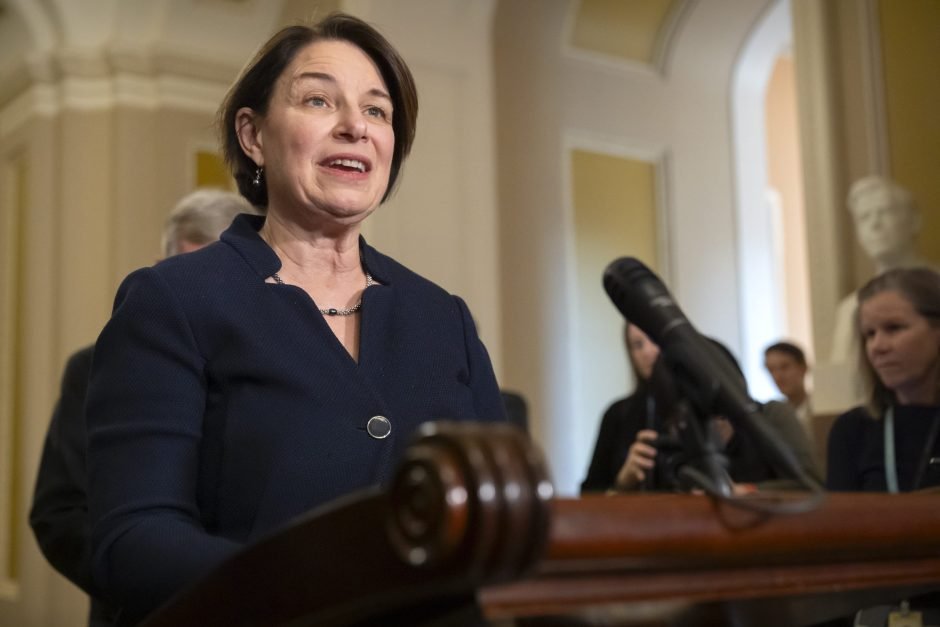
WASHINGTON – Gov. Tim Walz’s decision to drop hopes for a third term has shaken up Democratic politics in Minnesota and opened the door to potential candidates, including Sen. Amy Klobuchar, who are keen on running for what will now be an open seat.
A source close to the long-serving Democratic candidate said Klobuchar, who met with Walz on Sunday, has “gotten encouragement by a lot of people to run.”
“She is considering it,” the source said. “But she has not made up her mind.”
Klobuchar, who has served in the U.S. Senate since 2007, was reelected last year, handily defeating GOP candidate Royce White, who is now running for retiring Sen. Tina Smith’s seat.
Considered one of the most effective members of the Senate for her ability to win bipartisan support for legislation, Klobuchar is also known for her ambition.
She announced a run for the White House on Feb. 10, 2019, but suspended her campaign less than a month later and endorsed Joe Biden.
Klobuchar’s entry into the governor’s race may give other Democrats interested in running for governor pause because of the senator’s popularity in the state. But the opportunity may outweigh those concerns.
Secretary of State Steve Simon and Attorney General Keith Ellison are among those who were keeping an eye on whether Walz would run for a third term. Walz announced he would this summer but abandoned that plan after speaking to Klobuchar.
Ellison on Monday said he had “the privilege of serving Minnesotans alongside Tim for almost 20 years.”
“Tim’s legacy is one of putting people first and delivering for Minnesotans in every corner of our state, and that’s a legacy to be damn proud of,” Ellison said in a statement.
Other Democrats may also be interested in the governor’s race. But Lt. Gov. Peggy Flanagan said she continues to prefer running for the U.S. Senate.
Klobuchar would not have to relinquish her Senate seat to run for governor but would have to resign from the chamber if she were to win, leaving another open Senate seat besides the one that was created by Smith’s retirement. A new senator would be appointed temporarily, until the next federal elections are held in 2027.
The Trump administration’s allegations of fraud in a number of Minnesota social service programs – ranging from Medicaid to food stamps to childcare services – had put Walz on the defensive politically, blunted Democratic attacks on the president and put hundreds of millions of federal funds for the state under threat.
The attacks on Walz, which resulted in slumping poll numbers, also concerned other Democrats in the state who were running for office.
Democratic National Committee Chairman Ken Martin, who was the state’s DFL Party chairman, said Walz’s “selfless choice speaks volumes about his character.”
“I’m deeply grateful to Governor Walz for his integrity, his humility, and his unwavering commitment to Minnesota,” Martin said in a statement. “Thank you for carrying the torch, knowing when to pass it on, and always putting Minnesota first.”
Smith also alluded to sacrifice, saying Walz’s decision to not seek reelection is “what it looks like when leaders put the interests of the people before politics.”
“Tim’s career has been defined by getting results for Minnesotans, doing the right thing, and always putting people first,” Smith said in a statement. “In the face of an unprecedented and coordinated attack on Minnesota by President Trump and his administration, the Governor is once again doing the right thing. “
Republicans, meanwhile, rejoiced at Walz’s decision.
“Good riddance,” was the curt reaction from Rep. Tom Emmer, R-6th District.
Whoever becomes the Democratic candidate for governor will face one of about a dozen GOP candidates who have entered the race, eager for the chance to defeat Walz.
Those include “My Pillow” CEO Mike Lindell, whom Trump has endorsed; Lisa Demuth, the state House speaker; state Rep. Kristin Roberts; Kendall Qualls, the leader of a nonprofit who ran unsuccessfully for governor in 2022 and Congress in 2020; and attorney Chris Madel.
Walz announced his decision just days before House Oversight and Reform Committee Chairman James Comer, R-Ky., holds a hearing Wednesday about alleged fraud in Minnesota social service programs, with several state lawmakers, including Robbins, as witnesses.
The hearing is just the start of Comer’s investigation into allegations of fraud in programs funded with federal dollars in Minnesota – and allegations that Somalis involved in the alleged fraud funneled money to terrorists.
On Monday, Comer said Walz’s decision would not affect the course of his investigation, which includes interrogations of former and current state officials behind closed doors and the appearance of Walz and Ellison at a public hearing in February.
“Though Tim Walz is not running for governor again, he cannot run from accountability,” Comer said. “The House Oversight Committee demands that he appear for a public hearing on Feb. 10 to expose this fraud and begin the process of accountability. The American people deserve answers, and they deserve them now.”
The post As Walz bows out of governor’s race, Amy Klobuchar, other Dems, eye a run appeared first on MinnPost.
WASHINGTON – Rural Minnesota sheriffs who have contracted with Immigration and Customs Enforcement (ICE) to detain prisoners say they have been frustrated by delays for mandatory federal training, as well as pushback from immigration advocates and state officials who oppose such cooperation.
Eight Minnesota counties have agreements in place to support ICE in one way or another under what are officially known as 287(g) agreements. The federal agencies responsible for training local officers to assist with these and other federal actions have yet to schedule the required sessions, sheriffs say.
Meanwhile, the ACLU of Minnesota announced Thursday it was suing Freeborn County in southern Minnesota over its March agreement with the Trump administration to hold prisoners for ICE beyond the scheduled release date for whatever arrest or charge initially landed them in the county’s jail.
The so-called “detainer” policy allows ICE to pick up these individuals and possibly deport them. But the ACLU says Minnesota law prohibits sheriffs and other law enforcement from holding individuals for ICE after they have been released from state custody and does not authorize them to conduct civil immigration arrests.
The ACLU has forcefully opposed that policy, saying it has led to civil rights violations and deportations of people who have been detained for lesser violations, like a broken tail light.
But Minnesota’s limitations on detainers have rankled the Trump administration, prompting it to call Minnesota a “sanctuary state.”
Freeborn County Sheriff Ryan Shea said that responding to detainer requests is good police work.
“When you have someone in custody and you know another law enforcement agency wants them, it goes against the culture not to help,” Shea said. “If you have someone who’s wanted in custody, you should hang on to them for a day so ICE can pick them up.”
Like other Minnesota sheriffs who have entered into pacts with ICE or the U.S. Marshal’s Service, Shea is frustrated by delays in providing training for the 40 officers he wants to deputize to carry out their federal warrant duties.
Related: Minnesota sheriffs departments seek to cooperate with ICE
Besides Freeborn County, seven other counties — Crow Wing, Cass, Itasca, Jackson, Kandiyohi, Mille Lacs and Sherburne — have signed contracts to cooperate with ICE in one way or another under what is officially known as 287(g) agreements.
Trump won all of those counties in landslides in last November’s election, although the president failed to win the state.
But last week, Minnesota Attorney General Keith Ellison issued a legal opinion that said Minnesota law does not permit sheriffs to enter into agreements with ICE unilaterally and that the authority to enter into such pacts rests with county boards of commissioners.
Ellison’s opinion also said 287(g) agreements do not permit law enforcement agencies to detain individuals based solely on a request from ICE. Ellison said he released the opinion after receiving a request for guidance from Ramsey County Attorney John Choi.
Armed with Ellison’s legal opinion, the ACLU of Minnesota lawsuit against Freeborn County was filed on behalf of four county taxpayers.
“Under 287(g) agreements, it is the county and its taxpayers — not ICE — who are legally and economically liable for the inevitable lawsuits that follow,” the ACLU said. “Countless lawsuits have put county taxpayers on the hook to pay hundreds of thousands or even millions of dollars in liability when their sheriffs have unlawfully arrested and detained people at ICE’s request.”
‘Silly to go to the county board’
Cass County Sheriff Eric Klang said he’s holding about 60 detained immigrants in his 287-bed jail who have been apprehended in the Twin Cities area since Dec. 1, when the Operation Metro Surge was set in motion.
Besides providing ICE with bedspace that Klang wants to increase, he also signed a memorandum of understanding with the Trump administration to help ICE and the U.S. Marshal’s service in their efforts to detain and deport.
Klang criticized Ellison’s legal take on the authority of Minnesota’s sheriffs.
“It’s silly for us to go to the county board,” he said.
Yet Klang said he did not want to get into “a pissing match” with Ellison, especially since the legal opinion does not carry the weight of law. “Nothing has changed,” said Klang, who said he will continue with his plans.
Related: Why Minnesota sheriffs can’t legally hold people past their release time for an ICE detainer
The Crow Wing County Sheriff’s Department has agreed to detain for ICE undocumented immigrants when it comes in contact with them in the course of its police work. But Klang said the U.S. Marshal’s service has yet to provide the 40 hours of training required for the officers who would enforce federal immigration law.
Meanwhile, Kandiyohi County Sheriff Eric Tollefson entered into a 287(g) agreement with ICE for a warrant service officer program in May. Another agreement with ICE, known as an intergovernmental service agreement, enables the west-central Minnesota county to provide detention and related services at its jail.
The county board didn’t enter into the agreement, Tollefson said, and his understanding of Ellison’s legal opinion is that it deems the performance of 287(g) duties as not being valid even with board approval. He said he’s waiting for more information from his county attorney.
“A lot of people are waiting for a court decision or maybe something from a higher level,” he said. “It goes back quite some time, and meanwhile we still do our jobs.”
This is how a 287(g) warrant service office program like the one sought by Kandiyohi County would work.
A person is being detained in the county jail related to district court charges.
ICE has an immigration detainer on the person.
When the inmate reaches the point of being released on the district court charges, a warrant service officer could serve them the ICE detainer.
The person remains detained, not related to a district court matter, but rather for ICE reasons.
The role of sheriff’s departments here would be to serve a warrant to an already detained person, requiring minimal time and resources, Tollefson said. Most sheriff’s offices and jails don’t have many resources and staff to spare, he added.
Push for a Minnesota law
Minnesota’s immigrant advocates also plan to lobby the state Legislature to outlaw 287(g) agreements.
State laws in California, Illinois, Washington state, Connecticut, Oregon and New Jersey prohibit such cooperation — but while Minnesota puts limits on detainers, it has no law that outlaws all cooperation with ICE.
The partnership between ICE and local law enforcement was established in 1996 by Congress when the program was included as section 287(g) of the Immigration and Naturalization Act of 1996.
In the past, few counties signed up for the 287(g) program, which allowed the Department of Homeland Security to delegate specified, expanded immigration enforcement powers to local deputized police officers.
But hundreds of law enforcement agencies across the country, including the eight in Minnesota, agreed to join the 287(g) program after Trump won his second term in office and expanded the program’s reach.
The ACLU has a history of winning lawsuits against counties for cooperating with ICE. One example from Trump’s first term involved Nobles County holding inmates for ICE longer than state law allowed.
A settlement resulted in Nobles County being permanently enjoined from detaining individuals for ICE without state law authority. Four plaintiffs received financial settlements.
More recently, the ACLU alleged an unlawful detainment by Carver County. The lawsuit, filed this year, shares broad strokes with the Nobles County issue.
The post Rural Minnesota sheriffs frustrated by delays, pushback on ICE detention contracts appeared first on MinnPost.