Category: USA

  • Minnesota lawmakers secured a few earmarks in bill that reopened government

    Minnesota lawmakers secured a few earmarks in bill that reopened government

    WASHINGTON — Whether they supported the legislation or not, Minnesota’s lawmakers won approval of a modest amount of money for local projects in the bill that reopened the federal government last week.

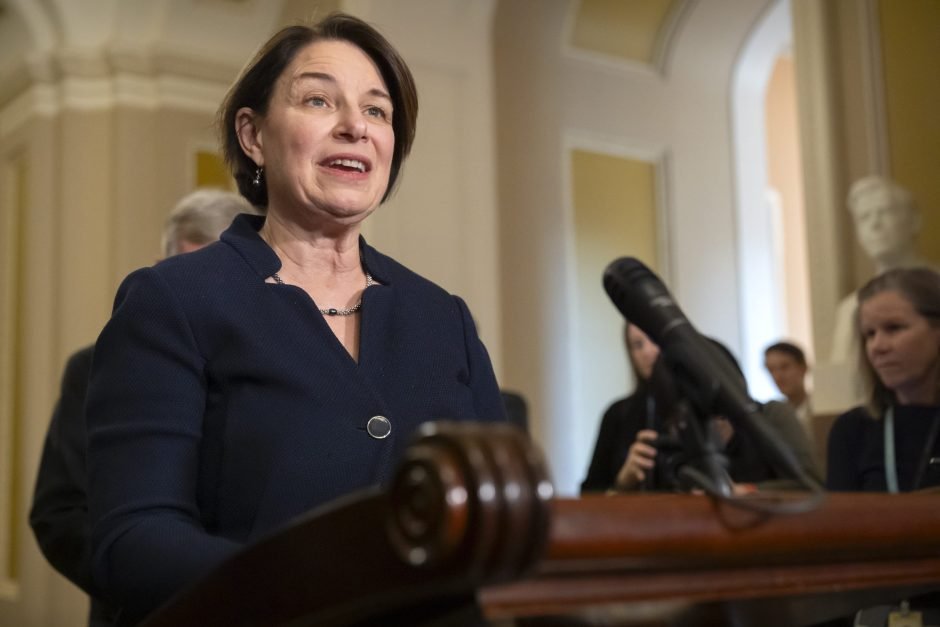
    Sen. Amy Klobuchar and Tina Smith, Democrats who voted against the bill, secured $1.7 million for an Alexandria area YMCA, $1 million for a veterinarian diagnostics laboratory in Willmar for the University of Minnesota, another $1 million for an Apple Tree early learning center in Virginia and a few other earmarks.

    “This funding would make a huge difference in our ability to stop avian flu in its tracks and protect our farmers and animals,” Smith said of the funding of the veterinarian clinic. 

    Meanwhile, Rep. Angie Craig, D-2nd District, secured $1 million for a public safety project in Le Sueur and $1 million for a project in New Prague. And Rep. Michelle Fischbach, R-7th District, won approval of $4,167,900 for a water treatment project in Kandiyohi County and $1 million for another water program in Plummer.

    There are other earmarks in the legislation that were sought by Minnesota’s congressional delegation for a total of about $17 million in special projects.

    But that falls short of the tens of millions of dollars the state’s federal lawmakers have asked for to fund local projects. Still, they are the first earmarks Congress has approved in a long time, and there’s no guarantee there will be others.

    Why? Because the funding for special projects are included in appropriations bills and there are doubts that Congress will be able to approve many more of them — besides the three that were attached to the shutdown bill.

    Democrats warn that any partisan demands from Trump or hard-liners in the House could deadlock the effort to reach agreements on the nine bills left.

    The three appropriations bills that were approved will fund the Agriculture Department, the Food and Drug Administration and Department of Veterans Affairs for nearly a full year and contain some of the earmarks the Minnesota congressional delegation sought.

    But prospects for the approval of other appropriations bills are dim in this highly polarized Congress.

    William Hoagland, senior vice president of the Bipartisan Policy Center, said President Donald Trump’s failure to submit a complete budget — instead of a wish list of cuts in social programs and a boost in military and border spending — also led to the chaos in Congress’ appropriation process.

    “If you don’t have a blueprint for building a house, you can’t build a house,” Hoagland said.

    He also said the continuing fight over the extension of enhanced Affordable Care Act subsidies that would help 90,000 Minnesotans cope with rising health insurance premiums will likely continue to stand in the way of congressional attempts to fund the government. Democrats withheld their support of a short-term GOP bill to fund the government for 43 days before eight Democratic senators broke rank to help pass a modified version of the legislation last week.

    Senate Majority Leader Jon Thune, R-S.D., has promised Democrats a vote on the extension of ACA subsidies. But no such promise has been made by GOP leaders in the U.S. House. And Trump, who has said he wants to scuttle the ACA, is not likely to sign the legislation.

    Hoagland said the continued failure of Congress to approve the ACA subsidies will prompt Democrats — including the eight in the U.S. Senate who voted to end the shutdown — to make a stand again.

    Although a handful of federal agencies have received full funding, the rest are running on a short-term spending bill that expires on Jan. 30.

    Hoagland predicts another shutdown then.

    “We are in for another donnybrook in January,” he said.  

    Food stamps — which were suddenly cut off for 42 million Americans during the shutdown — and other programs would be protected if the federal government shutters again. 

    But hundreds of thousands of federal workers would once again go unpaid, there would once again be chaos in the nation’s airports, heating assistance for low-income families would be cut off, Head Start programs across the nation would close and other pain would be visited on Americans again if there’s another shutdown.

    Hoagland also said it would be tough, and maybe impossible, for Trump to shift money around again to pay members of the military during another shutdown.

    window.addEventListener(“message”,function(a){if(void 0!==a.data[“datawrapper-height”]){var e=document.querySelectorAll(“iframe”);for(var t in a.data[“datawrapper-height”])for(var r,i=0;r=e[i];i++)if(r.contentWindow===a.source){var d=a.data[“datawrapper-height”][t]+”px”;r.style.height=d}}});

    A ‘doom and gloomer’

    Congress has not passed all 12 appropriations bills that would fund the federal government since 1997, relying repeatedly on continuing resolutions, or CRs, that would fund federal agencies at — more or less — previous funding levels or huge omnibus bills with little scrutiny or debate.

    The failure to approve even a single appropriations bill brought the federal government to a standstill on Oct. 1, the first day of the federal government’s 2026 fiscal year.

    No appropriations bills were approved for fiscal year 2025, either. Instead, the federal government was funded by one short-term CR after another and Minnesota lawmakers could not deliver on promises made to local governments and nonprofits to seek money for their projects.

    So, the few earmarks in the legislation that ended the shutdown last week were heralded.

    For instance, Rep. Pete Stauber, R-8th District, announced in a release that he secured $1.37 million for an effort to improve the water system in Harris.

    “As our northern communities continue to grow, reliable, up-to-date water systems are critical for economic success and long-term sustainability,” Stauber said. “Harris residents deserve dependability, so I’m proud to deliver this funding to strengthen essential infrastructure and protect public safety in the Eighth District.”

    Meanwhile, Harris Mayor Randy Carlson said the money for his town “directly addresses some of our most pressing infrastructure needs.”

    Stauber said the lone earmark is only one of 15 local projects whose funding he has requested and that other projects are still being considered under the remaining fiscal year 2026 appropriations bills, “which Congress will be deliberating over the next few weeks.”

    Yet Hoagland said approval of most — if any — of those bills is doubtful, especially since Congress has scheduled plenty of time off during the Thanksgiving, Christmas and New Year’s holidays.

    So, Hoagland is preparing for another shutdown, which he predicts will be as long, or even longer, than the one that just ended.

    “I guess I’m a gloom and doomer on this issue,” he said.

    He’s not the only one preparing for another lengthy government shutdown. 

    “Everyone realizes, under current law, another shutdown could occur on Jan. 30,” said Rep. Andy Harris, R-Md., the head of the far-right House Freedom Caucus.

    The post Minnesota lawmakers secured a few earmarks in bill that reopened government appeared first on MinnPost.

  • D.C. Memo: Congress returns – and so does the Epstein saga

    D.C. Memo: Congress returns – and so does the Epstein saga

    WASHINGTON – The U.S. House returned from its 60-day recess this week and so did the Epstein scandal.

    A congressional committee released more than 20,000 pages of emails from the estate of the financier who was accused of sex trafficking minors and who died in jail awaiting trial.

    The emails showed that, until his arrest in 2019, Epstein insulted President Donald Trump repeatedly and hinted he had threatening information about him. Epstein said he knew Trump intimately and was “the one able to take him down.”

    Epstein, who mingled with the rich and powerful, had a longstanding friendship with Trump. But Trump said he kicked Epstein out of Mar-a-Lago because of a dispute over a real estate deal and because Epstein was poaching employees of his private club.

    However, the emails released this week show that a relationship continued and was much closer than Trump has described. In one email, Epstein wrote that Trump “spent hours at my house” with one of the victims. In another, Epstein said Trump “knew about the girls.”

    In another email Epstein sent in 2015, he asked Landon Thomas, a New York Times journalist, if Thomas “would … like [photos] of donald and girls in bikinis in my kitchen.”

    Members of Congress also refocused on Epstein because a new member of Congress, Adelita Grijalva, who was elected in September, was finally sworn in as the Democratic representative of an Arizona district on Wednesday.

    Grijalva provided the last signature needed on a discharge petition that would force a vote on legislation requiring the Justice Department to turn over all its information on Epstein. The petition needed the support of at least 218 members, which is a majority in the House.

    The discharge petition requires House Speaker Mike Johnson, who opposed the legislation, to put the Epstein bill up for a vote. Johnson said he’d do that next week.

    The bill is likely to pass the House because a small stampede of Republican members are expected to support it since rejecting the legislation would spark ire among many MAGA voters.

    Those voters are convinced there has been a coverup to protect the rich and powerful who associated with Epstein and attended parties on his private island and his six properties that featured underaged girls.  

    According to Politico, Rep. Tom Emmer, R-6th District, whose leadership job is to secure votes for Johnson, said he would not whip the Epstein bill.

    Nonetheless, Emmer and Minnesota’s other Republicans are likely to vote against the legislation, which has infuriated Trump.

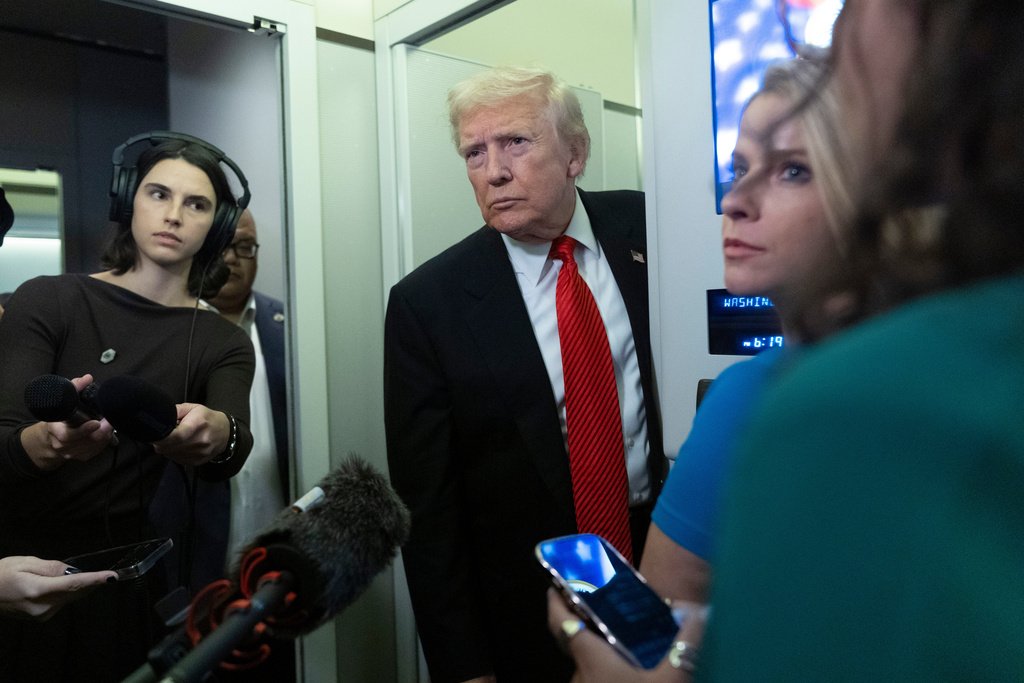
    On Truth Social on Wednesday, Trump accused Democrats of “trying to bring up the Jeffrey Epstein Hoax” and warned GOP lawmakers that “Only a very bad, or stupid, Republican would fall into that trap.”

    The vote on the Epstein legislation would be largely symbolic. The legislation faces an uphill climb in the U.S. Senate, and Trump is unlikely to sign it into law. Still, it would force many GOP lawmakers to defy the president, most of them for the first time.

    Shutdown bill allows senators to sue over J6 probe

    The “deal” Congress approved this week that ended the 43-day federal government shutdown was hastily drafted and lawmakers were largely unaware of some of its provisions.

    Crafted in the U.S. Senate, the legislation would fund several agencies  — including the Agriculture Department, the Department of Veterans Affairs, the Food and Drug Administration and the legislative branch of government — for a full year and the rest of the federal government until the end of January.

    One provision tucked into the bill has raised plenty of eyebrows this week. It would give senators the opportunity to sue the Justice Department for $500,000 per incident, and reimbursement of legal fees, if their phone data was sought or obtained during former special counsel Jack Smith’s investigation of the Jan. 6, 2021, attack on the U.S. Capitol.

    House members whose phone records were obtained would not be eligible.

    Smith sought the phone records of eight GOP senators as well as one member of the House during his probe.

    While Republican House members have decried the investigation into lawmaker phone records as illegal and abusive overreach, the provision in the shutdown bill set off a furious backlash in the House.

    But that GOP anger in the House did not stop the chamber from passing the bill Wednesday night. All Minnesota Democrats voted against the bill and all Minnesota Republicans voted for it.

    While House Republicans were furious, they did not strip the provision out of the shutdown bill because changing the legislation would have forced the Senate to pass it again, delaying the end of the shutdown.

    The provision appeared to be a response to the disclosure last month that the FBI seized the phone records of nine Republicans. They were Sens. Tommy Tuberville of Alabama, Lindsey Graham of South Carolina, Marsha Blackburn of Tennessee, Ron Johnson of Wisconsin, Cynthia Lummis of Wyoming, Bill Hagerty of Tennessee, Josh Hawley of Missouri, Dan Sullivan of Alaska and Rep. Mike Kelly of Pennsylvania.

    A salty problem

    A less noticed provision in the shutdown bill quietly ends efforts by the FDA to set new voluntary sodium standards in the nation’s food supply.

    The FDA was trying to get Americans to eat less salt gradually, so the decrease would not be noticed. It finalized initial voluntary sodium reduction standards in 2021 and was ready to update its guidance, setting a new standard that advocated even less sodium in foods.

    But the bill said the FDA was barred from spending any money “to develop, issue, promote, or advance any final guidelines or new regulations applicable to food manufacturers for long-term population-wide sodium reduction.”

    The nation’s food industry has reacted to the FDA’s voluntary guidelines in different ways.

    General Mills and Hormel say they have responded to the FDA’s voluntary sodium reduction goals by reformulating many of their products to lower the sodium content.

    In other news:

    ▪️Though the government shutdown is over, we wrote about Trump administration threats to sanction Minnesota and other states that released full SNAP benefits amid legal wrangling during the impasse.

    ▪️Speaking of the shutdown, we talked with people in the burgeoning hemp industry who were blindsided by a provision in the bill that reopened the government that would outlaw hemp-produced THC products.

    ▪️At the state level, Matt Blake profiled state Rep. Erin Koegel, who is stepping down after nearly a decade in the House, in part because of what she considers to be extreme partisanship and secrecy in the Legislature.

    ▪️Meanwhile, Brian Arola wrote a piece about the growth of electric vehicle maintenance programs at Minnesota colleges. While the Trump administration has put an end to federal tax credits for EV purchases, school officials say sales trends show the industry needs EV technicians.

    ▪️Brian also visited a World War II aircraft museum in Granite Falls, where a Veterans Day celebration included 101-year-old Bob Brix, a Clara City resident who served as a medic during the Battle of Iwo Jima.

    If you have any questions or comments, please send them my way. I’ll try my best to respond. Please contact me at aradelat@minnpost.com.

    The post D.C. Memo: Congress returns – and so does the Epstein saga appeared first on MinnPost.

  • Minnesota among states facing Trump administration sanctions for releasing SNAP benefits

    Minnesota among states facing Trump administration sanctions for releasing SNAP benefits

    WASHINGTON — The end of the government shutdown won’t end the saga over food stamp funding.

    Left unsolved is whether, and how, the Trump administration will carry out its threat to financially punish states like Minnesota that released full benefits to food stamp recipients last weekend.

    The Trump administration first said it would pay food stamp benefits for the month of November, then said it wouldn’t and, finally, after a court order mandated the payments out of emergency funds, said it only had money for partial payments.  

    The reopening of the government will mean recipients across the nation whose Supplemental Nutrition Assistance Program (SNAP) benefits were cut off since Nov. 1 will finally receive their benefits — without interruption. That’s because the bill that reopened the government, signed into law by President Donald Trump late Wednesday, includes funding for the U.S. Department of Agriculture — the agency that funds SNAP — for a full year. 

    Some states, like Minnesota, did not wait for the shutdown to end and delivered full benefits to SNAP recipients. Now they are threatened with reprisal. 

    The USDA warned states over the weekend to desist from paying out full SNAP benefits, even as two federal courts ruled that the USDA must release those payments and the agency had issued a memo telling states they could move forward.

    The Trump administration appealed those court decisions and the USDA threatened to impose harsh financial penalties on states that did not “comply” quickly with the new federal order to “undo” or take money to buy food from poor Americans.

    The Trump administration also told a court that states would be “responsible for the consequences” of their actions.

    The guidance the USDA issued late in the day on Nov. 8 said states that rushed out full food stamp benefits like Minnesota, New York, Oregon, Pennsylvania, Wisconsin and others, “may result in USDA taking various actions, including cancellation of the Federal share of State administrative costs and holding States liable for any over issuances that result from the noncompliance.”

    That means Minnesota could lose the roughly $40 million it was slated to receive from the USDA to administer the food stamp program, money that is shared with the state’s 87 counties that manage the program. Before the One Big Beautiful Bill Act reduced the federal share of those administrative costs, the amount Minnesota received was about $80 million.

    Or Minnesota could be required to pay back the difference between the partial payments the USDA says were authorized and the full payments that the USDA says were not. That could cost the state about $27 million.

    In either case, if the USDA carries out its threat, Minnesota stands to pay a price.

    “The cruelty is the point,” Sen. Amy Klobuchar, D-Minn., said in a social media post. “It is their choice to do this.”

    The cruelty is the point. It is their choice to do this.

    — Senator Amy Klobuchar (@klobuchar.senate.gov) 2025-11-09T15:41:51.302Z

    Minnesota, and 25 other states that have sued the Trump administration to release the SNAP benefits, asked a judge on Saturday to shield states that released full benefits from punishment.

    They cited legal uncertainty conflicting instructions from the USDA — which at one point said it was preparing to release full food stamp benefits.

    A mess of court orders, and still no help

    The USDA did not respond to a request for comment. Minnesota’s Department of Children, Youth and Families says it has “not received additional information from the USDA” beyond what was included in the Nov. 8 memo.

    That same day, Gary Garrow, one of Minnesota’s 440,000 food stamp recipients, received his full November benefits.

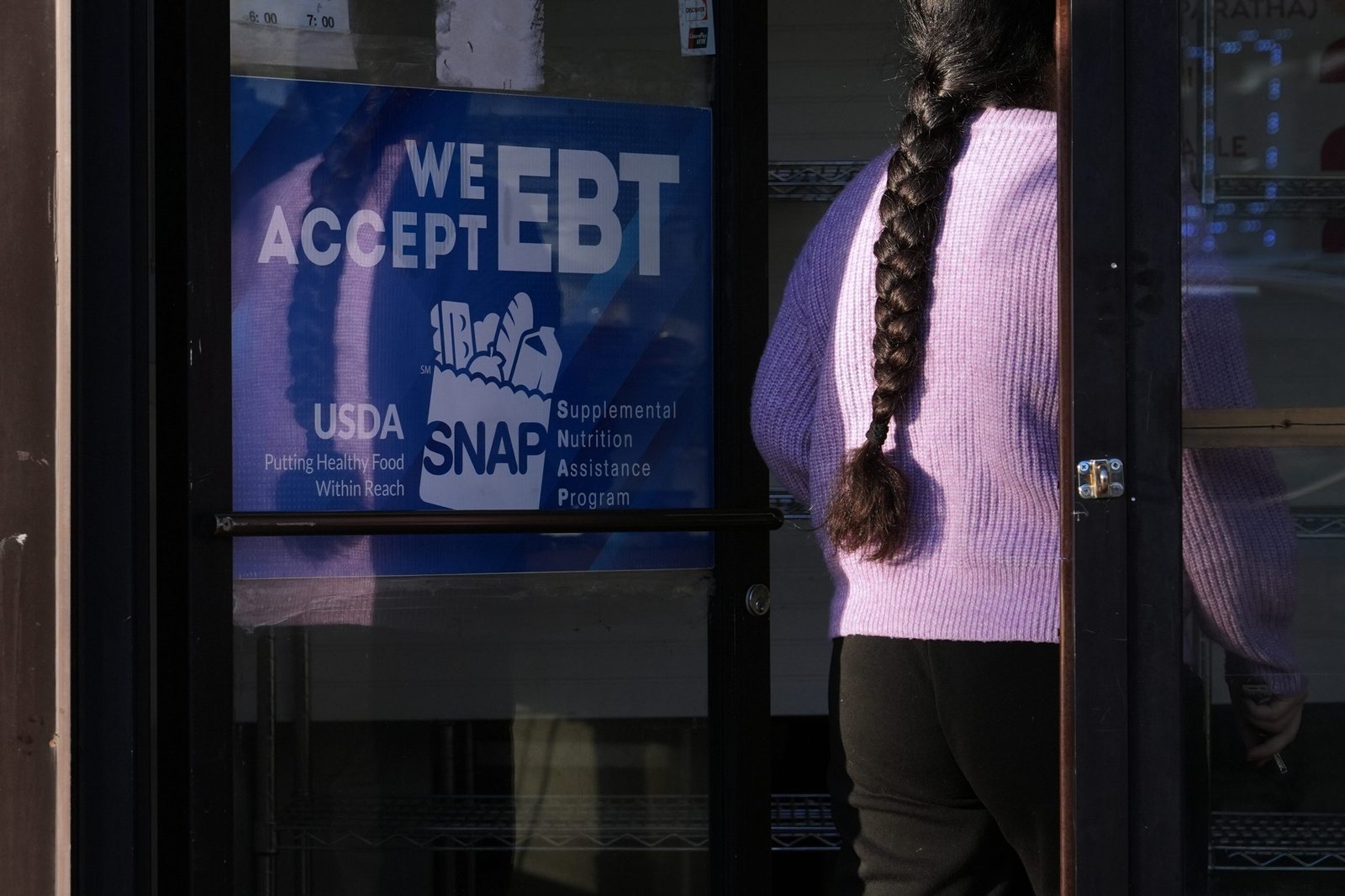
    A disabled former taxi driver who lives in Minneapolis, Garrow was making other arrangements to try to meet his nutritional needs when his benefit amount clicked into the EBT card he uses to buy food.

    “I was already planning what food shelves to go to and trying to make an appointment,” Garrow said.

    Garrow, who lives in the Elliot Twins Apartment, also said his neighbors received their SNAP benefits that day.

    Meanwhile, even as the shutdown was moving toward an end, the Trump administration continued to battle the release of SNAP funds in court.

    It appealed a ruling by the Boston-based 1st Circuit Court of Appeals that ordered the USDA to fully release SNAP funding to the U.S. Supreme Court last Friday.

    Minnesota Department of Children, Youth and Families Commissioner Tikki Brown indicated the appeals court’s ruling prompted the state to release benefits.

    “As the longest shutdown in U.S. history concludes its sixth week, we are incredibly grateful Minnesotans will soon have access to their food benefits thanks to important legal system updates,” Brown said in a statement.

    Then the Supreme Court said the Trump administration could continue to block SNAP payments and sent the case back to the federal appeals court, which once again ordered the release of funds on Monday. The Trump administration appealed again to the Supreme Court.

    The high court on Tuesday extended its order that allows the Trump administration to withhold paying for full food stamp payments in November. The move appeared to anticipate that the 43-day long shutdown would end this week, allowing all of the nation’s 42 million SNAP recipients to once again be able to count on the program. 

    So, the SNAP crisis is over. But food stamps have never been cut off in any other government shutdown and the fighting during this shutdown on Capitol Hill and in the courts and the Trump administration’s refusal to use emergency funds to pay benefits are likely to have a lingering impact on the nation’s poorest Americans.

    The post Minnesota among states facing Trump administration sanctions for releasing SNAP benefits appeared first on MinnPost.

  • Minnesota’s hemp-produced THC beverage and edible industry reels from provision to outlaw products in shutdown bill 

    Minnesota’s hemp-produced THC beverage and edible industry reels from provision to outlaw products in shutdown bill 

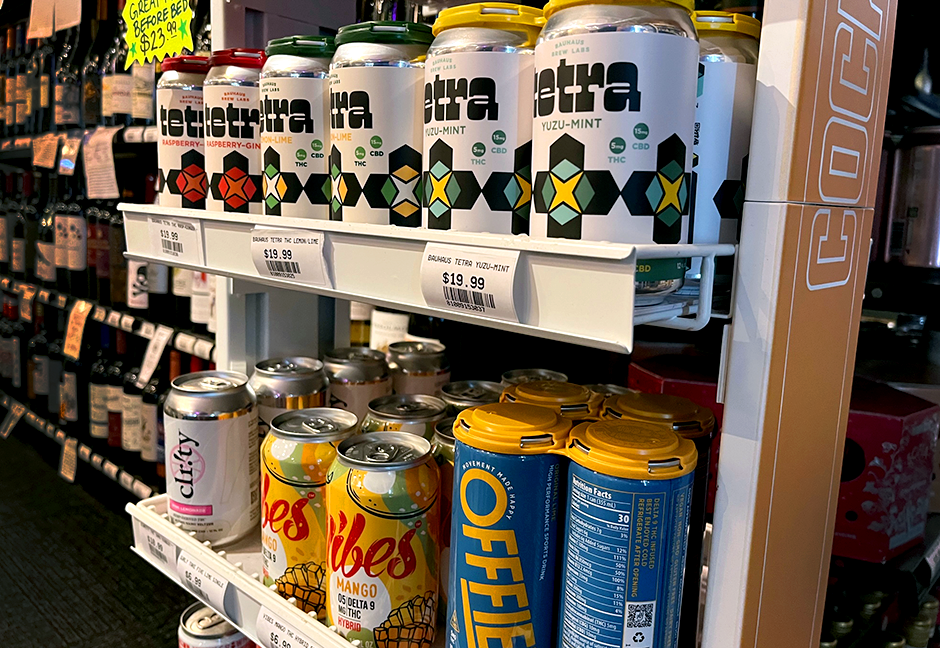
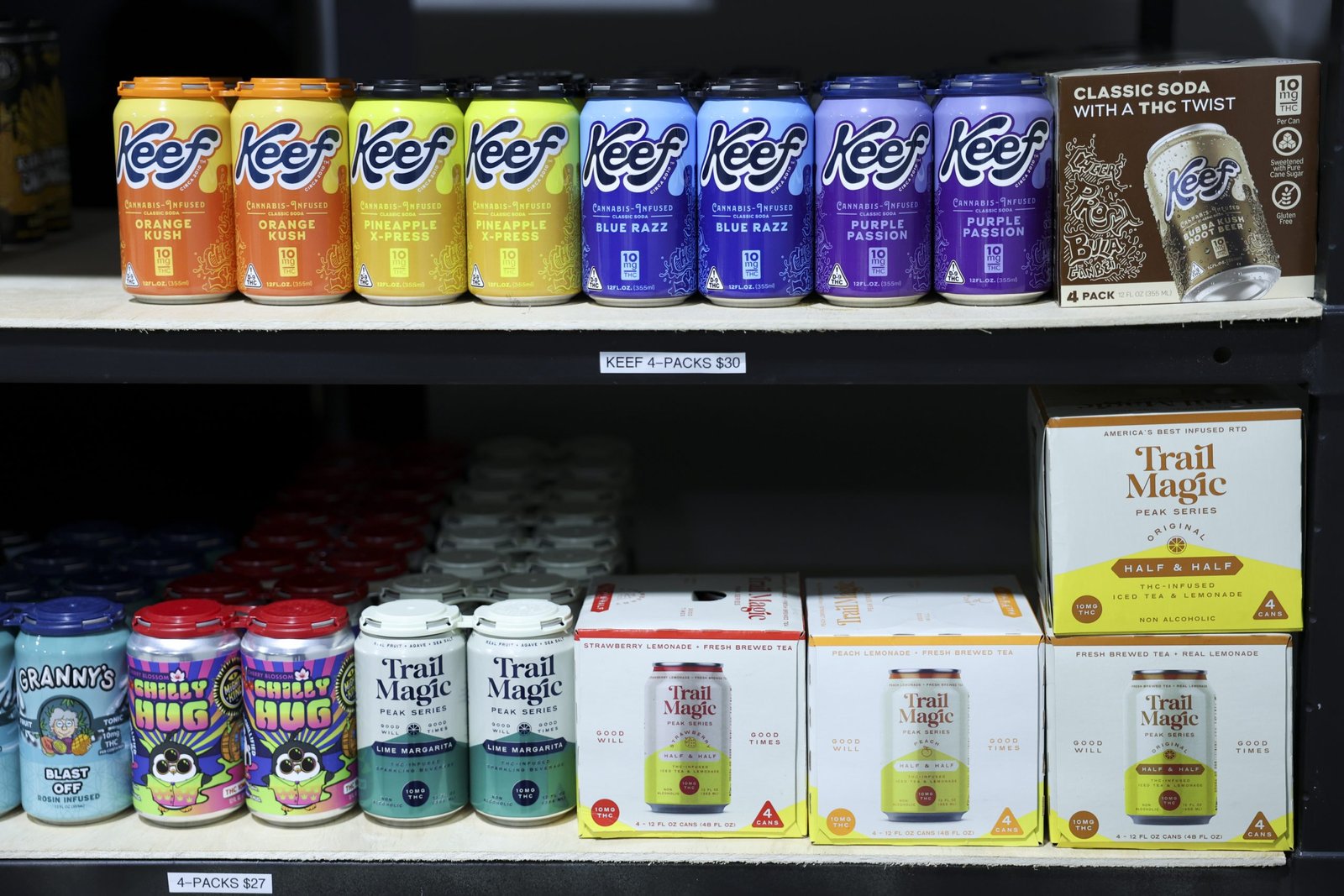
    Minnesota’s booming industry of intoxicating products made by hemp, including beverages and gummies, are reeling from the ban on their products that is making its way through Congress in a bill that would reopen the federal government.

    The bill gives the industry 365 days before all products that contain more than 0.4 milligrams of THC — a trace amount — are outlawed. Christopher Lackner, president of the Hemp Beverages Alliance, is hoping that gives the industry time to lobby against the provision, which he called “arbitrary” and “punitive.”

    He said he’s betting on “a pushback from consumers, suppliers and distributors and everyone else in the supply chain” that will be impacted by the impending ban on hemp-produced THC-infused products.

    “Our hope as an industry is that Congress will come back and meet with all of the stakeholders and build a federal framework for hemp beverages that works,” Lackner said.

    The 2018 Farm Bill legalized hemp by removing it from the federal definition of marijuana under the Controlled Substances Act and treating it as an agricultural commodity. It also opened the door to the production of “intoxicating” products derived from hemp.

    Minnesota led the nation in taking advantage of the redefinition of hemp. Whitney Economics’ latest THC Beverage Report estimated that total U.S. THC beverage sales topped $1.1 billion in 2024, with Minnesota being a key state in this growth.

    Success has come at a price, however. Competing industries, mostly the nation’s nascent legal marijuana industry and, more recently, the beer and spirits industries, lobbied furiously to close what they considered a “loophole” in the 2018 farm bill that has led to the explosion of hemp-infused products.

    The marijuana and alcohol industries say hemp products are largely unregulated and some contain dangerously high amounts of THC. They also say there are no labeling and marketing restrictions or efforts to keep THC-infused drinks and edibles from children.

    On Monday, the Beer Institute, the Distilled Spirits Council of the United States and other alcohol trade groups sent a lobbying letter to members of Congress, urging them to reject an amendment by Sen. Rand Paul, R-Ky., that would have stripped the language from the shutdown bill.

    “Manufacturers of beverage alcohol, one of the most highly regulated consumer products, urge the Senate to reject Paul’s attempts to allow hemp-derived THC products to be sold devoid of federal regulation and oversight across the country,” the letter said.

    Their argument won the day. 

    The legislation that would end the shutdown contains three appropriations bills to fund several government agencies through fiscal year 2026, including the U.S. Department of Agriculture, and that’s where the hemp provision was inserted. All other federal agencies would receive short-term funding – until the end of January – under a continuing resolution, or CR.

    While the hemp industry lost its lobbying fight, it did have supporters in the U.S. Capitol. Paul, for instance, prevented Senate GOP leaders from obtaining unanimous consent to fast-track the shutdown bill, which overcame a six-week Democratic filibuster Sunday evening on a 60-40 vote. 

    The U.S. Senate voted to table — or reject — Paul’s amendment, on a 76-24 vote. Minnesota Sens. Amy Klobuchar and Tina Smith were in the minority supporting the effort to strip out the hemp language.

    “Senator Klobuchar voted against the hemp provision because she thought it would hurt the state’s small businesses and believes efforts by Congress to regulate hemp products should account for states like Minnesota that already have strong regulations in place,” a spokesman for Klobuchar said.

    Lackner also said that lawmakers in Congress were trampling on the rights of states to regulate intoxicating hemp products.

    “This is a slap in the face of states like Minnesota that have developed regulatory frameworks based on stakeholder input,” he said.

    Hemp change ‘wrong from every angle

    Steve Brown, CEO of Nothing but Hemp, a company in northeast Minneapolis that makes THC-infused gummies and beverages, emulsions for breweries and many other hemp-based products, said the shutdown bill may drive him to cross over to the marijuana industry.

    That’s because if the legislation is signed into law by President Donald Trump, as expected, the manufacture and sale of his products will be illegal under federal law, with a huge impact on his market. 

    Brown said liquor stores could no longer offer his drinks on their shelves. Small breweries, which have tried to combat a drop in beer sales by offering THC-infused drinks that are more popular than alcohol among the young, would also be breaking federal law if they continued to offer those libations.

    And retail stores, including Target, would likely stop selling THC-infused beverages and other products because customers would no longer be able to pay for them with their credit cards due to federal banking regulations.

    Shipping THC-infused products across the state lines would also be against federal law.

    “I think it’s wrong from every angle,” Brown said of the hemp provision in the shutdown legislation.

    Brown said he manufactures close to 2 million cans of beverages a year and that his operation of THC-infused drinks is small compared to other companies in Minnesota.

    He said he started his business at a kiosk with a sign that said “Try CBD,” a hemp component that is not intoxicating and is touted for its medicinal value. If hemp-infused drinks and edibles are outlawed, Brown says he’s preparing to turn Nothing but Hemp, which has 60 employees, into a marijuana business.

    Jim Taylor, spokesman for the Minnesota Office of Cannabis Management, said it “is reviewing any draft or proposed (hemp) language for its impact on Minnesota.”

    “This is a complex policy issue, and we are reviewing it with the Attorney General,” Taylor said.

    Minnesota Attorney General Keith Ellison recently signed a letter with 38 other attorneys general that said unregulated THC products pose a threat to the general public.  

    David Ladd, president of the Minnesota Industrial Hemp Association, said his group has tried to stay as neutral as possible on the issue. But he said the state’s hemp growers also do not want to “stifle innovation and investment” in hemp, which can be used to produce a wide variety of products, including biofuels, paper and textiles.   

    “I get regulations and guard rails for hemp products,” Ladd said. “But an arbitrary change in the definition of hemp is not a substitute for measured regulation.”

    The U.S. Senate gave final approval of the shutdown bill late Monday. Now the legislation heads to the U.S. House, where Minnesota’s Democratic House members are expected to  join the state’s two Democratic senators — Klobuchar and Smith — in rejecting the legislation.

    So the longest government shutdown is on the way to an end after eight moderate Democrats in the U.S. Senate dropped their opposition to the bill. They said GOP leaders offered a fair deal because the legislation would protect programs from Trump budget cuts and Senate Leader John Thune promised a vote on the extension of Affordable Care Act subsidies Democrats had sought to in return for their votes to reopen the government.

    That provoked an onslaught of criticisms from Democratic colleagues — and Democratic voters.   

    Rep. Angie Craig, D-2nd District, for instance, posted on social media that ”if people believe this is a ‘deal,’ I have a bridge to sell you.”

    The post Minnesota’s hemp-produced THC beverage and edible industry reels from provision to outlaw products in shutdown bill  appeared first on MinnPost.

  • Klobuchar, a Trump tariff foe, heartened by arguments in SCOTUS case brought by Minnesota and other states

    Klobuchar, a Trump tariff foe, heartened by arguments in SCOTUS case brought by Minnesota and other states

    WASHINGTON – During oral arguments Wednesday on a case brought by Minnesota and other states, U.S. Supreme Court justices appeared skeptical of President Donald Trump’s tariff policies.

    Those levies have also been targeted in the U.S. Senate, which has recently approved three resolutions aimed at reining in Trump’s tariff policies.

    One resolution was co-sponsored by Sen. Amy Klobuchar, D-Minn. It would reject Trump’s declaration of a national emergency to impose tariffs on Canada.

    The win on that resolution, and on two others that also rejected the emergency declaration, was made possible when a group of GOP senators joined all Democrats in supporting Klobuchar’s legislation.

    Republican Sens. Rand Paul of Kentucky, Lisa Murkowski of Alaska, Susan Collins of Maine and Mitch McConnell of Kentucky voted for Klobuchar’s resolution.

    The legislation faces long odds in the U.S. House. But the bipartisan votes for Klobuchar’s bill, along with GOP support for a resolution that would end global tariff authority, and another that focused on Brazil, served as a rebuke of Trump’s use of a 1977 emergency law to impose the global duties.

    The president claimed the tariffs are warranted because the country’s trade deficit qualifies as a national emergency, a claim whose validity will now be decided by the Supreme Court.

    The high court will now decide on the case against Trump tariffs brought by Minnesota and 11 other states and a similar case filed by small businesses that also challenged the steep, widespread duties the president has imposed on foreign friends and enemies alike.

    Klobuchar was among a handful of lawmakers attending the oral arguments.

    “I’m glad I was there,” she told MinnPost, citing the impact of tariffs on small businesses and farmers in Minnesota, including soybean farmers who have seen their exports to China, a prime market, evaporate because of Trump’s trade wars.

    Klobuchar also said, “I thought the hearing went well.”

    The Supreme Court heard challenges to two sets of tariffs. One is aimed at stopping shipments of fentanyl and chemicals used to make the drug from China, Mexico and Canada. Another targets new tariffs imposed on nearly every country. 

    Trump imposed those tariffs to wrangle better trade deals and has boasted about the billions of dollars they have brought the U.S. Treasury.  

    Those tariffs, which are paid by importers to customs agencies before being sent to the Treasury, are largely passed along to consumers as higher prices for imported goods. Many economists, and some of the justices on Wednesday, call them a tax. 

    Trump has also said he has had to impose the levies to reduce a trade deficit the president says has brought the United States to the brink of an economic and national security catastrophe.

    The justices sharply questioned lawyers representing the plaintiffs of those cases and government attorneys over the president’s authority to use tariffs as a weapon in a national emergency and if a national emergency existed based on Trump’s allegations of unfair trade practices.

    ‘Not a presidential power’ 

    A decision is expected to be expedited because of the high stakes in the case for the government, U.S. companies and other countries, as well as the daunting task of refunding the tariffs if the high court decides they are unconstitutional. So, a ruling could come later this month or early next month.

    “It’s just a mess,” Klobuchar said of the prospect of having to return tens of billions of dollars in tariff money. “That’s why you don’t want the president to use statutes in a way that is not legal.”

    Justices Elena Kagan, Sonia Sotomayor, Ketanji Brown Jackson and Chief Justice John Roberts appeared to be strongly against the government during more than two hours of oral arguments.

    “I just don’t understand,” Sotomayor said of the arguments of the government’s lawyer, Solicitor General D. John Sauer. “This is not a presidential power. It’s a congressional power.”

    At issue is whether the tariffs are “regulatory,” which would give Trump some authority to use them, or “revenue-raising.” Only Congress has the authority to impose revenue-raising measures.

    Roberts said Trump’s tariffs were an “imposition of taxes on Americans and that has always been the core power of Congress.” 

    Justices Samuel Alito, Clarence Thomas and Brett Kavanaugh appeared to be open to Sauer’s arguments. The court’s conservative majority has been sympathetic to Trump’s use of broad presidential power.

    Yet Justices Neil Gorsuch and Amy Coney Barrett had pointed questions for Sauer and those conservative justices could be swing votes.

    “It may not be a liberal versus conservative ruling,” Klobuchar said.

    Klobuchar said she was hopeful the justices would strip Trump of broad tariff authority.

    ‘Cautiously optimistic’

    She said her “favorite moment” during the oral arguments was when Gorsuch said in a loud voice that the power of taxation was unique and powerful and only Congress has the authority to impose taxes and decide the intent of the 1977 law.

    “I kept wanting to yell out from the back of the room that I know about congressional intent,” Klobuchar said.

    Meanwhile, Minnesota Attorney General Keith Ellison said he is “cautiously optimistic the court will hold the president’s extraordinary tariffs unlawful.”

    “The Supreme Court was rightly skeptical of the President’s extraordinary assertion of an unreviewable power to impose tariffs on any country, for any length of time, in any amount, simply by declaring an ‘emergency,’” Ellison said in a statement. “Most of the justices on the Supreme Court expressed serious concern about the President’s claimed power to tariff the entire world, without any grant of that power from Congress… .”

    The post Klobuchar, a Trump tariff foe, heartened by arguments in SCOTUS case brought by Minnesota and other states appeared first on MinnPost.

  • Despite court order of immediate payout, food stamp program in limbo after Trump administration orders recalculation of benefits

    Despite court order of immediate payout, food stamp program in limbo after Trump administration orders recalculation of benefits

    (Nov. 11) WASHINGTON – A week after two federal courts ordered the Trump administration to “immediately” pay food stamp benefits for November, none of the nation’s 42 million recipients, including 440,000 in Minnesota, have had any help and are likely to not receive it for weeks.

    The blame for the delay in releasing Supplemental Nutrition Assistance Program (SNAP) benefits to low-income Americans can be laid at the door of the U.S. Department of Agriculture (USDA).

    The agency has insisted that the federal shutdown has left its SNAP coffers empty and an emergency fund can only pay about half of the federal government’s obligations, about $8 billion, to fund the program for the month of November.

    In addition, the USDA has told states to recalculate the payouts to each beneficiary, who would now receive half of their benefits. The USDA also told the states to reduce benefits for households with a certain level of income and at least one working member by an additional 30%.

    That has frustrated states and imposed additional work on state agencies that administer the food stamp program (and in Minnesota, individual counties run SNAP).

    “(The USDA) did not allow states to reduce benefits by a uniform percent,” Department of Children, Youth and Families Commissioner Tikki Brown said in a press conference this week.

    Instead, because of the new income-based requirements, which were not mandated by Congress or the courts, states like Minnesota are forced to recode their eligibility systems – and ensure other safety net programs are not affected by the changes.

    That will take states like Minnesota some time, said Brown and USDA officials this week, leaving food insecure Americans without any immediate assistance.  

    SNAP benefits in Minnesota typically start at $298 a month for an individual, with increases depending on household size. If benefits are finally released to beneficiaries’ EBT cards, they will average $149 or less per individual.

    The post Despite court order of immediate payout, food stamp program in limbo after Trump administration orders recalculation of benefits appeared first on MinnPost.

  • Beer industry joins renewed push for feds to rein in THC-infused drinks, threatening lucrative Minnesota industry 

    Beer industry joins renewed push for feds to rein in THC-infused drinks, threatening lucrative Minnesota industry 

    WASHINGTON – The American beer industry has taken aim at makers of THC-infused beverages and edibles in a campaign that could have reverberations in Minnesota, a state that sparked a national explosion in the sales of hemp-derived beverages.

    The beer industry, which has seen sales drop — especially among younger consumers — has joined the marijuana industry in seeking federal regulation of THC-infused drinks, which are now only regulated by state laws.

    Minnesota Attorney General Keith Ellison recently shocked the hemp and THC beverage industries by signing a letter with 38 other state attorneys general to congressional leaders that urged Congress to clarify the federal definition of hemp.

    The letter said “bad actors” have exploited a “loophole” in the 2018 Farm Bill that allowed the sale of highly potent, unregulated THC products that pose a threat to the general public and especially to children.

    “Unless Congress acts, this gross distortion of the 2018 Farm Bill’s hemp provision will continue to fuel the rapid growth of an underregulated industry that threatens public health and safety and undermines law enforcement nationwide,” the letter said.

    At a recent conference sponsored by Semafor, Brian Crawford, CEO of the Beer Institute, a trade association that lobbies for the industry, said beer has been heavily regulated by federal agencies. He said brewers are subject to marketing, advertising and label regulation and must seek federal approval for their formulas.  

    There are age restrictions as well that are strictly enforced, Crawford said, and beer sales are prohibited to anyone under 21.

    Yet Crawford said there are no federal restrictions on THC-infused products. He said those “bad actors” in the THC beverage and gummy industries are packaging and marketing products in a way to appeal to children, including THC Nerd candies that are ultra-high potency THC edibles.

    “You will never see a beer ad that features Santa Clause or the Easter Bunny,” Crawford said.

    A ‘natural social tonic’ 

    An amendment approved in the House Agriculture Committee as it considered a massive new farm bill last year would alter the federal definition of legal hemp “to only include naturally occurring, naturally derived and non-intoxicating cannabinoids.”

    That means that any cannabinoid manufactured outside a hemp plant would be outlawed, criminalizing the production of hemp-based gummies, beverages and other edibles, as well as oils, soaps and other products made from hemp.

    Approved in 2022, a Minnesota state law allows for the production and consumption of hemp-based edibles and other products. But the hemp amendment in the now-stalled House Farm Bill would make these products illegal under federal law.

    Partisan gridlock in Congress has made it unlikely there would be a new Farm Bill this year. So, the fight over THC-infused products has shifted to the agriculture spending bill, one of the appropriations bills Congress is most likely to approve when the federal shutdown is over.

    Jake Bullock, cofounder of Cann THC-beverages that market themselves as “all natural social tonics,” said he joins Ellison and the other state attorneys general in supporting regulations that prevent “bad actors” from making very potent synthetically derived products and the marketing of any THC-infused products to children.

    But he also said overly broad regulations would hurt a $30 billion industry that employs 330,000 Americans.

    “We would be dumping the baby out with the bathwater,” Cann told MinnPost.

    Cann’s success exemplifies the exponential growth in the multi-billion-dollar market of intoxicating substances derived from hemp.

    Bullock said he began his business in Venice Beach, California, then produced his drinks in Minnesota after the state passed its law allowing the sale of hemp-infused products.

    He now sells his drinks in about 30 states and Cann products can be found in many liquor stores and other retail outlets in Minnesota. Recently that has included Target. 

    “The reason consumers like the products is that they work a lot like alcohol,” Bullock said. “If you like it you can have another one an hour later.”

    Bullock said drinking several cans of Cann can become intoxicating, but there’s no morning-after hangover. He also said many heavy drinkers have cut back on their alcohol consumption in favor of his beverages.

    Bullock also said Generation Z favored his drinks over alcohol because they socialize differently than older Americans and are less likely to spend money in bars.

    A need to address ‘bad actors’ 

    The potency in a THC-infused drink depends on how many milligrams of THC the product contains. State laws vary. In Minnesota, it’s limited to no more than 10 milligrams. Other states are stricter. Virginia and Connecticut cap it at 2 milligrams.   

    Yet Crawford said “bad actors” make drinks with as much as 200 milligrams of THC “in a 12 ounce can.”

    “There is a need to address that,” he said.

    Bullock, who also spoke at the Semafor event, told MinnPost he would agree to capping the THC levels nationally to about 5 milligrams. He also said he was OK with doing away with synthetic THC – lab-made chemicals designed to mimic the effects of delta-9 THC, the main psychoactive compound in natural cannabis.

    He said he thinks Ellison “has been misled” into signing a letter that asked Congress to “act decisively to clarify the (2018) Farm Bill’s definition of hemp to ensure intoxicating THC products are taken off the market.”

    Analysts say that would kill Minnesota’s THC-infused drink and edibles market.

    Ellison attempted to clarify his position in a statement entitled “Protecting Minnesota’s THC Industry”. In it, Ellison said he did not want the ban of all THC-infused products but sought federal regulations to “help prevent out-of-state companies from ignoring Minnesota’s carefully crafted THC regulations and selling harmful products in our state.”

    “Minnesota’s legalization of THC edibles was smart and safety-conscious, and unfortunately the loophole created by the federal government is anything but,” Ellison wrote. “As a result, there are highly potent THC products entering Minnesota that are being marketed to children, and I won’t stand by and let out-of-state businesses prey on young Minnesotans.”

    Yet public comments on the attorney general’s statement pointed out that the letter he signed would also ban THC-infused products that are intoxicating and would outlaw a lucrative industry in Minnesota.

    “The letter you signed explicitly calls for ‘prohibition on products containing intoxicating levels of THC — of any kind and no matter how it is derived,’” one commenter wrote.” Your letter would effectively unwind all of the good work Minnesota legislators have done over the last five years, recriminalize THC access for people looking to move past alcohol, and crush one of the few lifelines brewers have left.”

    While the beer industry may seek a crackdown on THC beverages, small brewers, facing a shrinking market, are increasingly involved in the hemp beverage market, creating alcohol-free THC-infused drinks.

    Meanwhile, Sen. Rand Paul, R-Kentucky, is urging Congress to delay any changes for 18 months to allow for a comprehensive study on the best ways to regulate the hemp industry.

    It’s not clear how Paul’s colleagues in Congress will respond.

    The post Beer industry joins renewed push for feds to rein in THC-infused drinks, threatening lucrative Minnesota industry  appeared first on MinnPost.

  • Democrats are hopeful again. But unresolved questions remain about party’s path forward

    Democrats are hopeful again. But unresolved questions remain about party’s path forward

    WASHINGTON (AP) — For a day, at least, beleaguered Democrats are hopeful again. But just beneath the party’s relief at securing its first big electoral wins since last November’s drubbing lay unresolved questions about its direction heading into next year’s midterm elections.

    The Election Day romp of Republicans stretched from deep-blue New York and California to swing states Georgia, Pennsylvania and Virginia. There were signs that key voting groups, including young people, Black voters and Hispanics who shifted toward President Donald Trump’s Republican Party just a year ago, may be shifting back. And Democratic leaders across the political spectrum coalesced behind a simple message focused on Trump’s failure to address rising costs and everyday kitchen table issues.

    The dominant performance sparked a new round of debate among the party’s establishment-minded pragmatists and fiery progressives over which approach led to Tuesday’s victories, and which path to take into the high-stakes 2026 midterm elections and beyond. The lessons Democrats learn from the victories will help determine the party’s leading message and messengers next year — when elections will decide the balance of power in Congress for the second half of Trump’s term — and potentially in the 2028 presidential race, which has already entered its earliest stages.

    “Of course, there’s a division within the Democratic Party. There’s no secret,” Sen. Bernie Sanders told reporters at a Capitol Hill press conference about the election results.

    Sanders and his chief political strategist pointed to the success of New York City Mayor-elect Zohran Mamdani, a democratic socialist, as a model for Democrats across the country. But Rep. Suzan Del Bene, who leads the House Democrats’ midterm campaign strategy, avoided saying Mamdani’s name when asked about his success.

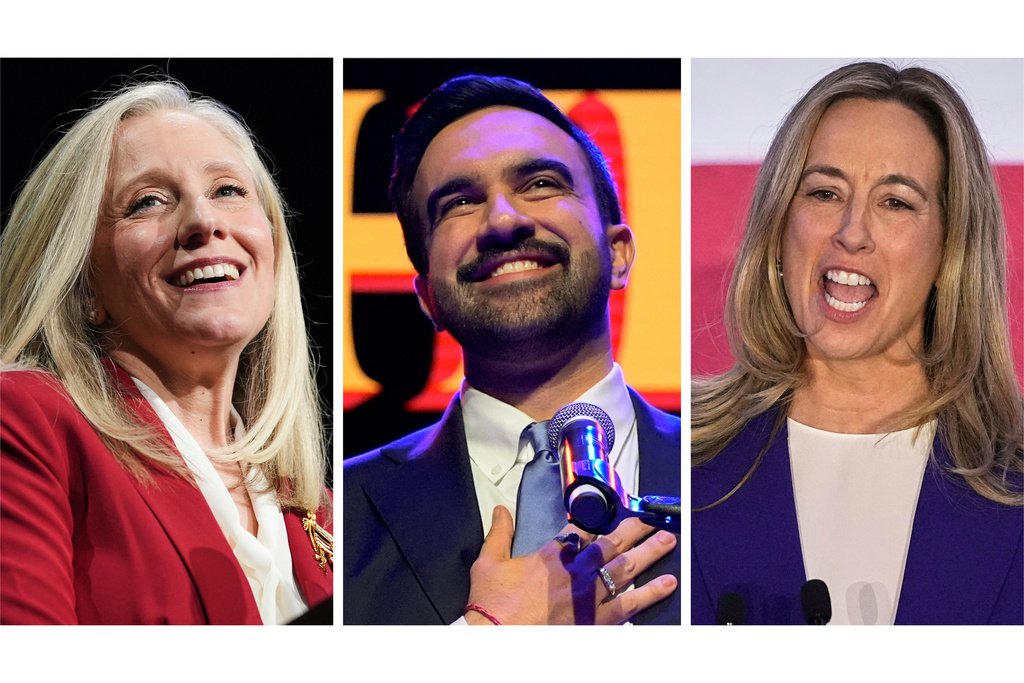
    Del Bene instead cheered the moderate approach adopted by Democrats Abigail Spanberger and Mikie Sherrill in successful races for governor in Virginia and New Jersey as a more viable track for candidates outside of a Democratic stronghold like New York City.

    “New York is bright blue … and the path to the majority in the House is going to be through purple districts,” she told The Associated Press. “The people of Arizona, Iowa and Nebraska aren’t focused on the mayor of New York.”

    Pennsylvania Gov. Josh Shapiro, a likely Democratic presidential prospect who campaigned alongside Democrats in several states leading up to Tuesday’s elections, noted the candidates hit on a common issue that resonated with voters, regardless of location.

    “All of these candidates who won in these different states were focused on peoples’ everyday needs,” Shapiro said. “And you saw voters in every one of those states and cities showing up to send a clear message to Donald Trump that they’re rejecting his chaos.”

    Intraparty criticism

    Amid Democrats’ celebratory phone calls and news conferences, members of the party’s different wings had some sharp critiques for each other.

    While Shapiro cheered the party’s success during a Wednesday interview, he also acknowledged concerns about Mamdani in New York.

    Shapiro, one of the nation’s most prominent Jewish elected leaders, said he’s not comfortable with some of Mamdani’s comments on Israel. The New York mayor-elect, a Muslim, has described Israel’s response to the Oct. 7 attacks as “genocide” against the Palestinian people and has been slow to condemn rhetoric linked to anti-Semitism.

    “I’ve expressed that to him personally. We’ve had good private communications,” Shapiro said of his concerns. “And I hope, as he did last night in his victory speech, that he’ll be a mayor that protects all New Yorkers and tries to bring people together.”

    Meanwhile, Sanders’ political strategist, Faiz Shakir, warned Democrats against embracing “cookie cutter campaigns that say nothing and do nothing” — a reference to centrist Democrats Spanberger and Sherrill.

    Minneapolis Mayor Jacob Frey, a Democrat who defeated democratic socialist Omar Fateh to win a third term, said at a news conference Wednesday that “we have to love our city more than our ideology.”

    “We need to be doing everything possible to push back on authoritarianism and what Donald Trump is doing,” Frey said. “And at the same time, the opposite of Donald Trump extremism is not the opposite extreme.”

    Democrats win everywhere

    Despite potential cracks in the Democratic coalition, it’s hard to understate the extent of the party’s electoral success.

    In Georgia, two Democrats cruised to wins over Republican incumbents in elections to the state Public Service Commission, delivering the largest statewide margins of victory by Democrats in more than 20 years.

    In Pennsylvania, Democrats swept not only three state Supreme Court races, but every county seat in presidential swing counties like Bucks and Erie Counties, including sheriffs. Bucks County elected its first Democratic district attorney as Democrats there also won key school board races and county judgeships.

    Maine voters defeated a Republican-backed measure that would have mandated showing an ID at the polls. Colorado approved raising taxes on people earning more than $300,000 annually to fund school meal programs and food assistance for low-income state residents. And California voters overwhelmingly backed a charge led by Gov. Gavin Newsom to redraw its congressional map to give Democrats as many as five more House seats in upcoming elections.

    Key groups coming back to Democrats

    Trump made inroads with Black and Hispanic voters in 2024. But this week, Democrats scored strong performances with non-white voters in New Jersey and Virginia that offered promise.

    About 7 in 10 voters in New Jersey were white, according to the AP Voter Poll. And Sherrill won about half that group. But she made up for her relative weakness with whites with a strong showing among Black, Hispanic and Asian voters.

    The vast majority — about 9 in 10 — of Black voters supported Sherrill, as did about 8 in 10 Asian voters.

    Hispanic voters in New Jersey were more divided, but about two-thirds supported Sherrill; only about 3 in 10 voted for the Republican nominee, Jack Ciattarelli.

    The pattern was similar in Virginia, where Spanberger performed well among Black voters, Hispanic voters and Asian voters, even though she didn’t win a majority of white voters.

    Democrats will soon face a choice

    The debate over the party’s future is already starting to play out in key midterm elections where Democrats have just begun intra-party primary contests.

    The choice is stark in Maine’s high-stakes Senate race, where Democrats will pick from a field that features establishment favorite, Gov. Jan Mills, and Sanders-endorsed populist Graham Platner. A similar dynamic could play out in key contests across Massachusetts, New York, Texas and Michigan.

    Michigan Democratic Senate candidate Abdul El-Sayed, who is aligned with the progressive wing of the party, said the people he speaks to are demanding bold action to address their economic concerns.

    “Folks are so frustrated by how hard its become to afford a dignified life here in Michigan and across the country,” he said.

    “I’m sure the corporate donors don’t want us to push too hard,” El-Sayed continued. “My worry is the very same people who told us we were just fine in 2024 will miss the mandate.”

    ___

    Associated Press reporter Mike Catalini in Newark and Joey Cappelletti in Washington contributed.

    The post Democrats are hopeful again. But unresolved questions remain about party’s path forward appeared first on MinnPost.

  • Anatomy of a news story: ’60 Minutes’ invites audience into the editing process with Trump interview

    Anatomy of a news story: ’60 Minutes’ invites audience into the editing process with Trump interview

    During his “60 Minutes” interview, President Donald Trump said Senate Democratic Leader Chuck Schumer would rather see the country fail than Republicans do well, complained about investigators searching through his wife’s closet, spoke in detail about ending wars and turned the tables on interviewer Norah O’Donnell to ask about safety in Washington, D.C.

    None of that was seen by people who watched the CBS telecast Sunday night.

    Less than half of O’Donnell’s interview, conducted Friday, actually made it onto the air. But CBS posted a transcript and video of the full 73-minute discussion online, so viewers could see for themselves what the president said that the network deemed worthy for inclusion in the 28-minute on-air segment.

    That offered viewers a rare look inside the editing process at one of journalism’s best-known institutions, showing the dozens of decisions on clarity and newsworthiness that go into telling the story you see on television.

    Beyond “60 Minutes,” the process is essentially the same throughout the world of journalism, from local newspapers to The New York Times, from specialty websites to The Associated Press. In short: Much like the old notion that everyone’s a critic, with this move everyone can be an editor.

    A contrast to how ‘60 Minutes’ has worked throughout its history

    Release of the Trump “outtakes” contrasted with CBS’ treatment of the “60 Minutes” interview with Kamala Harris last fall. Trump sued CBS, claiming the interview with his Democratic opponent was deceptively edited, based on two different clips that were aired on the newsmagazine and “Face the Nation.”

    CBS did not release a transcript of its Harris interview for four months, and not until the Trump-controlled Federal Communications Commission had applied public pressure. On a routine basis, “60 Minutes” — and most journalists — don’t release raw material in this way.

    If CBS News is going to change its practices routinely in the future, one former “60 Minutes” producer said it should be up front with its viewers about it. Tom Bettag, who worked at the broadcast in the 1980s and is now a journalism professor at the University of Maryland, said it’s a product of the times in which we live, but there’s a downside to the practice of letting people in on the editing.

    “I think there’s a very good reason not to allow people to do that, in order to avoid the arguments of ‘you should have done this’ or ‘you should have done that,’” Bettag said. “The assumption has been that your audience trusts you to use good judgment and to be fair.”

    From the very start, the edited Trump interview showed a clear difference from the raw material. On the broadcast, O’Donnell’s interview began with discussion of the government shutdown. But when the two actually sat down, she started by asking the president about his just-concluded meeting with Chinese President Xi Jinping.

    That’s essentially a call journalists make every day in crafting reports: Pick material to emphasize that seems the most newsworthy, or of interest to the most people.

    “The newsiest portions made the broadcast, which is why programs edit in the first place,” Brian Stelter wrote about the “60 Minutes” interview for CNN’s “Reliable Sources” newsletter.

    The first words out of Trump’s mouth — “Democrats’ fault” — came before O’Donnell even completed her question. That clearly showed where Trump was going, and the broadcast interview reflected that. But it was edited several times for length, to avoid tangents and the repetitiveness of partisan attacks.

    Of Schumer, Trump said, “He would rather see the country fail than have Trump and the Republicans do well” — a comment left out of the broadcast.

    On cutting room floor: Trump says O’Donnell ‘should be ashamed’

    Trump also told O’Donnell that she “should be ashamed” to be asking him about political retribution. That was left off the broadcast. Trump’s complaints about New York Attorney General Letitia James and former FBI director James Comey were abbreviated — although his comment that James was a “terrible, dishonest person” was left in.

    “I was struck by how much of what didn’t air from the interview were the parts that seemed more rant-filled and often confusing,” wrote journalist Rick Ellis, who painstakingly compared transcripts of the full interview and what CBS broadcast for the website All Your Screens.

    Trump brought up his predecessor, President Joe Biden, more than 40 times in the interview but only six instances made the broadcast, Ellis said. The headline for Ellis’ story read, “’60 Minutes’ Edits (Most of) the Crazy Out of Its Interview with Donald Trump.”

    CBS edited a handful of fact-checks into the “60 Minutes” story, most notably adding a military official’s refutation of Trump’s claim that China and Russia were testing nuclear weapons. There were a handful of missed opportunities, such as Trump’s claim that he was able to beat all of the legal “nonsense that was thrown at me.”

    CBS removed an exchange during a discussion of crime in cities in which Trump asked O’Donnell whether she felt safer in Washington, D.C., after the president ordered the National Guard to patrol there. Generally, journalists like to keep the focus off themselves.

    “You see a difference?” Trump asked her.

    Responded O’Donnell: “I think I’ve been working too hard. I haven’t been out and about that much.”

    “60 Minutes” pointed out that O’Donnell’s interview was conducted exactly a year after Trump filed his lawsuit regarding the Harris interview. But it left out of the broadcast Trump’s discussion about management changes at CBS’ parent company Paramount since the company agreed to pay him $16 million to settle the case.

    “They paid me a lot of money for that,” Trump said. “You can’t have fake news. You’ve gotta have legit news. And I think that’s happening.” He praised Paramount’s new leaders along with the news division’s new editor-in-chief, The Free Press founder Bari Weiss.

    That editing decision angered a Trump critic, Tim Miller at the Bulwark website. “’60 Minutes’ did not air the part where Trump discusses his success extorting the network and calls them Fake News,” he wrote on X. “This edit is harmful to me and I’m considering suing.”

    CBS’ editing seemed to draw fewer complaints from Trump supporters. The White House’s “rapid response” X feed posted copies of both the full interview and what CBS put on the air.

    Jorge Bonilla, writing for the conservative media watchdog Newsbusters, wrote that O’Donnell’s first interview with the newsmagazine contrasted with its “debacle” with Lesley Stahl five years ago, when Trump walked out.

    “It appears,” he wrote, “that the Bari Weiss era is now full upon us at CBS News.”

    ___

    David Bauder writes about the intersection of media and entertainment for the AP. Follow him at http://x.com/dbauder and https://bsky.app/profile/dbauder.bsky.social

    The post Anatomy of a news story: ’60 Minutes’ invites audience into the editing process with Trump interview appeared first on MinnPost.

  • Did the federal government warn retailers not to give discounts to SNAP food stamp recipients?

    Did the federal government warn retailers not to give discounts to SNAP food stamp recipients?

    Yes.

    The day before federal funding ran out for SNAP, the U.S. Agriculture Department warned retailers against giving discounts to recipients of the nation’s largest food assistance program.

    “OFFERING DISCOUNTS OR SERVICES ONLY TO SNAP PAYING CUSTOMERS IS A SNAP VIOLATION UNLESS YOU HAVE A SNAP EQUAL TREATMENT WAIVER,” the Oct. 31 notice said.

    The Supplemental Nutrition Assistance Program, formerly known as food stamps and called FoodShare in Wisconsin, provides food assistance for 42 million low-income people. 

    Funding ran out because of the government shutdown, though the Agriculture Department said Nov. 3 it would provide partial SNAP funding for November.

    Federal regulations state: “No retail food store may single out” SNAP recipients “for special treatment in any way.”

    Some retailers offered discounts.

    Retailers can apply for a waiver to offer SNAP discounts on healthier food purchases. SNAP cost $100 billion in 2024, 1.5% of the federal budget.

    This fact brief, originally published by Wisconsin Watch, is responsive to conversations such as this one.

    Sources on feds’ instructions to retailers

    • Associated Press: Judges order Trump administration to use emergency reserves for SNAP payments during the shutdown
    • U.S. Agriculture Department: Reminder: SNAP-EBT Authorized Retailers Must Comply with the SNAP Equal Treatment Rule
    • Wisconsin Watch: Do half the residents in one rural Wisconsin county receive food stamps?
    • CBS News: Trump administration will use SNAP contingency fund to pay partial food stamp benefits
    • U.S. Agriculture Department: Waiver Requests to Offer Incentives to SNAP Recipients at SNAP Authorized Stores
    • Dane County Farmers Market: Instagram post on discounts

    The post Did the federal government warn retailers not to give discounts to SNAP food stamp recipients? appeared first on MinnPost.