Category: USA

  • Michele Tafoya isn’t in the Senate race yet, but she’s been busy politicking on social media

    Michele Tafoya isn’t in the Senate race yet, but she’s been busy politicking on social media

    WASHINGTON – Speculation about Michele Tafoya entering the race for retiring U.S. Sen. Tina Smith’s seat has heated up in the past few days, but the former sports broadcaster has been attacking Democrats vying for that seat for a while on social media.

    Tafoya, who launched her own podcast after retiring from football coverage in 2022, has aligned mostly with GOP policies, though she has characterized herself as a “pro-choice conservative with libertarian leanings.”

    She first indicated she might run for Smith’s seat when the Democratic senator announced her retirement in February.

    “I think Minnesota is starving for a moderate Republican who doesn’t tell them that they’re going to ban abortion who is the antithesis of the Tim Walz regime,” Tafoya told WDAY Radio back then.

    But Tafoya never got into the race, which attracted Democratic U.S. Rep. Angie Craig and Democratic Lt. Gov. Peggy Flanagan and Republicans Royce White and Adam Schwarze. Former Minnesota Republican Party Chairman David Hann is also considering a Senate run.

    While Tafoya is not an official candidate, she has stepped up her political activities.

    She’s ramped up attacks on Gov. Tim Walz, who has become a favorite GOP punching bag because of the findings of fraud in Minnesota’s social welfare programs, and has given the governor’s Republican opponents a platform on her podcast.

    Tafoya, an Edina resident who also once had a talk show on WCCO Radio, also met with National Republican Senatorial Committee officials last week, an NRSC source told MinnPost. She could not be reached for comment.

    Tafoya has also attacked many Democrats on social media, including Craig and Flanagan, trolling them on X.

    When Craig posted this past weekend that the mass shooting at Brown University “has left my family heartbroken” and, “It’s time to address gun violence in our country,” Tafoya snapped back on X.

    “Time to address it? We’ve been addressing it for decades. We’ve been ‘having the conversation.’ What do you mean to do about it? @AngieCraigMN?” Tafoya said.

    When Craig recently posted that she is running for the Senate “to make sure our rural communities and every Minnesotan sees the change they deserve,” Tafoya retorted, “What is the change they deserve? Can you be specific? @AngieCraigMN.”

    When Craig decried the xenophobic language President Donald Trump used to denigrate Minnesota’s Somalis, calling it “dehumanizing” and a “moral failure,” Tafoya also had a response on X.

    “And two things can be true,” Tafoya posted. “It is also a moral failure that Minnesotans have been stolen from to the tune of billions. It’s also a failure of governance.”

    Tafoya, who has never run for office, has also struck out at Flanagan.

    When Flanagan posted on X that she was glad Walz restored food stamp benefits during the shutdown, which delayed those payments for weeks, and said “we’ll keep doing everything we can to keep (Minnesotans) fed,” Tafoya had a response.

    “Just like you allowed ‘Feeding Our Future’ to commit $250 million in fraud? And NOW Minnesota taxpayers should trust you?” Tafoya posted.

    And when Flanagan posted a video saying there were only four women in the Senate with children under the age of 18 and “no wonder we haven’t made progress on making childcare affordable or passing paid medical leave, or increasing the minimum wage,” Tafoya trolled again.

    “Back to identity politics,” Tafoya said. “All I care about is whether or not the Senators are capable.”

    Flanagan spokeswoman Alexandra Fetissoff said that “whatever candidate the GOP picks will just rubber stamp Donald Trump’s agenda, which favors billionaires over working Minnesotans.”

    White, who has repeated conspiracy theories about the coronavirus pandemic and about “Jewish elites,” and made other statements that angered GOP officials, including saying that “women have become too mouthy,” said the party is doing everything to find a mainstream Republican to run against him.

    “When I heard she was meeting with the NRSC, my RINO (Republicans in Name Only) detector went up.”

    Jesse Garza, a spokesman for Schwarze, said it would be difficult for Tafoya to create the infrastructure she needs, including the wooing of delegates that will be chosen in GOP caucuses in February who will vote for a nominee at the end of May.

    David Schultz, a political science professor at Hamline University, said there are good reasons for Tafoya to run. “She’s got enough ego and enough of a following and the Republican field is shallow.”

    For the GOP, the chance to run against Walz has been more appealing than the chance to run for an open Senate seat, resulting in a crowded field.

    But Schultz said that “Walz now owns the word ‘fraud,” and the governor’s popularity has plummeted, so he could ‘drag’ down” other Democratic candidates in the state, including the Democratic nominee for Senate.

    That could make the race more appealing for someone like Tafoya because the Senate seat considered safely Democratic may not be as safe for Democrats anymore, Shultz said. That is especially true if the Democratic nominee is Flanagan, a progressive who would struggle in conservative Greater Minnesota, the professor said. Craig is a more moderate candidate.

    The post Michele Tafoya isn’t in the Senate race yet, but she’s been busy politicking on social media appeared first on MinnPost.


  • Hemp industry fighting federal ban with bills to regulate, not outlaw, THC gummies and drinks

    Hemp industry fighting federal ban with bills to regulate, not outlaw, THC gummies and drinks

    WASHINGTON – After a stunning defeat in Congress last month, the makers of hemp-derived drinks, gummies and other products are preparing to combat a ban on the popular intoxicating edible that will go into effect next year.

    Since Congress approved a federal ban on all intoxicating hemp-derived products in the bill that ended the federal shutdown last month, a reeling industry is hoping its friends on Capitol Hill will succeed in an effort to convince lawmakers to impose federal regulations on their products, instead of outlawing them.

    Several bills have already been introduced or are in the works.

    Rep. Nancy Mace, R-S.C., has introduced a bill that would overturn the new law that outlaws all hemp products that contain more than 0.4 milligrams of THC or any other psychoactive substance. Under the new law, nearly all hemp-derived consumable products, including many CBD products, would be illegal under federal law.  

    But that approach has failed before.

    During Senate debate on the budget bill, Sen. Rand Paul, R-Ky., tried to strip out the hemp provision. But his amendment was killed on a 76-24 vote.

    Paul says that vote showed there is no support to keep intoxicating hemp products legal and free of all federal regulations, which was the result of the removal of hemp from the federal controlled substances list by the 2018 farm bill.

    So, Paul is considering a bill that makes it clear that states like Minnesota that have their own regulations on hemp-based intoxicating products can continue to manufacture and sell them until a new law is approved and federal regulations on those products could be put in place.

    The makers of hemp-derived THC edibles say “bad actors” that use synthetic THC to boost the intoxicating effects of edibles that can be purchased online by minors are the problem, not the responsible companies that follow state laws. They say they welcome federal regulations if they can stay in business.

    And what are the regulations the makers of THC-infused drinks and other edibles are seeking?

    Sens. Ron Wyden and Jeff Merkley, two Democrats from Oregon – a state with a robust hemp industry – laid them out in a bill they introduced last week.

    The senators’ bill would set THC limits on hemp products for states that do not enact their own caps, allowing up to 5 mg per serving and a maximum of 50 mg per container for gummies and other products besides beverages.

    Those beverages could have up to 10 mg of THC – the same limit imposed by Minnesota – under the federal standard.

    The legislation would also task the Food and Drug Administration (FDA) with testing hemp-based products for potency and dangerous additives and ensuring products aren’t marketed to children.

    The THC drink industry has rallied around the legislation.

    “Hemp beverages are incredibly popular with adult consumers who are seeking additional beverage choices. This legislation allows them to continue to enjoy these beverages while creating a safe, transparent and thriving category,” said Hemp Beverage Alliance President Christopher Lackner.

    The “Cannabinoid Safety and Regulation Act” would also create a new $125 million underage cannabis use prevention grant program through the Department of Health and Human Services to prevent young people from using cannabis and cannabinoid products and also establish a $200 million state cannabis-impaired driving prevention grant program and a nationwide anti-drugged driving campaign.

    The bill would also prohibit any packaging or labeling that could appeal to children, like cartoons and anthropomorphic figures, or producing edibles that look like candy. It would also ensure that the FDA could recall products when necessary.

    Wyden said that absent significant regulation from the FDA in the years since the farm bill opened the door to hemp-derived cannabinoid products, many are untested, falsely labeled, contain dangerous chemicals and are marketed to children.

    While Minnesota and other states have regulated these products, others don’t. That, Wyden said, leaves consumers to wade through inconsistencies between marijuana and hemp products across various markets.

    No panicking or pivoting

    It may be difficult for Oregon’s Democratic senators to have a vote on their legislation in a GOP-led Senate. So, there’s talk of trying to include it in another “must pass” spending bill, this time another short-term budget bill that would prevent another federal government shutdown on Jan. 31.

    There’s another effort in the U.S. House that the hemp industry likes. Virginia Rep. Morgan Griffith, R-Va., is also drafting a bill that would impose regulations on THC-infused products.

    Like the Wyden-Merkely bill, Griffith’s legislation would set limits on THC and restrictions on packaging and marketing. It would also put the FDA in charge of regulating the industry.

    Griffith is also considering a ban on adding substances, such as alcohol and caffeine, to any THC-containing edible product that could interact with cannabinoids or enhance or alter their effects.

    It’s still early in the process. But a manufacturer of hemp products in Minnesota suspects that lawmakers will roll back the proposed restrictions on the industry in response to business and consumer pushback.

    “I think they’ll adjust it,” said Leili Fatehi, owner of hemp supplier Crested River in Morgan. “Now, what that will look like is an open question.”

    Fatehi said lawmakers voted to criminalize hemp-based intoxicating products as a way to abolish those with extremely high THC contents.

    But she said that in Minnesota, adoption of robust hemp regulations in 2022 already did that without banning lower-potency hemp products.

    To Fatehi, moving hemp into the same category under federal law as marijuana would place challenges that she thought were relics of the past on businesses.

    Shipping across state lines would become an issue, she said. Banking, loans and insurance wouldn’t be as easy to secure.

    Crested River, launched in 2018, began making low-potency THC

    beverages and edibles after Minnesota’s legalization in 2022. Its products are in stores around the country. The company’s national distribution could be in jeopardy under the law change, Fatehi said.

    “The concern becomes (that) if the federal law takes effect in a year,

    can we continue? Chances are, no,” she said.

    Yet from what she’s heard, hemp businesses aren’t yet panicking or pivoting. Everyone seems optimistic that changes will be made before the law’s one-year grace period ends, Fatehi  said.

    Lackner also said he hoped “cooler heads will prevail” in Congress.

    A level playing field

    Minnesota lawmakers, including Democratic Sens. Amy Klobuchar and Tina Smith and Rep. Ilhan Omar, D-5th District, are strong supporters of the state’s hemp industry and support efforts to establish a regulatory framework instead of a federal ban.

    At a press conference last month, Klobuchar said hemp products brought in $16 million in state revenue through September. She also said the criminalization of those products could cost Minnesota 2,700 jobs.

    Katy Mutschler, Hemp Program Coordinator at the Minnesota Department of Agriculture, said hemp cultivation in the state has grown since the 2018 farm bill made hemp legal.

    Mutschler said there are nearly 2,500 acres under hemp cultivation in the state. Sixty-two growers have state licenses to grow hemp, and some are growing it for agricultural purposes — to make fiber from the plant’s long stems that is used in paper, cloth and animal feed — Mutscher said, while others are growing flower-heavy plants used to make intoxicating edibles.

    The ban on production of intoxicating hemp products has a carve-out for those who grow hemp for industrial use. But it will impact an industry of hemp-based THC products that has boomed in Minnesota.

    Yet Minnesota’s lawmakers face an uphill climb in their efforts to save that  home-state industry.

    The hemp industry has been out-lobbied by the nation’s increasingly influential marijuana industry, which considered the hemp industry to be a competitor that was allowed to lawfully produce and sell its products — even across state lines — while pot is still illegal under federal law.

    Chris Lindsey, a lobbyist for the American Trade Association for Cannabis & Hemp (ATACH,) said the marijuana industry merely wants a level playing field for all cannabinoids.

    Lindsey also said it will be difficult for lawmakers – from both parties – to vote for legislation that would keep hemp-based THC drinks and other edibles legal.

    “Congress is not there,” he said. “(Lawmakers) are not going to embrace these products.”

    Wyden introduced a similar bill aimed at preventing a ban on hemp-derived THC edibles in the last Congress, but it died in committee. 

    There’s the issue of high-level THC products, sometimes contaminated with heavy metals and other harmful substances, for sale at gas stations and convenience stores. And the accidental THC ingestion in children is a growing concern in Minnesota and across the nation, with pediatric emergency rooms reporting an increase in such poisonings.

    The nation’s alcohol industry, which also saw a growing competitor in THC infused drinks, joined the marijuana industry in lobbying to ban hemp products.The beer, wine and liquor industry gave more than $12 million in campaign donations to members of Congress last year and has always been influential on Capitol Hill.

    The post Hemp industry fighting federal ban with bills to regulate, not outlaw, THC gummies and drinks appeared first on MinnPost.

  • Minnesota, New York among Democratic states targeted in crackdown on immigrant commercial driver’s licenses

    Minnesota, New York among Democratic states targeted in crackdown on immigrant commercial driver’s licenses

    New York routinely issues commercial driver’s licenses to immigrants that may be valid long after they are legally authorized to be in the country, U.S. Transportation Secretary Sean Duffy said Friday and he threatened to withhold $73 million in highway funds unless the system is fixed and any flawed licenses are revoked.

    The administration previously threatened to withhold $30 million in highway funds from Minnesota over “non-domiciled” commercial driver’s licenses. Minnesota transportation officials have contested the Trump administration’s claims and said they corrected some administrative errors after an internal audit earlier this year.

    New York state officials said they are following all the federal rules for the licenses and have been verifying drivers’ immigration status.

    New York is the fourth state run by a Democratic governor Duffy has targeted in his effort to make sure truck and bus drivers are qualified to get commercial driver’s licenses. He launched the review after a truck driver who was not authorized to be in the U.S. made an illegal U-turn and caused a crash in Florida that killed three people in August. But the rules on these licenses have been in place for years.

    The Transportation Department has said it is auditing these non-domiciled licenses nationwide, but so far no states run by Republican governors have been targeted. But Duffy said Friday that this effort is not political, and he hopes New York Gov. Kathy Hochul will take responsibility and work with him. He said it is about making sure everyone behind the wheel of an 80,000-pound truck is qualified and safe.

    “Let’s hold hands and sing Christmas music and fix your system,” Duffy said. Instead, he said the response appears to be trying to “dodge, divert and weave” without taking responsibility for the problems.

    Widespread commercial driver’s license problems found in New York audit, feds say

    Duffy said federal investigators found that more than half of the 200 licenses they reviewed in New York were issued improperly with many of them defaulting to be valid for eight years regardless of when an immigrant’s work permit expires. And he said the state couldn’t prove it had verified these drivers’ immigration status for the 32,000 active non-domiciled commercial driver’s licenses it has issued. Plus, investigators found some examples of New York issuing licenses even when applicants’ work authorizations were already expired.

    “When more than half of the licenses reviewed were issued illegally, it isn’t just a mistake — it is a dereliction of duty by state leadership. Gov. Hochul must immediately revoke these illegally issued licenses,” Duffy said.

    New York has 30 days to respond to these concerns. State DMV spokesperson Walter McClure defended the state’s practices.

    “Secretary Duffy is lying about New York State once again in a desperate attempt to distract from the failing, chaotic administration he represents. Here is the truth: Commercial Drivers Licenses are regulated by the Federal Government, and New York State DMV has, and will continue to, comply with federal rules,” McClure said.

    Duffy has previously threatened to pull federal funding from New York if the state did not abandon its plan to charge drivers a congestion pricing fee in New York City and if crime on the subway system was not addressed. The Transportation Department also put $18 billion of funding on hold for two major infrastructure projects in New York, including a new rail tunnel beneath the Hudson River between New York City and New Jersey, because of concerns about whether the spending was based on unconstitutional diversity, equity and inclusion principles.

    Previous efforts to restrict immigrant truck drivers

    Immigrants account for about 20% of all truck drivers, but these non-domiciled licenses only represent about 5% of all commercial driver’s licenses. The Transportation Department also proposed new restrictions that would severely limit which noncitizens could get a license but a court put the new rules on hold.

    Duffy has threatened to withhold millions from California, Pennsylvania and Minnesota after the audits found significant problems under the existing rules like commercial licenses being valid long after an immigrant truck driver’s work permit expired. That pressure prompted California to revoke 17,000 licenses. No money has been withheld so far from any state because Duffy said California has complied and the other two states still have more time to respond.

    Trucking trade groups have praised the effort to get unqualified drivers and drivers who can’t speak English off the road along with the Transportation Department’s actions last week to go after questionable commercial driver’s license schools. But immigrant advocacy groups have raised concerns these actions have led to harassment of immigrant drivers and prompted some of them to abandon the profession.

    “For too long, loopholes in this program have allowed unqualified drivers onto our highways, putting professional truckers and the motoring public at risk,” said Todd Spencer, who is president of the Owner Operator Independent Drivers Association.

    The post Minnesota, New York among Democratic states targeted in crackdown on immigrant commercial driver’s licenses appeared first on MinnPost.

  • Trump’s attacks on Rep. Ilhan Omar and Minnesota Somalis represent a dark escalation

    Trump’s attacks on Rep. Ilhan Omar and Minnesota Somalis represent a dark escalation

    WASHINGTON – President Donald Trump’s escalating attacks on Minnesota’s Somali community and his calls for the deportation of Rep. Ilhan Omar show a shift from a policy of racist “dog whistles” to one of openly xenophobic tirades.

    When Trump denigrated Minnesota’s Somalis during his first term, he did so behind closed doors to a group of U.S. senators who later leaked Trump’s comments about “shithole countries.” At the time, Trump denied he made those comments.

    Yet during a rally in Pennsylvania on Tuesday, Trump asked the crowd “Why is it we only take people from shithole countries, right? Why can’t we have some people from Norway, Sweden?”

    “But we always take people from Somalia,” he continued. “Places that are a disaster. Filthy, dirty, disgusting, ridden with crime.”

    Tim Lindberg, a University of Minnesota Morris political science professor, said Trump’s behavior has changed because of several things, including the lack of any advisors who might try to rein him in.

    “Everyone around him is a ‘yes man,’” Lindberg said. “Everybody tells him what he wants to hear.”

    Trump is also unshackled because he cannot run for office again, Lindberg said.

    Related: Rep. Ilhan Omar escapes House censure over comments about Charlie Kirk

    The biggest change between Trump in his first and second terms is “the switch from more distinct populist rhetoric to a more oligarchic rhetoric and policy,” Lindberg said.

    So, while Trump focused on creating and growing the MAGA movement in his first term, he is now more concerned about courting big business by cutting taxes and regulations and making connections that could help him in the future.

    Still, he must also pay some attention to the movement he created, and harsh immigration policies, and rhetoric, seem to do the trick, Lindberg said.

    So, to a cheering crowd in Pennsylvania, Trump — who was there to promote his administration’s efforts at “affordability” — showed little compunction in attacking Somalia and Omar, D-5th District, who was born in Somalia, again.

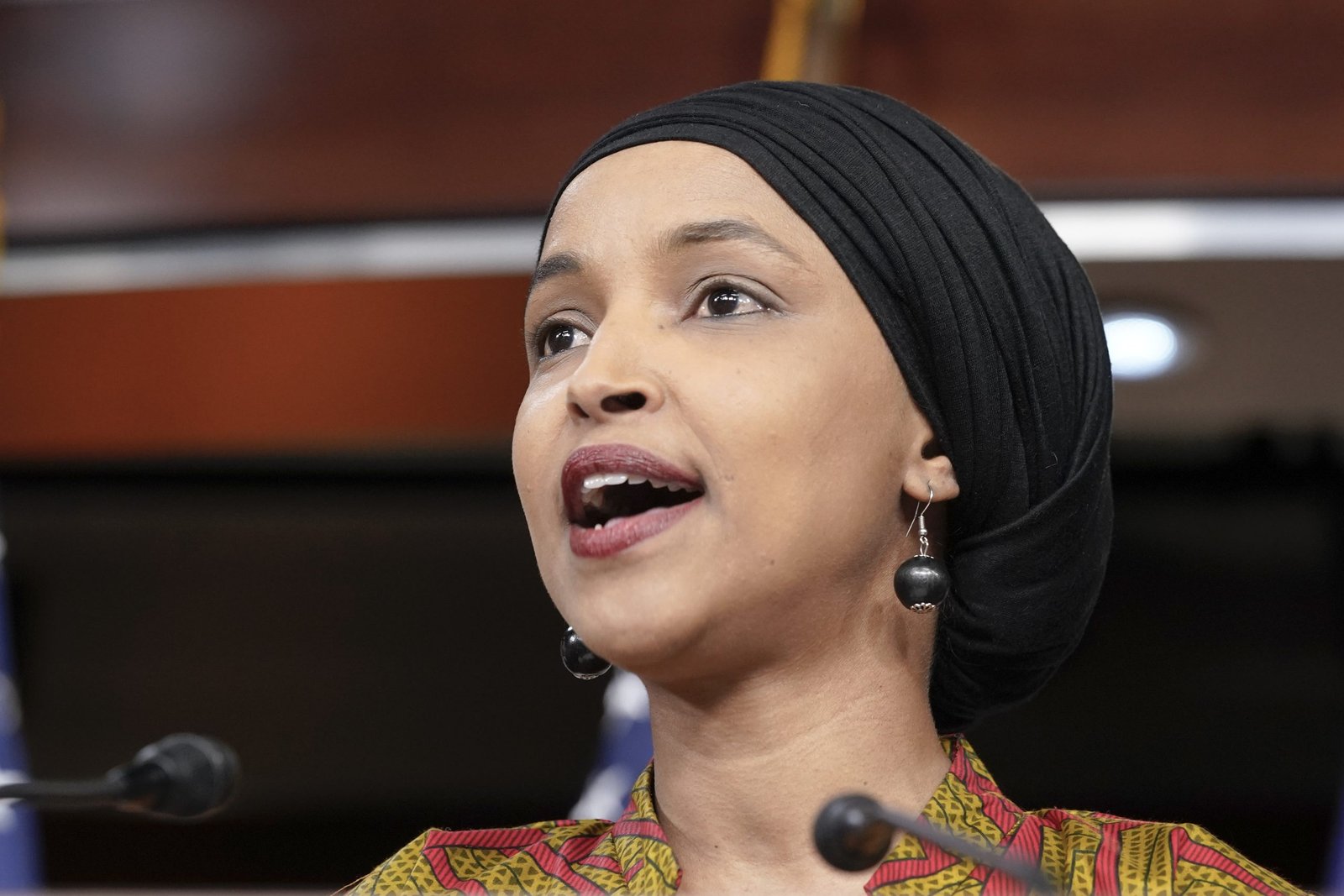
    “I love this Ilhan Omar, whatever the hell her name is,” Trump said. “With her little turban. I love her. She comes in, does nothing but bitch. She’s always complaining. She comes from her country, where, I mean, it’s considered about the worst country in the world.”

    “We gotta get her the hell out,” Trump continued, before repeating a baseless, decade-old claim about her personal life. “She married her brother in order to get in, right … she married her brother to get in, therefore she’s here illegally.”

    The crowd chanted “Send her back!”

    Trump’s latest attacks on Omar began with the president’s post on social media on Thanksgiving Day that also claimed Somalis are “completely taking over the once great State of Minnesota.”

    Those attacks continued. Last week, Trump ordered the Department of Homeland Security to ramp up immigration enforcement in Minnesota, even as the state’s Somalis are largely U.S. citizens and legal residents.

    Omar said Trump’s “obsession” with her and the Somali community “is an attempt to distract from his failures.”

    “At his rally meant to be on his economic achievements, he spent his time attacking me and the Somali community,” Omar said. “It is disgusting and beneath the dignity of the presidency. He continues to be an embarrassment.”

    Threats on Omar spike

    There is no evidence that Omar married her brother.

    She fled Somalia with her family in 1982 and spent four years in a refugee camp in Kenya before seeking asylum in the United States in 1995, when she was 12. Refugees are given lawful permanent resident status and can apply for citizenship after five years.

    Omar became a citizen in 2000, when she was 17 years old.

    As far as her marriages, Omar provided the Associated Press with details of her marriages and divorces in 2018, when accusations that she had wed a brother were first circulated in conservative media.

    Those records show that Omar married Ahmed Abdisalan Hirsi in 2002 in a Muslim faith ceremony and the couple had two children. She divorced Hirsi and married British citizen Ahmed Nur Said Elmi, but that marriage also ended in divorce. Omar’s office confirmed that information.

    The lawmaker who has represented the 5th congressional district since 2019 is currently married to Tim Mynette, a political consultant.

    “Accusations that the congresswoman married her brother are absurd and offensive,” a spokeswoman for Omar said. “This is right-wing fodder with no basis in reality. It is disgusting that the right-wing continues to spread falsehoods for clicks.”

    Omar has long been a target of Trump and his followers; a Florida man pleaded guilty last week to making violent threats against the congresswoman and her family in the wake of Charlie Kirk’s assassination. Nevertheless, the attacks on Omar on conservative social media have spiked. The lawmaker’s office said that threats, including death threats, are also on the rise.

    Related: Trump administration readying new ‘Muslim ban’ that would affect Minnesota’s Somalis and foreign students

    The law that reopened the federal government last month increased the budget each member of Congress can spend on security from $10,000 to $20,000 a year. Even so, Omar is spending a lot more money on security.

    The latest report filed with the Federal Election Commission shows that Omar’s campaign spent more than $18,000 for the services of a security firm in the third quarter of this year.

    While fellow progressives in Congress and Minnesota’s Democratic lawmakers have come to Omar’s defense, Rep. Tom Emmer, R-6th District, has distinguished himself for attacking his colleague – and Minnesota’s Somali community.

    Last week, during an interview on Fox Business, Emmer said that 80% of the crimes in the Twin Cities are being committed by Somalis, something that is patently false.

    Emmer, the House Majority Whip, also vigorously called for federal investigations into several scams involving government funds for programs for children, the homeless and other vulnerable populations that involved Somalis. He also lauded Trump’s decision to end Temporary Protected Status (TPS) for Somali immigrants and place Somalia on a list of 19 nations now subject to a U.S. visa ban.

    Emmer has also often attacked Omar, repeatedly calling for an ethics investigation into the Democratic lawmaker and for her resignation from Congress.

    Lindberg said the attacks Trump has leveled on Minnesota’s Somalis, with Emmer’s support, won’t roil the state’s Republicans, because they have had “an ongoing concern about the growing Somali population.”

    While Minnesota Republicans may not like Trump’s rhetoric, they largely support the president on this issue, Lindberg said, and Emmer won’t face a backlash either.

    “Emmer is taking a position that I believe his voters want,” the professor  said.

    The post Trump’s attacks on Rep. Ilhan Omar and Minnesota Somalis represent a dark escalation appeared first on MinnPost.

  • Trump is proposing a $12B aid package for farmers hit hard by his trade war with China

    Trump is proposing a $12B aid package for farmers hit hard by his trade war with China

    WASHINGTON (AP) — President Donald Trump announced a $12 billion farm aid package on Monday — a boost to farmers who have struggled to sell their crops while getting hit by rising costs after the president raised tariffs on China as part of a broader trade war.

    He unveiled the plan Monday afternoon at a White House roundtable with Treasury Secretary Scott Bessent, Agriculture Secretary Brooke Rollins, lawmakers and farmers who raise cattle and grow corn, cotton, sorghum, soybeans, rice, wheat, and potatoes.

    “$12 billion is a lot of money,” Trump said, adding that the additional aid will help provide certainty for farmers. The money is coming from tariff revenue, he said.

    Rollins said in her own remarks that $11 billion is being announced on Monday, while another $1 billion is being held back for specialty crops.

    Farmers have backed Trump politically, but his aggressive trade policies and frequently changing tariff rates have come under increasing scrutiny because of the impact on the agricultural sector and because of broader consumer worries.

    The aid is the administration’s latest effort to defend Trump’s economic stewardship and answer voter angst about rising costs — even as the president has dismissed concerns about affordability as a Democratic “hoax.”

    Upwards of $11 billion is set aside for the U.S. Department of Agriculture’s Farmer Bridge Assistance program, which the White House says will offer one-time payments to farmers for row crops.

    Soybeans and sorghum were hit the hardest by the trade dispute with China because more than half of those crops are exported each year with most of the harvest going to China.

    The aid is meant to help farmers who have suffered from trade wars with other nations, inflation, and other market disruptions.

    The rest of the money will be for farmers who grow crops not covered under the bridge assistance program, according to a White House official who was granted anonymity ahead of the formal announcement to detail the new plan. The money is intended to offer certainty to farmers as they sell their current harvest, as well as plan for next year’s crop.

    China purchases have been slow

    In October, after Trump met Chinese leader Xi Jinping in South Korea, the White House said Beijing had promised to buy at least 12 million metric tons of U.S. soybeans by the end of the calendar year, plus 25 million metric tons a year in each of the next three years. Soybean farmers have been hit especially hard by Trump’s trade war with China, which is the world’s largest buyer of soybeans.

    China has purchased more than 2.8 million metric tons of soybeans since Trump announced the agreement at the end of October. That’s only about one-quarter of what administration officials said China had promised, but Bessent has said China is on track to meet its goal by the end of February.

    “These prices haven’t come in, because the Chinese actually used our soybean farmers as pawns in the trade negotiations,” Bessent said on CBS’ “Face the Nation,” explaining why a “bridge payment” to farmers was needed.

    Farmers appreciate the aid package, but they say it’s likely only a down payment on what’s needed and government aid doesn’t solve the fundamental problems farmers are facing of soaring costs and uncertain markets for their crops. During Trump’s first term, he gave farmers more than $22 billion in aid payments in 2019 at the start of his trade war with China and nearly $46 billion in 2020, although that year also included aid related to the COVID pandemic.

    But farmers want to make a profit off of selling their crops — not rely on government aid to survive.

    “That’s a start, but I think we need to be looking for some avenues to find other funding opportunities and we need to get our markets going. That’s where we want to be able to make a living from,” said Caleb Ragland, the Kentucky farmer who serves as president of the American Soybean Association.

    Senate Minority Leader Chuck Schumer, D-N.Y., said the president “wants credit for trying to fix a mess of his making” and blamed Trump’s tariffs for the adversity faced by farmers.

    “Trump’s tariffs are hammering our farmers, making it more expensive to grow food and pushing farmers into bankruptcy,” Schumer said on the social media site X. “Farmers need markets to sell to — not a consolation prize for the ones he wrecked.”

    Rebecca Wolf, a senior food policy analyst at Food & Water Watch, an advocacy group focusing on food sustainability and clean water, added that bailouts are “a denigrating Band-Aid to farmers” who have been left vulnerable to trade wars by “decades of misguided domestic policy.”

    “Trump’s tariff tantrum and belittling bailouts will deepen agricultural sector consolidation, funneling money to a powerful few corporations, while running farmers further into the ground,” Wolf said.

    Trump has also been under pressure to address soaring beef prices, which have hit records for a number of reasons. Demand for beef has been strong at a time when drought has cut U.S. herds and imports from Mexico are down due to a resurgence in a parasite. Trump has said he would allow for more imports of Argentine beef.

    He also had asked the Department of Justice to investigate foreign-owned meat packers he accused of driving up the price of beef, although he has not provided evidence to back his claims.

    On Saturday, Trump signed an executive order directing the Justice Department and Federal Trade Commission to look at “anti-competitive behavior” in food supply chains — including seed, fertilizer and equipment — and consider taking enforcement actions or developing new regulations.

    Associated Press writers Michelle L. Price in Washington, Bill Barrow in Atlanta and Jack Dura in Bismarck, North Dakota contributed to this report.

    The post Trump is proposing a $12B aid package for farmers hit hard by his trade war with China appeared first on MinnPost.
  • Minnesota’s immigrant advocates organize and deploy as Trump ramps up ICE enforcement

    Minnesota’s immigrant advocates organize and deploy as Trump ramps up ICE enforcement

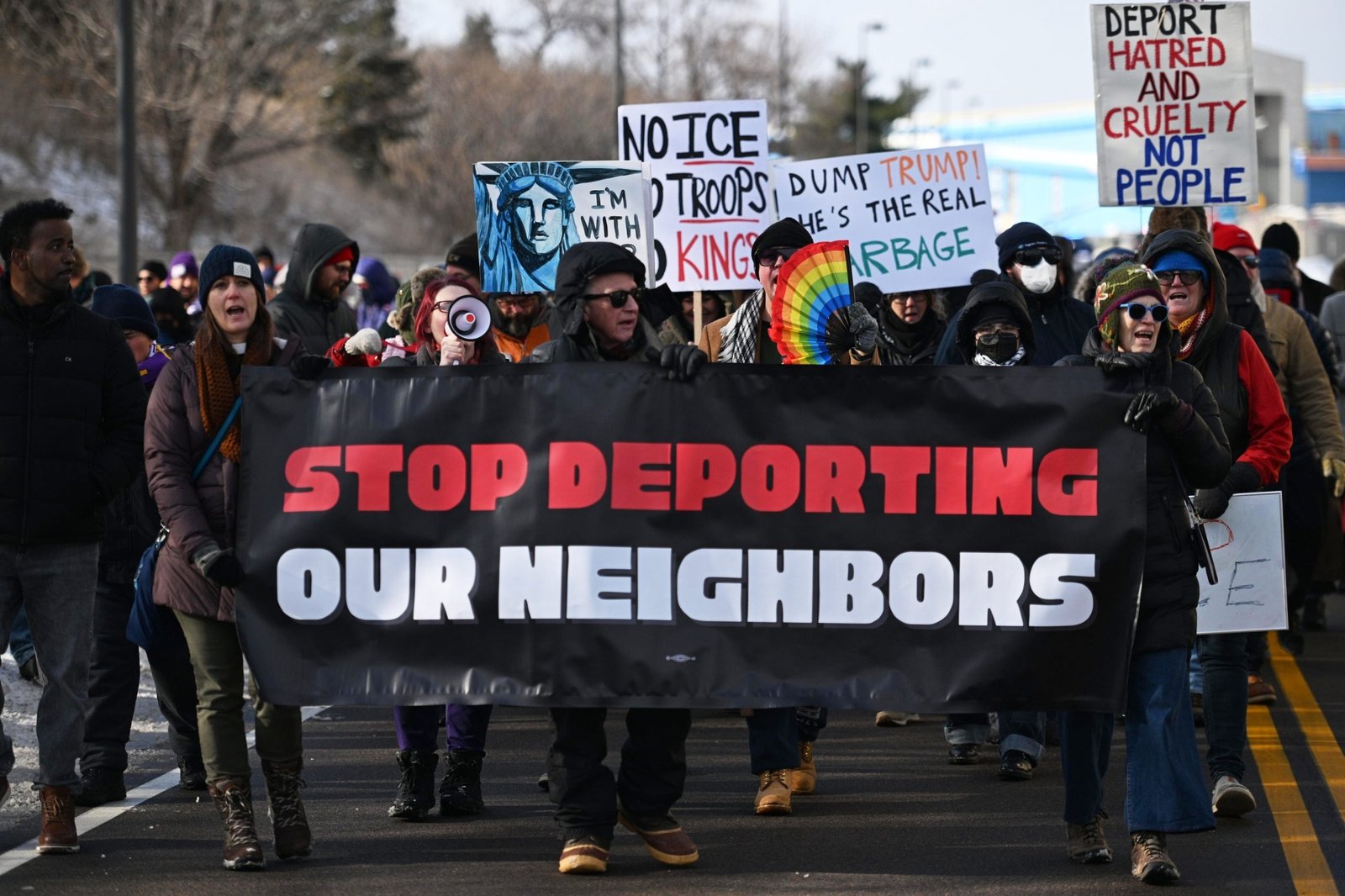
    WASHINGTON – From patrolling city streets to rapid on-site protests, defenders of the rights of immigrants are equipped to respond to the Trump administration’s immigrant crackdown in the Twin Cities.

    These and other strategies are part of very organized preparations hatched to counter President Donald Trump’s hardline policy toward the nation’s immigrants.

    The Immigrant Defense Network (IDN) — an umbrella group of about 100 immigrant, labor, legal, faith and community organizations — has trained about 2,500 Minnesotans to respond to actions by Immigration and Customs Enforcement (ICE), including last month’s road on the Bro-Tex facility in St. Paul.

    IDN-trained “constitutional observers” were also dispatched Nov. 25 to a home in St. Paul where an ICE operation turned into a melee and federal agents used tear gas and pepper spray against protesters.

    These volunteers deploy observers to scenes of ICE activity and organize public demonstrations and other events in support of the state’s immigrants.

    The observers, many of whom are multilingual, are trained and provided secure, toll-free phone and texting options, according to the IDN’s strategic plan.

    Edwin Torres, the IDN’s network manager, said a rapid-response team was able to get to the Bro-Tex facility within 12 minutes, and the St. Paul home in 10 minutes.

    But the new ICE operations are different, he said, and the “constitutional observers” are now arriving at a site after federal agents have quickly whisked the immigrant they were seeking away.

    “We are not seeing large-scale operations this week,” Torres said.

    Instead, there have been 20 ICE detentions of individuals — mostly of Latino men and a few Somalis, Torres said — and IDN can do little more than only offer help to tearful families of the immigrants who have been detained. Sometimes, there’s only a car with a broken window left at the scene.

    Undaunted, IDN members are patrolling the streets, sifting through tips to find those that are “credible or verified” and sending alerts when needed by text, email and phone calls to its constitutional observers.

    Torres said IDN has a system that uses the boundaries of state House districts to determine which people to call to respond to an incident at a certain address.

    Julia Decker, policy director of the Immigrant Law Center of Minnesota, said the state’s immigrant advocates have had time to organize and train volunteers because “it’s taken a little bit longer for this type of surge to reach Minnesota.”

    “So, we’ve seen, we had a chance to see some of the tactics that have been used by the federal government and other cities, and so there’s been a little bit more time to prepare and see what we are likely to face,” Decker said.

    Trump has ordered immigration crackdowns on Los Angeles, Memphis, Chicago, Washington, D.C., Charlotte, N.C., and, this week, New Orleans and the Twin Cities. The president says the reason for the operations is to fight violent crime he attributes to immigrants.

    In the wake of the shooting of two National Guard troops in Washington, D.C., last week, Trump said immigrant communities are “illegal and disruptive populations” that “hate, steal, murder and destroy everything that America stands for.”

    Trump said his crackdown on the Twin Cities, which the Department of Homeland Security has dubbed “Operation Metro Surge,” was based on the involvement of Somalis in the Feeding our Future scandal, in which millions of dollars were siphoned off from a pandemic-era program aimed at feeding hungry children. Other scams included one involving reimbursements for assistance for nonexistent services for people at risk for homelessness.

    But those involved in the fraud were a fraction of one percent of Minnesota’s 80,000-strong Somali community, most of whom are U.S. citizens or legal residents.

    The day after he called Somalis “garbage” during a Cabinet meeting on Tuesday, Trump doubled down on those comments and said Somalia “is considered by many to be the worst country on earth.” He also accused Somali immigrants of having “destroyed the country.”

    Meanwhile, U.S. Treasury Secretary Scott Bessent said this week that his agency is investigating allegations that tax dollars from Minnesota were diverted to the militant group Al-Shabaab in Somalia.

    ‘Living in a time where we have to be careful’

    Torres said the idea for IDN was developed after Trump won the 2024 election.

    The organization has a seven-member steering committee composed of a variety of both large and small immigrant advocates and human rights groups. They include ACLU-Minnesota, Ayala Leads, COPAL (Communities Organizing Latine Power and Action), the Minnesota Interfaith Coalition on Immigration (ICOM) and the Land Stewardship Project, a group that promotes sustainable agriculture and defends immigrant rights in Greater Minnesota.

    Minnesota 8 — an organization that was formed to fight the deportation of eight Cambodian nationals in 2016 and is now an advocate for undocumented Asians in the state — and The Advocates for Human Rights are also members of the steering committee.

    Dozens of other groups are affiliated with IDN, including CAIR-Minnesota, an organization that aims to protect the rights of the state’s Muslims.

    But information about most of those allied with IDN is not public. And the organization pulled information, including a detailed strategic plan that lays out the group’s operational plans and political goals, from its website after Trump attacked Minnesota’s Somali community this week and his administration launched Operation Metro Surge on Monday.

    “Right now, we are living in a time where we have to be careful,” Torres said. “At this moment we have to be more protective of what we have online.”

    He said the group’s immediate goal is “to counter the hateful narrative” about immigrants that is coming from the White House with stories about how newcomers to the nation enrich American life.

    “We can’t be OK with the rhetoric,” Torres said.

    UnidosMN, which organizes Minnesota’s Latino community, is not under the IDN umbrella but also sends volunteers to try to disrupt ICE operations in Minnesota and western Wisconsin under its “Monarca” program.  

    “It doesn’t matter how many rapid-response teams groups are called for,” UnidosMN spokesman Luis Argueta said. “(IDN) may respond to one side of town and we to another.”

    Argueta, however, said the current immigration sweep in Minnesota has prompted some collaboration and conversations between IDN and his organization.

    He also said UnidosMN is receiving tips on ICE operations from both the public and elected officials. 

    A history of immigrant advocacy 

    Torres said the IDN also plans to lobby the state Legislature, seeking an end to agreements between ICE and local governments and sheriffs in Greater Minnesota, passing “affirmative resolutions” to aid immigrants in the state’s suburbs and advocating for public health and public school policies that are beneficial to immigrant communities.

    According to the group’s strategic plan, IDN representatives also plan to spend at least five hours every week meeting with elected officials and “sector influencers” to lobby for immigrant rights.

    Trump has characterized protests against ICE actions as unlawful and has characterized some protesters as “thugs” or “domestic terrorists.”

    He has also blamed outside agitators and leftist groups for organizing the unrest.

    The president’s supporters also share Trump’s views — that immigrants, especially those from Third World countries, are a danger to American society and the American way of life — and support the surge in deportations.

    Yet Trump’s plans to crack down on Minnesota’s immigrants are running up against the state’s history and culture.

    “Minnesota has a long history of immigration and refugee settlement, and this history has created a comparatively strong infrastructure of immigrant advocacy and support organizations,” said Llana Barber, director of the Immigration History Research Center at the University of Minnesota.

    Barber also said that Minnesota, particularly the Twin Cities, also has a “comparatively progressive political culture.”

    “Many Minnesotans view the current federal enforcement efforts as grounded in racism and xenophobia and oppose them on those grounds,” Barber said. “They see current efforts to threaten and terrorize immigrants as part of an authoritarian expansion of state power, not a legitimate effort to enforce US law.”  

    MinnPost reporter Deanna Pistono contributed to this story.

    The post Minnesota’s immigrant advocates organize and deploy as Trump ramps up ICE enforcement appeared first on MinnPost.

  • It’s not just THC gummies and drinks – CBD products on federal hit list, too

    It’s not just THC gummies and drinks – CBD products on federal hit list, too

    WASHINGTON – An impending federal ban on intoxicating hemp-based products also means scores of wellness products used by Minnesotans to treat pain, anxiety and sleeplessness will be illegal.

    Many of these CBD products contain small amounts of THC, the psychoactive ingredient in cannabis plants like hemp outlawed in legislation passed and signed by President Donald Trump last month to end the government shutdown.

    That means popular CBD gummies, tinctures, oils, capsules and lotions that are part of a booming industry would no longer be legal under federal law, joining gummies and drinks that contain much more hemp-derived THC on the federal hit list. The ban will go into effect Nov. 14, 2026.

    Jonathan Miller, the general counsel for the U.S. Hemp Roundtable, said the “vast majority” of CBD products have “a little bit of THC” — perhaps one or two milligrams, to have the effect customers seek. 

    “People realized that to have the whole spectrum of CBD you have to have a little THC,” Miller said.

    That’s a problem for the CBD industry. When Congress reversed a “loophole” in the 2018 farm bill that removed hemp from the controlled substances list last month, it determined that only hemp products that contain no more than 0.4mg of THC will be lawful.

    That’s not to say all CBD products contain what will soon be federally outlawed levels of THC.

    Some, known as “CBD isolate” products, contain no THC. Others, known as “broad spectrum” CBD products, contain other cannabinoids but only trace amounts of THC, if any. Then there is “full spectrum” CBD, which usually contains small amounts of THC as well as other cannabinoids.

    Miller says scientists in his organization — which represents the interests of the hemp-derived THC product industry — have determined that the new hemp restrictions will decimate the CBD industry if they go into effect.

    “The good news is that they don’t go into effect for a year and we hope we can fix (the law) in that time period,” Miller said.

    Looking for relief 

    Paul Loeffler, the owner of three CBD “Health and Wellness Lounges” in Minnesota — in Minneapolis, Fridley and Andover — said he’s also optimistic Congress will change its mind.

    “If not, it would end our business; it would bankrupt us,” he said.

    Loeffler sells THC-infused hemp products, but he’s heavily invested in the CBD business. He said his customers aren’t the younger Minnesotans who now prefer THC-infused drinks over beer, but rather their parents and grandparents.

    “We target a demographic that is 40 to 80 years old,” he said.

    Loeffler said his customers are looking for relief from the normal aches and pains of aging, insomnia and other ailments and find it in CBD products, which are promoted as having healthful benefits and providing relaxation.

    Loffler said his 78-year-old father once scoffed at the CBD products he sells as “witchcraft,” but now swears by them.

    According to Lightspeed Commerce, the CBD market in the United States has experienced significant growth in recent years and was valued at about $6.7 billion in 2023. The industry has expanded so much that it now contains products for pets, as well as humans.  

    But it’s not clear how CBD products work to promote health and wellness. Scientists are still learning about how CBD affects the body.

    However, the U.S. Food and Drug Administration has approved Epidiolex, a medicine that contains CBD from hemp that is used to treat epilepsy and other rare seizure disorders. 

    And while the FDA has approved Epidiolex for its intended use, the agency has not approved other uses of CBD.

    The FDA has also done little to study the effect of THC and has not approved any marketing application for cannabis for the treatment of any disease or condition.

    However, the new federal law regulating hemp has tasked the FDA, with the help of other federal agencies, to produce a list within 90 days of all of the cannabinoids produced by a hemp plant, whether they be forms of THC or not.

    ‘It might as well be zero’ 

    Loeffler said his most popular product is the CBD “sleep gummy” that fights insomnia.

    “They would be gone,” he said, because the new federal law has placed the permissible levels of THC in CBD products so low that “it may as well be zero.”

    Leili Fatehi, the owner of hemp supplier Crested River Cannabis Company in Morgan, a small town in Redwood County in western Minnesota, also said the 0.4mg-THC threshold, which she called “virtually nothing,” would not only eliminate most THC-infused drinks — which are capped in Minnesota at 10mg of THC, and gummies, which are capped at 5mg — but most CBD products, as well.

    She joined the business this year, but Crested River has been in operation since 2018, the year the farm bill allowed for the production of hemp and hemp products. The business has a broad selection of products with varying levels of THC and CBD in them.

    Some CBD products have no THC in them and would therefore be unaffected, Fatehi said.

    “We do a decent amount of business in CBD,” she said. “A lot of people buy CBD products who aren’t looking for anything that is intoxicating. They want it for inflammation or sleep or whatever, any range of wellness functions.”

    For that reason, she’s optimistic that lawmakers will roll back the proposed restrictions on the industry in response to business and consumer pushbacks. “I think they’ll adjust it,” she said. “Now, what that will look like is an open question.”

    The aim of the legislation was to regulate intoxicating substances, Loeffler said, not to bar CBD products with incidental amounts of THC in it.

    Greater Minnesota reporter Brian Arola contributed to this report.

    The post It’s not just THC gummies and drinks – CBD products on federal hit list, too appeared first on MinnPost.

  • What to know about Somalia as Trump wants Somalis in the US to leave

    What to know about Somalia as Trump wants Somalis in the US to leave


    U.S. President Donald Trump has called Somali immigrants living in the United States “garbage” and wants them to leave, claiming without evidence that “they contribute nothing.”

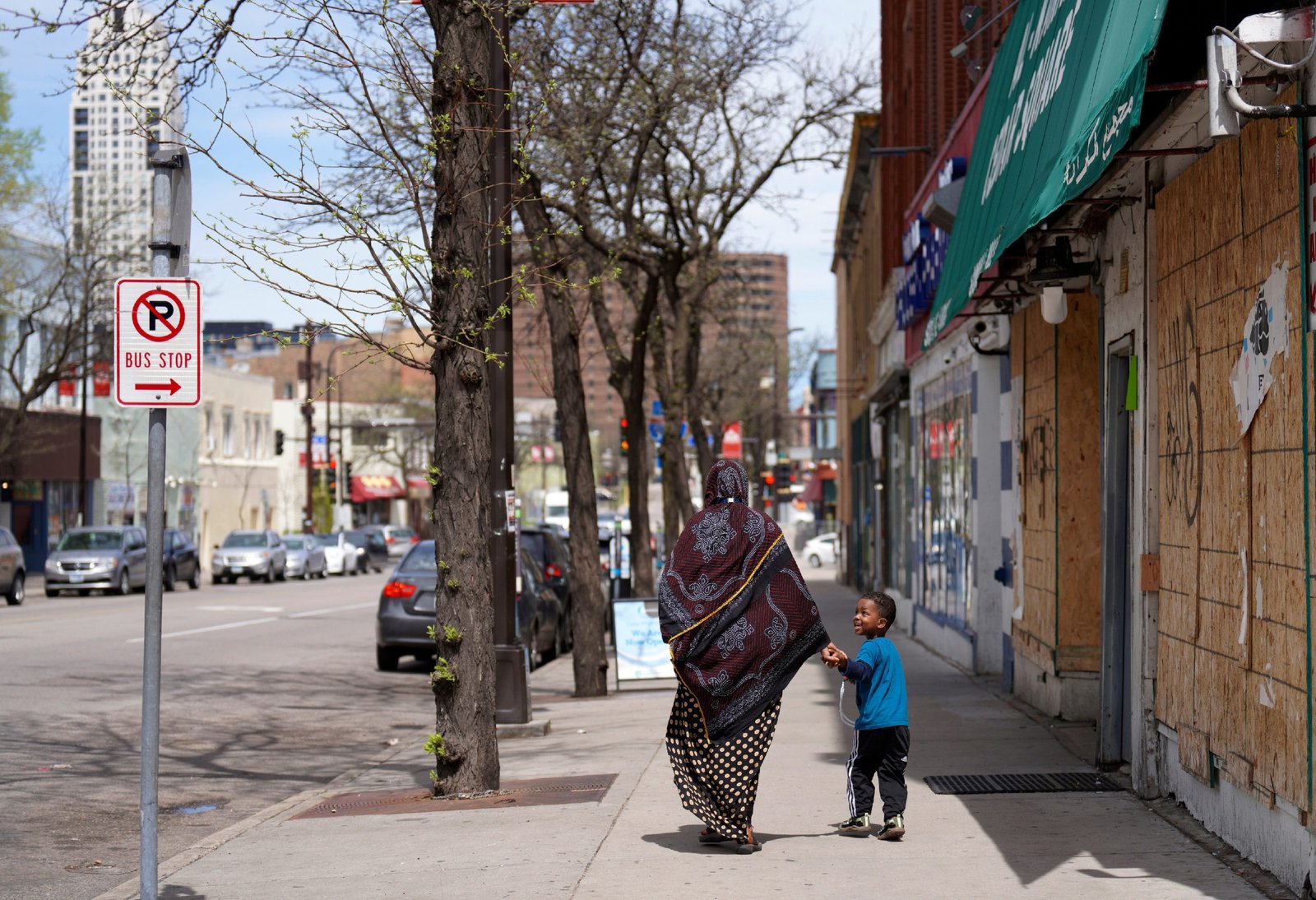
    The crude language came Tuesday after a person familiar with the planning said federal authorities were preparing an immigration enforcement operation in Minnesota primarily focusing on Somali immigrants living unlawfully in the United States. Almost 58% of the Somalis in Minnesota were born in the U.S. And of the foreign-born Somalis there, 87% are naturalized U.S. citizens.

    Here’s a look at Somalia, which is also one of the countries where the Trump administration this week paused all immigration applications. The country’s prime minister, asked at a public event Wednesday about Trump’s statements, did not comment.

    Over three decades of war

    Somalis have been fleeing the Horn of Africa nation for decades, ever since the fall of dictator Siad Barre led to clashes between warlords, wider civil war and the rise of the al-Qaida-linked al-Shabab extremist group.

    The widespread insecurity has sent millions of Somalis fleeing within the country or into neighboring ones. Many waited for years in remote refugee camps in places like Kenya before a chance to immigrate to the U.S. or elsewhere. Many others remain in those camps.

    Inside Somalia, the current threat remains primarily from al-Shabab, which holds some rural areas and periodically targets the capital, Mogadishu, with devastating attacks. A truck bombing in the heart of Mogadishu in 2017 killed well over 100 people. Another in 2019 killed dozens more. Targets have also included the presidential palace and hotels.

    For decades, there was no U.S. Embassy in Somalia because of the insecurity. The embassy returned in 2019, locating itself in a highly fortified seaside compound around the Mogadishu airport where other diplomatic or humanitarian offices are found.

    Somalia’s fragile federal government in recent years has been involved in what its president has called “total war” against al-Shabab. But the extremist group remains resilient amid the country’s complex clan dynamics, with some arms coming in from the Middle East via the Gulf of Aden.

    The overall instability in Somalia helped to create the phenomenon of Somali pirates, who earlier this month hijacked a commercial vessel on the Indian Ocean for the first time in a year and a half, raising fears about a resurgence.

    For many, a struggle to survive

    While Mogadishu has shown some signs of a revival, often driven by Somali returnees bringing investment and ideas, much of the country’s population of about 19 million faces grim circumstances. The widespread insecurity has long limited rebuilding and investment.

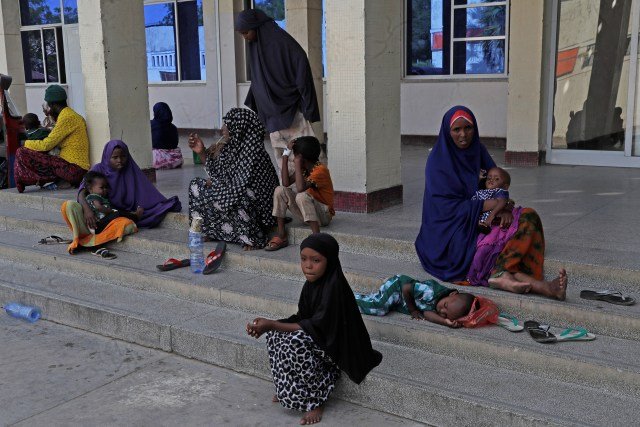
    Patients sit at the entrance of Banadir Hospital in Mogadishu, Somalia, on Tuesday, Nov. 11, 2025.
    Patients sit at the entrance of Banadir Hospital in Mogadishu, Somalia, on Tuesday, Nov. 11, 2025. Credit: Farah Abdi Warsameh/AP

    Somalia continues to have one of the world’s weakest health care systems, according to the World Health Organization and other partners. And now longtime donors like the United States and Britain have been pulling back, especially with the Trump administration’s dismantling of the U.S. Agency for International Development this year.

    The Associated Press recently visited rare public hospitals remaining in Mogadishu that some Somalis must trek for days to reach for care. Many rural areas have little assistance. The ones under the control of al-Shabab may have none.

    A harsh and changing climate

    As Africa stands to suffer the most from climate change, Somalia is one of the most visible examples.

    Droughts periodically kill thousands of people along with the camels and other livestock that help keep communities and economies alive. Floods rip through river valleys. Indian Ocean cyclones roar onto the coastline, the longest in Africa. From time to time, locusts devour landscapes’ vegetation.

    “In Somalia, climate change and conflict are increasingly intertwined,” the International Crisis Group has noted, pointing out that al-Shabab’s fighters use access to water as another means to “tax” residents in vulnerable communities. In some cases during the most recent yearslong drought, al-Shabab destroyed water infrastructure, infuriating communities.

    Minnesota has the largest Somali American population in the U.S.

    An estimated 260,000 people of Somali descent were living in the U.S. in 2024, according to the Census Bureau’s annual American Community Survey. The largest population is in the Minneapolis-St. Paul area, home to about 84,000 residents, most of whom are American citizens. Ohio, Washington and California also have significant populations.

    Almost 58% of the Somalis in Minnesota were born in the U.S. Of the foreign-born Somalis in Minnesota, an overwhelming majority — 87% — are naturalized U.S. citizens. Of the foreign-born population, almost half entered the U.S. in 2010 or later, according to the Census Bureau.

    They include many who fled the long civil war in their east African country and were drawn to the state’s welcoming social programs.

    The post What to know about Somalia as Trump wants Somalis in the US to leave appeared first on MinnPost.

  • D.C. Memo: Rare success of ‘discharge petition’ emboldens Democrats in battles against Trump

    D.C. Memo: Rare success of ‘discharge petition’ emboldens Democrats in battles against Trump

    WASHINGTON — Minnesota’s Democratic and Republican lawmakers, who agree on very little, agreed to vote for legislation that requires the Justice Department to release all information on its investigation into sex-trafficker Jeffrey Epstein — with some exceptions.

    But that near-unanimous vote could have never been held without the success of a parliamentary procedure that usually fails to bear fruit and has emboldened minority Democrats to try to seek similar wins on other legislation blocked by the House GOP majority.

    The full “Epstein files” may never be made public since the legislation contains several loopholes allowing the Justice Department to withhold certain information, including information that “would jeopardize an active federal investigation or ongoing prosecution.”

    Last week, President Donald Trump ordered Attorney General Pam Bondi to launch a federal investigation related to Epstein aimed at his ties to several prominent Democrats, including former President Bill Clinton, megadonor Reid Hoffman and former Treasury Secretary Lawrence  Summers.

    Still, the legislation’s success is an example of how the White House and congressional Republican leaders can be outmaneuvered.

    The Epstein Files Transparency Act, which passed with overwhelming support in both chambers, was a rare example of a successful “discharge petition.” Requiring the signatures of a majority in the U.S. House, a discharge petition can wrench a bill out of committee and to the chamber’s floor for consideration – over the objections of the Speaker of the House.

    Before this week, no discharge petition had been voted on in recent history, as none had received the required number of signatures to be considered by the House. Since 2002, 74 discharge petitions had been introduced, but all failed to gather the needed support.

    But this time persistence paid off. Democrats were able to secure the support of enough Republicans to make the discharge petition a success. None of Minnesota’s lawmakers signed the petition, but four of their GOP House colleagues did, giving Democrats the 218 signatures they needed.  

    Democrats immediately tried the gambit again.

    On Thursday, legislation to restore union rights for hundreds of thousands of federal workers that was opposed by Speaker Mike Johnson is headed to the House floor after a bipartisan group of lawmakers this week quietly secured the required majority of 218 votes on a discharge petition.

    ‘Punishable by death!’

    President Donald Trump’s attacks on a group of Democratic lawmakers inflamed Democratic leaders who on Thursday condemned the attacks and arranged for extra security for the lawmakers.  

    Trump on Thursday threatened six Democrats, all veterans or former intelligence officers, with sedition and said that such behavior is “punishable by DEATH!”

    The reason Trump went off on the lawmakers, all of them moderates?

    They made a short video urging members of the military to resist orders that are unlawful and cautioned that “threats to our Constitution aren’t just coming from abroad, but from right here at home.”

    “Our laws are clear,” said Sen. Mark Kelly, D-Ariz. “You can refuse illegal orders.”

    Rep. Chris Deluzio, who like Kelly served in the Navy, said, “You must refuse illegal orders.”

    Sen. Elissa Slotkin, D-Mich., and Reps. Maggie Goodlander, D-N.H., Chrissy Houlahan, D-Pa., and Jason Crow, D-Col., also appeared on the video.

    Slotkin told The New York Times earlier this week that she’d been hearing from active-duty troops concerned about the legality of strikes that targeted people accused of drug-smuggling by the Trump administration.

    The lawmakers’ video prompted Trump to call the lawmakers “traitors” in a series of social media posts.

    “It’s called SEDITIOUS BEHAVIOR AT THE HIGHEST LEVEL. Each one of these traitors to our Country should be ARRESTED AND PUT ON TRIAL,” Trump wrote in one post. “Their words cannot be allowed to stand – We won’t have a Country anymore. An example must be set!!”

    In another post, Trump noted that “SEDITIOUS BEHAVIOR” is
    “punishable by DEATH!” 

    And the president shared another post that said “HANG THEM GEORGE WASHINGTON WOULD!!” 

    Minnesota state Sen. Erin Maye Quade, a DFLer, on Thursday slammed Trump for his posts.

    “A Trump supporter started murdering his way through an assassination list of Democratic lawmakers FIVE MONTHS AGO,” Quade wrote in a post on Bluesky. “He murdered my colleague Melissa Hortman, and her husband Mark — and attempted to assassinate my dear friend John Hoffman and his wife Yvette. I was also on the hit list. WTF.”

    Democratic leaders in Washington were also incensed about the posts.

    “When Donald Trump uses the language of execution and treason, some of his supporters may very well listen. He is lighting a match in a country soaked with political gasoline,” Senate Minority Leader Chuck Schumer, D-N.Y., told reporters.

    The president has usually attacked progressives, not moderates whose message for the military have sparked his latest volleys. Rep. Ilhan Omar, D-5th District, has been repeatedly called a dangerous “terrorist” by Trump. Omar has said those attacks have incited violence, including death threats, against her.

    On Thursday, Omar said “the president’s behavior is deeply disturbing.”

    “It should go without saying that a sitting president should not call for the execution of those who disagree with him,” Omar said. “Political violence is already at an all-time high.”

    Like Quade, Omar cited the assassination of Hortman and her husband and the attempted assassination Hoffman and his wife as victims of a surge in political violence.

    She also said that “we as Americans cannot accept (Trump’s) unhinged behavior as normal.”

    A promotion for Ellison

    Minnesota Attorney General Keith Ellison, a progressive Democrat who has been involved in dozens of lawsuits against the Trump administration, was promoted to co-chair of the Democratic Attorneys General Association (DAGA) this week.

    Ellison will lead the group alongside Illinois Attorney General Kwame Raoul, “uplifting the work of Democratic attorneys general across the country,” a statement from DAGA said.

    “Since Trump’s inauguration in January, we have been the first line of defense in holding President Trump and his administration accountable for his violations against the U.S. Constitution and protecting the rule of law,” Ellison and Raoul said in a joint statement. “There is a lot of work that lies ahead in 2026 and beyond to elect more Democratic AGs to ensure Americans’ rights and freedoms are protected.”

    In other news:

    ▪️Greater Minnesota reporter Brian Arola visited Appleton, where the likelihood of a long-shuttered prison’s reopening as an ICE center has brought both hope of an economic recovery and consternation. 
    ▪️Matthew Blake wrote about the platform gubernatorial candidate state Rep. Kristin Roberts has been given to attack the Walz administration as the new chair of the Minnesota House Fraud Prevention Committee. DFLers call the creation of the panel a “political stunt.”
    ▪️Congress finally approved a bill that would force the Justice Department to release information about its investigation into sex-trafficker Jeffrey Epstein. But those looking for a set of the complete “Epstein files” are likely to be disappointed. 
    ▪️The bill that reopened the federal government contained millions of dollars for local projects in Minnesota. But local governments and the state’s nonprofits may not get much more help as Congress’ appropriations process is broken – which also means that another shutdown looms.
    ▪️ New state government reporter Cleo Krejci covered a hearing at the state Capitol on the impact of federal grant cuts on colleges and universities in Minnesota. Representatives of six colleges and universities testified.

    This and that

    A reader responded to a story about the Trump administration’s threat to states, like Minnesota, that released full food stamp benefits during the shutdown.

    “Trump wants to deny poor American children while he gorges himself on Big Macs and all the free food he could ever eat?” the reader wrote. “In fact, when at his resorts I am sure he charges the federal government for all the food he and his entourage eats, with a healthy profit. Do his supporters hate poor people enough they find this acceptable?”

    Please keep your comments, and any questions, coming. I’ll try my best to respond. Please contact me at aradelat@minnpost.com.

    The post D.C. Memo: Rare success of ‘discharge petition’ emboldens Democrats in battles against Trump appeared first on MinnPost.

  • After Trump gives GOP OK, House votes to force Justice Department to release ‘Epstein files’

    After Trump gives GOP OK, House votes to force Justice Department to release ‘Epstein files’

    WASHINGTON — Despite overwhelming U.S. House approval of a bill that would require the Justice Department to release all of the information it has, the “Epstein files” may never see the light of day.

    The legislation concerning sexual abuser Jeffery Epstein, supported by all of Minnesota’s House members, both Republicans and Democrats, now heads to the U.S. Senate where Senate Majority Leader John Thune said he expects to move “fairly quickly” on the bill. That vote — which could also be unanimous — could be held as early as late Tuesday.

    However, Rep. Thomas Massie, R-Ky., who led a month’s long campaign against GOP efforts to block a vote on the legislation, also said a new Justice Department investigation into the relationship former President Bill Clinton and other Democrats had with Epstein, being “partisan in nature,” may also “have the effect of shielding some of the releases.”

    Sen. Tina Smith, D-Minn., also raised the question of whether the Trump administration would raise legal issues that would block the release of information.

    “If I were a betting woman, I’d put money down that Trump’s going to use his ‘investigation’ into Epstein to justify not releasing everything,” Smith posted on X. “He’s just trying to save his ass.”

    On Tuesday, Minnesota’s GOP lawmakers joined their House Republican brethren in voting to direct the Justice Department to release all files related to its Epstein investigation. From the galleries over the House chamber, survivors of Epstein cheered the stunning vote.

    That near unanimous vote – Rep. Clay Higgins, R-La., was the only “no” vote – followed months of GOP resistance against proposed bills that would force the Justice Department to disclose what it knew about the men who victimized young girls procured by Epstein and his girlfriend Ghislaine Maxwell.

    Republican resistance was based largely on Trump’s insistence that efforts to find out more about the operations of the disgraced financier were a Democratic-led “hoax” and there was nothing more to the case.

    But that resistance was proving to be a political liability. After Trump demanded the Justice Department investigate Clinton, former Treasury Secretary Larry Summers and venture capitalist Reid Hoffman, the president reversed course, saying he would support the bill.

    That changed the political dynamics. Rep. Tom Emmer, R-6th District, who largely dismissed the Epstein issue as a “non-issue” for Congress and like the president called demands for information “a Democratic hoax,” said after the vote that “House Republicans have been consistent with our calls for transparency and accountability regarding Epstein.”

    “That is why I voted in favor of the Epstein Files Transparency Act this afternoon. Unlike the Democrats — who only care about cherry-picking evidence to smear President Trump — Republicans are letting the facts speak for themselves and pursuing justice for the victims of these heinous crimes,” Emmer said in a statement.

    Rep. Pete Stauber, R-8th District, said he always wanted “transparency and accountability” and has supported the House Committee on Oversight and Government Reform investigation into Epstein, which has resulted in the release of more than 20,000 emails from the financier’s estate. While awaiting trial, Epstein was found dead in his jail cell in what was determined to be a suicide.

    Meanwhile, Rep. Michelle Fischbach, R-7th District, who as a member of the House Rules Committee voted several time to block Epstein related legislation, was defensive when asked why she voted for similar legislation on Tuesday, simply saying, “I voted yes.”

    Rep. Betty McCollum, D-4th District, said the Justice Department’s failure to comply with a congressional subpoena seeking Epstein-related information prompted her to vote for the bill.

    McCollum, however, also expressed skepticism that the public will ever know everything about Epstein and his sexual predator friends. “I’m concerned that with this vote it won’t be released,” McCollum said. “Who knows what excuse (Trump) will come up with next.”

    The post After Trump gives GOP OK, House votes to force Justice Department to release ‘Epstein files’ appeared first on MinnPost.