Category: USA

  • Minnesota detainees denied visitors at Fort Bliss following 3rd death at ICE facility

    Minnesota detainees denied visitors at Fort Bliss following 3rd death at ICE facility


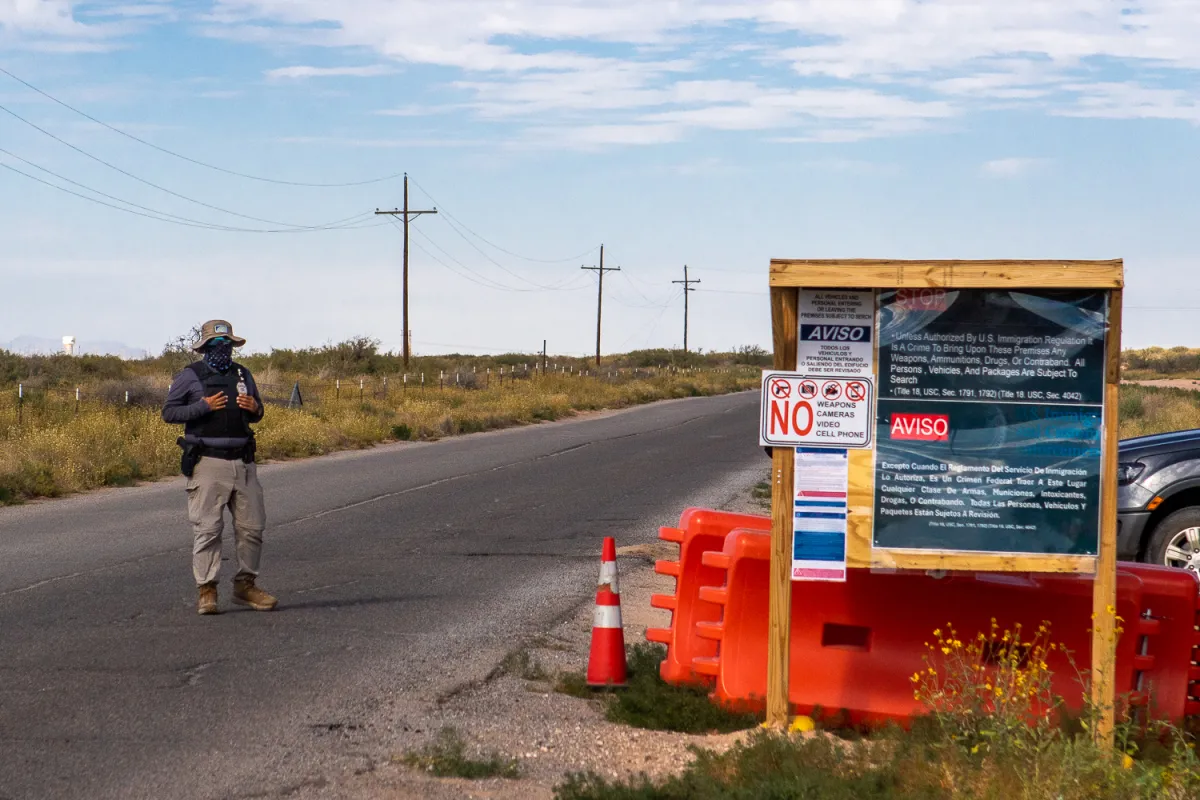
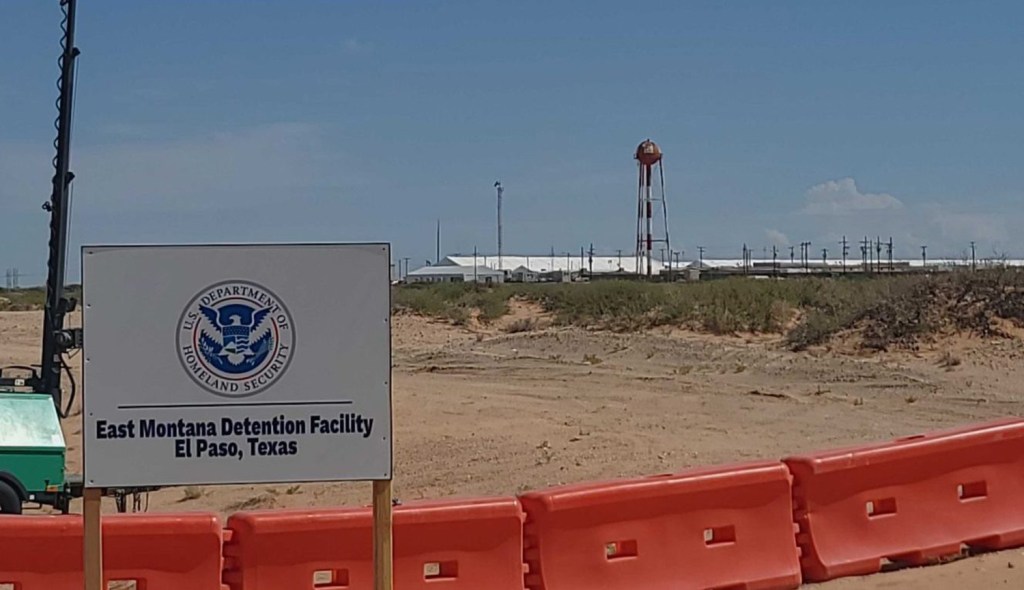
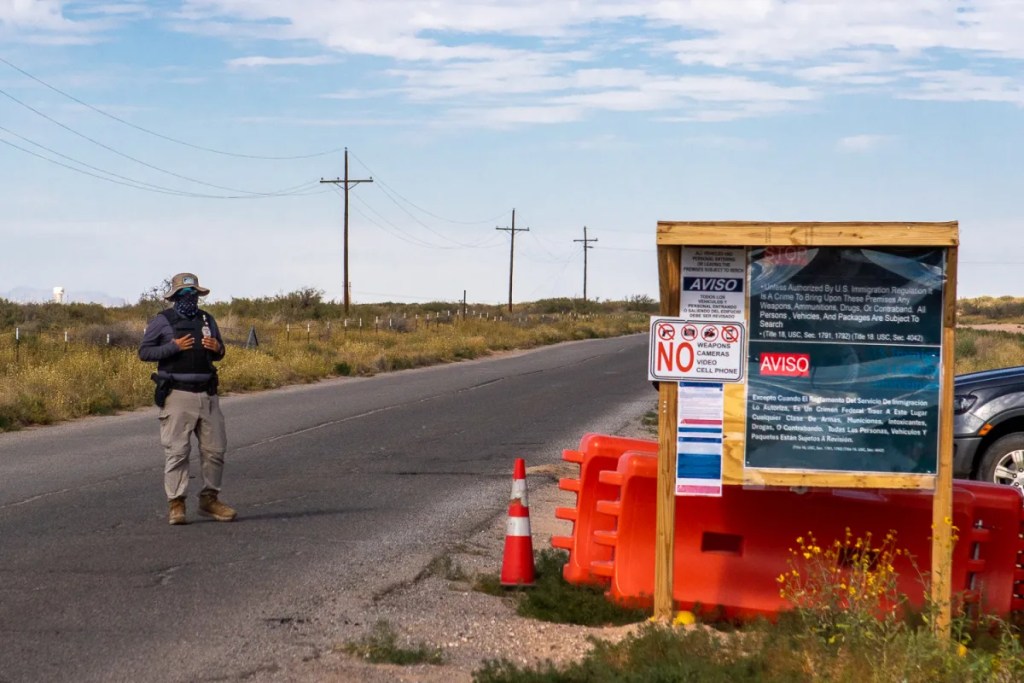
    A masked guard blocks the entrance to Camp East Montana, a migrant detention facility at Fort Bliss in El Paso, Nov. 15, 2025.

    People attempting to visit detainees from Minnesota at the Fort Bliss immigration holding facility have been turned away in recent days following the death of a Nicaraguan man transferred from Minneapolis, according to multiple sources.

    Victor Manuel Diaz, 36, was found unresponsive in his room Jan. 14 at the nation’s largest immigration detention facility, and attempts to revive him were unsuccessful, the Department of Homeland Security said in a news release Sunday. The cause of death is presumed to be suicide, but the official cause of death remains under investigation, DHS officials said.

    Starting the next day and continuing through Sunday, people seeking to visit detainees at the Immigration and Customs Enforcement facility known as Camp East Montana have been told they can’t see people brought from Minnesota, multiple people told El Paso Matters. They asked not to be identified out of concern they could lose their ability to visit detainees. 

    “I was told by the guards there, ‘Oh, are the people you’re coming to see from Minnesota?’ And we’re like, ‘Yes.’ And she’s like, ‘They’re not allowing the people from Minnesota to have visitors. They’re out in Echo,’ which I’m assuming is part of the camp,” said a person who attempted to visit a detainee from Minnesota on Thursday, less than 18 hours after Diaz’s death. 

    Others who regularly visit detainees at the Fort Bliss ICE facility as part of a humanitarian response have also been turned away, including Sunday morning, multiple people told El Paso Matters. Families around the country have relied on the El Paso visitation response to check on people detained at Fort Bliss and other area detention facilities as the Trump administration has taken tens of thousands of people in custody to deport them.

    ICE policies allow visitors to its detention facilities, including at Fort Bliss, but under tight controls. The prohibition on visitors to detainees apprehended in Minnesota did not occur before Thursday, multiple regular visitors to Fort Bliss said.

    DHS officials didn’t respond to questions from El Paso Matters about whether they were denying visitors to detainees from Minnesota held at Fort Bliss or whether the Trump administration was making any changes at the facility after the third death at the facility in seven weeks.

    Diaz was taken into custody Jan. 6 in Minneapolis as the Trump administration launched a massive effort to apprehend undocumented immigrants in Minnesota. Many of those being apprehended in Minnesota have been transported to Fort Bliss to prepare for possible deportation.

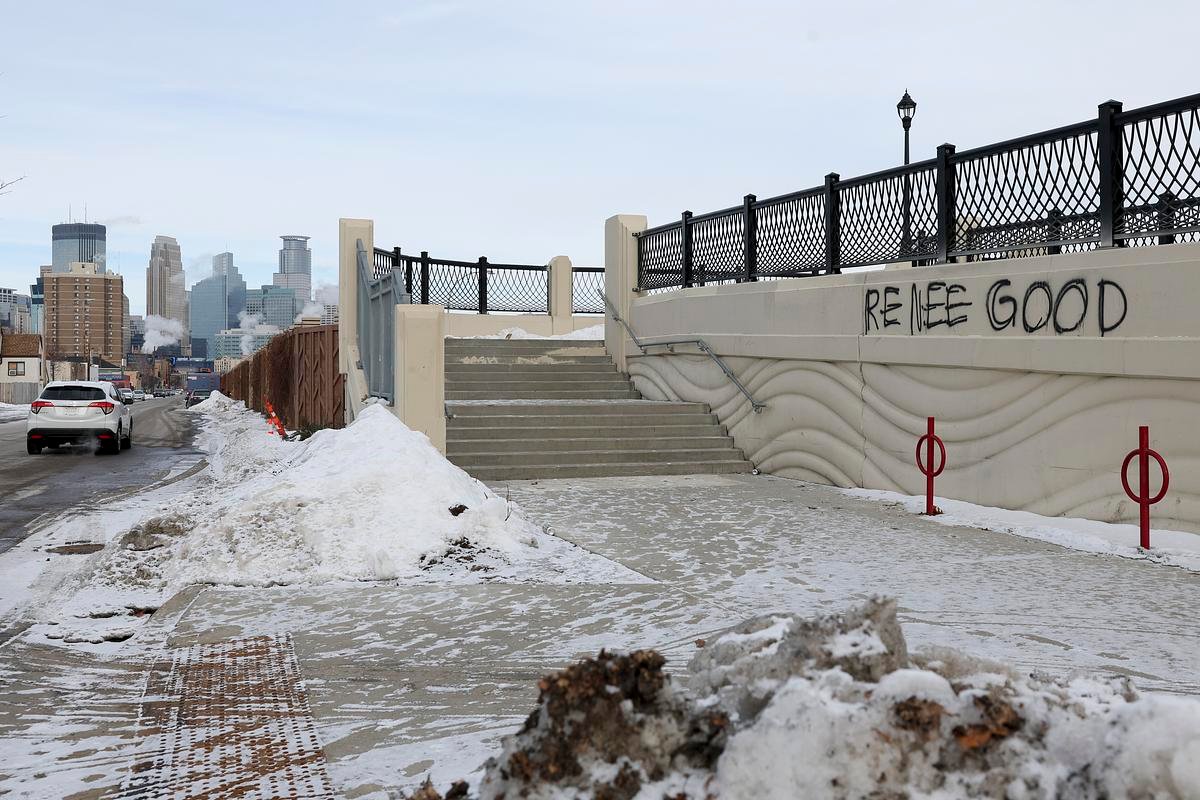
    An aggressive ICE enforcement surge in Minnesota – marked by the fatal shooting of Renee Nicole Good by a federal agent – has triggered large-scale protests, legal challenges and a federal court order restricting how immigration agents can engage with protestors. 
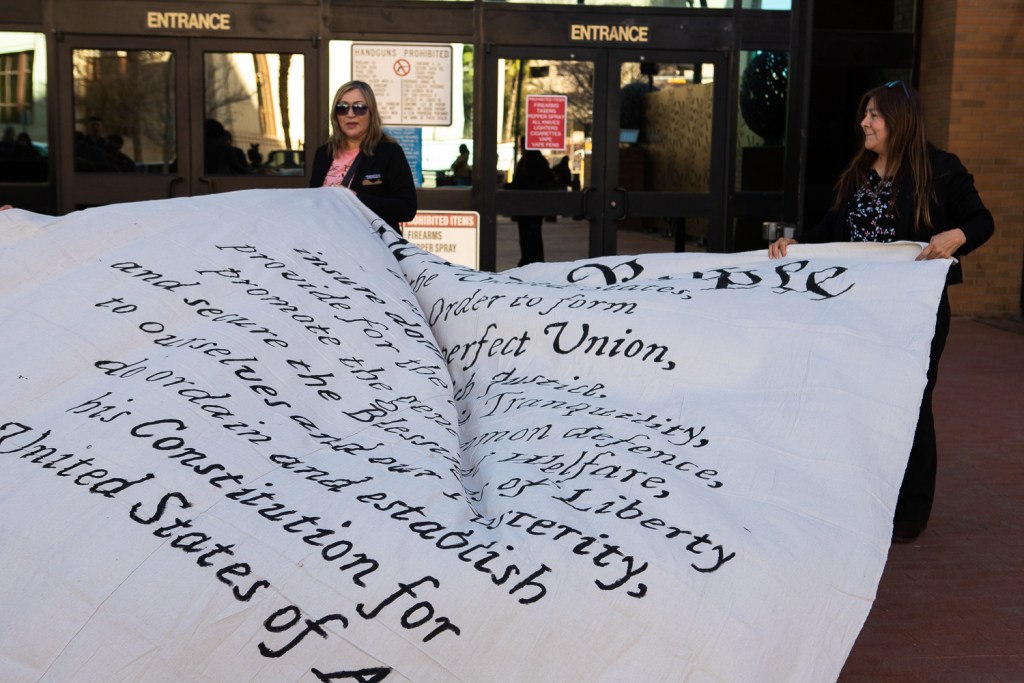
    Protesters unfurl a large sheet painted with the preamble to the constitution during a press conference of religious and civil leaders who sought to encourage the El Paso community in the face of escalating ICE raids, Jan. 16, 2026. (Corrie Boudreaux/El Paso Matters)

    In El Paso, community, faith and civil rights leaders in El Paso gathered Friday and Saturday in Downtown to condemn what they call an “alarming escalation” of violent immigration enforcement and detention following the detainee deaths and immigration raids throughout the borderland.

    Charlotte Weiss of the Texas Civil Rights Project said over the last month or two, detainees’ attorneys have been required to make appointments at least 24 hours in advance to see their clients at the Fort Bliss detention facility. That poses challenges when detainees have medical issues, she told El Paso Matters on Friday after the protest outside the Enrique Moreno County Courthouse.

    “Because of the medical issues that I’m hearing – and I’m not getting emails daily since this week – for individuals that have severe health needs that are not being met, individuals who are not getting insulin, individuals who have broken body parts that are not being tended to, 24 hours could be enough for some cases, but it may not be for others,” Weiss said.

    Diaz is the third person to die in custody of the immigration enforcement agency in El Paso.

    Geraldo Lunas Campos, 55, of Cuba, died at the Fort Bliss facility on Jan. 3. Citing a recorded conversation between a medical examiner’s office employee and Campo’s daughter, the Washington Post last week reported that the employee stated the cause of death would likely be listed as asphyxia – and the death would likely be ruled a homicide. The El Paso County Medical Examiner’s Office said Friday that the autopsy report is pending and that it does not release preliminary information.

    DHS in a news release said Campos was attempting to take his own life when security “intervened to save his life,” but that he stopped breathing and lost consciousness during the struggle.

    On Dec. 3, Francisco Gaspar-Andres, 48, of Guatemala, died in an El Paso hospital after months of illness and hospital visits while detained. ICE said in a news release that medical staff attributed his death to natural liver and kidney failure.

    At least four other ICE detainee deaths have been reported by the agency since January, including a 34-year-old Mexican who died in Georgia; a 46-year-old Cambodian who died in Philadelphia; a 68-year-old Honduran who died in California; and a 42-year-old Honduran who died in Houston.

    The deaths remain under investigation.

    The Trump administration last year initiated a significant expansion of immigration enforcement, using U.S. military bases as detention centers – with Fort Bliss serving as the flagship facility.
    A Guatemalan man was moved from California Nov. 17 to this Immigration and Customs Enforcement detention facility to prepare him for deportation to Guatemala, despite a court order prohibiting that action. A federal judge in El Paso has ordered his return to the United States. (Cindy Ramirez/El Paso Matters)

    The $1.2 billion tent facility opened Aug. 1 while it was still being erected and expanded, taking in about 1,000 people within two weeks. 

    The center averaged about 2,774 detainees per day as of November – the most than any other detention facility nationwide, according to the  latest data available at the Transactional Records Access Clearinghouse, a nonpartisan research center at Syracuse University. More than 65,700 people were reported being under ICE custody nationwide as of November.

    The Fort Bliss center’s capacity is expected to grow to about 5,000 detainees, making it the largest federal detention center for civil detainees in the country.

    The detention center has been under scrutiny since it opened, with an internal ICE inspection report obtained by the Washington Post in September showing dozens of violations of federal immigration detention standards.

    The ACLU and other human rights organizations in early December after a site visit released a scathing report alleging detained immigrants were subject to beatings and sexual abuse by officers, as well as medical neglect, hunger and insufficient food, and denial of access to attorneys.


    This article first appeared on El Paso Matters and is republished here under a Creative Commons Attribution-NoDerivatives 4.0 International License.

    The post Minnesota detainees denied visitors at Fort Bliss following 3rd death at ICE facility appeared first on MinnPost.

  • The current US political climate is spurring a ‘reclaim’ and rallying on the MLK holiday

    The current US political climate is spurring a ‘reclaim’ and rallying on the MLK holiday

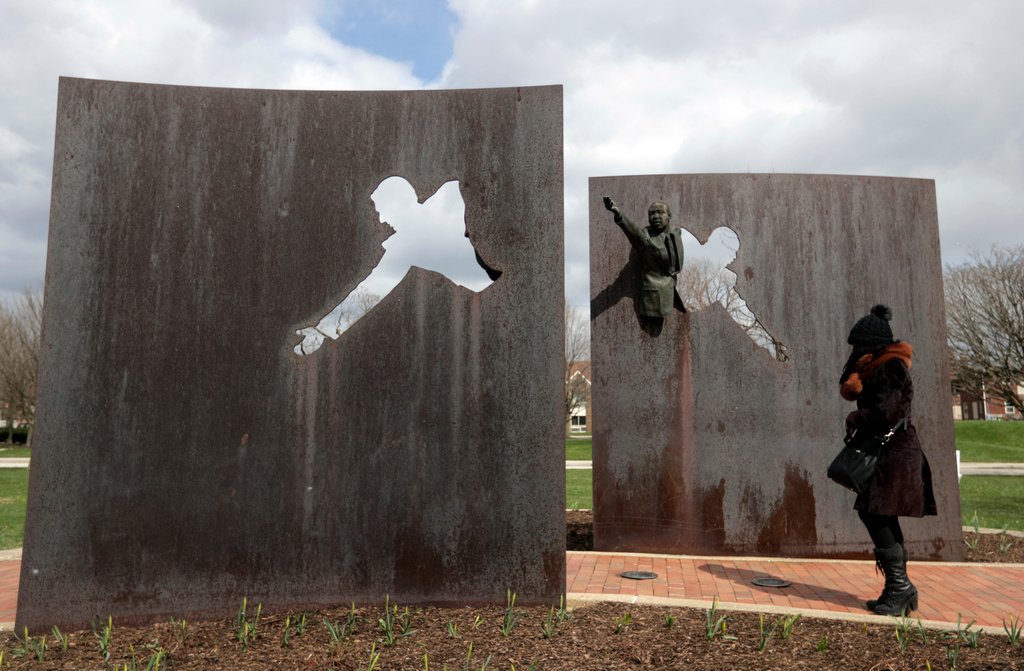
    As communities across the country on Monday host parades, panels and service projects for the 40th federal observation of Martin Luther King Jr. Day, the political climate for some is more fraught with tensions than festive with reflection on the slain Black American civil rights icon’s legacy.

    In the year since Donald Trump’s second inauguration fell on King Day, the Republican president has gone scorched earth against diversity, equity and inclusion initiatives and targeted mostly Black-led cities for federal law enforcement operations, among other policies that many King admirers have criticized.

    One year ago, Trump’s executive orders, “Ending Illegal Discrimination And Restoring Merit-Based Opportunity” and “Ending Radical And Wasteful Government DEI Programs and Preferencing,” accelerated a rollback of civil rights and racial justice initiatives in federal agencies, corporations and universities. Last month, the National Park Service announced it will no longer offer free admission to parks on King Day and Juneteenth, but instead on Flag Day and Trump’s birthday.

    The fatal shooting this month of an unarmed Minneapolis woman in her car by Immigration and Customs Enforcement agents sent there to target the city’s Somali immigrant population, as well as Trump recently decrying civil rights as discrimination against white people, have only intensified fears of a regression from the social progress King and many others advocated for.

    Still, the concerns have not chilled many King holiday events planned this year. Some conservative admirers of King say the holiday should be a reminder of the civil rights icon’s plea that all people be judged by their character and not their skin color. Some Black advocacy groups, however, are vowing a day of resistance and rallies nationwide.

    ‘We’ve always strived to be a more perfect union’

    In a recent interview with the New York Times, Trump said he felt the Civil Rights Movement and the reforms it helped usher in were harmful to white people, who “were very badly treated.” Politicians and advocates say Trump’s comments are what are harmful, because they dismiss the hard work of King and others that helped not just Black Americans but other groups, including women and the LGBTQ+ community.

    “I think the Civil Rights Movement was one of the things that made our country so unique, that we haven’t always been perfect, but we’ve always strived to be this more perfect union, and that’s what I think the Civil Rights Movement represents,” Gov. Wes Moore, Maryland’s first Black governor and only the nation’s third elected Black governor, said this week in an interview with The Associated Press.

    Maya Wiley, president and CEO of the Leadership Conference on Civil and Human Rights, one of the nation’s oldest and largest civil rights coalitions, said the Trump administration’s priorities make clear it is actively trying to erase the movement.

    “From health care access and affordable housing to good paying jobs and union representation,” Wiley said, “things Dr. King made part of his clarion call for a beloved community are still at stake and is even more so because (the administration) has dismantled the very terms of government and the norms of our culture.”

    The White House did not respond to a request for comment.

    The conservative Heritage Foundation think tank is encouraging the holiday’s focus to stay solely on King himself. Brenda Hafera, a foundation research fellow, urged people to visit the Martin Luther King Jr. National Historical Park in Atlanta or reread his “I have a dream” speech delivered on the steps of the Lincoln Memorial in Washington nearly 63 years ago.

    But using the holiday as a platform to rally and speak about “anti-racism” and “critical race theory” actually rejects King’s ambition for the country, Hafera argued.

    “I think efforts should be conducted in the spirit of what Martin Luther King actually believed and what he preached. And his vision was a colorblind society, right,” Hafera said. “He says very famously in his speech, don’t judge by the color of your skin, but the content of your character.”

    Black advocacy groups call for holiday of reclamation, education and rallying

    The NAACP, the nation’s oldest civil right organization which had a myriad MLK Day events planned for Monday, asserted that the heightened fears among communities of color and in immigrant communities mean King Day observances must take a different tone. People will have to put their safety first, even if their government isn’t, said Wisdom Cole, NAACP senior national director of advocacy.

    “As folks are using their constitutional right to protest and to speak out and stand up for what they believe in, we are being faced with violence. We are faced with increased police and state violence inflicted by the government,” Cole said.

    The Movement for Black Lives, a coalition of organizations affiliated with the Black Lives Matter movement, has planned its events under the banner “Reclaim MLK Day of Action.” Organizers planned demonstrations in Atlanta, Chicago and Oakland, California, among other cities, over the weekend and Monday.

    “This year it is more important than ever to reclaim MLK’s radical legacy, letting his wisdom and fierce commitment to freedom move us into the action necessary to take care of one another, fight back, and free ourselves from this fascist regime,” Devonte Jackson, a national organizing director for the coalition, said in a statement.

    Indiana school cancels historic MLK Day event

    For the first time in its 60-year history, Indiana University in Indianapolis canceled its annual Martin Luther King dinner. Over the years, the event drew notable guest speakers including Shirley Chisholm, the first Black woman elected to Congress, and activist Angela Davis.

    The reasoning was “budget constraints,” according to a social media post by the school’s Black Student Union. However, the group said it was worried this was “connected to broader political pressures.” A few students have since organized smaller community dinners or “eat-ins” to fill the void, WTHR-TV in Indianapolis reported.

    Meanwhile, the St. Anthony of Padua Catholic Church in Westbrook, Maine, canceled a MLK Day service due to “unforeseen circumstances,” according to the parish website. But a member of the church’s “social justice and peace committee” told NewsCenterMaine.com that the pastor was concerned about people’s safety amid rumors of ICE agents being in the area.

    Overall, there have been few reports of King Day events being majorly scaled down or canceled altogether.

    In Memphis, Tennessee, the National Civil Rights Museum is going about its annual King Day celebration as normal. The museum is located on the site of the former Lorraine Motel, where King was shot on April 4, 1968. The museum is offering free admission on the holiday, an annual tradition.

    “This milestone year is not only about looking back at what Dr. King stood for, but also recognizing the people who continue to make his ideals real today,” museum President Russell Wigginton said.

    ___

    Tang reported from Phoenix. Associated Press writers Matt Brown in Washington, Adrian Sanz in Memphis, Tennessee, and Brian Witte in Annapolis, Maryland, contributed to this report.

    The post The current US political climate is spurring a ‘reclaim’ and rallying on the MLK holiday appeared first on MinnPost.
  • Federal judge blocks plan to freeze Minnesota SNAP funds — for now

    Federal judge blocks plan to freeze Minnesota SNAP funds — for now

    WASHINGTON – A federal judge this week temporarily blocked the U.S. Department of Agriculture from plans to freeze $129 million in funds to Minnesota, a cutoff that would have impacted the state’s food stamp program.

    Citing fraud, USDA Secretary Brooke Rollins announced the freeze last week. Last month, she also threatened to cut off all Supplemental Nutrition Assistance Program (SNAP) funding for Hennepin, Ramsey, Washington and Wright counties because the state has not recertified all the recipients in those counties.

    Rollins also said all federal money to implement the food stamp program in Minnesota, which totals almost $900 million a year, could be in peril.

    But U.S. District Court Judge Laura Provinzino granted the state a preliminary injunction that bars the USDA from cutting off any funds to Minnesota, including the $129 million announced last week – at least for now.

    “We have won yet another battle in the Trump administration’s war on Minnesota,” Attorney General Keith Ellison said in a statement. “Before any of us in the state are Republicans or Democrats, we are Minnesotans, and it should shock and disgust us that this president is trying to take food off the table of half a million of our neighbors.”

    Yet the issue won’t be resolved until Provinzino rules on a lawsuit Ellison filed against the USDA last month after Rollins demanded the SNAP recipient recertifications.

    In Minnesota, counties administer the SNAP program and, according to Rollins’ directive, each of the four counties involved would have to review the eligibility of tens of thousands of recipients – as well as conduct in-person interviews – within 30 days. If the counties did not comply, their residents would lose benefits.

    The state told the court it would be impossible to recertify the 100,000 households in those counties in the amount of time Rollins allotted, and that all Minnesota food stamp recipients are periodically recertified.

    The post Federal judge blocks plan to freeze Minnesota SNAP funds — for now appeared first on MinnPost.

  • Trump administration wields new financial weapon against Minnesota

    Trump administration wields new financial weapon against Minnesota

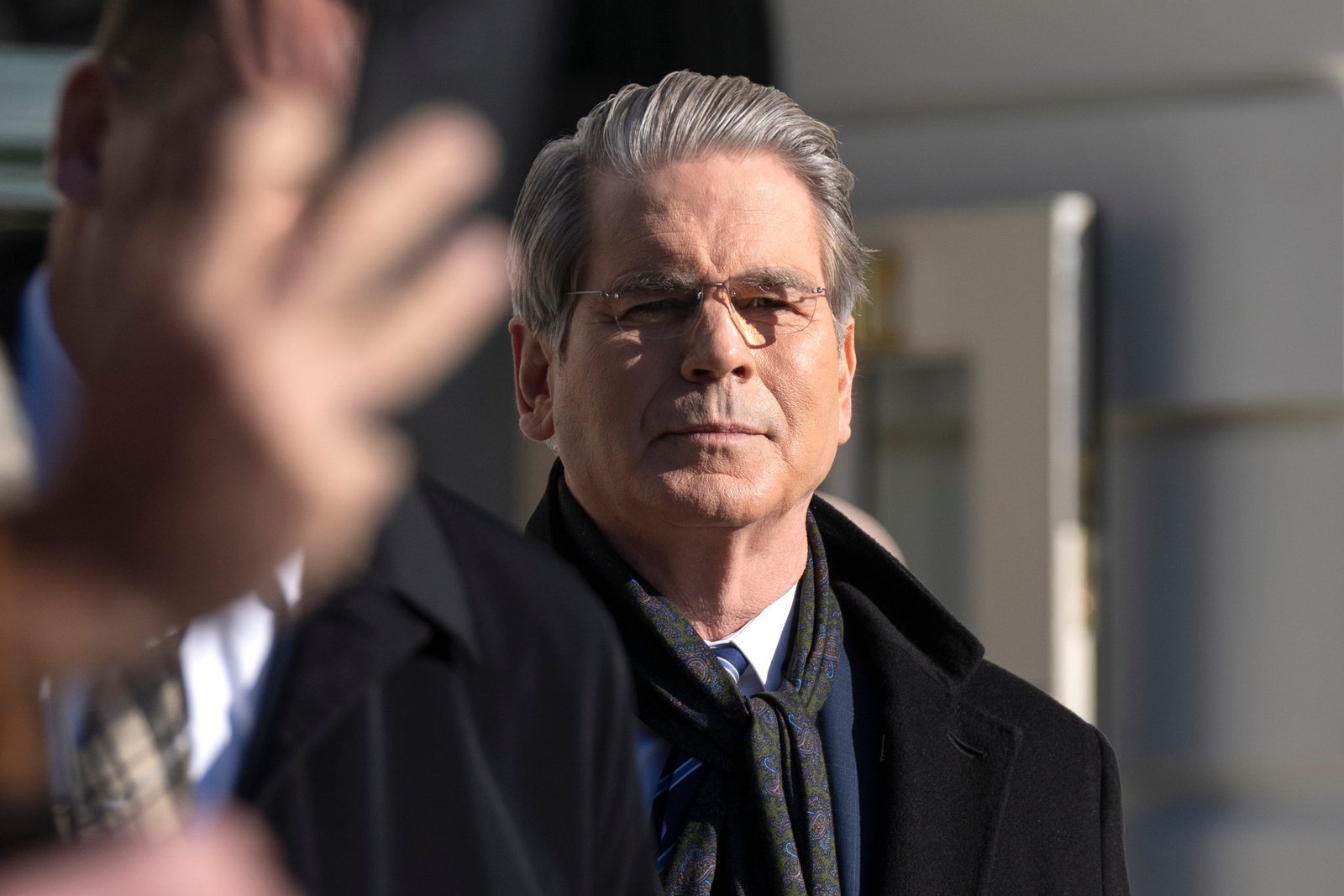
    U.S. Treasury Secretary Scott Bessent imposed new reporting requirements this week on all banks in Hennepin and Ramsey counties as part of an unprecedented probe into alleged fraud in the state.

    The Treasury Department’s financial crimes unit issued a “Geographic Targeting Order” (GTO) on Tuesday that requires all banks in Hennepin and Ramsey counties to report all transactions of $3,000 or more, focusing on those that involve sending funds to recipients overseas.

    Teri Hodgett, chief risk officer at Sunrise Bank, which has two branches in St. Paul and another two in Minneapolis, said the financial institution “complies with all federal requirements and regulations” but that the new requirements pose a challenge.

    “This will require a lot of collaboration between our teams, especially those associated with risk, retail banking, wire transfers, and IT,” Hodgett said. “We are operating on a very short timeline – less than one month – to create, review and put these new processes into practice”

    Nevertheless, Hodgett said Sunrise is “confident we will be able to meet that deadline and the requirements of this new order.”

    U.S. Bancorp and other regional banks that have branches in Hennepin and Ramsey counties did not immediately respond to requests for comment. 

    Foreign Bank Account Reports are now required for any transaction of $10,000 or more. That reporting requirement was established mainly to combat money laundering, especially among drug traffickers.

    By lowering the reporting threshold and requiring additional information about certain financial transactions, the new GTO aims to unearth instances of money transfers, especially by members of the state’s Somali community, to terrorist groups and others outside the United States.

    The new, rarely used, reporting requirement will go into effect Feb. 12 and last 180 days, though it is likely to be extended.  

    The new banking order is part of a broader investigation that was launched by Bessent on Dec. 1 into allegations that Somalis involved in defrauding the state’s social service programs had sent money to terrorists overseas, including al-Shabaab, an insurgent group that controls southern Somalia.

    Related: Trump is ending protected immigration status for Somalis, long a target of his anti-immigrant barbs

    As part of that investigation, the Treasury Department has requested a number of records from Minnesota-based money services businesses, which can move funds overseas faster than banks. IRS auditors are also scrutinizing financial institutions that may have helped move or hide illicit funds and non-profits that may have been involved in social service fraud.

    President Donald Trump alluded to the Treasury Department’s crackdown in Minnesota in a post on Truth Social on Tuesday.

    “I have instructed Secretary of the Treasury Scott Bessent to FOLLOW THE MONEY and put an END to this abuse once and for all, first in Minnesota and then all around the country,” Trump said.

    The Treasury Department said that at least $300 million in federal funds intended to feed children during the pandemic in Minnesota was diverted by criminal non-profits in the Feeding Our Future scandal. Much of this money was used to purchase luxury vehicles, real estate in Kenya and Turkey, and to fund international travel. There was no evidence, however, that any of the money was sent directly to terrorist groups.

    Nonetheless, Bessent said at a press briefing in Shakopee last week that “our citizens have a right to know that their tax dollars are not being diverted to fund acts of global terror or fund luxury cars for fraudsters.”

    Bessent also took a swipe at Gov. Tim Walz, a favorite target of the Trump administration, saying without evidence that the governor may have been complicit in fraud.

    “It is clear that Governor Walz has been negligent in his fiduciary duties as the chief executive of the state of Minnesota, that this would happen on his watch, and we are actively pursuing all leads to see the level of involvement, whether it’s limited to just negligence and incompetence or is something more than that,” Bessent said.

    The post Trump administration wields new financial weapon against Minnesota appeared first on MinnPost.
  • Trump threatens to send federal troops to Minnesota to quell protests

    Trump threatens to send federal troops to Minnesota to quell protests

    WASHINGTON – President Donald Trump threatened to use the military to quell widescale protests in Minnesota against immigration enforcement.

    Trump said he would use the “Insurrection Act,” an 1807 law that gives the president the authority to deploy the U.S. military domestically and use it against Americans under certain conditions.

    Trump appeared to reference a clause in the law that said that whenever a president “considers that unlawful obstructions, combinations, or assemblages, or rebellion against the authority of the United States” impede the enforcement of federal laws, that president may “call into federal service such of the militia of any State, and use such of the armed forces, as he considers necessary to enforce those laws or to suppress the rebellion.”

    An increasing number of federal immigration officers have poured into Minnesota, especially the Twin Cities, since the U.S. Department of Homeland Security initiated Operation Metro Surge aimed at detaining and deporting undocumented immigrants in the state.

    The actions of officers from Immigration and Customs Enforcement (ICE), Border Patrol and other federal agencies have resulted in clashes and in the fatal shooting of Renee Good and the wounding of an immigrant in north Minneapolis on Wednesday night. 

    In a Truth Social post on Thursday, Trump demanded Minnesota politicians stop protesters from attacking ICE agents. He wrote that if Minnesota couldn’t calm the “insurrectionists,” he would “institute the INSURRECTION ACT, which many Presidents have done before me, and quickly put an end to the travesty that is taking place in that once great State.”

    Minnesota’s Democratic officials condemned Trump’s threat.

    “Minnesota needs ICE to leave, not an escalation that brings additional federal troops beyond the 3,000 already here,” a spokeswoman for Minneapolis Mayor Jacob Frey said. “The mayor’s priority is keeping local law enforcement focused on public safety, not diverted by federal overreach.” 

    And Minnesota Attorney General Keith Ellison said he’s ready to sue if the Insurrection Act is implemented.

    “Donald Trump is clearly trying to create an excuse to invoke the Insurrection Act, but none exists,” Ellison said in an emailed statement. “Even after the Trump administration deployed thousands of armed, masked, and poorly trained federal agents to brutalize Minnesotans, people are responding by protesting peacefully, by organizing their communities, and by looking out for their neighbors.”

    Ellison also said, “If Donald Trump does invoke the Insurrection Act, I’m prepared to challenge that action in court.”

    An ‘inflammatory’ speech 

    Other Democrats also slammed Trump’s threat. 

    “Minnesotans, our state and local officials, and especially our local law enforcement have all made clear that they want the chaos to end and for the ICE agents wreaking havoc on our state to leave,” said Rep. Kelly Morrison, D-3rd District, in an emailed statement.
    “President Trump is not only defying those requests – but choosing to inflame tensions and escalate his retribution-fueled attacks on our state every single day.”

    Meanwhile, St. Paul Mayor Kaohly Her said her city is suffering from a “crisis, humanitarian and economic, that the Trump Administration manufactured and dropped in our backyards for retribution.”

    “Their reckless and racist ‘operation’ is straining the emotional and financial well-being of our city,” Her said. “We will stand together and not give the president what he wants, which is a reason to invoke the Insurrection Act.”

    However, Rep. Tom Emmer, R-6th District, blamed Gov. Tim Walz for the unrest, and condemned a somber prime time speech the governor gave Wednesday night.

    “It’s past time for Governor Tim Walz to take accountability for his sanctuary state policies that got us here in the first place and lower the temperature,” Emmer said. “But last night’s embarrassing and inflammatory speech once again proved he is incapable of leading. The safety of Minnesotans depends on it.”

    In his speech, Walz warned Minnesotans that Trump wanted chaos, confusion and “more violence on our streets.” He urged protesters to be loud, but peaceful.

    “Let’s be very, very clear this long ago stopped being a matter of immigration enforcement,” Walz said. “Instead, it’s a campaign of organized brutality against the people of Minnesota by our own federal government.”

    The governor also urged Minnesotans to “carry your phone with you at all times” to record ICE activities.

    “Help us create a database of the atrocities against Minnesotans, not just to establish a record for posterity, but to bank evidence for future prosecution.”

    Trump made his threat after his supporters on social media demanded he use the Insurrection Act to quash protests in the state. Stephen Miller, a staunch anti-immigration advocate who serves as White House deputy chief of staff for policy and homeland security advisor, has also urged Trump to use the act that gives the president emergency powers.

    Trump also made his threat after another evening of protests in the Twin Cities. Those ramped up after a man identified by the Department of Homeland Security as an undocumented Venezuelan national was shot in the leg in a home in north Minneapolis by federal agents. 

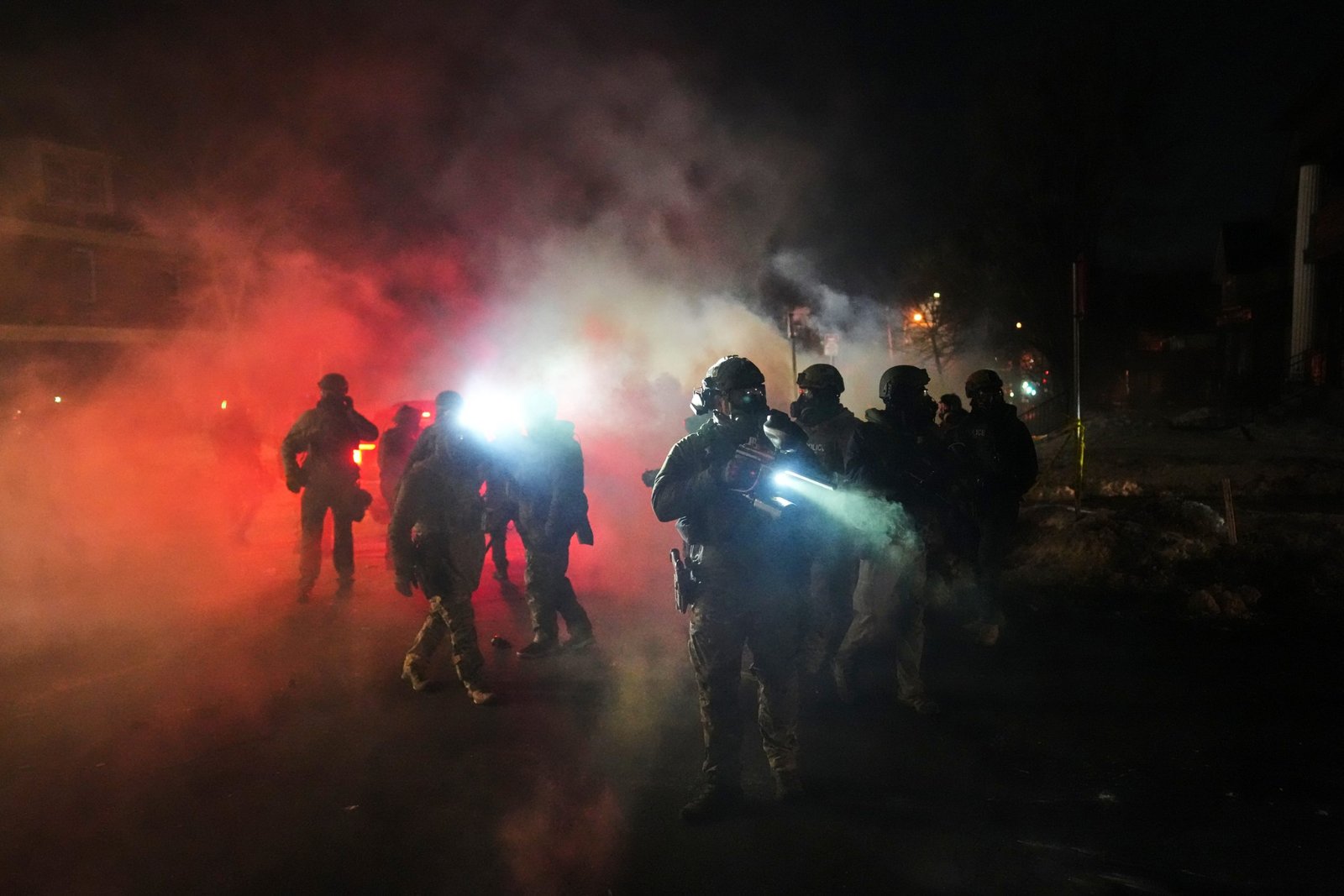
    Protesters who had gathered at the scene blew whistles, filmed ICE agents with their cellphones and shouted for them to leave the city amid bursts of tear gas and stun grenades.

    Will Trump invoke the Insurrection Act?

    During his first term in office, Trump considered invoking the Insurrection Act in response to the unrest provoked by the killing of George Floyd in 2020. But advisers persuaded the president not to do so.

    Homeland Security Secretary Kristi Noem told reporters she discussed the act with Trump Thursday morning, but declined to say whether she recommended its use.

    “He certainly has the constitutional authority to utilize that,” Noem said. “My hope is that this leadership team in Minnesota will start to work with us to get criminals off the streets.”

    The Insurrection Act is an amalgamation of different statutes enacted by Congress between 1792 and 1871. It provides an exception to the Posse Comitatus Act, under which federal military forces are generally barred from participating in civilian law enforcement activities.

    Joseph Nunn, an attorney with the Brennan Center for Justice, said the last time the Insurrection Act was deployed was in 1992, to respond to civil unrest after the police beating of Rodney King in Los Angeles. But in that instance, the then-governor of California, Pete Wilson  asked for that help.

    The last time the Insurrection Act was used “unilaterally,” Nunn said, was in 1965, to protect marchers from Selma to Montgomery in Alabama. In fact, the act was deployed five times between 1957 and 1965, each time to protect the civil rights of Black Americans and enforce federal court orders. 

    Before that, the act had not been used for 130 years.

    The Brennan Center for Justice seeks a reform of the Insurrection Act because it says it gives too much power to one person.

    Nunn said Trump’s invocation of the law to send military troops to Minnesota “would be a flagrant abuse of the law.”

    “The principles of this country have always been that using the military for civilian law enforcement is a tool of last resort,” Nunn said.

    He also said that if Ellison has to sue the Trump administration over the use of the law, the attorney general would be filing “an absolutely appropriate legal challenge.” 

    Editor’s note: This story has been updated throughout to add comment and background. It may be updated.

    Reporter Trevor Mitchell contributed to this story.

    The post Trump threatens to send federal troops to Minnesota to quell protests appeared first on MinnPost.

  • Trumps threatens to send federal troops to Minnesota to quell protests

    Trumps threatens to send federal troops to Minnesota to quell protests

    WASHINGTON – President Donald Trump threatened to use the military to quell widescale protests in Minnesota against immigration enforcement.

    Trump said he would use the “Insurrection Act,” a 1807 law that gives the president the authority to deploy the U.S. military domestically and use it against Americans under certain conditions.

    Trump appeared to reference a clause in the law that said that whenever a president “considers that unlawful obstructions, combinations, or assemblages, or rebellion against the authority of the United States” impede the enforcement of federal laws, that president may “call into federal service such of the militia of any State, and use such of the armed forces, as he considers necessary to enforce those laws or to suppress the rebellion.”

    An increasing number of federal immigration officers have poured into Minnesota, especially the Twin Cities, since the U.S. Department of Homeland Security initiated Operation Metro Surge aimed at detaining and deporting undocumented immigrants in the state.

    The actions of officers from Immigration and Customs Enforcement (ICE), Border Patrol and other federal agencies have resulted in clashes and in the fatal shooting of Renee Good and the wounding of an immigrant in north Minneapolis on Wednesday night. 

    Minnesota’s Democratic officials condemned Trump’s threat.

    “Minnesotans, our state and local officials, and especially our local law enforcement have all made clear that they want the chaos to end and for the ICE agents wreaking havoc on our state to leave,” said Rep. Kelly Morrison, D-3rd District, in an emailed statement. “President Trump is not only defying those requests – but choosing to inflame tensions and escalate his retribution-fueled attacks on our state every single day.

    In a Truth Social post on Thursday, Trump demanded Minnesota politicians stop protesters from attacking ICE agents. He wrote that if Minnesota couldn’t calm the “insurrectionists,” he would “institute the INSURRECTION ACT, which many Presidents have done before me, and quickly put an end to the travesty that is taking place in that once great State.”

    This is a developing story.

    The post Trumps threatens to send federal troops to Minnesota to quell protests appeared first on MinnPost.

  • Spurred by Minneapolis events, Democrats in other states hope to change state laws to limit ICE

    Spurred by Minneapolis events, Democrats in other states hope to change state laws to limit ICE

    MADISON, Wis. (AP) — Democrats across the country are proposing state law changes to rein in federal immigration officers and protect the public following the shooting death of a protester in Minneapolis and the wounding of two people in Portland, Oregon.

    Many of the measures have been proposed in some form for years in Democratic-led states, but their momentum is growing as legislatures return to work amid President Donald Trump’s national immigration crackdown following the killing of Renee Good by an Immigration and Customs Enforcement agent in Minneapolis. Republicans are pushing back, blaming protesters for impeding enforcement of immigration laws.

    Democratic bills seek to limit ICE

    Democratic Gov. Kathy Hochul wants New York to allow people to sue federal officers alleging violations of their constitutional rights. Another measure aims to keep immigration agents lacking judicial warrants out of schools, hospitals and houses of worship.

    Oregon Democrats plan to introduce a bill to allow residents to sue federal agents for violating their Fourth Amendment rights against unlawful search and seizure.

    New Jersey’s Democrat-led Legislature passed three bills on Monday that immigrant rights groups have long pushed for, including a measure prohibiting state law enforcement officers from cooperating with federal immigration enforcement. Democratic Gov. Phil Murphy has until his last day in office Tuesday to sign or veto them.

    Related: Minnesota and the Twin Cities sue the federal government to stop the immigration crackdown

    California lawmakers are proposing to ban local and state law enforcement from taking second jobs with the Department of Homeland Security and make it a violation of state law when ICE officers make “indiscriminate” arrests around court appearances. Other measures are pending.

    “Where you have government actions with no accountability, that is not true democracy,” Democratic state Sen. Scott Wiener of San Francisco said at a news conference.

    Democrats also push state law changes in red states

    Democrats in Georgia introduced four Senate bills designed to limit immigration enforcement — a package unlikely to become law because Georgia’s conservative upper chamber is led by Lt. Gov. Burt Jones, a close Trump ally. Democrats said it’s still important to take a stand.

    “Donald Trump has unleashed brutal aggression on our families and our communities across our country,” said state Sen. Sheikh Rahman, an immigrant from Bangladesh whose district in suburban Atlanta’s Gwinnett County is home to many immigrants.

    Democrats in New Hampshire have proposed numerous measures seeking to limit federal immigration enforcement, but the state’s Republican majorities passed a new law taking effect this month that bans “sanctuary cities.”

    In Tennessee, instead of considering a Democratic measure that would limit civil immigration enforcement at schools and churches, Republican House Speaker Cameron Sexton said he was working with the White House on a separate package of immigration-related bills. He hasn’t said what they would do.

    Trump administration sues to stop state law action

    The Trump administration has opposed any effort to blunt ICE, including suing local governments whose “sanctuary” policies limit police interactions with federal officers.

    States have broad power to regulate within their borders unless the U.S. Constitution bars it, but many of these laws raise novel issues that courts will have to sort out, said Harrison Stark, senior counsel with the State Democracy Research Initiative at the University of Wisconsin Law School.

    “There’s not a super clear, concrete legal answer to a lot of these questions,” he said. “It’s almost guaranteed there will be federal litigation over a lot of these policies.”

    That’s already happening.

    California in September was the first to ban most law enforcement officers, including federal immigration agents, from covering their faces on duty. The Justice Department said its agents won’t comply and sued California, arguing that the laws threaten the safety of officers who are facing “unprecedented” harassment, doxing and violence.

    The Justice Department also sued Illinois last month, challenging a law that bars federal civil arrests near courthouses, protects medical records and regulates how universities and day care centers manage information about immigration status. The Justice Department claims the law is unconstitutional and also threatens federal officers’ safety.

    Targeted states push back

    Minnesota and Illinois, joined by their largest cities, sued the Trump administration this week. Minneapolis and Minnesota accuse the Republican administration of violating free speech rights by punishing a progressive state that favors Democrats and welcomes immigrants. Illinois and Chicago claim “Operation Midway Blitz” made residents afraid to leave their homes.

    Homeland Security spokesperson Tricia McLaughlin accused Minnesota officials of ignoring public safety and called the Illinois lawsuit “baseless.”

    ___

    Associated Press writers John O’Connor in Springfield, Illinois; Sophie Austin in Sacramento, California; Mike Catalini in Trenton, New Jersey; Jonathan Mattise in Nashville, Tennessee; Anthony Izaguirre in Albany, New York; Claire Rush in Portland, Oregon; and Jeff Amy in Atlanta contributed.

    The post Spurred by Minneapolis events, Democrats in other states hope to change state laws to limit ICE appeared first on MinnPost.

  • Attorney: Federal agents had no proper warrant to arrest Minneapolis man who fled to U.S. from Liberia as a child

    Attorney: Federal agents had no proper warrant to arrest Minneapolis man who fled to U.S. from Liberia as a child

    MINNEAPOLIS (AP) — The Liberian man arrested over the weekend after heavily armed immigration agents used a battering ram to break through the front door of his Minneapolis home had been checking in regularly with federal authorities for years, his attorney said Tuesday.

    The arrest of Garrison Gibson, 37 during a Minnesota immigration crackdown that the Department of Homeland Security has called its largest enforcement operation ever, was a “blatant constitutional violation,” since the agents did not have a proper warrant, said attorney Marc Prokosch.

    The arrest Sunday came in a city increasingly on edge after an immigration agent shot and killed 37-year-old Renee Good last week, setting off waves of angry protests and clashes between authorities and activists.

    “This was an illegal search, absolutely,” said Prokosch, because agents had brought only an administrative warrant, which authorizes someone’s arrest but does not allow officers to forcibly enter private homes. Forced entry requires a criminal warrant signed by a judge.

    Gibson, who fled the Liberian civil war as a child, had been ordered removed from the U.S., apparently because of a 2008 drug conviction that was later dismissed by the courts. But he had remained in the country legally under what’s known as an order of supervision, with the requirement that he meet regularly with immigration authorities.

    Only days before his arrest, Gibson had checked in with immigration authorities at regional immigration offices — the same building where agents have been staging enforcement raids in recent weeks.

    “He would have had another check-in in a couple of months,” Prokosch said. “So if he’s this dangerous person, then, why are they letting him walk around?

    Tricia McLaughlin, a spokeswoman for the Homeland Security Department, said earlier this week that Gibson has “a lengthy rap sheet (that) includes robbery, drug possession with intent to sell, possession of a deadly weapon, malicious destruction and theft.” She did not indicate if those were arrests, charges or convictions.

    McLaughlin did not respond to questions about whether the agents’ use of force was justified.

    But court records indicate Gibson’s legal history — dominated by a few traffic violations, minor drug arrests and an arrest for riding public transportation without paying the fare — shows only one felony, the 2008 conviction for third-degree narcotics sales that was later dismissed.

    Prokosch said Gibson had been flown to Texas by immigration authorities in the hours after his arrest, then quickly flown back to Minnesota on a judge’s order after the lawyer filed a habeas corpus petition, used by courts to determine if an imprisonment is legal. The courts have not yet ruled on the petition.

    Gibson is currently being held at an immigration detention center in Albert Lea, Minnesota, after being held at a large camp on the Fort Bliss Army base in El Paso, Texas. according to ICE’s detainee locator.

    The Department of Homeland Security did not respond to an email from The Associated Press with follow-up questions about Gibson’s case.

    Guns, activists and pepper spray

    Gibson’s wife, Teyana Gibson Brown, a nurse who was inside the home with the couple’s 9-year-old child during the raid, was deeply shaken by the arrest, Prokosch said.

    During their conversations, she “was having a hard time just completing sentences because she’s just been so distraught,” he said.

    Activists who had been keeping watch on the immigration agents before Gibson’s arrest banged on drums, blew whistles and honked car horns in attempts to disrupt the operation and warn neighbors, some of whom poured into the streets.

    Video taken at the scene by the AP shows agents pushing and pepper-spraying demonstrators.

    The Twin Cities — the latest target in President Donald Trump’s immigration enforcement campaign — has been convulsed by the killing of Good, who was shot Jan. 7 during a confrontation with agents.

    The Trump administration has defended the officer who shot Good in her car, saying he was protecting himself and fellow agents and that Good had “weaponized” her vehicle.

    City and state officials have dismissed those explanations based on videos of the confrontation.

    State and local authorities are urging the public to share video and any other evidence as they seek to investigate Good’s death after federal authorities insisted they would work on their own and not share information.

    More than 2,000 immigration arrests have been made in Minnesota since the enforcement operation began at the beginning of December, according to the Department of Homeland Security.

    Homeland Security Secretary Kristi Noem told Fox News over the weekend that the administration would send additional federal agents to the state to protect immigration officers and continue enforcement.

    AP correspondent Elliot Spagat contributed to this report from San Diego.

    The post Attorney: Federal agents had no proper warrant to arrest Minneapolis man who fled to U.S. from Liberia as a child appeared first on MinnPost.

  • Immigration agents are shooting people. Is it legal? 

    Immigration agents are shooting people. Is it legal? 


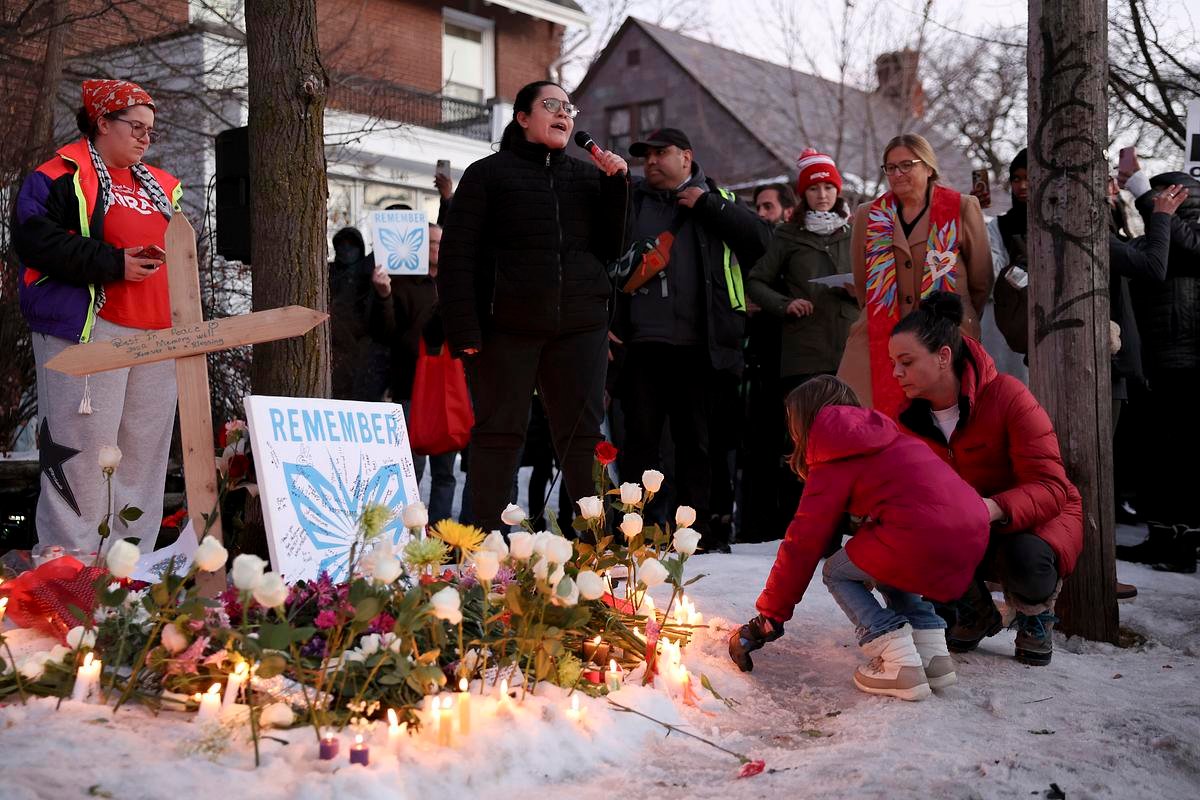
    people kneel at a makeshift memorial

    This story was originally published by The Trace, a nonprofit newsroom covering gun violence in America. Sign up for its newsletters here.

    On January 7, federal immigration agents in Minneapolis shot and killed 37-year-old Renee Good. The agents claim she tried to run them over with her car, and federal officials — including President Donald Trump, Vice President JD Vance, and Homeland Security Secretary Kristi Noem — have defended the shooting as justified.

    But videos appear to contradict the White House’s narrative. Before the shooting, Good’s car had been blocking traffic. After agents directed her to get out of her vehicle, she backed her car up, then drove forward, turning away from the agents as one of them opened fire.

    Protests have since sprung up to demand a full and independent investigation into Good’s death. State and local leaders have said federal officials are blocking state agencies from participating in the investigation. The killing was the latest in a string of shootings by federal immigration agents since Trump returned to office. At least four people have been killed, including Good.

    To better understand the policies and laws surrounding law enforcement’s use of deadly force, The Trace spoke with Kami Chavis, a professor who directs the Center of Criminal Justice and Police Reform at William & Mary Law School. The conversation has been edited for length and clarity.

    What case law and policy govern use of force by law enforcement?

    It does not matter whether you are state, local, or federal law enforcement; under Supreme Court precedent, your use of deadly force is governed by an “objectively reasonable” standard. 

    Officers should not use deadly force unless they have a reasonable belief of a threat to safety. But that belief must be objective. We have to evaluate whether they believed the suspect posed a danger, and then we have to assess that belief using objectively reasonable factors. Those factors are set out in a 1989 case called Graham v. Connor. They include the severity of the crime at issue, whether the suspect poses an immediate threat to the safety of the officers or others, and whether the suspect is actively resisting or evading arrest. 

    What policies govern use of force with moving vehicles and fleeing suspects?

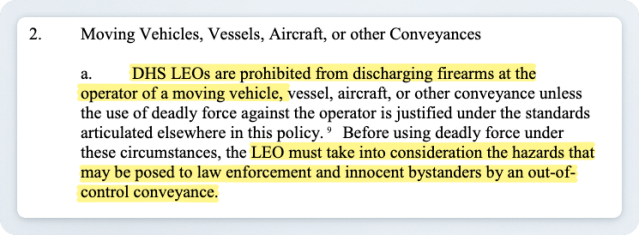
    Most police departments and federal guidance prohibit shooting at a moving vehicle unless the driver poses an imminent threat of deadly force. You are not allowed to use deadly force just because a car is leaving. The Department of Homeland Security’s policy specifically prohibits discharging firearms at the operator of a moving vehicle unless there is a threat of death or serious physical harm to agents or other people.

    There are many reasons to have a policy that prohibits firing into cars. When an officer fires into a moving vehicle, there may be other innocent occupants inside. It is very hard to control the vehicle’s trajectory when you shoot the driver. If you kill the driver, that car is going to spin out of control. Good was on a crowded street. Her car did, in fact, crash into another car. I think that car was unoccupied, but what if it wasn’t? Firing into a moving vehicle on a crowded street with protesters is potentially more dangerous than allowing the car to leave and stopping it later.

    You also cannot use deadly force solely to prevent the escape of a fleeing suspect — again, unless there is an immediate and significant danger of serious injury or loss of life. Good was trying to leave. The question is whether the agents believed she was using the vehicle in a way that posed a threat to them or others at the time. That is what all of this is going to hinge on.

    Deadly force is also only allowed when no reasonable alternative exists. In the Good case, there seemed to be reasonable alternatives, like stepping out of the car’s path. Deadly force should be a last resort. You want to use the minimum non-deadly force necessary and only escalate when necessary.

    As a former prosecutor and expert on use of force, how would you evaluate this shooting?

    When I view the video, there are other things the agent could have done. It appears the agent is stepping into the path of the car, and Good’s wheels are pointed away. She appears to be trying to swerve away from the agent. You should not step into the path of a moving car and then shoot at the person; that is not appropriate. 

    In my opinion, there was an opportunity for the agent to de-escalate and back away. Let the car go. You can check the license plate, determine where she is going, set up a blockade later, or use other methods. I would also ask: What was the crime? She may have been blocking a street, but she wasn’t a murder suspect. There is a scale of severity.

    Related: Yes, state and local prosecutors can charge federal law enforcement agents with crimes. But it isn’t easy

    Looking at what the Supreme Court has said and the policies of the Justice Department and Department of Homeland Security, it seems the officer acted in contravention of those policies. As a result, a woman who was a mother of three is dead. People on that street exercising their First Amendment rights were traumatized and endangered. 

    Do the events that happened beforehand play into the agent’s potential culpability? 

    Yes, there is a very recent landmark 2025 case, Barnes v. Felix, which states that courts must evaluate police use of deadly force under the “totality of circumstances.” This means we must consider the events leading up to the incident, not just the split second of the threat. 

    Those events are relevant. You have to include the seriousness of the crime and whether the agent contributed to their own dangerous situation. In this case, I think he did.

    Does it matter that these were federal agents? Could they be charged by the state, or would it have to be the federal government?

    You can have a concurrent investigation. Typically, even though these were federal agents, that does not mean they didn’t violate state law. The FBI is investigating, and if they find a prosecution is justified, that would be in federal court. However, there can also be a state investigation.

    Does the agent have any kind of immunity from state prosecution because he was a federal official?

    You don’t have absolute immunity from state prosecution. State charges are possible if the actions are found to be a violation of federal law or clearly outside the scope of lawful federal duties. It will be a significant legal challenge because federal law takes priority over state law, but it is possible. 

    My concern here is that we are having a crisis of credibility. You have already had high-level politicians like the president say the agent’s actions were justified before a full investigation. It is vital for legitimacy to have a probe with integrity. I would think the federal government would want the state to do an independent investigation to provide credibility.

    The agent fired multiple times. Could that fact play a role in the outcome of an investigation?

    If you are justified in using deadly force, an officer is trained to extinguish the threat. If it is determined that deadly force was appropriate, you can fire as many times as necessary. The real question is whether deadly force was justified in the first place. If it wasn’t, then firing even once is inappropriate. 

    The Trace has been tracking uses of force by immigration agents. We have identified at least 16 shootings since June, including four fatal ones. What is your reaction to what appears to be an increasing pace of shootings?

    It is logical to infer that we will see an increase in law enforcement-involved shootings given the current dynamic. You have armed people whose job is to arrest and seize undocumented immigrants, and you have a part of the population that is going to actively protest that. We have also seen cases where agents detain people who are actually citizens. If a masked person jumps out and tries to take you, you may not know what is happening.

    I think the current setup will lead to increased uses of force. We are often concerned with fatalities, but we also need to pay attention to serious injuries. Many shootings do not end in death simply because of happenstance, the shooter’s poor aim, or the proximity of a hospital. Federal use-of-force policy emphasizes the sanctity of life and the goal of minimizing loss of life. The current way these operations are occurring appears inconsistent with that.

    The post Immigration agents are shooting people. Is it legal?  appeared first on MinnPost.

  • Thompson, colleague resignations cast scrutiny on Justice Department’s probe into Renee Good’s death

    Thompson, colleague resignations cast scrutiny on Justice Department’s probe into Renee Good’s death

    WASHINGTON – The resignation of a top federal prosecutor in Minnesota has added to the skepticism about the Justice Department’s investigation into the killing of Renee Good by federal agent Jonathan Ross last week.

    Assistant U.S. Attorney Joseph Thompson and five other members of Minnesota’s U.S. Attorney’s Office have resigned, according to The New York Times, which cited three unnamed sources with knowledge of the decision.

    The attorneys did not comment and The Times’ report did not say why they resigned, but it noted that Thompson and others in the office objected to the Justice Department’s probe into ties between Good, her wife Becca and Minnesotans who have been monitoring and responding to ICE actions in the state.

    All six were all career Justice Department officials, with Thompson having served 20 years – the minimum for a full government pension. Most recently, Thompson was the lead federal prosecutor of fraud in state social service programs.

    The resignations follow reports by The Washington Post and MS Now that a key unit in the Justice Department’s Civil Rights Division had been locked out of the federal investigation of Good’s death. That division is responsible for investigations of shootings by law enforcement officers and the killing of George Floyd was prosecuted by the division.

    And doubts about the impartiality of the Trump administration’s investigation into Good’s shooting grew as President Donald Trump, Homeland Security Secretary Kristi Noem and Vice President JD Vance all said Ross was justified in shooting Good, a 37-year-old mother of three whose car was partially blocking a road near an Immigration and Customs Enforcement operation when she drove forward and was shot.

    Skepticism deepened after the FBI said it would not share evidence it collected with Minnesota’s Bureau of Criminal Apprehension.

    That led to a decision by Minnesota Attorney General Keith Ellison and Hennepin County Attorney Mary Moriarty to announce they were conducting their own probe and ask Minnesotans to submit any information they might have regarding Good’s shooting through a newly established portal.

    “The U.S. Attorney’s Office is filled with career prosecutors. When they are resigning, it raises questions about the political independence of these offices,” Moriarty said in an emailed statement.

    Gov. Tim Walz said he regretted Thompson’s resignation.

    “Joe is a principled public servant who spent more than a decade achieving justice for Minnesotans,” the governor said in a post on social media. “This is a huge loss for our state. It’s also the latest sign Trump is pushing nonpartisan career professionals out of the justice department, replacing them with his sycophants.”

    Joe Thompson is a principled public servant who spent more than a decade achieving justice for Minnesotans. This is a huge loss for our state.It’s also the latest sign Trump is pushing nonpartisan career professionals out of the justice department, replacing them with his sycophants.

    — Governor Tim Walz (@governorwalz.mn.gov) 2026-01-13T17:46:35.323Z

    Minneapolis Mayor Jacob Frey also weighed in, writing on social media: “These prosecutors are heroes, and the people pushing to prosecute Renee’s widow are monsters.”

    These prosecutors are heroes, and the people pushing to prosecute Renee's widow are monsters.In their pursuit of cruelty, the administration also just set back the work of fighting fraud by pushing out the prosecutors who were working on those cases. www.nytimes.com/2026/01/13/u…

    — Minneapolis Mayor Jacob Frey (@mayorjacobfrey.bsky.social) 2026-01-13T19:03:40.339Z

    He added: “In their pursuit of cruelty, the administration also just set back the work of fighting fraud by pushing out the prosecutors who were working on those cases.”

    The Justice Department’s investigation of Good’s shooting has also come under scrutiny by Democrats in Congress.

    Sen. Edward Markey and Rep. Ayanna Pressley, both Democrats from Massachusetts, on Tuesday introduced a bill that would broaden the right of victims to sue federal law enforcement officers — not just state and local officials — for civil rights violations and abolish the defense that such individuals were shielded by “qualified immunity” or immunity from lawsuits when they harmed or killed someone in the course of their job.

    Vance has said Ross has “absolute immunity” from prosecution and civil actions. Legal experts told MinnPost that federal agents have some protections but that they can be prosecuted for state and local crimes.

    A Quinnipiac poll released Tuesday showed that a majority of voters (53%) think Good’s shooting was not justified while 35% think it was justified and 12% did not offer an opinion.

    This is a developing story.

    The post Thompson, colleague resignations cast scrutiny on Justice Department’s probe into Renee Good’s death appeared first on MinnPost.