WASHINGTON — Public discourse became much coarser in Congress this week.
On the heels of Attorney General Pam Bondi’s avalanche of insults during a House Judiciary Committee hearing on Jeffrey Epstein — she called Rep. Jamie Raskin, D-Md., “a washed-up loser lawyer” and Rep. Thomas Massie, R-Ky., “a failed politician” and “hypocrite” — Minnesota Attorney General Keith Ellison came under attack.
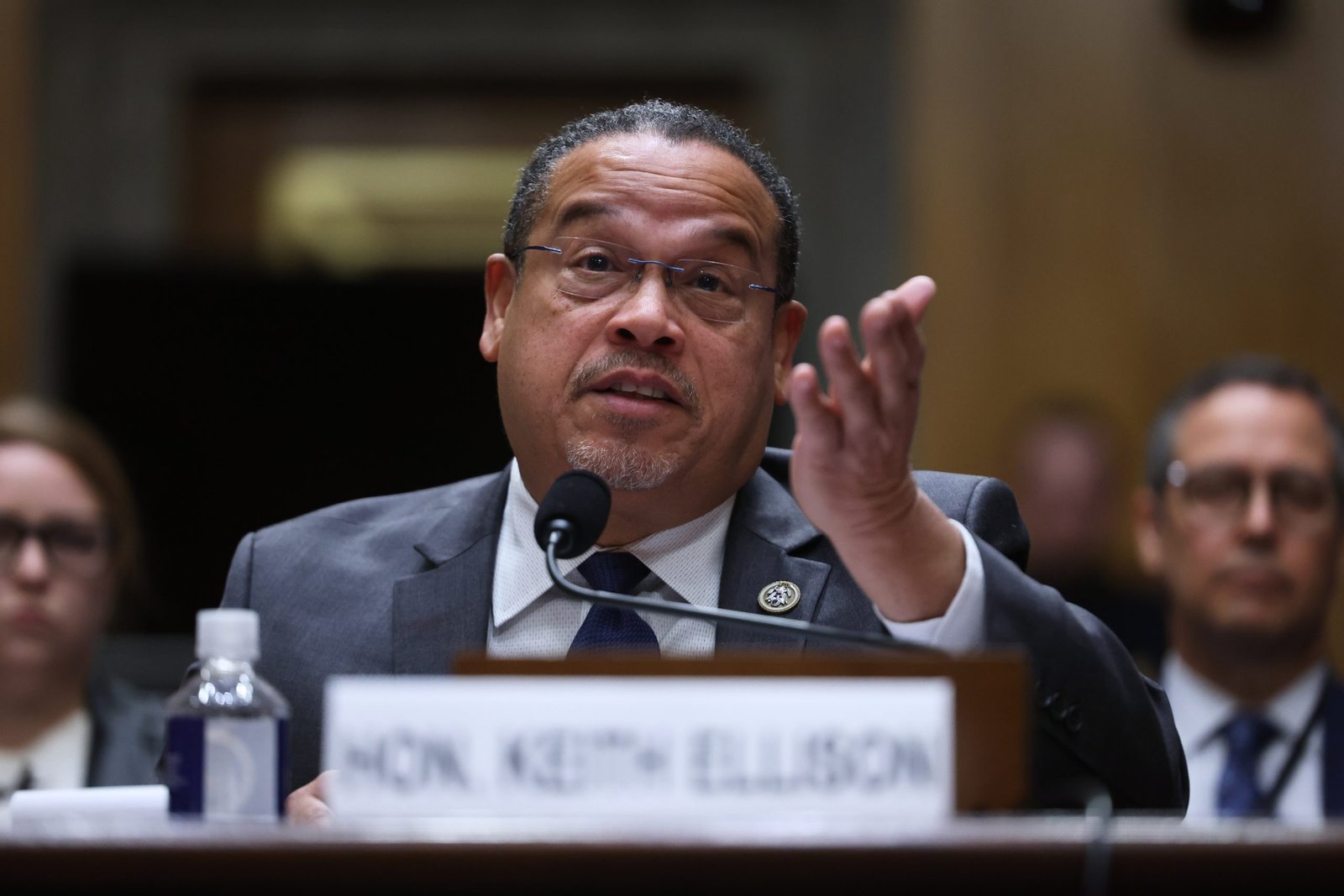
Ellison was a witness Thursday at a Senate Homeland Security Committee hearing on immigration. Sen. Ron Johnson, R-Wis., asked Ellison if he was aware of “trained activists in Minnesota” who used “Signal chats” to communicate.
Ellison responded that he was aware that people had First Amendment rights to protests. “I freely admit being in favor of the First Amendment,” he said.
Things went downhill from there.
Related: AG Ellison on Homan meeting: ‘I did not negotiate’ or offer any compromise on keeping Minnesotans safe
Johnson loudly and angrily accused Ellison of “putting people in harm’s way” and being complicit in the fatal shootings of Renee Good and Alex Pretti.
“Two people are dead because you encouraged them to put themselves in harm’s way,” Johnson said. “A tragedy was going to happen and you knew it … . Now you are exploiting these two martyrs.”
As a parting shot, Johnson told Ellison to “sit there and smirk, smirk … you are sickening.”
“Are you asking me for comment, senator?” Ellison responded. “Because everything you said was untrue. It was a nice theatrical performance, but it was all lies.”
Another Republican senator, Josh Hawley of Missouri, pivoted from the issue at hand — immigration — to assault Ellison about fraud.
Hawley accused Ellison of being complicit in the “Feeding our Future” scam, in which $250 million in federal funds were diverted from a pandemic-era program to feed children.
“You’ve been right at the center of this project from the beginning, and you’ve enabled it, and you should resign,” Hawley told Ellison.
Ellison shot back that Hawley should resign.
“I was thinking the same thing about you,” he said.
Hawley claimed that Ellison and his family profited from the Feeding our Future scheme.
“For the record, he’s lying, and that’s the truth,” Ellison said.
At one point, Ellison appealed to committee chairman Sen. Rand Paul, R-Ky., saying, “I did not come here to be insulted. I came here voluntarily.”
But Hawley’s accusations that Ellison received payments for helping Feeding Our Future fraudsters continued, with a lot of angry crosstalk.
“Don’t talk over me,” Hawley commanded.
“You’re talking over me,” Ellison responded.
“It’s my hearing, pal,” Hawley said.
“Don’t call me pal,” Ellison retorted. “I’m not your pal.”
“I ought to call you a prisoner, because you ought to be in jail,” Hawley shot back.
Mercifully, the five minutes Hawley was allotted to question the hearing witnesses was finally up.
The other witnesses included Rep. Tom Emmer, R-6th District, Minnesota corrections chief Paul Schnell and Republican state Rep. Harry Niska.
Like Ellison, Schnell defended the state’s practices when it comes to immigration.
“What is happening in Minnesota is not a dispute about whether immigration laws should be enforced,” Schnell testified. “What is in question are the reasons for the unprecedented federal action in Minnesota, how enforcement is carried out, the public safety and justice interests of our state, the legitimacy of both state and federal government.”
But Emmer and Niska painted a different picture, portraying Democratic officials of lawlessness in efforts to protect immigrants.
Emmer took the first shot at Ellison during his opening remarks — and also took a swipe at Minneapolis Mayor Jacob Frey.
Emmer said he looked forward to hearing about Ellison’s “role in tying the hands of law enforcement to protect criminals.” He added: “It’s a shame that his partner in crime, Minneapolis Mayor Jacob Frey, declined to testify today.”
Niska testified that “many of our state leaders and our largest local governments have moved beyond non-cooperation into outright hostility towards and active nullification of federal immigration law.”
Related: Justice Department subpoenas offices of Walz, Ellison, Frey and other Democratic officials who criticized immigration crackdown
A little later, Sen. James Lankford, R-Okla., announced that border czar Tom Homan was “standing down” Operation Metro Surge, the massive immigration crackdown in Minnesota. Homan said that decision was based on greater collaboration between Minnesota officials and ICE.
House rebukes Trump on Canadian tariffs
The U.S. House for the first time rebuked President Donald Trump on the issue of tariffs this week.
In a 219-211 vote on Wednesday, six Republicans voted to rescind the emergency declaration the president has used as a basis for hiking tariffs on Canada.
Just before the vote, one Republican who crossed party lines, Rep. Don Bacon, R-Neb., said Trump’s tariffs have been a “net negative” and a “significant tax that American consumers, manufacturers, and farmers are paying.”
On Truth Social, Trump threatened all Republicans who voted against tariffs, the centerpiece of his economic policy.
“Any Republican, in the House or the Senate, that votes against TARIFFS will seriously suffer the consequences come Election time, and that includes Primaries,” the president wrote.
Sen. Amy Klobuchar, D-Minn., co-sponsored a resolution challenging Trump’s tariffs on Canada last April. The legislation was approved by the Senate with the support of four Republicans. But any final legislation would be vetoed by Trump.
Still, the tariff votes indicate there is frustration in the GOP on the effects of tariffs on their constituents.
“Congress has sent this administration a clear, bipartisan message,” Klobuchar said in a statement. “They cannot continue to abuse their power to wage a trade war against one of our strongest allies. Canada is Minnesota’s top trading partner, but these chaotic tariffs are jeopardizing that relationship — and increasing costs for Minnesota families.”
In other news:
▪️ Forrest Peterson wrote that tariffs, ICE enforcement and dysfunctional politics are taking a toll on Minnesota’s farmers.
▪️ Reporter Trevor Mitchell wrote about innovative ways Minnesotans are helping immigrants who are afraid to go to work pay their rent.
▪️ Border czar Tom Homan says greater collaboration in Minnesota with ICE is the reason he’s ending Operation Metro Surge, but what has changed?
This and that
A reader was critical of the Trump administration’s massive immigration crackdown in Minnesota.
“If you really want to focus on getting out the worst, go to the places they live,” the reader said. “Shift resources to Arizona, Texas and Florida. Minnesota is a favored destination of refugees and others with legal status. We are a target only because Trump made us a target of a vendetta. Or go to states that claim they will work with you. Start with South Dakota.”
Please keep your comments, and any questions, coming. I’ll try my best to respond.Please contact me at aradelat@minnpost.com.
The post D.C. Memo: Senate Republicans pile on Ellison in fiery hearing appeared first on MinnPost.
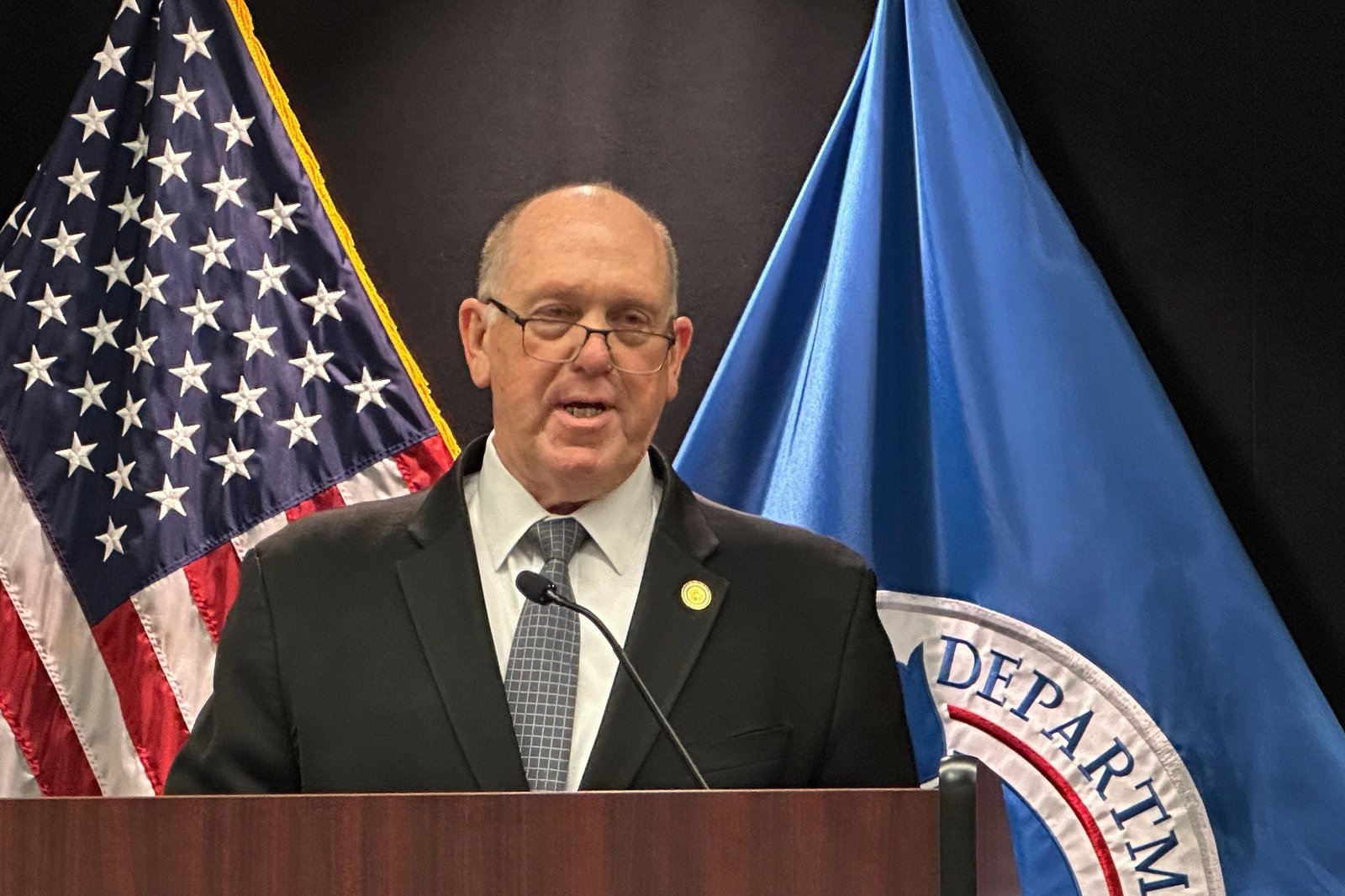
WASHINGTON – The Trump administration declared victory Thursday as border czar Tom Homan said an “unprecedented amount of cooperation” from state and local officials and the detention of about 4,000 undocumented immigrants in Minnesota allowed for an end to the massive immigration crackdown in the state.
“Operation Metro Surge is ending,” Homan said.
But what has Minnesota done to make it less of a “sanctuary” state in the eyes of Homan and President Donald Trump, whom Homan said “concurred” that the aggressive enforcement immigration in the state should end?
The Trump administration had characterized Minnesota as a lawless “sanctuary” state in large part over the issue of detainers that Immigration and Customs Enforcement (ICE) sends to jails seeking them to detain inmates after their release dates.
Minnesota Attorney General Keith Ellison has issued a legal opinion that says Minnesota law barred county jails from holding an inmate past their release date.
Related: ‘Sanctuary’ label obscures actual levels of ICE cooperation across Minnesota
Yet Homan said he appreciated something Minnesota Attorney General Keith Ellison told him – that nothing in Minnesota law prevented county jails from alerting ICE when an inmate the agency seeks to take into custody is being released.
“We now have the ability to arrest criminal aliens in the safety of a jail at the time they are being released like we’ve done in other states,” Homan said.
Yet many county jails in the state have already been doing this, and some have said ICE had not appeared to pick up the person they sought.
The Winona County Sheriff’s Office recently complied with an ICE request to inform federal agents about an inmate’s release date. This type of cooperation is part of a longstanding policy, Sheriff Ron Ganrude said.
The policy has been in place “as long as I’ve been sheriff,” and likely well before then, said Ganrude, first elected in 2014.
Ganrude estimated ICE has historically been interested in about one inmate per month. The jail doesn’t keep people in custody beyond what local charges allow, and the frequency of ICE response varies.
“Sometimes they’d come, sometimes they wouldn’t come,” he said.
Homan also said he has “directed the strategic placement of officers in certain areas of the state” to facilitate transfers. But he did not provide details.
Hennepin County jail, which a MinnPost analysis found to have one of the lowest compliance rates when it comes to the transfer of inmates to ICE, once had an office for ICE agents on jail property, according to former Hennepin County Sheriff Rick Stanek. That office closed after he left, Stanek said.
Related: Is Minnesota a ‘sanctuary state’? Clarifying law vs. language from immigration hearing in Congress
It’s not clear what steps Hennepin County jail will adopt to cooperate more fully with ICE. The Hennepin County Sheriff’s Office did not respond to requests for information.
Even so, Homan was optimistic about ICE cooperation with county jails.
“I have not met with one county jail that says ‘no’ to us,” he said. “They want to work with us.”
Homan also said there was another reason the Trump administration had accomplished its goal in Minnesota. He said the number of “Quick Reaction Forces,” or QRFs, which have been responding to what he characterized as dangerous clashes between protesters and federal immigration agents, had declined in recent days.
“The QRF deployments have dropped dramatically,” Homan said. “Because we have less of the agitators that cross the line.”
Homan also said that help from local law enforcement agencies which was “once sporadic” has increased.
“They have come to assist us to make sure our officers and the person we have arrested leave the scene safely,” Homan said.
‘An albatross around the neck’
Gov. Tim Walz said Minnesota is addressing immigration in exactly the same way today as it was three weeks ago, or three months ago, or three years ago”
The MinnPost analysis of compliance with detainer requests showed that state prisons consistently transferred inmates to ICE.
To Walz, the end of the surge was a result of better communication – and politics. He said the deaths of Minneapolis residents Renee Good and Alex Pretti resulted in the loss of public support for Operation Metro Surge, which the governor said became for the administration “an albatross around their neck.”
“My take was: They knew they needed to get out of here, but in very Trumpian fashion they needed to save face,” Walz said.
Polls show the public increasingly said ICE and Border Patrol have used excessive force in Minnesota. A poll released by The Associated Press and the NORC Center for Public Affairs Research on Thursday showed Republicans now hold a narrow 4-percentage-point edge over Democrats on which party Americans trust to handle immigration, down from a 13-percentage-point advantage in October.
Walz also said Homan’s willingness to meet with Minnesota officials opened the door to ending Operation Metro Surge.
“I think, probably, what changed was that when Tom Homan came here, I could get a conversation with someone,” Walz said. “Not a single interaction (with Department of Homeland Security Secretary) Kristi Noem, (Border Patrol officer Greg) Bovino, or any of the rest of them, and an arrogance that it didn’t matter.”
Sen. Amy Klobuchar, who is running for governor, credited the people of Minnesota for the end of Operation Metro Surge.
“Minnesotans stood together, stared down ICE, and never blinked,” Klobuchar said in a statement. “Our state has shown the world how to protect our democracy and take care of our neighbors.”
Like Walz and other Democrats, Klobuchar said a thorough investigation of the fatal shootings of Good and Pretti is needed, as is “a complete overhaul” of ICE.
Rep. Tom Emmer, R-7th District, however, praised Homan for “a job well done.”
“Local law enforcement is now cooperating with federal law enforcement in Tim Walz’s Minnesota thanks to President Trump’s leadership,” Emmer said. “We are hopeful that this partnership will continue — without local or state interference — to ensure the worst of the worst are being removed from our communities.”
While Homan said Operation Metro Surge is over, and the state would return to the “normal footprint” of ICE agents, which is about 300 officers, the border czar said an unspecified number of Quick Reaction Force units will remain “until we are assured the agitators have diminished.”
Lt. Gov. Peggy Flanagan, who is running for U.S. Senate, said she is skeptical about the end of the immigration crackdown.
“I’m relieved that this violent paramilitary force will be removed from our streets, but I won’t believe it until they’re actually gone,” she said in a statement.
The post How Minnesota became less of a sanctuary state to Tom Homan appeared first on MinnPost.
WASHINGTON (AP) — About 6 in 10 U.S. adults say President Donald Trump has “gone too far” in sending federal immigration agents into American cities, according to a new AP-NORC poll that suggests political independents are increasingly uncomfortable with his tactics.
Views of Trump’s handling of immigration — which fell over the course of his first year — remained steady over the past month, with about 4 in 10 saying they approve of the president’s approach. But the poll from The Associated Press-NORC Center for Public Affairs Research also found that the Republican Party’s advantage on Trump’s signature political issue has shrunk since October.
About 3 in 10 U.S. adults trust Republicans to do a better job handling immigration, while a similar share say the same of Democrats. An additional 3 in 10, roughly, don’t think either party would do a better job handling the issue, and about 1 in 10 say both parties would handle it equally well.
Related: ICE to Congress: Mass deportations are lawful and will continue
The Republican president’s core supporters remain overwhelmingly supportive of Trump’s immigration tactics. But there are signs that more independents think he’s going too far.
“I am glad that immigrants aren’t just flooding across the border, but what he’s doing now in our cities, pitting the military against our people, these are gestapo tactics,” said independent Brenda Shaw, a 65-year-old human resources manager from South Haven, Michigan. “They’re shooting U.S. citizens in the face and in the back.”
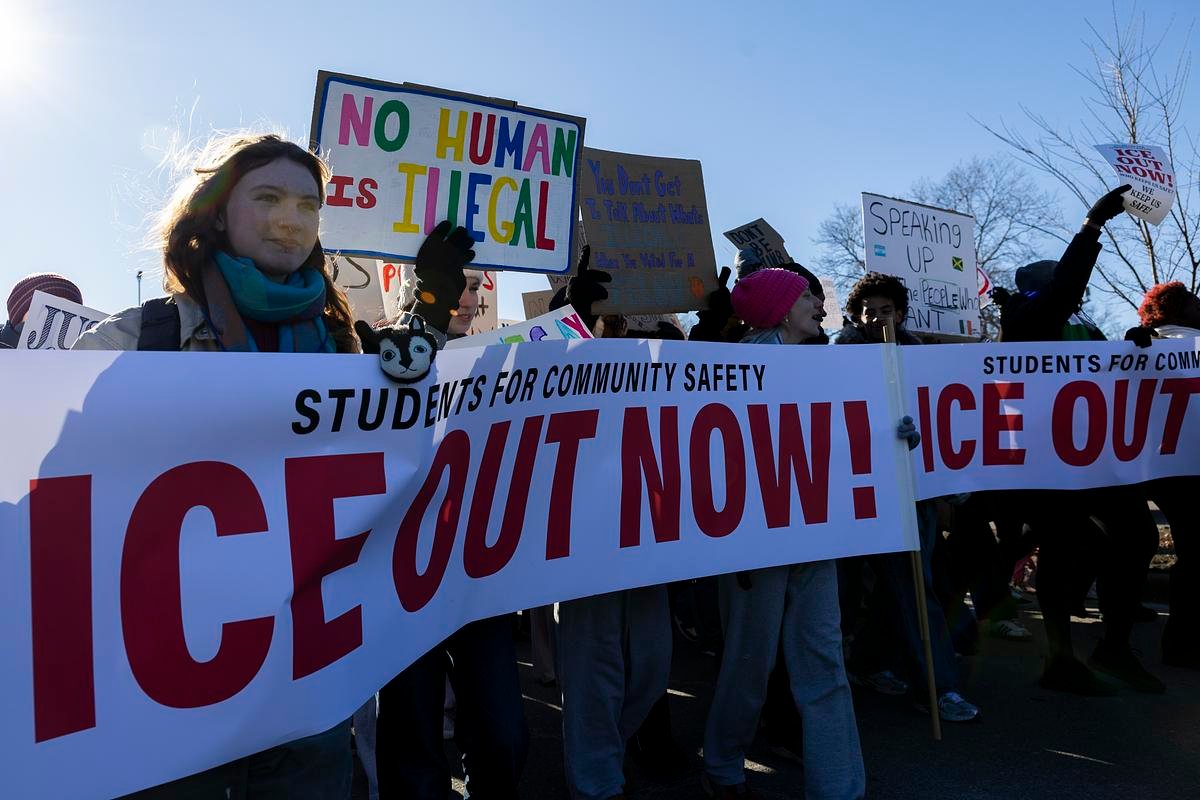
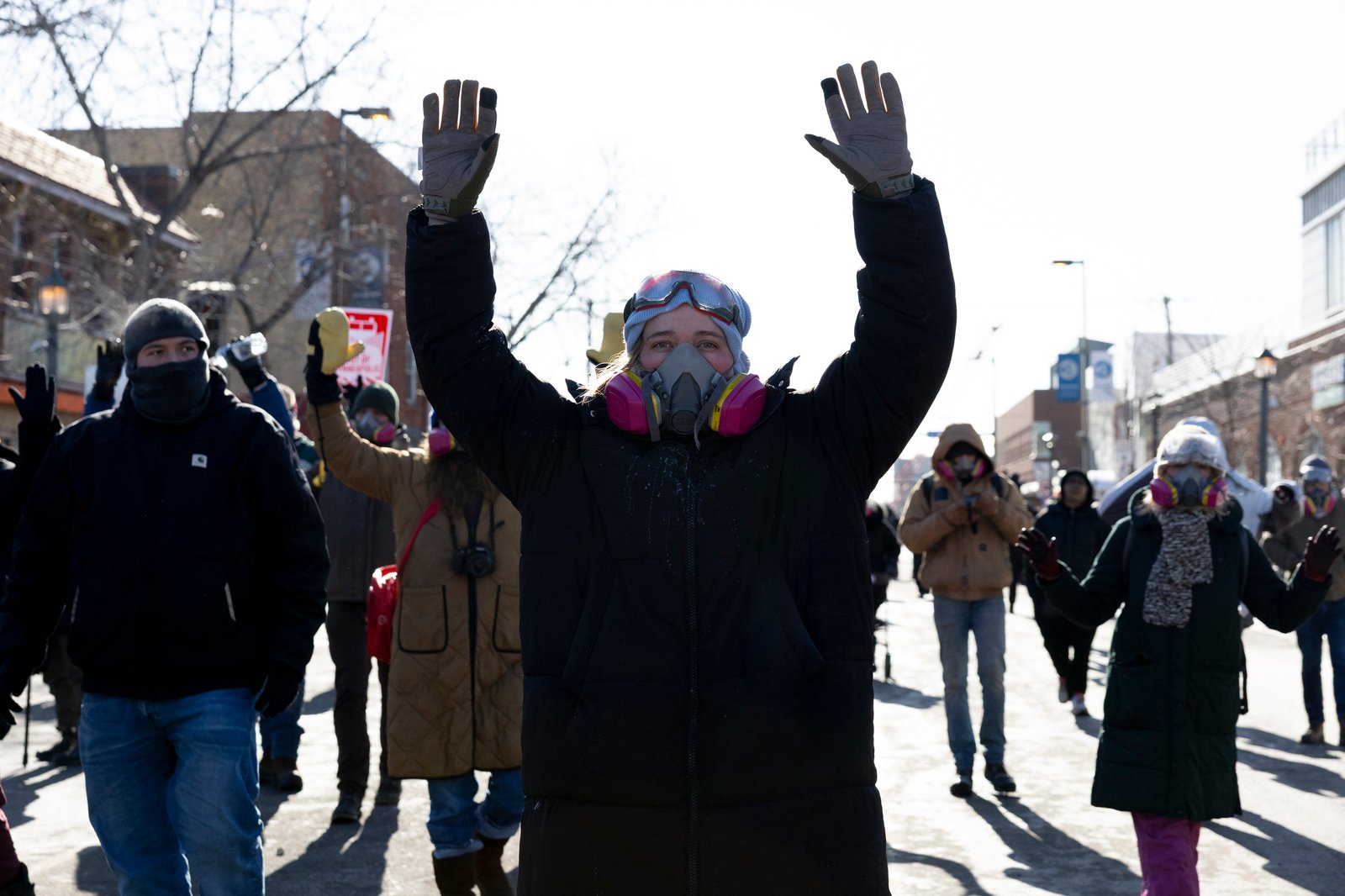
The new polling comes as the nation watches the human impact of Trump’s crackdown in Minneapolis, where thousands of heavily armed masked agents have descended upon the city to find and remove immigrants in the country illegally.
There have also been numerous violent clashes with protesters, including two U.S. citizens killed by federal agents in recent weeks. About 6 in 10 Americans believe that Trump has “gone too far” when using federal law enforcement at public protests in U.S. cities, the poll found.
Republicans in poll stay behind Trump on immigration
While about 9 in 10 Democrats and about 7 in 10 independents say Trump has “gone too far” in sending federal immigration agents into U.S. cities and using federal law enforcement at public protests, only about one-quarter of Republicans agree.
According to the new survey, about half of Republicans say that Trump’s actions have been “about right,” while about one-quarter of Republicans say he hasn’t gone far enough. Their support for the president hasn’t wavered despite the chaos in Minneapolis.
Teviss Crawford, a 20-year-old student from Baton Rouge, Louisiana, said he’s pleased with Trump’s leadership on immigration, although he wishes the president could find a way to deport more immigrants who are in the country illegally.
“I don’t think the deportations have been enough, to be honest. I think it’s much too lax,” he said of Trump’s crackdown. “If you crossed into our country illegally, it’s just not right. You’re taking things away from people who were born here.”
Crawford added that Trump “should be focusing on violent criminals, but the violent criminals are probably harder to find.”
Independents largely disapprove of the current immigration enforcement approach
Despite their strong support for Trump, Republicans are increasingly alone in supporting Trump on his immigration enforcement tactics.
Trump’s approval on immigration appears to have fallen among independents since last spring, from 37% in March 2025 to 23% in the new poll. There is greater variability in surveying small groups, like independents, which creates more uncertainty about the magnitude of changes. About 6 in 10 independents now say Trump has “gone too far” in deporting immigrants living in the U.S. illegally, an apparent increase from 46% in an AP-NORC poll in April.
Most U.S. adults, including independents, have an unfavorable view of the Immigration and Customs Enforcement, commonly referred to as ICE. Overall, only about 3 in 10 U.S. adults have a favorable view of the agency, the AP-NORC poll found.
Related: Alarm over ‘Operation Metro Surge’ prompts congressional efforts to rein in ICE and the Border Patrol
There is an large partisan gap, with independents much closer to Democrats than Republicans. Only about 1 in 10 Democrats and roughly 2 in 10 independents have a favorable view of ICE, compared to about 7 in 10 Republicans.
“Having the border shut, that’s OK. But what Trump is doing with ICE and Homeland Security? You don’t go yanking people out of cars. You don’t go shooting people,” said independent Rick Kinnett, a 60-year-old Navy veteran from Crawfordsville, Indiana.
“I spent eight years in the military. This is not what I signed up for,” he said. “This is not what we’re supposed to do. This is not constitutional.”
Trump’s weak poll numbers hold steady
Trump’s approval on immigration has not moved since January despite a month of immigration-related turmoil.
About 38% of U.S. adults approve of Trump’s handling of immigration more broadly, in line with an January AP-NORC poll conducted just after the death of Renee Good, the first U.S. citizen in Minnesota killed by federal agents.
The president’s overall approval rating has declined slightly since the beginning of his second term and remains low.
Overall, 36% of U.S. adults say they approve of the way Trump is handling the presidency. His approval ratings on the economy and foreign policy are similar to his overall approval and functionally unchanged from January.
Historically, such numbers would push members of a president’s party to distance themselves from him — especially heading into a midterm election season. However, Trump’s allies in Washington and in state capitals across the nation remain overwhelmingly united behind him, reflecting consistently strong support from Republicans in the polls.
But Trump’s immigration approach seems to be a particularly sore spot for independents. While he appears to have slid with independents on immigration, Trump’s approval on the economy — the other signature issue where he’s recently been criticized for failing to deliver on campaign promises — is similar to where it was last spring.
And the narrowing of Republicans’ advantage on immigration is a warning sign for Trump’s party. In October, 39% of U.S. adults said they trusted the Republicans to better handle immigration, while 26% said that about the Democrats, giving the GOP a 13-point edge. In the new poll, the difference between the parties is only 4 points.
“What he’s doing with ICE is the worst thing right now. I would say the economy is the second worst thing,” said Shaw, the human resources manager from Michigan. “I’m getting ready to retire and I’m wondering how I’m going to make it.”
“But I’m blessed,” she added. “I don’t have to hide in the basement because my skin is brown.”
___
The AP-NORC poll of 1,156 adults was conducted Feb. 5-8 using a sample drawn from NORC’s probability-based AmeriSpeak Panel, which is designed to be representative of the U.S. population. The margin of sampling error for adults overall is plus or minus 3.9 percentage points.
The post Latest polling shows disapproval of Trump on immigration appeared first on MinnPost.
WASHINGTON – Before a congressional panel Tuesday, the chiefs of ICE and the Border Patrol defended the conduct of their agents in Minneapolis and other cities where they have been accused of using excessive force and trampling civil rights.
Top officials of agencies under the Department of Homeland Security had avoided coming under congressional scrutiny for the activities of the Trump administration’s mass deportation campaign.
But the shooting of Alex Pretti by Border Patrol agents placed pressure on Rep. Andrew Garbarino, R-N.Y., the head of the House Homeland Security Committee, to require the DHS officials to face lawmakers for questioning.
Related: Alarm over ‘Operation Metro Surge’ prompts congressional efforts to rein in ICE and the Border Patrol
So on Tuesday, Todd Lyons, the head Immigration and Customs Enforcement; Rodney Scott, the commissioner of Customs and Border Protection; and Joseph Edlow, the director of U.S. Citizenship and Immigration Services, were called to testify about their agencies’ activities.
Lyons touted the 475,000 deportations the Trump administration has conducted in one year. He said operations involving roving bands of federal immigration agents are the result of “sanctuary” policies that ban the detention of inmates past their release dates so ICE can pick them up in a “safe and secure” place.
Lyons and Scott deflected questions about the deaths of Minneapolis residents Renee Good and Alex Pretti and other high-profile instances where federal agents have been accused of using excessive force. The federal immigration officials said they could not comment on “ongoing investigations.”
Lyons also said the protests in Minneapolis and other cities constituted “unprecedented levels of aggressive interference” in immigration enforcement.
“These are not peaceful protests,” he said.
But the ICE chief said his agents are undeterred by the protests.
“Despite these perils, our officers continue to execute their mission with unwavering resolve,” Lyons said. “And we are only getting started.”
Democrats on the panel decried the tactics of ICE and Border Patrol agents, calling them “rogue organizations” in need of elimination and replacement or heavy reforms.
Rep. Bennie Thompson of Mississippi, the top Democrat on the committee, said DHS Secretary Kristi Noem had “the blood of Americans on her hands.” Like other Democrats, Thompson said Noem should be removed from her job.
“She must go,” he said.
Exchanges often became heated and emotional.
Related: ‘You’re not going to investigate a federal officer’
Rep. Daniel Goldman, D-N.Y., told the panel of witnesses that “if you don’t want to be called a fascist regime, then stop acting like one.”
Meanwhile, Republicans on the panel lauded ICE for what they said was the deportation of the “worst of the worst” criminals in their communities. The GOPers said the immigrant crackdown was necessary because President Joe Biden and other Democrats were responsible for a surge of migrants that threatened national security.
As Congress debates proposed reforms to ICE and the Border Patrol as part of a funding bill for the Department of Homeland Security, an agency that will run out of money on Friday, Lyons said ICE will conduct business as usual. “The president tasked us with mass deportations, and we are fulfilling that mandate,” he said.
The post ICE to Congress: Mass deportations are lawful and will continue appeared first on MinnPost.
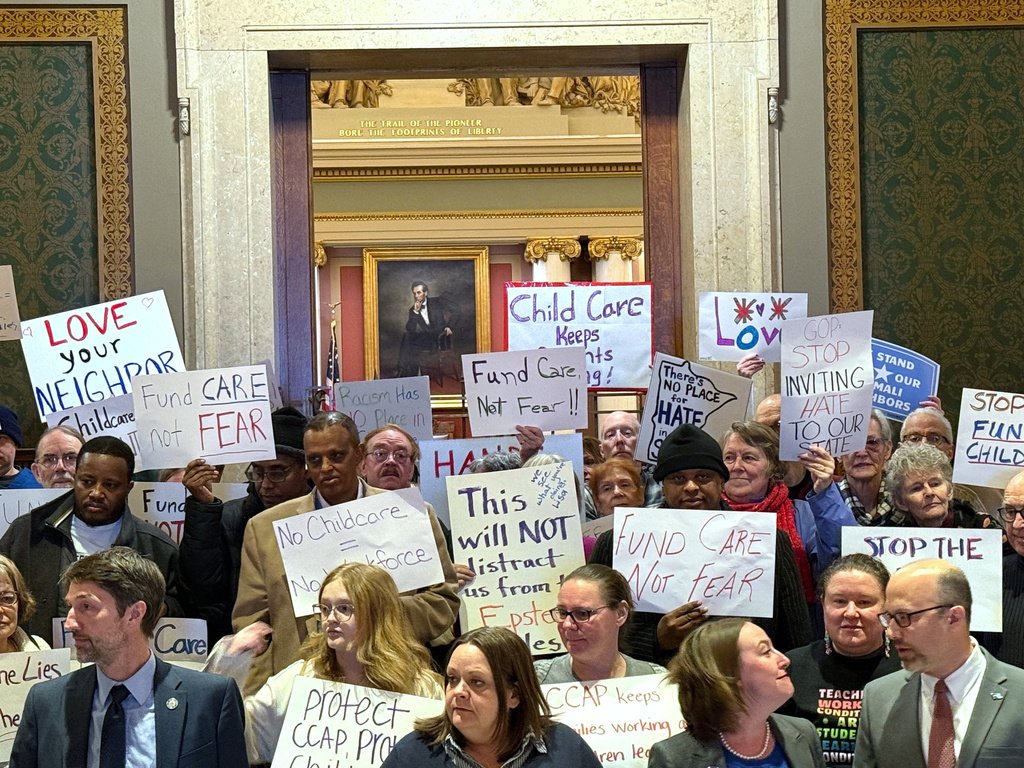
Minnesota child care providers and parents have problems right now. But upcoming interruptions in federal assistance is not one of them.
On Friday, U.S. District Court Judge Vernon Broderick granted a preliminary injunction for Minnesota and four other states that sued the Trump administration when it suspended payments for low-income parents seeking child care.
Broderick’s ruling does not dismiss for good the White House’s efforts to end child care assistance in Minnesota, California, Colorado, Illinois and New York. The judge must still rule on the case’s merits.
However, it gives months of breathing room to child care centers and low-income families.
And, if the past is prologue, a granted preliminary injunction could be a sign the Trump administration’s efforts to freeze funding are petering out. For example, a judge enjoined the administration’s effort to cut Minnesota K-12 funding based on DEI policies before the case was quietly resolved in favor of the state.
Related: Inside the nightmare winter for Minnesota child care providers
“Today’s order further protects Minnesotans from Donald Trump’s devastating and unlawful cuts to childcare services,” Attorney General Keith Ellison said in a written statement. “This is a tremendous relief for parents across Minnesota, as these cuts would have devastated our childcare system and forced low-income families to choose between going to work to pay the bills and staying home to provide childcare.”
A message left with the U.S. Health and Human Services Department, which administers federal child care payments, was not returned.
To review, the federal government announced the first week of January that it had suspended child care payments to Minnesota so as to investigate fraud.
The announcement came one week after self-described citizen journalist Nick Shirley posted a YouTube video that revived prior accusations of Minneapolis day care centers collecting government assistance but not caring for children.
The Minnesota Department of Children, Youth, and Families said Shirley’s video was inaccurate, and that the day care centers profiled are, in fact, in operation and legally compliant.
Nonetheless, Health and Human Services’ wrote to the aforementioned five states demanding comprehensive information on the families who received child care. The HHS letters focus on the possibility of undocumented immigrants accessing child care money, not providers scamming the federal welfare system.
Ellison and the four other state attorneys general sued on the well-trod grounds that a presidential administration cannot freeze money already authorized by Congress.
The legal dispute over funding comes as North Star State child care providers also deal with staff and families hiding in their homes due to prolonged federal immigration enforcement actions.
Clare Sanford, chair of government relations for the Minnesota Child Care Association, said in an interview Monday that providers are more worried about immigration agents than any effort to strip child care assistance funds.
“Just because we’ve gone three weeks without someone being murdered by ICE doesn’t mean the fear has dissipated,” Sanford said.
The post Judge’s order removes imminent threat of Minnesota losing federal child care money appeared first on MinnPost.
WASHINGTON – A congressional investigative panel on Friday requested financial documents from companies owned by Rep. Ilhan Omar’s husband after President Donald Trump’s insinuations that a sharp rise in the value of those enterprises may be the result of fraud.
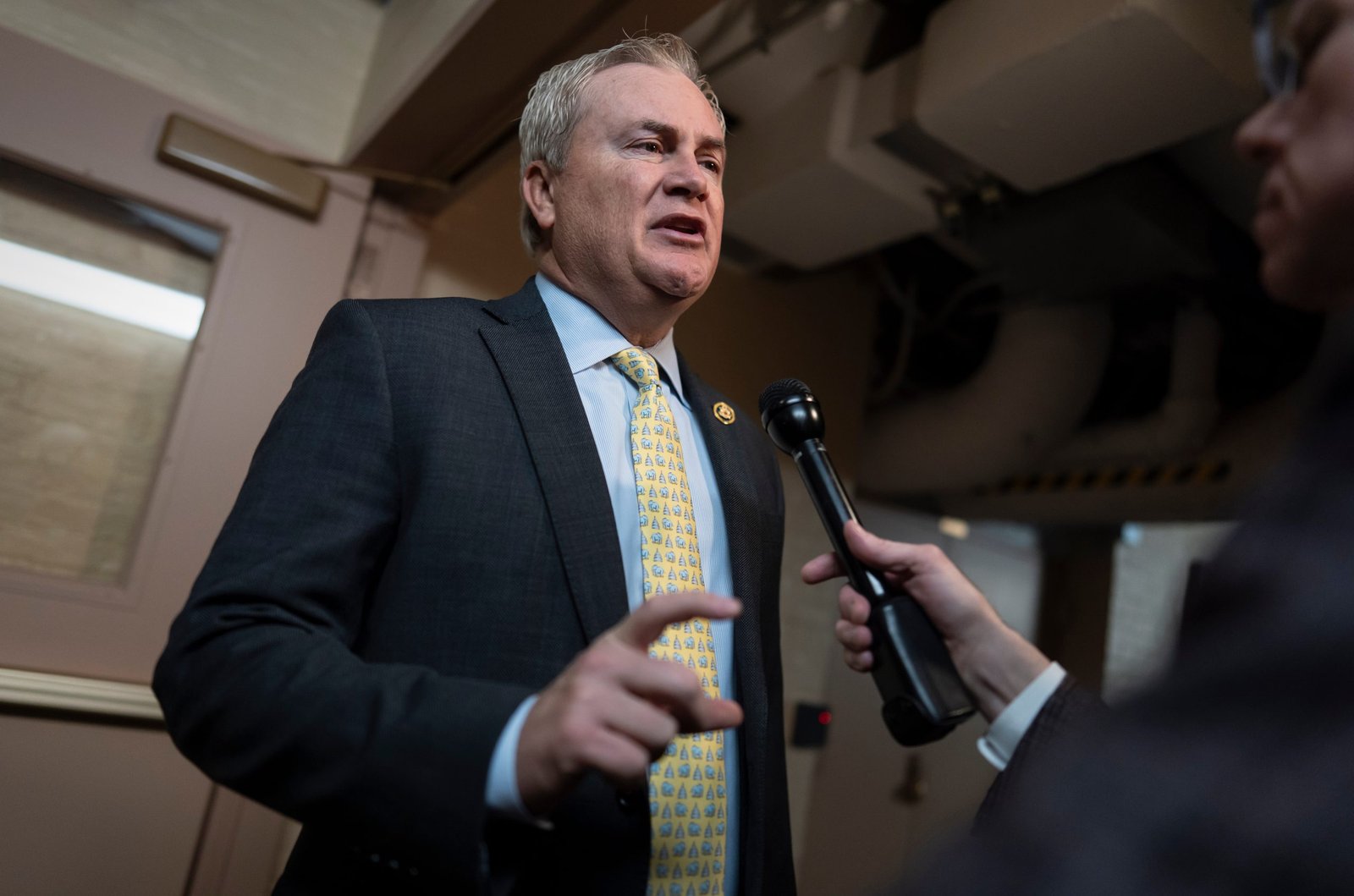
Rep. James Comer, R-Ky., the chairman of the House Oversight and Government Reform Committee, has asked the lawmaker’s husband, Tim Mynett, to turn over a wide variety of documents.
Those include emails, filings with the Securities and Exchange Commission and other information – including all related to any travel to Somalia, Kenya or the United Arab Emirates undertaken by anyone affiliated with Mynett’s companies.
“Given that these companies do not publicly list their investors or where their money comes from, this sudden jump in value raises concerns that unknown individuals may be investing to gain influence with your wife,” Comer wrote Mynett. “Media reports further suggest that you may have raised money from investors using misleading information, meaning some of those funds may have been obtained improperly.”
Related: U.S. House committee led by Trump loyalist James Comer invites Minnesota GOP legislators to testify on alleged fraud
The companies in question are a winery in California called eStCru and an international consulting firm called Rosel Lake Capital.
“This is all a political stunt,” a spokesperson for Omar said. “These sham accusations are talking points meant to fundraise, not real oversight.”
The spokesperson said the investigation into Mynett’s companies and the lawmaker’s finances “is an attempt to orchestrate a smear campaign against the congresswoman” and suggested that Comer should instead look at Trump and his family “enriching their net worth by billions of dollars.”
According to financial disclosure forms filed annually by members of Congress that list assets, income and liabilities in broad ranges, Mynett’s companies skyrocketed in value between 2023 and 2024, catching Trump’s attention.
In 2023, Omar’s financial disclosure form (filed in 2024) showed modest outside income and assets, and credit card and student loan debt worth between $45,000 and $150,000. That disclosure form also listed Mynett as having an interest in eStCru worth between $200 and $1,000.
Mynett also listed an asset interest in Rose Lake Capital, which describes itself on its web site as a company with vast international experience whose expertise includes “structuring deals, mergers and acquisitions, debt structuring and capital raising.” The company was listed as being valued at between $15,000 to $50,000.
A year later, on Omar’s 2024 financial disclosure form (filed in 2025), Rose Lake Capital was listed as being worth $5 million and $25 million. And the winery in California was listed at being valued at between $1 million and $5 million.
A spokesperson for the congresswoman had previously said the attacks on Omar’s finances were “inaccurate.”
“She does not have millions in the bank,” the spokesperson said. “The financial disclosure clearly shows that the income her husband received (from Rose Lake Capital) did not exceed $15,000.”
Related: Amid a garden variety town hall, an attacker sprayed a substance at Ilhan Omar and then was subdued
The financial disclosures show Mynett received between $15,000 and $50,000 from that business in 2023 and no revenue from Rose Lake Capital in 2024.
The spokesperson also said the valuation of the companies in question “reflects the full cost assessment of the businesses, in which her husband is one of several partners, and does not reflect her husband’s individual share.”
Comer’s request for documents may precede the issuance of subpoenas to force their delivery. Comer has investigated other Trump political foes, including former President Joe Biden and his family members, and is also conducting an investigation into fraud in social service programs in Minnesota.
Trump has also said the Justice Department is investigating Omar’s finances and escalated his ongoing feud with the Somali-born congresswoman this week.
On Truth Social, Trump insinuated, without proof, that Omar was linked to terrorists. He reposted a link to a news report about U.S. forces striking ISIS-Somalia leaders, adding a caption that said, “Was Ihan Omar there to protect her corrupt homeland?”
The post Oversight chair Comer requests wide range of business documents from Ilhan Omar’s husband appeared first on MinnPost.
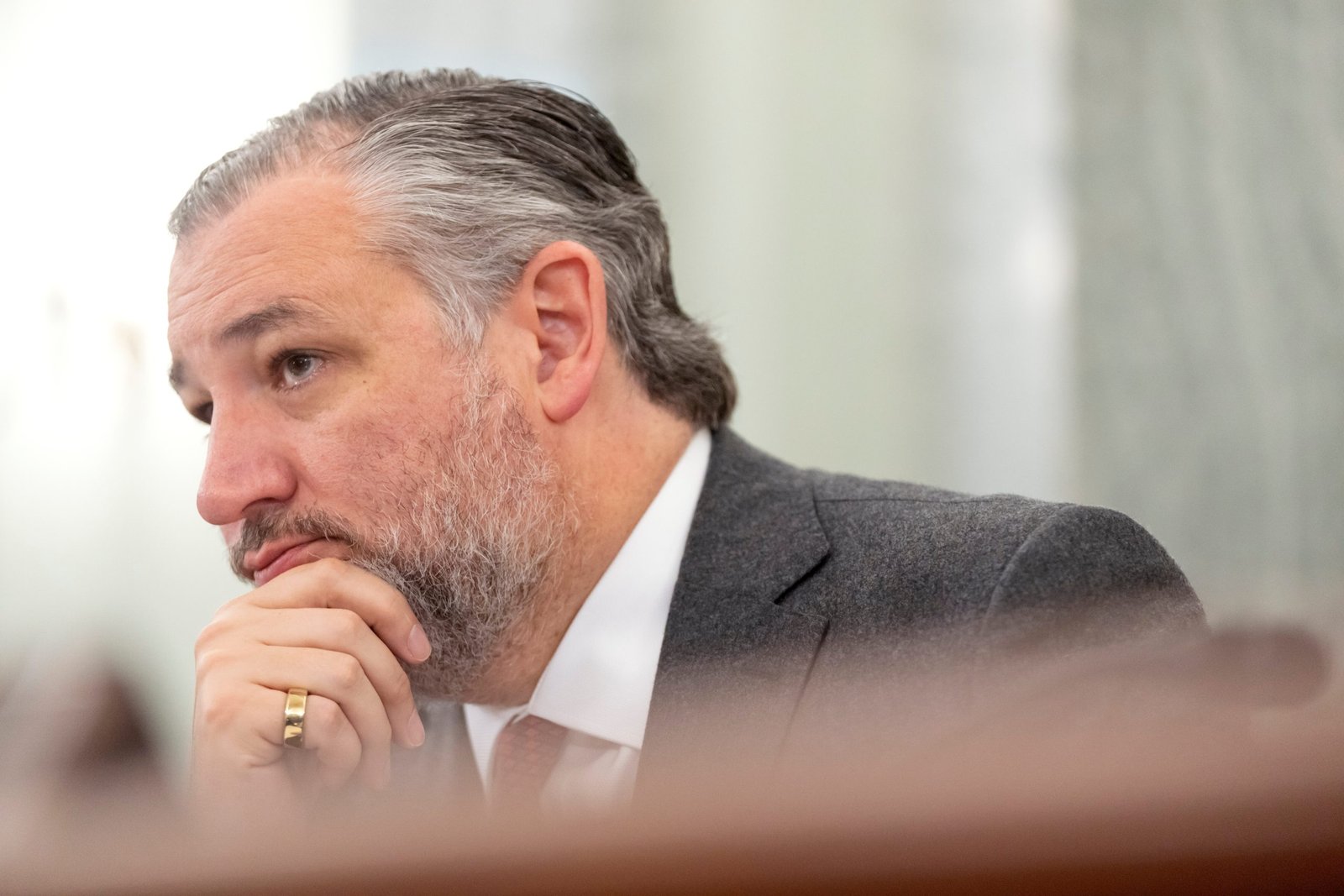
WASHINGTON – Congress returned to the issue of fraud in Minnesota this week as Sen. Ted Cruz, R-Texas, revived the issue in a Senate Judiciary Committee hearing that was long on accusations but short on evidence.
Republicans on the panel invited David Hoch, who was featured in Nick Shirley’s videos of Minnesota day care centers. They also invited state Rep. Kristin Robbins, the Republican chair of a state Legislature panel on fraud who had testified before a House Oversight and Government Reform Committee on the issue.
As she did before the House panel, Robbins, who is running for governor, blamed fraud in Minnesota health and social service programs on Gov. Tim Walz and other Democrats.
“Fraud flourishes when leaders ignore it and criminals see they can get away with it,” Robbins said. “Tim Walz hasn’t held anyone accountable.”
Related: Here’s what’s really happening with child care fraud in Minnesota
She also said state officials “have actively … harmed whistle blowers who had tried to point (fraud) out and they have tried to shut down investigations.”
But as she did during the House oversight committee hearing, Robbins did not provide evidence of the whistleblower complaints.
Meanwhile, Hoch said he began to focus on childcare centers in the Twin Cities because he noticed there were a lot of them.
“Most notably, the enormous number of childcare facilities that had opened up. I would drive around the Twin Cities, and it seemed these childcare facilities were literally on every block; some blocks had two or three childcare facilities – on the same block.” Hoch testified.
He also said that snow that covered the ground around the centers provided another tip.
“Minnesota sees a fair amount of snow in the winter, and I began to notice there were never any footprints outside many of these childcares,” he said. “When there were any footprints, they were always adult footprints.”
Hock also said he conducted more sleuthing.
“I began to check the Minnesota Secretary of State’s website, to find out just who owned all these childcares. Guess what? Every one of them was Somali-owned,” Hoch said.
A lot of figures were thrown around regarding Minnesota fraud. Robbins cited Assistant U.S. Attorney Joe Thompson’s estimate that the fraud in 14 Medicaid-funded programs could total $9 billion. Hoch said total fraud in Minnesota “is easily in excess of $30 billion when you take everything into account.”
Hoch later said the amount of fraud could reach $80 billion.
Thompson cited the $9 billion figure in the context of programs that “raised a red flag.” Hoch, meanwhile, did not provide any documentation for his estimations of fraud.
Democrats on the panel invited Robert Weissman, co-president of Public Citizen, a liberal consumer rights and government reform group, to testify.
Weissman said there was no evidence to support many of the claims of fraud made by his fellow witnesses and GOP members of the committee.
“It is unhelpful to make claims in Minnesota or anywhere else based on exaggerated numbers or shaky evidence,” he said.
Weissman also testified about allegations of fraud committed by President Donald Trump.
He cited Trump’s deal with the United Arab Emirates, Saudi Arabia and Qatar that benefited the president’s companies and the businesses of his children, the firing of inspector generals and the president’s pardoning of fraudsters, among other things.
“The president and his administration are shattering conflict of interest standards and ethical norms, creating a culture of impunity, at least for those in the good graces of the administration,” Weissman said. “This is not an administration determined to root out fraud.
That irritated Cruz.
“I get it, you dislike Trump,” Cruz said to Weissman. “Would you agree the fraud in Minnesota was staggering and shocking?”
“I agree there is fraud in Minnesota,” Weissman responded. “I don’t believe these estimates are grounded in any evidence I’ve seen.”
Cruz also said Walz, Minnesota Attorney General Keith Ellison, Minneapolis Mayor Jacob Frey and Tikki Brown, commissioner of the Department of Children, Youth and Families, were asked to testify before the Judiciary Committee, but all declined. Cruz accused them of being “terrified to answer questions.”
Sen. Sheldon Whitehouse, D-R.I., shot back that the chaos provoked by the Trump administration’s immigration crackdown in Minnesota “may be the explanation of why elected officials in Minnesota have something better to do today.”
Walz and Ellison have agreed to appear before the House Oversight and Government Reform Committee on March 4.
Trump’s allies in Congress are not the only ones trying to investigate fraud in the state for the administration.
In a press conference on Wednesday, during which he announced the withdrawal of 700 federal immigration enforcement agents from Minnesota, border czar Tom Homan said “we’ve got special agents on detail here doing the fraud investigation.”
“They’re not going anywhere,” he said. “They’re going to finish their job.”
Related: GOP’s Kristin Robbins says her Minnesota fraud prevention committee is not a political stunt. Is she right?
An effort to unfreeze $2 billion
In another fraud-related matter, Minnesota Medicaid Direct John Connolly announced at a press conference this week that the state is implementing new policies aimed at combating fraud.
Connolly also said he’s appealed a hold on $2 billion in federal money for 14 “high-risk” programs funded through Medicaid to the Centers for Medicaid and Medicare Services (CMS.)
Connolly said more than 5,800 Medicaid providers in those high-risk programs will be revalidated by the end of May. That revalidation includes reviews of documents and background checks and a pause in the enrollment of new providers.
The Minnesota Department of Human Services will also conduct unannounced onsite visits to providers, Connolly said, and 168 state employees will be deployed in that effort.
Connolly said the federal government gives Minnesota $10 billion to $11 billion every year to run Medicaid, a joint federal-state program. So, the freeze has impacted about 20% of the money the state receives for Medicaid.
Connolly said the state had submitted to CMS a corrective program and other information on Dec. 31, a deadline set by the federal agency.
He said CMS gave Minnesota a new deadline, Jan. 30, to revise its corrective program and submit an appeal of the funding freeze.
In other news:
▪️ Greater Minnesota reporter Brian Arola wrote about the dozens of earmarks, or special projects, that were funded in a package of appropriations bills this week.
▪️ While Congress has voted to fund most of the federal government through Sept. 30, one big agency, the Department of Homeland Security, has short-term funding and could shut down if lawmakers don’t come to an agreement soon on reforms to ICE and the Border Patrol.
▪️ Sheriffs across the state are seeking to work with border czar Tom Homan to find ways to cooperate with immigration enforcement, but one idea has been nixed by county attorneys.
▪️ Reporters Cleo Krejci and Matthew Blake wrote that as the state’s legislative session nears, Minnesota DFLers are considering laws to rein in ICE that are similar to ones that passed in other “blue” states.
This and that
A reader wrote that a story about President Donald Trump’s accusations of fraud against Rep. Ilhan Omar, D-5th District, lacked important background.
“This story needs to be considered in context,” the reader said. “It has been widely reported that Trump has gained more than a billion in wealth during his first term in office by influence peddling. Most recently the $75 million gift from Jeff Bezos in the form of a movie about the First Lady.”
Please keep your comments, and any questions, coming. I’ll try my best to respond. Please contact me at aradelat@minnpost.com.
The post D.C. Memo: Ted Cruz takes on Minnesota fraud appeared first on MinnPost.
This story was originally published by ProPublica. ProPublica is a nonprofit newsroom that investigates abuses of power. Sign up for Dispatches, a newsletter that spotlights wrongdoing around the country, to receive our stories in your inbox every week.
Minutes after a federal agent shot and killed a Mexican immigrant in a Chicago suburb last September, a group of police officers stood on the sidewalk trying to figure out the answer to a question of protocol: Who would investigate the shooting?
“Wouldn’t it be state’s, at a minimum?” one Franklin Park officer asked, according to body camera footage.
Chief Mike Witz shook his head. “No, because it’s a federal shooting,” he said. “You’re not going to investigate a federal officer.”
His officers didn’t investigate. In their report, they didn’t even note the names of the two Immigration and Customs Enforcement agents at the scene of Silverio Villegas González’s death. Instead, they deferred to the FBI.
Local law enforcement officials also did not investigate when a Border Patrol agent shot and wounded a U.S. citizen in her car in Chicago less than a month later. Or when an ICE agent in Phoenix shot a Honduran man during a traffic stop later that month.
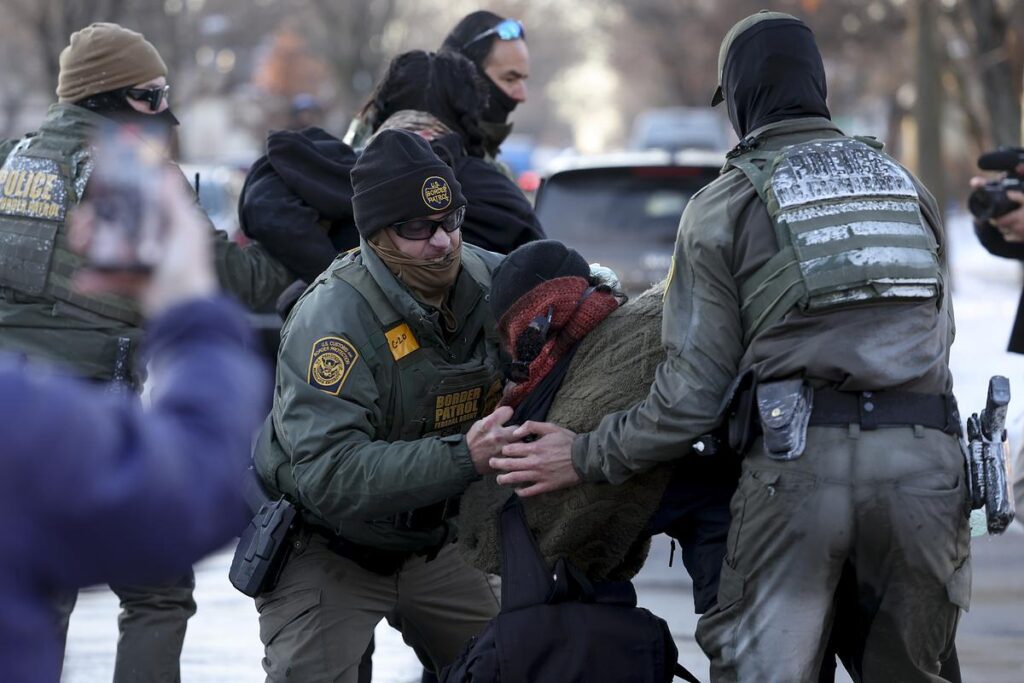
In fact, local police did not open investigations into six of the 12 shootings by on-duty federal agents that have led to the deaths or injuries of citizens and immigrants since September, a ProPublica analysis found. In three other shooting cases, state or local police said they have opened inquiries, which they called a routine practice in those jurisdictions. And in Minnesota, where ICE and Border Patrol shot and killed two U.S. citizens and injured a Venezuelan man last month, state police have tried to conduct independent investigations only to be thwarted by the Trump administration, which has gone so far as to block officers from a scene, even when they had a judicial warrant.
Related: ‘Sanctuary’ label obscures actual levels of ICE cooperation across Minnesota
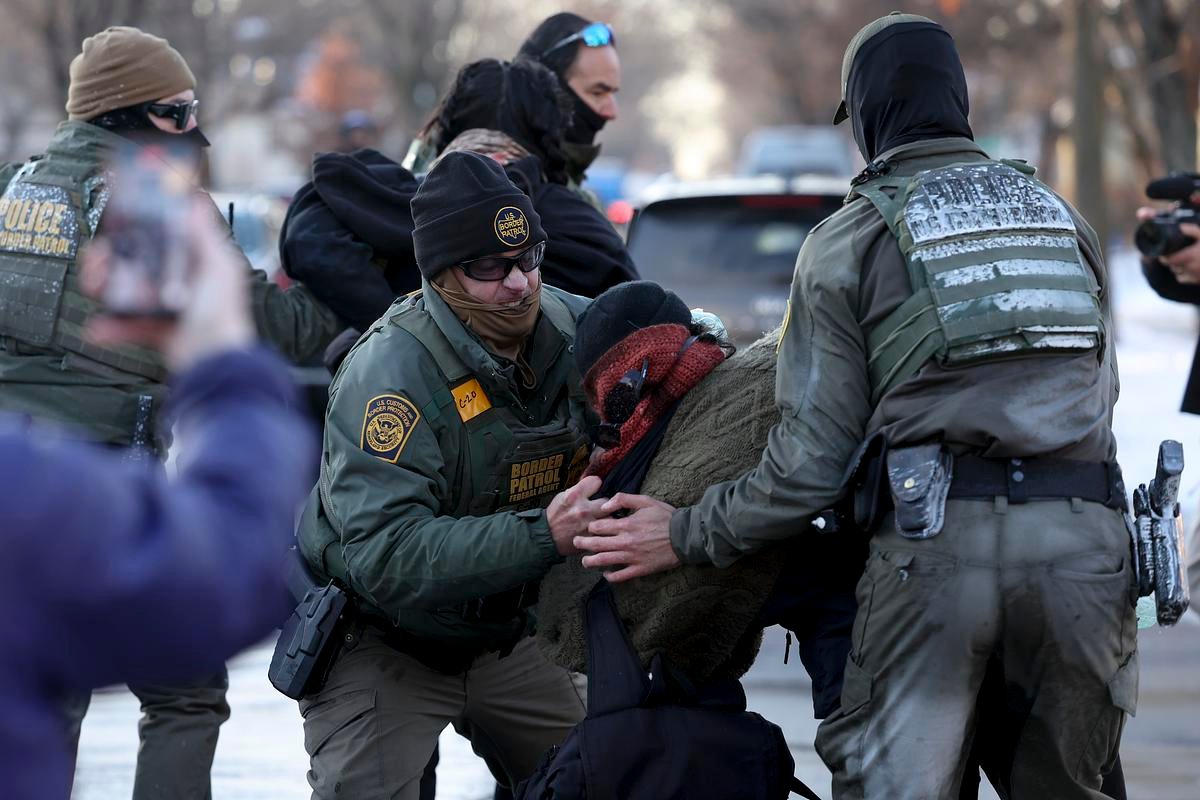
In almost every instance, President Donald Trump’s administration blamed the injured and dead for the shooting within hours of the incident, raising questions about whether federal officials can fairly and objectively investigate their own. Legal experts and advocates for immigrants say this apparent lack of accountability demands that local authorities step up and exercise their power to investigate and prosecute federal agents who break state laws — from battery to murder.
“Local police and the state have gotten a free pass,” said Craig Futterman, a law professor at the University of Chicago and the co-founder and director of its Civil Rights and Police Accountability Project. “Residents have every right and should be demanding that, ‘Hey, state authorities, police, local police: Protect us. Arrest people who kill us, who batter us, who point guns at us and threaten and assault us without legal cause to do so.’”
It’s usually the opposite scenario: federal authorities coming in to investigate a troubled police department. But local authorities have investigated and charged federal agents in the past. It’s just rare and complicated. The federal supremacy clause in the U.S. Constitution bars local interference with federal law enforcement officers when they act reasonably and within the scope of their duties.
But given the aggressive tactics employed by immigration agents under the Trump administration, Futterman and other legal experts said local police and prosecutors are morally obligated to at least try to hold federal law enforcement officers accountable.
‘ICE officers are blatantly and egregiously violating the Constitution and the law’
“We’re in an environment right now where ICE officers are blatantly and egregiously violating the Constitution and the law,” said Joanna Schwartz, a law professor at the University of California, Los Angeles. “The federal government has made it very clear that they are not going to do anything to provide any sort of accountability backstop to its officers. Unfortunately, because Congress is not taking any steps to rein ICE officers in, there really is no option other than states protecting their constituents’ rights.”
In a statement, a spokesperson for the Department of Homeland Security said that agents are “trained to use the minimum amount of force necessary to resolve dangerous situations to prioritize the safety of the public and our officers.” All use-of-force incidents are properly reported and reviewed by an appropriate law enforcement agency, the spokesperson said.
Immigration agents at the border have long been criticized for use of deadly force and lack of rigorous investigations afterward. But now the same militarized force is on display in major American cities far from the border, where residents are not used to their presence.
The shooting of Alex Pretti in Minneapolis last month — and the federal government’s resistance to a routine local investigation — has prompted Democratic and some Republican officials across the country to call for more accountability. Last week, Chicago Mayor Brandon Johnson signed an executive order directing police officers to document alleged illegal activity by federal immigration agents and refer any evidence of felonies to prosecutors.
California’s governor and attorney general issued a reminder to local police of their rights to investigate federal agents. Arizona Attorney General Kris Mayes launched a website asking residents to submit evidence of federal agents’ misconduct. And prosecutors from nine jurisdictions around the country announced a new coalition to provide mutual support to law enforcement authorities bringing charges against federal officers.
In Minneapolis, prosecutors say they’re working with state police to investigate in spite of resistance from federal officials. So far, DHS officials have refused to provide evidence or even the names of the agents involved in the January shootings. Prosecutors went so far as to obtain an emergency order to require that federal agencies preserve evidence in the Pretti case. A judge dropped the temporary restraining order on Monday, following assurances from the federal government that it would maintain investigative materials.
The prosecutors said they believe they can still gather enough evidence to make an informed decision about whether to charge the federal agents.
“We get cases submitted to us every day that don’t have all the evidence we would like,” Hennepin County Attorney Mary Moriarty said in an interview. “We would certainly like the gun. We would like the shell casings, that kind of thing. But it’s also not a mystery as to why these people died.”
Even after getting a judicial warrant, investigators from the state’s Bureau of Criminal Apprehension were turned away by federal agents from the Minneapolis intersection where Pretti, 37, was shot and killed. Federal officials also excluded the BCA from the investigation into the death of Renee Good, who was shot and killed in her car two weeks before Pretti.
Related: Inside the tug-of-war over evidence in Alex Pretti killing and why it matters for law enforcement accountability
BCA Superintendent Drew Evans said he’d never seen his officers physically stopped from doing their job by another law enforcement agency. Across the country, he said, state agencies like the BCA routinely investigate deadly force incidents like this one.
“We’re in uncharted territory here,” he said.
Within hours of each killing, Trump officials publicly labeled the dead “domestic terrorists.” DHS Secretary Kristi Noem said Pretti was “brandishing” a gun when he approached the officers, while the Border Patrol’s Gregory Bovino claimed Pretti was planning a “massacre.”
Video footage contradicted the administration’s version of events. Pretti, for instance, never unholstered his gun, which he was legally allowed to carry.
Early last week, Trump sent Bovino and Border Patrol agents away from Minneapolis, and on Wednesday DHS officials said they would pull another 700 agents out of the state — signs the administration may be changing its approach in response to rising criticism. The FBI is now investigating the Pretti shooting, and the Justice Department announced Friday that it had opened a civil rights investigation.
A DOJ spokesperson did not answer questions for this story but referred reporters to a press conference last weekend in which Deputy U.S. Attorney General Todd Blanche said DHS is following its normal investigative protocols in the Pretti shooting.
Meanwhile, the Justice Department has said it has no plans to investigate Good’s shooting.
“We don’t just go out and investigate every time an officer is forced to defend himself against somebody putting his life in danger,” Blanche told Fox News.
Police in Franklin Park and Chicago have not explained why they didn’t open their own investigations into the two shootings last fall. In the Franklin Park case, the decision to let the FBI alone investigate the killing of Villegas was made within minutes of the shooting, according to dispatch records.
Villegas, a 38-year-old restaurant cook, was shot as he tried to drive away from ICE agents who had pulled him over. As in Minneapolis, the Trump administration’s narrative of what happened did not match the evidence. DHS claimed that Villegas dragged one of the agents, causing serious injuries. The agent fired “because he feared for his life,” officials said. Police body camera footage released after the shooting showed the agent downplaying his injury as “nothing major.”
At the scene, Franklin Park police officers directed traffic and interviewed a witness, the footage shows. At one point, one officer told his colleague that the police department was “just securing until they get here,” referring to the FBI.
Witz, who was then the police chief but has since retired, could not be reached for comment; the current chief did not respond to interview requests.
A similar situation unfolded in Chicago on Oct. 4 after a Border Patrol agent fired into the vehicle of a woman who federal officials claimed “ambushed” them. Marimar Martinez was charged with assaulting federal agents, though the charges were later dropped.
At the time, the Chicago Police Department said officers had responded to a call about a shooting “to document the incident” and to “maintain safety and traffic control.” When asked last week why it didn’t open an independent inquiry, the department directed ProPublica to its October statement, which made clear the police were “not involved in the incident or its investigation” and directed questions to federal authorities.
As the events in Minneapolis continued to generate criticism nationwide, Chicago’s mayor unveiled his executive order that directed officers to investigate federal immigration agents who break the law and to refer them for criminal prosecution. In a statement, the mayor’s office said the initiative was a response to “the absence of legal repercussions in the wake of the shooting of Marimar Martinez in Chicago and the killings of Silverio Villegas González in Franklin Park and Renee Good and Alex Pretti in Minneapolis.”
Legal experts said they were not aware of recent examples of Illinois law enforcement agencies investigating an on-duty federal agent, though last month a suburban police department obtained misdemeanor charges against an off-duty ICE agent accused of attacking an activist who was filming him while the agent was pumping gas.
Illinois State Police officials said they would investigate federal agents who were accused of breaking the law if they are asked to do so.
Meanwhile, Illinois Gov. JB Pritzker called on a state accountability commission to examine the roles of key Trump officials in the escalation of aggressive tactics during a monthslong immigration enforcement campaign in Chicago and its suburbs late last year. Pritzker had previously established the commission to gather videos and testimonies about federal agents’ conduct, and to create a public record of what happened. The commission lacks subpoena power but can refer information about potential violations of state law to law enforcement agencies or prosecutors.
“Just imagine if the agents who shot Mr. Villegas González back on Sept. 12 had been publicly disciplined,” Rubén Castillo, a retired federal judge who chairs the commission, said at a hearing Friday. “Maybe, just maybe, the Minnesota shootings would not have occurred, and two people would be alive who are now dead.”
Federal agents block off the street at the scene where an observer of immigration enforcement operations was shot and killed by a federal agent near the intersection of 26th Street and Nicollet Avenue on Saturday, Jan. 24, 2026, in Minneapolis, Minn. Credit: Ellen Schmidt/MinnPost/CatchLight Local/Report for America
He added: “We will have conversations with those in local law enforcement to suggest prosecutions that should be occurring even as we speak.”
In California, neither the Los Angeles nor Ontario police departments investigated after two men were shot by federal immigration agents in separate October incidents and then accused of assaulting federal officers — despite video evidence and victim statements that conflicted with the accounts officials provided. A federal judge dismissed the case against one man, a Mexican immigrant and popular TikTokker; the other, a U.S. citizen, pleaded not guilty and has a trial scheduled for April.
Police in Phoenix also said they are not investigating the shooting of a man who federal officials say fled immigration agents last October, leaving the case to the FBI and ICE. And local police in Portland, Oregon, are not investigating an incident where federal agents shot at a Venezuelan man who had allegedly hit an unoccupied Border Patrol vehicle with his car in early January, injuring him and his passenger. The man was later charged with assaulting an officer. Unlike in some of the other cases, the Oregon attorney general’s office has opened its own investigation.
In contrast, police in Pima County, Arizona, and Anne Arundel County, Maryland, and the Texas Rangers have all said they opened investigations into recent shootings involving federal immigration officers.
Asking local officials to investigate their federal counterparts does not come without challenges. Police officers and prosecutors are wary of being seen as interfering with federal law enforcement operations. They may be reluctant to damage their already complicated relationships with agencies with whom they sometimes partner.
Then there’s the worry about the political consequences, including the threat of losing federal funding, a dynamic that’s particularly acute under the Trump administration.
“This particular federal government has lobbed all kinds of threats and acted on threats against local authorities and state authorities for failure to cooperate or not do what they want them to do,” said Futterman, the University of Chicago law professor. “It’s a reason in itself not to bite a hand that feeds you.”
Even when local officials open their own investigations into federal agents, there’s no guarantee they can bring the cases to court. Federal agents can claim immunity in response to state charges, legal experts said, and can move their cases to federal court.
Related: Alarm over ‘Operation Metro Surge’ prompts congressional efforts to rein in ICE and the Border Patrol
That immunity stems from a Supreme Court ruling more than a century ago. During the Civil Rights Movement, that immunity was used when the federal government wanted to protect its law enforcement officers tasked with enforcing then-controversial efforts like desegregation in hostile states.
Now local officials face the opposite challenge: protecting their constituents’ constitutional rights from what they believe is excessive force at the hands of federal officers.
Steve Descano, the commonwealth’s attorney for Fairfax County, Virginia, would be the first to admit that nothing about prosecuting federal agents is easy. During the first Trump administration, Descano brought state manslaughter charges against two U.S. Park Police officers who shot and killed a Virginia man. A federal judge dismissed the case in 2021 and said the officers were entitled to immunity because their actions were necessary and proper.
Still, Descano, who is part of the coalition of prosecutors aiming to hold federal law enforcement accountable, said he believed he and others have a responsibility to do so.
“If they are not willing to take these actions,” he said, “then they are cowards and they are not worthy of their positions.”
The post ‘You’re not going to investigate a federal officer’ appeared first on MinnPost.
WASHINGTON – Minnesota sheriffs sought a way around a state law that prohibits an inmate from being detained for Immigration and Customs Enforcement beyond their release date.
The idea was to enter into a “basic ordering agreement” (BOA) that would allow ICE up to 48 hours to pick up undocumented individuals targeted for immigration enforcement as one effort to find ways to cooperate more fully with federal immigration authorities.
To make sure these agreements did not run afoul of Minnesota law, which prohibits the holding of inmates past their release date, the Minnesota Sheriffs’ Association reached out to the Minnesota Association of County Attorneys to get a legal opinion on the issue, said Robert Small, the association’s executive director.
The county attorneys’ decision: a BOA would violate state law.
“Our association looked at these agreements and we are of the view that they would not comport with Minnesota law,” Small said.
Under state law, county jails and state prisons are not allowed to comply with “detainer” requests from ICE to hold inmates beyond their release date. Several counties – Anoka, Nobles and Carver – have done so and been sued by the ACLU.
A legal opinion Minnesota Attorney General Keith Ellison prepared last year for Ramsey County determined that an arrest is a seizure, and both the U.S. Constitution and the Minnesota Constitution protect people from “unreasonable search and seizures.”
Ellison also said that since no Minnesota civil law authorizes immigration detainer arrests, the state’s law enforcement agencies risk “significant civil liability” if they enforce requests for extended holds.
The ACLU-MN reacted Wednesday to reports that the Minnesota Sheriffs’ Association met with Trump administration Tom Homan about entering into BOAs.
“Our message to law enforcement across the State of Minnesota is simple. You do not have legal authority to enforce civil immigration law,” ACLU-MN Legal Director Teresa Nelson said in an emailed statement. “If you are contemplating an agreement to hold people past their release time for ICE, you should reconsider because it will not exempt you from liability for violating the rights of Minnesotans in your jail.”
James Stuart, the executive director of the Minnesota Sheriffs’ Association, acknowledged the county attorneys’ opinion about BOAs, but said other lawyers the association have consulted have other opinions.
The Trump administration’s nominee for U.S. Marshal, Stuart also said the BOAs are just “one of many things under discussion” with Homan, who is seeking more cooperation from state law enforcement agencies in order to end “Operation Metro Surge,” the federal immigration crackdown that began on Dec. 1.
On Wednesday, Homan said he will withdraw 700 federal agents from the state, leaving 2,000, and would remove others based on increased cooperation.
‘The biggest thing is communication’
While they can’t hold prisoners past their release date, Minnesota’s county jails and state prisons are allowed to do other things that facilitate a transfer, including advising ICE when an undocumented immigrant they seek is held in a facility and making sure ICE is notified of release dates for the individuals it wants to detain.
A MinnPost analysis of responses to detainer requests shows that state prisons are fully compliant in efforts to transfer prisoners to ICE. The compliance rate of county jails, however, varies widely with Hennepin and Ramsey counties having the lowest rates.
“The biggest thing is communication,” Stuart said. “There are so many scenarios that can play out.”
In a press conference Wednesday, Homan distanced himself from administration criticism over agencies’ failures to extend holds on inmates and said he is seeking better communication with county jails.
“I … want to reiterate and emphasize we are not requiring jails to hold people past their normal release time for immigration purposes,” Homan said. “We’re not asking anyone to be an immigration officer. We are not asking any state or local official to do immigration enforcement activity. They are not by merely notifying us before they release them. They don’t hold them one minute past when they normally would.”
The post County attorneys nix proposal for Minnesota sheriffs to coordinate with ICE appeared first on MinnPost.
WASHINGTON – When members of Congress saw the chaos surrounding immigration enforcement in Minneapolis, they didn’t like what they saw, opening the door to reforms.
In a rare rebuke to President Donald Trump, lawmakers are considering putting guardrails on Immigration and Customs Enforcement (ICE) and the U.S. Customs and Border Protection, two agencies that last year received a massive infusion of funding – $75 billion – in the president’s “big, beautiful” bill.
Now, additional money for those agencies, as well as the entire Department of Homeland Security, is at stake as DHS Secretary Kristi Noem is under scrutiny for her handling of immigration enforcement.
Trump told reporters last week that his administration would “deescalate a bit” in Minnesota. He replaced hard-line Border Patrol commander Gregory Bovino with his more conciliatory border czar Tom Homan, who said Wednesday that 700 federal law enforcement agents would exit Minnesota, leaving about 2,000 agents in place.
Related: As Minnesota legislative session nears and Operation Metro Surge drags on, lawmakers ready response to ICE
While Congress was able to end a four-day partial government shutdown by approving five appropriations bills that will fund the Pentagon and Labor and Transportation Departments and other agencies until Sept. 30, funding for DHS will only last until the end of next week.
So, the clock is ticking on Congress to negotiate how ICE and Border Patrol agents execute the Trump administration’s immigration enforcement crackdown.
Reforms under discussion include de-escalation training, a ban on masks, requiring judicial warrants to enter a home, a mandate to wear body cameras, the establishment of a code of conduct governing the use of force, and the end of roving patrols to pick up migrants.
Rep. Betty McCollum, D-4th District, supports all of those proposed reforms, as well as others, including requiring labeled uniforms or vests that clearly identify the agency a federal agent belongs to and “clear standards” on investigations into misconduct.
She said the FBI has routinely cooperated with local law enforcement, yet it has failed to do so after the shootings of Renee Good and Alex Pretti. In addition, the Justice Department decided against investigating Good’s shooting.
“And there’s more to talk about,” McCollum said.
Some Republicans are also open to some changes.
“The tragedy and chaos the country is witnessing in Minneapolis is shocking,” Sen. Lisa Murkowski said on X. “The killing … of Alex Pretti, a U.S. citizen, by ICE agents should raise serious questions within the administration about the adequacy of immigration-enforcement training and the instructions officers are given on carrying out their mission.”
The tragedy and chaos the country is witnessing in Minneapolis is shocking. The killing yesterday of Alex Pretti, a U.S. citizen, by ICE agents should raise serious questions within the administration about the adequacy of immigration-enforcement training and the instructions…
House Speaker Mike Johnson, R-La., said he was open to some changes.
“Some of these conditions and requests that they’ve made are obviously reasonable and should happen. But others are going to require a lot more negotiation,” he said Sunday during an interview on NBC’s “Meet the Press.”
‘They have enough money’
There’s also a debate among Democrats about the funding of ICE and the Border Patrol.
None of Minnesota’s Democratic House members voted Tuesday for the package of spending bills, even though the bill for DHS would fund the agency for only 10 more days.
Rep. Ilhan Omar, D-5th District, wants to “defund” ICE. Rep. Angie Craig, D-2nd District, said she would fight to keep ICE from receiving more money than it did last year.
“We only have so many leverage points in Congress and this is the last one we have,” Craig said.
McCollum, a senior member of the House Appropriations Committee, said the $75 billion appropriated for ICE and the Border Patrol last year can fund those agencies “for five or six years.”
“They have more than enough money,” McCollum said.
McCollum also said she “has colleagues who want to claw back some of the funding” that has greatly expanded the number of ICE and Border Patrol agents and detention facilities. “But I don’t know if we can,” McCollum said.
The debate over immigration enforcement came to a boiling point after the killing of Pretti. Before that lethal shooting in Minneapolis, Congress was set to approve a package of appropriations bills on a bipartisan basis.
But, with the help of eight Republicans, that effort was derailed last week. Instead, the DHS appropriations bill was killed and the department funded only temporarily.
Even before “Operation Metro Surge” claimed the life of Good and Pretti and unleashed a flood of videos on the internet showing federal agents abusing immigrants and protesters, the nation was becoming wary of immigration enforcement operations.
Jacob Rubashkin of Inside Politics said immigration is a “thermostatic” issue. Public opinion on the issue turned against former President Joe Biden because of fears of unchecked immigration, Rubashkin said, but after Trump convinced a lot of the public that he had secured the border “people thought the issue was resolved.”
So, polls showed Trump losing ground on the issue even before “Operation Metro Surge.” But that loss of support has recently escalated.
A recent Ipsos poll showed that a majority of respondents say current efforts by ICE officers to deal with unauthorized immigration go too far (62%), compared with 13% who say current efforts do not go far enough and 23% who say current efforts are about right. The share saying these efforts go “too far” has increased slightly compared with a Reuters/Ipsos poll conducted Jan. 23-25, 2026 (58%).
The poll also determined that the number of Republicans who say ICE officers are going too far (30%) is up 10 percentage points from the previous poll.
Meanwhile, a new Pew Research Center poll determined that by wide margins the public says it’s not acceptable for federal immigration officers to wear face coverings that hide their identities, or to use people’s appearance or language as a reason for checking their immigration status.
However, both polls show that a vast majority of Republicans still support Trump’s aggressive immigration enforcement.
A different view
While Minnesota’s Democratic lawmakers want reforms and cuts to ICE and Border Patrol funding, the state’s Republican members of Congress have a different view.
Like other Republicans, Rep. Pete Stauber, R-8th District, said the protests against Operation Metro Surge were born of bad policies by Democratic officials.
“This mess was created by the disastrous policies of Joe Biden and Tim Walz that defended and freed criminals,” he said in a post on X. “Let’s make Minnesota safer, not a sanctuary for lawbreakers, fraudsters, and dangerous criminals.”
This mess was created by the disastrous policies of Joe Biden and Tim Walz that defended and freed criminals. Let's make Minnesota safer, not a sanctuary for lawbreakers, fraudsters, and dangerous criminals. pic.twitter.com/6okyqo47Cn
And while Rep. Michelle Fischbach, R-7th District, said she was “deeply saddened” by Pretti’s death, she blamed Walz and other Democrats for the tragedy.
“We must reject rhetoric that limits cooperation with federal authorities and instead focus on the rule of law to ensure the safety of all Minnesotans,” Fischbach said.
Related: Flanagan, Craig take fight to precinct caucuses roiled by ICE operation while Tafoya makes her political debut
Because there is still strong support for Trump’s immigration policy among Republican lawmakers, some have insisted that the DHS funding bill strip federal money from “sanctuary” jurisdictions that they say don’t cooperate with federal immigration agencies.
Meanwhile, Rep. Tom Emmer, R-6th District, introduced his own hardline immigration bill this week.
The SCAM Act, co-sponsored by the other three Republicans representing Minnesota in Congress – Stauber, Fischbach and Rep. Brad Finstad, R-1st District – would strip U.S. citizenship from any naturalized citizen who, within 10 years of their naturalization, is convicted of fraud against the government, found to have joined or affiliated with a foreign terrorist organization, or is convicted of an aggravated felony or espionage.
“If you come to this country and lie, cheat, and steal after becoming a naturalized U.S. citizen, you clearly do not appreciate the opportunities you were given and you should be denaturalized and shipped back to where you came from,” Emmer posted on X. “That’s why I introduced the SCAM Act.”
The post Alarm over ‘Operation Metro Surge’ prompts Congressional efforts to rein in ICE and the Border Patrol appeared first on MinnPost.