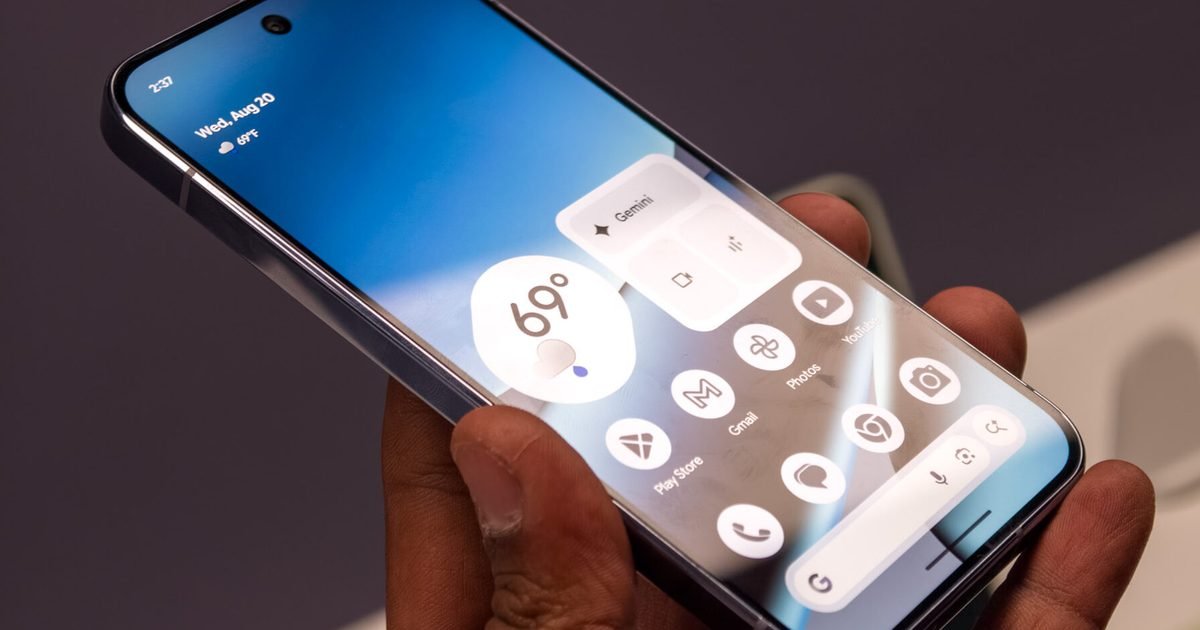
While Android beta testers were exploring the newly-launched Android 16 QPR3 Beta 2.1, Google decided to surprise everyone. The official Android Beta Program handle on Reddit has confirmed the arrival of Android 17 Beta 1, and it’s coming sooner than you’d think.
“We are looking forward to our next Beta program cycle that covers our Android 17 Platform Release (26Q2),” says Google. It says the upcoming update will build on the Android 16 QPR platform release and include the “latest bug fixes and improvements.”
Google
A surprise at the end of the cycle
The timing isn’t exactly shocking, as Android 16 QPR3 Beta 2.1 is the last update in the cycle. What’s unique, however, is Google’s route. Instead of pushing Android 17 via the Developer Preview stage, the company is jumping straight into the first beta.
Current beta testers (those enrolled in the Android Beta Program with an eligible Pixel smartphone) will automatically receive the Android 17 update once it goes live (which could be sometime in the coming weeks).
On the one hand, it’s good that Google is seeding the Android 17 update promptly to beta testers, making the initial build available for a wider testing audience.
Nadeem Sarwar / Digital Trends
The fine print beta testers shouldn’t ignore
However, once testers upgrade to Android 17 Beta 1, they won’t be able to roll back to the previous stable version until the cycle ends (which would be around June 2026) without wiping their device.
Anyways, that also implies that Google is planning to release the stable Android 17 version around the same time. Regular users should expect the major Android update to hit their Pixel devices in or around June 2026.
As for what’s new in Android 17 Beta 1? Google hasn’t spilled the beans yet. Even so, we expect to see the usual early-beta performance improvements and software refinements, sprinkled with a couple of visual adjustments.
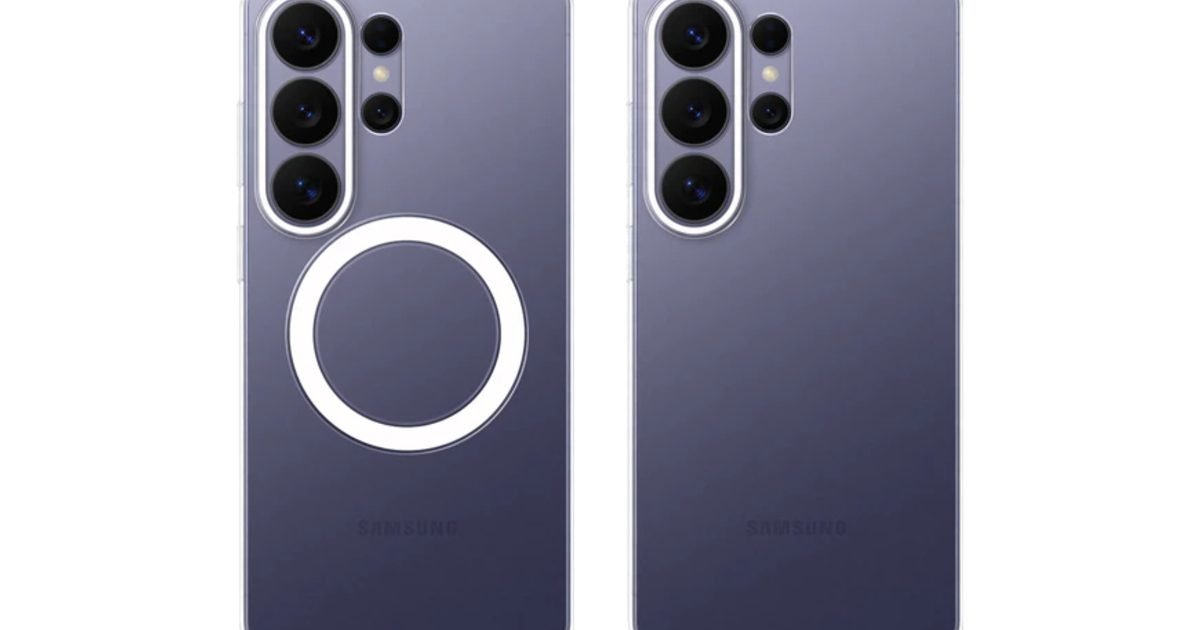
The Korean tech giant Samsung has finally confirmed the Galaxy Unpacked 2026 event, and it’s going to be, no surprises here, February 25, 2026.
The in-person event will take place in San Francisco, California, commencing from 10 AM PT or 1 PM ET. Its livestream will be available on the company’s official YouTube channel.
Galaxy S26 pre-orders go live with early incentives
“The new Galaxy S series is coming – built to simplify everyday interactions, inspire confidence, and make Galaxy AI feel seamlessly integrated from the moment it’s in hand,” says Samsung.
While the event is scheduled for about two weeks from now, pre-orders for the Galaxy S26 series are currently open, not just on the company’s official website but also at Best Buy and AT&T.
Those who reserve a Galaxy S26 unit now will receive a $30 credit toward other products or accessories. Those who want to trade in their existing device can get up to $900 in value, while those who don’t can get a $150 credit, applicable toward additional products (while supplies last).
Pre-reservation also gives customers a chance to win a $5,000 gift card. So, it’s not like Samsung isn’t offering any pre-order benefits this year, but they are quite different than those offered last year.
💙 like this post and be the first to see what’s coming.
Join us at Samsung Galaxy Unpacked on February 25, 2026 to discover how easy and effortless your day can be with Galaxy AI. Keep watching this space for more Galaxy Unpacked updates! pic.twitter.com/QUJHQnXjaK
For instance, Samsung offered a $50 store credit, up to $1,250 on an eligible trade-in, and, most importantly, a free storage bump with the Galaxy S25 series. Clearly, the ongoing memory supply crunch is at play here.
What’s even more interesting is that there’s a clause in Samsung’s terms and conditions (about the pre-order benefits), which indicates that regular sales of the Galaxy S26 series might commence on or around March 11, 2026.
Anyway, Samsung should unveil three smartphones at the Galaxy Unpacked event: Galaxy S26, Galaxy S26 Plus, and Galaxy S26 Ultra. Along with the flagships, we should also see two earbuds: Galaxy Buds 4 and Galaxy Buds 4 Pro.
I’ve already compiled a detailed roundup of the Galaxy S26 series, including the release timeline, expected pricing, and specifications, in case you want to check it out before making up your mind and pre-ordering one.
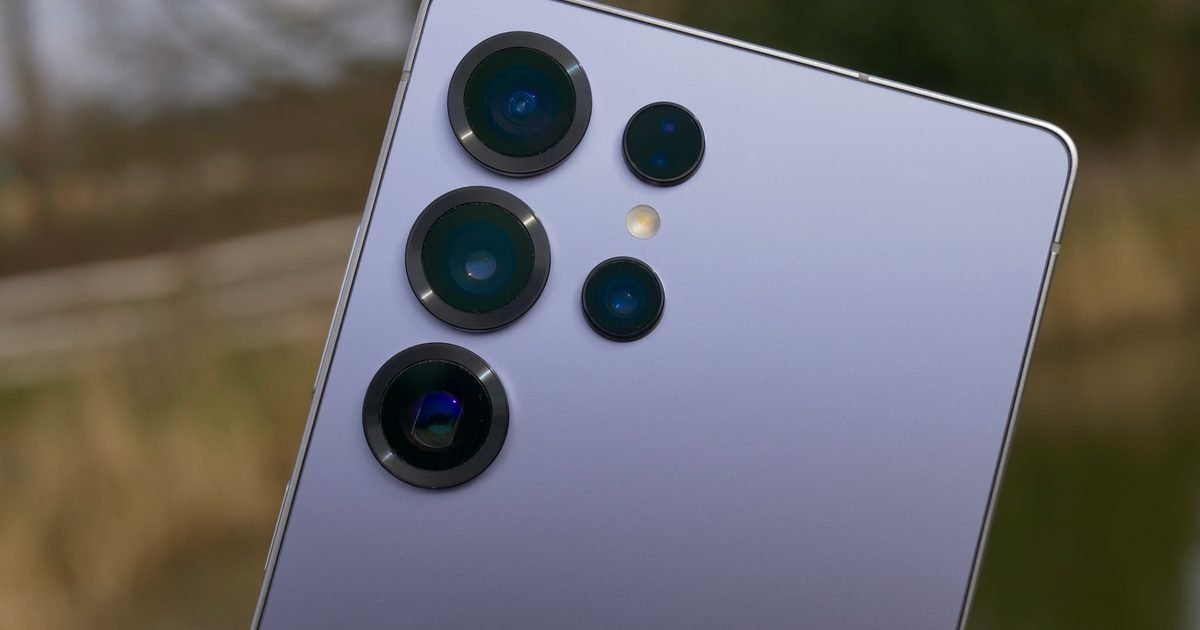
It seems that in the world of smartphone technology, time is a flat circle. Just when we thought we had moved on to a future dominated entirely by AI and software tricks, Samsung is reportedly reaching back into its archives to revive a hardware feature it killed off years ago. According to new reports coming out of South Korea’s supply chain, the tech giant is seriously looking into bringing back variable aperture cameras for its future flagship phones.
If you have been following the Galaxy lineup for a while, you might remember this feature from the Galaxy S9 and S10 days. It was a brilliant, if slightly ahead-of-its-time, piece of engineering that allowed the camera lens to physically open and close – much like the pupil of a human eye – to control light. Samsung quietly axed it starting with the Galaxy S20, citing cost and the fact that it made phones too thick.
So, why bring it back now? The answer, unsurprisingly, seems to be Apple.
Reports suggest that Apple is planning to debut variable aperture technology on the upcoming iPhone 18 Pro models. In the high-stakes game of smartphone dominance, Samsung refuses to be caught on the back foot. Sources indicate that Samsung has already tapped its major partners, including Samsung Electro-Mechanics and MCNEX, to start churning out prototypes for a modern version of the system. While it is still in the “testing phase,” insiders describe Samsung’s commitment to the project as strong.
Why hardware beats software
For the last few years, we have been living in the era of “Computational Photography.” Your phone takes a mediocre picture, and then a powerful processor uses AI to fix the lighting, reduce the noise, and artificially blur the background. It works, but it has limits. We have all seen those Portrait Mode photos where the software accidentally blurs someone’s ear or fails to cut out a stray strand of hair.
Nieuwemobiel
A physical variable aperture solves this at the source.
In bright daylight, the lens can “squint” (stop down), which ensures that everything from the flower in the foreground to the mountain in the background is crisp and sharp. In low light, it can open wide to suck in every available photon, reducing that grainy look you often get in night shots. Natural Bokeh: Perhaps most importantly, it creates real background blur. You get that creamy, professional separation between your subject and the background without an algorithm having to guess where the edges are.
Andy Boxall / Digital Trends
The comeback kid
It is funny to think that Samsung had this tech in 2018. Back then, it felt like a neat party trick, but the sensors were too small to really make the most of it. Today, smartphone sensors are massive – almost 1-inch in size. Putting a variable aperture over a sensor that big would yield results that could genuinely rival dedicated compact cameras.
Of course, this doesn’t mean the Galaxy S26 (or whatever is launching next week) will have it. The development cycle suggests we are looking at a 2027 timeline, likely for the Galaxy S27 Ultra. But the message is clear: the megapixel wars are cooling down, and the next battleground is going to be about bringing “real” photography mechanics back to our pockets. If Apple and Samsung are both racing toward this, the winner is going to be anyone who loves taking photos that look like photos, not computer-generated images.
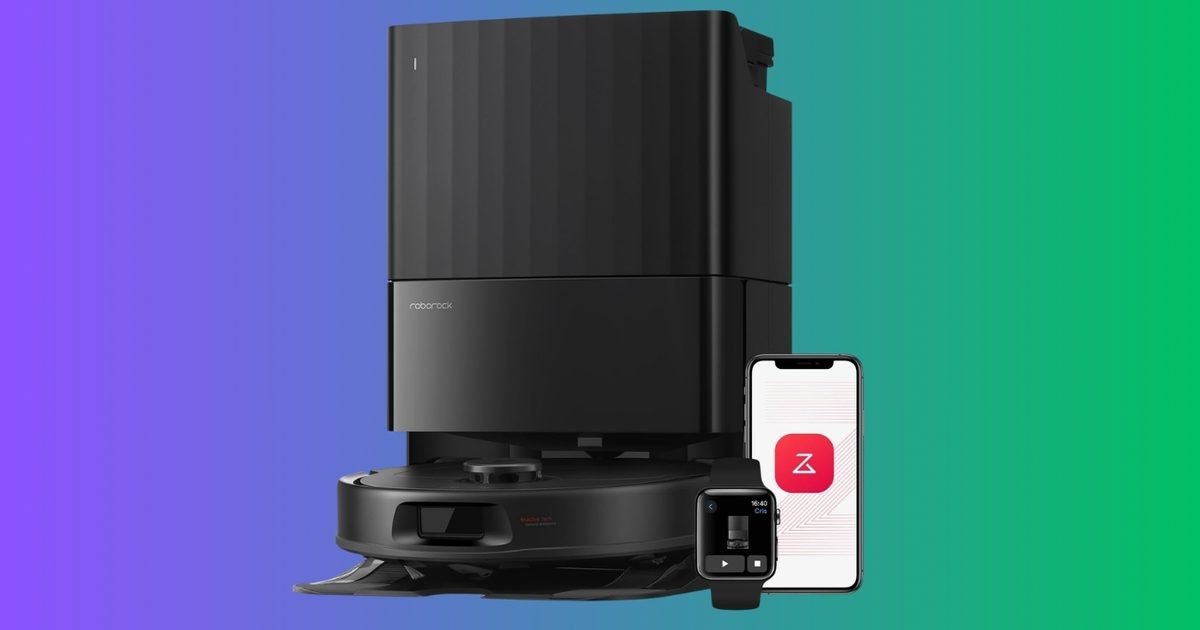
The best robot vacuums are the ones you stop thinking about. You do not want a new chore that needs babysitting. You want something that quietly keeps floors under control while you get on with your day. The Roborock Qrevo Series robot vacuum and mop is $399.99 for a limited time, down from $649.99 for 38% off. At this price, you’re getting the kind of “full dock, self-managing cleaning routine” experience that normally costs a lot more.
What you’re getting
This is a combined robot vacuum + mop with 8,000Pa suction, anti-tangle brushes, and smart obstacle avoidance. The standout feature is the all-in-one dock with auto mop washing, which is the difference between “robot mopping sounds cool” and “robot mopping actually happens consistently.”
It also uses 200RPM spinning mops, which tend to be better at scrubbing than basic drag-pad systems. In day-to-day use, that matters most in kitchens and entryways where footprints and grime build up.
Why it’s worth it
This deal is about reducing friction. When the mop pads get washed automatically, and the system is designed to handle obstacles without constant rescue missions, you’re far more likely to run it on a schedule and let it do its thing.
It’s especially useful for:
Hard floors that show dust and footprints quickly
Homes with pets, where hair and tracked-in dirt are a constant
Busy households where “quick clean” happens often
At $399.99, it’s a great value because you’re buying into a higher level of automation. That’s what separates a “nice gadget” from something that genuinely changes how clean your home feels week to week.
A realistic note: robot mops are best as maintenance, not as a replacement for the occasional deeper manual clean. The payoff is that you need those deep cleans less often.
The bottom line
At $399.99, the Roborock Qrevo Series is a strong value if you want a vacuum-and-mop robot that’s designed to run regularly with minimal hands-on effort, thanks to the all-in-one dock and mop washing. If you only need basic vacuuming, you can spend less. But if you want noticeably cleaner floors with less daily effort, this limited-time 38% discount is worth jumping on.
SpaceX is edging toward the 12th launch of its Starship rocket, which this time will see a new version of the massive vehicle head skyward.
The launch team has just completed a crucial test of the Starship’s first stage — the Super Heavy — at its Starbase facility in Boca Chica, Texas.
It shared a short video and some images (below) of the most powerful booster ever built with the message: “Cryoproof operations complete for the first time with a Super Heavy V3 booster. This multi-day campaign tested the booster’s redesigned propellant systems and its structural strength.”
Cryoproof operations complete for the first time with a Super Heavy V3 booster. This multi-day campaign tested the booster’s redesigned propellant systems and its structural strength pic.twitter.com/RpMQ1DoT5x
No anomalies have been reported, setting the booster up nicely for a static fire test, hopefully in the coming days.
After that, attention will shift to the upper-stage Ship, which will also undergo preflight testing prior to being lifted atop the Super Heavy in preparation for launch.
SpaceX is targeting March for the 12th Starship test flight, according to a recent post on X by Elon Musk, the company’s CEO.
The updated Starship, known as Version 3, stands about a meter higher than its 123-meter-tall predecessor, and comes with more powerful engines and a series of design tweaks to enhance performance.
In an update on Sunday that surprised many, Musk said that SpaceX is pivoting its near-term focus to building a self-sustaining city on the moon, deprioritizing his previously stated ambition of building a city on Mars.
The CEO said the lunar plan is achievable in under 10 years, with the moon offering a more rapid path due to frequent launch windows (every 10 days vs. Mars’ 26-month alignments) and shorter trips (2 days vs. 6 months).
There’s also the added challenge of safely getting humans to the red planet, a feat that has yet to be achieved.
SpaceX’s Mars‑city efforts will continue as part of a long‑term plan, while the company will continue with its involvement in NASA’s Artemis lunar program using Starship.
One of Nothing’s boldest ideas, Essential Apps, is now available for Phone 3 users, unlocking a new way to create highly personalized, AI-generated widgets for your home screen without any coding wizardry.
The feature, currently rolling out in beta through the web-based Nothing Playground platform, is an early step toward the company’s long-term vision of an AI-native operating system called Essential OS.
Create apps shaped exactly around your specific needs and context.
That’s what Essential Apps are.
You describe what you need. AI builds it. It appears on your phone’s home screen, ready to use.
But what is Essential Apps anyway? Think of it as tiny yet useful tools that do very specific things for users, in the form of a widget.
Want a widget that can track your water intake? Or one that finds the highest-rated restaurants in the locality (could be very useful if you travel around)? Well, the promise here is that you can create personalized widgets that perform specific tasks (tailored to your daily requirements) without writing a single line of code.
Nothing’s own example includes a widget that finds the best days and time to run outside (taking into consideration the weather and calendar).
You should only have to describe what you want in a simple text-based command (the widget’s purpose, what it does, its size, etc.), and Nothing Playground should take care of the rest.
We were promised there would be “an app for that” and for a while, it felt true. But open app stores gradually gave way to the same few default apps and platforms – built by a handful of companies, for billions of people at once.
Essential Apps start from a different belief:… https://t.co/oOZiTRD6uL
Essential Apps can only access three device permissions for now
You can even change or edit the widget’s design or functionality after creating it. The widgets can access information from the internet as well, so that’s a plus point.
For now, the Essential Apps can access three different permissions from your smartphone: Location, Calendar, and Contacts. So, you should be able to create location or calendar-based reminders, countdowns, and one-tap navigation widgets.
In the future, the widgets should be able to access additional permissions, including camera, microphone, notifications, calling, vibration, and Bluetooth.
As mentioned in the beginning, the Nothing Essentials Apps Beta is currently available to Phone 3 users via a waitlist. However, the company should extend support to more devices running Nothing OS 4.0 in the near future.
Google Search can make information easy to find, but it can also make your personal data surface in ways that feel invasive or even dangerous. This is why Google is rolling out new tools that give people more control over what shows up about them online.
The company says it is expanding its Search removal features to make it simpler to take down sensitive personal information and explicit images that never should have been public in the first place.
How to remove personal information from Search
Google’s “Results about you hub” can now help you find and remove search results that contain sensitive government-issued identification numbers. This includes things like passport numbers, driver’s license numbers, and other official ID info that could be misused if they appear online.
Google
To use this feature, you sign in to your Google account and select ‘Results about you,’ where you can fill out the information you want to track. Google will proactively scan Search for results that match your personal information and alert you if it finds something.
From there, you can review each result and request removal directly within the tool. You can also manually submit a removal request if you come across sensitive information yourself. Google says it will review these requests and remove results that violate its policies.
How to remove explicit images from Search
Google
Google is also simplifying the process for removing explicit images, especially those shared without consent. You can now request the removal of explicit images more easily, including submitting multiple images at once rather than filing separate requests.
Once an image is removed, Google will also offer an option to proactively filter out similar explicit images from future Search results, to prevent similar content from resurfacing.
Google
You can now track all your removal requests in one place through the Results about you hub, with email updates to keep you informed whenever the status changes.
Google also points out that removing information from Search does not erase it from the internet altogether, but it can still go a long way in protecting your privacy.
The update also comes as Google shuts down its dark web reports, which previously alerted users when their name, phone number, or email surfaced online in a data breach.
Google says those alerts did not always help people take meaningful action, something the new removal tools are designed to address.
The latest generation of Android flagships from Vivo, Oppo, and even Samsung include one 200MP sensor, used as the primary camera or the telephoto camera. However, the next generation of Android flagships could include three 100MP sensors.
You heard that right. According to Chinese tipster Digital Chat Station, “some” (that could be more than one) smartphone makers are “testing three 100-megapixel lenses” or cameras.
Nadeem Sarwar / Digital Trends
Three 100MP cameras? That’s the rumor
Although the tipster doesn’t specify the nature of these cameras, they could very well be the primary, telephoto, and ultrawide shooters. This is one of the most interesting approaches I’ve heard of lately. Here’s why.
It might sound like a 100MP primary sensor and a 100MP telephoto sensor is a downgrade from the current 200MP standard at first. But only the Oppo Find X9 Ultra has been confirmed to feature two 200MP cameras on the back.
The others, including the Vivo X300 Pro, the Find X9 Pro, and the Galaxy S25 Ultra (or even the upcoming Galaxy S26 Ultra, for that matter), include only one 200MP primary sensor, which, by the way, uses pixel binning to default to a lower resolution for increased low-light performance, saving space and capture time.
Having 100MP primary and telephoto sensors would still allow brands to capture at a lower default resolution, upscale significantly when needed, and take less storage or capture time than a 200MP sensor would.
Oppo
The ultrawide camera could finally get a serious update
So far, I haven’t talked about the ultrawide sensor, because it maxes out at 50MP on the flagships. Hence, a 100MP ultrawide camera (if our interpretation of the tweet is right) would be a dramatic upgrade.
It could enable more detailed macro shots (if the sensor doubles as a macro shooter) or greater post-capture reframing potential. In addition to the rear-facing cameras, the leaker also claims that a “100-megapixel front-facing camera,” with a “small-pixel sensor,” is in the works.
Given that the Galaxy S26 series seems to be stuck with a 12MP front camera, and Chinese flagships use a 50MP sensor on their most expensive variants, a 100MP selfie shooter could deliver a noticeable upgrade.
Since it’s a small-pixel sensor, low-light photography might be an issue, but I guess smartphone makers should be able to fix it with computational trickery.
Artificial intelligence is quietly reshaping the global scam economy by making it harder to spot and easier to scale. According to a new Bloomberg report, scammer call centers across Southeast Asia are increasingly using cheap, widely available AI tools to dupe more victims.
This is why scams are becoming more convincing, even as governments are tightening the screws. There have also been previous reports of AI tools being repurposed for cybercrime and exploiting chatbots like ChatGPT for malware generation.
According to Interpol officials, scammers are now using large language models, voice cloning, and image generation to industrialise deception at scale.
Cybercriminals who once relied on poorly written messages or obviously fake job ads have now evolved their scams into slick operations that can generate realistic ads, messages, and profiles in seconds.
“You can see the efficiency with AI being utilised in scam centers,” said Neal Jetton, who leads Interpol’s Cybercrime Directorate in Singapore. “It’s a pretty easy business model, and it’s going to get even easier for criminals with AI.”
How AI is changing scam operations
Unsplash
The biggest change is speed and flexibility. AI allows scam operators to rapidly rewrite scripts, switch languages, target new regions, and pivot tactics when authorities intervene.
According to Interpol analysts, even job ads used to lure people into scam compounds now look professional, polished, and legitimate, making them far harder to flag.
Voice cloning and deepfake tools are also being used to impersonate relatives or romantic partners, adding emotional pressure that makes victims more likely to send money to scammers.
Despite arrests and crackdowns in places like Cambodia and Myanmar, experts do not expect scam centers to disappear. Instead, AI makes them cheaper to run and easier to relocate, with operations now appearing in the Americas, Africa, and the Middle East.
Estimates suggest global scam networks were already stealing tens of billions of dollars annually, and that figure is expected to rise. Interpol warns that while AI can also help law enforcement, criminals are moving faster by turning what once was basic fraud into a sophisticated, global enterprise.
Colombo: Sahibzada Farhan’s power-filled fifty and spinner’s accuracy lifted Pakistan to a smooth 32-run win over the United States of America in a Group A match of the T20 World Cup on Tuesday.
Farhan’s 41-ball 73 led Pakistan to a healthy 190 for nine, and then their highly-efficient spin quartet of Abrar Ahmed (1/30), Mohammad Nawaz (1/21), Shadab Khan (2/26) and Usman Tariq (3/27) did not allow the US batters any breathing space, limiting them to 158 for eight.
It was Pakistan’s second successive victory in this tournament, and now they are leading the group with four points.
Shubham Ranjane made an aggressive fifty (51, 30b), but it was useful only to reduce the margin of defeat.
United States’ Milind Kumar plays a shot during the T20 World Cup cricket match in Colombo on Tuesday. AP/PTI
Pakistan’s Shaheen Shah Afridi appeals unsuccessfully for the wicket of United States’ Andries Gous
Pakistan’s Babar Azam hits a boundary during the T20 World Cup cricket match between Pakistan and the United States
Pakistan’s Saim Ayub plays a shot during the T20 World Cup cricket match between Pakistan and the United States in Colombo
United States’ Shadley Van Schalkwyk, right, celebrates with teammates the wicket of Pakistan’s captain Salman Agha. AP/PTI
However, openers Shayan Jahangir (49 off 34) and Andries Gous (13 off 13) gave a reasonable start to the USA’s chase, taking them to 42 in the fifth over, but the introduction of spin changed the complexion of the match.
Gous was hold out to Salman Agha in the deep off Nawaz. The USA, who had defeated Pakistan in the last edition of the T20 World Cup, ended the power play at 50 for 1.
But it was all a struggle for them thereafter. The dismissal was a precursor to the ensuing happenings as Pakistan spinners grabbed seven of the eight USA wickets that had fallen on the night.
The next four overs saw the US batters struggling massively against Pakistan spinners, adding just 18 runs for the loss of skipper Monank Patel, who gave a return catch to leg-spinner Shadab Khan.
Jahangir too departed soon. His attempted heave off Shadab ended in the hands of Shaheen Shah Afridi at mid-wicket.
Ranjane and Milind Kumar (23) added 66 runs for the fourth wicket but the required run-rate was far too steep to cover-up even with some lusty hits down.
Earlier, Farhan and Babar (46, 32b) added 81 runs for the third wicket as Pakistan recovered well from a slightly worrying 56 for two after the Power Play.
After being asked to bat first, Pakistan were initially cruising at 56 for no loss in five overs.
But pacer Shadley van Schalkwyk (4/25) got rid of both Saim Ayub and skipper Agha in the space of five deliveries in the sixth over to put brakes on Pakistan.
Farhan was as usual all muscles, smoking bowlers for sixes at will. His maximums of spinner Milind were a testimony of his brute power.
Farhan’s bull run also allowed Babar to settle in and then play his shots in the first match under lights at the Sinhalese Sports Club.
In fact, the right-hander, whose strike-rate of 110 is the lowest for any batter in the history of the T20 World Cup, took 20 balls to smash his first six.
But once he got some kind of rhythm, Babar looked all class, using cross-batted shots to find some boundaries.
He took a toll on left-arm spinner Harmeet Singh, carving him for a six and two fours in the 12th over as Pakistan run-rate gradually touched 10 an over.
In between, Farhan completed his ninth T20 fifty, his first in the ICC showpiece, off 27 balls.
But Babar’s inherent lack of power in his batting snapped his stay, as Milind took an excellent diving catch at deep off spinner Mohammad Mohsin, who placed the ball away from the hitting arc of the former Pakistan captain.
Farhan too did not last long as he perished to Harmeet as Sanjay Krishnamurthi took a well-judged running catch near the long-off fence.
But all-rounder Shadab (30, 12b) played some heavy shots in the death overs as Pakistan inched towards a good total despite losing one too many wickets at that stage.
Get the latest updates in Hyderabad City News, Technology, Entertainment, Sports, Politics and Top Stories on WhatsApp & Telegram by subscribing to our channels. You can also download our app for Android and iOS.