

Category: Uncategorized

  • Huge pothole discovered at New Malakpet Road in Hyderabad

    Huge pothole discovered at New Malakpet Road in Hyderabad


    Police officers inspecting a street scene with caution tape in an urban area.

    Hyderabad: A huge pothole was discovered at New Malakpet Road near Lalzar Hotel, Hyderabad, after a recently patched portion of the road suddenly collapsed while a tractor was passing through.

    The mud patchwork gave way, creating a deep pit resembling a vacuum effect. A water line leakage was also noticed inside the pothole.
    Pothole on New Malakpet Road in Hyderabad causing traffic hazards.
    A large pothole was discovered on New Malakpet Road, Hyderabad, posing risks to vehicles and pedestrians.
    Pothole on New Malakpet Road in Hyderabad, causing traffic hazards and vehicle damage.
    A large, deep pothole was discovered on New Malakpet Road in Hyderabad.
    Pothole on Malakpet Road in Hyderabad causing traffic issues and safety concerns.
    A large pothole was discovered on the new Malakpet Road in Hyderabad.

    Acting swiftly, Dabeerpura Police and Malakpet Traffic Police immediately reached the spot and placed safety barriers around the pit, preventing a possible major accident and ensuring commuter safety.

    Upon being informed, Malakpet All India Majlis-e-Ittehadul Muslimeen (AIMIM) MLA Ahmed Bin Abdullah Balala instructed party workers to immediately look into the issue and coordinate with the concerned authorities for early rectification.

    Authorities are expected to take necessary steps to repair the damaged stretch at the earliest to avoid inconvenience to the public.

    In Delhi‘s Janakpuri area, a 25-year-old biker lost his life after falling into a deep pothole. The pit was dug for sewer work, and no signboard was found to alert motorists and four-wheeler drivers. In a similar case from Noida city in Uttar Pradesh, a 27-year-old software engineer’s car plunged into a 70-feet deep flooded pit. Yuvraj Mehta was driving back home after work when his car hit a low boundary wall and fell. Though he was alive and cried for help for hours, authorities allegedly refused to rescue him, stating the water was “too cold.” Mehta eventually drowned.


    Get the latest updates in Hyderabad City News, Technology, Entertainment, Sports, Politics and Top Stories on WhatsApp & Telegram by subscribing to our channels. You can also download our app for Android and iOS.


  • Your next binge on Instagram could be creator-made mini dramas

    Your next binge on Instagram could be creator-made mini dramas

    TikTok recently launched an app called PineDrama to cash in on the rising popularity of vertical, short-form scripted dramas. Now, Instagram appears to be preparing to follow suit. Unlike TikTok, however, the Meta-owned platform may integrate the feature directly into its main app.

    According to a recent post from leaker Alessandro Paluzzi on X, Instagram may soon introduce a new feature that will allow creators to publish short dramas on the platform. A screenshot of the in-development feature suggests these episodes would appear in a new tab on a creator’s profile page, alongside the grid, Reels, reposts, and mentions tabs.

    While Instagram has yet to officially announce anything, Paluzzi notes that the platform could let creators lock episodes behind a subscription. This would give creators a new way to share and monetize episodic content.

    Instagram may put individual creators, not studios, in the spotlight

    Instagram’s approach appears to be fundamentally different from TikTok’s PineDrama and other short drama apps currently on the market. Those platforms typically host professionally produced vertical mini-series. In contrast, Instagram seems to be positioning the format as a creator-led feature, allowing individual users to produce and distribute episodic content directly within the app.

    For now, though, all of this remains speculative. Instagram may reveal more details if and when it decides to move forward. As with other features spotted in development, the company could also change the concept significantly before rollout or choose not to release it at all.

    In a separate post, Paluzzi notes that Instagram is also working on an AI-powered face swap feature that will let users create their likeness from a selfie and let others use it in a photo or video. Little is known about this feature at this point, but leaked screenshots suggest users will also be able to create someone else’s likeness with their consent.

  • Amazon could soon launch a marketplace for publishers to sell content to AI firms

    Amazon could soon launch a marketplace for publishers to sell content to AI firms

    Amazon is reportedly planning a big new move in the AI world. According to recent reports, the company is talking to publishers about launching a marketplace where media sites can sell their content directly to companies building AI tools.

    The idea is to create a central hub where media outlets can license articles, data, and other content to AI companies. At the moment, many AI models use information scraped from the web without clear agreements or compensation. This has sparked legal disputes and raised questions about ownership and how publishers should be fairly compensated.

    Amazon hasn’t officially confirmed the plan yet, but The Information reports that the company “circulated slides that mention a content marketplace” ahead of a recent AWS conference for publishers. When TechCrunch reached out for comment, a spokesperson said, “Amazon has built long-lasting, innovative relationships with publishers across many areas of our business, including AWS, Retail, Advertising, AGI, and Alexa. We are always innovating together to best serve our customers, but we have nothing specific to share on this subject at this time.”

    The move would put Amazon in the same race as Microsoft, which recently launched its own Publisher Content Marketplace. Microsoft’s platform aims to give publishers a new revenue stream while providing AI companies structured access to licensed content.

    A new path to monetising content in the AI era

    The development comes at a time when tensions between publishers and AI companies are running high, with many media outlets arguing that features like AI summaries and chatbots pull people away from their sites, reducing web traffic and, in turn, ad revenue. A dedicated marketplace could offer a more consistent way for them to get paid for their content.

    Since Amazon has yet to make anything official, details such as pricing, terms, and participating publishers are still under wraps. But if the company does launch this marketplace, it could reshape how AI companies access content and give publishers a more steady stream of revenue for their work.

  • Oceanhorn 3 hits Apple Arcade March 5, you can’t buy it elsewhere

    Oceanhorn 3 hits Apple Arcade March 5, you can’t buy it elsewhere

    Oceanhorn 3, Legend of the Shadow Sea lands on Apple Arcade on March 5, and Apple is calling it an exclusive. If you want to play at launch, you’ll need an active Apple Arcade subscription, there’s no separate purchase option mentioned for other platforms.

    That matters if you usually buy once and move on. Here, the decision is whether Apple Arcade fits your month, or your household. The story is set nearly 1,000 years after Oceanhorn 2, and it’s meant to work for newcomers as well as longtime fans.

    Apple also highlights wide device support. Oceanhorn 3 is set to run on iPhone, iPad, Mac, Apple TV, and Apple Vision Pro, so you can start on one screen and keep going on another without leaving the service.

    In the US, Apple Arcade is $6.99 per month with a one-month free trial, and it’s also included in Apple One bundles. Apple says Family Sharing can extend one subscription to up to six people, which can make a subscription-only release easier to justify.

    A five-year build, now locked to Arcade

    Developer Cornfox and Brothers says it spent five years building Oceanhorn 3. It describes the new entry as an adventure for players of all ages, which reads like a push for something larger than a quick mobile download.

    Apple leans into that by pointing to console-quality visuals, deep lore, and a core loop built around exploration, combat, puzzles, and big boss fights. It also calls out new traversal and combat mechanics, suggesting the studio is trying to move the series forward, not just repeat it.

    The tradeoff is simple, value depends on time played. If you bounce after a short stint, you still paid for the month unless your free trial covers it. If the game sticks, the subscription starts to look like the cheaper route.

    How to play it smart on March 5

    If you’re subscribing specifically for Oceanhorn 3, start your plan close to March 5, and use the free trial if you still have it. That gives you time to see if the combat and exploration loop clicks before the first billing cycle ends.

    For families, the smarter move may be treating this as a shared catalog upgrade. Apple says one subscription can cover up to six people, and March’s other games give everyone something else to try if Oceanhorn 3 isn’t a fit.

  • China’s next-gen lithium battery promises top performance even in freezing conditions

    China’s next-gen lithium battery promises top performance even in freezing conditions

    Researchers in China seem to have given batteries a serious upgrade that not only enables them to survive but also retain performance in freezing weather (via Global Times).

    A team at the Dalian Institute of Chemical Physics, part of the Chinese Academy of Sciences, has unveiled a new “liquid-solid” lithium battery that retains more than 85% of its capacity after operating for over eight hours at bone-chilling -34°C (−29°F).

    What the new battery tech does differently

    All of that, and the new battery tech doesn’t even require external insulation to keep the temperature under control. That’s a big feat, as regular batteries can lose 50-70% of their maximum charge-holding capacity in such conditions.

    At extremely low temperatures, the electrolytes in regular lithium-ion batteries thicken and ion movement slows, resulting in sluggish performance or outright failure.

    However, the new battery design incorporates a liquid-solid functional separator, specially designed low-temperature electrolytes, and an AI-assisted power management system; the combination of these three systems results in a stable output, even in freezing conditions.

    From drone testing to EV potential

    So far, the Chinese team has used liquid-solid battery technology in industrial-grade drones that have reportedly completed test flights in -34°C environments, which is quite promising. In the near future, the technology could also be used in power line inspections, forest patrol, and emergency response in frigid regions.

    If you’re thinking about EVs at this point, you’re not entirely wrong. The new battery technology could dramatically improve EV performance in high-latitude regions, but the integration with a car’s thermal management system and its scalability need to be evaluated first.

    Once the team figures out that aspect, we could see such batteries in outdoor robotics, remote monitoring systems, and even scientific installations in polar regions. It might sound a little hopeful, but for once, winter may finally be the one scrambling to keep up in its long-running feud with lithium-ion batteries.

  • Google brings its AI-powered Fitbit coach to iPhones before Apple

    Google brings its AI-powered Fitbit coach to iPhones before Apple

    Remember that AI personal health coach that promised to act as a trainer and wellness advisor called Fitbit AI Health Coach? Well, Google just took it global.

    Launched in October 2025 as a public preview for the U.S. Fitbit Premium users, the AI-powered personal health coach is now expanding to more countries, including the U.K., Canada, Australia, New Zealand, and Singapore.

    From U.S. exclusivity to global coverage

    The rollout is still in English and remains in “public preview” status, implying that Google is collecting data and feedback to improve the feature before a broader release.

    So, if you’re willing to pay for the Fitbit Premium subscription, you can now access the health assistant even outside of the U.S. What’s more interesting is the fact that the feature built into the Fitbit ecosystem is now available for iPhone users; yes, that’s absolutely right.

    It’s quite ironic that Google has made its Fitbit AI Health Coach available for iPhone users even before Apple could release its own AI-based health assistant, reportedly called Health+.

    A redesigned app to match the AI ambition

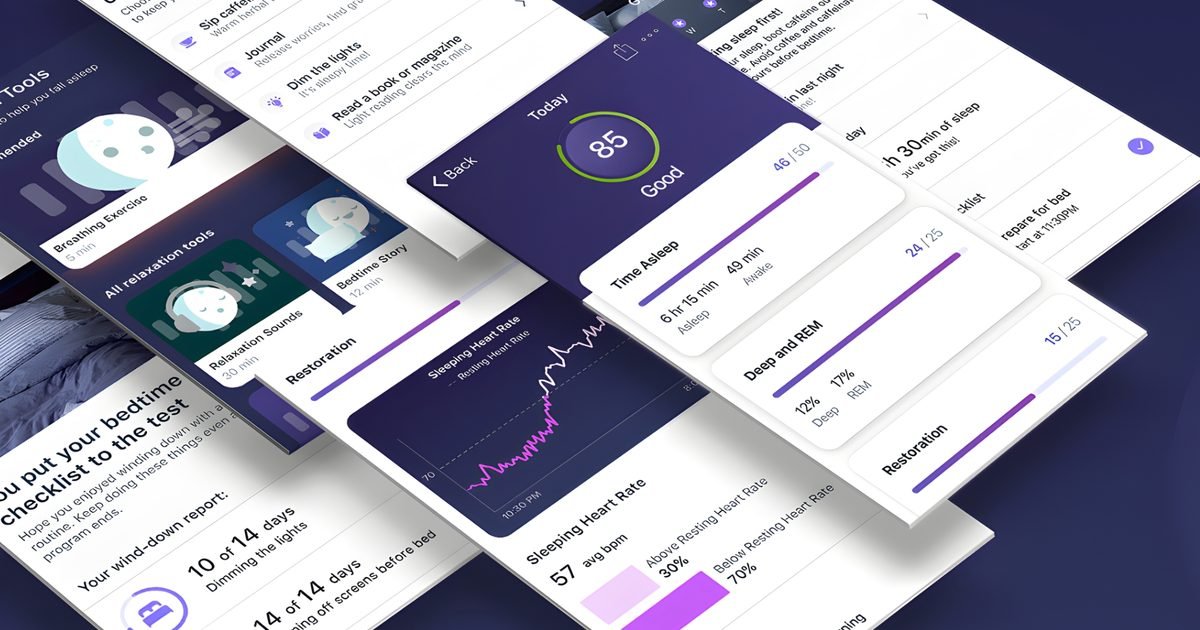
    As for what the Fitbit’s AI assistant offers, it relies on Gemini AI to analyze all your fitness-related data (collected by wearables or your smartphone) and presents it in an easy-to-understand manner, along with actionable insights.

    If that doesn’t sound quite interesting, the AI assistant can also have conversations about your health, help you set personalized fitness goals, provide customized workout recommendations, offer sleep analysis/coaching, and other wellness guidance, along with answering your questions.

    Along with rolling out its health assistant to a wider audience, Google has also redesigned the Fitbit app, which now features the AI coach at its core. The interface includes a refreshed Today tab and dedicated Fitness, Sleep, and Health tabs.

    Beyond aesthetics, the app redesign also improved data visualization, syncing, and overall usability, making it easier to understand your activity, sleep, and wellness habits.

  • Razer’s latest gaming mouse demands quick reflexes and deep pockets

    Razer’s latest gaming mouse demands quick reflexes and deep pockets

    Razer announced plans to revive the world’s first gaming mouse late last year, and now that promise is becoming a reality. The company has opened pre-orders for the Boomslang 20th Anniversary Edition, a limited-run tribute to one of the most influential peripherals in PC gaming history.

    The original Boomslang debuted in 1999, when Razer was still operating as a subsidiary of kärna LLC. At the time, dedicated gaming peripherals were barely a category, so the Boomslang stood out with its distinctive design and high-precision sensor. The 20th Anniversary Edition keeps the iconic look but brings the internals firmly into 2026.

    The updated Boomslang packs the second-gen Razer Focus Pro optical sensor with 45,000 DPI. It has an 8,000Hz polling rate and features Razer’s fourth-gen optical switches that are rated for 100 million clicks. The mouse has eight programmable buttons, and its unique design makes it a solid option for both right- and left-handed users.

    While it looks like a great gaming mouse on paper, the Boomslang 20th Anniversary Edition is aimed more at collectors than the average gamer. That’s because production is limited to just 1,337 units worldwide, and it carries an eye-watering $1,337 price tag.

    What you get for $1,337

    If your pockets are deep enough, that price gets you the mouse, a Razer Mouse Dock Pro, a braided cable, a carrying case, and an LED display frame that showcases the mouse’s components laid out in a grid. Pre-orders went live on Razer’s website yesterday and, despite the steep price, the mouse is already sold out. So if you were planning to drop $1,337 on one, you’ll have to spend your hard-earned money elsewhere.

    For context, $1,337 is more than what you would pay for many flagship phones, including Apple’s latest Pro models. It is also enough to buy a high-end graphics card or build a capable gaming PC from scratch, which would likely make a bigger impact on your gaming experience than a fancy mouse.

  • Thriller at T20 World Cup: South Africa beat Afghanistan after two Super Overs

    Thriller at T20 World Cup: South Africa beat Afghanistan after two Super Overs


    South Africa cricketers celebrate the win over Afghanistan in super over during the T20 World Cup cricket match between Afghanistan and South Africa in Ahmedabad.

    Ahmedabad: South Africa defeated Afghanistan after two Super Overs in a thrilling Group D match of the T20 World Cup here on Wednesday, February 11.

    Sent in to bat, South Africa rode on a 114-run partnership between Quinton de Kock (59) and Ryan Rickelton (61) to post a competitive 187 for 6.

    South Africa’s Marco Jansen drops a catch off Afghanistan’s Azmatullah Omarzai during the T20 World Cup cricket match between Afghanistan and South Africa in Ahmedabad, India, Wednesday, Feb. 11, 2026. AP/PTI(AP02_11_2026_000141B)

    In reply, opener Rahmanullah Gurbaz smashed a 42-ball 84 to lay the foundation, but Afghanistan were bowled out for exactly 187 in 19.4 overs, forcing the match into its first Super Over.

    Cricket player lying on the ground after a match at T20 World Cup, South Africa vs Afghanistan.
    South African cricket player rests on the pitch after a tense match involving Super Overs at the T20 World Cup.

    Afghanistan scored 17 for no loss with Azmatullah Omarzai striking two fours and a six off Lungi Ngidi.

    Afghanistan’s Darwish Rasooli plays a shot during the T20 World Cup cricket match between Afghanistan and South Africa in Ahmedabad, India, Wednesday, Feb. 11, 2026. AP/PTI(AP02_11_2026_000113A)

    South Africa matched the total, with Tristan Stubbs hitting a six off the final ball to take the contest into a second Super Over.

    Batting first in the second Super Over, South Africa scored 23, powered by David Miller’s 16.

    Rahmanullah Gurbaz clobbered three sixes but Afghanistan fell short of the target, scoring 19-2 to hand South Africa a dramatic victory.

    Brief Scores:

    South Africa: 187 for 6 in 20 overs (Quinton de Kock 59, Ryan Rickelton 61; Azmatullah Omarzai 3/41, Rashid Khan 2/28).

    Afghanistan: 187 all out in 19.4 overs (Rahmanullah Gurbaz 84; Lungi Ngidi 3/26).


    Get the latest updates in Hyderabad City News, Technology, Entertainment, Sports, Politics and Top Stories on WhatsApp & Telegram by subscribing to our channels. You can also download our app for Android and iOS.

  • Are your hands ready for a $4,299 Windows gaming handheld? Ayaneo thinks so

    Are your hands ready for a $4,299 Windows gaming handheld? Ayaneo thinks so

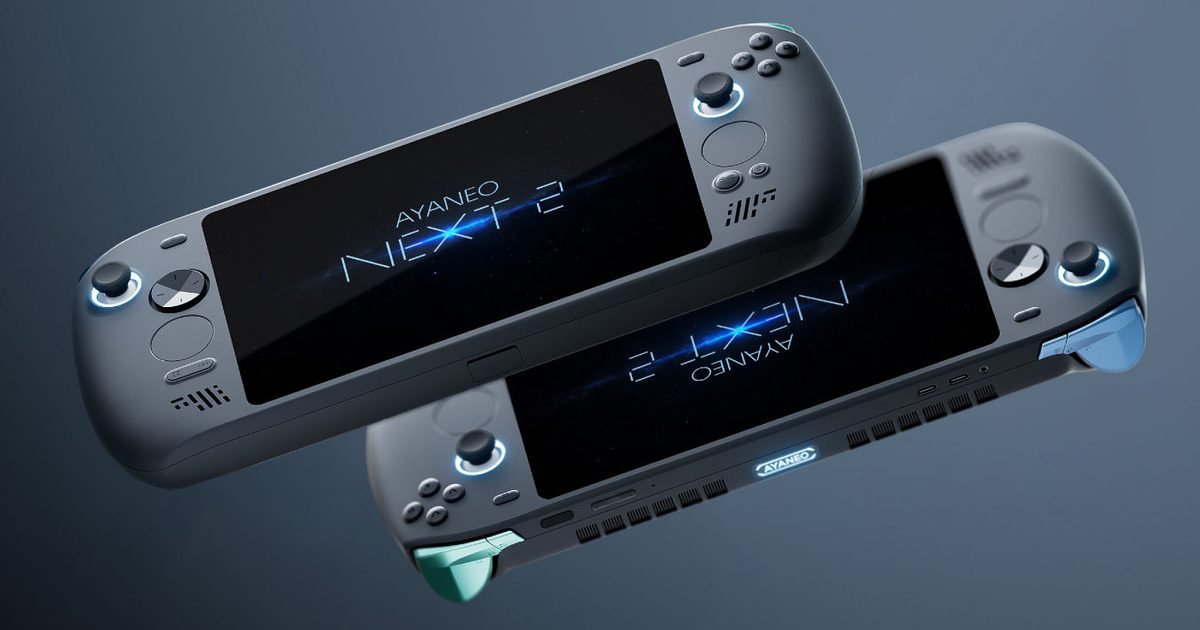
    Ayaneo just opened preorders for the Next 2, a Windows 11 handheld that’s so large and so expensive it stops competing with Steam Deck-style devices and starts flirting with gaming laptops. If your dream handheld is “bigger screen, bigger battery, fewer compromises,” Ayaneo is betting you’ll accept the bulk.

    You’ll feel the trade the moment you pick it up. The Next 2 measures 13.45 inches wide and 10.3 inches tall, and it weighs 3.14 pounds, more than double the original Ayaneo Next from 2022.

    The configurations jump fast

    The gap between “starting” and “spare no expense” is massive. The top config also matches the same Ryzen AI Max+ 395 chip used in the GPD Win 5, so the premium tier is clearly aimed at buyers who want high-end Windows performance without building a full laptop setup.

    Color options are simple, polar black or aurora white, with shipping expected as early as June 2026.

    A screen built to flex

    The front is a 9.06-inch OLED screen with a 2,400 by 1,504 resolution, and an adjustable refresh rate from 60Hz to 165Hz. Ayaneo claims a peak brightness of 1,155 nits, which is in a different league than the Switch 2’s roughly 450-nit LCD panel. That’s the kind of spec that helps in brighter rooms. It also makes the whole device harder to shrink.

    Around the display, Ayaneo packs in TMR joysticks with adjustable torque and ring lighting, Hall effect triggers that can switch to shorter travel for FPS play, dual smart touchpads, and four rear buttons. Up top you get two USB-C ports, a microSD card slot, and a proper headphone jack.

    The battery that changes the deal

    Inside is a 116Wh rechargeable battery, backed by dual fans for cooling. Ayaneo hasn’t shared battery life estimates yet, so it’s still unclear how long AAA games run when you push performance and refresh rate.

    There’s also a real-world catch, 116Wh is above the common 100Wh limit for carry-on devices, so airline approval may be required if you want to fly with it. If you’re shopping the Next 2, treat it like a premium, stay-put Windows handheld, and wait for battery life details before you lock in a config.

    The Ayaneo Next 2 price starts at $1,999 for a Ryzen AI Max 385 model with integrated Radeon 8050S graphics, 32GB of memory, and 1TB of SSD storage. A limited early bird deal drops that entry tier to $1,799. The maxed-out build hits $4,299, or $3,499 with the same discount, and jumps to a Ryzen AI Max+ 395 with a Radeon 8060S iGPU, 128GB of memory, and 2TB of storage.

  • You can steer ChatGPT deep research with your own sites and apps

    You can steer ChatGPT deep research with your own sites and apps

    ChatGPT deep research is getting easier to use when you care about sourcing as much as answers. OpenAI is rolling out tighter controls that let you steer a research run toward specific websites, pull in connected apps as inputs, and read the finished work in a dedicated report viewer.

    The upgrade is really about reducing noise and speeding up review. Instead of casting a wide net, you can keep the run inside a shortlist of domains you already depend on, then blend in app data when it helps. The viewer is meant to make long reports feel less like a scroll and more like a document, with structure and sources surfaced as you read.

    You can narrow the inputs

    The biggest practical change is that ChatGPT deep research can be aimed at a defined set of sites. For work, that matters, because one shaky citation can make the whole report harder to trust. If you’re researching a product, you can keep it close to vendor documentation and standards pages. If you’re tracking policy, you can bias toward official agencies and primary materials.

    OpenAI is also pushing connected apps as part of the input mix, so a run can reflect your internal context alongside web sources. Exactly which apps count as supported sources, and how permissions behave across plans, still isn’t always spelled out clearly.

    The report viewer changes the vibe

    Deep research lives or dies on readability. Generating a long report is the easy part. Checking it is where time disappears. A dedicated viewer with clear sectioning and visible sources makes it more likely you’ll verify key claims instead of skimming and moving on.

    But source controls have real-world limits. Some sites block automated access, some content sits behind paywalls, and some pages change without warning. Those constraints will shape how reliable the experience feels, even with a cleaner interface.

    What to watch next

    If you use ChatGPT deep research for repeatable work, treat this as a workflow upgrade. Build short source lists per topic, run inside those boundaries, then use the viewer to confirm the report stayed within your allowed domains before you share it.

    The smartest move is hands-on testing. Run a real task, spot-check the sources, and only export when the citations hold up.