Category: BUSINESS

  • Telangana Govt makes high security registration plates on vehicles mandatory

    Telangana Govt makes high security registration plates on vehicles mandatory

    Hyderabad: The Telangana government has issued orders on Wednesday, April 9, making it mandatory for vehicle owners to fit High Security Registration Plates (HSRP) on all vehicles manufactured before April 1, 2019.

    Hyderabad Institute of Excellence

    The deadline for affixation of HSRP number plates has been set till September 30, 2025.

    Failing to comply with the order will invite action as per the provisions of the Motor Vehicles Act, 1988, and rules made to book cases against the vehicles which will be found plying without a proper HSRP.

    MS Creative SchoolMS Creative School

    Vehicles plying on the road fitted with imitation HSRP/look-alike plates/smart number plates such as with hologram/IND mark have also been ordered to mandatorily replace their registration plates.

    Process to fit HSRP on vehicles

    Vehicle owners can visit the website of Society of Indian Automobile Manufacturers (SIAM), click on “Book HSRP”, enter vehicle owner’s details, select the vehicle manufacturer, after which they will be redirected to the respective OEM authorised HSRP vendor’s applications for processing of the order.

    On the OEM (vehicle manufacturers/dealers) authorised HSRP vendor’s application, the vehicle owner will be required to provide vehicle details like the vehicle’s registration number, chassis number etc., the details of which will be validated through the Application Programming Interface (API) provided by the transport department.

    The vehicle owner shall book for fitment of HSRP and make payment for the purpose through authorised online portal- www.Siam.in.

    Upon successful validation by the transport department, the vehicle details will be confirmed and the HSRP order will be processed by the vehicle dealer.

    After the installation of HSRP by the respective dealer, the unique laser number of the HSRP plate will be updated back to the transport department.

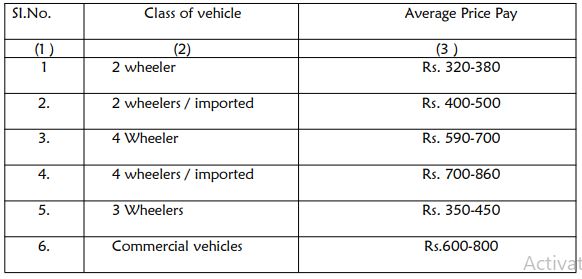
    Charges for HSRP number plates

    The insurance companies have been directed to ensure that the vehicle insurance would not be issued/ renewed without affixation of HSRP number plate on the vehicle. Similar orders have been issued to all the pollution testing centres.

    The traffic police has been directed not to allow vehicles to ply on the roads without affixation of a proper HSRP after September 30, and to book cases on vehicles without HSRP affixed.

    “It is the responsibility of the vehicle owner to get the vehicle fitted with HSRP and hologram based colour sticker,” the government order read.

  • China slaps 84 percent retaliatory tariffs on US, trade tensions escalates

    China slaps 84 percent retaliatory tariffs on US, trade tensions escalates

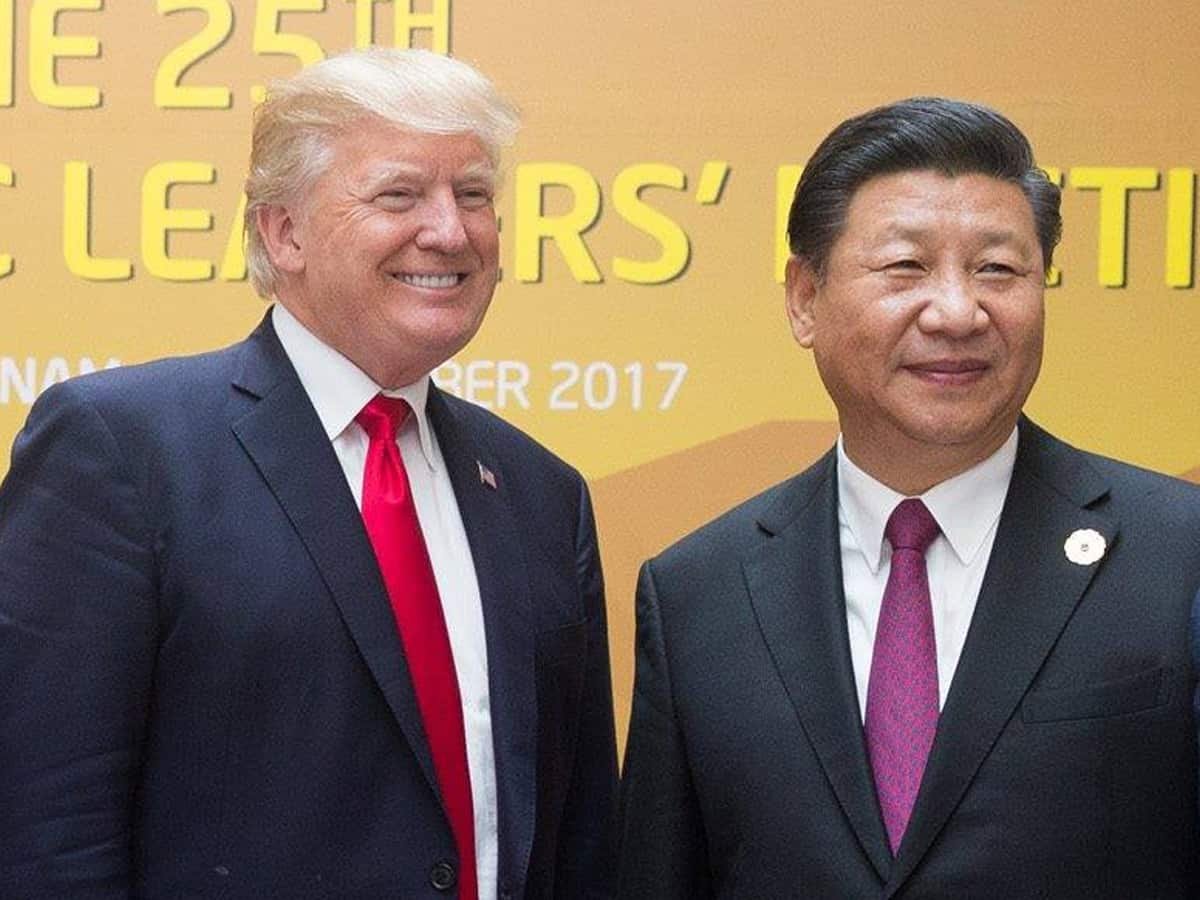
    China has slapped back an 84 percent retaliatory tariff on the United States, the country’s Office of the Tariff Commission of the State Council announced on Wednesday, April 9.

    Hyderabad Institute of ExcellenceHyderabad Institute of Excellence

    The retaliatory tariffs will apply from April 10 on all US goods. The development comes in the wake of the latest US tariff increase on Chinese goods, raising total levies to over 100 percent, effective today.

    Soon after coming to power in January this year, the Trump administration unveiled a sweeping new tariff policy, warning other countries against retaliation. While some nations, like Japan, have shown a willingness to negotiate, China has adopted a more hardline stance.

    MS Creative SchoolMS Creative School

    Following China’s initial response to the April 2 tariff rollout, Trump announced an additional 50 percent hike, raising the total import tax on Chinese goods to 104 percent.”

    (This is a breaking story. More details awaited.)
     

  • Trump’s latest round of tariffs poised to go into effect. Here’s what we know

    Trump’s latest round of tariffs poised to go into effect. Here’s what we know

    New York: President Donald Trump has launched tariff wars with nearly all of America’s trading partners. And there’s no end in sight.

    Hyderabad Institute of Excellence

    A number of sweeping new taxes on goods from other countries are already here — with more set to take effect as soon as Wednesday. Trump has promised higher rates for his latest and most severe volley of duties, which he calls “reciprocal” tariffs.

    With so many back-and-forth tariff actions and threats, it can be tough to keep track of where things stand. Here’s a rundown of what you need to know.

    MS Creative SchoolMS Creative School

    What tariffs go into effect on Wednesday?

    Trump announced his latest — and most sweeping — round of tariffs on April 2, which he dubbed “Liberation Day,” as part of his “reciprocal” trade plan. In a fiery speech claiming that other countries had “ripped off” the US for years, Trump declared that the US would now tax nearly all of America’s trading partners at a minimum of 10% — and impose steeper rates for countries that he says run trade surpluses with the US.

    The 10% baseline already went into effect Saturday. And when the clock strikes midnight Wednesday, Trump’s higher import tax rates on dozens of countries and territories will take hold — that is, unless anything changes in the eleventh hour.

    The steeper levies run as high as 50% — with that biggest rate landing on small economies that trade little with the US, including the African kingdom of Lesotho. Some other rates include a tax of 47% on imports from Madagascar, 46% on Vietnam, 32% on Taiwan, 25% on South Korea, 24% on Japan and 20% on the European Union.

    Economists warn that the levies will raise prices for goods consumers buy each day — particularly as these new tariffs build on some of previous trade measures. Trump last week announced a tariff of 34% on China, for example, which would come on top of 20% levies he imposed on the country earlier this year.

    Trump has since threatened to add an another 50% levy on Chinese goods in response to Beijing’s recently-promised retaliation. That would bring the combined total to 104% against China.

    White House press secretary Karoline Leavitt said at a Tuesday briefing that Trump had not been considering an extension or delay for coming rate increases.

    “He expects that these tariffs are going to go into effect,” she said.

    Are more tariffs coming?

    As part of a flurry of countermeasures, China has said it will levy its own 34% tariff on all US goods — matching Trump’s rate — starting Thursday.

    Trump was quick to criticise China’s move — but China has maintained that it will “fight to the end” and take countermeasures against the U.S. to protect itself. On Tuesday, China’s Commerce Ministry called Trump’s threat to escalate tariffs “a mistake on top of a mistake” that “once again exposes the blackmailing nature of the U.S.”

    The trade war between the U.S. and China isn’t new. The two countries exchanged a series of tit-for-tat levies in recent months — on top of tariffs imposed during Trump’s first term, many of which were preserved or added to under former President Joe Biden.

    While China has taken the toughest approach so far, several countries signalled that they are evaluating their own responses to Trump’s levies.

    It’s possible that we’ll see more retaliation in the future, but others have signalled some hopes to negotiate. The head of the European Union’s executive commission is among those offering a mutual reduction of tariffs — while warning that counter measures are still an option.

    Trump could also roll out more product-specific tariffs down the road. The president has previously threatened import taxes on goods like copper, lumber and pharmaceutical drugs — all of which are currently exempt from Trump’s “reciprocal” levies.

    During a speech Tuesday night, Trump boasted he was offering “breaking news” before vowing, “We’re going to be announcing, very shortly, a major tariff on pharmaceuticals.” In the same remarks, the president lamented that the US no longer produces many of the pharmaceuticals its citizens take, and said new tariffs would change that — bringing production of medication back to the US.

    What other import taxes are already here?

    A handful of tariffs are already in effect, including Trump’s 10% baseline tax on Saturday.

    But prior to that sweeping levy, Trump had rolled out several other rounds of tariffs targeting particular countries and products. His 25% tariffs on auto imports began last Thursday, for example — kicking off with taxes on fully-imported cars. Those levies are set to expand to applicable auto parts in the following weeks, through May 3.

    Canada responded on Tuesday with a 25% levy on auto imports from the US that do not comply with the 2020 US-Mexico Canada Agreement. Those are slated to go into effect on the same day as Trump’s higher tariffs on Wednesday.

    And Trump’s expanded steel and aluminum tariffs went into effect last month. Both metals are now taxed at 25% across the board, with Trump’s order to remove steel exemptions and raise aluminum’s levy from his previously-imposed 2018 import taxes taking effect March 12.

    Beyond levies on China, Trump has also previously targeted Mexico and Canada. While Mexico and Canada were spared from last week’s heightened rates, Trump imposed — and later partially suspended — 25% duties on goods from both countries.

    Meanwhile, goods complying with the USMCA can continue to enter the US duty-free, according to the White House. Other imports are still levied at 25%, as well as a lower 10% duty on potash and Canadian energy products.

    But once the two countries have satisfied Trump’s demands on immigration and drug trafficking, the White House said the tariff on non-USMCA compliant imports will drop from 25% to 12%.


  • RBI to issue new guidelines for gold loans

    RBI to issue new guidelines for gold loans

    Mumbai: RBI Governor Sanjay Malhotra announced on Wednesday that it has been decided to issue comprehensive regulations on prudential norms and conduct-related aspects for gold loans following concerns raised over the issue.

    Hyderabad Institute of Excellence

    The review of guidelines for lending against the collateral of gold jewellery and ornaments are extended by regulated entities (REs) for both consumption and income-generation purposes.

    “Prudential and conduct-related regulations for such loans have been issued from time to time, and they vary for different categories of REs. With a view to harmonizing such regulations across REs while keeping in view their risk-taking capabilities and also to address a few concerns that have been observed, it has been decided to issue comprehensive regulations on prudential norms and conduct-related aspects for such loans,” Malhotra said.

    MS Creative SchoolMS Creative School

    The draft guidelines in this regard are being issued for public comment.

    Shares of Muthoot Finance, IIFL Finance, Manappuram Finance, Cholamandalam Investment and Fin Co fell up to 7 per cent on Wednesday after the announcement.

    The RBI had observed a sharp surge in gold loans across the country, reflecting an increasing dependence on gold as collateral to meet financial needs. According to an RBI report, gold loans saw significant growth in the period ending September 2024 compared to the same period a year earlier.

    However, the central bank also raised concerns over irregular practices observed among certain supervised entities (SEs) involved in gold lending. To address these issues, the RBI issued comprehensive guidelines on September 30, 2024, directing SEs to review their policies, processes, and practices.

    The report identified several gaps, including deficiencies in outsourcing practices, discrepancies in gold valuation, inadequate due diligence, and insufficient monitoring of the end use of loan funds. These measures aim to ensure that the rapid growth in gold loan portfolios remains sustainable and free from malpractice.

    Non-Banking Financial Companies (NBFCs) continue to dominate the gold loan segment, holding a substantial 59.9 per cent share of total gold loans disbursed by both banks and NBFCs as of March 2024. This underscores their critical role in catering to borrowers who rely on gold jewellery and ornaments for securing loans.

  • Rupee plunges 30 paise to 86.56 against US dollar in early trade

    Rupee plunges 30 paise to 86.56 against US dollar in early trade

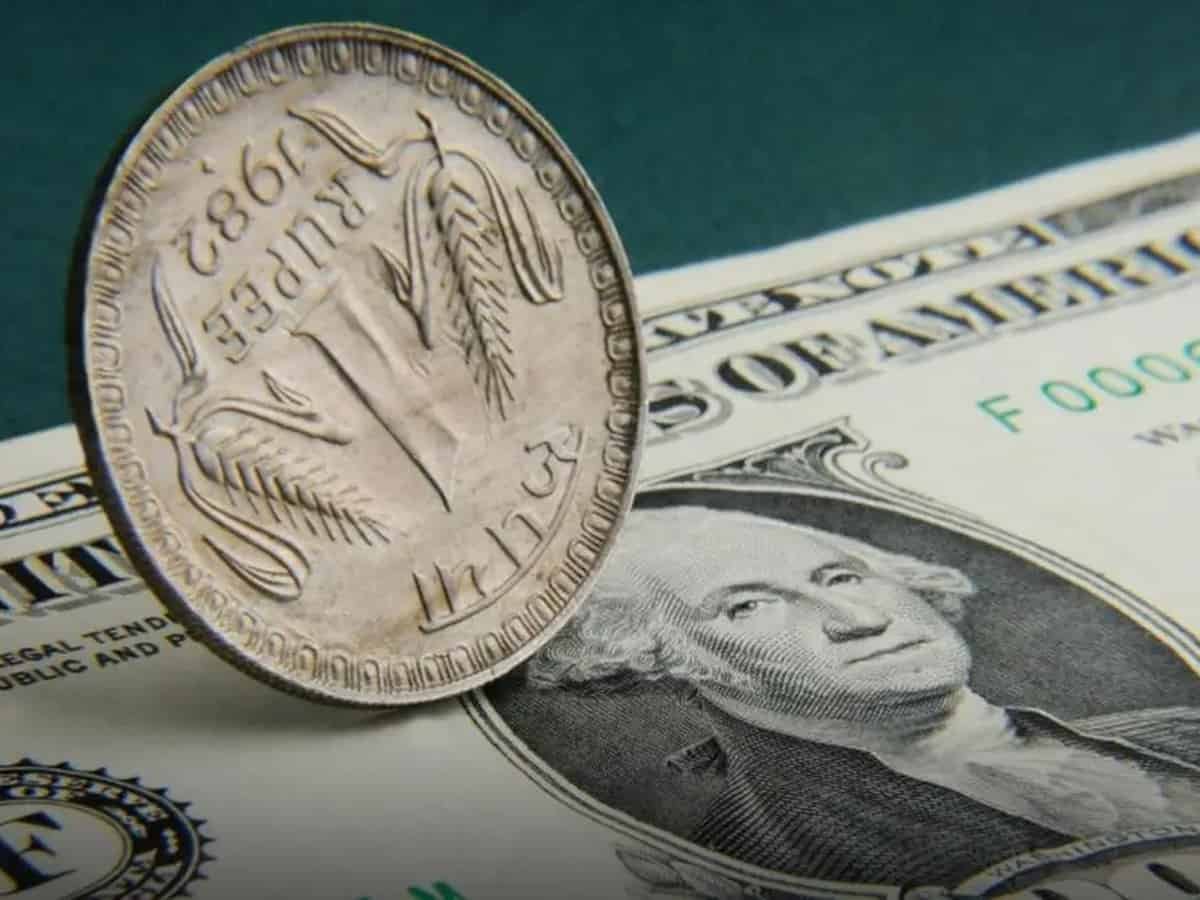
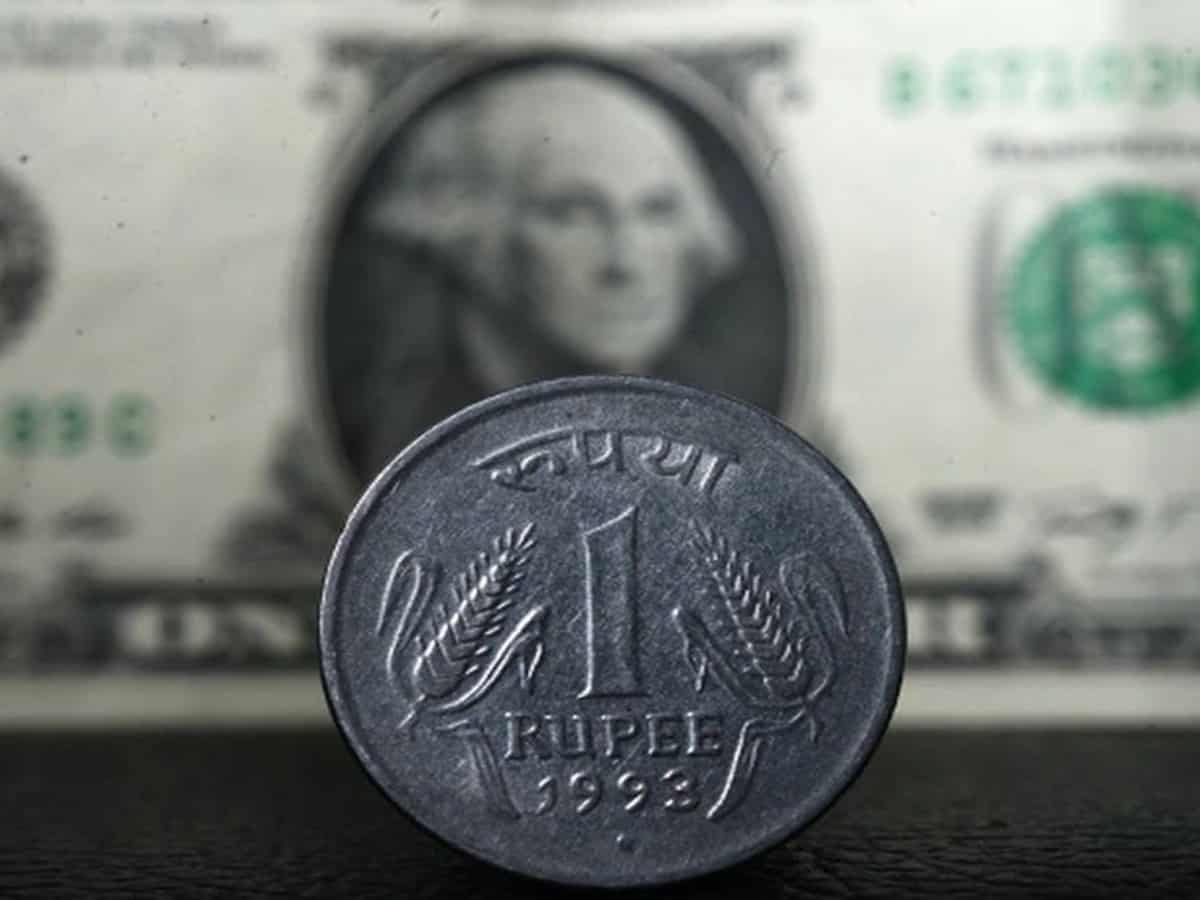
    Mumbai: The rupee lost further ground on the fourth straight session, declining sharply by 30 paise to 86.56 against the US dollar in early trade on Wednesday ahead of the Reserve Bank’s monetary policy decisions.

    Hyderabad Institute of Excellence

    Forex traders said that despite a steep fall in crude oil prices and a weak American currency, the looming worldwide trade war continued to stoke fears of global economic meltdown, fuelling withdrawal of foreign funds with the stock markets remaining shell-shocked.

    At the interbank foreign exchange, the rupee opened at 86.52 and hit the low of 86.60 before strengthening a tad to 86.56 against the greenback in early deals, still sharply lower by 30 paise from the previous closing level.

    MS Creative SchoolMS Creative School

    On Tuesday, the unit crashed 50 paise to settle at 86.26 against the dollar. This was the steepest single-day decline for the rupee since January 13, when it lost 66 paise.

    In the preceding two sessions on Monday and Friday, the rupee lost 32 paise and 14 paise, respectively.

    Meanwhile, the dollar index, which gauges the greenback’s strength against a basket of six currencies, was trading 0.59 per cent lower at 102.09.

    Brent crude, the global oil benchmark, declined 3.63 per cent to its record low level of USD 60.50 per barrel in futures trade.

    On the domestic macroeconomic front, investors are awaiting the Reserve Bank of India’s policy decisions. The RBI’s monetary policy committee, headed by Governor Sanjay Malhotra began its three-day deliberations on key interest rates on Monday and is scheduled to announce the outcome on Wednesday.

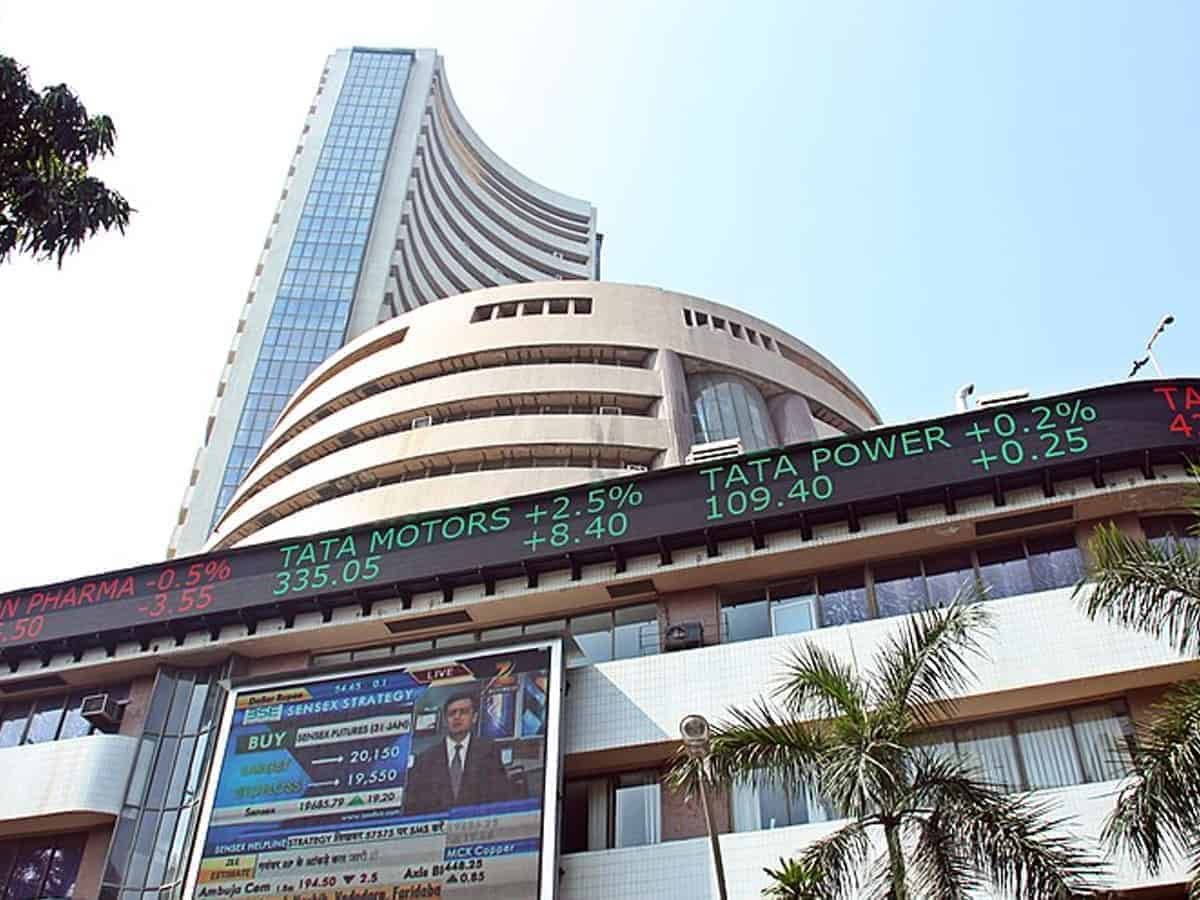
    Stock market benchmarks that rebounded from record low levels in the previous session were again trading lower with the 30-share BSE Sensex falling 433.92 points, or 0.58 per cent, to 73,793.16, while the Nifty quoting 158.60 points, or 0.70 per cent, down at 22,377.25 points.

    On Monday, both the indices crashed over 5 per cent before closing nearly 3 per cent lower.

    Foreign institutional investors (FIIs) offloaded equities worth Rs 4,994.24 crore on a net basis on Tuesday, according to exchange data.

  • Sensex, Nifty open lower ahead of RBI MPC decisions as tariff threats get deeper

    Sensex, Nifty open lower ahead of RBI MPC decisions as tariff threats get deeper

    Mumbai: Indian equity indices opened in the red on Wednesday, following its global peers, as US President Donald Trump threatened reciprocal tariffs on the global pharmaceutical sector.

    Hyderabad Institute of Excellence

    Ahead of the RBI monetary police committee (MPC) decisions — where a 25 bps repo rate cut is likely along with the stance shifting to ‘accommodative’ from ‘neutral’ — Sensex was down 302 points or 0.41 percent at 73,939, and Nifty was down 107 points or 0.48 percent at 22,433, in the early trade.

    Along with largecaps, midcaps and smallcaps also fell. Nifty midcap 100 index was down 436 points or 0.87 percent at 49,402 and Nifty smallcap 100 index was down 150 points or 0.98 percent at 15,238.

    MS Creative SchoolMS Creative School

    On the sectoral front, auto, FMCG, consumption were major gainers. IT, PSU Bank, pharma, metal, realty, infra and commodities were major laggards.

    In the Sensex pack, Power Grid, Nestle, HUL, M&M, ITC, Asian Paints and Bharti Airtel were major gainers. Maruti Suzuki, Bajaj Finserv, Tata Steel, Tech Mahindra, Infosys, HCL Tech, Eternal, TCS, Sun Pharma were major losers.

    Devarsh Vakil, Head of Prime Research at HDFC Securities, said “We expect the markets to remain volatile today as well, as traders navigate the weekly derivative expiry today”.

    “FPI traders purchased index options yesterday ahead of the weekly expiry, indicating their willingness to pay option premium prices while anticipating increased market volatility today,” he mentioned.

    Selling was seen in the major Asian markets. Tokyo, Hong Kong and Seoul were in the red. The US markets closed in the red on Tuesday due to recession fears.

    The US has announced to impose an additional 50 per cent tariff on imports from China in response to the 34 per cent retaliatory tariffs China announced last week.

    The additional 50 per cent duty on imports from China will bring the U.S. tariff rate on Chinese imports to 104 per cent. Trump’s sweeping tariffs have raised fears of recession and upended a global trading order that has been in place for decades.

  • FM Nirmala Sitharaman chairs India-UK Investor Roundtable in London

    FM Nirmala Sitharaman chairs India-UK Investor Roundtable in London

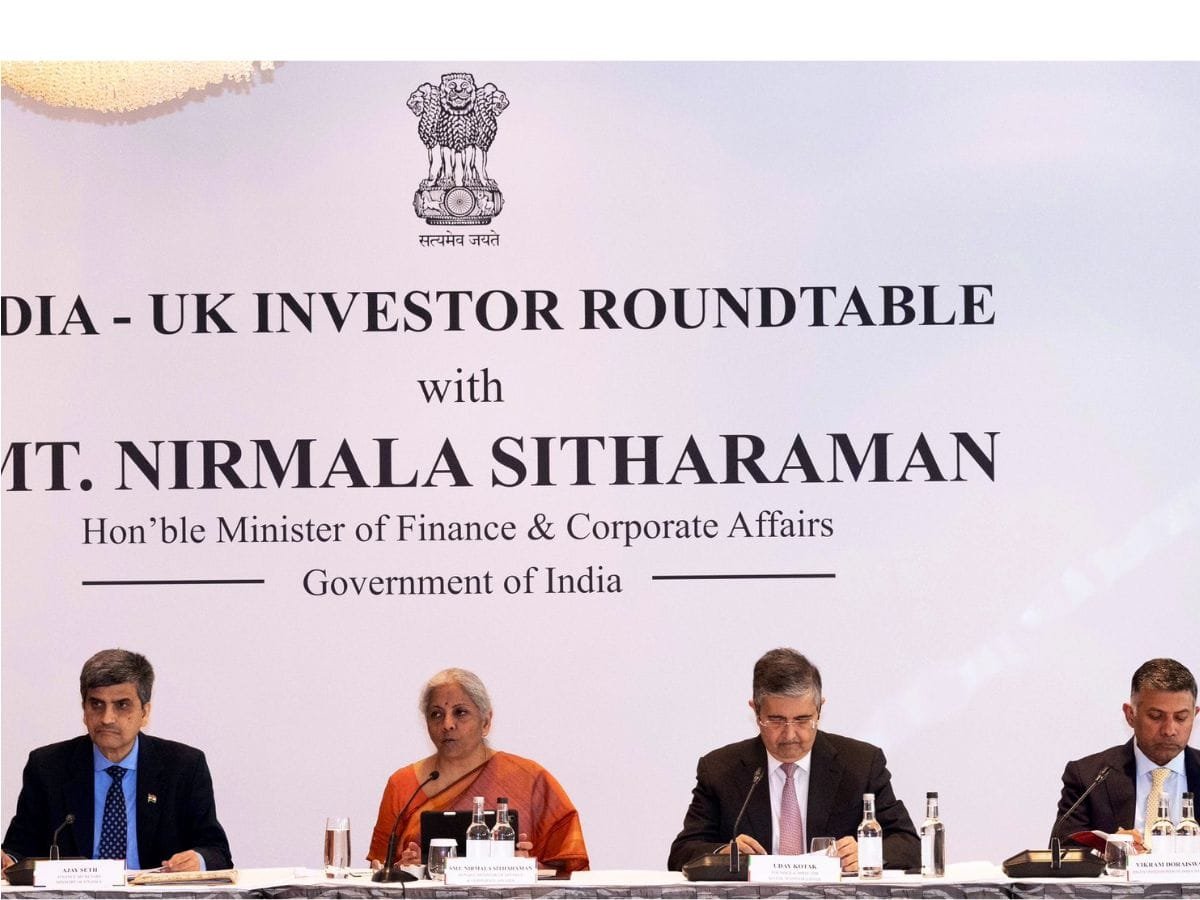
    London: Finance Minister Nirmala Sitharaman has chaired an India-UK Investor Roundtable in London, attracting around 60 UK investors representing various pension funds, insurance companies, banks and other financial institutions.

    Hyderabad Institute of Excellence

    According to the Ministry of Finance, the high-level roundtable on Tuesday evening outlined the priorities of the government for enabling sustained economic growth and investment opportunities, with the policy support that is shaping “New India”.

    It highlighted the efforts being made by the ministry to pursue process and governance reforms to reduce compliance burden and ease regulation for facilitating an enabling environment for business and investments.

    MS Creative SchoolMS Creative School

    “India offers a compelling growth opportunity for foreign banks and the government of India is actively encouraging foreign investment in the banking sector,” Sitharaman told the gathering.

    With an expanding middle class and strong and stable policy environment, the Union Finance Minister said that India is set to become the sixth-largest Insurance market by 2032 with the expected growth at 7.1 per cent CAGR from 2024-2028 — one of the fastest growing insurance markets among G20 countries, the Ministry of Finance readout said.

    Sitharaman also informed the investors that the Indian securities market is among the first major markets to fully adopt the T+1 settlement, as early as 2023, and India’s market capitalisation stands at USD 4.6 trillion, currently ranked fourth globally.

    The T+1 settlement means that trades are settled one business day after the transaction date.

    “The Union Finance Minister spoke at length about India’s maiden International Financial Services Centre GIFT-IFSC — an offshore zone that is endowed with an enabling ecosystem with considerable tax exemptions, skilled manpower, foreign currency transactions, and strategic geographical location,” the ministry noted.

    The gathering was informed that as of March 2025, more than 800 entities across banks, capital markets, insurance, fintech, aircraft leasing, ship leasing, bullion exchange, among others have been registered with the IFSCA.

    Underlining India’s digital economy as a significant contributor to its economic growth, accounting for 11.74 per cent of the GDP in 2022-23, Sitharaman informed the participants that India “stands third globally in terms of the number of homegrown unicorns”.

    She flagged India as home to a strong fintech ecosystem, driven by a large tech-savvy population, supportive government policies, and an innovative startup ecosystem.

    The sector has witnessed a rapid surge in fintechs over the last five years, as is evident from an astounding 87 per cent adoption rate against the global average of 64 per cent and 15 per cent share of global fintech funding.

    “The participants shared their views on the reforms pursued by the government and gave feedback and observation on the existing policy framework. They also spoke about their keen interest and commitment for a deeper and broad-based investment collaboration between the UK and India,” the ministry said.

    Sitharaman, Union Minister of Finance and Corporate Affairs, is on a visit to the UK for the 13th Ministerial India-UK Economic and Financial Dialogue (EFD) on Wednesday when she will be holding bilateral talks with her British counterpart – Chancellor Rachel Reeves.

    “In a changing world, this government is accelerating trade deals with the rest of the world to back British business and provide the security working people deserve,” Reeves said in a statement ahead of the EFD.

    “We are going further, faster to create the best possible conditions for British business by working to reduce barriers to trade. That’s why the Business Secretary [Jonathan Reynolds] and I are today meeting with India’s Finance Minister, Nirmala Sitharaman, as part of our two nations’ Economic and Financial Dialogue as we seek to secure a new trade deal,” she said.

    Reeves said that topics of growth and global issues will be on the agenda for the talks, as well as how to unleash potential across various sectors to create jobs, investment and trade opportunities.

    The ongoing India-UK Free Trade Agreement (FTA) negotiations are expected to be in focus during Sitharaman’s meeting with Reynolds.

  • 1,000 Mudra loans get sanctioned by the time you receive your delivery app order: PM

    1,000 Mudra loans get sanctioned by the time you receive your delivery app order: PM

    New Delhi: Prime Minister Narendra Modi on Tuesday said that by the time a person finishes watching one episode on an OTT platform, the foundation for 5,000 new Pradhan Mantri Mudra Yojana (PMMY) businesses has already been laid, emphasising on the speed at which these loans are being approved.

    Hyderabad Institute of Excellence

    According to Prime Minister, instant delivery apps are in demand these days and by the time “you receive your order, 1,000 Mudra loans get sanctioned”.

    The Mudra scheme not only empowered those who couldn’t get loans due to lack of collateral but also gave the country’s youth a new path to pursue their dreams, said PM Modi during a media event here.

    MS Creative SchoolMS Creative School

    “In the last 10 years, more than 52 crore loans have been disbursed without any guarantee under the Mudra Yojana,” said PM Modi while addressing the ‘News18 Rising Bharat Summit’ in the national capital.

    “It’s not just the scale, but also the speed that’s unprecedented — by the time a traffic light turns from red to green, 100 Mudra loans get approved. 200 Mudra loans are approved by the time you finish brushing your teeth. About 400 Mudra loans are sanctioned by the time you listen your favourite song on radio,” the prime minister said.

    Because of Mudra scheme, more than 11 crore people got self-employment opportunity. “These 11 crore people have become first-time entrepreneurs, which means 11 crore dreams have taken flight in 10 years,” said the Prime Minister.

    The PMMY, launched on April 8, 2015, by PM Modi, is celebrating 10 glorious years of empowering small and micro-entrepreneurs across India. Aimed at fostering financial inclusion, PMMY provides easy, collateral-free loans up to Rs 10 lakh for non-corporate and non-farm income-generating activities.

    With over Rs 33.65 lakh crore sanctioned to more than 52 crore Mudra loan accounts, the scheme has proved to be an important milestone in giving wings to the aspirations of crores of entrepreneurs, particularly those belonging to marginalised sections of society.

    The scheme has provided crucial financial assistance to a vast number of entrepreneurs, helping them set up and operate their businesses and instilling a sense of financial security in them.

  • Slot booking in 22 Telangana sub-registrar offices to begin on April 10

    Slot booking in 22 Telangana sub-registrar offices to begin on April 10

    Hyderabad: In a bid to reduce the time taken for land registrations, the Telangana government will introduce a slot booking system as a pilot project in 22 sub-registrar offices across the state starting April 10.

    Hyderabad Institute of ExcellenceHyderabad Institute of Excellence

    Announcing the initiative on Tuesday, April 8, Telangana revenue minister Ponguleti Srinivasa Reddy stated that the new system will cut registration time from around 45 minutes to just 10-15 minutes.

    The slot booking facility will be available at the following sub-registrar offices:

    MS Creative SchoolMS Creative School
    • Hyderabad district: Aampur and Chikkadpally
    • Sangareddy district: Sadasivpet
    • Medchal-Malkajgiri district: Quthbullapur and Vallabhnagar
    • Rangareddy district: Shamshabad, Saroornagar and Champapet
    • Peddapalli district: Ramagundam
    • Khammam district: Kusumanchi and Khammam
    • Others: Mahabubnagar, Jagtial, Nirmal, Warangal, Warangal Rural, Kothagudem, Armoor, Bhuvanagiri and Choutuppal

  • Rupee volatility to have low impact on credit profiles of Indian firms: Report

    Rupee volatility to have low impact on credit profiles of Indian firms: Report

    Mumbai: Despite recent volatility in the Indian rupee against the US dollar, the overall credit profiles of Indian companies are expected to remain stable, a report said on Tuesday.

    Hyderabad Institute of Excellence

    While some sectors may see temporary pressure on earnings, the impact is not likely to affect the medium-term financial strength of businesses, according to the report by Crisil Ratings.

    The report notes that while a weaker rupee can increase input costs for some sectors due to higher import expenses, companies are well-placed to manage the shift through various mechanisms such as subsidies, pricing strategies, and hedging practices.

    MS Creative SchoolMS Creative School

    Additionally, several exporting sectors are likely to benefit from the rupee depreciation, which could support their earnings in the near term.

    Sectors like information technology (IT), home textiles, and marine foods stand to gain as they earn a significant portion of their revenues from exports while their import exposure is minimal.

    This could improve their profitability, depending on how much of the gain is passed on to customers.

    Even in sectors like complex fertilisers, oil and gas, and airlines, where there is significant exposure to imported inputs or foreign currency obligations, Crisil notes that supportive policies and hedging strategies help cushion the impact.

    For instance, fertiliser manufacturers receive subsidies from the government, while over half of the lease obligations of airlines are hedged, said the report.

    Moreover, current global crude oil prices remain favourable, offering additional support to the oil and gas sector.

    Capital goods, pharmaceuticals, and renewable energy companies are also expected to adjust well, with some segments even benefiting due to their export orientation.

    Meanwhile, sectors like chemicals, ceramics, gems and jewellery, city gas distribution, edible oils, and steel are expected to see minimal impact as they either maintain a natural hedge through balanced import-export exposure or have strong pricing power.

    The report emphasised that while short-term earnings may fluctuate, companies are expected to adapt to the evolving currency scenario.

    “The overall credit impact is likely to be neutral as it will get neutralised over the medium term once businesses adapt to the new currency levels,” the report said.