New Delhi: E-commerce firm Meesho has allotted nearly 94.8 lakh equity shares to its eligible employees under the company’s employee stock ownership plan.
“We wish to inform you that the Nomination and Remuneration Committee of the Board of Directors of Meesho Ltd, by way of a circular resolution passed on April 20, 2026, has approved the allotment of 94,79,380 equity shares of face value of Re 1 each to the eligible employees, upon exercise of vested options under the company’s Employee Stock Ownership Plan (ESOP) 2024 Plan. The said equity shares shall rank pari-passu with existing equity shares of the company in all respects,” Meesho said in a regulatory filing.
Following this allotment, the issued, subscribed, and paid-up equity share capital of the Bengaluru-headquartered company has increased from Rs 456,40,55,196 to Rs 4,57,35,34,576.
Mumbai: India’s white-collar job market recorded a 12 per cent year-on-year growth in February, amid increasing AI adoptions and a recovery in the IT sector, a report said on Tuesday, march 3.
White-collar job market posted its strongest February performance in recent years, with the Naukri JobSpeak Index reaching 3,233 points – up 12 per cent from 2,890 points in February 2025.
The month-on-month acceleration from January to February came in at 23 per cent, noticeably sharper than the 13-16 per cent range typically seen between the two months, the report based on Naukri JobSpeak Index added.
The IT sector posted over 6 per cent year-on-year growth in hiring in February 2026.
Freshers’ hiring in the sector also grew by a healthy 8 per cent.
India-based multi-national IT companies were the primary driver, recording a 55 per cent hiring surge, the report said.
Within the IT sector, it said that AI/ML (artificial intelligence/machine learning) hiring rose 40 per cent, reinforcing that February performance was concentrated in highest-skill, highest-value talent segments.
The Naukri JobSpeak is a monthly index that tracks trends in India’s job market and hiring activity, based on new job postings and recruiter searches on Naukri.com’s resume database.
The report further said that freshers’ hiring grew 17 per cent annually, while the demand for roles in the Rs 20 lakh-per-annum band rose 23 per cent, reflecting strength across both entry-level and high-value talent segments.
Meanwhile, non-IT sectors continued to anchor the hiring momentum, with insurance leading at 28 per cent, followed by BPO/ITES (22 per cent), real estate (19 per cent), hospitality/travel (15 per cent) and retail (14 per cent).
In February 2026, Indian MNCs expanded hiring by 24 per cent.
In the IT sector, AI/ML roles sustained their strong trajectory, rising 49 per cent year-on-year.
Indian MNCs grew their AI/ML hiring by 82 per cent, compared to 43 per cent for foreign MNCs, the report said, highlighting that domestic enterprises are placing their biggest bets in the adoption of the new technology.
IT hiring is recovering meaningfully, and Indian MNCs are investing in AI talent at a healthy pace. The underlying momentum heading into the new fiscal year looks genuinely solid, said Naukri Chief Business Officer Pawan Goyal.
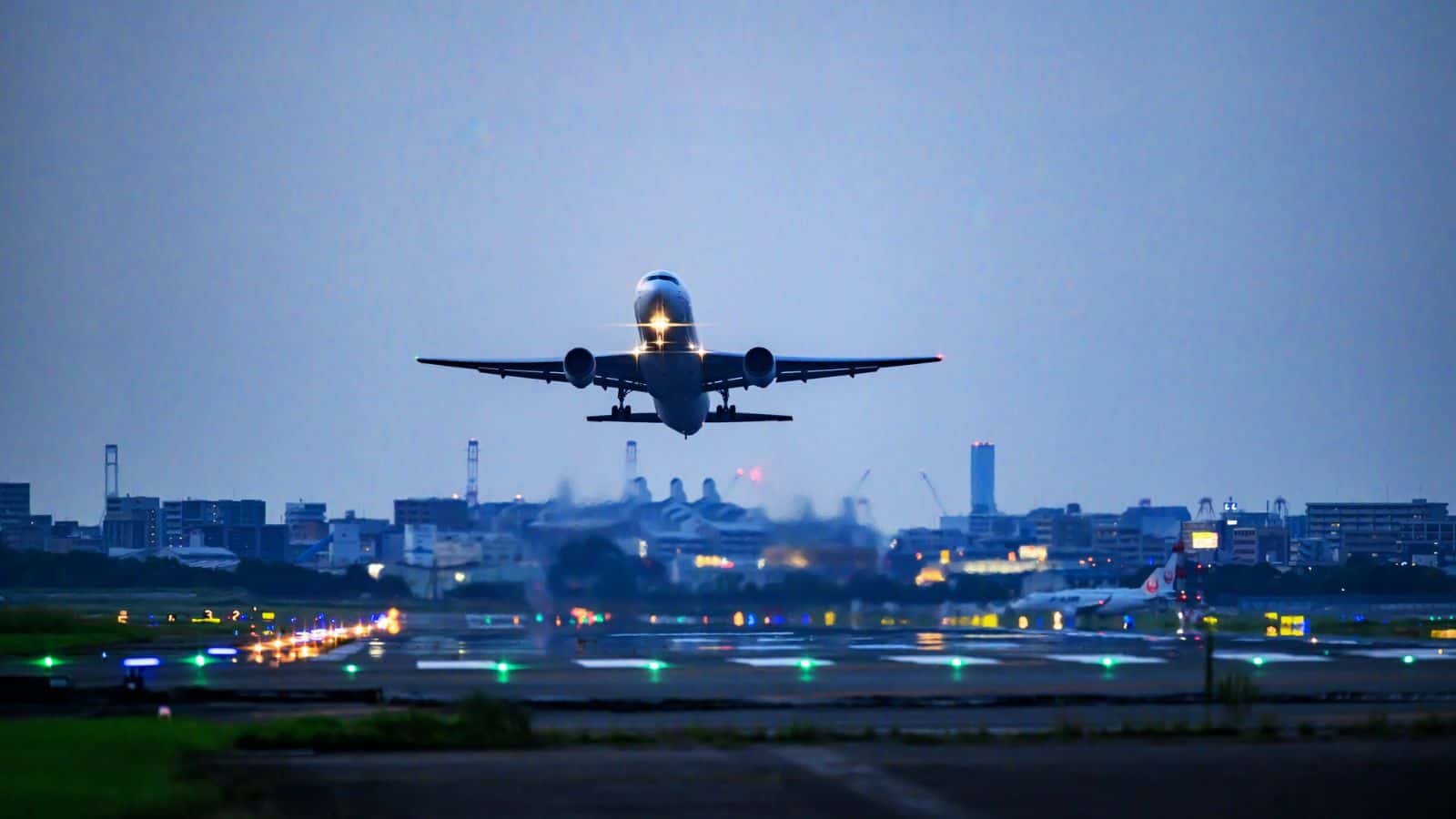
New Delhi/ Mumbai: State-owned Airports Authority of India (AAI) has asked all international airport operators in the country to provide details about available fuel stocks as well as estimated requirements for the next seven days amid the escalating Middle East crisis, sources said on Tuesday, February 3.
The communication comes against the backdrop of the escalating conflict in the Middle East involving the US, Israel and Iran that threatens to impact global oil supplies.
One of the sources said the details have been sought as a “precautionary measure” to have a clear understanding about the fuel supply situation at the international airports.
The sources told PTI that following directions from the civil aviation ministry, AAI has sought details about the current fuel supply status from all the international airport operators.
The operators have also been asked to provide details about average daily fuel consumption, estimated fuel requirement for the next seven days and date of next scheduled fuel replenishment, the sources said.
India has 33 international airports, including at Delhi, Mumbai, Bangalore, Hyderabad and Chennai.
In terms of international flight operations, there were 355 departures and 344 arrivals at the airports in the country on March 2, as per the data available with the ministry.
According to reports, many ships have come under attack in the Strait of Hormuz, a key conduit for global energy flows.
Around one-third of the world’s seaborne crude oil exports and about 20 per cent of liquefied natural gas shipments transit through the Strait of Hormuz. It is located between Oman and Iran and connects the Persian Gulf with the Gulf of Oman and the Arabian Sea.
Mumbai: Rupee slumped 69 paise to an all-time low of 92.18 against the US dollar in early trade on Wednesday, March 4, as a sharp spike in crude oil prices amid geopolitical tensions following the escalation of the US–Iran conflict weighed on investor sentiment.
Forex traders said the domestic currency is under severe pressure due to a sharp spike in crude oil prices, with Brent Crude crossing the USD 82 per barrel level in futures trade in the wake of the Iran crisis, which dented investor sentiments.
At the interbank foreign exchange market, the rupee opened at 92.05, then fell to an early low of 92.18 against the American currency, registering a fall of 69 paise from its previous close.
On Monday, the rupee had settled at 91.49 against the US dollar.
The forex Market was closed on Tuesday on account of Holi.
Traders said the USD/INR pair remains under pressure as investors are moving toward safe-haven assets. Moreover, persistent foreign capital outflow from the equities, and fears grow that expensive imports will hurt the trade balance.
Meanwhile, the dollar index, which gauges the greenback’s strength against a basket of six currencies, was trading 0.03 per cent higher at 99.08.
Brent crude, the global oil benchmark, was up 1.01 per cent at USD 82.22 per barrel in futures trade, following the escalation of the US-Iran crisis.
Experts say that India faces the risk of a sharp increase in its import bill with the rising crude prices in the international market, as the country’s 85 per cent fuel requirement is met through imports.
On the domestic equity market front, the Sensex tumbled 1,671.39 points or 2.08 per cent to 78,567.46, while Nifty tanked 502.35 points or 2.02 per cent to 24,363. 35 in early trade.
On Monday, foreign institutional investors offloaded equities worth Rs 3,295.64 crore, according to exchange data.
Bangkok: Asian shares fell further on Wednesday, March 4, after the global sell-off for stocks hit Wall Street, with South Korea’s benchmark plunging 8 per cent, while oil prices climbed even higher.
Worries over the widening war with Iran have hammered most world markets. Higher oil prices and how much they might worsen inflation are among the central fears for investors. More spikes for oil prices may grind down the global economy and sap corporate profits.
South Korea‘s Kospi led regional losses, tumbling 8.1 per cent to 5,321.38, causing trading to be suspended, as energy security concerns vanquished optimism over the boost big tech companies like Samsung Electronics and SK Hynix are getting from expanding use of artificial intelligence.
In Tokyo, the Nikkei 225 shed 3.4 per cent to 54,346.73. Japan, like South Korea, depends heavily on imports of oil and natural gas from the Middle East that are now stranded in the Persian Gulf.
Elsewhere in Asia, the Hang Seng in Hong Kong fell 1.4 per cent to 25,408.27 and the Shanghai Composite index was down 0.5 per cent at 4,100.46.
In Australia, the S&P/ASX 200 declined 1.8 per cent to 9,130.90.
Taiwan’s Taiex lost 2.9 per cent.
On Tuesday, the S&P 500 finished with a loss of 0.9 per cent after dropping as much as 2.5 per cent on concerns over the war’s damage to the economy. The Dow Jones Industrial Average pared its loss to 0.8 per cent, and the Nasdaq composite fell 1 per cent.
Higher inflation partly due to the war could tie the Federal Reserve’s hands and keep it from cutting interest rates. The Fed lowered rates several times last year and indicated more cuts were to come in 2026. That would help boost the economy and job market, but lower rates can also worsen inflation.
The price of US benchmark crude oil climbed 1.2 per cent to USD 75.46 per barrel. Brent crude, the international standard, gained 1.5 per cent to USD 82.61 per barrel.
The dollar was nearly unchanged at 157.55 Japanese yen. The euro slipped to USD 1.1599 from USD 1.600.
New Delhi: Shares of gas importer Petronet LNG Ltd on Wednesday, March 4, dived nearly 12 per cent amid reports that Qatar, India’s largest supplier of imported natural gas, has declared force majeure on deliveries following a halt in production in the wake of an Iranian drone strike.
The stock tanked 11.69 per cent to Rs 273 on the BSE.
At the NSE, it tumbled 11.95 per cent to Rs 271.75.
Qatar has declared force majeure on deliveries following a halt in production in the wake of an Iranian drone strike — a disruption that has led to a cut in supplies to Indian industry by up to 40 per cent, sources said.
Qatar supplies about 40 per cent of the nearly 27 million tonnes of liquefied natural gas (LNG) that India imports annually to meet demand across sectors ranging from power generation and fertiliser production to CNG distribution and piped cooking gas networks.
Petronet LNG Ltd has informed gas marketers of Qatar halting its liquefied natural gas production after Iran continued to strike Gulf countries in retaliation for Israeli and US strikes against it, they said.
Shares of Mahanagar Gas tanked 8.50 per cent, Indraprastha Gas dropped 5 per cent, and Gujarat Gas declined 4 per cent on the BSE.
The attacks have also effectively brought oil and LNG shipments through the Strait of Hormuz to a near halt, driving up global energy prices as well as sharply raising war-risk insurance and shipping costs.
Iran controls the Strait — a vital maritime chokepoint through which roughly 50 per cent of India’s crude oil imports and around 54 per cent of its LNG supplies transit. It is the transit for not just LNG from Qatar but also from the UAE.
Sources said Petronet has informed its gas offtakers — GAIL (India) Ltd and Indian Oil Corporation (IOC), about a halt in supplies from Qatar. The gas marketers have, in turn, cut supplies to industries while maintaining flow rates for CNG retailing.
The cuts range from 10 per cent to 40 per cent, they said.
Petronet has long term contract to buy 8.5 million tonnes per annum of LNG from Qatar. Additionally, it buys Qatari LNG from the spot market as well. Besides Petronet, companies such as IOC have LNG import contracts with the UAE.
Mumbai: The rupee slumped 67 paise to close at an all-time low of 92.16 against US dollar on Wednesday, March 4, weighed down by spiking crude oil prices in the wake of the Iran crisis.
Forex traders said the dollar index crossed 98 levels on the risk-off situation prevailing all around the globe amid the US-Iran crisis, further pressurising the rupee.
Moreover, massive selling in domestic equity markets and withdrawal of foreign funds further dragged the Indian currency down, they said.
At the interbank foreign exchange, the rupee opened at 92.05 and touched an all-time intraday low of 92.35 against the greenback. The currency ended the session at an all-time low of 92.16 (provisional) against the dollar, registering a steep loss of 67 paise from the previous closing level.
On Monday, March 2, the rupee saw a steep loss of 41 paise to settle at 91.49 against the US dollar. The forex Market was closed on Tuesday on account of Holi.
“A sharp escalation in Middle East conflict and the consequent spike in oil prices have reduced investor risk appetite. Higher oil prices increase inflation concerns and fiscal pressure on India (a major oil importer), leading to selling in bonds and rising yields,” Anil Kumar Bhansali, head of treasury and executive director, Finrex Treasury Advisors LLP, said.
Meanwhile, the dollar index, which gauges the greenback’s strength against a basket of six currencies, was trading 0.23 per cent lower at 98.82.
“The dollar index crossed 98 levels comfortably on the risk-off situation prevailing all around the globe with stocks and bond markets getting hit badly, along with gold and silver, with predominance of the dollar, Bhansali said.
Brent crude, the global oil benchmark, was up 1.29 per cent at 82.46 per barrel in futures trade, after the US attacks on Iran and Iran’s retaliatory measures as threats to energy flows through the Strait of Hormuz continued to underpin disruption worries.
On the domestic equity market front, the Sensex tanked 1,122.66 points to settle at 79,116.19, while the Nifty dived 385.20 points to 24,480.50.
On Monday, foreign institutional investors offloaded equities worth Rs 3,295.64 crore, according to exchange data.
Mumbai: Benchmark stock indices Sensex and Nifty closed more than 1 per cent lower on Wednesday, March 4, in tandem with a weak trend in Asian markets as the conflict in West Asia intensified, driving oil prices higher.
Falling for the fourth straight session, the 30-share BSE Sensex tumbled 1,122.66 points or 1.40 per cent to settle at 79,116.19. During the day, it crashed 1,795.65 points or 2.23 per cent to 78,443.20 but recovered some of the losses in the second half of the session.
The 50-share NSE Nifty dived 385.20 points or 1.55 per cent to end at 24,480.50, marking its third straight session of losses and logging the lowest closing level in the past six months. During the day, it dropped 560.3 points or 2.25 per cent to 24,305.40.
From the Sensex pack, Tata Steel tanked 6.76 per cent, followed by Larsen & Toubro (4.53 per cent). Bajaj Finance, UltraTech Cement, NTPC, InterGlobe Aviation, Bajaj Finserv and Kotak Mahindra Bank were also among the laggards.
Bharti Airtel, Infosys and Tech Mahindra were the gainers.
Brent crude, the global oil benchmark, jumped 3.08 per cent to USD 83.91 per barrel.
“Global risk sentiment remained fragile amid ongoing tensions in the Middle East and the closure of the Strait of Hormuz, which kept oil prices volatile. Indian equities mirrored the broader risk‑off environment due to the impact of inflation and the potential for higher CAD.
“The continued depreciation of the INR also remains a key concern, while incremental foreign outflows lead to near-term volatility in the market,” Vinod Nair, Head of Research, Geojit Investments Limited, said.
The rupee slumped to an all-time low of 92.35 against US dollar on Wednesday, weighed down by spiking crude oil prices.
The BSE smallcap select index tumbled 2.42 per cent and midcap select index dropped 2.10 per cent.
Among sectoral indices, metal plunged 4 per cent, BSE PSU Bank (3.50 per cent), industrials (3.29 per cent), realty (3.16 per cent), commodities (3.12 per cent), capital goods (2.64 per cent), power (2.59 per cent), services (2.25 per cent) and energy (2.23 per cent).
A total of 3,245 stocks declined, while 1,053 advanced and 135 remained unchanged on the BSE.
Asian markets ended with deep cuts. South Korea’s Kospi tumbled 12 per cent. Japan’s Nikkei 225, Shanghai’s SSE Composite index and Hong Kong’s Hang Seng index also ended significantly lower.
European markets were trading in positive territory. The US market ended in negative territory on Tuesday, March 3.
The conflict in West Asia intensified with Iran continuing to pound several Gulf countries in retaliation for the joint attack against it by Israel and the US. The US and Israel have also carried out fresh strikes on Iran.
Foreign Institutional Investors (FIIs) offloaded equities worth Rs 3,295.64 crore on Monday, according to exchange data. Domestic Institutional Investors (DIIs), however, bought stocks worth Rs 8,593.87 crore.
Equity markets were closed on Tuesday for Holi.
On Monday, the Sensex ended at 80,238.85, down 1,048.34 points or 1.29 per cent. The Nifty settled 312.95 points or 1.24 per cent down at 24,865.70.
Apple has a habit of making things expensive. The MacBook Neo, unveiled on Wednesday, March 4, is a deliberate step in the opposite direction. And, it might be the most interesting Mac the company has launched in years.
Starting at Rs 69,900, it is the cheapest MacBook Apple has ever made. For a market like India, where price has long been the single biggest barrier to switching to a Mac, that matters.
No corners cut
But, Apple has not cut corners in the usual ways. The Neo gets the A18 Pro that powers the iPhone 16 Pro, the most powerful chip Apple has put into a laptop at this price, and not a watered-down processor developed for a budget product. That means it is up to 50 per cent faster at everyday tasks than the best-selling Intel Core Ultra 5 Windows laptop, the company said in a statement. It also runs completely silent, with no fan.
The 13-inch Liquid Retina display runs at 2408×1506 resolution with 500 nits of brightness, making it sharper and brighter than most Windows laptops at this price point. Battery life is rated at 16 hours, which in real-world terms means you will almost certainly get through a full day without reaching for a charger.
There are four colours – blush, indigo, silver and a new citrus. It weighs just over 1.2 kg. Speakers support Spatial Audio and Dolby Atmos.
Smart, green and ready to go
On the software side, the Neo ships with macOS Tahoe and full Apple Intelligence support, including Writing Tools and Live Translation.
Apple is also pitching the Neo as its greenest laptop yet, with 60 per cent recycled content, 90 per cent recycled aluminium and 100 per cent recycled cobalt in the battery.
Pre-orders have already opened, with the MacBook Neo hitting shelves on March 11.
For first-time Mac buyers, or anyone who has looked at MacBook prices and quietly closed the tab, this one is worth a proper look.
Beijing: China on Thursday, March 5, lowered its GDP target to 4.5 to 5 per cent for this year in the face of Trump’s trade tariff war, the worsening global crisis following the US-Iran war and headwinds in the domestic economy, owing to property market slump and unemployment crisis.
The target close to that of last year was announced by Chinese Premier Li Qiang in his work report presented to the annual National People’s Congress (NPC), the country’s parliament, which opened here on Thursday.
China has been setting a five per cent target for the GDP for the last three years amid growing domestic economic challenges. This year, the target is lowered to 4.5 per cent to 5 for the first time.
China’s economy grew by 5 per cent last year to USD 20.01 trillion, riding high on the robust exports despite US tariffs, while domestic consumption, its bugbear, remained sluggish.
Thursday’s opening session is being attended by President Xi Jinping and over 2,000 deputies.
Presenting his work report, an annual feature, Li said the government targets an economic growth of 4.5 per cent to 5 per cent this year and will strive for better in practice.
Main targets for development this year also include: a surveyed urban unemployment rate of around 5.5 per cent, creation of over 12 million new urban jobs and an increase in consumer price index of around 2 per cent.
Li also spoke of growth in personal income in step with economic growth, basic equilibrium in the balance of payments, stable grain output of around 700 million tonnes and a drop of around 3.8 per cent in carbon dioxide emissions per unit of gross domestic product.
On the domestic demand, which remained stagnant for years, making China dependent more on its exports for its GDP growth, Li said China will actively boost consumption and implement an income growth plan for urban and rural residents.
The country will advance special initiatives to bolster consumption, with the roll-out of a range of practical measures to boost the earnings of low-income groups, increase property income, and refine the remuneration and social security systems in 2026.
A total of 250 billion yuan (USD 36.17 billion) in ultra-long special treasury bonds will be earmarked for consumer goods trade-in programmes, and a special fiscal-financial coordination fund of 100 billion yuan will be created to facilitate domestic demand expansion, he said.
China on Wednesday commenced its annual parliament season amid international turmoil over the US-Iran war, massive military purges carried out by Xi and ambitious plans to develop new productive forces like AI to revitalise the slowing-down economy.
Xi, 72, who is into his unprecedented third term in office, with little indication of any organised political challenge from within the ruling Communist Party and the powerful military, on Wednesday attended the opening session of the national advisory body of the Chinese People’s Political Consultative Conference (CPPCC), comprising over 2,500 civil society, party and military officials.
He also attended the NPC opening session on Thursday, flanked by the top leadership of the ruling Communist Party of China (CPC).
The two sessions marked the beginning of a fortnight-long China’s annual political season during which the leadership appears in public and takes part in internal debates.
Xi’s presence was regarded as significant as he appeared for the first time along with party officials of all ranks besides PLA members and sat through the proceedings after the recent massive purges of the Chinese military.