Category: BUSINESS

  • Elon Musk says he hopes for zero tariffs with Europe someday

    Elon Musk says he hopes for zero tariffs with Europe someday

    Washington: Billionaire Elon Musk told Italy League leader Matteo Salvini on Saturday that he hoped in the future the US and Europe could create “a very close, stronger partnership” and reach a “zero-tariff zone.”

    Hyderabad Institute of Excellence

    Musk spoke to Salvini in a video conference during the League’s congress in Florence. Salvini is the leader of the far-right, anti-migrant League party and vice premier of the Italian conservative government led by Premier Giorgia Meloni.

    He said that, ideally, there will be a “zero-tariff zone in the future with a free trade zone between Europe and North America.”

    MS Creative SchoolMS Creative School

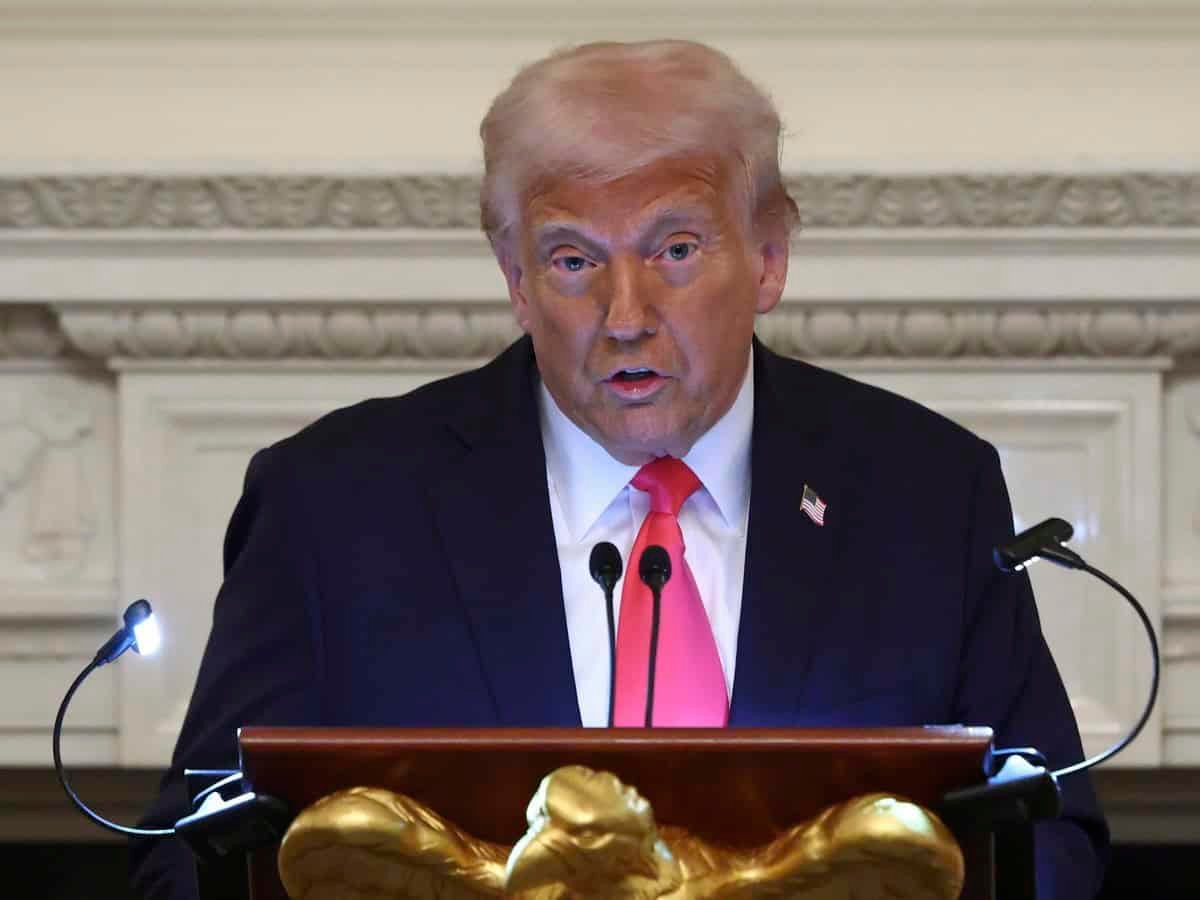
    Musk, an adviser to President Donald Trump who owns Tesla, SpaceX and the social media platform X, has played a key role in government downsizing as the head of the newly created Department of Government Efficiency.

    British and French leaders discuss fallout from Trump’s tariffs

    Prime Minister Keir Starmer and French President Emmanuel Macron agreed Saturday that a trade war was in no one’s interest as they discussed the fallout from the sweeping tariffs announced earlier this week by President Donald Trump.

    Starmer and Macron discussed the global economic and security impact of the tariffs, particularly in Southeast Asia, Starmer’s office said in a statement released after a phone call between the two leaders.

    “They agreed that a trade war was in nobody’s interests, but nothing should be off the table and that it was important to keep business updated on developments,” the statement said.

    The leaders also discussed efforts to build a coalition of countries willing to support Ukraine in its war against Russia and provide peacekeeping forces in the event a ceasefire is reached.

    “Following discussions between military planners in Ukraine this week, they discussed the good progress that has been made on the Coalition of the Willing,” the statement said.

    Some of Trump’s new tariffs have taken effect

    The baseline 10% levy announced by Trump this week kicked in at 12:01 am Saturday ET (0401 GMT), triggering customs agents’ collections at ports of entry across the U.S.

    Countries targeted by Trump for higher tariffs are due to go in effect on Wednesday. Those include assessments as high as 50% for Lesotho, 49% for Cambodia and 47% for Madagascar.

    In an all-caps social media post Saturday, Trump insisted: “THIS IS AN ECONOMIC REVOLUTION, AND WE WILL WIN.”

    Public reaction hasn’t been so confident, with stock markets slumping since the tariff announcement.

    China spokesman takes a jab at Trump administration

    China’s Foreign Ministry spokesperson Guo Jiakun posted on his Facebook page a screen saving showing the Dow Jones, S&P 500 and Nasdaq all declining by more than 5% on Friday, with the commentary, “The market has spoken.”

    “The trade and tariff war started by the U.S. against the world is unprovoked and unjustified,” Guo wrote. “Now is the time for the U.S. to stop doing the wrong things and resolve the differences with trading partners through equal-footed consultation.”

    China lashes out at US over tariffs, calling it a weapon to seek private interests

    China on Saturday night heaped more criticism on the US tariffs, saying they had “seriously infringed upon the legitimate rights and interests of all countries, seriously violated the rules of the World Trade Organization, seriously damaged the rules-based multilateral trading system, and severely impacted the stability of the global economic order.”

    The US “uses tariffs as a weapon to exert extreme pressure and seek private interests. This is a typical act of unilateralism, protectionism and economic bullying,” said the statement, attributed to the Chinese government and carried by the official Xinhua News Agency.

    “The Chinese people believe in treating others with sincerity and taking trust as the basis. We do not provoke trouble, but we are not afraid of trouble. Pressure and threats are not the right way to deal with China. China has and will continue to take firm measures to safeguard its sovereignty, security and development interests,” the statement said.

    It said China would continue to promote “high-level opening-up” rather than closing its economy with even higher tariffs.

    “Economic globalization is the inevitable path for the development of human society,” it said.“ “The world needs justice, not tyranny!”

    Jaguar and Land Rover pause shipments to US

    The British maker of Jaguar and Land Rover cars is pausing shipments to the U.S. as it works to mitigate the impact of a 25% tax on vehicle imports imposed by the Trump administration.

    Jaguar Land Rover Automotive, one of Britain’s biggest carmakers, said Saturday that the pause would take place this month.

    “The USA is an important market for JLR’s luxury brands,” the company said in a statement. “As we work to address the new trading terms with out business partners, we are taking some short-term actions including a shipment pause in April, as we develop our mid-to-longer term plans.”

    The U.K. automotive industry is expected to be hard hit by the new tariffs, which come at a time when British carmakers are struggling with declining demand at home and the need to retool their plants for the transition to electric vehicles.

    Trump says China has been hit harder by tariffs

    President Donald Trump on Saturday morning posted on his Truth Social media site that China has been negatively impacted by tariffs “much harder than the USA, not even close.”

    Newly announced US tariffs on nations around the world, including 34% tariffs on China, have sent stock markets reeling for days. China has vowed to match the rate that Trump imposed.

    On Saturday Trump was at his golf course in Jupiter, Florida. It’s his first time visiting the club since his second term started. Spotted in his motorcade, in his signature red MAGA hat and white polo shirt, Trump was reading a tabloid article about China’s response to U.S. tariffs.

    “They, and many other nations, have treated us unsustainably badly,” Trump said on Truth Social. “We have been the dumb and helpless “whipping post,” but not any longer.”

    Italy’s economy minister cautions against retaliatory tariffs

    Italian Economy Minister Giancarlo Giorgetti warned that imposing retaliatory tariffs on the United States would be damaging for both Italy and Europe.

    Speaking at a business forum in Cernobbio, near Milan, Giorgetti said Saturday that Italy is working for a “de-escalation” with the U.S. following Trump’s announcement of a general tariff of 20% on European Union countries.

    “We should avoid launching a policy of counter-tariffs that could be damaging for everyone and especially for us,” Giorgetti said. “Our message is that we need to avoid pushing the panic button. … We are following a pragmatic and rational approach.”

    Giorgetti proposed the EU allow member states to raise spending by relaxing the bloc’s fiscal rules.

    Italy has a very limited budget leeway, as the government forecast its giant debt rising through 2026 to almost 138% of GDP.

    “The Italian public debt means reduced budget room for our country, a constraint that must be taken into account in any decisions we make,” Giorgetti said, also referring to EU plans to increase defense spending.

    Taiwan will provide support for industries hit by tariffs

    Taiwan’s says it will provide a $2.65 billion fund to aid industries most affected by US tariffs.

    Taiwan has a trade surplus with the US, but much of it comes from Taiwanese industries trying to fulfill the US demand for Taiwan’s information technology products. Officials say Taiwan plans to negotiate with the US on how the new tariff rate of 32% was determined and try to get a better deal.

    Premier Cho Jung-tai has been charged with working closely with industries that are impacted and to communicate the public about their plans to stabilize the economy. Cho said Friday that electronics and information technology, steel and metal, machinery, auto parts, construction materials and home appliances will feel “significant impacts.”

    In the agricultural field, moth orchids, edamame and such fish as tilapia, common dolphinfish and bass will be hit the hardest, he said.

  • Trump and Netanyahu will meet again Monday on Gaza, tariffs and more

    Trump and Netanyahu will meet again Monday on Gaza, tariffs and more

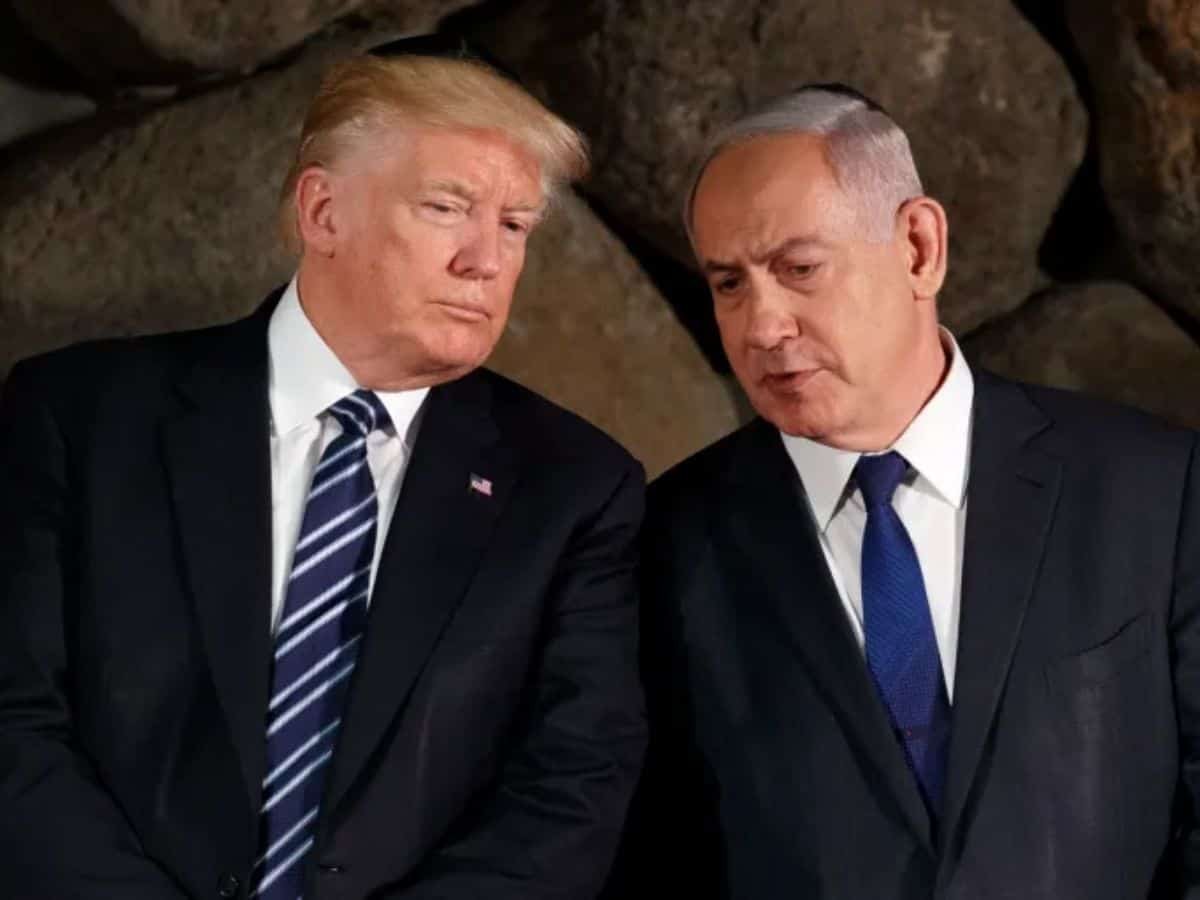
    Palm Beach Gardens: President Donald Trump plans to meet with Israeli Prime Minister Benjamin Netanyahu on Monday in what would be their second White House sit-down since Trump’s return to office.

    Hyderabad Institute of Excellence

    The visit, confirmed by a White House official and Netanyahu’s office Saturday, comes as Israel deploys troops in a new security corridor across Gaza to pressure the Hamas militant group. Netanyahu’s defense minister has said Israel will seize large areas of the territory and add them to its so-called security zones.

    Last month, Israel shattered the ceasefire with a surprise bombardment in Gaza after trying to pressure Hamas to accept proposed new terms for the ceasefire, a move supported by the White House. Hundreds of Palestinians have since been killed.

    MS Creative SchoolMS Creative School

    Israel has pledged to escalate the war in Gaza until Hamas returns the remaining hostages seized in the October 7, 2023, attack that sparked the war, disarms and leaves the territory. Israel also has halted all supplies of food, fuel and humanitarian aid into Gaza.

    Netanyahu’s office in a statement on social media said he and Trump would discuss “the tariff issue, the efforts to return our hostages, Israel-Turkey relations, the Iranian threat and the battle against the International Criminal Court.” Israel faces a 17% tariff.

    Netanyahu is wanted by the court for alleged crimes against humanity in Gaza. The U.S. is not a member of the court.

    In February, Netanyahu became the first foreign leader invited to the White House during Trump’s second term. Their meeting focused on Israel’s war with Hamas and the next steps as a ceasefire deal took hold.

    At a joint news conference afterward, Trump made the surprise proposal that displaced Palestinians in Gaza be permanently resettled outside the territory and the United States take “ownership” in redeveloping the area into “the Riviera of the Middle East.” Palestinians objected to leaving their homeland, and Arab nations and rights groups sharply criticized the idea.

    That February meeting gave Netanyahu a chance to remind the world of the Trump administration’s support for Israel, defend the conduct of the war and distract from political pressures back home.

    Those pressures have only grown as Israelis protest both the lack of a deal to bring remaining hostages home from Gaza and Netanyahu’s moves to fire the head of the country’s domestic security agency and its attorney general. He also faces calls to accept responsibility for his role in failing to prevent the Oct. 7. attack.

    In a statement Saturday, relatives of hostages held in Gaza pleaded with Trump to “please use all your power to pressure Netanyahu to end this war and bring our hostages back now.”

    “We are addressing President Trump: Netanyahu is lying when he says that military pressure will bring back the abductees. The only way to quickly return all the abductees is to end the war and return them all in one fell swoop,” Ifat Calderon, aunt of hostage Ofer Calderon, said in Tel Aviv, Israel.

    Hamas says it will only release the remaining 59 hostages — 24 of whom are believed to be alive — in exchange for the release of more Palestinian prisoners, a lasting ceasefire and an Israeli pullout from Gaza.

    The October 7 attack on southern Israel killed about 1,200 people, mostly civilians. Some 251 hostages were taken, most of them since released in ceasefire agreements and other deals.

    More than 50,000 Palestinians have been killed in Gaza as part of Israel’s offensive, according to Gaza’s Health Ministry, which doesn’t say whether those killed are civilians or combatants. Israel says it has killed around 20,000 militants, without providing evidence.

    Meanwhile, police arrested two of Netanyahu’s close associates this week on suspicion of accepting money from Qatar to promote a positive image of the Gulf Arab state in Israel. Qatar is a key mediator for Hamas in its negotiations with Israel but denies backing the militant group. Netanyahu says the case is baseless.

    The prime minister is also the subject of a long-running corruption trial and regularly rails against a “deep state” that he alleges is out to get him.

    Trump says the first foreign trip of his second administration will include stops in Saudi Arabia, Qatar and possibly the United Arab Emirates, and “other places.” The trip could come as soon as May.

    Trump has said he wants to reward Saudi Arabia for its investment in the US and that all three Gulf countries would be making commitments to creating jobs in the US during his trip.

  • Telangana CM orders inquiry on fake AI videos, pics on Kancha Gachibowli

    Telangana CM orders inquiry on fake AI videos, pics on Kancha Gachibowli

    Hyderabad: In view of what the Telangana government is claiming, were fake videos created using Artificial Intelligence (AI), which created a negative perception among the people and celebrities on the Kancha Gachibowli land issue inside the University of Hyderabad (UOH) campus, chief minister A Revanth Reddy directed the officials to conduct an inquiry into the misuse of AI, and also to strengthen the cyber crime wing of the police department, to deal with such challenges effectively in the coming days.

    Hyderabad Institute of Excellence

    A high-level meeting was held at Dr BR Ambedkar Telangana State Secretariat on Saturday, April 5, where the officials briefed the chief minister that certain vested interests fabricated the videos of crying peacocks and deer injured by bulldozers, and spread false propaganda on social media even before the state government could disclose facts related to the land ownership.

    The officials also informed the chief minister that certain celebrities and youtube influencers have used these manufactured videos and photos to voice their opinion on the issue, without realising that they were fake videos.

    MS Creative SchoolMS Creative School

    The officials also informed that journalist Sumit Jha, who was detained during the students’ protest and detention, had also apologised for sharing the fake videos.

    The officials informed the chief minister that even when thousands of acres of the university’s lands were given away for the establishment of GMC Balayogi Stadium, land allotted to Telangana non-government organisations (TNGOs), and high-rise buildings in Survey number 25 of Kancha Gachibowli in question, no such issue happened, but because of misuse of AI by vested interests, the state government was being shown in bad light.

    The chief minister has reportedly informed the police officials that the issue was so challenging, that the misuse of AI at Indo-Pak and Indo-Sino border could also be dangerous for the country.

  • From rockets on bicycles to Chandrayaan missions, India has come a long way: ISRO

    From rockets on bicycles to Chandrayaan missions, India has come a long way: ISRO

    Kozhikode: From carrying rocket parts on bicycles and satellites on bullock carts in the 1970s, India has become one of the world leaders in the space sector through its successful Mars orbiter and Chandrayaan missions, which have also made several world records, ISRO chairman V Narayanan said here on Saturday.

    Hyderabad Institute of Excellence

    Speaking at the 27th convocation of the Indian Institutes of Management (IIM) – Kozhikode, Narayanan said the country has come a long way from when it launched its first satellite – Aryabhata — on a Soviet rocket.

    Now India has 131 satellites in orbit, has launched 433 satellites for 34 countries and successfully completed its 100th launch on January 29 this year, he said.

    MS Creative SchoolMS Creative School

    Besides that, India was the first country to discover water molecules on the Moon through its Chandrayaan-1 mission and the first to land on its south pole through the Chandrayaan-3 mission, placing it among the leaders in the space sector, the chairman of the Indian Space Research Organisation (ISRO) said.

    “India is the first and only country to successfully complete the Mars orbiter mission in the first attempt,” he added.

    Giving a brief insight into India’s journey in the field of space, Narayanan said that the country was 60 to 70 years behind when it began its space programme.

    “Then in the 90s we were denied the cryogenic engine technology and were humiliated over it. Today India has made three cryogenic engines and has become one of the six countries in the world to do so,” he said.

    It also set three world records in connection with the cryogenic engine, he said.

    Narayanan said that usually countries develop 9-10 cryogenic engines, then take a minimum of 42 months from engine testing to flight and the rocket propulsion system testing also takes a minimum of five months.

    India completed the engine testing to flight stage in 28 months, with three cryogenic engines and tested the rocket propulsion system in 34 days — all three of which are world records, he said.

    India is also one among four counties in the world to have a satellite studying the Sun and will be carrying out the Chandrayaan-5 mission in collaboration with Japan, he added.

    “So, we have come a long way from the era of bicycles and bullock carts carrying rockets and satellites,” he said.

  • How to check, boost and use your credit score for loans with oneScore

    How to check, boost and use your credit score for loans with oneScore

    Credit score checks are a mandatory step when borrowers apply for an unsecured loan, such as a personal loan. Whether they apply on the personal loan app or offline at the bank, this step is part of the evaluation process to ensure that the applicant can service the loan and is likely to repay the loan on time.

    Hyderabad Institute of Excellence

    Therefore, it makes sense for users to check their credit score beforehand and ensure it is high. This helps increase their chances of smooth approval and receiving a high-value loan. With the OneScore App, potential applicants do not need to guess or worry about their creditworthiness before applying for a loan.

    Using this simple mobile application, anyone can easily check their score in minutes. If their score is good enough, then they have the best chance to get hassle-free approval. In case the score is not sufficient, the app offers personalised solutions to achieve the score required.

    MS Creative SchoolMS Creative School

    Why Lenders Rely on Credit Scores for Personal Loans

    Personal loans aren’t backed by collateral, which is why lenders are more strict about borrowers having a good credit score. This 3-digit number represents the borrower’s creditworthiness. A high score of 730 or more indicates good credit management skills.

    On the other hand, a low score shows that the borrower may not have much experience with credit or have a history of late payments, defaults, or overutilisation. So, applicants with a low score may not be able to get a personal loan.

    Checking the score beforehand can help consumers avoid wasting time and getting rejected for loans.

    How to Use the OneScore App to Check Credit Scores

    Checking the score on OneScore is easy and free. Here are the steps to follow.

    The first step is downloading the OneScore app from the Google Play Store or App Store.

    • Step 2: Log in With the Details

    To register, users need to simply enter their mobile number and email address.

    • Step 3: Enter the PAN Card

    In order to generate their credit score, users need to provide their PAN number.

    Once they’ve provided all the details, they will get their updated CIBIL and Experian scores on the dashboard. On further exploring the app, borrowers will see more options related to their credit score to help them improve it.

    How OneScore Helps Users Boost Credit Scores

    OneScore gives users insights into their credit history at a glance. Under ‘Action for You’, they can get an in-depth breakdown of why their score is low. In the same section, they can get personalised tips on how they can increase their score with proactive steps.

    Consumers can also reach their target score using the ‘Score Planner’ feature, which allows them to get to their desired score in time.

    How To Use the OneScore App to Apply for a Personal Loan

    Achieving and maintaining a high credit score is all about commitment and diligence. It can take weeks or months to achieve a score over 730, which is a minimum requirement for most lenders offering personal loans.

    Some loan apps may give potential borrowers a loan at a lower score, but their interest rates are generally higher to mitigate the risk of default. Therefore, the better option is to have a high score and then apply with a trustworthy lender. OneScore doubles up as a personal loan app, too.

    After checking their score and improving it if needed, borrowers can head to the application process. Under the OnePL banner, users get the option to apply for a personal loan up to Rs. 5 Lakhs.

    The interest starts at affordable rates of 12.5% per annum. Plus, the loan is offered by top Indian financial institutions such as Federal Bank, South Indian Bank, and Kisetsu Saison Finance India.

    In fact, the eligibility criteria for the OnePL are also simple and easy to meet:

    • Borrowers need to have a minimum credit of 730
    • Borrowers need to an employed with a minimum salary of Rs. 20,000
    • Borrowers need to have an Aadhaar card and PAN card

    To apply, users need to tap on the OnePL banner and get their customised loan offer. Using the EMI calculator, they can check the terms of the offer to make sure they can repay on time. If the offer is within their budget, the borrower can send their application with just a few taps on the screen.

    Consumers can use the same app to monitor and manage their borrowed amount. Furthermore, they can set up reminders for all their upcoming EMIs and credit card bills. This helps them maintain repayment for a good credit score and comfortable borrowing in the future.

    OneScore is an all-in-one credit score and loan app that users can download to improve their credit health and get instant access to funds. To get started, one can simply download the app from the Google Play Store or App Store and check the latest credit score!

  • India remains attractive destination for global capital: Experts

    India remains attractive destination for global capital: Experts

    New Delhi: With a strong economic outlook, policy reforms and a resilient market, India remains an attractive destination for global capital, experts said on Saturday.

    Hyderabad Institute of Excellence

    The recent reciprocal tariffs imposed by the US administration on Indian goods remain relatively modest as compared to other Asian countries, resulting to continue to give a competitive edge for India.

    “This opens strong proposition to offer viable export opportunities for the country. India remains one of the fastest-growing economies, with a vast consumer market, skilled workforce, and having a government striving to usher in business-friendly reforms,” said Manoj Purohit, Partner and Leader, FS Tax, Tax and Regulatory Services, BDO India.

    MS Creative SchoolMS Creative School

    The government’s continued focus on infrastructure, digital growth, and ease of doing business further boosts investor confidence.

    The recent move by RBI to keep the existing corporate bond and G-sec limits unchanged for foreign portfolio investors (FPIs) is a testimony of the government’s intent to keep gateway open for offshore participants to continue infusing funds in India market.

    Additionally, trade diversification and strategic partnerships are opening new avenues for investment. While tariffs may pose short-term challenges, India’s sound economic fundamentals ensure that foreign investors will continue to keep India a prime destination for long term investments even in a risk averse situation.

    “The Indian economy currently seems well insulated to survive temporary headwinds on account of macro changes and domestic triggers of high valuation, tight earnings, and rising inflation costs,” said Purohit.

    Market participants will closely track the long-term impact of the proposed tariffs, upcoming announcements from the RBI’s monetary policy stance amid expectations of a potential rate cut to strategize investment for the upcoming cycle.

    The coming week is crucial, packed with key domestic and global triggers. With tariff-related tensions escalating, global investors will closely track any further developments on that front, said Ajit Mishra, SVP, Research, Religare Broking.

    Back home, the Monetary Policy Committee (MPC) meeting outcome on April 9 will be a major focus, followed by key macroeconomic indicators — IIP and CPI data — due on April 11. Adding to the action, the Q4 earnings season kicks off with IT giant TCS set to announce its results on April 10.

  • India-US trade negotiations key to boost stock market sentiment: Experts

    India-US trade negotiations key to boost stock market sentiment: Experts

    New Delhi: The new financial year (FY26) has commenced on a subdued note, largely driven by the imposition of higher-than-anticipated tariffs by the US, market experts said on Saturday, adding that any constructive developments arising from the ongoing India–US bilateral trade negotiations could serve as a supportive catalyst for the market.

    Hyderabad Institute of Excellence

    Sectors like IT and metals have underperformed relative to the broader market, reflecting growing concerns over the outlook for the US economy and potential retaliatory trade actions by other countries.

    According to Vinod Nair, Head of Research, Geojit Investments Limited, investors are expected to closely monitor any countermeasures implemented by global trade partners, which could further exacerbate geopolitical and economic uncertainty.

    MS Creative SchoolMS Creative School

    This cautious sentiment is reflected in the sustained rally in gold and bond prices, underscoring a pronounced shift toward safe-haven assets.

    Meanwhile, benchmark indices extended their losing streak to a second session on Friday, falling over a per cent each, as a risk-off sentiment took over global markets amid fears of a trade war on the back of US President Donald Trump’s reciprocal tariffs, according to a Bajaj Broking Research note.

    Nifty was down 345.65 points or 1.49 per cent at 22,904.45. Investors fear that aggressive trade policies by US would lead to retaliatory measures from other countries, escalating into a full-scale trade war. Such an outcome could disrupt global supply chains and slow economic growth.

    The broader markets witnessed sharp decline, with the Nifty Midcap 100 and Nifty Small cap 100 declining by 2.91 per cent and 3.56 per cent, respectively. All the sectoral indices traded with sharp cuts, with the IT, Auto, Pharma, PSU Bank, Realty, Oil and Gas and metals gauges losing 6 per cent to 3 per cent.

    Index is currently placed around the key support area of 22,700-22,800, holding above the same will be crucial for pullback to materialise towards last week high 23,565 in coming week.

    “Failure to hold above the support area of 22,700 can lead to extended decline towards 22,300 levels. Along with the development on US tariff policies, market participant will also keep a close eye on the RBI monetary policy outcome and resumption of Q4 FY25 earnings season in the coming week,” said Bajaj Broking Research.

    Investor attention is also firmly fixed on the upcoming MPC meeting, with the benchmark interest rate decision expected next week.

    A favourable outcome could benefit rate-sensitive sectors. In addition, key macroeconomic indicators — namely India’s inflation figures and US jobless claims — will be closely watched, as they are likely to offer critical insights into the underlying economic conditions in both regions, said experts.

    Meanwhile, market focus is gradually shifting toward the upcoming corporate earnings season. The initial outlook remains subdued, with the risk of further downward revisions to earnings growth, largely due to tepid demand and continued margin pressures.

  • How Trump’s latest tariffs could affect your wallet

    How Trump’s latest tariffs could affect your wallet

    New York: President Donald Trump has unveiled his latest tariffs, and they could have significant implications for your wallet.

    Hyderabad Institute of Excellence

    Trump’s sweeping new tariffs, on top of previous levies and retaliation worldwide, are expected to increases prices for everyday items.

    The trade wars have already roiled financial markets and plunged businesses into uncertainty — all while economists warn of potentially weakened economic growth and heightened inequality.

    MS Creative SchoolMS Creative School

    Which impacts will be felt by consumers and workers first? And what can households do in the face of so much uncertainty? Here’s what you need to know:

    What are tariffs and how will they affect me?

    Tariffs are taxes on goods imported from other countries. Companies buying foreign products pay the tariffs imposed on them — and, as a result, face higher costs that are typically passed on to customers.

    Trump has argued tariffs will protect US industries from unfair foreign competition and raise money for the federal government. But since so much of what we buy today relies on a global supply chain, steeper tariffs mean you’ll likely see more expensive prices from the grocery aisle to your next car repair.

    “It is going to affect everything in the economy,” said Josh Stillwagon, an associate professor of economics and chair of the Economics Division at Babson College.

    “There’s this immediate price increase that’s going to be passed on to consumers here, basically as soon as the retailers have to buy new product.”

    Will the tariffs affect everyone equally?

    No. Experts warn that these tariffs could escalate inequities. Low-income families in particular will feel the costs of key necessities, like food and energy, rise with fewer savings to draw on — significantly straining budgets.

    Low-income households often “spend a larger share of their income on essential goods — whether it’s food or other basic products … (like) soap or toothpaste”, said Gustavo Flores-Macías, a professor of government and public policy at Cornell University whose research focuses on economic development.

    Because of this, he said, “even relatively small price increases” will have disproportionate impacts.

    Evidence of that disparity will only mount for big-ticket items. Dipanjan Chatterjee, vice president and principal analyst at Forrester, points to now-imposed auto tariffs, explaining that projected price hikes of thousands of dollars for a new imported car will be easier for those with larger salaries to absorb.

    “That tax is more severe for people who earn less money,” said Chatterjee. “So it’s a regressive tax.”

    What about jobs?

    Beyond more immediate price pressures, experts also warn that tariffs could contribute to unemployment or lower incomes down the road.

    Trump has argued that tariffs will bring manufacturing back to the US, but if businesses take profit hits or change their supply sources, there could be layoffs worldwide.

    “It’s not just the price aspect and purchasing power decreasing,” said Flores-Macías. “As tariffs start to work their way through the economy …. low-income families’ jobs often will be the first to go. And those sectors of the population are most vulnerable.”

    Economist Susan Helper, former senior advisor for industrial strategy at the White House Office of Management and Budget, said that there are some cases where tariffs could raise wages, but this doesn’t look likely to be one of them.

    “There isn’t enough certainty for businesses to invest and create new and better jobs,” she said. “It takes a few years at minimum to profit off a new facility or factory, and I don’t think people have the confidence that the tariffs will be stable enough that they will have a return on that investment.”

    Which consumer goods will be affected?

    The tariffs announced by Trump Wednesday, on top of other levies that are already in effect, tax imports from nearly all of America’s trading partners. And US shoppers currently rely on a lot of goods made abroad.

    Fruits and vegetables, your next phone purchase, a pharmacy order, new clothes, or a trip to a mechanic who uses auto parts made outside of the US could all be impacted.

    The timing of when prices will go up comes down to inventory, Stillwagon said. Much of that will also depend on how businesses prepare and respond to the new levies. While companies may have stocked up on goods in anticipation of these tariffs, he expects some stores to see more immediate price increases.

    Prices on perishable groceries will likely increase first, because supermarket inventories need to be replenished more frequently. But a range of other items — like electronics, household appliances, clothing and footwear — could also be affected in the coming weeks and months.

    “Annual losses for households at the bottom of the income distribution are estimated to be USD 980 under the April 2 policy alone,” according to John Breyault, vice president of public policy, telecom and fraud at the National Consumers League, who cited an analysis from the Budget Lab at Yale.

    He said that tariffs will disproportionately affect clothing and textiles, with apparel prices predicted to rise 17 per cent.

    Consumers are also likely to feel the pinch of tariffs in home buying, Breyault said. The new taxes on building materials are estimated to increase the average costs of a new home by USD 9,200, according to an analysis by the National Association of Home Builders.

    Rerouting supply chains to re-emphasize domestic production is also very complex — and could take years. Stillwagon said there are some products, like bananas and coffee, that the US simply can’t substitute to the same scale of production other countries provide. And even for goods that can be made in the US, there will still likely be inflation.

    “A real worry here is that this won’t just be a one-time price jump,” he said.

    For products like coffee, Helper predicts people will likely absorb costs, while changing their shopping choices when it comes to other products.

    “I guess you could switch to Coca-Cola if all you want is the caffeine,” she said, lightly. “It will probably be good for California wines.”

    Can I do anything to prepare?

    Stocking up on what you know you need is a start — but with limits.

    “If there are things that you’re buying on a consistent basis — week to week, month to month — I think it’s not a bad idea to try to stock up in advance,” Stillwagon said. But it’s important to avoid panic buying like that seen at the start of the COVID-19 pandemic, he and others added.

    That could cause shortages to emerge sooner and prices to go up faster.

    You also don’t want to buy a bunch of items that will eventually go to waste.

    “If you do plan stock up on consumables, make sure you have a plan on how to store them properly so you don’t end up having to throw out that 20-pound bag of shrimp, for example, in a few weeks,” said Breyault.

    It may also be time to look for substitutes. From electronics to clothing, Flores-Macías says that there could be more affordable second-hand or refurbished options to turn to. And Chatterjee noted consumers may want to start comparing prices of name-brands versus “private”, or generic, labels in major retailers. Others may turn to at-home solutions, he said, such as growing their own vegetables.

    Overall, experts say you’ll need to evaluate your budget and consumption habits for the road ahead.

    “This is not a hurricane that’s going to be around for seven days and everything goes back to normal afterwards. And you stock up on toilet paper (temporarily),” said Chatterjee. “For all you know, this thing could be around until a different administration comes in and changes trade policy.”

    Is there anything to watch out for in the coming months?

    Consumers should be on the lookout for even greater use of so-called “shrinkflation” on the grocery aisle, according to Breyault. Shrinkflation is a tactic consumer goods manufacturers use to hide cost increases by changing the design of packaging.

    “Consumers can prepare for the inflation that the tariffs are likely to exacerbate by getting into the habit of checking the unit price of items on the grocery shelf,” said Breyault.

    “While not all states require it, where it is required, consumers can more easily compare the per unit price of one item — cereal, for example — to another item.”

  • India has advantage over Asian peers after US tariff hikes: SBI

    India has advantage over Asian peers after US tariff hikes: SBI

    New Delhi: India;s exports to the US constitute only 4 per cent of its GDP so the direct impact of the 27 per cent hike in tariffs on Indian goods announced by President Donald Trump will have only a “limited” impact, according to an SBI Research report released on Friday.

    Hyderabad Institute of Excellence

    At the same time, the tariffs levied on India are the lowest among its Asian peers, compared to 34 per cent on China, 36 per cent on Thailand, 32 per cent on Indonesia, and 46 per cent on Vietnam. This is expected to give India a comparative advantage over these countries and result in an increase in exports in some sectors over the long term, the report stated.

    “We expect India will have a competitive advantage and export-oriented impact on various sectors,” the SBI report said.

    MS Creative SchoolMS Creative School

    The higher tariff on textile export-oriented countries like Bangladesh, China, and Vietnam may lead to lower demand due to inflationary pressures. However, in the long term, India stands to benefit as it endeavours to corner a larger share of the market. India’s exports of textile products to the USA was around $7 billion during April-December, FY25. So, this sector may be impacted negatively in the short-run but may have a positive impact in the long-run, according to the report.

    The engineering goods sector may be severely impacted due to disruption in the supply chain and the cutting of export revenues.

    In electronics, China has a tariff of 54 per cent to 79 per cent, so India has a better position compared to the key electronics exporting countries. India’s exports of electronics to the US were worth around $9 billion during April-December of FY25, and hold the highest share of 15 per cent in total exports.

    The gems and jewellery sector will be the most affected as import tariffs may be up to 20 per cent from the current zero per cent on loose diamonds and 5.5-7 per cent on gold jewellery. The US accounts for nearly $10 billion or 30.4 per cent of India’s annual gems and jewellery exports of $32 billion, the report points out.

    India’s agricultural exports to the US are expected to remain stable or even grow, as competing nations face steeper duties. India’s seafood exports to the US stand at $1.5 billion during April-December, FY25, which constitutes a 3 per cent share of total exports to the US. India’s relative tariff advantage will help India’s seafood exporters, as consumption will not decline instantly, the SBI report states.

    India’s exports to the US are on a declining trend since FY23 with the share in total exports around 17-18 per cent. The top 15 items exported to the US accounted for 63 per cent of total exports, the report points out.

    The impact on the Indian economy will be more from overall slowdown in global growth and heightened global financial volatility due to the worldwide hike in tariffs, it added.

  • Indian Railways clocks 9 pc growth in coach manufacturing in FY25

    Indian Railways clocks 9 pc growth in coach manufacturing in FY25

    New Delhi: The Indian Railways has achieved a significant milestone in FY25 by manufacturing 7,134 coaches, registering a 9 per cent growth from 6,541 coaches in the previous fiscal (FY24).

    Hyderabad Institute of Excellence

    In last fiscal, the special emphasis was on non AC coaches with production of 4,601 coaches, catering the needs of common man.

    According to the Ministry of Railways, annual average coach production has risen from 3,300 in 2004-14 to 5,481 in 2014-24, with total production of 54,809 coaches in last decade.

    MS Creative SchoolMS Creative School

    This rise reflects India’s growing emphasis on modernising Railway infrastructure to meet increasing passenger demand.

    The Indian Railways has three coach manufacturing units in the country – Integral Coach Factory (ICF) at Chennai, Tamil Nadu, Rail Coach Factory (RCF) at Kapurthala, Punjab and Modern Coach Factory (MCF) at Rae Bareli, Uttar Pradesh.

    The Integral Coach Factory (ICF), the premier passenger coach producing unit of Indian Railways in Chennai, surpassed its previous production records for the year 2024-25, as it rolled out 3,007 coaches, according to the ministry.

    Coach production in India has expanded substantially over the years. Between 2004 and 2014, Indian Railways manufactured less than 3,300 coaches on an average per year.

    “However, from 2014 to 2024, production saw a major boost with production of 54,809 coaches with an average of 5,481 coaches per year, aligning with the push for improved connectivity and self-reliance in Railway manufacturing,” said the ministry.

    The expansion is part of a broader effort to enhance domestic production capabilities, reduce dependence on imports and integrate advanced technology into Railway design.

    The record-breaking coach production aligns with the government’s ‘Sabka Saath, Sabka Vikas’ vision, ensuring improved public transport services while also enabling domestic manufacturing.

    With more coaches being introduced, passengers can expect better facilities, enhanced safety features and increased capacity to accommodate growing demand, according to the government.

    Additionally, this achievement strengthens the ‘Make in India initiative’, reinforcing India’s position as a key player in Railway manufacturing.