Category: BUSINESS

  • India working on different scenarios to assess possible fallout of US tariffs: Sources

    India working on different scenarios to assess possible fallout of US tariffs: Sources

    New Delhi: The commerce ministry is working on different scenarios to assess the possible fallout of reciprocal tariffs to be imposed by the US administration on April 2 on its key trading partners including India, sources said.

    Hyderabad Institute of Excellence

    US President Donald Trump has said that April 2 will be ‘Liberation Day’ as he plans to announce tariffs or import duties to bring down America’s trade deficit, and promote the country’s manufacturing.

    India and the US are also working on a bilateral trade agreement to promote two-way commerce and investments.

    MS Creative SchoolMS Creative School

    The domestic industry and exporters have raised concerns over the possible impact of the US’ reciprocal tariffs on India’s exports as the duties could make the goods uncompetitive in the global markets. The US is the largest trading partner of India.

    While responding to questions in the Oval Office on Monday, Trump said India will be “dropping its tariffs very substantially”.

    “I heard that India, just a little while ago, is going to be dropping its tariffs very substantially. I said, why didn’t somebody do this a long time ago. A lot of countries are going to be dropping their tariffs… If you look at the European Union on cars, the European Union already dropped their tariff to 2.5 per cent. It was announced a couple of days ago. A very small tariff. The United States charged very little,” Trump said.

    Just a few hours before Trump’s comments, the White House said India imposes a 100 per cent tariff on American agricultural products.

    Sources in New Delhi on Tuesday said that the impact of the US tariffs may vary from sector to sector and the ministry is preparing different scenarios.

    These scenarios would be important to help domestic companies deal with these duties as it is still uncertain about the quantum and the manner in which the US is planning to impose the tariffs.

    According to the US Trade Representative’s (USTR) National Trade Estimate (NTE) Report 2025, India maintains “high” import duties on a wide range of American goods such as agricultural items, drug formulations, and alcoholic beverages, besides imposing non-tariff barriers.

    The Indian industry and government officials are uncertain about the quantum of these duties.

    It is still unclear how the tariffs will be applied – whether at the product level, sector level, or country level, another source said.

    Currently, US goods face a weighted average tariff of 7.7 per cent in India, while Indian exports to the US attract only 2.8 per cent, leading to a 4.9 per cent difference. Indian farm exports to the US currently face a 5.3 per cent duty, whereas US farm exports to India face a much higher 37.7 per cent, creating a 32.4 per cent gap.

    Trade experts said that at the broad sector level, the potential tariff gaps between India and the US vary across the sectors.

    The gap is 8.6 per cent for chemicals and pharmaceuticals, 5.6 per cent for plastics, 1.4 per cent for textiles and clothing, 13.3 per cent for diamonds, gold, and jewellery, 2.5 per cent for iron, steel, and base metals, 5.3 per cent for machinery and computers, 7.2 per cent for electronics, and 23.1 per cent for automobiles and auto components.

    The higher the tariff gap, the worse affected a sector will be, think tank GTRI Founder Ajay Srivastava has said.

    India’s exports to the US span 30 sectors, with six in agriculture and 24 in industry, each facing different tariff impacts.

    Experts have stated that agri sectors which could be impacted more due to the imposition of reciprocal tariffs include fish, meat, processed seafood, shrimp, sugar, cocoa, rice, spices, dairy products, edible oils, wines, and spirits.

    Similarly, industrial goods which could attract these duties and may get impacted include pharmaceutical sector, diamonds, electrical and telecom equipment, machinery, boiler, turbine, computer, certain chemicals, textiles, fabrics, yarn, carpets, tyres, and footwear.

    Further, sources said that Indian companies too have flagged certain non-tariff barriers which they face in the US.

    The barriers include the US banning export of wild-caught shrimp from India on the grounds that Indian trawler vessels were not using Turtle Excluder Devices; private standards of American companies; and high registration costs for sectors like pharma.

    The commerce ministry is developing a portal for registering non-tariff barriers (NTBs) faced by exporters and taking up with the concerned countries for their resolution.

    “The portal is currently working on beta mode. It may take about two months for formal launch. One of the sections of the platform will be opened for the public also,” one of the sources said.

    Cases where the barrier is impacting a large volume of goods will be prioritised for their redressal.

    From 2021-22 to 2023-24, the US was the largest trading partner of India. The US accounts for about 18 per cent of India’s total goods exports, 6.22 per cent in imports, and 10.73 per cent in bilateral trade.

    With India, America has a trade surplus (difference between imports and exports), of USD 35.32 billion in goods in 2023-24. It was USD 27.7 billion in 2022-23, USD 32.85 billion in 2021-22, USD 22.73 billion in 2020-21 and USD 17.26 billion in 2019-20.

  • Zomato fires 600 customer support employees: Report

    Zomato fires 600 customer support employees: Report

    New Delhi: Zomato, the popular online food delivery platform, has reportedly laid off up to 600 customer support employees, just a year after hiring them.

    Hyderabad Institute of Excellence

    The reported layoffs came as the company faces challenges in its core food delivery business and rising losses in its quick commerce subsidiary, Blinkit.

    According to reports, the company had hired nearly 1,500 employees last year through its Zomato Associate Accelerator Program (ZAAP) to fill customer support roles.

    MS Creative SchoolMS Creative School

    However, in recent weeks, many of these employees have been let go without any prior notice or opportunity to improve their performance, the report added.

    The employees who were fired received one month’s salary as compensation, but the layoffs were reportedly based on issues like poor performance and punctuality.

    Zomato’s decision to reduce its customer support team is part of a broader strategy to cut costs, which includes using artificial intelligence (AI) to automate customer support functions, the report said.

    This move is seen as an attempt to reduce operational expenses as the company faces slower growth and higher losses in its business.

    When reached, the online food aggregator declined to comment as of now.

    The layoffs have affected employees in cities like Gurugram and Hyderabad, and fears are growing among remaining staff about the security of their jobs, the report added.

    Some of the affected employees took to social media to share their experiences, with one user mentioning that around 300 people were fired without warning.

    Despite the layoffs, Zomato’s stock saw a slight increase of 0.84 percent during Tuesday’s intra-day trading session by closing at Rs 203.20 a piece.

    Meanwhile, last month, Bank of America (BofA) downgraded its ratings on Zomato, citing concerns over slowing growth in food delivery and increasing competition in quick commerce.

    The brokerage revised Zomato’s rating from ‘buy’ to ‘neutral’. Along with the downgrade, BofA also slashed the target prices for the food aggregator.

    Zomato’s target price was reduced from Rs 300 to Rs 250. Despite these adjustments, analysts remain optimistic about the medium-term outlook for the firm.

  • Indian stock market recovers from early losses as FY26 begins

    Indian stock market recovers from early losses as FY26 begins

    Mumbai: Indian equity indices opened lower on Tuesday and recovered in the early trade, as heavyweights like Bharti Airtel and ITC turned green.

    Hyderabad Institute of Excellence

    At 9:44 am, Sensex was down just 3 points at 77,412, and the Nifty was up 23 points or 0.10 per cent at 23,542.

    Markets were led by smallcap and midcap stocks. Nifty Midcap 100 index was up 309 points, or 0.67 per cent, at 52,017, and the Nifty Smallcap 100 index was up 88 points, or 0.55 per cent, at 16,184.

    MS Creative SchoolMS Creative School

    In the Sensex pack, ITC, Bharti Airtel, IndusInd Bank, M&M, Power Grid, NTPC, Adani Ports, Nestle, Tata Motors, SBI, UltraTech Cement and HUL were the top gainers. Infosys, TCS, Bajaj Finance, HDFC Bank, Bajaj Finserv, Sun Pharma, HCL Tech and Kotak Mahindra Bank were the top losers.

    Selling pressure was being seen in IT stocks. The Nifty IT index was down by 1.37 per cent.

    Apart from this, financial, pharma, FMCG, metal, realty and private bank indices were in the red. On the other hand, auto, PSU bank and energy were in the green.

    Hardik Matalia, derivative analyst, Choice Broking said, “After a negative opening, Nifty can find support at 23,300 followed by 23,200 and 23,100. On the higher side, 23,550 can be an immediate resistance, followed by 23,650 and 23,800.”

    “The charts of Bank Nifty indicate that it may get support at 51,300 followed by 51,000 and 50,700. If the index advances further, 51,700 would be the initial key resistance, followed by 52,000 and 52,200,” he added.

    Almost all markets in Asia are in the green zone. Shanghai, Tokyo, Seoul, Bangkok and Hong Kong markets are in a boom. The US markets recovered from a seven-month low on Monday and closed with a one per cent gain.

    After witnessing buying in the previous six sessions, the foreign institutional investors (FIIs) remained net sellers on March 28 as they sold equities worth Rs 4,352 crore. On the other hand, domestic institutional investors (DIIs) continued their buying on the second day as they purchased equities of Rs 7,646 crore on the same day.

  • India, US decide to hold sector-specific talks for proposed trade pact in coming weeks

    India, US decide to hold sector-specific talks for proposed trade pact in coming weeks

    New Delhi: India and the US have decided to hold sector-specific talks in the coming weeks to finalise the structure of the proposed bilateral trade agreement (BTA), the government said on Saturday.

    Hyderabad Institute of Excellence

    The engagement between the two countries came in the backdrop of the USA’s threat to impose reciprocal tariffs on its key trading partners, including India, on April 2.

    The decision to hold discussions in the coming weeks follows four days of talks — between senior officers of India and the US — which concluded here on Saturday.

    MS Creative SchoolMS Creative School

    “Sectoral expert-level engagements under the BTA will start virtually in the coming weeks and pave the path for an early negotiating round in person,” the ministry said.

    In a statement, the commerce ministry said to realise the shared objective of promoting growth that ensures fairness, national security and job creation, both sides broadly come to an understanding on the next steps towards a mutually beneficial, multi-sector BTA, with the goal to finalise its first tranche by fall (August-September) 2025.

    Through the agreement, the two countries are looking to increase market access for their goods, cut tariff and non-tariff barriers and deepen supply chain integration in a mutually beneficial manner, it added.

    “Both sides look forward to building on this milestone in the coming months to finalise the BTA, ensuring it aligns with the shared goals of prosperity, resilience, and mutual benefit,” it added.

    A team of US officials, headed by Assistant US Trade Representative for South and Central Asia Brendan Lynch, was here to finalise the contours and terms of references of the proposed pact, aimed at more than doubling the bilateral trade to USD 500 billion by 2030.

    The meeting follows the visit of Commerce and Industries Minister Piyush Goyal to Washington from March 4-6 during which he met his US Trade Representative Jamieson Greer and Commerce Secretary Howard Lutnick and subsequent video conferences between the two sides.

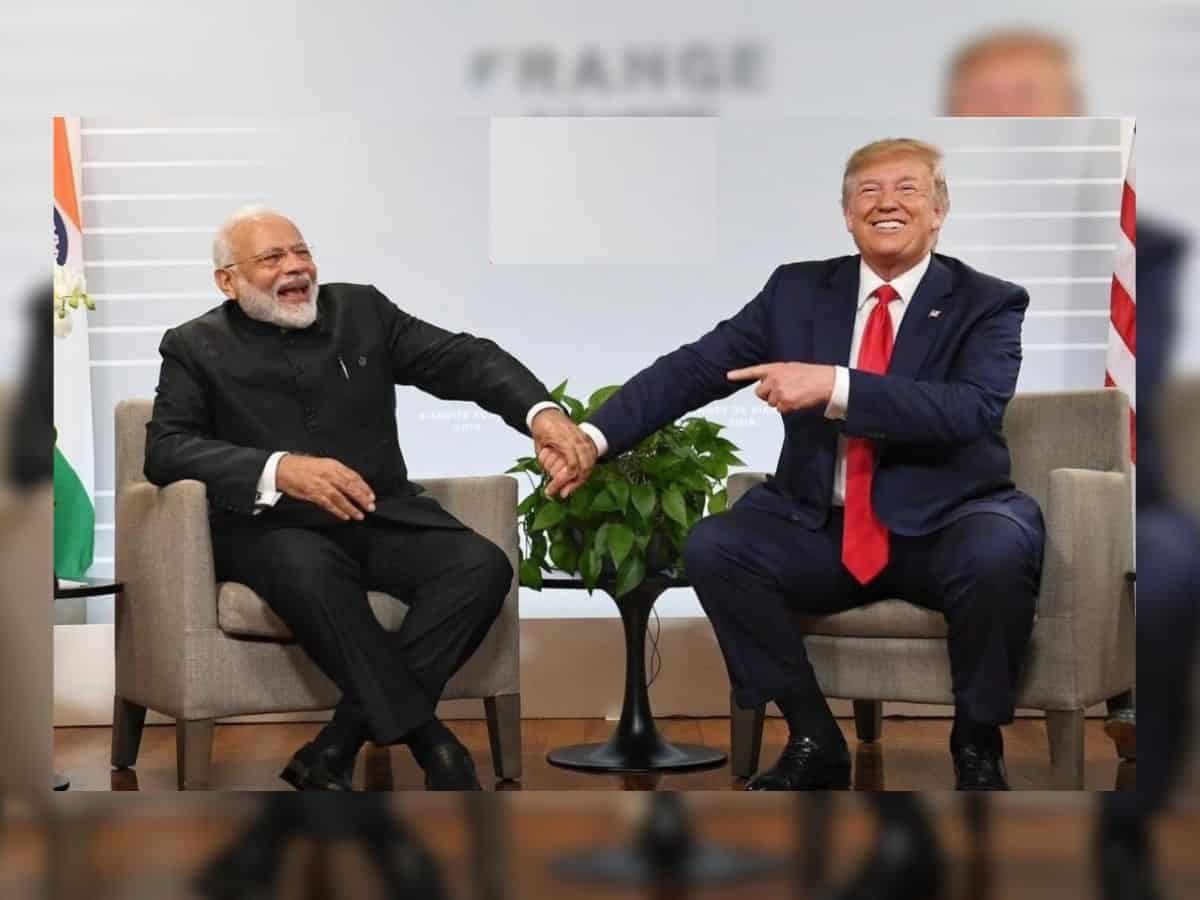
    On Friday, US President Donald Trump described Prime Minister Narendra Modi as a “very smart man” while emphasising that tariff talks would “work out very well between India and our country”.

    The remarks assume significance since Trump has repeatedly criticised the alleged high tariffs charged by India and other countries on American goods. He has announced plans to impose reciprocal tariffs on its key trading partners, including India, on April 2.

    “India is one of the highest tariffing nations in the world. It’s brutal, it’s brutal. They’re very smart. He (Modi) is a very smart man and a great friend of mine. We had very good talks. I think it’s going to work out very well between India and our country,” Trump said.

    In a trade pact, two countries either significantly reduce or eliminate customs duties on the maximum number of goods traded between them. They also ease norms to promote trade in services and boost investments.

    While the US has demanded duty concessions in sectors like certain industrial goods, automobiles, wines, petrochemical products, dairy, agriculture items such as apples, tree nuts, and alfalfa hay; India may look at duty cuts for labour-intensive sectors like textiles.

    Indian industry and exporters have asked the government to protect them against the USA’s reciprocal tariffs. They have sought exemption from those tariffs as it would hurt them severely as the US is India’s largest trading partner.

    The US is pushing India to negotiate a large and grand bilateral trade agreement while seeking to open the agriculture sector for American businesses.

    According to experts, India is unlikely to include dairy and agriculture in trade negotiations as it is a politically sensitive sector.

    The US agri exports to India was USD 1.6 billion in 2024. Key exports include almonds (in shell — USD 868 million); pistachios (USD 121 million), apples (USD 21 million), ethanol (ethyl alcohol USD 266 million).

    In June 2023, India announced removal of retaliatory import duties on eight US products, including chickpeas, lentils, and apples, which were imposed in 2019 in response to America’s measure to increase tariffs on certain steel and aluminium products.

    In 2024, India’s main exports to the US included drug formulations, biological (USD 8.1 billion), telecom instruments (USD 6.5 billion), precious and semi-precious stones (USD 5.3 billion), petroleum products (USD 4.1 billion), gold and other precious metal jewellery (USD 3.2 billion), ready-made garments of cotton including accessories (USD 2.8 billion), and products of iron and steel (USD 2.7 billion).

    Imports included crude oil (USD 4.5 billion), petroleum products (USD 3.6 billion), coal, coke (USD 3.4 billion), cut and polished diamonds (USD 2.6 billion), electric machinery (USD 1.4 billion), aircraft, space crafts and parts (USD 1.3 billion), and gold (USD 1.3 billion).

    In 2023-24, the US was the largest trading partner of India with USD 119.71 billion bilateral trade in goods (USD 77.51 billion worth of exports, USD 42.19 billion of imports, with USD 35.31 billion trade surplus).

    India has received USD 67.8 billion in foreign direct investments from America during April 2000 and September 2024.

  • MERC-approved tariff reductions to benefit 34L Adani Electricity consumers

    MERC-approved tariff reductions to benefit 34L Adani Electricity consumers

    Mumbai: More than 34 lakh consumers of Adani Electricity are set to be benefitted by the Maharashtra Electricity Regulatory Commission (MERC)-approved tariff reductions, applicable from April 1, 2025.

    Hyderabad Institute of Excellence

    With the MERC order, Adani Electricity’s 34 lakh consumers will benefit from an average 10 per cent tariff cut in FY26 and another 11.7 per cent in FY27.

    An Adani Electricity spokesperson said in a statement on Saturday that the MERC order would bring sustained relief for their consumers without any increase in fixed charges.

    MS Creative SchoolMS Creative School

    “The Green Tariff premium has been reduced to Rs 0.25/unit, making 100 per cent renewable energy more accessible than ever. EV consumers continue to enjoy Mumbai’s lowest rate at Rs 5.48/unit under a simplified single-part tariff structure. Enhanced (time of day) ToD rebates and new usage-linked incentives add even more value,” said the spokesperson.

    “These changes reaffirm our commitment to delivering reliable and sustainable electricity at the most competitive tariffs in the city,” the company spokesperson added.

    EV charging will be billed under a single-part tariff (no fixed charges). As per MERC’s approved schedule, the LT EV tariff is Rs 8.08/unit and the HT EV tariff is Rs 8.24/unit for FY 2025–26.

    The premium for opting 100 per cent renewable energy has been reduced to Rs 0.25/unit, from Rs 0.66/unit encouraging greater consumer participation.

    Revised ToD slabs incentivise solar-hour and off-peak usage, offering bill savings for eligible consumers.

    These changes give consumers greater control over their electricity costs through lower and more predictable EV charging rates, easier access to green energy, time-based savings for shifting usage, efficiency-linked billing for larger LT users, and rebates for high-volume consumption.

    The state power regulator has approved tariff reduction of 10 per cent in FY 2025-26 and cumulative reduction of 16 per cent by FY 2029-30 vis-a-vis existing tariff (including Fuel Adjustment Cost). This was done with a projected revenue surplus of Rs 44,481 crore and the corresponding reduction in the overall average cost of supply.

  • Rupee falls 5 paise to settle at 85.74 against US dollar

    Rupee falls 5 paise to settle at 85.74 against US dollar

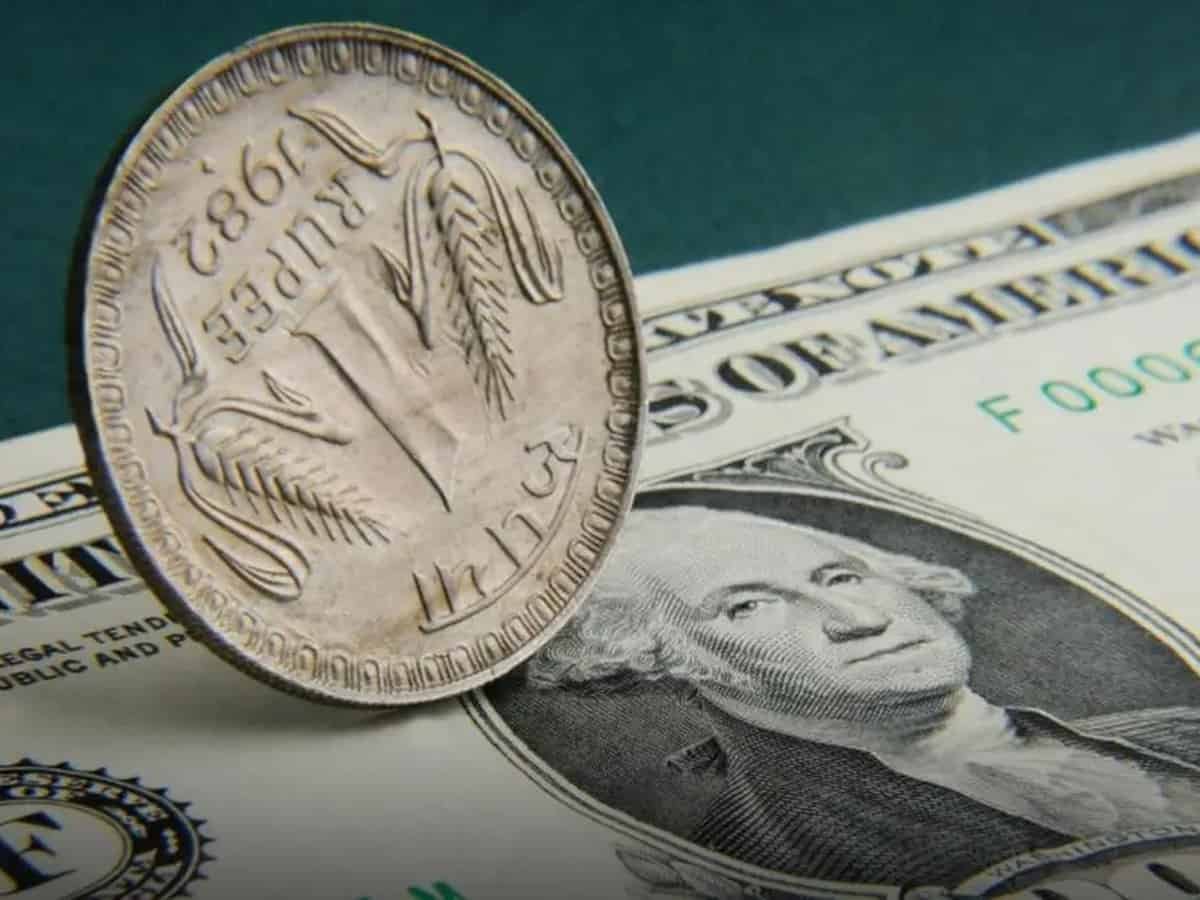
    Mumbai: The rupee weakened by 5 paise to close at 85.74 against the US dollar on Thursday, as month-end dollar demand from importers, coupled with the greenback’s recovery against major currencies, weighed on the rupee.

    Hyderabad Institute of Excellence

    The US dollar strengthened after US President Donald Trump announced long-promised 25 percent tariffs on automotive imports, set to take effect on April 2.

    Forex dealers said the rupee is also facing renewed pressure on liquidity constraints, concerns over reciprocal tariff implementations and month-end demand for the US currency from importers.

    MS Creative SchoolMS Creative School

    However, positive domestic markets and foreign fund inflows cushioned the downside.

    At the interbank foreign exchange, the rupee opened at 85.90 and touched a high of 85.73 against the greenback during the day.

    The unit later turned volatile and hit the day’s low of 85.93 before ending the session at 85.74 against the dollar, 5 paise lower than its previous closing level.

    On Wednesday, the rupee settled higher by 3 paise at 85.69 against the US dollar.

    Anuj Choudhary – Research Analyst at Mirae Asset Sharekhan said, the rupee is expected to trade with a slight negative bias on month-end dollar demand from importers and Oil Marketing Companies (OMCs).

    “Elevated crude oil prices and a bounceback in the US dollar may also pressurise the rupee. However, strong domestic markets and FII inflows may support the rupee at lower levels. Traders may take cues from the final GDP data from the US. USD-INR spot price is expected to trade in a range of 85.60 to 86.10,” Choudhary added.

    Meanwhile, the dollar index, which gauges the greenback’s strength against a basket of six currencies, was trading lower by 0.11 percent at 104.43.

    Brent crude, the global oil benchmark, fell 0.46 percent to USD 73.45 per barrel in futures trade.

    In the domestic equity market, the 30-share BSE Sensex rose 317.93 points, or 0.41 percent, to settle at 77,606.43, while the Nifty gained 105.10 points, or 0.45 percent, to close at 23,591.95.

    Foreign institutional investors (FIIs) purchased equities worth Rs 2,240.55 crore on a net basis on Wednesday, according to exchange data.

    Dilip Parmar, Senior Research Analyst, HDFC Securities, said the domestic currency was supported by an overall positive sentiment in the market, driven by risk-on appetite among investors.

    “Additionally, the rupee benefited from passive inflows into Indian equities, as foreign investors continued to show interest in the country’s stock market, providing further support to the local currency.

    “Looking ahead, the USD-INR currency pair is anticipated to move within a narrow range, with expectations of consolidation between 86.25 on the upper end and 85.50 on the lower end,” he added.

  • Indian carriers to operate 25,610 flights per week in summer schedule: DGCA

    Indian carriers to operate 25,610 flights per week in summer schedule: DGCA

    Mumbai: Indian carriers will operate a total of 25,610 flights per week during the summer schedule this year compared to 24,275 weekly flights in the same period last year, the Directorate General of Civil Aviation said on Tuesday.

    Hyderabad Institute of Excellence

    This translates to a 5.50 per cent year-on-year growth in the total number of departures per week.

    Compared to the ongoing winter schedule, which ends on March 29, the number of departures per week is up 2.41 per cent as the Indian carriers operated a total of 25,007 departures per week from 124 airports in the country, the DGCA said.

    MS Creative SchoolMS Creative School

    There are 25,610 departures per week which have been finalised to/from 129 airports as per the summer schedule of 2025 compared to 25007 departures per week from 124 airports in the winter schedule of 2024, it said.

    Out of these 129 airports, Ambikapur, Datia, Bidar, Porbandar, Pakyaong, Rewa and Solapur are the new airports proposed by the scheduled airlines while operations from Azamgarh and Rupsi airports were suspended in the Summer Schedule 2025, according to the DGCA.

    The summer schedule of 2025 will commence from March 29 and will last up to October 25 next year.

    According to the 2025 summer schedule, as many as 11 airlines will be operating domestic services, with maximum weekly flights by IndiGo at 14,158 followed by Air India at 4,310 and its low-cost arm Air India Express at 3,375.

    Also while both Air India and Air India Express have increased their weekly departures by 66.67 per cent and 19.7 per cent, respectively compared to the ongoing winter schedule, IndiGo has seen just 3.41 per cent increase sequentially.

    Akasa Air has seen a growth of 10.11 per cent at 1,089 services per week in the forthcoming summer schedule vis-a -vis winter schedule while SpiceJet will be operating fewer services at 1,250 weekly departures against 1,297 operated during the winter schedule, as per DGCA data.

  • Tech taking different turn created slump in IT: Minister Sridhar Babu

    Tech taking different turn created slump in IT: Minister Sridhar Babu

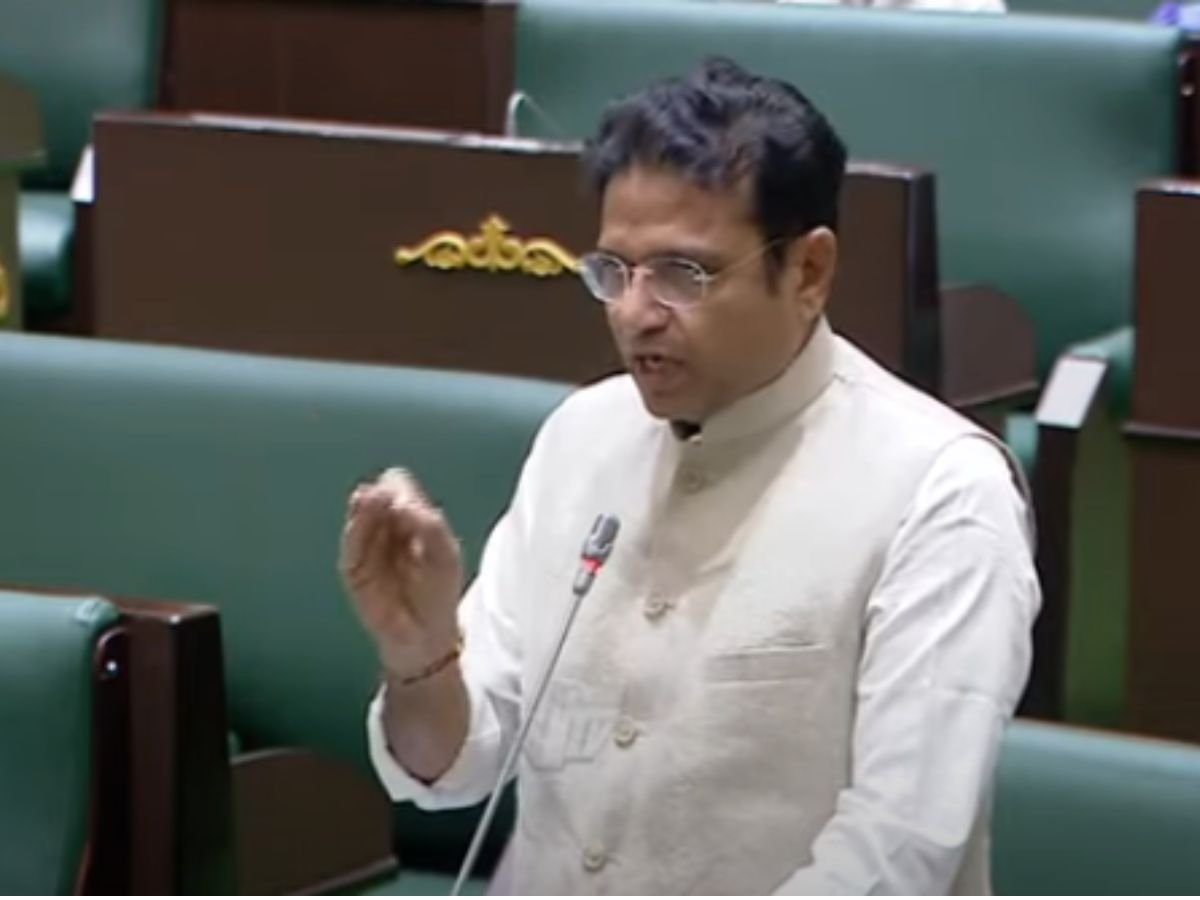
    Hyderabad: IT and industries minister Sridhar Babu said that a slump in information technology exports since the Congress came to power was a result of “technology taking a different turn,” which he said the state government would like to learn from.

    Hyderabad Institute of Excellence

    Addressing the Telangana assembly budget session on the demand for grants in the municipal administration, IT and industries sectors on Monday, March 24, he assured that the state government will continue the good policies of the previous BRS government, and would learn from the mistakes made in the past.

    On the issue of IT exports falling from 31% during BRS government, to 11% during the Congress’ 11-month rule as alleged by Quthbullapur MLA KP Vivekanand Goud, he said that the actual numbers will come out by May, 2025, and that presently, as per his knowledge, the IT exports stood somewhere around 22%.

    MS Creative SchoolMS Creative School

    “We are comparing governments within our state saying IT exports went from Rs 56,000 crore in 2014 to around 2.4 lakh crore when BRS lost power, but we are not comparing it with Bengaluru’s IT exports of Rs 8 lakh crore,” he noted.

    He said emerging technologies like the Artificial Intelligence (AI), which has been reshaping the IT landscape, has disrupted everything, and would continue to do so in the near future.

    He said he was ready to take suggestions from BRS working president KT Rama Rao (who wasn’t in the house), to take the growth of IT industry in Telangana to the next level going forward.

    He also said that 70 new global capability centres (GCC) came to Hyderabad, and the state government was experimenting on them presently.

    On the issue of scarcity of drinking water in Hyderabad, he said that the people of Hyderabad were thinking that the main reason was a seven-year delay by the BRS government in completing the Keshavapuram project under the Godavari Phase 2 project, which could have assured 100 million gallons per day (MGD) to the city.

    He said that the Musi Riverfront Development Project was a regenerative project of the state government, which would not only add beauty, but would also increase the quality in the lives of the people living in Hyderabad.

    He spoke in detail about the H-City project, the works covered under the project, and the sanitation, road extensions, nala development, flyovers, tunnel corridors, flyovers, and basic infrastructure for pedestrians being planned, and being implemented by the state government.

    He assured that the traffic congestion problem in the eastern part of Hyderabad would be solved through the elevated corridors being constructed in Paradise-Shamirpet and Paradise-Dairy Farm Road junctions (18 km elevated corridor), for over Rs 17,500 crore.

    He said that the Build Now application that would ease the process of obtaining permissions for constructing buildings, would simplify the process to the extent of granting permissions “on the go” in the near future.

    He said artificial intelligence was being used in the system to facilitate the same.

    He said that after April 10, the Build Now system/application would be expanded to cover other municipalities and municipal corporations across the state.

    “It will not only bring the response time for permissions from 5-6 months to 10 minutes, but in the near future we want to use AI to grant the permissions on the go,” he wished.

    Some updates/ assurances of the state government

    • Tenders called for the radial roads between the outer-ring road (RRR) and the regional-ring road (RRR) fro a distance of 41 km (Raviryal to Meerkhanpet) and (Meerkhanpet to Amangal), for which Rs 4,030 crore would be spent on construction of the roads, and Rs 591 would be spent on land acquisition.
    • Metro rail phase-2 expansion: Rs 24,269 crore to be spent on 5 extension corridors for a distance of 76.4 km , for which the detailed project report is awaiting approval from the Centre. Phase 3 has also been proposed for the missing link roads to metro rail covering four directions of the city under two packages.
    • Under package one, 24 roads are being laid for a distance of 56.42 km, for which tenders have been called for Rs 690 crore. Under package two, 25 roads will be laid for a distance of 63.30 km, for Rs 801.80 crore, the works which are currently in progress (according to Sridhar Babu).
    • Solar power plants to produce 100 MW power in the city’s limits.
    • under the urban infrastructure development fund, 39 new sewage treatment plants being established under Amrit 2.0 scheme of the Centre, under the Hybrid Annuity Model (HAM) and Public Private Partnership (PPP).
    • Sewerage-line network being developed extending to 7,444 km under the Hyderabad Metropolitan Water Supply and Sewerage Board (HMWS&SB) for Rs 17,212.69 crore.
    • State government made administrative sanction of Rs 7,360 crore for the Godavari Phase-2 drinking water supply for the twin-cities.
    • Greater Warangal Municipal Corporation (GWMC) to get around Rs 300 crore for various works, in addition to Rs 4,170 crore for which administrative sanctions have been given, which include the eco park in Devanuru, Warangal outer-ring road, and the beautification and development of Bhadrakali Cheruvu.
  • Government to train 6000 licensed surveyors across Telangana, says minister

    Government to train 6000 licensed surveyors across Telangana, says minister

    Hyderabad: State revenue minister Ponguleti Srinivasa Reddy has assured the training programmes to 6,000 licensed private surveyors across the state.

    Hyderabad Institute of ExcellenceHyderabad Institute of Excellence

    While interacting with the media in the Assembly on Monday, March 24, he informed the state government would appoint a land surveyor and deputy surveyor in every mandal.

    Talking about the layout regularisation scheme (LRS), the minister said that there will be a 25 percent discount on regularising layouts till March 31. “Those applying for regularisation after March 31 will have to bear 100 percent charges,” he said.

    MS Creative SchoolMS Creative School

    He also made it clear that no new applications will be entertained post the registration of sada bainama lands. “The government will ensure that the 13 lakh people whose applications were rejected during the BRS government tenure will be reconsidered,” he said.

    Noting that 1.13 lakh houses have been sanctioned by the Centre in urban areas, the minister said that the Central government will contribute Rs 1.5 lakh for each house while the state government will bear the remaining cost.

  • Tamil Nadu benefits the most from PLI scheme, says FM Sitharaman

    Tamil Nadu benefits the most from PLI scheme, says FM Sitharaman

    Chennai: Union Finance Minister Nirmala Sitharaman has said that Tamil Nadu has emerged as one of the biggest beneficiaries of the Production-Linked Incentive (PLI) scheme.

    Hyderabad Institute of Excellence

    The state has received a significant share of projects in the electronics and automobile sectors.

    Speaking at an event organised by the Chennai Citizens’ Forum here, FM Sitharaman dismissed claims that the Central government had ignored Tamil Nadu in terms of funding.

    MS Creative SchoolMS Creative School

    She said that several major projects had been announced and were progressing in different stages across the state.

    “Tamil Nadu has been the largest beneficiary under the PLI- scheme in electronics, electronic parts and automobiles,” FM Sitharaman noted.

    The Union Minister of Finance and Corporate Affairs highlighted that Tamil Nadu had secured the highest number of approvals under the PLI scheme in electronics, electronic parts, and automobiles.

    The Union Minister stated, “Out of the 27 companies that have received approval from the Centre, seven are based out of Tamil Nadu.”

    According to FM Sitharaman, nearly 25 per cent of the companies benefiting from the PLI scheme are based in the state.

    The Finance Minister also pointed out that Tamil Nadu is home to one of India’s two major electronic parts manufacturing clusters, with the other located in Gujarat.

    To support this sector, the Centre has allocated Rs 1,100 crore for setting up the cluster in Tamil Nadu.

    Recently, Union Minister for Electronics and Information Technology Ashwini Vaishnaw visited Zetwerk near Chennai and announced that two electronic parts manufacturing clusters worth Rs 1,112 crore would be developed near the city.

    FM Sitharaman further stated that Tamil Nadu is the second-largest recipient of PLI incentives for automobile and auto component manufacturing.

    “Out of 82 approved applications under this scheme for the automobile sector, 46 are from Tamil Nadu. The state has also secured approvals for four companies under the PLI scheme for advanced chemistry cell battery manufacturing,” FM Sitharaman mentioned.

    Additionally, the Centre has sanctioned Rs 7,453 crore through the Viability Gap Funding Scheme for offshore wind energy projects in Tamil Nadu and Gujarat.

    “The country’s first Green Hydrogen Hub Port is being planned at Tuticorin with the Centre’s support,” FM Sitharaman continued.

    Talking about infrastructure development in the state, she said that around 1,303 kilometres of new railway lines have been added in the state.