Category: BUSINESS

  • India, Norway to deepen bilateral trade, investment ties

    India, Norway to deepen bilateral trade, investment ties

    New Delhi: India and Norway are looking to strengthen their trade and investment partnership, Union Commerce Minister Piyush Goyal said on Tuesday after a discussion with Norway’s Minister of Foreign Affairs, Espen Barth Eide.

    Hyderabad Institute of Excellence

    The leaders deliberated on ways to enhance economic collaboration and deepen cooperation in key sectors.

    During their talks, they focused on improving workforce mobility and skill development, which could create new opportunities for both countries.

    MS Creative SchoolMS Creative School

    “India and Norway can significantly enhance trade relations and set an ambitious target of increasing bilateral trade tenfold over the next decade,” Goyal stated.

    The Indian Minister also emphasised the significance of the EFTA-TEPA (European Free Trade Association – Trade and Economic Partnership Agreement) and its investment commitments, highlighting its potential benefits for India-Norway trade relations.

    “Discussed deepening our bilateral trade and investment ties, enhancing collaboration in skill development & workforce mobility, the significance of EFTA-TEPA and its investment commitments,” Goyal said in a post on X.

    The ministers exchanged views on pressing global trade issues, WTO reforms, and evolving geopolitical and economic trends.

    They reaffirmed their commitment to fostering high-level business engagements that could drive mutual growth and economic prosperity.

    The Union Minister also urged businesses from both nations to actively contribute to achieving this goal.

    Meanwhile, the EFTA has committed to promote investments with the aim to increase the stock of foreign direct investments by $100 billion in India in the next 15 years, and to facilitate the generation of 1 million direct employment in India, through such investments.

    The investments do not cover foreign portfolio investments. The EFTA is offering 92.2 per cent of its tariff lines which covers 99.6 per cent of India’s exports to the region.

    The EFTA’s market access offer covers 100 per cent of non-agri products and tariff concession on Processed Agricultural Products (PAP).

    Under the agreement, India is offering 82.7 per cent of its tariff lines which covers 95.3 per cent of the EFTA exports of which more than 80 per cent imports is of gold.
  • LG Electronics India gets SEBI nod for IPO, to raise funds via offer for sale

    LG Electronics India gets SEBI nod for IPO, to raise funds via offer for sale

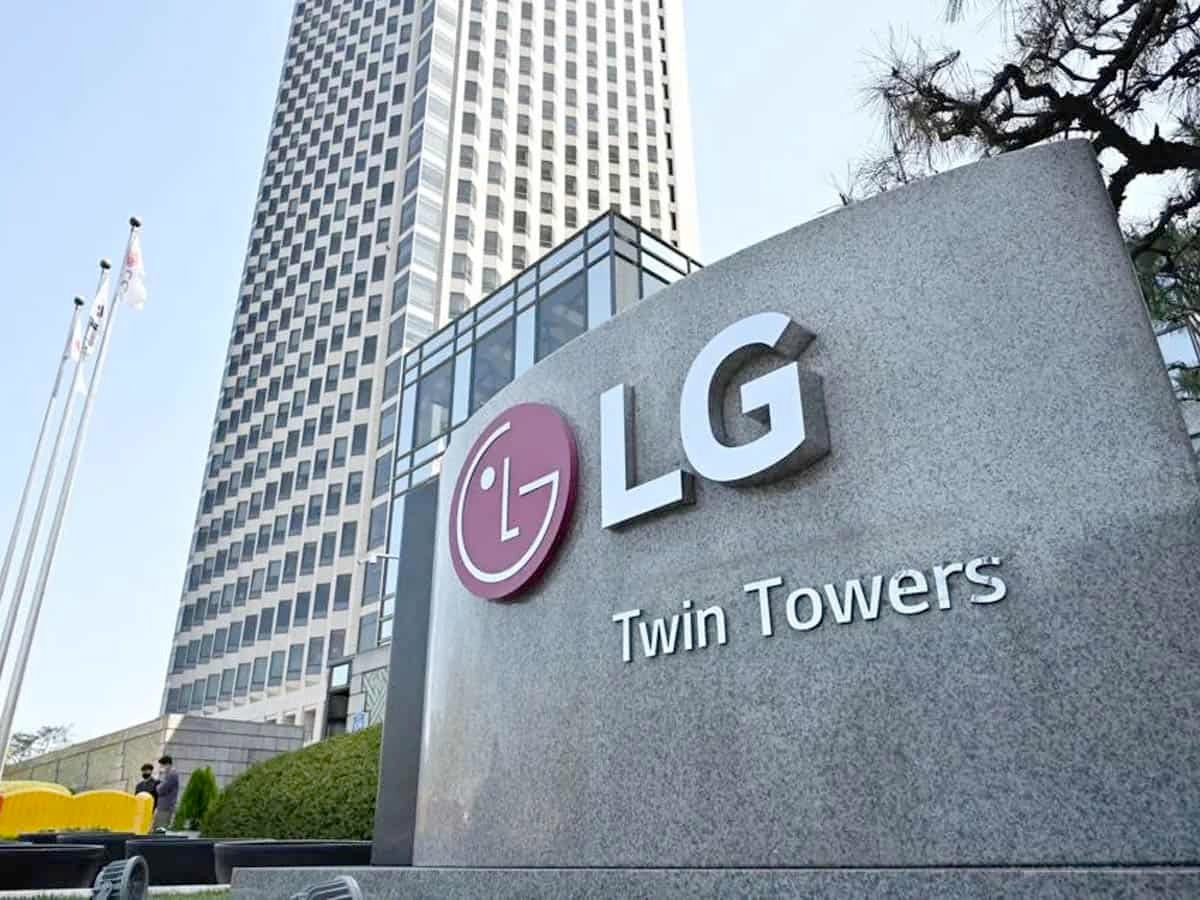
    New Delhi: LG Electronics India Limited on Tuesday announced that it has received approval from the Securities and Exchange Board of India (SEBI) to launch its initial public offering (IPO) which is expected to be around Rs 15,000 crore.

    Hyderabad Institute of Excellence

    The company, a wholly-owned subsidiary of South Korean giant LG Electronics Inc., had filed its draft red herring prospectus (DRHP) with SEBI on December 6, 2024.

    With the final observation from the regulator, the company can now proceed with the offering, according to its statement.

    MS Creative SchoolMS Creative School

    The IPO will be entirely an offer for sale (OFS), where LG Electronics Inc. will sell up to 10.18 crore equity shares.

    Each share has a face value of Rs 10. This means that the IPO will not raise fresh capital for the company but will allow the parent company to offload its stake.

    While the company has not disclosed the total issue size, it has reportedly pegged the IPO at around Rs 15,000 crore.

    The IPO will be managed by investment banks Morgan Stanley India, JP Morgan India, Axis Capital, BofA Securities India, and Citigroup Global Markets India. KFin Technologies will serve as the registrar for the issue.

    LG Electronics India has been a dominant player in the Indian home appliances and consumer electronics market.

    According to a Redseer Report cited in the DRHP, the company has maintained its position as the market leader in offline sales by value for 13 consecutive years, from 2011 to 2023.

    Financially, LG Electronics India has performed better than several listed competitors. In the financial year 2024, the company reported a revenue of Rs 21,352 crore, up from Rs 19,868.24 crore in the previous year.

    Its profit after tax also saw a rise of 12.35 per cent, reaching Rs 1,511.07 crore from Rs 1,344.93 crore. In the quarter ending June 30, 2024, the company recorded a revenue of Rs 6,408.80 crore and a profit after tax of Rs 679.65 crore.

    Meanwhile, Hyundai Motor India launched its Rs 27,870.16 crore public offering last year, which stands as India’s largest public offering to date.

    The subscription window was open from October 15 to October 17, with a price band set between Rs 1,865 and Rs 1,960 per share.

    The IPO was entirely an offer for sale (OFS) of 14.22 crore shares, with no fresh issue component.

  • Land registration row dominate Telangana Assembly, BRS MLA seeks patta for poor

    Land registration row dominate Telangana Assembly, BRS MLA seeks patta for poor

    Hyderabad: Issues concerning the registration of lands of the poor and middle class in Hyderabad dominated during the Zero Hour of the special session in the Telangana Assembly on Tuesday, March 18.

    Hyderabad Institute of Excellence

    Bharat Rashtra Samithi (BRS) Rajendranagar MLA T Prakash Goud asked the government to provide pattas to the poor who built their houses in forest lands including, Hanuman Nagar, Jajaal Nagar and Bhupal Nagar localities in his constituency.

    “I have been representing Rajendranagar constituency for the fourth time. We have presented this issue to every government – from former chief ministers of erstwhile Andhra Pradesh, Kiran Kumar Reddy and Rosaiah, during the BRS government and now the present ruling Congress government. The issue was also raised during the GHMC elections. Even after the assurance of minister Jupally Krishna Rao that pattas will be provided to the poor within 15 days, nothing has been done yet. As a representative of my constituency, how will people have faith in me?” he asked.

    MS Creative SchoolMS Creative School

    He also said that even after he built buildings and houses for the poor and middle class families, the issue of drinking water supply and bad roads remains a concern.

    BRS LB Nagar MLA D Sudheer Reddy raised the issue of 44 colonies in BN Reddy Nagar which, according to him, have been listed in the ‘prohibition list’ in revenue records; affecting thousands who had purchased lands in HUDA-approved layouts in 1986.

    “The issue began when the land was declared a government land, leading to a halt in granting permission for constriction. Since then, some houses have been constructed illegally while those who had purchased the lands in 1986, constructed houses, hoping one day it would be regularised,” Sudheer Reddy said in the Assembly.

    The BRS MLa further stated that during K Chandrashekar Rao’s (KCR) tenure as chief minister of Telangana, a GO (government order) 118 was issued, allowing people to register their lands by paying Rs 250 per square yard as the registration fee. As a result, landowners received convenience deeds by spending anywhere between Rs 50,000 and Rs 1,50,000, depending on where their land was positioned.

    “Only 70 percent have received the convenience deeds. However, many had errors such as incorrect plot numbers. Unless these rectifications were made and the remaining landowners were allowed to obtain their convenience deeds, parts of the land would continue to be classified as open or prohibited land,” he said.

    According to him, thousands are waiting to get their land registered. “This could bring revenue to the state government,” he added.

    Congress Jubilee Hills MLA Danam Nagender raised the issue of the rise of illegal constructions in the EWS Colony. He accused an individual named Venkat Reddy who lent money to some families, taking away their houses and building a six-storey building in illegal ways.

    “Despite court order against the six-storey building, the assistant commissioner of police has not taken any action against Venkat Reddy,” he alleged.

  • India remains high-growth real estate market in APAC amid resilient economy

    India remains high-growth real estate market in APAC amid resilient economy

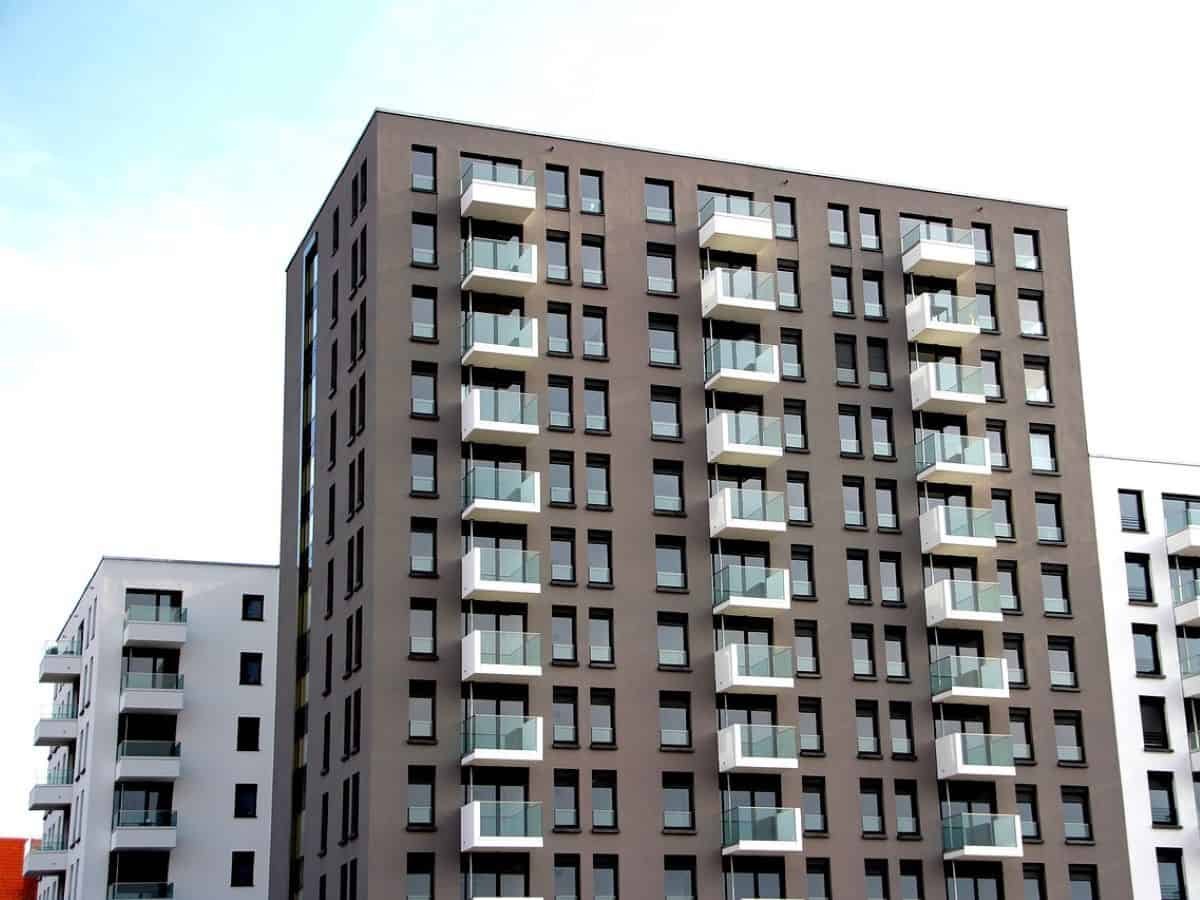
    New Delhi: Real estate investments in the Asia Pacific market increased 12 per cent (year-on-year) to reach $155.9 billion in 2024, as India continued to exhibit strong momentum with the second half (H2) witnessing 88 per cent annual rise in investments at $3.0 billion, a new report showed on Tuesday.

    Hyderabad Institute of Excellence

    Among the nine markets in the APAC region, India, South Korea, Taiwan and Australia saw significant investment growth, each recording more than 30 per cent year-on-year increases during the period, according to a Colliers report.

    In India, office assets continued to draw majority of the investments at 47 per cent share, followed by industrial and logistics at 27 per cent share.

    MS Creative SchoolMS Creative School

    Mumbai attracted almost half of the investments during H2 2024, primarily led by acquisition of office assets.

    Steady growth in investment volumes underscores India’s prominence as a preferred real estate investment destination for both domestic and foreign capital.

    In H2 2024, foreign investments accounted for 57 per cent of total inflows, while domestic investments, at $1.3 billion, saw a notable 8 per cent growth.

    “Institutional investments in Indian real estate have shown remarkable growth, with 2024 witnessing a 22 per cent rise in capital inflows at $6.5 billion. This momentum is expected to continue in 2025, driven by favourable economic growth prospects and optimistic investment sentiments,” said Badal Yagnik, Chief Executive Officer, Colliers India.

    Moreover, the anticipated continuity in easing of monetary policy including further reduction in repo rate, is expected to enhance liquidity and drive transactional activity across real estate segments in 2025.

    Diverse investment opportunities along with proactive government policies are likely to support robust capital deployment across core and non-core assets throughout 2025, Yagnik noted.

    Looking ahead, while global investors will continue to diversify their real estate portfolios, domestic investors are expected to make further inroads in segments with relatively higher yields such as office and industrial & warehousing”, said Vimal Nadar, Senior Director and Head of Research, Colliers India.

    Overall, real estate investment volumes in the Asia Pacific region are likely to remain sturdy in 2025, the report noted.

  • Indian stock market opens higher, Sensex above 74,600

    Indian stock market opens higher, Sensex above 74,600

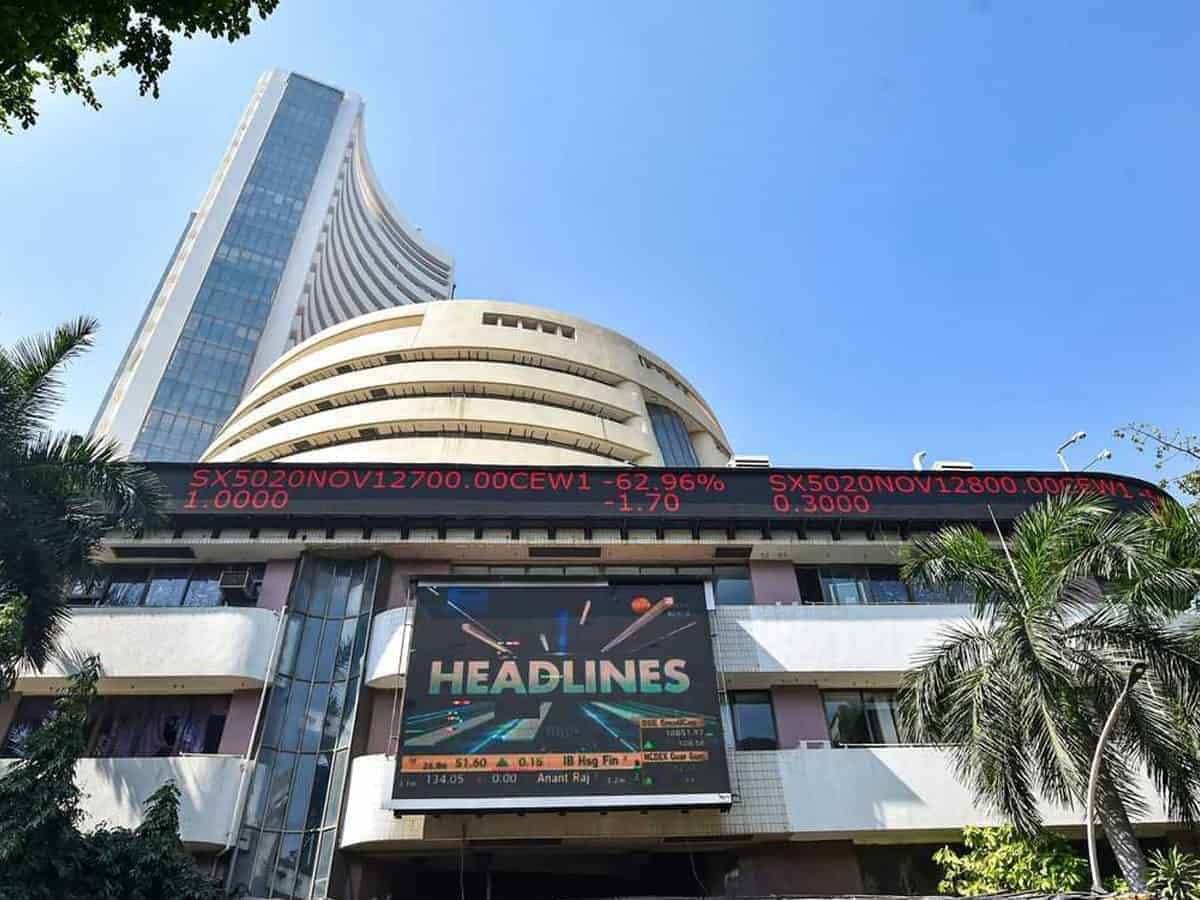
    Mumbai: The domestic benchmark indices opened higher on Tuesday amid positive global cues, as buying was seen in the realty and media sectors in the early trade.

    Hyderabad Institute of Excellence

    At around 9.27 am, Sensex was trading 448.91 points or 0.61 per cent up at 74,618.86 while the Nifty added 140.15 points or 0.62 per cent at 22,648.90.

    Nifty Bank was up 407.25 points or 0.84 per cent at 48,761.40 The Nifty Midcap 100 index was trading at 48,794.85 after adding 333.05 points or 0.69 per cent. Nifty Smallcap 100 index was at 15,110.95 after climbing 142.55 points or 0.95 per cent.

    MS Creative SchoolMS Creative School

    According to market watchers, after a positive opening, Nifty can find support at 22,450, followed by 22,350 and 22,300. On the higher side, 22,700 can be an immediate resistance, followed by 22,750 and 22,800.

    “Despite the positive market performance, a cautious sentiment prevailed due to escalating trade war tensions following new tariffs imposed by US President Donald Trump. This geopolitical uncertainty tempered overall market optimism,” said Vikram Kasat from PL Capital-Prabhudas Lilladher.

    Meanwhile, In the Sensex pack, ICICI Bank, M&M, Axis Bank, Tata Steel, Tata Motors, Bajaj Finserv, Hindustan Unilever Limited and Zomato were the top gainers. Whereas, HCL Tech, Sun Pharma, TCS and Tech Mahindra were the top losers.

    In the last trading session, Dow Jones climbed 0.85 per cent to close at 41,841.63. The S&P 500 added 0.64 per cent to 5,675.12 and the Nasdaq added 0.31 per cent to close at 17,808.66.

    In the Asian markets, Jakarta was trading in red. Whereas Japan, Seoul and China, and Hong Kong were trading in green.

    The foreign institutional investors (FIIs) continued to remain net sellers in the month of March till now, as they sold equities worth Rs 4,488.45 crore on March 17. However, domestic institutional investors (DIIs) compensated with buying of equities of Rs 6,000.60 crore, on the same day.

  • Rupee jumps 24 paise to close at 86.81 against US dollar

    Rupee jumps 24 paise to close at 86.81 against US dollar

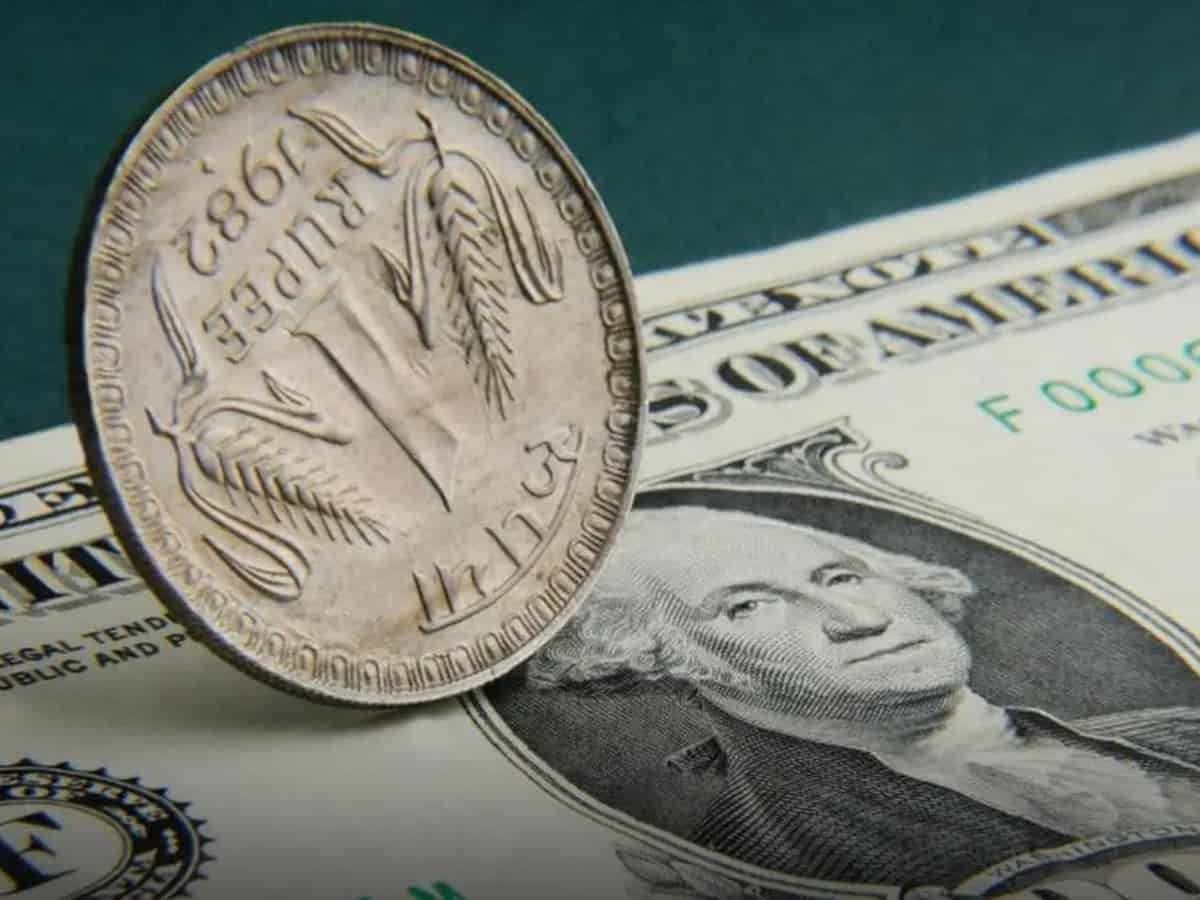
    Mumbai: The rupee appreciated 24 paise to close at 86.81 against the US dollar on Monday on positive domestic equities and weakness of the American currency in the overseas market.

    Hyderabad Institute of Excellence

    Forex traders said the rupee traded with a slight positive bias on weakness in the US dollar and positive global markets. However, surge in crude oil prices capped sharp gains for the local unit.

    At the interbank foreign exchange, the rupee opened at 86.90 then touched an intra-day high of 86.76 and a low of 86.90 against the greenback. The unit ended the session at 86.81 against the dollar, registering a gain of 24 paise from its previous closing level.

    MS Creative SchoolMS Creative School

    On Thursday, the rupee surged 17 paise to settle at 87.05 against the US dollar.

    Forex, stock markets were closed on Friday on the occasion of Holi festival.

    “The rupee appreciated for the fourth day on a trot backed by better-than-expected economic data and recovery in the risk-assets. The weakness in the dollar index and lower treasury yields also supported the local units,” Dilip Parmar, Research Analyst, HDFC Securities, said.

    “We expect the rupee to trade with a slight positive bias on weakness in the US dollar and positive global markets. However, the ongoing trade tariff issue and outflows by foreign investors may cap sharp upside,” Anuj Choudhary, Research Analyst at Mirae Asset Sharekhan, said.

    Meanwhile, the dollar index, which gauges the greenback’s strength against a basket of six currencies, was trading 0.11 per cent lower at 103.60.

    Brent crude, the global oil benchmark, rose 0.92 per cent to USD 71.23 per barrel in futures trade.

    Choudhary further noted that traders may take cues from retail sales and Empire State Manufacturing Index data from the US. USDINR spot price is expected to trade in a range of 86.60 to 87.

    In the domestic equity market, the 30-share BSE Sensex surged 341.04 points, or 0.46 per cent, to settle at 74,169.95, while the Nifty advanced 111.55 points, or 0.5 per cent, to close at 22,508.75 points.

    Foreign institutional investors (FIIs) offloaded equities worth Rs 4,488.45 crore on a net basis on Monday, according to exchange data.

    Meanwhile, the country’s foreign exchange reserves increased USD 15.267 billion to USD 653.966 billion during the week ended March 7, according to the RBI.

    The overall reserves had dropped USD 1.781 billion to USD 638.698 billion in the previous week.

    The reserves had been on a declining trend recently due to revaluation along with forex market interventions by the RBI to help reduce volatilities in the rupee.

    On the domestic macroeconomic front, wholesale price inflation marginally rose to 2.38 per cent in February due to expensive manufactured food items like vegetables oil and beverages, government data released on Monday showed.

    The Wholesale Price Index (WPI)-based inflation was 2.31 per cent in January.

  • Impact of US tariffs on India minimal as country diversifies exports kitty: SBI report

    Impact of US tariffs on India minimal as country diversifies exports kitty: SBI report

    New Delhi: The impact of US trade reciprocal tariffs on India will be minimal as the country has diversified its exports kitty, pitched value addition, exploring alternate areas and works on new routes that transcend from Europe to the US via the Middle East, redrawing new supply chain algorithms, a new SBI Research report said on Monday.

    Hyderabad Institute of Excellence

    The decline in the exports is expected to be in the range of 3-3.5 per cent, which again should be negated through higher export goals across both manufacturing and services fronts, the report mentioned.

    India will also be able to take advantage of the aluminium and steel tariffs imposed by the US last week. India has a trade deficit for aluminium ($13 million) and steel ($406 million) trade with the US where it can potentially take advantage.

    MS Creative SchoolMS Creative School

    The US reciprocal tariffs are expected to come into effect on April 2, and intense bilateral talks between New Delhi and Washington are currently on.

    Union Commerce Minister Piyush Goyal said last week that he “had a forward-looking discussion with US Trade Representative Jamieson Greer on a mutually beneficial Bilateral Trade Agreement” between India and the US.

    “Our approach will be guided by ‘India First’, ‘Viksit Bharat’ and our Comprehensive Strategic Partnership,” Goyal posted on X, along with a photo of his meeting with Greer.

    Goyal had previously met Greer and US Commerce Secretary Howard Lutnick during his visit to the US. This followed US President Donald Trump and PM Narendra Modi’s talks on negotiating the first tranche of a mutually beneficial, multi-sector Bilateral Trade Agreement (BTA) by the fall of 2025.

    According to SBI Research, India has also been talking about free trade agreements (FTAs) with several partners – both bilateral and regional – in a bid to boost export-oriented domestic manufacturing.

    India has signed 13 FTAs in the last five years with its trading partners like Mauritius, the UAE, Australia, etc.

    The country is also negotiating FTAs with the UK, Canada, and the EU, targeting sectors like services, digital trade, and sustainable development.

    India and New Zealand have also announced the launch of negotiations for a comprehensive and mutually beneficial FTA.

    The FTA with the UK alone is expected to increase bilateral trade by $15 billion by 2030. Future FTAs will likely focus on enhancing digital trade, with projections indicating that the digital economy could add $1 trillion to India’s GDP by 2025, according to the report.

    “The shift towards regional supply chains and the impact of geopolitical changes, such as the US tariff war, are influencing India’s FTA strategies to ensure alignment with global trade dynamics,” the report added.

    These FTAs cover a wide array of topics, such as tariff reduction impacting the entire manufacturing and agricultural sectors; rules on services trade; digital issues such as data localisation; intellectual property rights that may have an impact on the accessibility of pharmaceutical drugs; and investment promotion, facilitation, and protection.

  • Indian stock market opens higher, pharma and auto sectors shine

    Indian stock market opens higher, pharma and auto sectors shine

    Mumbai: The Indian equity benchmark indices opened higher on Monday amid positive global cues, as buying was seen in the pharma and auto sectors in the early trade.

    Hyderabad Institute of Excellence

    At around 9.32 am, Sensex was trading 504.88 points or 0.68 per cent up at 74,333.79 while the Nifty added 164.00 points or 0.73 per cent at 22,561.20.

    According to market watchers, Sensex continue to resist near the 74,550 zone and witnessing profit booking slipped to lose steam. The index has the crucial near-term support at 73,600 level which needs to be sustained as of now.

    MS Creative SchoolMS Creative School

    “A decisive move past the 75,000 zone is necessary to anticipate for further rise in the coming days. The support for the day is seen at 22,300 levels while the resistance is seen at 22,600 levels,” said Vaishali Parekh, Vice President – Technical Research, PL Capital Group.

    Meanwhile, Nifty Bank was up 259.95 points or 0.54 per cent at 48,320.35 The Nifty Midcap 100 index was trading at 48,308.40 after adding 183.30 points or 0.38 per cent. Nifty Smallcap 100 index was at 14,959.50 after climbing 62.15 points or 0.42 per cent.

    The near-term market trend is likely to be stable with a positive bias. The positive factors are the steadily declining trend in FII outflows and the outperformance of India over the US last week, said experts.

    This positive trend has fundamental support from the bounce back in FY25 Q3 GDP growth to 6.2 per cent, the spurt in January IIP to 5 per cent and the decline in February CPI inflation to 3.61 per cent, according to experts.

    In the Sensex pack, IndusInd Bank, Bajaj Finserv, Tata Motors, UltraTech Cement, L&T, Axis Bank and ICICI Bank were the top gainers. Whereas, Infosys, Zomato, HCL Tech, Nestle India and Kotak Mahindra Bank were the top losers.

    In the last trading session, Dow Jones climbed 1.65 per cent to close at 41,488.19. The S&P 500 added 2.13 per cent to 5,638.94 and the Nasdaq added 2.61 per cent to close at 17,754.09.

    In the Asian markets, Bangkok and Jakarta were trading in red. Whereas Japan, Seoul and China, and Hong Kong were trading in green.

    Regarding institutional activity, foreign Institutional Investors (FIIs) offloaded equities worth Rs 792.90 crore on March 13, while domestic institutional investors (DIIs) purchased equities worth Rs 1,723.82 crore on the same day.

  • BOK rules out inclusion of bitcoin in foreign exchange reserves

    BOK rules out inclusion of bitcoin in foreign exchange reserves

    Seoul: The South Korean central bank has called for a “cautious approach” to the idea of including bitcoin as foreign exchange reserves given its price volatility, officials said on Sunday.

    Hyderabad Institute of Excellence

    There have been discussions among lawmakers about the possible inclusion of cryptocurrencies in its strategic reserves after US President Donald Trump announced the establishment of a strategic bitcoin reserve and digital asset stockpile earlier this month.

    In an answer to a question by Rep. Cha Gyu-geun of the minor Rebuilding Korea Party, the Bank of Korea (BOK) said it “has neither discussed nor reviewed the possible inclusion of bitcoin in foreign exchange reserves” and “a cautious approach is needed” to the matter.

    MS Creative SchoolMS Creative School

    The BOK cited high volatility in bitcoin prices as a major reason, reports Yonhap news agency.

    “In the case of cryptocurrency market instability, transaction costs to cash out bitcoins could rise drastically,” the central bank said.

    Cryptocurrencies also do not meet the criteria for foreign exchange reserves set by the International Monetary Fund (IMF), such as liquidity, market value and credit rating, it added.

    Meanwhile, earlier this month, the BOK highlighted growing uncertainties surrounding inflationary pressures driven by ongoing geopolitical tensions and trade conflicts between major nations.

    BOK Deputy Governor Kim Woong made the remarks during a meeting to assess the country’s price trends after government data showed a slight dip in consumer price growth.

    According to the latest data, consumer prices in South Korea increased by 2 per cent in February, following a 2.2 per cent rise in January.

    While the inflation rate remains stable, Kim noted that a variety of global factors continue to create volatility in the outlook for prices.

    “Uncertainties remain high regarding geopolitical situations, trade conflicts among major nations, the foreign exchange rate, and domestic demand,” Kim said, addressing the concerns that have left inflation projections uncertain.

  • FIIs selling decline in Indian market, to stabilise in next quarter: Experts

    FIIs selling decline in Indian market, to stabilise in next quarter: Experts

    New Delhi: FII selling in India continues in early March, but the intensity of selling is slowly declining as valuations are becoming reasonable in the stock market, according to experts.

    Hyderabad Institute of Excellence

    This month (up to March 14), FIIs have sold equity for Rs 30,015 crore, taking the total equity sold in CY 2025 so far to Rs 1,42,616 crore.

    In the debt category FIIs were buyers in March so far. The total buy figure for debt (general category plus VRR) stood at Rs 7,029 crore in March to date, say market watchers.

    MS Creative SchoolMS Creative School

    However, the heightened uncertainty triggered by the trade war between the US and other nations is likely to push more money into safe asset classes like gold and the dollar, they added.

    According to Shridatta Bhandwaldar, Head Equities at Canara Robeco Mutual Fund, FIIs have been significant sellers in the Indian equity market over the past three months, with outflows amounting to $15-20 billion.

    “However, as the initial shocks subside, we expect FII flows to at least stabilise in the next quarter and eventually turn positive over time,” he mentioned.

    “For this to happen, though, our earnings will need to show substantial improvement from current levels. We believe that the slowdown in earnings growth is more cyclical than structural, noting that a similar trend was observed in FY23,” he added.

    Valuations for the Nifty index are already below its 10-year average for one-year forward earnings.

    Meanwhile, in the last week, the Indian stock markets remained largely range-bound, ending slightly lower amid mixed global cues and investor caution.

    The benchmark indices saw mild corrections as concerns over global trade policies and sector-specific sell-offs weighed on sentiment.

    Analysts expect volatility to persist in the upcoming sessions as investors track global developments, particularly economic data releases from the US Federal Reserve and domestic macroeconomic indicators.

    While the 22,250-22,650 range remains a key technical zone for the Nifty 50, a breakout in either direction could determine the market’s trajectory in the near term, as per market experts.