Category: BUSINESS

  • Q4 results, inflation and global economic data key triggers for next week

    Q4 results, inflation and global economic data key triggers for next week

    Mumbai: The market outlook for next week will be guided by several global and domestic factors such as q4 results, inflation data and updates on tariffs.

    Hyderabad Institute of Excellence

    Next week, companies like IRDAI, HDFC Life, Infosys, Tata Elxsi, HDFC Bank and ICICI Bank will release their Q4 FY25 results.

    In India, the Wholesale Price Index (WPI) for March will be released on April 15. This indicator will provide insights into wholesale inflation trends, which are crucial for understanding cost pressures at the production level and could have implications for the Reserve Bank of India’s future rate decisions.

    MS Creative SchoolMS Creative School

    On the global front, from the US, key data will begin with the Industrial Production (YoY) numbers for March, scheduled for release on April 16. This data will offer a snapshot of the strength of the manufacturing sector and overall industrial activity.

    Following that, on April 17, the Initial Jobless Claims report will be closely watched by investors and policymakers alike. As a leading indicator of the labour market’s health, any unexpected uptick in claims could signal potential softness in employment, influencing the Federal Reserve’s stance on interest rates.

    China, too, will be in the spotlight on April 16 with a trio of critical economic indicators. The country will report its Q1 GDP growth (quarter-on-quarter), Industrial Production (YoY) for March, and the Unemployment Rate for March.

    The stock market witnessed mixed trading during the trading session from April 7 to April 11. Nifty closed down 0.33 per cent at 22,828, and Sensex closed down 0.28 per cent at 75,157. The market witnessed huge volatility due to tariff concerns. Nifty reached a low of 21,743 during the week. However, it later witnessed a strong recovery.

    Among sectoral indices, the realty sector emerged as the top laggard, while FMCG stocks outperformed.

    FIIs continued their selling spree, offloading approximately Rs 20,911 crore from the cash segment. However, DIIs lent some support, with net inflows amounting to around Rs 21,955 crore.

    Puneet Singhania, Director at Master Trust Group, said, “Nifty’s key supports lie at 22,500 and 22,200, while resistance is seen near 23,050. In this uncertain environment, Nifty remains a sell-on-rise market. Traders should stay cautious and avoid aggressive long positions until volatility subsides and technical strength is confirmed.”

    Bajaj Broking Research said, “Overall, the week of April 12 to April 19, 2025, is poised to be a crucial one for global markets. With inflation, industrial activity, and employment data lined up across the world’s largest economies, investors can expect increased volatility and sharper focus on central bank cues. These numbers will help shape expectations for future rate paths and economic resilience as we progress deeper into 2025.”


  • UPI services down across India, NPCI cites ‘technical issues’

    UPI services down across India, NPCI cites ‘technical issues’

    New Delhi: Digital payments via Unified Payments Interface (UPI) service suffered a nationwide outage on Saturday, which affected millions of users.

    Hyderabad Institute of Excellence

    Digital services on several online payment platforms were disrupted, hindering local shopping, bill payments and business transactions.

    According to the outage tracking platform Down Detector, there were 2,358 complaints by 1 pm. Most reported problems were for payments (81 per cent) and fund transfers (17 per cent).

    MS Creative SchoolMS Creative School

    The National Payments Corporation of India (NPCI), which operates the UPI services, said the disruptions were due to technical issues.

    “NPCI is currently facing intermittent technical issues, leading to partial UPI transaction declines,” the NPCI, shared in a post on social media platform X.

    “We are working to resolve the issue and will keep you updated. We regret the inconvenience caused,” it added.

    Banks suffer as UPI goes down

    Major banking apps from SBI, ICICI, and HDFC were also affected, pointing to a broader issue within the UPI network infrastructure.

    “UPI is down again. Good that I always carry cash. Cash is always King,” posted one affected user on X.

    “This is becoming way too frequent nowadays. First UPI goes down, then banks declare their own ‘downtime’ for UPI transactions,” another user wrote.

    The UPI saw a 13.59 per cent increase (on-month) in transaction volume at 18.3 billion in the month of March, from 16.11 billion in February, as per the latest NPCI data.

    The month of March saw a record Rs 24.77 lakh crore worth UPI-based transactions, up 12.79 per cent from Rs 21.96 lakh crore in February.

    On a daily basis, the UPI network recorded more than 590 million average transactions at Rs 79,910 crore daily transaction count, according to the NPCI data.

    On a year-on-year basis, the record-breaking UPI transactions of Rs 24.77 lakh crore in March marked a 25 per cent surge in value and an impressive 36 per cent growth in volume, demonstrating the unstoppable momentum of India’s digital payments revolution.

    UPI saw strong growth in both person-to-person (P2P) and person-to-merchant (P2M) payments.

  • Rupee jumps 58 paise at settle at 86.10 against US dollar

    Rupee jumps 58 paise at settle at 86.10 against US dollar

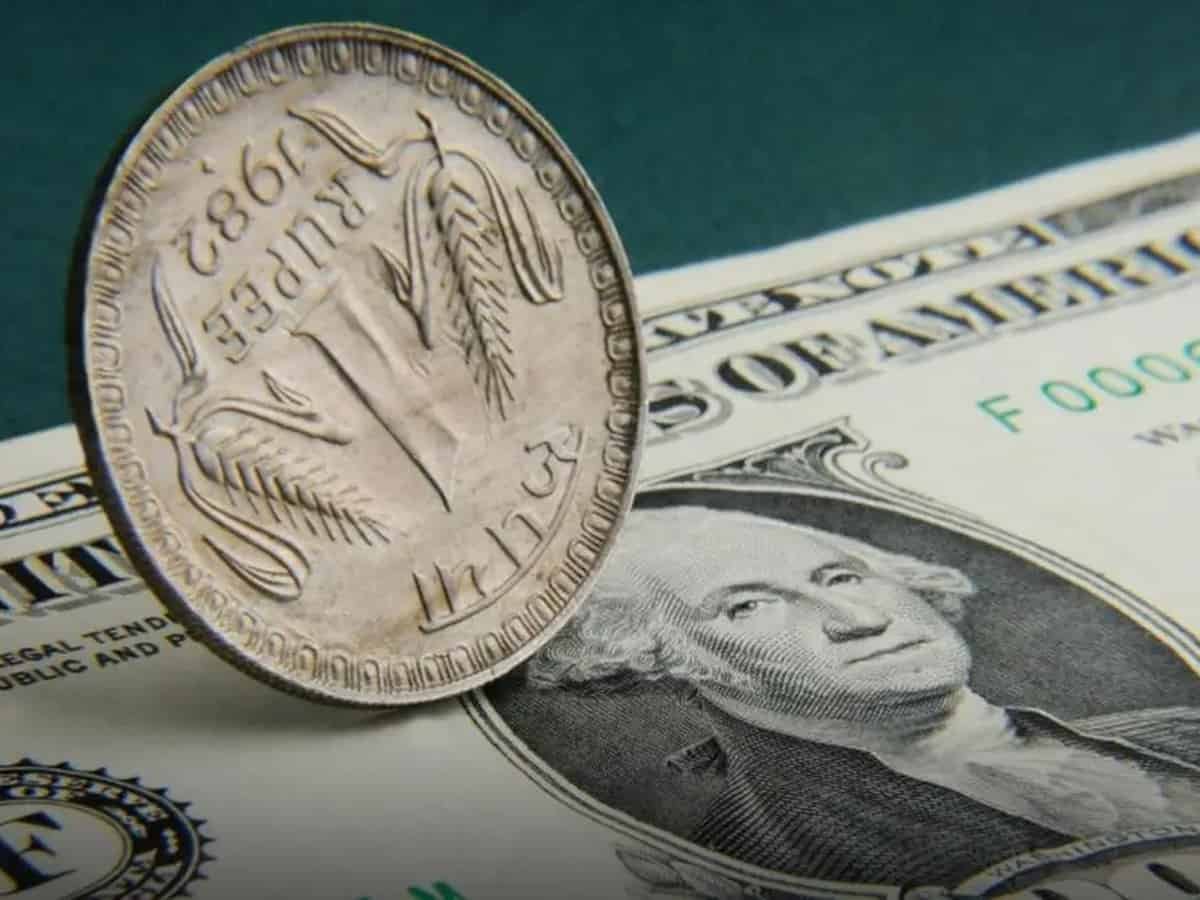
    Mumbai: The rupee surged 58 paise against the greenback to settle at 86.10 on Friday due to a sharp correction in the US dollar and a strong rebound in the domestic equity markets.

    Hyderabad Institute of Excellence

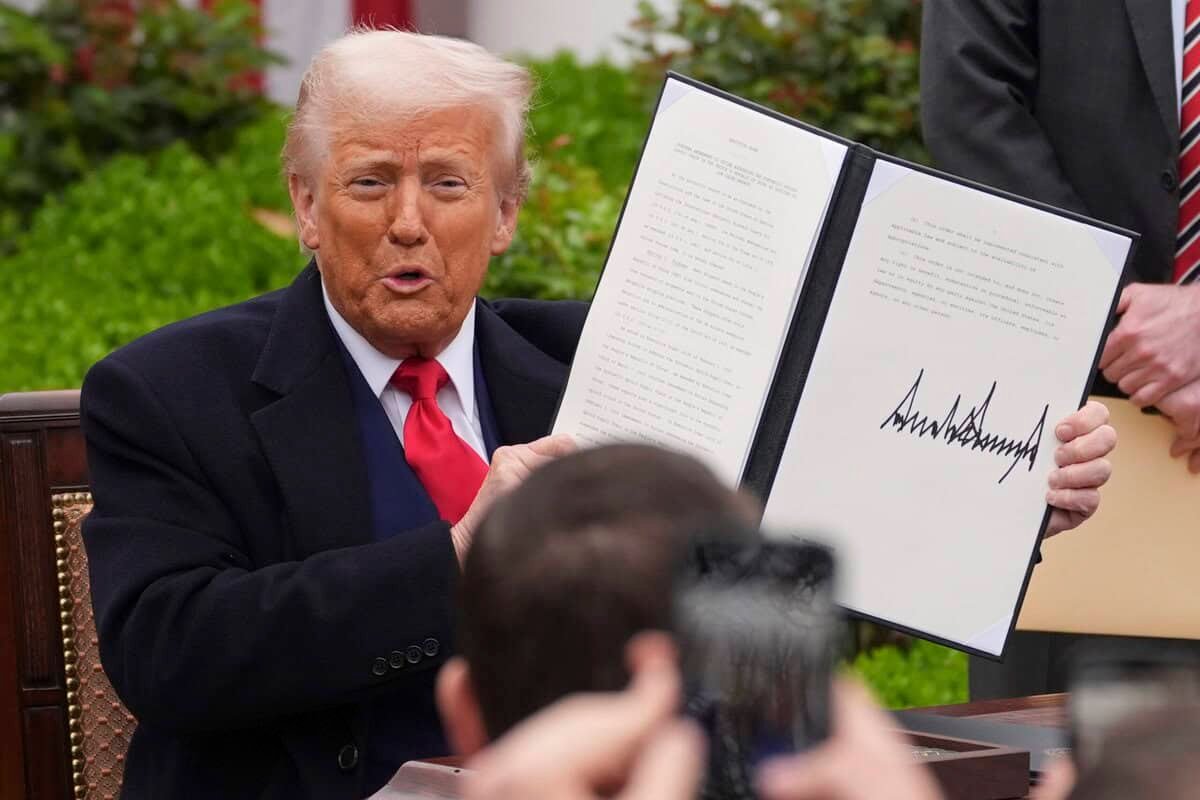
    The surge in the local unit came a day after US President Donald Trump suspended the 26 per cent tariffs on India till July 9.

    At the interbank foreign exchange, the domestic unit opened at 86.22, up 46 paise against the US dollar. During the intra-day trade, it rose to 85.95 before settling at 86.10, up 58 paise against the greenback.

    MS Creative SchoolMS Creative School

    The rupee had settled at 86.68 on Wednesday.

    Equity, forex, and commodity markets were closed on Thursday on account of Shri Mahavir Jayanti.

    “The rupee opened at 86.22 but the dollar was immediately sold off as the dollar index fell below 100 levels for the first time in three years,” Anil Kumar Bhansali, Head of Treasury and Executive Director, Finrex Treasury Advisors LLP, said.

    “The rupee is expected to be in the range of 85.75-86.25 next week on Tuesday after the holiday on Monday,” he said.

    Meanwhile, the dollar index, which gauges the greenback’s strength against a basket of six currencies, crashed 1.52 per cent to 99.335.

    “With China imposing a 125 per cent tariff on US exports, the trade war continues but the dollar has been falling against Asian and European (currencies),” Bhansali said.

    In the domestic equity market, the 30-share BSE Sensex jumped 1,310.11 points to settle at 75,157.26, while the Nifty rose 429.40 points to 22,828.55.

    Brent crude, the global oil benchmark, rose marginally by 0.08 per cent to USD 63.38 per barrel in futures trade.

    Foreign institutional investors (FIIs) offloaded equities worth Rs 2,519.03 crore on a net basis on Friday, according to exchange data.

  • US, India to finalize trade poact in 90 days, target $500B trade

    US, India to finalize trade poact in 90 days, target $500B trade

    New Delhi: An interim trade agreement between India and the US could be finalised in the 90-day tariff pause announced by the Trump administration if it is a “win-win” for both sides, an official said on Friday.

    Hyderabad Institute of Excellence

    The official also said the two countries have already finalised the terms of reference (ToR) to start negotiations for the pact.

    “Lot of possibilities are there to finalise low hanging fruits. Lot of possibilities are there to finalise form and shape of the BTA,” the official said, adding everything is possible in 90 days if it is a “win-win” for both sides.

    MS Creative SchoolMS Creative School

    India and the US are engaged in finalising the trade agreement. Both sides have targeted to conclude the first phase by fall (September-October) this year with an aim to more than double the bilateral trade to USD 500 billion by 2030 from the current about USD 191 billion.

    “The work has started. India is far ahead of other countries in negotiating a trade deal,” the government official said, adding India is in continuous engagement with the US.

    A lot of negotiations will happen through video conferencing, and there could be some physical visits.

    The US, on April 2, announced an additional 26 per cent tariff on Indian goods entering the US. But on April 9, the Trump administration announced the suspension of these on India for 90 days until July 9 this year. However, the 10 per cent baseline tariff imposed on the countries will continue to remain in place.

    Meanwhile, earlier in the day, Commerce and Industry Minister Piyush Goyal said that India is in continuous dialogue with the US on the proposed agreement, and the government will safeguard the nation’s and public interests, as it is never advisable to take any step in undue haste.

    He said all trade talks of the country are progressing well in the spirit of ‘India first’ and to ensure the pathway to Viksit Bharat 2047.

    “Humne pahle bhi kai baar kaha hai ki hum banduk rakhke kabhi negotiate nai karte hain. Sammay ki pabandiyaan acchhi rahti hain ki wo protsaahit karti hain ki baat teji se ho, lekin jab tak desh hit aur jan hit ko hum surakshit na rakh saken, tab tak kabhi bhi jaldbazzi karna accha nai hai (I have said it many times earlier, we do not negotiate at the gunpoint. Time restrictions are good as they encourage us to negotiate swiftly, but until we are able to protect the interests of the country and people, it is never good to be hasty),” Goyal told reporters when asked about the progress of India-US BTA.

    From 2021-22 to 2023-24, the US was India’s largest trading partner. The US accounts for about 18 per cent of India’s total goods exports, 6.22 per cent in imports, and 10.73 per cent in bilateral trade.

    With America, India had a trade surplus (the difference between imports and exports) of USD 35.32 billion in goods in 2023-24. This was USD 27.7 billion in 2022-23, USD 32.85 billion in 2021-22, USD 22.73 billion in 2020-21, and USD 17.26 billion in 2019-20.

    In 2024, India’s main exports to the US included drug formulations and biologicals (USD 8.1 billion), telecom instruments (USD 6.5 billion), precious and semi-precious stones (USD 5.3 billion), petroleum products (USD 4.1 billion), gold and other precious metal jewellery (USD 3.2 billion), ready-made garments of cotton, including accessories (USD 2.8 billion), and products of iron and steel (USD 2.7 billion).

    Imports included crude oil (USD 4.5 billion), petroleum products (USD 3.6 billion), coal, coke (USD 3.4 billion), cut and polished diamonds (USD 2.6 billion), electric machinery (USD 1.4 billion), aircraft, spacecraft and parts (USD 1.3 billion), and gold (USD 1.3 billion).

  • India’s natural gas consumption likely to record 60 pc jump by 2030: Study

    India’s natural gas consumption likely to record 60 pc jump by 2030: Study

    New Delhi: India’s natural gas consumption is likely to rise by close to 60 per cent by 2030 as the country seeks to reduce dependence on oil imports and switch to cleaner fuels for running vehicles, cooking in household kitchens and industrial use, according to a study by the Petroleum and Natural Gas Regulatory Board (PNGRB).

    Hyderabad Institute of Excellence

    The demand has been considered for fertiliser, power, refineries, petrochemical, other industrial and commercial establishments, households as well as Compressed Natural Gas (CNG) and Liquefied Natural Gas (LNG) as transport fuel in the energy basket through 2030 and 2040, the report said.

    Consumption of natural gas is expected to rise from 188 million standard cubic metres per day in 2023-24 to 297 mmscmd by 2030 under the ‘Good-to-Go’ scenario, which assumes moderate growth and developments based on current trends and commitments, the report observed.

    MS Creative SchoolMS Creative School

    The consumption is projected to rise further to 496 mmscmd by 2040 under the same scenario.

    Under the ‘Good to Best’ scenario that considers accelerated progress, favourable policy implementation, and enhanced investments leading to higher-than-expected growth, consumption could rise to 365 mmscmd by 2030 and 630 mmscmd by 2040.

    The government is aiming to raise the share of natural gas in the country’s primary energy basket to 15 per cent by 2030 from the current 6-6.5 per cent. Gas is being considered the bridge fuel as the country transitions away from polluting fossil fuels to clean energy to achieve its net-zero emission target by 2070.

    The PNGRB has already developed gas infrastructure across 307 Geographical Areas, covering the entire country except islands, ensuring widespread access to natural gas across domestic, commercial, industrial, and transportation segments, the report pointed out.

    “The City Gas Distribution (CGD) sector is expected to be the primary growth driver, with consumption projected to grow 2.5 to 3.5 times by 2030 and 6 to 7 times” by 2030 from a base of 37 mmscmd in FY24, according to the report.

    The upsurge in Refinery and Petrochemical, especially renewed focus on petrochemical integration, will provide a new growth leg. Consequently, the petrochemical sector is expected to contribute significantly, as the Petroleum Intensity Index is projected to improve 15 per cent by 2030 and 25 per cent by 2040. Other Sectors like Power, Fertiliser, Iron and Steel, etc. are projected to grow moderately.

    LNG as a long-haul transportation fuel could be a game changer, with the potential to play a pivotal role in replacing Diesel. LNG trucking is projected to gain momentum post-2030, with the potential to emulate China’s success in reducing diesel dependency, the report pointed out.

    Currently, India’s natural gas production meets only around 50 per cent of its demand. As demand is expected to grow significantly by 2030 and 2040, dependence on LNG will increase to bridge the demand-supply gap. Such a growth would result in a doubling of LNG imports by 2030. The expected increase in global LNG availability beyond 2026 may offer better prices of long-term LNG prices, which would facilitate the consumption of LNG in the price-sensitive industrial and transport sector in the country, the report said.

  • Sensex, Nifty open higher after Trump pauses tariffs till July 9

    Mumbai: Indian equity market opened in the green on Friday after US President Donald Trump announced to pause reciprocal tariffs till July 9.

    Hyderabad Institute of Excellence

    At around 9:22 am, Sensex was up 1,170 points or 1.58 per cent, at 75,017 and Nifty was up 373 points or 1.67 per cent at 22,772.

    Along with the largecaps, buying was seen in the smallcaps and midcaps. Nifty midcap 100 index was down 753 points or 1.52 per cent at 50,335 and Nifty smallcap 100 index was down 278 points or 1.83 percent at 15,535.

    MS Creative SchoolMS Creative School

    However, most Asian markets were trading low. Tokyo, Hong Kong, Bangkok and Seoul were in the red, while Jakarta and Shanghai were in the green.

    The US stock markets fell sharply in Thursday’s trading session. The Dow closed down 2.50 per cent and the Nasdaq fell 4.31 per cent.

    In the Sensex pack, Tata Motors, Sun Pharma, Tata Steel, Tech Mahindra, HCL Tech, Bajaj Finserv, Adani Ports, Bajaj Finance, Eternal, M&M, Power Grid were top gainers. TCS and Asian Paints were losers.

    Pranay Aggarwal, Director and CEO, Stoxkart said, “Recent developments in U.S. trade policy under President Donald Trump have led to significant fluctuations in global markets, including those in India. Even though a 90-day pause on most of these tariffs has provided temporary relief, sectors directly impacted by the tariffs, such as pharmaceuticals and seafood exports, continue to face challenges.”

    “Investors are advised to closely monitor ongoing trade negotiations and sector-specific developments to navigate this period of global uncertainty,” he added.

    The Indian rupee opened higher by 51 paise at 86.18 per dollar on Friday against Wednesday’s previous close of 86.69.

    Gold breached the key $3,200/oz level for the first time to scale a new peak on Friday, fuelled by a weaker dollar and an escalating trade war that sent investors rushing toward safe-haven assets.

    The foreign institutional investors (FIIs) continued their selling on the eighth day on April 9, as they sold equities worth Rs 4,358 crore. However, domestic institutional investors (DIIs) extended their buying on the third day as they bought equities of Rs 2,976 crore.

  • Moody’s Analytics cuts India’s 2025 GDP growth forecast to 6.1 pc

    Moody’s Analytics cuts India’s 2025 GDP growth forecast to 6.1 pc

    New Delhi: Moody’s Analytics on Thursday cut India’s GDP growth forecast to 6.1 per cent for 2025 on looming higher US reciprocal tariff threats.

    Hyderabad Institute of Excellence

    It said the US is one of India’s largest trading partners, so a 26 per cent tariff hovering over imports of Indian goods will heavily impede the trade balance.

    “We revised India’s GDP growth forecast to 6.1 per cent in 2025 from 6.4 per cent in our March baseline,” said the Moody’s Analytics report titled ‘APAC Outlook: U.S. Versus Them’.

    MS Creative SchoolMS Creative School

    It said gems and jewellery, medical devices, and textile industries will be among the worst hit.

    Regardless, we expect overall growth to be relatively insulated from the shock since external demand makes up a relatively small portion of GDP, Moody’s Analytics said.

    Given headline inflation has been easing at a healthy pace, we expect the Reserve Bank of India to lower interest rates, most likely in the form of 25-basis point cuts that take the policy rate to 5.75 per cent by the end of the year.

    “This, paired with tax incentives announced earlier this year, should help boost the domestic economy and dampen the shock of the tariffs on overall growth relative to other vulnerable economies,” Moody’s said.

    In a major relief for countries, US President Donald Trump on Wednesday deferred by 90 days the reciprocal tariffs that was to come into effect from April 9 on 75 countries with which the US has a trade imbalance.

    The US, however, raised the tax rate on Chinese imports to 125 per cent “effective immediately”.

    However, the higher 10 per cent tariff, which was effective from April 5, will continue. In case of India, the additional duty of 26 per cent to be paid for exports to the US has been put on hold for 90 days.

    Moody’s Analytics said uncertainty is palpable, with tumbling and volatile equity markets headlining financial market turbulence.

    The negative and pervasive impact of a sustained rise in uncertainty cannot be understated. Household and business sentiment is crumbling, and if the calamity continues, monetary policy easing that was supposed to characterise 2025 will lose some of its potency, it said.

    Also, households won’t want to spend more when the environment is so uncertain, regardless of stronger purchasing power, and businesses will hold back on additional investment as they navigate chaos, Moody’s Analytics said.

    As tariffs increase the cost and complexity of trade, they weaken global growth prospects.

    “The ‘Liberation Day’ tariffs declared last week increased the odds of a global recession. Under those tariffs, inflation across Asia would stay subdued amid weaker trade and growth dynamics,” it added.

    Inflation in the US, however, would rise as tariffs increased prices of producer and consumer goods, Moody’s Analytics added.

  • FIIs, DIIs turn net buyers in March, pump over USD 5 bn into Indian equity market

    FIIs, DIIs turn net buyers in March, pump over USD 5 bn into Indian equity market

    Mumbai: Foreign and domestic investors showed strong confidence in the Indian equity market in March 2025, with both foreign institutional investors (FIIs) and domestic institutional investors (DIIs) emerging as net buyers, a new report said on Thursday.

    Hyderabad Institute of Excellence

    FIIs invested $975 million while DIIs made even stronger contributions with $4.3 billion in net purchases during the month, according to the JM Financial Securities’ report.

    The month witnessed a remarkable turnaround in FII sentiment. In the first half of March, up to the 19th, FIIs were net sellers, but they turned aggressive buyers in the latter half, pouring $3.6 billion into Indian equities.

    MS Creative SchoolMS Creative School

    This shift helped push FII shareholding in Indian stocks up to 16.8 per cent in March, compared to 15.9 per cent in February, the report said.

    The sectors that attracted the most foreign inflows included banking, financial and insurance services (BFSI), telecom, and metals.

    BFSI led the way with $1.7 billion in FII inflows, followed by telecom at $360 million, and metals at $219 million.

    Other sectors that gained investor attention, albeit at a smaller scale, were realty, chemicals, media, and pharmaceuticals.

    The report also highlighted that FIIs continued to maintain strong exposure in key sectors. BFSI, IT, Oil & Gas, Auto, and Pharma together accounted for nearly 60 per cent of total FII holdings in Indian equities.

    The share of BFSI in FII Assets Under Custody (AUC) in India rose to 31.2 per cent in March from 30.8 per cent in February, while Pharma’s share edged up to 6.9 per cent from 6.8 per cent.

    However, IT services — the second-largest sector for FII holdings — saw its share decline to 9 per cent from 9.9 per cent in the previous month, influenced by ongoing geopolitical uncertainties.

    Auto declined to 6.7 per cent from 7 per cent, while Oil & Gas remained unchanged, the report said.

  • Asian shares surge as Prez Trump pauses most of his tariffs

    Asian shares surge as Prez Trump pauses most of his tariffs

    Tokyo: Asian shares surged in early Thursday trading, with Japan’s benchmark jumping more than 2,000 point almost immediately after the Tokyo exchange opened, as investors welcomed President Donald Trump’s decision to back off on most of his tariffs.

    Hyderabad Institute of Excellence

    Analysts had expected the regional comeback given that US stocks had one of its best days in history on a euphoric Wall Street Wednesday, where investor hopes had run high that Trump would tone down the tariffs.

    Japan’s benchmark Nikkei 225 jumped 8.8% in morning trading to 34,510.86, zooming upward as soon as trading began. Australia’s S&P/ASX 200 soared 5.1% to 7,748.00. South Korea’s Kospi gained 5.2% to 2,412.80. Hong Kong and Shanghai markets were set to open soon. The Hang Seng index has fallen considerably in the last five days, and could be set for a rebound like the other regional indexes.

    MS Creative SchoolMS Creative School

    Stephen Innes, managing partner at SPI Asset Management, called the reaction “from fear to euphoria”.

    “It’s now a manageable risk, especially as global recession tail bets get unwound, and most of Asia’s exporters breathe a massive sigh of relief,” he said, referring to the tariffs on China, which Trump has kept.

    On Wall Street

    On Wall Street, the S&P 500 surged 9.5%, an amount that would count as a good year for the market. It had been sinking earlier in the day on worries that Trump’s trade war could drag the global economy into a recession. But then came the posting on social media that investors worldwide had been waiting and wishing for.

    “I have authorised a 90 day PAUSE,” Trump said, after recognising the more than 75 countries that he said have been negotiating on trade and had not retaliated against his latest increases in tariffs.

    Treasury Secretary Scott Bessent later told reporters that Trump was pausing his so-called reciprocal tariffs on most of the country’s biggest trading partners, but maintaining his 10% tariff on nearly all global imports.

    China, a huge exception

    China was a huge exception, though, with Trump saying tariffs are going up to 125% against its products. That raises the possibility of more swings ahead that could stun financial markets. The trade war is not over, and an escalating battle between the world’s two largest economies can create plenty of damage. US stocks are also still below where they were just a week ago, when Trump announced worldwide tariffs on what he called “Liberation Day”.

    But on Wednesday, at least, the focus on Wall Street was on the positive. The Dow Jones Industrial Average shot to a gain of 2,962 points, or 7.9%. The Nasdaq composite leaped 12.2%. The S&P 500 had its third-best day since 1940.

    The relief came after doubts had crept in about whether Trump cared about the financial pain the US stock market was taking because of his tariffs. The S&P 500, the index that sits at the centre of many 401(k) accounts, came into the day nearly 19% below its record set less than two months ago.

    That surprised many professional investors who had long thought that a president who used to crow about records for the Dow under his watch would pull back on policies if they sent markets reeling.

    Wednesday’s rally pulled the S&P 500 index away from the edge of what’s called a “bear market”. That’s what professionals call it when a run-of-the-mill drop of 10% for US stocks, which happens every year or so, graduates into a more vicious fall of 20%. The index is now down 11.2% from its record.

    Wall Street also got a boost from a relatively smooth auction of US Treasurys in the bond market Wednesday. Earlier jumps in Treasury yields had rattled the market, indicating increasing levels of stress. Trump himself said Wednesday that he had been watching the bond market “getting a little queasy”.

    Analysis behind rise in yields

    Analysts say several reasons could be behind the rise in yields, including hedge funds and other investors having to sell their Treasury bonds to raise cash in order to make up for losses in the stock market. Investors outside the United States may also be selling their US Treasurys because of the trade war. Such actions would push down prices for Treasurys, which in turn would push up their yields.

    Regardless of the reasons behind it, higher yields on Treasury add pressure on the stock market and push upward rates for mortgages and other loans for US households and businesses.

    The moves are particularly notable because US Treasury yields have historically dropped — not risen — during scary times for the market because the bonds are usually seen as some of the safest possible investments. This week’s sharp rise had brought the yield on the 10-year Treasury back to where it was in late February.

    After approaching 4.50% in the morning, the 10-year yield pulled back to 4.34% following Trump’s pause and the Treasury’s auction. That’s still up from 4.26% late Tuesday and from just 4.01% at the end of last week.

    Trade war not over

    Of course, the trade war is not over. Bessent and Trump clearly showed their anger at China, which has been ratcheting up its own tariffs on US goods and announcing other countermeasures with each move Trump has made.

  • 10% tariff on global imports remains, Trump shifts focus to China

    10% tariff on global imports remains, Trump shifts focus to China

    Washington: US Treasury Secretary Scott Bessent told reporters that US President Trump is pausing his so-called “reciprocal” tariffs on most of the country’s biggest trading partners but maintaining his 10 per cent tariff on nearly all global imports.

    Hyderabad Institute of ExcellenceHyderabad Institute of Excellence

    The Treasury Secretary also said President Trump will escalate action against China.

    Facing a global market meltdown, President Donald Trump on Wednesday abruptly backed down on his tariffs on most nations for 90 days, but raised his tax rate on Chinese imports to 125 per cent.

    MS Creative SchoolMS Creative School

    It was seemingly an attempt to narrow what had been an unprecedented trade war between the US and most of the world to one between the US and China.

    Global markets surged on the development, but the precise details of Trump’s plans to ease tariffs on non-China trade partners were not immediately clear.