Category: BUSINESS

  • Rupee falls 4 paise to 85.19 against US dollar in early trade

    Rupee falls 4 paise to 85.19 against US dollar in early trade

    Mumbai: Rupee traded in a narrow range and depreciated 4 paise to 85.19 against the US dollar in early trade on Tuesday, as the support from positive domestic equities was negated by dollar short-covering by investors.

    Forex traders said concerns persisted over economic headwinds from tariffs and US monetary policy that could dampen demand.

    At the interbank foreign exchange, the domestic unit opened at 85.11 then fell to 85.19 against the greenback in early deals, registering a loss of 4 paise over its previous closing level. On Monday, the rupee appreciated 23 paise to settle at 85.15 against the US dollar.

    MS Creative School

    “Concerns of a potential recession driven by the tariff war persist. The US president again repeated his criticism of FED chair Powell and said that the US economy will slow unless interest rates are lowered immediately.

    “His comments fuelled worries about the FED’s independence in setting monetary policy and about the outlook for US assets,” said Anil Kumar Bhansali, Head of Treasury and Executive Director Finrex Treasury Advisors LLP.

    The rupee opened slightly weaker after touching a high of 85.03 on Monday which was almost a month’s high with inflows pouring in debt as well as equity, Bhansali said.

    Meanwhile, the dollar index, which gauges the greenback’s strength against a basket of six currencies, was trading lower by 0.19 per cent at 98.09.

    Brent crude, the global oil benchmark, rose 0.53 per cent to USD 66.61 per barrel in futures trade.

    In the domestic equity market, the 30-share BSE Sensex rose by 155.28 points, or 0.20 per cent, to 79,563.78, while the Nifty advanced 37.30 points, or 0.15 per cent, to 24,162.85.

    Foreign institutional investors (FIIs) bought equities worth Rs 1,970.17 crore on a net basis on Monday, according to exchange data.

  • Finance Minister Sitharaman in San Francisco for key meetings

    Finance Minister Sitharaman in San Francisco for key meetings

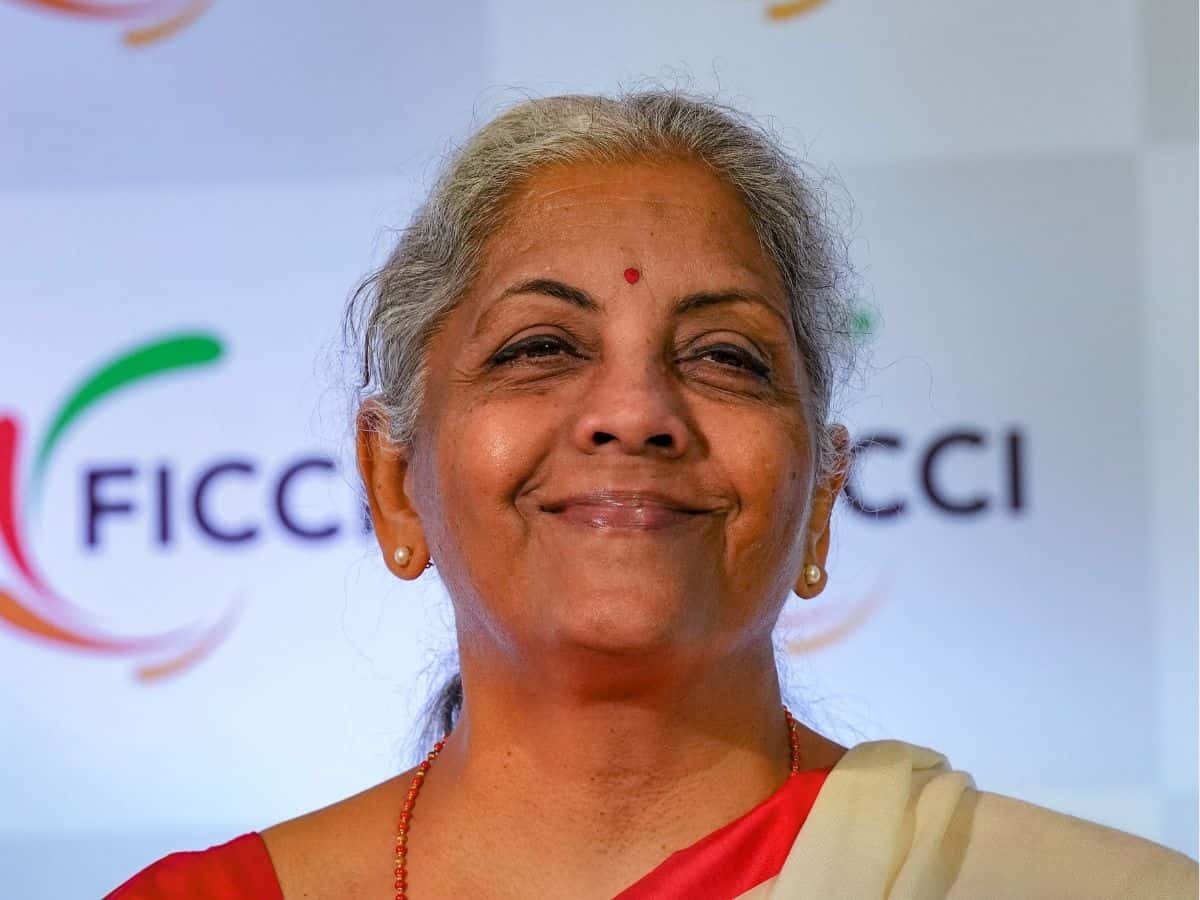
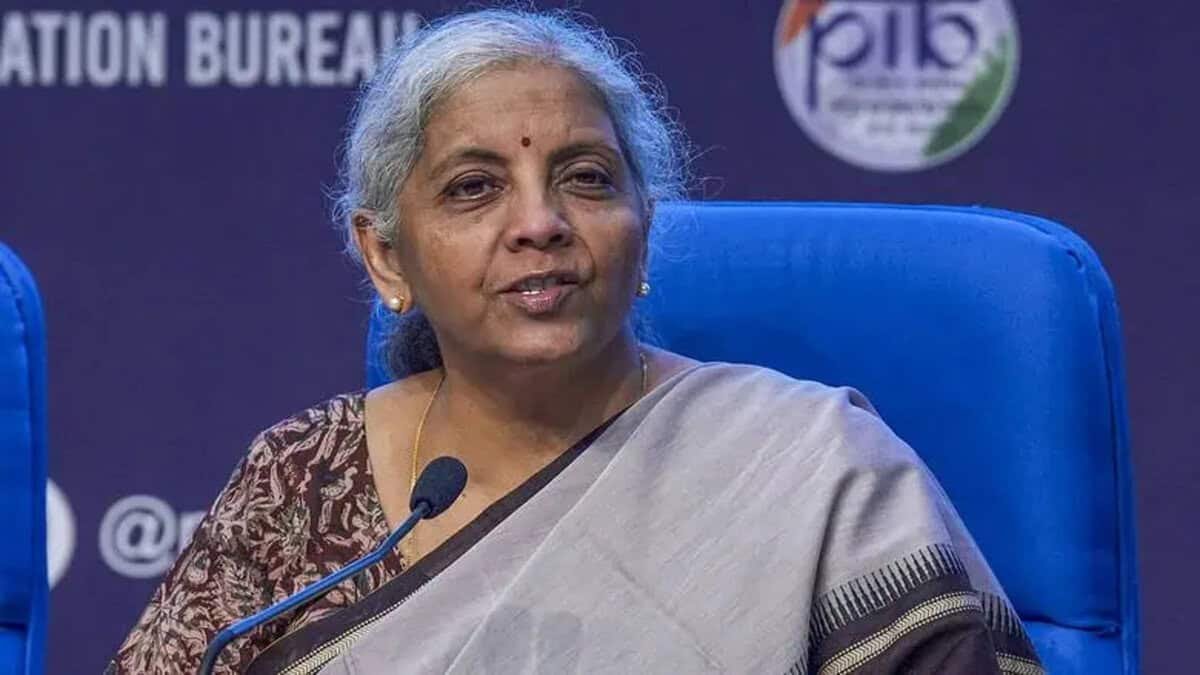
    New York: Finance Minister Nirmala Sitharaman met several senior executives and business leaders in San Francisco and discussed bilateral areas of cooperation in sectors such as technology, artificial intelligence, energy and digital infrastructure as well as opportunities to enhance investment collaboration between India and the US.

    Sitharaman arrived in San Francisco Sunday as she began her 11-day trip to the US and Peru with an interaction with the Indian diaspora in the Californian city.

    On Monday, she held several meetings with business leaders and corporate executives.

    MS Creative School

    The minister met Silicon Valley venture capital firm a16z General Partner Anjney Midha and technology company VMware Chief Executive Officer Raghu Raghuram in San Francisco.

    She “discussed the remarkable transformation in technology space” driven by Prime Minister Narendra Modi’s leadership and “suggested” that a16z and VMware “may like to explore collaboration across sectors” within the domain of AI including in education, healthcare, and AI Centres of Excellence, the Ministry of Finance said in a post on X.

    Raghuram said that AI is a strategic infrastructure, and the “work India is doing in the field of AI is visible.”

    Midha said that a16z is working in 16 areas of infrastructure dedicated sectoral funds across many countries to provide solutions to real-world problems.

    Sitharaman discussed the various facets of India’s AI efforts, speaking about the need to skill and train the youth in the domain and encouraged a16z to explore possibilities for collaboration on that front, the Finance Ministry said.

    She also met Google Cloud CEO Thomas Kurian and his team and discussed the “transformative evolution of India’s digital infrastructure under the #DigitalIndia initiative in recent years, positioning the country as a global leader in digital adoption.”

    A post by the Finance Ministry on X said that Kurian acknowledged and appreciated India’s AI Mission and the trajectory the country is taking under PM Modi and called for connecting India to the world via land and sea cables.

    He added that Google Cloud aims to operate entirely on carbon-free energy 24/7 at its data centres and offices worldwide by 2030 and spoke about an upcoming investment strategy that the group is working on for India.

    Sitharaman encouraged Google Cloud to “explore local linkages in India for territorial collaboration and build tech for India and the world as part of #MakeInIndia.”

    She also met DataRobot CEO Debanjan Saha and “underlined the steps that the Government of India has taken over years to boost digital infrastructure, including budgeting Rs 10,300 crore for IndiaAI Mission, creating AI language technologies through BharatGen and Sarvam-1, and the establishment of the Srijan Centre for Generative AI” at the School of Artificial Intelligence and Data Science at IIT-Jodhpur among others.

    Sitharaman informed Saha “about the potential opportunity through the proposed Rs 1 lakh crore (USD 12 billion) corpus private sector-driven research, development, and innovation scheme” and also about India ranking first globally in AI skill penetration where it is ahead of many developed countries, the Finance Ministry said.

    Saha referred to India’s potential to become an AI superpower and expressed interest in participating in the AI Centre of Excellence, for which the Union Budget 2025-26 recently allocated Rs 500 crore.

    In a meeting with Turing CEO Jonathan Siddharth, Sitharaman highlighted the policy framework that India has put in place for AI and encouraged him to explore opportunities for collaboration and fruitful engagement.

    Jonathan “expressed his desire to see India at the forefront of #AI revolution and spoke about working in the domain of #AI with India and through Indian contributors to create a sovereign model that can serve as a template for the world,” the ministry said.

    Sitharaman also attended a luncheon roundtable hosted by the Consulate General of India in San Francisco with various pension fund managers and other institutional investors along with Finance Secretary Ajay Seth and India’s Ambassador to the US Vinay Mohan Kwatra.

    The participants shared with the Finance Minister “their views on the reforms pursued by the Government of India and gave feedback and observation on the existing policy framework.”

    They also spoke about their keen interest and commitment for a deeper and broad-based investment collaboration between the US and India and shared feedback on how to further facilitate the investment experience.

    Sitharaman thanked the participants for their “valuable” feedback and spoke about the opportunities for investment and collaboration in the domain of energy and sustainability, the Rs 1 lakh crore (USD 12 billion) corpus private sector–driven Research, Development, and Innovation Scheme, and GIFT-IFSC among others.

    Later in the day, she delivered a keynote address on ‘Laying the foundations for a developed India #ViksitBharat by 2047’, at the Hoover Institution at Stanford University. She also participated in a fireside chat with Professor Steve Davis during the event.

    From San Francisco, she will travel to Washington DC from April 22-25, where she will participate in the Spring Meetings of the International Monetary Fund (IMF) and the World Bank, the 2nd G20 Finance Ministers and Central Bank Governor (FMCBG) Meetings, Development Committee Plenary, IMFC Plenary, and Global Sovereign Debt Roundtable (GSDR) meeting.

  • Google settles Android TV case with CCI for Rs 20.24 crore

    Google settles Android TV case with CCI for Rs 20.24 crore

    New Delhi: Technology major Google on Monday settled with the Competition Commission a nearly four-year-old case related to alleged unfair business practices with respect to Android Smart TV market by agreeing to modify its agreement with Original Equipment Manufacturers and by paying Rs 20.24 crore as the settlement amount.

    This is the first case that has been settled under the amended Competition Act, wherein the settlement and commitment provisions were introduced in 2023.

    In the nearly four-year-old case, Google proposed settlement, including a modified agreement with the vendors that would address anti-competitive concerns and also paid a settlement amount of Rs 20.24 crore after a settlement discount of 15 per cent.

    MS Creative School

    The settlement order on Monday also came at a time when US Vice President J D Vance started his four-day India visit. Also, India is hoping to reach an agreement with the US within the 90-day pause on steep tariffs announced by President Donald Trump.

    “The Commission considered the settlement proposal and observed that under the ‘New India Agreement’, Google will provide a standalone licence for the Play Store and Play Services for Android smart TVs in India, thereby removing the requirement to bundle these services or impose default placement conditions.

    “Additionally, by waiving the need for a valid Android Compatibility Commitments (ACC) for devices shipped into India that do not include Google apps, OEMs can now sell and develop incompatible Android devices without violating the Television App Distribution Agreement (TADA),” the regulator said in a release on Monday.

    Besides, as part of the settlement, Google has paid Rs 20.24 crore as settlement amount.

    The regulator also directed Google to implement the terms of the settlement for a period of five years and submit annual compliance reports by April 15 each year, covering the period up to March 31st of that year.

    The CCI said, “If the Settlement Applicant fails to comply with the order passed by the Commission or it comes to the notice of the Commission that the Settlement Applicant has not made full and true disclosure during the settlement proceedings or there has been a material change in the facts, the order passed under section 48 A (3) of the Act shall stand revoked and withdrawn”.

    The 28-page majority order approving the settlement was passed by CCI Chairperson Ravneet Kaur and two members — Sweta Kakkad and Deepak Anurag — while another member Anil Agarwal passed a dissent order.

    Earlier also, Google had come under the scanner of CCI where the latter passed orders with respect to Android OS and Play Store billing matters. Two more cases against Google — one related to digital news publshers/adtech and another on alleged excessive Play Store billing — are currently being probed by the regulator.

    In June 2021, CCI had ordered a detailed investigation into the case after concluding that there was prima facie evidence of competition law violations.

    The probe by the regulator’s investigation arm Director General (DG) concluded that Android Smart TV OS has a dominant position in the relevant market of ‘licensable Smart TV device operating system in India’ and Google Play Store is in a dominant position in the ‘Market for App Store for Android Smart TV OS in India’.

    “It found that Google’s agreements — TADA and ACC — executed together, imposed unfair terms by requiring the pre-installation of its full app bundle Google TV Services, preventing OEMs from developing or using Android forks, and hindering innovation,” CCI said.

    Citing the DG’s findings, the watchdog noted that these agreements extended across entire device portfolios and included the tying of services like YouTube with the Play Store, strengthening Google’s market dominance and breaching several provisions of Section 4 of the Act.

    The allegation of refusal to deal and exclusive supply under Section 3(4) was not substantiated, the release said.

    Section 3 pertains to anti-competitive agreements and Section 4 relates to abuse of dominant position.

    In the dissent order, Anil Agarwal said that as a settlement proposal, Google has proposed to offer a New India Agreement for OEMs distributing devices in India and the company will continue to offer TADA in addition to the New India Agreement.

    “Under the proposed new arrangement, unique to India, OEMs have the option to either pay for the New India Agreement licence or continue with the free bundled applications under TADA. 90. The settlement proposal does not eliminate existing arrangements under TADA which have been prima facie found to be contravening the provisions of the Act,” Agarwal said in his 16-page order.

    It was alleged that Google misused its dominant position by enforcing restrictive agreements on OEMs, including compulsory bundling of the Play Store with Android TV OS and preventing the use or creation of rival forked Android versions through its Anti-Fragmentation Agreements.

    These practices allegedly blocked market access, curbed competition, and placed unrelated obligations on OEMs, ultimately stifling innovation and violating provisions of Section 4 of the Act.

    CCI started looking into the matter following a complaint filed by two individuals against Google LLC, Google India Pvt Ltd, Xiaomi Technology India Pvt Ltd and TCL India Holding Pvt Ltd.

  • IMF, World Bank see India’s potential as engine of global trade: FM Sitharaman

    IMF, World Bank see India’s potential as engine of global trade: FM Sitharaman

    San Francisco: Finance Minister Nirmala Sitharaman said on Monday that India has become the fastest-growing economy, driven by the “visionary leadership” of Prime Minister Narendra Modi and the stability provided by a continuing government.

    Addressing the Indian diaspora in the US, the Finance Minister said, “When we say that India is the fastest-growing economy and when the IMF and World Bank recognise that India can be the engine driving global trade, what they are recognising is the immense potential that exists in India.”

    Highlighting the steps to strengthen the Indian economy, Sitharaman said, “During the Covid-19 pandemic, our fiscal deficit went up. But in 2021, we came up with a clear signal as to how we wanted to manage our fiscal deficit. We set year-on-year targets and committed to bringing the fiscal deficit below 4.5 per cent by 2026. And that’s what we have been following each year without fail.”

    MS Creative School

    She said the government’s primary focus under Prime Minister Narendra Modi is achieving ‘Viksit Bharat’ by 2047. This vision encompasses improvements across sectors impacting women, the impoverished, youth, and farmers.

    FM Sitharaman highlighted that India prioritises ‘Sunrise Sectors’ and stands out as a leader in Digital Public Infrastructure, driving innovation and growth..

    She also said, “Prime Minister Narendra Modi makes it a part of his every overseas visit to connect with the Indian diaspora because he thinks that it is important that India connects with each one of you who, located in whichever part of the world, are doing your best to contribute to the world and stand out as an example.”

    Sitharaman is on a five-day visit to the United States. Upon her arrival in San Francisco, she was received by Indian Ambassador Vinay Mohan Kwatra

    During the visit, she is slated to deliver a keynote speech at Stanford University and hold discussions with CEOs in San Francisco on investment and technological advancements. The visit will also include participation in diaspora events, enhancing India’s global cultural presence.

    In Washington DC, Sitharaman will attend the IMF and World Bank Spring Meetings, and the G20 Finance Ministers and Central Bank Governors meetings. She will also hold bilateral talks on the sidelines with counterparts from the US, the UK, France, Germany, Saudi Arabia, and other countries, as well as top officials from international financial institutions. After completing her US trip, Sitharaman will travel to Peru for a visit from April 26 to 30.

  • Stock market opens higher as hope rises for India-US trade deal

    Stock market opens higher as hope rises for India-US trade deal

    Mumbai: The domestic benchmark indices opened higher on Monday amid positive global cues, as buying was seen in the IT, PSU bank and financial services sectors in the early trade.

    At around 9.29 am, Sensex was trading 396.06 points or 0.50 per cent up at 78,949.26 while the Nifty added 98.20 points or 0.41 per cent at 23,949.85.

    Nifty Bank was up 862.25 points or 1.59 per cent at 55,152.45. The Nifty Midcap 100 index was trading at 52,891.30 after adding 233.50 points or 0.44 per cent. Nifty Smallcap 100 index was at 16,460.35 after climbing 50.15 points or 0.31 per cent.

    MS Creative School

    According to market watchers, after the positive opening, Nifty is likely to find support at 23,700, followed by 22,600 and 22,500. On the upside, 24,000 may act as the immediate resistance, followed by 24,200 and 24,500.

    “Bank Nifty charts indicate potential support at 54,000, followed by 53,700 and 53,500. If the index moves higher, resistance could emerge at 54,500, with subsequent levels at 54,700 and 55,000,” said Mandar Bhojane of Choice Broking.

    Large private banks took the lead, surging to new all-time highs. Their quarterly results over the weekend aligned with market expectations and will continue to drive markets higher, said experts.

    According to analysts, US Vice President JD Vance’s visit to India comes with hopes that both countries can secure a quick deal and a reprieve from weightier levies while maintaining a 10 per cent baseline tariff.

    As earnings season progresses, market participants will scrutinise corporate commentaries for insights into how businesses adapt to the new tariff regime and what they observe throughout their supply chains and customer bases, said Devarsh Vakil, Head of Prime Research at HDFC Securities.

    Meanwhile, in the Sensex pack, Tech Mahindra, Infosys, HCL Tech, HDFC Bank, Axis Bank, ICICI Bank were the top gainers. Whereas, Asian Paints, Hindustan Unilever Limited, Titan, Sun Pharma and UltraTech Cement were the top losers.

    In the last trading session on Thursday, Dow Jones in the US declined 1.33 per cent to close at 39,142.23. The S&P 500 added 0.13 per cent to 5,282.70 and the Nasdaq declined 0.13 per cent to close at 16,286.45.

    In the Asian markets, China and Bangkok were trading in green. Whereas Jakarta, Japan and Seoul were trading in red.

    The foreign institutional investors (FIIs) extended buying on third day on April 17 as they bought equities worth Rs 4,667.94 crore. However, Domestic institutional investors (DIIs) extended their selling on third session as they sold equities of Rs 2,006.15 crore on the same day.

  • Bank Nifty in focus after robust Q4 results by leading private lenders

    Bank Nifty in focus after robust Q4 results by leading private lenders

    Mumbai: Robust results by leading private lenders like HDFC Bank and ICICI Bank reflect rising investor confidence in the sector’s fundamentals, and the stock market is likely to respond positively to their Q4 FY25 results when it opens on Monday, according to analysts.

    The Bank Nifty index surged by 2.2 per cent on April 17 to close at 54,290.20, just 177 points shy of its 52-week high of 54,467.35.

    The rally was driven by strong gains in heavyweight constituents like HDFC Bank and ICICI Bank. The overall banking space showed impressive strength, reflecting rising investor confidence in the sector’s fundamentals.

    MS Creative School

    India’s largest private sector lender HDFC Bank posted 6.7 per cent (year-on-year) rise in standalone net profit to Rs 17,616 crore in the fourth quarter pf FY25. On a sequential basis, net profit rose by 5.3 per cent.

    ICICI Bank, India’s second-largest private sector lender, reported strong financial results for the fourth quarter of FY25, with its net profit rising 18 per cent year-on-year (YoY) to Rs 12,630 crore.

    Yes Bank also reported a strong performance in the January-March 2025 quarter (Q4), with its net profit rising 63.7 per cent year-on-year (YoY) to Rs 738.12 crore.

    According to market watchers, technically, Bank Nifty has formed a strong bullish candle on the daily chart, making a high of 54,407.20 — just 60 points away from its all-time high.

    Over the last seven trading sessions, the index has gained a remarkable 10.68 per cent, rallying over 5,250 points from its recent swing low.

    “The consistent one-way move, along with a close near 54,290 on strong volumes, signals aggressive buying interest and sustained bullish momentum. Any dips towards 53,600 or 53,000 are expected to be used as buying opportunities by market participants,” said Kailash Rajwadkar of Choice Broking.

    Additionally, both PSU and private banking indices are showing bullish setups. The PSU Bank index has confirmed an inverted Head & Shoulders breakout, reinforcing the case for further upside.

    If Bank Nifty manages to close above 54,300 convincingly, it could potentially head towards the 55,000 and 56,000 levels in the coming sessions, as per Fibonacci extension targets. The overall trend remains firmly positive with strong sectoral participation, said Rajwadkar.

  • Q4 results, PMI and FII data key triggers for next week

    Q4 results, PMI and FII data key triggers for next week

    Mumbai: The market outlook for next week will be guided by several domestic and global factors such as Q4 results, minutes of RBI’s Monetary Policy Committee meeting, Purchasing Managers Index (PMI) and Foreign Institutional Investors (FII) data, which could steer market direction and influence investor sentiment.

    During April 21-25, Tata Investment Corporation, HCL Tech, Tata Communications, Bajaj Housing Finance, Axis Bank, Hindustan Unilever and RBL Bank will release their Q4 FY25 results.

    Bajaj Broking Research said, “In India, April 23 will see the release of the S&P Global Manufacturing and Services PMI data, providing a real-time gauge of business activity across the industrial and service sectors. Alongside these, the RBI Monetary Policy Committee (MPC) meeting minutes will be published, giving markets deeper insight into the central bank’s policy stance and inflation outlook.”

    MS Creative School

    On the global front, the same day – April 23 – will feature the S&P Global Manufacturing and Services PMIs, reflecting the health of the American economy’s key sectors. This will be followed by the Initial Jobless Claims report on April 24, a critical indicator for the labour market.

    “Altogether, this data-heavy week could add to market volatility and shape monetary policy expectations going forward,” the broking firm added.

    Despite the two-day holiday, the stock market surged over 4 per cent last week. Nifty rose 1,023 points or 4.48 per cent to close at 23,851 and Sensex rose 3,395 points or 4.52 per cent to close at 78,553.

    Banking stocks led the rally in the market. Nifty Bank closed at 54,290 with a gain of 3,287 points or 6.45 per cent.

    The announcement of a temporary pause on tariffs by the US and prospects of negotiations with other countries have also contributed to this relief rally. Furthermore, the RBI’s 25 bps rate cut on April 9, which brought the repo rate down to 6 per cent, along with a shift in its stance from “neutral” to “accommodative”, added fresh momentum to the equity markets as investors priced in further monetary easing.

    Over the last three trading sessions, foreign portfolio investors have purchased over $1 billion worth of Indian equities after a prolonged selling streak.

    Vishnu Kant Upadhyay, AVP – Research & Advisory, Master Capital Services, said, “The market is now approaching a key resistance zone between 23,800 and 24,000. A breakout above this level could propel the index towards 24,800.”

    “Buying on declines remains a viable strategy as long as the index stays above its key moving averages,” he added.

  • Equity MF inflows double in FY25, AUM jumps 23 pc on SIP surge

    Equity MF inflows double in FY25, AUM jumps 23 pc on SIP surge

    Mumbai: Active equity mutual fund (MF) schemes closed the financial year 2024–25 (FY25) with record-breaking inflows — more than twice the amount seen in the previous year — as fund houses capitalised on strong market sentiment, particularly in the first half of the year.

    Despite market volatility, investor confidence remained strong, pushing overall assets under management (AUM) up by a remarkable 23 per cent for the year.

    While existing equity schemes continued to see robust investor interest during the market rally, new fund launches added significant momentum.

    MS Creative School

    Fresh offerings alone brought in Rs 85,000 crore to the overall equity MF kitty for FY25, according to the reports.

    In total, 70 new active equity schemes were rolled out during the year, with most of the action concentrated in the sectoral and thematic categories.

    Fund houses also expanded their offerings by adopting passive investment strategies within these thematic spaces, catering to growing investor demand.

    A key driver of this growth was the sharp increase in SIP contributions, which reached Rs 2.63 lakh crore during April to February — up over 32 per cent from Rs 1.99 lakh crore in FY24, according to data released by the Association of Mutual Funds in India (AMFI) last week.

    In March alone, SIP inflows hit Rs 25,926 crore, contributing to the mutual fund industry’s AUM rising to a historic high of Rs 65.74 lakh crore — a jump from Rs 64.53 lakh crore in February.

    Equity AUM alone expanded 7.6 per cent month-on-month, climbing from Rs 27.4 lakh crore to Rs 29.5 lakh crore.

    Flexi-cap funds led the way with inflows of Rs 5,615 crore, followed by small-cap funds that drew Rs 4,092 crore — reflecting continued retail interest in diversified and high-growth opportunities.

    Midcap funds, too, saw steady inflows of Rs 3,438 crore, while dividend yield funds doubled their traction to Rs 140.5 crore during the month, the AMFI report said on April 11.

    While most equity fund categories recorded healthy inflows, large-cap funds continued to face outflows of Rs 2,479 crore, although the pace of withdrawals slowed from February’s Rs 2,866 crore.

  • Google loses landmark antitrust case, Meta faces similar battle

    Google loses landmark antitrust case, Meta faces similar battle

    Sydney: Tech giant Google has just suffered another legal blow in the United States, losing a landmark antitrust case. This follows on from the company’s loss in a similar case last year.

    Hyderabad Institute of Excellence

    Social media giant Meta is also currently embroiled in a landmark legal battle in the US that could change not only how it operates, but how millions of people around the world communicate.

    Hearings in the Meta case commenced earlier this week in a court in Washington DC, after Meta CEO Mark Zuckerberg failed to settle the case for USD 450 million.

    MS Creative SchoolMS Creative School

    Brought by the US Federal Trade Commission (FTC), the suit alleges Meta broke antitrust laws and illegally secured a monopoly over social media platforms.

    Along with Google and Meta, Amazon and Apple are also currently facing significant antitrust challenges in the US.

    All of these actions are continuing despite major changes in both the FTC and the US Department of Justice as a result of the election of Donald Trump.

    Collectively, these cases represent a substantial regulatory push to examine and potentially curb the market power of big tech. So what are all of these cases about exactly? What are the next steps in each of them? And what might they mean for consumers?

    The cases against Google

    The case Google just lost was related to online advertising.

    The US Department of Justice alleged Google had behaved anti-competitively to monopolise the complex digital advertising technology market. This market facilitates the buying and selling of online ads.

    The US district judge, Leonie Brinkema, agreed Google has a monopoly over the tools used by online publishers to host ad space, and the software that facilitates transactions between online publishers and advertisers.

    In her ruling, Judge Brinkema said Google had “wilfully engaged in a series of anticompetitive acts” which ultimately resulted in it obtaining “monopoly power in the open-web display publisher ad server market”.

    Google has said it will appeal the decision. The Department of Justice will ask the court to require Google to divest parts of its ad tech business when the remedies phase of this trial starts later this month.

    The second case involving Google is related to internet search.

    The Department of Justice argued Google used exclusionary agreements, such as paying Apple billions annually to be the default search engine on iPhones, to lock out competitors.

    In August 2024, a federal judge ruled Google acted illegally to maintain its search monopoly.

    The case has now moved to the remedies phase. A crucial remedies trial is scheduled to begin next week.

    During this, the court will hear arguments on what actions should be taken against Google.

    Potential remedies could be significant, with regulators previously suggesting measures such as restrictions on Google’s Android operating system or even forcing the sale of its Chrome browser.

    Google has stated its intention to appeal this ruling as well.

    The FTC’s case against Meta alleges the tech giant illegally maintained a monopoly in the market for “personal social networking services”.

    The core of the FTC’s argument is that Meta employed a “buy-or-bury” strategy to eliminate competitive threats.

    This allegedly involved acquiring nascent rivals, most notably Instagram in 2012 and WhatsApp in 2014, specifically to neutralise them before they could challenge Facebook’s dominance.

    The FTC points to internal communications as evidence of anticompetitive intent.

    These include Mark Zuckerberg’s statement, “It is better to buy than compete”.

    They also include an internal memo which showed Zuckerberg considered spinning off Instagram in 2018 over concerns about antitrust scrutiny.

    The commission argues Meta’s actions stifled innovation and harmed consumers by limiting choices. It’s seeking to force Meta to divest, or sell off, both Instagram and WhatsApp.

    Meta vigorously defends its actions. It argues it does not hold a monopoly, facing fierce competition from platforms such as TikTok, YouTube and X (formerly Twitter).

    The company contends the acquisitions of Instagram and WhatsApp were pro-competitive, allowing Meta to invest billions to improve and scale the apps, ultimately benefiting users. A key defence point is that the FTC itself reviewed and approved both deals over a decade ago.

    The trial is expected to last eight weeks.

    The cases against Apple and Amazon

    In March 2024, the Department of Justice, along with several states, sued Apple, alleging it illegally maintains a monopoly in the smartphone market.

    The lawsuit claims Apple uses its control over the iPhone ecosystem to stifle competition and innovation by, for example, degrading messaging quality between iPhones and Android devices and limiting the functionality of third-party digital wallets and smartwatches.

    Apple filed a motion to dismiss the case in August 2024. The litigation is in its early stages and is expected to continue for several years.

    In September 2023, the FTC, joined by numerous states, also sued Amazon.

    The lawsuit alleges the tech giant unlawfully maintains monopoly power in both the market for “online superstores” (where consumers shop) and “online marketplace services” (for third-party sellers).

    The FTC claims Amazon uses interlocking anticompetitive tactics. These include punishing sellers for offering lower prices elsewhere, coercing sellers into using its services, degrading search results with excessive ads, and charging exorbitant seller fees.

    In late 2024, the presiding judge largely denied Amazon’s attempt to dismiss the core federal claims, allowing the case to proceed.

    A trial is currently scheduled for October 2026.

    Major structural changes could come

    Taken together, these lawsuits represent the most significant antitrust enforcement push against major technology firms in the US in decades. They signal a fundamental re-examination of how competition laws apply to fast-evolving digital platforms and ecosystems.

    The outcomes could potentially lead to major structural changes. These changes could include the forced breakup of companies such as Meta, or significant behavioural remedies restricting how these firms operate.

    Regardless of the specific results, the decisions in these cases will likely set crucial legal precedents. In turn, these will profoundly shape the future competitive landscape for technology. They will also likely influence regulation globally, and impact innovation and investment across the digital economy.

    What the cases do not reflect is the change in independence of regulatory bodies in the US, where consistency with White House policy is now paramount. The outcomes will surely test the relationship between Trump and the “tech bros” who’ve, quite literally, been at his side recently.


  • Nothing to ramp up exports from India amid global trade uncertainty: CEO

    Nothing to ramp up exports from India amid global trade uncertainty: CEO

    New Delhi: Amid growing global trade uncertainty and tariff challenges, London-based consumer electronics company Nothing is considering ramping up exports from India, its CEO Carl Pei has said.

    Hyderabad Institute of Excellence

    Pei said during a recent AMA (Ask Me Anything) session on X social media platform that the company is exploring the option of exporting more from India to reduce the risks caused by changing international trade policies.

    When asked about the possible impact of tariffs on the tech industry and on Nothing’s pricing or product demand, Pei responded, “Who knows? Things are changing every day.”

    MS Creative SchoolMS Creative School

    When asked about his strategy to counter such effects, Pei stated, “We are considering increasing exports from India.”

    India has already become a major market for Nothing and a key part of its growth strategy. According to Counterpoint Research, the brand saw an impressive 577 per cent year-on-year (YoY) growth in the country in 2024.

    This strong performance was largely driven by the success of its Phone 2a series and products under its sub-brand CMF by Nothing.

    Recently, the brand also crossed $1 billion in cumulative revenue. The company’s commitment to the Indian market goes beyond just sales.

    Nothing has been focusing on local manufacturing under the ‘Make in India’ initiative. Its recent devices, Phone 3a and Phone 3a Pro, are assembled in India.

    This focus on domestic production is expected to help the company manage costs and respond quickly to changes in the global supply chain.

    Further strengthening its India strategy, co-founder Akis Evangelidis was recently appointed president of the company’s India operations. After taking on this role, Evangelidis said that India is ‘one of the most important markets’ for Nothing.

    He also announced plans to invest more in the country, including expanding the company’s offline presence to over 12,000 stores and increasing local manufacturing in 2025.