Category: BUSINESS

  • Rupee rises 12 paise to 85.29 against US dollar in early trade

    Rupee rises 12 paise to 85.29 against US dollar in early trade

    Mumbai: The rupee appreciated 12 paise to 85.29 against the US dollar in early trade on Monday, supported by strong domestic fundamentals, such as rising forex reserves and healthy capital inflows.

    Forex traders said a steady rise in reserves enhances India’s import cover, providing a crucial buffer against external shocks and lending stability to the rupee.

    However, the rupee could face pressure amid any escalation in tensions between India and Pakistan as geopolitical uncertainties like these tend to drive investors toward safer assets, causing outflows from emerging markets and weakening local currencies like the rupee.

    MS Creative School

    At the interbank foreign exchange, the domestic unit opened at 85.29 against the greenback, registering a gain of 12 paise over its previous close.

    In initial trade, the rupee also touched an early low of 85.42 against the greenback.

    On Friday, the rupee settled lower by 8 paise at 85.41 against the US dollar.

    “Looking ahead, USD/INR is expected to remain volatile. Strong domestic fundamentals, such as rising forex reserves and healthy capital inflows, are likely to support the rupee. However, persistent geopolitical tensions and global risk aversion could cap any meaningful appreciation,” CR Forex Advisors MD Amit Pabari said.

    Technically, USD/INR has strong support between 85.00 and 85.20 levels, and it could move towards the 85.80–86.20 range, Pabari added.

    Meanwhile, the dollar index, which gauges the greenback’s strength against a basket of six currencies, was trading higher by 0.17 per cent at 99.63.

    Brent crude, the global oil benchmark, rose 0.22 per cent at USD 67.02 per barrel in futures trade.

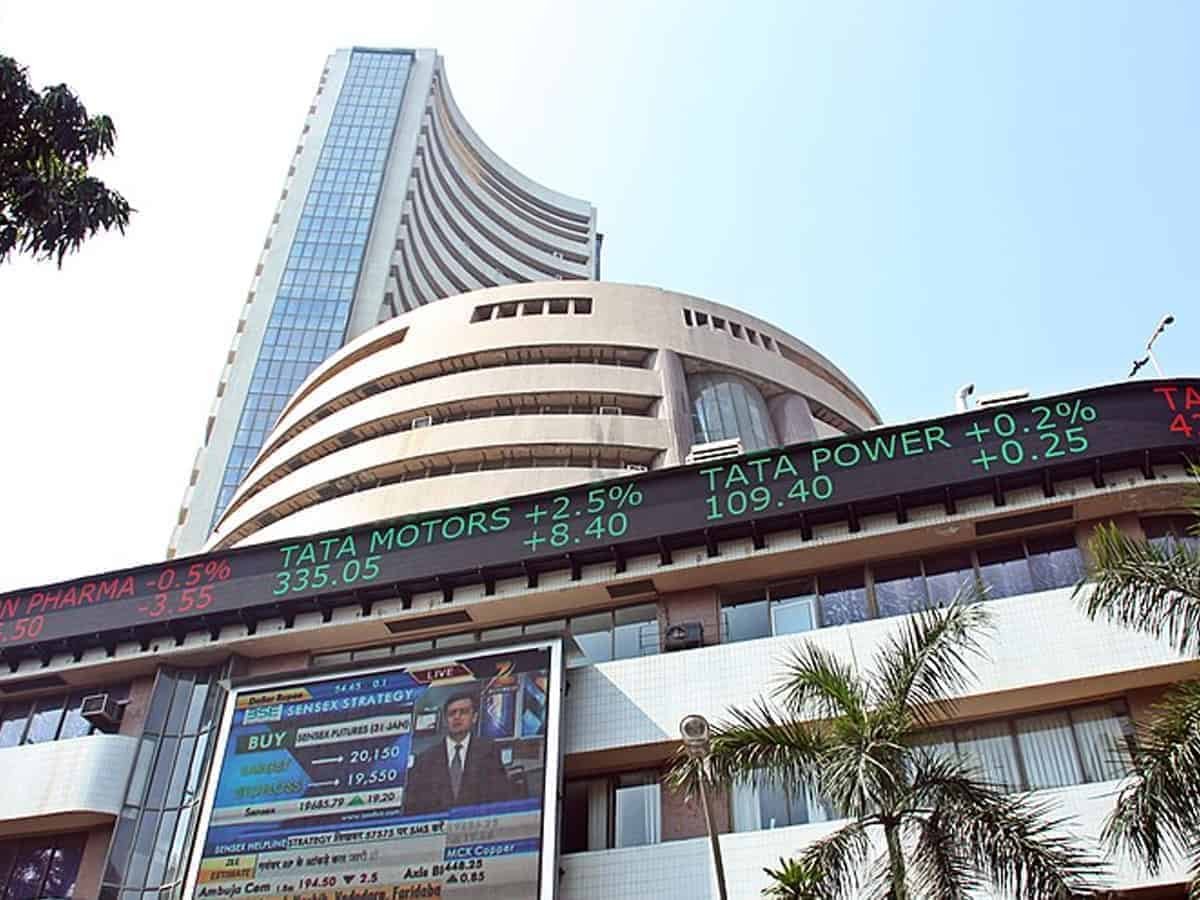
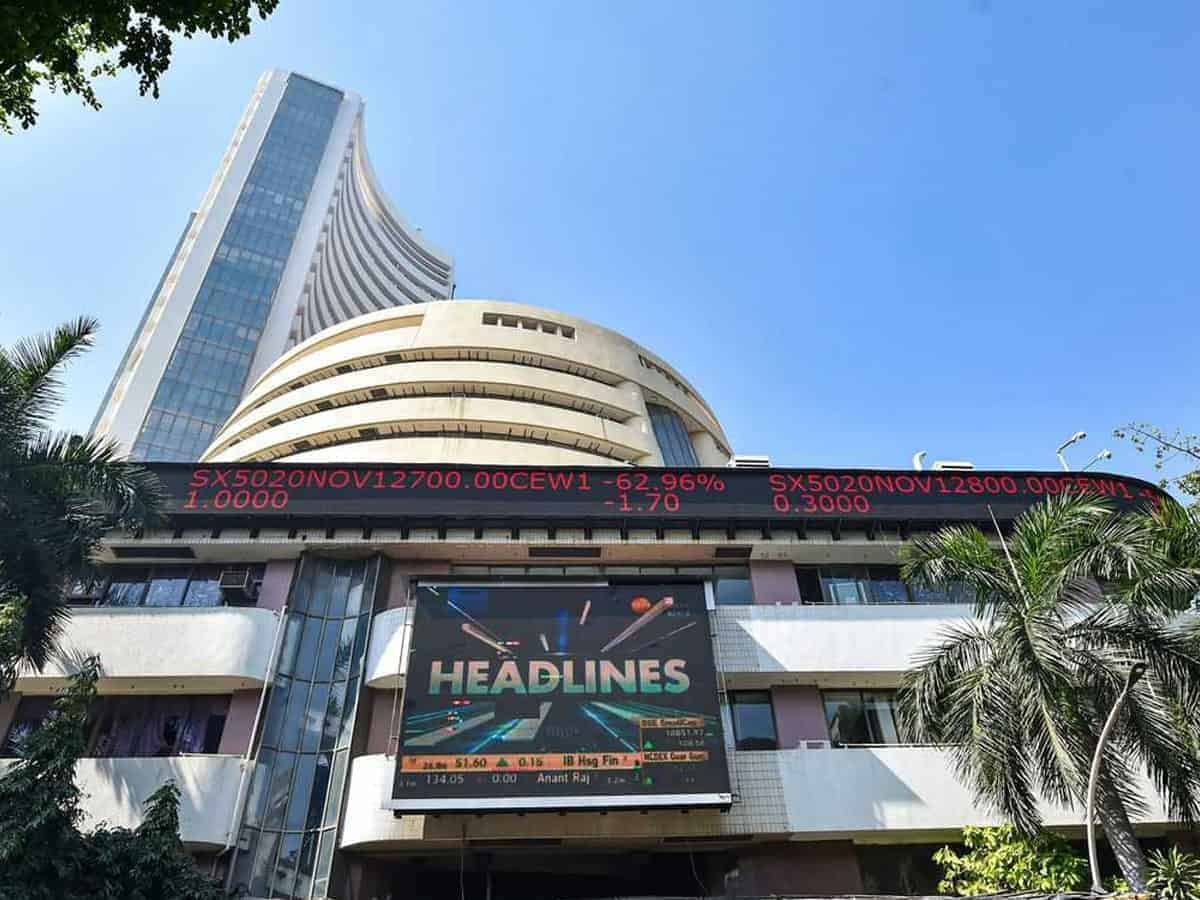
    In the domestic equity market, the 30-share BSE Sensex advanced 426.00 points or 0.54 per cent to 79,638.53, while the Nifty rose 144.55 points or 0.60 per cent to 24,183.90.

    Foreign institutional investors (FIIs) bought equities worth Rs 2,952.33 crore on a net basis on Friday, according to exchange data.

    Meanwhile, India’s forex reserves jumped USD 8.31 billion to USD 686.145 billion for the week ended April 18, the RBI said on Friday.

    This is the seventh consecutive week of a rise in the kitty, which had jumped by USD 1.567 billion to USD 677.835 billion in the previous reporting week ended April 11. The forex reserves had touched an all-time high of USD 704.885 billion in end-September 2024.

  • App Store facilitated Rs 44,447 cr in developer billings in India in 2024: Apple

    App Store facilitated Rs 44,447 cr in developer billings in India in 2024: Apple

    New Delhi: The App Store ecosystem in India facilitated Rs 44,447 crore ($5.31 billion) in developer billings and sales in 2024, a new Apple study showed on Monday.

    The study was conducted by Professor Viswanath Pingali from the Indian Institute of Management Ahmedabad. In one of its most important findings, the study showed that more than 94 per cent of that commerce accrued solely to developers and businesses of all sizes, without any commission paid to Apple.

    And over the last five years, the global earnings of India-based developers have tripled, underscoring the tremendous business opportunity and global reach the App Store provides, the company said in a statement.

    MS Creative School

    “The App Store has been an economic miracle for developers in India and all around the world, and we’re thrilled to support their work,” said Tim Cook, Apple’s CEO. “This study underlines the power of India’s incredibly vibrant app economy. And we’re committed to keep investing in the success of developers of all sizes as they build apps that make an important impact and enrich people’s lives.”

    The study from Professor Pingali takes a closer look at the key drivers shaping the App Store ecosystem in India, including increased app usage in sectors like food delivery, travel, gaming and entertainment.

    In 2024 alone, App Store developers generated Rs 38,906 crores ($4.65 billion) in total billings and sales from the sale of physical goods and services, Rs 3,014 crore ($352.9 million) from in-app advertising, and Rs 2,527 crore ($302 million) from digital goods and services.

    Since its launch more than fifteen years ago, developers have more ways than ever to monetise their apps and build successful businesses on the App Store, resulting in a healthy and dynamic ecosystem. In 2024, developers active in India have been successful across a diverse range of app categories such as games, health and fitness, lifestyle and utilities.

    In 2024, close to 80 per cent of India-based developers’ App Store earnings came from users outside of the country, and 87 percent of developers were active on multiple storefronts.

    Many apps from India-based developers have also appeared on the most-downloaded app charts in storefronts outside of India, and apps from India-based developers were in the top 100 most-downloaded apps in 70 storefronts outside of India, said Apple.

    In addition to building successful global businesses on the App Store, developers continue to reach local audiences across India.

    In the last five years, downloads from Indian users have more than tripled, and earnings from these users have increased more than fivefold.

    Notably, India-based developers have also designed popular apps targeted at India’s growing quick commerce and gig economy industries. These apps provide essential on-demand services, making daily tasks more convenient for millions of users while providing workers with access to flexible job opportunities in the country, according to Apple.

    Small developers, in particular, have been supported by Apple’s ecosystem. The total App Store earnings of small developers increased by 74 per cent between 2021 and 2024. Initiatives like the App Store Small Business Program, designed to support small developers, provide a reduced commission rate for these developers.

    Apple said it is committed to helping developers across India build their app businesses.

  • Indian stock market opens higher, Sensex above 80,000

    Indian stock market opens higher, Sensex above 80,000

    Mumbai: The Indian equity benchmark indices opened higher on Friday amid positive global cues, as buying was seen in the IT, pharma and auto sectors in the early trade.

    At around 9.27 am, Sensex was trading 265.3 points or 0.33 per cent up at 80,066.81 while the Nifty added 89.85 points or 0.37 per cent at 24,336.55.

    Nifty Bank was down 222.85 points or 0.40 per cent at 54,978.55. The Nifty Midcap 100 index was trading at 54,980.80 after increasing 10.95 points or 0.02 per cent. Nifty Smallcap 100 index was at 16,903.30 after declining 60.20 points or 0.35 per cent.

    MS Creative School

    According to market watchers, “after a positive opening, Nifty can find support at 24,200 followed by 24,100 and 24,000. On the higher side, 24,500 can be an immediate resistance, followed by 24,600 and 24,700.

    “The charts of Bank Nifty indicate that it may get support at 55,000 followed by 54,700 and 54,500. If the index advances further, 55,500 would be the initial key resistance, followed by 55,800 and 56,200,” said Hardik Matalia, Derivative Analyst of Choice Broking.

    Meanwhile, in the Sensex pack, TCS, Tata Steel, Maruti Suzuki, Eternal, ICICI Bank, SBI, HDFC Bank, Infosys, M&M and Tata Motors were the top gainers. Whereas, Axis Bank, Tech Mahindra, Nestle India and IndusInd Bank were the top losers.

    In the last trading session, Dow Jones in the US added 1.23 per cent to close at 40,093.40. The S&P 500 climbed 2.03 per cent to 5,484.77 and the Nasdaq added 2.74 per cent to close at 17,166.04.

    In the Asian markets, Jakarta, Bangkok, Seoul, Hong Kong, China and Japan were trading in green.

    According to analysts, US markets extended their rally on Thursday as investors snapped up hard-hit technology stocks, helping boost the S&P 500 out of correction territory.

    The foreign institutional investors (FIIs) bought equities worth Rs 8,250.53 crore on April 24. However, domestic institutional investors (DIIs) sold equities of Rs 534.54 crore on the same day.

  • Axis Bank’s Q4 profit falls 1.63 pc

    Axis Bank’s Q4 profit falls 1.63 pc

    Mumbai: Axis Bank on Thursday reported a 1.63 per cent year-on-year (YoY) drop in its consolidated net profit for the March 2025 quarter (Q4 FY25) to Rs 7,489.71 crore from Rs 7,613.55 crore in the same quarter last year.

    While the bank’s interest income rose 7.35 percent to Rs 32,452.32 crore, its expenses also went up by 7.05 percent to Rs 28,512.99 crore. This rise in costs weighed on its overall profitability.

    One of the key areas of concern in the results was the net interest margin (NIM), which dropped to 3.97 percent from 4.06 percent a year ago — a decline of 9 basis points.

    MS Creative School

    This fall in margins came despite a 6 percent rise in net interest income (NII), which stood at Rs 13,811 crore for the quarter.

    Along with the earnings, Axis Bank also announced a fundraising plan worth Rs 55,000 crore. Of this, Rs 35,000 crore will be raised through various debt instruments such as long-term bonds and masala bonds.

    The remaining Rs 20,000 crore will be raised via equity or related securities. The bank’s board also decided to increase the borrowing limit to Rs 3 lakh crore.

    The board has recommended a final dividend of Re 1 per share for FY25, according to its stock exchange filing.

    Axis Bank’s return on equity (ROE) stood at 16.02 percent, with a price-to-earnings ratio (P/E) of 14.17 and a price-to-book value of 2.27.

    The earnings per share (EPS) were reported at Rs 85.19, as per the company’s filings. Even though the stock closed marginally higher at Rs 1,207.30 on the Bombay Stock Exchange (BSE) on Thursday, investors remained cautious after the quarterly performance.

    “While the stock has gained 12.62 percent so far this year, the earnings miss and declining margins could weigh on future sentiment,” reports said.

    As of March 2025, promoters held an 8.18 percent stake in the bank.

  • Indian stock market opens higher, IT stocks shine

    Indian stock market opens higher, IT stocks shine

    Mumbai: The domestic benchmark indices opened in green on Wednesday amid positive global cues, as buying was seen in the IT and auto sectors in the early trade.

    At around 9.32 am, Sensex was trading 536.4 points or 0.67 per cent up at 80,132.01 while the Nifty added 150.10 points or 0.62 per cent at 24,317.35.

    Nifty Bank was up 187.10 points or 0.34 per cent at 55,834.30. The Nifty Midcap 100 index was trading at 54,756.85 after adding 359.70 points or 0.66 per cent. Nifty Smallcap 100 index was at 17,013.20 after climbing 109.55 points or 0.71 per cent.

    MS Creative School

    According to market watchers, despite speculation surrounding US President Donald Trump’s influence on Federal Reserve policies, Nifty’s technical outlook remains robust above its 200-DMA at 24,051.

    “The next target for Nifty is pegged at 24,858, with immediate supports at psychological levels of 24,000 and its 100-DMA at 23,397. Positive catalysts include India’s potential gains amidst US-China trade tensions,” said Prashanth Tapse, Senior VP (Research), Mehta Equities.

    Meanwhile, in the Sensex pack, HCL Tech, Tech Mahindra, Infosys, IndusInd Bank, TCS and Tata Motors were the top gainers. Whereas, only Kotak Mahindra Bank and Asian Paints were the top losers.

    In the last trading session, Dow Jones in the US added 2.66 per cent to close at 39,186.98. The S&P 500 climbed 2.51 per cent to 5,287.76 and the Nasdaq added 2.71per cent to close at 16,300.42.

    “President Trump’s message that he has no intention of firing the Fed chief has calmed the US markets. Trump’s remarks on Chinese tariffs indicate that he might reduce the US-China tensions. The sustained buying by FIIs is a strong support to Indian markets,” said experts.

    In the Asian markets, Jakarta, Seoul, Japan, Hong Kong, Bangkok and China were trading in green.

    The foreign institutional investors (FIIs) bought equities worth Rs 1,290.43 crore on April 22. Meanwhile, domestic institutional investors (DIIs) sold equities of Rs 885.63 crore on the same day.

  • Adani Data Networks to transfer 400 MHz spectrum to Bharti Airtel

    Adani Data Networks to transfer 400 MHz spectrum to Bharti Airtel

    Ahmedabad: Adani Data Networks Limited (ADNL), a wholly-owned subsidiary of Adani Enterprises Limited (AEL), on Tuesday announced that it has signed definitive agreements with Bharti Airtel Limited and its subsidiary Bharti Hexacom Limited to transfer the rights to use 400 MHz of spectrum in the 26 GHz band.

    The spectrum covers six telecom circles — Gujarat (100 MHz), Mumbai (100 MHz), Andhra Pradesh (50 MHz), Rajasthan (50 MHz), Karnataka (50 MHz) and Tamil Nadu (50 MHz).

    “Adani Data Networks Limited (ADNL), a wholly-owned subsidiary of Adani Enterprises Limited, has signed definitive agreements with Bharti Airtel Limited and its subsidiary Bharti Hexacom Limited to transfer the rights to use 400 MHz of spectrum in the 26 GHz band,” the company said in its stock exchange filing.

    MS Creative School

    The transaction, however, is subject to statutory approvals and conditions laid out under the Spectrum Trading Guidelines.

    “The closing of the transaction is subject to customary statutory approvals,” the company said in its filing.

    This move comes as part of ADNL’s strategic realignment of its digital connectivity assets. The Adani Group had acquired this spectrum during the 5G auctions with a focus on building private networks and enhancing enterprise connectivity.

    Once approved, this will mark a significant step in ADNL’s reshaping of its telecom and data connectivity ambitions, while also supporting Airtel’s efforts to strengthen its 5G rollout in high-demand circles.

    “Bharti Airtel and its subsidiary Bharti Hexacom have signed definitive agreements with Adani Data Networks Limited (ADNL), a subsidiary of Adani Enterprises, to acquire the rights to use 400 MHz of spectrum in the 26 GHz band,” Airtel said in its statement.

    Meanwhile, Airtel is actively expanding its 5G network and growing its user base. As of December, the company had around 120 million 5G users out of a total subscriber base of 414 million.

  • India’s real estate sector saw 47 pc jump in investments in Jan-March: Report

    India’s real estate sector saw 47 pc jump in investments in Jan-March: Report

    New Delhi: Institutional investments in the real estate sector during Q1 (January-March) this year reached $0.81 billion, marking a 47 per cent year-on-year increase, reflecting a renewed sense of confidence among investors, according to a report by real estate consultancy firm Vestian.

    As investments approach the billion-dollar mark in Q1 2025, the residential sector has emerged as the frontrunner, dominating with 62 per cent of the total share — up from 41 per cent in the same period last year.

    In value terms, investments reported an annual increase of 125 per cent, reaching $506.1 Mn in Q1 2025, the report states.

    MS Creative School

    Commercial assets witnessed investments worth $307.2 Mn in Q1 2025, accounting for 38 per cent of the total investments received during the quarter.

    While the share declined from 42 per cent in Q1 2024 to 38 per cent in Q1 2025, investments surged by 33 per cent in value terms during the same period.

    Interestingly, the industrial and warehousing sector did not record any significant investment in Q1 2025.

    However, it is expected to garner investments in the future on the back of the rapidly growing e-commerce sector and a reduction in logistics costs, according to the report.

    While domestic investors remained confident about India’s growth story, the participation of foreign investors increased during Q1 2025.

    The share of foreign investors jumped from 2 per cent in Q1 2024 to 43 per cent in Q1 2025, fuelled by India’s robust economic growth compared to the major economies of the world, and rapid infrastructure development.

    In value terms, foreign investments skyrocketed by 3,054 per cent annually, reaching $346.9 Mn in Q1 2025 from $11 Mn a year earlier, the report states.

    On the other hand, domestic investors dominated with 57 per cent share in Q1 2025. However, their share dropped from 98 per cent a year earlier.

    In terms of value, domestic investments stood at $466.4 Mn, registering an annual decline of 14 per cent.

    With key deals reaffirming confidence in the real estate sector, institutional investments are expected to maintain an upward trajectory, supported by rapid infrastructure development and economic stability, the report added.

    Shrinivas Rao of Vestian said, “Investor confidence in India’s growth story remains strong, with both foreign and domestic players showing increased commitment to long-term investments. This is evident in the growing share of foreign investors, along with the active participation of domestic investors.

    “As investment activity continues to build momentum, we can expect a notable increase in future inflows, further reinforcing India’s position as a dynamic and attractive investment destination.”

  • ‘Viksit Bharat’ journey a shared national mission: FM Sitharaman

    ‘Viksit Bharat’ journey a shared national mission: FM Sitharaman

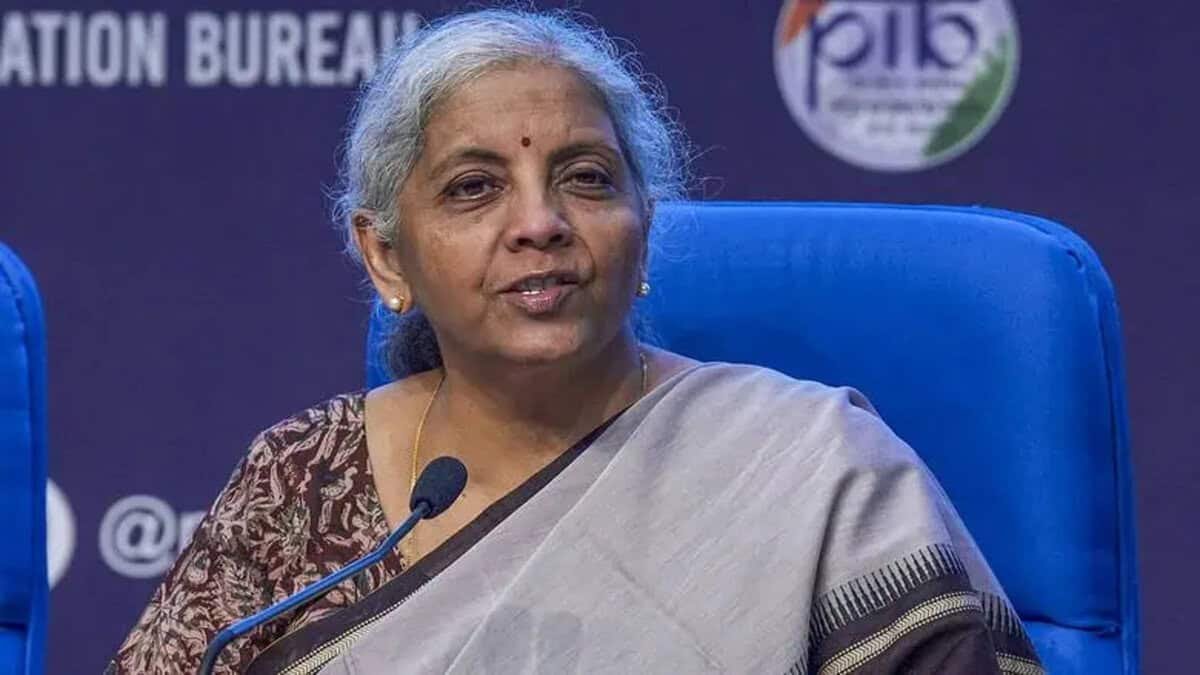
    New Delhi: India’s journey to become a ‘Viksit Bharat’ by 2047 is not merely an aspiration but a shared national mission powered by a vision for inclusive, sustainable, and innovation-led growth, Union Finance Minister Nirmala Sitharaman has said.

    During her address at the Hoover Institution at Stanford University in the US, the Finance Minister said that India has risen from the world’s tenth-largest economy to the fifth-largest, a clear sign of “our growing strength and global relevance”.

    “Despite the pandemic shock and a banking crisis, our progress over the past decade, anchored in strong macroeconomic fundamentals and steady reforms, gives us confidence and direction for the road ahead,” she told the gathering during her keynote address, titled ‘Laying the foundations for a developed India #ViksitBharat by 2047’.

    MS Creative School

    FM Sitharaman said that some of the works done in India stand out, and one such example is that of Digital Public Infrastructure (DPI) and its success.

    “More than a billion digital identities have been created using DPI. Using these digital identities, bank accounts of people were created, and during the Covid-19 pandemic, money was transferred by the government with a click of a button. DPI also came in useful in administering vaccines during the Covid-19 pandemic,” the Finance Minister mentioned during her speech.

    “In my interactions with the G20, the World Bank or the IMF, this singular population-scale achievement of India is repeatedly lauded,” she added.

    According to the Union Minister, over the next two decades, sustaining India’s growth momentum calls for a fresh approach grounded in bold reforms, stronger domestic capacities, renewed institutional partnerships and adaptive strategies suited for the evolving global landscape.

    “The last two Union Budgets have laid the groundwork for this transformation, with a clear multi-sectoral policy agenda,” she informed.

    As we lay the foundation for a developed India, we must stay committed to long-term goals, without losing sight of present realities, she stressed.

    The global order is changing. That poses challenges but also opportunities. We must be prepared to tackle the former while seizing the latter.

    “A Viksit Bharat will be shaped not only by the government but by the collective effort of every citizen. This vision calls upon us to think boldly, act inclusively, and stay resilient and flexible,” said the Finance Minister.

    A vibrant and thriving network of small and medium enterprises is essential for domestic manufacturing to grow.

    “The government has undertaken numerous initiatives to support MSMEs, from easing access to credit, redefining size thresholds, facilitating prompt payments from large buyers and simplifying compliance burdens,” according to the Minister.

    The Open Network for Digital Commerce, launched in April 2022, has successfully onboarded more than 7,64,000 vendors across 616 cities.

    “Our next focus is reducing regulatory frictions, digitising approvals, and integrating MSMEs into global value chains. Special support to women-led and rural enterprises will help enhance economic opportunities and ensure more inclusive growth,” FM Sitharaman noted.

    Over the past decade, a significant thrust on infrastructure development has also created a strong foundation for manufacturing-led growth by bolstering investor confidence, she added.

    This has been enabled by a more than four-fold increase in the Union government’s capital expenditure (Capex) between 2017-18 and the 2025-26 Budget.

    “Over the last decade, we have undertaken structural reforms, rationalising over 20,000 compliances, decriminalising business laws and digitising public services to reduce friction. Our experience with implementing the Business Reform Action Plan by different state governments has demonstrated that deregulation is a powerful catalyst for industrial growth,” the Finance Minister further stated.

    A report by Indiaspora and BCG shows that Indian first-generation immigrants founded 72 unicorns between 2018 and 2023. These unicorns were worth at least USD 195 billion in valuation and employed nearly 55,000 people.

    More than 65 per cent of Global Capability Centres (GCC) in India have their headquarters in the US. These GCCs provide high-value-added, bespoke services in areas such as R&D, management consulting and auditing.

    “While the US is a mature startup hub which has developed over 50-60 years, India’s startup journey is a nascent one. Over the course of the last decade, the government’s focus was on reducing the cost of entrepreneurial risk-taking by removing regulatory and infrastructural barriers,” she emphasised.

  • Indian stock market opens higher, Sensex above 79,500

    Indian stock market opens higher, Sensex above 79,500

    Mumbai: The domestic benchmark indices opened marginally up on Tuesday amid positive global cues, as buying was seen in the auto, PSU bank and financial services sectors in the early trade.

    At around 9.34 am, Sensex was trading 134.87 points or 0.17 per cent up at 79,543.37 while the Nifty added 37.65 points or 0.16 per cent at 24,163.20.

    Nifty Bank was up 78.85 points or 0.14 per cent at 55,383.35. The Nifty Midcap 100 index was trading at 54,273.90 after adding 299.45 points or 0.55 per cent. Nifty Smallcap 100 index was at 16,851.45 after climbing 78.10 points or 0.47 per cent.

    MS Creative School

    According to market watchers, Nifty is now back to March’s high of 23,870 which can be an important resistance level in the near term.

    “If the Nifty index fails to break and sustain above 23870 then it can see some correction or sideways consolidation in the near term. On the way down, 20 HMA at 23460 will be an important support level in case of a correction or pullback. However, if the Nifty index breaks and sustains above 23870 then 24250 – 24500 will be the upside levels to watch out for, ” said Vikram Kasat, Head – Advisory, PL Capital.

    Meanwhile, in the Sensex pack, Eternal, Tata Steel, Kotak Mahindra Bank, HDFC Bank, Bajaj Finance and Hindustan Unilever Limited were the top gainers. Whereas, IndusInd Bank, Infosys, Power Grid, Asian Paints, HCL Tech were the top losers.

    In the last trading session, Dow Jones in the US declined 2.48 per cent to close at 38,170.41. The S&P 500 declined 2.36 per cent to 5,158.20 and the Nasdaq declined 2.55 per cent to close at 15,870.90.

    In the Asian markets, Japan, Hong Kong and Bangkok were trading in red. Whereas Jakarta, Seoul and China were trading in green

    “Despite global markets trading on a negative note, continued buying by Foreign Institutional Investors (FIIs) added confidence to the domestic outlook,” said Hardik Matalia, Derivative Analyst of Choice Broking

    The foreign institutional investors (FIIs) bought equities worth Rs 1,970.17 crore on April 21. Meanwhile, domestic institutional investors (DIIs) purchased equities of Rs 246.59 crore on the same day.

  • LG to exit EV charger business amid global demand slowdown

    LG to exit EV charger business amid global demand slowdown

    Seoul: LG Electronics said on Tuesday it will exit the electric vehicle (EV) charger business, citing prolonged global demand stagnation in the EV market.

    The company’s EV charger-manufacturing subsidiary, HiEV Charger, will be liquidated, and all employees involved in the business will be reassigned to other divisions within LG Electronics, reports Yonhap news agency.

    The company added that it will continue to provide maintenance services to existing clients without disruption.

    MS Creative School

    LG entered the EV charging market in 2022 by acquiring HiEV Charger, formerly known as AppleMango, after initiating early research and development in the segment in 2018.

    Since then, the company had offered charging solutions in South Korea, including chargers at Emart retail stores, and expanded into the U.S. market last year, opening a production plant in Texas in January 2024.

    The decision to withdraw comes as LG Electronics has refocused its efforts to prioritise growth in its heating, ventilation and air conditioning (HVAC) business.

    LG Electronics CEO Cho Joo-wan had previously identified the EV charger business as a key growth driver in the company’s vision to achieve 100 trillion won (US$70.1 billion) in sales by 2030.

    Last year, LG Electronics partnered with ChargePoint, the leading supplier of charging solutions for electric vehicles in North America, to expand its EV charging business on a global basis. ChargePoint manages more than 306,000 active ports across North America and Europe.

    LG Electronics said the partnership was expected to help the company explore further business opportunities on a global scale through ChargePoint’s expansive network and industry-leading charger management solution.

    This move was part of LG Electronics’ broader strategy to achieve 100 trillion won ($72.5 billion) in sales from business-to-business operations by 2030 by focusing on future growth areas, including the EV charging business.