Category: BUSINESS

  • No plan to levy GST on UPI transactions over Rs 2,000: Govt

    No plan to levy GST on UPI transactions over Rs 2,000: Govt

    New Delhi: The Finance Ministry on Friday made it clear that the government is not considering any proposal to levy Goods and Services Tax (GST) on UPI transactions over Rs 2,000.

    Hyderabad Institute of Excellence

    “The claims that the Government is considering levying Goods and Services Tax (GST) on UPI transactions over Rs 2,000 are completely false, misleading, and without any basis. Currently, there is no such proposal before the Government,” the Finance Ministry said.

    GST is levied on charges, such as the Merchant Discount Rate (MDR), relating to payments made using certain instruments.

    MS Creative SchoolMS Creative School

    Effective January 2020, the Central Board of Direct Taxes (CBDT) has removed the MDR on Person-to-Merchant (P2M) UPI transactions through the Gazette Notification dated December 30, 2019.

    Since currently no MDR is charged on UPI transactions, there is consequently no GST applicable to these transactions, the Ministry said.

    The government remains committed to promoting digital payments via UPI. To support and sustain the growth of UPI, an Incentive Scheme has been operational from FY 2021-22. This scheme specifically targets low-value UPI (P2M) transactions, benefiting small merchants by alleviating transaction costs and promoting wider participation and innovation in digital payments, the official statement explained.

    The statement pointed out that the total incentive payouts under this scheme over the years reflect the government’s sustained commitment to promoting UPI-based digital payments. Allocation under the scheme over the years includes Rs 1,389 crore for FY2021-22, Rs 2,210 crore for FY2022-23, and Rs 3,631 crore for FY2023-24.

    These measures have significantly contributed to India’s robust digital payments ecosystem.

    According to the ACI Worldwide Report 2024, India accounted for 49 per cent of global real-time transactions in 2023, reaffirming its position as a global leader in digital payments innovation.

    UPI transaction values have seen an exponential increase, growing from Rs 21.3 lakh crore in FY 2019-20 to Rs 260.56 lakh crore by March 2025. Specifically, P2M transactions have reached Rs 59.3 lakh crore, reflecting growing merchant adoption and consumer confidence in digital payment methods, the statement added.

  • Indian stock market opens in red, IT stocks drag

    Indian stock market opens in red, IT stocks drag

    Mumbai: After three consecutive days of gains, the domestic benchmark indices opened in red on Thursday amid weak global cues, as selling was seen in the IT and auto sectors in the early trade.

    Hyderabad Institute of Excellence

    At around 9.27 am, Sensex was trading 338.13 points or 0.44 per cent down at 76,706.16 while the Nifty declined 120.75 points or 0.52 per cent at 23,316.45

    Nifty Bank was up 62.25 points or 0.12 per cent at 53,180.00. The Nifty Midcap 100 index was trading at 52,300.65 after declining 44.90 points or 0.09 per cent. Nifty Smallcap 100 index was at 16,347.85 after declining 1.40 points or 0.01 per cent.

    MS Creative SchoolMS Creative School

    According to market watchers, after a negative opening, Nifty can find support at 23,300 followed by 23,200 and 23,000. On the higher side, 23,500 can be an immediate resistance, followed by 23,600 and 23,800.

    “The charts of Bank Nifty indicate that it may get support at 52,800 followed by 52,500 and 52,300. If the index advances further, 53,300 would be the initial key resistance, followed by 53,500 and 53,800,” said Hardik Matalia, Derivative Analyst of Choice Broking.

    Meanwhile, in the Sensex pack, HCL Tech, Tech Mahindra, Infosys, Tata Steel, TCS, L&T, M&M, Bajaj Finance, Titan, Asian Paints, Nestle India, Tata Motors were the top losers. Whereas, ICICI Bank, Bharti Airtel, Sun Pharma, NTPC and HDFC Bank were the top gainers.

    In the last trading session, Dow Jones in the US declined 1.73 per cent to close at 39,669.39. The S&P 500 declined 2.24 per cent to 5,275.70 and the Nasdaq declined 3.07 per cent to close at 16,307.16.

    In the Asian markets, Jakarta was trading in red. Whereas Japan, Seoul, China, Bangkok and Hong Kong were trading in green.

    The foreign institutional investors (FIIs) extended buying on second day on April 16 as they bought equities worth Rs 3,936.42 crore. However, domestic institutional investors (DIIs) extended their selling on second session as they sold equities of Rs 2,512.77 crore on the same day.

  • Indian stock market opens flat, Sensex above 76,700

    Indian stock market opens flat, Sensex above 76,700

    Mumbai: The domestic benchmark indices opened flat on Wednesday amid weak global cues, as selling was seen in the IT and auto sectors in the early trade.

    Hyderabad Institute of Excellence

    At around 9.29 am, Sensex was trading 23.12 points or 0.03 percent up at 76,758.01 while the Nifty added 5.90 points or 0.03 percent at 23,334.45.

    Nifty Bank was up 258.05 points or 0.49 per cent at 52,637.55. The Nifty Midcap 100 index was trading at 52,148.35 after adding 173.90 points or 0.33 per cent. Nifty Smallcap 100 index was at 16,284.80 after climbing 105.50 points or 0.65 per cent.

    MS Creative SchoolMS Creative School

    According to market watchers, technically, the Nifty has decisively reclaimed levels above its 20, 50, and 100-day moving averages, a clearly encouraging sign for the bulls.

    “Looking ahead, the next significant resistance level for the Nifty appears to be around 23869, which coincides with the previous swing high. On the downside, the 22900-23000 zone is likely to provide immediate support for the index,” said Devarsh Vakil, Head of Prime Research at HDFC Securities.

    Meanwhile, In the Sensex pack, Infosys, Maruti Suzuki, Tech Mahindra, HCL Tech and Sun Pharma were the top losers. While, HDFC Bank, IndusInd Bank, Kotak Bank, ICICI Bank and Axis Bank were the top gainers.

    In the last trading session, Dow Jones in the US declined 0.38 per cent to close at 40,368.96. The S&P 500 declined 0.17 per cent to 5,396.63 and the Nasdaq declined 0.05 per cent to close at 16,823.17.

    “US stocks ended slightly lower on Tuesday as tariff uncertainty remained high, shares of consumer and healthcare companies eased, and upbeat bank results provided some support, said experts.

    In the Asian markets, Jakarta was trading in green. Whereas Japan, Seoul, China, Bangkok and Hong Kong were trading in red.

    After remaining net sellers for the last nine days, foreign institutional investors (FIIs) turned net buyers on April 15 as they purchased equities worth Rs 6,065.78 crore. However, domestic institutional investors (DIIs) turned net sellers after three days, as they sold equities of Rs 1,951.60 crore on the same day.

  • India aims for 10% power tool, 25% hand tool global share

    India aims for 10% power tool, 25% hand tool global share

    New Delhi: India has the potential to capture a larger share of the global trade market for power and hand tools, targeting $25 billion in exports over the next decade, which could create approximately 35 lakh jobs by achieving a 10 per cent market share in power tools and 25 per cent in hand tools, a NITI Aayog report showed on Tuesday.

    Hyderabad Institute of Excellence

    Through fostering innovation, empowering MSMEs and strengthening industrial ecosystem, the country can solidify its position as a reliable, high-quality global manufacturing hub, according to the report on the sector.

    Launched by NITI Aayog Vice Chairman Suman Bery, the report outlined a strategic path for the sector to enhance its global competitiveness and capture a significantly larger share of the international market.

    MS Creative SchoolMS Creative School

    It suggested that the global trade market for power and hand tools, currently valued at approximately $100 billion, is projected to grow significantly, reaching around $190 billion by 2035.

    Within this market, hand tools account for $34 billion and are expected to expand to $60 billion by 2035, while power tools, including tool accessories, represent $63 billion and are anticipated to surge to $134 billion, with electrical tools comprising the majority.

    India currently exports $600 million in hand tools (1.8 per cent market share) and $470 million in power tools (0.7 per cent market share).

    To achieve the potential of $25 billion in power and hand tool exports over the next decade, the report delved into the issues impacting hand and power tools sectors and recommends three key categories of interventions which are essential.

    “Developing world-class hand tool clusters with advanced infrastructure is critical, requiring 3-4 clusters aggregating around 4,000 acres. These clusters operating under a public-private partnership (PPP) model would feature plug-and-play infrastructure, worker housing, and facilities like connectivity and convention centres to streamline operations,” said the report.

    Addressing structural cost disadvantages through market reforms is necessary, including rationalising Quality Control Order (QCO) restrictions and import duties on essential raw materials like steel and machinery, simplifying the Export Promotion Capital Goods (EPCG) scheme by easing Authorised Economic Operator (AEO) requirements, and reducing penal provisions like interest on defaults.

    Additionally, reforms to building regulations and labour laws are needed to enhance competitiveness.

    Providing bridge cost support to offset cost disadvantages is crucial, though no additional support beyond existing schemes like Remission of Duties and Taxes on Exported Products (RoDTEP) and duty drawbacks is required if factor market interventions are effectively implemented, said the report.

    However, the report estimates that in the absence of these reforms, an additional Rs 8,000 crore in bridge support will be necessary, which should be viewed as an investment rather than a subsidy, as it is expected to generate 2-3 times its value in tax revenue over the next five years.

  • RBI set for deeper easing cycle, Sensex at 82000 by Dec: Morgan Stanley

    RBI set for deeper easing cycle, Sensex at 82000 by Dec: Morgan Stanley

    New Delhi: Lower inflation and slower growth should allow the RBI to respond with a deeper easing cycle, with a cumulative easing of 100bps and two more cuts in 2025, a Morgan Stanley report said on Tuesday, pegging India’s GDP growth at 6.1 per cent for FY26 amid global uncertainties.

    Hyderabad Institute of Excellence

    The report also projected Sensex at 82,000 by December 2025, 9 per cent above the current level.

    “India’s ‘low beta’ is helping it to significantly outperform amid the global selloff, even while the index could reach multi-month lows. Key India-specific catalysts include continuing dovish actions from the RBI, stimulus through GST rate cuts, a trade deal with the US, and incoming growth data,” said the report.

    MS Creative SchoolMS Creative School

    Morgan Stanley sees lower food inflation and lower oil prices, keeping food and non-food inflation at benign levels.

    “We expect inflation to average 4 per cent in F2026, with the trend in the next few months remaining decisively below the 4 per cent mark,” it maintained.

    On the GDP growth, the global brokerage said that even as the US administration has delayed reciprocal tariffs on all countries barring China for 90 days (baseline tariff set at 10 per cent), opening up the possibility of negotiations and deals, the changes in tariff policies pose uncertainty which will weigh on business sentiment.

    “In our base case, we assume that India and US will be able to conclude and implement a bilateral deal over the next few months. However, to the extent tariffs between the US and China remain at elevated levels, global growth and trade are likely to take a hit,” the report stated.

    In India, consumption is improving, driven by rural demand via stronger agricultural growth. Capex is supported by public spending normalising while private capex remains weak.

    “Domestic growth has support from improved government spending and a dovish RBI. India’s medium-term earnings cycle is still intact, in our view,” the report mentioned.

    The government is likely to continue with the fiscal consolidation penciled in for F2026, as it garners extra revenues from the fuel tax increases, which will partly offset the lower tax buoyancy (it has announced a Rs 2 per litre increase in petrol and diesel excise duty, which adds 0.1 per cent of GDP as extra revenue).

  • White House responds to China on rare earths

    White House responds to China on rare earths

    Washington: Kevin Hassett, a top economic adviser to President Trump, said China’s decision to stop exports of some rare earth minerals was “concerning.”

    Hyderabad Institute of ExcellenceHyderabad Institute of Excellence

    Rare earths are critical ingredients for technology and electronic manufacturing.

    “The rare earth limits are being studied very carefully, and they’re concerning, and we’re thinking about all the options right now,” Hassett told reporters outside the White House.

    MS Creative SchoolMS Creative School

    He spoke to Fox Business earlier in the morning, where he said the administration was “100% not” expecting a recession as Trump disrupts global trade with his tariff plans.

  • Sensex, Nifty surge over 2 pc as positive global cues boost investors’ sentiment

    Sensex, Nifty surge over 2 pc as positive global cues boost investors’ sentiment

    Mumbai: India’s frontline equity indices on Tuesday surged in a massive bull rally in the early trade, as positive global cues improved investors’ sentiment.

    Hyderabad Institute of Excellence

    After the opening bell, the Nifty 50 was trading 467 points or 2.05 per cent higher at 23,295.55, and the Sensex was trading 1,569.89 points or 2.09 per cent higher at 76,727.15.

    All the sectoral indices traded in the green, with Nifty Auto jumping nearly three per cent to lead the pack. The Nifty Bank index soared two percent, while the IT, pharma, and metal indices also recorded strong gains.

    MS Creative SchoolMS Creative School

    Tata Motors, M&M and Bharat Forge shares soared up to eight per cent in the early session.

    The broader markets underperformed the benchmarks, as the Nifty Smallcap 100 and Nifty Midcap 100 gained 1.3 per cent each in early trade.

    Rupee strengthened 20 paise to open at 85.85 against US dollar. It ended at 86.05 a dollar on Friday.

    According to market watchers, US President Donald Trump’s pause on tariffs for 90 days brought cheer to the markets

    “After the positive opening, Nifty is likely to find support at 23,000, followed by 22,900 and 22,800. On the upside, 23,200 may act as the immediate resistance, followed by 23,360 and 23,500,” said Mandar Bhojane from Choice Broking.

    On the institutional front, foreign institutional investors (FIIs) continued their selling streak for the ninth consecutive session on April 11, offloading equities worth Rs 2,519 crore. In contrast, domestic institutional investors (DIIs) remained net buyers, purchasing equities worth Ts 3,759 crore on the same day.

    Overall, while the bulls seem to hold the current momentum, intraday volatility and profit booking near resistance zones remain likely, said experts.

    “Trump’s pivot indicates a more conciliatory approach and opens the way for negotiations. While we may have seen the worst of trade uncertainty, the road ahead is still rocky. Nevertheless, with volatility near historic extremes, there is more potential for a decline than an increase,” said Devarsh Vakil, Head of Prime Research, HDFC Securities.

  • Telangana govt launches Bhu Bharathi portal

    Telangana govt launches Bhu Bharathi portal

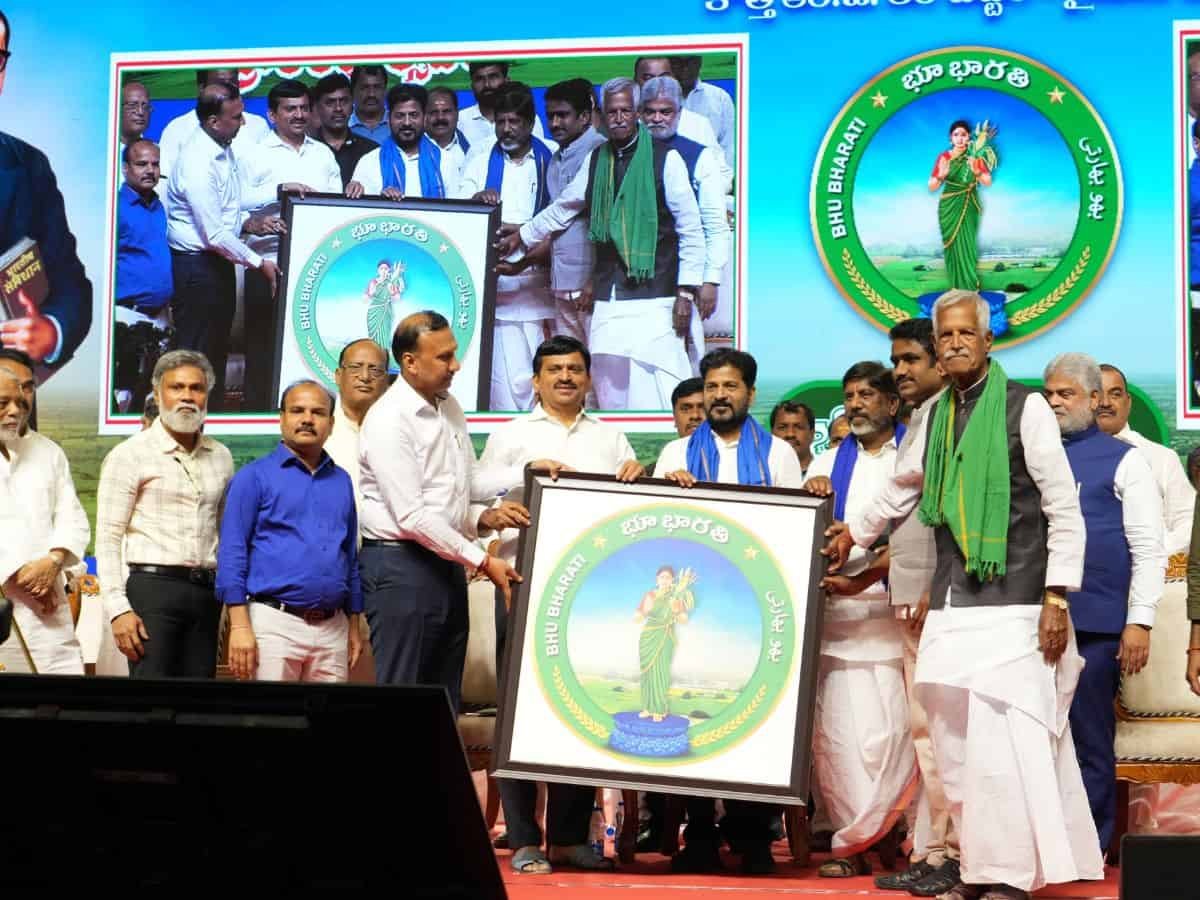
    Hyderabad: Chief minister A Revanth Reddy, along with his deputy Bhatti Vikramarka, launched the Bhu Bharathi portal at Shilpakala Vedika in Hyderabad on Monday, April 14.

    Hyderabad Institute of Excellence

    “The Bhu Bharathi revenue portal will provide permanent solutions to land issues through a dispute-free revenue policy that would benefit 69 lakh farmers across the state,” the chief minister said while addressing revenue officials.

    “Additionally, the Bhudhar card will be issued to the land owners, which will have all the information related to the land,” he said.

    MS Creative SchoolMS Creative School

    At a jibe thrown at the previous Bharat Rashtra Samithi (BRS) government, the chief minister alleged that revenue officials would often take the hit on mistakes made by the previous regime.

    Recalling fatal incidents related to the department after the Dharani portal was introduced by the BRS, CM Revanth said, “Dharani portal had become a nightmare for the people. But the BRS government tried to blame their mistakes on the revenue officials by portraying them as demons. In every department, there will be some bad apples. But blaming the entire system for some people’s mistakes is wrong. The revenue officials have been doing the same job for 65 years. When there was no such issue then, how did they suddenly become guilty of wrongdoing?”

    The chief minister ensured that his government was against the policy of portraying the revenue officials as wrongdoers. He urged revenue officials to go to the villages and resolve the land issues by holding praja darbars and revenue awareness programmes.

    He, however, stated that strict action will be taken against officials found to have committed any wrongdoing.

    Elaborating on the Bhu Bharathi revenue portal, state revenue minister Ponguleti Srinivasa Reddy informed that a pilot project has been rolled out in four mandals – Khammam, Mulugu, Kodangal, and Kamareddy districts. “Mandal Revenue Officers (MROs) will visit every revenue village in these mandals to resolve all pending land-related issues by May 1,” he said.

    From May 1, one mandal in each district will be selected for a similar exercise. Starting June 2, the process will be expanded to cover all remaining mandals across the state, with MROs addressing land issues in every revenue village.

    Bhatti Vikramarka announced that assignment committees in the districts which used to oversee the distribution of land to the poor, but were rendered defunct for 10 years under the BRS’ rule, will again be restored.

    “Steps will be taken to issue pattas to those who have been tilling the land for generations and are eligible to be owners of those lands,” Bhatti assured.

  • UK cuts import tariffs on ‘everyday essentials’ in effort to boost growth

    UK cuts import tariffs on ‘everyday essentials’ in effort to boost growth

    London: The UK on Sunday announced a cut in import tariffs to slash prices on several foreign products, including everyday essentials ranging from pasta, fruit juices and spices, in an effort to boost economic growth.

    Hyderabad Institute of Excellence

    The Department for Business and Trade (DBT) said the UK Global Tariff will be temporarily suspended on 89 products, saving UK businesses an estimated GBP 17 million a year.

    Against the backdrop of US President Donald Trump’s imposition of tariffs, DBT said it was decided to suspend import tariffs on a whole range of products to lower costs for businesses who can benefit from zero tariffs until July 2027.

    MS Creative SchoolMS Creative School

    “Free and open trade grows economies, lowers prices and helps businesses to sell to the world, which is why we’re cutting tariffs on a range of products,” said UK Business and Trade Secretary Jonathan Reynolds.

    “From food to furniture, this will reduce the cost of everyday items for businesses, with savings hopefully passed onto consumers. As we face a new era of global trade, this government is going further faster to make Britain the best country to do business, delivering on our Plan for Change,” he said.

    The government also pointed out that it is “going further and faster” in negotiating trade deals with partners including India, the Gulf Cooperation Council, South Korea and Switzerland to unlock opportunities for businesses and boost jobs and growth.

    “In a changing world we know families are anxious about the cost of living, and businesses uncertain about their future. That’s why we’ve announced lower prices on imports of everyday essentials – helping businesses to thrive and pass on savings to customers,” said UK Chancellor Rachel Reeves.

    Earlier this week, she held wide-ranging talks with her Indian counterpart, Nirmala Sitharaman, to build further momentum behind the ongoing bilateral Free Trade Agreement (FTA).

    Meanwhile, the UK Global Tariff applies to goods entering the UK that do not qualify for preferential treatment under an FTA. Businesses across the UK apply for temporary suspensions on a regular basis by providing evidence of the benefits to themselves, their sector and the wider economy.

    “In the face of an uncertain and unpredictable global trading environment, government should be commended for suspending import duties on an array of products,” said Sean McGuire, Director at the Confederation of British Industry (CBI).

    “Measures like these will be important for reducing the financial pressures on firms and help to drive growth for businesses of all sizes across the country,” he said.

    DBT said the savings to businesses on products such as pasta, fruit juices, coconut oil and pine nuts could be passed onto consumers just in time for the summer season, meaning lower food prices in supermarkets, restaurants and pubs.

    “Products including agave syrup, often used in margaritas, and plant bulbs will also see tariffs removed meaning keen cocktail-makers and amateur gardeners could enjoy lowered costs as the warmer weather approaches,” it noted.

    “These changes will support key growth sectors such as advanced manufacturing and clean energy to compete with international rivals,” it added.

    The cut follows the UK’s move to reduce tariffs on certain imported goods including fruit juices from Peru and vacuum cleaners from Malaysia.

  • No impact on long-term plans: IndiGo CEO on tariffs

    No impact on long-term plans: IndiGo CEO on tariffs

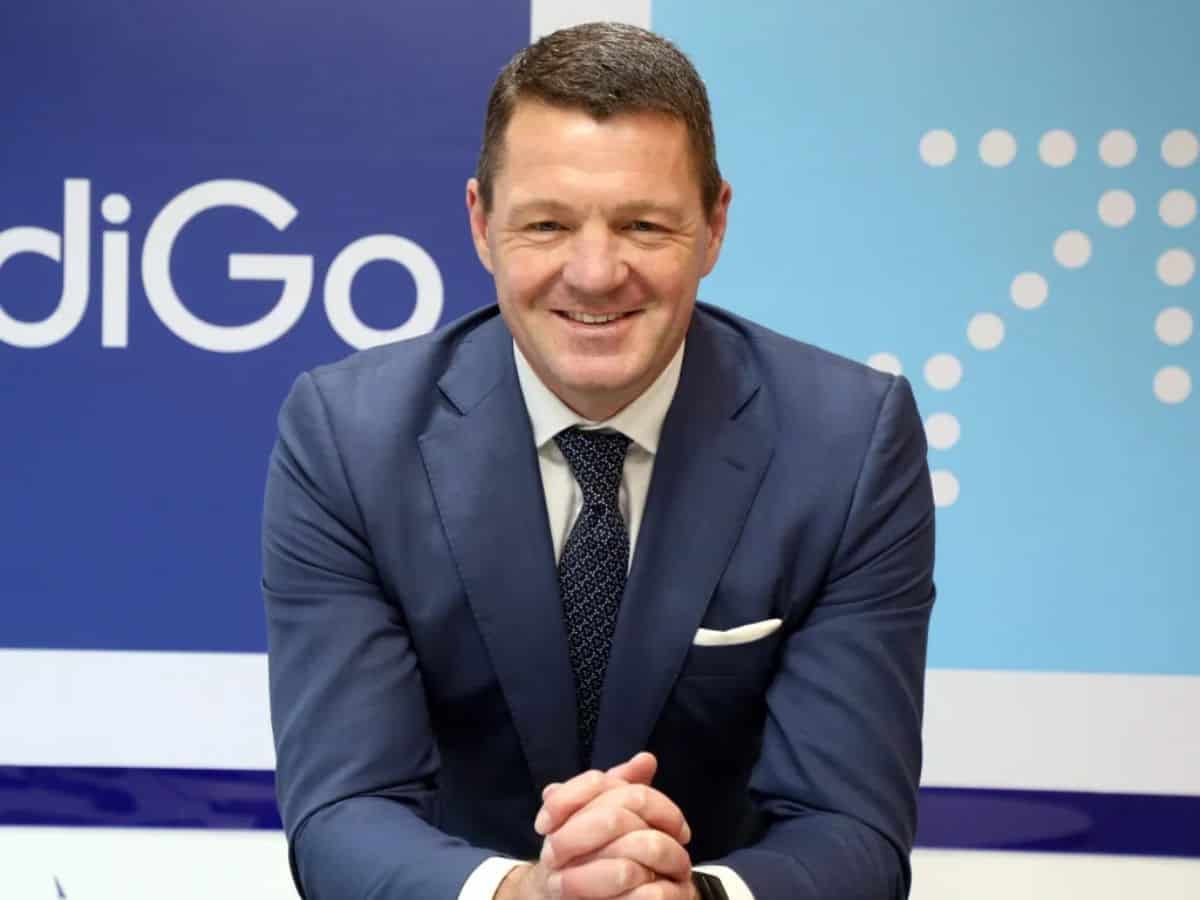
    Mumbai: India’s largest carrier IndiGo is confident that the global events triggered by tariff hikes will not impact its long-term plans.

    Hyderabad Institute of Excellence

    The large domestic market, which includes a big untapped segment, will help airlines, the company’s Chief Executive Pieter Elbers told PTI in an interaction.

    “Some of the more recent dynamics and the global scale are not changing any of our capacity (expansion) plans for next year,” he said.

    MS Creative SchoolMS Creative School

    He, however, said a major economy like India cannot be insulated from a major world event like the tariff wars.

    Elbers said the company is desirous of doubling its size by the end of the decade and the same will not be impacted.

    The long-term trajectory for the business is one of growth, and the company will not be affected if there is a quarter of a blip or higher achievement as well, he said.

    To a question on the duopoly in the Indian aviation market — the Tatas are the only formidable competitors to Indigo — and how he sees it going ahead, Elbers suggested that having an airline of big size and scale that is able to compete globally would be helpful for India.

    He said a similar consolidation has been observed in other aviation markets as well.

    To a question on the review of the seats framework by Indian authorities while negotiating with other countries, Elbers said parting seats represents a “missed opportunity” for Indian carriers, as the foreign carriers are benefiting from it.

    India needs airlines and also the maintenance, repair and overhaul facilities given the employment potential, he said, adding that Indigo itself sends its aircraft overseas for such works.

    To underline the employment potential, Elbers said Indigo employs over 60,000 people at present.

    On some voices pitching for capping of domestic airfares, he said the fares go up during seasons, and added that it is only during occasions like the Kumbh Mela when the fares really skyrocket.

    Underlining that airlines serve an important role from an economic and social perspective, he pitched for market forces being allowed to play.

    The average ticket costs are not so high in India, and the country is one of the most competitive aviation markets in the world.

    With a new airport coming up in the satellite city of Navi Mumbai, Elbers said at a conceptual level, IndiGo will like to grow from the newer facilities while maintaining the services at the older airports.

    The company will operate from Navi Mumbai airport, which will serve customers both in Mumbai and Pune, once it opens later this year, he said.