Category: BUSINESS

  • Real estate platform NoBroker clocks Rs 411 crore loss in FY24

    Real estate platform NoBroker clocks Rs 411 crore loss in FY24

    New Delhi: Real estate platform NoBroker has reported a net loss of Rs 411 crore in the financial year ending March 2024 (FY24), even as its total expenses climbed to Rs 1,299 crore — a 9.2 per cent increase from the previous fiscal.

    However, the company managed to reduce its losses by 19 per cent compared to the Rs 506 crore loss recorded in FY23, despite the rise in spending.

    According to a report by Entrackr, citing its financials, a major chunk of these expenses — Rs 738 crore, or 57 per cent of the total — was classified under ‘miscellaneous overheads,’ with the company providing limited details about this category.

    MS Creative School

    Meanwhile, employee benefit expenses remained flat at Rs 436 crore and accounted for 33 per cent of total spending.

    Other costs such as rent and legal charges were brought down to Rs 7 crore and Rs 12 crore respectively, while depreciation saw a slight increase to Rs 31 crore.

    Despite the higher spending, NoBroker’s operational performance showed improvement, the report mentioned, citing its financials.

    Operating revenue grew by 32 per cent to Rs 803 crore in FY24 from Rs 609 crore the previous year.

    Most of this income came from its subscription-based house-hunting service, which contributed 99 per cent of the revenue.

    The company also earned Rs 5 crore from product sales, including home services and related offerings, the report said.

    In addition to operational earnings, NoBroker gained Rs 85 crore from interest on fixed deposits, mutual fund gains, and other investments.

    This pushed its total income to Rs 888 crore in FY24, up from Rs 683 crore in FY23. However, the company’s financial efficiency remains under pressure.

    For every rupee it earned in operating revenue, NoBroker spent Rs 1.62. Its EBITDA margin stood at -42.45 per cent, while its Return on Capital Employed (ROCE) was at -37.76 per cent.

    As of March 2024, the Bengaluru-based startup had current assets worth Rs 1,082 crore, including Rs 55 crore in cash reserves.

    Founded by Ankit Agarwal, Saurabh Garg, and Akhil Gupta, NoBroker has raised a total of $366 million from investors like Tiger Global, BEENEXT, and Elevation Capital.

    The founders collectively hold a 16.6 per cent stake in the company.

  • India’s WPI inflation falls to 13-month low

    India’s WPI inflation falls to 13-month low

    New Delhi: India’s annual rate of inflation based on the Wholesale Price Index (WPI) slowed to a 13-month low of 0.85 per cent in April, down from 2.05 per cent in March and 2.38 per cent in February, according to data released by the Ministry of Commerce and Industry on Wednesday.

    The month-over-month change in WPI for April was in the negative zone at (-) 0.19 per cent as compared to the previous month of March, reflecting the declining trend in inflation.

    There was a decline in prices of food as well as a double digit decline in fuel prices, compared to the previous month, which resulted in the overall month-on-month inflation rate turning negative.

    MS Creative School

    Meanwhile, the country’s retail inflation has also come down from 3.16 per cent in April from 3.34 per cent in March to its lowest level since July, 2019 as food prices eased further bringing respite to household budgets, according to figures released by the Ministry of Statistics on Tuesday,

    Food inflation, which accounts for nearly half of the Consumer Price Index (CPI) basket, slowed to 1.78 per cent in April, compared to 2.69 per cent in March

    This is for the third month in a row that inflation has stayed below the RBI’s 4 per cent medium-term target and will enable the central bank to continue with its soft money policy to spur economic growth.

    Retail inflation in the country has been on a declining trend in recent months.

    The Reserve Bank’s Monetary Policy Committee has reduced its inflation forecast for 2025-26 to 4 per cent from 4.2 per cent earlier “as the outlook for food inflation has turned decisively positive,” RBI Governor Sanjay Malhotra said during the monetary policy review meeting recently.

    The uncertainties regarding Rabi crops have abated considerably and the second advance estimates point to a record wheat production and higher production of key pulses over that last year. Along with robust Kharif arrivals, this is expected to set the stage for a durable softening of food inflation.

    The sharp decline in inflation expectations in the latest RBI survey for three months and one year ahead will also help anchor inflation expectations, going ahead.

  • Real estate platform NoBroker clocks Rs 411 crore loss in FY24, expenses rise

    Real estate platform NoBroker clocks Rs 411 crore loss in FY24, expenses rise

    New Delhi: Real estate platform NoBroker has reported a net loss of Rs 411 crore in the financial year ending March 2024 (FY24), even as its total expenses climbed to Rs 1,299 crore — a 9.2 per cent increase from the previous fiscal.

    However, the company managed to reduce its losses by 19 per cent compared to the Rs 506 crore loss recorded in FY23, despite the rise in spending.

    According to a report by Entrackr, citing its financials, a major chunk of these expenses — Rs 738 crore, or 57 per cent of the total — was classified under ‘miscellaneous overheads,’ with the company providing limited details about this category.

    MS Creative School

    Meanwhile, employee benefit expenses remained flat at Rs 436 crore and accounted for 33 per cent of total spending.

    Other costs such as rent and legal charges were brought down to Rs 7 crore and Rs 12 crore respectively, while depreciation saw a slight increase to Rs 31 crore.

    Despite the higher spending, NoBroker’s operational performance showed improvement, the report mentioned, citing its financials.

    Operating revenue grew by 32 per cent to Rs 803 crore in FY24 from Rs 609 crore the previous year.

    Most of this income came from its subscription-based house-hunting service, which contributed 99 per cent of the revenue.

    The company also earned Rs 5 crore from product sales, including home services and related offerings, the report said.

    In addition to operational earnings, NoBroker gained Rs 85 crore from interest on fixed deposits, mutual fund gains, and other investments.

    This pushed its total income to Rs 888 crore in FY24, up from Rs 683 crore in FY23. However, the company’s financial efficiency remains under pressure.

    For every rupee it earned in operating revenue, NoBroker spent Rs 1.62. Its EBITDA margin stood at -42.45 per cent, while its Return on Capital Employed (ROCE) was at -37.76 per cent.

    As of March 2024, the Bengaluru-based startup had current assets worth Rs 1,082 crore, including Rs 55 crore in cash reserves.

    Founded by Ankit Agarwal, Saurabh Garg, and Akhil Gupta, NoBroker has raised a total of $366 million from investors like Tiger Global, BEENEXT, and Elevation Capital.

    The founders collectively hold a 16.6 per cent stake in the company.

  • Rupee rises 31 paise to 85.05 against US dollar in early trade

    Rupee rises 31 paise to 85.05 against US dollar in early trade

    Mumbai: The rupee appreciated 31 paise to 85.05 against the US dollar in early trade on Wednesday, supported by gains in domestic equities and positive macroeconomic data.

    Forex traders said a surge in global crude oil prices may weigh on the rupee. Over the last few sessions, Brent crude prices have surged to near USD 66 per barrel, which could widen India’s trade deficit.

    Moreover, foreign fund outflows also contained the appreciation of the domestic unit to some extent.

    MS Creative School

    At the interbank foreign exchange, the domestic unit opened at 85.05 against the greenback, registering a gain of 31 paise over its previous close.

    In initial trade, the local unit also touched 85.23 against the greenback.

    On Tuesday, the rupee reversed early gains to settle flat at 85.36 against the US dollar.

    Indian rupee fell on Tuesday on dollar buying from oil companies, as rising crude oil prices prompted importers to raise hedging, said Anil Kumar Bhansali, Head of Treasury and Executive Director, Finrex Treasury Advisors LLP.

    Exporters will continue to sell on all good upticks, while importers can buy the dips as the rupee is expected to trade in a range, Bhansali said, adding that the range for the day is likely to be 84.75 to 85.50.

    Meanwhile, the dollar index, which gauges the greenback’s strength against a basket of six currencies, was trading lower by 0.05 per cent at 100.95.

    Brent crude, the global oil benchmark, fell 0.54 per cent to USD 66.27 per barrel in futures trade.

    In the domestic equity market, the 30-share BSE Sensex advanced 250.80 points, or 0.31 per cent, to 81,399.02, while the Nifty rose 58.45 points, or 0.24 per cent, to 24,636.80.

    Foreign institutional investors (FIIs) offloaded equities worth Rs 476.86 crore on a net basis on Tuesday, according to exchange data.

    On the domestic macroeconomic front, India’s retail inflation eased to a nearly six-year low of 3.16 per cent in April, creating enough room for the Reserve Bank to go for another round of rate cut in the June monetary policy review.

    “India’s inflation rose by 3.16 per cent, lower than last month and almost equivalent to expectations. This could give RBI another chance to cut rates next month in its scheduled meeting,” Bhansali said.

  • Sensex, Nifty open higher after inflation cools, geo-political tensions ease

    Sensex, Nifty open higher after inflation cools, geo-political tensions ease

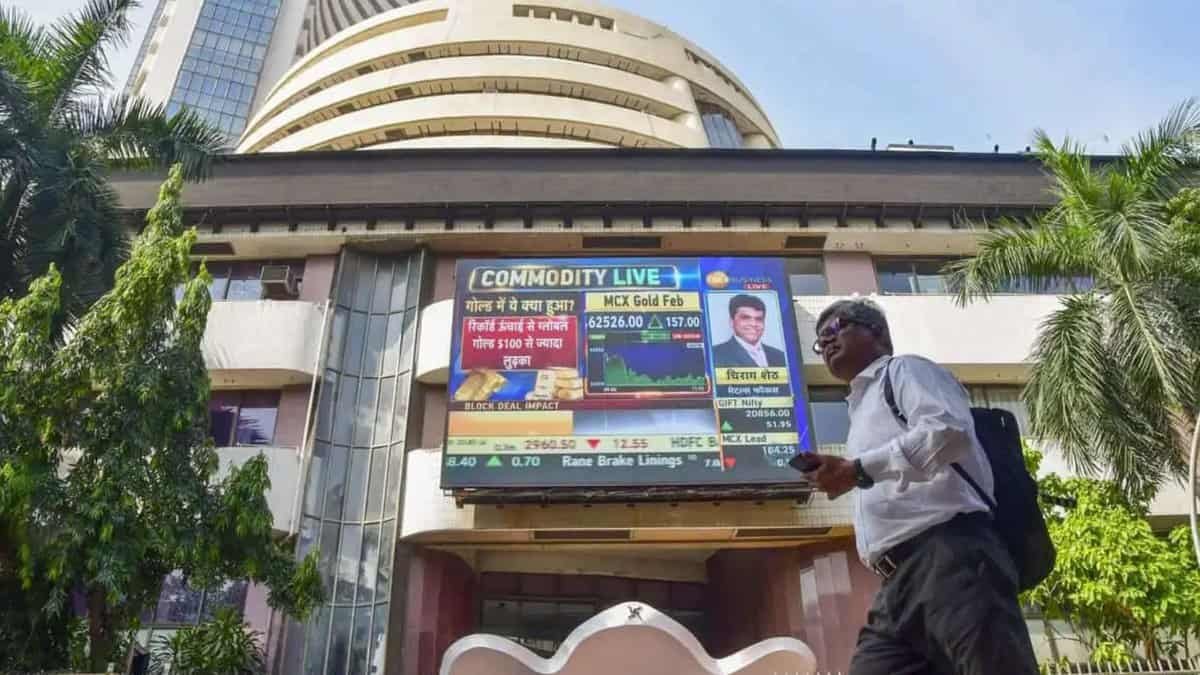
    Mumbai: The Indian frontline indices opened in the green on Wednesday after retail inflation hit multi-year low and geo-political tensions eased.

    At around 9:25 am, Sensex was up 414 points or 0.51 per cent at 81,562 and Nifty was up 136 points or 0.55 per cent at 24,712.

    Buying was seen in the midcap and smallcap stocks. Nifty midcap 100 index was up 510 points or 0.92 per cent at 56,030 and Nifty smallcap 100 index was up 132 points or 0.78 per cent at 17,035.

    MS Creative School

    On the sectoral front, all indices were trading in the green. Auto, IT, PSU bank, FMCG, metal, energy, infra and PSE were major gainers.

    “After a positive opening, Nifty can find support at 24,500 followed by 24,400 and 24,300. On the higher side, 24,700 can be an immediate resistance, followed by 24,800 and 24,850,” said Hardik Matalia from Choice Broking.

    In the Sensex pack, Tata Steel, Bharti Airtel, Tech Mahindra, Infosys, Eternal, HCL Tech, M&M, Bajaj Finserv, L&T, TCS, SBI and NTPC were major gainers. On the other hand, Tata Motors, Asian Paints, IndusInd Bank, HUL, Nestle and Kotak Mahindra Bank were major losers.

    Earlier, India’s retail inflation fell to 3.16 per cent in April from 3.34 per cent in March, to its lowest level since July 2019.

    “With crude oil prices sharply easing, domestic demand softer, and food prices contained, we expect the RBI to cut rates aggressively,” said Devarsh Vakil, Head of Prime Research at HDFC Securities.

    The Asian stock markets were trading in a mixed zone. Hong Kong, Shanghai, Seoul and Jakarta were in the green, while Japan and Bangkok were in the red.

    The US markets closed in the mixed zone on Tuesday. Main index Dow Jones ended in the red and technology index Nasdaq closed higher for a second straight day after softer-than-expected inflation numbers.

    The foreign institutional investors (FIIs) sold equities worth Rs 476 crore on May 13, while domestic institutional investors (DIIs) extended their buying on the third day as they bought equities of Rs 4,273 crore on the same day.

  • Paytm sees large trade order involving 1.7 crore shares, stock falls marginally

    Paytm sees large trade order involving 1.7 crore shares, stock falls marginally

    Mumbai: Shares of One97 Communications Ltd, the parent company of Paytm, declined marginally on Tuesday after stock worth Rs 2,380 crore changed hands in multiple large trade order involving 1.7 crore shares.

    While the buyers and sellers in the trade were not known, reports suggested that Alibaba Group‘s subsidiary Antfin was the likely seller.

    According to reports, Antfin, the second largest shareholder in One 97 Communications with a stake of 9.85 per cent, sought to offload 4 per cent stake in the financial services major.

    MS Creative School

    The fintech giant had set the floor price at Rs 809.75 apiece, marking a 6 per cent discount from the previous close.

    Multinational investment banks Citigroup and Goldman Sachs are the merchants for this deal, reports NDTV profit.

    Shares of Paytm fell as much as 4.10 per cent to Rs 830.55 apiece, the lowest level since May 9. It later pared losses to trade 2 per cent lower at Rs 849 apiece.

    The stock has risen 145.24 per cent in the last 12 months and fallen 16.73 per cent year-to-date.

    Last week, One97 Communications Limited reported a 15.7 per cent drop in revenue to Rs 1,911.5 crore for the January-March 2025 period (Q4 FY25), compared to Rs 2,267.1 crore in the same quarter of the last fiscal (Q4 FY24).

    The weaker revenue performance comes despite an increase in other income, which rose by nearly Rs 100 crore to Rs 223.8 crore, as per the company’s stock exchange filing. However, that wasn’t enough to offset broader pressures, and the company reported a net loss of Rs 544.6 crore for the quarter.

    In a notable move last month, Paytm CEO Vijay Shekhar Sharma gave up 21 million ESOPs, triggering a one-time non-cash expense of Rs 492 crore.

    Paytm added that the payments industry is hopeful of regulatory clarity soon on allowing merchant discount rates (MDR) for large UPI transactions, which could help improve margins.

    In the fourth quarter of FY25, Paytm generated Rs 1,098 crore in revenue from its Payment Services segment, which includes other operating income. The Financial Services segment remained a key growth driver, posting a 9 per cent quarter-on-quarter (QoQ) rise in revenue to Rs 545 crore.

  • Sensex, Nifty open lower as Infosys and Zomato drag

    Sensex, Nifty open lower as Infosys and Zomato drag

    Mumbai: Indian equity indices opened in the red on Tuesday as heavyweights like Infosys, Eternal (Zomato) and Kotak Mahindra Bank were top losers in the BSE benchmark.

    At around 9:25 am, Sensex was down 444 points or 0.54 per cent at 81,985 and Nifty was down 105 points or 0.42 per cent at 24,817.

    After a negative opening, Nifty can find support at 24,800 followed by 24,700 and 24,500. On the higher side, 25,000 can be an immediate resistance, followed by 25,100 and 25,200, according to analysts.

    MS Creative School

    In the Sensex pack, Sun Pharma, IndusInd Bank, Tech Mahindra, Bajaj Finance, Maruti Suzuki, Titan, HUL and Axis Bank were top gainers. Infosys, Eternal (Zomato), Tata Steel, HCL Tech, Power Grid, UltraTech Cement, Asian Paints, ITC, NTPC, HDFC Bank were top laggards.

    On the sectoral front, auto, IT, financial services, FMCG, metal, realty and media were major losers. PSU bank, pharma, realty and PSE were major gainers.

    Marginal buying was seen in the smallcap and midcap stocks. Nifty midcap 100 index was up 20 points to 55,437 and Nifty smallcap 100 index was up 38 points to 16,805.

    Following yesterday’s stupendous rise, Indian benchmark indices will likely consolidate recent gains, while we anticipate continued buyer interest in mid-cap and small-cap stocks at lower levels, according to Devarsh Vakil, Head of Prime Research at HDFC Securities.

    Most Asian stock markets were trading in green. Tokyo, Bangkok, Seoul and Shanghai were major gainers. However, Hong Kong was in red.

    The US markets closed in the green as investors cheered a sharp de-escalation in the U.S.-China trade war. America main indices Dow was up 2.81 per cent and technology index Nasdaq was up 4.35 per cent in the last trading session.

    The foreign institutional investors (FIIs) purchased equities of Rs 1,246 crore on May 13, while domestic institutional investors (DIIs) also bought equities of Rs 1,488 crore on the same day.

    “Given the current market dynamics, traders are advised to adopt a disciplined approach with strict risk management, focusing on short-term trading opportunities. Considering prevailing global uncertainties, it is also prudent to avoid large overnight positions and enforce tight risk controls,” said Hardik Matalia, Derivative Analyst, Choice Broking.

  • FIIs to resume equity purchases in India as bulls roar: Analysts

    FIIs to resume equity purchases in India as bulls roar: Analysts

    Mumbai: The ceasefire between India and Pakistan has paved the way for a sharp rally in the market and with this, foreign institutional investors (FIIs) are likely to resume their equity purchases in India, analysts said on Monday.

    Sensex and Nifty surged more than 2.7 per cent in the morning trade.

    According to market watchers, the prime mover of the rally will now be the FII buying, which has been sustained for 16 continuous days except last Friday when the conflict escalated.

    MS Creative School

    “Domestic macros like expectations of high GDP growth and revival of earnings growth in FY26 and declining inflation and interest rates augur well for the resumption of a rally in the market,” said Dr VK Vijayakumar, Chief Investment Strategist, Geojit Investments Limited.

    FIIs favour large caps like ICICI Bank, HDFC Bank, Bajaj Finance, L&T, Bharti, Ultratech, M&M and Eicher. Midcap IT and digital stocks are other segments to watch.

    Pharma stocks may come under near-term pressure from US President Donald Trump’s latest announcement regarding reducing prices of drugs in the US.

    “There are rumours of impending US deal with China on trade but details are yet to come. If a deal materialises that would be good for the global economy,” said Vijayakumar.

    The hallmark of FPI investment in recent days has been the sustained buying by FIIs. FIIs bought equity through the exchanges consecutively for 16 trading days ending 8th May for a cumulative amount of Rs 48,533 crore.

    “They sold for Rs 3,798 crore on 9th May when the India-Pak conflict got escalated. Now that ceasefire has been declared, FIIs are likely to resume their equity purchases in India,” said analysts.

    It is important to understand that FIIs were continuous sellers in India in the first three months of this year. The big selling began in January (Rs 78,027 crore) when the dollar index peaked at 111 in mid-January.

    Thereafter, the intensity of selling declined. FIIs turned buyers in April with a buy figure of Rs 4,243 crore.

  • Sensex surges over 1,900 points as India-Pak tensions ease

    Sensex surges over 1,900 points as India-Pak tensions ease

    Mumbai: The domestic indices surged on Monday with Sensex jumping over 1,900 points in the morning trade, as India-Pakistan tensions eased with ‘Operation Sindoor’ marking a significant demonstration of India’s military and strategic prowess.

    Buying was seen in the PSU bank, IT and auto sectors in the early trade.

    At around 9.34 am, Sensex was trading 1,943 points or 2.45 per cent up at 81,398.42 while the Nifty climbed 598.8 point or 2.49 per cent at 24,606.85.

    MS Creative School

    Nifty Bank was up 1,395.95 points or 2.60 per cent at 54,991.20. The Nifty Midcap 100 index was trading at 54,679.55 after rising 1,456.20 points or 2.74 per cent. Nifty Smallcap 100 index was at 16,584.60 after climbing 498.95 points or 3.10 per cent.

    According to analysts, India’s markets and economy have demonstrated remarkable resilience, consistently transcending external perturbations and geo-political tensions. This strength comes from a steady, domestically-oriented economy, which helps protect against global troubles, showing that every crisis eventually ends.

    “India’s efforts to negotiate trade deals will strengthen global business links and help it sell more worldwide, bringing in steady foreign money and making it more competitive. Along with balanced global relationships and strong partnerships, this creates a relatively stable investment place,” said Devarsh Vakil, Head of Prime Research at HDFC Securities.

    Major indexes finished the last week narrowly mixed. The trade deal announcement between US and UK and reports that U.S. and Chinese officials meeting in Switzerland on the weekend for trade discussions, paved the way for broader negotiations and tariff de-escalation, supported investor sentiment, said experts.

    Meanwhile, in the Sensex pack, Adani Ports, Bajaj Finance, Axis Bank, Eternal, Power Grid, NTPC, Bajaj Finserv, Tata Steel, L&T, SBI were the top gainers. Whereas, only Sun Pharma was the top loser.

    In the Asian markets, China, Hong Kong and Seoul were trading in green, whereas, Japan was trading in red.

    In the last trading session on Friday, Dow Jones in the US declined 0.29 per cent to close at 41,249.38. The S&P 500 declined 0.07 per cent to 5,659.91and the Nasdaq closed at 17,928.92 .

    On the institutional front, foreign institutional investors (FIIs), after being net buyers for 16 consecutive sessions, turned net sellers on May 9, offloading equities worth Rs 3,798.71 crore. In contrast, domestic Institutional Investors (DIIs) remained net buyers, investing Rs 7,277.74 crore on the same day.

  • India-Pak tensions, inflation and economic data key triggers for next week

    India-Pak tensions, inflation and economic data key triggers for next week

    Mumbai: The Indian stock market outlook for next week will be guided by several domestic and international cues such as retail inflation, quarterly results, US jobless claims data and others.

    Next week, companies like SMC Global, Bajaj Electricals, JM Financial, Raymond, Tata Steel, UPL, AB Capital, Bharti Airtel, Cipla, Hero MotoCorp, Tata Motors, HAL, Tata Power, and JSW Energy will release their Q4 FY2024- 25 results.

    In India, inflation will be in focus with the release of CPI YoY data on May 13, providing clarity on consumer price trends and their implications for the Reserve Bank of India‘s monetary policy. Additionally, Exports YoY data on May 15 will shed light on the health of India’s external trade amid global uncertainties.

    MS Creative School

    In the US, the spotlight will be on inflation and consumption metrics. On May 13, both CPI MoM (Month-on-Month) and YoY (Year-on-Year) figures will be closely watched for signals on the Federal Reserve’s policy direction.

    Meanwhile, China will release its Money Supply M2 YoY data on May 15, a critical indicator of liquidity and credit growth that could influence monetary easing expectations.

    Bajaj Broking Research said, “The week of May 13 to 16, 2025, brings a slate of crucial economic data releases across India, the United States, and China, which are likely to guide investor sentiment and central bank expectations.”

    Last week, the stock market ended lower due to the escalation between India and Pakistan.

    The Sensex declined by nearly 1,047 points to settle at 79,454, while the Nifty slipped 338 points to close at 24,008 — both registering a weekly loss of approximately 1.4 per cent.

    Sector-wise, real estate and PSU banks were the major laggards, falling around 6.5 per cent and 4.5 per cent, respectively, while the auto and media sectors bucked the trend to emerge as top gainers.

    Puneet Singhania, Director at Master Trust Group, said, “Rising tensions between India and Pakistan are likely to dominate investor sentiment in the coming week, creating a cautious undertone in Indian equity markets. Any escalation along the border or strong diplomatic developments could lead to uncertainty.”

    “Alongside geopolitical concerns, the ongoing Q4 corporate earnings season will continue to drive stock-specific action. Further developments on both geopolitical and corporate fronts will play a crucial role in determining the market direction,” he added.