Category: BUSINESS

  • Indian stock market opens flat amid mixed global cues

    Indian stock market opens flat amid mixed global cues

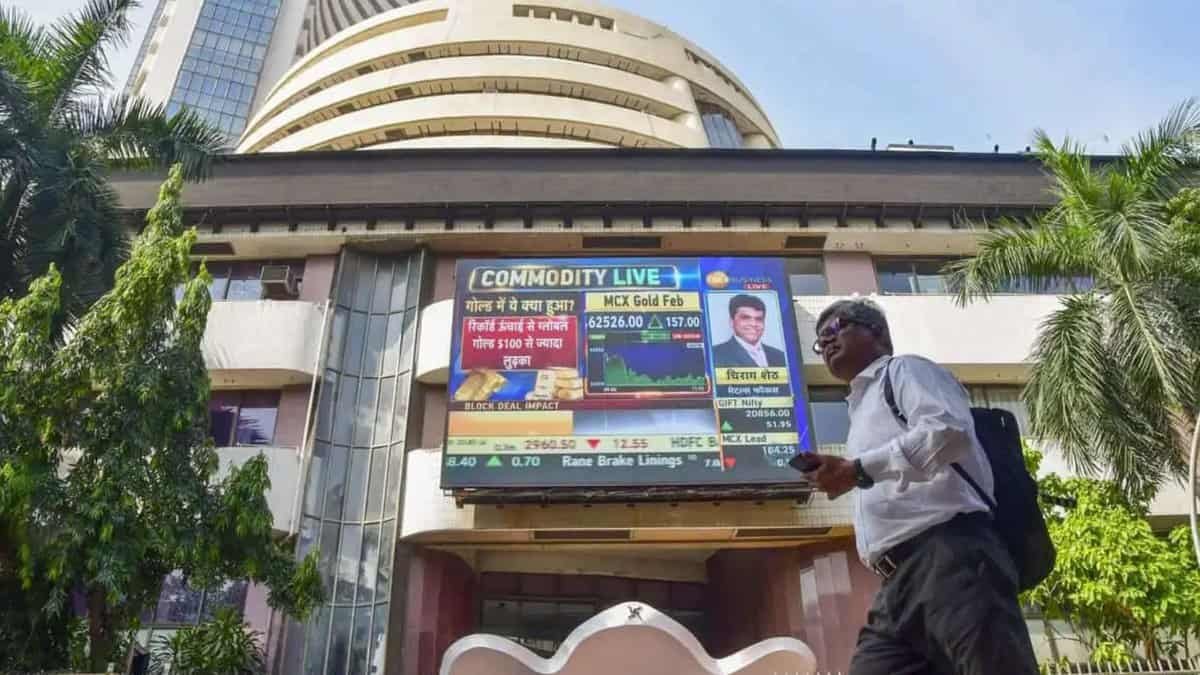
    Mumbai: The domestic benchmark indices opened flat on Monday amid mixed global cues, as selling was seen in the IT sector in the early trade.

    At around 9.32 am, Sensex was trading 3.88 points or 0.00 per cent up at 82,326.71 while the Nifty climbed 14.70 point or 0.06 per cent at 25,034.50.

    Nifty Bank was up 134.25 points or 0.24 per cent at 55,489.15. The Nifty Midcap 100 index was trading at 57,203.80 after rising 143.30 points or 0.25 per cent. Nifty Smallcap 100 index was at 17,701.75 after climbing 141.35 points or 0.80 per cent.

    MS Creative School

    According to analysts, “they now have only the October 2024 peak ahead at 25,235, which is in close vicinity, before 26,277, the lofty peak of September stares at us. This warns us to be guarded against sudden withdrawal in risk appetite and buying interest as we push ahead”.

    “With this in the backdrop we will begin the week expecting continuation of an uptrend, with an intraday downside marker at 24,950. However, brace for declines, should the upswings there of fail to clear 25,235 or if there is an outright breakdown past 24,870/807 region,” said Anand James, Chief Market Strategist of Geojit Investments Limited.

    The prime mover of the ongoing rally in the Indian market is the sustained FII inflows of around Rs 23,800 crore so far this month.

    “Of course, the decline in global trade tensions, the rally in global markets led by the US and the India-Pak ceasefire have created the setting for this rally,” said experts.

    Meanwhile, in the Sensex pack, Infosys, TCS, IndusInd Bank, HCL Tech, Tech Mahindra, M&M, Eternal, Reliance and L&T were the top losers. Whereas, NTPC, Bajaj Finance, Tata Motors, Sun Pharma, Bajaj Finserv, PowerGrid, SBI and HDFC Bank were the top gainers.

    In the Asian markets, China, Hong Kong, Japan, Bangkok and Seoul were trading in red, whereas, only Jakarta was trading in green.

    In the last trading session on Friday, Dow Jones in the US closed at 42,654.74, up 331.99 points, or 0.78 per cent. The S&P 500 ended with a gain of 41.45 points, or 0.70 per cent, at 5,958.38 and the Nasdaq closed at 19,211.10, up 98.78 points, or 0.52 per cent.

    On the institutional front, foreign institutional investors (FIIs) were net buyers of equities worth Rs 8,831.05 crore on May 16, while domestic institutional investors (DIIs) purchased equities worth Rs 5,187.09 crore.

  • India imposes port curbs on import of certain Bangladeshi goods

    India imposes port curbs on import of certain Bangladeshi goods

    New Delhi: India on Saturday imposed port restrictions on the import of certain goods, such as readymade garments and processed food items, from Bangladesh.

    The Directorate General of Foreign Trade (DGFT), under the Commerce Ministry, has issued a notification in this regard.

    The notification imposes “port restrictions on the import of certain goods such as readymade garments, processed food items etc., from Bangladesh to India,” the ministry said.

    MS Creative SchoolMS Creative School

    However, such port restrictions will not apply on Bangladeshi goods transiting through India but destined for Nepal and Bhutan, it added.

  • iPhone shipments likely to begin in June from Foxconn’s Bengaluru unit

    iPhone shipments likely to begin in June from Foxconn’s Bengaluru unit

    New Delhi: Taiwanese electronics manufacturing major Foxconn’s facility in Bengaluru is nearly ready for launch, with commercial iPhone shipments expected to begin as early as June, Karnataka Minister for Commerce and Industries, MB Patil, said on Saturday.

    The country is now achieving “Make in India” at a global scale, as reports suggest that tech giant Apple may shift the entire assembly of iPhones meant for the US to India by next year.

    According to Patil, “Foxconn’s unit at Devanahalli ITIR is nearly ready for launch, with commercial iPhone shipments expected to begin as early as June”.

    MS Creative School

    In a post on X social media platform, he said that this is not just a manufacturing milestone.

    “It marks a strategic shift. With rising geopolitical and tariff pressures, India is fast becoming Apple’s preferred production hub. This development strengthens Karnataka’s position in global manufacturing and opens the door to greater foreign investment — without compromising stakeholder interests,” said the state minister.

    Apple CEO Tim Cook has confirmed that for the June quarter, a majority of iPhones sold in the US will be made in India.

    “As a Kannadiga, this is a proud moment. From Mysuru to Cupertino, Karnataka is making global headlines,” said Patil.

    According to Union Minister for Electronics and Information Technology, Ashwini Vaishnaw, India is now achieving “Make in India” at a global scale.

    Apple’s contract manufacturers in India are already scaling up their operations. Foxconn’s new plant in Bengaluru could produce up to 20 million iPhones at full capacity. Apple’s manufacturing strength in India is already impressive.

    In the past year, iPhones worth $22 billion were assembled in India, with Tamil Nadu-based Foxconn contributing nearly 50 per cent of Apple’s exports.

    Exports from Foxconn’s factory have jumped more than 40 per cent compared to the same period last year.

    Today, India accounts for nearly 20 per cent of Apple’s total iPhone production worldwide, showing how important the country has become for the brand’s global plans.

    The Indian market is also witnessing strong growth for Apple. In the first quarter of 2025 alone, more than three million iPhones were shipped from India — a new record.

  • Air India on IndiGo-Turkish Airlines codesharing

    Air India on IndiGo-Turkish Airlines codesharing

    New Delhi: Air India on Friday said it does not comment on competitors, as a media report claimed that it lobbied the government to cancel IndiGo’s lease with state-backed Turkish Airlines.

    In a statement to IANS, the Tata Group-owned airline denied the allegation.

    “Air India denies the gross misrepresentation and mischievous reporting on a competitor’s business model in certain media outlets,” said the airline.

    MS Creative School

    “As a responsible corporate, we do not comment on competitors,” Air India stated.

    IndiGo had emphasised that the current arrangement allows Indian and Turkish carriers to operate up to 56 weekly flights under the bilateral Air Services Agreement (ASA).

    “This arrangement provides multiple benefits to Indian travellers, and the country’s economy,” the budget airline had said in a statement.

    It pointed out that this expanded long-haul connectivity has come at a critical time, with global airfare prices rising in the aftermath of the Covid-19 pandemic.

    “The increased capacity has allowed more affordable international travel for Indian passengers, especially those flying from smaller cities via two-stop connections,” according to the low-cost airline.

    IndiGo also highlighted the broader economic impact of the partnership, noting that the additional flights have created jobs, boosted trade, and increased tax revenues in India.

    Meanwhile, the stock of Turkish ground-handling firm Celebi Airport Services tanked 10 per cent on Friday after India revoked the security clearance of the company amid calls to ban Turkish businesses, in the wake of their country supporting Pakistan, which harbours terrorism.

    The stock was under pressure in the past few days amid clamour for action against the Turkish firm.

  • Economists see RBI dividend to govt surpassing record Rs 2.5 lakh cr in 2025-26

    Economists see RBI dividend to govt surpassing record Rs 2.5 lakh cr in 2025-26

    Mumbai: Economists expect the Reserve Bank of India’s (RBI) dividend to the government to surpass a record over Rs 2.5 lakh crore this year as the central bank earnings, through the sale of dollars to prop up the rupee as it sharply depreciated during 2024-25, are reported to have shot up. This higher profit will be transferred to the government as a dividend in 2025-26.

    The previous record dividend transferred to the government stands at Rs 2.1 lakh crore during 2024-25 which helped to keep the fiscal deficit in check, while enabling the Finance Ministry to continue with its expenditure on big ticket infrastructure projects to spur growth and social welfare schemes to uplift the poor.

    This was a record jump from the Rs 87,416 crore transferred to the government in 2023-24 for the profit made in 2022-23. Similarly, the government is expected to get another booster shot through the RBI dividend in the current financial year as well.

    MS Creative School

    “Among the RBI’s earnings, forex transactions are expected to be most significant in light of the in light of the central bank’s measures to lower rupee volatility by strong dollar purchases earlier in fiscal 2025 and difference in the current versus historical exchange rate. Add to this the interest income on government securities and earnings from funds extended to banks in midst of previous tight liquidity. “This transfer could amount to a record high at around Rs 2.5-2.7 lakh crore this year,” said Radhika Rao, senior economist at DBS Bank.

    Earnings on forex transactions are expected to be substantial with gross dollar sales tracking at $371.6 billion in fiscal 2025 till February compared to $153 billion in fiscal 2024, according to Gaura Sengupta, chief economist at IDFC First bank. She estimates the RBI dividend to be between Rs 2.6 lakh crore to Rs 3 lakh crore, according to an NDTV Profit report.

    The higher dividend creates fiscal space of 0.1 per cent to 0.2 per cent of GDP, estimates Sengupta. With support from the higher-than-budgeted RBI surplus and savings on a few expenditure heads, the central government is in a fairly strong position to counter the growth slowdown risks and any potential emergency spending requirements.

    Apart from helping to lower the fiscal deficit, the RBI dividend will be a significant infusion to core liquidity in the banking system during the current financial year. This will help to keep interest rates low and allow banks to extend more loans to corporates and consumers to accelerate economic growth and create more jobs.

    The RBI board of directors met on Thursday to review the economic capital framework which is the basis for deciding the surplus transfer or amount of dividend to be given to the government. The meeting comes ahead of deciding and approving the surplus transfer to the government.

    The transferable surplus is determined on the basis of the ECF adopted by the Reserve Bank on August 26, 2019, as per recommendations of the Bimal Jalan-headed Expert Committee to Review the extant Economic Capital Framework of the RBI.

    The Committee had recommended that the risk provisioning under the Contingent Risk Buffer (CRB) be maintained within a range of 6.5 to 5.5 per cent of the RBI’s balance sheet.

  • Indian stock market opens lower amid mixed global cues

    Indian stock market opens lower amid mixed global cues

    Mumbai: The domestic benchmark indices opened lower on Friday amid mixed global cues as selling was seen in the IT, financial services and pharma sectors in the early trade.

    At around 9.29 am, Sensex was trading 231.64 points or 0.28 per cent down at 82,299.10, while the Nifty declined 49,95 point or 0.20 per cent at 25,012.15.

    Nifty Bank was down 52.40 points or 0.09 per cent at 55,303.20. The Nifty Midcap 100 index was trading at 56,700.05 after rising 169.20 points or 0.30 per cent. Nifty Smallcap 100 index was at 17,318.40 after climbing 78.45 points or 0.46 per cent.

    MS Creative School

    According to analysts, on the technical front, Nifty formed a strong bullish candle on the daily chart, breaking out of an inside bar pattern and closing above the crucial 25,000 level.

    “The index witnessed an intraday recovery of nearly 200 points, reflecting sustained bullish momentum. Immediate support is placed at 24,850–24,700, while resistance is seen at 25,100 and 25,235. A decisive breakout above the 25,235 level could drive the index higher toward the 25,500–25,743 zone,” said Hardik Matalia from Choice Broking.

    Traders are advised to adopt a “buy on dips” strategy with strict risk management and avoid taking large overnight positions due to ongoing global uncertainties, he added.

    Meanwhile, in the Sensex pack, Bharti Airtel, IndusInd Bank, SBI, Infosys, HCL Tech and M&M were the top losers. Whereas, UltraTech Cement, Bajaj Finserv, NTPC, Maruti Suzuki and Axis Bank were the top gainers.

    In the Asian markets, China, Hong Kong and Japan were trading in red, whereas, Bangkok, Jakarta and Seoul were trading in green.

    In the last trading session, Dow Jones in the US closed at 42,322.75, up 271.69 points, or 0.65 per cent. The S&P 500 ended with a gain of 24.35 points, or 0.41 per cent, at 5,916.93 and the Nasdaq closed at 19,112.32, down 34.49 points, or 0.18 per cent.

    The April economic data presents an interesting mix of signals about the U.S. economy. The Producer Price Index (PPI) showed a surprising decrease of 0.5 per cent, which was significantly different from economists’ expectations of a 0.2 per cent increase. This unexpected drop in producer prices suggests that inflationary pressures might be easing at the wholesale level, said experts.

    “Federal Reserve Chair Jerome Powell on Thursday discussed the Fed’s framework review, a twice-a-decade look at the central bank’s monetary-policy strategy. He said the Fed was in the process of making adjustments to account for meaningful changes in the outlook for inflation and interest rates after the 2020 pandemic,” said Devarsh Vakil, Head of Prime Research at HDFC Securities.

    On the institutional front, foreign institutional investors (FIIs) were net buyers of equities worth Rs 5,392.94 crore on May 15, while domestic institutional investors (DIIs) sold equities worth Rs 1,668.47 crore.

  • India’s growth forecast revised down to 6.3% for 2025: UN

    India’s growth forecast revised down to 6.3% for 2025: UN

    United Nations: India’s economic growth forecast for 2025 has been revised downward to 6.3 per cent, and despite a projected moderation, the country remains one of the fastest-growing large economies, supported by resilient consumption and government spending, the United Nations has said.

    The UN on Thursday launched a report titled ‘The World Economic Situation and Prospects as of mid-2025’.

    “India remains one of the fastest growing large economies, driven by strong private consumption and public investment, even as growth projections have been lowered to 6.3 per cent in 2025,” Ingo Pitterle, Senior Economic Affairs Officer, Global Economic Monitoring Branch, Economic Analysis and Policy Division, UN Department of Economic and Social Affairs (DESA), said at a press briefing here.

    MS Creative School

    The report said the global economy is at a precarious juncture, marked by heightened trade tensions and elevated policy uncertainty. The recent surge in tariffs—driving the effective US tariff rate up steeply—threatens to raise production costs, disrupt global supply chains and amplify financial turbulence.

    The report said that despite a projected moderation, India remains one of the fastest-growing large economies, supported by resilient consumption and government spending.

    India’s economy is forecast to grow by 6.3 per cent in 2025, down from 7.1 per cent in 2024.

    “Resilient private consumption and strong public investment, alongside robust services exports, will support economic growth,” the report said.

    “While looming United States tariffs weigh on merchandise exports, currently exempt sectors—such as pharmaceuticals, electronics, semiconductors, energy, and copper—could limit the economic impact, though these exemptions may not be permanent,” it added.

    The 6.3 per cent growth projection for India in 2025 is slightly lower than the 6.6 per cent estimated in the UN World Economic Situation and Prospects 2025 published in January this year. GDP growth for India for 2026 is projected to be 6.4 per cent.

    In India, unemployment remains largely stable amid steady economic conditions, though persistent gender disparities in employment underscore the need for greater inclusivity in workforce participation. The report added that in India, inflation is projected to slow from 4.9 per cent in 2024 to 4.3 per cent in 2025, staying within the central bank’s target range.

    Declining inflation has allowed most of the South Asian region’s central banks to commence or continue monetary easing in 2025. The report noted that the Reserve Bank of India, which had kept its policy rate steady at 6.5 per cent since February 2023, began its easing cycle in February 2025. Meanwhile, governments in Bangladesh, Pakistan and Sri Lanka are expected to continue fiscal consolidation and economic reforms under IMF-supported programs.

    The report said that global GDP growth is now forecast at just 2.4 per cent in 2025, down from 2.9 per cent in 2024 and 0.4 percentage points below the January 2025 projection.

    “It’s been a nervous time for the global economy. In January this year, we were expecting two years of stable, if subpar, growth, and since then, prospects have diminished, accompanied by significant volatility across various dimensions,” Shantanu Mukherjee, director, Economic Analysis and Policy Division, UN DESA, said at the press briefing.

    He said the global economic growth is forecast at 2.4% for 2025 and 2.5% for 2026.

    “This is a downward revision of 0.4 percentage points each year, back from what we were expecting in January. Now this is not a recession, but the slowing down is affecting most countries and regions,” Mukherjee said.

    Uncertainty over trade and economic policies, combined with a volatile geopolitical landscape, is prompting businesses to delay or scale back critical investment decisions.

    These developments are compounding existing challenges, including high debt levels and sluggish productivity growth, further undermining global growth prospects, the report said.

    The report further said that the slowdown is broad-based, affecting both developed and developing economies. Growth in the United States is projected to decelerate significantly, from 2.8 per cent in 2024 to 1.6 per cent in 2025, with higher tariffs and policy uncertainty expected to weigh on private investment and consumption.

    China’s growth is expected to slow to 4.6 per cent this year, reflecting subdued consumer sentiment, disruptions in export-oriented manufacturing and ongoing property sector challenges.

    Several other major developing economies, including Brazil, Mexico and South Africa, are also facing growth downgrades due to weakening trade, slowing investment and falling commodity prices.

    “The tariff shock risks hitting vulnerable developing countries hard, slowing growth, slashing export revenues, and compounding debt challenges, especially as these economies are already struggling to make the investments needed for long-term, sustainable development,” United Nations Under-Secretary-General for Economic and Social Affairs Li Junhua said.

    For many developing countries, the bleak economic outlook undermines prospects for creating jobs, reducing poverty, and addressing inequality, it said. For least developed countries—where growth is expected to slow from 4.5 per cent in 2024 to 4.1 per cent in 2025—declining export revenues, tightening financial conditions, and reduced official development assistance flows threaten to further erode fiscal space and heighten the risk of debt distress.

    Escalating trade frictions are further straining the multilateral trading system, leaving small and vulnerable economies increasingly marginalised in a fragmented global landscape. Strengthening multilateral cooperation is essential to address these challenges.

    Revitalising the rules-based trading system and providing targeted support to vulnerable countries will be critical to fostering sustainable and inclusive development, it said.


  • Trump suggests India offered to drop tariffs to zero on US goods

    Trump suggests India offered to drop tariffs to zero on US goods

    Doha: President Donald Trump has suggested that India has offered to drop tariffs on US goods to zero, something not immediately acknowledged by New Delhi.

    Trump made the comments during a business roundtable in Doha, Qatar, on his Mideast tour, first discussing Apple’s plans to build manufacturing plants for its iPhone there.

    “It’s very hard to sell into India and and they’ve offered us a deal with what basically they’re willing to literally charge us no tariff,” Trump said.

    MS Creative SchoolMS Creative School

    India is a close partner of the US and is part of the Quad, which is made up of the US, India, Japan and Australia, and is seen as a counterbalance to China’s expansion in the region.

  • Muthoot Finance shares declines over 7 pc amid RBI’s draft LTV guidelines

    Muthoot Finance shares declines over 7 pc amid RBI’s draft LTV guidelines

    Mumbai: Shares of Muthoot Finance on Thursday slipped 7.25 per cent or Rs 163.90 to hit an intra-day low of Rs 2,096 on the national Stock Exchange (NSE) amid Reserve Bank of India’s (RBI) draft loan-to-value (LTV) norms.

    .On the Bombay Stock Exchange (BSE), the shares were trading at Rs 2,096.40, down by Rs 166.35 or 7.35 per cent during the intra-day session.

    The decline in Muthoot Finance’s share price was driven by concerns over the Reserve Bank of India’s (RBI) draft regulations on LTV norms for gold loans.

    MS Creative School

    According to analysts, the RBI’s draft guidelines, if implemented, could have a near-term impact on the disbursement LTV of Muthoot Finance and its peer non-banking financial companies (NBFCs).

    As per a note by Motilal Oswal, “Until the final gold-lending guidelines are published by the RBI, the growth outlook on gold loans will remain uncertain.”

    The fall in share price came a day after the stock closed 2 per cent higher at Rs 2,262.75.

    However, the company reported strong financial results for the fourth quarter (Q4) and full financial year 2024–25 (FY25).

    In the March quarter, Muthoot Finance posted a 22 per cent year-on-year (YoY) rise in consolidated profit after tax (PAT), reaching Rs 1,444 crore, compared to Rs 1,182 crore in the same quarter last fiscal (Q4 FY24).

    For the full year, the company reported its highest-ever standalone PAT of Rs 5,201 crore, showing a 28 per cent growth from the previous financial year (FY24).

    The company also achieved a major milestone by crossing Rs 1 lakh crore in both standalone loan assets under management (AUM) and gold loan AUM.

    Overall, the consolidated gross loan AUM increased by 37 per cent YoY to Rs 1,22,181 crore in Q4 FY25, up from Rs 89,079 crore in Q4 FY24.

    On a quarter-on-quarter (QoQ) basis, this was a 10 per cent rise. Muthoot Finance’s branch network expanded to 7,391 branches across the country, a 13 per cent growth from the previous year’s 6,541 branches.

    In addition, the company announced its highest-ever dividend of Rs 26 per share (260 per cent on a face value of Rs 10), rewarding its shareholders after a strong year.

  • Sensex, Nifty open lower on mixed global cues

    Sensex, Nifty open lower on mixed global cues

    Mumbai: The Indian equity indices opened in the red on Thursday as selling pressure was seen among heavyweights, like Power Grid, Kotak Mahindra Bank and Sun Pharma stocks.

    At 9:26 am, Sensex was down 208 points or 0.26 per cent at 81,122 and Nifty was down 54 points or 0.22 per cent at 24,612.

    Buying was seen across midcap and smallcap stocks. Nifty midcap 100 index was up 169 points or 0.30 per cent at 56,306 and Nifty smallcap 100 index was up 96 points or 0.56 per cent at 17,243.

    MS Creative School

    On the sectoral front, auto, PSU Bank, metal, media, infra and commodities were major gainers. On the other hand, IT, FMCG, realty and energy were major losers.

    “If the index sustains above the 24,700 level, it could move higher toward the 24,850–25,000 range. On the downside, immediate support is seen at 24,500 and 24,350, which may serve as attractive entry points for long positions,” said Hardik Matalia from Choice Broking.

    In the Sensex pack, Adani Ports, Tata Motors, Bharti Airtel, Tech Mahindra, Tata Steel, UltraTech Cement and Bajaj Finance were major gainers. Power Grid, IndusInd Bank, Sun Pharma, Infosys, Eternal (Zomato) and Axis Bank were major losers.

    “Given the current environment of market uncertainty and heightened volatility, traders are advised to adopt a cautious ‘wait and watch’ approach, especially when dealing with high-leverage positions,” Matalia added.

    Most Asian markets were trading in the red. Tokyo, Shanghai, Hong Kong, Bangkok and Seoul were major losers. However Jakarta was in the green.

    Meanwhile, the US market closed in the mixed zone on Wednesday. Dow Jones was down 0.21 per cent and technology index Nasdaq was up 0.72 per cent.

    On the institutional front, foreign institutional investors (FIIs) were net buyers of equities worth Rs 931 crore on May 14, while domestic institutional investors (DIIs) purchased equities worth Rs 316 crore.