Category: BUSINESS

  • RBI announces record Rs 2.69 lakh cr dividend bonanza for Modi govt

    RBI announces record Rs 2.69 lakh cr dividend bonanza for Modi govt

    Mumbai: The Reserve Bank of India (RBI) on Friday approved its highest-ever dividend of a staggering Rs 2.69 lakh crore to the PM Narendra Modi-led Central government for the financial year 2024-25.

    The dividend payout is a robust 27.4 per cent increase over the corresponding figure of Rs 2.1 lakh crore for the previous year.

    The record dividend will help to keep the fiscal deficit in check while enabling the Finance Ministry to continue with its expenditure on big-ticket infrastructure projects to spur growth and social welfare schemes to uplift the poor in 2025-26.

    MS Creative School

    The RBI has also increased its contingency risk buffer (CRB) to 7.5 per cent from 6.5 per cent earlier at the meeting of its Central Board held on Friday. The CRB helps cover potential hits like bad loans, falling asset values, or sudden economic shocks.

    Economists had expected the RBI’s dividend to the government to surpass a record Rs 2.5 lakh this year as the central bank earnings, through the sale of dollars to prop up the rupee as it sharply depreciated during 2024-25, are reported to have shot up.

    In September 2024, foreign exchange reserves peaked to $704 billion and the RBI is estimated to have sold over $125 billion since then, according to estimates by Nomura and DBS Bank.

    The previous record dividend transferred to the government stands at Rs 2.1 lakh crore during 2024-25. This was a record jump from the Rs 87,416 crore transferred to the government in 2023-24 for the profit made in 2022-23.

    Among the RBI’s earnings, forex transactions are the most significant in light of the central bank’s measures to lower rupee volatility by strong dollar purchases earlier in fiscal 2025 and difference in the current versus historical exchange rate. Added to this are the interest income on government securities and earnings from funds extended to banks in the midst of previous tight liquidity.

    Earnings on forex transactions were substantial with gross dollar sales tracking at $371.6 billion in fiscal 2025 till February compared to $153 billion in fiscal 2024, according to IDFC First bank’s Chief Economist Gaura Sengupta.

    The higher dividend creates fiscal space of 0.1 per cent to 0.2 per cent of GDP, estimates Sengupta. With support from the higher-than-budgeted RBI surplus and savings on a few expenditure heads, the Central government is in a fairly strong position to counter the growth slowdown risks and any potential emergency spending requirements.

    Apart from helping to lower the fiscal deficit, the RBI dividend will be a significant infusion to core liquidity in the banking system during the current financial year. This will help to keep interest rates low and allow banks to extend more loans to corporates and consumers to accelerate economic growth and create more jobs.
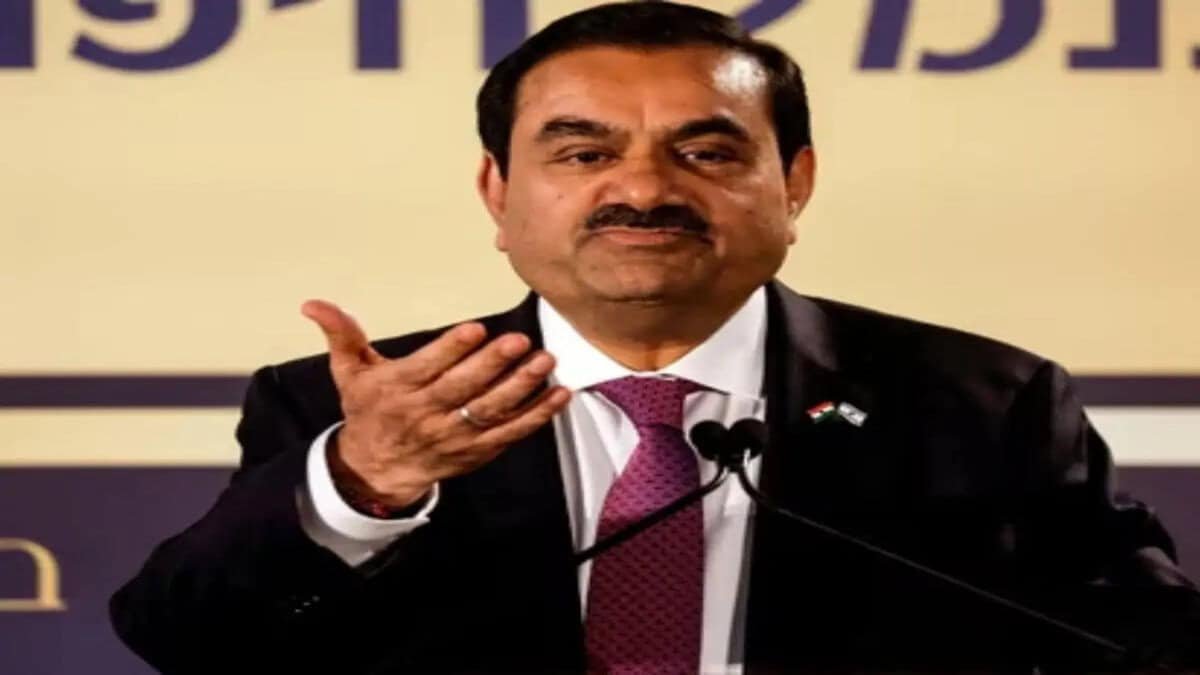
  • Adani Group to invest additional Rs 50,000 crore in northeast over next 10 years

    Adani Group to invest additional Rs 50,000 crore in northeast over next 10 years

    New Delhi: The Adani Group will invest an additional Rs 50,000 crore across the northeastern region over the next 10 years, which would prioritise local jobs and entrepreneurship, its Chairman, Gautam Adani, said on Friday.

    With this, the Adani Group has pledged Rs one lakh crore investments for the northeast.

    Addressing the ‘Rising North East Investors Summit’ here in the presence of Prime Minister Narendra Modi, the billionaire industrialist said the focus would span across green energy, including smart meters, hydro-pump storage, power transmission, roads and highways, digital infrastructure, logistics and capacity building through skilling and vocational training centres.

    MS Creative School

    “We will invest in people. Every initiative will prioritise local jobs, local entrepreneurship and community engagement. This is what Viksit Bharat@2047 is all about,” Gautam Adani told the gathering.

    The Adani Group Chairman further stated that when PM Modi said ’Act East, Act fast, Act first,’ he gave the northeast a wake-up call.

    “Rs 6.2 lakh crore worth investments since 2014, doubling the road network to 16,000 kilometres, doubling the number of airports to 18 — this is not just a policy but a hallmark of PM Modi’s big thinking, belief systems and conviction in Sabka Saath Sabka Vikas,” Gautam Adani emphasised.

    The Adani Group in February announced a massive Rs 50,000 crore investment in Assam, marking one of the highest-ever investment commitments by a business group to the state.

    “To our brothers and sisters in the northeast, we at Adani will stand beside your side, your dreams, your dignity and your destiny,” Gautam Adani added.

    The two-day summit aims to bring together key stakeholders, investors and policymakers on a single platform.

    According to a Prime Minister’s Office (PMO) statement, the main focus sectors include tourism and hospitality, agro-food processing and allied sectors; textiles, handloom and handicrafts; healthcare; education and skill development; information technology or information technology-enabled services; infrastructure and logistics; energy; and entertainment and sports.

    The ‘Rising North East Investors Summit’ will see ministerial sessions, business-to-government sessions, business-to-business meetings, startups and exhibitions of policy and related initiatives taken by state governments and central ministries for investment promotion.

  • Indian stock market opens higher, Nifty above 24,700

    Indian stock market opens higher, Nifty above 24,700

    Mumbai: The Indian benchmark indices opened higher on Friday amid mixed global cues, as buying was seen in the FMCG, IT and auto sectors in the early trade.

    At around 9.29 am, Sensex was trading 281.75 points or 0.35 per cent up at 81,233.74 while the Nifty added 109.75 point or 0.45 per cent at 24,719.45

    Nifty Bank was up 69.85 points or 0.13 per cent at 55,011.15. The Nifty Midcap 100 index was trading at 56,582.95 after adding 258.10 points or 0.46 per cent. Nifty Smallcap 100 index was at 17,561.40 after climbing 58.30 points or 0.33 per cent.

    MS Creative School

    According to analysts, the silver lining from the market perspective is India’s strong macros, particularly the resilient growth and declining inflation and interest rates.

    In the Sensex pack, ITC, Adani Ports, Infosys, PowerGrid, Tech Mahindra, Tata Steel, SBI, HCL Tech, UltraTech Cement, Tata Motors and Eternal were the top gainers. Whereas, Sun Pharma, M&M, NTPC, Bajaj Finance, Bharti Airtel, Maruti Suzuki and ICICI Bank were the top losers.

    In the Asian markets, China, Hong Kong, Bangkok, Seoul, Jakarta and Japan were trading in green.

    In the last trading session, Dow Jones in the US closed at 41,859.09, down 1.35 points, or 0.00 per cent. The S&P 500 ended with a loss of 2.60 points, or 0.04 per cent, at 5,842.01 and the Nasdaq closed at 18,925.74, up 53.09 points, or 0.28 per cent.

    “US stocks closed mixed on Thursday after a volatile session, with major indices erasing early losses as Treasury yields retreated from recent highs following the House passage of President Trump’s tax and spending legislation,” said experts.

    On the institutional front, foreign institutional investors (FIIs) were net sellers as they sold equities worth 5,045.36 crore on May 22, while domestic institutional investors (DIIs) purchased equities worth 3,715.00 crore.

    “Even when the market turns weak, domestic demand driven segments like financials, telecom, aviation etc are resilient and this is reflected in the strength in the stock prices of the big boys in these segments like ICICI Bank, Bharti Airtel and Interglobe Aviation. This message from the market is important,” said Dr VK Vijayakumar, Chief Investment Strategist, Geojit Investments Ltd.

  • Fitch Ratings ups India’s growth potential to 6.4 pc over next 5 years

    Fitch Ratings ups India’s growth potential to 6.4 pc over next 5 years

    New Delhi: Global rating agency Fitch Ratings on Thursday raised India’s GDP growth potential by 0.2 percentage points to 6.4 per cent over the next five years, on the back of a sharper rise in the country’s labour force participation rate in recent years.

    Fitch highlighted that the revised estimate for India shows a stronger contribution from labour inputs, mainly total employment, rather than labour productivity.

    At the same time, the global rating agency has scaled down China‘s growth projection by 0.3 percentage points to 4.3 per cent from 4.6 per cent earlier.

    MS Creative School

    The changes are part of Fitch’s revised assessment of potential GDP growth for 10 emerging market economies over the next five years.

    Fitch said, “Our estimate of India’s trend growth is slightly higher at 6.4 per cent, compared with 6.2 per cent previously. We think TFP growth will slow from recent years to be in line with its long-run average of 1.5 per cent.”

    TFP, which stands for Total-factor productivity (TFP), also called multi-factor productivity, is usually measured as the ratio of aggregate output (GDP) to aggregate inputs. Under some simplifying assumptions about the production technology, growth in TFP becomes the portion of growth in output not explained by growth in traditionally measured inputs of labour and capital used in production.[

    Fitch highlighted that the revised estimate for India shows a stronger contribution from labour inputs, mainly total employment, rather than labour productivity.

    The rating agency has also made changes to its projections based on a revised assessment of labour force data. It noted that the contribution from the participation rate has been revised upwards, while the projected contribution of capital deepening has been lowered.

    “Our revised estimate implies that there is a stronger contribution from labour inputs (total employment) rather than labour productivity. India’s labour force participation rate has increased sharply in recent years; we expect it will continue to increase but at a slower pace,” Fitch Ratings noted.

    “Our update of potential growth in emerging markets is now 3.9 per cent, representing a further, albeit marginal drop from the 4 per cent estimate we published in November 2023. This mainly reflects lower potential growth in China,” said Robert Sierra, Director, Fitch Ratings.

    China’s lower potential, the global ratings agency, can be attributed to a weaker capital deepening and steeper fall in labour force participation, the rating agency said.

    India continues to remain the world’s fastest growing major economy and the only country expected to clock over 6 per cent growth in the next two years, according to an IMF report released last month. The IMF has trimmed the growth forecast for over 120 countries.

  • Indian stock market opens higher amid mixed global cues

    Indian stock market opens higher amid mixed global cues

    Mumbai: The Indian benchmark indices opened higher on Wednesday amid mixed global cues as buying was seen in the pharma, auto, PSU bank and financial service sectors in the early trade.

    At around 9.35 am, Sensex was trading 296.53 points or 0.37 per cent up at 81,482.97 while the Nifty added 88.90 point or 0.36 per cent at 24,772.80

    Nifty Bank was up 98.55 points or 0.18 per cent at 54,975.90. The Nifty Midcap 100 index was trading at 56,028.55 after declining 154.10 points or 0.27 per cent. Nifty Smallcap 100 index was at 17,419.35 after dropping 63.65 points or 0.36 per cent.

    MS Creative School

    According to analysts, Indian equity benchmarks declined sharply on Tuesday amid reports of increasing COVID-19 cases in Southeast Asian countries, like Singapore and Hong Kong.

    “Technically, Nifty closed below its 5-day EMA for the first time since May 8, 2025, suggesting a shift to profit-booking. Support levels lie at 24,494 and 24,378, while resistance is expected in the 24,800-24,900 range,” said Devarsh Vakil, Head of Prime Research at HDFC Securities.

    In the absence of strong global cues, Indian markets are likely to pick up from where they left off yesterday, he added.

    Meanwhile, in the Sensex pack, Sun Pharma, HDFC Bank, Tech Mahindra, TCS, Nestle India, Maruti Suzuki, ICICI Bank, UltraTech Cement and Hindustan Unilever were the top gainers. Whereas, Eternal, Kotak Mahindra Bank, IndusInd Bank and NTPC were the top losers.

    In the Asian markets, China, Hong Kong, Bangkok, Seoul and Jakarta were trading in green. whereas Only Japan was trading in red.

    In the last trading session, Dow Jones in the US closed at 42,677.24, down 114.83 points, or 0.27 per cent. The S&P 500 ended with a loss of 23.14 points, or 0.39 per cent, at 5,940.46 and the Nasdaq closed at 19,142.71, down 72.75 points, or 0.38 per cent.

    The spike in uncertainty and risk is impacting the market rather unexpectedly. Yesterday’s FII sell figure of Rs 10,016 crore is a major reversal of their big buying in May and if this persists, it has the potential to impact the market, said experts.

    “Credit rating downgrade of US sovereign debt and the consequent spike in US bond yields, spike in Japanese Govt Bond yields, rising COVID cases in some parts of India and reports of a possible Israel attack on Iran are doing the rounds, and combination of these all factors may be responsible for this sudden reversal in FII activity,” they mentioned.

    According to provisional data from the NSE, foreign institutional investors (FIIs) sold Indian equities worth Rs 10,016.10 crore on May 20, while domestic institutional investors (DIIs) were net buyers to the tune of Rs 6,738.39 crore.

  • Sensex, Nifty open a tad lower amid mixed global cues

    Sensex, Nifty open a tad lower amid mixed global cues

    Mumbai: The domestic benchmark indices opened lower on Tuesday amid mixed global cues, as selling was seen in the auto, PSU bank and financial service sectors in the early trade.

    At around 9.31 am, Sensex was trading 40.79 points or 0.05 per cent down at 82,018.63 while the Nifty declined 22.10 point or 0.09 per cent at 24,923.35.

    Nifty Bank was down 51.40 points or 0.09 per cent at 55,369.30. The Nifty Midcap 100 index was trading at 56,943.00 after declining 162.45 points or 0.28 per cent. Nifty Smallcap 100 index was at 17,606.90 after dropping 42.75 points or 0.24 per cent.

    MS Creative School

    According to analysts, from a technical perspective, the Nifty formed a bearish candle on the daily chart while trading within an inside bar pattern, closing just below the crucial 25,000 level.

    “The index moved sideways throughout the session, fluctuating within a narrow intraday range of 24,900 to 25,100 — a sign of market indecision. Immediate support is seen at 24,900–24,800, while resistance levels are placed at 25,100 and 25,235. A decisive breakout above 25,235 may open the path for an upside move toward 25,500–25,743,” said Mandar Bhojane, Equity Research Analyst at Choice Broking.

    The Indian Rupee exhibited strength, appreciating by 10 paise against the greenback to settle at 85.40.

    “This upward movement in the rupee can be attributed to cooling crude oil prices and a softening of the US dollar,” added Devarsh Vakil, Head of Prime Research of HDFC Securities

    Meanwhile, in the Sensex pack, Tata Steel, Sun Pharma, Infosys, Tech Mahindra, ITC, Adani Ports, L&T and HCL Tech were the top gainers. Power Grid, Nestle India, Titan, Kotak Mahindra Bank, M&M and HDFC Bank were the top losers.

    In the Asian markets, China, Hong Kong, Japan, Bangkok, Seoul and Jakarta were trading in green.

    In the last trading session, Dow Jones in the US closed at 42,792.07, up 137.33 points, or 0.32 per cent. The S&P 500 ended with a gain of 5.22 points, or 0.09 per cent, at 5,963.60 and the Nasdaq closed at 19,215.46, up 4.36 points, or 0.02 per cent.

    On the institutional front, both foreign and domestic investors turned cautious, marking the first simultaneous sell-off in over a month.

    According to provisional data from the NSE, foreign institutional investors (FIIs) sold Indian equities worth Rs 525.95 crore on May 19, while domestic institutional investors (DIIs) were net sellers to the tune of Rs 237.93 crore.

  • UK, EU hail new chapter as they ink fresh deals, 5 years after Brexit

    UK, EU hail new chapter as they ink fresh deals, 5 years after Brexit

    London: Britain and the European Union hailed a new chapter in their relationship Monday after sealing fresh agreements on defence cooperation and easing trade flows at their first formal summit since Brexit.

    Five years after the UK left the EU, ties were growing closer again as Prime Minister Keir Starmer met European Commission President Ursula von der Leyen and other senior EU officials in London for talks.

    The deals will slash red tape, grow the British economy and reset relations with the 27-nation trade bloc, Starmer said, while von der Leyen called the talks a “historic moment” that benefits both sides.

    MS Creative School

    “Britain is back on the world stage,” Starmer told reporters. “This deal is a win-win.”

    He hailed Monday’s agreements — the third package of trade deals struck by his government in as many weeks following accords with the US and India — as “good for jobs, good for bills and good for our borders.”

    But Britain’s opposition parties slammed the deals as backtracking on Brexit and “surrendering” anew to the EU. “We’re becoming a rule-taker from Brussels once again,” Conservative Party leader Kemi Badenoch said.

    Here are the main takeaways from the summit:

    Cutting red tape on food trade

    Officials said they will remove some routine border checks on animal and plant products and align with EU regulations, which will reduce costs on food imports and exports and make it easier for goods to flow freely across borders.

    Businesses have complained about trucks waiting for hours at borders with fresh food that cannot be exported to the EU because of laborious post-Brexit certifications.

    The changes will mean the UK can sell products like raw British burgers, sausages and seafood to the EU again, officials said. The benefits will apply also to movements between the British mainland and Northern Ireland, where post-Brexit customs checks have been a thorny issue for years.

    While the EU is the UK’s largest trading partner, the government said the UK has been hit with a 21 per cent drop in exports since Brexit because of more onerous paperwork and other non-tariff barriers.

    Defence procurement pact

    A new security and defence partnership will pave the way for UK defence firms to access a new EU loan programme worth 150 billion euros (USD 170 billion.) That will allow Britain to secure cheap loans backed by the EU budget to buy military equipment, in part to help Ukraine defend itself.

    The EU has said that the loan program will help boost the readiness of European defense as well as enable more coordinated support for Ukraine.

    Fisheries

    The deal included a 12-year extension of an agreement allowing EU fishing vessels to operate in UK waters until 2038, which angered UK fishermen and their supporters.

    While economically minor, fishing has long been a sticking point and symbolically important issue for the UK and EU member states such as France. Disputes over the issue nearly derailed a Brexit deal back in 2020.

    Elspeth Macdonald, head of the Scottish Fishermen’s Federation, called the agreement a “horror show for Scottish fishermen” that was granted in order to secure other objectives. Scottish First Minister John Swinney said the deal was “the direct opposite of what was promised by Brexit.”

    Easing movement for young people

    Post-Brexit visa restrictions have hobbled cross-border activities for professionals such as bankers or lawyers, as well as academic and cultural exchanges, including touring bands.

    The UK and EU said they agreed to co-operate on a youth mobility plan that’s expected to allow young Britons and Europeans to live and work temporarily in each other’s territory, though no details were provided.

    British officials insisted that numbers would be capped and stays would be time-limited.

    The free movement of people remains a politically touchy issue in the UK, with the youth mobility plan seen by some Brexiteers as inching back toward completely free movement for EU nationals to move to the UK. The UK has similar youth mobility arrangements with countries including Australia and Canada.

    Cutting airport waits

    British passport holders will be able to use e-gates at more European airports as part of the deal.

    Since Brexit, many British travellers cannot use automated gates when they arrive at EU airports. The new measure will end “the dreaded queues at border control,” officials said.

    Opposition objects to a ‘surrender’

    Britain’s opposition parties have criticised Starmer’s bid to reset relations with the EU. The pro-Brexit and anti-immigration Reform UK party, which recently won big in local elections, and the Conservatives have called the trade-offs in the deals a betrayal of Brexit.

    Starmer “has surrendered many of the gains we secured, on sovereignty, on money and control over our laws, to the European Union,” said Badenoch, the Conservative leader.

    Starmer stressed that he did not violate his “red lines”: The UK won’t rejoin the EU’s frictionless single market and customs union, and will not agree to the free movement of people between the UK and the EU.

    David Henig, a UK trade policy expert at the European Centre for International Political Economy, suggested that while some will continue to argue against agreeing to EU regulations, most Britons likely believe it’s time to move forward.

    “Simply following EU rules in some areas is going to be controversial to those who thought that Brexit means casting off all influence from the EU entirely,” he said. “That wasn’t realistic for a trading nation like the UK., where 50 per cent of our trade is with the EU.”

  • HYDRAA conducts demolition drive in Hydernagar, Miyapur, Puppalguda

    HYDRAA conducts demolition drive in Hydernagar, Miyapur, Puppalguda

    Hyderabad: The Hyderabad Disaster Response and Assets protection Agency (HYDRAA) on Monday, May 19 conducted a demolition drive in Miyapur, Hydernagar and Puppalguda areas.

    Illegal encroachments on government land were demolished in both areas. The demolition drive was conducted amid heavy police presence to prevent any law and order issues.

    Addressing the media regarding the demolition, HYDRAA commissioner AV Ranganath said, “It is an HMDA layout. On the orders of the division bench of the Telangana high court, we are removing the unauthorised structures.”

    MS Creative School

    Videos of demolition drive shared on social media showed, HYDRAA machinery demolishing make shift shelters in Hydernagar, Hyderabad.

    The encroachment of Diamond Hills in Hydernagar

    In 2000, 79 plots were made in 9 acres of survey number 145 in Hydernagar named as Diamond Hills. The Hyderabad Metropolitan Development Authority (HMDA) had approved this layout.

    In 2007, the saga of encroachment began when one Dr NSD Prasad had entered the property with an unregistered assignment deed. In a case where the plot owners were not a party to, Prasad took an ex-party decree, claimed that it was an agricultural land and occupied 7 acres. Without making the plot owners a party to the case, by showing the court order Prasad occupied the swimming pool, roads, parks and plots, by erasing their boundaries and removing the foundations.

    The victims then approached HYDRAA and showed a court order from September 9, 2024, which had ruled in their favour. They also complained that in the last several years, Prasad has given the plot to several companies for parking their vehicles and has been making Rs 50 lakh per month on rent.

    The victims had stated that even in the rest of their 2 acres, Prasad had laid fencing to prevent them from entering their plots. They informed HYDRAA that when they went to their plots with the court’s orders, they were locked inside by the encroacher, with an intent to intimidate them.

    After inspecting the site along with the officials of various departments concerned, HYDRAA commissioner AV Ranganath discussed the matter with both the disputing parties at the HYDRAA’s office last Wednesday, verifying the documents and court orders.

    On the commissioner’s orders, HYDRAA officials went to the site and demolished the illegal encroachments, providing relief to the victims. A board stating the land has been reclaimed by HYDRAA was erected at the site, and the officials were asked to demarcate the boundaries for roads, parks, plots and other aspects of the layout.

    HYDRAA demolitions at Dollar Hills in Puppalguda

    On Monday, demolitions were carried out by HYDRAA officials at Dollar Hills in Puppalguda of Manikinda municipality.

    In survey numbers 104/1, 106 and 113 of Narsingi mandal, one Santosh Reddy and his friends owned 60 acres of land. In 1998, Santosh Reddy made layouts in 30 acres in the name of Dollar Hills. With the preliminary layout approvals of HMDA, they sold 80 percent of the plots.

    By not developing the sites and not making the payments on time, Santosh Reddy and his friends conspired to get the layout’s permissions cancelled, which was done in 2005 by HMDA for technical reasons.

    They then conspired and converted the land into agricultural land without the notice of the plot owners. However, some of the plot owners built houses by applying for layout regularisation.

    The realtors then merged some of the plots, roads and parks with 30 acres of land located adjacent to Dollar Hills, and showed the entire land as agricultural land, and sold it to one real estate company named NCC. The matter has been in the court since 2016.

    When the matter is in the court, the realtor wasn’t supposed to construct anything on that land. However, the residents of Dollar Hills complained to HYDRAA that illegal constructions were happening there, with explosives being used to blast earth.

    On May 14, Ranganath, along with other officials inspected the site and called both the parties to HYDRAA office and verified the records and documents submitted in the court.

    The plot owners informed Ranganath that in the past they had also lodged complaint against Santosh Reddy in Narsingi police station.

    On Monday, HYDSAA not only prevented NCC realtors from not only constructing any new structures, but also demolished the illegally constructed structures on the disputed land.

  • Rupee climbs 15 paise to settle at 85.42 against US dollar

    Rupee climbs 15 paise to settle at 85.42 against US dollar

    Mumbai: The rupee appreciated 15 paise to settle at 85.42 against the US dollar on Monday, on weak US dollar index and a decline in crude oil prices.

    Forex traders said global investors were also cautious as global rating agency Moody’s downgraded US investment grade rating, leading to a fall in dollar index.

    At the interbank foreign exchange, the domestic unit opened at 85.43 and moved between the intra-day high of 85.35 and the low of 85.61 against the greenback. The unit ended the session at 85.42, registering a gain of 15 paise over its previous closing level.

    MS Creative School

    On Friday, the rupee pared its gains and settled 3 paise lower at 85.57 against the dollar.

    “We expect the rupee to trade with a positive bias amid persistent weakness in US dollar index and a weak tone in global crude oil prices,” Anuj Choudhary – Research Analyst at Mirae Asset Sharekhan said, adding weak domestic equities capped a sharp upside.

    “USD-INR spot price is expected to trade in a range of 85.10 to 85.65,” he noted.

    Meanwhile, the dollar index, which gauges the greenback’s strength against a basket of six currencies, was trading lower by 0.86 per cent at 100.22.

    The US dollar weakened as Moody’s downgraded US credit rating to AA1 from AAA. Economic data from the US released on Friday too disappointed the markets, Choudhary said.

    Brent crude, the global oil benchmark, fell 0.78 per cent to USD 64.90 per barrel in futures trade.

    Traders further noted that with Brent hovering around USD 65 per barrel, India, one of the world’s largest oil importers, faces the dual challenge of a widening trade deficit and increased dollar demand — factors that could further strain the rupee.

    Dilip Parmar, Senior Research Analyst, HDFC Securities, said the rupee gained ground as the greenback softened against a spectrum of leading global currencies.

    “In the short run, the USD-INR spot rate is expected to find a support level at 85.25 and encounter resistance around 85.87,” he added.

    In the domestic equity market, the 30-share BSE Sensex declined 271.17 points, or 0.33 per cent, to close at 82,059.42, while the Nifty fell 75.35 points or 0.30 per cent to settle at 24,944.45.

    Foreign institutional investors (FIIs) purchased equities worth Rs 8,831.05 crore on a net basis on Friday, according to exchange data.

    Meanwhile, India’s forex reserves jumped by USD 4.553 billion to USD 690.617 billion during the week ended May 9 on the back of a steep increase in gold assets, the RBI said on Friday.

    In the preceding week, the overall reserves had dropped by USD 2.065 billion to USD 686.064 billion. The forex reserves had touched an all-time high of USD 704.885 billion at end-September 2024.

  • Indian rupee opens stronger, gold prices show upward trend

    Indian rupee opens stronger, gold prices show upward trend

    New Delhi: The Indian rupee opened 12 paise stronger at 85.44 against the US dollar on Monday, amid a backdrop of global economic developments and market reactions.

    The Indian rupee closed at 85.52 a dollar on Friday.

    Meanwhile, gold prices increased almost 1 per cent in the morning session of trade on the domestic futures market on Monday, amid a weaker dollar and renewed fears of Donald Trump-era trade tariffs.

    MS Creative School

    MCX Gold June 5 contract traded 0.95 per cent higher at Rs 93,317 per 10 grams in the morning trade. Meanwhile, the dollar index declined nearly 0.3 per cent, supporting gold prices. A decline in the US dollar makes gold cheaper in other currencies, enhancing its demand.

    Rahul Kalantri, VP of commodities at Mehta Equities, said that gold has support at $3,195-3,175 and resistance at $3,245-3,260. Silver has support at $32.10-31.80 and resistance at $32.65-32.85.

    “Gold prices climbed above $3,220 per ounce on Monday, rebounding from last week’s steepest decline in six months. The recovery was fueled by renewed safe-haven demand after Moody’s downgraded the US sovereign credit rating, citing fiscal imbalances and rising debt costs,” he mentioned.

    Despite recent optimism from a temporary US-China tariff truce, weak US economic indicators and subdued inflation have led markets to price in additional interest rate cuts by the Federal Reserve, offering further support to bullion.

    “In INR, gold has support at Rs 91,850-91,480 while resistance at Rs 92,850-93,490. Sliver has support at Rs 94,480-94,850 (per kg) while resistance at Rs 95,950-96,650,” he added.

    Gold prices have remained rangebound over the last two sessions due to a lack of positive triggers as the US reached a temporary truce with China and tensions between India and Pakistan have also eased.

    However, domestic buying ahead of the upcoming wedding season in India will ensure that the downside is capped and prices remain at elevated levels, said Aksha Kamboj, Vice President, India Bullion and Jewellers Association (IBJA).