Category: BUSINESS

  • Sensex, Nifty gain in early trade as India carries out ‘Operation Sindoor’

    Sensex, Nifty gain in early trade as India carries out ‘Operation Sindoor’

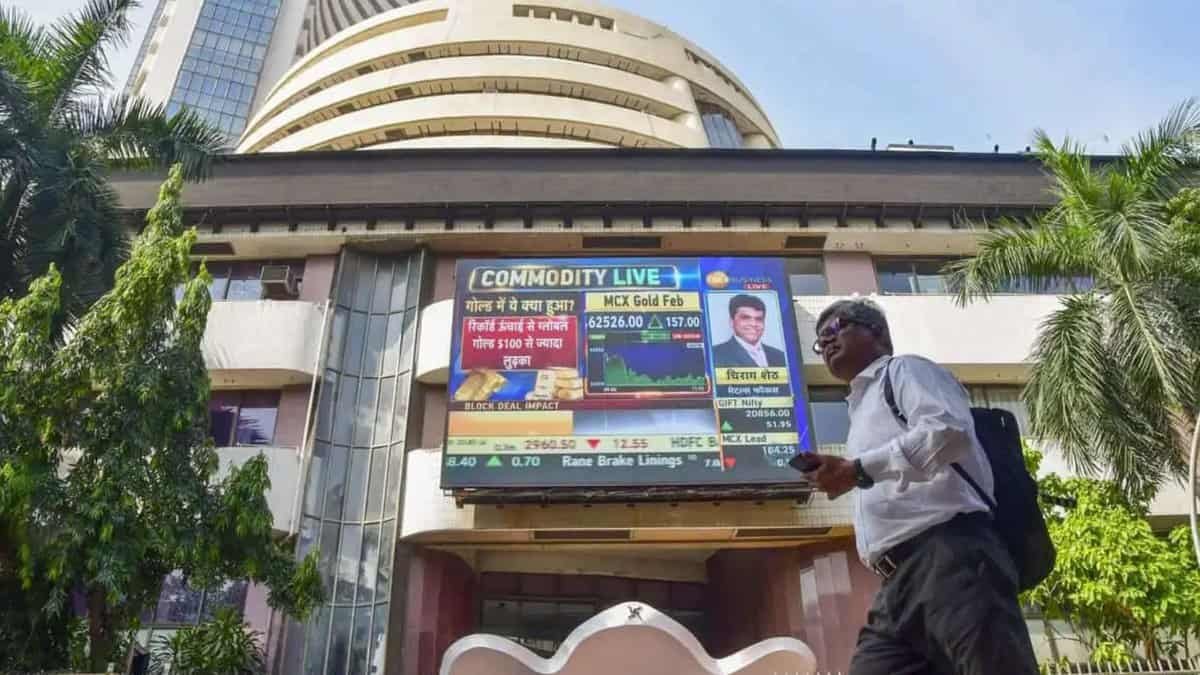
    Mumbai: The Indian benchmark indices erased early losses and began rising on Wednesday as India carried out ‘Operation Sindoor’ at nine terror locations in Pakistan and Pakistan-occupied Kashmir (PoK) in the wake of the barbaric Pahalgam attack that took 26 lives.

    At around 9.34 am, Sensex was 160 points up at 80,800 while Nifty was up 56 points at 24,435.35. Both the indexes pared early losses.

    On NSE, eight sectoral indices advanced and seven declined out of 12. The NSE Nifty Media declined the most, and the NSE Nifty PSU Bank rose the most.

    MS Creative School

    Tata Motors, Shriram Finance, Apollo Hospitals, Bajaj Finance, Hindalco were among major gainers on the Nifty, while losers were Asian Paints, Titan Company, TCS, L&T and Tech Mahindra.

    According to analysts, what stands out in ‘Operation Sindoor’ from the market perspective is its focused and non-escalatory nature.

    “We have to wait and watch how the enemy reacts to this precision strikes by India. The market is unlikely to be impacted by the retaliatory strike by India since that was known and discounted by the market,” said VK Vijayakumar, Chief Investment Strategist, Geojit Investments.

    The main catalyst of the market resilience in India is the sustained FII buying of the last 14 trading days which has touched a cumulative figure of Rs 43,940 crore in the cash market.

    FIIs are focused on the global macros like weak dollar, slower growth in US and China in 2025 and India’s potential outperformance in growth. This can keep the market resilient. However, investors have to watch the developments in the border, said market experts.

    The big shift in market preference in favour of largecaps away from overvalued segments of mid and smallcaps is significant. FIIs, as always, are mainly buying largecaps and this trend can continue.

    Additionally, geopolitical tensions are expected to introduce further volatility, influencing short-term market movements.

    Meanwhile, US stocks fell on Tuesday as the Federal Reserve kicked off its two-day policy meeting. Investors are watching closely to see how President Trump’s tariffs could influence the Fed’s stance on interest rates and the broader economic outlook.
  • Rupee falls 8 paise to 84.38 against US dollar in early trade

    Rupee falls 8 paise to 84.38 against US dollar in early trade

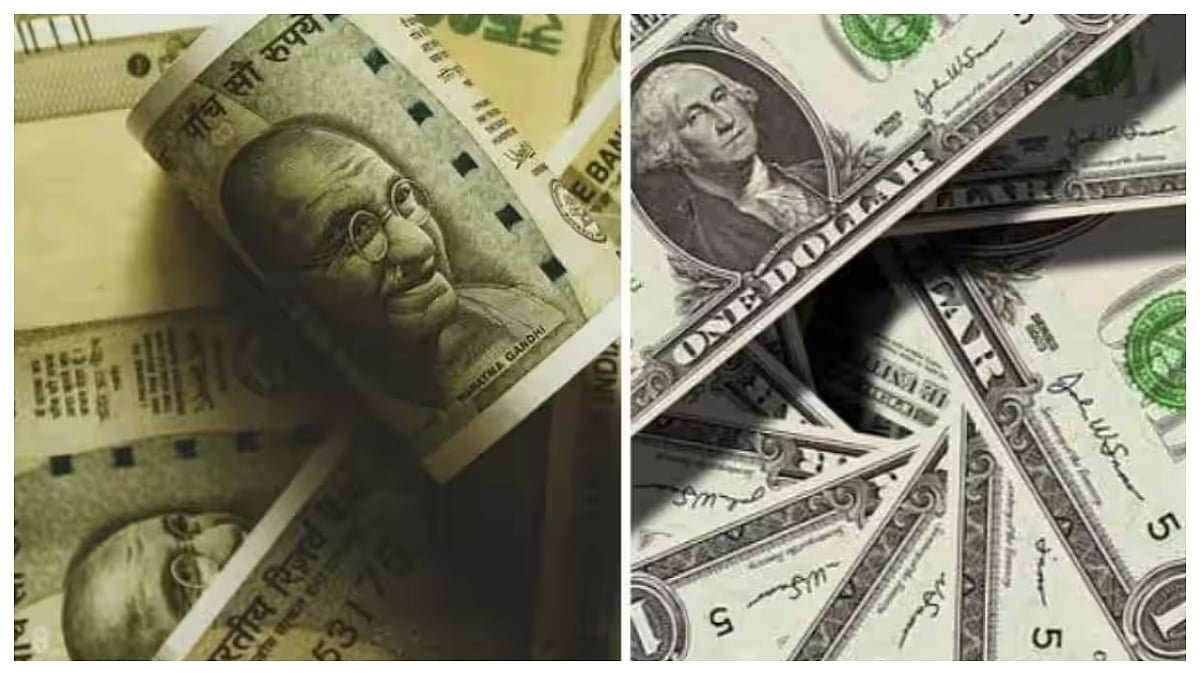
    Mumbai: The rupee traded in a narrow range in morning trade on Tuesday and fell 8 paise to 84.38 against the US dollar tracking the rise in the dollar index and fall in Asian currencies, amid growing uncertainty and a cautious recalibration of risk appetite.

    According to forex traders, the USD/INR pair was supported by an overall decline in crude oil prices and sustained foreign fund inflows while ongoing geopolitical tensions between India and Pakistan weighed on investor sentiment, keeping the rupee on edge.

    At the interbank foreign exchange, the domestic unit opened at 84.28 and fell to an early high of 84.26 and a low of 84.38 against the greenback, registering a loss of 8 paise over its previous close.

    MS Creative School

    On Monday, the rupee surged 27 paise to settle at 84.30 against the US dollar.

    Meanwhile, the dollar index, which gauges the greenback’s strength against a basket of six currencies, was trading lower by 0.03 per cent at 99.79.

    Brent crude, the global oil benchmark, rose 1.53 per cent to USD 61.15 per barrel in futures trade.

    According to traders, markets are now grappling with the realisation that Donald Trump’s policy volatility could resurface at any moment, shaking any fragile sense of calm and this shift in sentiment has prompted a flight to safety.

    President Trump’s abrupt announcement of a 100 per cent tariff on all foreign-made movies has shifted investor focus, not because of its direct economic impact, but because of what it signals — renewed unpredictability at the top, CR Forex Advisors MD Amit Pabari said.

    The rupee is supported by positive signals surrounding a potential US-India trade deal and the recent OPEC+ decision to increase oil output for the second consecutive month.

    The Organisation of the Petroleum Exporting Countries Plus (OPEC+) is a coalition of 12 OPEC members and 10 major non-OPEC oil-exporting nations.

    For an oil-importing nation like India, this development is a welcome relief and reduces external pressure on the rupee, Pabari noted.

    “Given the crosscurrents, USD/INR is expected to remain volatile. Near-term support lies around 83.75, with upward potential toward 84.80 and possibly 85.20, depending on how the global narrative unfolds in the days ahead,” he said.

    In the domestic equity market, the 30-share BSE Sensex declined 73.60 points, or 0.09 per cent, to 80,723.24, while the Nifty fell 20.55 points, or 0.08 per cent, to 24,440.60.

    Foreign institutional investors (FIIs) bought equities worth Rs 497.79 crore on a net basis on Monday, according to exchange data.

  • Sensex, Nifty open flat amid mixed global cues

    Sensex, Nifty open flat amid mixed global cues

    Mumbai: Indian equity indices opened on a flat note on Tuesday following mixed global cues and geo-political tensions. At 9:18 am, Sensex was down 11 points at 80,785 and Nifty was down 8 points at 24,452.

    Selling was seen in the midcap and smallcap stocks. Nifty midcap 100 index was down 126 points or 0.23 per cent at 54,548 and Nifty smallcap 100 index was down 61 points or 0.37 per cent at 16,547.

    From a technical perspective, the Nifty 50 continues to trade in a narrow consolidation range, forming a neutral candlestick pattern on the daily chart, said experts.

    MS Creative School

    “A decisive move above 24,500 could pave the way for an up move towards 24,700 and 24,800. On the downside, support is seen at 24,200 and 24,000, where traders may find buying opportunities on dips,” said Mandar Bhojane from Choice Broking.

    On the sectoral front, auto, FMCG and private bank were major gainers. Pharma, realty, and media were major laggards.

    In the Sensex pack, M&M, Bharti Airtel, Bajaj Finserv, HUL, Nestle, Tata Steel, Axis Bank, HUL, L&T, IndusInd Bank and ITC were top gainers. Sun Pharma, Tata Motors, Titan, Eternal, SBI, TCS, Bajaj Finance and Ultratech cement were major laggards.

    Most Asian stock markets were trading in the green. Shanghai and Hong Kong were trading with gains as optimism over potential US-China trade talks boosted investors’ sentiment.

    Other major regional markets, including Japan and South Korea, remained shut due to public holidays. Meanwhile, US markets closed in the red in the last trading session.

    On the institutional front, FIIs continued their buying streak on May 5 with net equity purchases of Rs 497 crore, while DIIs remained strong buyers, investing Rs 2,788 crore.

    This sustained inflow from both domestic and foreign investors reflects underlying market confidence, despite global uncertainties, said experts.

  • Indian govt decided to terminate services of Subramanian: IMF

    Indian govt decided to terminate services of Subramanian: IMF

    New Delhi: The International Monetary Fund on Monday said that the termination of services of Executive Director K V Subramanian was a decision taken by the Indian government.

    Government of India has terminated services of Subramanian six months ahead of his three-year tenure. The termination was effective April 30, 2025. However, reasons for Subramanian’s exit have not been officially announced.

    “The appointment and termination of any member of the Executive Board is a decision for member countries to make. The termination of ED Subramanian is a decision by the Government of India. We wish him well in his future endeavours and look forward to working with his successor,” IMF spokesperson said when reached out for comments.

    MS Creative School

    According to sources, concerns were raised over an “alleged impropriety” relating to the promotion and publicity of his latest book, ‘India@100: Envisioning Tomorrow’s Economic Powerhouse’.

    It is also alleged that Subramanian used his official position to pressurise some institutions to purchase his book.

    Subramanian was appointed as the executive director (India) at the IMF with effect from November 1, 2022 for a period of three years. Prior to this, he served as the chief economic adviser to the government.

    The executive board of the IMF is composed of 25 directors (executive directors or EDs) elected by the member countries or groups of countries.

    India is in a four-country constituency, along with Bangladesh, Sri Lanka and Bhutan as members.

  • India has 879.59 metric tonnes of gold, 511.99 MT held domestically: RBI

    India has 879.59 metric tonnes of gold, 511.99 MT held domestically: RBI

    New Delhi: The Reserve Bank of India (RBI) had 879.59 metric tonnes (MT) of gold at the end of March 2025, of which 511.99 metric tonnes were held domestically, the Central Bank informed on Monday.

    While 348.62 metric tonnes of gold were kept in safe custody with the Bank of England and the Bank for International Settlements (BIS), 18.98 metric tonnes were held in the form of gold deposits.

    In value terms (USD), the share of gold in the total foreign exchange reserves increased from 9.32 per cent at end-September 2024 to about 11.70 per cent at end-March 2025, according to the RBI’s ‘Half Yearly Report on Management of Foreign Exchange Reserves’.

    MS Creative School

    During the half-year period under review, reserves decreased from $705.78 billion in end-September 2024 to $630.61 billion at end-January 2025, and were at $668.33 billion at end-March 2025.

    During the period between end-December 2023 and end-December 2024, the external assets increased by $79.7 billion and external liabilities increased by $76.1 billion.

    The foreign currency assets comprise multi-currency assets that are held in multi-asset portfolios as per the existing norms, which conform to the best international practices followed in this regard.

    At end-March 2025, out of the total FCA of $567.56 billion, $485.53 billion was invested in securities, $45.68 billion was deposited with other central banks and the BIS and the balance $36.34 billion comprised deposits with commercial banks overseas.

    With the objective of exploring new strategies and products in reserve management while diversifying the portfolio, a small portion of the reserves is being managed by external asset managers, informed the RBI.

    At the end of December 2024, foreign exchange reserves cover of imports (on a balance of payments basis) stood at 10.5 months (11.8 months at end-September 2024).

    The ratio of short-term debt (original maturity) to reserves, which was 19.1 per cent at end-September 2024, increased to 22.0 per cent at end-December 2024.

    The ratio of volatile capital flows (including cumulative portfolio inflows and outstanding short-term debt) to reserves increased from 67.8 per cent at end-September 2024 to 74.3 per cent at end-December 2024, the Bank informed.

  • 24-carat hits Dh 392.50 as markets open

    24-carat hits Dh 392.50 as markets open

    Gold prices saw a notable surge at the opening of the markets in Dubai, United Arab Emirates (UAE), on Monday, May 5.

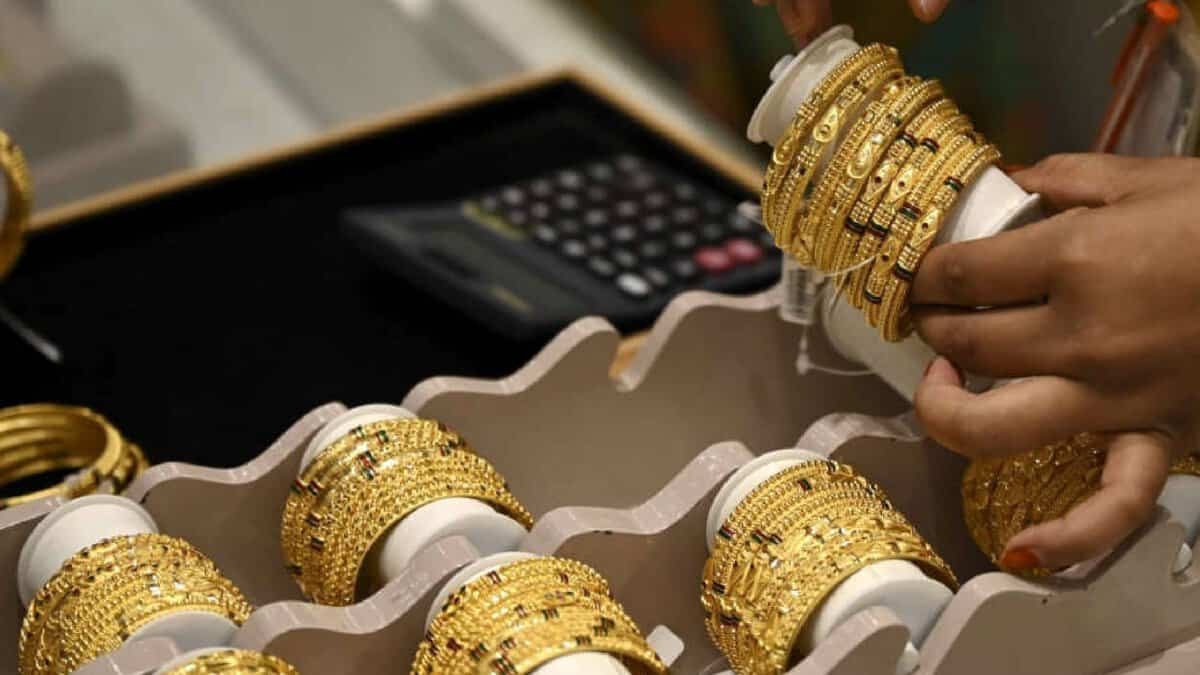
    According to data from the Dubai Jewellery Group, the price of 24-carat gold rose to 392.50 Dirham (Rs 9,004.11) per gram, up from Dh 390.50 at Sunday evening’s close on May 4.

    Other gold variants saw price increases as well:

    MS Creative School
    • 22-carat: Dh 363.25 (Rs 8,333.10) per gram, up from Dh 361.50 per gram
    • 21-carat: Dh 348.25 (Rs 7,989.00) per gram, up from Dh 346.75 per gram
    • 18-carat: Dh 298.50 (Rs 6,847.71) per gram, up from Dh 297.00 per gram

    Meanwhile, in the international markets, spot gold was trading at USD 3,263.48 (Rs 2,75,477.96) per ounce, reflecting a 0.7 percent increase.

    “The US Dollar is looking subdued ahead of the Fed meeting this week which is enabling gold to take a mild run higher,” Reuters reported, citing Tim Waterer, KCM Trade’s chief market analyst . “We may see gold continue to operate in the USD 3,200-USD 3,350 range ahead of the Fed meeting. However, any new headlines on the trade deal could cause volatility to tick up once again.”

    The Federal Reserve is expected to maintain its benchmark interest rate on Wednesday, May 7, despite ongoing pressure from President Donald Trump, who has repeatedly urged a cut in borrowing costs.

    After unsettling financial markets two weeks ago by suggesting he might dismiss Fed Chair Jerome Powell, Trump later clarified he had no plans to do so. Nevertheless, both he and Treasury Secretary Scott Bessent have continued to advocate for a rate cut.

  • Nifty, Sensex open higher; Adani Ports among top gainers

    Nifty, Sensex open higher; Adani Ports among top gainers

    Mumbai: Indian equity indices opened in the green on Monday as heavyweights like Adani Ports, Asian Paints, Titan and Tata Motors continued to support upward movement.

    Around 9:22 am, Sensex was up 280 points or 0.35 per cent at 80,782 and Nifty was up 90 points or 0.37 per cent at 24,436.

    Buying was seen in midcap and smallcap stocks. Nifty midcap 100 index was up 321 points or 0.6 per cent at 54,026 and Nifty smallcap 100 index was up 4 points at 16,446.

    MS Creative School

    “After a positive opening, Nifty can find support at 24,300 followed by 24,200 and 24,000. On the higher side, 24,500 can be an immediate resistance, followed by 24,600 and 24,800,” said Hardik Matalia of Choice Broking.

    On the sectoral front, auto, IT, pharma, FMCG and infra major gainers. PSU bank, media, realty were major laggards.

    In the Sensex pack, Adani Ports, Asian Paints, Titan, Bajaj Finserv, M&M, Power Grid, HCL Tech, Tata Motors, TCS, Infosys, HDFC Bank and ITC were top gainers. Kotak Mahindra Bank, SBI, L&T and IndusInd Bank were major losers.

    Major regional markets, including Tokyo, Shanghai, Hong Kong, and Seoul were closed for their respective public holidays, while Australian markets was trading in the red.

    The US market closed with gains on Friday. Technology index Nasdaq surged 1.51 per cent during the session.

    Devarsh Vakil, Head of Prime Research at HDFC Securities said, “markets continue to navigate geopolitical developments and evolving legal uncertainties, which may influence short-term price action amid the broader recovery trend. Traders should consider maintaining moderate positions as these factors play out.”

    The foreign institutional investors (FIIs) remained net buyers for the 12th consecutive session on May 2 as they bought equities of Rs 2,769 crore. Domestic institutional investors (DIIs) also bought equities of Rs 3,290 crore.

    Previously net sellers, FIIs have reversed course by covering their short positions in index derivatives and becoming large buyers in cash markets. They are attracted by sector rotation opportunities and a strengthening rupee that enhances their dollar-adjusted returns.

    Analysts said that markets continue to navigate geopolitical developments and evolving legal uncertainties, which may influence short-term price action amid the broader recovery trend.

  • Cumulative rate cuts of 125-150 bps estimated in FY26: SBI report

    Cumulative rate cuts of 125-150 bps estimated in FY26: SBI report

    New Delhi: The benign inflationary patterns suggest an aggressive rate cut trajectory by the Reserve Bank of India, with key policy rate likely to breach the ‘Neutral’ rate by March 2026, an SBI Research report said on Monday.

    A cumulative rate cut of 125-150 bps is estimated in FY26 in the best case scenario with inflation to breach 3 per cent consistently for next three months barring any food price shock/heatwave, the report mentioned.

    “With multi-year low inflation in March and benign inflation expectations going forward, we expect rate cuts of 75 basis points in June and August (H1) and another 50 bps cut in H2 — cumulative cuts of 125 bps going forward while 25 bps rate cut has already been initiated in February (that could put the terminal rate at 5.0-5.25 per cent by March 2026),” the SBI report projected.

    MS Creative School

    “However, we feel, jumbo cuts of 50 bps, could be more effective than secular 25 bps tranches spread over the horizon,” it added.

    Based on the available estimates of natural rate, the neutral nominal policy rates works out at 5.65 per cent.

    In response to the 50-bps cut in the policy repo rate since February 2025, banks have reduced their repo-linked EBLRs by a similar magnitude.

    While the MCLR, which has a longer reset period and is referenced to the cost of funds, may get adjusted with some lag. Larger transmission to deposits rates is expected in the coming quarters.

    “We expect 100 bps cut in bank deposits rates from current levels,” said the report.

    The current trajectory of the domestic inflation is well within the band of 2-6 per cent with average inflation based on available data placed at 4.7 per cent.

    The report further stated that it expects the USD/INR pair to stabilise in the range Rs 85-87 for 2025.

    “The domestic impact of tariffs on dollar will be visible in 2025 which will support rupee. Further, DXY is expected to fall as US domestic economy will adjust to tariff impact,” it noted.

    With close to Rs 4 lakh crore of open Market operations (OMO) done and another Rs. 1.25 lakh crore (or more) pending, G-Sec holding by banks as percentage of SLR portfolio is on the decline.

    “Moreover, larger holding by the regulator, at times, tends to affect secondary market liquidity. The RBI dividend could top Rs 2 lakh crore,” the report mentioned.

  • US Fed policy, Q4 results among key triggers to drive Indian stock market next week

    US Fed policy, Q4 results among key triggers to drive Indian stock market next week

    Mumbai: As Indian markets gear up for a data-heavy week, experts say that the direction of the stock market will largely depend on the US Federal Reserve’s policy decision, March quarter corporate earnings, macroeconomic data, and the geopolitical tensions between India and Pakistan following the April 22 Pahalgam terror attack.

    In the past week, both the Sensex and Nifty rose for the third straight time, supported by strong foreign fund inflows, robust earnings from index heavyweights, and hopes of progress in the India-US trade deal.

    The benchmark Nifty index gained 307.35 points or 1.28 per cent to close at 24,346.70, while the Sensex jumped 1,289.46 points or 1.62 per cent to end the week at 80,501.99.

    MS Creative School

    However, gains were slightly capped due to concerns over geopolitical developments after the terror attack in Jammu and Kashmir’s Pahalgam.

    Looking ahead, investors will be watching the US Federal Reserve’s monetary policy meeting scheduled for May 7.

    The Fed is widely expected to keep interest rates unchanged for the third straight meeting at 4.25 – 4.50 per cent.

    Fed Chair Jerome Powell had earlier indicated two rate cuts in 2025, and also warned that US President Donald Trump’s tariff measures could push inflation higher and hurt employment.

    Back home, the earnings season continues with key companies such as Mahindra and Mahindra, Coal India, Titan, Coforge, and Dr Reddy’s Labs set to release their Q4 results.

    On the economic front, market watchers will track the HSBC Composite PMI and Services PMI Final data for further cues on the country’s growth momentum.

    Foreign investors have turned bullish on Indian equities. In the week ending May 2, foreign institutional investors (FIIs) bought stocks worth nearly Rs 7,680 crore in the cash market.

    This marks a significant reversal in trend, as FIIs had sold shares worth over Rs 1.29 lakh crore in the first three months of 2025.

    Meanwhile, domestic institutional investors (DIIs) also supported the market with Rs 9,269 crore worth of investments.

  • Sharad Pawar, Gautam Adani visit Science and Technology Park at Pune varsity

    Sharad Pawar, Gautam Adani visit Science and Technology Park at Pune varsity

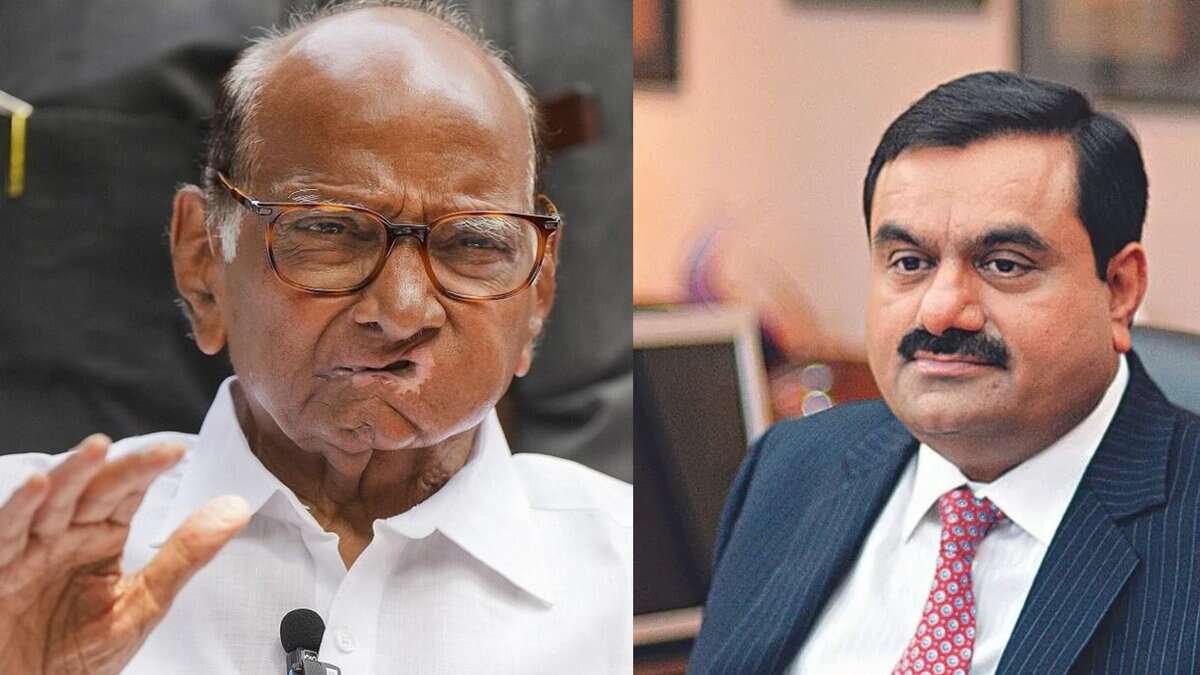
    Pune: Industrialist Gautam Adani and NCP (SP) chief Sharad Pawar on Friday visited the Science and Technology Park (STP) on Savitribai Phule Pune University campus here.

    Established in 1986, STP Pune is among the first Science and Technology Entrepreneurs Parks (STEPs) set up by the National Science and Technology Entrepreneurship Development Board (NSTEDB) under the Department of Science and Technology.

    The park supports technology-based startups in areas such as IT/ITES, clean technology and renewable energy.

    MS Creative School

    “We had sought an audience with Adani to brief him about our work and explore ways industry can support us. To our surprise, he agreed to visit, and Pawar saheb facilitated the meeting,” said Dr Rajendra Jagdale, Director General of STP, on Saturday.

    Adani and Pawar spent nearly two hours at the facility and were informed about key initiatives, including the promotion of over 1,300 startups and funding support to more than 200 firms, Jagdale said.

    Select innovations in biofuels, cyber safety and AI-based cattle health monitoring were showcased during the visit, he added.

    “We also shared our vision for CSR and how technology can transform lives, including our work with the transgender community. Adani was impressed and expressed interest in collaborating with us,” Jagdale said.