Mumbai: Equity benchmark indices Sensex and Nifty began the first trading session of 2026 on an optimistic note supported by steady buying by domestic institutional investors and strong gains in blue-chip Reliance Industries.
The 30-share BSE Sensex climbed 223.54 points to 85,444.14 in early trade on Thursday. The 50-share NSE Nifty went up by 65.75 points to 26,195.35.
From the 30-Sensex firms, InterGlobe Aviation, Mahindra & Mahindra, Eternal, Reliance Industries, Larsen & Toubro and UltraTech Cement were among the biggest gainers.
ITC, Bharat Electronics, Trent and Bajaj Finance were among the laggards.
Asian markets were closed on Thursday.
US markets ended lower on Wednesday.
“Indian equity markets step into the first trading session of 2026 on a cautiously optimistic note, set against a globally quiet backdrop as most major international markets remain closed for New Year’s Day. With the US, Europe, and several Asian markets shut, global cues are limited and early liquidity is expected to remain thin.
“As the session progresses, domestic participation is likely to improve, supported by steady DII inflows and the renewed optimism that typically accompanies the start of a new calendar year,” Ponmudi R, CEO of Enrich Money, an online trading and wealth-tech firm, said.
Foreign Institutional Investors (FIIs) offloaded equities worth Rs 3,597.38 crore on Wednesday, while Domestic Institutional Investors (DIIs) bought stocks worth Rs 6,759.64 crore, according to exchange data.
Brent crude, the global oil benchmark, declined 0.78 per cent to USD 60.85 per barrel.
On Wednesday, the Sensex jumped 545.52 points or 0.64 per cent to settle at 85,220.60. The Nifty soared 190.75 points or 0.74 per cent to end at 26,129.60.
In the entire 2025, the Sensex rallied 7,081.59 points or 9 per cent, and the Nifty zoomed 2,484.8 points or 10.50 per cent.
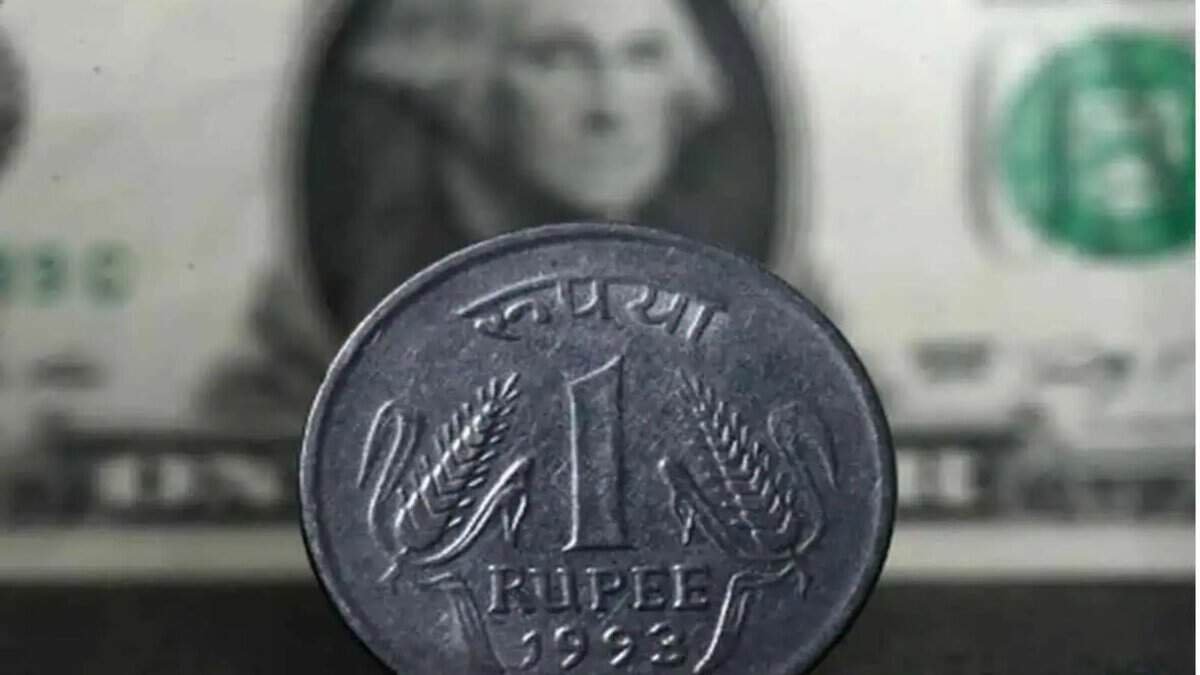
Mumbai: The rupee slumped 5 per cent in 2025 as persistent capital outflows from foreign investors, alongside heightened dollar demand from importers, making it one of the worst-performing Asian currencies.
On the last trading session of 2025, the rupee depreciated 13 paise to close at 89.88 against the US dollar as month-end demand and FPIs’ dollar buying kept it lower.
The domestic currency has exhibited a negative bias throughout the year, making it Asia’s worst-performing currency in 2025, with foreign portfolio investors pulling out USD 16.5 billion from equities this year, further denting investor sentiments, forex traders said.
At the interbank foreign exchange, the local unit opened at 89.89 against the dollar and touched an intra-day low of 89.95 and a high of 89.84 against the American currency.
At the end of Wednesday’s trading session, the rupee was quoted at 89.88 against the greenback, registering a fall of 13 paise over its previous close.
On Tuesday, the rupee rose 23 paise to close at 89.75 against the greenback.
On a year-on-year basis, the rupee has plunged 4.95 per cent. It was quoted at 85.64 on December 31, 2024.
Dilip Parmar, Research Analyst, HDFC Securities, said, “The rupee resumed its downward trajectory following Tuesday’s pause, weighed down by a rebounding US dollar against major currencies. For the year 2025, the rupee emerged as the regional laggard, with spot prices whipsawed by tightening dollar liquidity, surging trade deficit, relatively high US Tariff and capital flows.”
“Since the Trump Administration took over, the rupee has been the worst performing currency in the Asian Region, depreciating by more than 5 per cent during 2025, marking its highest depreciation in the last three years,” said Anil Kumar Bhansali, Head of Treasury and Executive Director, Finrex Treasury Advisors LLP.
Meanwhile, the Reserve Bank, in its Financial Stability Report (FSR) on Wednesday, said the rupee had depreciated against the US dollar, reflecting falling terms of trade due to the impact of tariffs and a slowdown in capital flows.
The report further noted that the Indian economy is likely to maintain strong growth, underpinned by robust domestic demand, benign inflation, and prudent macroeconomic policies despite an uncertain and challenging global economic backdrop.
“The domestic financial system remains robust and resilient, bolstered by strong balance sheets, easy financial conditions, and low financial market volatility. Nonetheless, there are near-term risks from external uncertainties — geopolitical and trade-related,” it said.
Bhansali further said that “consistent outflows by FPIs and stake sales by investors, demand from defence, oil and gold have all impacted the rupee as it fell to its lowest at 91.08 before reined in to control it and bring it up to current levels”.
Parmar added, “We anticipate a period of range-bound consolidation for USDINR, anchored between the 89.40 support and 90.26 resistance levels.”
Meanwhile, the dollar index, which gauges the greenback’s strength against a basket of six currencies, was trading 0.10 per cent higher at 98.33.
Brent crude, the global oil benchmark, was trading 0.13 per cent higher at USD 61.41 per barrel in futures trade.
Forex traders said the USD/INR pair is trading under pressure due to multiple factors, including a shift toward risk aversion, driven by persistent capital withdrawals from foreign investors ahead of the holiday break, alongside heightened greenback demand from importers.
On the domestic equity market front, benchmark-sensitive indices ended 2025 on a high, with the Sensex jumping 545.52 points to settle at 85,220.60, while the Nifty surged 190.75 points to 26,129.60.
Foreign institutional investors offloaded equities worth Rs 3,597.38 crore on Wednesday, according to exchange data.
Mumbai: The Indian economy is growing at a robust pace, driven by strong domestic demand, low inflation, and the healthy balance sheets of banks, said a Reserve Bank report released on Wednesday.
The domestic financial system remains robust and resilient, bolstered by strong balance sheets, easy financial conditions, and low financial market volatility, said the December 2025 edition of the Financial Stability Report (FSR).
“Nonetheless, there are near-term risks from external uncertainties – geopolitical and trade-related,” said the report, which reflects the collective assessment of the Sub-Committee of the Financial Stability and Development Council (FSDC) on the resilience of the Indian financial system and risks to financial stability.
It further said the health of the scheduled commercial banks (SCBs) remains sound with strong capital and liquidity buffers, improved asset quality and robust profitability.
“Macro stress test results affirm the resilience of SCBs to withstand losses under hypothetical adverse scenarios and maintain capital buffers well above the regulatory minimum. Stress tests also confirm the resilience of mutual funds and clearing corporations,” it added.
According to the report, the gross non-performing assets ratio of banks will improve further to 1.9 per cent by March 2027 under a baseline scenario.
As of September 2025, the key ratio stood at a multi-decade low of 2.1 per cent, the central bank said in its half-yearly Financial Stability Report.
“The aggregate GNPA ratio of the 46 banks may improve from 2.1 per cent in September 2025 to 1.9 per cent in March 2027 under the baseline scenario,” the report said.
The GNPA ratio may rise to 3.2 per cent and 4.2 per cent under adverse scenarios, the Reserve Bank of India (RBI) said, pointing to results of its stress tests.
From a capital buffers perspective, the report said, the capital to risk-weighted assets ratio (CRAR) remained strong as of September, with state-owned banks at 16 per cent and private sector banks at 18.1 per cent.
Banks will be able to withstand adverse economic shocks, the report said, listing out how the capital buffers will be impacted in adverse events.
On the economy, the report noted that the real gross domestic product (GDP) growth surprised on the upside in both Q1 2025-26 and Q2 2025-26 at 7.8 per cent and 8.2 per cent, respectively, supported by strong private consumption and public investment.
“Growth outlook remains positive, aided by low inflation, easy financial conditions, above normal monsoon, direct and indirect tax reforms, and the ongoing expansion of digital public infrastructure,” the report said.
On the domestic currency, the report said the rupee depreciated against the US dollar (USD), reflecting falling terms of trade due to the impact of high tariffs and a slowdown in capital flows.
With the effective US tariff rate on India being the highest compared to its trading partners, the rupee depreciated despite the broad weakening of the US dollar against other major and Asian currencies, it added.
New Delhi: The Union government on Wednesday, December 31, approved a major relief package for Vodafone Idea, freezing its outstanding dues and approving a five-year moratorium on payments, providing a critical lifeline to the debt-laden telecom operator.
The Union Cabinet, headed by Prime Minister Narendra Modi, agreed to freeze AGR dues of Vodafone-Idea Ltd (VIL) at Rs 87,695 crore, which the struggling company has to start paying from 2031-32 fiscal and clear by 2040-41, sources aware of the decision said.
AGR dues refer to payments owed by telecom companies to the government based on Adjusted Gross Revenue (AGR). It is the revenue on which telecom operators must pay license fees and spectrum usage charges. It is defined to include all revenues, even non-telecom income (like interest, rent, asset sales).
Besides these outstanding, the AGR dues for FY2017-18 and FY 2018-19, which were finalised based on the Supreme Court order of September 2020, will now have to be paid over 2025-26 to 2030-31 fiscal without any change, they said.
Vodafone Idea has been battling a prolonged financial crisis, driven by intense price competition, high debt, and massive AGR liabilities that arose from a change in the definition of AGR. The company has struggled with persistent losses, a shrinking subscriber base, and limited ability to invest in network expansion, even as rivals accelerated 4G and 5G rollouts.
Repeated rounds of government relief and equity conversion of dues have kept the company afloat, but its long-term viability continues to hinge on sustained policy support, fresh capital infusion, and a turnaround in operating performance.
Some had expected that the Cabinet would waive a part, if not all, of the AGR dues. But instead, it decided to give a moratorium, which would allow the company to recover.
The dues that have been frozen will be reassessed by a committee based on audit reports, sources said, adding the outcome shall be binding on both parties.
Sources said the decisions taken by the Cabinet were to protect the interests of the government, which now has a 49 per cent stake in VIL. It will also enable orderly payment of dues to the government, ensure competition in the sector and protect the interests of 20 crore consumers of the company.
New Delhi: The government on Wednesday launched Rs 4,531 crore market access support for exporters under which financial support will be provided to participate in activities such as international fairs and exhibitions.
It will help exporters at times when they are facing a steep 50 per cent tariff by the US.
The measure is a part of the Rs 25,060-crore export promotion mission.
Under the Market Access Support, Rs 4,531 crore will be allocated over six years (2025-31), and Rs 500 crore has been earmarked for 2025-26.
Director General of Foreign Trade Ajay Bhadoo said under the measure, structured financial and institutional support will be provided for activities including Buyer-Seller Meets (BSMs), participation in international trade fairs and exhibitions, and Mega Reverse Buyer-Seller Meets (RBSMs) organised in India.
A forward-looking three-to-five-year calendar of major market access events will be prepared and approved in advance, enabling exporters and organising agencies to plan participation well ahead of time and ensuring continuity of market development efforts.
A minimum participation of 35 per cent MSMEs has been mandated for supported events, with special prioritisation being accorded to new geographies and smaller markets to encourage export diversification, he said.
Delegation size has been benchmarked at a minimum of 50 participants, with flexibility provided based on market conditions and strategic relevance.
Small exporters with export turnover of up to Rs 75 lakh in the preceding year will be provided partial airfare support to encourage participation of new and small exporters.
New Delhi: Outsmarting all asset classes globally in 2025, gold and silver with massive returns and repeated record-breaking rallies redefined the precious metal market dynamics amid intensifying global political challenges, unstable tariff policies and persistent supply-chain disruptions.
Marking one of the strongest performances for bullion in decades, silver prices surged more than 169 per cent during the year, while gold rallied over 76 per cent, reaffirming the role of precious metals as an anchor investment class in an extremely volatile world.
In the domestic market, gold touched a lifetime high of Rs 1,42,300 per 10 grams on December 26, while silver scaled a record of Rs 2,41,000 per kg on December 30.
Globally, spot gold began the year at around USD 2,657.16 per ounce and rallied to a peak of USD 4,550.11 per ounce on December 26, registering gains of up to 71.24 per cent.
Spot silver, meanwhile, started the year at about USD 29.57 per ounce and soared to a peak of USD 83.63 per ounce on December 29, clocking robust returns of 182.82 per cent.
The rally was initially triggered by the Fed’s policy easing, but it gathered pace as President Donald Trump‘s return to the White House, with tariff rhetoric, fuels uncertainty, central banks doubled down on bullion reserves, and supply constraints across metal markets.
“Gold and silver surged over the past year on the back of a powerful mix of macro factors, such as structural demand and physical supply tightness, Naveent Damani, Head of Research, Commodities, Motilal Oswal Financial Services Ltd (MOFSL), told PTI.
US Federal Reserve’s Pivot Marks Inflection Point:
The early momentum in bullion’s remarkable rally in 2025 came from the US Federal Reserve’s (Fed) policy easing, with the central bank delivering three cautious 25-basis-point rate cuts amid signs of cooling inflation, putting pressure on the US dollar, lending support for the bullion prices.
“2025 marked a clear inflection point for the Fed, with three cautious 25-basis-point cuts delivered amid divided voting and visible political pressure.
“…with Chair Jerome Powell’s term ending in May 2026 and a potentially more dovish successor in the wings. Bullion is likely to react ahead of policy, keeping the bias constructive despite brief corrective phases,” Damani said.
Silver outshines due to the supply crunch:
Silver has emerged as an all-out performer of 2025, driven by strong industrial demand, amid constrained mine supply, and rising production costs.
Silver has been facing shortages for five years due to mine shutdowns and China-led supply constraints, with a sixth straight shortfall likely in 2026 amid rising costs and firm demand.
“Silver is entering 2026 with a fundamentally tighter setup than gold. With recent mine shutdowns and fresh supply constraints from China and elsewhere, next year is likely to mark a sixth straight deficit. This is no longer just a demand story; it is a structural supply squeeze,” Damani of MOFSL said.
The demand for safe-haven assets increased after Trump returned to power, a resurgence of trade uncertainties and tariff-related tremors globally.
“Supply chains remain fragile, with tariffs and trade re-shoring creating hidden inflation pockets even as growth slows,” Damani said, adding that “In this tug of war between inflation and growth, gold benefits as a balance-sheet hedge, while silver sits at the crossroads of industrial demand and physical scarcity, making both metals strategic rather than speculative assets in 2026.”
Central Banks anchor gold rally:
Throughout the year, robust purchases by the global central banks, including the Reserve Bank of India, remained a key pillar of support for bullion prices throughout the year.
After record purchases of about 1,070 tonnes in 2024, 2025 is still tracking above 700 tonnes, a slowdown but by no means a reversal.
Damani explained that central-bank buying has quietly become the backbone of gold’s bull market, attributing the trend to a structural de-dollarisation drive as reserve managers reduce exposure to US currency and diversify their reserves.
China has continued to lead gold purchases, with key participation from India, which also remained a consistent buyer of the metal.
India’s demand sees a shift towards investment:
In the domestic markets, elevated prices of bullion reshaped demand patterns. Jewellery volumes contracted, but investment demand for gold bars and coins increased as households sought safety amid uncertainty.
Kinjal Shah, Senior Vice President & Co-Group Head, ICRA Ltd, told PTI, “Investment in gold bars and coins accounted for around 31 per cent of India’s volumetric gold consumption in FY2025, up from around 22 per cent in FY2023”.
Despite lower volumes, India continues to hold its position as the leading gold jewellery consumer globally, supported by a strong cultural affinity.
On the market forecast, Shah said that overall gold consumption is expected to drop by 12-13 per cent in FY2026, owing to a higher 21-23 per cent volume contraction in jewellery consumption, while bars and coins demand is on the rise.
Correction seen as a healthy pause:
After an exceptional run, analysts said bouts of consolidation will happen but remain constructive on the medium-term outlook.
“After a year where silver and gold have rallied, some consolidation is warranted. Interest-rate decisions, growth data and the ripple effects of tariffs could trigger short-term volatility across quarters,” Navneet Damani of MOFSL said.
Meanwhile, JP Morgan Global Research forecasts that gold prices in the overseas markets will rise to USD 5,055 per ounce by the final quarter of 2026.
With central-bank purchases, ETF inflows, episodes of geopolitical risks and supply-chain disruption in place, gold and silver head into 2026 with their strategic appeal firmly supported, closing a landmark year for bullion.
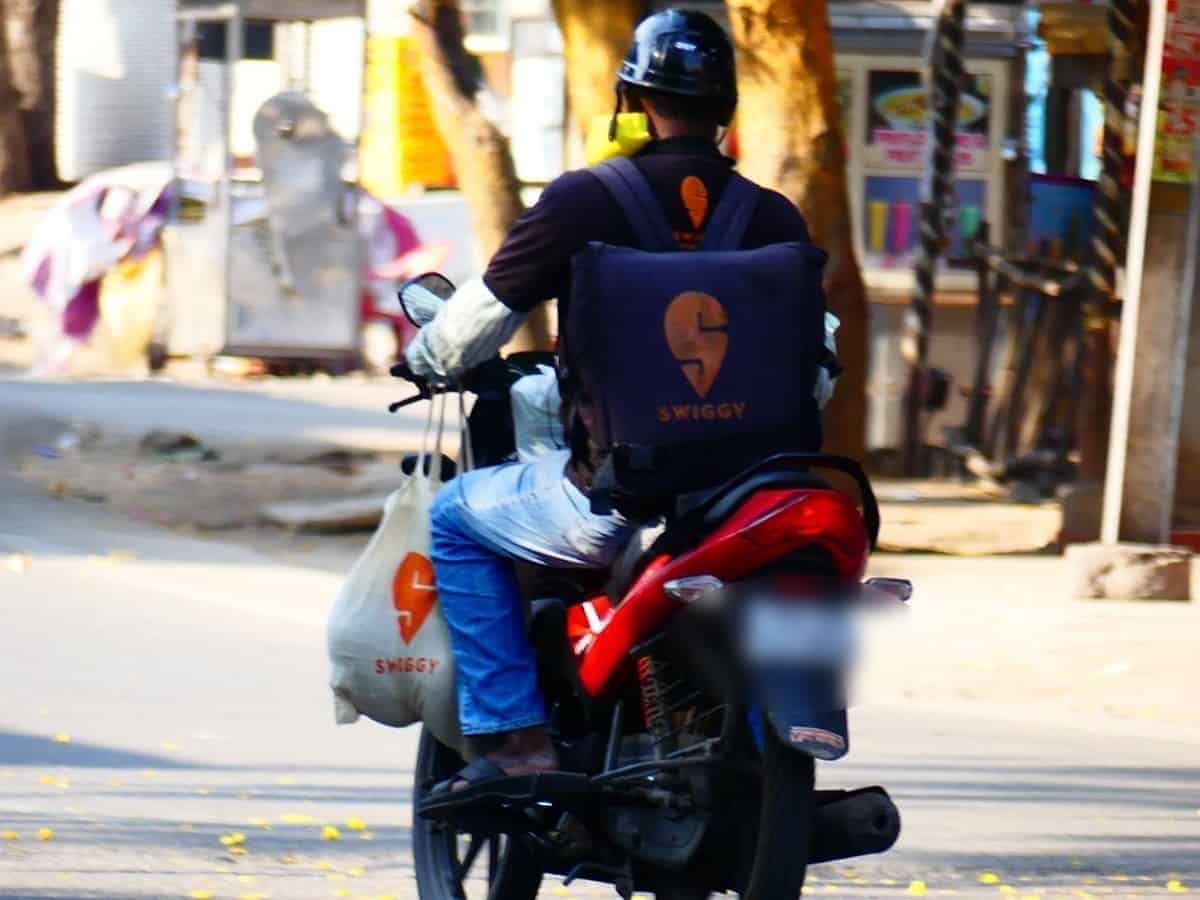
New Delhi: Food delivery platforms Zomato and Swiggy are offering more incentives to their delivery partners, a standard practice they follow on festive periods, to ensure minimal disruptions in services on New Year’s Eve amid strike call by gig workers’ unions.
Telangana Gig and Platform Workers’ Union (TGPWU) and Indian Federation of App-Based Transport Workers (IFAT) have claimed that lakhs of workers are set to join the nationwide strike to demand better payouts and improved working conditions.
The strike may affect the operations of food delivery and quick commerce firms like Zomato, Swiggy, Blinkit, Instamart and Zepto on New Year’s Eve, when demand is at an all-time high, according to industry sources.
Zomato has offered delivery partners payouts of Rs 120 to Rs 150 per order during peak hours between 6 pm and 12 am on New Year‘s Eve. The platform has also promised earnings of up to Rs 3,000 over the course of the day, subject to order volumes and worker availability, people in the know of the development said.
In addition, Zomato has temporarily waived penalties on order denials and cancellations, they said, however, stressing that it was a standard operating protocol followed during high-demand festive and year-end periods.
“This is part of our standard annual operating protocol during festive periods, which typically see higher earning opportunities due to increased demand,” an Eternal spokesperson told PTI.
Eternal owns Zomato and Blinkit brands.
Similarly, Swiggy has also increased incentives around the year-end period, offering delivery workers earnings of up to Rs 10,000 across December 31 and January 1, according to people aware of the development.
On New Year’s Eve, the platform is advertising peak-hour earnings of up to Rs 2,000 for the six-hour period between 6 pm and 12 am, in a bid to ensure adequate rider availability during one of the busiest ordering windows of the year, they said, maintaining that increased payouts were a standard practice during such periods.
In a joint statement, TGPWU and IFAT said, “As of last night, over 1.7 lakh delivery and app-based workers across India have confirmed participation, with numbers expected to rise further by evening”.
On the other hand, people in the know said that following the massive December 25 strike, which saw thousands of delivery workers log off platforms across Telangana and other regions, gig workers have announced an escalated nationwide strike on December 31, 2025, said the joint statement of TGPWU and IFAT.
“The December 25 action sent a clear warning to platform companies about falling earnings, unsafe delivery pressure, and loss of dignity at work.
However, companies responded with silence — no rollback of reduced payouts, no dialogue with workers, and no concrete assurances on safety or working hours. This continued indifference has made today’s strike unavoidable,” it added.
The Gig and Platform Service Workers Union also announced a nationwide strike on 31 December 2025 to collectively raise demands concerning the rights, welfare and dignity of gig and platform workers across India.
Giving a call to action, it said, “All gig workers, platform workers, digital platform workers, app-based workers, and online freelancers are earnestly requested to participate in the national strike by shutting down all work-related applications and abstaining from providing services on December 31, 2025, thereby making the strike united and effective”.
The Indian benchmark indices traded in the green zone early on Wednesday on the final day of the trading year.
As of 9.30 am, Sensex advanced 167 points, or 0.20 per cent to 84,872 and Nifty gained 67 points, or 0.26 per cent to 26,005. Main broad-cap indices performed in line with benchmark indices, with the Nifty Midcap 100 adding 0.55 per cent, while the Nifty Smallcap 100 gaining 0.58 per cent.
Among sectoral gainers, the Nifty Metal was the top gainer up 1.33 per cent, followed by Nifty Chemicals adding 1.09 per cent and Nifty PSU Bank gaining 0.79 per cent.
Immediate support is placed at 25,750–25,800 zone, while resistance is placed near 26,050–26,100 zone, analysts said. Market has the potential to rise, but sustained FII selling and lack of fresh triggers like US-India trade news are weighing it down, they added.
Investors are looking for cues from December auto sales data, Q3 corporate results, budget expectations, and Fed action in 2026.
Traders are hopeful that earnings will rebound in 2026, market watchers said. Asia-Pacific markets mostly fell in the morning session, on the holiday-shortened and final trading day of the year.
In Asian markets, China’s Shanghai index eased 0.07 per cent, and Shenzhen edged down 0.67 per cent, Japan’s Nikkei declined 0.37 per cent, while Hong Kong’s Hang Seng Index lost 1.12 per cent.
South Korea’s Kospi declined 0.15 per cent. The US markets ended in the red zone during the previous trading day, as Nasdaq lost 0.24 per cent, the S&P 500 eased 0.14 per cent, and the Dow moved down 0.2 per cent.
On December 30, foreign institutional investors (FIIs) sold equities worth Rs 3,844 crore, while domestic institutional investors (DIIs) were net buyers of equities worth Rs 6,160 crore.
New Delhi: The era of the ‘delivery day’ ended in 2025 as India’s retail landscape underwent a fundamental transformation, with the great convergence of traditional e-commerce and quick commerce erasing the boundaries between planned shopping and instant gratification.
What began as an experimental race to deliver groceries in ten minutes has evolved into a multi-billion-dollar infrastructure play that now moves everything from high-end electronics to white goods in minutes.
In a single calendar year, the question for the Indian consumer has permanently shifted from “will it arrive?” to “how many minutes until it does?” As the year draws to a close, the data reflect the sector in hyperdrive.
According to a year-end report by RedSeer Strategy Consultants, quick commerce has become India’s fastest-growing retail format, reaching 33 million monthly users across 150+ cities. By 2030, it will command 10 per cent of branded retail sales.
Rising household incomes and a growing preference for convenience have made quick commerce the preferred shopping channel for an increasing share of urban consumers.
E-commerce giants Amazon and Flipkart had to launch their own quick commerce arms to not miss out on the massive treasure trove of quick commerce market.
The launch of ‘Amazon Now’ and ‘Flipkart Minutes’—both offering sub-30-minute deliveries — signalled that speed is no longer a premium vertical but the industry’s new baseline.
Dark stores transitioned from small neighbourhood hubs to megapods. These larger facilities, typically around 10,000-12,000 sq ft, are now capable of stocking over 50,000 stock-keeping units (SKUs), enabling platforms to deliver iPhones and air conditioners with the same velocity as milk and bread.
The sheer scale of the Q-com expansion was best illustrated during the Dhanteras festival, where platforms sold and delivered gold and silver coins within minutes.
The year’s financial narrative reached a crescendo in December with Meesho’s Rs 5,421 crore IPO, validating the immense purchasing power of the Tier-2 and Tier-3 value shopper.
Zepto is also set to pre-file its draft red herring prospectus (DRHP) with market regulator Sebi through a confidential route, as it targets a stock market listing sometime in 2026, according to sources.
However, the rapid physical expansion of dark stores triggered significant friction within the broader retail ecosystem. Consumer unions intensified calls against regulatory oversight as Q-com began eroding the margins of traditional Kirana stores.
This “Kirana Conflict” became a central theme in policy circles, in response to which the Competition Commission of India (CCI) in May notified the regulations for determining the cost of production, a move to help the watchdog more effectively assess alleged predatory pricing and deep discounting practices, especially in the quick commerce and e-commerce segments.
Consumer protection regulator CCPA issued notices to several quick commerce companies or violations related to packaged product disclosures mandated under the Legal Metrology Act.
The human element of this digital surge also faced intense scrutiny. Throughout 2025, the debate over gig labour welfare reached a fever pitch, and concerns regarding road safety—linked to the 10-minute pressure model—gained prominence.
The woes were finally heard when the government notified four labour codes in November, finally bringing the vast segment of gig workers under formal regulatory recognition and social security.
For the delivery partner dropping off groceries or the driver navigating city traffic, this move signalled the end of legal invisibility, transitioning them from the fringes of the “unorganised” sector into a formal social security net.
The introduction of uniform employment rights, mandatory appointment letters, and access to benefits such as provident funds, ESIC, and insurance underlaid a new foundation for stability and predictability for millions of gig and platform workers across India.
The trajectory heading into 2026 suggests a year defined by the dual themes of order consolidation and category deepening. The industry is moving toward a phase where the big three will fortify their market positions, while simultaneously pushing the boundaries of what can be delivered in under 30 minutes.
The coming year will require a more balanced approach toward regulatory compliance, particularly regarding labour welfare and competition with traditional trade.
Mumbai: Stock market benchmark indices Sensex and Nifty eked out marginal gains in early trade on Monday but later picked up momentum, tracking a firm trend in Asian peers and sustained buying by domestic institutional investors.
The 30-share BSE Sensex went up by 22.24 points to 85,063.69 in early trade. The 50-share NSE Nifty eked out a marginal gain of 16 points to 26,058.30.
Later, the BSE benchmark traded 105.17 points higher at 85,140.33, and the Nifty quoted 35 points up at 26,080.45.
From the 30-Sensex firms, Tata Steel, Eternal, Bharat Electronics, Kotak Mahindra Bank, Trent and Maruti were among the biggest gainers.
However, Adani Ports, Power Grid, Bajaj Finserv and Axis Bank were among the laggards.
In Asian markets, South Korea’s Kospi, Shanghai’s SSE Composite index and Hong Kong’s Hang Seng index traded in positive territory, while Japan’s Nikkei 225 index quoted lower.
US markets ended on a flat note on Friday. Foreign Institutional Investors (FIIs) offloaded equities worth Rs 317.56 crore on Friday, while Domestic Institutional Investors (DIIs) bought stocks worth Rs 1,772.56 crore, according to exchange data.
Brent crude, the global oil benchmark, jumped 1.04 per cent to USD 61.27 per barrel.
On Friday, the Sensex dropped 367.25 points or 0.43 per cent to settle at 85,041.45. The Nifty declined by 99.80 points or 0.38 per cent to 26,042.30.