Mumbai: Benchmark equity indices Sensex and Nifty rallied in early trade on Wednesday, tracking a positive trend in global markets and consistent buying by domestic institutional investors.
The 30-share BSE Sensex climbed 115.8 points to 85,640.64 in early trade. The 50-share NSE Nifty went up by 40.7 points to 26,217.85.
From the 30-Sensex firms, Bajaj Finance, NTPC, Trent, Bharat Electronics, Adani Ports and Eternal were among the gainers.
However, Tech Mahindra, Infosys, HCL Tech and Sun Pharma were among the laggards.
In Asian markets, South Korea’s Kospi, Japan’s Nikkei 225 index, Shanghai’s SSE Composite index and Hong Kong’s Hang Seng index traded in positive territory.
US markets ended higher on Tuesday.
“As 2025 draws to a close the market appears to be moving to a consolidation phase with an upward bias. The strong domestic macros and the supportive earnings growth expectations in Q3 and Q4 of FY26 and for FY27 will provide the fundamental support to the market.
“The sustained domestic inflows and consistent DII buying will impart resilience to the market. However, since FIIs may sell the rallies, a sharp breakout is unlikely,” VK Vijayakumar, Chief Investment Strategist, Geojit Investments Limited, said.
Vijayakumar further said that the RBI decision to do an additional OMO (Open Market Operations) to the tune of Rs 2 lakh crore will significantly enhance liquidity and bring down yields.
“This is positive for credit growth and banking stocks,” he added.
The Reserve Bank of India on Tuesday said it will purchase government securities worth Rs 2 lakh crore and conduct a USD 10 billion buy/sell dollar-rupee swap auction to inject liquidity in the banking system.
The OMO (Open Market Operations) purchase and swap auctions will be conducted between December 29, 2025 and January 22, 2026.
Announcing the decision, the Reserve Bank of India (RBI) said it will continue to monitor evolving liquidity and market conditions and take measures as appropriate to ensure orderly liquidity conditions.
The latest announcement comes days after the RBI conducted Rs 1 lakh crore OMO purchase auctions of Government of India securities and USD/INR Buy/Sell Swap auction of USD 5 billion for a tenor of three years.
Foreign Institutional Investors (FIIs) offloaded equities worth Rs 1,794.80 crore on Tuesday, according to exchange data. Domestic Institutional Investors (DIIs), however, remained buyers as they bought equities worth Rs 3,812.37 crore.
Brent crude, the global oil benchmark, traded 0.02 per cent up at USD 62.39 per barrel.
Snapping the two-day gaining streak, the Sensex on Tuesday dipped 42.64 points or 0.05 per cent to settle at 85,524.84. The Nifty ended marginally up by 4.75 points or 0.02 per cent to 26,177.15.
Hyderabad: Cricket legend Sachin Tendulkar has made a strategic investment in Suntek Energy Systems Private Limited (Brand: Truzon Solar), a Hyderabad-based solar energy company.
The partnership, announced on December 23, 2025, sees Tendulkar acquiring 1.8 lakh shares worth Rs 3.6 crore, representing approximately 2 per cent stake in the company.
Founded in 2008 by Charugundla Bhavani Suresh, Truzon Solar specialises in residential, commercial, utility-scale solar projects, rooftop systems, and PM-Kusum schemes.
The company currently has a presence across Telangana, Andhra Pradesh, Maharashtra, Madhya Pradesh, and Chhattisgarh, with aggressive expansion plans into new markets like Tamil Nadu and Uttar Pradesh.
Vision and growth strategy
Speaking about the investment, company founder and Managing Director Charugundla Bhavani Suresh stated, “This partnership with Sachin is not just an investment—it’s a strong endorsement of our values, governance, and long-term vision. It will enhance brand credibility and contribute to rapid expansion at the national level.”
The company expressed optimism that this partnership will accelerate India’s clean energy transition, noting that Tendulkar’s values of trust, excellence, and national pride align closely with Truzon Solar’s ethos.
The investment marks a significant milestone for the company as it aims to become one of India’s top-3 solar EPC companies by 2030, a press release informed.
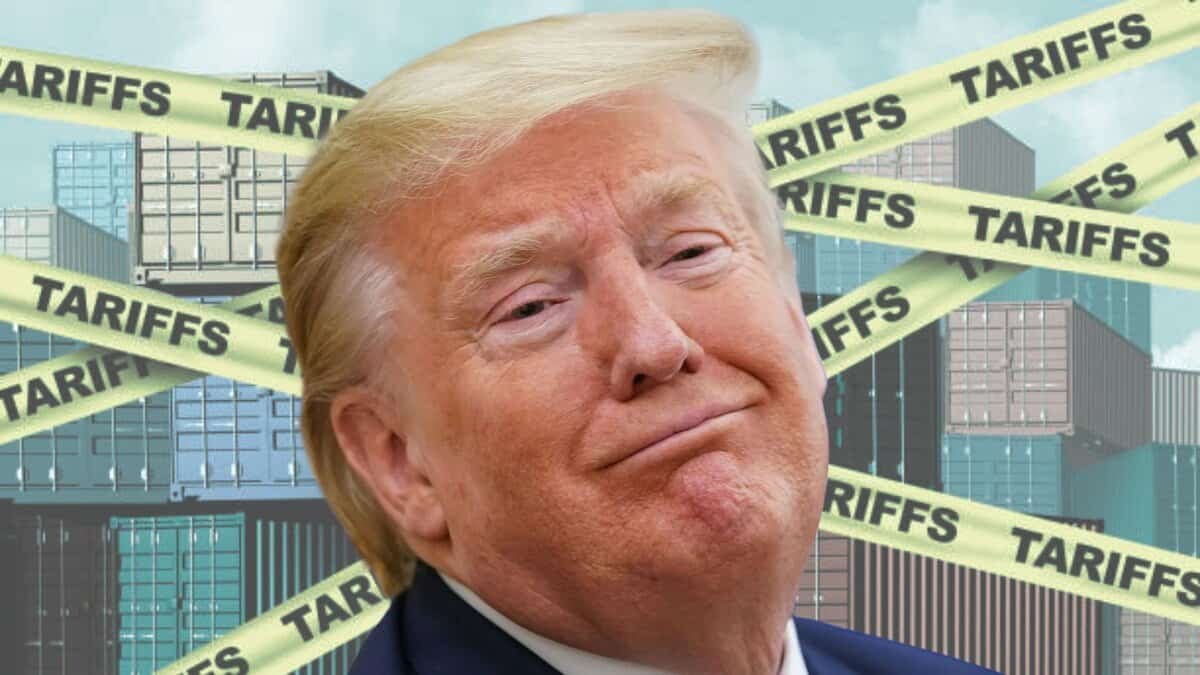
Washington: Consumers were less confident in the economy in December as Americans grow anxious about high prices and the impact of President Donald Trump‘s sweeping tariffs.
The Conference Board said Tuesday that its consumer confidence index fell 3.8 points to 89.1 in December from November’s upwardly revised reading of 92.9. That is close to 85.7 reading in April, when Trump rolled out his import taxes on US trading partners.
A measure of Americans’ short-term expectations for their income, business conditions and the job market remained stable at 70.7, but still well below 80, the marker that can signal a recession ahead. It was the 11th consecutive month that reading has come in under 80.
Consumers’ assessments of their current economic situation tumbled 9.5 points to 116.8.
Write-in responses to the survey showed that prices and inflation remained consumers’ biggest concern, along with tariffs.
Perceptions of the job market also declined this month.
The conference board’s survey reported that 26.7 per cent of consumers said jobs were “plentiful,” down from 28.2 per cent in November. Also, 20.8 per cent of consumers said jobs were “hard to get,” up from 20.1 per cent last month.
Last week, the government reported that the US economy gained a healthy 64,000 jobs in November but lost 105,000 in October. Notably, the unemployment rate rose to 4.6 per cent last month, the highest since 2021.
The country’s labour market has been stuck in a “low hire, low fire” state, economists say, as businesses stand pat due to uncertainty over Trump’s tariffs and the lingering effects of elevated interest rates. Since March, job creation has fallen to an average 35,000 a month, compared to 71,000 in the year ended in March. Fed Chair Jerome Powell said recently that he suspects those numbers will be revised even lower.
Mumbai: The Bombay High Court on Tuesday sent a clear message to fugitive businessman Vijay Mallya that the court will not consider his challenge to the Fugitive Economic Offenders (FEO) Act until he submits to Indian jurisdiction.
A bench of Chief Justice Shree Chandrashekhar and Justice Gautam Ankhad also questioned when the businessman plans to return to India.
Mallya, based in the UK since 2016, has filed two petitions in the HC — one challenging an order declaring him as a fugitive economic offender and the other questioning the constitutional validity of the 2018 Act.
The HC posed the question to the 70-year-old liquor baron, wanted in India to face trial on fraud and money laundering charges, on his return home while hearing his twin pleas.
The court made it clear to the embattled businessman’s counsel Amit Desai that it would not hear Mallya’s plea against the Act unless he first submits himself to the court’s jurisdiction.
Solicitor General Tushar Mehta, appearing for the Enforcement Directorate (ED), opposed the pleas arguing fugitives should not be permitted to challenge the validity of an Act without being subjected to courts of the country.
He submitted to the court that the FEO Act was brought to ensure such persons do not abuse the law by staying away from the country and filing petitions through their lawyers.
Mehta told the court that extradition proceedings initiated against Mallya were at an advanced stage.
The bench insisted it cannot allow both petitions filed by Mallya to run together and asked the promoter of the now-defunct Kingfisher Airlines to clarify which plea he wants to press and which one to withdraw.
Desai told the court that financial liability had been effectively neutralised with Mallya’s assets worth Rs 14,000 crore attached and liabilities worth Rs 6,000 crore recovered by lending banks.
The Solicitor General maintained the fugitive businessman was entitled to legal representation even while staying abroad.
The bench, however, questioned as to how does one wipe out criminal liability without submitting to the jurisdiction of the court.
The HC posted the matter for further hearing on February 12 by when Mallya will have to inform the court about which petition he wants to proceed with.
Mallya was declared a Fugitive Economic Offender in January 2019 by a special court hearing cases under the Prevention of Money Laundering Act (PMLA).
The businessman, accused of defaulting on multiple loan repayments and facing money laundering charges, left India in March 2016.
New Delhi: The IPO market, which scaled a record high in 2025 with companies raising an unprecedented Rs 1.76 lakh crore, driven by abundant domestic liquidity, resilient investor confidence and supportive macroeconomic factors, is expected to carry that momentum into the New Year.
This exceptional year not only reflected issuers’ confidence but also highlighted investors’ eagerness to chase listing-day gains and back companies with strong long-term growth potential.
A major highlight of the year was the resurgence of startup listings with as many as 18 startups, including Lenskart, Groww, Meesho and PhysicsWallah, going public and collectively raising over Rs 41,000 crore. In 2024, startups raised Rs 29,000 crore from the primary market.
This rebound signals a reset in valuation expectations and business models after a period of caution.
At the same time, Offer for Sale (OFS) continued to dominate fundraising activity, accounting for about 60 per cent of total capital raised in 2025.
Overall, companies across market capitalisations, large, mid and small, tapped the IPO route, with the average issue size exceeding Rs 1,700 crore, suggesting the breadth of participation.
Looking ahead, market participants remain optimistic about the IPO activity in 2026.
Bhavesh Shah, Managing Director and Head of Investment Banking at Equirus Capital, said the IPO outlook for the New Year remains encouraging, supported by a deep pipeline and sectoral diversity.
More than 75 companies have already secured Sebi approval but are yet to launch their issues, while another 100 are awaiting regulatory clearance, he added.
The IPO pipeline spans technology, financial services, infrastructure, energy and consumer sectors, indicating broad-based participation rather than concentration in a few themes. It is also expected to feature marquee offerings such as Reliance Jio, SBI Mutual Fund, Oyo and PhonePe.
According to data compiled by IPO Central, 103 maiden public issues, launched in 2025, raised a total of Rs 1.76 lakh crore.
The fundraising exceeded the Rs 1.6 lakh crore raised by 90 firms in 2024, and the Rs 49,436 crore garnered by 57 companies in 2023.
According to Neha Agarwal, Managing Director and Head, Equity Capital Markets at JM Financial Institutional Securities, strong domestic liquidity and resilient investor confidence drove record fund mobilisation.
Equirus Capital’s Shah said that India’s macroeconomic stability, marked by strong GDP growth, contained inflation and a predictable policy environment, boosted confidence among global and domestic investors.
The momentum, however, was not uniform throughout the year. Primary market activity remained muted in the first seven months amid market volatility, weak foreign portfolio investor participation and geopolitical risks.
Conditions improved materially from August onwards, as macro concerns eased, liquidity strengthened and equity markets stabilised, triggering a sharp pickup in listings.
V. Prashant Rao, Director & Head, ECM Investment Banking, at Anand Rathi Advisors, says that while IPO volumes rose, fund-raising was skewed towards OFS.
Of the listed companies, only 23 raised funds entirely through fresh capital, with an average issue size of around Rs 600 crore. In contrast, 15 companies raised funds purely via OFS, mobilising over Rs 45,000 crore, while the rest adopted a mix of both, with OFS forming the larger share.
According to Rao, the preference for OFS reflects promoters’ and early investors’ desire to unlock liquidity efficiently without diluting the company’s capital base or altering ownership structures. This route is particularly attractive for mature companies with limited capex needs.
On the comeback of tech and startup IPOs, JM Financial’s Agarwal pointed to improved business models and clearer profitability paths, with most listings delivering positive gains.
The hectic IPO activity was also visible in the SME (Small and Medium Enterprise) segment with a record 252 SMEs raising Rs 11,400 crore in 2025, compared with Rs 9,580 crore mobilised by 222 firms in 2024, the IPO Central data showed.
This growth reflects rising interest in smaller public issues, though these offerings carry higher risks for retail investors.
Among the year’s largest main-board IPOs, Tata Capital’s Rs 15,512 crore issue topped the list, followed by HDB Financial Services (Rs 12,500 crore), LG Electronics India (Rs 11,607 crore), Hexaware Technologies (Rs 8,750 crore), Lenskart Solutions (Rs 7,278 crore) and Billionbrains Garage Ventures (Rs 6,632 crore).
At the other end of the spectrum, Jinkushal Industries launched the smallest IPO, raising just Rs 116.5 crore, highlighting the diversity of issuers.
Beyond fundraising, IPOs continued to serve multiple objectives for companies, providing capital for expansion, working capital and debt reduction, while enhancing visibility and offering exits to long-term investors.
Investor appetite remained strong through the year, reflected in exceptionally high subscription ratios.
Highway Infrastructure emerged as the most-subscribed IPO of 2025 with over 300 times subscription, followed by Indo Farm Equipment, Denta Water and Infra Solutions, Stallion India Fluorochemicals, Quadrant Future Tek and Standard Glass Lining Technology.
This robust demand translated into solid market performance, as nearly two-thirds of IPOs delivered positive outcomes, reflecting healthy investor selectivity and underlying market resilience.
Of the 103 companies that made their market debut, 70 delivered positive listing-day returns, while 32 listed at a discount.
Positive listing gains indicate investor confidence and disciplined pricing, while negative outcomes show the market is discriminating, not euphoric, Shah of Equirus Capital, said.
India’s equity markets have given decent returns, primarily supported by a robust economic growth outlook and a recovery in the latter half of the year following a volatile start. The NSE Nifty 50 rose by over 10 per cent and BSE Sensex by over 9 per cent.
New Delhi: IndiGo has been allowed to operate five narrow body planes leased from Turkey only till March 2026 and no further extension will be given, according to aviation regulator DGCA.
The watchdog on Monday provided a clarification about the lease duration for aircraft taken by IndiGo from Turkey amid speculations that the airline has been given more time to use such leased planes.
“IndiGo has been permitted to operate aircraft on wet lease from Turkey with a last extension valid till March 2026 with a sunset clause that no further extension will be given.
“This is based on the undertaking submitted by Indigo airlines in the instant case wherein they have sought last time extension, since their long range aircraft (A321-XLR) are to be delivered by February 2026,” a senior DGCA official said.
The lease of five Boeing 737 planes taken from Turkey’s Corendon Airlines ends on March 31, 2026, as per the regulator.
Currently, IndiGo operates 15 foreign aircraft on wet/damp lease basis, including seven from Turkey.
In August this year, the Directorate General of Civil Aviation (DGCA) gave a six-month extension till February 2026 for IndiGo to operate two leased Boeing 777 aircraft from Turkish Airlines with certain conditions.
The move had come less than three months after DGCA in May provided a one-time final extension of three months till August 31 to IndiGo for operating the Turkish Airlines aircraft and had also asked the carrier not to seek any further extension.
The decision had come against the backdrop of Turkiye backing Pakistan and condemning India’s strikes on terror camps in the neighbouring country in May.
SpiceJet has 17 foreign planes in operations that have been taken on wet/damp lease.
The DGCA official on Monday said wet leasing of aircraft is a normal practice in the global aviation industry.
“Due to grounding of aircraft because of engine related issues and the delays in delivery of aircraft against orders from the OEMs, many Indian carriers as a stop gap arrangement are resorting to wet lease from foreign companies in order to serve Indian passengers,” the official said.
Further, the official said the leasing is done to utilise the rights provided to the Indian carriers under the bilateral service agreements with other countries.
Rome: Italy’s antitrust authority fined Apple 98.6 million euros ($116 million) on Monday after determining that operating one of its privacy features restricted App Store competition. Apple said it would appeal the sanction.
Apple abused its dominant position with its App Tracking Transparency (ATT) policy, which forces apps to obtain permission before collecting data to target users with personalised ads, the antitrust authority said in a statement.
The company rolled out ATT starting in April 2021 as part of an update to the operating system powering the iPhone and iPad. While the feature was designed to tighten up privacy, it faced criticism from Big Tech rivals that it would make it harder for smaller apps to survive without charging consumers.
The authority didn’t criticise the policy per se, but the fact that the Apple system requires third-party app makers to ask users for consent twice in order to comply with Europe’s strict privacy rules.
“As a result, such double consent requirement is harmful to developers, whose business model relies on the sale of advertising space, as well as to advertisers and advertising intermediation platforms,” the authority said.
The authority said that the double consent required was “disproportionate” to the stated goal of data protection.
The Cupertino, Calif-based company said it strongly disagreed with the finding and would appeal it, saying it disregarded the privacy protections of the policy “in favor of ad tech companies and data brokers who want unfettered access to users’ personal data.”
“At Apple, we believe privacy is a fundamental human right, and we created App Tracking Transparency to give users a simple way to control whether companies can track their activity across other apps and websites,” Apple said in a statement. “These rules apply equally to all developers, including Apple, and have been embraced by our customers and praised by privacy advocates and data protection authorities around the world.”
The Italy antitrust finding is similar to one by the French antitrust watchdog, which in March fined Apple 150 million euros ($162 million) over the consent feature.
New Delhi: India and New Zealand on Monday said they have concluded talks on a free trade deal that will give India tariff-free access to the island nation’s markets, bring in USD 20 billion of investment over the next 15 years and help double bilateral trade in the next five years.
The third free-trade agreement this year, following a similar pact with the UK in July and another with Oman earlier this month, will give India more temporary employment visas, easier access for pharmaceuticals and medical devices.
While the agreement will eliminate or reduce tariffs on 95 per cent of New Zealand’s exports of items ranging from wool, coal, wood, wine, to avocados and blueberries to India, New Delhi made no concessions on allowing imports of dairy, onions, sugar, spices, edible oils and rubber to protect farmers and domestic industry.
New Zealand, which committed to investing USD 20 billion in India over the next 15 years in manufacturing, infrastructure, services, innovation and job creation, will also get quota-based tariff cuts for kiwifruit and apple exports.
The deal is expected to be signed in the first half of 2026 and aims to double bilateral trade to USD 5 billion in five years.
Trade pact to help Indian exporters affected by Trump’s tariffs
Prime Minister Narendra Modi held a telephone conversation with his New Zealand counterpart Christopher Luxon before the two leaders jointly announced the successful conclusion of the “historic, ambitious and mutually beneficial India-New Zealand Free Trade Agreement (FTA),” according to an official statement.
“The FTA would significantly deepen bilateral economic engagement, enhance market access, promote investment flows, strengthen strategic cooperation between the two countries, and also open up new opportunities for innovators, entrepreneurs, farmers, MSMEs, students and youths of both countries across various sectors,” the MEA said.
The agreement is likely to be signed and implemented in about 7-8 months. The pact would help Indian exporters, reeling under the impact of 50 per cent tariffs imposed by the Trump administration on Indian goods, diversify shipments in the Oceania region. India has already implemented a trade pact with Australia.
“The gains are wide-ranging and significant,” said New Zealand Prime Minister Christopher Luxon in a statement. “India is the world’s most populous country and is the fastest-growing big economy, and that creates opportunities for jobs for Kiwis, exports and growth.”
New Zealand gets duty-free access for sheep meat, wool, coal, wood articles
Under the pact, New Zealand will get duty-free access to goods such as sheep meat, wool, coal and over 95 per cent of forestry and wood articles. Under the pact, Wellington will get duty concessions on a number of other items such as kiwi fruit, wine, some seafood, cherries, avocados, persimmons, bulk infant formula, Manuka honey and milk albumins.
To protect the interests of domestic farmers and MSMEs, India will not give any duty concessions in the politically sensitive dairy sector, like milk, cream, whey, yoghurt, and cheese.
The other products which will not be covered under the pact include vegetable products (onions, chana, peas, corn, almonds), sugar, artificial honey, animal, vegetable or microbial fats and oils, arms and ammunition, gems and jewellery, copper and its products, and aluminium and articles.
New Zealand to give a temporary employment entry visa for Indian professionals
As regards the services sector, New Zealand will give a temporary employment entry visa pathway for Indian professionals in skilled occupations with a quota of 5,000 visas annually and a stay of up to three years.
This pathway covers Indian professions such as AYUSH practitioners, yoga instructors, Indian chefs, and music teachers, as well as high-demand sectors including IT, engineering, healthcare, education, and construction, strengthening workforce mobility and services trade.
With negotiations initiated during Luxon’s visit to India in March 2025, the two leaders agreed that the conclusion of the FTA in a record 9 months reflects their shared ambition and political will to further deepen ties between the countries.
The FTA would significantly deepen bilateral economic engagement, enhance market access, promote investment flows, strengthen strategic cooperation between the two countries, and also open up new opportunities for innovators, entrepreneurs, farmers, MSMEs, students and youth of both countries across various sectors.
Commerce and Industry Minister Piyush Goyal said that the investment will give a boost to domestic manufacturing and generate jobs.
New Zealand to help Indian farmers enhance productivity
Further under the pact, New Zealand will set up a dedicated Agri-Technology Action Plan on kiwifruit, apples and honey with a view to helping Indian farmers enhance productivity and quality.
The cooperation includes the establishment of Centres of Excellence, improved planting material, capacity building for growers and technical support for orchard management, post-harvest practices, supply chain performance, and food safety.
Commitment has been extended by New Zealand on Geographical Indications (GIs), including amendment of its law to facilitate the registration of India’s wines and spirits.
“Cooperation has been agreed in AYUSH, culture, fisheries, audio visual tourism, forestry, horticulture and traditional knowledge systems,” the commerce ministry said.
Apart from tariff liberalisation, the pact includes provisions to address non-tariff barriers through enhanced regulatory cooperation, and streamlined customs, sanitary and phyto-sanitary measures and technical barriers to trade disciplines.
Indian Pharma to get faster entry into New Zealand
The Pharma and Medical Devices sector will get a boost through faster regulatory access in New Zealand by enabling acceptance of GMP (Good Manufacturing Practice) and GCP (Good Clinical Practice) inspection reports from comparable regulators, including approvals by the US FDA, EU’s EMA, UK’s MHRA.
“This will reduce duplicative inspections, lower compliance costs, and expedite product approvals, thereby facilitating the growth of India’s pharmaceutical and medical devices exports to New Zealand,” the ministry said.
Goyal said that this is the seventh agreement finalised by the NDA government. It includes the UAE, Australia, the UK, EFTA bloc, Oman and Mauritius.
He said that the India-New Zealand pact is the first pact in which all the main officials from the Indian side involved in the negotiations were women. India’s chief negotiator is Joint Secretary in the Ministry, Petal Dhillon.
He also said that India has so far finalised FTAs with three members of the Five Eyes (FVEY) alliance – Australia, the UK and New Zealand. The five intelligence-sharing network countries are Australia, Canada, New Zealand, the UK, and the US.
India is in the advanced stage of negotiations for a bilateral trade agreement with the US and in the process of resuming talks for a trade agreement with Canada.
“The current bilateral trade with New Zealand is small but the upside potential is huge,” Goyal told reporters here.
Bilateral merchandise trade stood at USD 1.3 billion in 2024-25, while total trade in goods and services reached about USD 2.4 billion in 2024, with services trade alone reaching USD 1.24 billion, led by travel, IT, and business services.
Commerce Secretary Rajesh Agrawal said that although only five formal rounds were held for the pact, both sides remained in continuous touch to close the negotiations.
Houston: Starbucks has appointed Indian-origin technology executive Anand Varadarajan as its new executive vice president and chief technology officer (CTO), tapping a nearly two-decade Amazon veteran to lead its global technology operations.
Varadarajan will take charge on January 19, join the company’s Executive Leadership Team, and report directly to Chief Executive Officer Brian Niccol, Starbucks said. He succeeds Deb Hall Lefevre, who retired in September.
At Amazon, Varadarajan spent close to 19 years building large-scale, customer-focused technology platforms, most recently overseeing technology and supply chain for its Worldwide Grocery Stores business. Earlier, he worked as a software engineer at Oracle and with several startups.
Starbucks said Varadarajan brings deep experience in developing secure, reliable systems and scaling technology to support operational excellence while keeping customers at the centre.
An alumnus of the Indian Institute of Technology (IIT), Varadarajan holds a master’s degree in civil engineering from Purdue University and a master’s degree in computer science from the University of Washington.
Starbucks said Varadarajan’s appointment is expected to accelerate its technology initiatives and strengthen digital capabilities across its global business.
Mumbai: The rupee appreciated 22 paise to 89.45 against the US dollar in early trade on Monday supported by foreign fund inflows and a positive trend in domestic equities.
Forex traders said corporate dollar inflows and Brent crude prices hovering near USD 60 per barrel supported investors sentiment further.
At the interbank foreign exchange market, the rupee opened at 89.53 against the US dollar, then gained some ground and touched 89.45 against the US dollar, registering a gain of 22 paise over its previous close.
On Friday, the rupee appreciated 53 paise to 89.67 against the US dollar.
The USD/INR pair has appreciated about 2 per cent from its recent lows, but it is still 5 per cent down on a year-on-year basis, said Anil Kumar Bhansali, Head of Treasury and Executive Director Finrex Treasury Advisors LLP.
“The broader depreciation trend remains intact despite the near term consolidation,” Bhansali noted.
Meanwhile, the dollar index, which gauges the greenback’s strength against a basket of six currencies, was trading 0.04 per cent higher at 98.63.
Brent crude, the global oil benchmark, was trading higher by 0.83 per cent at USD 60.97 per barrel in futures trade.
Reports highlight firm RBI intervention last week with heavy dollar selling via state-run banks lifting the rupee from its recent lows, Bhansali said.
The rupee’s rise could also indicate some tailwinds from the lower trade deficit during the month of November as also FPIs who have become buyers of Indian equity, Bhansali added.
On the domestic equity market front, the 30-share benchmark index Sensex was trading 210.57 points higher at 85,139.93, while the Nifty was up 154.80 points at 26,121.20.
Foreign Institutional Investors purchased equities worth Rs 1,830.89 crore on Friday, according to exchange data.
Meanwhile, India’s forex reserves jumped by USD 1.689 billion to USD 688.949 billion during the week ended December 12, the Reserve Bank of India said on Friday. In the previous reporting week, the overall reserves increased by USD 1.033 billion to USD 687.26 billion.