New Delhi: Low-cost airline IndiGo, which faced severe crisis earlier this month, witnessed its domestic market share drop to 63.6 per cent in the month of November, according to latest data from the Directorate General of Civil Aviation (DGCA).
The country’s largest airline recorded 65.6 per cent market share in October.
Air India Group’s (Air India and Air India Express) market share in November went up to 26.7 per cent, from 25.7 per cent in October.
Akasa Air also saw its domestic market share drop to 4.7 per cent in November from 5.2 per cent in October.
“Passengers carried by domestic airlines during January-November 2025 were 1,526.35 lakhs as against 1,464.02 lakhs during the corresponding period of the previous year, thereby registering an annual growth of 4.26 per cent and monthly growth of 6.92 per cent,” as per the DGCA data.
The overall cancellation rate of scheduled domestic airlines for the month of November 2025 has been 1.33 per cent.
Meanwhile, the government has granted initial approval to three new airlines to start operations, after the recent chaos in IndiGo operations, which stranded passengers for several days across the country and exposed the abuse of dominance by the largest domestic airline.
The civil aviation ministry granted a “no-objection certificate” to regional airlines – Shankh Air, Al Hind Air and FlyExpress.
IndiGo was forced to cancel over 4,000 flights earlier this month across major destinations such as Delhi, Mumbai and Hyderabad and Bengaluru airports, mainly due to crew shortages. The low-cost carrier ran into a severe crew shortage due to the implementation of the second phase of the flight duty time limitations (FDTL) norms, which has stranded planes across airports in the country, with travel schedules of flyers going haywire.
The government initiated an inquiry into IndiGo’s mass flight cancellations that stranded thousands of flyers across airports in the country.
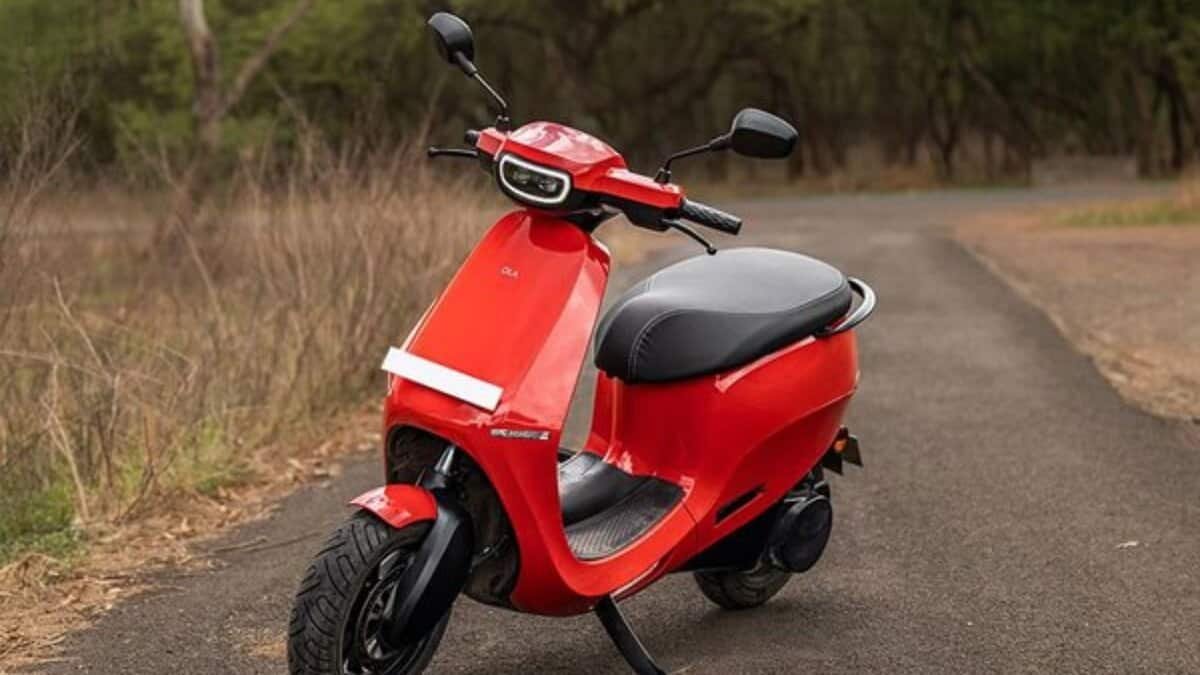
New Delhi: Ola Electric on Sunday said it has scaled up deliveries of its 4680 Bharat Cell powered S1 Pro+ (5.2 kWh) across Tamil Nadu, Kerala, Telangana, and Karnataka.
The company has commenced deliveries across Coimbatore, Kochi, and Hyderabad, along with continued ramp-up in Bengaluru, Ola Electric said in a statement.
The S1 Pro+ (5.2 kWh) is the first product powered by the company’s indigenously manufactured 4680 Bharat Cell battery pack, delivering more range, higher performance and enhanced safety, it added.
“Customers are now taking deliveries of the scooters powered by our own 4680 Bharat Cell, and the rollout is picking up strong momentum. With deliveries scaling across multiple states, we are now gearing up to take the 4680 Bharat Cell powered vehicles nationwide, reaching every corner of the country,” an Ola Electric spokesperson said.
With its own 4680 Bharat Cell battery packs in the vehicles, Ola Electric is now India’s first company to fully own the cell and battery pack manufacturing process in-house, marking a major milestone in building a fully integrated EV ecosystem in India.
Ola Electric currently offers an expansive portfolio of S1 scooters and Roadster X motorcycles.
New Delhi: Adani Group plans to invest Rs 1.8 lakh crore next year in defence manufacturing, with a focus on strengthening capabilities in unmanned and autonomous systems as well as advanced guided weapons as it looks to play a stealth anchor role in India’s future warfare capabilities, sources said.
Adani Defence & Aerospace in 2025 transitioned from extended planning cycles to rapid deployment with some of its military hardware being used in Operation Sindoor.
Next year, it will invest in unmanned and autonomous systems, advanced guided weapons, sensors and electronics, AI-enabled multi-domain operations, and scaled-up maintenance, repair and overhaul (MRO) and training infrastructure, company sources said.
Autonomous systems across air, sea and land domains are unmanned platforms that use sensors, software and secure networks to operate with minimal human intervention, expanding military reach while reducing risk to personnel.
In the air, they include UAVs that conduct intelligence, surveillance and reconnaissance, communications relay and precision-support missions with long endurance. At sea, unmanned surface and underwater vehicles perform tasks such as maritime surveillance, anti-submarine warfare and mine countermeasures over wide areas. On land, unmanned ground vehicles support logistics, reconnaissance, explosive ordnance disposal and perimeter security.
Adani Defence & Aerospace has emerged as India’s largest integrated private-sector defence player, with capabilities spanning unmanned aerial and underwater systems, counter-UAS solutions, guided weapons and loitering munitions, small arms and ammunition, aircraft MRO, simulator-driven training and airborne warning and control systems (AWACS).
Sources said in 2025, the company’s Drishti 10 UAVs were inducted into the Indian Navy and Army for long-endurance ISR mission (Intelligence, Surveillance, and Reconnaissance).
Also, its counter-drone systems cleared trials conducted by the Army, Navy and Air Force, Agnikaa loitering munitions demonstrated endurance and resistance to electronic warfare and ARKA MANPADS – a shoulder-fired missile system – achieved tri-service deployment readiness within compressed timelines.
Sources said the company’s entry into AWACS platforms helped position it as a sole private-sector player in this segment.
Integration of Air Works and Indamer created a major defence-civil MRO platform while the acquisition of FSTC strengthened pilot and engineering training capabilities, they said.
Adani Defence & Aerospace has embedded sustainability through digital twins, predictive maintenance and modular design, while higher indigenous sourcing has strengthened supply-chain resilience.
Looking ahead to 2026, the company plans to scale autonomous systems across air, sea and land domains, expand precision-strike capabilities, deepen its MRO and training footprint, and advance AI-enabled, multi-domain operational systems in line with India’s planned defence investment trajectory, sources added.
New Delhi: British aero-engine maker Rolls-Royce on Sunday said it is looking at making India its third “home market” outside of the UK in line with a plan to unlock the full potential of opportunities across an array of domains including jet engine, naval propulsion, land systems and advanced engineering.
In an interview to PTI, Sashi Mukundan, the executive vice president of Rolls-Royce India, elaborating on the move, said the company is planning for a “big investment” in the country and listed developing a next-generation aero engine in India as a priority to power the combat jets that New Delhi will produce under the Advanced Medium Combat Aircraft (AMCA) programme.
Besides the UK, Rolls Royce considers the US and Germany as its “home markets” as the company has considerable presence including manufacturing facilities in these two countries.
Mukundan also highlighted how Rolls Royce can contribute significantly to address India’s requirement for electric propulsion capability for boosting the Indian Navy’s combat prowess.
He suggested that the development of the jet engine for the AMCA involving Rolls Royce could also help India manufacture engines for naval propulsion as the company is among very few engine makers globally to have the capability to “marinize the aero engine”.
Mukundan, without divulging specific details, said Rolls Royce was eyeing to make significant investment to expand its footprint in India, noting that the country has “scale, policy clarity, and a strong push” towards a defence and industrial ecosystem that is expanding rapidly and becoming more sophisticated.
“If everything goes well, it would be a significant investment. It’ll be big enough that people will notice it, but I don’t want to put a number to it. What matters is the impact of this investment, which would be the development of the entire value chain and ecosystem here across sectors that we operate in,” he said.
The top Rolls Royce executive said the company will firm up two MoUs with (Memorandum of Understanding) with two defence public sector undertakings in India. While one pact is for manufacturing the engines for the Arjun tanks, the other is for engines for the future ready combat vehicles.
In October, CEO Tufan Erginbilgic, during a business roundtable had conveyed to Prime Minister Narendra Modi that India is going to be very critical for Rolls-Royce going forward.
“We have developed two other home markets outside the UK — the US and Germany. We want to make India our next one. What do we mean by that? We want to do everything across the field, and it’s not just defence,” Mukundan said.
“That ambition cuts across defence, naval propulsion, land systems, manufacturing, advanced engineering skills, and technology development, all of which align closely with India’s own priorities,” he said.
On the engines for AMCA, Mukundan said extensive discussions and background work are underway on how to move forward.
“If India is thinking about next-generation engines, Rolls-Royce is probably the best partner. We have the capability, we have the experience both in India and globally, and we have repeatedly demonstrated that we can do it,” he said.
Mukundan said all of the engine design work can be done in India, with the relevant technology transferred and all new intellectual property (IP) rights can be jointly owned with India.
“Once you own design IP, you have strategic control. Manufacturing then becomes the next stage, and that is always more complex. It’s about ensuring that capability is built systematically and safely,” he said.
The Rolls Royce top executive said Rolls Royce engine for AMCA could be helpful for India for developing electric propulsion for naval engines.
Elaborating on it, he said essentially, electric and hybrid propulsion naval engines are marine gas turbines, which are built from the aero engine core.
“Rolls-Royce is one of the few engine makers who have the capability to marinize the aero engine at scale. Why this matters is that it is not viable to build an entire marine propulsion supply chain from scratch here because the quantities in the navy are very low,” he said.
“But if the aero-core derivative is built and co-designed in India, the overlapping supply chain becomes justifiable and can support both the aero and naval marine,” he noted.
Mukundan also highlighted Rolls Royce’s dominance in the global jet engine manufacturing.
“If we look at it globally, we’ve been building and certifying engines every 18 months including combat and commercial. If I talk specifically about combat, we power the Eurofighter Typhoon with our EJ200 engine, which is one of our recent engine programmes, with 90 kilonewton thrust capacity.”
He also said that Rolls Royce is leading the mandate of the Global Combat Aircraft Programme, which is an initiative of the UK along with Japan and Italy to develop a sixth-generation aircraft engine.
“We were also part of a joint program where GE and Rolls-Royce together developed an engine specifically for the fifth generation F-35, which is another example of recent engine development, particularly in the thrust range or even above the thrust range that India is looking to build,” Mukundan said.
The F 136 engine was the only engine specifically developed for the F-35 aircraft, with engine development led by GE Aviation and Rolls-Royce.
The executive vice president sounded bullish on India and especially pointed out the Indian government’s “visible focus” on building indigenous capability across naval, land, and air domains.
“Over the long term, India will be a major global power. And India is increasingly supporting others in the Global South. For us, there is a lot to work with, and it is all linked.”
“It’s not just about market access; India is one of the few places where all the pieces genuinely fit together.”
“For Rolls-Royce, that makes India not just an important market, but a long-term strategic home,” he said.
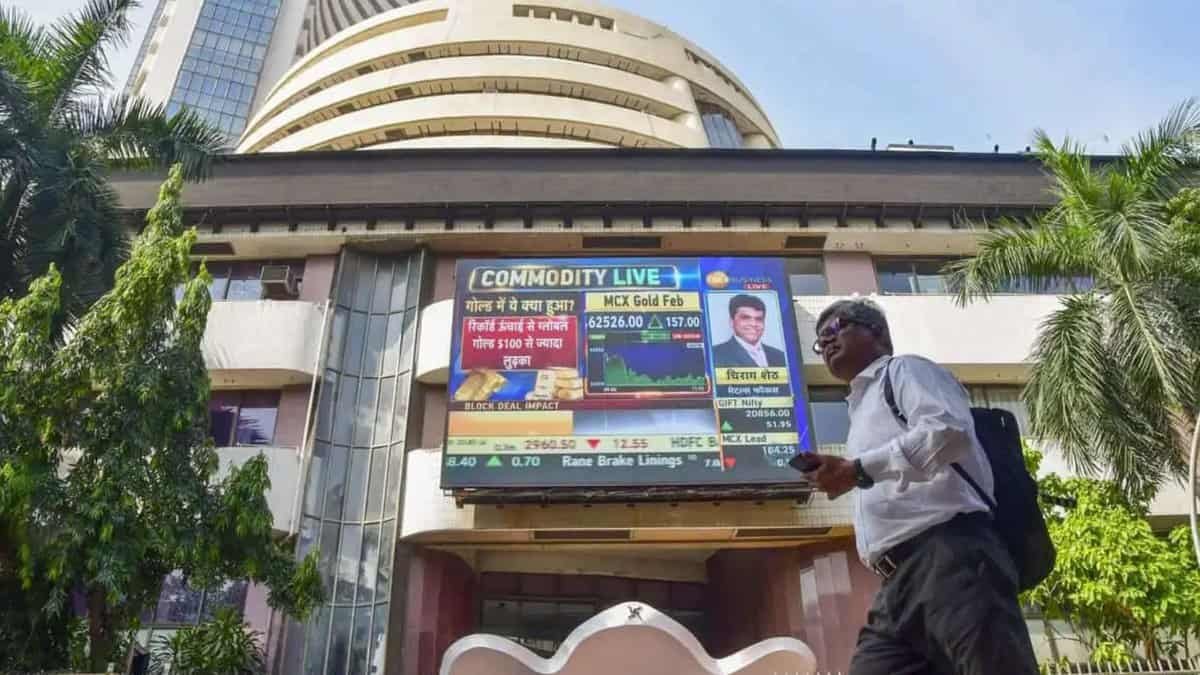
Mumbai: Indian benchmark indices opened flat with a mild negative bias on Friday, as markets are apparently in the consolidation phase amid lack of major cues.
As of 9.30 am, Sensex edged down 83 points, or 0.09 per cent to 85,325 and Nifty eased 17 points, or 0.06 per cent to 26,124.
Main broadcap indices outperformed benchmark indices in terms of gains, with the Nifty Midcap 100 advanced 0.35 per cent, while the Nifty Smallcap 100 added 0.27 per cent.
Cipla, Dr Reddys Labs and ONGC were among the major gainers in the Nifty Pack, while losers included Shriram Finance, Bajaj Finance, Tata Steel, Max Healthcare and TCS.
Among sectoral gainers, the Nifty Consumer Durables index was the top performer, rising 0.4 per cent, followed by Nifty Metal and Nifty Chemicals, which gained 0.3 per cent each.
The Nifty could extend its advance toward resistance levels at 26,202 and 26,330, while 26,000 is expected to provide near-term support.
With only four trading days left in 2025, what seemed to be a Santa rally appears to be fading as markets apparently consolidates without new triggers like a US-India trade deal, analysts said.
US GDP growth of 4.3 per cent in Q3 2025 is imparting resilience to the US market and the rising profitability of US companies, including AI ones, may prompt other FIIs, particularly fleet-footed hedge funds, to increase their investments there, they added.
Sustained buying by the cash rich DIIs will support the market and prevent a sharp pull back, market watchers said, adding that a market rally in early 2026 is likely, and valuation should be the top investment consideration.
Asia-Pacific markets traded higher in the morning session, with several indexes closed for the Boxing Day holiday
In Asian markets, China’s Shanghai index advanced 0.17 per cent, and Shenzhen edged up 0.31 per cent, Japan’s Nikkei added 0.99 per cent, while Hong Kong’s Hang Seng Index gained 0.17 per cent. South Korea’s Kospi added 0.7 per cent.
The US markets ended mostly in the green zone on the last trading day, as Nasdaq advanced 0.22 per cent, the S&P 500 edged up 0.32 per cent, and the Dow moved up 0.6 per cent.
On December 24, foreign institutional investors (FIIs) sold equities worth Rs 1,721 crore, while domestic institutional investors (DIIs) were net buyers of equities worth Rs 2,381 crore.
New Delhi: With GST reforms and Research Development Incentive (RDI) Scheme, the year 2025 has been a crucial turning point for Indian pharma, said industry experts on Thursday, while highlighting innovation and increased access as key factors for the sector’s growth in 2026.
Indian pharma is standing at a defining moment. In the past 25 years, the industry has grown from $3 billion to $60 billion. The next 25 years will be shaped by innovation, quality, and access.
“The year 2025 has been an inflection point for Indian pharma, signalling the country’s push to move up the value chain. The landmark next-gen GST reform emerged as a key policy milestone, strengthening affordability and expanding patient access to medicines,” said Sudarshan Jain, Secretary General, Indian Pharmaceutical Alliance.
“The government’s focus on quality, reflected in the implementation of the revised Schedule M guidelines, further reinforces India’s alignment with global standards. The High-Level Committee’s work on regulatory reforms and the ease of doing business for Viksit Bharat 2047 will set the foundation for the next phase of industry growth,” he added.
The expert also hailed the rollout of the PRIP scheme, which received a strong response from the industry, marking a significant beginning.
“Encouraging signals of India’s shift towards innovation can be seen with leading Indian pharma companies acquiring higher-value products, closing licensing deals, and securing regulatory approvals for next-generation drugs. The newly announced Research Development Incentive Scheme, with biomanufacturing as a key focus area, is particularly timely, especially as drugs worth over $300 billion are set to lose exclusivity over the next seven years,” Jain said.
Ameera Shah, President of NATHEALTH, noted that in 2025, India’s healthcare sector moved from incremental progress to decisive transformation.
“We saw a clear shift from illness to wellness, from fragmented care to integrated pathways, and from digital adoption to digital intelligence. AI moved from being a tool on the margins to becoming a core capability, reshaping clinical workflows, strengthening diagnostics, and improving decision-making across the care continuum,” Shah said.
Lauding the sector’s collective intent, Shah said “hospitals, diagnostics, digital health companies and med-tech providers have all increased their investments in automation, data infrastructure and advanced technologies — not as future bets, but as essential foundations for the next phase of healthcare delivery”.
Healthcare will enter its most pivotal decade in 2026, the experts said, highlighting the need for boosting innovation and expanding access for global leadership.
“From 2026 onwards, the coming five years will be critical in terms of execution — translating policy momentum into measurable gains for India’s ambition to become a $450-500 billion industry by 2047 and establish itself as a global life sciences innovation hub,” Jain said.
With key therapies going off patent, new care models emerging, and the Government advancing discussions on multiple FTAs, India has an opportunity to expand both access and global leadership.
“The challenge and opportunity for the coming year is clear: to convert technological possibility into measurable health impact, and to ensure that innovation strengthens not just efficiency, but also equity and patient outcomes,” Shah added.
Moscow: The exports of Russian spirits to India have nearly quadrupled in the first 10 months of the year compared to the same period last year, making India an attractive emerging market for Russian exporters, according to a media report.
Citing data from the Federal Centre for Agricultural Export Development of the Russian Ministry of Agriculture (Agroexport), leading financial and trade daily “Vedomosti” said India is emerging as an attractive market for Russian exporters of Vodka and other hard alcoholic beverages.
“In the first 10 months of 2025, Russian spirits producers shipped approximately 520 tonnes of spirits, including vodka, gin, whiskey, and liqueurs, worth USD 900,000 to India, this is three times higher in weight and four times higher in monetary terms than the same period last year,” it said.
Agroexport claims that vodka was the main driver of exports. In monetary terms, its shipments over the 10 months amounted to approximately USD 760,000.
Although India ranked only 14th among the largest importers of Russian spirits from January to October, with a 1.3 per cent share in tonnes and 1.4-1.5 per cent in revenue, the growth rate of exports to it was the most significant.
Other major importers of Russian spirits include Kazakhstan, Georgia, China, Azerbaijan, Armenia, and Belarus.
New Delhi: Ola Electric on Thursday said it has received a sanction order from the Ministry of Heavy Industries for the release of incentives amounting to Rs 366.78 crore under the production-linked incentive scheme.
The sanction pertains to the demand incentive for the determined sales value for FY 2024-25, and authorises a payment of Rs 366.78 crore to be released through IFCI Limited, the designated financial institution for disbursement under the scheme, the Bengaluru-based firm said in a statement.
The incentive has been sanctioned in accordance with theapplicable terms and conditions of the PLI-Auto Scheme, as amended from time to time, it added.
This milestone reinforces Ola Electric’s role as a key contributor to India’s advanced automotive manufacturing ecosystem and reflects the company’s strong execution across scale, localisation, and technology-led vertically integrated manufacturing, it stated.
Commenting on the development, an Ola Electric spokesperson said, “The sanction of Rs 366.78 crore under the PLI-Auto Scheme is a strong endorsement of Ola Electric’s manufacturing capabilities and our commitment to building world-class EV technology in India”.
This incentive recognises the company’s sustained efforts in scaling domestic production, deepening localisation, and driving innovation across the electric mobility value chain, the spokesperson added.
“We remain committed to supporting the Government of India’s vision of making India a global hub for advanced automotive manufacturing and clean mobility,” the spokesperson said.
The PLI-Auto Scheme is a flagship initiative of the Government of India aimed at strengthening domestic manufacturing, encouraging advanced automotive technologies, and enhancing India’s global competitiveness in the auto and auto components sector.
New Delhi: India overhauled its tax regime in 2025 with sharp cuts in Goods and Services Tax (GST) rates and a higher income tax exemption limit, with the spotlight now turning to customs duty rationalisation and procedural simplification in the coming Budget.
Next year will see the new simplified Income Tax Act, 2025, to come into effect from April 1, replacing the over six-decade-old current Income Tax Act, 1961.
Also, two new laws — one to levy additional excise duty on cigarettes and another to levy cess on pan masala over and above GST rates — will be implemented on a date decided by the government.
The tax reforms rolled out by the government in 2025 were aimed at stimulating demand amid a challenging global economic environment. With tariff uncertainties casting a shadow over economic decision-making, India’s tax reform measures focused on boosting domestic demand to drive consumption and support growth.
A key highlight was the reduction of GST rates on about 375 goods and services effective September 22, which lowered the tax burden on commonly used items and addressed long-standing concerns over inverted duty structures.
The move to compress the four-tier GST slab structure of 5, 12, 18 and 28 per cent into two principal rates of 5 and 18 per cent, with a 40 per cent levy retained only for sin goods, marked a major step towards rationalisation and simplification of the indirect tax regime.
The GST overhaul was designed to make the indirect tax regime simpler and more predictable, with fewer rate slabs and reduced litigation.
On the collections front, GST mop up touched a record high of Rs 2.37 lakh crore in April, and was averaging Rs 1.9 lakh crore during the current fiscal year. The sweeping rate cuts have put some pressure on the GST revenues with a slowing growth rate.
India’s Goods and Services Tax (GST) collections slipped to a year-low of Rs 1.70 lakh crore in November — growing at a meagre 0.7 per cent year-on-year. November was the first month that recorded the full impact of the GST rate cut effective September 22.
On the direct tax front, the government raised the income tax exemption limit, providing relief to middle-income taxpayers and leaving more disposable income in the hands of consumers. The move was seen as a consumption booster, particularly for urban households, while also reinforcing voluntary compliance under the simplified tax regime.
The Budget for 2025 announced that no income tax will be payable on income of Rs 12 lakh a year under the new income tax regime, which offers lower tax rates without the benefit of claiming exemptions and deductions.
The tax rates applicable under this regime are 5 per cent of income between Rs 4-8 lakh, 10 per cent (Rs 8-12 lakh), and 15 per cent (Rs 12-16 lakh). Tax at 20 per cent rate is applicable on income between Rs 16-20 lakh, 25 per cent (Rs 20-24 lakh), and 30 per cent on income above Rs 24 lakh.
However, the tax cuts slowed down non-corporate income tax collections between April and mid-December. Net non-corporate tax (which includes taxes paid by individuals, HUFs, and firms) grew 6.37 per cent at Rs 8.47 lakh crore between April 1 and December 17, as against a 10.54 per cent growth in net corporate tax collection at Rs 8.17 lakh crore.
Refund issuances slowed during the current fiscal year as the Income Tax department did extra analysis of high-value refund claims. Refund issuance dropped 14 per cent compared to last year to over Rs 2.97 lakh crore, according to recent data.
With major reforms in GST and income tax largely in place, policymakers have now turned their focus to customs duty rationalisation.
Finance Minister Nirmala Sitharaman recently said that simplification of customs would be the next big reform agenda for the government. There is a need to bring the virtues of income tax, like faceless assessment, to the customs side in terms of transparency and entail duty rate-rationalisation.
The government has steadily brought down customs duty over the last two years. But, the few items where the rates continue to be over the optimal level, would have to be brought down as well. “Customs is my next big cleaning-up assignment,” Sitharaman said.
In the 2025-26 Budget, the government proposed eliminating seven additional customs tariff rates on industrial goods, following the removal of seven tariffs in 2023-24. The exercise reduced the total number of tariff slabs to eight.
As India heads to the next phase of tax reforms, simplification, predictability and ease of doing business are expected to remain at the centre of the policy agenda.
Deloitte India Partner & Indirect Tax Leader Mahesh Jaising said, “evolving trade patterns, rising compliance costs, and persistent procedural bottlenecks signal the need for the next phase of Customs reforms.
Nangia Global Partner- Indirect Tax, Rahul Shekar, said emphasis should be on end-to-end digitalisation of customs processes, with uniform documentation, predictable classification practices and faster, risk-based clearances, which would enhance trade facilitation and investor confidence.
The government could consider a one-time amnesty scheme for legacy customs disputes to unlock revenue and ease litigation burden, he added.
New Delhi: Crude oil prices on Wednesday rose Rs 26 to Rs 5,280 per barrel in futures trade as participants increased their positions following firm spot demand.
On the Multi Commodity Exchange, crude oil for January delivery traded higher by Rs 26 or 0.49 per cent at Rs 5,280 per barrel in 18,718 lots.
Analysts said the rise of bets by participants kept crude oil prices higher in futures trade.
Globally, West Texas Intermediate crude was trading 0.17 per cent higher at USD 58.48 per barrel, while Brent crude rose 0.13 per cent to USD 62.46 per barrel in New York.