Category: BUSINESS

  • Experts warn tobacco tax hike may boost smuggling, hit revenue

    Experts warn tobacco tax hike may boost smuggling, hit revenue

    New Delhi: An unprecedented tax hike, coupled with a new excise duty structure on tobacco, could lead to a surge in illicit trade of cigarettes and result in significant tax revenue losses for the country, experts said.

    Advertisement

    Earlier this week, the finance ministry notified amendments to the Central Excise Act, imposing an excise duty ranging from Rs 2,050 to Rs 8,500 per 1,000 sticks based on cigarette length, effective February 1. This duty will be over and above 40 per cent GST.

    This would imply the overall tax hike of 60-70 per cent, varying across lengths. Currently, the overall tax of about 50-55 per cent, depending on the length.

    Add as a preferred source on GoogleAdd as a preferred source on Google
    “Mubarak“Mubarak

    The unexpected tax hikes proposed in the transition from the GST compensation cess to excise on demerit goods have triggered concern of increased smuggling of tobacco products and cigarettes, Think Change Forum Secretary General Ranganath Tannir said.

    “Public finance theory is clear that excessive taxation of inelastic goods fuels illicit trade, not compliance. This risk is amplified in India, where cigarettes are already among the most unaffordable globally, as measured by the WHO’s affordability indicators. Making them even more expensive will not suppress demand, but redirect it– most likely towards smuggled and illegal products — undermining revenue,” he said.

    According to global financial firm J P Morgan’s Asia Pacific Equity Research report, a higher rate for the King Size Filter Tip (KSFT) segment implies increased risk of consumer downtrading to cheaper variants, and may also induce an increase in the offtake of illicit cigarettes.

    Memory Khan SeminarMemory Khan Seminar

    In India, illicit tobacco already accounts for about 26 per cent of the total tobacco market, making it the fourth-largest market for smuggled tobacco globally.

    Another brokerage house, Nomura, in its research report said, “high taxes on cigarettes, while aimed at reducing consumption, have unintended consequences of fuelling growth of illicit cigarettes and pushing consumers towards cheaper, non-tax paid smuggled cigarettes”.

    Citing a report by the Tobacco Institute of India (TII), Jefferies said the industry body has requested the government for a review, as a wider legal price gap could help non-duty-paid cigarettes, which will also result in tax leakage.

    International experience from Australia demonstrates how overly aggressive tobacco taxation can backfire by fuelling organised crime. Repeated tax hikes between 2012 and 2020 drove cigarette prices sharply higher, triggering a surge in illicit tobacco from under 2 per cent to around 14 per cent of the market.

    “The new excise levies are unprecedented. Since they come into effect from February 1, 2026, there is still time to revisit and rectify them before they spawn a much larger problem of uncontrollable illicit networks,” an analyst said.

  • India likely to outperform global markets in 2026

    India likely to outperform global markets in 2026

    Mumbai: Sharing his annual outlook for the new year, S Naren, Executive Director and Chief Investment Officer at ICICI Prudential Mutual Fund said 2025 turned out to be a “year of hibernation” for Indian markets, even though the country’s macroeconomic fundamentals remained strong.

    Advertisement

    “India maintained low fiscal and current account deficits, controlled inflation and healthy economic growth,” Naren mentioned.

    Despite these positives, Indian equities failed to deliver strong returns and the rupee underperformed against most global currencies, including the US dollar.

    Add as a preferred source on GoogleAdd as a preferred source on Google
    “Mubarak“Mubarak

    Looking ahead, Naren believes the situation could change in 2026. He said Indian markets are well placed to do better than most global markets in the coming year.

    “India continues to offer one of the strongest growth stories over the next decade, supported by favourable demographics and long-term economic potential,” he mentioned.

    Naren advised investors to focus on proper asset allocation rather than chasing short-term returns.

    Memory Khan SeminarMemory Khan Seminar

    He suggested that portfolios could have a slightly higher allocation to equities compared to early 2025, as Indian markets have underperformed many global markets over the past year.

    He said this creates an opportunity for investors who are willing to take measured risks.

    At the same time, Naren cautioned investors about increasing exposure to precious metals. He noted that gold and silver have been the best-performing asset classes over the past one year and even over longer periods, which has led to stretched valuations.

    Silver prices have more than doubled in the last year, while gold prices have risen over 70 per cent, far outperforming equity indices that delivered returns of around 10 per cent.

    Naren also highlighted that global risks remain high. He warned that many international markets appear overvalued, especially US technology stocks, and that precious metals are showing signs of excessive optimism.

    In this environment, he stressed the need for a balanced and cautious investment approach, combining growth opportunities with risk management as markets head into 2026.

  • FPIs pull out Rs 7,608 cr from equities in just 2 days of Jan

    FPIs pull out Rs 7,608 cr from equities in just 2 days of Jan

    New Delhi: Foreign portfolio investors have started 2026 on a cautious note, extending their selling streak from last year by withdrawing Rs 7,608 crore (USD 846 million) from Indian equities in the first two trading sessions of January.

    Advertisement

    The withdrawal of funds followed the largest outflow of Rs 1.66 lakh crore (USD 18.9 billion) recorded in 2025, triggered by volatile currency movements, global trade tensions and concerns over potential US tariffs, and stretched market valuations.

    This sustained selling pressure by foreign portfolio investors (FPIs) has significantly contributed to the nearly 5 per cent depreciation of the rupee against the dollar during 2025.

    Add as a preferred source on GoogleAdd as a preferred source on Google
    “Mubarak“Mubarak

    However, market experts believe the tide could turn in 2026.

    VK Vijayakumar, Chief Investment Strategist at Geojit Investments, said the year is likely to witness a shift in FPI strategy, as improving domestic fundamentals may start attracting net foreign inflows.

    A robust GDP growth and the prospects of a recovery in corporate earnings bode well for positive FPI flows in the coming months, he added.

    Memory Khan SeminarMemory Khan Seminar

    Echoing similar views, Vaqarjaved Khan, Senior Fundamental Analyst at Angel One, said normalisation in India-US trade relations, a benign global interest rate environment and stability in the USD-INR pair could create a favourable backdrop for foreign investors.

    He noted that equity valuations have become relatively comforting compared to last year, which could further support a revival in inflows.

    Despite these positive expectations, FPIs have begun 2026 on a cautious note, and according to data from NSDL, they pulled out nearly Rs 7,608 crore from Indian equities between January 1 and 2.

    This trend is not unusual, as foreign investors have historically remained guarded in January, having withdrawn funds in eight out of the past ten years, Khan said.

    Consequently, FPI flows are likely to remain highly sensitive to global cues and macroeconomic developments. While high valuations were a key concern over the past year, that pressure appears to have eased for now, offering some room for optimism going ahead, he added.

  • Mcap of 7 of top-10 most valued firms surges Rs 1.23 lakh cr

    Mcap of 7 of top-10 most valued firms surges Rs 1.23 lakh cr

    New Delhi: The combined market capitalisation of seven of the top-10 most-valued firms surged Rs 1,23,724.19 crore last week, in line with an optimistic trend in equities, with Reliance Industries stealing the limelight with the biggest jump in its valuation.

    Advertisement

    Last week, the BSE benchmark jumped 720.56 points, or 0.84 per cent.

    From the top-10 pack, Reliance Industries, HDFC Bank, Bharti Airtel, ICICI Bank, State Bank of India, Larsen & Toubro and Hindustan Unilever were the gainers, while Tata Consultancy Services (TCS), Infosys, and Bajaj Finance faced erosion from their valuation.

    Add as a preferred source on GoogleAdd as a preferred source on Google
    “Mubarak“Mubarak

    The market valuation of Reliance Industries jumped Rs 45,266.12 crore to Rs 21,54,978.60 crore.

    State Bank of India added Rs 30,414.89 crore, taking its valuation to Rs 9,22,461.77 crore.

    Larsen & Toubro’s valuation surged Rs 16,204.34 crore to Rs 5,72,640.56 crore and that of Hindustan Unilever climbed Rs 14,626.21 crore to Rs 5,51,637.04 crore.

    Memory Khan SeminarMemory Khan Seminar

    The market capitalisation (mcap) of HDFC Bank edged higher by Rs 13,538.43 crore to Rs 15,40,303.87 crore and that of ICICI Bank advanced Rs 3,103.99 crore to Rs 9,68,773.14 crore.

    The mcap of Bharti Airtel went up Rs 570.21 crore to Rs 12,01,262.53 crore.

    However, the market valuation of TCS eroded Rs 10,745.72 crore to Rs 11,75,914.62 crore.

    The mcap of Infosys declined Rs 6,183.25 crore to Rs 6,81,635.59 crore and that of Bajaj Finance dropped Rs 5,693.58 crore to Rs 6,16,430.43 crore.

    Reliance Industries retained the title of the most valued firm followed by HDFC Bank, Bharti Airtel, TCS, ICICI Bank, State Bank of India, Infosys, Bajaj Finance, Larsen & Toubro, and Hindustan Unilever.

  • Gig model doesn’t pressure riders: Deepinder Goyal

    Gig model doesn’t pressure riders: Deepinder Goyal

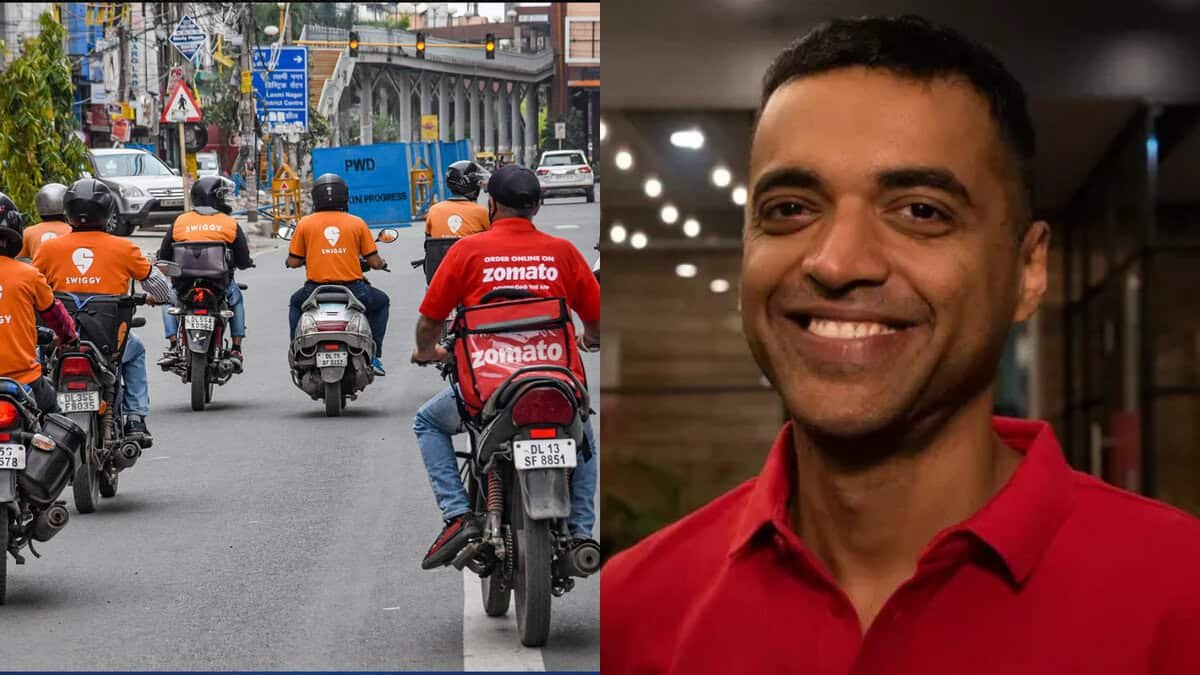
    Amid the debate on gig workers’ payouts and working conditions, Eternal Founder and CEO Deepinder Goyal said this model does not pressure riders, and flexible schedules and welfare benefits make gig work a reliable source of income for many.

    Advertisement

    Eternal owns Zomato and Blinkit businesses.

    His remarks come at a time when gig workers’ unions have been staging protests, demanding better payouts and improved working conditions.

    Add as a preferred source on GoogleAdd as a preferred source on Google
    “Mubarak“Mubarak

    “In 2025, Zomato and Blinkit spent over Rs 100 crore on insurance coverage for delivery partners. In 2025, average earnings per hour (EPH), excluding tips, for a delivery partner on Zomato were Rs 102. In 2024, this number was Rs 92. That’s a ~10.9 pc year-on-year increase. Over a longer horizon also, EPH has shown steady growth,” Goyal said on X.

    He claimed that the 10-minute delivery promise does not pressure riders, explaining how flexible schedules and welfare benefits make gig work a reliable source of income for many.

    However, his comments drew mixed responses from internet users on X, with several accusing riders of rash driving and violating traffic rules to meet 10- minute delivery deadlines.

    Memory Khan SeminarMemory Khan Seminar

    The Gig & Platform Services Workers’ Union (GIPSWU) last month wrote to Union Minister for Labour and Employment Mansukh Mandaviya raising several issues, with a key highlight being their demand to “urgently discontinue 10-20-minute service delivery mandates to prioritise worker safety”.

    Goyal also batted for “less regulation” for India’s gig economy, arguing that it will eventually help bring more people into the “organised” workforce.

    “Delivery partners are not overworked on our platforms. In 2025, the average delivery partner on Zomato worked 38 days in the year and 7 hours per working day, reflecting true gig style participation rather than fixed schedules. Only 2.3 pc of partners worked more than 250 days in the year. Demanding full-time employee benefits like PF, or guaranteed salaries for gig roles doesn’t align with what the model is built for,” he argued.

    The Eternal founder said most delivery partners work for a few hours and only a few days in a month.

    “But if someone were to work for 10 hours/day, 26 days/month, this translates to ~Rs 26,500/month in gross earnings. After accounting for fuel and maintenance (~20 pc), the net earnings for the partner are ~Rs 21,000/month,” he stated.

    In November, the government notified all four labour codes, ushering in major reforms, including universal social security coverage for gig workers.

    The labour ministry has proposed a 90-day annual work threshold as the mandatory eligibility criteria for gig and platform workers to access social security under new draft rules on the Social Security Code 2020, published on December 31.

    According to estimates, there are over 12.7 million gig workers in India, with government think tank NITI Aayog saying this workforce is expected to rise to 23.5 million by 2029-30.

  • Bank credit to industry rises 9.6 pc in Nov: RBI data

    Bank credit to industry rises 9.6 pc in Nov: RBI data

    Mumbai: Bank credit to industry grew at a faster pace of 9.6 per cent in November 2025 as against 8.3 per cent in the same month of the preceding year, according to Reserve Bank data.

    Advertisement

    On a year-on-year (y-o-y) basis, non-food bank credit grew by 11.4 per cent as on the fortnight ended November 28, 2025, compared to 10.6 per cent during the corresponding fortnight of the previous year (November 29, 2024).

    “Credit to industry recorded a y-o-y growth of 9.6 per cent, compared with 8.3 per cent in the corresponding fortnight of last year,” RBI said.

    Add as a preferred source on GoogleAdd as a preferred source on Google
    “Mubarak“Mubarak

    According to the ‘Sectoral Deployment of Bank Credit – November 2025’, credit to ‘micro and small’ and ‘medium’ industries continued to exhibit double-digit expansion.

    Among major industries, outstanding credit to infrastructure, all engineering, textiles and ‘petroleum, coal products and nuclear fuels’ registered buoyant y-o-y growth.

    Further, the lending to agriculture and allied activities registered an annual growth of 8.7 per cent (15.3 per cent in the corresponding fortnight of the previous year).

    Memory Khan SeminarMemory Khan Seminar

    RBI data also showed that credit to the services sector registered a growth rate of 11.7 per cent y-o-y (12.8 per cent in the corresponding fortnight of the previous year).

    Growth in segments such as ‘non-banking financial companies’ (NBFCs) and ‘computer software’ improved. Segments such as trade and commercial real estate also registered a healthy growth, albeit with a marginal deceleration.

    “Credit to personal loans segment recorded a y-o-y growth of 12.8 per cent, as compared with 13.4 per cent a year ago. While segments such as ‘vehicle loans’ and ‘loans against gold jewellery’ sustained steady credit growth, ‘housing’ and ‘credit card outstanding’ witnessed moderation,” RBI said.

    Data on sectoral deployment of bank credit for November 2025 was collected from 41 select scheduled commercial banks that together account for about 95 per cent of the total non-food credit by all SCBs.

  • India’s forex reserves jump USD 3.293 bln to USD 696.61 bln

    India’s forex reserves jump USD 3.293 bln to USD 696.61 bln

    Mumbai: India’s forex reserves jumped by USD 3.293 billion to USD 696.61 billion in the week to December 26, the RBI said on Friday.

    Advertisement

    The overall kitty had increased by USD 4.368 billion to USD 693.318 billion in the previous reporting week.

    For the week ended December 26, foreign currency assets, a major component of the reserves, increased by USD 184 million to USD 559.612 billion, the data released by the central bank showed.

    Add as a preferred source on GoogleAdd as a preferred source on Google
    “Mubarak“Mubarak

    Expressed in dollar terms, the foreign currency assets include the effects of appreciation or depreciation of non-US units, such as the euro, pound, and yen, held in the foreign exchange reserves.

    Value of the gold reserves jumped by USD 2.956 billion to USD 113.32 billion during the week, the RBI said.

    The Special Drawing Rights (SDRs) were up by USD 60 million to USD 18.803 billion, the apex bank said.

    Memory Khan SeminarMemory Khan Seminar

    India’s reserve position with the IMF was up by USD 93 million to USD 4.875 billion in the reporting week, according to the apex bank’s data.

  • ‘Oracle of Omaha’ Warren Buffett retires as Berkshire Hathaway CEO

    ‘Oracle of Omaha’ Warren Buffett retires as Berkshire Hathaway CEO

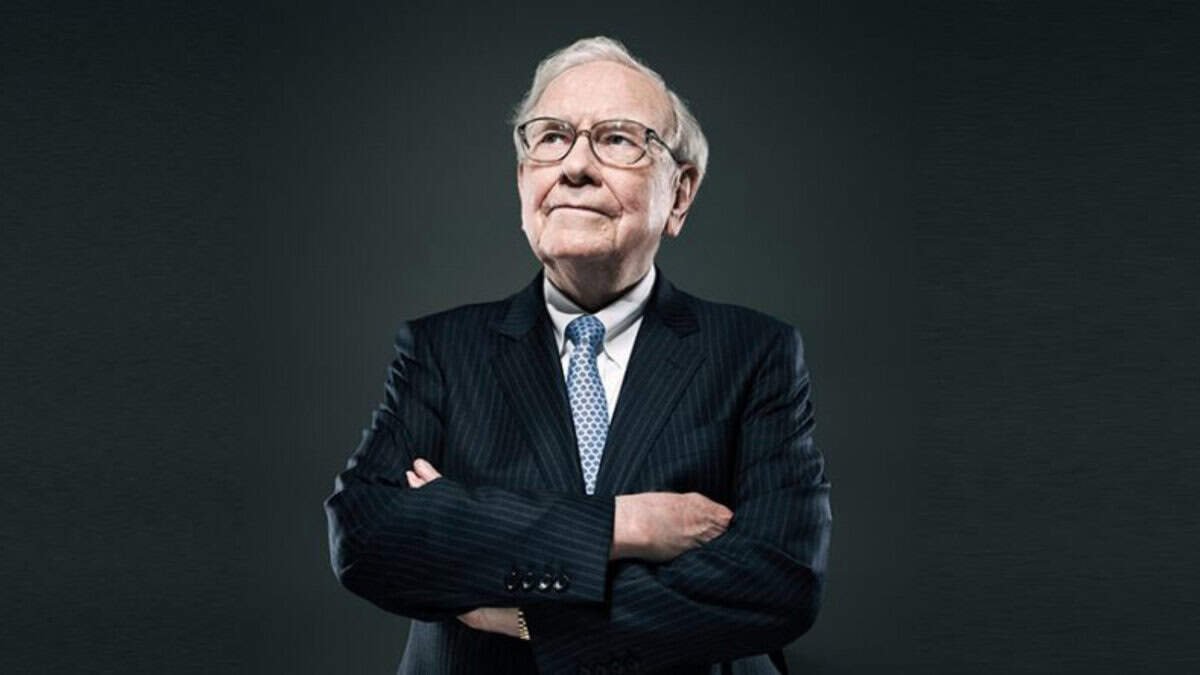
    After nearly six decades at the helm of Berkshire Hathaway, American investor and philanthropist Warren Buffett has stepped down as its Chief Executive Officer (CEO), handing over charge to his successor and trusted lieutenant, Greg Abel. 

    Advertisement

    Previously, the 95-year-old had always maintained he had no plans to retire. His decision in May last year came as a surprise to Abel. According to the Associated Press, Warren’s children, Howard and Susie Buffett, who also serve as board members, knew of his decision.

    The czar of investments

    Often credited with his sorcery to generate wealth from the stock market, Buffett bought Berkshire Hathaway in 1962 and transformed the once-struggling textile firm into a massive USD 300 billion investment company.

    Add as a preferred source on GoogleAdd as a preferred source on Google
    “Mubarak“Mubarak

    In 1972, he bought See’s Candies for USD 25 million. This investment heaped gold and by 2019, it saw a pre-tax earnings of nearly USD 2 billion.  

    Another of his genius ideas was the decision to become a major shareholder in Coca-Cola, which proved to be a “forever stock,” driven by the soft drink company’s strong business model of selling concentrates to bottlers, powerful brand, wide distribution network and ability to set prices.

    Patience was his virtue

    Popularly known as the “Oracle of Omaha,” his approach towards the stock market was patience and not chasing after quick gains. He focused on quality and stressed long-term, value-based investing and sustainable profits.

    Memory Khan SeminarMemory Khan Seminar

    Warren Buffett was born in 1930 to Howard Buffett, a US Congressman. At the age of 20, he graduated from the University of Nebraska and then studied at Columbia Business School. From there, he attended the New York Institute of Finance to focus on his economics background and soon pursued a business career.

    Who is Greg Abel, Warren’s successor

    Abel joined Berkshire Hathaway in 2000 when it acquired MidAmerican Energy. Known within his peers as more of a hands-on manager, Buffett had often praised Abel as a “tireless worker and an honest communicator.”

    The 63-year-old has been serving as the company’s vice chairman since 2018.

    A Reuters report stated he owns about USD 170 million worth of Berkshire stock and his net worth exceeds USD 1 billion, largely due to an USD 870 million sale of his stake in Berkshire Hathaway Energy in 2022.

    “I just want to say I couldn’t be more humbled and honoured to be part of Berkshire as we go forward,” Abel said.

  • Stock market ends first trading session of 2026 on flat note

    Stock market ends first trading session of 2026 on flat note

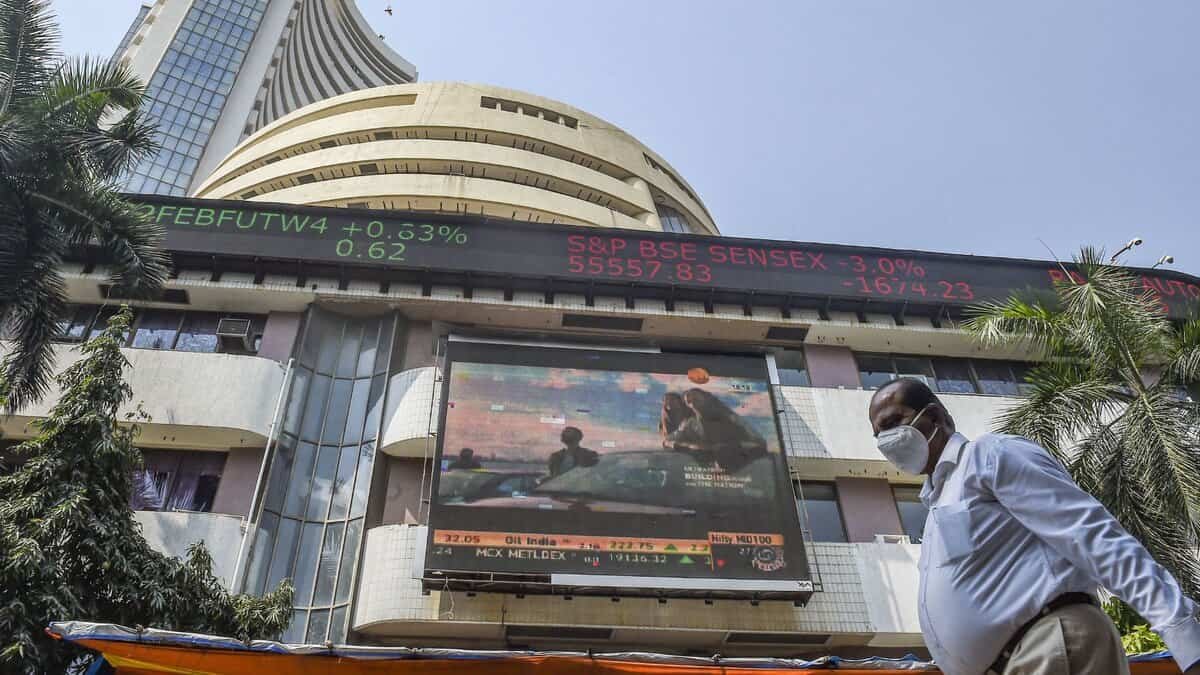
    Equity benchmark indices Sensex and Nifty ended flat on the first trading session of 2026, as massive selling in ITC stocks and foreign fund outflows diminished the initial enthusiasm.

    Advertisement

    The 30-share BSE Sensex dipped 32 points or 0.04 per cent to settle at 85,188.60 on Thursday. During the day, it hit a high of 85,451.70 and a low of 85,101.52, fluctuating 350.18 points.

    The 50-share NSE Nifty went up marginally by 16.95 points or 0.06 per cent to end at 26,146.55.

    Add as a preferred source on GoogleAdd as a preferred source on Google
    “Mubarak“Mubarak

    From the 30-Sensex firms, ITC tanked 9.69 per cent, following Bajaj Finance, Asian Paints, Bharat Electronics and ICICI Bank.

    In contrast, NTPC, Eternal, Mahindra & Mahindra, Larsen & Toubro and Power Grid were among the gainers.

    Shares of cigarette and tobacco product makers tumbled after the government notified February 1 as the date from which additional excise duty on tobacco products, and a health cess on pan masala will be levied.

    Memory Khan SeminarMemory Khan Seminar

    Godfrey Phillips India plummeted 17.09 per cent.

    Asian and European markets were closed on Thursday for the New Year’s Day holiday.

    US markets ended lower on Wednesday.

    Foreign Institutional Investors (FIIs) offloaded equities worth Rs 3,597.38 crore on Wednesday, while Domestic Institutional Investors (DIIs) bought stocks worth Rs 6,759.64 crore, according to exchange data.

    On Wednesday, the Sensex jumped 545.52 points, or 0.64 per cent, to settle at 85,220.60. The Nifty soared 190.75 points or 0.74 per cent to end at 26,129.60.

    In the entire 2025, Sensex rallied 7,081.59 points or 9 per cent, and Nifty zoomed 2,484.8 points or 10.50 per cent.

  • Commerical LPG cylinder rates hiked by Rs 111 from Jan 1

    Commerical LPG cylinder rates hiked by Rs 111 from Jan 1

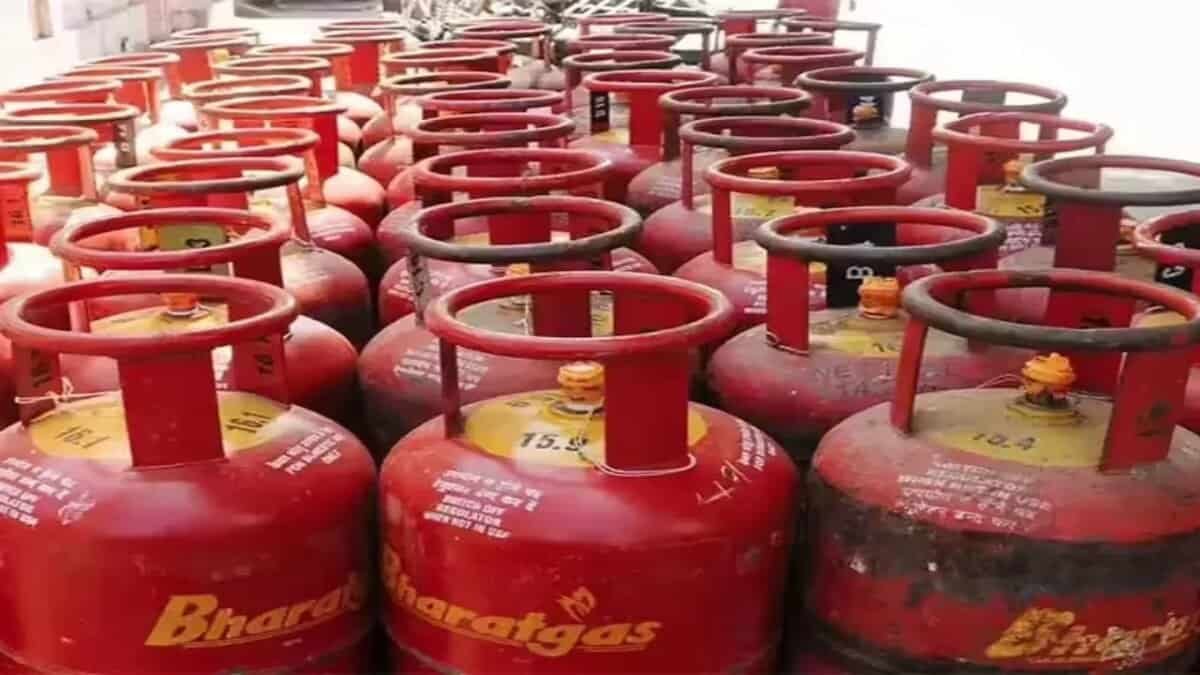
    New Delhi: Starting from January 1, the price of commercial LPG has risen by Rs 111 per cylinder across all major cities, making it the highest hike since June last year.

    Advertisement

    With this, a single 19 kg cylinder will now cost Rs 1,691.50 in Delhi, Rs 1,642.50 in Mumbai, Rs 1,795 in Kolkata and Rs 1,849.50 in Chennai.

    Domestic cylinder rates remain unchanged at Rs 853 per 14.2-kg cylinder.

    Add as a preferred source on GoogleAdd as a preferred source on Google
    “Mubarak“Mubarak

    Petrol and diesel prices continue to remain frozen after a Rs 2 per-litre reduction in March last year; petrol currently costs Rs 94.72 per litre in Delhi and diesel Rs 87.62.

    Meanwhile, prices of aviation turbine fuel (ATF), or jet fuel, were reduced by 7.3 per cent. The reduction comes after three rounds of monthly price hikes.

    According to state-owned fuel retailers, which include Indian Oil Corporation, Bharat Petroleum and Hindustan Petroleum, the ATF price in Delhi was cut by Rs 7,353.75 per kilolitre to Rs 92,323.02 per kilolitre.

    Memory Khan SeminarMemory Khan Seminar

    In Mumbai, it was revised to Rs 86,352.19 per kl, while prices in Chennai and Kolkata were cut to Rs 95,770 and Rs 95,378.02 per kl, respectively.

    The rate was last raised by Rs 5,133.75 per kl, or 5.4 per cent, on December 1. Before that, prices had risen by about 1 per cent on November 1 and by 3.3 per cent on October 1.

    The latest reduction is expected to ease pressure on airlines, for which fuel accounts for nearly 40 per cent of operating costs.

    State-owned fuel retailers revise ATF and LPG prices on the first day of every month based on international benchmarks and the exchange rate.

    (With PTI inputs)