Category: BUSINESS

  • Ola Electric rolls out Shakti, its first battery energy storage system

    Ola Electric rolls out Shakti, its first battery energy storage system

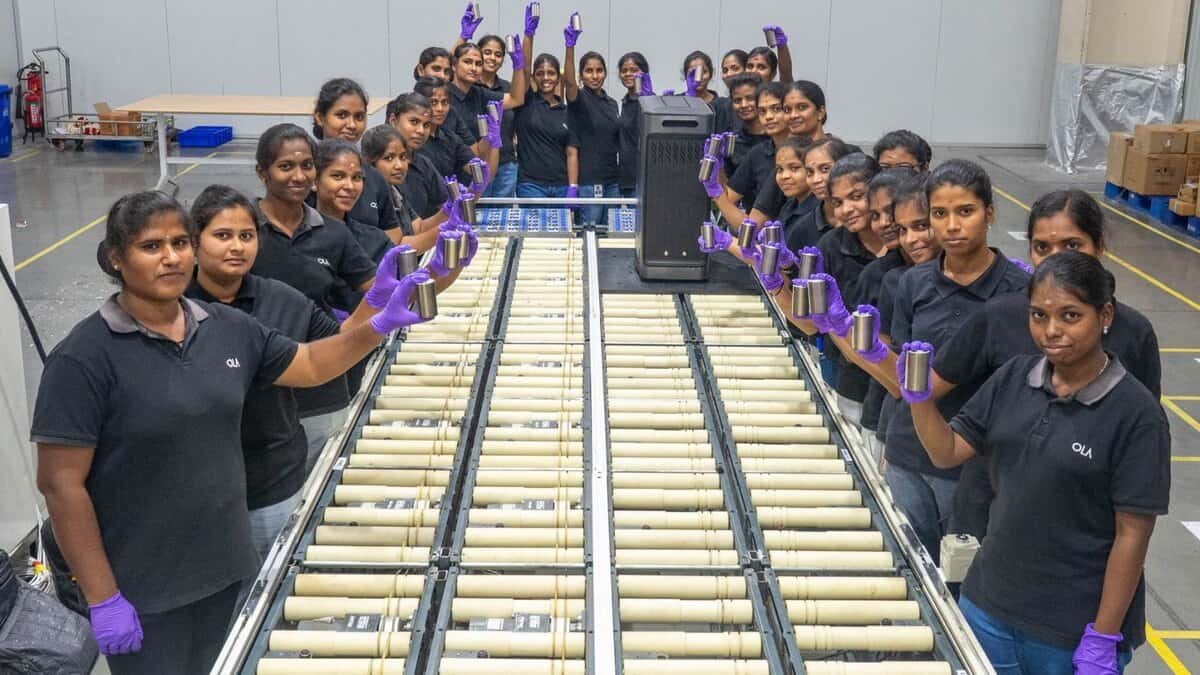
    New Delhi: Ola Electric on Monday announced the rollout of its first battery energy storage system, Shakti, from its manufacturing plant in Krishnagiri, Tamil Nadu.

    Shakti marks the company’s entry into the country’s residential BESS (battery energy storage system) market and takes the company beyond the automotive domain, the Bengaluru-based firm said in a statement.

    It represents a fundamental shift in how Indians will access, control, and consume energy, as a portable, on-demand resource designed for modern Indian households, farms, and businesses, it added.

    Add as a preferred source on Google
    “Mubarak“Mubarak

    “The rollout of Shakti from our Gigafactory is a defining moment in our mission to build the future of energy in India. With Ola Shakti, we have reimagined how India will store and consume energy,” a company spokesperson said.

    Powered by the company’s indigenous 4680 Bharat Cell, Ola Shakti makes reliable, affordable, and intelligent energy storage accessible to every Indian home, farm, and business, the spokesperson added.

    Unlike conventional lead-acid inverters or diesel generators, Shakti operates across a wide input voltage range of 200V-240V protecting appliances from voltage fluctuations, and is spill-proof with IP67-rated batteries tested for dust, water, and monsoon conditions, the company said.

    MS Admissions 2026-27MS Admissions 2026-27

    Ola Shakti is available in four configurations — 1kW/1.5kWh, 1kW/3kWh, 3kW/5.2kWh, and 6kW/9.1kWh and can power air conditioners, refrigerators, induction cookers, farm pumps, and communication equipment, with charging times as fast as 2 hours and backup capacity of up to 1.5 hours on full load.

    The product is available for reservation on the Ola Electric website at Rs 999, it said.

  • Gadkari thanks Naidu for 4 Guinness records on Bengaluru-Vijayawada corridor

    Gadkari thanks Naidu for 4 Guinness records on Bengaluru-Vijayawada corridor

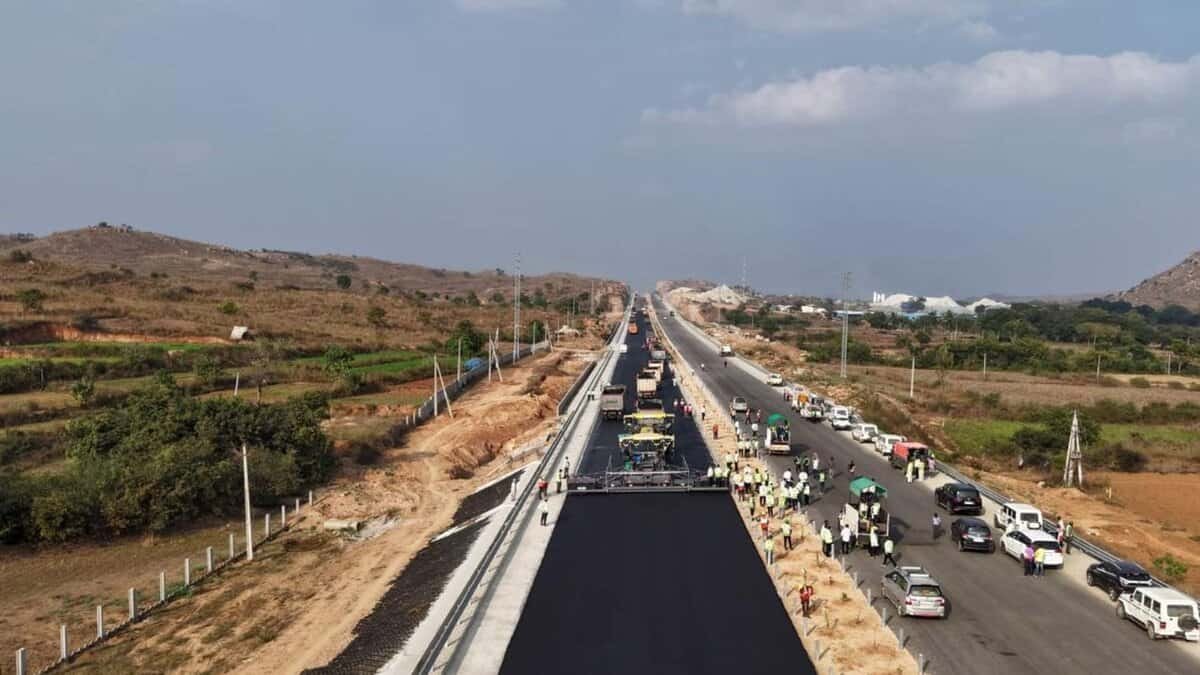
    Amaravati: Union Minister Nitin Gadkari on Monday thanked Andhra Pradesh Chief Minister N Chandrababu Naidu for his cooperation in achieving four Guinness World Records during the construction of the Bengaluru-Kadapa-Vijayawada economic corridor in the state.

    Addressing a Guinness World Records programme virtually, the senior BJP leader said the records were achieved with the blessings of Sathya Sai Baba during construction works in the Sri Sathya Sai district.

    “I congratulate everyone, especially CM Naidu, on achieving four Guinness World Records in the construction of the Bengaluru-Vijayawada economic corridor,” Union Minister of Road Transport and Highways said in a press release.

    Add as a preferred source on Google
    “Mubarak“Mubarak

    He also lauded the National Highways Authority of India (NHAI) and the executing agencies for their respective roles in achieving the records.

    Two Guinness World Records were achieved on January 6 near Puttaparthi for the longest continuous laying of nearly 29 lane-kilometres and over 10,600 tonnes of bituminous concrete within 24 hours.

    Additionally, two Guinness World Records were achieved here on January 11 for the continuous laying of 57,500 tonnes of bituminous concrete and paving of 156 lane-kilometres, surpassing the previous world record of 84.4 lane-km.

    MS Admissions 2026-27MS Admissions 2026-27

    The 343 km long, access-controlled six-lane Bengaluru-Kadapa-Vijayawada Economic Corridor has been designed for a safe, high-speed, and scenic travel experience, according to the release.

    It features 17 interchanges, 10 wayside amenities, a 5.3 km long tunnel and around 21 km long section of the corridor passes through a forest area.

    Gadkari stated that the Centre is continuously striving to undertake national highway construction at a rapid pace without compromising on quality, while adopting innovations.

    Referring to an innovation in bitumen production using paddy straw, Gadkari expressed hope that Andhra Pradesh would partner in utilising the technology.

    He stressed that skills, innovation and intellectual inputs must be further enhanced to improve cost efficiency and quality, while adopting pollution-free and environment-friendly construction methods.

    Gadkari said these approaches had enabled the NHAI to achieve the Guinness World Records.

    He said the leadership of Naidu had created an enabling environment for the rapid execution of national highway projects in Andhra.

    Noting that the state government was providing full cooperation for the implementation of highway works, Gadkari assured that proposals made by the chief minister would always receive approval.

    Gadkari said India was among the fastest-growing economies and stressed the need to significantly reduce transport and logistics costs to below nine per cent.

    He said lowering logistics costs would spur economic growth and significantly reduce travel time on the Bengaluru-Vijayawada corridor.

    Once completed, the corridor will reduce travel distance by 100 km from the current 635 km to 535 km and cut travel time by nearly four hours from the current 12 hours to around 8 hours, the release added.

    The corridor will significantly enhance regional connectivity by linking Bengaluru with Vijayawada, strengthening access between the Rayalaseema region and the coastal and northern regions of Andhra Pradesh, as well as the Koparthy Industrial Node, it said.

    NHAI, in association with a private firm, achieved this feat through the deployment of state-of-the-art construction equipment and machinery involving 70 tippers, five hot mix plants, one paver, and 17 rollers.

    The process was monitored for quality control with the help of premier institutions, including IIT-Bombay, along with Original Equipment Manufacturers (OEMs), ensuring adherence to the highest standards of quality and safety, the release further said.

  • TCS Q3 profit falls 14 pc, headcount downsized by 11,000

    TCS Q3 profit falls 14 pc, headcount downsized by 11,000

    Mumbai: The country’s largest IT services company TCS on Monday, January 12, reported 13.91 per cent decline in December quarter net profit at Rs 10,657 crore, hit by one-time impact of the implementation of new labour codes.

    The Tata Group company’s net profit was Rs 12,380 crore in the October-December period of FY25 and Rs 12,075 crore in the preceding September quarter, a statement said.

    Implementation of the new labour codes during the quarter led to a “statutory impact” of Rs 2,128 crore, the company said, adding that but for all the one-time impact, its profit would have grown 8.5 per cent to Rs 13,438 crore.

    Add as a preferred source on Google
    “Mubarak“Mubarak

    The company, one of the largest private sector employers in the country, disclosed that the overall headcount was down by 11,151 in the three months to December 31, 2025 to 5,82,163 employees.

    TCS had announced to lay off around 12,000 people earlier in the year as part of a restructuring exercise. It reported a reduction of 19,755 in the overall staff in September quarter, but hinted that only 6,000 of these were involuntary actions because of the restructuring exercise.

    The company’s revenue from operations during the quarter under review increased 4.86 per cent to Rs 67,087 crore from Rs 63,973 crore.

    MS Admissions 2026-27MS Admissions 2026-27

    The operating profit margin during the quarter was stable at 25.2 per cent when compared with September quarter but higher than 24.5 per cent in the year-ago period, the company statement said.

    Its chief executive and managing director K Krithivasan said the growth momentum witnessed in September quarter continued into the next three months as well.

    He added that the annualized revenues from artificial intelligence have jumped by over 17 per cent to USD 1.8 billion.

    The company’s overall new deal wins, captured through the total contract value number, stood at USD 9.3 billion in December quarter FY26.

    Contributions from India to the topline declined by over 34 per cent on-year, leading to the domestic contribution to the overall pie dipping to 6.1 per cent from 9.8 per cent in the year-ago period.

    Amid the geopolitical changes, TCS reported North America revenue rising 1.3 per cent on-year, and revenue from the UK declining 3.2 per cent in constant currency terms.

    The company board recommended a dividend of Rs 57 per share, including a special dividend of Rs 46, at its board meeting on Monday, it said.

    The TCS scrip closed 0.86 per cent up at Rs 3,235.70 on the BSE.

  • Sensex declines 455 points on foreign fund outflows, trade-related concerns

    Sensex declines 455 points on foreign fund outflows, trade-related concerns

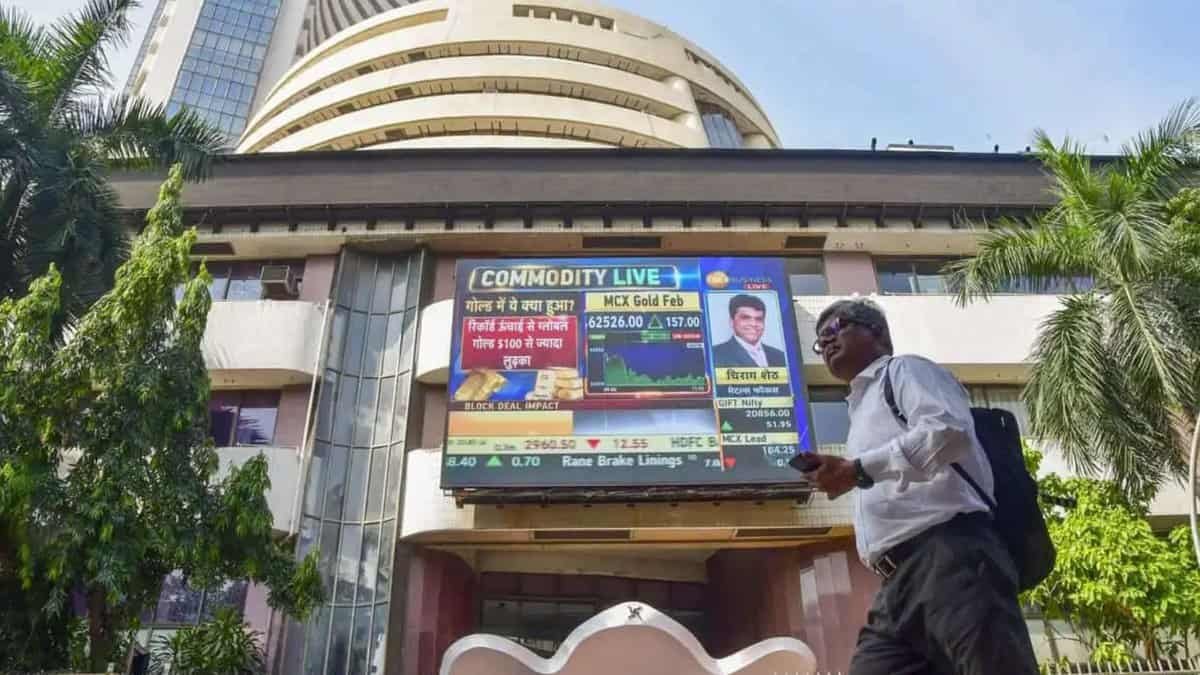
    Mumbai: Benchmark indices Sensex and Nifty declined in early trade on Monday as persistent foreign fund outflows, concerns over further US tariffs on Indian exports and geopolitical overhangs dent investors’ sentiment.

    The 30-share BSE Sensex dropped 455.35 points to 83,120.89 in early trade. The 50-share NSE Nifty tanked 135.35 points to 25,547.95.

    From the 30-Sensex firms, Bharat Electronics, Larsen & Toubro, Eternal, Power Grid, Adani Ports, Infosys, Reliance Industries and Bajaj Finance were among the biggest laggards.

    Add as a preferred source on Google
    “Mubarak“Mubarak

    However, Hindustan Unilever, Asian Paints, Axis Bank and State Bank of India were among the gainers.

    Foreign institutional investors offloaded equities worth Rs 3,769.31 crore on Friday, while Domestic Institutional Investors (DIIs) bought stocks worth Rs 5,595.84 crore, according to exchange data.

    “Indian equity markets begin the week on a cautious footing as risk appetite remains restrained amid lingering global uncertainty, continued FII outflows, and geopolitical overhangs. Recent profit-booking across sectors has added to near-term pressure, keeping sentiment defensive,” Ponmudi R, CEO of Enrich Money, an online trading and wealth tech firm, said.

    MS Admissions 2026-27MS Admissions 2026-27

    In the past five trading days, the BSE benchmark declined 2,185.77 points or 2.54 per cent, and the Nifty tumbled 645.25 points or 2.45 per cent.

    In Asian markets, South Korea’s Kospi index, Shanghai’s SSE Composite index and Hong Kong’s Hang Seng index traded higher.

    US markets ended in positive territory on Friday.

    “The market has turned distinctly weak, weighed down by a series of India-specific and global geopolitical events. Geopolitical developments in Venezuela, the crisis in Iran and Trump’s threats regarding Greenland are also being viewed by the markets with concern,” VK Vijayakumar, Chief Investment Strategist, Geojit Investments, said.

    Brent crude, the global oil benchmark, climbed 0.24 per cent to USD 63.49 per barrel.

    On Friday, the Sensex tumbled 604.72 points or 0.72 per cent to sink below the 84,000-level and settle at 83,576.24. The Nifty dropped 193.55 points or 0.75 per cent to 25,683.30.

  • Adani Group to invest Rs 1.5 lakh crore in Kutch, boost energy and port capacity

    Adani Group to invest Rs 1.5 lakh crore in Kutch, boost energy and port capacity

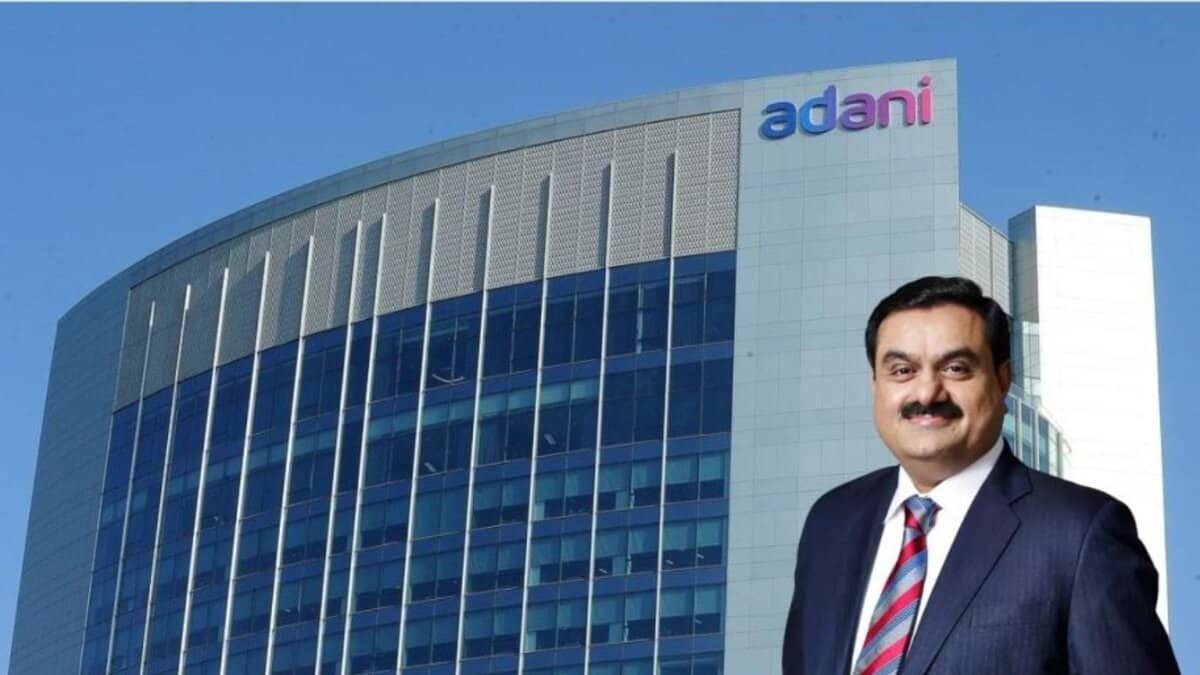
    Ahmedabad: Karan Adani, managing director of Adani Ports & SEZ Ltd, on Sunday, January 11, said that the Adani Group will invest Rs 1.5 lakh crore over the next five years in Gujarat’s Kutch region.

    Adani was addressing the Vibrant Gujarat Regional Conference (VGRC) for the Kutch and Saurashtra regions held in Rajkot in the presence of Prime Minister Narendra Modi, Gujarat Chief Minister Bhupendra Patel, Deputy Chief Minister Harsh Sanghavi, and several industry leaders.

    “The Adani Group is committed to investing Rs 1.5 lakh crore over the next five years in the Kutch region. We will complete our Khavda project and commission the full 37 GW capacity by 2030, and we will also double our port capacity at Mundra in 10 years,” he said.

    Add as a preferred source on Google
    “Mubarak“Mubarak

    Adani said that every one of these investments aligns with India’s national priorities: employment generation, industrial competitiveness, sustainability, and long-term resilience.

    “At a time when the global economy faces uncertainty and fragmentation, India is emerging as a bright spot, growing close to 8 per cent, expanding its manufacturing base, and confidently progressing towards becoming a five trillion economy and the world’s third largest,” he noted.

    He said Gujarat stands among India’s most industrially advanced and globally connected states, contributing over 8 per cent to India’s GDP, accounting for 17 per cent of industrial output, handling 40 per cent of the nation’s cargo through its ports, and leading in renewable energy.

    MS Admissions 2026-27MS Admissions 2026-27

    Kutch represents a powerful symbol of transformation, Adani said, adding that the region, which was once considered remote and challenging, has emerged as one of India’s most strategic industrial, logistics, and energy hubs.

    “As India advances towards Viksit Bharat 2047, Gujarat will remain a cornerstone of this national transformation. The Adani Group remains deeply committed to being a trusted partner in building a strong, self-reliant, and globally respected India,” he added.

    Adani owns the Mudra Port in Kutch.

    Addressing the summit, Balkrishan Goenka, the chairman of Welspun World, said that the company’s facility in Gujarat has become the world’s number one home textile company.

    Today, Welspun is giving employment to one lakh people directly and indirectly in Gujarat.

    In the US and UK, the market share of Welspun home textiles is more than 25 per cent. Welspun products made in Gujarat are being used in prestigious tournaments like Wimbledon, he said.

    He highlighted that in the pipeline business, the company is investing Rs 5,000 crore and assured that it will be the largest pipe manufacturing company in the world by the end of this year.

  • Trump signs executive order meant to protect money from Venezuelan oil

    Trump signs executive order meant to protect money from Venezuelan oil

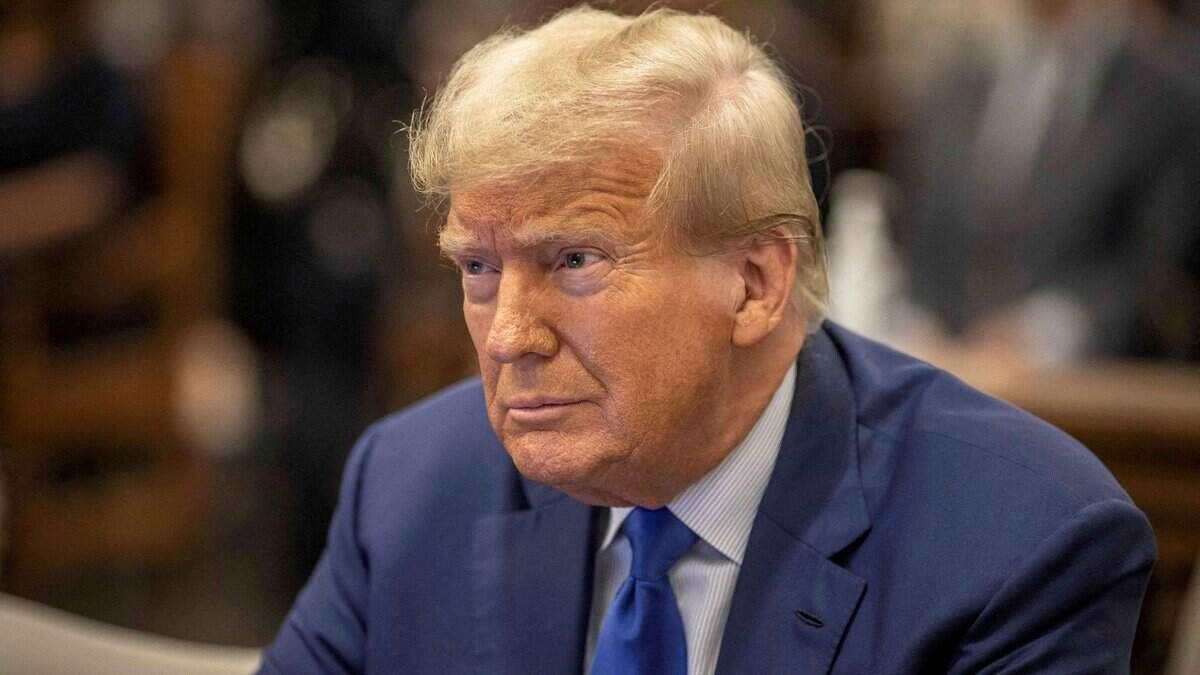
    West Palm Beach: US President Donald Trump’s new executive order on Venezuelan oil revenue is meant to ensure that the money remains protected from being used in judicial proceedings.

    The executive order, made public on Saturday, January 10, says if the funds were to be seized for such use, it could “undermine critical US efforts to ensure economic and political stability in Venezuela.”

    The order comes amid caution from top oil company executives that the tumult and instability in Venezuela could make the country less attractive for private investment and rebuilding.

    Add as a preferred source on Google
    “Mubarak“Mubarak

    “If we look at the commercial constructs and frameworks in place today in Venezuela, today it’s uninvestable,” said Darren Woods, CEO of ExxonMobil, the largest US oil company, during a meeting convened by Trump with oil executives on Friday.

    During the session, Trump tried to assuage the concerns of the oil companies and said the executives would be dealing directly with the US, rather than the Venezuelan government.

    Venezuela has a history of state asset seizures, ongoing US sanctions and decades of political uncertainty.

    MS Admissions 2026-27MS Admissions 2026-27

    Getting US oil companies to invest in Venezuela and help rebuild the country’s infrastructure is a top priority of the Trump administration after the dramatic capture of now-deposed leader Nicolas Maduro.

    The White House is framing the effort to “run” Venezuela in economic terms, and Trump has seized tankers carrying Venezuelan oil, has said the US is taking over the sales of 30 million to 50 million barrels of previously sanctioned Venezuelan crude, and plans to control sales worldwide indefinitely.

    “I love the Venezuelan people, and am already making Venezuela rich and safe again,” Trump, who is currently in southern Florida, wrote on his social media site on Saturday. “Congratulations and thank you to all of those people who are making this possible!!!”

    The order says the oil revenue is property of Venezuela that is being held by the United States for “governmental and diplomatic purposes” and not subject to private claims.

    Its legal underpinnings are the National Emergencies Act and the International Emergency Economic Powers Act. Trump, in the order, says the possibility that the oil revenues could be caught up in judicial proceedings constitutes an “unusual and extraordinary threat” to the US.

  • X ‘accepts mistake’ on Grok AI issue, assures to comply with Indian laws: Sources

    X ‘accepts mistake’ on Grok AI issue, assures to comply with Indian laws: Sources

    New Delhi: Microblogging site X has accepted its mistake and assured it will comply with Indian laws after the IT Ministry warned the Elon Musk-led social media platform on the Grok AI obscene content issue, government sources said on Sunday, January 11.

    Around 3,500 pieces of content have been blocked, and over 600 accounts deleted, according to sources.

    X has accepted its mistake, and said it will comply with Indian laws, sources said, adding that in future, the platform will not allow obscene imagery.

    Add as a preferred source on Google
    “Mubarak“Mubarak

    Earlier, the government had asked X for details, including specific action taken on obscene content linked to Grok AI, and measures to prevent a repeat in future, after it found the response submitted by the platform to be inadequate.

    In its response after the first notice was issued to it, X had outlined the strict content takedown policies it abides by when it comes to misleading posts and those related to non-consensual sexualised images.

    While the reply was long and detailed, it had “missed” key information, including takedown details and specific action that was taken on the Grok AI obscene content issue, and measures to prevent it in future.

    MS Admissions 2026-27MS Admissions 2026-27

    On January 2, the IT Ministry issued a stern warning to X over indecent and sexually-explicit content being generated through the misuse of AI-based services like ‘Grok’ and other tools.

    X’s ‘Safety’ handle, last Sunday, said it takes action against illegal content on its platform, including Child Sexual Abuse Material (CSAM), by removing it, permanently suspending accounts, and working with local governments and law enforcement as necessary.

    “Anyone using or prompting Grok to make illegal content will suffer the same consequences as if they upload illegal content,” X had said, echoing the stance taken by Musk on illegal content.

  • Simplified Income Tax Act, 2025, to come into force from April 1

    Simplified Income Tax Act, 2025, to come into force from April 1

    New Delhi: Beginning April 1, the Income Tax Act, 2025, will come into force replacing the six-decade old tax law and the changes made in tax laws in 2026-27 Budget will be incorporated in the new legislation.

    The 2025 I-T law is revenue neutral with no change in tax rates. It has only made direct tax laws simple to understand, removed ambiguities thus reducing scope for litigations. It reduces text volume and sections by about 50 per cent vis-a-vis the 1961 income tax act.

    The new law simplifies the tax timeline by doing away with the distinction between the assessment year and the previous year, replacing it with a single ‘tax year’ framework. It also allows taxpayers to claim TDS refund even when ITRs are filed after deadlines, without any penal charges.

    Add as a preferred source on Google
    “Mubarak“Mubarak

    Any changes with regard to taxation of individuals, corporates, HUFs and others, which are announced in the Budget for 2026-27 on February 1 will be incorporated in the new I-T Act, 2025.

    The rules to implement the new Income Tax law are being framed and likely to be notified after the presentation of the FY27 Budget.

    The new Income Tax law was approved by Parliament on August 12, 2025 after a scrutiny by a Parliamentary committee. It had become an Act after receiving assent of President Droupadi Murmu on August 21, 2025.

    MS Admissions 2026-27MS Admissions 2026-27

    The rules relating to the Income Tax Act, 2025, are being worked out, while the various tax return forms like those relating to payment of Advance Tax, TDS, will be notified thereafter.

    Following is an explainer about the Income Tax Act, 2025.

    Q. Why the Income Tax Act, 1961, was reviewed?

    A. Income tax law was enacted 64 years ago in 1961 and since then a lot of changes have taken place in the society, in the way people earn money and companies do business. The 1961 Act was framed at a time when Indian republic was young and faced challenges peculiar to those times. Over the time, as the country progressed, the Act was amended to keep pace with changing times.

    In view of the technological advancement and changes in the socio-economic fabric of the country, there was a pressing need to completely overhaul the archaic Income Tax Act which has become bulky on account of hundreds of amendments in the law. It has become almost impossible for the common man to comprehend the law and multiple references to different sections, sub-sections, and provisos.

    Q. What the new Income Tax Act proposes to do?

    A. The new law is leaner and more reader-friendly. The intention of the government is to halve the volume compared to the old law and make the language simpler so that taxpayer can know his exact tax liability. It would also help in reducing litigations and thereby cut down on disputed tax demands.

    Q. How will the new law be leaner?

    A. The Income Tax Act, 1961 deals with imposition of direct taxes — personal I-T, corporate tax, securities transaction tax, besides gift and wealth tax. The Act has about 298 sections and 23 chapters. Over the time, the government has abolished various levies including wealth tax, gift tax, fringe benefit tax and banking cash transaction tax. Several sections have been amended, added, removed or have become obsolete over the last 6 decades. The new Act will be free of all the amendments and sections which are no longer relevant.

    Q. How the new law will affect tax liability of individuals and others?

    A. Any tweak in income tax rates is usually done through Finance Act which is part of the Union Budget presented in Parliament every year on February 1. All amendments announced in the upcoming Budget will be incorporated in the new Bill.]

    Q. Have governments in the past attempted to replace the 1961 income tax Act?

    A. In 2010, ‘The Direct Taxes Code Bill, 2010’ was introduced in Parliament. It was referred to the Standing Committee for scrutiny. The Bill, however, lapsed because of the change in government in 2014. In November 2017, the government had set up a six-member committee to redraft the Income Tax Act. The panel had submitted its report to finance minister in August 2019.

  • AP Cabinet approves Dagadarthi greenfield airport at Nellore

    AP Cabinet approves Dagadarthi greenfield airport at Nellore

    Amaravati: In a significant boost to Andhra Pradesh’s aviation and industrial infrastructure, the state Cabinet has approved the Dagadarthi Greenfield Airport project in Nellore district.

    With this approval, Dagadarthi will become Andhra Pradesh’s 8th airport, reinforcing the state’s vision of creating a future-ready, multimodal logistics and industrial network, officials said.

    Strategically located, the Dagadarthi airport enjoys excellent connectivity to National Highway corridors, two major ports — Krishnapatnam Port and Ramayapatnam Port — and multiple industrial clusters, including KRIS City and IFFCO SEZs. This unique locational advantage positions the airport as a critical enabler for manufacturing, exports, agri-logistics, and services-led growth in southern Andhra Pradesh.

    Add as a preferred source on Google
    “Mubarak“Mubarak

    The project has already received in-principle clearance from the Ministry of Civil Aviation (MoCA), Government of India, and the Request for Proposal (RFP) has been issued to invite private participation for development, operation, and maintenance under a long-term concession framework.

    Planned over multiple phases, the airport will be developed on 1,332.80 acres, with Phase-1 designed to handle 1.4 million passengers per annum, and scalable up to 15 million passengers annually in the long term. The master plan also provides for a future cargo facility, aligning with the region’s growing industrial output and port-led trade potential.

    The Dagadarthi Greenfield Airport is envisaged as more than an aviation asset — it is a catalyst for regional transformation.

    MS Admissions 2026-27MS Admissions 2026-27

    By integrating air connectivity with ports, highways, and industrial zones, the project is expected to reduce logistics costs for exporters and manufacturers, attract new investments in industry, warehousing, and services, generate employment across construction, aviation, logistics, and allied sectors, and strengthen Andhra Pradesh’s position as a preferred destination for business and investment.

    With the Cabinet’s approval, Andhra Pradesh continues to demonstrate its commitment to speed, scale, and certainty in infrastructure development – laying the foundation for sustained economic growth and enhanced global connectivity.

  • Stock markets trade lower on persistent foreign fund outflows

    Stock markets trade lower on persistent foreign fund outflows

    Mumbai: Equity benchmark indices Sensex and Nifty declined in early trade on Thursday amid persistent foreign fund outflows and concerns about potential US tariff hikes.

    The 30-share BSE Sensex declined 255.86 points to 84,705.28 in early trade. The 50-share NSE Nifty went down by 65.9 points to 26,074.85.

    From the 30-Sensex firms, Tata Consultancy Services, Asian Paints, Maruti, Tech Mahindra, Infosys and UltraTech Cement were among the biggest laggards.

    Add as a preferred source on Google
    “Mubarak“Mubarak

    However, ICICI Bank, Adani Ports, Bharat Electronics and Hindustan Unilever were among the gainers.

    Foreign institutional investors offloaded equities worth Rs 1,527.71 crore on Wednesday, while domestic institutional investors bought stocks worth Rs 2,889.32 crore, according to exchange data.

    “From the fundamental perspective, there is good news for the economy and markets. Advanced estimates project the FY26 GDP growth at an impressive 7.4%. This reflects the underlying resilience of the economy despite Trump tariffs.

    Memory Khan SeminarMemory Khan Seminar

    “However, this strong fundamental is unlikely to reflect in the market very soon since the much-awaited US-India trade deal, which is critical for India’s sustained growth and macro-economic stability, is not happening. This and the continuing FII selling are impacting the market,” VK Vijayakumar, Chief Investment Strategist, Geojit Investments Limited, said.

    The Indian economy is expected to grow by 7.4 per cent in the current fiscal, maintaining its status as the world’s fastest-growing major economy despite punitive US tariffs and geopolitical tensions.

    The First Advance Estimates released by the Ministry of Statistics and Programme Implementation (MoSPI) on Wednesday put GDP growth in 2025-26 (April 2025 to March 2026 fiscal year) at better than 7.3 per cent forecast by the RBI and the government’s initial projection of 6.3-6.8 per cent.

    “With both the Nifty and Bank Nifty holding key support levels but encountering stiff overhead resistance, market sentiment remains cautious amid elevated geopolitical tensions, renewed tariff-related concerns, and continued foreign portfolio outflows,” Ponmudi R, CEO of Enrich Money, an online trading and wealth tech firm, said.

    In Asian markets, South Korea’s Kospi index and Shanghai’s SSE Composite index traded higher, while Japan’s Nikkei 225 index and Hong Kong’s Hang Seng index quoted lower.

    US markets ended mostly lower on Wednesday.

    Brent crude, the global oil benchmark, climbed 0.40 per cent to USD 60.20 per barrel.

    On Wednesday, the Sensex declined 102.20 points or 0.12 per cent to settle at 84,961.14. The Nifty went down by 37.95 points or 0.14 per cent to 26,140.75.