Category: BUSINESS

  • Saudi Arabia to open its stock market to foreigners from Feb 1

    Saudi Arabia to open its stock market to foreigners from Feb 1

    Foreign investors will now be permitted to access Saudi Arabia’s capital market starting February 1, the Capital Markets Authority (CMA) announced on Tuesday, January 6, as part of its broader effort to attract international capital.

    The country’s financial markets regulator stated that the changes to existing stock market laws will help broaden and diversify the range of investors allowed in the main market, in turn supporting investment flows and improving market liquidity.

    The amendments further eliminate the concept of “Qualified Foreign Investor,” which had previously restricted direct market access to international institutions or companies that were required to meet certain size and experience standards.

    Add as a preferred source on Google
    “Mubarak“Mubarak

    This means the international investors can invest directly in the country’s capital market without qualifying for the previous system, the statement read.

    International investment exceeded SAR 590 billion

    According to the CMA statement, international investors’ ownership in the capital exceeded SAR 590 billion by the end of the third quarter in 2025. While investments in the main market reached approximately SAR 519 billion during the same period, showing exponential growth compared to 2024, when the data stood at SAR 498 billion.

    The financial markets regulator said the approved amendments are likely to contribute to attracting additional international investments.

    Memory Khan SeminarMemory Khan Seminar

    In 2025, the Saudi benchmark index, referred to as TASI, fell 12.8 per cent, and is down a further 1.9 per cent as of this year.

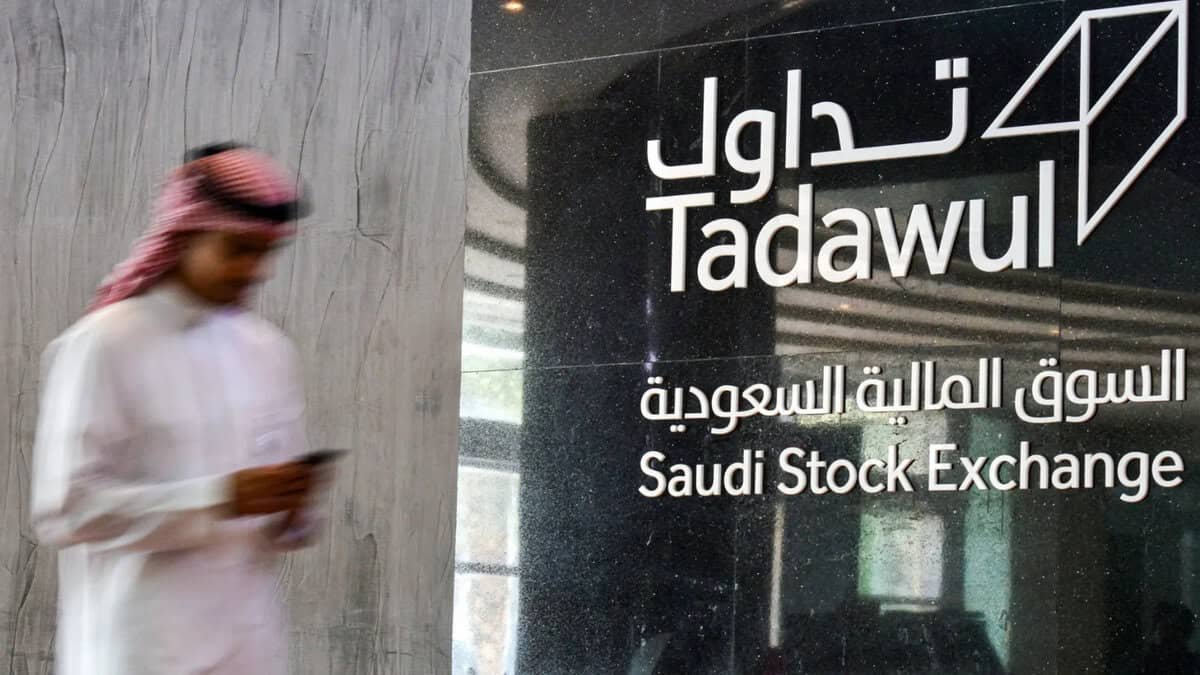
    Currently, the Saudi Exchange, also known as Tadawul, has 262 listed companies, with the market capitalisation reaching SAR 9 trillion.

  • CCI finds Tata Steel, SAIL, JSW breached antitrust law: Report

    CCI finds Tata Steel, SAIL, JSW breached antitrust law: Report

    The Competition Commission of India (CCI), the country’s competition regulator, has found Tata Steel, JSW Steel, state-run Steel Authority of India Ltd (SAIL), and 25 other firms in breach of antitrust law by colluding on steel selling prices, according to a Reuters exclusive report published on Tuesday, December 6. 

    The October 6, 2025, order by the CCI also holds 56 top executives liable for price collusion over varying periods between 2015 and 2023, putting companies and their senior leadership at risk of heavy fines.

    Among those named in the CCI’s confidential order are JSW Steel’s billionaire Managing Director Sajjan Jindal, Tata Steel Chief Executive TV Narendran, and four former chairpersons of SAIL, Reuters reported. The order, which has not been made public, marks a critical stage in one of the most high-profile antitrust cases involving India’s steel sector.

    Add as a preferred source on Google
    “Mubarak“Mubarak

    What started the investigation

    The probe began in 2021 after the Coimbatore Corporation Contractors Welfare Association alleged in a Tamil Nadu court that steel companies had hiked prices by 55 per cent during a six-month period to March 11 that year. The association, whose members are involved in road and highway construction, claimed companies were artificially boosting prices by restricting supply to builders and consumers. 

    After the public prosecutor determined the matter fell under competition law, the judge directed the CCI to take appropriate action.

    In 2022, the watchdog had raided some steel companies as part of its probe. The investigation was subsequently expanded to cover as many as 31 companies and industry bodies, as well as dozens of executives, according to the October order reviewed by Reuters

    Memory Khan SeminarMemory Khan Seminar

    An internal CCI note from July 2025 said officials had examined WhatsApp messages exchanged among regional industry groups of steel product makers, which suggested companies were involved in fixing prices and cutting down production, the report said.

    Penalties ahead

    JSW Steel and SAIL have denied the allegations before the CCI, according to sources familiar with the matter who spoke to Reuters. One source said JSW had submitted its response and rejected the claims. 

    India is the world’s second-largest producer of crude steel. JSW Steel holds about 17.5 per cent of the market, Tata Steel around 13.3 per cent and SAIL close to 10 per cent. Under competition rules, the CCI can impose penalties of up to three times a company’s profit or 10 per cent of its turnover for each year of wrongdoing, whichever is higher, with individual executives also facing fines.

    The findings will now be reviewed by senior CCI officials, after which companies and executives will be given an opportunity to submit objections before a final order is issued. Given the scale of the case, this process could take several months, Reuters reported.

  • After Trump’s remarks, Reliance denies receiving Russian oil in three weeks

    After Trump’s remarks, Reliance denies receiving Russian oil in three weeks

    New Delhi: Reliance Industries Ltd, the operator of the world’s largest single-site oil refining complex and till recently India’s biggest buyer of Russian oil, on Tuesday, January 6, said it has not received any Russian barrels in almost three weeks, and none are expected in January.

    On November 20, 2025, Reliance had said it had halted the use of Russian crude at its export-only refinery in Jamnagar, Gujarat, as the company moves to comply with European Union sanctions.

    Prior to that, Reliance was India’s largest buyer of Russian oil, which it processes and turns into fuel, such as petrol and diesel, at its giant oil refining complex at Jamnagar.

    Add as a preferred source on Google
    “Mubarak“Mubarak

    The complex is made up of two refineries — one SEZ unit from which fuels are exported to the European Union, the US, and other markets, and an older unit that primarily caters to the domestic market.

    The European Union — a big market for Reliance — has imposed wide-ranging sanctions targeting Russia’s energy revenues, including measures that restrict the import and sale of fuels produced from Russian crude oil.

    To comply with these, Reliance had stopped processing Russian crude oil at its only-for-exports (SEZ) refinery.

    Memory Khan SeminarMemory Khan Seminar

    On Tuesday, it called a Bloomberg report claiming “three vessels laden with Russian oil are heated for Reliance’s Jamnagar refinery as “blatantly untrue”.

    “Reliance Industries’ Jamangar refinery has not received any cargo of Russian oil at its refinery in the past three weeks approx. and is not expecting any Russian crude oil deliveries in January,” the company said in a statement.

    The statement comes after United States President Donald Trump issued a fresh warning to India over its continued imports of Russian oil and claimed Prime Minister Narendra Modi “knew he was not happy.”

    Speaking to a reporter on board Air Force One on Sunday, January 4, Trump said, “They wanted to make me happy, basically… PM Modi’s a very good man. He’s a good guy. He knew I was not happy. It was important to make me happy. They do trade, and we can raise tariffs on them very quickly.”

    The Indian Ministry of External Affairs (MEA) denied any such directive was issued to oil companies and maintained that energy policy is based purely on national interest and energy security.

    The Bloomberg report had cited data analytics firm Kpler to say at least three tankers, laden with nearly 2.2 million barrels of urals (a grade of Russian crude), were headed towards the Sikka port — through which Jamnagar refining complex sources a bulk of its crude imports.

    However, Sikka is also the port that is used by non-Reliance companies.

    Industry sources said the three cargoes cited in the report were probably for Bina refinery of Bharat Petroleum Corporation Ltd (BPCL) and not Reliance.

    “We have stopped importing Russian crude oil into our SEZ refinery with effect from November 20,” a Reliance spokesperson had said in a statement on November 20, 2025.

    “From December 1, all product exports from the SEZ refinery will be obtained from non-Russian crude oil.”

    Reliance purchased about half of the 1.7-1.8 million barrels per day of discounted Russian crude shipped to India prior to that.

    India became the second-largest buyer of discounted Russian seaborne crude after the Ukraine war began in 2022, drawing criticism from Western nations that have imposed sanctions on Russia’s energy sector, arguing that oil revenues help finance Moscow’s war effort.

  • Reliance Industries shares down nearly 5 pc

    Reliance Industries shares down nearly 5 pc

    New Delhi: Shares of Reliance Industries tumbled over 5 per cent on Tuesday morning, January 6, and were instrumental in dragging the benchmark equity indices lower.

    The blue-chip stock dropped by nearly 5 per cent to Rs 1,497.05 on the BSE.

    At the NSE, it went down by 5.18 per cent to Rs 1,496.30.

    Add as a preferred source on GoogleAdd as a preferred source on Google
    “Mubarak“Mubarak

    Selling in the blue-chip stock dragged the benchmark indices Sensex and Nifty lower during the morning trade.

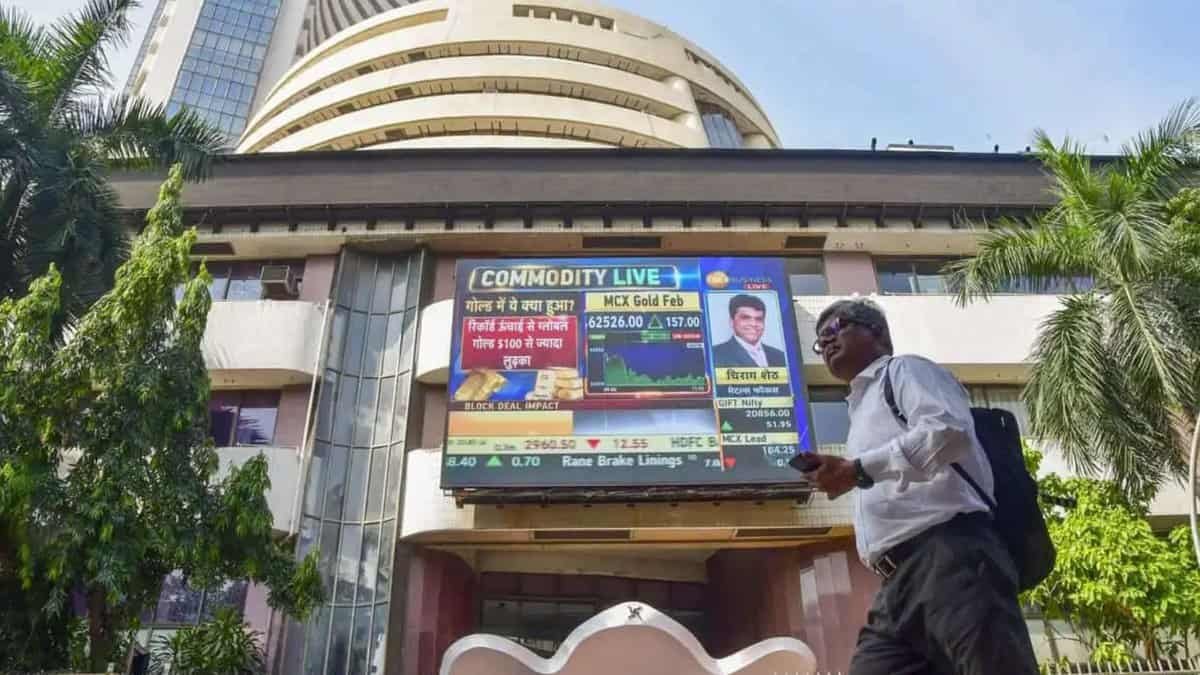
    The 30-share BSE benchmark quoted 441.05 points lower at 84,998.57, and the 50-share NSE Nifty traded 99.50 points down at 26,151.25.

    The company’s stock hit its record high of Rs 1,611.20 in the previous trade.

    Memory Khan SeminarMemory Khan Seminar

  • LG Electronics unveils new home robot CLOiD

    LG Electronics unveils new home robot CLOiD

    Seoul: LG Electronics said on Tuesday it has unveiled a new robot, CLOiD, as an artificial intelligence (AI) home assistant ahead of CES 2026, as part of its vision for “AI in action.”

    Advertisement

    At LG World Premiere, the company’s annual pre-CES event in Las Vegas under the theme “Innovation in tune with you,” CLOiD was first introduced as a home-specialised agent, designed to provide ambient care, and reduce both physical and mental labor, according to LG Electronics, reports Yonhap news agency.

    The robot is equipped with two arms and five-fingered hands, enabling it to perform household chores, such as putting laundry into a washing machine or bringing a cup of water.

    Add as a preferred source on GoogleAdd as a preferred source on Google
    “Mubarak“Mubarak

    LG Electronics said CLOiD represents the company’s commitment to customer-centric AI innovation and illustrates how AI can be realised in home appliances, moving beyond conversation to actively orchestrate devices, spaces and services.

    “As a global leader in home appliances, our deep understanding of customer lifestyles is a powerful advantage,” Chief Executive Officer (CEO) Lyu Jae-cheol said during the event held at Mandalay Bay, adding that LG is confident in “setting a new standard for future home life through a variety of solutions, including robots.”

    Lyu added that he expects customers’ AI experiences will not remain in the home but “across various spaces, such as vehicles, workplaces and commercial areas, becoming an integral part of their lives.”

    Memory Khan SeminarMemory Khan Seminar

    During the event, LG Electronics also showcased a next-generation organic light-emitting diode (OLED) TV and its high-end Signature lineup.

    LG OLED evo W6 Wallpaper TV features a 9-millimeter panel, delivering a sleek, wallpaper-like design with enhanced radiant colour and wireless technologies.

    The LG Signature refrigerator is powered by AI that understands conversational language and provides tailored recommendations, including recipes based on food items stored inside the refrigerator.

  • Stock markets trade lower in early trade

    Stock markets trade lower in early trade

    Mumbai: Benchmark indices Sensex and Nifty declined in early trade on Tuesday, dragged by heavy selling in blue-chips Reliance Industries, HDFC Bank, and worries over fresh warning from the US to further raise tariffs against India.

    Advertisement

    The 30-share BSE Sensex declined 431.95 points to 85,007.67 during early trade. The 50-share NSE Nifty tanked 105.6 points to 26,144.70.

    From the 30-Sensex firms, Trent tumbled over 7 per cent even as the Tata group retail firm reported a 17 per cent growth in standalone revenue to Rs 5,220 crore in the December quarter.

    Add as a preferred source on GoogleAdd as a preferred source on Google
    “Mubarak“Mubarak

    Reliance Industries, Tata Motors Passenger Vehicles, Eternal, HDFC Bank, and Adani Ports were also among the laggards.

    However, ICICI Bank, Bajaj Finserv, Asian Paints, and Tata Steel were among the gainers.

    Foreign institutional investors offloaded equities worth Rs 36.25 crore on Monday after a day’s breather, according to exchange data. Domestic institutional investors, however, bought stocks worth Rs 1,764.07 crore.

    Memory Khan SeminarMemory Khan Seminar

    “While broader sentiment remains guarded amid recent bouts of volatility driven by geopolitical developments and tariff-related concerns, underlying support continues to come from stable domestic macro fundamentals and steady institutional participation,” Ponmudi R, CEO of Enrich Money, an online trading and wealth tech firm, said.

    US President Donald Trump has said Prime Minister Narendra Modi knew “I was not happy” with India’s purchases of Russian oil and that Washington could raise tariffs on New Delhi “very quickly”.

    Trump made the remarks while talking to reporters on Sunday aboard Air Force One en route to Washington DC from Florida.

    In Asian markets, South Korea’s Kospi index, Japan’s Nikkei 225 index, Shanghai’s SSE Composite index, and Hong Kong’s Hang Seng index were trading higher.

    US markets ended higher on Monday.

    Brent crude, the global oil benchmark, dipped 0.24 per cent to USD 61.61 per barrel.

    On Monday, the Sensex dropped 322.39 points, or 0.38 per cent, to settle at 85,439.62. After hitting a record intra-day high of 26,373.20, the Nifty failed to carry forward the momentum and declined 78.25 points, or 0.30 per cent, to end at 26,250.30.

  • Oil stocks sharply higher after US action in Venezuela

    Oil stocks sharply higher after US action in Venezuela

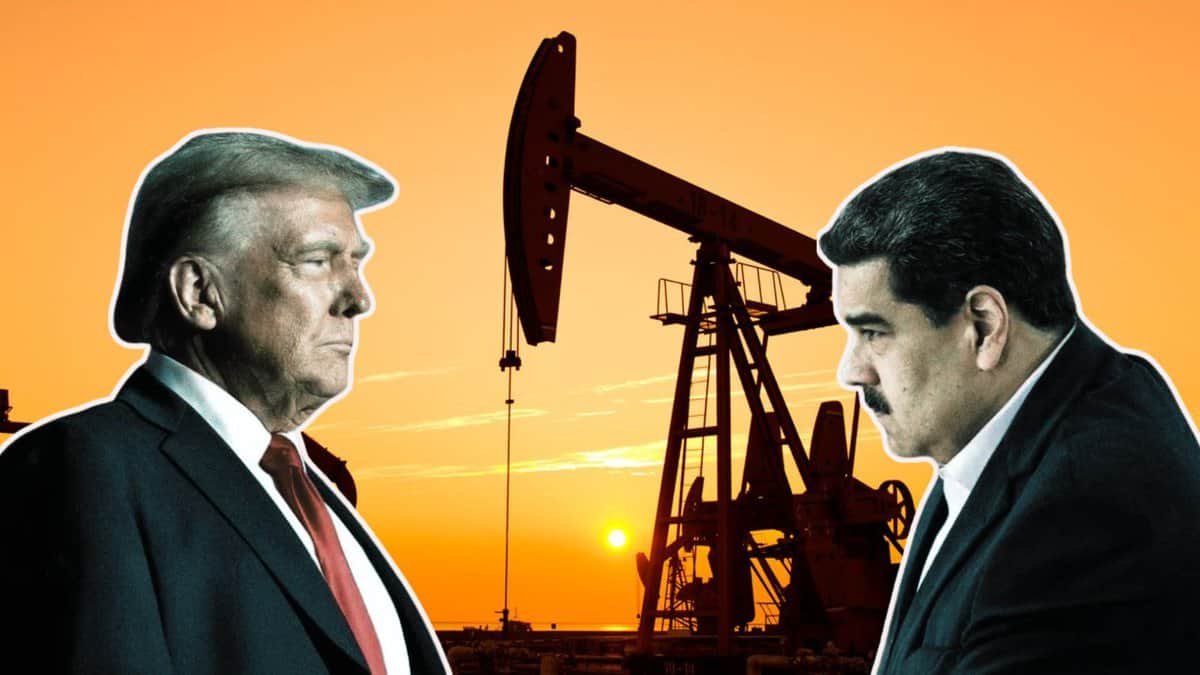
    New York: Shares of major US companies in the energy sector are sharply higher on Monday, January 5, after President Donald Trump announced plans to take control of Venezuela’s oil industry and said American companies would revitalise it after capturing President Nicolas Maduro.

    Advertisement

    While the US action is unlikely to have an immediate impact on crude prices, given the current glut in the market, it could upend energy markets.

    Venezuela’s oil industry is in disrepair after years of neglect and international sanctions. Some oil industry analysts believe that Venezuela could double or triple its current output of about 1.1 million barrels of oil a day and return the nation to historic production levels relatively quickly; others see a much longer road ahead.

    Add as a preferred source on GoogleAdd as a preferred source on Google
    “Mubarak“Mubarak

    “While the Trump administration has suggested large US oil companies will go into Venezuela and spend billions to fix infrastructure, we believe political and other risks, along with current relatively low oil prices, could prevent this from happening anytime soon,” wrote Neal Dingmann of William Blair. Material change to Venezuelan production will take a lot of time and millions of dollars for infrastructure improvement, he said.

    Any investment in Venezuelan energy infrastructure right now would take place in a weakened global energy market. Crude prices in the US are down 20 per cent compared with last year. The price for a barrel of benchmark US crude hasn’t been above USD 70 since June, and hasn’t touched USD 80 per barrel since the summer of 2024.

    JPMorgan foresees a brief, sharp dip in Venezuelan production, but said recovery is expected to be swift. Production could reach 1.3 million to 1.4 million barrels per day within two years of a political transition.

    Memory Khan SeminarMemory Khan Seminar

    “With new investments and major institutional reforms, output could potentially expand to 2.5 mbd over the next decade,” JPMorgan wrote.

    There are several factors that could impact Venezuelan production, including how quickly a government transition can take hold and how fast and willing multinational oil companies are to reenter the country, wrote John Freeman of Raymond James.

    At the opening bell, shares in the energy sector moved broadly higher, particularly companies with large refinery operations.

    Venezuela produces the kind of heavy crude oil that’s needed for diesel fuel, asphalt and other fuels for heavy equipment. Diesel is in short supply around the world because of the sanctions on oil from Venezuela and Russia, and because America’s lighter crude oil can’t easily replace it.

    Big refiners like Valero, Marathon Petroleum and Phillips 66 rose between 5 per cent and 6 per cent at the opening bell.

    Oilfield service companies, those that actually go into the field and do the drilling and upkeep, rose even more sharply. SLB and Halliburton rose between 7 per cent and 8 per cent.

    Major oil exploratory companies, including ExxonMobil, Chevron and ConocoPhillips, rose between 2 per cent and 4 per cent.

  • Crude oil rises in futures trade amid Venezuela crisis

    Crude oil rises in futures trade amid Venezuela crisis

    New Delhi: Crude Oil prices rose by Rs 42 to Rs 5,197 per barrel in the futures trade on Monday amid cautious sentiment over geopolitical developments.

    Advertisement

    On the Multi Commodity Exchange (MCX), crude oil futures for January delivery rose by Rs 42, or 0.81 per cent, to Rs 5,197 per barrel in a business turnover of 18,270 lots.

    Similarly, the February contract increased by Rs 37, or 0.72 per cent, to Rs 5,202 per barrel in 3,011 lots.

    Add as a preferred source on GoogleAdd as a preferred source on Google
    “Mubarak“Mubarak

    In the international markets, West Texas Intermediate (WTI) crude oil futures went up by 0.24 per cent to USD 57.46 per barrel, while Brent Crude was trading marginally higher at USD 60.78 per barrel in New York.

    “WTI crude oil futures hovered around USD 57.2 per barrel on Monday, moving between gains and losses as investors assessed the implications of recent US military action in Venezuela, including the capture of President Nicolas Maduro,” Rahul Kalantri, VP Commodities, Mehta Equities Ltd, said.

    The market sentiment remains cautious amid concerns over potential supply disruptions, given Venezuela’s status as the country with the world’s largest proven oil reserves, he added.

    Memory Khan SeminarMemory Khan Seminar

    Market experts believe the immediate impact on global supply may be limited, as Venezuela’s current output stands below one million barrels per day, representing less than one per cent of total global production.

    Meanwhile, rising concerns that the US may intensify pressure on other oil-producing nations, such as Iran, could lead to tighter supply conditions later in the year, Kalantri said.

    He added that some reports suggest the White House has encouraged US companies to support the revival of Venezuela’s oil industry, particularly for firms seeking compensation for assets expropriated nearly two decades ago.

  • Stock markets decline in early trade dragged by IT firms

    Stock markets decline in early trade dragged by IT firms

    Mumbai: Equity benchmark indices Sensex and Nifty declined in early trade on Monday, dragged by blue-chip IT stocks.

    Advertisement

    The 30-share BSE Sensex dropped 125.96 points to 85,636.05 during early trade. The 50-share NSE Nifty dipped 30.95 points to 26,297.60.

    From the 30-Sensex firms, HCL Tech, Infosys, Tech Mahindra, HDFC Bank, Tata Consultancy Services, and NTPC were among the biggest laggards.

    Add as a preferred source on GoogleAdd as a preferred source on Google
    “Mubarak“Mubarak

    However, Bharat Electronics, Tata Steel, Axis Bank, and Reliance Industries were among the gainers.

    Foreign Institutional Investors (FIIs) bought equities worth Rs 289.80 crore on Friday, according to exchange data. Domestic institutional investors (DIIs) also bought stocks worth Rs 677.38 crore.

    “The year 2026 has begun with major geopolitical developments which can have profound consequences. The US action in Venezuela has the potential to further destabilise global geopolitics,” V K Vijayakumar, Chief Investment Strategist, Geojit Investments Ltd, said.

    Memory Khan SeminarMemory Khan Seminar

    In Asian markets, South Korea’s Kospi index, Japan’s Nikkei 225 index and Shanghai’s SSE Composite index were trading significantly higher, while Hong Kong’s Hang Seng index quoted marginally lower.

    US markets ended mostly in positive territory on Friday.

    Brent crude, the global oil benchmark, dipped 0.08 per cent to USD 60.70 per barrel.

    On Friday, the Sensex climbed 573.41 points, or 0.67 per cent, to settle at 85,762.01. The Nifty went up by 182 points, or 0.70 per cent, to 26,328.55.

  • Net office leasing up 25 pc in 2025 in top 8 Indian cities: Report

    Net office leasing up 25 pc in 2025 in top 8 Indian cities: Report

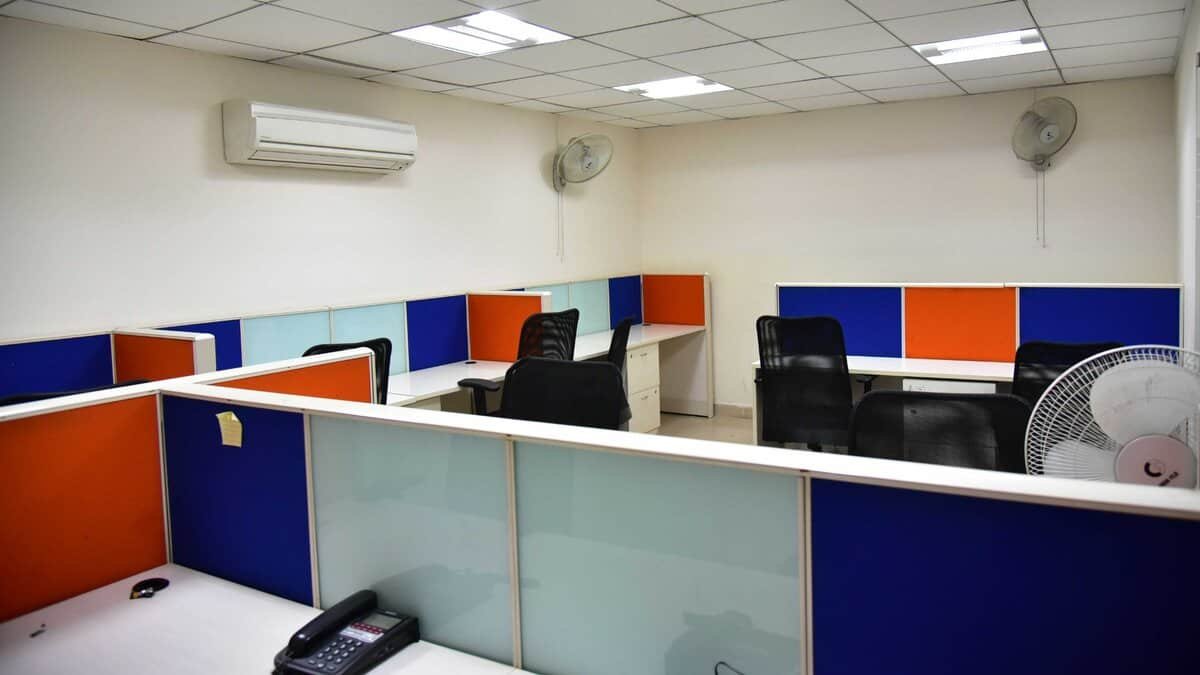
    New Delhi: Net leasing of office spaces rose 25 per cent last year to a record 61.4 million sq ft across eight major cities on strong demand from domestic and overseas companies, according to Cushman & Wakefield.

    Advertisement

    Net leasing of office spaces stood at 49.1 million sq ft during 2024 in these eight cities.

    Net absorption or leasing represents the net change in office space occupied during the year.

    Add as a preferred source on GoogleAdd as a preferred source on Google
    “Mubarak“Mubarak

    Real estate consultant Cushman & Wakefield on Monday released the data, showing that net office leasing rose in Bengaluru, Hyderabad, Pune, Delhi-NCR, and Chennai but declined in Mumbai, Kolkata, and Ahmedabad.

    “The last year’s performance reflects more than record numbers, it signals a long-term growth trajectory anchored in strong fundamentals,” said Anshul Jain, Chief Executive, India, SEA, MEA & APAC Office and Retail, Cushman & Wakefield.

    He projected that the office demand would remain strong during 2026, driven by expansion of global capability centres (GCCs) in India and rising technology adoption.

    Memory Khan SeminarMemory Khan Seminar

    As per the data, the net office leasing in Chennai almost tripled to 7 million sq ft last year from 2.4 million sq ft in the 2024 calendar year.

    Delhi-NCR witnessed a sharp growth of 82 per cent in net office leasing to 10.9 million sq ft during 2025 from 6 million sq ft in the preceding year.

    Bengaluru, the most prominent office market, witnessed a marginal rise in net office leasing to 14.4 million sq ft from 14.2 million sq ft in 2024.

    Office demand rose 65 per cent in Pune to 8.2 million sq ft from 5 million sq ft.

    In Hyderabad, the net leasing grew 15 per cent to 9.1 million sq ft from 7.9 million sq ft.

    However, Mumbai — the financial capital of India — witnessed a 12 per cent decline in office demand to 9.6 million sq ft from 10.9 million sq ft.

    In Kolkata, the demand dipped 5 per cent to 1.4 million sq ft from 1.5 million sq ft.

    Lastly, the net office leasing in Ahmedabad by 28 per cent to 0.8 million sq ft last year from 1.2 million sq ft in the preceding calendar year.

    According to Cushman & Wakefield, the gross leasing of office space also hit an all-time high at 88.7 million sq ft in 2025, up 1 per cent from 88 million sq ft in the preceding year.

    The gross leasing factors in all leasing activity in the market, including fresh take-up, open market renewals by occupiers as well as pre-leasing.

    New supply of office spaces rose 17 per cent to around 53 million sq ft during the last year.