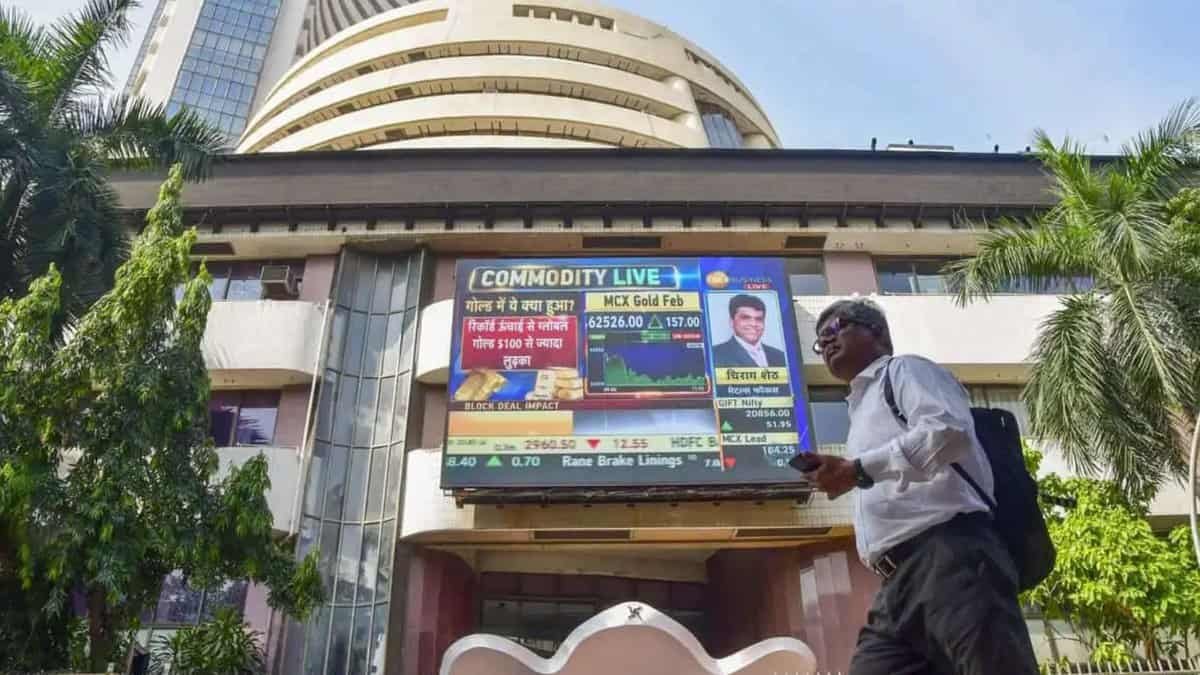
Mumbai: Benchmark indices Sensex and Nifty declined in early trade on Tuesday as persistent foreign fund outflows and weak global market trends dented investors’ sentiment.
The 30-share BSE Sensex declined 363.92 points to 84,849.44 during initial trade. The 50-share NSE Nifty dropped 106.65 points to 25,920.65.
From the Sensex firms, Eternal, Axis Bank, HCL Tech, Infosys, Tata Steel, and Bharat Electronics were among the major laggards.
However, Bharti Airtel, Asian Paints, Tata Motors Passenger Vehicles, and Titan were among the gainers.
In Asian markets, South Korea’s Kospi, Japan’s Nikkei 225 index, Shanghai’s SSE Composite index, and Hong Kong’s Hang Seng index quoted lower.
US markets ended in negative territory on Monday.
Foreign Institutional Investors (FIIs) offloaded equities worth Rs 1,468.32 crore on Monday, while Domestic institutional investors (DIIs) bought stocks worth Rs 1,792.25 crore, according to exchange data.
“Major equity indices on Wall Street closed lower amid a risk-off sentiment ahead of key economic data releases, including non-farm payrolls, retail sales, and inflation figures, which could influence the future course of monetary policy. Asian markets also opened lower, with cautious traders paring positions ahead of the Bank of Japan’s crucial monetary policy decision later this week,” Ponmudi R, CEO of Enrich Money, an online trading and wealth tech firm, said.
On the domestic front, persistent FII outflows and continued pressure on the rupee near record lows remain key near-term headwinds, he said.
“However, strong participation from domestic institutional investors and retail flows continues to provide a cushion against deeper downside risks. In this backdrop, markets are expected to respect key technical levels rather than exhibit aggressive trending behaviour,” Ponmudi R added.
Brent crude, the global oil benchmark, declined 0.54 per cent to USD 60.23 per barrel.
On Monday, the Sensex dipped 54.30 points, or 0.06 per cent, to settle at 85,213.36. The Nifty edged lower by 19.65 points, or 0.08 per cent, to 26,027.30.
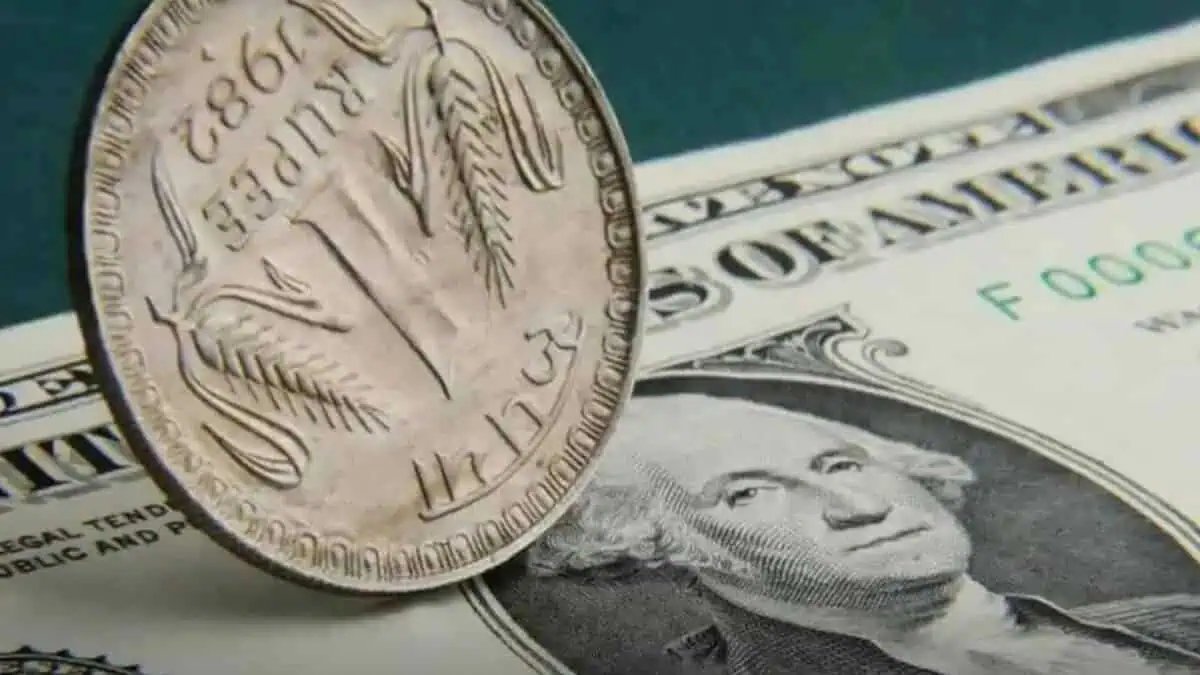
Mumbai: The rupee on Monday crashed to its lowest-ever level of 90.80 before settling at a new all-time low of 90.78 against the US dollar, registering a loss of 29 paise over its previous close, weighed down by uncertainty over an India-US trade deal and persistent foreign fund outflows.
Forex traders said prevailing risk-averse market sentiment, compounded by strong US dollar demand from importers, further dented investor sentiment.
At the interbank foreign exchange, the rupee opened at 90.53 against the US dollar, gained slightly to 90.51 level and then lost ground to hit a record intra-day low of 90.80, registering a 31-paise decline from its previous close.
At the end of trade on Monday, the rupee was quoted at a record low of 90.78, down 29 paise over its previous close.
On Friday, the rupee had slipped 17 paise to close at an all-time low of 90.49 against the American currency.
“The Indian rupee plunged to a record low, positioning it as the worst performer among the Asian currencies. Despite the better-than-expected trade balance number, the rupee was unable to find support,” said Dilip Parmar, Research Analyst, HDFC Securities.
Parmar further noted, “This lack of resilience is primarily attributed to a significant demand-supply imbalance, driven by high dollar demand from importers and persistent capital outflows, which remain the biggest concerns for the currency.”
“In the near term, the technical bias for the spot USD-INR pair remains bullish, with key resistance at 90.95 and support at 90.50,” Parmar added.
Meanwhile, Commerce Secretary Rajesh Agrawal on Monday said India and the US are “very close” on the framework deal.
“We are very close on the framework deal, which we feel can be done in a short period of time. But I would not like to put a time period on that,” he told reporters here.
The two countries are conducting parallel negotiations — one on a framework trade deal to address high tariffs and another on a comprehensive bilateral trade agreement (BTA).
The Indian industry and exporters are eagerly awaiting the conclusion of the negotiations and the announcement of the deal, as high import duties are hurting their shipments to America.
India and the US concluded two days of talks on Thursday, during which both sides exchanged views on trade-related issues, including the ongoing negotiations for a mutually beneficial bilateral trade agreement.
Prime Minister Narendra Modi and US President Donald Trump on Thursday discussed ways to sustain momentum in the bilateral economic partnership in a phone conversation, amid signs that the two sides are inching closer to finalising a much-awaited trade deal.
Meanwhile, the dollar index, which gauges the greenback’s strength against a basket of six currencies, was trading 0.08 per cent lower at 98.32.
Brent crude, the global oil benchmark, was trading 0.21 per cent higher at USD 61.25 per barrel in futures trade.
On the domestic equity market front, the 30-share benchmark index, Sensex, declined 54.30 points to settle at 85,213.36, and the Nifty fell 19.65 points to 26,027.30.
Foreign Institutional Investors sold equities worth Rs 1,468.32 crore on Monday, according to exchange data.
Anuj Choudhary, Research Analyst, MiraeAsset ShareKhan, said the rupee the rupee is expected to trade with a negative bias amid delay in Indo-US trade deal and FII outflows.
“A weak dollar and any intervention by the RBI may also support the rupee at lower levels. Investors may watch of for central bank monetary policy decisions from BOE, ECB and BoJ. USD-INR spot price is expected to trade in a range of Rs 90.30 to Rs 91,” Choudhary said.
According to the latest government data released on Monday, India’s trade deficit narrowed to a five-month low of USD 24.53 billion in November, as exports rebounded by 19.37 per cent to a six-month high of USD 38.13 billion after contracting in October, driven by higher shipments of engineering and electronics goods.
At the same time, the country’s imports dipped by 1.88 per cent to USD 62.66 billion due to a fall in the inbound shipments of gold, crude oil, coal, and coke.
Also, wholesale price inflation stayed in the negative for the second consecutive month in November at (-) 0.32 per cent, even though there was an uptick in prices of food articles like pulses and vegetables on a month-on-month basis, government data showed on Monday.
Wholesale Price Index (WPI)-based inflation was at (-) 1.21 per cent in October and 2.16 per cent in November last year.
Bangkok: Shares fell Monday in Asia as China reported investment fell in November in the latest signal that demand in the world’s second largest economy remains weak. The retreat followed a dismal end to last week, when declines for superstar artificial-intelligence stocks knocked Wall Street off its record heights
Tokyo’s Nikkei 225 index shed 1.5% to 50,092.10, as investors wait to see if the Bank of Japan will raise its benchmark interest rate as expected this week.
The BOJ’s quarterly “tankan” survey of big manufacturers, released Monday, showed a slight improvement in sentiment among such businesses. The measure of those expressing optimism rose to 15 from 14 in the last quarter, the highest level in four years, the central bank said.
The index shows the percentage of companies reporting positive conditions minus the percentage reporting unfavourable ones. While the overall survey showed improvement, forecasts for the next quarter were less positive.
Japan’s economy contracted at a 2.3% annual pace in the July-September quarter, the first such decline in six quarters. An agreement between Japan and the US over the level of President Donald Trump’s higher tariffs, limiting baseline import duties to 15%, has helped to reduce uncertainty for big automakers and electronics companies.
Analysts said the stronger results may sway the BOJ toward pressing ahead with a 0.25 percentage point rate hike that will take the key rate to 0.75%.
The Kospi in South Korea dropped 1.2%, to 4,117.68.
In Hong Kong, the Hang Seng declined 0.7% to 25,786.45. The Shanghai Composite index edged 0.1% higher, however, to 3,892.45.
China reported Monday that investment in fixed assets such as factory equipment and other infrastructure fell 2.6% in November from a year earlier, implying that such investments dropped 11.1% year-on-year in the first 11 months of the year.
Retail sales rose 4% in January-November from a year earlier, while factory output climbed 4.8%, the government said.
The latest data followed a high-level meeting of China’s Communist Party leadership last week that yielded no major policy shifts, and a pledge to continue to try to boost consumer spending and investment needed to drive higher domestic demand.
“Policy support should help drive a partial recovery in the coming months, but this probably won’t prevent China’s growth from remaining weak across 2026 as a whole,” Zichun Huang of Capital Economics said in a commentary.
Elsewhere in the region, Australia’s S&P/ASX 200 slipped 0.7% to 8,640.60 and Taiwan’s benchmark lost 1.1%.
The futures for the S&P 500 and the Dow Jones Industrial Average were up 0.3%.
On Friday, the S&P 500 fell 1.1% from its all-time high for its worst day in three weeks, closing at 6,827.41. The weakness for tech stocks yanked the Nasdaq composite down by a market-leading 1.7%, to 23,195.17.
The Dow gave back 0.5% to 48,458.05.
AI heavyweight Broadcom dragged the market lower and tumbled 11.4% even though the chip company reported a stronger profit for the latest quarter than analysts expected. Analysts called the performance solid, and CEO Hock Tan said strong 74% growth in AI semiconductor revenue helped lead the way.
The drop added to worries about the AI boom that flared a day before, when Oracle plunged nearly 11% despite likewise reporting a bigger profit for the latest quarter than analysts expected.
Chip maker Nvidia fell 3.3%, while Oracle fell another 4.5%.
Stocks of companies that depend on spending by US consumers were relatively strong Friday, as two out of every five stocks within the S&P 500 rose. Oil prices eased this week, which could help ease people’s bills.
In other dealings early Monday, US benchmark crude oil gained 30 cents to $57.74 per barrel. Brent crude, the international standard, rose 29 cents to $61.41 per barrel.
The US dollar slipped to 155.37 Japanese yen from 155.75 yen late Friday. The euro was unchanged at $1.1739.
Mumbai: Logistics operator Delhivery on Monday announced the launch of its on-demand intra-city shipping service to offer pickups within 15 minutes of booking on its app for customers in the country’s financial capital and Hyderabad.
The service, initially launched for the customers in Delhi-NCR and Bengaluru in June this year, caters to small businesses, D2C brands, and individuals who require local on-demand shipping.
The Delhivery Direct App is available on Google Play and Apple App Store.
The service features include real-time tracking and a network connecting commercial and residential hubs across Mumbai and Hyderabad, Delhivery said.
“The launch of the service in Mumbai and Hyderabad brings our fast, affordable, and reliable intra-city logistics to two more major markets,” said Nikhil Vij, Head of Intracity Business at Delhivery.
Delhivery will continue to invest and expand to more cities to serve the growing demand across India, he added.
The company said the customers can download the app to book intra-city orders, and added that the app also enables booking of intercity shipments to over 18,850 pin codes across India.
It also said that the users may select two-wheelers for parcels or three and four-wheeler vehicles for larger consignments.
New Delhi: Gold prices surged by Rs 4,000 to touch an all-time high of Rs 1,37,600 per 10 grams in the national capital on Monday, tracking firm global cues, according to the All India Sarafa Association.
The precious metal of 99.9 per cent purity had closed at Rs 1,33,600 per 10 grams on Friday.
“Gold prices scaled even higher as international spot gold surged towards the USD 4,350 zone, triggering a strong rally in the domestic market,” Jateen Trivedi, VP Research Analyst, Commodity and Currency, LKP Securities, said.
He added that the yellow metal reflected the global strength with a sharp gain, touching a fresh lifetime high.
Gold prices had earlier appreciated by Rs 3,200 to touch an all-time high of Rs 1,34,800 per 10 grams on October 17.
“The move was driven by renewed safe-haven demand and expectations around upcoming US economic data, including non-farm payrolls and the Core PCE Price Index scheduled this week, focus has firmly shifted to US macro cues, which are expected to keep volatility elevated,” Trivedi added.
During the current calendar year, gold prices have surged Rs 58,650, or 74.3 per cent, from Rs 78,950 per 10 grams on December 31, 2024.
On the other hand, silver prices remained flat at Rs 1,99,500 (inclusive of all taxes), as per the association.
So far in this year, silver prices have skyrocketed by Rs 1,09,800, or 122.41 per cent, compared with Rs 89,700 per kilogram on December 31, 2024.
In the international markets, spot gold rallied for the fifth consecutive session, rising USD 49.83, or 1.16 per cent, to USD 4,350.06 per ounce.
Over the past five sessions, the yellow metal has added USD 159.32, or 3.80 per cent, from USD 4,190.74 per ounce recorded on December 8.
“Spot gold trading with a positive bias as the Federal Reserve not only cut the rate into elevated inflation, it is also adding liquidity to the system by buying Treasury bills,” Praveen Singh, Research Analyst, Mirae Asset ShareKhan, said.
Meanwhile, spot silver advanced by USD 2, or 3.24 per cent, to USD 63.96 per ounce in the overseas markets. On Friday, the white metal had touched a lifetime high of USD 64.65 per ounce.
New Delhi: Wholesale price inflation (WPI) came in at (-) 0.32 per cent in November, driven by an uptick in prices of food articles like pulses and vegetables on a month-on-month basis, government data showed on Monday.
WPI-based inflation was (-) 1.21 per cent in October and 2.16 per cent in November last year.
“Negative rate of inflation in November 2025 is primarily due to a decrease in prices of food articles, mineral oils, crude petroleum & natural gas, manufacture of basic metals and electricity, etc,” the industry ministry said in a statement.
According to WPI data, deflation in food articles was 4.16 per cent in November, compared to 8.31 per cent in October.
In vegetables, deflation was 20.23 per cent in November, as against 34.97 per cent in October.
In pulses, deflation was at 15.21 per cent in November, while in potato and onion it was 36.14 per cent and 64.70 per cent, respectively.
In the case of manufactured products, inflation eased to 1.33 per cent in November, against 1.54 per cent in October.
Fuel and power witnessed a negative inflation or deflation of 2.27 per cent, as against 2.55 per cent in October.
Data released last week showed CPI inched up to 0.71 per cent in November, from a record low of 0.25 per cent, driven by rising food prices.
Low inflation in the current fiscal year has given the Reserve Bank of India (RBI) room to cut policy interest rates by 1.25 percentage points.
The Reserve Bank, earlier this month, significantly lowered the inflation projection for the current fiscal to 2 per cent from 2.6 per cent estimated earlier, as the economy continues to witness rapid disinflation.
The RBI mainly tracks retail inflation for deciding on benchmark interest rates.
Earlier this month, the RBI had cut key policy interest rates by 25 bps to 5.25 per cent, saying that the Indian economy is in a “rare Goldilocks period” marked by high growth and low inflation.
The Reserve Bank last week raised the FY26 GDP growth projection to 7.3 per cent, from its earlier estimate of 6.8 per cent. India recorded an 8.2 per cent growth in the September quarter, and 7.8 per cent in the June quarter.
Mumbai: Equity benchmark indices Sensex and Nifty declined in early trade on Monday in-tandem with a weak trend in global markets and persistent foreign fund outflows.
Also, uncertainty over an India-US trade deal weighed on investors’ sentiment, analysts said.
The 30-share BSE Sensex declined 384.39 points to 84,883.27 in early trade. The 50-share NSE Nifty edged lower by 122.9 points to 25,924.05.
From the Sensex firms, Mahindra & Mahindra, Bharti Airtel, Trent, NTPC, Bajaj Finserv and Power Grid were among the major laggards.
However, Asian Paints, Hindustan Unilever, UltraTech Cement, Bharat Electronics and Tata Steel were the gainers.
In Asian markets, South Korea’s Kospi, Japan’s Nikkei 225 index, Shanghai’s SSE Composite index and Hong Kong’s Hang Seng index quoted lower.
US markets ended lower on Friday.
“Globally, Asian markets are trading lower this morning, led by weakness across Japan and South Korea, as investors turn cautious ahead of key economic data releases from China and the US. US equities closed lower on Friday, while Nasdaq futures continue to signal stress within tech-heavy segments,” Ponmudi R, CEO of Enrich Money, an online trading and wealth tech firm, said.
Foreign Institutional Investors (FIIs) offloaded equities worth Rs 1,114.22 crore on Friday, while Domestic Institutional Investors (DIIs) bought stocks worth Rs 3,868.94 crore, according to exchange data.
“A major drag on the market continues to be the elusive US-India trade deal which is impacting India’s exports to the US, widening of trade deficit and continuous depreciation in the rupee,” VK Vijayakumar, Chief Investment Strategist, Geojit Investments Limited, said.
Rupee depreciated 9 paise to an all-time low of 90.58 against US dollar in early trade on Monday.
Brent crude, the global oil benchmark, climbed 0.52 per cent to USD 61.43 per barrel.
On Friday, the Sensex climbed 449.53 points or 0.53 per cent to settle at 85,267.66. The Nifty surged 148.40 points or 0.57 per cent to 26,046.95.
Amaravati: Andhra Pradesh has secured top positions across several sectors, including agriculture and fisheries, reflecting the state’s steady economic and social progress, according to a recent report.
Citing the latest Reserve Bank of India (RBI) report, the Andhra Pradesh government said the state emerged as a top performer across key indicators during the 2024–25 financial year.
“Andhra Pradesh ranked first in fruit production with over 19 million tonnes and also topped the country in fish production with nearly 5.1 million tonnes,” a press release said on Sunday.
The state also recorded steady economic growth, with its Gross State Domestic Product (GSDP) estimated at nearly Rs 16 lakh crore at current prices during 2024–25, the release said.
Per capita GSDP in Andhra Pradesh stood at over Rs 2.5 lakh during the same period, reflecting improved income levels.
In terms of power availability, the state ranked 14th nationally, with per capita availability of nearly 1,500 units, it added.
The average life expectancy in Andhra Pradesh was recorded at 70 years, on par with the national average. Male life expectancy stood at 68 years, while female life expectancy was 73 years, indicating higher longevity among women.
In progress towards the Sustainable Development Goals, Andhra Pradesh ranked 10th in the country with a score of 74, the release added.
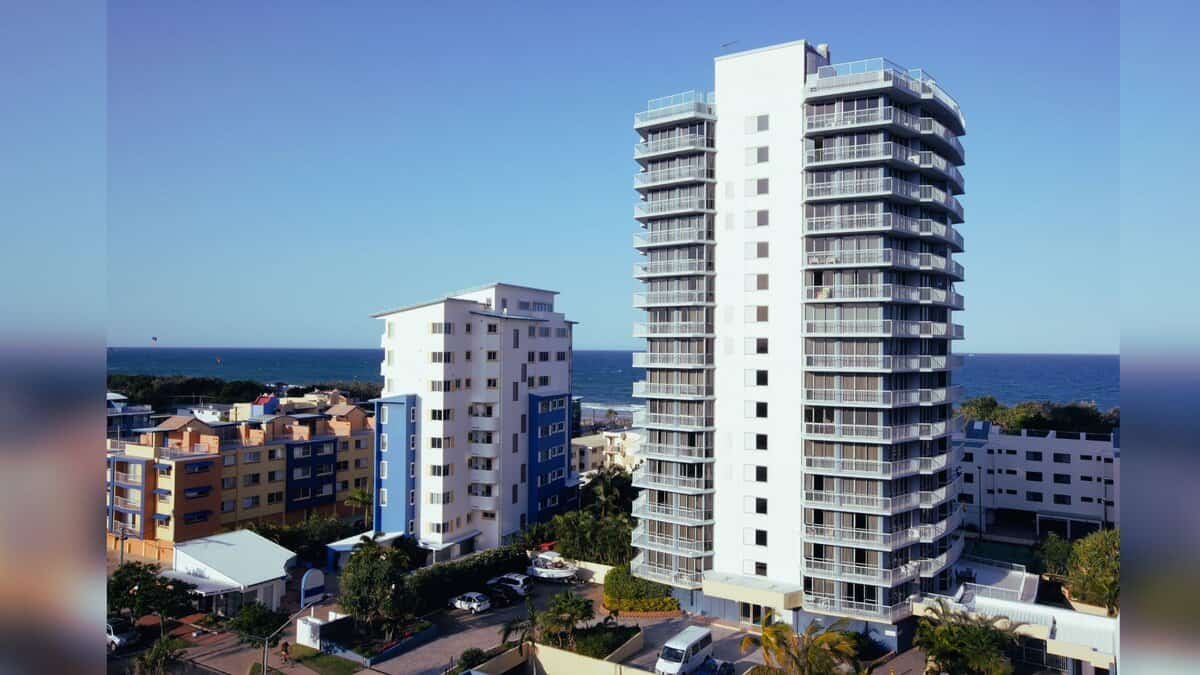
New Delhi: Godrej Properties has sold housing properties worth Rs 2,600 crore in the first year of operation in Hyderabad and it is looking to expand business in the city that offers huge growth opportunities, a top company official said.
In January this year, Godrej Properties announced entry into the Hyderabad housing market with the launch of its first project at Kokapet.
In an interview with PTI, Godrej Properties Executive Chairperson Pirojsha Godrej highlighted that the company has performed exceedingly well in the Hyderabad market.
“We launched our first project in Hyderabad during January-March quarter. We launched our second project in July-September quarter. Between these two projects, we have achieved sales bookings of more than Rs 2,600 crore of in our first calendar year of operation in the city,” said Pirojsha.
Noting that the Hyderabad market has a “huge growth potential”, he said the company would like to expand business in this city to tap strong demand for premium and luxury residential properties.
Godrej Properties, one of the leading real estate developers in the country, has a strong presence in Mumbai Metropolitan Region (MMR), Delhi-NCR, Pune, and Bengaluru residential markets.
This year, it forayed into the Hyderabad market. In these five cities, it is developing group housing projects.
Buoyed by a robust sales performance in Hyderabad, the company is aggressively looking for more land in Hyderabad.
Recently, Godrej Properties said it has won a bid to acquire 5 acre land in Hyderabad and will develop a housing project worth Rs 4,150 crore.
The company took part in an e-auction conducted by the Hyderabad Metropolitan Development Authority (HMDA) for a land parcel measuring around 5 acres in Neopolis, Kokapet.
Godrej Properties emerged as the highest bidder for this land parcel where it plans to develop a premium residential project with a saleable area of about 2.5 million sq ft and an estimated revenue potential of about Rs 4,150 crore.
In August, Godrej Properties acquired 7.825-acre land parcel in Kukatpally, Hyderabad.
Across all markets, Godrej Properties achieved a 13 per cent growth in sales bookings to Rs 15,587 crore in the first six months of this fiscal year from Rs 13,835 crore in the year-ago period.
The company is confident of achieving sales bookings target of Rs 32,500 crore for the full fiscal year.
The company sold properties, primarily housing, worth Rs 29,444 crore in the 2024-25 fiscal year.
With housing markets across major cities witnessing a strong demand, Godrej Properties is launching new projects and also acquiring land parcels for future.
During this fiscal year, the company is targeting to add Rs 30,000 crore of revenue potential through land acquisitions.
Under the new business development, the company acquires land outright and also does joint development agreements (JDAs) with landowners.
For offering housing plots, Godrej Properties is acquiring land in many tier-II and III cities.
New Delhi: Gold and silver prices witnessed a sharp surge in the domestic market this week, tracking strong gains in global bullion markets. Gold prices rose by around Rs 4,000 per 10 grams, while silver prices jumped by nearly Rs 17,000 per kilogram.
According to data from the India Bullion and Jewellers Association (IBJA), the price of 24-karat gold increased by Rs 4,188 to Rs 1,32,710 per 10 grams, compared to Rs 1,28,592 a week ago.
The price of 22-karat gold climbed to Rs 1,21,562 per 10 grams from Rs 1,17,777, while 18-karat gold rose to Rs 99,533 per 10 grams from Rs 96,444.
Silver prices outperformed gold, registering a sharper weekly rise.
The price of silver surged by Rs 16,970 to Rs 1,95,180 per kilogram, up from Rs 1,78,210 per kilogram a week earlier.
Earlier on Friday, Silver touched the Rs 2 lakh mark to hit an all-time high of Rs 2,013,88 per kilogram on the Multi-Commodity Exchange (MCX) during the intraday trade.
The price of the future contract expiring on March 5, 2026, rose over Rs 2,400 during the day before settling at Rs 2,00462, up Rs 1,520 against the previous session’s closing of Rs 1,98,942.
Gold rates in Hyderabad
The current gold price in Hyderabad is ₹12,275 per gram for 22 karat gold and ₹13,391 per gram for 24 karat gold.
Hyderabad’s gold market has seen a steady trend since the beginning of the year, driven by rising demand, primarily for jewelry, with relatively less demand for gold biscuits and coins.
“Gold and silver ETFs have been quiet heroes of the year, delivering standout returns even as equity markets saw bouts of volatility. Silver, especially, stole the spotlight — a rare combination of booming industrial demand from solar, EVs and electronics, alongside tightening global supply, pushed prices sharply higher,” said Nikunj Saraf, CEO, Choice Wealth.
Gold too held its ground and climbed steadily, supported by persistent central-bank buying and investors seeking safety amid geopolitical and inflation worries, he added.
The gold future contract expiring on February 5 surged 1.87 per cent to close at Rs 1,34,948 per 10 grams on MCX on Friday. In the retail market, the 24-carat gold price settled at Rs 132,710 per 10 grams, up over Rs 4,600 from the previous day’s closing of Rs 1,28,596 per 10 grams, according to the IBJA.
The rally in domestic bullion prices is largely driven by continued strength in international markets, with both precious metals hovering close to their all-time highs.
On the COMEX, gold was trading at $4,328 per ounce, while silver stood at $62 per ounce.