Category: BUSINESS

  • Rupee falls 20 paise to 90.07 against US dollar in early trade

    Rupee falls 20 paise to 90.07 against US dollar in early trade

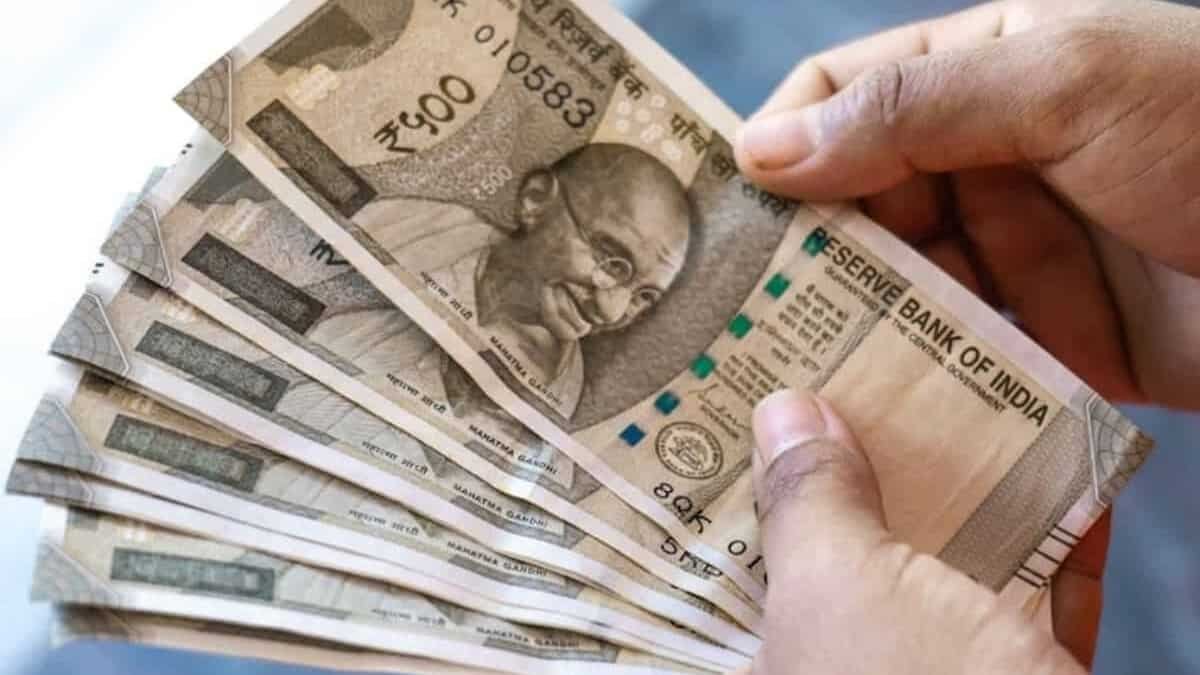
    Mumbai: The rupee depreciated 20 paise to 90.07 against the US dollar in early trade on Wednesday, facing pressure from importer dollar demand, tariff concerns and market anticipation of US FED Reserve policy decision.

    Forex traders said all eyes will be on the US-India trade talks which could give some positivity to the rupee in the coming days.

    India and the United States will commence three-day talks on the first phase of their proposed bilateral trade agreement here from December 10.


    Add as a preferred source on Google
    “King“King

    At the interbank foreign exchange, the rupee opened at 90.00 against the US dollar, then lost ground and fell to 90.07 against the American currency.

    On Tuesday, the rupee settled at 89.87 against the US dollar. “The rupee is expected to remain in the trading range of 89.70-90.20 for the day as the dollar index rose to 99.20 level,” said Anil Kumar Bhansal, Head of Treasury and Executive Director Finrex Treasury Advisors LLP.

    Market is focussed on the stance the US Federal Reserve Chief chairman Jerome Powell will deliver in the US FED meeting this week, traders said.

    Memory Khan SeminarMemory Khan Seminar

    Meanwhile, the dollar index, which gauges the greenback’s strength against a basket of six currencies, was trading 0.01 per cent higher at 99.23 amid anticipation of a hawkish rate cut from the FED.

    Brent crude, the global oil benchmark, was trading higher by 0.19 per cent at USD 62.06 per barrel in futures trade. On the domestic equity market front, the 30-share benchmark index Sensex was trading 134.71 points higher at 84,800.99, while the Nifty was up 41.50 points at 25,881.15.

    Foreign Institutional Investors sold equities worth Rs 3,760.08 crore on Tuesday, according to exchange data.
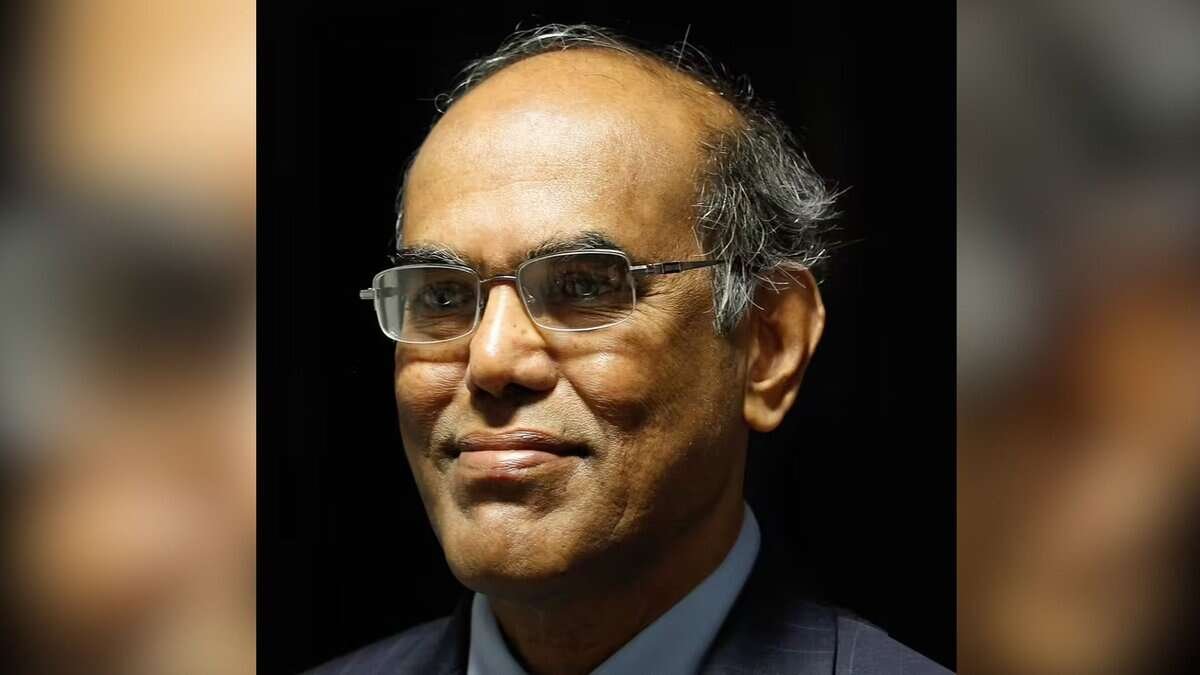

  • Telangana must grow 8-9 pc yearly to hit USD 3 trillion goal: Ex-RBI chief

    Telangana must grow 8-9 pc yearly to hit USD 3 trillion goal: Ex-RBI chief

    Hyderabad: Telangana needs to grow at 8-9 per cent annually to become a USD 3 trillion economy by 2047, former RBI Governor Duvvuri Subbarao said here on Tuesday.

    Speaking at the launch of the Telangana Rising 2047 Vision Document, Subbarao said that economic growth cannot be sustained unless its benefits are widely shared.

    “The government must pursue inclusive growth, which means the benefits of growth must reach the poorest person in Telangana, to the farthest point in the state,” he said.

    Add as a preferred source on Google
    “King“King

    “Today, the GSDP of Telangana is about Rs 16.7 trillion, which roughly translates to USD 250 billion. We are USD 250 billion today; we have to reach USD 3 trillion in 22 years, which means multiplying the GSDP 15 times. Simple arithmetic shows the state must grow at about 8 to 9 per cent, perhaps even faster. That’s a tough and challenging goal, difficult but not impossible,” Subbarao said.

    The former RBI chief stressed the importance of skilling, noting that it cannot be achieved by the government or the private sector alone. “Skilling has to be done under a public–private partnership model,” he said.

    He added that politicians often do not prioritise education and health because these sectors do not yield immediate results, and democratic compulsions tend to force short-term thinking.

    Memory Khan SeminarMemory Khan Seminar

    Mahindra Group Chairman Anand Mahindra also spoke at the event.

  • Google facing new antitrust probe in Europe over content it uses for AI

    Google facing new antitrust probe in Europe over content it uses for AI

    London: Google faces fresh antitrust scrutiny from European Union regulators, who opened an investigation Tuesday into the company’s use of online content for its artificial intelligence models and services.

    The European Commission, which is the 27-nation bloc’s top antitrust enforcer, said it’s examining whether Google has breached competition rules through its use of content from web publishers as well as material uploaded to YouTube for AI purposes.

    Regulators are concerned that Google has given itself an unfair advantage by using content for two search services, AI Overviews and AI Mode, without paying publishers or letting them opt out. AI Overviews automatically generates summaries that appear at the top of its traditional search results, while AI Mode provides chatbot-style answers to search queries.

    Add as a preferred source on Google
    “King“King

    They’re also examining whether Google uses videos uploaded to YouTube under similar conditions to train its generative AI models, while shutting out rival AI model developers.

    “This complaint risks stifling innovation in a market that is more competitive than ever,” Google said in statement. “Europeans deserve to benefit from the latest technologies and we will continue to work closely with the news and creative industries as they transition to the AI era.”

    The Commission, which is the bloc’s executive arm, is carrying out the investigation under the EU’s longstanding competition regulations, rather than its newer Digital Markets Act that was was drawn up to prevent Big Tech companies from monopolizing online markets.

    Memory Khan SeminarMemory Khan Seminar

    “AI is bringing remarkable innovation and many benefits for people and businesses across Europe, but this progress cannot come at the expense of the principles at the heart of our societies,” Teresa Ribera, the commission’s vice president overseeing competition affairs, said in a statement.

    “This is why we are investigating whether Google may have imposed unfair terms and conditions on publishers and content creators, while placing rival AI models developers at a disadvantage, in breach of EU competition rules.”

    Brussels has no deadline to wrap up the case, which could result in sanctions including a fine worth up to 10 per cent of the company’s annual global revenue.

  • IMF approves $1.2 bn for Pakistan as stability efforts advance

    IMF approves $1.2 bn for Pakistan as stability efforts advance

    Washington: The International Monetary Fund (IMF) approved nearly $1.2 billion in new financing for Pakistan, giving the country a critical infusion of support as it struggles to maintain macroeconomic stability amid severe flooding, rising inflation, and persistent fiscal pressures.

    According to an official release, the IMF Executive Board completed the second review of Pakistan’s Extended Fund Facility (EFF) and the first review of its Resilience and Sustainability Facility (RSF), unlocking “about US$1 billion” under the EFF and “about US$200 million” under the RSF. Total disbursements under the two arrangements now stand at “about $3.3 billion.”

    Despite “recent devastating floods,” the Fund said Pakistan’s “strong program implementation” had helped “maintain stability and improve financing and external conditions.” The 37-month EFF, approved in September 2024, aims to entrench stability, rebuild reserves, broaden the tax base, improve competitiveness, reform state-owned enterprises, and restore energy-sector viability.

    Add as a preferred source on Google
    “King“King

    Fiscal consolidation has been a key anchor. Pakistan recorded a primary surplus of “1.3 percent of GDP” in FY25, while gross reserves climbed to “$14.5 billion at end-FY25, up from $9.4 billion” the previous year. Inflation remains elevated, driven partly by flood-related food price spikes, it said.

    Nigel Clarke, IMF Deputy Managing Director and Acting Chair, said Pakistan must maintain “prudent policies” to strengthen stability and support “stronger, private sector-led, and sustainable medium-term growth.”

    He called the government’s adherence to its FY2026 primary balance target, even while responding to flood relief, “a strong signal of their commitment to build fiscal policy credibility.”

    Memory Khan SeminarMemory Khan Seminar

    Clarke said an “appropriately tight monetary policy stance” had been “pivotal in reducing inflation” and should continue. He urged deeper interbank foreign exchange market development, exchange-rate flexibility, and “decisive financial regulation enforcement.”

    Energy-sector reforms remain essential, the IMF said, noting that tariff adjustments had helped reduce circular debt but warning that inefficiencies in power and gas systems must still be addressed. Structural reforms — including SOE governance, privatization, and improvements in business climate and economic data — were also flagged as priorities.

    The RSF review emphasised Pakistan’s vulnerability to extreme weather. The Fund said the floods highlight the urgency of climate reforms, including better disaster-response coordination, more efficient water use, and improved disclosure of climate-related financial risks.

  • Rupee falls 10 paise to close at 90.05 against US dollar

    Rupee falls 10 paise to close at 90.05 against US dollar

    Mumbai: The rupee depreciated 10 paise to close at 90.05 against the US dollar on Monday, as elevated crude oil prices and persistent foreign fund outflows dented investor sentiments.

    Forex traders said multiple pressures, such as sustained importer demand for the American currency, foreign fund outflows from equities, and lingering uncertainty over the India-US trade deal, are keeping investor sentiment fragile.

    At the interbank foreign exchange market, the rupee opened at 90.07, then gave up ground and fell to an intra-day low of 90.26 against the US dollar, down 31 paise from its previous close.

    Add as a preferred source on Google
    “King“King

    At the end of the trade on Monday, the rupee settled at 90.05 against the greenback, down 10 paise over its previous close.

    On Friday, the rupee settled at 89.95 against the US dollar, after the Reserve Bank of India cut the key policy interest rate for the first time in six months.

    According to Anuj Choudhary, Research Analyst, Mirae Asset ShareKhan, the rupee is expected to trade with a negative bias on persistent FII outflows and weak domestic markets.

    Memory Khan SeminarMemory Khan Seminar

    “However, a weak tone in the US dollar amid expectations of rate cut by the Fed in December may support the rupee at lower levels. Any intervention by the central bank may also support the rupee. USD-INR spot price is expected to trade in a range of Rs 90.05 to Rs 90.75,” Choudhary said.

    On Friday, Reserve Bank Governor Sanjay Malhotra said the central bank does not target any band for the rupee in the forex market, and allows the domestic currency to find its own correct level.

    “We don’t target any price levels or any bands. We allow the markets to determine the prices. We believe that markets, especially in the long run, are very efficient. It’s a very deep market,” he said, while replying to a question on rupee depreciation at a post-monetary policy press meet on Friday.

    Forex traders said investors’ focus has now shifted to the Fed’s policy outcome on December 9-10. Markets are placing nearly a 90 per cent probability on a rate cut next week.

    Meanwhile, India and the United States will commence three-day talks on the first phase of their proposed bilateral trade agreement here from December 10.

    The dollar index, which gauges the greenback’s strength against a basket of six currencies, was trading 0.01 per cent lower at 98.98.

    Brent crude, the global oil benchmark, was trading lower by 0.71 per cent at USD 63.28 per barrel in futures trade.

    On the domestic equity market front, Sensex tanked 609.68 points to settle at 85,102.69, while the Nifty dropped 225.90 points to 25,960.55.

    Foreign institutional investors sold equities worth Rs 655.59 crore on Monday, according to exchange data.

  • IndiGo CEO, COO file replies to DGCA show cause notices

    IndiGo CEO, COO file replies to DGCA show cause notices

    Mumbai: IndiGo CEO Pieter Elbers and COO Isidre Porqueras have filed replies to the show cause notices issued by the aviation safety regulator DGCA over the airline’s massive flight disruptions, an airline source said on Monday.

    The two top executives of the airline were given until 6 pm on Monday to file replies to the notices.

    “Chief Executive Officer Pieter Elbers and Chief Operating Officer Isidre Porqueras have filed replies to the show cause notice,” an IndiGo source confirmed to PTI.

    Add as a preferred source on Google
    “King“King

    The content of the response, however, was not immediately known.

    The DGCA on Saturday had issued show cause notices to IndiGo’s CEO and COO seeking explanations within 24 hours on the massive flight disruptions.

    The deadline was later extended to Monday, 6 pm, after the airline sought more time from the regulator.

    Memory Khan SeminarMemory Khan Seminar

    For seven days in a row, IndiGo has witnessed significant operational disruptions, with hundreds of flight cancellations and delays, causing hardships to thousands of passengers.

    In the notices sent to Elbers and Porqueras, the regulator said the large-scale operational failures indicate significant lapses in planning, oversight and resource management.

    Porqueras is also the Accountable Manager of the airline.

    “…as the CEO, you are responsible for ensuring effective management of the airline, but you have failed in your duty to ensure timely arrangements for conduct of reliable operations and the availability of requisite facilities to the passengers,” the regulator said in the notice sent to Elbers.

    The notices mentioned that the primary cause of the flight disruptions is the non-provisioning of adequate arrangements to cater to the revised requirements for smooth implementation of the approved FDTL (Flight Duty Time Limitations) scheme for the airline.

  • ICICI Bank to maintain over 51 pc stake in all three of its listed entities: ED

    ICICI Bank to maintain over 51 pc stake in all three of its listed entities: ED

    Mumbai: The country’s second largest private sector lender ICICI Bank is aiming to maintain over 51 per cent stake in all three of its listed entities, a senior official said on Monday.

    Its Executive Director Sandeep Batra said the bank is also committed to maintaining over 51 per cent stake in the IPO-bound ICICI Prudential Asset Management Company, and hence, it is upping stake by 2 percentage points before the entity hits the markets.

    “We are committed to ensuring all our three listed entities remain our subsidiaries. So, our stake will remain at over 51 per cent,” Batra told reporters at a press conference here.

    Add as a preferred source on Google
    “King“King

    The mutual fund arm’s Managing Director and Chief Executive Nimesh Shah said that ICICI Bank will pick up the additional 2 per cent stake for the same price as the one which will be paid by other investors as part of its initial public offering.

    Shah added that at present, the ICICI Bank ownership in the company is 51 per cent, which will go up to 53 per cent post the IPO, providing comfort to ensure that the holding is maintained above the 51 per cent mark.

    Prudential owns 49 per cent at present, which will go down to 47 per cent after the sale to ICICI Bank and further to 37 per cent after the IPO, he said.

    Memory Khan SeminarMemory Khan Seminar

    As per the current Sebi directive, Prudential has to reduce its holding in the company to 22 per cent by selling another 15 percentage points of the holding over the next five years, he added.

    At present, 9 per cent of ICICI Prudential AMC’s overall AUM comes from its parent ICICI Bank’s network, he said.

    Asked about the regulatory risk given that Sebi changes rules, especially ones governing fees very regularly causing some unease among investors, Shah said there is no risk but an opportunity.

    The MF space is not one of maximising margins, but a case of volumes driving up the revenues.

    Conceding that the cost structures at ICICI Prudential AMC are elevated, he asked everyone to look at the profits which the company is delivering and added that it is the most profitable asset manager in the country.

    The profit market share for the company is 20 per cent as against a 13.3 per cent share in the overall assets under management, he added.

    On the new entrants, especially those seeking to sell directly to investors rather than intermediaries, Shah appeared unfazed saying all new entrants have not been able to garner AUM and it is only those delivering performance who will be preferred by investors.

    ICICI Prudential AMC has applied to launch a specialised investment fund as well and is looking to launch its offering in the next six months, he said.

    The company’s acquisition of group company ICICI Venture’s businesses will help get access to the right talent to understand new age businesses better and also complete the product suite.

    The PE business will become a part of the company as the fifth business unit, he added.

  • Rupee falls 16 paise to 90.11 against US dollar in early trade

    Rupee falls 16 paise to 90.11 against US dollar in early trade

    Mumbai: The rupee depreciated 16 paise to 90.11 against the US dollar in early trade on Monday, weighed down by elevated crude oil prices and persistent foreign fund outflows.

    Forex traders said strong dollar demand from corporates, importers and foreign portfolio investors pressurised the rupee.

    At the interbank foreign exchange, the rupee opened at 90.07 against the US dollar then dropped to 90.11, down 16 paise from its previous close.

    Add as a preferred source on Google
    “King“King

    On Friday, the rupee settled at 89.95 against the US dollar, after the Reserve Bank of India cut the key policy interest rate for the first time in six months.

    Forex traders said investors’ focus has now shifted to the Fed’s policy outcome on December 9–10. Markets are placing nearly a 90 per cent probability on a rate cut next week.

    Meanwhile, India and the United States will commence three-day talks on the first phase of their proposed bilateral trade agreement here from December 10.

    Memory Khan SeminarMemory Khan Seminar

    “The US team is in India on 10th December and simultaneously the EU team is also in India to meet the Commerce Minister on trade negotiations and finalising an FTA. We await for positive outcomes on both counts. ” said Anil Kumar Bhansali, Head of Treasury and Executive Director Finrex Treasury Advisors LLP.

    Bhansali further noted that, FPIs continue to remain sellers despite the India equities going up. The dollar Index is range bound, Asian currencies are range bound, so there are no specific cues from any front.

    Meanwhile, the dollar index, which gauges the greenback’s strength against a basket of six currencies, was trading 0.11 per cent lower at 98.88. Brent crude, the global oil benchmark, was trading higher by 0.17 cent at USD 63.85 per barrel in futures trade.

    On the domestic equity market front, the benchmark sensitive index Sensex declined 215.73 points to 85,741.24 in early trade, while the Nifty was down 64.85 points to 26,121.60.

    Foreign Institutional Investors sold equities worth Rs 438.90 crore on Friday, according to exchange data.

  • IndiGo shares sink over 6.5 pc amid ongoing flight disruptions

    IndiGo shares sink over 6.5 pc amid ongoing flight disruptions

    Mumbai: Shares of InterGlobe Aviation, the parent company of IndiGo Airlines, fell sharply in early trade on Monday, dropping 6.6 per cent to an intra-day low of Rs 5,015 on the BSE.

    However, it recovered later, as around 9:45 a.m., the shares were trading at Rs 5,159.50, down by Rs 211 or 3.93 per cent.

    The sell-off came after the Directorate General of Civil Aviation (DGCA) extended the deadline for IndiGo CEO Pieter Elbers to respond to a show-cause notice linked to the airline’s recent operational disruptions.

    Add as a preferred source on Google
    “King“King

    Show cause notice

    The aviation regulator had issued a show-cause notice to IndiGo’s accountable manager on Sunday, just a day after sending a similar notice to CEO Pieter Elbers.

    The DGCA said that the airline’s massive wave of cancellations over the past week caused widespread inconvenience and distress to passengers across the country.

    According to the regulator, the disruptions were largely triggered by IndiGo’s failure to plan properly for the rollout of the revised Flight Duty Time Limitations (FDTL) rules.

    Memory Khan SeminarMemory Khan Seminar

    These rules, which lay down the duty hours and mandatory rest periods for flight crew, came into effect recently and have created significant operational challenges for the airline.

    In its notice, the DGCA pointed out that IndiGo’s “large-scale operation failures” suggest major lapses in planning, oversight and resource management.

    The accountable manager has been given 24 hours to explain why enforcement action should not be taken. If the airline fails to respond within the extended deadline, the DGCA has said it will proceed based on the information available.

    95 pc network restored: IndiGo

    Even as the regulatory pressure increases, IndiGo said on Sunday that it has restored 95 per cent of its network and plans to operate around 1,500 flights.

    The airline claimed that its operations are on track to stabilise by December 10, with improved on-time performance and fewer cancellations.

    However, more than 220 flights had already been cancelled across major airports by the time of reporting, adding to the inconvenience faced by thousands of passengers.

  • FPIs withdraw Rs 11,820 cr in first week of December

    FPIs withdraw Rs 11,820 cr in first week of December

    New Delhi: Foreign investors have pulled out Rs 11,820 crore (USD 1.3 billion) from Indian equities in the first week of this month, primarily driven by the sharp depreciation of the rupee.

    This sharp withdrawal follows a net outflow of Rs 3,765 crore in November, further pressuring markets.

    These outflows come after a brief pause in October, when FPIs invested Rs 14,610 crore, breaking a three-month streak of massive withdrawals — Rs 23,885 crore in September, Rs 34,990 crore in August, and Rs 17,700 crore in July.

    Add as a preferred source on Google
    “King“King

    According to NSDL data, foreign portfolio investors (FPIs) withdrew a net amount of Rs 11,820 crore from Indian equities in the first week of this month. This takes the total outflow for 2025 to Rs 1.55 lakh crore (USD 17.7 billion).

    Analysts attribute the renewed selling primarily to currency concerns.

    The rupee has depreciated nearly 5 per cent this year, prompting FPIs to pull out during such periods, said VK Vijayakumar, Chief Investment Strategist at Geojit Investments.

    Memory Khan SeminarMemory Khan Seminar

    Adding to this, year-end portfolio repositioning by global investors, a typical December trend before the holiday season, has also intensified selling, noted Vaqarjaved Khan, Senior Fundamental Analyst at Angel One.

    Khan said delays in finalising the India-US trade deal have further dampened global sentiment.

    However, despite the FPI exodus, the impact on markets has been cushioned by strong domestic participation. Domestic Institutional Investors (DIIs) bought equities worth Rs 19,783 crore during the same period, completely offsetting the foreign selloff, Vijayakumar said.

    DII confidence has been supported by India’s robust GDP numbers and expectations of an improvement in corporate earnings ahead.

    The sentiment received an additional boost after the RBI’s 25-bps rate cut on December 5, when FPI flows turned positive for the day at Rs 642 crore.

    This shift was significant, considering FPIs had sold nearly Rs 13,000 crore by December 4.

    “The RBI not only reduced rates but also raised its FY26 growth guidance to 7.3 per cent, while cutting its CPI forecast to 2 per cent. A strong growth environment augurs well for Indian equities,” Khan said.

    Looking ahead, global liquidity may get another lift. The CME Fed Watch Tool indicates that the FOMC is expected to cut rates by 25 bps next week, a move that typically benefits risk assets worldwide, he said.

    India, he said, could be a key beneficiary, though the absence of a concluded India-US trade deal remains a risk factor.

    Meanwhile, in the debt market, FPIs invested Rs 250 crore under the general limit while withdrawing Rs 69 crore through the voluntary retention route during the same period.