Category: BUSINESS

  • Global gold demand crosses 5,000 tonnes in 2025: WGC

    Global gold demand crosses 5,000 tonnes in 2025: WGC

    Mumbai: Global demand for gold has crossed 5,000 tonnes to reach a new all-time high in 2025, mainly driven by investments, the World Gold Council (WGC) said in a report on Thursday.

    Total gold demand hit a new all-time high of 5,002 tonnes in 2025, up from 4,961.9 tonnes in the previous year, as the investment demand surged to 2,175.3 tonnes compared to 1,185.4 tonnes in 2024, driven by safe-haven and diversification factors, according to the WGC’s Full-Year 2025 Gold Demand Trends report.

    In the October-December quarter, the consumer demand went up by 2 per cent to 1,345.3 tonnes compared with 1,318.5 tonnes in the corresponding period of the previous year.

    Add as a preferred source on Google

    The average gold price globally stood at USD 2,709.7 per ounce in January 2025 on the LMBA (London Bullion Market Association) as compared to USD 2,034 per ounce in January 2024.

    Investment demand, both ETFs and bars and coins, went up by 84 per cent in 2025 to 2,175.3 tonnes from 1,185.4 tonnes in the previous year.

    This surge in investment demand was due to safe-haven and diversification factors following elevated geopolitical and geoeconomic risk, US dollar weakness, extended stock valuations, and expectations of lower interest rates, especially in the October-December quarter.

    MS Admissions 2026-27MS Admissions 2026-27

    Meanwhile, Central bank demand remained elevated in 2025, with the official sector adding 863 tonnes of gold, as the buying gained momentum in the fourth quarter (October-December) at 230 tonnes.

    The National Bank of Poland was the largest buyer for the second consecutive year, adding 102 tonnes in 2025, followed by the National Bank of Kazakhstan with 57 tonnes, the Central Bank of Brazil with 43 tonnes, the State Oil Fund of Azerbaijan with 38 tonnes, the Central Bank of Turkey with 27 tonnes, the People’s Bank of China with 27 tonnes and the Czech National Bank bought 20 tonnes in 2025.

    While annual demand was below the 1,000 tonnes mark surpassed in the previous three years, central bank buying remained a prominent and additive factor in the global gold demand picture, said the WG report.

    Amidst a spate of price highs, global jewellery demand softened across the globe as expected throughout the year, declining 18 per cent compared to 2024.

    However, the total value of gold jewellery demand increased 18 per cent year-on-year to USD 172 billion, highlighting the relevance of gold for consumers in the long term.

    Total supply also reached a new record, as mine production rose to 3,672 tonnes and recycling increased by a modest 3 per cent, remaining subdued despite high prices.

    “The year 2025 saw surging demand for gold and rocketing prices. Consumers and investors alike bought and held gold in an environment where economic and geopolitical risks have become the new normal. Investment demand stole the show as investors raced to access gold through all available routes, but other segments played a supporting role,” WGC Senior Markets Analyst Louise Street said.

    Jewellery demand dipped by only 18 per cent year-on-year against a 67 per cent price increase, highlighting continued consumer willingness to buy at elevated prices, while central banks remained firmly committed to bolstering reserves, she said.

    “With economic and geopolitical instability showing little sign of retreat in 2026, momentum from last year’s strong gold demand is likely to persist. In the first month of this year, gold has already pushed past USD 5,000 an ounce for the first time, underscoring gold’s role as a safe haven in uncertain times,” she added.

  • Rupee hits all-time low of 92 against US dollar in early trade

    Rupee hits all-time low of 92 against US dollar in early trade

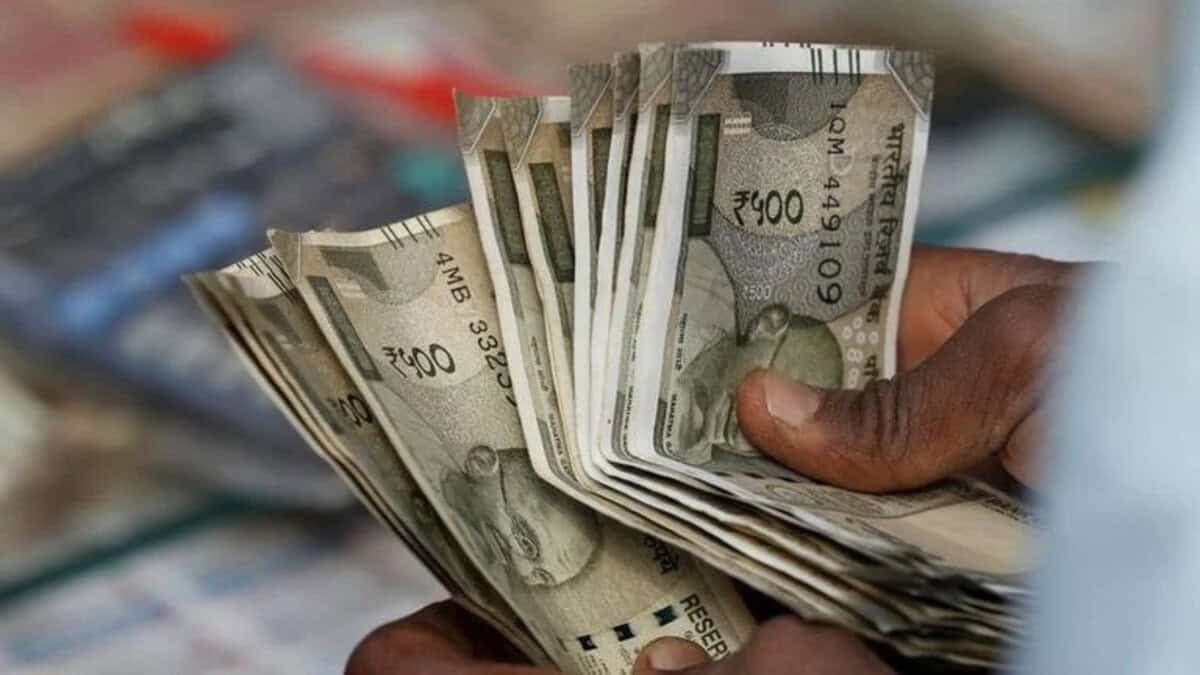
    Mumbai: The rupee hit an all-time low of 92.00 against the American currency in early trade on Thursday, January 29, weighed down by steady dollar demand and a cautious global mood.

    Forex traders said the rupee fell after the dollar index rose from its four-and-a-half-year lows, following the Federal Reserve System’s (FED) announcement that it kept rates unchanged at the conclusion of its first policy decision of 2026.

    Moreover, rising geopolitical uncertainty has increased risk aversion, keeping emerging market currencies under pressure.

    Add as a preferred source on Google

    At the interbank foreign exchange, the rupee opened at 91.95 and lost ground to trade at 92 against the greenback, down 1 paisa from its previous close amid increased month-end dollar demand.

    On Wednesday, January 28, the rupee settled 31 paise down, revisiting its lowest-ever closing level of 91.99 against the greenback.

    On January 23, the rupee hit an all-time intraday low of 92 against the US dollar.

    MS Admissions 2026-27MS Admissions 2026-27

    “This steady capital drain has kept dollar demand elevated,” CR Forex Advisors MD – Amit Pabari said.

    “Oil prices have risen more than four per cent this week, extending gains for a third consecutive session to levels last seen in late September. The rise followed US warnings of potential military action if Iran fails to reach a nuclear agreement, heightening concerns over supply disruptions,” Pabari said.

    As a net oil importer, India remains particularly vulnerable to sustained increases in crude prices, Pabari added.

    Meanwhile, the dollar index, which measures the greenback’s strength against a basket of six currencies, was trading 0.29 per cent lower at 96.16.

    Brent crude, the global oil benchmark, was trading 1.32 per cent higher at USD 69.30 per barrel in futures trade.

    “With USD/INR hovering near 92.00 in the NDF market, this level remains a key near-term pivot. A sustained move above it could open the door toward 92.20–92.50, but RBI support and a broadly softer dollar backdrop may cap upside and gradually pull the pair back toward 91.00–91.20,” Pabari said.

    On the domestic equity market front, Sensex declined 343.67 points to 82,001.01 in early trade, while Nifty dropped 94.2 points to 25,248.55.

    Foreign institutional investors purchased equities worth Rs 480.26 crore on Wednesday, according to exchange data.

    Meanwhile, India’s industrial production grew at an over two-year high pace of 7.8 per cent in December 2025 on the back of robust output in manufacturing, mining and power sectors, according to government data released on Wednesday, January 28.

    The factory output, measured in terms of the Index of Industrial Production (IIP), expanded by 3.7 per cent in December 2024.

  • Amazon cuts 16,000 jobs, to replace workers with generative AI

    Amazon cuts 16,000 jobs, to replace workers with generative AI

    New York: Amazon is slashing about 16,000 jobs in the second round of mass layoffs for the e-commerce company in three months.

    The tech giant has said it plans to use generative artificial intelligence to replace corporate workers. It has also been reducing a workforce that swelled during the pandemic. 

    Beth Galetti, a senior vice president at Amazon, said in a blog post on Wednesday, January 28, that the company has been “reducing layers, increasing ownership, and removing bureaucracy.” 

    Add as a preferred source on Google

    The latest reductions follow a round of job cuts in October 2025, when Amazon said it was laying off 14,000 workers. While some Amazon units completed those “organisational changes” in October, others did not finish until now, Galetti said.

    She said US-based staff would be given 90 days to look for a new role internally. Those who are unsuccessful or don’t want a new job will be offered severance pay, outplacement services and health insurance benefits, she said.

    “While we’re making these changes, we’ll also continue hiring and investing in strategic areas and functions that are critical to our future,” Galetti said. 

    MS Admissions 2026-27MS Admissions 2026-27

    CEO Andy Jassy, who has aggressively cut costs since succeeding founder Jeff Bezos in 2021, said in June 2025 that he anticipated generative AI would reduce Amazon’s corporate workforce in the next few years.

    The layoffs are Amazon’s biggest since 2023, when the company cut 27,000 jobs.

    Meanwhile, Amazon and other Big Tech and retail companies have cut thousands of jobs to bring spending back in line following the COVID-19 pandemic. Amazon’s workforce doubled as millions stayed home and boosted online spending. 

    Hiring has stagnated in the US, and in December, the country added a meagre 50,000 jobs, nearly unchanged from a downwardly revised figure of 56,000 in November.

    Labour data points to a reluctance by businesses to add workers even as economic growth has picked up. Many companies hired aggressively after the pandemic and no longer need to fill more jobs. Others have held back due to widespread uncertainty caused by President Donald Trump’s shifting tariff policies, elevated inflation and the spread of artificial intelligence, which could alter or even replace some jobs.

    While economists have described the labour situation in the US as a “no-hire-no-fire” environment, some companies have said they are cutting back on jobs, even this week.

    UPS, Pinterest on firing spree

    On Tuesday, UPS said it planned to cut up to 30,000 operational jobs through attrition and buyouts this year as the package delivery company reduces the number of shipments from its largest customer, Amazon.

    That followed 34,000 job cuts in October at UPS and the closing of daily operations at 93 leased and owned buildings during the first nine months of last year.

    Also on Tuesday, January 27, Pinterest said it plans to lay off under 15 per cent of its workforce, as part of a broader restructuring that arrives as the image-sharing platform pivots more of its money to artificial intelligence.

    Shares of Amazon Inc, based in Seattle, rose slightly before the opening bell on Wednesday.

  • Sensex jumps 487 points as markets rally for second day on India-EU FTA

    Sensex jumps 487 points as markets rally for second day on India-EU FTA

    Mumbai: Equity benchmark indices Sensex and Nifty ended higher on Wednesday, January 28, extending their previous day’s rally, on optimism over the India-European Union landmark free trade agreement.

    The 30-share BSE Sensex jumped 487.20 points or 0.60 per cent to settle at 82,344.68. During the day, it soared 646.49 points or 0.78 per cent to 82,503.97.

    The 50-share NSE Nifty surged 167.35 points or 0.66 per cent to end at 25,342.75.

    Add as a preferred source on Google

    From the 30-Sensex firms, Bharat Electronics surged nearly 9 per cent post its December quarter earnings.

    Eternal, Bajaj Finance, Power Grid, Trent, Mahindra & Mahindra and UltraTech Cement were the other major gainers.

    However, Asian Paints dropped over 4 per cent after the firm reported a decline of 4.83 per cent in consolidated net profit at Rs 1,073.92 crore for December quarter FY26 on a year-on-year basis on account of exceptional items as implementation of the new Labour Codes and impairment of loss in a subsidiary.

    MS Admissions 2026-27MS Admissions 2026-27

    Maruti, Sun Pharma, Infosys and Bharti Airtel were among the other laggards.

    India-EU’s ‘mother of all deals’

    India and the European Union on Tuesday, January 27, sealed a landmark free trade agreement– billed as the “mother of all deals” — to create a market of two billion people with Prime Minister Narendra Modi and the top EU leadership unveiling a transformative five-year agenda to largely leverage trade and defence in protecting the rules-based world order.

    The free trade agreement that will account for almost a quarter of the global GDP will reduce tariffs on 99 per cent of Indian exports to the EU and cut duties on over 97 per cent of the EU’s exports to India, according to officials.

    Meanwhile, foreign institutional investors offloaded equities worth Rs 3,068.49 crore on Tuesday, while Domestic Institutional Investors (DIIs) outnumbered them by buying stocks worth Rs 8,999.71 crore, according to exchange data.

    “Indian equity markets closed the session on a positive note, supported by improving global cues and renewed optimism on the external trade front following the successful conclusion of the Free Trade Agreement between India and the European Union,” Ponmudi R, CEO of Enrich Money, an online trading and wealth tech firm, said.

    Equity markets in Europe were trading lower

    In Asian markets, South Korea’s Kospi, Japan’s Nikkei 225 index, Shanghai’s SSE Composite index and Hong Kong’s Hang Seng index ended higher.

    Equity markets in Europe were trading lower.

    US markets ended mostly higher on Tuesday. Brent crude, the global oil benchmark, dipped 0.62 per cent to USD 67.25 per barrel.

    On Tuesday, the Sensex climbed 319.78 points or 0.39 per cent to settle at 81,857.48. The Nifty surged 126.75 points or 0.51 per cent to end at 25,175.40.

  • After Andhra Pradesh, Goa now exploring social media ban for children

    After Andhra Pradesh, Goa now exploring social media ban for children

    After Andhra Pradesh set up a panel to explore a ban on social media for children under the age of 16, Goa is now mulling the same, with both states taking cues from Australia after it passed a law banning the use among minors amid growing concerns over the impact of digital platforms on their mental health.

    According to a report in news agency Reuters, India remains one of the largest markets for tech giants such as Meta, YouTube and X, with a significant portion of users aged under 18.

    Rohan Khaunte, Goa’s Minister for Information Technology and e-Governance, told reporters this week that the state government is studying Australia’s approach. “If possible, [we will] implement a similar ban on children below 16 for usage of social media,” Khaunte said, adding that “details will follow,” Reuters reported.

    Add as a preferred source on Google

    Andhra Pradesh education minister Nara Lokesh had on January 22 also signalled the government’s intent to explore the social media ban, setting up a panel of senior ministers to study global regulatory efforts and make recommendations within a month.

    “A stronger legal framework may be required, and we will come up with a solution very soon,” Lokesh had said.

    The Goa government has said it will consult experts before finalising any rules. However, social media regulation is in the Centre’s ambit and it is to be seen if the state governments pass special laws to circumvent it.

    MS Admissions 2026-27MS Admissions 2026-27

    The developments in Goa and Andhra Pradesh could prompt wider debate in India on how best to balance children’s safety with the digital freedoms enjoyed by the youth in an increasingly connected era.

    Last year, Australia became the first country to implement a blanket ban on social media use for children under the age 16, deactivating an estimated 4.7 million teen accounts in the first month, Reuters reported. Governments in France, Indonesia and Malaysia have since been watching the rollout to gauge whether similar curbs are feasible.

  • Telangana MP Chamala Kiran Kumar urges fairness in Union Budget 2026

    Telangana MP Chamala Kiran Kumar urges fairness in Union Budget 2026

    Hyderabad: The Telangana MP from Bhongir, Chamala Kiran Kumar Reddy, on Wednesday, January 28, urged the Centre to accord priority and justice to the state during the Parliament’s Budget Session.

    He said that in a true federal system, all states must be treated equally and fairly and expressed concern that the Centre, while speaking about a “double engine government,” is allocating more funds to states where it is in power or where elections are due, while neglecting other states.

    The MP said that Telangana has significant expectations from the Union Budget, considering that it is one of the youngest states in the country. He also asked that the long-pending commitments made at the time of the bifurcation of Andhra Pradesh be fulfilled.

    Add as a preferred source on Google

    Finance Minister Nirmala Sitharaman will table the Union Budget 2026 on Sunday, February 1, and is expected to put forward the Economic Survey 2025–26 on January 29.

    Union Parliamentary Affairs Minister Kiren Rijiju had announced that the Budget Session will commence on January 28 and continue till April 2, with the first phase concluding on February 13 and the Parliament reassembling on March 9.

    Budget 2026 is expected to place greater emphasis on sectors like defence, critical minerals, power, electronics, infra and higher growth in affordable housing.

    MS Admissions 2026-27MS Admissions 2026-27

    According to the Motilal Oswal Financial Services Limited’s “India Strategy” report, the forthcoming FY27 Union Budget has to strike a deft balance of sustaining growth momentum and maintaining fiscal consolidation, even as it needs to address near-term challenges emanating from unprecedented geopolitical flux.

    (With inputs from IANS)

  • Realme targets power users with 10,001 mAh ‘Titan battery’ phone

    Realme targets power users with 10,001 mAh ‘Titan battery’ phone

    Hyderabad: For several years, smartphone users have been forced to choose between a sleek design and a battery that lasts more than a day. However, Realme is set to solve one of the smartphone industry’s longest-running trade-offs with the launch of its new P4 Power handset on Thursday, January 29, featuring what the company calls a massive 10,001 mAh “Titan battery.”

    The Chinese smartphone maker says the device pairs the unusually large battery with a premium build and relatively modest weight of 219 grams, which it claims is lighter than several top-tier flagships, like Vivo X300 and iPhone 17 Pro Max, despite packing nearly double the capacity typically seen in high-end phones.

    Allaying battery explosion fears

    Add as a preferred source on Google

    Realme says the phone will support 80W wired charging and 27W reverse charging.

    But large batteries in slim phones have often raised concerns over safety, given past incidents of overheating and explosions that have made consumers wary. 

    Realme has sought to address those fears, saying the P4 Power’s battery has been designed for an eight-year life cycle and will require fewer full charge cycles because of its sheer capacity. To reinforce its claims, the company is offering a four-year battery health guarantee, under which the battery will be replaced free of cost if its capacity drops below 80 per cent within that period.

    MS Admissions 2026-27MS Admissions 2026-27

    Big battery, big usage

    Realme has also shared early endurance figures, claiming the handset can retain 86 per cent charge after two hours of gaming and deliver up to 32.5 hours of continuous video playback on a single charge. The battery, it says, is equipped with advanced health-monitoring technology aimed at slowing long-term degradation.

    On safety, the company says the P4 Power uses a five-layer protection architecture, including a next-generation silicon-carbon anode, dual-layer coating and a dedicated protection board to control heat. It said that the battery system has cleared military-grade shock tests and received TUV Rheinland five-star certification.

    Industry tracker 91mobiles reported that the phone is expected to be powered by a MediaTek 7400 Ultra processor, paired with a proprietary “Hyper Vision+ AI” chip. The camera setup is tipped to include a 50-megapixel primary sensor with optical image stabilisation, an 8-megapixel ultra-wide lens, and a 16-megapixel front camera.

    With battery life increasingly becoming a deciding factor for consumers who spend long hours gaming, streaming and working on their phones, Realme appears to be positioning the P4 Power as a device aimed squarely at heavy users, without forcing them to compromise on design.

  • Sensex up over 500 points, Nifty crosses 25,350 buoyed by India-EU FTA

    Sensex up over 500 points, Nifty crosses 25,350 buoyed by India-EU FTA

    Mumbai: The Indian equity markets posted strong gains on Wednesday, extending gains from the previous session after the conclusion of a long-awaited trade deal ‌with the ‌European Union (EU) raised hopes of an economic ‌boost.

    As of 9.30 am, Sensex added 545 points, or 0.67 per cent, to reach 82,402, and Nifty gained 183 points, or 0.73 per cent to 25,359.

    Main broad-cap indices performed in line with the benchmark indices, as the Nifty Midcap 100 gained 0.77 per cent, and the Nifty Smallcap 100 surged 1.17 per cent.

    Add as a preferred source on Google

    All sectoral indices were trading in the green, except FMCG and PSU bank which posted mild losses. Nifty oil and gas was the top gainer up 2.42 per cent as global oil prices surged. Brent touched $67, levels last seen in October.

    Realty, metal and media were also notable gainers, up 1.54 per cent, 1.17 per cent and 1.45 per cent, respectively.

    Immediate support lies at 25,000 zone followed by 24,800, while resistance lied at 25,300–25,400 zone, market watchers said.

    MS Admissions 2026-27MS Admissions 2026-27

    Analysts said that the sustained FII selling sprung from relatively high valuation in India, the modest earnings growth and the continuing weakness in the rupee, while the DII buying is supported by fund flows and expectations of earnings recovery, they said.

    A notable feature of the current market construct are huge, short positions from FIIs in index futures. This short position is being supported by sustained selling in the cash market but any news or event that triggers short covering can lead to a market rally, they added.

    In Asian markets, China’s Shanghai index edged up 0.49 per cent, and Shenzhen added 0.09 per cent, Japan’s Nikkei lost 0.53 per cent, while Hong Kong’s Hang Seng Index gained 2.31 per cent. South Korea’s Kospi added 1.19 per cent.

    The US markets ended largely in the green in the last trading session as Nasdaq advanced 0.91 per cent. The S&P 500 gained 0.41 per cent, and the Dow lost 0.83 per cent.

    After the successful conclusion of the India-EU trade deal, investors look for cues from quarterly earnings to be reported in the week and focus on the Union Budget scheduled to be tabled on Sunday (February 1).

    On January 27, foreign institutional investors (FIIs) sold net equities worth Rs 3,068 crore, while domestic institutional investors (DIIs) were net buyers of equities worth Rs 9,000 crore.

  • India-EU FTA to drive tech innovation in auto sector: Mercedes-Benz India

    India-EU FTA to drive tech innovation in auto sector: Mercedes-Benz India

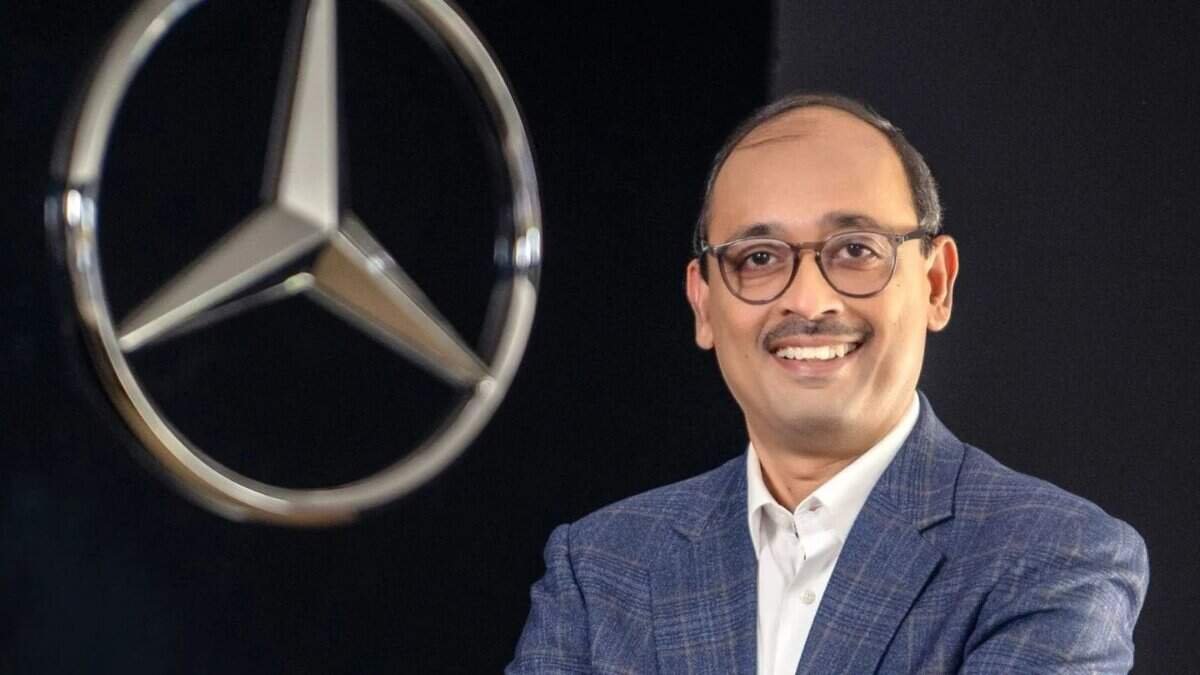
    New Delhi: The India-European Union (EU) Free Trade Agreement (FTA) will strongly drive technological innovation within the Indian automotive sector, Mercedes-Benz India Managing Director and Chief Executive Officer Santosh Iyer said on Tuesday, January 27, while ruling out any price reduction of the company’s vehicles in the foreseeable future after the deal.

    Terming the Indo-EU FTA as a historic achievement for India, Iyer said the pact reiterates the “rising relevance of the Indian economy at a global stage”.

    “The FTA is also expected to strongly drive technological innovation and sustainable growth within the Indian automotive sector, with a sharp focus on future mobility. Saying that, the final implications of the FTA can only be determined once the fine print of the agreement is available to us,” he added.

    Add as a preferred source on Google

    On the impact of the FTA on prices of vehicles, Iyer said, “With more than 90 per cent of Mercedes-Benz India’s sales volume comprising ‘Made in India’ locally manufactured models, and only around 5 per cent of sales coming via CBU imports from the EU, we do not foresee any price reduction for Mercedes-Benz vehicles from the FTA, in the foreseeable future”.

    “We will continue our focus on value addition to customers through local production and competitive pricing, making world-class vehicles in India, for Indian customers.”

    Mercedes-Benz India pointed out that the depreciating rupee against the Euro would continue to pose a challenge for European carmakers in India.

    MS Admissions 2026-27MS Admissions 2026-27

    The rupee had depreciated by 19 per cent in 2025 compared to the euro, which is expected to erode any benefit arising from lower duty import for CBUs in the next couple of years.

    Stating that Mercedes-Benz has always advocated free trade, he said it brings down trade barriers, leverages the mutual strengths of global economies, and mitigates supply chain uncertainties.

    “With the Indo-EU FTA, India’s economic growth should get a strong boost as borders open up, presenting opportunities in new markets, fostering bilateral trade, and creating job opportunities,” Iyer noted.

  • EU steps in to ensure rivals have access to Google Gemini’s services and data

    EU steps in to ensure rivals have access to Google Gemini’s services and data

    Brussels: The European Union said on Tuesday, January 27, it’s stepping in to make sure Google gives rival AI companies and search engines access to Gemini AI services and data as required by the bloc’s flagship digital rulebook.

    The executive arm of the 27-nation bloc said it was opening up so-called “ specification proceedings ” to ensure that Google complies with the sweeping Digital Markets Act, which requires Big Tech companies to give smaller players equal access to hardware and software features.

    Brussels said part of the proceedings will specify how Google should give third-party AI companies “equally effective access to the same features” available through its own services.

    Add as a preferred source on Google

    The EU will also look at whether Google is giving competing search engines fair and reasonable access to Google Search data. This will include whether AI chatbot providers are eligible to access the data.

    The proceedings fall short of an investigation and must wrap up in six months with draft measures that Brussels will impose on Google.

    Clare Kelly, Google’s senior competition counsel, said she was concerned about the reasons behind the procedure.

    MS Admissions 2026-27MS Admissions 2026-27

    “Android is open by design, and we’re already licensing Search data to competitors under the DMA,” Kelly said in a statement. “However, we are concerned that further rules, which are often driven by competitor grievances rather than the interest of consumers, will compromise user privacy, security, and innovation.”

    Teresa Ribera, who oversees competition affairs as executive vice president of the European Commission, says it seeks to “maximise the potential and the benefits of this profound technological shift by making sure the playing field is open and fair, not tilted in favour of the largest few.”

    The move adds EU pressure on Google, which is facing antitrust scrutiny after the bloc’s regulators last year started investigating whether the company gave itself an unfair advantage through the use of online content for its AI models and services.