Category: BUSINESS

  • Mountain trails, heritage sites get tourism push

    Mountain trails, heritage sites get tourism push

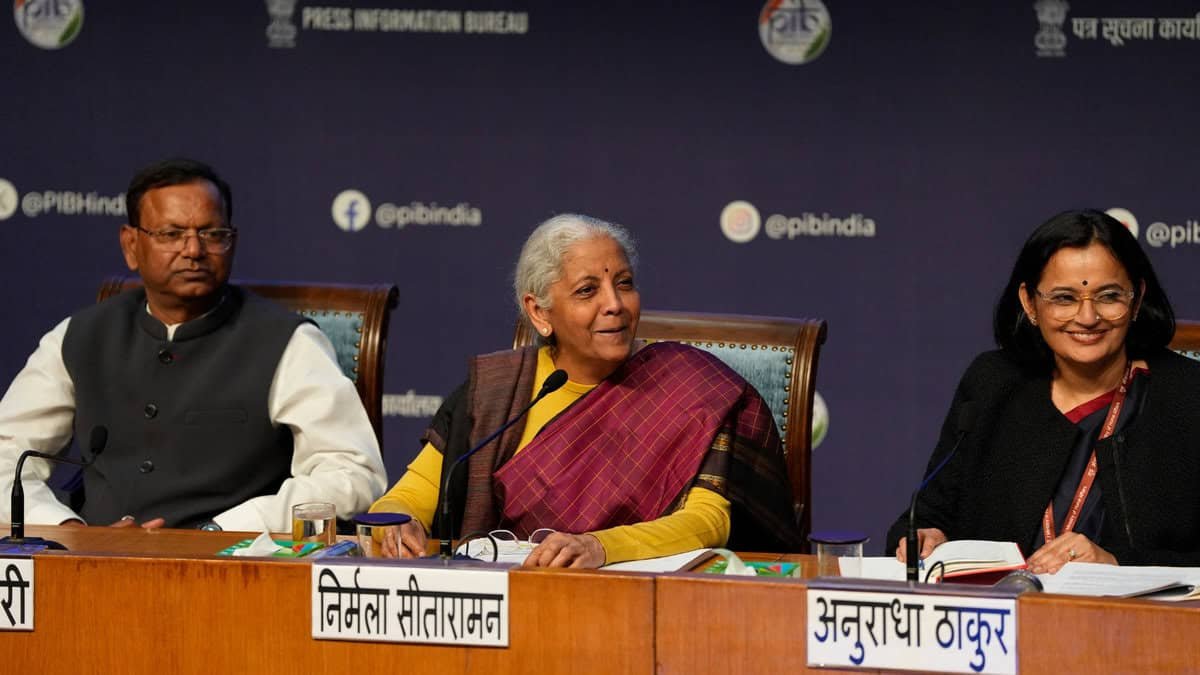
    New Delhi: The Centre proposed several measures in the Union Budget 2026 for the tourism sector, with Finance Minister Nirmala Sitharaman highlighting its importance in generating employment, earning foreign exchange and boosting local economies.

    Niche tourism and eco-trails

    Presenting the Union Budget, Sitharaman proposed the development of “ecologically sustainable” mountain trails in Himachal Pradesh, Uttarakhand and Jammu and Kashmir, and setting up the “National Institute of Hospitality.”

    “The tourism sector has a large role to play in employment generation, forex earnings and expanding the local economy. I propose to set up a National Institute of Hospitality by upgrading the existing National Council for Hotel Management and Catering Technology,” she said.

    Add as a preferred source on Google

    India will host the first-ever Global Big Cat Summit to deliberate on conservation strategies with 95 countries.

    Heritage and regional tourism

    In her speech, the Finance Minister proposed to “develop 15 archeological sites,” including Lothal, Dholavira, Rakhigarhi, Sarnath, Hastinapur and Leh Palace into “vibrant experiential cultural destinations.”

    “Excavated landscapes will be opened to the public through curated walkways and immersive storytelling skills and technologies will be introduced to help conservation labs, interpretation centres and guides,” she said.

    MS Admissions 2026-27MS Admissions 2026-27

    A dedicated scheme will develop Buddhist circuits in the North-East region, covering Arunachal Pradesh, Sikkim, Assam, Manipur, Mizoram and Tripura. Further, the government aims to create five tourism destinations specifically within the five Purvodaya (eastern) states.

    There is a renewed focus on providing modern infrastructure and basic amenities to temple towns through the mapping of City Economic Regions

    Infrastructure and connectivity

    To promote tourism in remote areas, a Seaplane VGF (Viability Gap Funding) Scheme will be introduced to support operations and indigenise manufacturing.

    Seven High-Speed Rail corridors (such as Mumbai-Pune and Delhi-Varanasi) are planned to serve as “growth connectors” for passengers.

    Taxation and travel ease

    The Tax Collection at Source (TCS) on overseas tour program packages is reduced to a flat 2 per cent with the removal of the previous Rs 10 lakh threshold, although it also means this tax will apply to all tour packages.

    Provisions governing baggage clearance during international travel will be revised to increase duty-free allowances and provide better clarity to passengers

    Institutional and talent development

    Upskilling guides: A pilot scheme will be launched to upskill 10,000 guides at 20 iconic tourist sites through a 12-week, high-quality training course developed in collaboration with the Indian Institute of Management (IIM).

    Hospitality bridge: The government proposes to establish a National Institute of Hospitality by upgrading the existing National Council for Hotel Management and Catering Technology to serve as a bridge between academia, industry and government.

    Digital documentation: A National Destination Digital Knowledge Grid will be created to digitally document cultural, spiritual and heritage sites of significance, fostering a new job ecosystem for researchers and content creators.

    Tourism companies hail the budget

    Real estate player Brigade Hotel Ventures Ltd said that the Budget has given the “strategic recognition” to the tourism sector.

    City-headquartered Aarthi Scans and Labs also lauded the Budget, terming it as clear and strengthening healthcare capacity.

    Vineet Verma, Director of Brigade Hotel Ventures Ltd, said the Budget’s emphasis on tourism goes beyond infrastructure and rightly addresses the sector’s biggest gap, skilled human capital.

    “The emphasis on infrastructure-led development, experiential tourism and ease of doing business sends a strong signal to investors and operators alike. This can accelerate asset creation, improve quality standards, and unlock the sector’s true economic potential,” he said in a statement.

    The tourism industry has welcomed the government’s focus on the travel and tourism sector as a long-term growth driver and strategic pillar of India’s growth story.

    The rationalisation of Tax Collected at Source (TCS) on overseas tour packages and the focus on tier 2 and 3 cities, including temple-towns, through the city economic regions (CER) development budgetary allocation of Rs 5,000 crore, will act as a big boost for the tourism sector, top industry players said.

    Rationalisation of TCS on overseas tour packages is a welcome step that addresses upfront liquidity impact on Indian outbound travellers, said Rajesh Magow, Chair, FICCI Tourism Committee and Co-founder and Group CEO, MakeMyTrip.

    “Continued focus on regional connectivity and destination development, along with an emphasis on skilling and the creation of a national digital repository for destinations, will help improve destination discovery and enhance the overall traveller experience,” Magow added.

    Aloke Bajpai, Group CEO and Rajnish Kumar, Group Co-CEO, ixigo, said the Union Budget has recognised the sector’s role in job creation, foreign exchange earnings and strengthening local economies across the country.
  • Govt raises defence spending to Rs 7.85 lakh crore

    Govt raises defence spending to Rs 7.85 lakh crore

    New Delhi: India on Sunday, February 1, set aside Rs 7,84,678 crore as defence outlay for 2026-27 over the current fiscal’s allocation of Rs 6.81 lakh crore with a major increase in capital expenditure as the military focuses on modernisation in the face of security challenges from China and Pakistan.

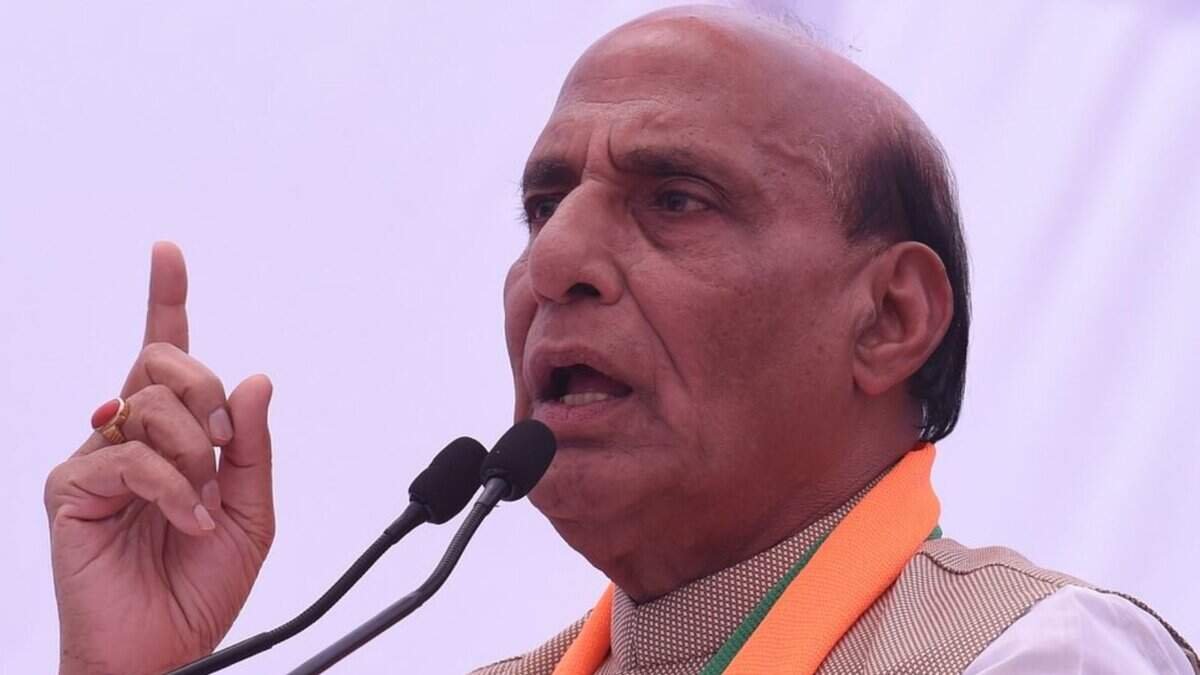
    The increase in the defence outlay against the backdrop of “historic success of Operation Sindoor” has further strengthened our resolve to make India’s defence system even more robust, Defence Minister Rajnath Singh said.

    The overall defence budget has seen a hike of 15 per cent over last year’s outlay.

    Add as a preferred source on Google

    Out of the total allocation, Rs 2,19,306 crore has been earmarked for capital expenditure to the armed forces that largely includes purchasing new weapons, aircraft, warships and other military hardware.

    The capital outlay is over Rs 39,000 crore higher than the current fiscal’s budgetary estimate Rs 1.80 lakh crore. The revised capital outlay for 2025-26 has been estimated at Rs 1,86,454 crore.

    Under capital expenditure, Rs 63,733 crore has been set aside for aircraft and aero engines, while Rs 25,023 crore is allocated for the naval fleet.

    MS Admissions 2026-27MS Admissions 2026-27

    The revenue expenditure has been put at Rs 5,53,668 crore that includes Rs 1,71,338 crore for pensions.

    In her budget speech, Finance Minister Nirmala Sitharaman proposed exempting basic customs duty on components and parts required for the manufacture of civilian, training and other aircraft.

    She also announced waiving basic customs duty on raw materials imported for the manufacture of parts of aircraft to be used in maintenance, repair or overhaul requirements by units in the defence sector.

    The two decisions are expected to help the defence aerospace industry.

    Defence Minister Singh said the “most important” aspect of the budget is the modernisation of the three services.

    “I express my heartfelt gratitude to our Prime Minister Modi ji for allocating Rs 7.85 lakh crore for the defence sector,” he said.

    “Coming after the historic success of Operation Sindoor, this budget has further strengthened our resolve to make the country’s defence system even more robust,” he added.

    Singh said a provision of Rs 2.19 lakh crore has been made for the overall capital expenditure of the armed forces.

    “The most important aspect of this Budget is the modernisation of our three services. For this, a provision of Rs 1.85 lakh crore has been made this year, which is approximately 24 per cent higher than the previous financial year,” he said.

    “As a result of this increase, our military capability will become even more powerful,” Singh added.

    The defence minister said the welfare of ex-servicemen and their families has also been given importance in this budget.

    “Under the Ex-Servicemen Contributory Health Scheme, a provision of Rs 12,100 crore has been made, which is an increase of approximately 45 per cent compared to the current year,” he said.

    “This budget strengthens the balance between security, development, and self-reliance,” he noted.

    The allocation for the defence in the budget works out to around two per cent of the projected GDP for 2026-27.

    The defence ministry said the defence outlay focuses on modernisation, technological innovation and streamlined procurement for optimal resource utilisation.

  • States, UT going to polls this year get benefits

    States, UT going to polls this year get benefits

    The central government has ensured all poll-bound states receive a substantial share in the Union Budget 2026-2027 presented by Finance Minister Nirmala Sitharaman on Sunday, February 1.

    This year, Assembly elections will be held in Assam, West Bengal, Tamil Nadu, Kerala and the Union Territory (UT) of Puducherry. Except for Assam, all other states are ruled by non-Bharatiya Janata Party (BJP) governments.

    However, the Budget did not offer much for Telangana, except for railway corridors between Hyderabad and major Indian cities.

    Add as a preferred source on Google

    Individual states

    West Bengal’s Durgapur will get an integrated East Coast Industrial Corridor with a well-connected node.

    To promote mining, processing, research and manufacturing, a dedicated Rare Earth Corridor for Odisha, Kerala, Andhra Pradesh and Tamil Nadu will be established.

    The government plans to operationalise 20 new national waterways, with Odisha as its epicentre, starting with the development of National Waterway-5, connecting mineral-rich areas of Talcher (popularly known as the City of Black Diamond) in Angul with key ports of Paradeep and Dhamra and industrial area Kalinganagar.

    MS Admissions 2026-27MS Admissions 2026-27

    “Uttar Pradesh’s temple town Varanasi and Bihar’s capital city Patna will have a ship repair ecosystem catering to inland waterways,” Sitharaman said.

    Railway projects

    Union Finance Minister announced a series of high-speed railway corridors between Maharashtra, Telangana, Karnataka and Tamil Nadu. These are:

    • Pune-Hyderabad
    • Hyderabad-Bengaluru
    • Hyderabad-Chennai
    • Chennai-Bengaluru
    • Mumbai-Pune

    Agriculture

    The Finance Minister announced the development of ecologically sustainable mountain trails and the expansion of high-density cultivation of walnuts, almonds and pinenuts for local farmers of Himachal Pradesh, Uttarakhand and Jammu and Kashmir.

    Farmers cultivating high-value crops like coconut, sandalwood, cocoa and cashew in coastal Indian states like Kerala, Karnataka and Tamil Nadu are set to get a boost over the next five years.

    The government announced a Coconut Promotion Scheme, which will replace old trees with new varieties in major coconut-growing states.

    Education

    The Finance Minister announced the establishment of the National Institute of Design (NID) for the Eastern Region of India.

    Tourism

    The government plans to create five tourism destinations across the Purvodaya states – Bihar, Jharkhand, West Bengal, Andhra Pradesh and Odisha. About 4,000 electric buses will hit the roads to enhance green mobility.

    For the Northeastern states like Assam, Manipur, Arunachal Pradesh, Sikkim, Mizoram and Tripura, Sitharaman announced Buddhist circuits aimed at preserving temples and monasteries and strengthening pilgrimage.

    Coastal states Kerala, Odisha and Karnataka will get Turtle Trails, resting along the major nesting sites. India’s second-largest brackish water lagoon, Pulikat Lake, will be adorned by bird watching trails across the Andhra Pradesh and Tamil Nadu borders.

    The government plans to promote trekking routes across India with Himachal Pradesh, Uttarakhand and Jammu and Kashmir (Himalayan range), Araku Valley (Andhra Pradesh) in the Eastern Ghats and Podhigai Malai in Tamil Nadu and Kerala.

    Fiscal benefits for States and UTs

    Based on the 16th Finance Commission’s recommendations, the Centre has allocated Rs 14 lakh crore to states for 2026–27. This includes funds for rural and urban local bodies and disaster management.

    All states will continue to receive 41 per cent of central tax revenues.

    For Union Territories, the budget provides direct funding:

    • Andaman and Nicobar Islands: Rs 6,703.76 crore
    • Chandigarh: Rs 5,728.72 crore
    • Dadra and Nagar Haveli and Daman and Diu: Rs 2,840.20 crore
    • Ladakh: Rs 5,246.44 crore
    • Lakshadweep: Rs 1,682.35 crore
  • Union Budget allocates Rs 6,000 crore for Census 2027

    Union Budget allocates Rs 6,000 crore for Census 2027

    New Delhi: The Union Budget on Sunday, February 1, allocated Rs 6,000 crore for Census 2027, with the 16th edition of the mega population head count slated to begin on April 1 after a delay of almost six years because of the Covid outbreak.

    The Budget Estimates for 2026-27 presented in Parliament by Finance Minister Nirmala Sitharaman earmarked Rs 6,000 crore for the Census, Survey and Statistics/Registrar General of India (RGI), which is almost a six-fold increase from the Rs 1,040 crore allotted in the Revised Estimates for 2025-26.

    “It includes provisions for the office of the Registrar General and Census Commissioner of India and various schemes of the RGI, including the National Population Register (NPR) and expenditure on Census 2027,” the Budget document said.

    Add as a preferred source on Google

    The Census will be carried out in 2027 with the reference date of October 1, 2026, in snow-bound areas like Ladakh, and of March 1, 2027, in the rest of the country.

    “The reference date for the said Census shall be 00.00 hours of the first day of March 2027, except for the Union territory of Ladakh and snow-bound non-synchronous areas of the Union territory of Jammu and Kashmir and the states of Himachal Pradesh and Uttarakhand,” a government notification said last year.

    In respect of Ladakh and the snow-bound non-synchronous areas, the reference date shall be 00:00 hours of the first day of October 2026, it said.

    MS Admissions 2026-27MS Admissions 2026-27

    The massive exercise to collect population-related data from across the country will be carried out by about 30 lakh enumerators and supervisors and around 1.3 lakh census functionaries armed with digital devices.

    The decadal exercise, which was scheduled to take place in 2021, was postponed due to the Covid-19 outbreak.

    The Census, which will also include caste enumeration this time, is a two-phase exercise – in Phase-1, i.e., Houselisting Operation (HLO), the housing conditions, assets and amenities of each household will be collected.

    In Phase -2, i.e., Population Enumeration (PE), the demographic, socio-economic, cultural and other details of every person in each household will be collected, which is scheduled for February 1, 2027.

    The Caste enumeration will take place during the second phase at the time of Population Enumeration, the Union Home Ministry recently said.

    With many firsts planned for Census 2027 – fully digital, option of self-enumeration, etc. – the Cabinet had allocated Rs 11,718 crore for the exercise.

    The Registrar General of India has notified 33 questions that will be put to citizens during the first phase of the Census – houselisting and housing census.

    The houselisting operations will take place during a window of 30 days, specified by each state and UT between April 1 and September 30 this year.

    There will also be an option for self-enumeration to be conducted in 15 days, just before the start of the houselisting operations of 30 days.

    The houselisting and housing census systematically lists out all the structures, houses and households throughout the country for the preparation of a sound frame for the conduct of the population enumeration.

  • Budget 2026 prioritises people’s development

    Budget 2026 prioritises people’s development

    The Union Budget 2026-27, presented by Finance Minister Nirmala Sitharaman on Sunday, February 1, in the Parliament, places a strong emphasis on people-centric development.

    In her speech, the Finance Minister said that it was the first Budget prepared in Kartavya Bhawan and is inspired by three “kartavyas” that aim to fulfil the aspirations of  the people and build their capacity, while the vision of “Sabka Saath, Sabka Vikas” ensures that every family, community, region and sector has access to resources, amenities and opportunities for meaningful participation.

    Scheduled Castes and Scheduled Tribes

    In this regard, the government has allocated Rs 6,360 crore for the Post Matric Scholarships for the Scheduled Castes (SC), while also allocating Rs 2,140 crore to the Pradhan Mantri Anusuchit Jaati Abhyuday Yojana (PM AJAY).

    Add as a preferred source on Google

    Meanwhile, Rs 5,700 crore has been allocated for PM Vanbandhu Kalyan Yojna, a program that supports the development of Scheduled Tribes (ST). Eklavya Model Residential Schools (EMRS), which are dedicated to providing quality education to ST students, received an allocation of Rs 7,150 crore.

    Persons with disabilities

    The Budget also talked about providing customised training specific to various disability groups and enhancing their livelihood opportunities through Divyangjan Kaushal Yojana.

    Under this programme, the IT, animation, visual effects, gaming and comics (AVGC), hospitality and food and beverage sectors will offer task-oriented and process-based roles suitable for persons with disabilities.

    MS Admissions 2026-27MS Admissions 2026-27

    Additionally, the Divyang Sahara Yojana proposed providing support to the Artificial Limb Manufacturing Corporation of India (ALIMCO) to increase production of assistive devices, strengthening of PM Divyang Kendras and establishing Assistive Technology Marts (modern retail-style centres where persons with disabilities and senior citizens can view, test and purchase assistive products).

    Welfare of economically backward, OBCs and de-notified tribes

    For the students belonging to Other Backward Classes (OBC), Economically Backward Classes (EBC), and Denotified Tribes (DNT), the Budget continues to fund their education with an allocation of Rs 2,320 crore under PM Young Achievers Scholarship Award Scheme for Vibrant India (PM-YASASVI).

    Poverty alleviation

    The Budget also makes allocations to ensure food security for the poor by devoting Rs 2,27,429 crore under Pradhan Mantri Garib Kalyan Anna Yojana (PMGKAY), which provides free foodgrains to eligible households.

    As much as Rs 54,917 crore has been provided for Pradhan Mantri Awas Yojana-Rural and Rs 3,000 crore for PMAY-Urban 2.0, which provides pucca houses to poor people.

    Additionally, Rs 9,200 crore has been earmarked for providing liquidfied petroleum gas (LPG) connections to poor households.

    The much-contested Viksit Bharat-G RAM G Scheme (Guarantee for Rozgar and Ajeevika Mission – Gramin), a new initiative which replaces the Mahatma Gandhi National Rural Employment Guarantee Act (MGNREGA) to provide rural employment, has been allocated Rs 95,692 crore in the Budget.

  • Sensex, Nifty slide as Budget hikes commodity trade tax

    Sensex, Nifty slide as Budget hikes commodity trade tax

    Mumbai: Stock market benchmark indices Sensex and Nifty tumbled on Sunday, February 1, trade after the Budget proposed to raise Securities Transaction Tax to 0.05 per cent on commodity futures from 0.02 per cent.

    The government will tax buyback proceeds for all types of shareholders as capital gains, Finance Minister Nirmala Sitharaman said on Sunday.

    After fluctuating in early trade, the 30-share BSE Sensex later bounced back but pared all gains amid the Budget presentation.

    Add as a preferred source on Google

    It later plunged 2,370.36 points, or 2.88 per cent, to slip below the 80,000-mark to 79,899.42 during the afternoon trade. The 50-share NSE Nifty tanked 748.9 points, or 2.95 per cent, to 24,571.75.

    From the 30 Sensex firms, Bharat Electronics tanked 6.50 per cent. State Bank of India, HCL Tech, Tata Steel, Asian Paints, and Eternal were also among the laggards.

    Sun Pharma, Sun Pharma, Kotak Mahindra Bank, and Tata Consultancy Services were the gainers.

    MS Admissions 2026-27MS Admissions 2026-27

    “The increase in Securities Transaction Tax (STT), especially in futures and options, is likely to act as a marginal negative for foreign portfolio investor (FPI) flows in the near term, particularly for high-frequency and derivative-focused global funds,” Aakash Shah, Technical Research Analyst at Choice Equity Broking, said.

    Foreign institutional investors bought equities worth Rs 2,251.37 crore on Friday, according to exchange data.

    Asian markets are closed on Sunday due to holidays. US markets ended lower on Friday.

    On Friday, the Sensex declined 296.59 points, or 0.36 per cent, to settle at 82,269.78. The Nifty dropped 98.25 points, or 0.39 per cent, to end at 25,320.65.

  • Poll-bound Bengal in Budget 2026 spotlight

    Poll-bound Bengal in Budget 2026 spotlight

    Kolkata: With West Bengal bracing for a fiercely contested assembly election in the coming months, the Union Budget presented on Sunday has unmistakably slipped into campaign territory, rolling out high-visibility infrastructure proposals even as the ruling TMC accused the Centre of using development announcements as a political signalling tool rather than a genuine fiscal commitment.

    Finance Minister Nirmala Sitharaman’s ninth consecutive budget proposed a new dedicated freight corridor linking Dankuni in West Bengal to Surat in Gujarat, an integrated East Coast Industrial Corridor with a major node at Durgapur, and tourism-focused interventions under the Centre’s Purvodaya vision, measures that the BJP sees as reinforcing its narrative of development-led politics in eastern India ahead of the polls.

    The Dankuni–Surat freight corridor, pitched as a move to promote environmentally sustainable cargo movement and reduce logistics costs, has emerged as the budget’s most politically salient promise for Bengal.

    Add as a preferred source on Google

    The Centre has argued that shifting freight towards inland water transport and integrated corridors would unlock industrial growth in the state, long portrayed by the BJP as having suffered from policy stagnation under the Trinamool Congress.

    The budget also proposed the creation of tourism destinations across five Purvodaya states and provisions for 4,000 e-buses, announcements that the BJP believes can be leveraged in a state where employment, urban mobility and regional imbalance have become major electoral talking points.

    The timing, however, has not gone unnoticed.

    MS Admissions 2026-27MS Admissions 2026-27

    In recent years, Union Budgets preceding Assembly elections have often carried pronounced regional emphasis. Bihar, which went to the polls in 2025, saw a succession of big-ticket announcements in the preceding budgets, from airport expansion to irrigation and industrial projects, a pattern that critics said reflected political timing as much as developmental need.

    That precedent has shaped expectations in Bengal this year.

    While the Centre has stopped short of announcing a special financial package for West Bengal, the infrastructure-heavy focus has been read as an attempt to sketch a pre-election development roadmap, particularly as the BJP intensifies its campaign to dislodge the Mamata Banerjee-led government after over 15 years in power.

    The political undertones were amplified by the sharp response from the Trinamool Congress, which framed the budget as further evidence of what it calls discriminatory Centre–state relations.

    The TMC accused the Centre of dressing up old decisions as fresh sops. TMC national general secretary and MP Abhishek Banerjee accused the BJP of combining “headline announcements with fiscal denial”.

    “For the last five years, we have been saying this. If the Centre can show, by releasing a white paper, that even one MGNREGA job-card holder in Bengal received money through Direct Benefit Transfer after the BJP’s defeat in the 2021 Assembly elections, I will quit politics,” he said.

    He alleged that funds under flagship central schemes such as PM Awas Yojana and Gramin Sadak Yojana have remained blocked since the last polls, arguing that infrastructure announcements in the budget could not mask what he described as sustained financial deprivation.

    “In Bengal, they are losing. That is why the BJP is trying to teach the people a lesson. But democracy works the other way round,” Banerjee said, asserting that voters would respond at the ballot box.

    TMC state vice-president Jaiprakash Majumdar dismissed the proposals as “old policy decisions wrapped in a new packet”, questioning whether the announcements would translate into actual spending before the election.

    “The budget has focused on Bengal’s infrastructure development, which will boost the state’s economy,” BJP leader Rahul Sinha said, arguing that connectivity and industrial projects would create jobs and attract investment, particularly in regions such as north and western Bengal.

    The debate over north Bengal has itself become a prominent campaign theme. A day before the budget, Union Home Minister Amit Shah accused the Trinamool government of systematically under-allocating resources to the region, a charge that the BJP is using to court voters in districts it sees as electorally pivotal.

    Political analysts say the budget’s Bengal focus must be read in conjunction with the BJP’s broader electoral strategy, which includes ambitious vote-share targets and repeated attacks on the state government over corruption, welfare delivery and law and order.

    “Budget allocations are not made in a political vacuum,” said an economist, noting that when major states approach Assembly elections, fiscal decisions attract heightened political scrutiny.

    “In a federal system, the Union budget becomes a powerful instrument — shaping not just economic outcomes but also political narratives around fairness, accountability and responsiveness,” he said.

    Another political analyst said that election-bound states often receive enhanced Budget attention as part of democratic signalling. “Infrastructure projects and welfare announcements are tangible markers of intent. Voters then assess whether these promises are credible or merely symbolic,” he said.

    The budget has embedded economic policy, development claims and Centre–state relations firmly into Bengal’s poll battle, underscoring that in an election year, it is as much a political document as an economic one.

  • Govt to increase duty-free limit for seafood, leather exports

    Govt to increase duty-free limit for seafood, leather exports

    New Delhi: The government on Sunday proposed an increase in the duty-free import limit for specified inputs used in the export of processed seafood products and leather or synthetic footwear.

    For the processing seafood products segment, the limit will be increased from the current one per cent to three per cent of the FOB (free on board) value of the previous year’s export turnover.

    “I also propose to allow duty-free imports of specified inputs, which is currently available for exports of leather or synthetic footwear, to exports of shoe uppers as well,” Sitharaman said in her Budget speech.

    Add as a preferred source on GoogleAdd as a preferred source on Google

    Further, the minister also announced to extend the time period for export of final product from the existing six months to one year, for exporters of leather or textile garments, leather or synthetic footwear and other leather products.

    These announcements are important as these labour-intensive sectors are facing huge challenges in the US, which is a major export destination. The Trump administration has imposed a steep 50 per cent import duty on Indian goods entering America.

    The country’s leather and leather products shipments dipped marginally 0.23 per cent to USD 3.3 billion during April-December 2025-26.

    MS Admissions 2026-27MS Admissions 2026-27

    During April-December 2025, India’s seafood exports rose 15.53 per cent to USD 6.5 billion, up from USD 5.67 billion in the same period last year.

  • Medicines to cost less, focus on mental health, Ayurveda

    Medicines to cost less, focus on mental health, Ayurveda

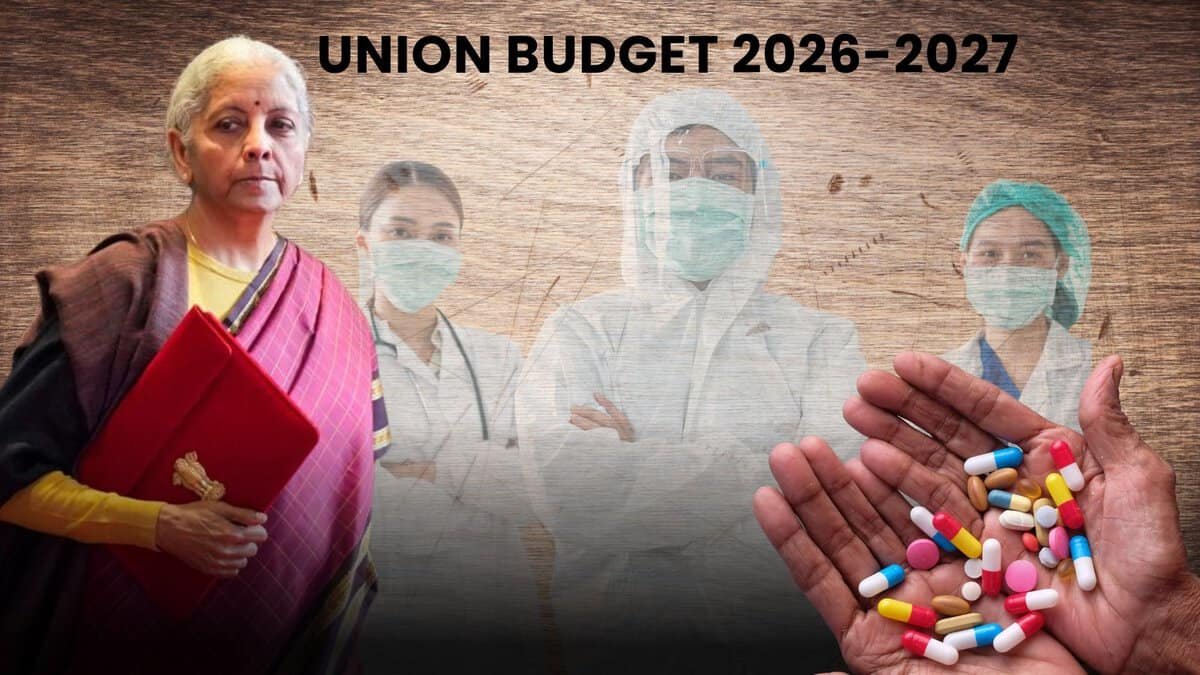
    New Delhi: Basic customs duty will be exempted on 17 drugs for patients suffering from cancer and non-communicable diseases, while medicines for seven rare diseases will be recognised for import duty exemptions, Union Finance Minister Nirmala Sitharaman announced in the Budget 2026 session on Sunday, February 1.

    In the 1-hour 25-minute speech, Sitharaman proposed making drugs cheaper to provide relief to patients who spend crores on medicines while battling these diseases.

    All India Institutes for Ayurveda to be set up

    The Finance Minister proposed to set up three new All India Institutes of Ayurveda to further strengthen research in traditional medicines and meet the growing demand. The minister said that since Ayurveda gained global acceptance and recognition after the COVID-19 pandemic, it will upgrade AYUSH pharmacies and drug testing labs to higher standards. 

    Add as a preferred source on Google

    Quality Ayurveda products helps farmers who grow the herbs and youth who process the products, she said.

    “Ancient Indian yoga, already respected in several parts of the world, was given a mass global recognition when the prime minister took it to the UN (United Nations),” the minister said.

    The Finance Minister further proposed launching a scheme to support states in establishing five regional medical hubs while partnering with the private sector.

    MS Admissions 2026-27MS Admissions 2026-27

    These hubs will serve as integrated healthcare complexes that combine medical, educational and research facilities, Sitharaman said, presenting the budget 2026-27.

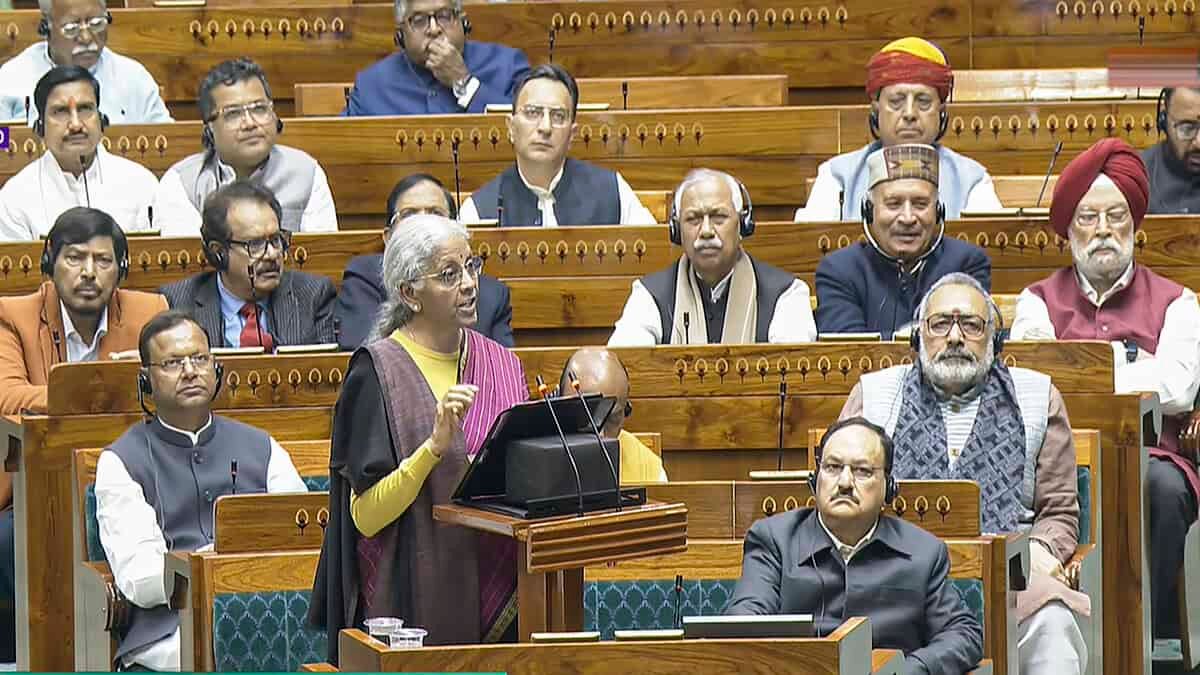
    Budget 2026: Highlights of Finance Minister Nirmala Sitharaman’s Budget Speech in Lok Sabha. (Source: PTI)

    They will have AYUSH centres, medical value tourism facilitation centres and infrastructure for diagnostics, post care and rehabilitation, she stated.

    These hubs will provide diverse job opportunities for health professionals, including doctors and allied health professionals, she added.

    She also called for upgrading the World Health Organisation (WHO) Global Traditional Medicine Centre in Jamnagar, Gujarat, to bolster evidence-based research, training and awareness for traditional medicine.

    AHP institutions will be established in private and government sectors

    Existing training institutions for Allied Health Professionals (AHPs) will be upgraded, and new institutes will be set up in both the government and private sectors, Sitharaman said.

    This will cover 10 selected disciplines, including optometry, radiology, anaesthesia, Operating Theatre (OT) Technology, Applied Psychology and Behavioural Health and add 100,000 AHPs.

    Budget 2026: Highlights of Finance Minister Nirmala Sitharaman’s Budget Speech in Lok Sabha. (Source: PTI)

      The plan aims to add about 1 lakh allied health professionals and train 1.5 lakh caregivers over the next five years.

      Acknowledged the lack of mental health institutions in North India

      Among the other reforms introduced during the Budget 2026, Sitharaman said the government will be actively working on launching a second site for the National Institute of Mental Health and Neuro Sciences (NIMHANS-2) in North India.

      Sitharaman said this was decided due to the lack of mental health institutions in the northern region.

      NIMHANS is a multidisciplinary medical institution located in Bengaluru and serves as the main centre for mental health education and research in neuroscience in the country. It is funded by the Ministry of Health and Family Welfare

      Budget 2026: Highlights of Finance Minister Nirmala Sitharaman’s Budget Speech in Lok Sabha. (Source: PTI)

      The Economic Survey 2026 had warned that mental health has become a major issue, especially among the young. It linked mental health deterioration with high screen addiction among the age group of 15-24 and said higher screen time has a lasting effect on academic performance, sleep, productivity and social connections.

      Biopharma SHAKTI initiative

      To develop India as a global Biopharma manufacturing hub, the budget outlined specific proposals for the expansion and modernisation of clinical trials under the Biopharma SHAKTI (Strategy for Healthcare Advancement through Knowledge, Technology and Innovation) initiative.

      The government, in this regard, has created a network of over 1,000 accredited India Clinical Trials sites, which will facilitate the domestic production of biologics and biosimilars, helping to address India’s shifting disease burden toward non-communicable diseases like cancer, diabetes, and autoimmune disorders.

      Budget 2026: Highlights of Finance Minister Nirmala Sitharaman’s Budget Speech in Lok Sabha. (Source: PTI)

      These sites are intended to provide the necessary infrastructure to transform biopharmaceutical “aspiration into achievement” by conducting the essential testing required for new medical innovations.

      Source: X @Ministry of Health

      The Union Budget 2026-27 has allocated Rs 1,05,530.42 crore to the Ministry of Health and Family Welfare, marking an overall increase of 176 per cent since 2014-15.

  • FM extends tax exemption for lithium-ion battery equipment

    FM extends tax exemption for lithium-ion battery equipment

    New Delhi: Finance Minister Nirmala Sitharaman on Sunday, February 1, announced an extension of basic customs duty exemption on capital goods used for manufacturing lithium-ion cells for battery storage in the annual budget for the next financial year.

    In her budget speech, she also proposed to exclude the entire value of biogas while calculating excise duty levy on (biogas) blended CNG (compressed natural gas).

    “I propose to extend the basic customs duty exemption given to capital goods used for manufacturing lithium-ion cells for batteries. Also, I propose to exempt basic customs duty on import of sodium anti Monet, for use in manufacturing of solar glass,” she said.

    Add as a preferred source on Google

    It is proposed to provide basic customs duty exemption to the import of capital goods required for the processing of critical minerals in India.

    For biogas blended CNG, she said, “I propose to exclude the entire value of biogas while calculating the central excise duty payable on biogas blended CNG.”

    She said that the government will develop an integrated East Coast Industrial Corridor with a well-connected node at Durgapur.

    MS Admissions 2026-27MS Admissions 2026-27

    About the focus on Poorvodaya states and Northeastern regions, she said, “I propose the development of an integrated east coast industrial corridor with a well-connected node at Durgapur, creation of five tourism destinations in five Poorvodaya states and the provision of 4,000 e-buses, Buddhist sites in the northeastern region.”

    Budget proposes to remove exemptions on customs duties on items manufactured in India or have negligible import, she added.