New Delhi: For every rupee in the government’s coffers, the largest slice of 64 paise will come from direct and indirect taxes, according to the Union Budget 2026-27 documents.
Around 24 paise will come from borrowings and other liabilities, 10 paise from non-tax revenue like disinvestment, and 2 paise from non-debt capital receipts, the Budget documents showed.
Income tax will yield 21 paise, corporation tax 18 paise, and Goods and Services Tax (GST) 15 paise per rupee of revenue.
Besides, the government looks to earn 6 paise from excise duty and 4 paise from customs levy in every rupee of revenue.
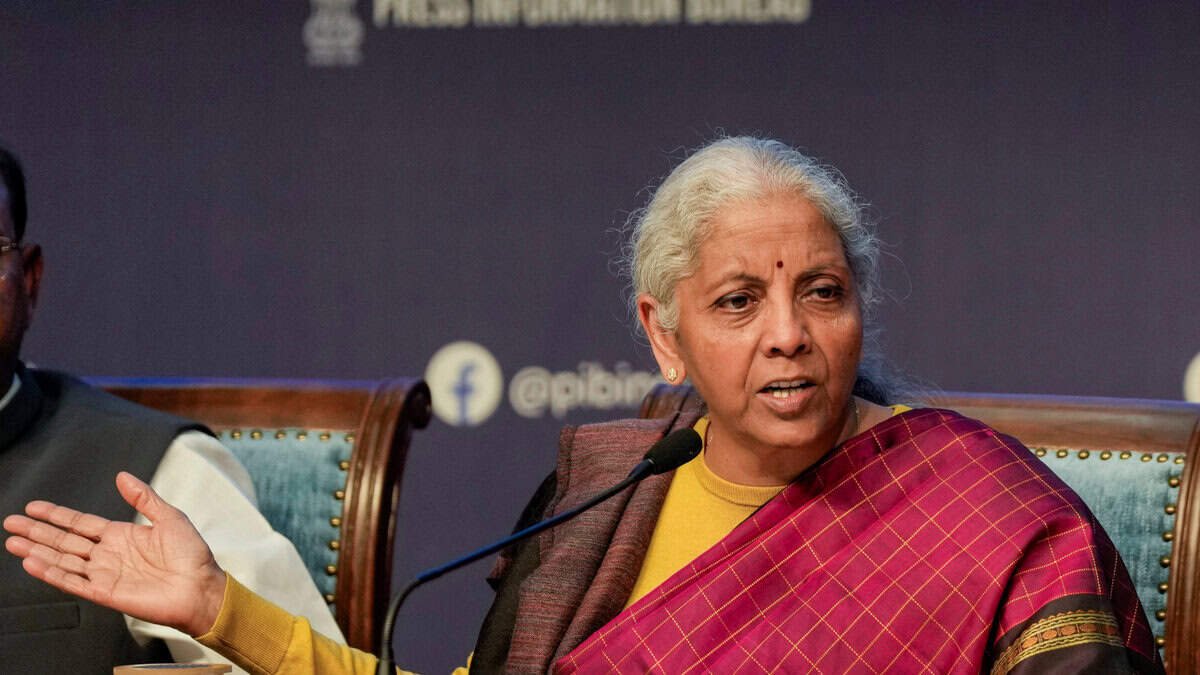
The collection from “borrowings and other liabilities” will be 24 paise per rupee, as per the Union Budget 2026-27 presented in Parliament by Finance Minister Nirmala Sitharaman on Sunday, February 1.
The Budget documents provide a fractional break-up for Re 1 that comes in and gets spent.
On the expenditure side, the outlay for interest payments and states’ share of taxes and duties, respectively, stood at 20 paise and 22 paise for every rupee.
Allocation for defence stands at 11 paise per rupee.
Expenditure on central sector schemes will be 17 paise out of every rupee, while the allocation for centrally-sponsored schemes is 8 paise.
The expenditure on ‘Finance Commission and other transfers’ is pegged at 7 paise. Subsidies and pensions will account for 6 paise and 2 paise, respectively.
The government will spend 7 paise out of every rupee on ‘other expenditures’.
New Delhi: To ease compliance burden, the government on Sunday, February 1, proposed that an individual purchasing immovable properties from non-residents will not be required to furnish TAN details for tax deduction.
Under the new framework proposed in the Union Budget 2026-27, resident individuals or Hindu Undivided family (HUF) can report the Tax Deducted at Source (TDS) by quoting PAN numbers, as it is done when the transactions are between two residents.
The revised norm will be effective from October 1.
Tax Deduction and Collection Account Number (TAN) are issued to corporate entities, while Permanent Account Number (PAN) are for individuals.
In her budget speech, Finance Minister Nirmala Sitharaman said, “TDS on the sale of immovable property by a non-resident is proposed to be deducted and deposited through the resident buyer’s PAN-based challan instead of requiring TAN”.
A resident individual or HUF would not be required to obtain a TAN to deduct tax at source in respect of any consideration on transfer of any immovable property by a non-resident under section 393(2), as per the annexure in the budget speech.
Instead, the deduction should be reported by quoting the PAN in the same manner
as a transaction of a similar nature between two residents.
According to the Budget memorandum, Section 397 (1)(a) of the Income Tax Act, every person, deducting or collecting tax, should apply to the Assessing Officer for the allotment of a TAN. Clause (c) of the sub-section provides for cases where a person is not required to obtain a TAN.
“Presently, if a person buys an immovable property from a resident seller, the person is not required to obtain a TAN to deduct tax at source. However, where the seller of the immovable property is a non-resident, the buyer is required to obtain a TAN to deduct tax at source. This creates unnecessary compliance burden for the buyer, as he would need TAN for a single transaction,” the memorandum said.
To reduce compliance burden, the government has proposed to amend section 397(1)(c) of the Act to provide that a resident individual or HUF is not required to obtain a TAN to deduct tax at source in respect of any consideration on transfer of any immovable property under section 393.
“Currently, TDS compliance for the purchase of house property from NRI is a huge task as the buyer has to apply and get TAN, deposit taxes and also file quarterly TDS return.
“By eliminating the need for TAN while buying property from NRIs, the Budget has addressed a long-standing compliance burden faced by individual home buyers. This is a welcome step towards simplifying TDS procedures and improving ease of compliance,” Divya Baweja, Partner, Deloitte India, said.
The amendment will take effect from October 1, 2026.
The Union Budget 2026, presented by Finance Minister Nirmala Sitharaman, offers selective relief across sectors, while raising taxes on certain items, resulting in a limited overall impact on common people.
Some current exemptions from customs duty will be removed, making items that were earlier imported without tax, specifically adult diapers and educational CDs, more expensive.
Basic customs duty on umbrellas will remain 20 per cent or Rs 60 per cent per piece, whichever is higher, to ensure that even lower-cost umbrellas will face a higher tax burden, which will likely increase prices for consumers. Additionally, the duty on accessories and trimmings for umbrellas is also being modified to a minimum of Rs 25 per kg, which may further drive up repair and manufacturing costs.
Sovereign gold bonds and STT raised
The capital gains tax exemption for Sovereign Gold Bonds (SGB) will now only be available to individuals who subscribe at the time of original issue and hold them continuously until maturity, triggering concerns for investors.
This means common investors who purchase SGBs from the secondary market will no longer benefit from this tax exemption.
SGBs have long stood out as a highly tax-advantaged investment in India. They offer investors a fixed annual return of 2.5 per cent, along with a complete exemption from capital gains tax on redemption, irrespective of whether the bonds were bought at the time of issuance from the RBI or acquired later from the secondary market.
Similarly, the Securities Transaction Tax (STT) is being raised significantly. The rate on Futures will increase from 0.02 per cent to 0.05 per cent, while the tax on Options will rise to 0.15 per cent due to higher transaction taxes.
Tax made simple, but with new fees and penalties
While the timeline to revise a tax return is extended to March 31, a nominal fee of Rs 1,000 or Rs 5,000 (depending on whether the total income is below or above Rs 5 lakh) will now be charged if the revision is made after December 31.
However, the filing timeline for non-audit business cases and trusts is extended to August 31.
Crypto-asset reporting penalties: A new penalty of Rs 200 per day is proposed for failing to furnish information on crypto-asset transactions and a penalty of Rs 50,000 will be levied for providing inaccurate information in such statements
Easier procedures for small taxpayers: A one-time, six-month disclosure scheme in the proposed Budget allows small taxpayers to declare overseas assets below certain thresholds with immunity.
The Budget also proposed decriminalising technical errors during the non-production of books of account and certain issues regarding Tax Deducted at Source (TDS) payments, with minor offences now attracting only a fine rather than imprisonment.
Increased taxes on updated returns: Taxpayers who choose to update their returns after reassessment proceedings have been initiated will face an additional 10 per cent tax rate over and above the standard applicable rate for that year.
Economic impact and social welfare
Although the Tax Collection at Source (TCS) rate for overseas tour packages is being rationalised to 2 per cent, the removal of the Rs 10 lakh threshold means this tax will now apply to all tour packages regardless of the amount, requiring upfront tax payment for even small family vacations.
On supporting women and the youth, the Budget proposes establishing one girls hostel in every district for higher education STEM institutions and will introduce a pilot scheme to upskill 10,000 tourist guides.
Not many satisfied with the Budget
The majority of the common people are reporting disappointment, with online reactions suggesting they never had expectations to begin with.
An X user commented, “Nirmala Sitharaman strikes again Budget 2026 proves that ‘no relief’ is now official policy for the middle class.”
Meanwhile, a different user noted that this year’s budget is one of the most “middle-class-friendly reforms.”
“This is one of the most significant middle-class-friendly reforms in recent years, offering real relief, higher disposable income, and stronger purchasing power,” their X post read.
New Delhi: The government has allocated over Rs 1471 crore in the Union Budget 2026-27 for the modernisation of forensic capabilities, with a number of other schemes aimed at making justice swift and accessible.
In the Budget announced on Sunday, under the Police head of the Union Home Ministry, Rs 500 crore has been allocated for the modernisation of forensic capacities under the schemes for Safety of Women.
Additionally, Rs 14 crore has been allocated for upgrading Central Forensic Science Laboratories, which includes the establishment of a National Forensic Data Centre.
The Budget also includes Rs 130 crore for the National Forensic Infrastructure Enhancement Scheme, which aims to strengthen the national forensic infrastructure across the country by setting up various off-campus National Forensic Science Universities (NFSUs) and other Central Forensic Science Laboratories (CFSLs).
The NFSU has been allocated Rs 145 crore to cover expenses related to academic, administrative, research, and infrastructural activities.
The Inter-Operable Criminal Justice System (ICJS), aimed to “integrate digital platforms enabling seamless data sharing among police, courts, prosecution, prisons, and forensic agencies”, has been given Rs 550 crore.
The Budget has also allocated Rs 132.89 crore under the Criminology and Forensic Science category, a hike of around 34 per cent from the Rs 99 crore provisioned in Revised Estimates for 2025-26.
This expense covers “administrative expenditure on the Directorate of Forensic Science and Central Forensic Science Laboratories. The provision is also for the modernisation of Central Forensic Science Laboratories with emphasis on human resources development and Research and Development Schemes, establishment of Regional Forensic Laboratories and DNA Centres,” the Budget document said.
New Delhi: Textile sector stocks rallied on Sunday after the government announced the setting up of Mega Textile Parks in a challenge mode with a focus on integrated infrastructure and value addition, among a raft of reforms.
Shares of Gokaldas Exports surged 10.81 per cent, Arvind Ltd climbed 5.54 per cent, Vardhman Textiles jumped 4.61 per cent, Pearl Global Industries went up by 2.48 per cent, and K P R Mill advanced 2.38 per cent on the BSE.
Rally in these stocks was in sharp contrast to the weak trend in equities.
Reversing early gains, the 30-share BSE Sensex tumbled 2,370.36 points or 2.88 per cent to slide below the 80,000-mark at 79,899.42 in the afternoon trade. The benchmark gauge ended at 80,722.94, down 1,546.84 points or 1.88 per cent.
The government on Sunday, February 1, announced the setting up of Mega Textile Parks in challenge mode with a focus on integrated infrastructure and value addition, among a raft of reforms, including a five-pronged integrated policy framework, to provide a shot in the arm to India’s employment-intensive textile sector.
The proposed establishment of new Mega Textile Parks will attract investments, improve compliance and traceability, and create integrated hubs for scale, quality control and exports.
It will also support growth in technical textiles, a high-potential segment critical for industrial, medical, defence and infrastructure applications.
In a major boost to exports of textiles, leather and marine products, the Budget announced the extension of the export obligation period from 6 months to 12 months for exporters of textile garments, leather garments, leather or synthetic footwear and other leather products manufactured using duty-free imported inputs.
This measure will provide greater operational flexibility, ease of compliance and improved working capital management for textile exporters, currently grappling with 50 per cent tariffs on Indian goods imposed by the US – India’s largest export market.
In her budget speech, Union Finance Minister Nirmala Sitharaman said, “For the labour-intensive textile sector, I propose an integrated programme with 5 sub-parts”. Under these five sub-parts, she announced a ‘National Fibre Scheme’ for self-reliance in natural fibres such as silk, wool and jute, man-made fibres, and new-age fibres.
Vijayawada: Andhra Pradesh recorded its highest-ever January GST collections since the rollout of the tax in 2017, with net GST revenue rising 6.72 per cent year-on-year to Rs 3,073 crore in January 2026, even as tax rates were cut on several key goods and services.
The growth comes despite GST rate reductions on consumer essentials, durables, pharmaceuticals, automobiles and cement, withdrawal of GST on life and medical insurance, and the removal of compensation cess on most products from September 2025.
The state’s GST growth outpaced the national average of 5.8 per cent (excluding imports) and ranked second among southern states, behind Karnataka, while surpassing Kerala, Tamil Nadu and Telangana, according to official data.
Net GST collections in Andhra Pradesh have exceeded year-ago levels for ten consecutive months from April to January, pointing to sustained economic activity and improved tax compliance.
In January, gross GST collections stood at Rs 3,479 crore, with SGST revenue at Rs 1,284 crore, up 8.37 per cent, while IGST settlement rose 5.57 per cent to Rs 1,789 crore. Petroleum VAT collections increased 7.09 per cent to Rs 1,490 crore, and professional tax jumped 25.6 per cent to Rs 38 crore.
Officials attributed the revenue growth to AI-driven compliance measures, including data analytics-led scrutiny, targeted audits and identification of ineligible IGST input tax credit claims, which together yielded over Rs 144 crore in additional collections.
Total state revenues across taxes reached Rs 4,704 crore in January, up 7 per cent from a year earlier. Cumulative collections till January 2026 rose 4.79 per cent to Rs 44,221 crore.
Despite a lower base and the absence of rate-driven gains, the state’s revenue performance has remained stable, reflecting a widening tax base and stronger compliance, officials said.
Hyderabad: The Union Budget 2026-27, presented on Sunday, February 1, by Finance Minister Nirmala Sitharaman, is a futuristic budget and is expected to boost the economy in the long run. MSMEs have received particular attention as the measures mentioned are both timely and practical, R Sivaprasad Reddy, Chairman, CII Telangana, said.
The Budget has a balanced and forward-looking approach, which is expected to support employment generation, enterprise growth and inclusive development of the region, a release from the industry body said.
“We strongly welcome the strong focus on MSMEs, which remain the backbone of India’s economy. Initiatives such as the Rs 10,000 crore SME Growth Fund, enhanced credit support through TReDS, linking of GeM with TReDS, and simplified compliance mechanisms will improve access to finance, encourage formalisation and boost the competitiveness of smaller enterprises. These measures are critical for employment generation and inclusive growth,” Reddy said.
The Federation of Telangana Chambers of Commerce and Industry (FTCCI) has termed the Union Budget 2026–27 as progressive and a continuity-driven Budget with no major surprises.
Reacting to the Budget, Ravi Kumar, President, FTCCI, in the presence of industry veterans, said the financial document reflects a strong emphasis on economic stability, continuity and resilience, especially in the context of prevailing global geopolitical uncertainties.
He noted that the government has struck a careful balance between growth and fiscal prudence.
Telangana State Federation of Chambers of Commerce and Trade (TSFCCT), Secunderabad, in a statement welcomed the Budget saying it aimed at accelerating economic growth and strengthening infrastructure.
However, he expressed concern that critical ground-level challenges faced by traders have not been adequately addressed though they play a pivotal role as drivers of employment generation, GST revenue, and supply-chain efficiency, yet continue to remain under-represented in policy focus and consultations.
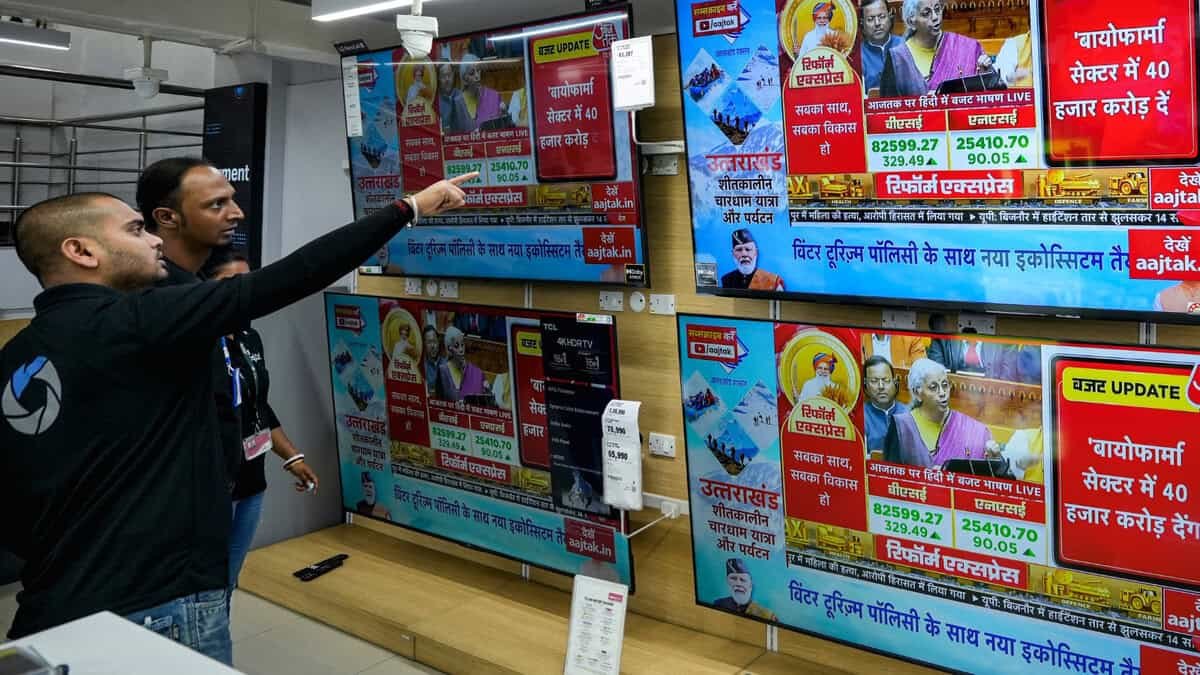
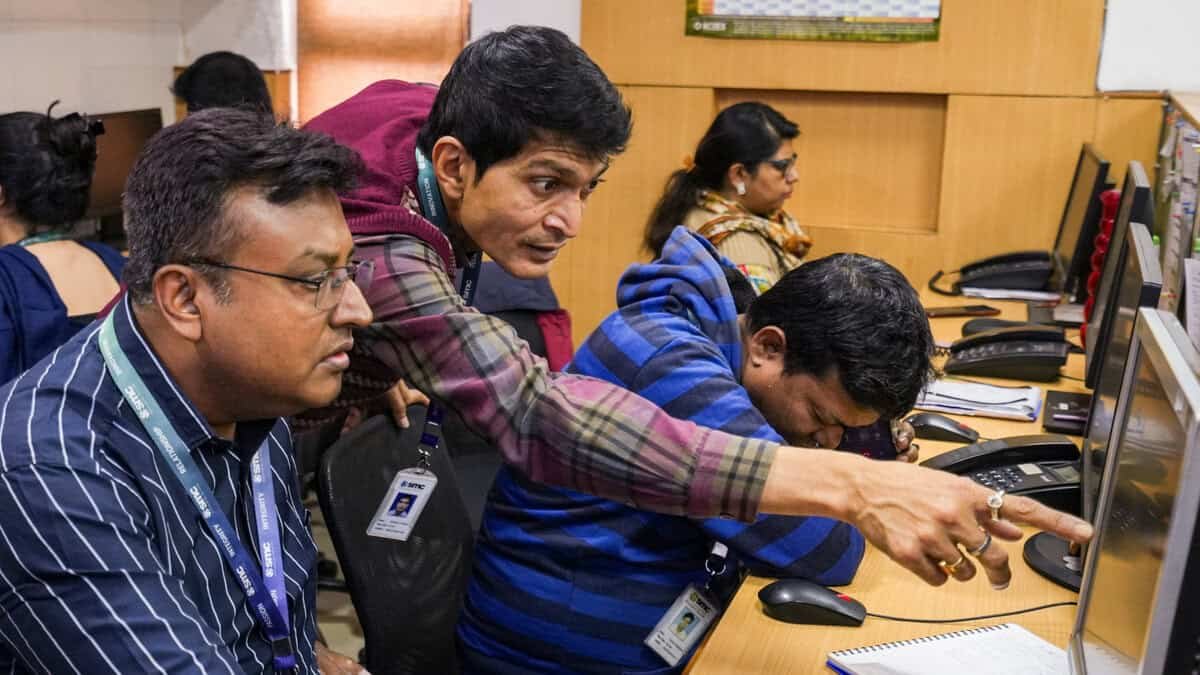
Mumbai: Benchmark stock indices Sensex and Nifty dived sharply by nearly 2 per cent on Sunday, February 1, logging their worst decline in years on a Budget day, after Finance Minister Nirmala Sitharaman proposed a hike in the Securities Transaction Tax (STT) on derivatives.
Reversing the early gains, the 30-share BSE Sensex plunged sharply by 2,370.36 points or 2.88 per cent to slide below the 80,000-mark at 79,899.42 in afternoon trade as the finance minister announced a hike in STT on futures contracts to 0.05 per cent from the current 0.02 per cent.
The barometer settled at 80,722.94, down 1,546.84 points or 1.88 per cent.
The 50-share NSE Nifty tanked 495.20 points or 1.96 per cent to settle at 24,825.45. During the day, it tumbled 748.9 points or 2.95 per cent to 24,571.75.
Stock exchanges held a special Budget Day trading session on Sunday in view of the budget presentation by Sitharaman for the next financial year.
Sensex and Nifty logged their worst decline in years on a Budget day. Earlier on February 1, 2020, the 30-share BSE benchmark had ended 2.42 per cent lower, and the Nifty tanked 2.51 per cent.
Investors’ wealth eroded sharply by Rs 9.40 lakh crore on Sunday, tracking a sharp decline in equities. Market capitalisation of BSE-listed companies eroded by Rs 9,40,581.75 crore to Rs 4,50,61,658.60 crore (USD 4.90 trillion) in a single day.
“Market unease, however, is centred on the increase in STT on F&O, particularly the sharper hike on futures. This comes on the back of higher capital gains taxes last year, raising overall transaction costs for market participants,” Pranav Haridasan, MD and CEO, Axis Securities, said.
Futures are a margined, risk-managed product and not typically the primary source of retail excess, which raises questions on whether higher STT will deliver the desired outcome or instead weigh on liquidity, participation and India’s market cost competitiveness, he noted.
“These concerns are being voiced by foreign investors and domestic traders, and are reflected in the immediate market reaction,” Haridasan added.
From the 30 Sensex firms, State Bank of India tanked 5.61 per cent, while Adani Ports lost 5.53 per cent.
Bharat Electronics, ITC, Tata Steel, UltraTech Cement and Reliance Industries were also among the laggards.
Tata Consultancy Services, Infosys, Sun Pharma and Titan were the gainers.
Among indices, BSE PSU Bank dived the most by 5.60 per cent, metal tanked 3.85 per cent, commodities (3.35 per cent), energy (3.14 per cent), capital goods (3.02 per cent), utilities (2.98 per cent), industrials (2.66 per cent) and power (2.52 per cent).
IT and BSE Focused IT were the winners
A total of 2,375 stocks declined while 1,759 advanced and 175 remained unchanged on the BSE.
“The increase in Securities Transaction Tax (STT), especially in futures and options, is likely to act as a marginal negative for foreign portfolio investor (FPI) flows in the near term, particularly for high-frequency and derivative-focused global funds,” Aakash Shah, Technical Research Analyst at Choice Equity Broking, said.
Foreign institutional investors bought equities worth Rs 2,251.37 crore on Friday, January 30, according to exchange data.
“The proposed increased STT in F&O is a dampener for capital market entities in the short term, but may augur well in the long term,” HDFC Securities’ managing director and chief executive Dhiraj Relli said.
Vinod Nair, Head of Research, Geojt Investments Limited, said, The budget supports sectors affected by global trade tariffs and focuses on emerging areas of development, including data centers, GCC, semiconductors, biopharma, rare earth elements, and manufacturing.
Additionally, it extends support to traditional sectors like textiles, aquaculture, and MSMEs, which have been impacted by global protectionist trade policies, he said.
“Despite these measures, the market’s reaction has been negative, primarily due to low expectations, limited outlays and the negative bias created by the increased Securities Transaction Tax (STT) for futures, triggering a knee-jerk response,” Nair noted.
Asian and European markets are closed on Sunday due to holidays. US markets ended lower on Friday.
“The Finance Minister’s proposal to raise STT on futures to 0.05% is structurally negative for the capital market ecosystem, particularly F&O-driven businesses. Higher transaction costs are likely to reduce trading volumes, dampen short-term momentum, and lower profitability for active market participants. FII participation in derivatives may also moderate as post-tax trading efficiency declines, impacting overall liquidity.
“This can create a cascading effect on revenue streams of broking companies, exchanges, AMCs, and depositories, which are closely linked to market turnover. With derivatives volumes already shrinking in recent months, the hike may further pressure near-term earnings visibility. While fiscally supportive, the measure poses headwinds for capital-market-linked stocks,” Raj Gaikar, Research Analyst, SAMCO Securities, said.
“Indian equity markets witnessed sharp, event-driven volatility during the special Budget Day session, with benchmark indices slipping into a risk-off mode as investors digested the Union Budget 2026-27.
“Initial optimism faded quickly as higher transaction costs driven by the increase in Securities Transaction Tax (STT) on equity derivatives-and the lack of strong measures to revive foreign capital inflows weighed on sentiment and near-term liquidity expectations,” Ponmudi R, CEO of Enrich Money, an online trading and wealth tech firm, said.
On Friday, the Sensex declined 296.59 points, or 0.36 per cent, to settle at 82,269.78. The Nifty dropped 98.25 points, or 0.39 per cent, to end at 25,320.65.
New Delhi: Agriculture and allied sectors broadly welcomed the Union Budget 2026 on Sunday, February 1, praising government plans to add 20,000 veterinary professionals, boost offshore fishing through duty cuts, and support high-value crops like cashew and walnuts, though the edible oil sector expressed disappointment over the lack of measures to curb import dependence.
Industry executives said the Budget marks a strategic shift toward technology-driven, productivity-focused farming, with new Artificial Intelligence (AI) platforms, expanded veterinary infrastructure, and targeted support for fisheries, dairy, and specialty crops aimed at raising farm incomes and export competitiveness.
Fisheries and marine products
Dr Grinson George, Director of ICAR-Central Marine Fisheries Research Institute, said the Budget introduces a strategic framework for the blue economy by incentivising offshore and high-seas fishing through critical duty exemptions.
“This move is expected to alleviate the ecological pressure on near-shore resources while significantly enhancing the global competitiveness of Indian seafood exports,” he told PTI.
By treating overseas landings as exports, the budget provides small-scale fishers with a vital gateway to premium global markets and better price realisation, he said, adding that emphasis on value chain startups, women-led groups, and fish farmer producer organisations ensures deeper value chain integration.
Dr Ram Mohan MK, Director of Marine Products Export Development Authority (MPEDA), said the duty exemption on marine fish catch in high seas will boost investment and exploit resources.
Dairy and livestock
Heritage Food Executive Director Brahmani Nara welcomed the scaling up of veterinary capacity by 20,000 professionals through new colleges, hospitals, laboratories and para-vet networks.
“This directly addresses the severe shortage we flagged: bridging the gap from 68,000 to the required 1,10,000-1,20,000 veterinarians,” she said.
For over 3,00,000 farmer partners, this veterinary infrastructure expansion, coupled with enhanced credit-linked subsidies, will unlock better animal health, improved breeding outcomes, higher milk yields, and affordable credit access for livestock investments, she added.
Milky Mist Dairy Food CEO K Rathnam said measures extending tax deductions to cattle feed supplied by primary cooperatives and rationalising inter-cooperative dividend taxation “go beyond short-term relief and address structural challenges faced by dairy farmers”.
Godrej Agrovet MD and CEO Sunil Kataria said the Budget reinforces agriculture as a key pillar in India’s journey towards Viksit Bharat, with targeted attention on livestock, fisheries and allied sectors showcasing a shift towards diversified and income-resilient farm systems.
High-value crops and diversification
Manoj Dabas, India Country Director, CIFOR-ICRAF, said the FM’s announcement of initiatives to boost farmer incomes through Trees Outside Forest commodities such as coconut, cashew, sandalwood, agarwood, and walnuts would not only empower rural livelihoods but also build long-term ecological resilience for the country.
India has lost leadership to Australia in Sandalwood and needs to reclaim its past primacy, lost due to apathy and lack of foresight in the past.
Agarwood is a high-revenue tree crop selling at a price as high as Rs 27 lakh per kg, but it requires a high level of technical inputs like inoculation and, if managed well, can transform the rural economy of the Northeast, he said.
EY India Partner and Leader (Social and Skills Sector) Amit Vatsyayan said the Budget reflects a strategic shift from allocation-driven spending to acceleration-oriented reforms.
Nut and Dry Fruit Council of India President Gunjan Vijay Jain called the focused support for cashew, almonds and walnuts “both timely and impactful”.
“The dedicated programme for raw cashew is particularly important, as it addresses challenges around domestic availability, processing capacity and value addition,” he said.
Insecticides (India) MD Rajesh Aggarwal highlighted the coconut productivity enhancement scheme as a timely intervention to strengthen farm incomes by replacing non-productive trees with high-yielding varieties.
Technology and modernisation
CNH India President & MD Narinder Mittal said the Budget signals that India’s agricultural growth will be driven by productivity and technology-led modernisation, with initiatives like the AI-enabled Bharat-VISTAAR platform and investments in irrigation infrastructure.
Simon Wiebusch, Country Divisional Head of Bayer’s Crop Science Division in India, Bangladesh & Sri Lanka, said the Budget reinforces the shift towards high-value, climate-resilient agriculture anchored in productivity, technology and value chains.
Seeds sector
Federation of Seed Industry of India Chairman Ajai Rana called the Budget “enabling and complementary” to the previous year’s, saying it brings together essential ingredients for farm growth.
However, the industry had expected measures such as restoration of the 200 per cent weighted tax deduction on R&D, GST rationalisation for seeds, and a PLI-type incentive framework to further strengthen innovation and domestic seed development, he said.
Edible oils, a missed opportunity
The Solvent Extractors’ Association (SEA) expressed disappointment that the Budget did not address India’s growing dependence on edible oil imports.
“The Budget did not touch on measures that would reduce our dependence on the import of edible oil,” SEA said, though it noted the finance minister maintained the current import duty structure.
Fertiliser sector
“We see the removal of exemptions not as a hurdle, but as a necessary step toward the self-reliance and predictable environment required for capital-intensive sectors to thrive,” Matix Fertilisers & Chemicals Chairman Nishant Kanodia said.
Fertiliser Association of India Chairman S Sankarasubramanian said the Budget allocation for fertilisers underline a steady commitment to domestic capability.
“The emphasis on customs duty rationalisation and addressing inverted GST structures is particularly important, as it helps streamline costs, improve cash flows, and create a more predictable operating environment,” he added.
Yara South Asia MD Sanjiv Kanwar said, “The continued emphasis on value addition, support for women-led rural enterprises, and long-term sustainability aligns well with the industry’s focus on responsible fertiliser use and efficient farming systems.”
New Delhi: Finance Minister Nirmala Sitharaman on Sunday, February 1, said that the estimate for nominal gross domestic product (GDP) at 10 per cent for the financial year beginning April 1, 2026, is realistic.
As per the Budget document, India’s GDP growth in absolute terms is estimated at Rs 393 lakh crore.
“Inflation is down in India, and it is remaining there for some time. Inflation is just not the only one, which is a deflator. However, largely you depend on that. Therefore, the assumption of the nominal GDP is realistic,” she said, replying to a query in post-Budget interaction.
Besides, a 10 per cent nominal GDP growth figure has been arrived at on the basis of the existing GDP base year and the methodology.
The government is set to revise the base year for many important macroeconomic indicators, including GDP and retail inflation measured through the Consumer Price Index (CPI), later this month.
The Ministry of Statistics and Programme Implementation (MoSPI) will release new statistical series with updated base years on February 27.
National Accounts data will follow 2022–23 as the base year and will be released on February 12, and the CPI revision will take place at the end of February.
Once these new series are introduced, historical data will be recalculated, altering growth rates, inflation trends and nominal values that form the backbone of fiscal projections.