Category: BUSINESS

  • UPI transactions hit record high of Rs 28.33 lakh crore in January

    UPI transactions hit record high of Rs 28.33 lakh crore in January

    New Delhi: Transactions through the popular Unified Payments Interface (UPI) touched a record Rs 28.33 lakh crore and 21.70 billion in value and volume terms, respectively, in January, according to data released by the National Payments Corporation of India (NPCI).

    NPCI said the value of transactions was at Rs 27.97 lakh crore in December.

    On a month-on-month basis, the growth was 21 per cent in value terms.

    Add as a preferred source on GoogleAdd as a preferred source on Google

    The average daily transaction in January was 700 million with an average value of Rs 91,4033 crore.

    Worldline CEO Ramesh Narasimhan said, “UPI’s growth momentum continues to strengthen. In January 2026 alone, Indians made 21.7 billion UPI transactions worth Rs 28.33 lakh crore — an increase over December and a solid 28 per cent growth year-on-year.”

  • Budget proposes Rs 10,000 cr investment in biopharma over next 5 years

    Budget proposes Rs 10,000 cr investment in biopharma over next 5 years

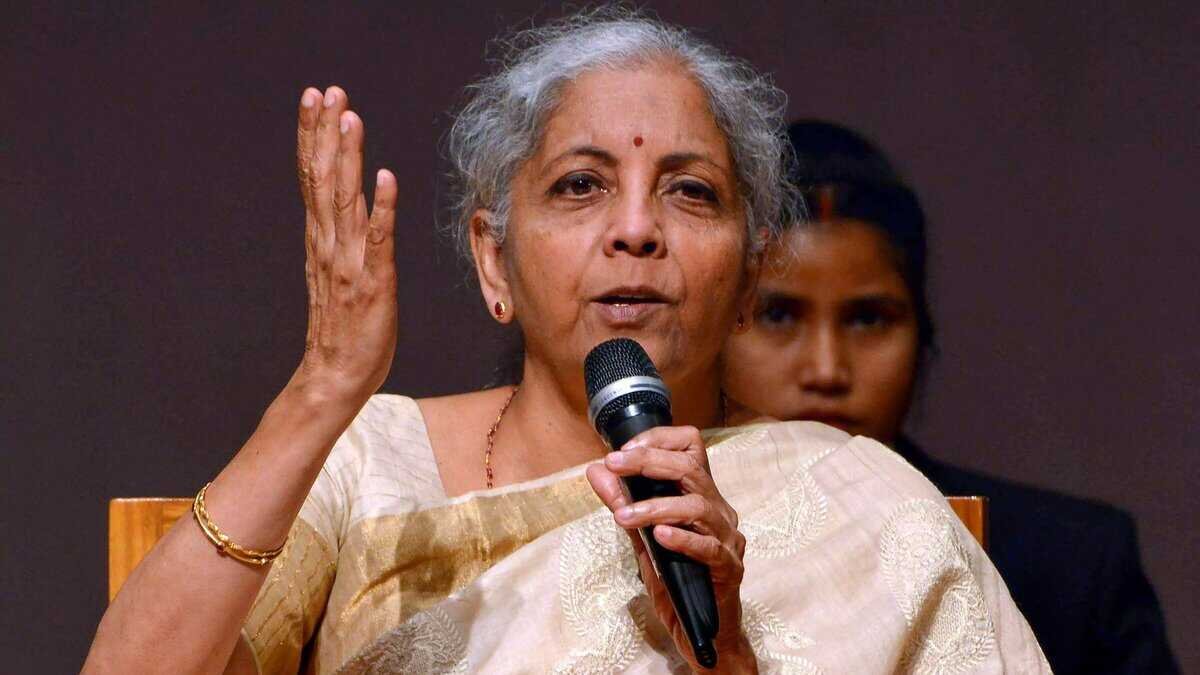
    New Delhi: Finance Minister Nirmala Sitharaman on Sunday proposed Rs 10,000 crore investment in the biopharma sector over the next five years, a move which would give a boost to the country’s pharmaceuticals industry.

    Biopharmaceuticals, or biologics, are complex medicines manufactured from living organisms, cells, or tissues rather than through chemical synthesis.

    She also proposed interventions in six areas, including manufacturing, strategic and frontier sectors, healthcare and advanced technology.

    Add as a preferred source on Google

    The minister added that semiconductor mission 2.0 will focus on producing equipment and materials designed for full-stack Indian IP (intellectual property).

    The India Semiconductor Mission (ISM) is a specialized, autonomous business division within Digital India Corporation under Ministry of Electronics and Information Technology (MeitY), designed to build a sustainable semiconductor and display ecosystem.

    Sitharaman also announced support for mineral rich states of Odisha, Kerala, Andhra Pradesh and Tamil Nadu to establish critical mineral facilities.

    MS Admissions 2026-27MS Admissions 2026-27

    She added that ‘Sabka Saath, Sabka Vikas’ is the third Kartavya of the government.

  • ‘Reform Express’ is on its way, says FM

    ‘Reform Express’ is on its way, says FM

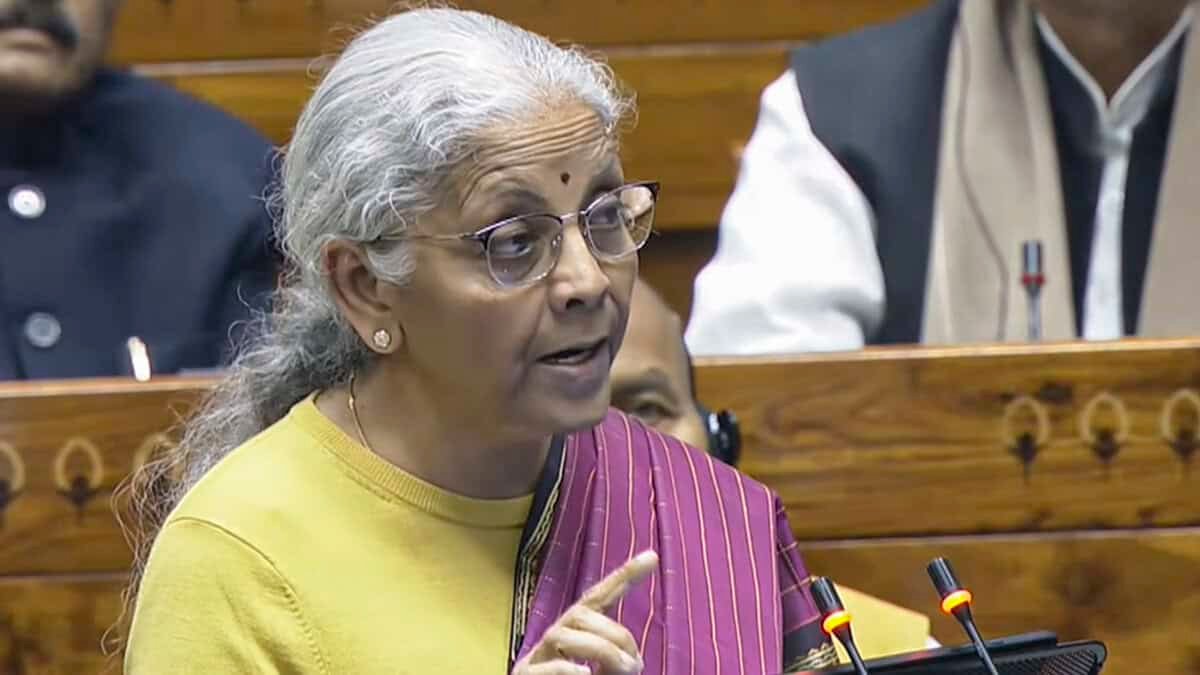
    New Delhi: Finance Minister Nirmala Sitharaman on Sunday, February 1, said the “Reform Express” is on its way and the government will keep the momentum.

    “Our Kartavya is to ensure every family, community, and sector has access to resources, amenities and opportunities,” she said.

    Presenting the Budget for 2026-27, Sitharaman said the government will ensure the dividends of growth reach every farmer, scheduled caste, scheduled tribe, and youth.

    Various reforms, including GST, labour codes, and quality control order, have been rolled out since August 15.

    The “Reform Express is on its way” and the momentum will continue, Sitharaman said.

    The government’s Kartavya is to accelerate and sustain economic growth, fulfil aspirations of people, she said and emphasised that the Sankalp is to focus on poor, underprivileged and disadvantaged.


    Get the latest updates in Hyderabad City News, Technology, Entertainment, Sports, Politics and Top Stories on WhatsApp & Telegram by subscribing to our channels. You can also download our app for Android and iOS.

  • 5 major Union Budget 2026 moves by FM Nirmala Sitharaman

    5 major Union Budget 2026 moves by FM Nirmala Sitharaman

    Finance Minister Nirmala Sitharaman on Sunday, February 1, presented the Union Budget 2026–27, combining fiscal consolidation with targeted policy interventions across taxation, infrastructure, manufacturing and services. The following are five major policy moves announced in the Budget:

    1. Fiscal consolidation path reaffirmed

    The government reiterated its commitment to fiscal discipline, pegging the fiscal deficit at 4.3 per cent of the gross domestic product (GDP) in FY27, lower than 4.4 per cent in FY26, Sitharaman said.

    Total expenditure for FY27 has been set at Rs 53.5 lakh crore, while the debt-to-GDP ratio is projected at 55.6 per cent, signalling continued focus on debt consolidation.

    Add as a preferred source on Google

    The Budget also retains 41 per cent tax devolution to states, as recommended by the 16th Finance Commission.

    2. Capital expenditure and infrastructure push sustained

    Capital expenditure has been raised to Rs 12.2 lakh crore, underscoring the government’s continued reliance on public investment to support growth.

    Key infrastructure-related announcements include:

    MS Admissions 2026-27MS Admissions 2026-27
    • Setting up an Infrastructure Risk Guarantee Fund to reduce risks for private developers
    • Dedicated Real Estate Investment Trusts (REIT) to recycle Central Public Sector Enterprises (CPSE) assets
    • Development of an East Coast Industrial Corridor with a node at Durgapur
    • Provision for 4,000 electric buses
    • Rs 20,000 crore over five years for carbon capture, utilisation and storage

    3. New Income Tax Act and compliance reforms

    The Budget confirms that the Income Tax Act, 2025, will come into force from April 1, replacing the six-decade-old tax law.

    The new law introduces:

    • A single “tax year,” removing the assessment year–previous year distinction
    • Simplified rules and redesigned tax return forms
    • Extended timelines for revised returns
    • Staggered filing deadlines for different taxpayer categories

    The Centre said the law is revenue-neutral and aims to reduce disputes and improve ease of compliance.

    4. Manufacturing, exports and customs rationalisation

    To support domestic manufacturing and exports, the Budget announced:

    • Rs 40,000 crore for India Semiconductor Mission 2.0
    • Three new chemical parks and the revival of 200 legacy industrial clusters
    • Rs 10,000-crore Small and Medium Enterprises (SME) Growth Fund
    • Export-friendly customs measures, including higher duty-free input limits for seafood exports and concessions for SEZ units

    The Budget also proposes wide-ranging customs duty rationalisation, including duty exemptions for critical minerals, aircraft parts, nuclear projects and clean energy inputs, as well as reduction of customs duty on personal-use imports from 20 per cent to 10 per cent.

    5. Digital economy and services reforms

    The Budget outlines a clear framework for strengthening India’s digital and services economy.

    Key measures include:

    • A tax holiday till 2047 for foreign companies setting up global data centres in India
    • Clubbing of software services, IT-enabled services, knowledge process outsourcing (KPO) and contract research and developement (R&D) under a single Information Technology Services category
    • A common safe harbour margin of 15.5 per cent
    • Raising the safe harbour threshold to Rs 2,000 crore
    • Automatic, rule-based approval of safe harbour applications

    The government said these steps aim to improve certainty for businesses and strengthen India’s position in global digital services.

  • PFC, REC rallies 6 pc as FM Sitharaman unveils restructuring plan in Budget

    PFC, REC rallies 6 pc as FM Sitharaman unveils restructuring plan in Budget

    New Delhi: Shares of PFC and REC surged up to 6 per cent on Sunday, February 1, after Finance Minister Nirmala Sitharaman announced the restructuring of the two state-run entities as part of the government’s public sector financial institution strengthening.

    The scrip of Power Finance Corporation (PFC) climbed 5.90 per cent to Rs 401.75 apiece, while REC advanced 4.3 per cent to Rs 380 on the BSE.

    Meanwhile, markets is trading in the negative territory, with the 30-share BSE Sensex plunged 450.04 points, or 0.55 per cent, to 81,819.74 in the late morning trade.

    Add as a preferred source on GoogleAdd as a preferred source on Google

    In her Union Budget 2026-27 speech, Sitharaman proposed restructuring of REC Ltd (formerly Rural Electrification Corporation) and Power Finance Corporation (PFC) as part of the government’s public sector financial institution strengthening.

    PFC and REC plays a key role in funding power generation, transmission and distribution projects.

  • 5 regional medical hubs to be set up to boost medical tourism

    5 regional medical hubs to be set up to boost medical tourism

    New Delhi: Giving an impetus to medical tourism, Union Finance Minister Nirmala Sitharaman on Sunday proposed launching a scheme to support states in establishing five regional medical hubs in partnership with the private sector.

    These hubs will serve as integrated healthcare complexes that combine medical, educational and research facilities, Sitharaman said presenting the budget 2026-27.

    They will have AYUSH centres, medical value tourism facilitation centres and infrastructure for diagnostics, post care and rehabilitation, she stated.

    Add as a preferred source on Google

    These hubs will provide diverse job opportunities for health professionals, including doctors, and allied health professionals, she said.

    Emphasising that post Covid, Ayurveda has gained global acceptance and recognition like yoga, Sitharaman also announced setting up of three new All India Institutes of Ayurveda to strengthen research in the field.

    “Ancient Indian yoga, already respected in several parts of the world, was given a mass global recognition when the prime minister took it to the UN,” she said.

    MS Admissions 2026-27MS Admissions 2026-27

    Exploring quality Ayurveda products helps farmers who grow herbs and youth who process the products, she said.

    Besides setting up the three All India Institutes of Ayurveda, upgrading Ayush pharmacies and drug testing labs for higher standards of certification ecosystem has been proposed in the Budget.

    She also called for upgrading the WHO Global Traditional Medicine centre in Jamnagar to bolster evidence-based research, training and awareness for traditional medicine.

  • Tax holiday till 2047 for foreign cloud firms using data centers in India

    Tax holiday till 2047 for foreign cloud firms using data centers in India

    New Delhi: Finance Minister Nirmala Sitharaman on Sunday, February 1, proposed tax holiday till 2047 for foreign companies that provide cloud services to customers worldwide by using data centres in the country.

    The tax holiday will be extended to the entities concerned subject to certain conditions.

    In the Union Budget 2026-27 speech, Sitharaman said there is a need to enable critical infrastructure and boost investment in data centres.

    Add as a preferred source on Google

    “I propose to provide tax holiday till 2047 to any foreign company that provides cloud services to customers globally by using data centre services from India,” the minister said.

    To avail the tax holiday, companies need to provide services to Indian customers through an Indian reseller entity.

    Among other proposals, the government will set up National Institute of Hospitality by upgrading existing National Council for Hotel Management and catering technology.

    MS Admissions 2026-27MS Admissions 2026-27

    She also said a National Institute of Mental Health and Neurosciences (NIMHANS-2) will also be established, she said.

    Further, Sitharaman said in Odisha, Karnataka, and Kerala, key turtle nesting sites, along with turtle trails, will be developed.

    Another announcement is that the government has decided to extend deduction for cooperative members who supply cotton seeds and cattle feed.

  • Govt to set up SHE Marts for women entrepreneurs

    Govt to set up SHE Marts for women entrepreneurs

    New Delhi: Building on the success of the Lakhpati Didi scheme, community-owned retail shops will be set up for the women entrepreneurs from self-help groups, Finance Minister Nirmala Sitharaman said on Sunday, February 1.

    Presenting the Union Budget in the Lok Sabha, the minister called it the “next step” for these self-help group (SHG) members, towards being “owners of enterprises”.

    “Building on the success of the Lakhpati Didi programme, I propose to help women take the next step from credit-linked livelihood to being owners of enterprises,” Sitharaman said.

    Add as a preferred source on GoogleAdd as a preferred source on Google

    “‘Self Help Entrepreneur – SHE Marts’ will be set up as community-owned retail outlets within cluster-level federations through enhanced and innovative finance instruments,” she said.

    A Lakhpati Didi is a woman member of an SHG whose annual household income reaches at least Rs one lakh.

    According to the Rural Development Ministry, over two crore women have become Lakhpati Didis so far, and the target is to have three crore women SHG members achieve Rs 1 lakh annual income by 2027.

    MS Admissions 2026-27MS Admissions 2026-27

  • Govt to train 20,000 vets, push fisheries: Sitharaman’s Budget 2026

    Govt to train 20,000 vets, push fisheries: Sitharaman’s Budget 2026

    New Delhi: In a major push to diversify rural incomes and create employment opportunities beyond traditional farming, Finance Minister Nirmala Sitharaman on Sunday announced a series of initiatives for the livestock, fisheries and high-value agriculture sectors while presenting the Budget 2026-27 in Parliament.

    Pointing out that livestock contributes close to 16 per cent of farm income, including for poor and marginal households, Sitharaman proposed a loan-linked capital subsidy scheme to scale up the availability of veterinary professionals by more than 20,000.

    The scheme will support the establishment of veterinary and private colleges, veterinary hospitals, diagnostic laboratories and breeding facilities in the private sector.

    Add as a preferred source on Google

    For fisheries, the government will undertake integrated development of 500 reservoirs and Amrit Sarovars and strengthen the value chain in coastal areas, enabling market linkages through startups, women-led groups and Fish Farmers Producer Organisations.

    The finance minister announced a credit-linked subsidy programme for animal husbandry entrepreneurship development, alongside scaling up and modernisation of livestock enterprises and creation of livestock, dairy and poultry-focused integrated value chains.

    In a significant move for coastal farmers, Sitharaman proposed a coconut promotion scheme aimed at replacing old and non-productive trees with new varieties in major coconut-growing states.

    MS Admissions 2026-27MS Admissions 2026-27

    She noted that about 30 million people, including nearly 10 million farmers, depend on coconuts for their livelihood, with India being the world’s largest producer.

    A dedicated programme for Indian cashew and cocoa aims to make the country self-reliant in production and processing, enhance export competitiveness and transform them into premium global brands by 2030.

    The government will also partner with states to promote sandalwood cultivation and post-harvest processing “to restore the glory of the Indian sandalwood ecosystem”, which is closely linked to India’s social and cultural heritage.

    For hilly regions, a dedicated programme will support rejuvenation of old orchards and expansion of high-density cultivation of walnuts, almonds and pine nuts, focusing on value addition through youth engagement.

  • Rs 250 crore for voter cards, Rs 500 crore to clear election bills: Budget 2026

    Rs 250 crore for voter cards, Rs 500 crore to clear election bills: Budget 2026

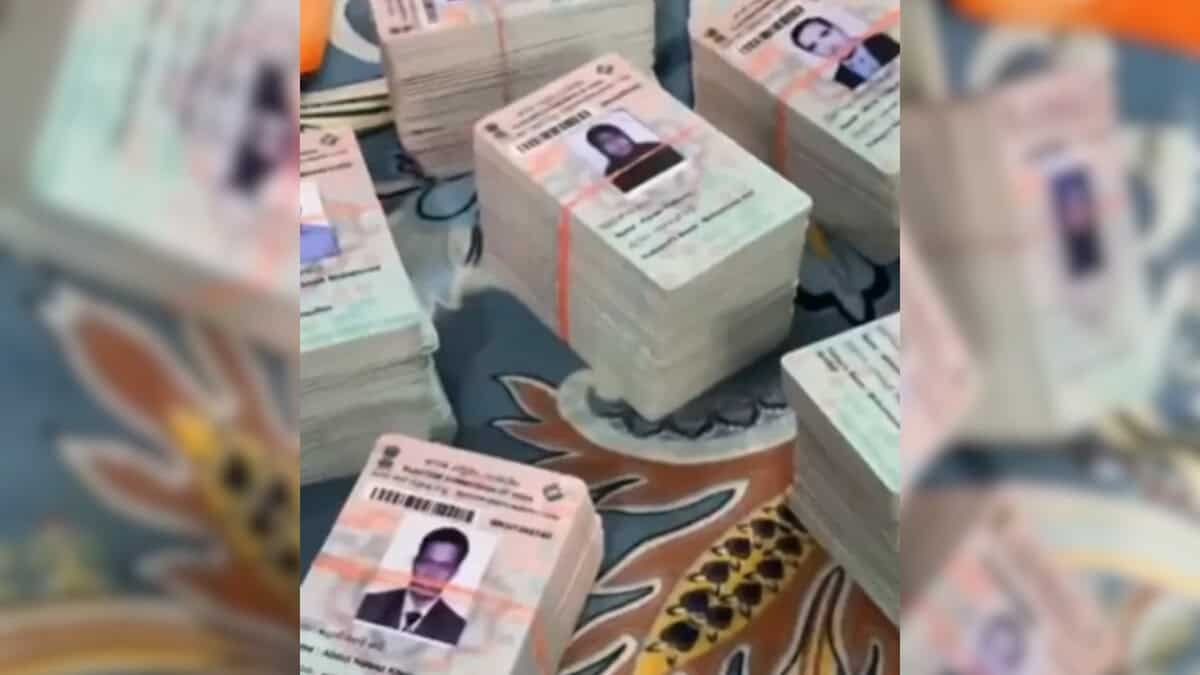
    New Delhi: As India’s voter base increases, the Union law ministry has been allocated Rs 250 crore for voter identity cards, while another Rs 500 crore has been earmarked to settle Lok Sabha election related expenditure.

    The expenditure on Election Photo Identity Cards (EPICs) is shared equally between the Centre and the states. Each state pays the amount in proportion to the number of electors it has.

    The voter base of India stands at around 99 crore now.

    Add as a preferred source on GoogleAdd as a preferred source on Google

    According to the Union Budget 2026-27, Rs 250 crore has been allocated under the revised estimates.

    According to the Budget Estimates, the amount was Rs 300 crore.

    Separately, the ministry, the nodal agency for Election Commission, election laws, related rules and EC appointments, has been provided Rs 500crore for the Lok Sabha polls held in 2024.

    MS Admissions 2026-27MS Admissions 2026-27

    Officials said after any election, funds are provided to clear expenditure made by various agencies and states for the purpose.

    “It is a book keeping exercise,” an official said.