New Delhi: Shares of InterGlobe Aviation declined nearly 4 per cent on Thursday, February 5, after the Competition Commission ordered a detailed probe against IndiGo for unfair business practices.
The stock dropped 3.65 per cent to Rs 4,782.45 on the BSE.
At the NSE, the stock declined 3.63 per cent to Rs 4,780.30 apiece.
The Competition Commission on Wednesday ordered a detailed probe against IndiGo for unfair business practices, nearly two months after the country’s largest airline cancelled thousands of flights due to operational issues, causing hardships to passengers.
After taking into consideration data related to airlines and those provided by the aviation regulator DGCA, the Competition Commission of India (CCI) has prima facie concluded that IndiGo has abused its dominant position.
In a 16-page order, CCI said that by cancelling thousands of flights, which constituted a significant portion of the scheduled capacity, IndiGo effectively withheld its services from the market, creating an artificial scarcity, limiting consumer access to air travel during peak demand.
“Such conduct by a dominant enterprise may be viewed as restricting the provision of services under Section 4 (2) (b)(i) of the Act,” the regulator said.
Section 4 of the Competition Act pertains to abuse of dominant position.
Noting that prima facie the airline’s conduct seems to be causing an appreciable adverse effect on competition in India, CCI ordered a detailed investigation by its Director General (DG).
New York: US federal authorities have seized more than 200 website domains tied to an India-based transnational criminal organisation having illegal online pharmacies allegedly responsible for at least six fatal and four non-fatal overdoses.
The US Drug Enforcement Administration (DEA) field offices throughout the country also conducted multiple operations leading to the arrest of four individuals, it said in a statement said on Wednesday, February 4.
The DEA, with the cooperation of the US Attorney’s Office for the Eastern District of New York, announced the seizure of more than 200 website domains tied to the India-based transnational criminal organisation (TCOs) working within the United States allegedly responsible for at least six fatal and four non-fatal overdoses as part of Operation Meltdown.
These TCOs tied to these illegal online pharmacies have been under investigation by DEA’s Rocky Mountain Field Division since 2022.
The DEA said that leveraging its global reach, the agency actively collaborates with Government of India law enforcement partners to identify, investigate, and dismantle dangerous criminal organisations that engage in these types of illegal drug trafficking operations.
Through joint operations, the DEA will continue to pursue significant enforcement actions against illicit pharmaceutical distributors at the source and remains steadfast in its efforts to disrupt the flow of illicit pharmaceuticals that threaten public health and safety of American citizens, it said.
Authorities said that beginning January 27, 2026, DEA field offices throughout the United States conducted multiple operations leading to the arrest of four individuals along with the issuance of five Immediate Suspension Orders (ISO) and one Order to Show Cause (OTSC).
These actions were in addition to the US Government shutting down more than 200 online pharmacies accused of filling hundreds of thousands of orders of diverted pharmaceuticals and counterfeit pills without valid prescriptions.
Investigators determined the operators of these online pharmacies and their co-conspirators were illegally dispensing and shipping diverted medications, without valid prescriptions, to customers throughout the United States, violating federal rules and regulations and dangerously infiltrating a closed system of distribution intended to keep patients safe.
Over the course of this investigation, DEA identified thousands of customers who purchased medication through these online pharmacies. Subsequently, DEA has sent more than 20,000 letters to the public requesting information in support of this ongoing investigation.
“This case demonstrates how foreign-based traffickers exploit our healthcare system, hide behind the internet, and use people inside the United States to move dangerous drugs under the guise of legitimate commerce,” DEA Administrator Terrance Cole said.
“Illegal online pharmacies put poison in American communities. They sell counterfeit and unapproved pills and do not care who gets hurt or who dies. Actions like this save lives. They protect the American people. If you run these sites, supply them, move the money, ship the product, or help them operate, we will find you, we will dismantle your operations, and we will hold you fully accountable under US law.”
Earlier in 2024, DEA had issued a Public Service Announcement warning Americans about an increase in illegal online pharmacies. Many of these online pharmacies sold and shipped counterfeit pills made with fentanyl to unsuspecting US customers, who believed they were purchasing legitimate medications from legitimate pharmacies.
Illegal online pharmacies often use US-based website addresses and professional-looking designs to appear legitimate when, in fact, they are not, the statement said.
“These companies operate illegally, deliberately deceiving American customers into believing they are legally purchasing safe, regulated medications,” it said.
Many of the sites taken down as part of Operation Meltdown claimed to be legitimate, based in the US, and FDA-approved, but DEA’s investigation determined operators of these sites were often working with drug traffickers to fulfill online orders with counterfeit pills or diverted pharmaceuticals, it added.
These counterfeit medications are often made with fentanyl or methamphetamine and taking them can lead to serious health risks, including harmful side effects, ineffective treatment, and even death.
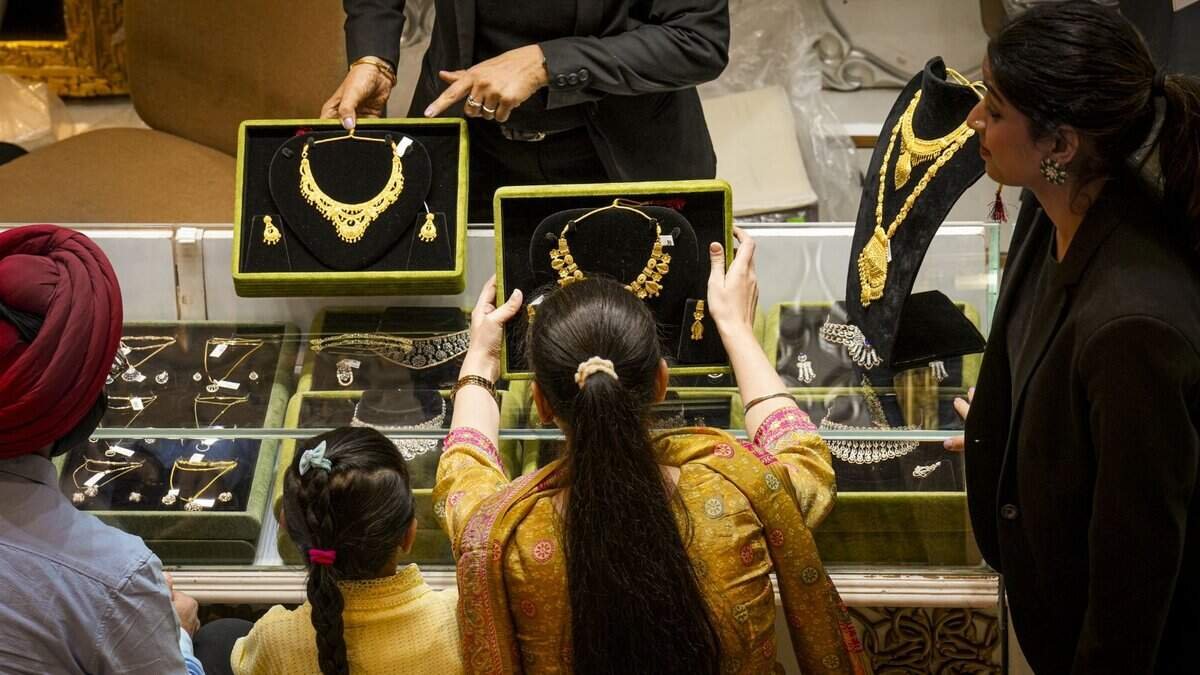
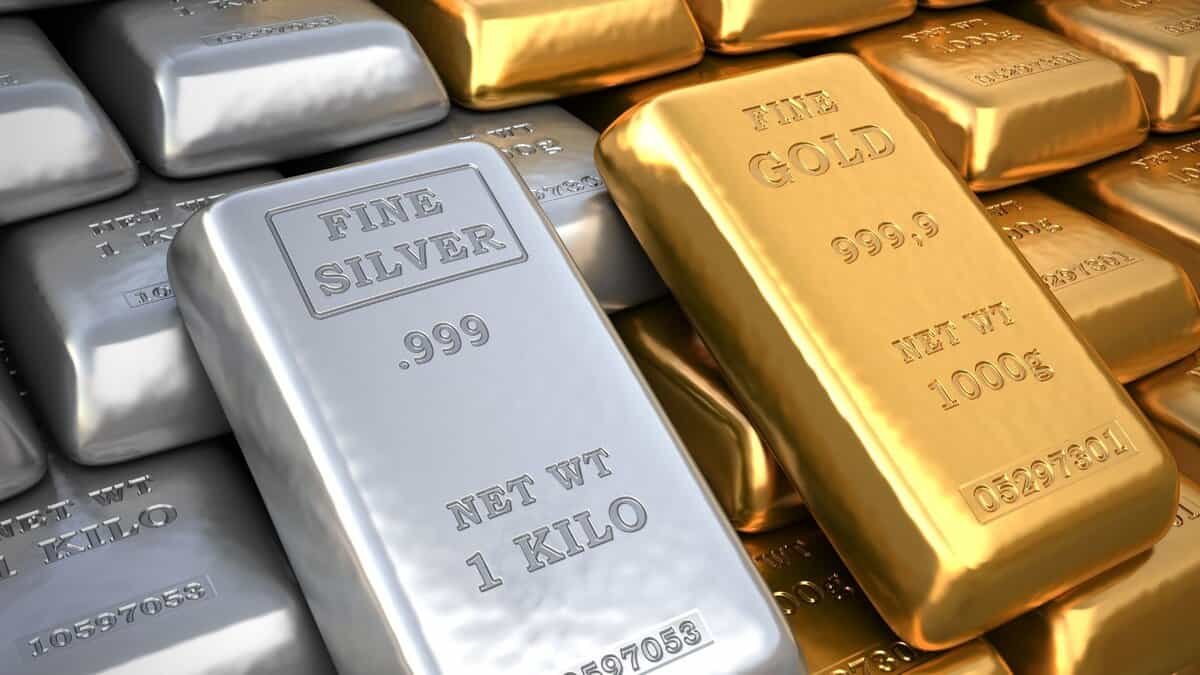
New Delhi: Precious metals extended their sharp rally for the second straight day in the national capital on Wednesday, February 4, with silver prices surging to Rs 2.98 lakh per kg and gold climbing to Rs 1.65 lakh per 10 grams.
Firm global trends, a weak US dollar, which revived investor interest in precious metals after last week’s steep sell-off, contributed to the surge, traders said.
According to the All India Sarafa Association, silver soared by Rs 14,300, or 5.03 per cent, to Rs 2,98,300 per kilogram (inclusive of all taxes). The white metal closed at Rs 2,84,000 per kg in the previous session.
Gold of 99.9 per cent purity also advanced sharply, gaining Rs 7,400, or 4.69 per cent, to Rs 1,65,100 per 10 grams (inclusive of all taxes), compared with Tuesday’s close of Rs 1,57,700 per 10 grams.
“Gold and silver extended their rebound on Wednesday, with gold prices rising over 3 per cent and touching around Rs 1.6 lakh per 10 g, while silver jumped as much as 6 per cent intra-day after a period of sharp volatility and correction,” Gaurav Garg, Research Analyst at Lemonn Markets Desk, said.
In the international market, spot silver gained USD 4.28, or 5.03 per cent, to USD 89.35 per ounce, while gold rose by USD 100.03, or 2.02 per cent, to USD 5,047.07 per ounce.
Gold and silver advanced on Wednesday, driven by renewed safe-haven buying amid escalating geopolitical tensions between the US and Iran, Saumil Gandhi, Senior Analyst – Commodities at HDFC Securities, said.
“This confrontation undermines the optimism over the US-Iran nuclear talks later this week and has raised concerns about the potential for further conflict between Washington and Tehran, which could increase the risk premium on gold and heighten demand for safe-haven assets,” Gandhi said.
New Delhi: State-owned BHEL on Wednesday said it has secured an order in the range of Rs 1,200-1,500 crore from Hindalco Industries.
BHEL said a letter of intent (LOI) in this regard has been received from Aditya Aluminium, Hindalco Industries.
The scope of work includes design, engineering, manufacture, supply up to site, unloading & storage, erection, commissioning and performance guarantee test for 2 x 150 megawatt BTG (boiler, turbine, and generator) package excluding civil work.
The project is to be executed at Lapanga, Sambalpur in Odisha in a span of about 3 years, BHEL said in a regulatory filing.
Under Ministry of Heavy Industries, BHEL is one of India‘s largest engineering and manufacturing enterprises in the energy and infrastructure sectors, and a leading power equipment manufacturer globally.
The company provides a comprehensive portfolio of products, systems and services to players in power, transmission, transportation, renewables, water, defence & aerospace, oil & gas, among others.
Mumbai: Benchmark indices Sensex and Nifty were trading higher in early trade on Wednesday, February 4, building on previous day’s sharp rally, amid fresh foreign fund inflows and positive sentiment following the India-US trade deal.
A sharp decline in IT stocks, however, restricted the rally in the markets.
The 30-share BSE Sensex advanced 68.49 points to 83,816.96 in early trade. The 50-share NSE Nifty went up by 51.90 points to 25,779.45.
From the Sensex firms, Mahindra & Mahindra, Power Grid, Reliance Industries, NTPC, ICICI Bank and ITC were among the biggest gainers.
Infosys, Tata Consultancy Services, HCL Tech and Tech Mahindra were the biggest laggards, declining as much as 5 per cent.
The BSE IT index tumbled 4.95 per cent to 35,311.34 in early trade.
Foreign institutional investors turned buyers on Tuesday as they bought equities worth Rs 5,236.28 crore, according to exchange data. Domestic Institutional Investors (DIIs) bought stocks worth Rs 1,014.24 crore.
India and the US have agreed on a framework for a trade deal under which Washington will bring down tariffs on Indian goods to 18 per cent from the current 50 per cent. The announcement is important because the US has imposed a steep tariff on Indian goods entering American markets, effective August 27, 2025.
In Asian markets, South Korea’s Kospi traded higher, while Japan’s Nikkei 225 index, Shanghai’s SSE Composite index and Hong Kong’s Hang Seng index quoted lower.
US markets ended lower on Tuesday.
“The rally fuelled by the US-India trade deal will face hurdles to sustain. The IT selloff in the US yesterday will drag the Indian IT index, too, constraining the rally in the Indian market,” VK Vijayakumar, Chief Investment Strategist, Geojit Investments Limited, said.
Brent crude, the global oil benchmark, climbed 0.68 per cent to USD 67.77 per barrel.
On Tuesday, the Sensex ended at 83,739.13, up 2,072.67 points or 2.54 per cent. The Nifty zoomed 639.15 points or 2.55 per cent to settle at 25,727.55.
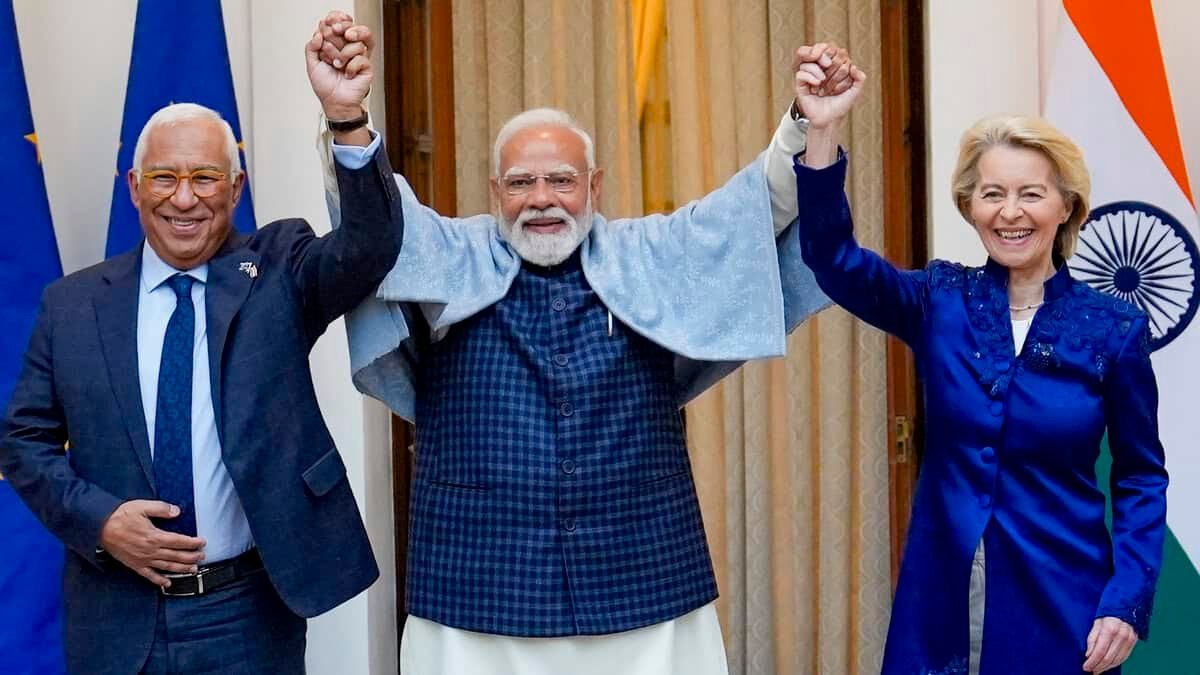
New Delhi: The India-EU Free Trade Agreement (FTA) is now undergoing “legal scrubbing” and both sides are committed to concluding the process swiftly for its signing and coming into force, possibly this year, EU Ambassador to India Herve Delphin has said.
Speaking to PTI, he described the FTA as a “very substantial” deal rather than an “empty shell.”
“We are in the process of what we call, technically, the legal scrubbing, and to close the process before the official signing and the entry into force. I think what I’ve noticed during the summit is that both sides are really committed to having this process concluded as soon as possible, so that the FTA enters into force, possibly this year, which will be another achievement,” the ambassador emphasised.
He listed overlapping economic interests, complementarity, scale, diversification, and de-risking as key drivers.
“From the European side, the EU member states, the Commission, and leadership, and on the Indian side, we saw the same commitment,” he added.
Delphin noted enthusiasm from business communities on both sides, emphasising opportunities in supply chain integration and worker mobility.
“The business communities are really bullish about this FTA. It offers so many opportunities… everybody wants to have it in place as soon as possible,” he said.
Delphin described the newly signed Security and Defence Partnership as a progression from five years of security and defence consultations.
“This Security and Defence Partnership is a political enabler. It shows that both sides see each other as trusted partners,” he said.
The next steps include negotiating a Security of Information Agreement as a “legal enabler” for exchanging classified information, followed by defence industry cooperation involving co-development and co-investment opportunities.
Delphin said the partnership would lead to deeper operational cooperation, including between the Indian Navy and European navies on protecting safe passage in the Indian Ocean.
“We have the same concerns about the protection of safe passage through the Indian Ocean,” he noted, adding that cooperation would expand to hybrid threats, cyber threats, and the security dimension of AI.
To a question on whether more European military platforms could be seen in the Indian Ocean following the agreement, Delphin said the partnership puts enablers in place but future specifics would depend on industries and operational needs.
“Across the board, you will see much appetite to do more,” he said.
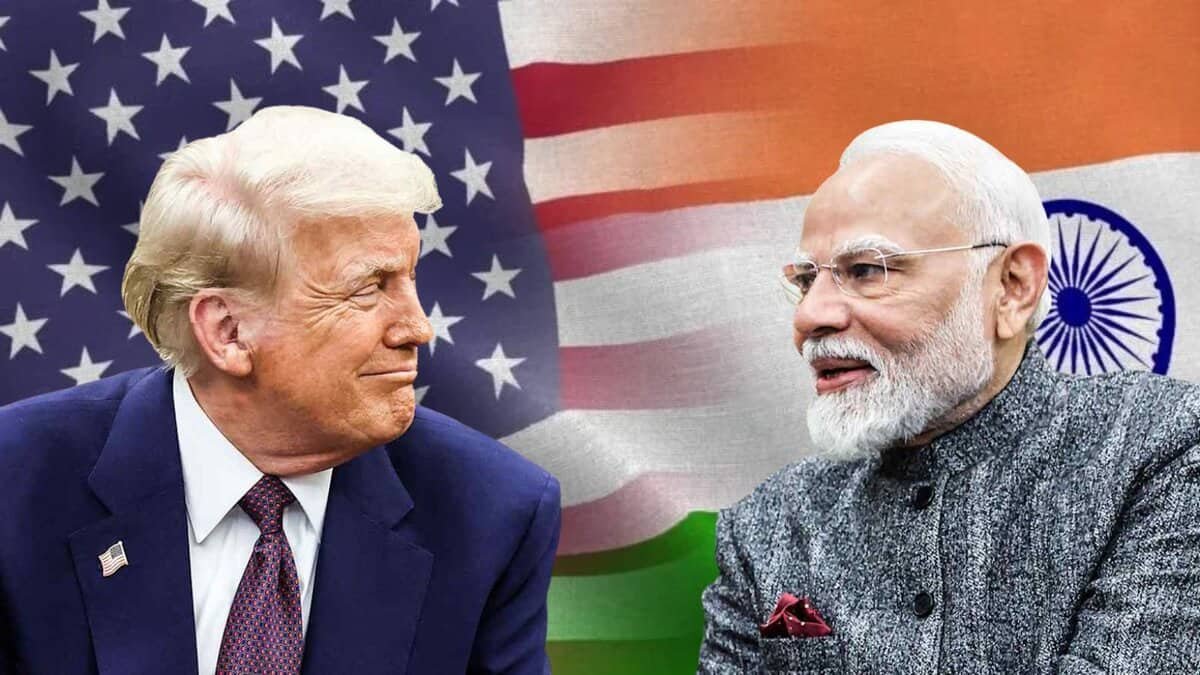
New Delhi: India and the US have agreed on a framework for a trade deal under which Washington will bring down tariffs on Indian goods to 18 per cent from the current 50 per cent. The announcement is important because the US has imposed a steep tariff on Indian goods entering American markets, effective August 27, 2025.
According to sources, the target is for five years. India would be buying more oil and gas, technology items like advanced chips and data centres, precious metals and gems, aeroplanes and their parts. These purchases would be possible as even in aviation alone USD 100 billion orders are placed or are in pipeline.
Here is a list of key pointers to explain the announcement.
Tariff definition
These are customs or import duties which a country imposes on goods bought from other nations. An importer has to pay this duty to the government. Normally, companies pass on these taxes to end users or consumers.
Import duty makes goods expensive in the importing country. Besides, a few other factors also play a role in this. For example, duty on India’s competitor nations such as Bangladesh (20 pc), Vietnam (20 pc) and Thailand (19 pc); and quality and standards of items.
In August 2025, the US announced the imposition of a 25 per cent tariff plus another 25 per cent punitive duty for buying Russia’s crude oil and military equipment. These duties are imposed over and above the existing tariffs that the Indian goods are facing in the US.
The US has reduced the duty to 18 per cent. Prime Minister Narendra Modi has said that he was delighted that “made in India products will now have a reduced tariff of 18 per cent”.
Why US is imposing tariffs
The US has alleged that it faces a significant trade deficit with India, blaming New Delhi for imposing high tariffs on American goods, which it says restricts US exports to the Indian market.
“It was an Honor to speak with Prime Minister Modi, of India…We spoke about many things, including Trade…He agreed to stop buying Russian Oil, and to buy much more from the United States and, potentially, Venezuela.
“This will help END THE WAR in Ukraine, which is taking place right now, with thousands of people dying each and every week! Out of friendship and respect for Prime Minister Modi and, as per his request, effective immediately, we agreed to a Trade Deal between the United States and India, whereby the United States will charge a reduced Reciprocal Tariff, lowering it from 25% to 18%.
“They will likewise move forward to reduce their Tariffs and Non Tariff Barriers against the United States, to ZERO. The Prime Minister also committed to “BUY AMERICAN,” at a much higher level, in addition to over $500 BILLION DOLLARS of US Energy, Technology, Agricultural, Coal, and many other products,” Trump has said in a social media post.
Details of the deal
Under the pact, India is likely to eliminate duties on certain goods immediately, phase out duties on others, reduce duties in some sectors, and provide quota-based tariff concessions for select products. However, sensitive sectors like dairy and agri are completely out of the ambit of the pact.
An executive order from the US would provide greater clarity on the tariff issues, and a joint statement will outline the sectors covered under the agreement. Both are awaited.
What India gains from this deal
Labour-intensive sectors such as garments, leather and non-leather footwear, gems and jewellery, plastics, chemicals, carpets and handicrafts may get a boost as high tariffs were hurting exports of these goods to the US. They at present attract 50 pc tariffs. It will be reduced to 18 per cent.
Bilateral trade
During 2021-25, the US was India’s largest trading partner in goods. The US accounts for about 18 per cent of India’s total exports, 6.22 per cent in imports, and 10.73 per cent in bilateral trade. In 2024-25, the bilateral trade touched USD 186 billion (USD 86.5 billion exports and USD 45.3 billion imports).
With America, India had a trade surplus (the difference between imports and exports) of USD 41 billion in 2024-25. It was USD 35.32 billion in 2023-24 and USD 27.7 billion in 2022-23.
In services, India exported an estimated USD 28.7 billion and imported USD 25.5 billion, adding a USD 3.2 billion surplus.
Altogether, India ran a total trade surplus of about USD 44.4 billion with the US.
Major traded products between US-India
In 2024, India’s main exports to the US include:
Drug formulations and biologicals (USD 8.1 billion)
Telecom instruments (USD 6.5 billion)
Precious and semi-precious stones (USD 5.3 billion)
Petroleum products (USD 4.1 billion)
Vehicle and auto components (USD 2.8 billion)
Gold and other precious metal jewellery (USD 3.2 billion)
Ready-made garments of cotton, including accessories (USD 2.8 billion)
Products of iron and steel (USD 2.7 billion).
Imports include:
Cude oil (USD 4.5 billion)
Petroleum products (USD 3.6 billion)
Coal, coke (USD 3.4 billion)
Cut and polished diamonds (USD 2.6 billion)
Electric machinery (USD 1.4 billion)
Aircraft, spacecraft and parts (USD 1.3 billion)
Gold (USD 1.3 billion)
Services trade
As per estimates, US services imports from India amounted to USD 40.6 billion in calendar year 2024, with computer/information services imports at USD 16.7 billion and business management/consulting at USD 7.5 billion.
High tafiffs on competitor countries
Reduction of tariffs on India to 18 per cent will give a boost to labour intensive sectors as exporters will be able to price their products at competitive rates than their competitors in the US market. The major competitors include China, Vietnam (20 per cent), Malaysia (19 per cent), Bangladesh (20 per cent), Cambodia and Thailand (19 per cent each).
New Delhi: Silver and gold prices rebounded sharply in the futures trade on Tuesday, February 3, following value buying by investors after a three-day rout in the domestic markets.
On the Multi Commodity Exchange (MCX), silver for March delivery surged Rs 29,372, or 12.43 per cent, to Rs 2,65,633 per kilogram. The white metal hit a high of Rs 2,70,398 per kilogram, gaining as much as Rs 34,137, or 14.4 per cent. It had closed at Rs 2,36,261 per kg on Monday.
The rebound came after a brutal sell-off that saw silver nosedive 41 per cent from Friday to Monday, easing by Rs 1,63,632 per kg and wiping out substantial investor wealth. The fall came after silver touched a record of Rs 4,20,048 per kg on January 29.
Gold prices also witnessed a strong recovery after a steep fall in the past three sessions. The April contract of the precious metal jumped Rs 7,923, or 5.5 per cent, to Rs 1,51,914 per 10 grams on Tuesday. In the past three sessions, gold lost nearly Rs 40,000, or 22 per cent, from its closing level of Rs 1,83,962 per kg on January 29.
“Gold and silver staged a sharp recovery on Tuesday, snapping multi-day losses after extreme volatility earlier in the week. Gold surged around 5 per cent, while silver climbed over 10 per cent, driven by strong safe-haven demand and bargain buying after prior profit-taking,” Gaurav Garg, Research Analyst at Lemonn Markets Desk, said.
He added that the earlier sell-off had been amplified by a firm dollar, speculative liquidations, and technical pressures. The rebound reflects renewed investor confidence and a technical bounce, even as volatility remains elevated.
“Near-term consolidation around current levels could set the stage for further gains in bullion markets,” Garg added.
Meanwhile, silver and gold futures also recovered sharply in the international market. The March contract of silver gained USD 9.59, or 12.45 per cent, to USD 86.6 from the previous close of USD 77 per ounce on Comex in New York.
Comex gold futures for April delivery climbed USD 287.19, or 6.17 per cent, to USD 4,939.79 per ounce. On Monday, it had finished at USD 4,652.6 per ounce.
“Gold and silver have rebounded by more than 10 per cent from recent lows as markets factor in the absence of key US economic data due to a partial government shutdown and renewed bargain hunting.
“The shutdown began after US Congress failed to fund the Labour Department and other agencies, adding short-term uncertainty,” Renisha Chainani, Head – Research at Augmont, said.
The sharp correction, around 25 per cent in gold and 45 per cent in silver from recent highs, has attracted strong physical buying from investors who were waiting for meaningful price retracements to accumulate precious metals, she added.
Meanwhile, the India-US trade deal has supported the Indian rupee, with USD/ INR appreciating toward 90.20, up nearly 1 per cent.
“Tariff cuts to 18 per cent improve trade relations, reduce uncertainty and a strong rupee may temporarily cap domestic gold and silver prices by easing safe-haven demand and lowering import costs, despite supportive long-term fundamentals,” Chainani said.
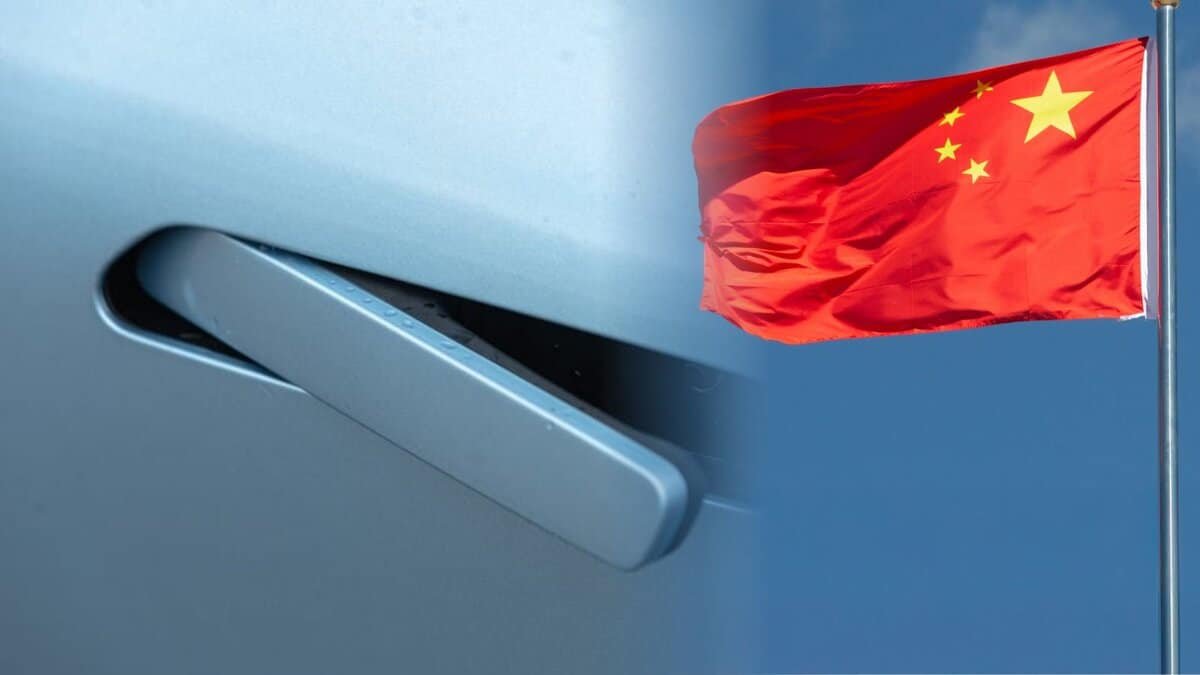
Hong Kong: China will ban hidden door handles on cars, commonly used on Tesla’s electric vehicles and many other EV models, starting next year.
All car doors must include a mechanical release function for handles, except for the tailgate, according to details released by China’s Ministry of Industry and Information Technology on Monday.
Officials said the policy aims to address safety concerns after fatal EV accidents where electronic doors reportedly failed to operate and trapped passengers inside vehicles.
The new requirement will take effect on Jan. 1, 2027. For car models that were already approved, carmakers will have until Jan. 1, 2029, to make design changes to match the regulations.
Vehicles, including Tesla’s Model Y and Model 3, BMW’s iX3, and other models by many Chinese brands, feature retractable car door handles that could be subject to the new rules.
Chris Liu, a Shanghai-based senior analyst at technology research and advisory group Omdia, said the global impact of China’s new rules could be substantial and other jurisdictions may follow suit on retractable door handles. Carmakers will be facing potentially costly redesigns or retrofits.
“China is the first major automotive market to explicitly ban electrical pop-out and press-to-release hidden door handles,” he said. “While other regions have flagged safety concerns, China is the first to formalise this into a national safety standard.”
It’s likely that regulators in Europe and elsewhere will reference or align with China’s approach, Liu said. The new requirements would impact premium EVs more as retractable door handles “are treated as a design and aerodynamic statement,” he added.
A draft of the proposed rules was published by China’s Ministry of Industry and Information Technology in September for public comment.
Last year, the US National Highway Traffic Safety Administration opened an investigation into cases where Tesla’s electronic door handles reportedly failed to work.
SC slams WhatsApp, Meta over privacy policy (Representational Image)
New Delhi: The Supreme Court on Tuesday, February 3 came down heavily on Meta Platforms Inc and WhatsApp while hearing their appeals against a Competition Commission of India order imposing a penalty of Rs 213.14 crore over the privacy policy, saying tech giants cannot “play with the right to privacy of citizens in the name of data sharing”.
A bench comprising Chief Justice Surya Kant and Justices Joymalya Bagchi and Vipul M Pancholi said that it will pass an interim order on February 9. The top court ordered that the Ministry of Electronics and Information Technology be made a party to the petitions.
It was hearing appeals filed by Meta and WhatsApp against a National Company Law Appellate Tribunal (NCLAT) judgment that upheld the CCI’s findings of abuse of dominance, while granting limited relief on advertising-related data sharing.
“You can’t play with the right of privacy of this country in the name of data sharing. We will not allow you to share a single word of the data, either you give an undertaking…you cannot violate the right of privacy of citizens,” the CJI said.
The bench said the right to privacy is zealously guarded in the country and noted that the privacy terms are “so cleverly crafted” that a common person cannot understand them.
“This is a decent way of committing theft of private information, we will not allow you to do that… You have to give an undertaking otherwise, we have to pass an order,” the CJI said.