Category: BUSINESS

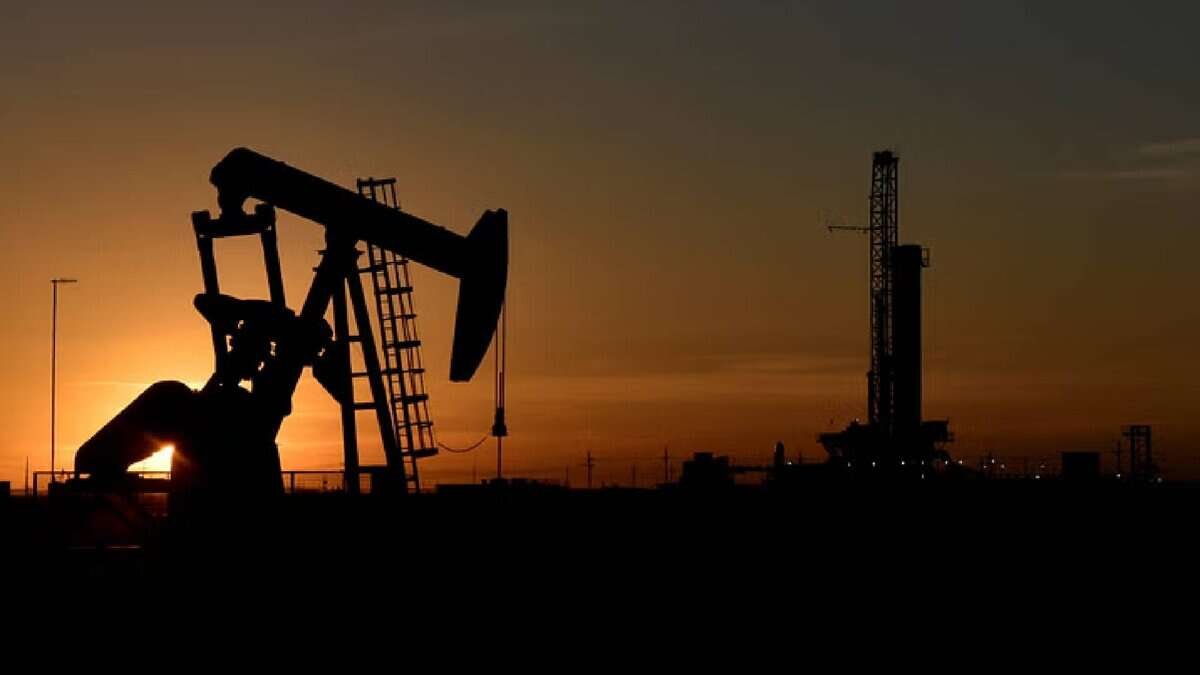
  • Crude oil futures fall on weak global cues

    Crude oil futures fall on weak global cues

    New Delhi: Crude oil prices fell Rs 18 to Rs 5,589 per barrel in the futures trade on Tuesday, February 3, amid weak global trends as oversupply concerns weighed on prices.

    On the Multi Commodity Exchange, crude oil futures for March delivery slipped by Rs 18, or 0.32 per cent, to Rs 5,589 per barrel in a business turnover of 376 lots.

    Analysts said the prices fell after participants offloaded their holdings amid weak demand in the spot market.

    Add as a preferred source on GoogleAdd as a preferred source on Google

    Globally, West Texas Intermediate crude oil was trading 0.35 per cent lower at USD 61.92 per barrel, while Brent Crude fell 0.42 per cent to USD 66.02 per barrel in New York.

  • Textile, leather stocks jump on India-US trade deal

    Textile, leather stocks jump on India-US trade deal

    New Delhi: Textile and leather stocks surged as much as 20 per cent on Tuesday morning after India and the US agreed to a trade deal under which Washington will bring down the reciprocal tariff on Indian goods to 18 per cent from the current 25 per cent.

    Shares of K P R Mill surged 20 per cent, Garware Technical Fibres zoomed 20 per cent, Welspun Living jumped 19.85 per cent, Vardhman Textiles soared 19.60 per cent, Trident jumped 19.52 per cent, Raymond Lifestyle climbed 9.56 per cent and Page Industries climbed 5.31 per cent on the BSE.

    The 30-share BSE Sensex jumped 1,928.91 points to 83,595.37 in morning trade. The 50-share NSE Nifty traded 587.60 points higher at 25,760.

    Add as a preferred source on Google

    India-US trade deal agreement

    India and the US have agreed to a trade deal under which Washington will bring down the reciprocal tariff on Indian goods to 18 per cent from the current 25 per cent, US President Donald Trump said on Monday after a phone conversation with Prime Minister Narendra Modi.

    Among leather and footwear stocks, Bhartiya International jumped 10.70 per cent, Mayur Uniquoters surged 7.39 per cent, Bata India climbed 5 per cent, and Metro Brands went up by 3.96 per cent.

    “The agreement reduces reciprocal US tariffs on Indian goods from 25 per cent to 18 per cent, removing a major overhang that had weighed on export-oriented sectors, manufacturing, and overall market sentiment in recent months,” Ponmudi R, CEO of Enrich Money, said.

    MS Admissions 2026-27MS Admissions 2026-27

    The announcement assumes significance as several labour-intensive sectors like textiles, apparel, leather and marine were facing challenges to export goods to the US due to the 50 per cent tariffs.

    Decline in India’s merch exports to US after high tariffs

    India’s merchandise exports to the US declined 1.83 per cent to USD 6.88 billion in December 2025 due to high tariffs imposed by America, according to Commerce Ministry data.

  • Trump cuts tariffs on India to 18 pc, calls PM Modi ‘greatest friend’

    Trump cuts tariffs on India to 18 pc, calls PM Modi ‘greatest friend’

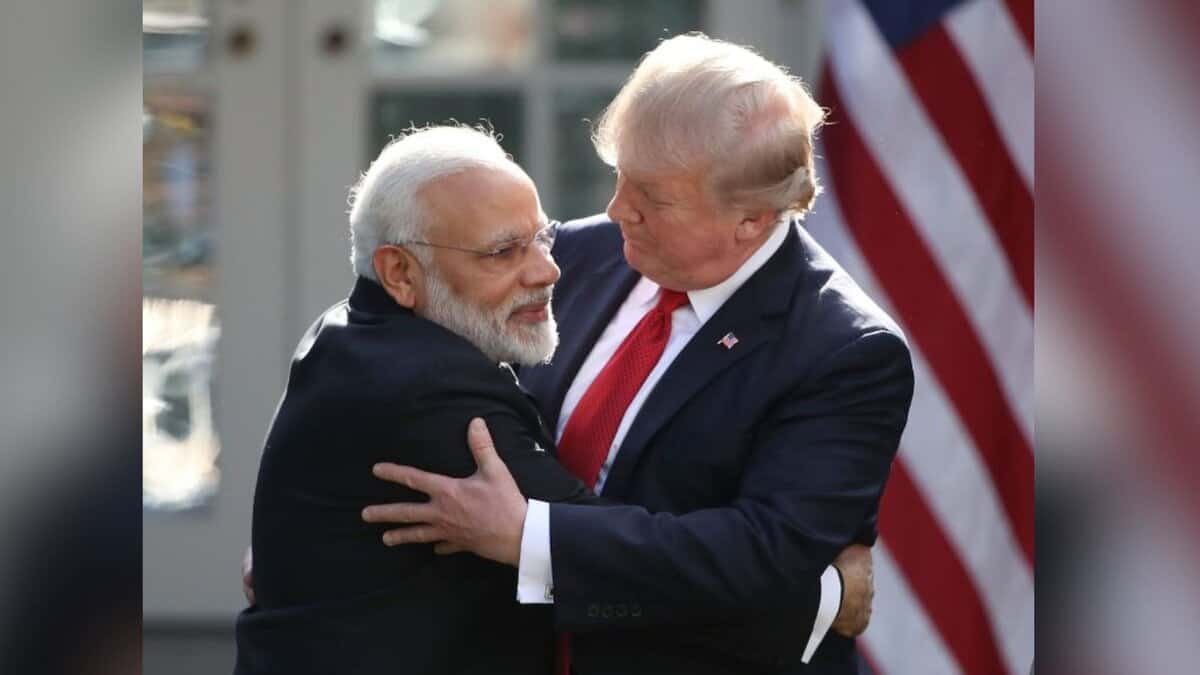
    President Donald Trump on Monday, February 2, announced to lower reciprocal tariffs on Indian goods from 25 per cent to 18 per cent, following a phone call with Prime Minister Narendra Modi.

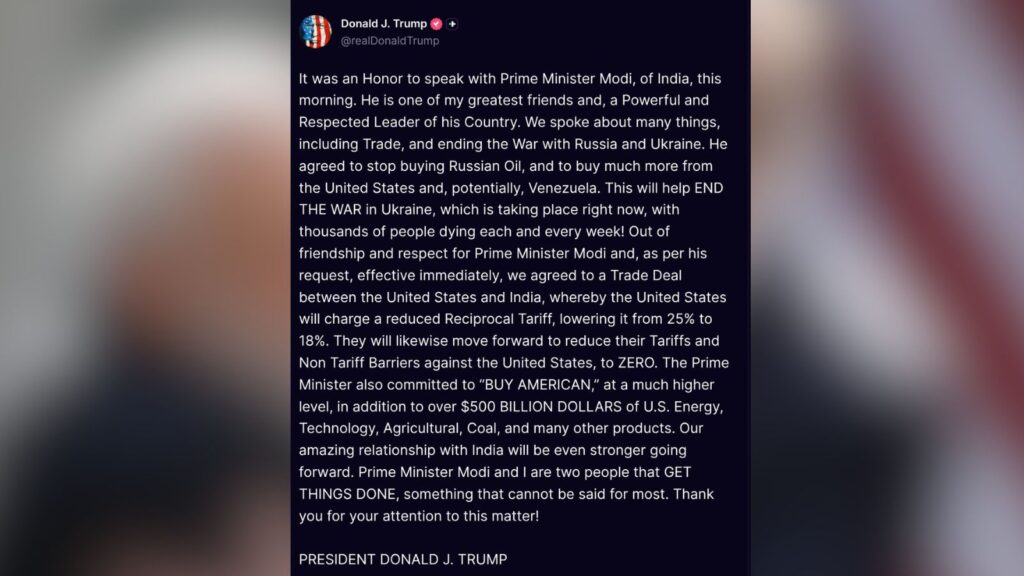
    In a post on his social media platform Truth Social, Trump said the decision was taken “out of friendship and respect” for PM Modi and would take effect immediately. He added that India had agreed to reduce its tariffs and non-tariff barriers against the US to zero.

    “Out of friendship and respect for Prime Minister Modi and, as per his request, effective immediately, we agreed to a Trade Deal between the United States and India, whereby the United States will charge a reduced Reciprocal Tariff, lowering it from 25 per cent to 18 per cent,” Trump wrote, describing Modi as one of his “greatest friends” and said both leaders were “two people that get things done.”

    Add as a preferred source on Google

    The US President further claimed that India had agreed to stop purchasing Russian oil and would instead buy energy from the United States and “potentially Venezuela,” a move he said “would help end the war in Ukraine.”

    He also said India would purchase more than USD 500 billion worth of US energy, technology, agricultural and other products, and had committed to “Buy American” at a higher level.

    Prime Minister Modi welcomed the announcement, thanking Trump for the tariff reduction. “Wonderful to speak with my dear friend President Trump today. Delighted that Made in India products will now have a reduced tariff of 18 per cent,” Modi said in a post on X.

    MS Admissions 2026-27MS Admissions 2026-27

    The announcement comes a day after India presented its Union Budget 2026.

    India-US relations had strained after Washington imposed a 50 per cent tariff on Indian goods, including an additional levy linked to India’s purchase of Russian oil.

  • Gold rebounds to Rs 1.48 lakh/10g after early slump

    Gold rebounds to Rs 1.48 lakh/10g after early slump

    New Delhi: Gold prices recovered to Rs 1.48 lakh per 10 grams in futures trade on Monday, February 2, after an early sharp fall that triggered the lower circuit level, while silver extended losses to witness heavy selling for the third consecutive day.

    On the Multi Commodity Exchange (MCX), gold futures for April delivery opened on a weak note and plunged Rs 10,688, or 7.2 per cent, to hit a low of Rs 1,37,065 per 10 grams during early trade.

    Later, the metal rebounded strongly, erasing all of its losses to trade higher by Rs 259, or 0.18 per cent, to Rs 1,48,012 per 10 grams in a business turnover of 8,501 lots.

    Add as a preferred source on Google

    In addition, silver futures remained under pressure, opening lower and declining Rs 39,847, or 15 per cent, to hit an intraday low of Rs 2,25,805 per kilogram, also its lower circuit limit on the exchange.

    The white metal later pared some of its losses to trade at Rs 2,50,242 per kilogram, down 5.8 per cent, or Rs 15,410, in 6,892 lots.

    In the international market, Comex gold futures for April delivery went up by USD 5.21, or 0.11 per cent, to USD 4,750.31 per ounce, while silver forthe March contract rose by USD 3.33, or 4.24 per cent, to USD 81.86 per ounce.

    MS Admissions 2026-27MS Admissions 2026-27

  • Rupee rises 42 paise to close at 91.51 against US dollar

    Rupee rises 42 paise to close at 91.51 against US dollar

    Mumbai: The rupee gained 42 paise to close at 91.51 (provisional) against the US dollar on Monday, February 2, a day after the Union Budget 2026-27 was presented, largely as crude oil prices retreated from their elevated levels.

    Forex traders said the Reserve Bank of India (RBI) seemed to be defending the 92 per dollar level with a lot of resolve.

    At the interbank foreign exchange market, the rupee opened at 91.95 against the US dollar, then gained some ground to touch an intraday high of 91.45 and a low of 91.95 against the greenback.

    Add as a preferred source on Google

    At the end of the trading session on Monday, the rupee was quoted at 91.51 (provisional) against the greenback, registering a gain of 42 paise from its previous close.

    On Friday, the rupee hit a record low of 92.02 before ending 6 paise higher at 91.93 against the US dollar.

    For the rupee, the Budget offered reassurance, not relief, and the government’s high borrowing plan is likely to weigh on investor sentiments going ahead.

    MS Admissions 2026-27MS Admissions 2026-27

    The government is likely to borrow Rs 17.2 lakh crore in the next financial year to fund its fiscal deficit projected at 4.3 per cent of the GDP.

    “Overall, it looks like a prudent budget, focusing on continuity. Given the geopolitical uncertainties and challenges, it seems the government it seems has chosen to go a bit slow on fiscal consolidation,” IFA Global said in a research note.

    Meanwhile, the dollar index, which gauges the greenback’s strength against a basket of six currencies, was trading 0.09 per cent higher at 97.07.

    Brent crude, the global oil benchmark, was trading 4.46 per cent lower at USD 66.23 per barrel in futures trade, as the US and Iran were talking about avoiding US strikes on Iranian soil.

    The oil prices had touched USD 72 per barrel after traders expected a US strike on Iran during the weekend.

    “As the Budget volatility subsides, the Indian rupee and domestic equities have emerged as regional outperformers. A combination of cooling commodity prices, enhanced fiscal control, large forex reserves and suspected corporate dollar selling has provided a tailwind for the local currency,” Dilip Parmar, Research Analyst, HDFC Securities, said.

    In the near term, the USD-INR spot is likely to consolidate within a tight range, finding support at 91.10 and facing resistance near 91.85, Parmar added.

    On the domestic equity market front, Sensex jumped 943.52 points to settle at 81,666.46, while the Nifty surged 262.95 points to 25,088.40.

    On Sunday, equity markets reacted negatively to the FY27 Budget as it proposed a higher securities transaction tax on derivatives and changes to buyback taxation, raising concerns over increased costs for investors.

    Foreign Institutional Investors offloaded equities worth Rs 588.34 crore on Sunday, according to exchange data.

  • Budget FY27 demonstrates commitment to macro stability: Fitch

    Budget FY27 demonstrates commitment to macro stability: Fitch

    New Delhi: India’s budget demonstrates the ongoing commitment to maintaining macro stability through a gradual path of government debt reduction balanced against a still-robust capex program to enhance growth prospects, Fitch Ratings said on Monday, February 2.

    While the budget did not flag specific large-scale reform announcements, Fitch said it expects more reforms to be forthcoming, particularly on the deregulation agenda.

    Strong GDP growth is driving positive momentum in several of India’s sovereign credit metrics and if sustained, could improve the credit profile over time, even as lingering fiscal challenges remain, it said.

    Add as a preferred source on Google

    Building on recent reform momentum should help accelerate private investment and give greater upside and resilience to India’s potential growth, Fitch added.

    It said fiscal consolidation is set to be very modest with fiscal deficit target at 4.3 per cent of GDP in FY27, just a touch below 4.4 per cent in FY26.

    “The slowing pace of consolidation is in line with our view that further progress on deficit reduction is becoming more difficult without compromising more on GDP growth,” Fitch said.

    MS Admissions 2026-27MS Admissions 2026-27

    The government opted to keep capex spending relatively stable at 3.1 per cent of FY27 GDP rather than pursue a greater degree of consolidation. This likely reflects an effort to offset lagging private investment.

    “India’s budget demonstrates the ongoing commitment to maintaining macro stability through a gradual path of government debt reduction balanced against a still-robust capex program to enhance growth prospects,” Fitch Ratings Director and Primary Sovereign Analyst Jeremy Zook said in a note.

    Fitch forecasts FY27 growth at 6.4 per cent. The continued emphasis on capex spending should be supportive of both near and medium-term prospects.

    “A lengthening record of fiscal credibility should help strengthen India’s credit profile, particularly as it has come amid greater fiscal transparency and improved spending quality. Although the overall fiscal deficit is still higher than pre-pandemic levels this reflects stronger capex spending, as the revenue deficit is narrower than pre-pandemic levels- even including previously off-budget spending,” it said.

    Still, general government deficits, debt and interest payments all remain elevated compared to peers and are only declining gradually, Fitch added.

  • Sensex, Nifty in green despite negative global cues

    Mumbai: The Indian equity markets traded higher early on Monday, recovering some of the losses made on Budget Day, despite negative global cues.

    As of 9.33 am, Sensex added 373 points, or 0.46 per cent, to reach 81,096, and Nifty gained 87 points, or 0.35 per cent to settle at 24,913.

    Main broad-cap indices posted losses, as the Nifty Midcap 100 declined 0.50 per cent, and the Nifty Smallcap 100 lost 0.85 per cent.

    Add as a preferred source on Google

    All sectoral indices were trading in the red, except metal, realty as well as oil and gas. Nifty consumer durables and IT were major losers, down 1 per cent and 0.61 per cent.

    Immediate support lies at 24,650-24,700 zone, while resistance is anchored at 25,950–25,000 zone, market watchers said.

    Analysts said the market selloff on the Budget Day was a knee-jerk reaction to the sharp increase in STT on F&O trades. This was not aimed at raising revenue, but to discourage retail traders from complex F&O trading, in which 92 per cent of them were losing money.

    MS Admissions 2026-27MS Admissions 2026-27

    A section of the market was also unrealistically expecting changes in the LTCGs tax, they added.

    The 10 per cent nominal GDP growth projected in the Budget is achievable and has the potential to deliver around 15 per cent earnings growth in FY27. A significant upturn in the market may take time, perhaps with a retreat from AI trade globally, they noted.

    The Asia-Pacific markets posted major losses in the morning session as investors parsed private data for China’s factory activity in January.

    In Asian markets, China’s Shanghai index eased 1.32 per cent, and Shenzhen lost 1.41 per cent, Japan’s Nikkei declined 0.52, and Hong Kong’s Hang Seng Index lost 2.15 per cent. South Korea’s Kospi dipped 4 per cent.

    The US markets ended largely in the red in the last trading session as Nasdaq lost 0.94 per cent. The S&P 500 eased 0.43 per cent, and the Dow declined 0.36 per cent.

    On February 1, foreign institutional investors (FIIs) net sold equities worth Rs 588 crore, while domestic institutional investors (DIIs) were net sellers of equities worth Rs 683 crore.

  • Education, skills and employment at heart of Union Budget 2026

    Education, skills and employment at heart of Union Budget 2026

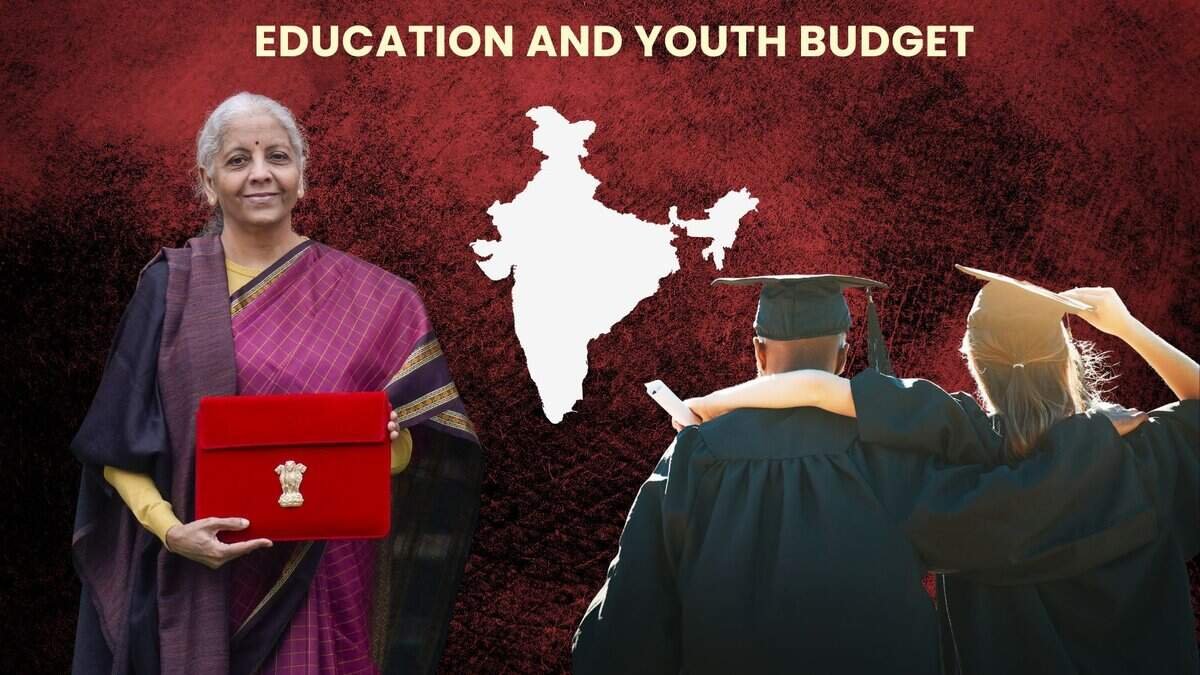
    Finance Minister Nirmala Sitharaman on Sunday, February 1, described the Union Budget 2026–27 as a “yuva shakti–driven Budget,” with a renewed focus on education, skills, creative industries and employment pathways.

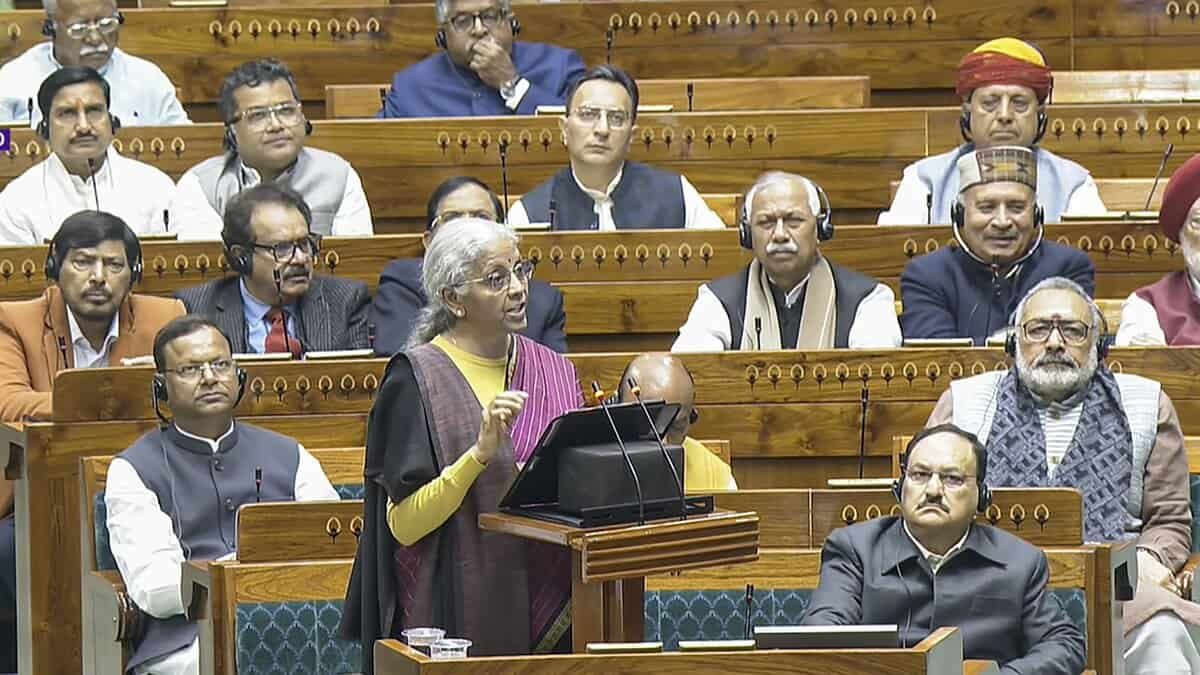
    Presenting the Budget in the Lok Sabha, Sitharaman said fulfilling aspirations and building capacities form the government’s second “kartavya (duty),” noting that nearly 25 crore people have exited multidimensional poverty over the past decade.

    She said the government will now place special emphasis on education and the services sector as engines of jobs and growth.

    Add as a preferred source on Google

    Education-to-employment focus

    The Finance Minister announced the setting up of a “high-powered Education to Employment and Enterprise Standing Committee” to recommend measures that position the services sector as a core driver of growth.

    • The panel will work towards making India a global leader in services with a 10 per cent global share by 2047
    • It will prioritise sectors with high potential for jobs, exports and productivity
    • The committee will assess the impact of artificial intelligence (AI) and emerging technologies on employment and skill requirements

    Higher education and student infrastructure

    The Budget proposed multiple measures to expand higher education capacity and improve student access:

    • Five university townships, supported by academic zones hosting colleges, skill centres and residential facilities
    • One girls’ hostel in every district, aimed at improving access and participation of women in higher education
    • Support for new institutions and strengthening of higher education infrastructure
    • Continued focus on school education through Samagra Shiksha

    Creative economy and new-age skills

    Highlighting the growth of the animation, visual effects, gaming and comics (AVGC) sector, Sitharaman said the industry is projected to require around two million professionals by 2030.

    MS Admissions 2026-27MS Admissions 2026-27

    Key proposals include:

    • Establishment of the Indian Institute of Creative Technologies in Mumbai
    • Setting up AVGC Content Creator Labs in 15,000 secondary schools and 500 colleges
    • A new National Institute of Design in eastern India, expanding access to design education

    She said these initiatives aim to create large-scale employment opportunities in creative and digital sectors.

    Sports, youth and employment

    The Finance Minister announced the launch of a Khelo India Mission to transform the sports sector over the next decade.

    • Focus on grassroots talent development
    • Training of coaches and support staff
    • Integration of sports science
    • Expansion of competitions and sports infrastructure

    The Budget also supports sports goods manufacturing, linking sports development with youth employment.

    Education-linked tax relief

    To reduce financial pressure on students and families:

    • Tax Collect at Source (TCS) under the Liberalised Remittance Scheme for education was cut from 5 per cent to 2 per cent
    • Timeline for filing revised income tax returns extended till March 31 with a nominal fee

    Youth at the centre of growth strategy: FM

    Sitharaman said the combined focus on education, skilling, creative industries, sports and services-led employment is aimed at preparing young Indians for a technology-driven global economy.

  • Govt announces one girls’ hostel in every district

    Govt announces one girls’ hostel in every district

    New Delhi: Union Finance Minister Nirmala Sitharaman, while presenting the Union Budget 2026-2027 on Sunday, February 1, announced the setting up of one girls’ hostel in every district of the country.

    There are over 700 districts in the country.

    She also proposed a loan-linked capital subsidy support scheme for veterinary colleges, hospitals, and diagnostics laboratories.

    Add as a preferred source on Google

    The minister also announced upgrading Ayush pharmacies and drug testing labs, the WHO (World Health Organisation) Traditional Medicine Centre at Jamanagar, Gujarat.

    The Centre, she said, will support five university townships in the vicinity of major industrial logistics centres.

    Over 1,000 accredited clinical trial sites, including Hyderabad

    Sitharaman said the government will create a network of over 1,000 accredited Indian clinical trial sites.

    MS Admissions 2026-27MS Admissions 2026-27

    Major clinical trial sites in the country are currently located in big cities like Mumbai, Delhi, Bengaluru, Chennai, and Hyderabad.

    She also proposed a credit-linked subsidy programme to encourage livestock farmer producer organisations to promote employment opportunities.

    In her Budget speech, the finance minister announced the launch of Bharat Vistar, a multilingual AI tool to integrate the agri stack, and the setting up of ‘She Marts’ as community-owned retail outlets.

  • Eight FTAs finalised in last few years, covering 37 developed countries: Goyal

    Eight FTAs finalised in last few years, covering 37 developed countries: Goyal

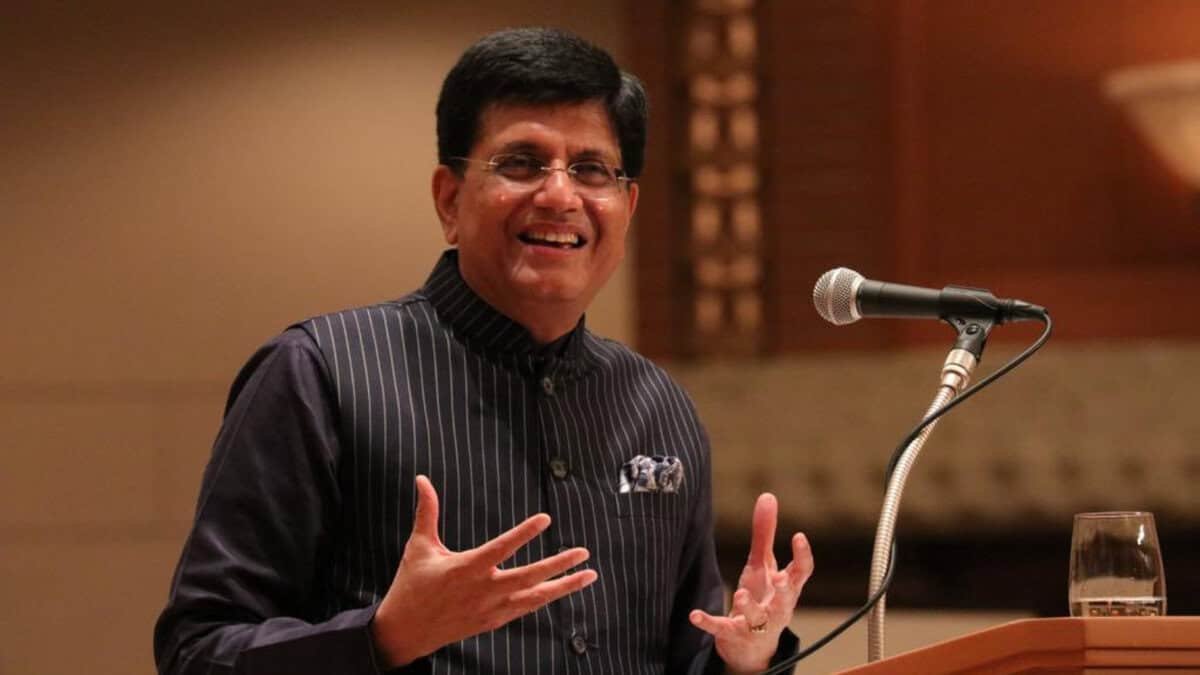
    New Delhi: India has finalised eight free trade agreements (FTAs), covering 37 developed countries in the last few years, Commerce and Industry Minister Piyush Goyal has said.

    He also said that India is in active dialogue for similar pacts with several countries, including Chile, Peru and Canada.

    Trade negotiations with Chile, he said, are almost at conclusion, where India has interests in critical minerals.

    Add as a preferred source on Google

    “We’ve done eight free trade agreements covering 37 developed countries in the last few years under the Modi-government,” the minister told PTI.

    Since 2014, India has finalised eight trade pacts — Mauritius (April 2021 implemented), Australia (December 2022 implemented), UAE (May 2022 implemented), Oman (signed in December 2025), UK (signed in July 2025), EFTA (implemented in October 2025 – Switzerland, Iceland, Liechtenstein, Norway), New Zealand (talks concluded in December 2025), and the European Union (27-nation bloc).

    Goyal added that talks for a trade pact have started with the Mercosur group of countries to expand the existing PTA (preferential trade agreement).

    MS Admissions 2026-27MS Admissions 2026-27

    The Mercosur trade bloc members are Argentina, Brazil, Paraguay and Uruguay.

    The GCC (Gulf Cooperation Council), a group of six nations from the Middle Eastern region, too, has expressed a desire to start and launch negotiations for an FTA with India, theminister said.

    “We have finalized terms of reference with them,” he said, adding that Canada and India are actively talking for a pact.

    “We’re going to quickly start negotiations with Canada,” Goyal said.

    India and SACU, the South African-led union, are also considering whether the two sides can look for a trade deal, he added.

    “So a lot of potential trade deals on the anvil. We’ll certainly be hearing many more good news stories and making India an international player, a global player of significance in the years to come,” he said.

    Under trade pacts, two or more nations either eliminate or reduce import duties on the maximum number of goods traded between them. They also ease norms to promote trade in services and attract investments.