New Delhi: Reigning Women’s Premier League and Indian Premier League (IPL) champions Royal Challengers Bengaluru (RCB) have reportedly received bids from nine parties, including a USD 1.8 billion offer from the Glazer family, which owns top England Premier League club Manchester United.
Lalit Modi, the former chief of the Indian Premier League, confirmed to IANS on Saturday, February 7, that the bid from the Glazer family has already reached USD 1.75 billion. “I assume this is based on the current scenario of 74 games and not 94 games, which I believe will become the norm, as the IPL was originally conceived as a full home-and-away format.”
This will solidify the Board of Control for Cricket in India’s (BCCI) own revenue, especially at a time when the board’s central revenues are under tremendous pressure — firstly due to its share of International Cricket Council revenue, which could realistically decline by 50–60 per cent, and secondly because bilateral rights revenue may also fall by at least 50 per cent.
“But the IPL will make up for all those downsides. The next IPL media rights cycle, which will be decided within the next year, is very likely to see the value at least double. I have zero doubts about that,” Modi said.
With cricket heading deeper into the World Cup cycle, the number of bilateral and ICC matches will inevitably come down due to increasing player workload and scheduling pressures. At the same time, the income generated from domestic leagues will encourage more players to prioritise those competitions.
This trend is unavoidable and should make cricket boards around the world recognise the stark reality ahead. “Under current market trends, the only board that stands to truly benefit is the BCCI. Indians love cricket — but above all, they love Indian cricket,” Modi added.
The nine parties have submitted non-binding bids ranging from USD 1 billion to USD 1.8 billion, indicating serious interest, the report by the State of Play claimed.
The Glazers’ bid positioned them among the highest bidders for the franchise.
The report stated that the bids carry no obligation to complete a transaction at the stated price. RCB will use them to narrow the field to a shortlist by next week and then invite binding offers from the remaining parties.
Last month, pharma tycoon Adar Poonawalla said he would make a ‘strong and competitive’ bid for securing the ownership of RCB. “Over the next few months, we will be putting in a STRONG and COMPETITIVE bid for RCB, one of the best teams in the IPL,” the Chief Executive Officer of Pune-based vaccine-maker Serum Institute of India (SII) and Chairman of Poonawalla Fincorp, wrote in a post on his official ‘X’ handle.
London-based Diageo, the parent company of United Spirits Ltd, began efforts in November last year to sell the team, valued at around 105 million USD.
The move was accelerated after a stampede during RCB’s IPL victory celebrations outside the M Chinnaswamy Stadium in June 2025 killed 11 fans.
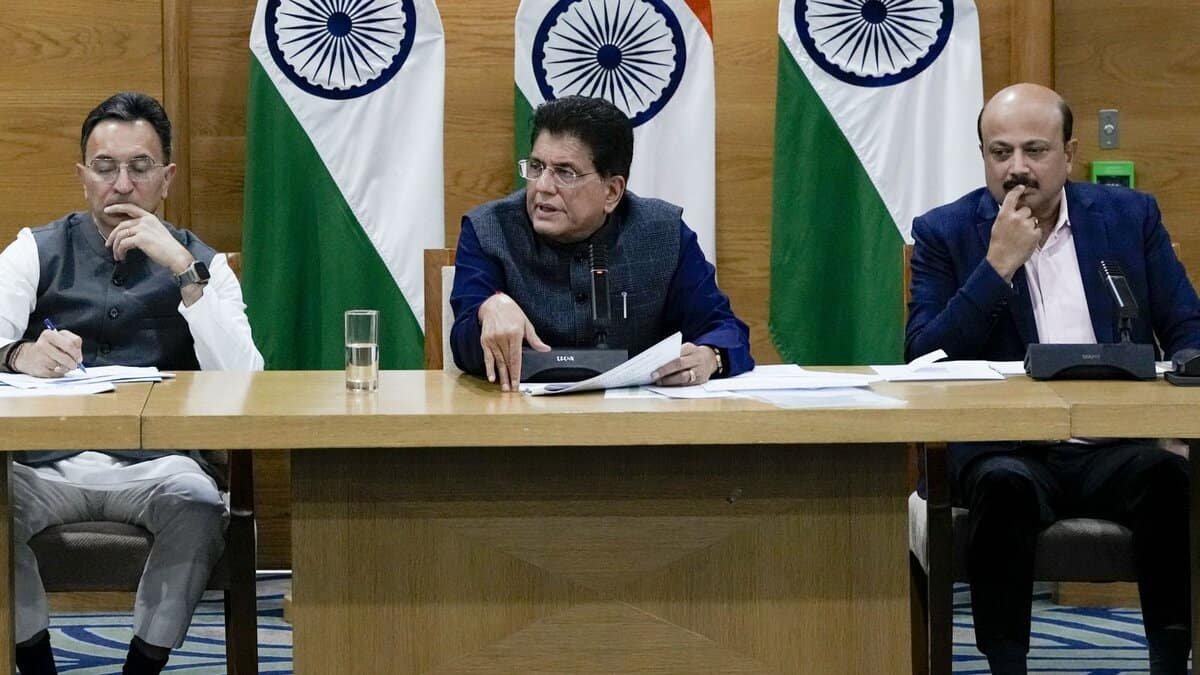
New Delhi: India has completely protected its agriculture and dairy sectors in the trade agreement with the US, Union Commerce Minister Piyush Goyal said on Saturday, February 7, adding that the trade pact will open a USD 30 trillion market for Indian exporters, especially Micro, Small, and Medium Enterprises (MSME), farmers and fishermen.
“The agreement reflects India’s commitment to safeguarding farmers’ interests and sustaining rural livelihoods by completely protecting sensitive agricultural and dairy products,” Goyal said during a press conference.
No genetically-modified products will be allowed into India, he said, adding that staples like maize, rice, wheat, millets, and ragi will not see any impact. Fruits grown in abundance in India, including banana and citrus, will remain protected. Meat, poultry, dairy products, soya bean, sugar, and cereals will not be affected by the deal.
There will be significant benefits for the textile and leather sectors. Silk products have also been brought under zero duty, said the minister.
In the agriculture sector, several Indian products will now be exported to the US with zero duty. These include tea, spices, coconut oil, vegetable wax, areca nut, Brazil nuts, chestnuts and a variety of fruits and vegetables, he said.
According to the minister, vegetable roots, cereals, barley, bakery products, cocoa products, sesame seeds, poppy seeds and citrus juice will also face no reciprocal tariffs and will now enter the US market duty-free.
Gems and jewellery, as well as pharmaceutical products, will also enjoy duty-free access, boosting India’s export competitiveness.
Key sectors that will benefit are aircraft parts, machinery parts, generic drugs and pharmaceuticals. Other items covered under zero duty include coins, platinum, clocks and watches, essential oils, some home decor items like chandeliers, seeds and inorganic chemicals and compounds.
Lower tariffs than China, Bangladesh: Goyal
The Union Minister also pointed that India now has the lowest US tariffs among its neighbours as well as competitors. “China has been imposed with over 35 per cent tariffs, while Bangladesh and Vietnam have been slapped with 25 per cent tariffs. India has a much lesser tariff now,” he said.
In a post on X earlier in the day, Goyal said the trade agreement framework will help India and the US remain focused on working together to further deepen economic cooperation, reflecting shared commitment to sustainable growth for our people and businesses.
“This will open a $30 trillion market for Indian exporters, especially MSMEs, farmers and fishermen. The increase in exports will create lakhs of new job opportunities for our women and youth,” he said.
He said the increase in exports will create lakhs of new job opportunities for the country’s women and youth.
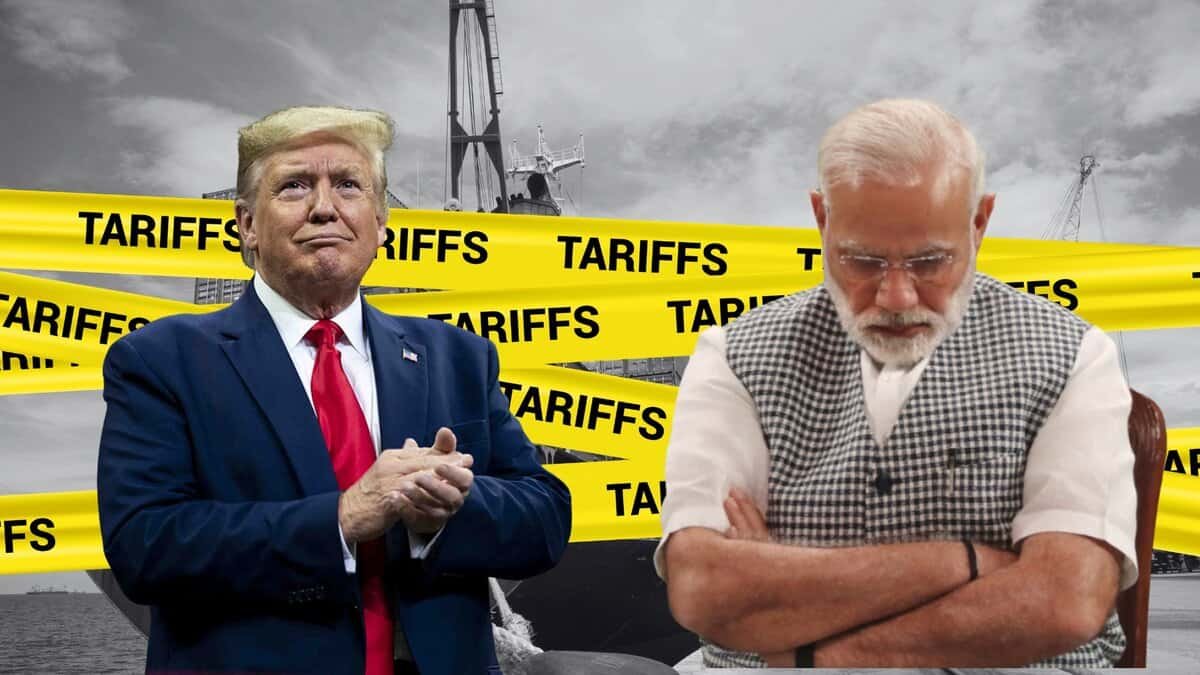
A document from the White House showed that the US agreed to bring down the tariffs on Indian goods because New Delhi decided to stop importing oil from Russia. The development came in the backdrop of India and the US signing a trade deal that lowers Washington’s tariff on India to 18 per cent from the previous 50 per cent.
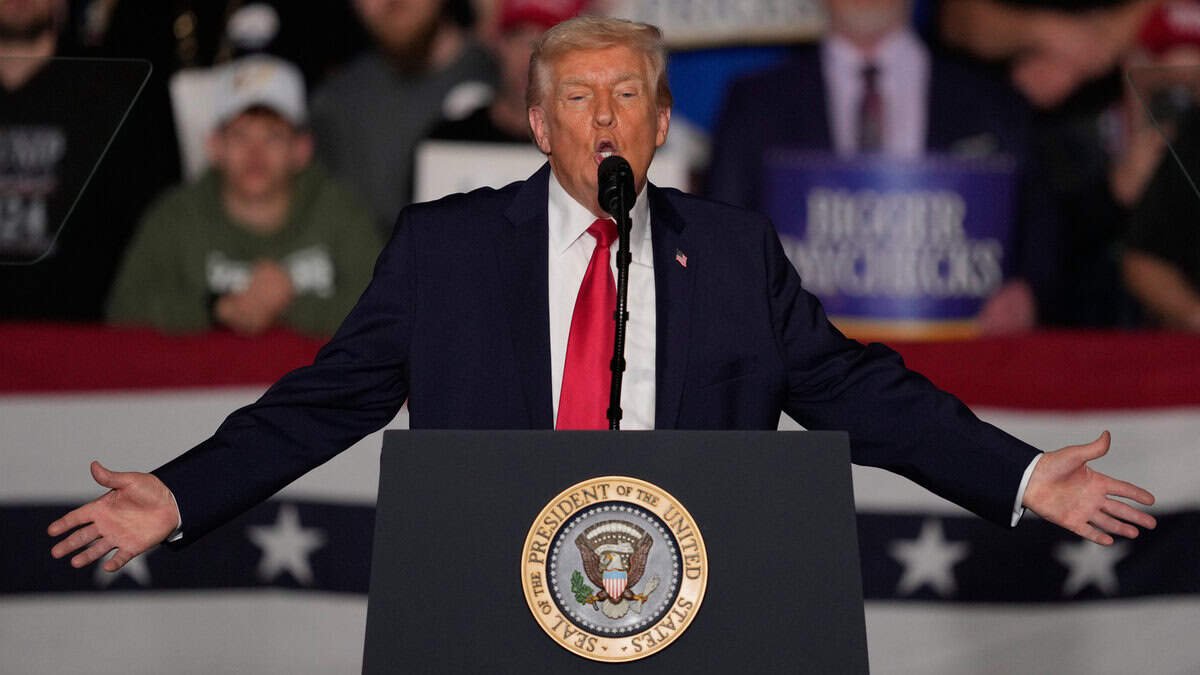
According to a formal White House presidential executive order, titled, “Modifying duties to address threats to the United States by the government of the Russian Federation,” President Donald Trump said, “India has committed to stop directly or indirectly importing Russian Federation oil, has represented that it will purchase United States energy products from the United States, and has recently committed to a framework with the United States to expand defense cooperation over the next 10 years.”
Initial tariff on India due to national emergency in the US
The order said that the United States had already declared a national emergency due to the “continued Russian Federation Efforts to undermine the sovereignty and territorial integrity of Ukraine.” The Biden administration, in 2022, issued an order banning the import of Russian oil and petroleum products to “protect its national security.”
Later in 2025, the US determined that the emergency was ongoing and that Russia posed a serious threat. In response, it imposed a 25 per cent tariff on Indian goods because it was importing Russian oil at the time.
President Trump declared that upon receiving information and recommendations from top officials, India stopped directly or indirectly importing Russian oil to address the US’ national emergency.
“I have determined that India has taken significant steps to address the national emergency,” the document read, adding that in recognition of the act, the President decided to “eliminate” the additional tariff.
Effective from 12:01 am EST on February 7, “products of India imported into the United States shall no longer be subject to the additional ad valorem rate of duty of 25 percent,” the President confirmed.
Will continue to monitor India: Trump
The President stated that the White House will monitor “whether India resumes directly or indirectly importing Russian Federation oil.” Trump also said that if the US Secretary of Commerce finds that India has resumed the import of Russian oil, multiple departments of the state will come together to advise the President on the action to be taken against India, “including whether I should reimpose the additional ad valorem rate of duty of 25 percent on imports of articles of India.”
Cape Town: China and South Africa signed a framework agreement for a new trade deal on Friday, February 6, as Africa’s leading economy looks to other options following the high import tariffs imposed on it by the US and its diplomatic fallout with the Trump administration.
South Africa’s Ministry of Trade and Industry said the agreement would start negotiations over a deal that would give some South African goods, such as fruit, duty-free access to the Chinese market. The ministry said it expected the trade deal to be finalised by the end of March.
In return, the trade ministry said China will get enhanced investment opportunities in South Africa, where its car sales have seen rapid growth.
The US slapped 30 per cent duties on some South African goods under President Donald Trump‘s reciprocal tariffs policy — one of the higher rates applied across the world. South Africa has said it is still negotiating with the US for a better deal.
The China-South Africa deal follows others looking for alternatives to US partnership in the face of Trump’s aggressive trade policies.
China is already South Africa’s largest trade partner for both imports and exports, while Chinese economic influence across the African continent continues to grow and it dominates in the extraction of Africa’s critical minerals that are key components for new high-tech products.
“South Africa looks forward to working with China in a friendly, pragmatic, and flexible manner,” the trade ministry said.
Trade and Industry Minister Parks Tau, who travelled to China to sign the agreement, said the deal would benefit South Africa’s mining, agriculture, renewable energy and technology sectors.
US-South Africa diplomatic ties have plunged to their worst point in decades after the Trump administration accused South Africa of pursuing an anti-American foreign policy and allowing the violent persecution of a white minority group at home. South Africa’s government has denied allegations that white Afrikaner farmers are being killed in a widespread effort to seize their land as baseless.
Trump has also barred South Africa from taking part in meetings of the Group of 20 rich and developing nations this year in the US.
South Africa’s biggest exports to China are gold, iron ore and platinum-group metals, while Chinese cars have quickly grown their market share in South Africa. Industry groups estimate Chinese brands have grown from around 2.8 per cent of the South African market in 2020 to between 11 per cent and 15 per cent last year.
China’s BYD overtook Elon Musk’s Tesla in 2025 as the world’s biggest electric vehicle maker.
Mumbai: The Reserve Bank of India kept its benchmark interest rate unchanged on Friday, February 6, as expected, as inflation remained at manageable levels, and growth concerns eased following trade agreements with the US and the European Union.
The central bank’s six-member Monetary Policy Committee (MPC) voted unanimously to keep the repurchase, or repo rate, at 5.25 per cent. The RBI retained its neutral policy stance, signalling rates will stay low for some time.
US President Donald Trump earlier this week announced a cut in tariffs on Indian goods to 18 per cent from 50 per cent, easing a key pressure point on India’s economy and markets. The first tranche of the pact is likely to be finalised by next month, which includes a reduction in US tariffs.
Announcing the decisions of the MPC, RBI Governor Sanjay Malhotra said external headwinds have intensified, but the successful completion of the trade deal with the United States bodes well for the economy.
The RBI has cut rates by a total of 125 basis points since February 2025, marking its most aggressive easing cycle since 2019. It reduced rates by 25 basis points at its previous meeting in December.
While the inflation remains benign, economic activity remains resilient.
“Amidst heightened geopolitical tensions and elevated uncertainty, the Indian economy is in a good spot with strong growth and low inflation. Inflation remains below the tolerance band, and its outlook continues to be benign,” Malhotra said.
“With the signing of a landmark trade deal with the European Union and the US trade agreement in sight, growth momentum is likely to be sustained for a longer period.”
The current policy rate is appropriate, the governor said, adding that inflation was benign and future rate moves will depend on growth outlook and inflation.
“Inflation, especially underlying inflation, is low. It’s much lower than even our forecast…underlying inflation is very, very benign. So, I expect policy rates should remain at low levels for a long time,” he told reporters post MPC announcement.
“Whether they will go down even further, I will leave it for the MPC to decide going forward.”
As to policy transmission on the deposit side, he said transmission happens at a slower pace.
“It has improved. It is improving after every policy statement. We are hopeful that they will further continue to improve,” he said.
“The real rate of interest today is very low. Going forward, we are in an accommodative phase.”
Malhotra said no assessment has been done on how much the trade deal will contribute to the GDP growth because details are not available.
“We have added 20 basis points to GDP growth because of various reasons, including the US trade deal.”
Consumer price inflation is projected at 2.1 per cent for the current financial year, marginally higher than the earlier estimate of 2 per cent, but below RBI’s target of 4 per cent. Inflation in Q4 FY26 is expected to remain above 3 per cent, while CPI in H1 FY27 is estimated to stay above the 4 per cent mark.
The central bank revised its GDP growth estimate for the current FY26 upward to 7.4 per cent from the earlier projection of 7.3 per cent.
For the first half of FY27 (April 2026 to March 2027 fiscal), growth is now projected at 6.95 per cent, higher than the previous estimate of 6.75 per cent. However, the RBI refrained from providing a full-year FY27 projection, stating that it would await the release of the revised GDP base series before making comprehensive growth assessments.
Announcing additional measures, Malhotra said the RBI will issue three draft guidelines relating to mis-selling, recovery of loans and engagement of recovery agents, and on limiting the liability of customers in unauthorised electronic banking transactions.
“It is also proposed to introduce a framework to compensate customers up to an amount of Rs 25,000 for loss incurred in small-value fraudulent transactions,” he said.
It will also publish a discussion paper on possible measures to enhance the safety of digital payments. Such measures may include lagged credits and additional authentication for specific classes of users, like senior citizens.
He also proposed doubling the limit for collateral-free loans to MSMEs to Rs 20 lakh and allowing banks to lend to REITs to promote financing to the real estate sector.
Also, NBFCs having no public funds and customer interface, with asset size not exceeding Rs 1,000 crore, are proposed to be exempted from the requirement of registration.
The requirement for certain NBFCs to obtain prior approval to open more than 1,000 branches is also to be dispensed with.
For financial markets, Malhotra said the RBI proposes to remove the limit of Rs 2.5 lakh crore for investments under the Voluntary Retention Route (VRR). Investment through the VRR in each category of securities will be subject to the investment ceiling for the respective category under the general route.
“The Indian economy continues to register high growth despite a challenging external environment clouded by geopolitical uncertainties. Benign inflation provides the leeway to remain growth-supportive while preserving financial stability. We remain committed to meeting the productive requirements of the economy and sustaining the growth momentum,” he added.
Commenting on the MPC decisions, Amar Ambani, Executive Director and Head of Institutional Equities, Yes Securities, said, “Given the cumulative easing of around 125 basis points already delivered in the current cycle, the RBI is widely expected to keep policy rates unchanged at least until the first half of FY27”.
Upasna Bhardwaj, Chief Economist, Kotak Mahindra Bank, however, said, “While uncertainty remains on the growth-inflation figures as we await the new series, the uptick in commodity prices and weaker currency may pose upside risks to inflation. We therefore see limited room for additional easing on the repo rate front, with RBI’s focus expected to be on ensuring stability on the liquidity front in the year ahead”.
Mumbai: Stock market benchmark indices Sensex and Nifty declined in early trade on Friday, dragged down by IT heavyweights amida weak trend in the US equities.
Investors adopted a cautious approach ahead of the RBI policy announcement later in the day and fresh foreign fund outflows.
Extending its previous day’s decline, the 30-share BSE Sensex edged lower by 225.15 points to 83,088.78. The 50-share NSE Nifty dropped 89.25 points to 25,553.55.
From the Sensex firms, Tech Mahindra, Tata Consultancy Services, Infosys, Asian Paints, NTPC, and HCL Tech were among the major laggards.
Gainers
Bajaj Finance, Kotak Mahindra Bank, Bharti Airtel, and Bajaj Finserv were among the gainers.
In Asian markets, South Korea’s Kospi and Hong Kong’s Hang Seng index traded lower, while Japan’s Nikkei 225 index and Shanghai’s SSE Composite index quoted higher.
US markets ended lower on Thursday. The Nasdaq Composite index tumbled 1.59 per cent, S&P 500 declined 1.23 per cent, and Dow Jones Industrial Average dropped 1.20 per cent.
“Global equity markets are trading with a pronounced risk-off bias following sharp losses in the overnight US session. Weakness in global technology stocks and commodities continues to weigh on sentiment, with selling pressure extending into Asian markets,” Ponmudi R, CEO of Enrich Money, an online trading and wealth tech firm, said.
Ongoing correction in global tech
The ongoing correction in global technology names reflects a combination of stretched valuations, rising AI-related cost concerns, and muted investor response to recent big-tech earnings and outlooks, he added.
Foreign institutional investors offloaded equities worth Rs 2,150.51 crore on Thursday, according to exchange data.
“FIIs again turning sellers in India and increasing their short positions in the derivative markets indicates further weakness in the market in the near-term,” VK Vijayakumar, Chief Investment Strategist, Geojit Investments Ltd, said.
Brent crude, the global oil benchmark, climbed 0.37 per cent to USD 67.71 per barrel.
On Thursday, the Sensex dropped 503.76 points, or 0.60 per cent, to settle at 83,313.93. The Nifty declined 133.20 points, or 0.52 per cent, to end at 25,642.80.
New Delhi: Government headhunter PESB on Thursday invited applications for the post of Chairman and Managing Director (CMD) of Steel Authority of India Ltd (SAIL).
The top post will fall vacant as the term of the present CMD, Amarendu Prakash, is ending on April 2, 2026. Prakash assumed the charge of SAIL Chairman on May 31, 2023.
The appointment will be for a period of five years from the date of joining or upto the date of superannuation or until further orders, whichever is earlier, as per the notification issued by the Public Enterprises Selection Board (PESB).
Applicants from public sector banks/financial institutions serving at the Board level for one year on the date of application can also apply for the post.
Besides, applicants can also apply from the armed forces holding a post at the level of Lt General in the Army or equivalent rank in the Navy/Air Force on the date of application.
On experience, the notification said that the applicant should possess cumulative experience/ exposure for at least 5 years during the last 10 years in Finance, Business Development, Production or Operations, Marketing or Project Management in a large organisation of repute.
Experience in iron and steel/metal manufacturing/mining will be an added advantage, it said.
SAIL, under the Ministry of Steel, is India’s largest public sector steel producer.
Hyderabad: India’s higher-education sector is emerging as one of the world’s largest institutional real estate opportunities over the next decade, a report by ANAROCK Capital titled “The Academic Real Estate Supercycle” has said.
To meet the rising demand, nearly 30,000 acre of new campus land and approximately 2.7 billion square feet of academic infrastructure are set to be developed.
Chief executive officer (CEO) of ANAROCK Capital, Shobhit Agarwal, said that India’s higher-education enrolments have surged from 27 million in 2010-11 to 45 million in 2022-23, driven by powerful demographic engines and rising household aspirations.
However, he said that approximately 25 million additional seats are required to reach a gross enrollment ratio (GER) of 50 per cent by 2035, a target set by the National Education Policy (NEP) 2020.
He said that meeting this demand needs approximately USD 100 billion in construction-led investment for academic facilities alone, excluding land acquisition and student accommodation infrastructure.
The report also states that India has witnessed a dramatic expansion in its higher-secondary pipeline, with overall higher-secondary GER increasing from 19.5 per cent in 2010-11 to 62.3 per cent in 2021-22. Notably, the GER for girls has grown 3.3 times, from 19.8 per cent in 2001-02 to 66 per cent in 2021-22, substantially outpacing male GER growth of 2.4 times during the same period.
To meet this, India has seen universities increase from 760 in 2015 to 1,338 in 2025, while total higher education institutions (HEI) have grown from 51,534 to 70,018.
Still, current infrastructure remains insufficient to meet both policy ambitions and demographic momentum, the report says.
Senior vice-president of Investment Advisory at ANAROCK Capital, Aashiesh Agarwaal, said that several state governments have started initiatives to complement the Foreign Higher Educational Institutions Regulations that enable global universities to establish independent campuses in India with their own degrees, full academic autonomy and University Grants Commission (UGC) oversight.
Uttar Pradesh has rolled out stamp duty exemptions and capital subsidies for higher education institutions, while GIFT City in Gujarat has created a dedicated international campus framework with shared academic infrastructure.
Maharashtra is also set to establish a 250-acre “Educity” near Navi Mumbai International Airport, securing commitments from five foreign higher education institutions.
The report says that over the next decade, policy direction, demographic shifts and institutional reforms are likely to determine how India’s higher-education sector expands and who participates in this growth.
For global investors, operators and education platforms, the current phase offers a meaningful opportunity to build strong positions in India’s evolving higher education landscape, the report said.
New Delhi: Ride-hailing platform Uber on Wednesday said it has appointed Indian-origin Balaji Krishnamurthy as its chief financial officer.
Krishnamurthy has been with Uber for more than six years and will assume his new role from February 16, following the resignation of the present chief financial officer Prashanth Mahendra-Rajah.
“Prashanth Mahendra-Rajah, Chief Financial Officer, will step down from his role on February 16, 2026. Balaji Krishnamurthy, currently Vice President, Strategic Finance, will assume the role of Chief Financial Officer on that date,” the company said in a regulatory filing.
Mahendra-Rajah will serve the company as a senior finance advisor reporting to CEO Dara Khosrowshahi through July 1, 2026.
“For those who don’t know Balaji, he is trusted by investors, knows Uber’s business inside and out, and is a brilliant, decisive strategist. He has worked closely with me and our management team for years, and I am thrilled for him to step up as CFO as we kick off another big year for Uber,” Khosrowshahi said.
Krishnamurthy, age 41, joined Uber in 2019 and has served in a range of leadership roles at the company, including as vice president for strategic finance since 2023.
He was head of investor relations from 2020 to 2023.
“It is an honour to step into this important role at such an important time for Uber. As the undisputed global mobility and delivery leader, and with significant cash flows, we have the opportunity to further solidify our place as a generational technology company,” Krishnamurthy said.
He will be entitled to an annual base salary of USD 600 thousand, or about Rs 5.42 crore. He will be eligible to participate in the company’s executive bonus plan.
Besides, Krishnamurthy will receive restricted stock unit awards of USD 9.37 million (about Rs 85 crore), subject to time-based and performance-based vesting conditions, an option to purchase USD 3.12 million (about Rs 28.21 crore) of the Uber’s common stock, subject to a time-based vesting condition and an additional one-time restricted stock unit award of USD 5 million or about Rs 45 crore, according to the filing.
Expressing gratitude for Mahendra-Rajah, Khosrowshahi said he has been a great partner in getting us to investment-grade status, spearheading our first share repurchase programme, and steering us through several major acquisitions.
“We all wish him the best in an exciting new opportunity that he will share more about soon,” Khosrowshahi said.
Mumbai: Benchmark indices Sensex and Nifty declined in early trade on Thursday, February 5, after a three-day rally amid a weak trend in global stock markets.
After starting the trade on a bearish note, the 30-share BSE Sensex further dropped 278.72 points to 83,538.97. The 50-share NSE Nifty declined 94.15 points to 25,681.85.
From the Sensex firms, InterGlobe Aviation, Bharat Electronics, Axis Bank, Larsen & Toubro, Tata Steel and Bharti Airtel were among the major laggards.
Hindustan Unilever, Trent, NTPC, Infosys, Tata Consultancy Services and State Bank of India were among the gainers.
In Asian markets, South Korea’s Kospi traded lower by over 3 per cent. Japan’s Nikkei 225 index, Shanghai’s SSE Composite index and Hong Kong’s Hang Seng index were also trading in negative territory.
US markets ended mostly lower on Wednesday. The Nasdaq Composite index tumbled 1.51 per cent and S&P 500 declined by 0.51 per cent. The Dow Jones Industrial Average ended 0.53 per cent higher.
Foreign institutional investors bought equities worth Rs 29.79 crore on Wednesday, according to exchange data. Domestic Institutional Investors (DIIs) also bought stocks worth Rs 249.54 crore in the previous trade.
Brent crude, the global oil benchmark, dropped 2.07 per cent to USD 68.02 per barrel.
On Wednesday, the Sensex ended 78.56 points or 0.09 per cent higher at 83,817.69. The Nifty went up by 48.45 points or 0.19 per cent to settle at 25,776.